
Polecane tematy dla Ciebie
28 P
7th
13 P
7th
11 P
7th
9 P
7th
9 P
7th
10 P
5th - 8th
10 P
6th - 8th
14 P
7th
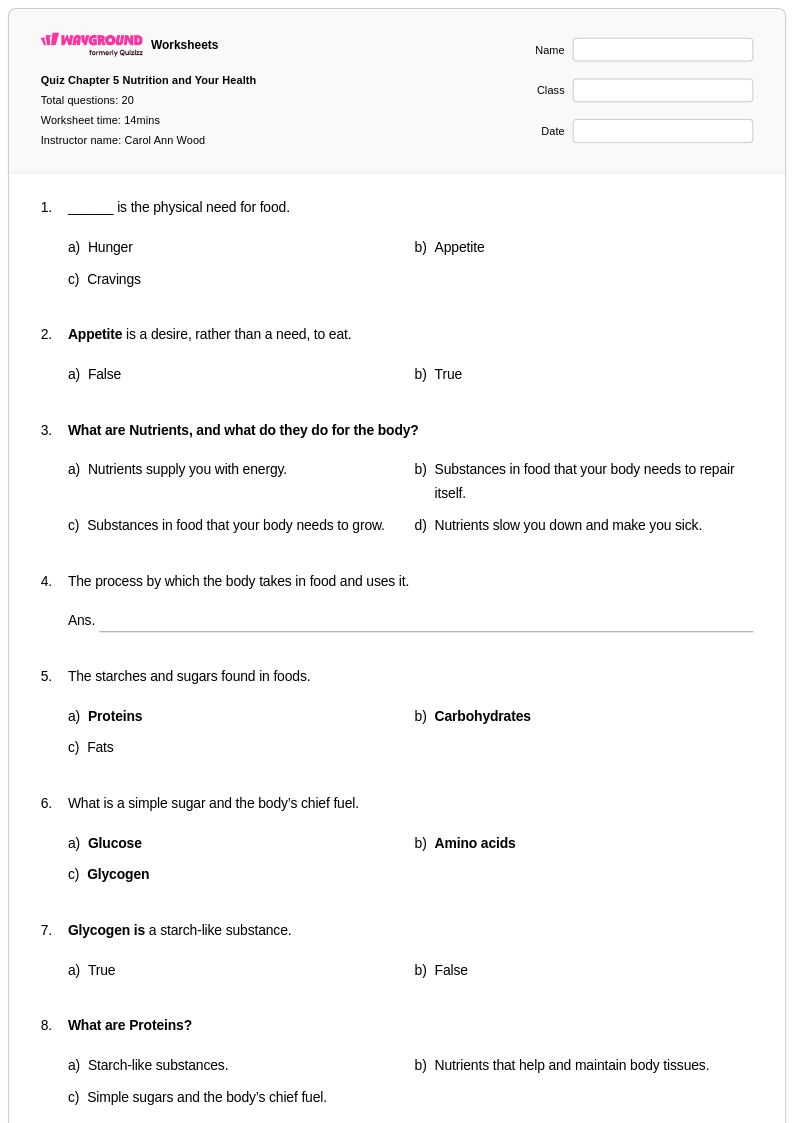
20 P
7th - 12th
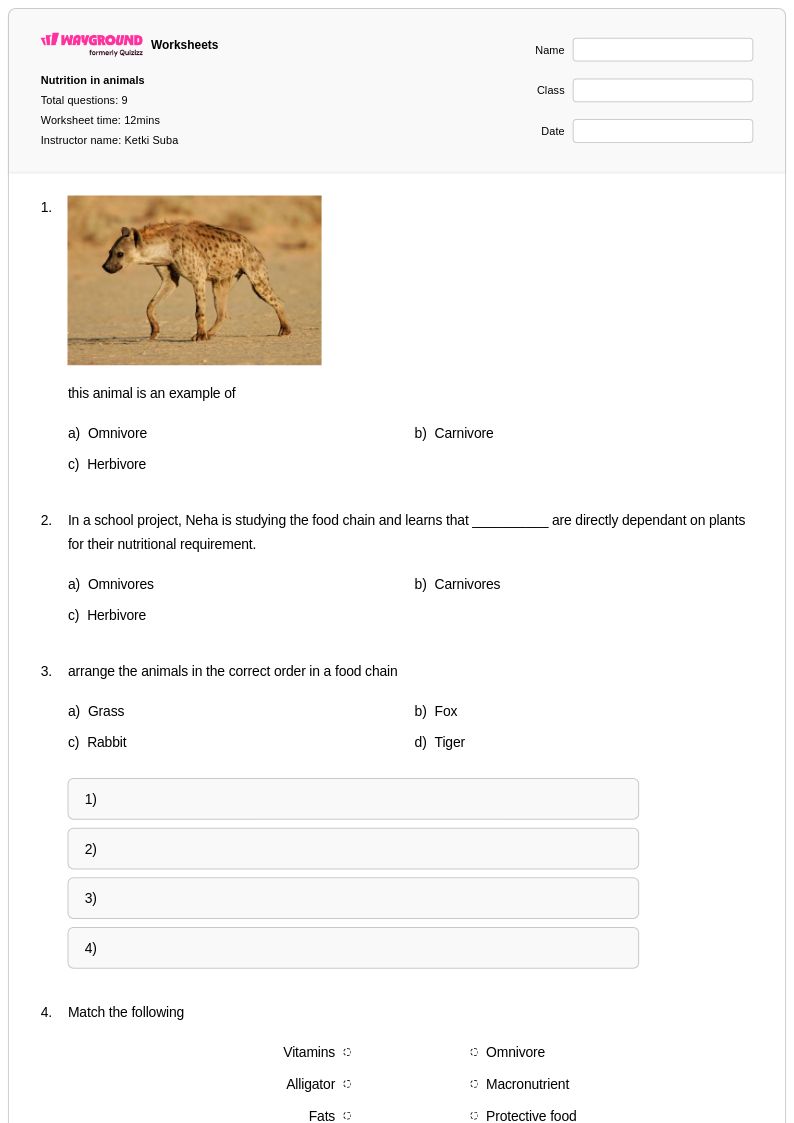
9 P
7th
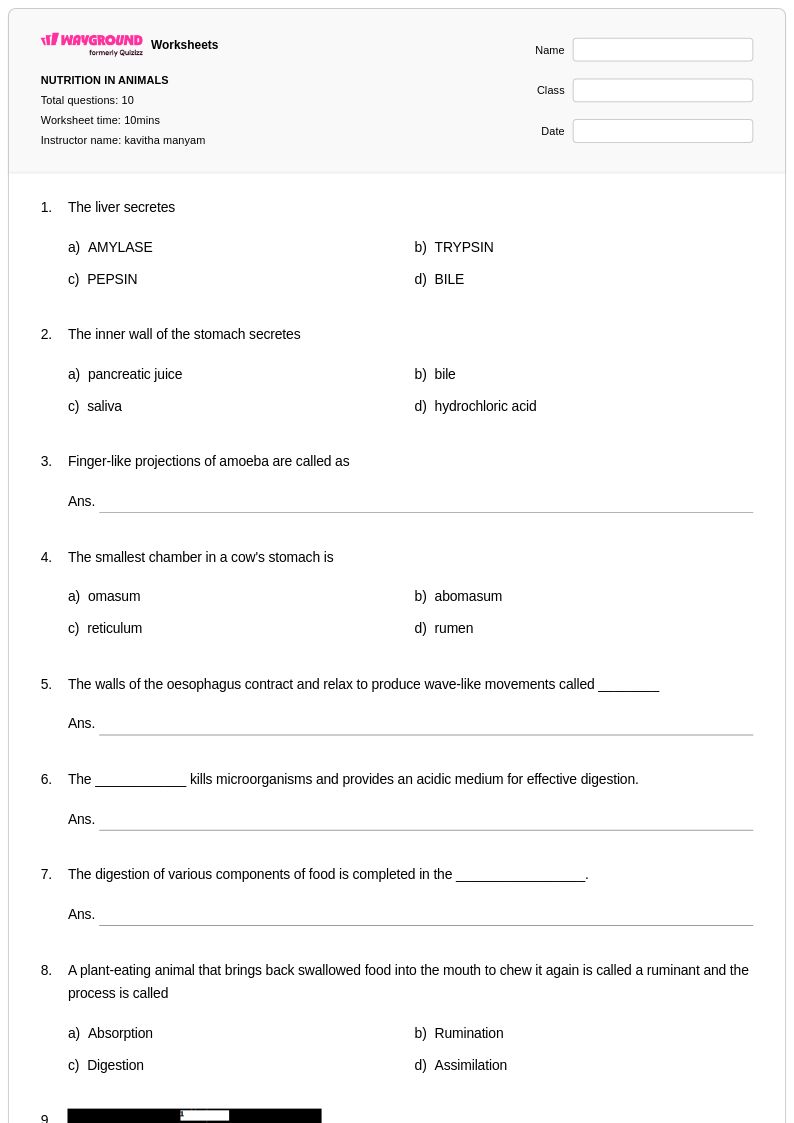
10 P
7th
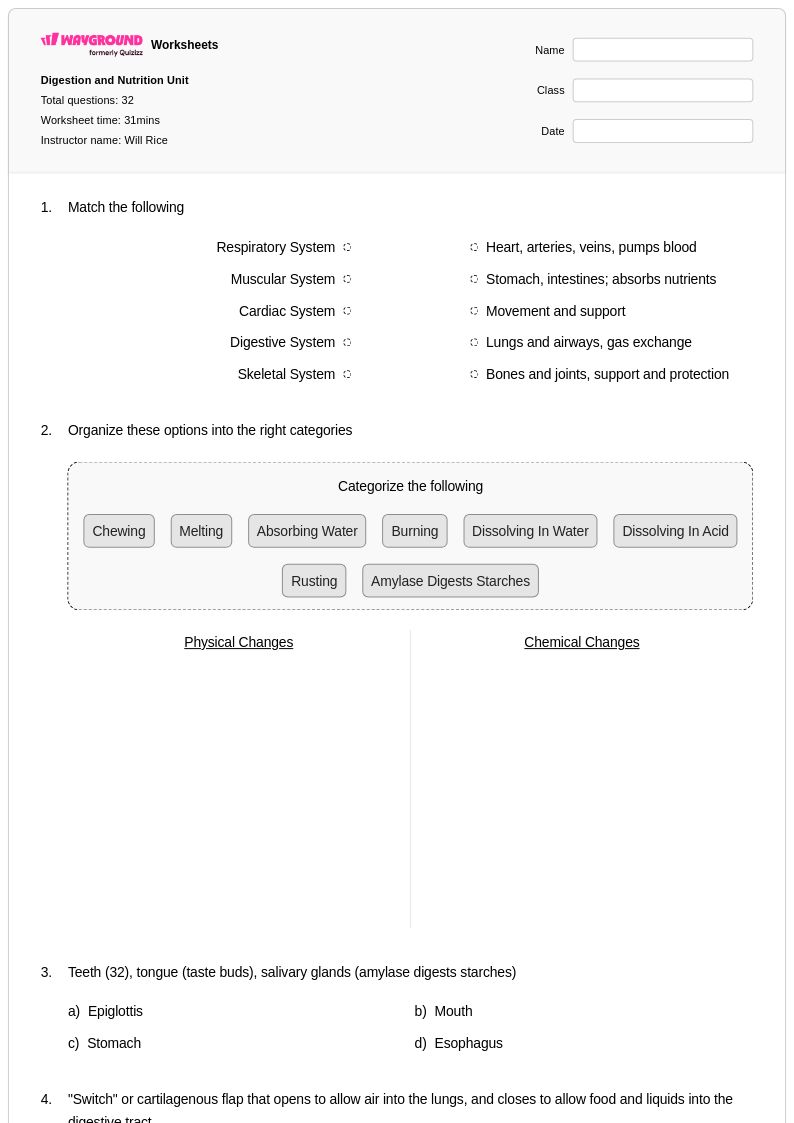
32 P
7th
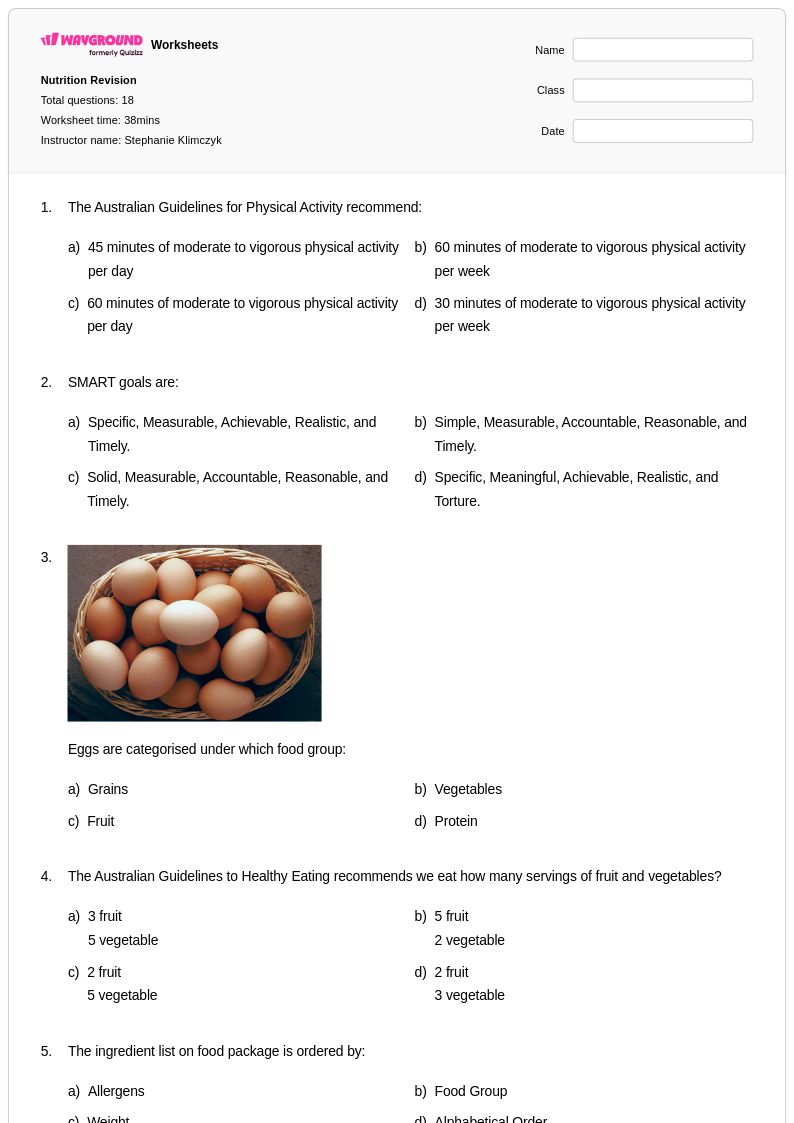
18 P
6th - 7th
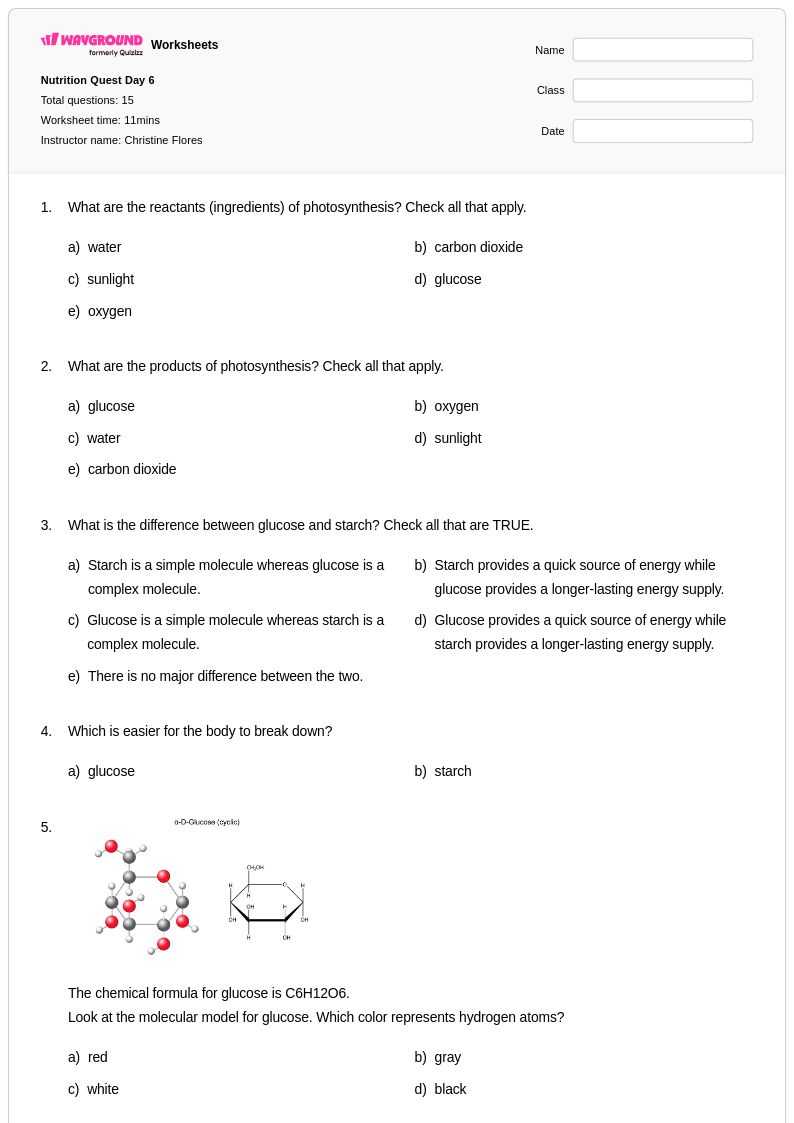
15 P
6th - 8th
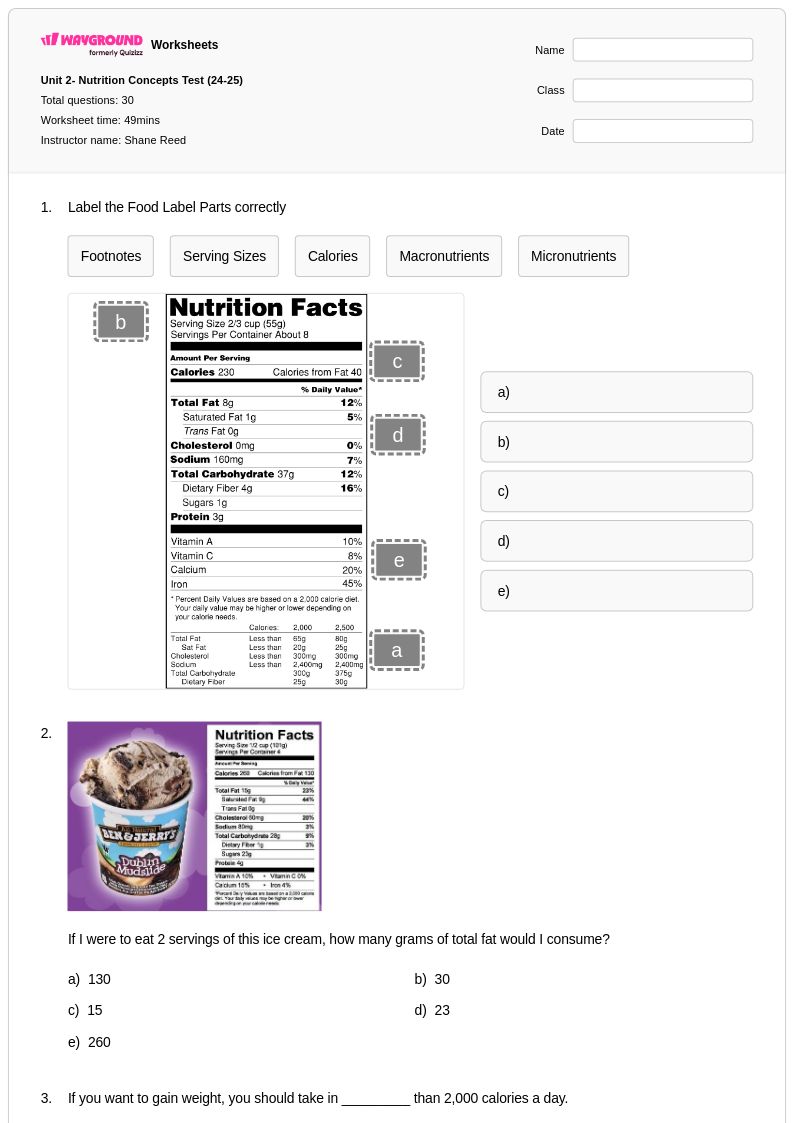
30 P
6th - 8th
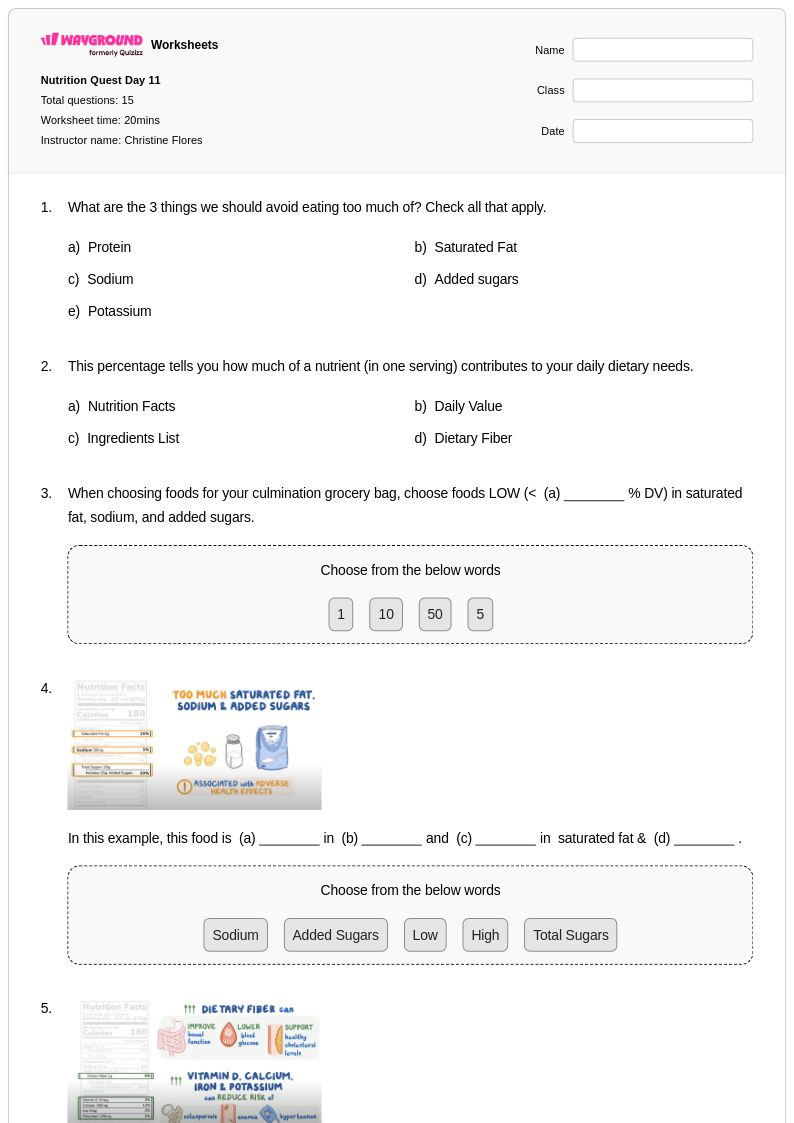
15 P
6th - 8th
20 P
7th
15 P
7th
14 P
7th
15 P
7th
40 P
6th - 8th
10 P
6th - 7th
20 P
7th
20 P
7th
Przeglądaj Nutrition arkusze ćwiczeń według ocen
Przeglądaj arkusze Nutrition dla year 7 według tematów
Przeglądaj inne arkusze tematyczne dla year 7
Explore printable Nutrition worksheets for Year 7
Year 7 nutrition worksheets available through Wayground (formerly Quizizz) provide comprehensive educational resources that help students develop essential understanding of healthy eating principles, dietary guidelines, and nutritional science fundamentals. These carefully crafted worksheets strengthen critical skills including nutrient identification, meal planning, food group classification, and analysis of nutritional labels and dietary choices. Students engage with practice problems that challenge them to calculate daily nutritional requirements, evaluate balanced meal compositions, and understand the relationship between nutrition and physical health. Each worksheet collection includes detailed answer keys that support both independent learning and teacher-guided instruction, with free printable materials designed to reinforce core nutritional concepts through varied question formats and real-world applications.
Wayground (formerly Quizizz) empowers educators with millions of teacher-created nutrition resources that streamline lesson planning and enhance classroom instruction for seventh-grade health education. The platform's robust search and filtering capabilities allow teachers to quickly locate standards-aligned worksheets that match specific learning objectives, while built-in differentiation tools enable customization for diverse learning needs and skill levels. These comprehensive worksheet collections are available in both printable pdf formats and interactive digital versions, providing flexibility for traditional classroom settings, remote learning environments, and hybrid instructional models. Teachers utilize these resources for targeted skill practice, remediation support for struggling learners, enrichment activities for advanced students, and formative assessment opportunities that help gauge student understanding of essential nutritional principles and healthy lifestyle choices.