
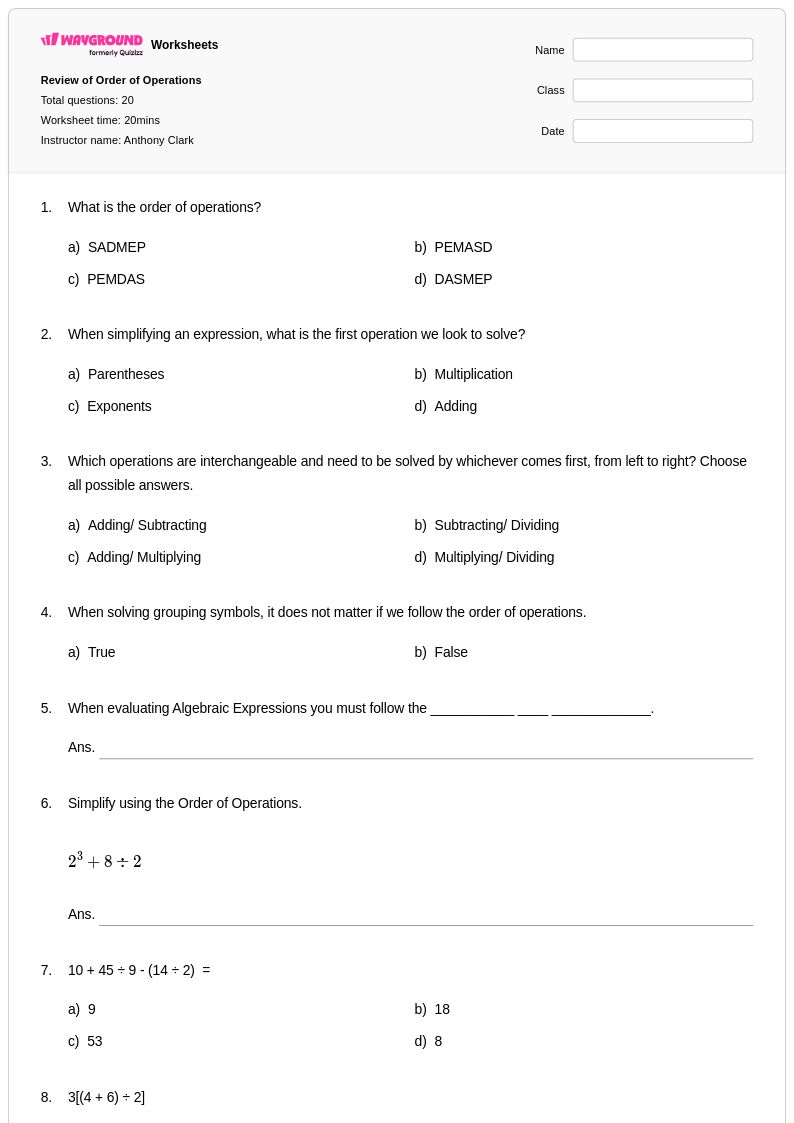
20Q
6th - Uni
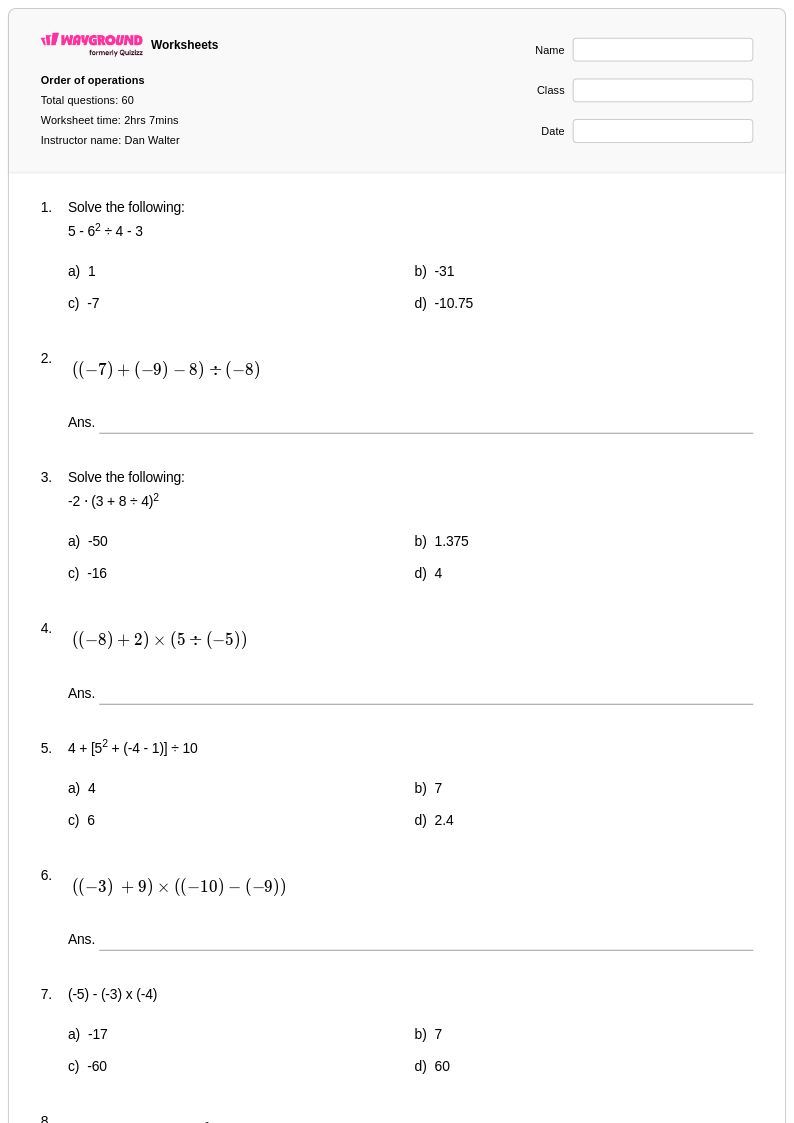
60Q
8th
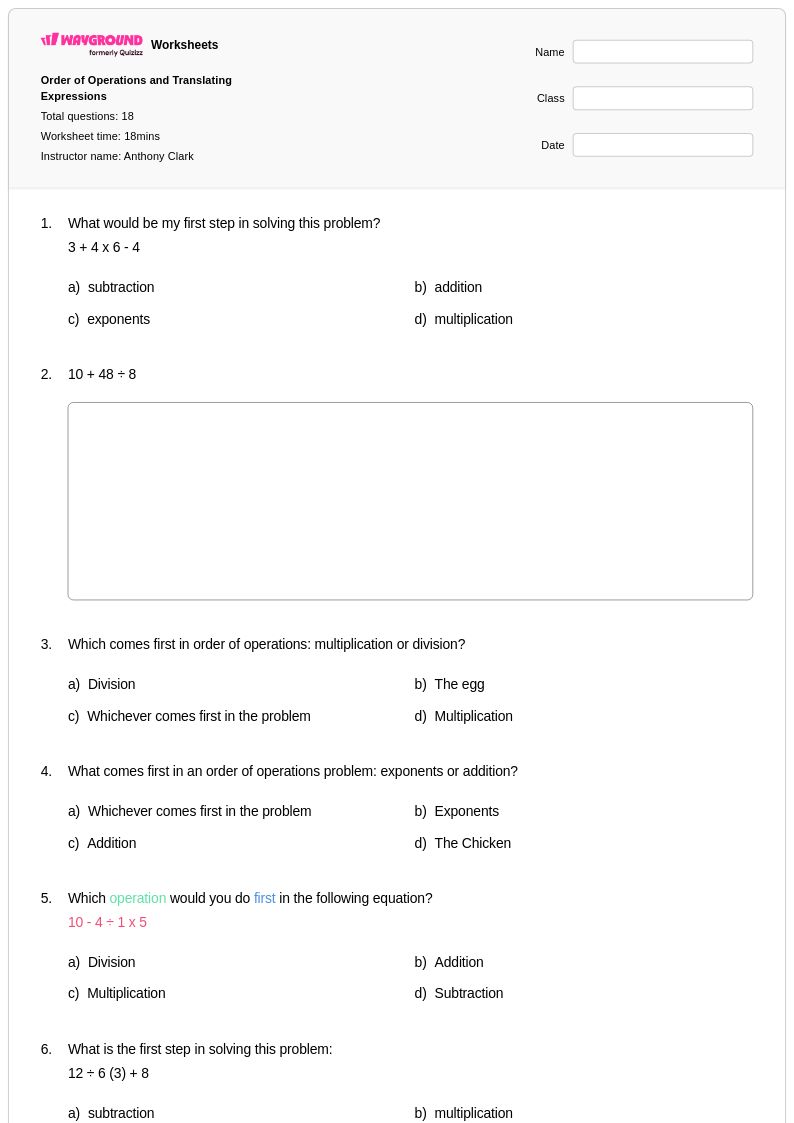
18Q
7th - Uni
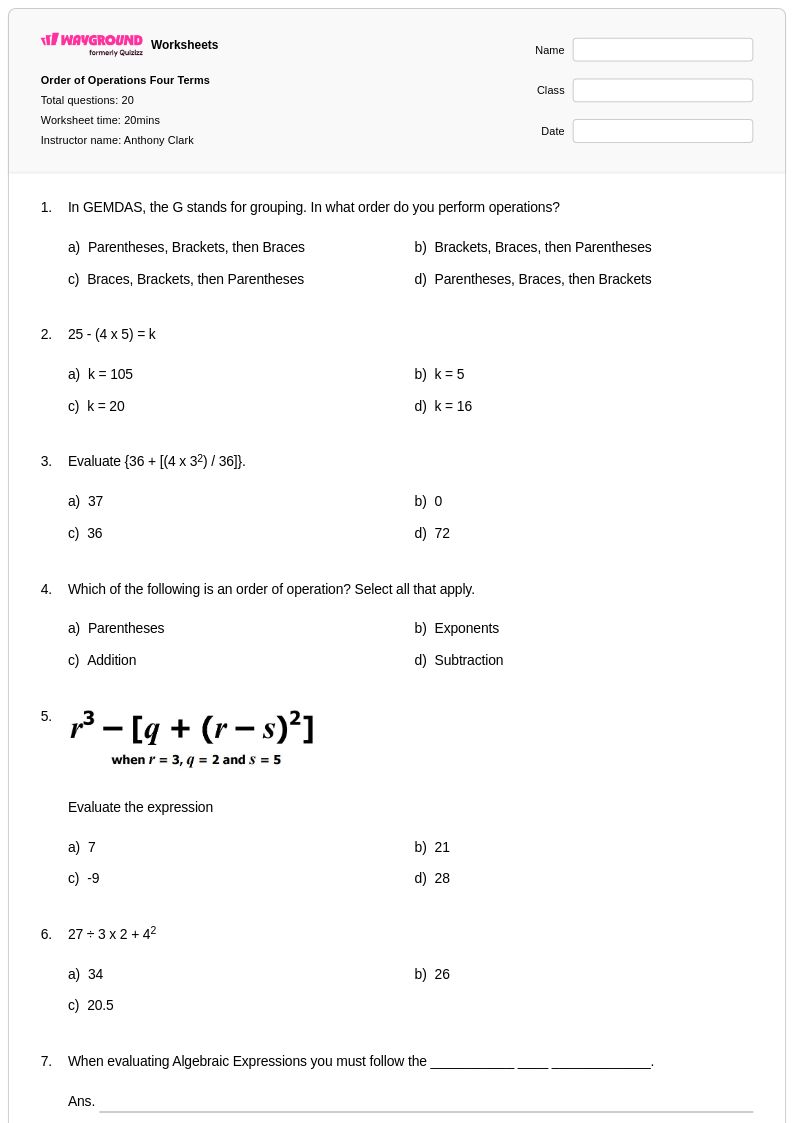
20Q
6th - Uni
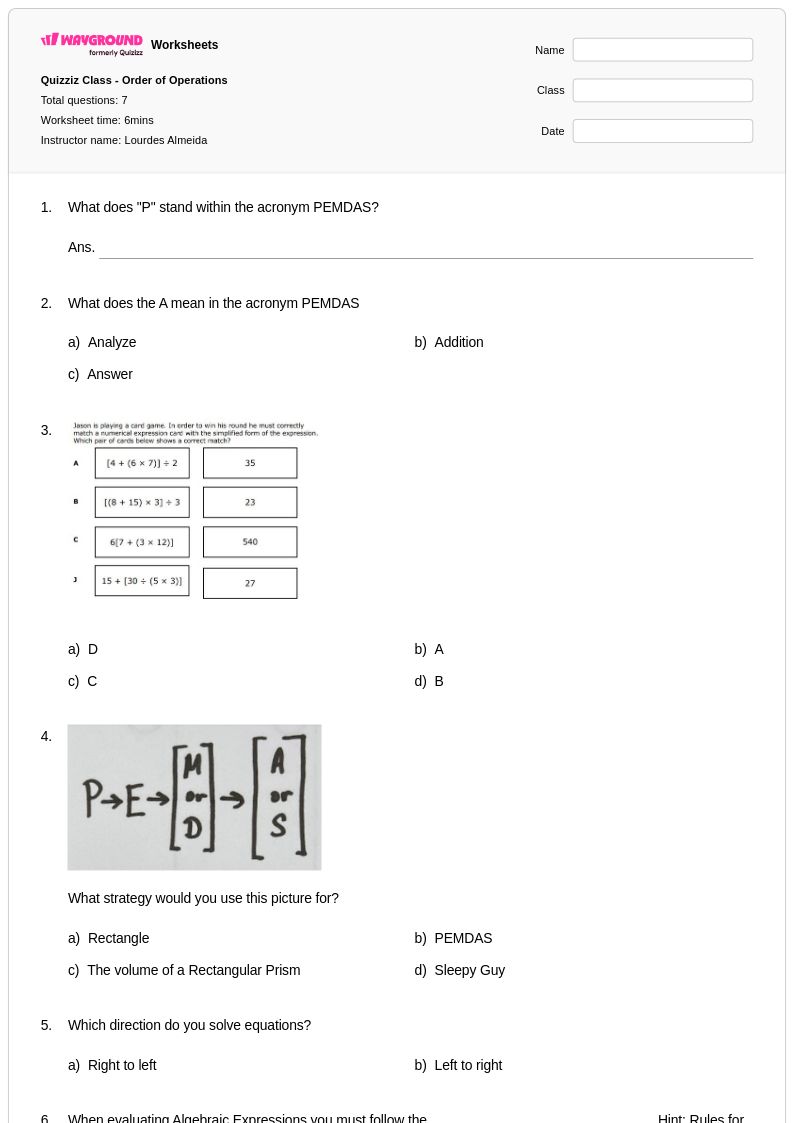
7Q
6th - Uni
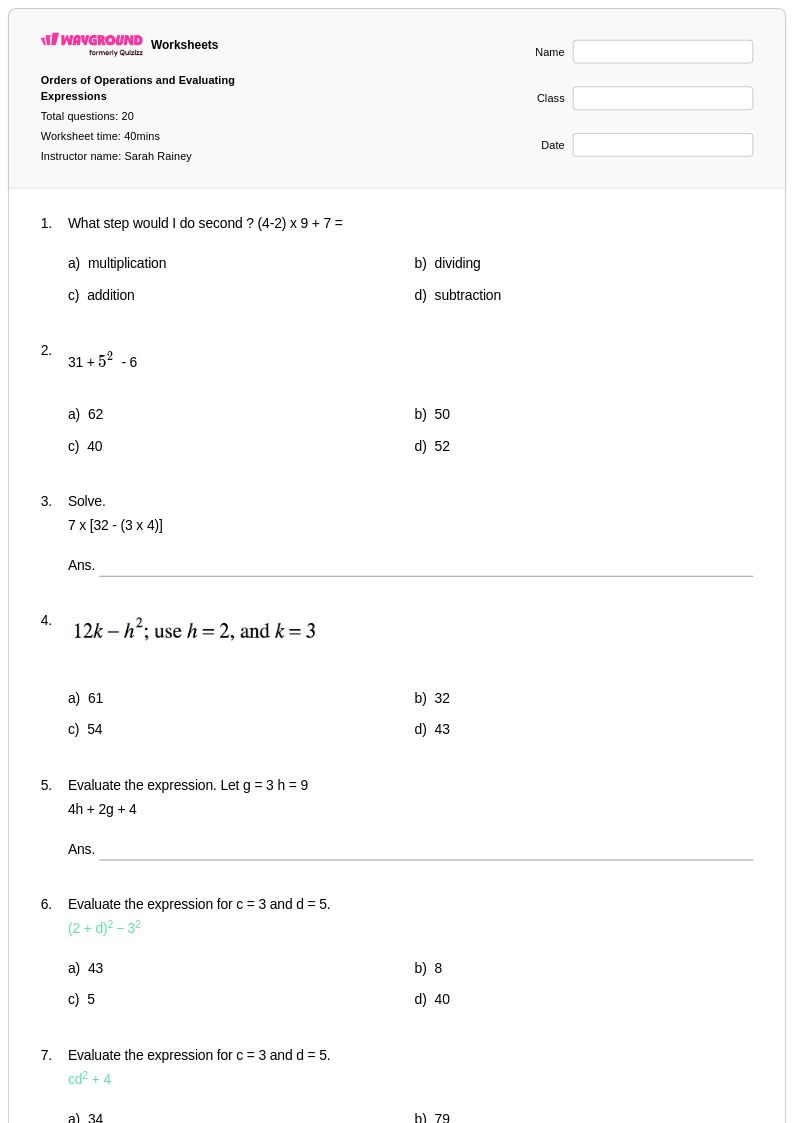
20Q
8th - 9th
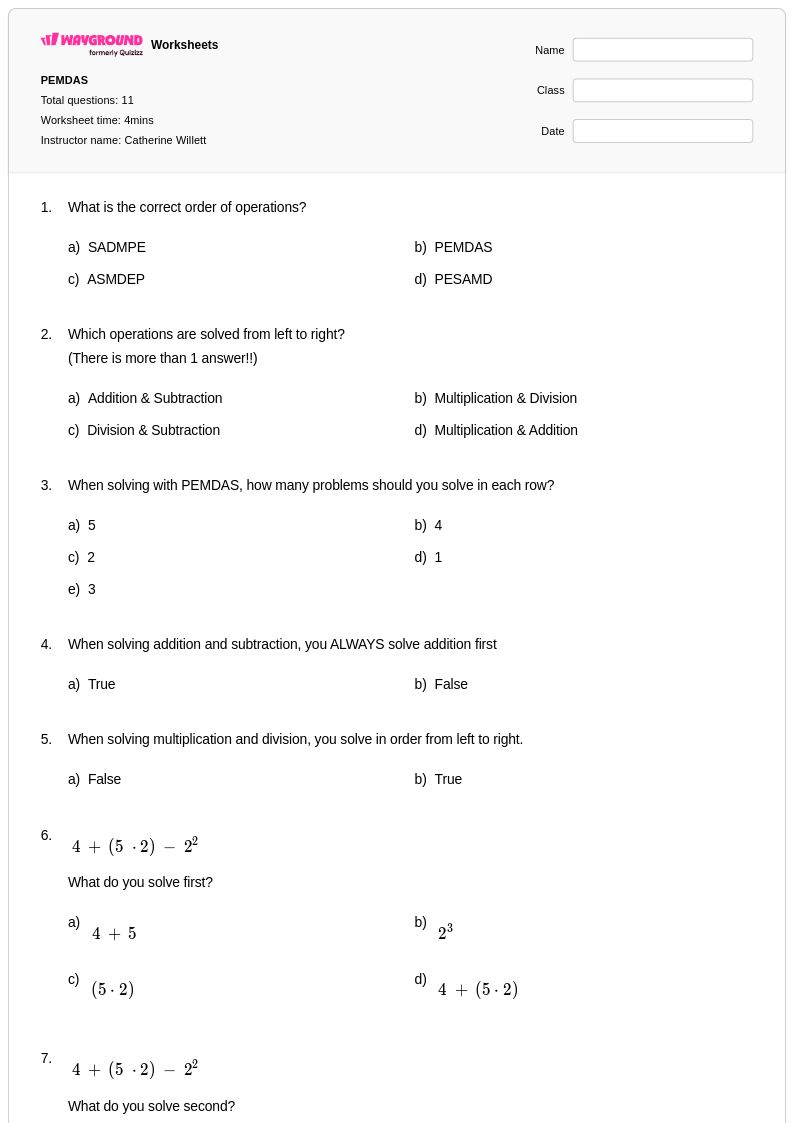
11Q
6th - 8th
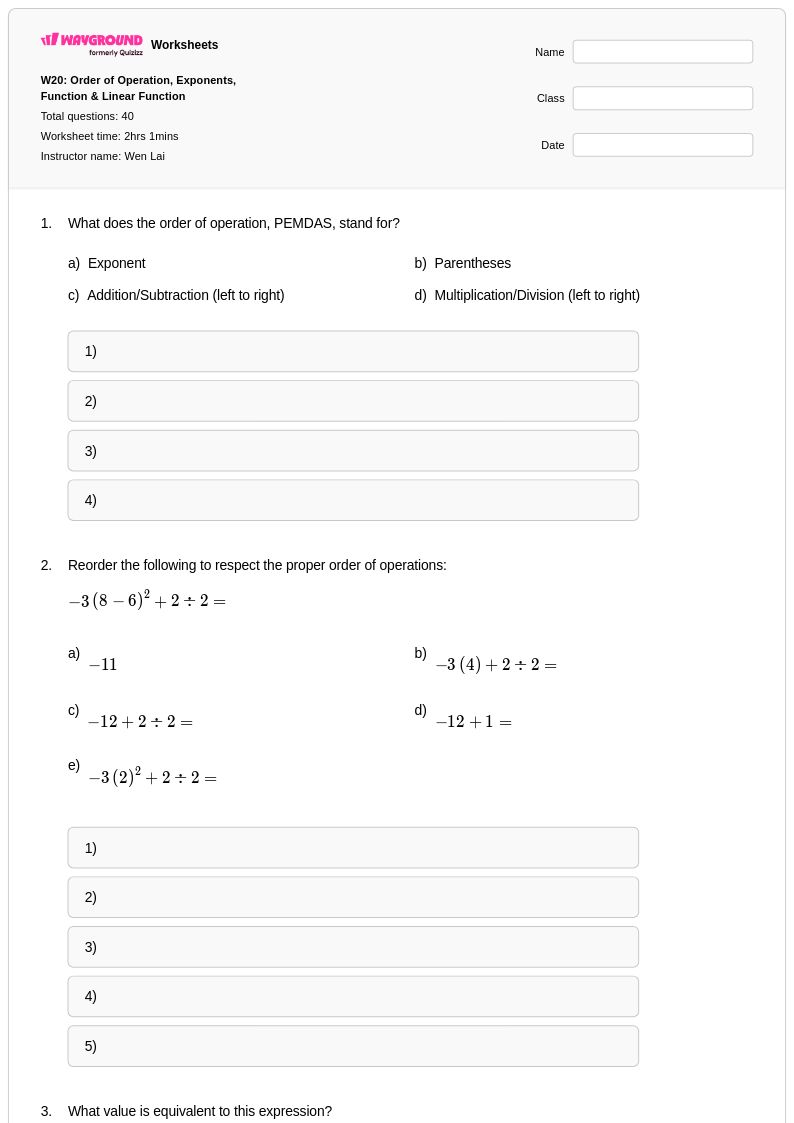
40Q
8th
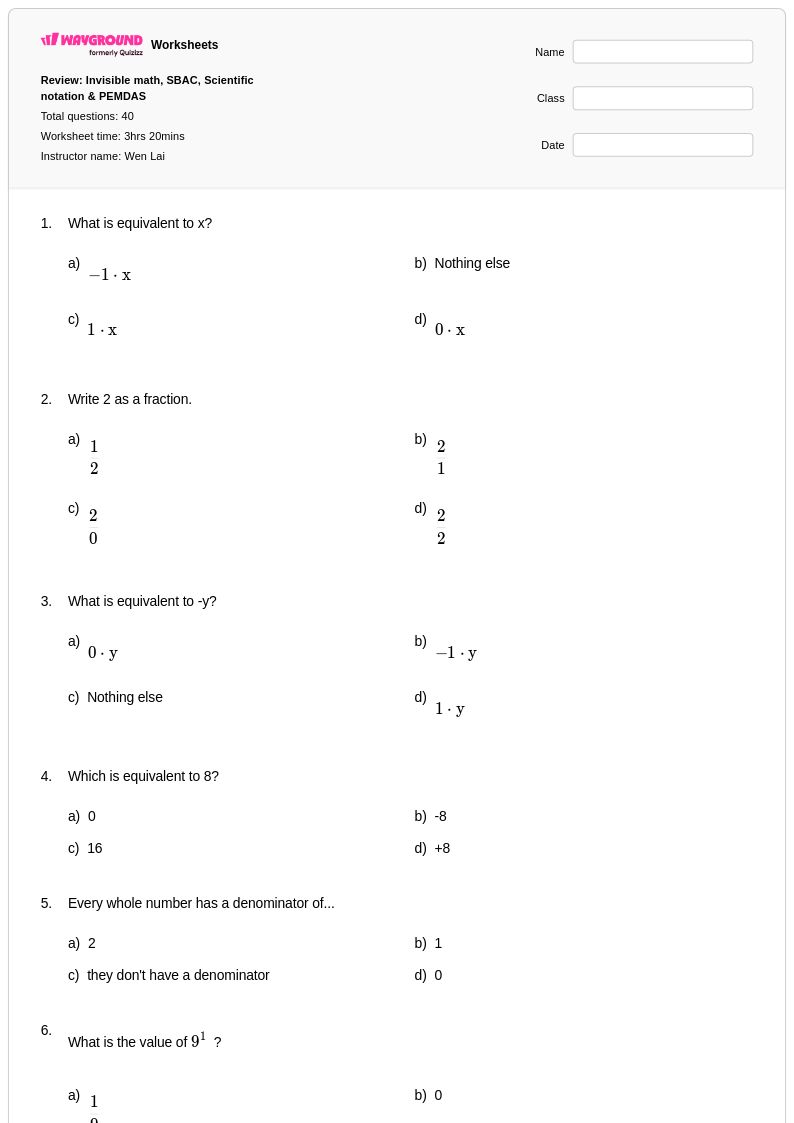
40Q
8th
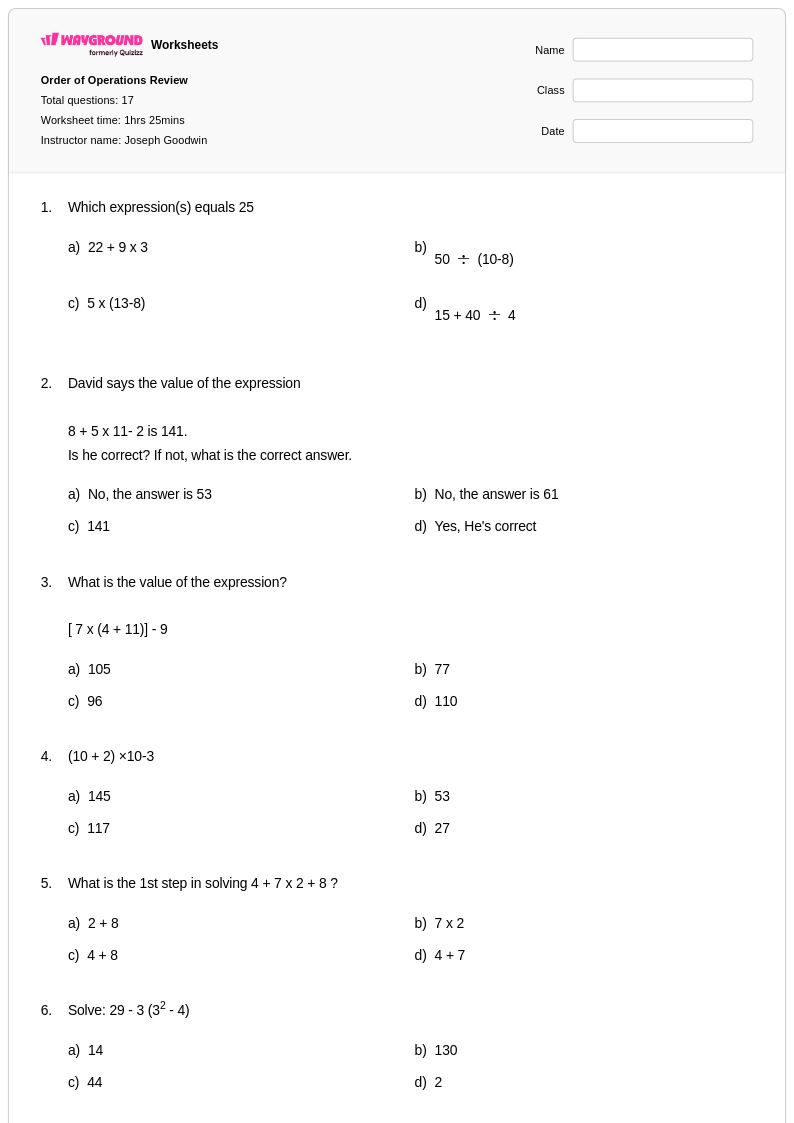
17Q
6th - 8th
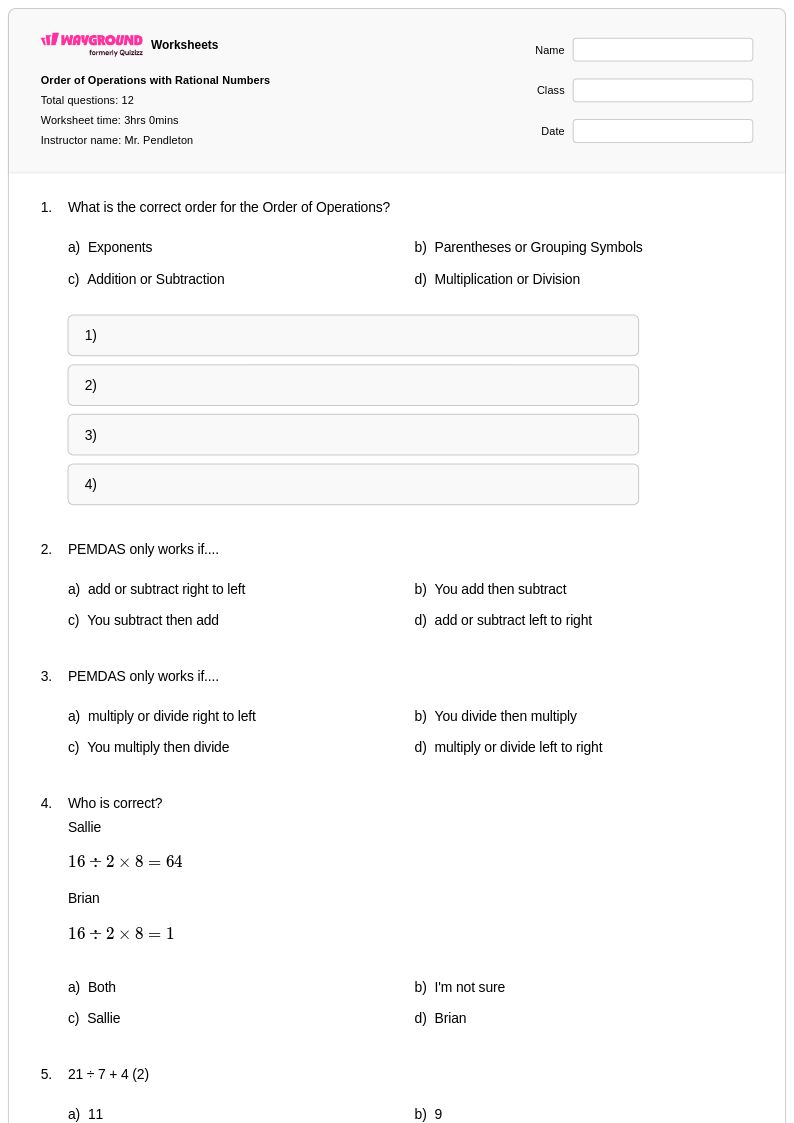
12Q
6th - 8th
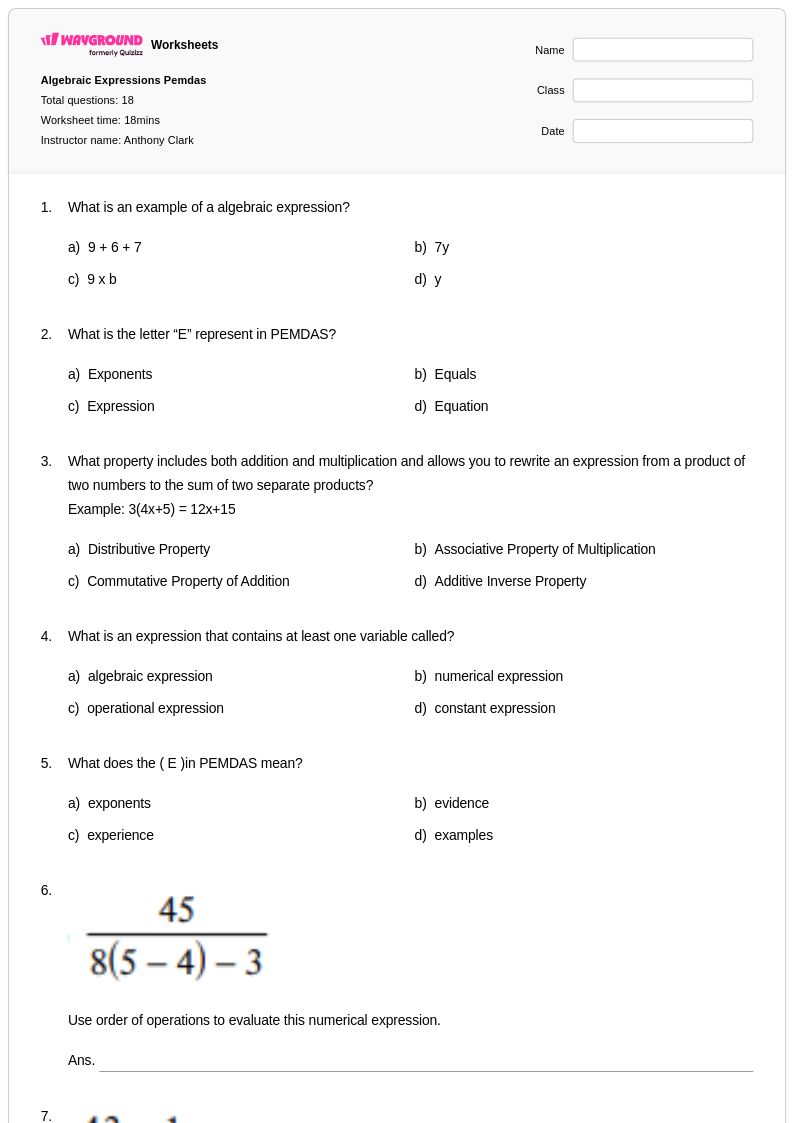
18Q
6th - Uni
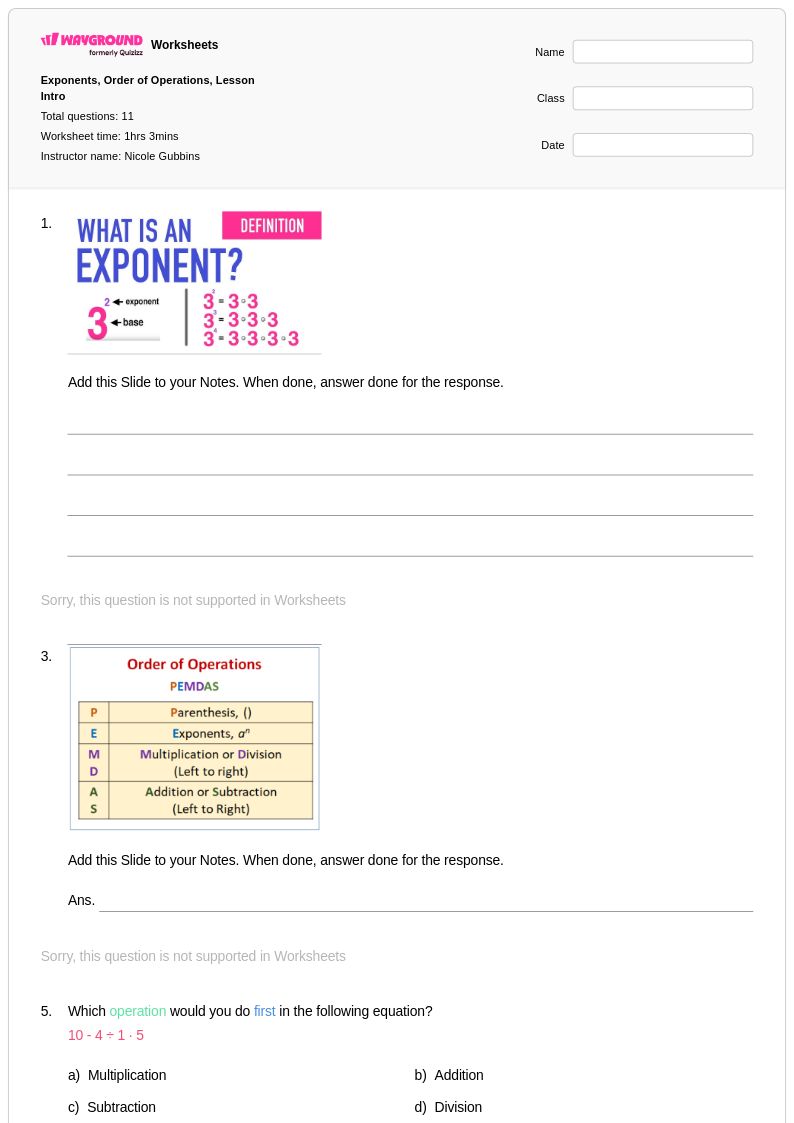
36Q
6th - 8th
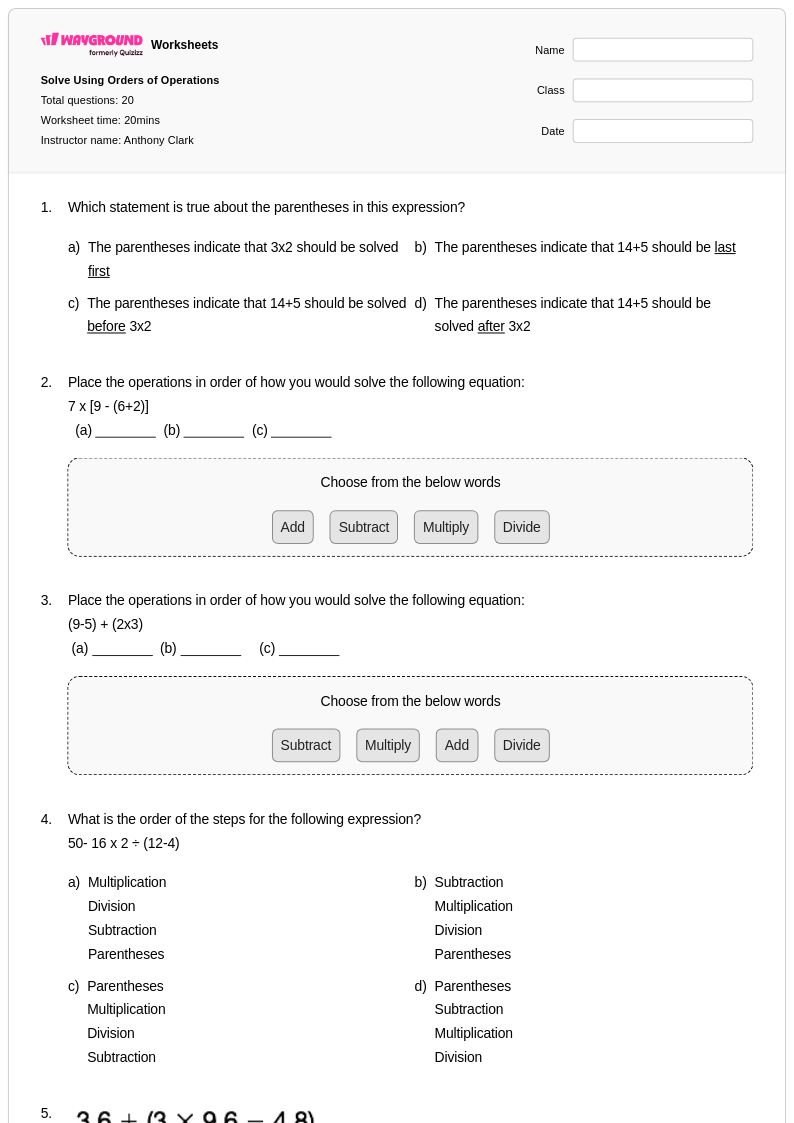
20Q
5th - Uni
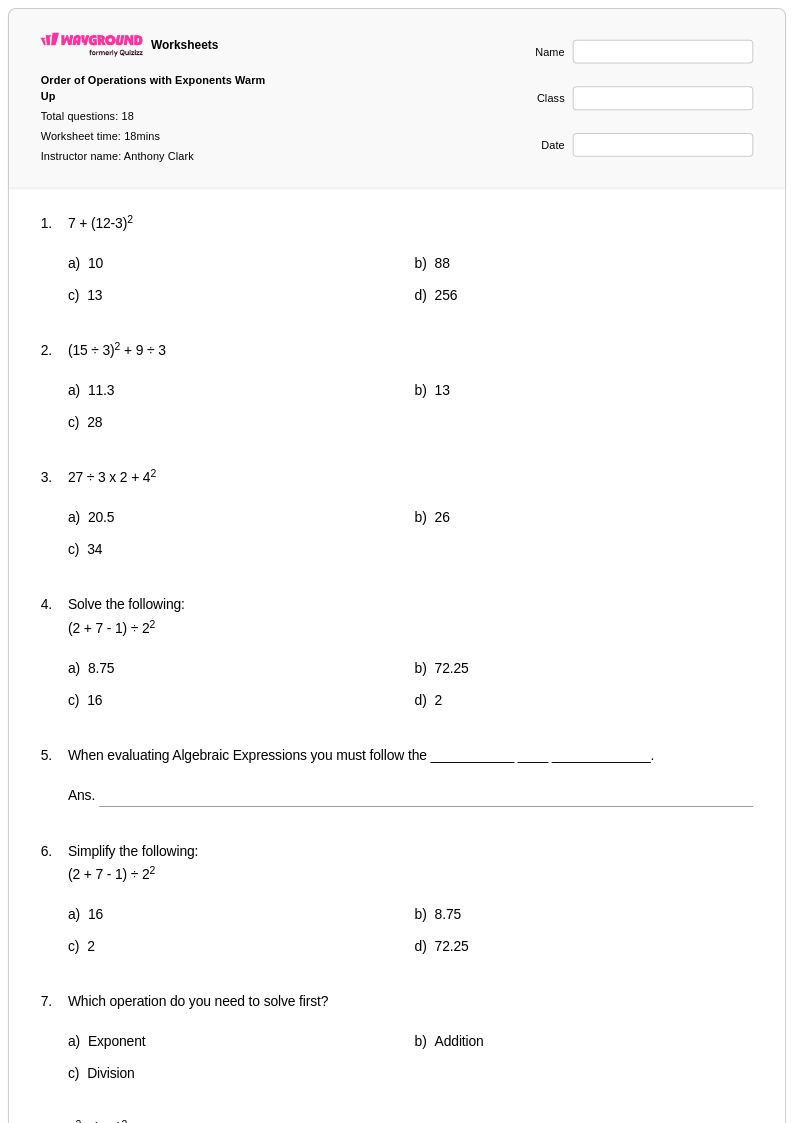
18Q
6th - Uni
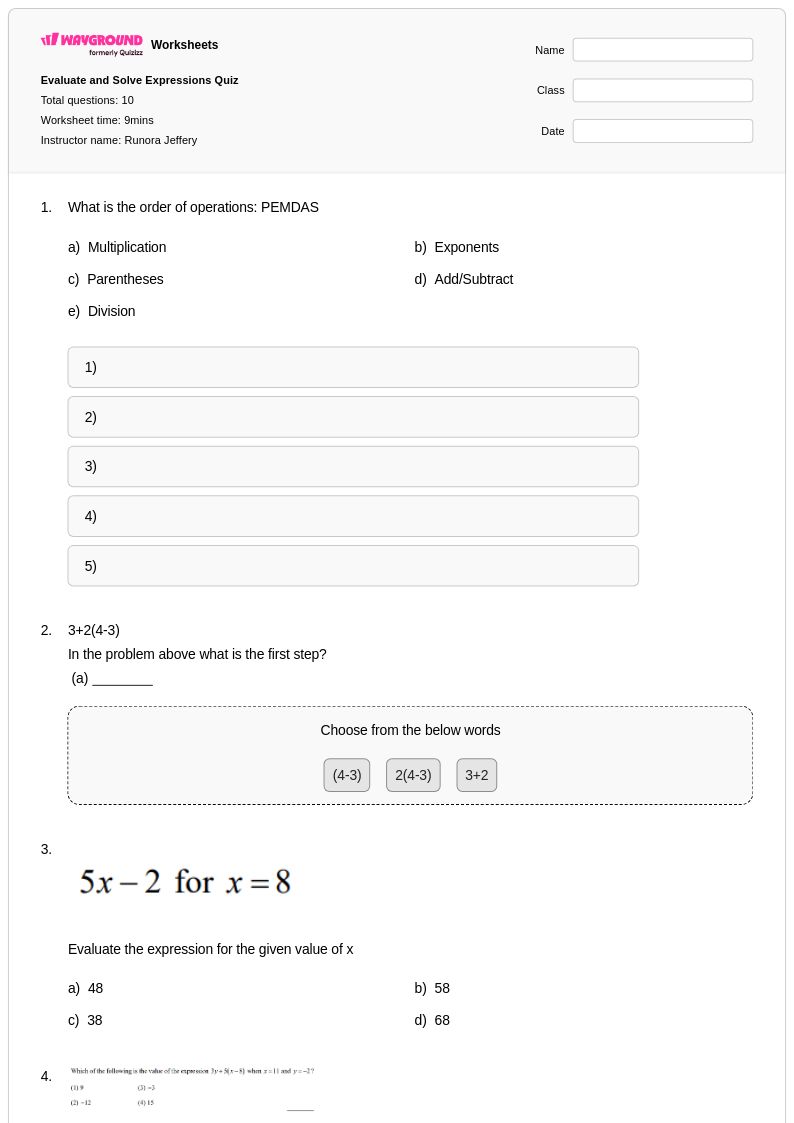
10Q
6th - 8th
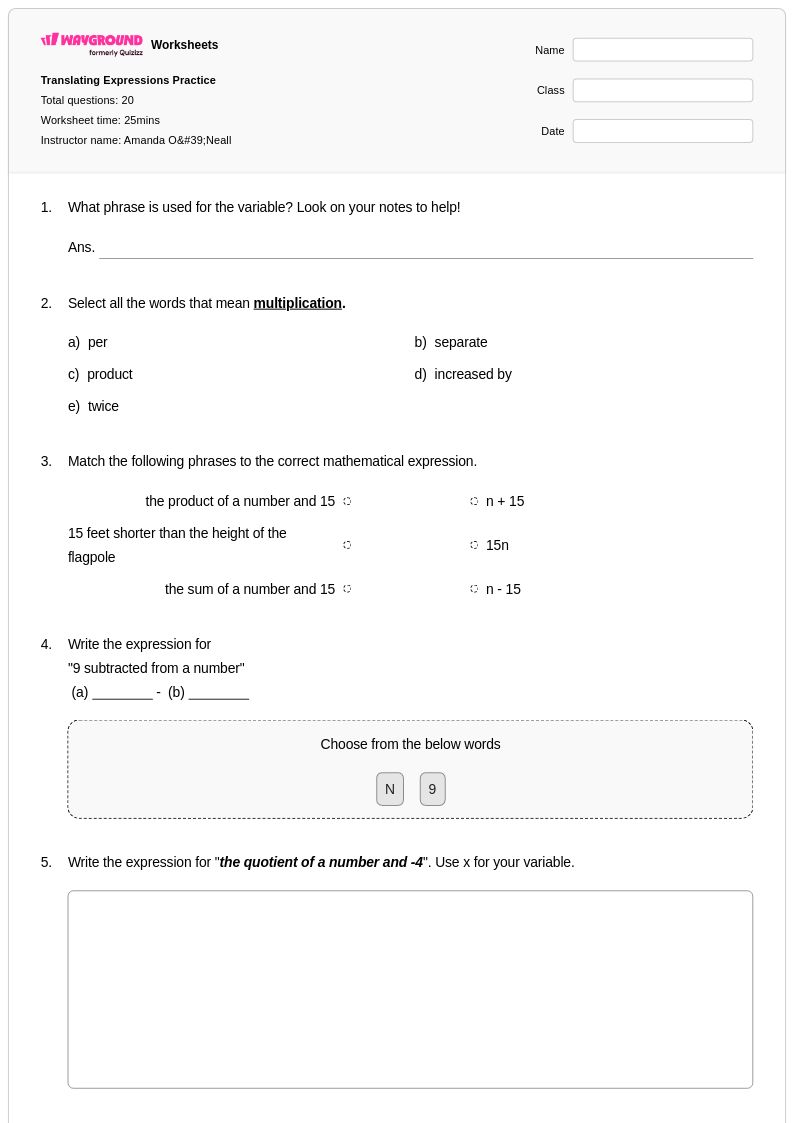
20Q
7th - Uni
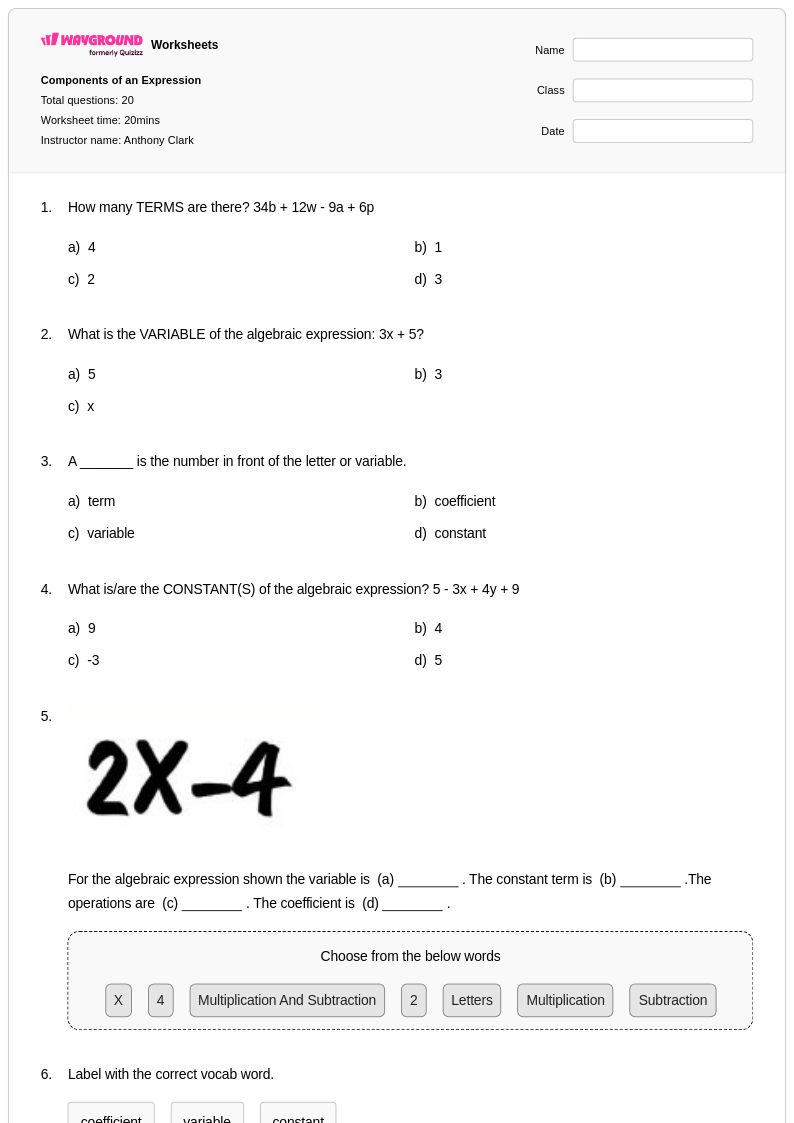
20Q
6th - Uni
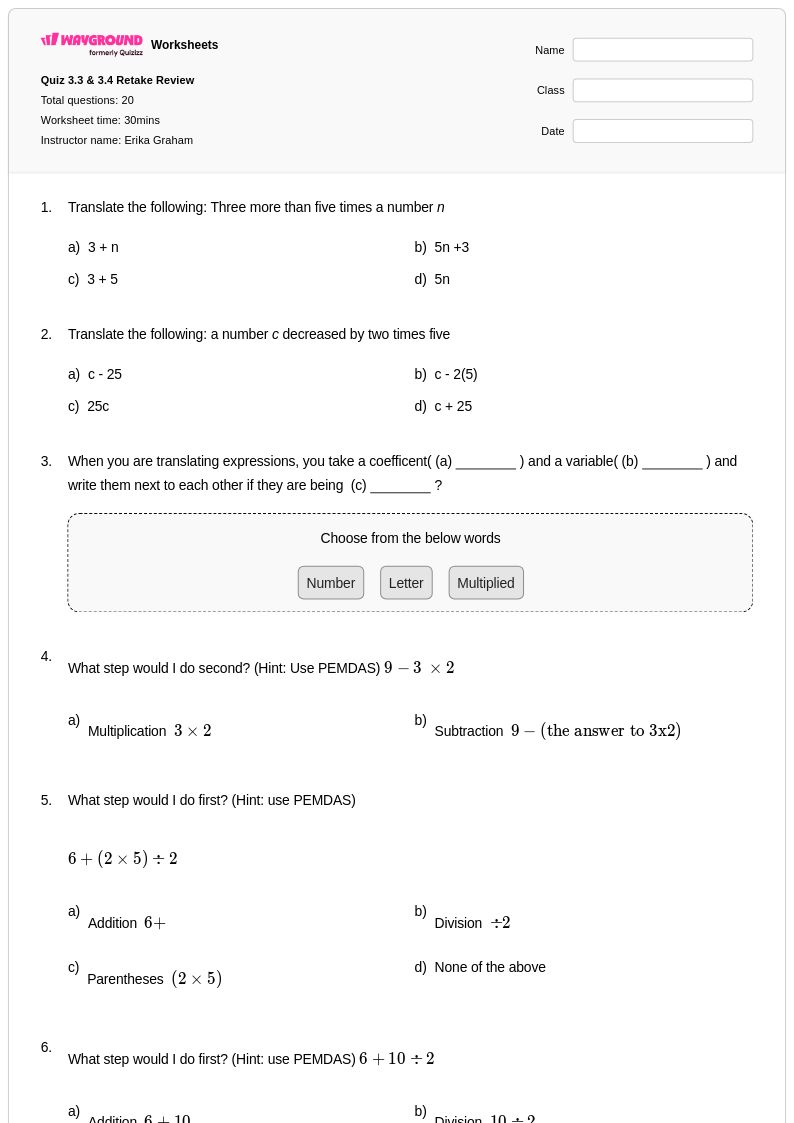
20Q
6th - 8th
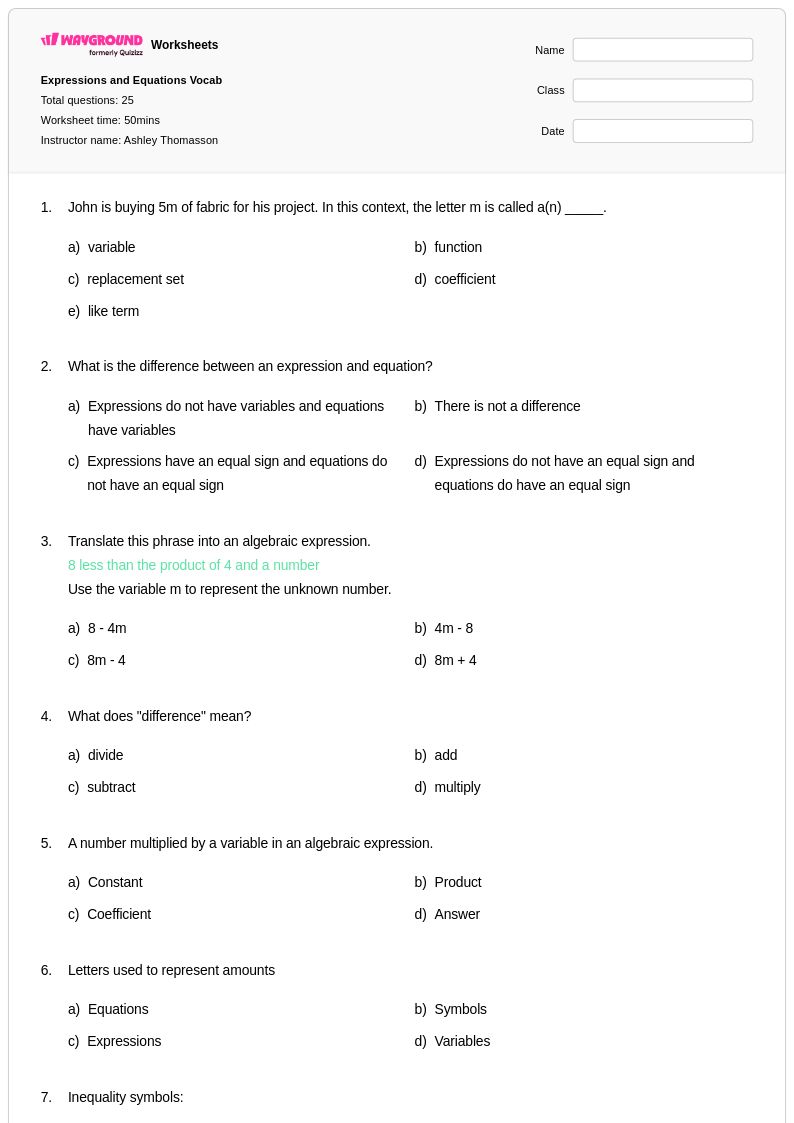
25Q
6th - 8th
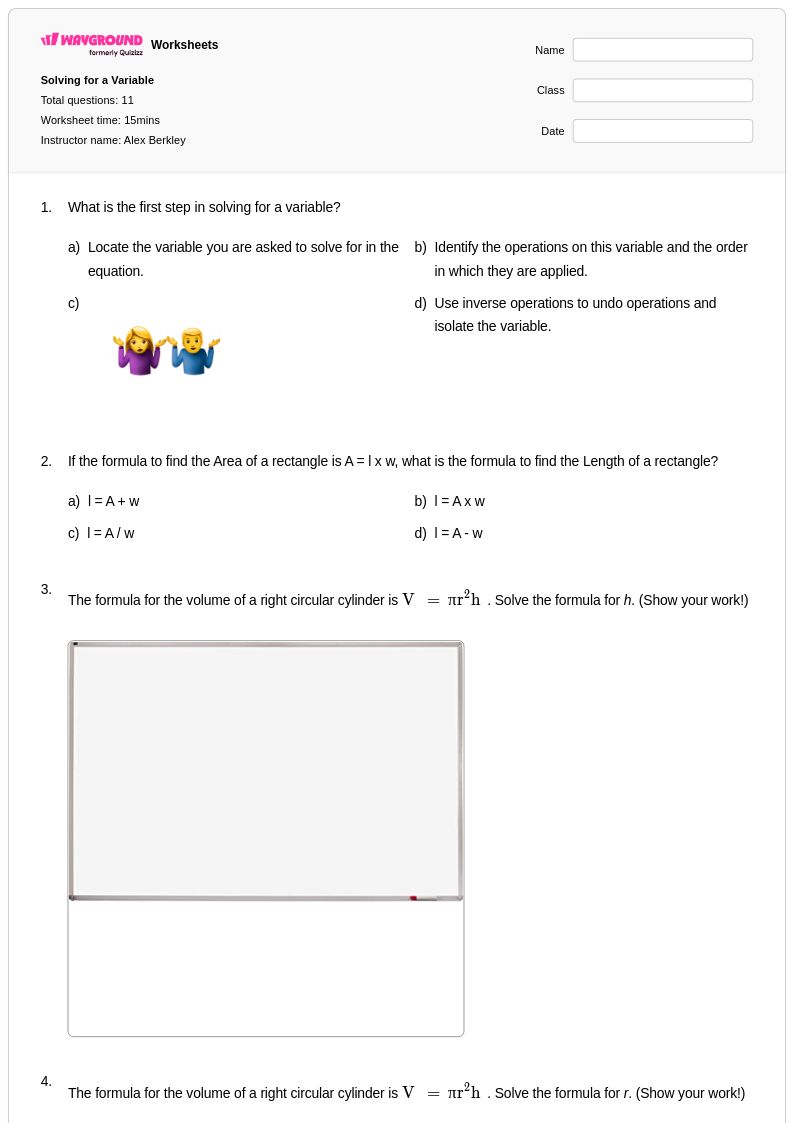
11Q
8th - 10th
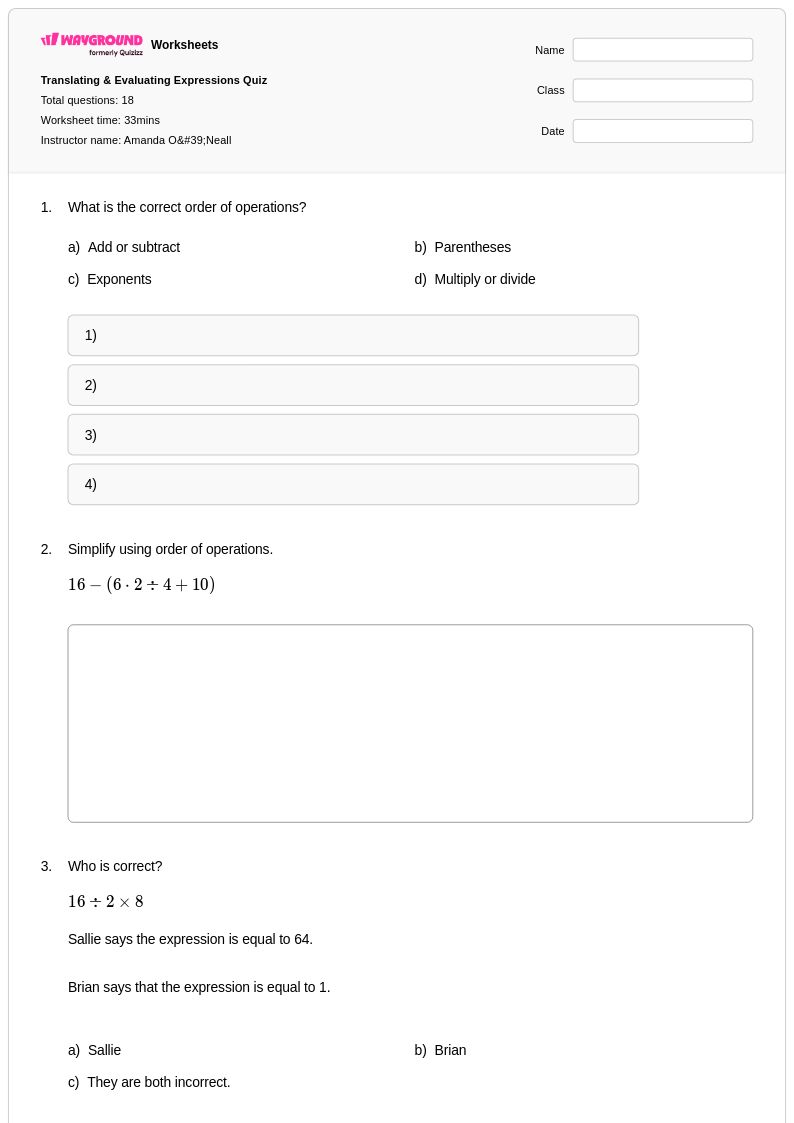
18Q
6th - Uni
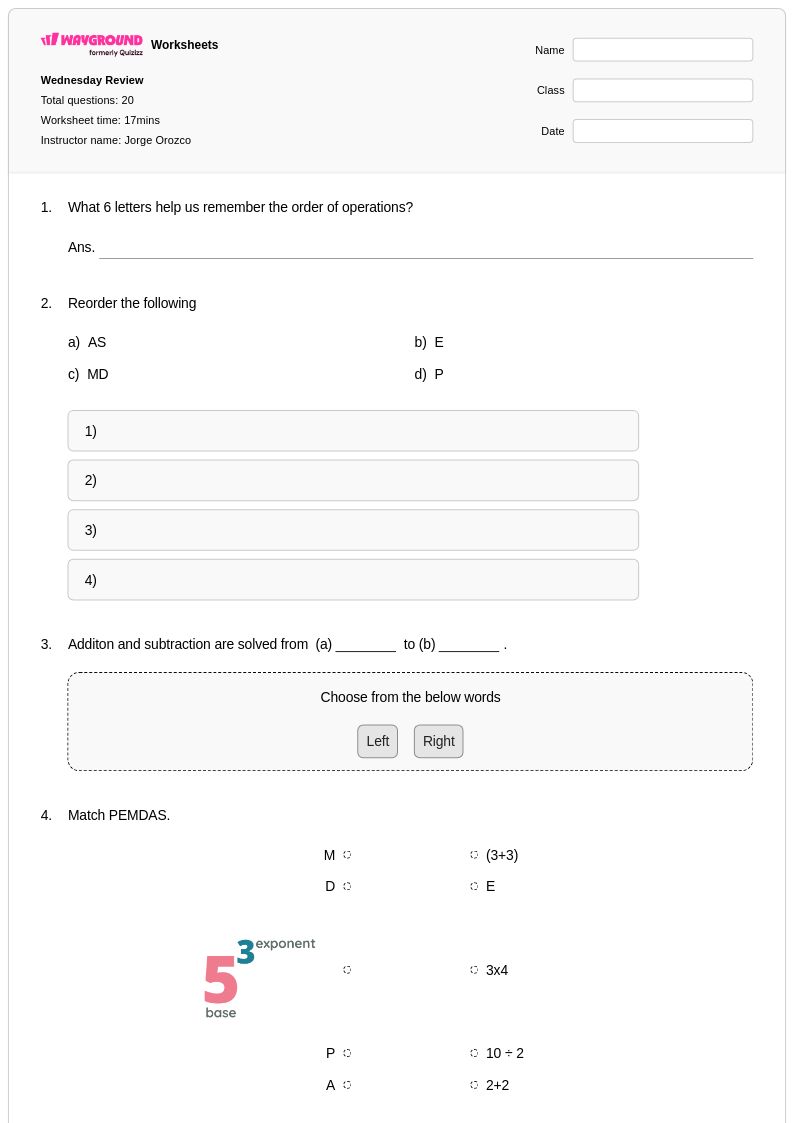
20Q
8th
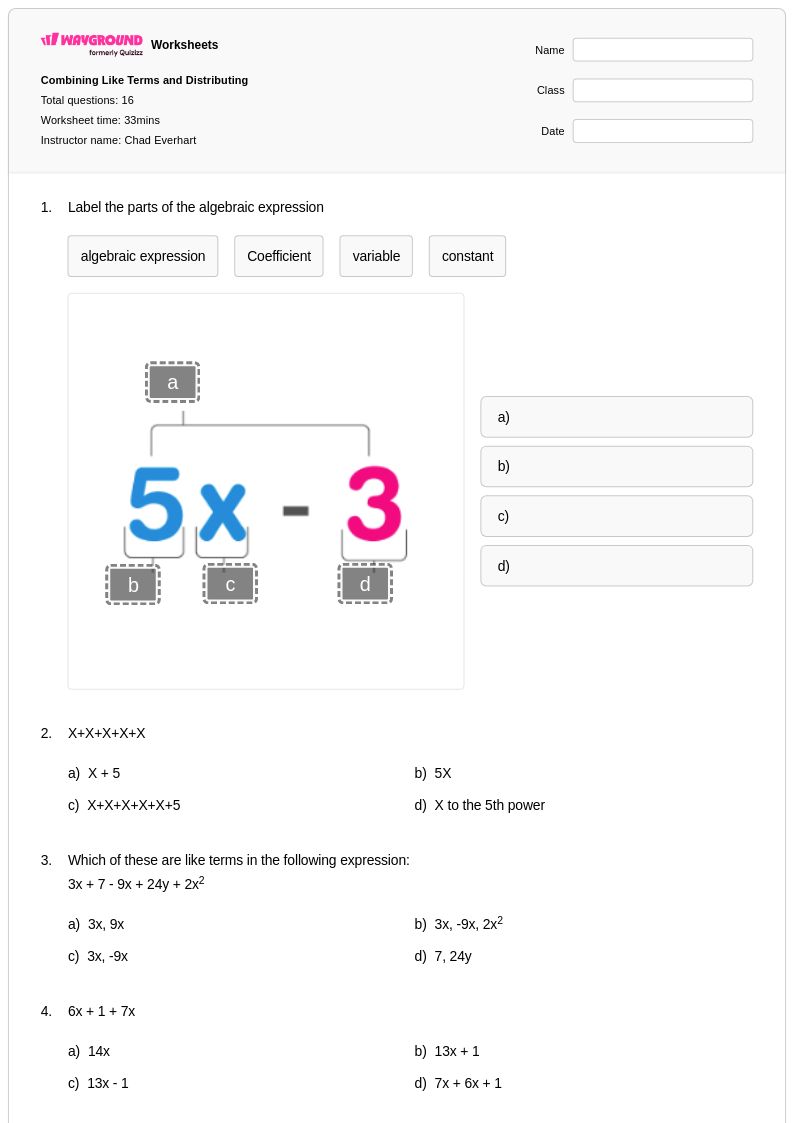
16Q
8th
Explorar Order of Operations (PEMDAS) hojas de trabajo por grados
Explore otras hojas de trabajo de materias para year 8
Explore printable Order of Operations (PEMDAS) worksheets for Year 8
Order of Operations (PEMDAS) worksheets for Year 8 students available through Wayground (formerly Quizizz) provide comprehensive practice with the fundamental mathematical sequence that governs multi-step calculations. These carefully designed worksheets strengthen students' ability to correctly apply the hierarchy of mathematical operations—Parentheses, Exponents, Multiplication and Division (from left to right), and Addition and Subtraction (from left to right)—across increasingly complex expressions involving integers, fractions, and decimals. Each worksheet collection includes detailed practice problems that progress from basic PEMDAS applications to challenging multi-step equations, complete with answer keys and available as free printable pdf resources that support both classroom instruction and independent study.
Wayground (formerly Quizizz) empowers educators with millions of teacher-created Order of Operations worksheets that can be easily discovered through robust search and filtering capabilities, ensuring alignment with Year 8 mathematics standards and curriculum requirements. The platform's differentiation tools enable teachers to customize worksheet difficulty levels and problem types to meet diverse learning needs, while flexible formatting options provide both printable pdf versions for traditional paper-and-pencil practice and digital formats for technology-integrated classrooms. These comprehensive worksheet collections streamline lesson planning by offering ready-to-use resources for initial skill instruction, targeted remediation for students struggling with operation sequences, and enrichment activities that challenge advanced learners with complex expressions requiring precise PEMDAS application.