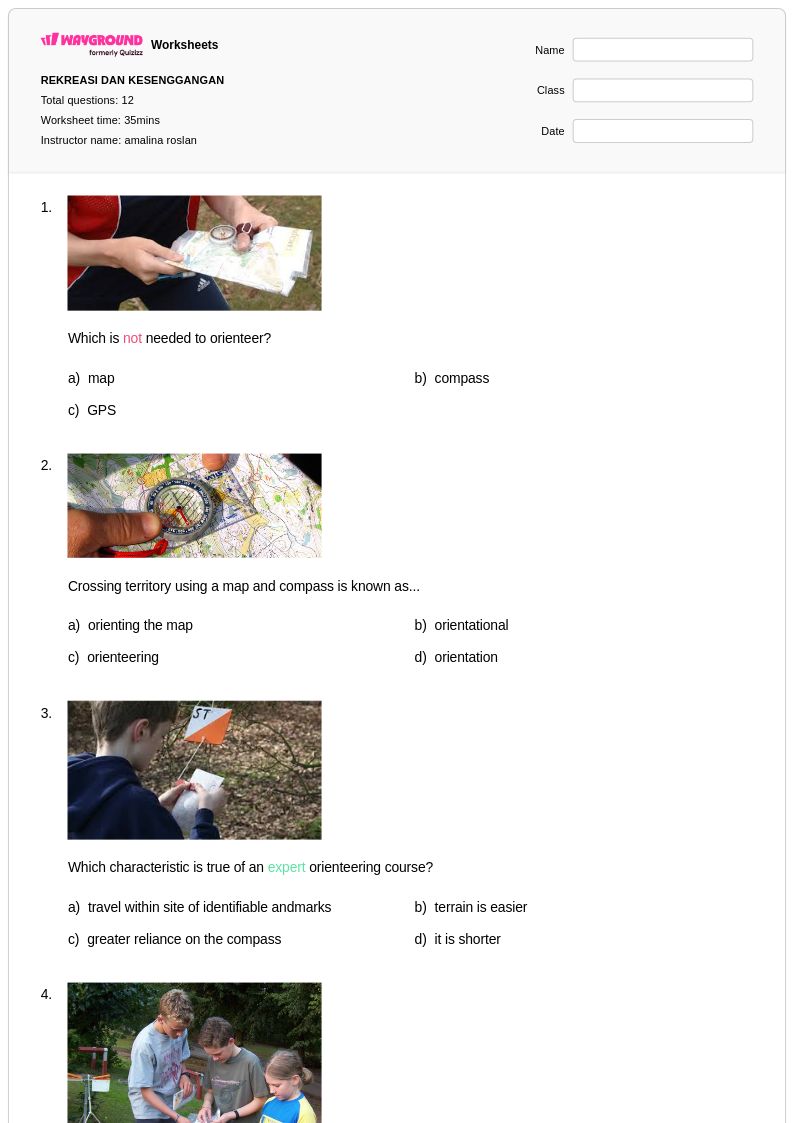
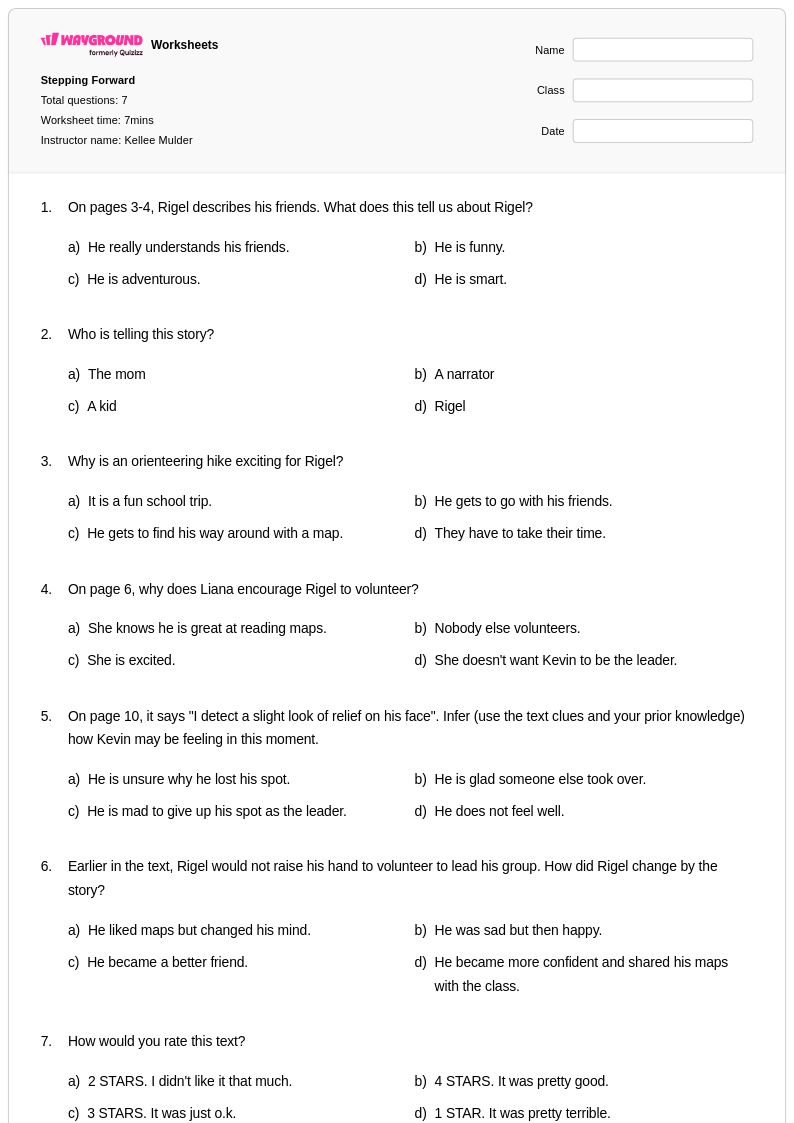
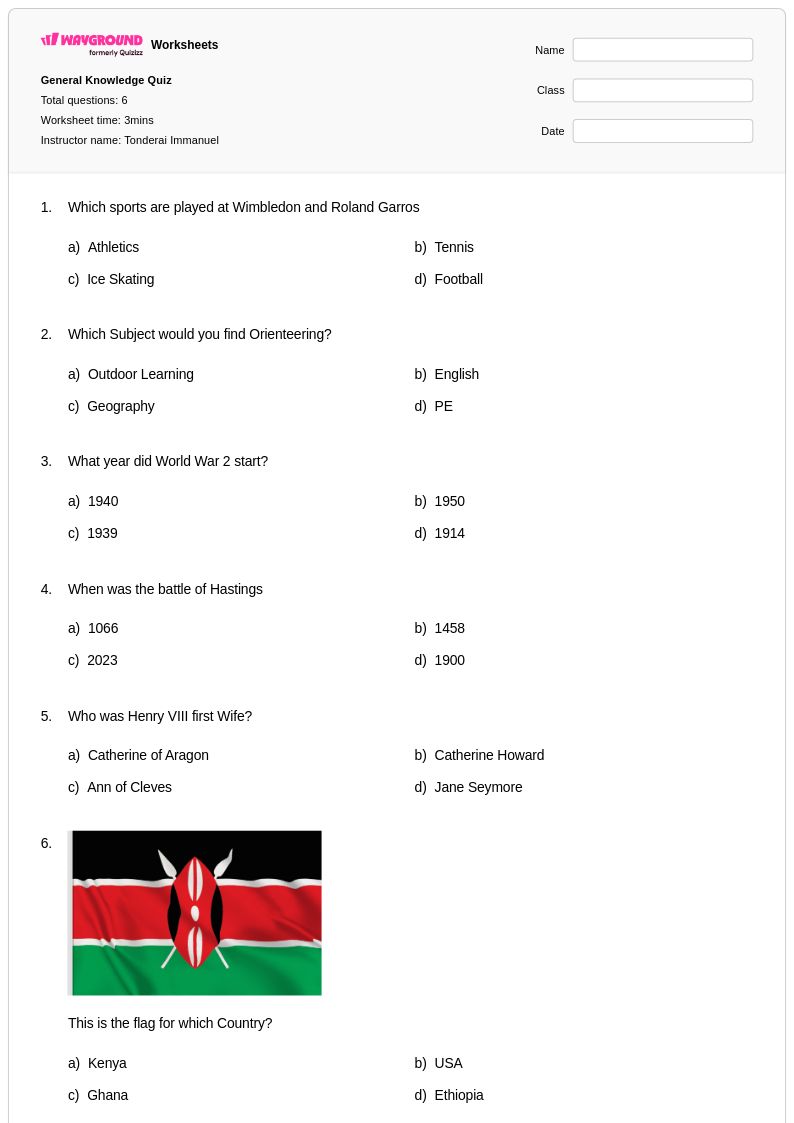
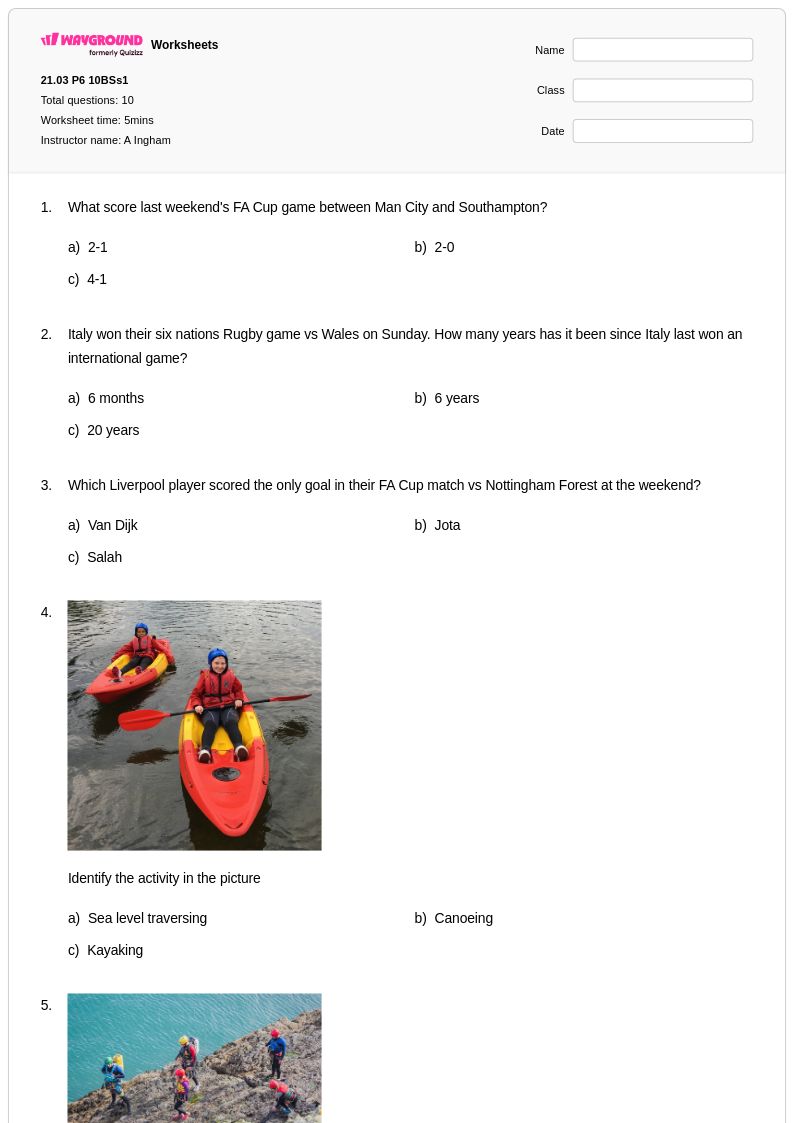
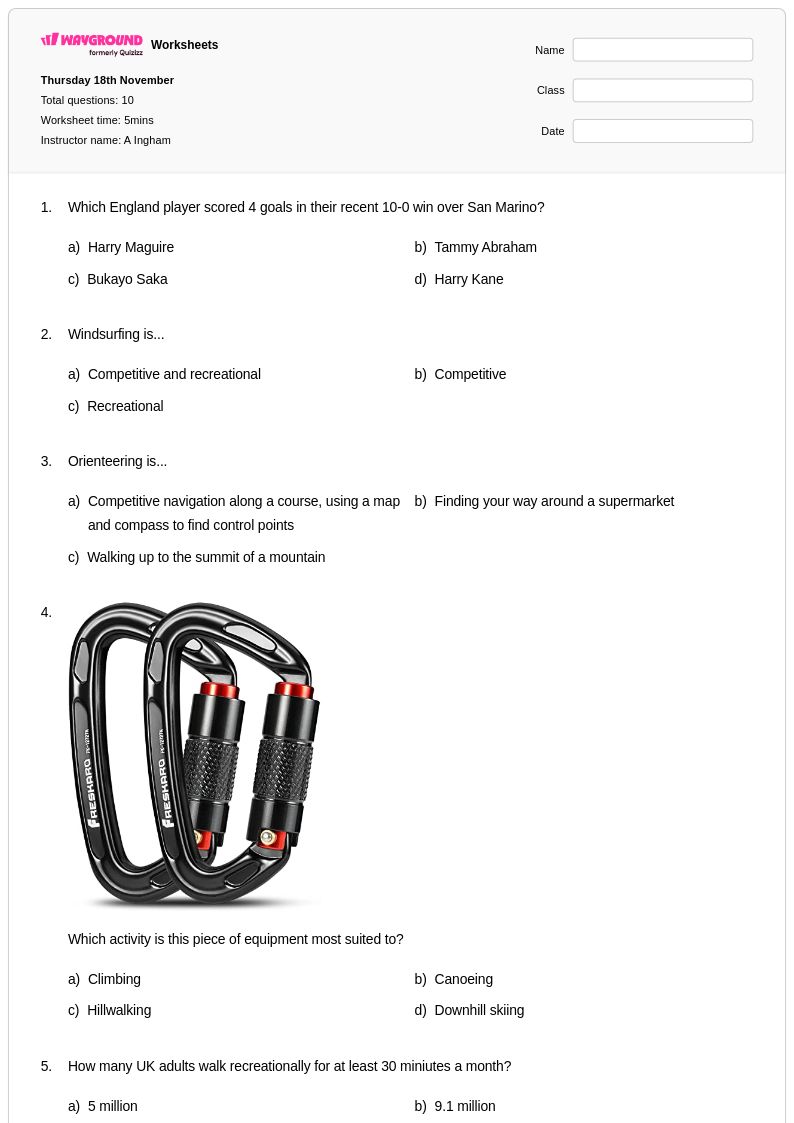
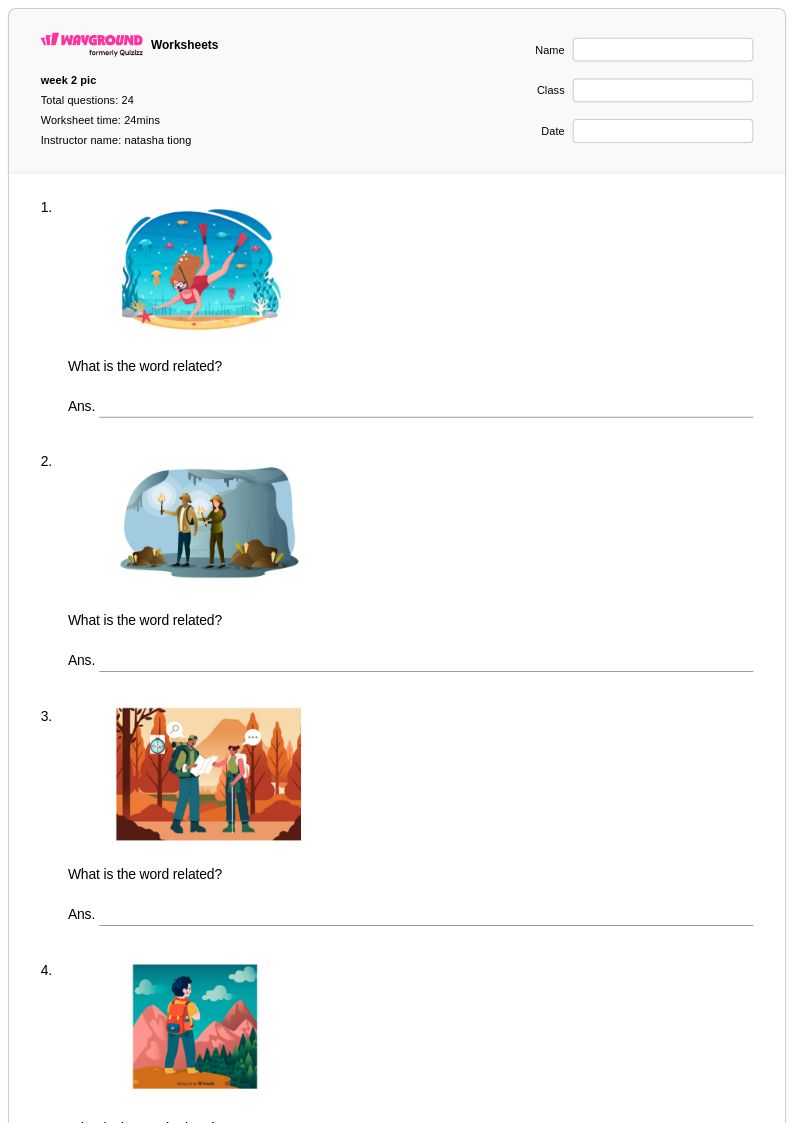
Year 3 orienteering worksheets and printables help students develop map reading, compass navigation, and outdoor exploration skills through engaging practice problems, free PDF activities, and comprehensive answer keys from Wayground's educational resources.
Explore printable Orienteering worksheets for Year 3
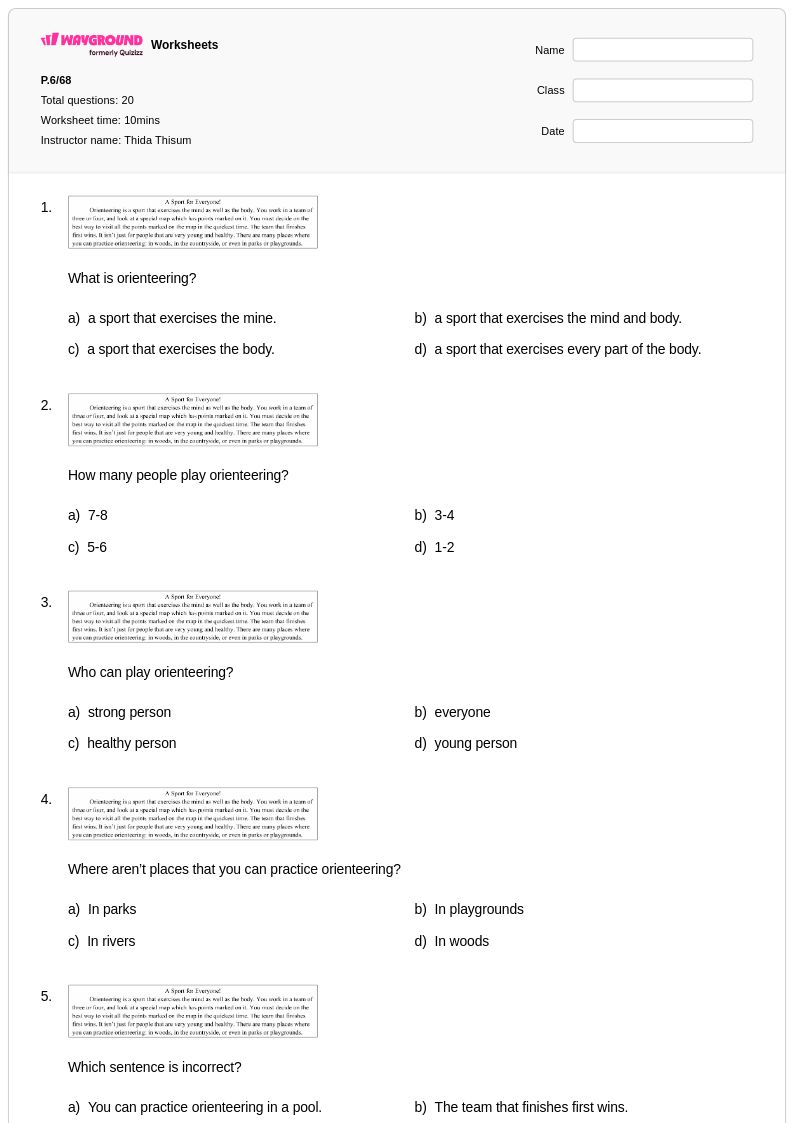
Orienteering worksheets for Year 3 students available through Wayground (formerly Quizizz) provide essential foundational training in map reading, compass use, and basic navigation skills that young learners need to safely explore outdoor environments. These comprehensive printable resources strengthen critical thinking abilities as students learn to interpret topographical symbols, understand directional concepts, and practice route planning through age-appropriate scenarios and activities. The worksheet collections include detailed answer keys that help teachers assess student progress in understanding fundamental orienteering concepts, while free pdf formats make it easy to distribute practice problems that reinforce skills like identifying landmarks, reading simple maps, and using basic compass directions during both classroom instruction and outdoor adventure activities.
Wayground (formerly Quizizz) supports physical education teachers with millions of teacher-created orienteering resources that can be easily accessed through robust search and filtering capabilities, allowing educators to quickly locate Year 3 appropriate materials that align with outdoor education standards and adventure activity curricula. The platform's differentiation tools enable teachers to customize worksheets for varying skill levels within their classrooms, while flexible formatting options provide both printable pdf versions for field use and digital formats for interactive learning experiences. These comprehensive resource collections facilitate effective lesson planning by offering materials suitable for initial skill introduction, ongoing practice sessions, remediation support for struggling learners, and enrichment opportunities for advanced students ready to tackle more complex navigation challenges in their outdoor and adventure activities.
FAQs
How do I teach orienteering to students who have never used a compass before?
Start by grounding students in the relationship between a compass and a map before taking them outdoors. Teach them to identify the needle, housing, and baseplate, then practice taking bearings from fixed classroom landmarks before applying those skills to a printed map. Structured worksheets that walk through compass use step-by-step help students build confidence with the tool before they face the complexity of real terrain.
What exercises help students practice reading topographic maps for orienteering?
Effective practice involves having students interpret contour lines to identify ridges, valleys, and elevation changes, then match those features to a physical or illustrated landscape. Exercises that ask students to plot a route between two points while avoiding steep terrain or water features reinforce both map reading and strategic thinking. Worksheets that include map symbol identification, bearing calculations, and course planning problems give students repeated, structured exposure to the full skill set orienteering demands.
What mistakes do students commonly make when learning compass navigation?
The most frequent error is confusing magnetic north with map north, which throws off bearing calculations entirely. Students also commonly rotate the compass housing without accounting for declination, or they read the wrong end of the needle. A related mistake is holding the compass near metal objects or electronic devices, which causes inaccurate readings. Practice problems that require students to show their bearing calculations step-by-step help surface and correct these errors early.
How do I differentiate orienteering instruction for students with varying experience levels?
For beginners, focus on map symbol recognition and simple point-to-point navigation with clear landmarks. More experienced students can work on triangulation, attack point strategy, and route choice problems that involve trade-offs between distance and terrain difficulty. On Wayground, teachers can apply accommodations such as reduced answer choices to lower the cognitive load for students who need additional support, or enable Read Aloud for students who benefit from audio delivery of instructions.
How can I use Wayground's orienteering worksheets in my PE class?
Wayground's orienteering worksheets are available as printable PDFs for use in traditional classroom or gymnasium settings, and in digital formats for technology-integrated lessons, including the option to host them as a quiz directly on Wayground. This makes them practical for pre-activity instruction, post-activity reflection, or indoor lesson days when outdoor access is limited. The included answer keys support both teacher-led review and independent student work, so they fit naturally into a range of lesson structures.
How do I assess whether students understand orienteering safety protocols?
Safety knowledge in orienteering includes understanding boundary rules, whistle signals, what to do if lost, and how to read terrain for hazards. Assessment should go beyond recall and ask students to apply protocols to scenario-based problems, such as deciding the correct response when a course marker is missing or when a partner is injured. Worksheets that embed safety questions within broader navigation tasks help teachers gauge whether students can integrate safety thinking into real decision-making, not just recite rules in isolation.