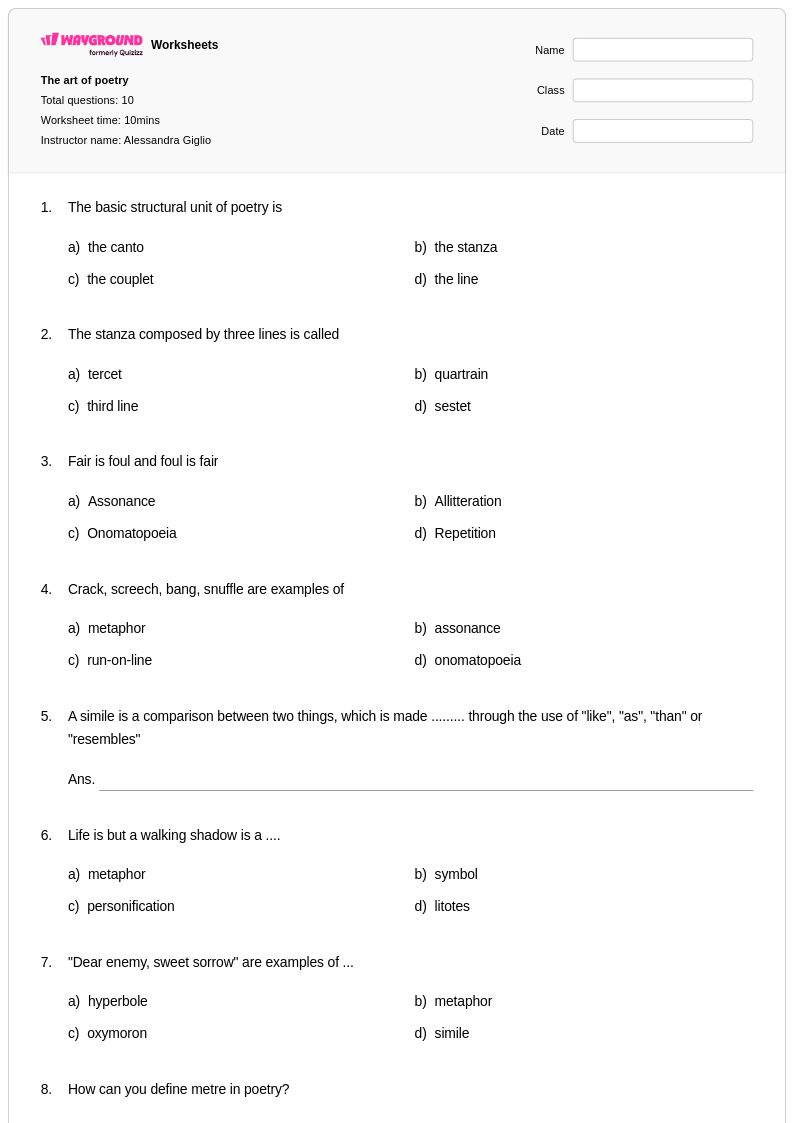
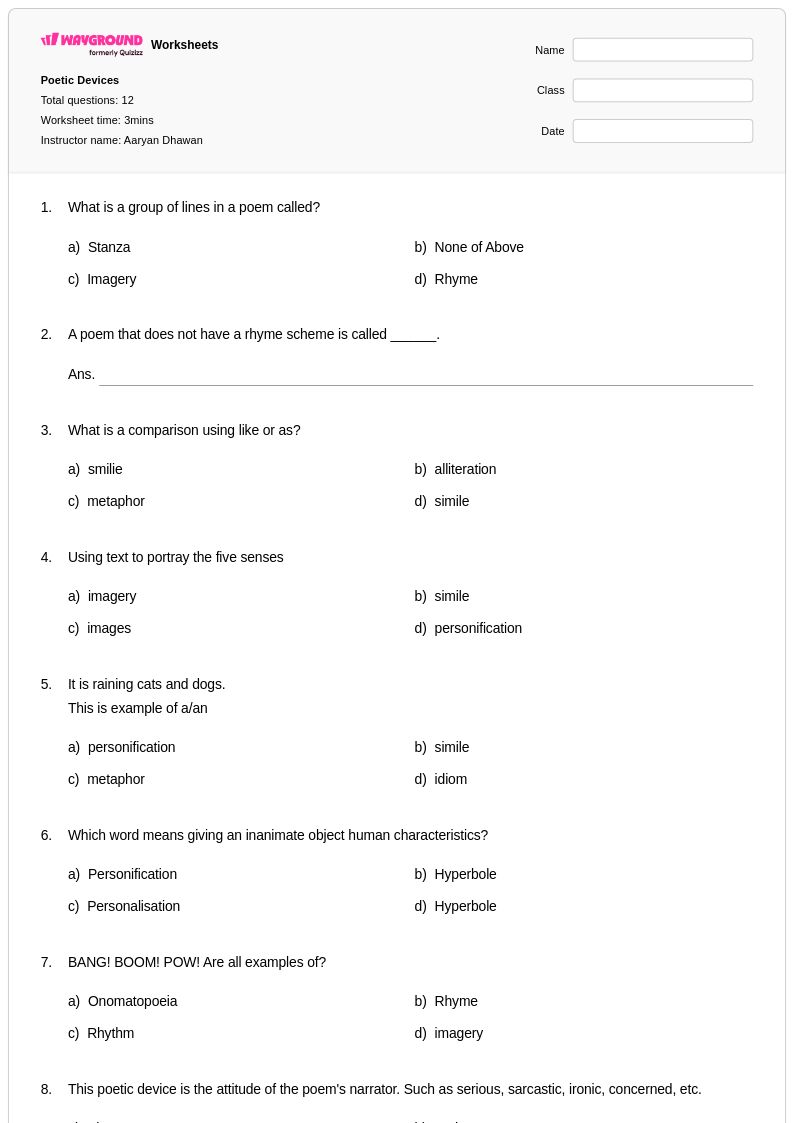
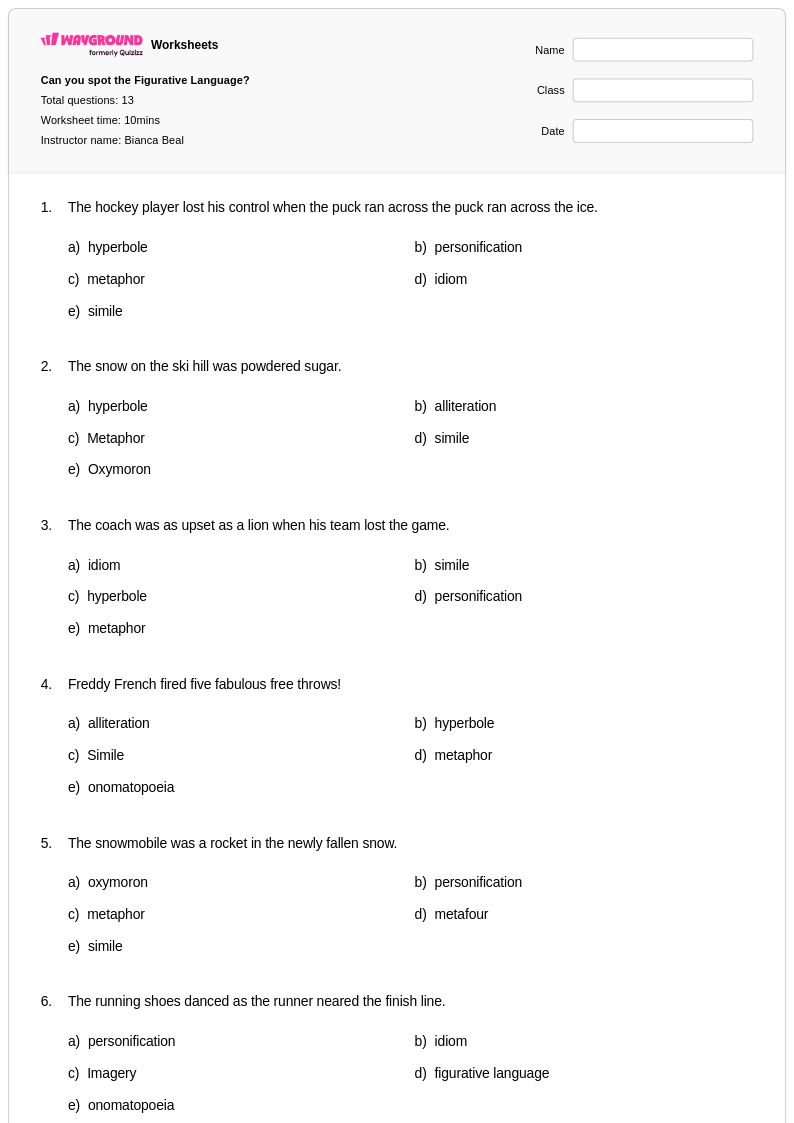
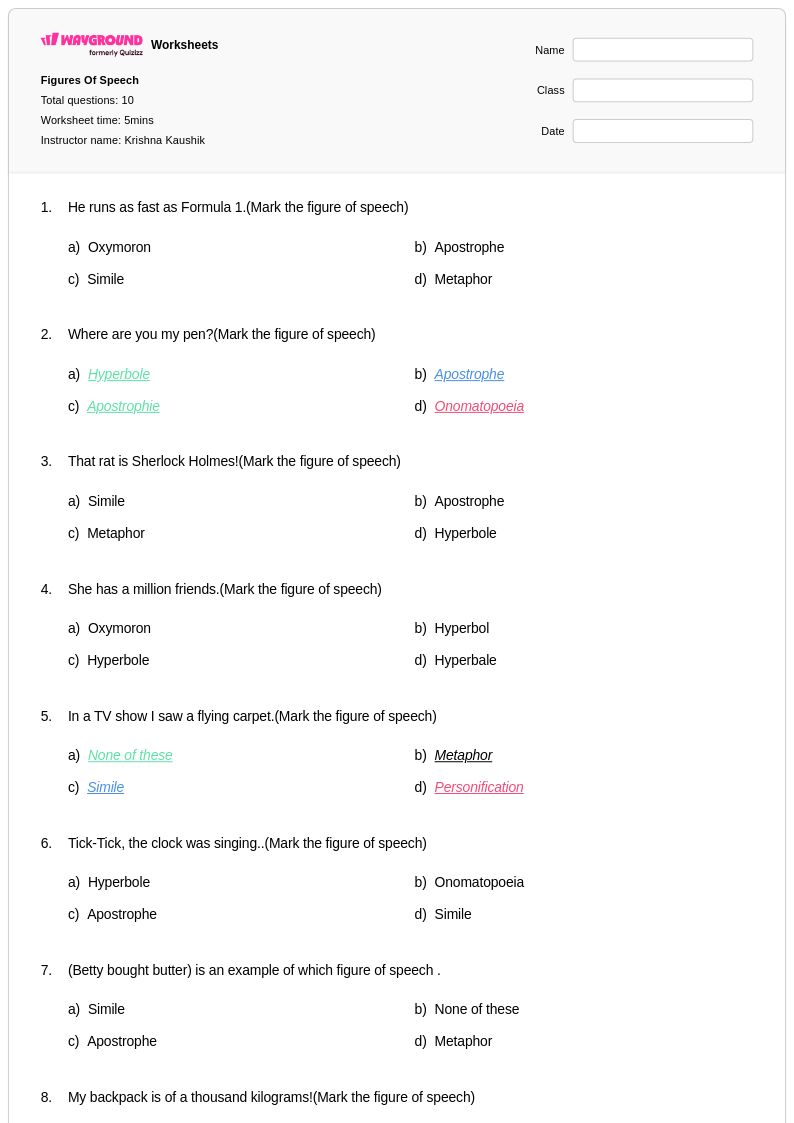
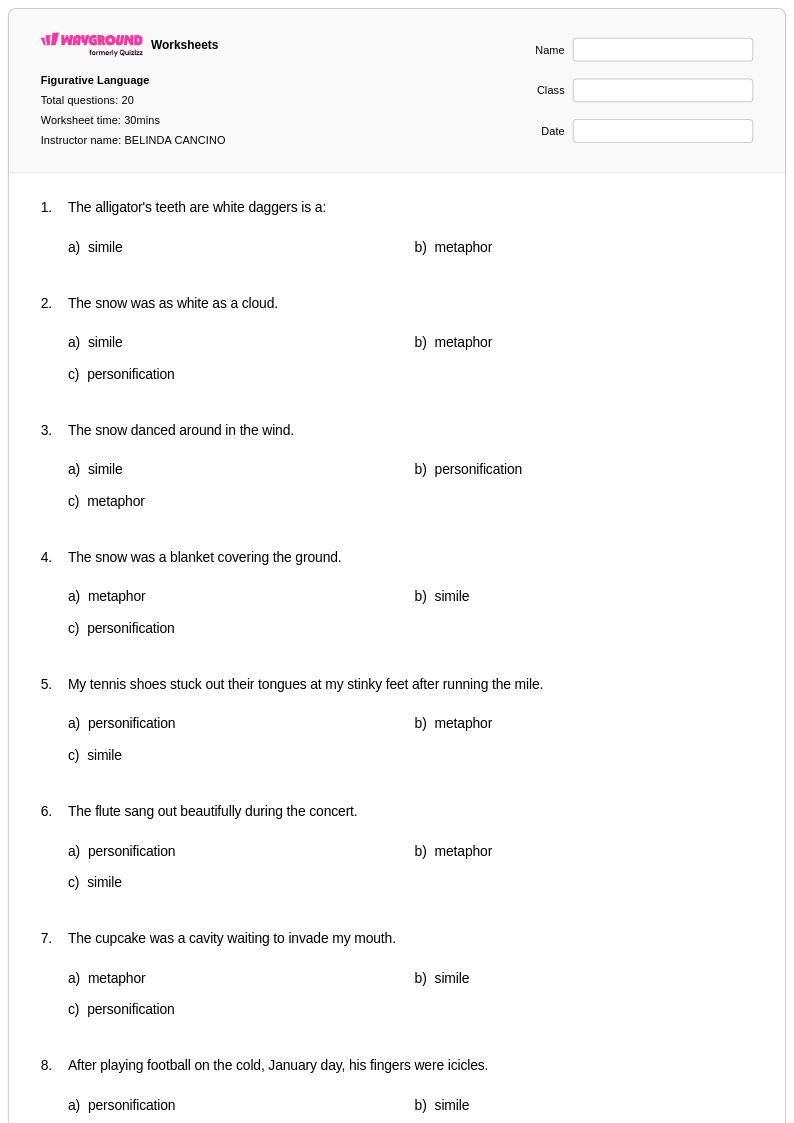
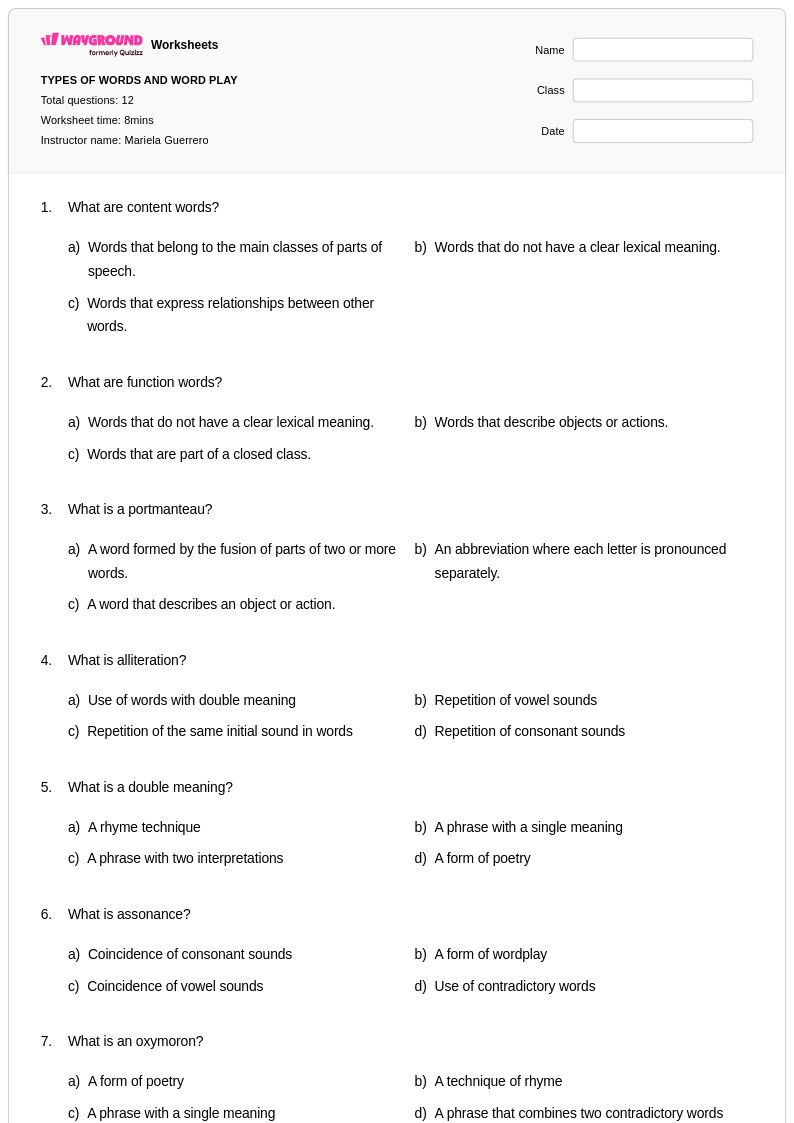
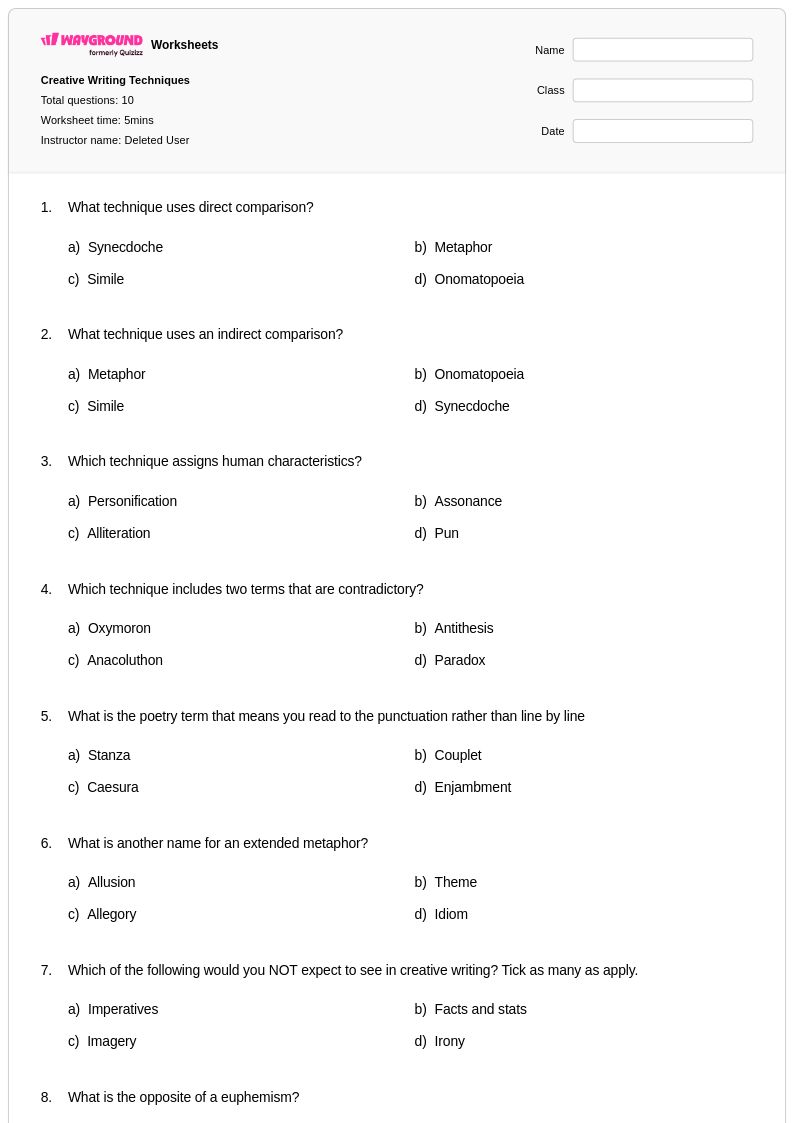
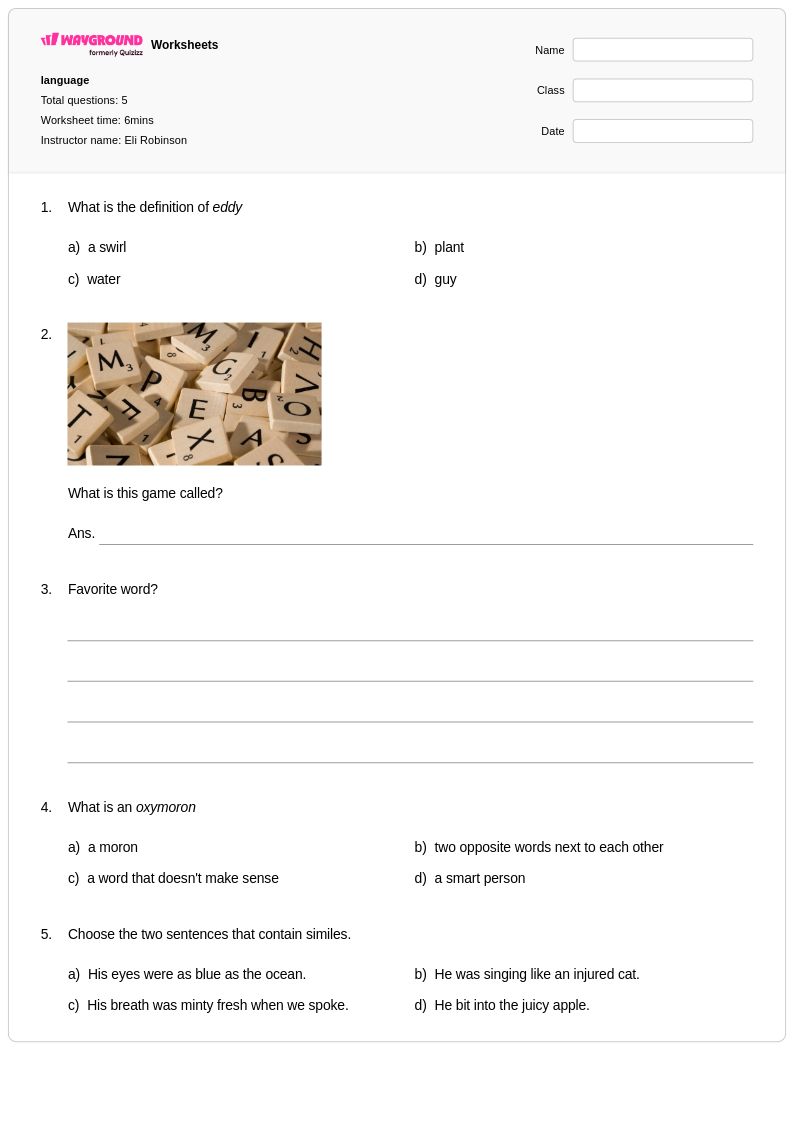
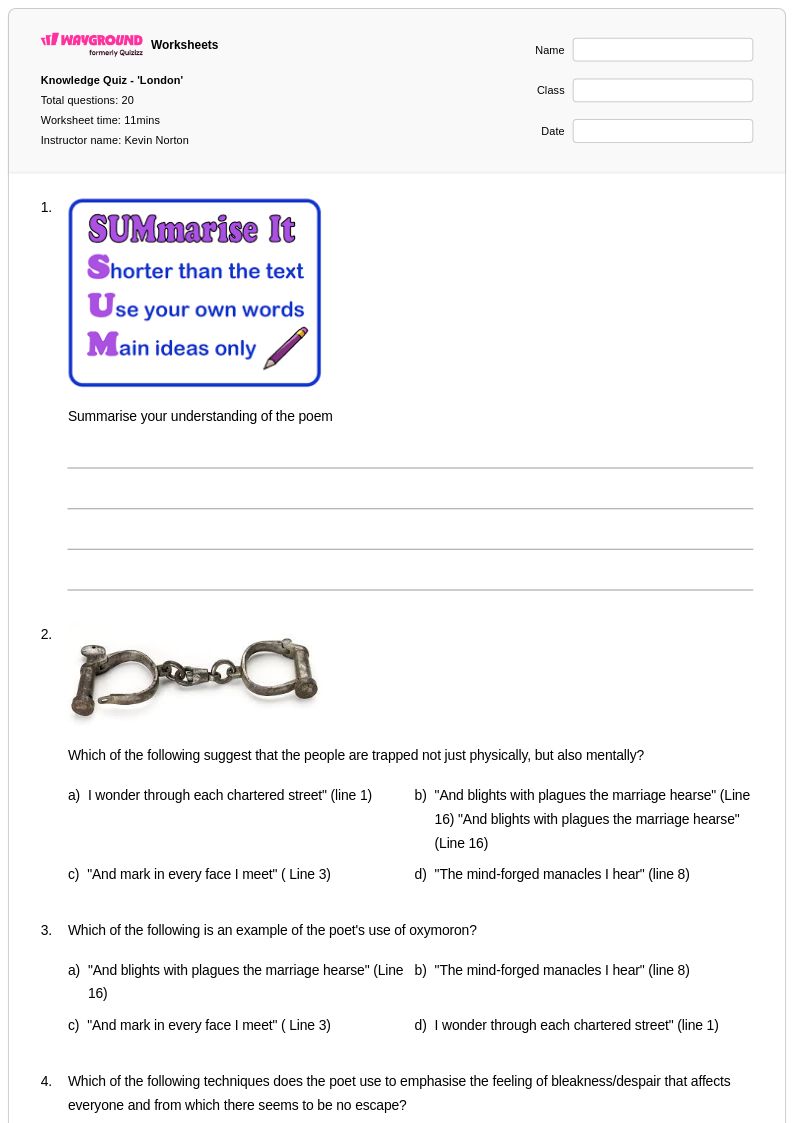
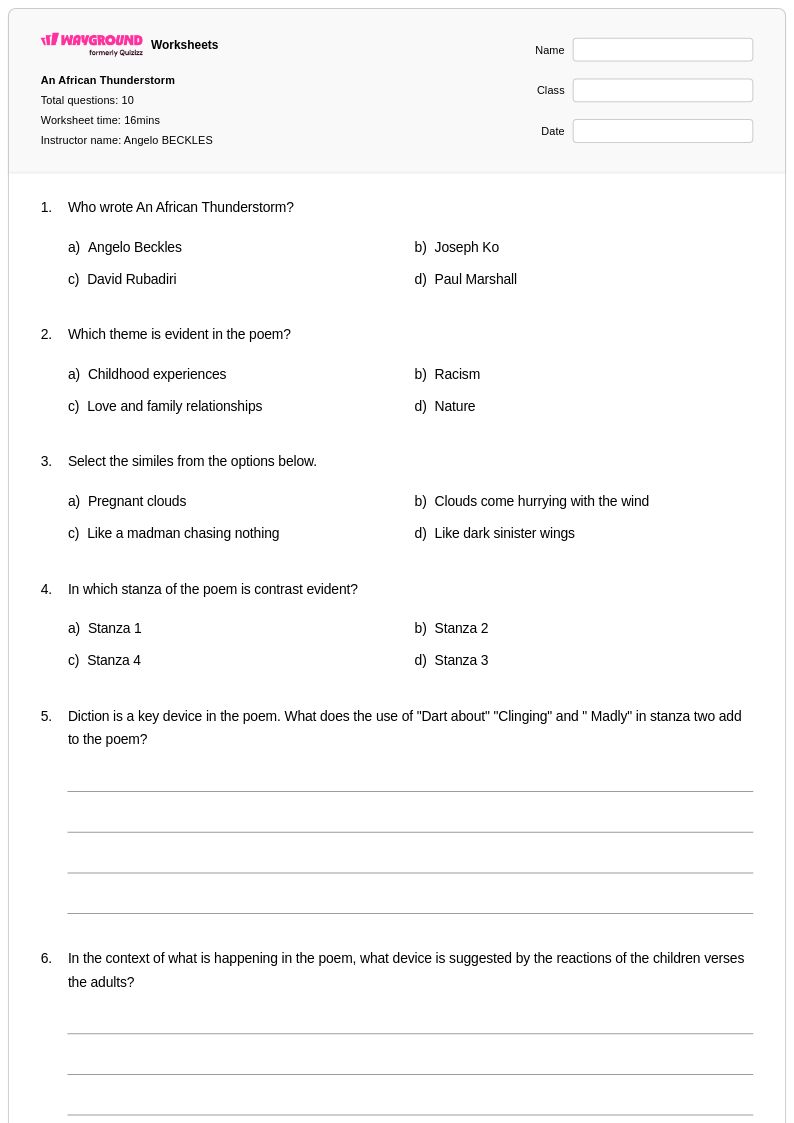
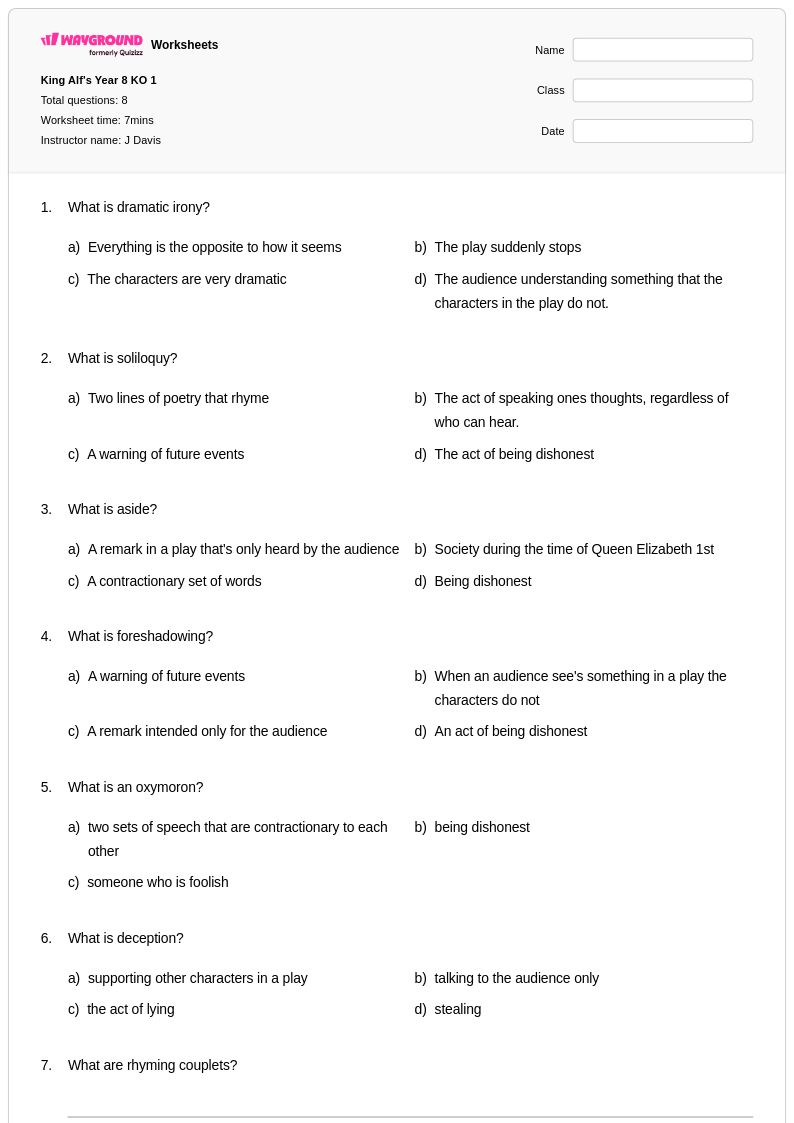
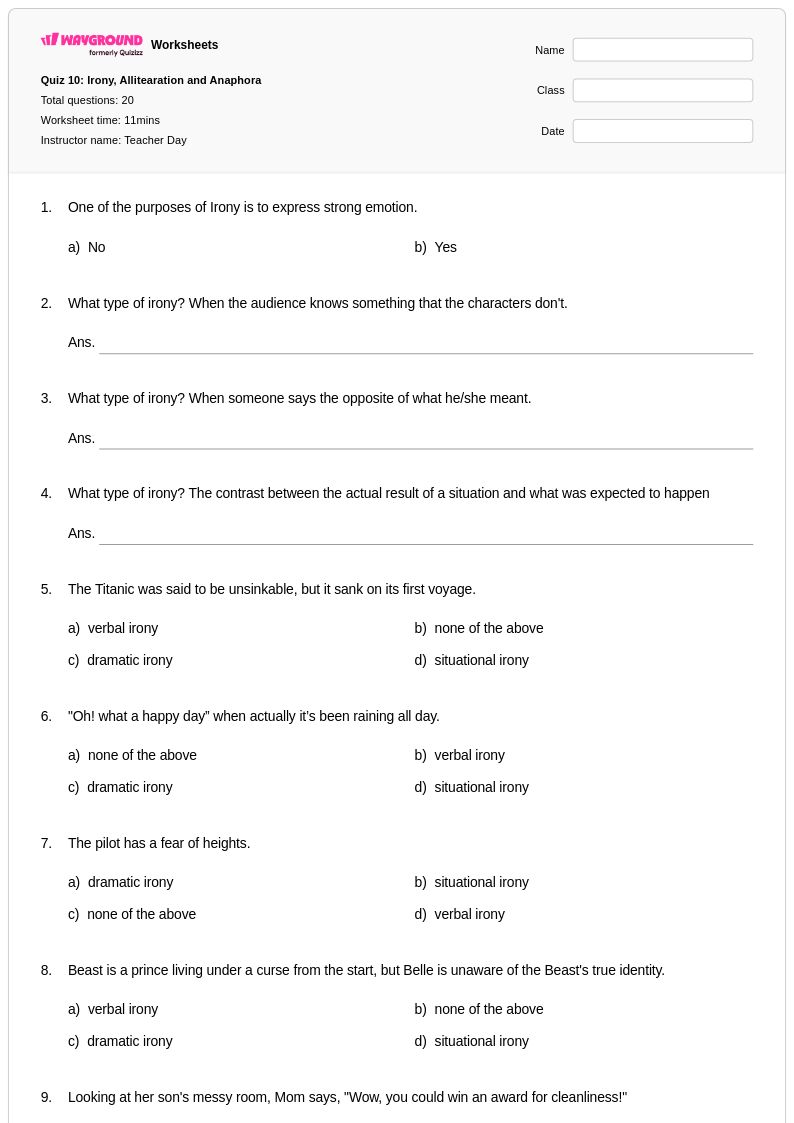
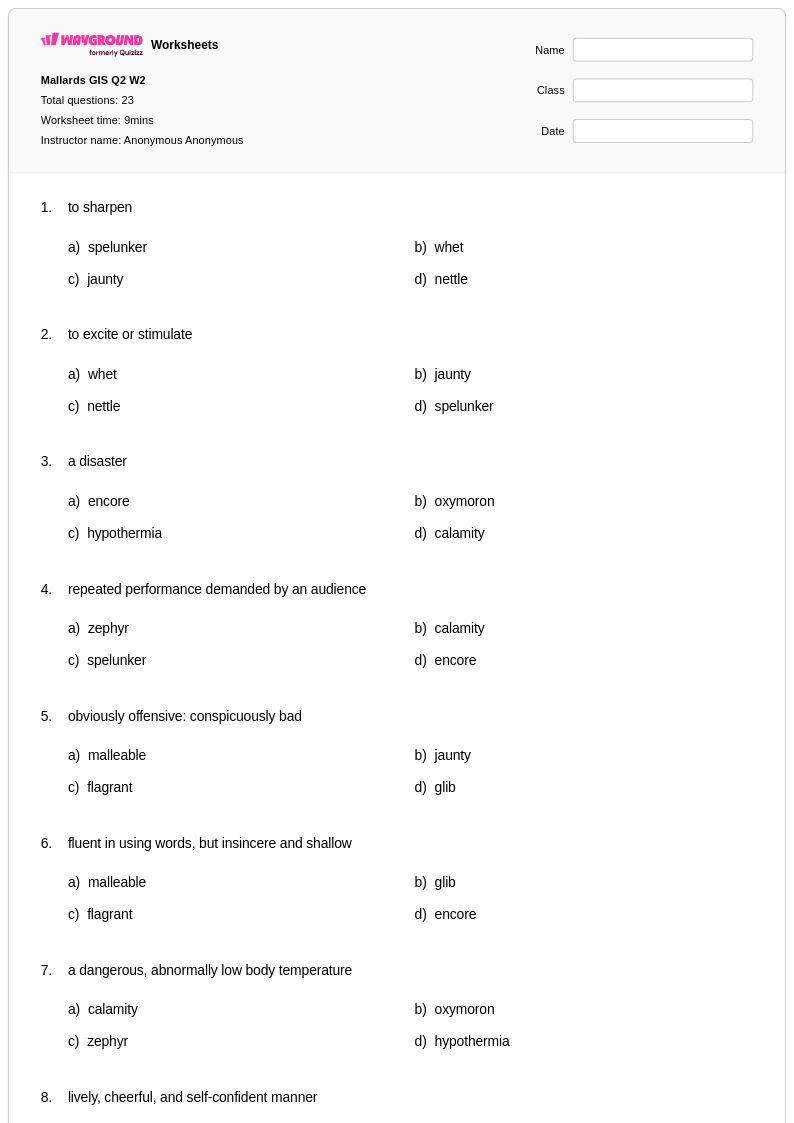
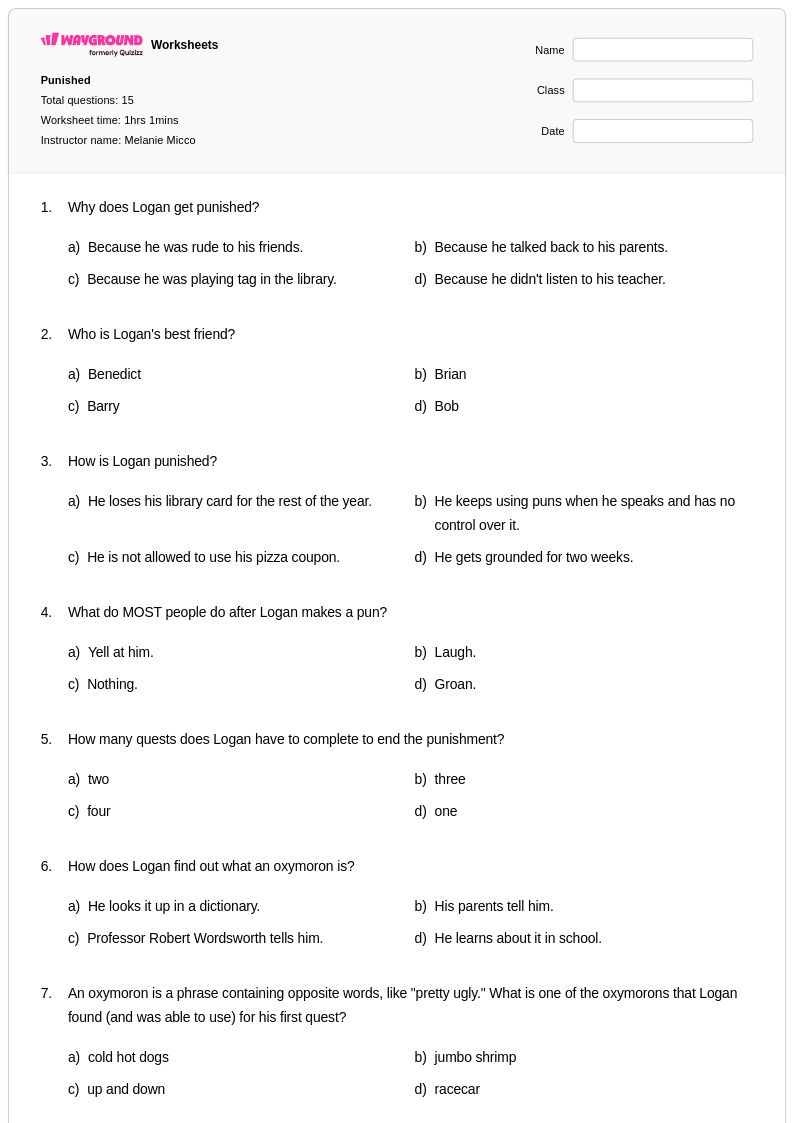
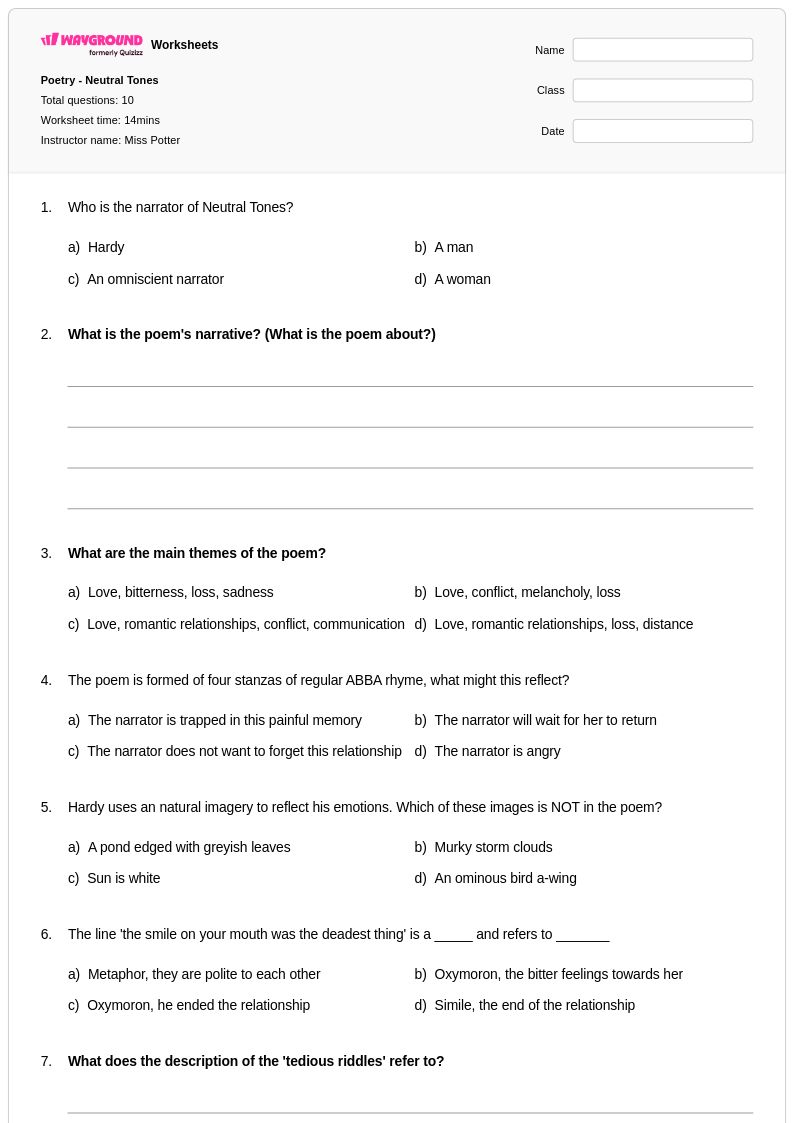
Year 4 oxymoron worksheets from Wayground provide engaging printables and practice problems that help students identify and understand contradictory word pairs, complete with answer keys for effective learning.
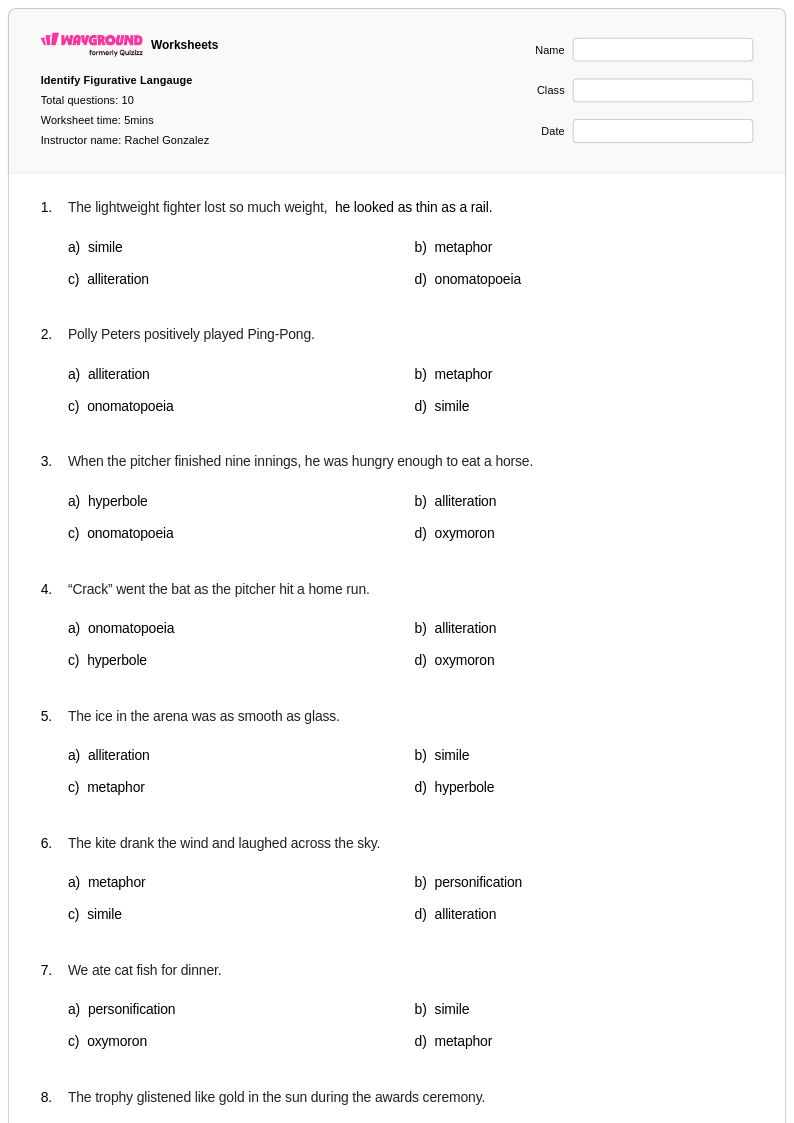
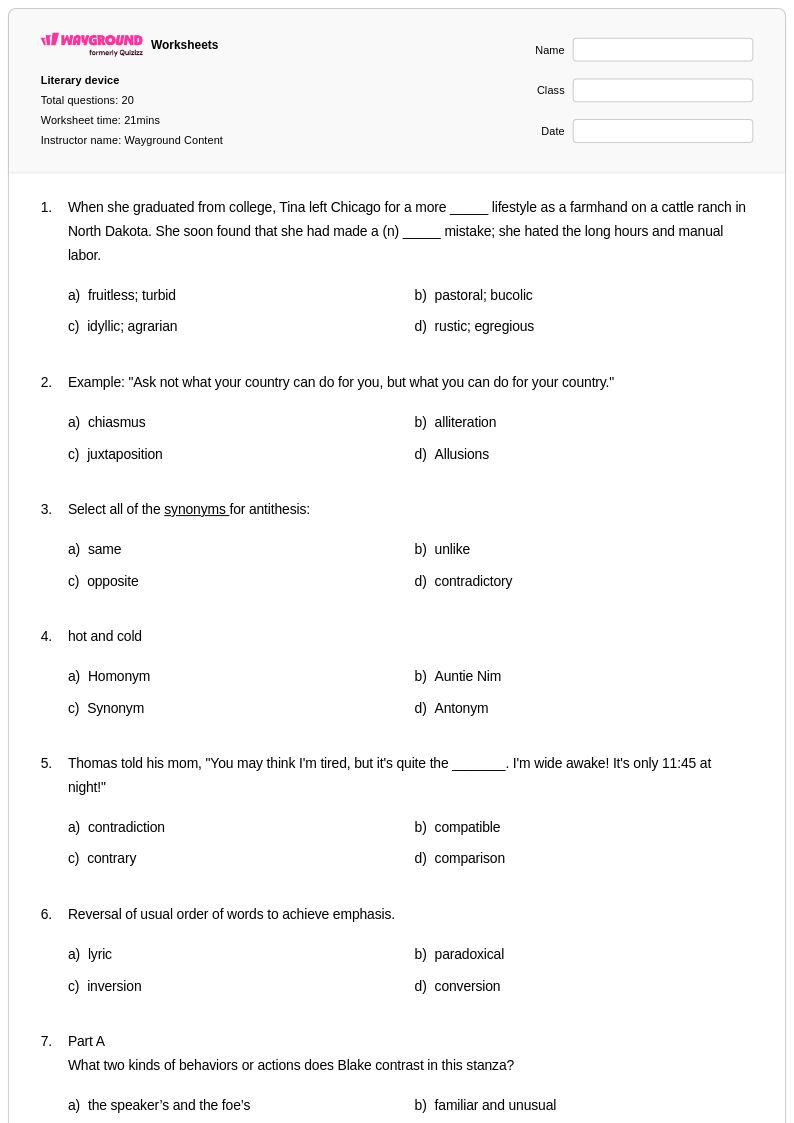
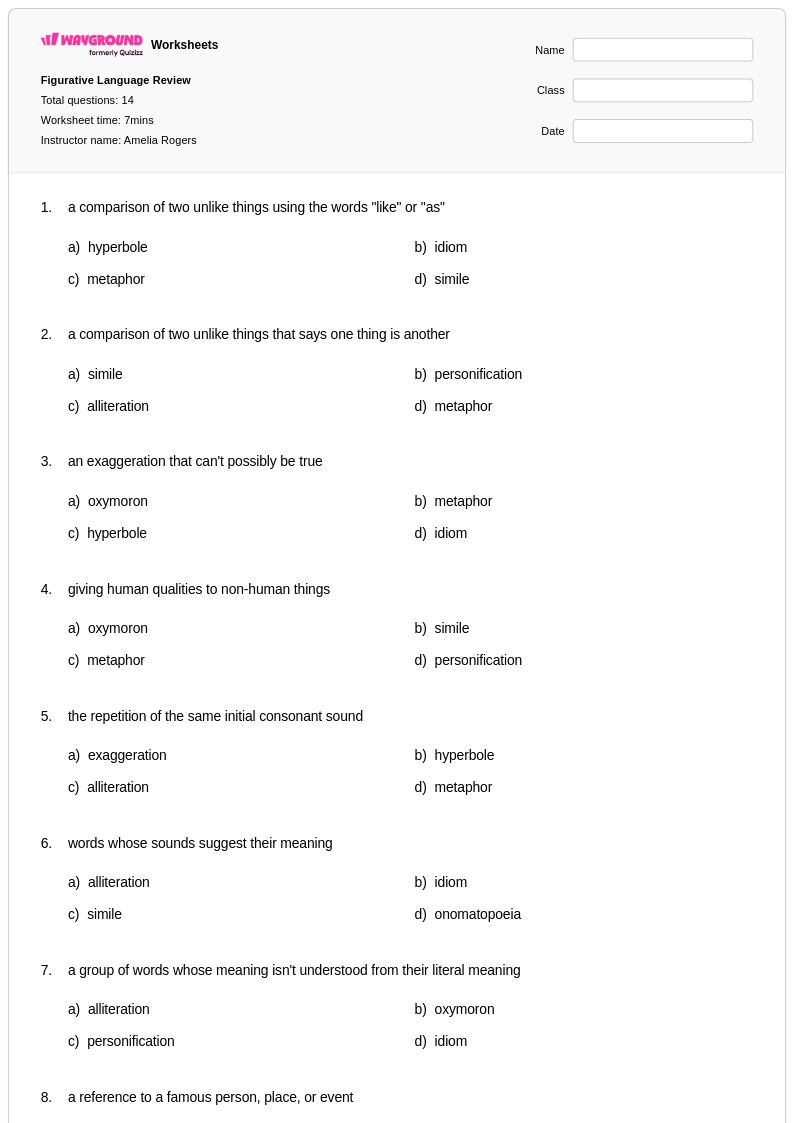
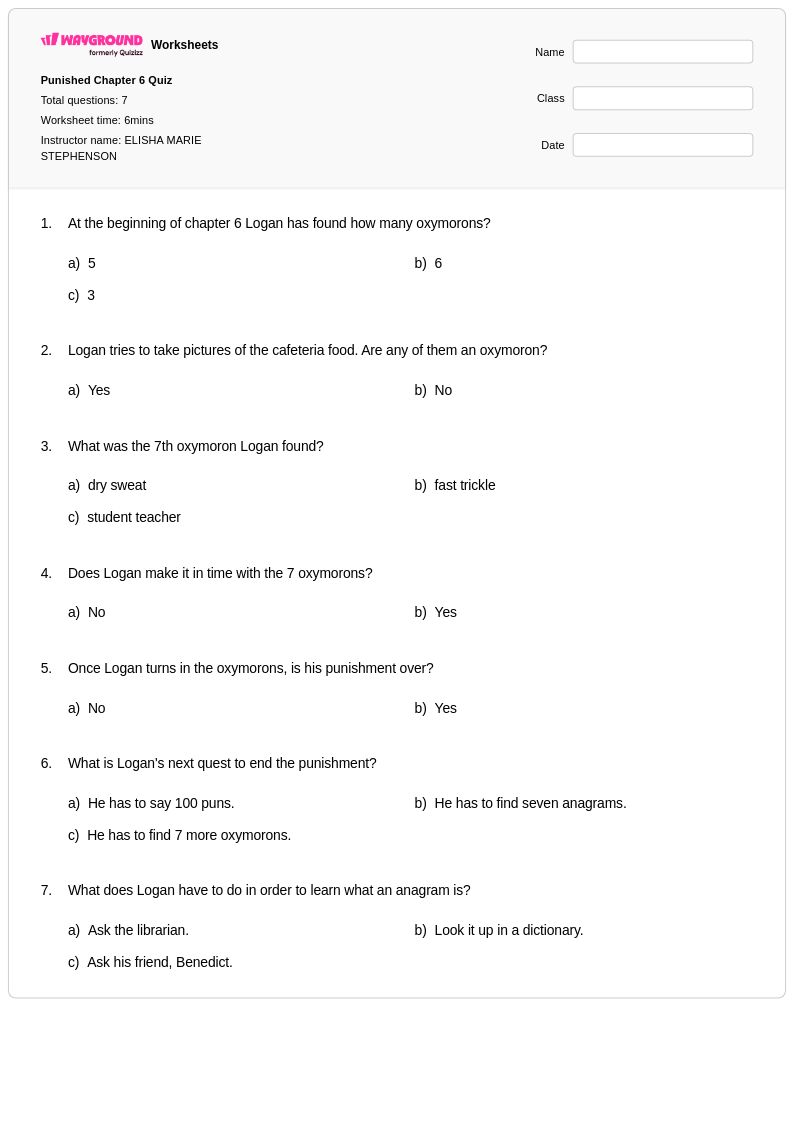
Oxymoron worksheets for Year 4 students available through Wayground (formerly Quizizz) provide comprehensive practice in identifying and understanding this fascinating form of figurative language where contradictory terms combine to create meaningful expressions. These educational resources strengthen students' analytical thinking skills as they explore common oxymorons like "jumbo shrimp," "deafening silence," and "old news" while learning to recognize how seemingly opposite words work together to convey specific meanings. The worksheets include varied practice problems that challenge fourth-graders to spot oxymorons in sentences, match contradictory word pairs, and explain why these combinations make sense in context, with answer keys provided to support both independent learning and teacher-guided instruction through free printable pdf formats.
Wayground (formerly Quizizz) empowers educators with an extensive collection of teacher-created oxymoron worksheets drawn from millions of available resources, featuring robust search and filtering capabilities that allow precise targeting of Year 4 language arts standards. The platform's differentiation tools enable teachers to customize worksheet difficulty levels and content focus areas, ensuring appropriate challenge levels for diverse learners while supporting both remediation for students who need additional figurative language practice and enrichment opportunities for advanced learners ready to explore more complex oxymoronic expressions. Available in both printable pdf and digital formats, these flexible resources streamline lesson planning by providing immediate access to standards-aligned materials that can be seamlessly integrated into figurative language units, independent practice sessions, or targeted skill-building activities.
FAQs
How do I teach oxymorons to students?
Start by distinguishing oxymorons from other contradictory figures of speech like paradoxes — an oxymoron is a compressed two-word contradiction (e.g., 'living dead'), while a paradox is a broader statement that seems false but reveals a truth. Anchor instruction with familiar examples students already know, such as 'deafening silence,' 'jumbo shrimp,' and 'organized chaos,' then ask students to explain why each pairing creates meaning rather than confusion. Progressing from recognition to analysis to creation gives students a complete grasp of the device.
What exercises help students practice identifying oxymorons?
Effective practice exercises move from simple identification to deeper analysis. Begin with tasks where students highlight oxymorons in short passages, then ask them to explain the effect the oxymoron creates in context. More challenging exercises prompt students to evaluate how an author's use of an oxymoron contributes to tone, humor, or emphasis — skills that transfer directly to literary analysis writing.
What mistakes do students commonly make when learning about oxymorons?
The most common error is confusing oxymorons with general contradictions or with paradoxes. Students often label any contradictory sentence as an oxymoron, not recognizing that true oxymorons are compact, intentional two-word pairings. Another frequent mistake is missing the deliberate literary purpose behind the contradiction — students need to understand that an author chooses an oxymoron to create a specific effect, not simply because the words conflict.
How do I differentiate oxymoron instruction for students with different skill levels?
For struggling students, limit initial examples to highly familiar oxymorons and provide sentence frames that scaffold the analysis ('This is an oxymoron because ___'). Advanced students benefit from analyzing oxymorons pulled from authentic literary texts and being asked to create original ones that serve a clear rhetorical purpose. On Wayground, teachers can apply accommodations such as reduced answer choices to lower cognitive load for individual students, or enable Read Aloud so that question text is read to students who need additional support, all without other students being notified.
How do I use Wayground's oxymoron worksheets in my classroom?
Wayground's oxymoron worksheets are available as printable PDFs for traditional classroom use and in digital formats for technology-integrated or remote learning environments. Teachers can also host worksheets directly as a quiz on Wayground, which allows for real-time student progress tracking. Each worksheet includes a complete answer key, so these materials work equally well for guided instruction, independent practice, or remediation without additional teacher preparation.
How are oxymorons used in literature, and why should students learn to recognize them?
Authors use oxymorons to create emphasis, reveal complexity, or inject humor by pairing terms that logically contradict each other yet produce a meaningful image or idea. Recognizing oxymorons helps students read more actively — they learn to pause when language seems paradoxical and ask what effect the author is deliberately creating. This skill supports broader literary analysis competencies, including tone analysis, author's craft, and close reading.