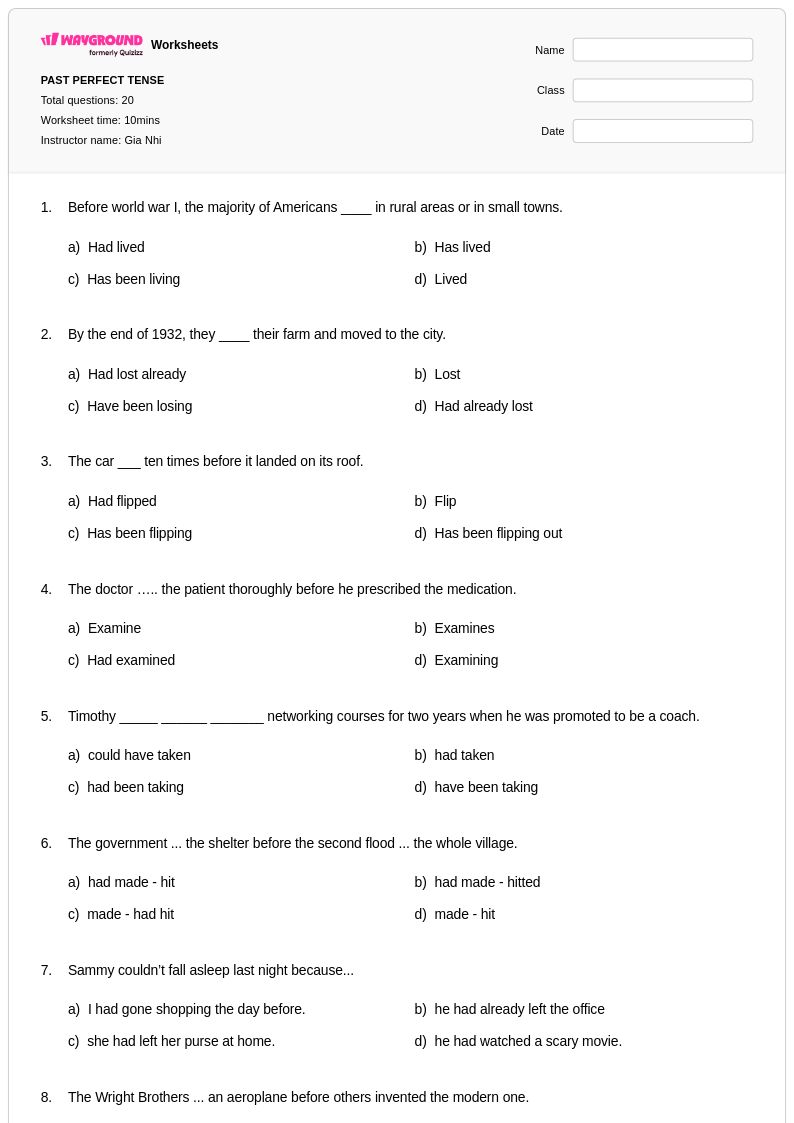
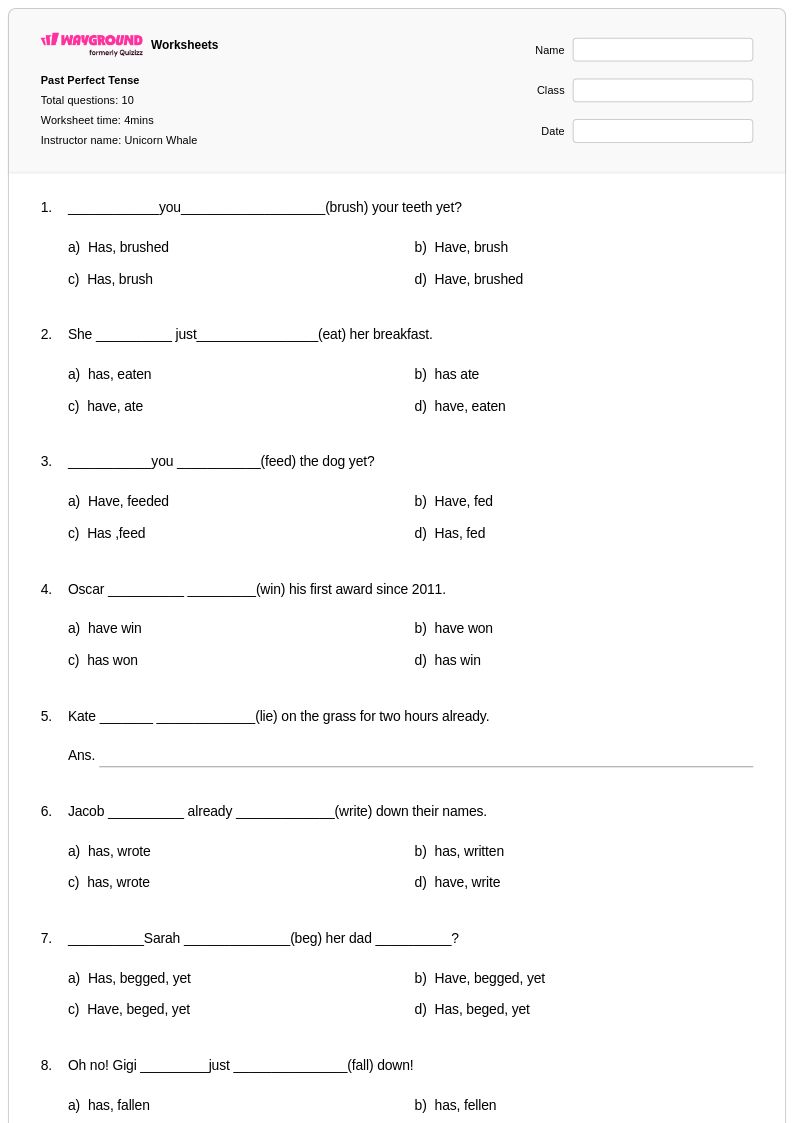
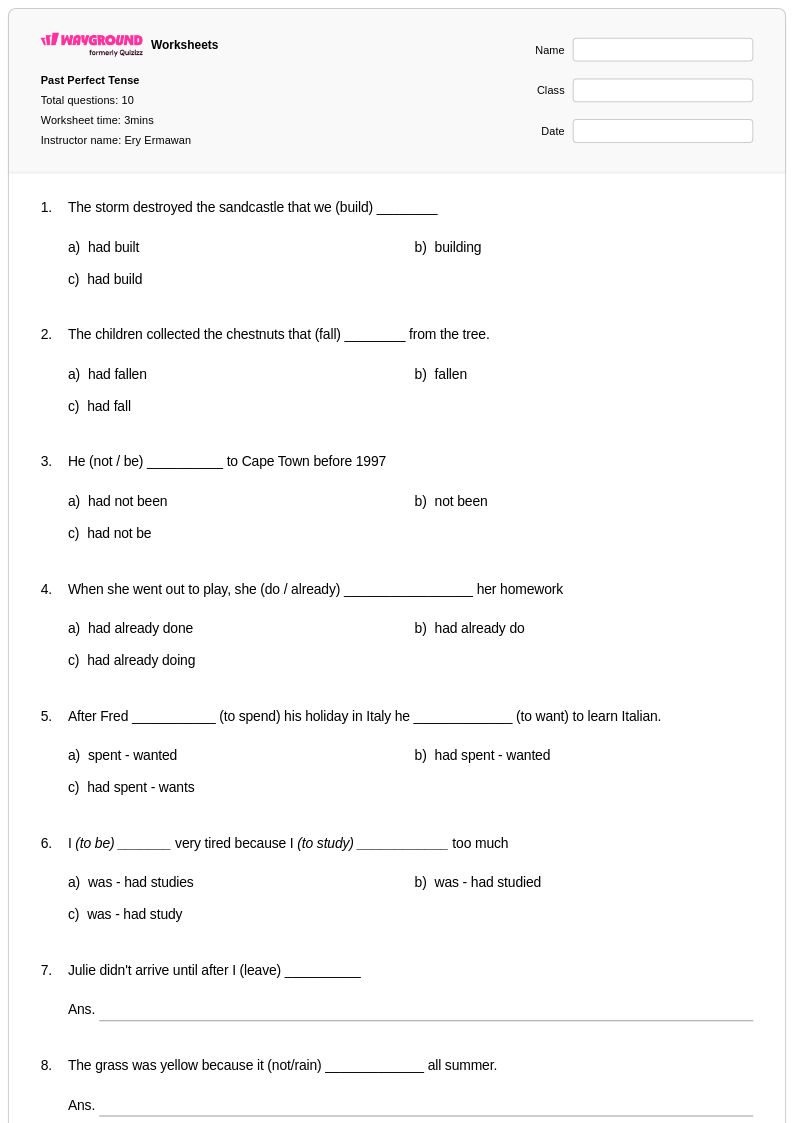
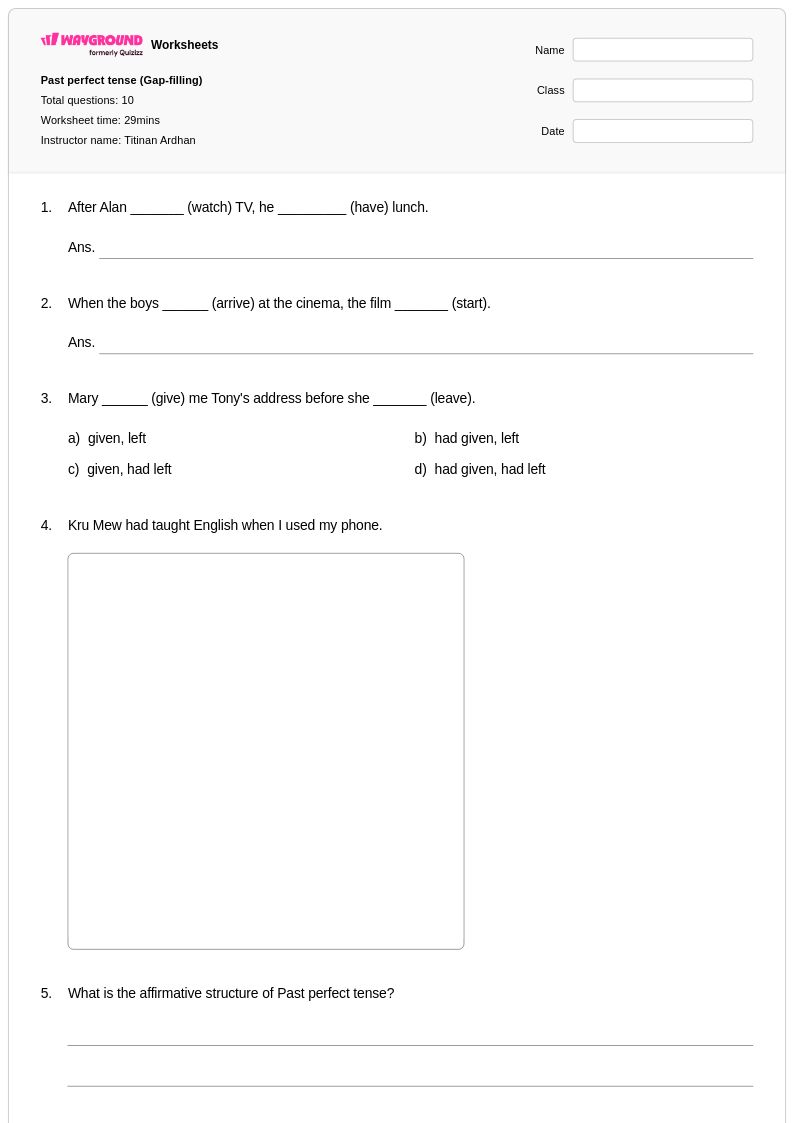
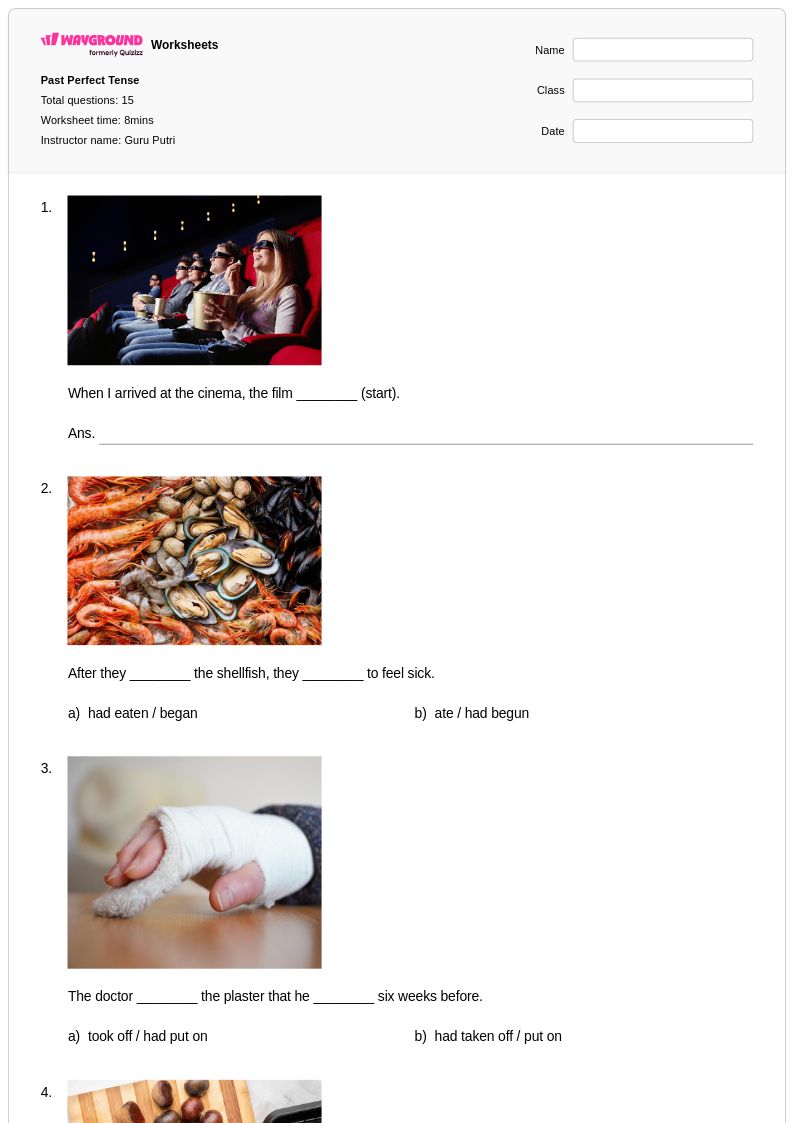
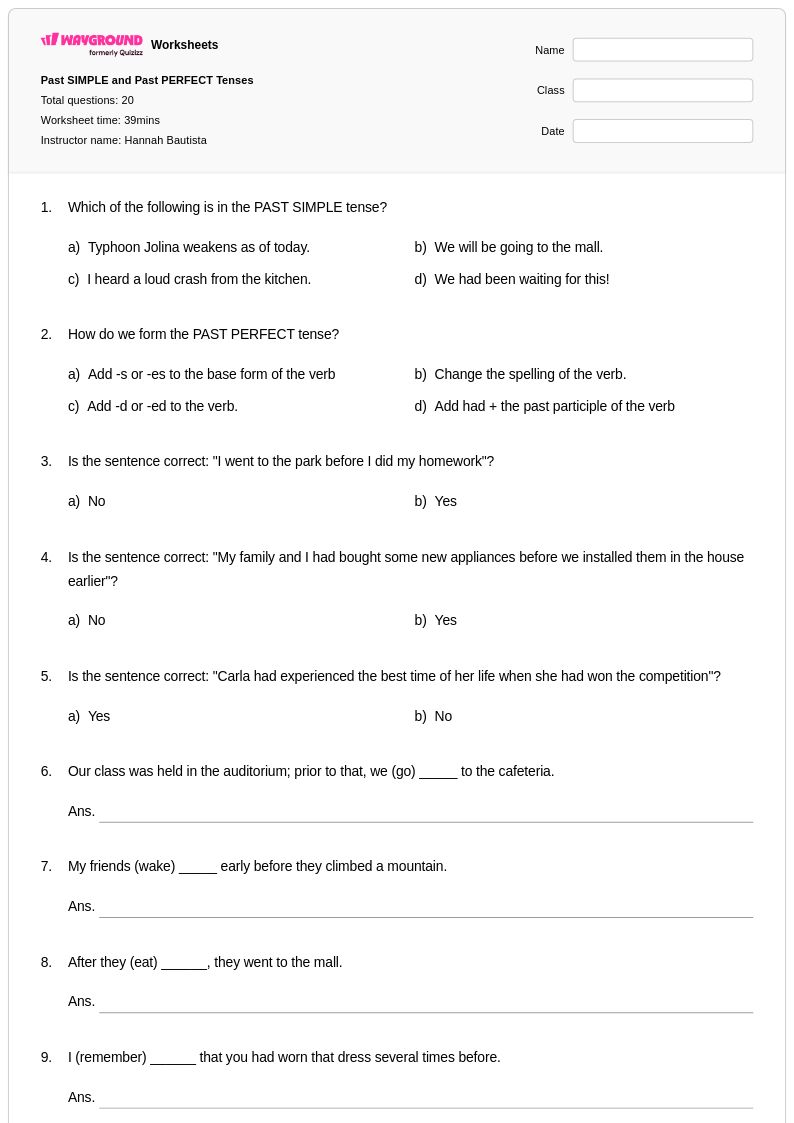
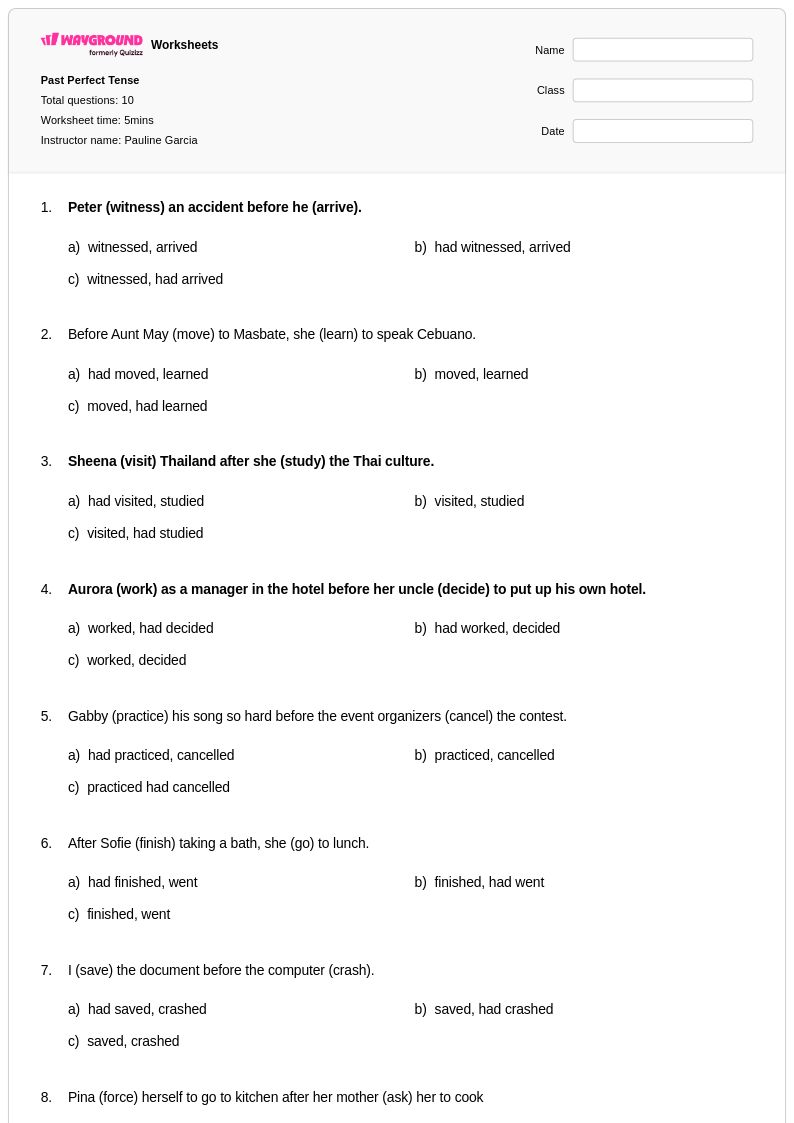
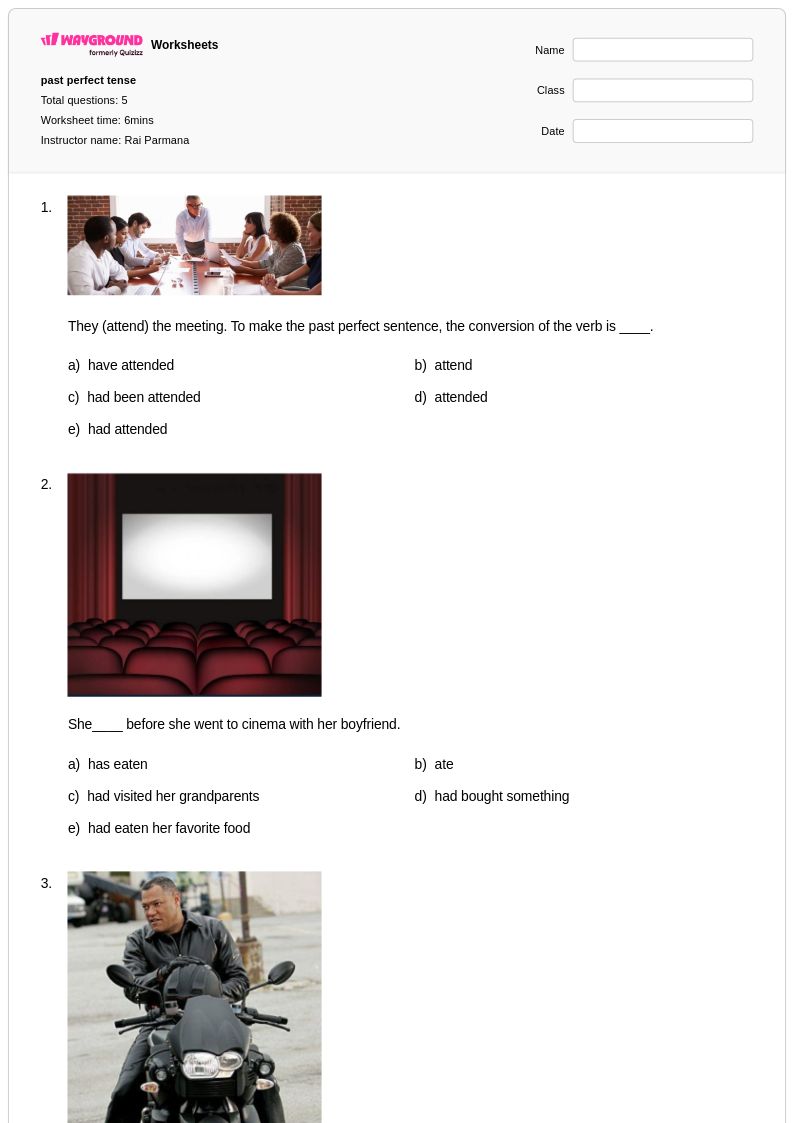
Discover free past perfect tense worksheets and printables from Wayground that help students master this complex verb form through engaging practice problems and comprehensive answer keys.
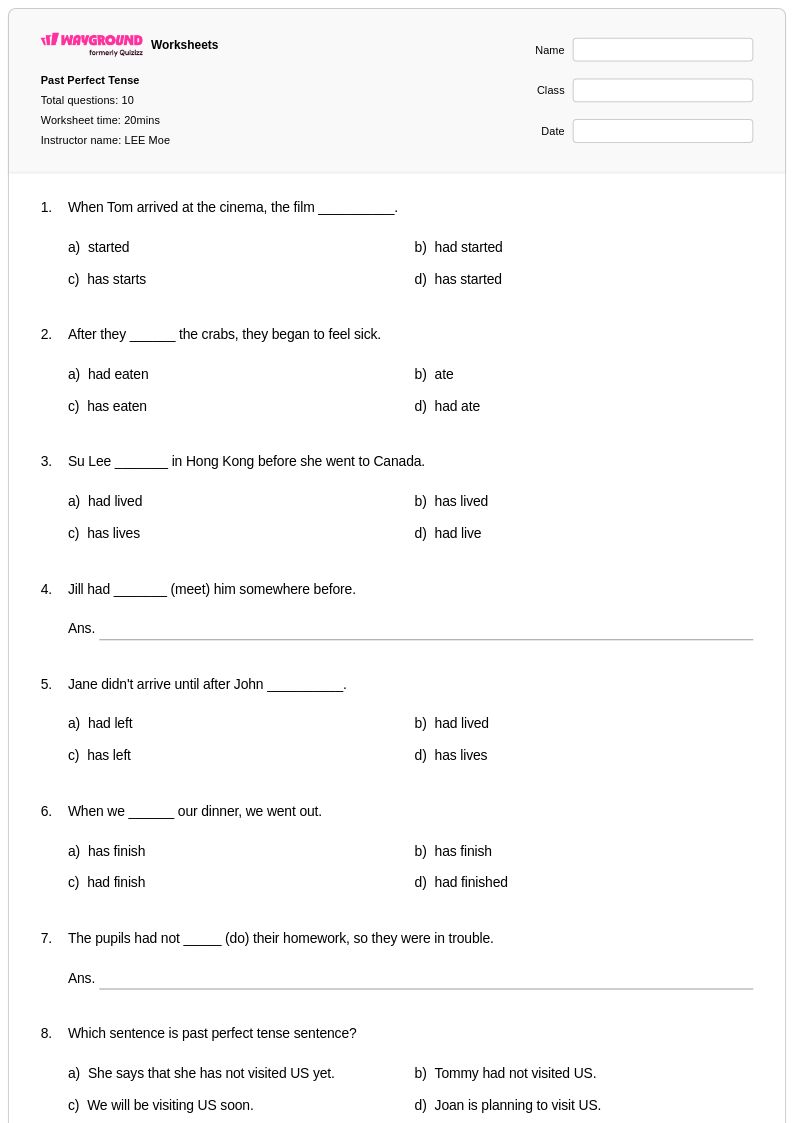
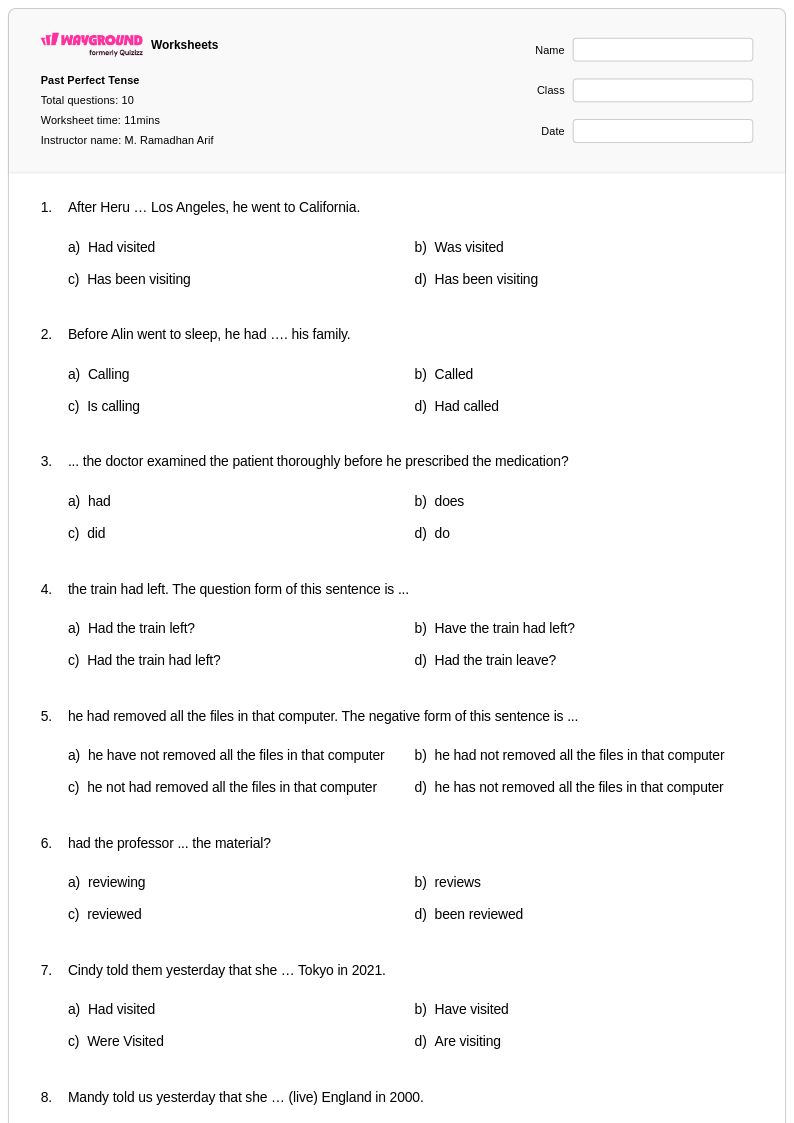
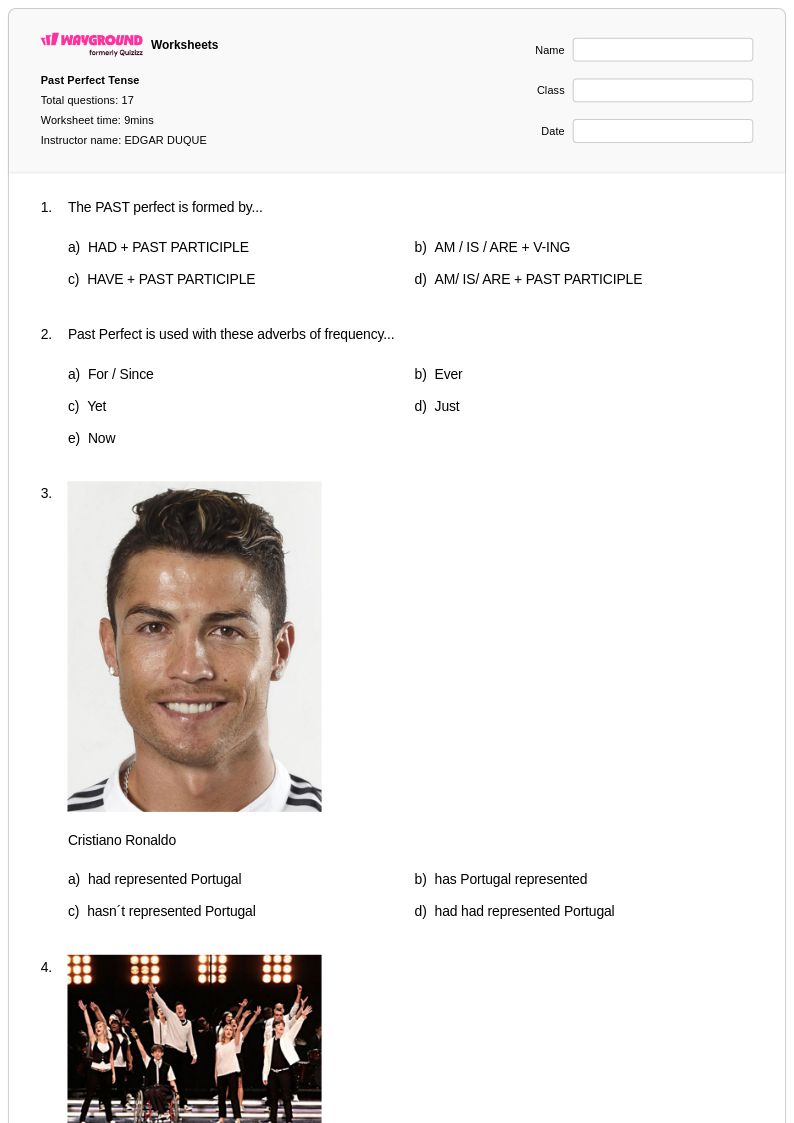
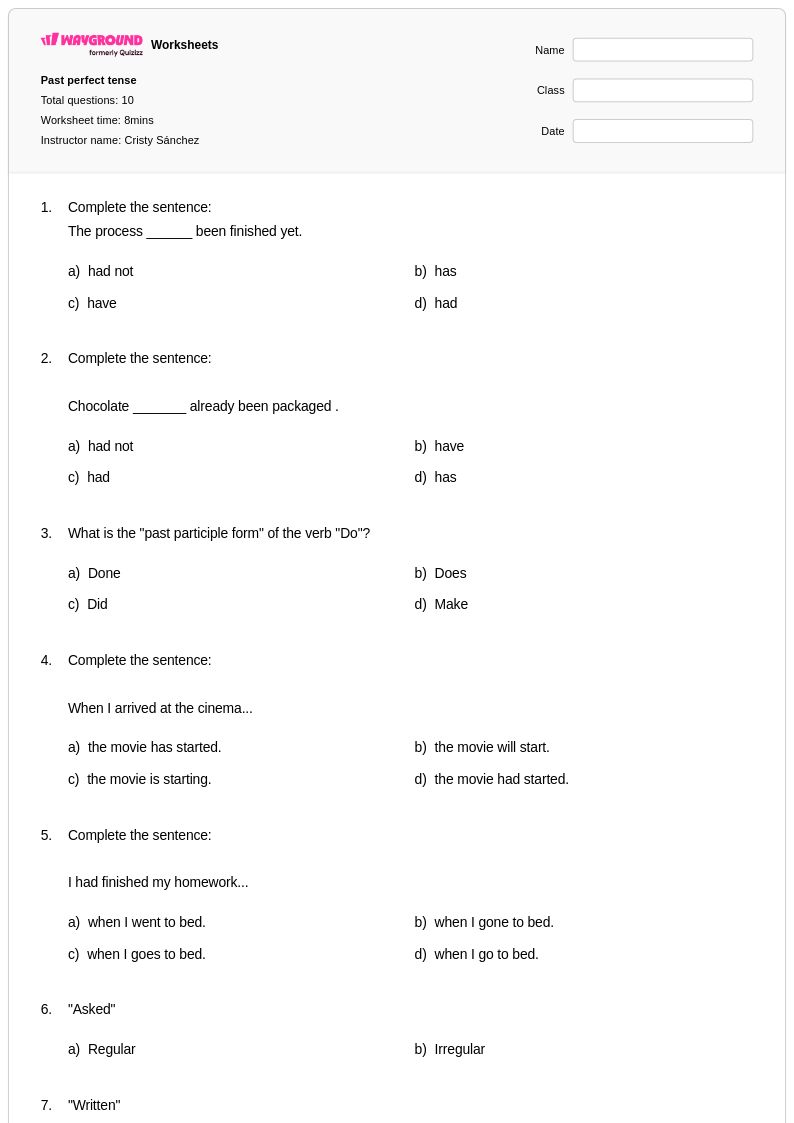
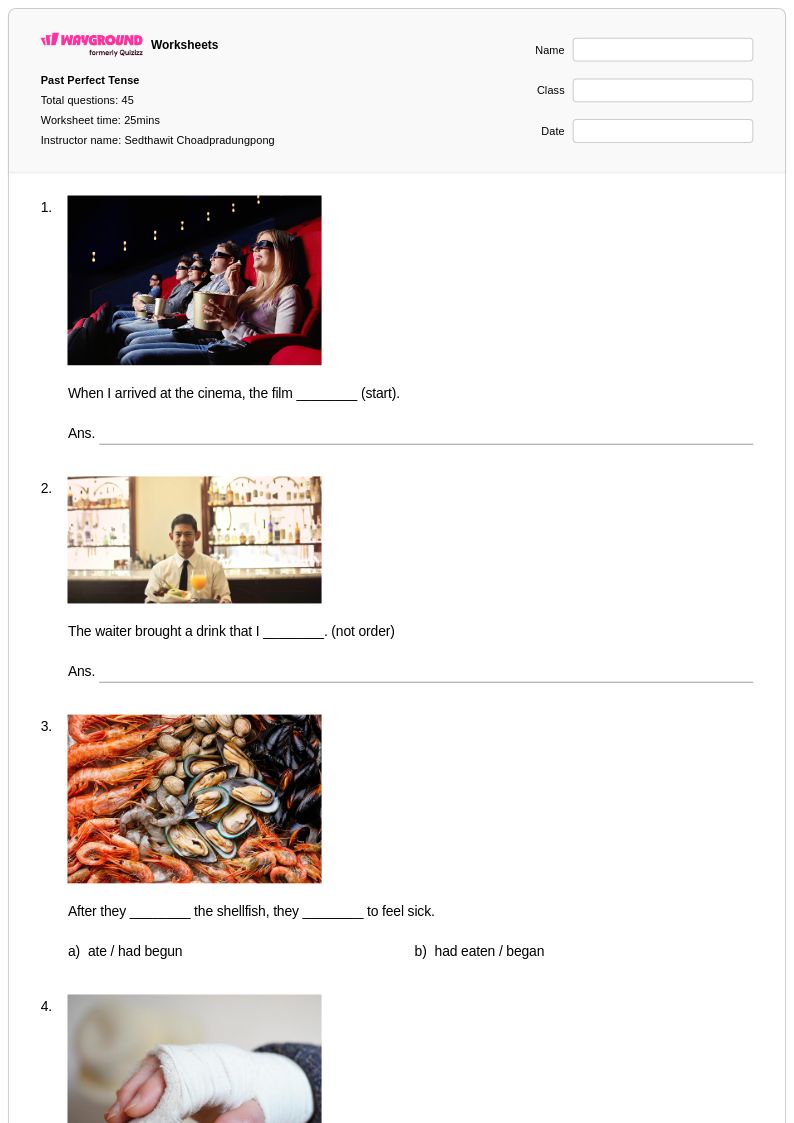
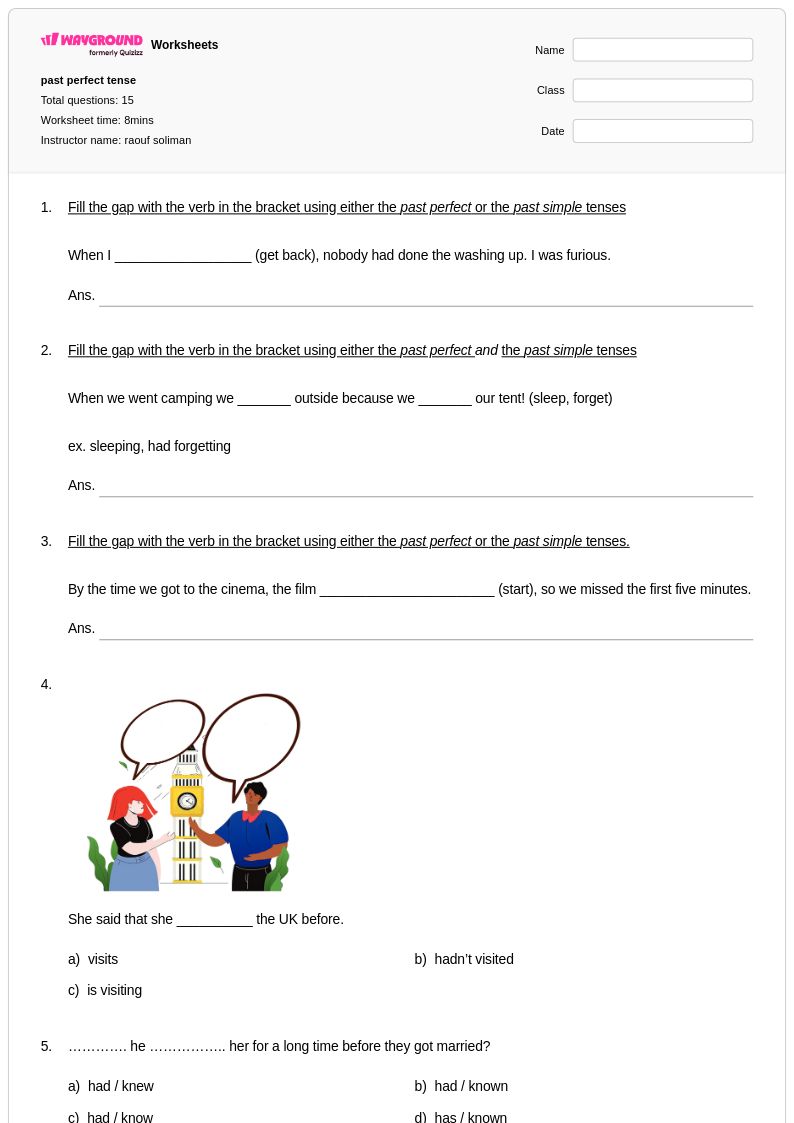
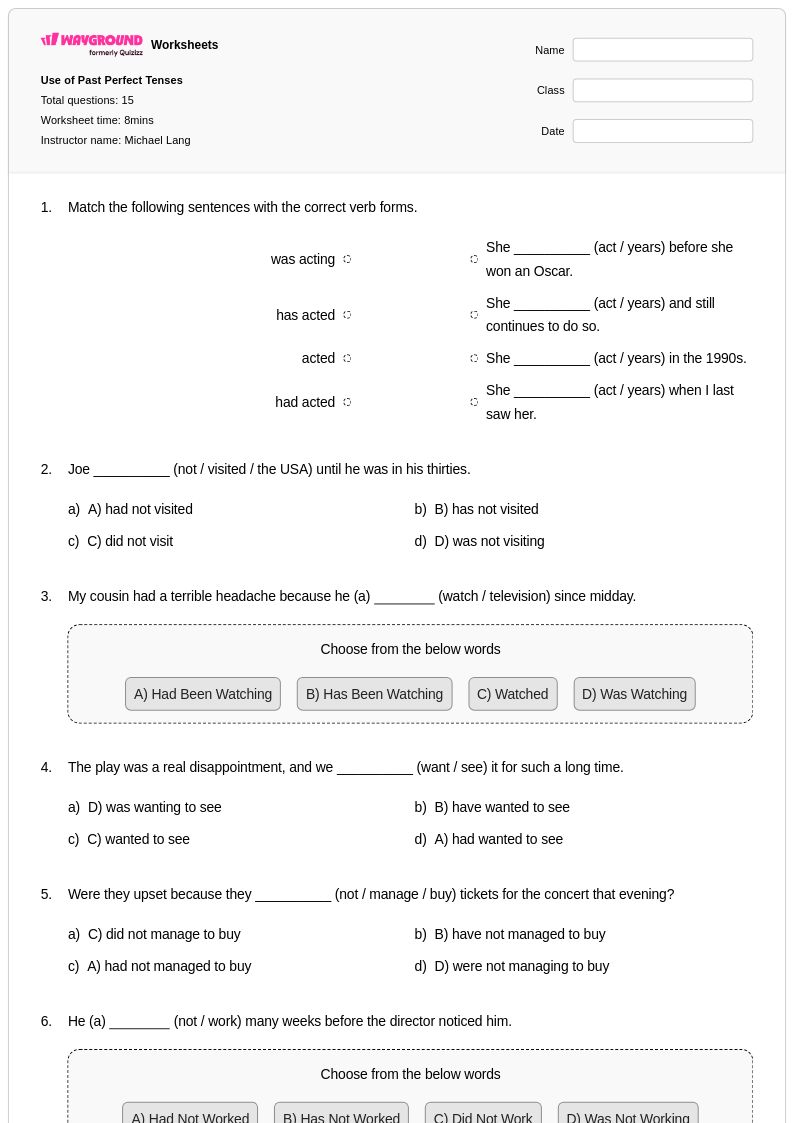
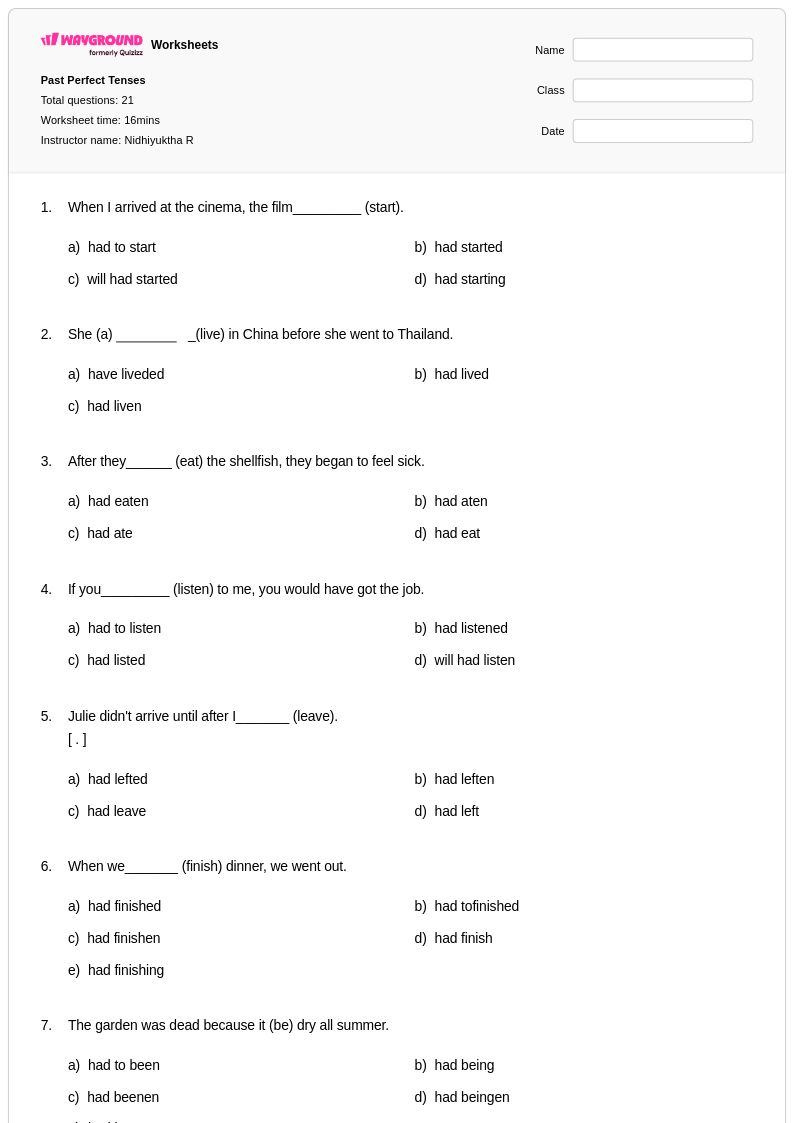
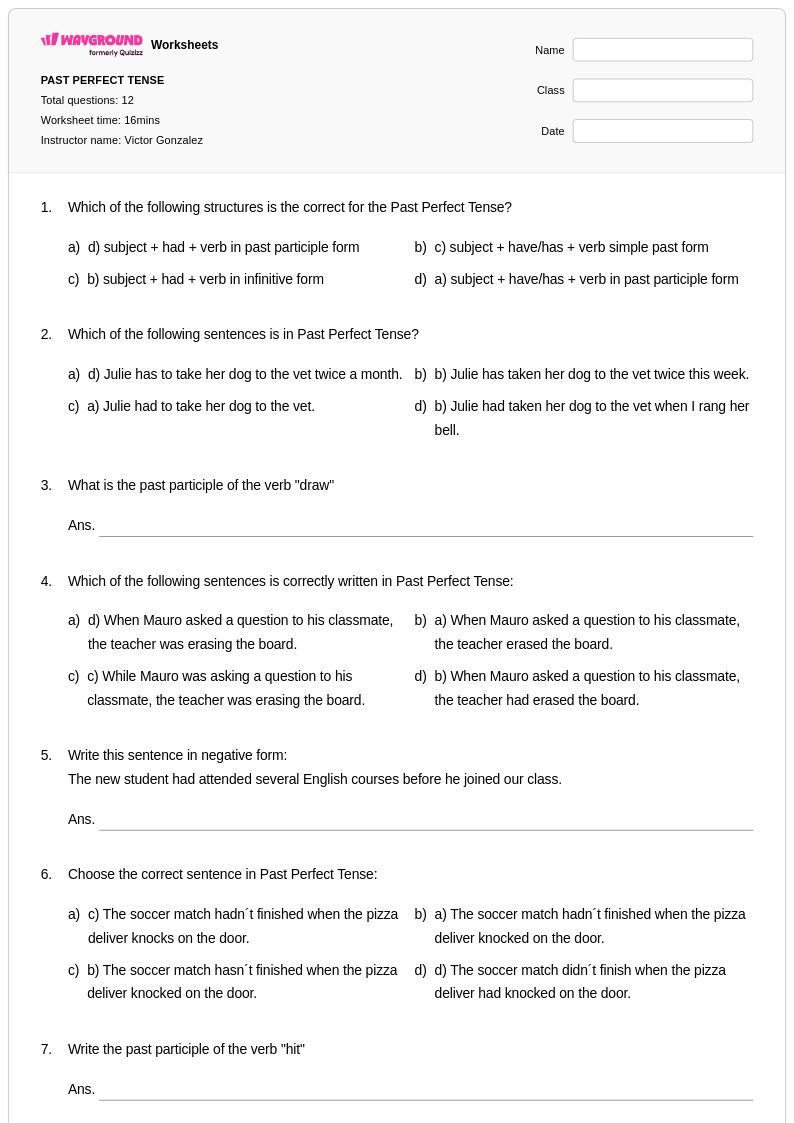
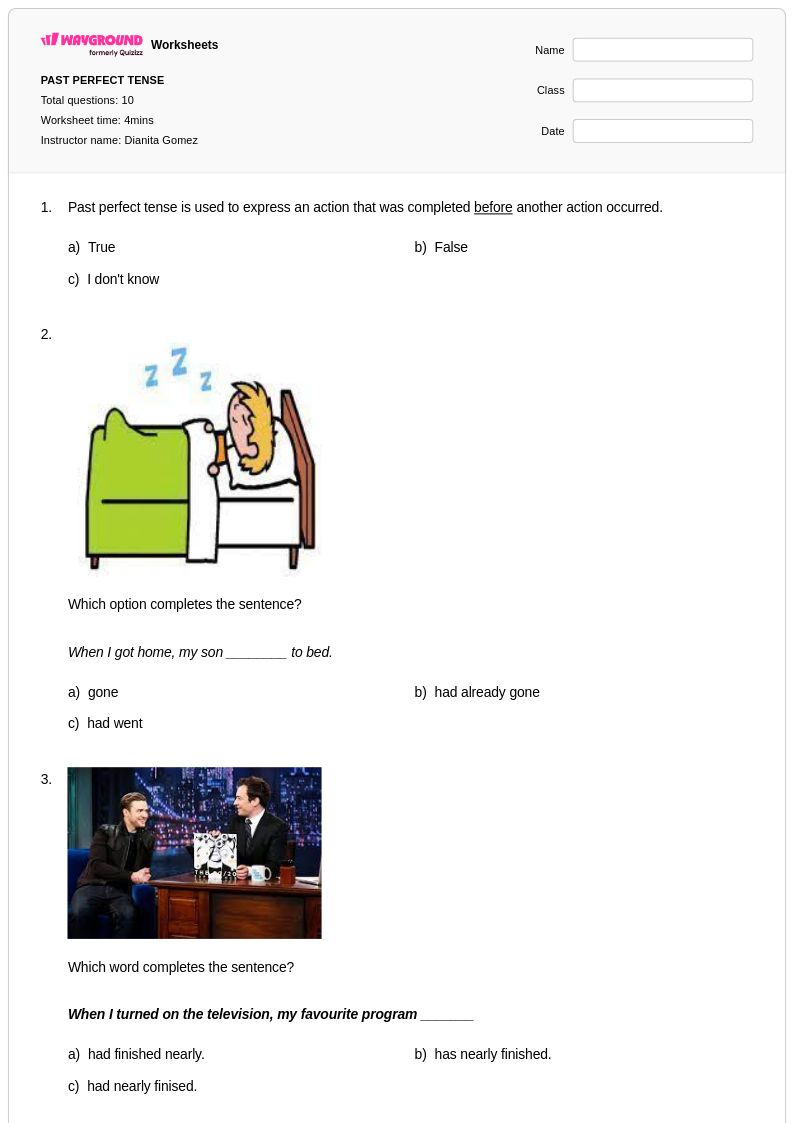
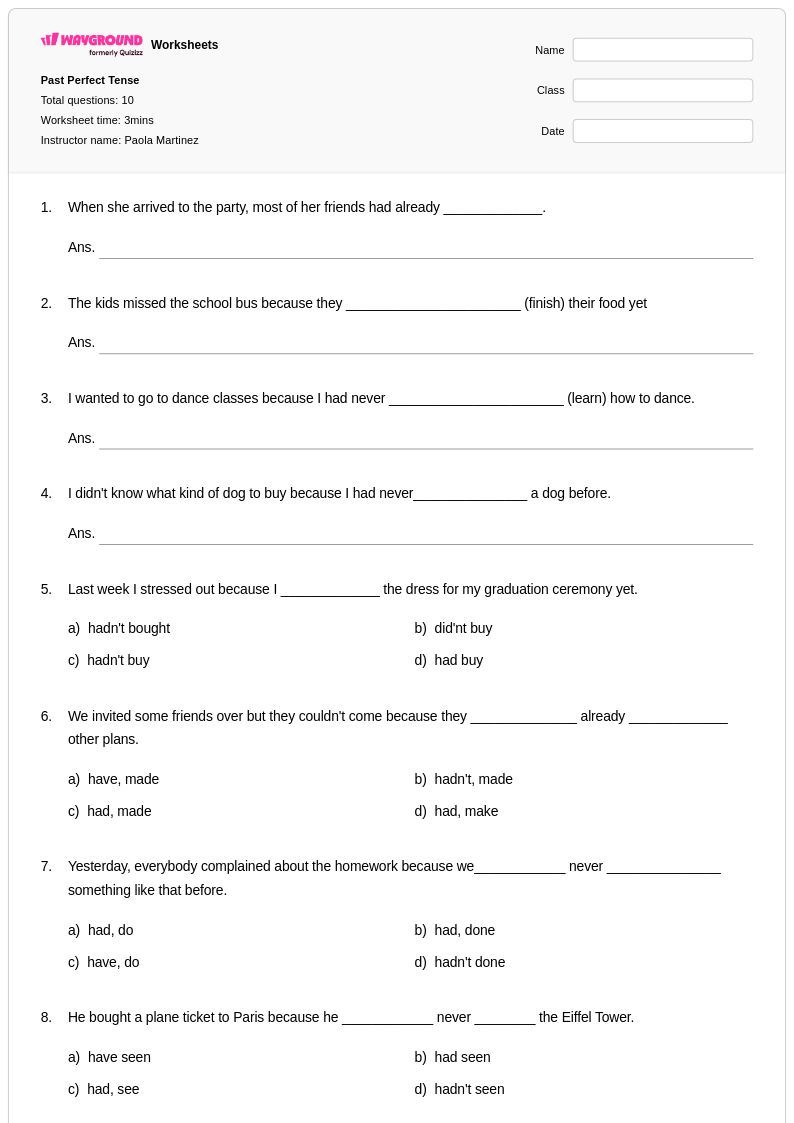
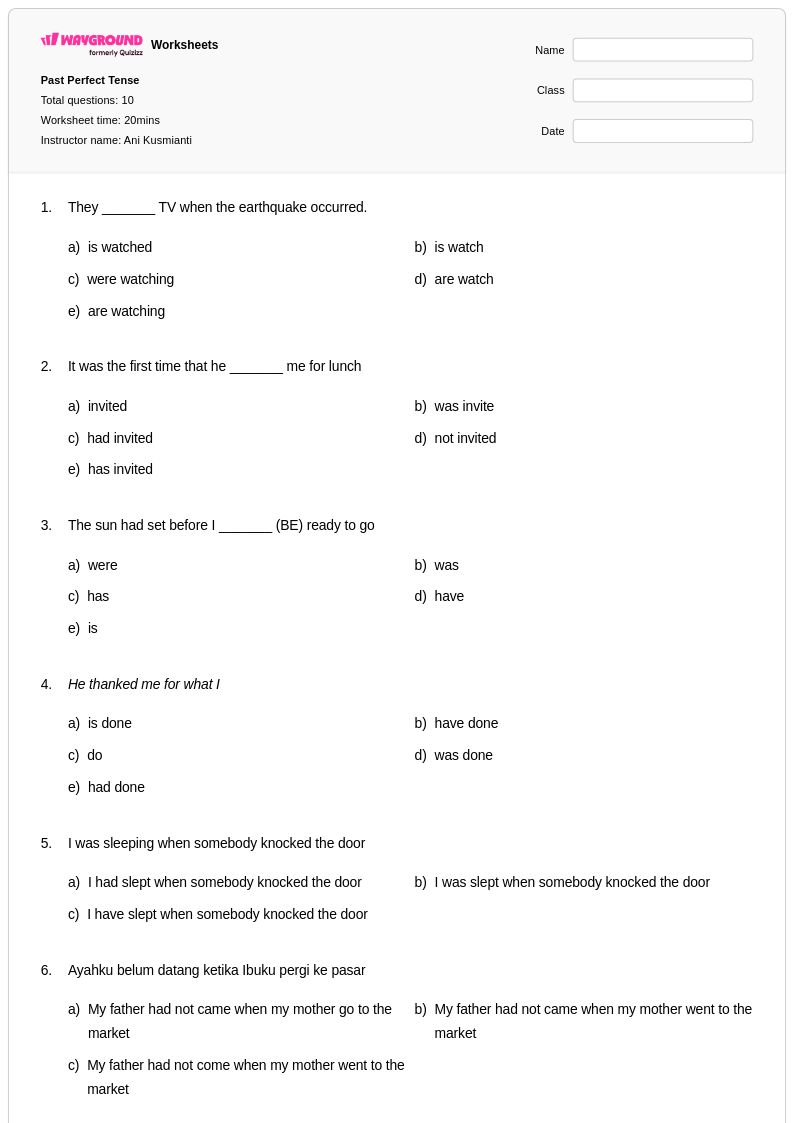
Past perfect tense worksheets available through Wayground (formerly Quizizz) provide comprehensive practice opportunities for students to master this essential English grammar concept that indicates actions completed before another past action or specific time in the past. These expertly designed resources strengthen students' understanding of the past perfect structure using "had" plus past participle, helping them distinguish between simple past and past perfect usage in complex sentences and narrative contexts. The worksheet collection includes varied practice problems that cover formation rules, time expressions like "before," "after," and "by the time," and practical applications in storytelling and academic writing, with complete answer keys and free printable pdf formats that make implementation seamless for any classroom setting.
Wayground (formerly Quizizz) empowers educators with millions of teacher-created past perfect tense resources that feature robust search and filtering capabilities, enabling quick identification of materials that align with specific curriculum standards and learning objectives. The platform's differentiation tools allow teachers to customize worksheets based on individual student needs, offering multiple difficulty levels and varied question formats that support both remediation for struggling learners and enrichment for advanced students. These flexible resources are available in both printable and digital pdf formats, facilitating easy lesson planning while providing targeted skill practice that helps students achieve mastery of past perfect tense construction and usage through systematic, scaffolded instruction that builds confidence in complex grammatical concepts.
FAQs
How do I teach the past perfect tense to students who keep confusing it with simple past?
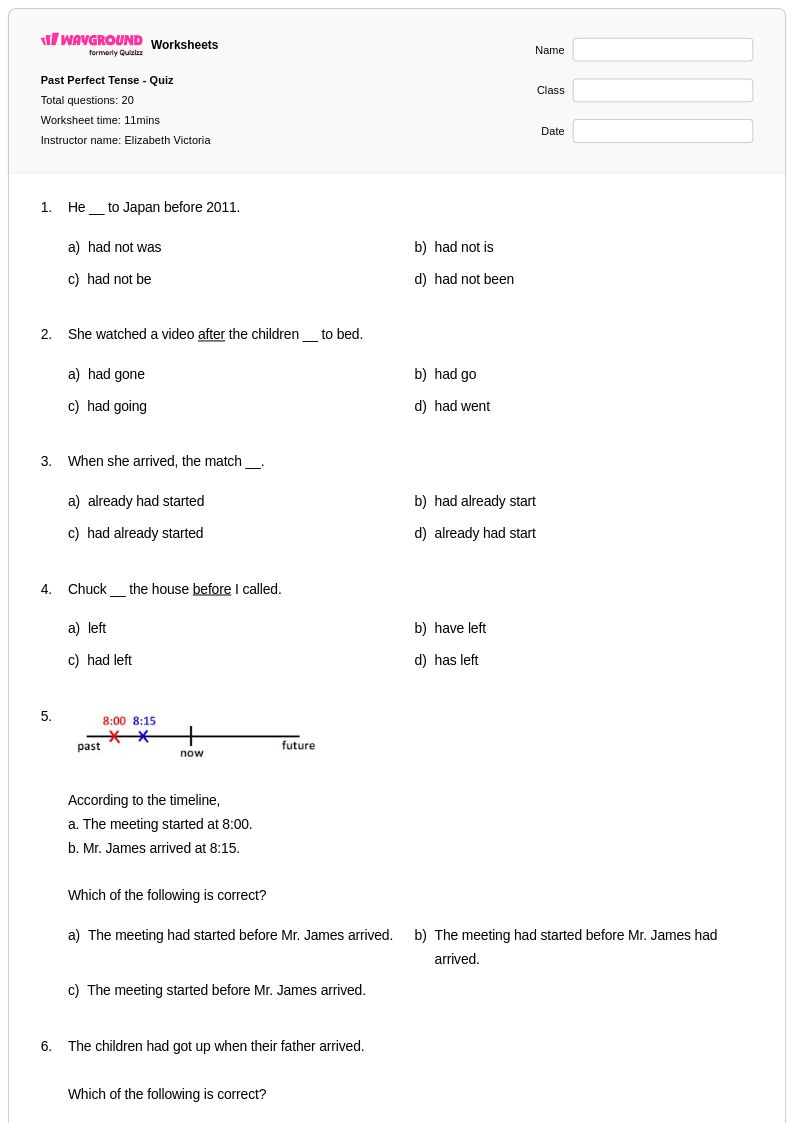
The most effective approach is to anchor past perfect in a timeline. Draw two past events on a line and show students that the past perfect (had + past participle) always marks the earlier of the two actions, while simple past marks the later one. Using sentences with time signal words like 'before,' 'after,' 'already,' and 'by the time' gives students a reliable visual and linguistic framework to distinguish the two tenses before moving into open-ended writing.
What exercises help students practice forming the past perfect tense correctly?
Sentence completion and sentence transformation exercises are the most effective starting points because they isolate the had + past participle structure without requiring students to generate full sentences from scratch. From there, gap-fill exercises using paired events, error correction activities, and short paragraph rewrites build toward fluent usage. Mixing these exercise types in a single worksheet ensures students encounter the form in varied contexts, which accelerates retention.
What mistakes do students commonly make with the past perfect tense?
The most common error is using simple past in place of past perfect when two past events are mentioned, particularly in sentences with 'before' or 'after,' where students often assume the word alone signals the relationship without needing a tense shift. Students also frequently omit 'had' and write only the past participle, or confuse irregular past participles with simple past forms (e.g., writing 'had went' instead of 'had gone'). Targeted error correction exercises that highlight these exact patterns are among the most efficient ways to address these gaps.
How does past perfect tense connect to academic writing and storytelling?
In academic writing, past perfect is essential for establishing chronology in historical analyses and research narratives, signaling which events occurred prior to the main focus of discussion. In storytelling, it is the primary tense used in flashbacks, allowing writers to shift between timelines without losing the reader. Teaching students to use past perfect fluently in these contexts strengthens both their grammatical accuracy and their ability to structure complex, multi-event narratives.
How do I use Wayground's past perfect tense worksheets in my classroom?
Wayground's past perfect tense worksheets are available as printable PDFs for traditional classroom use and in digital formats for technology-integrated environments, giving teachers flexibility regardless of their setup. You can also host any worksheet as an interactive quiz directly on Wayground, which allows for real-time student responses. Each worksheet includes a complete answer key, making them straightforward to use for independent practice, homework, or small-group review sessions without additional preparation.
How can I differentiate past perfect tense practice for students at different skill levels?
For struggling learners, start with highly scaffolded exercises that provide sentence frames and word banks so students can focus on recognizing and placing 'had + past participle' correctly before generating language independently. For advanced students, move quickly into open-ended writing tasks and error correction in authentic texts. On Wayground, teachers can further support individual students through built-in accommodations such as read aloud, reduced answer choices, and extended time, which can be assigned per student without affecting the rest of the class.