
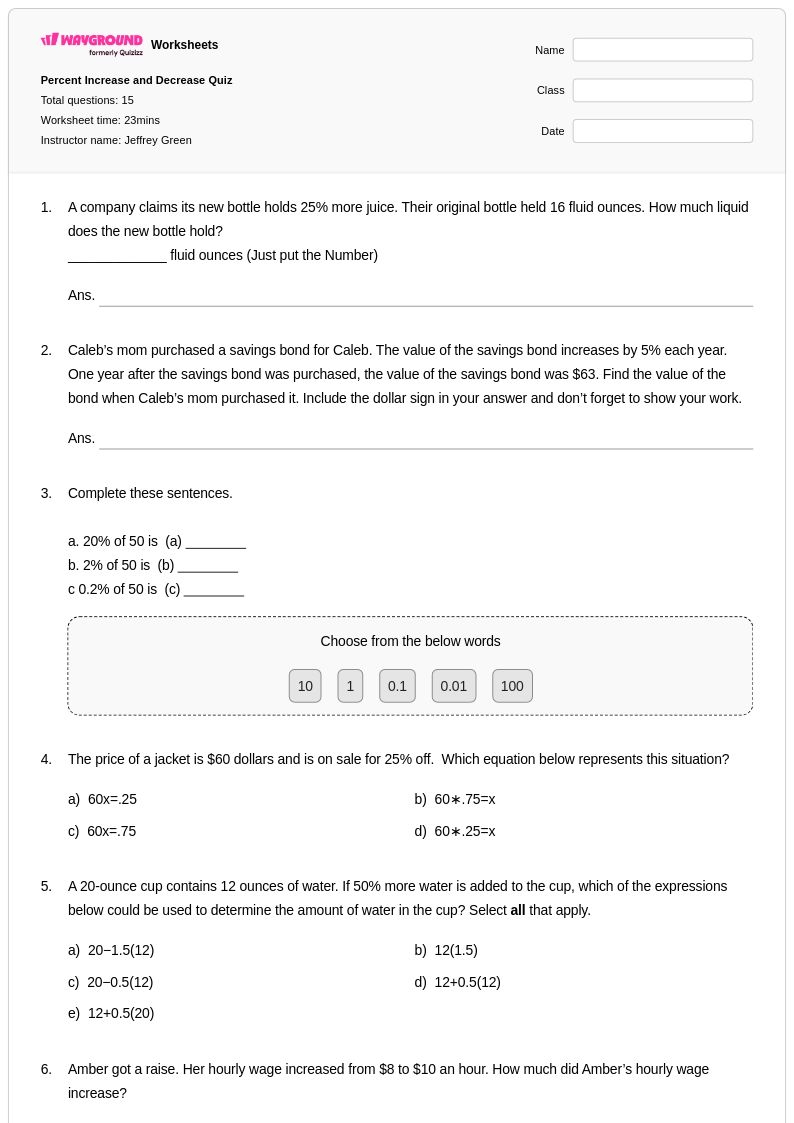
15 Q
7th
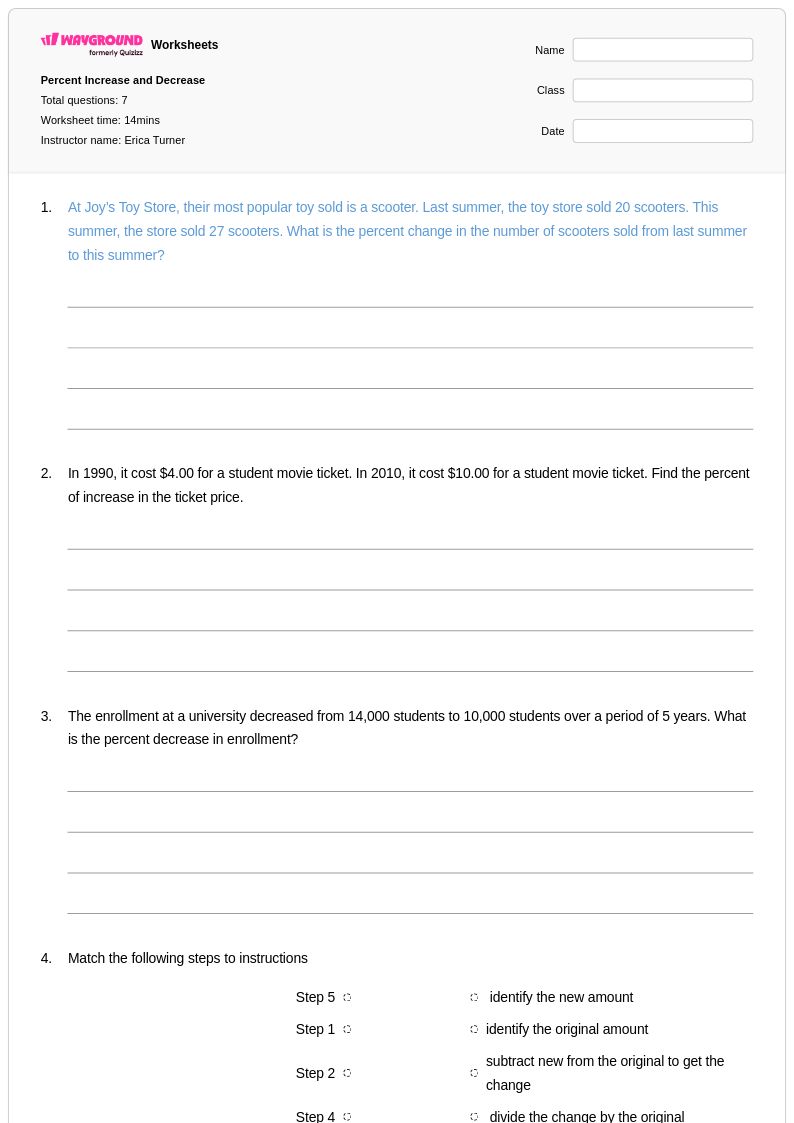
7 Q
7th
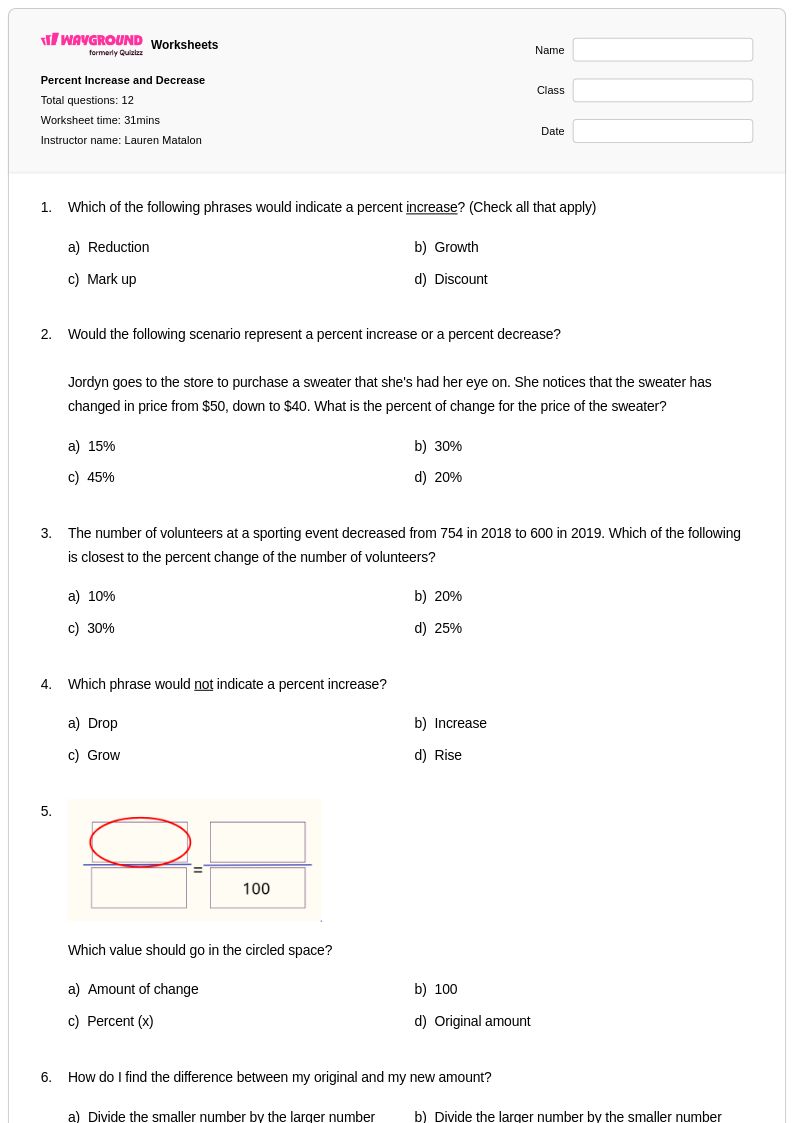
12 Q
7th
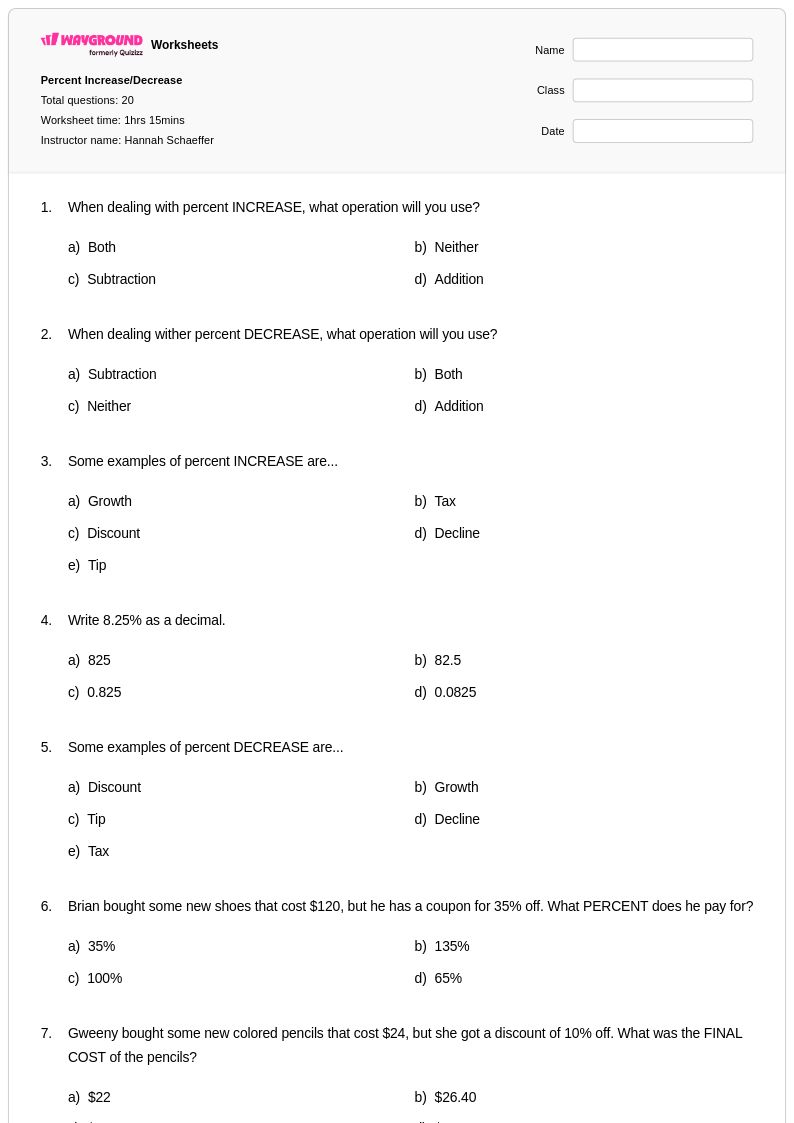
20 Q
7th
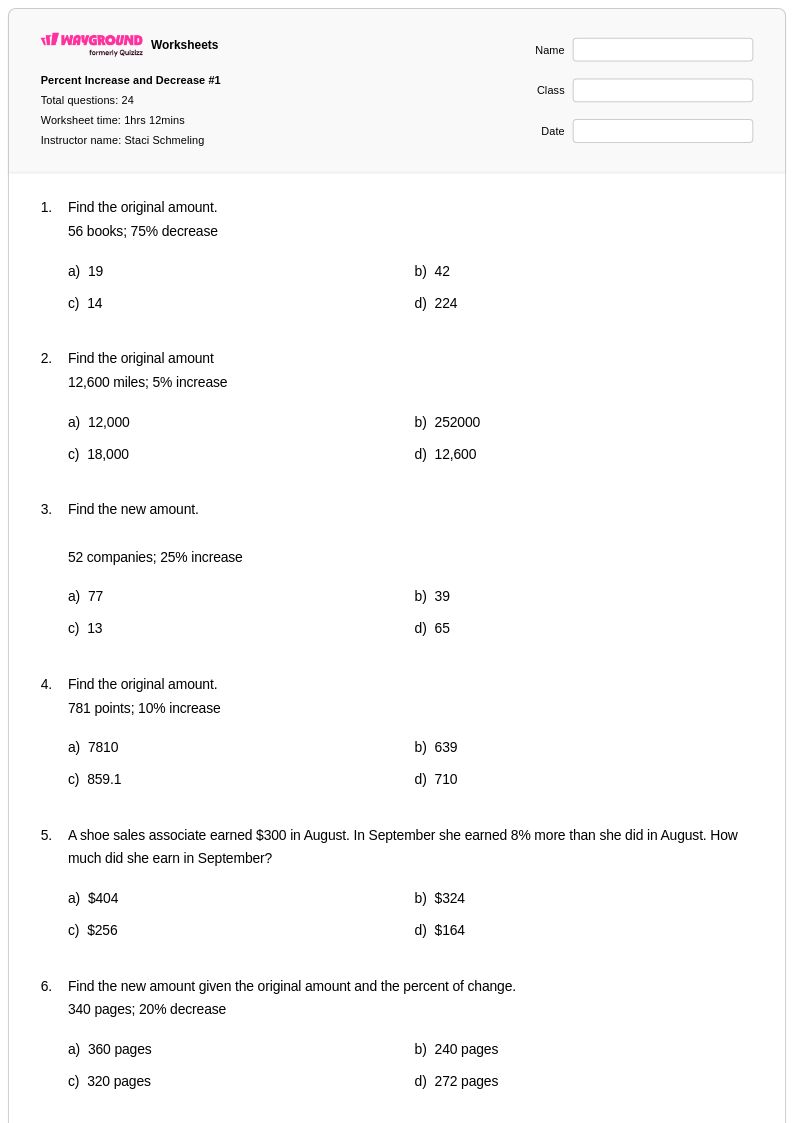
24 Q
7th
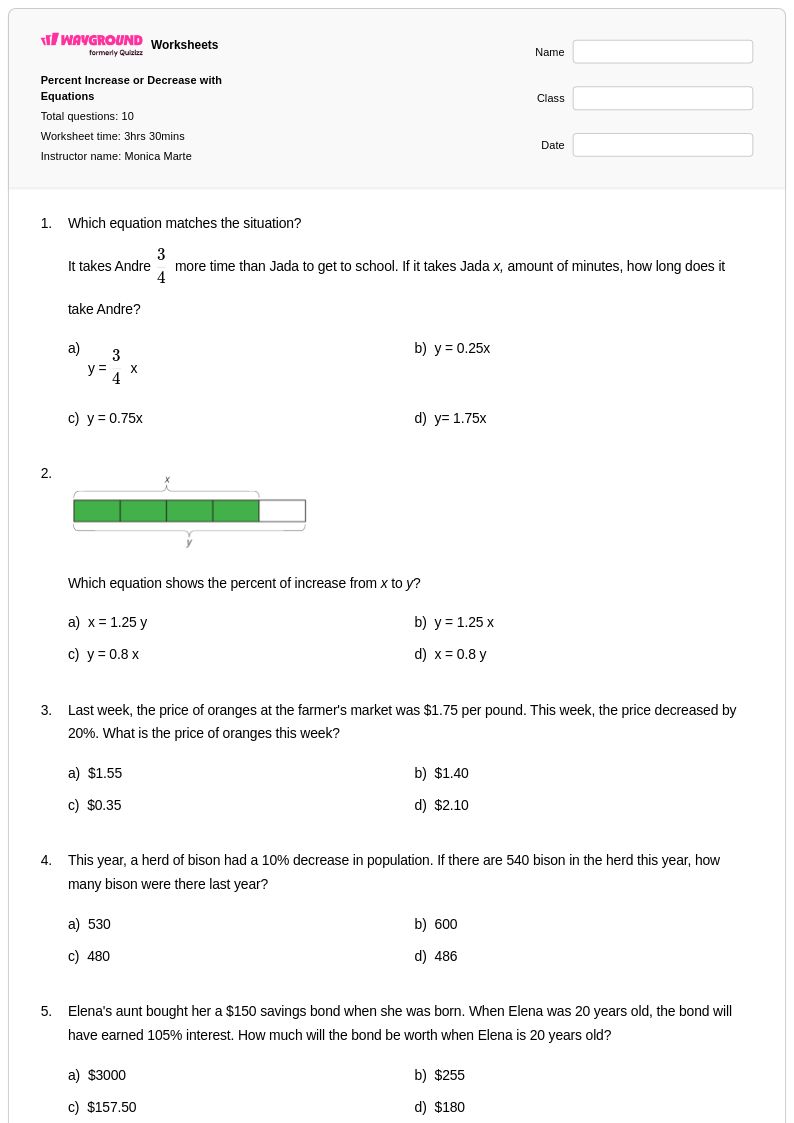
10 Q
7th
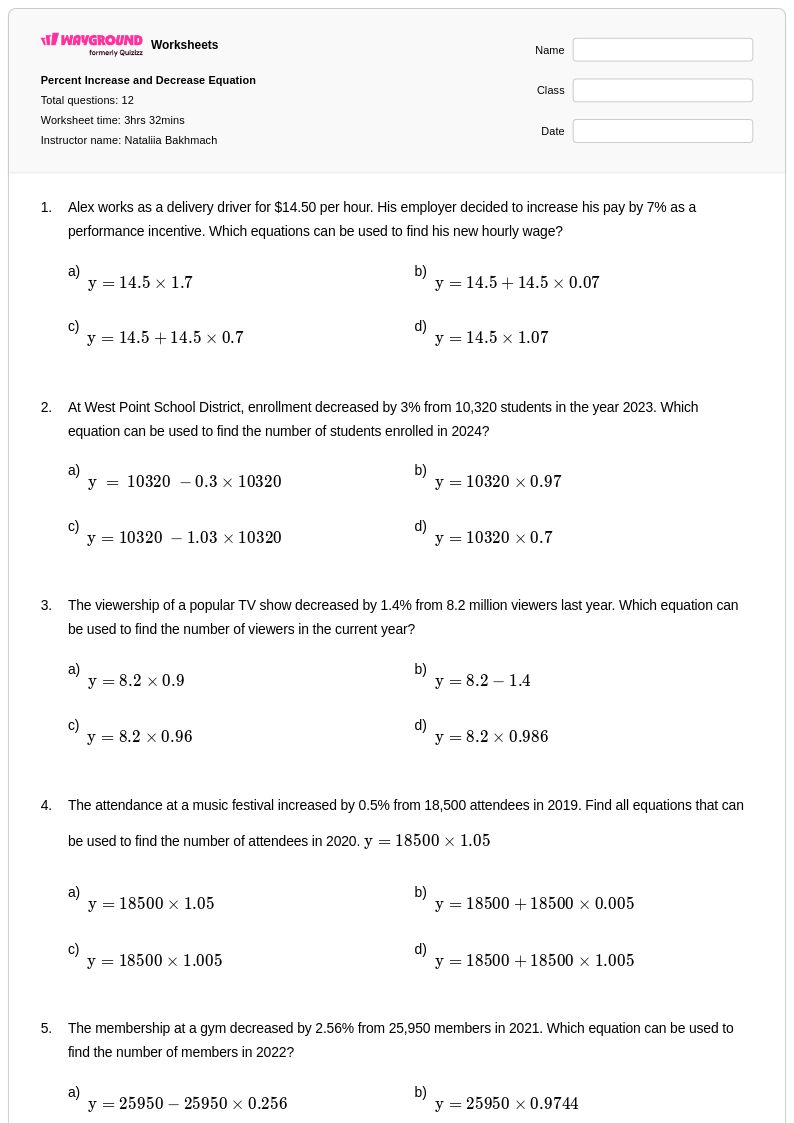
12 Q
7th
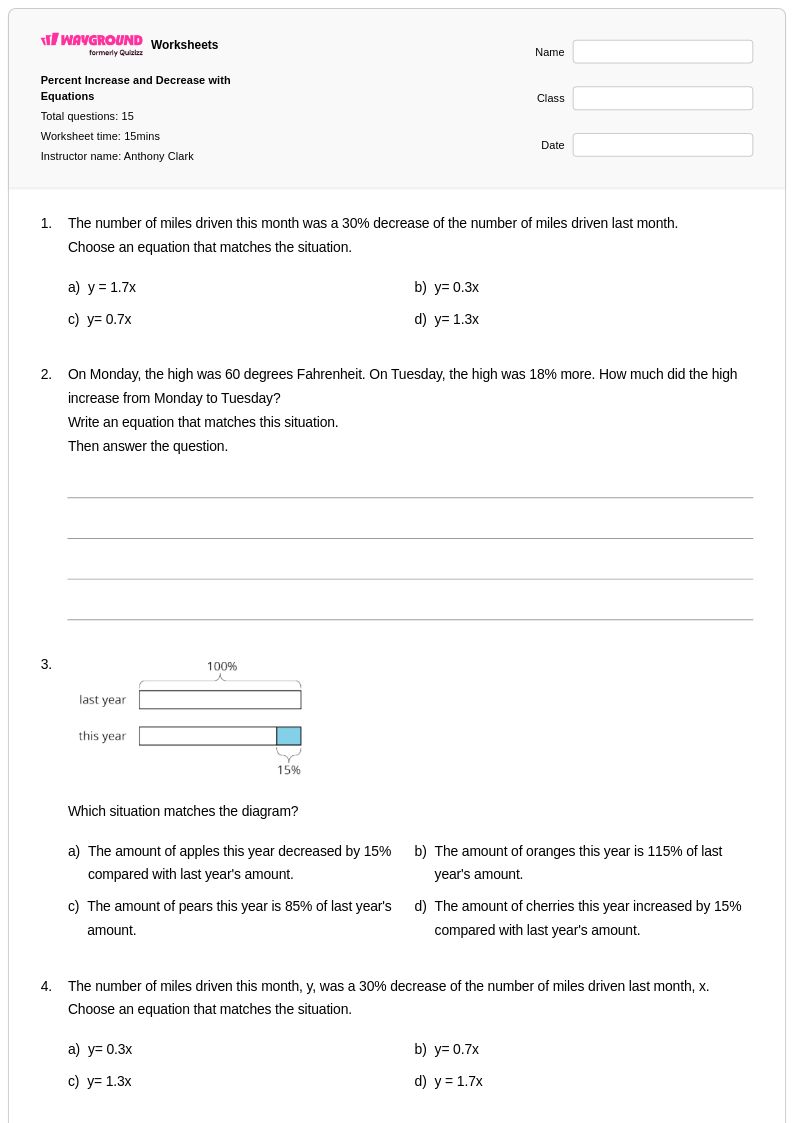
15 Q
7th - Uni
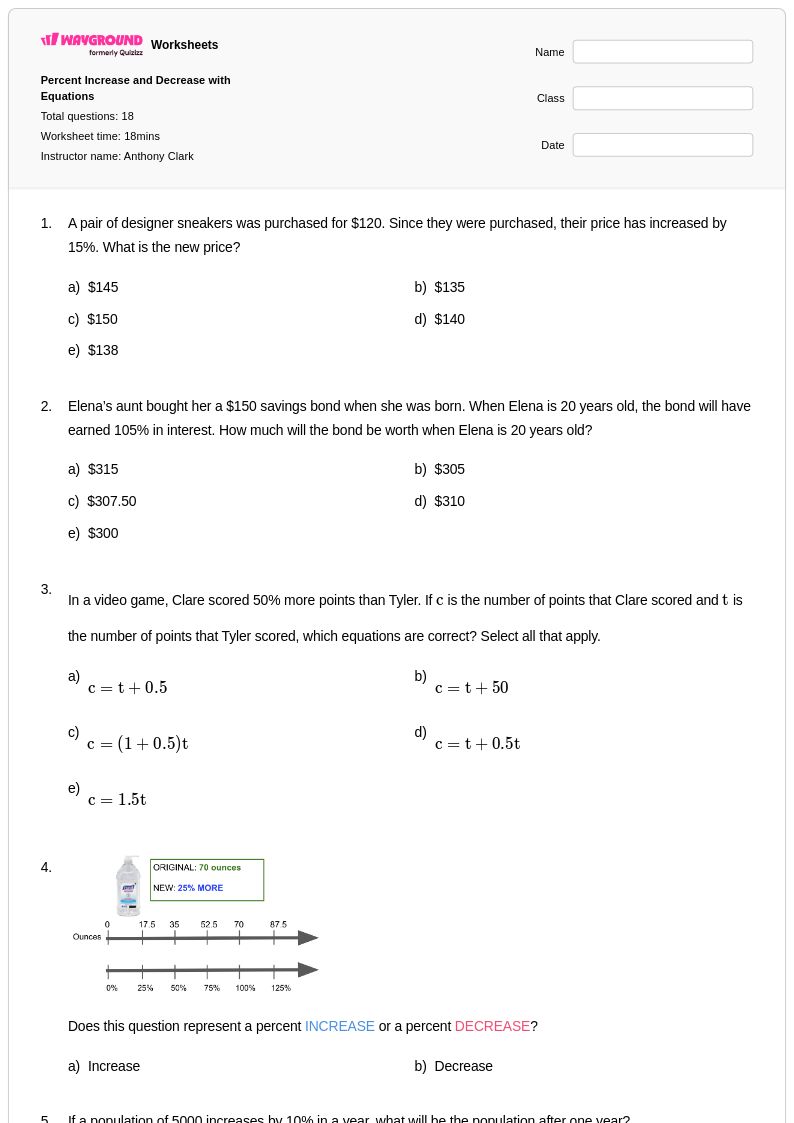
18 Q
7th - Uni
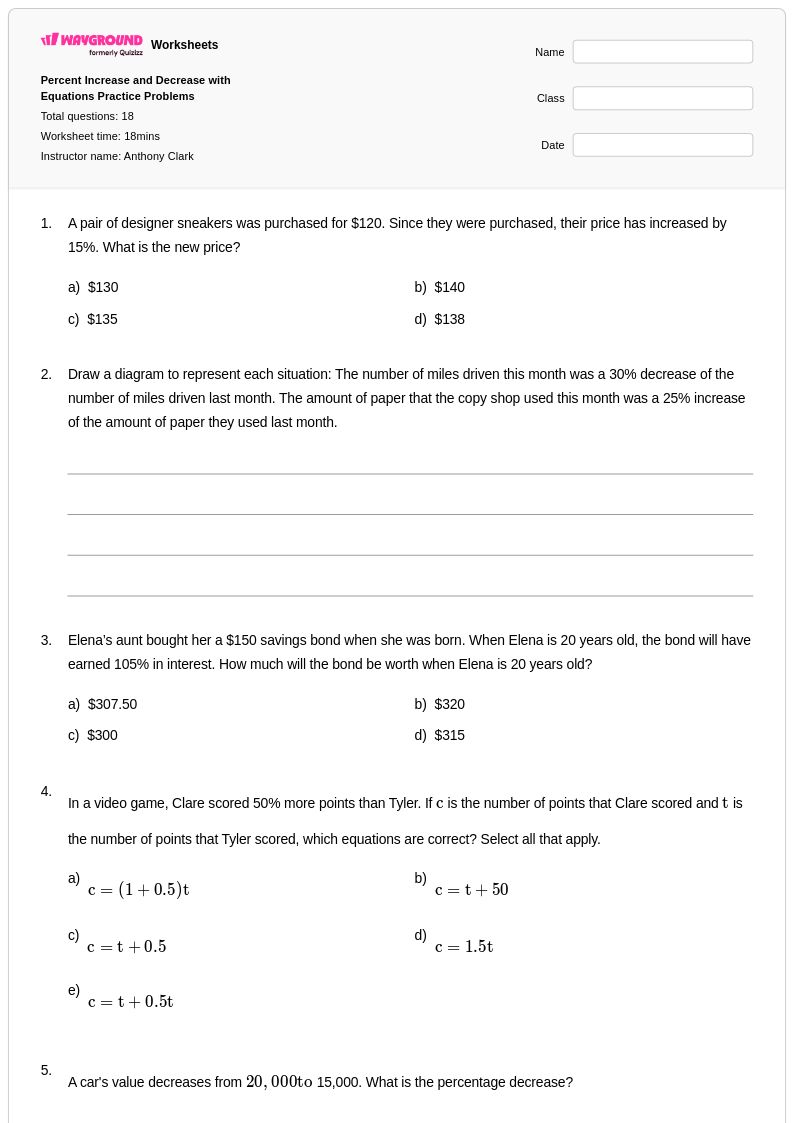
18 Q
7th - Uni
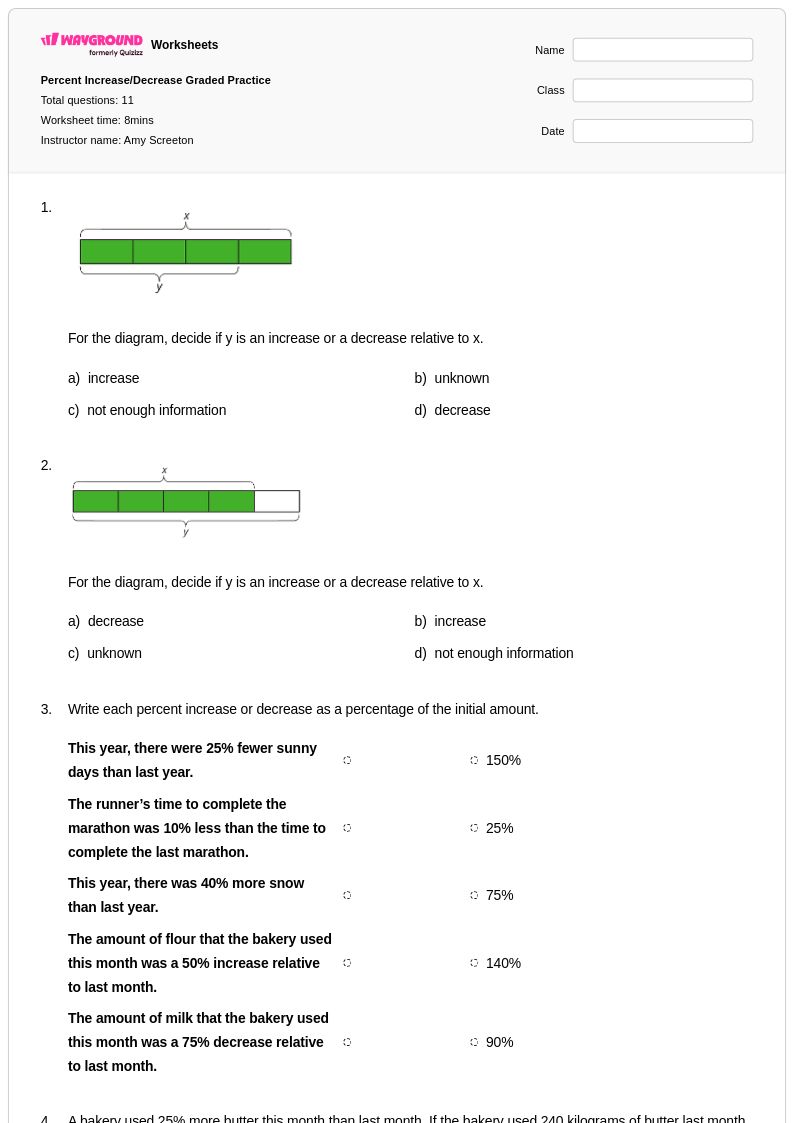
11 Q
7th
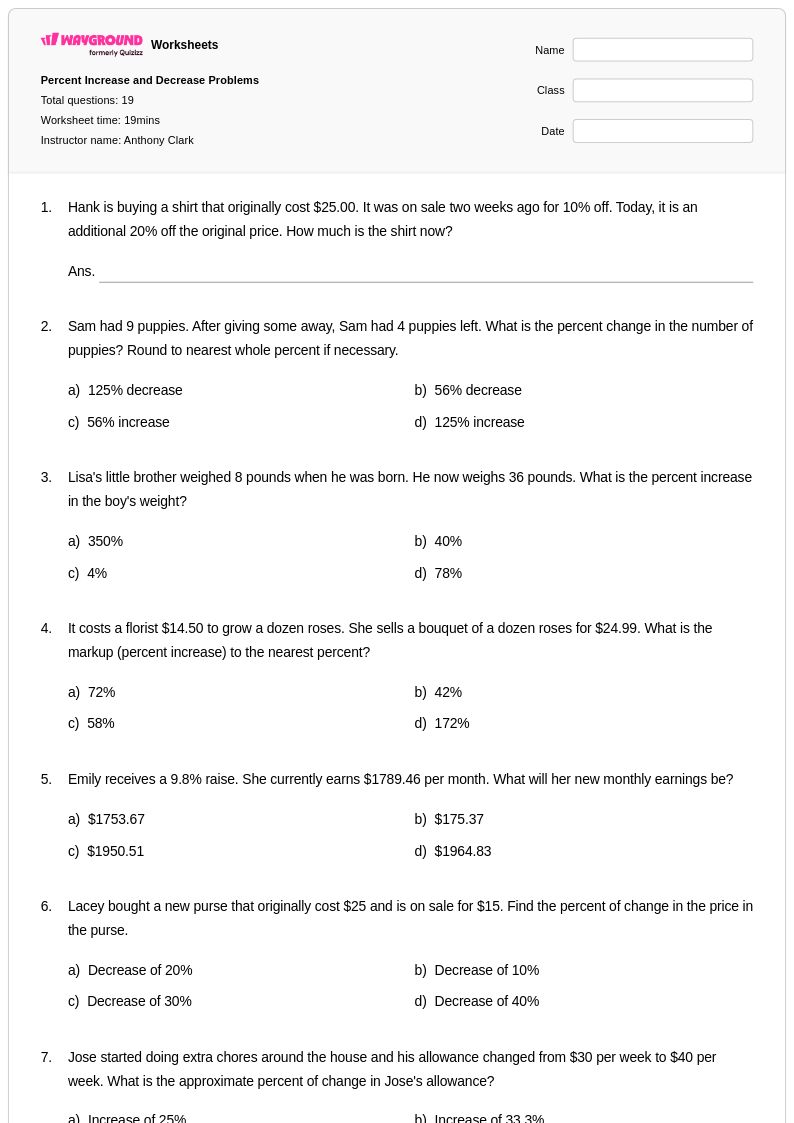
19 Q
7th - Uni
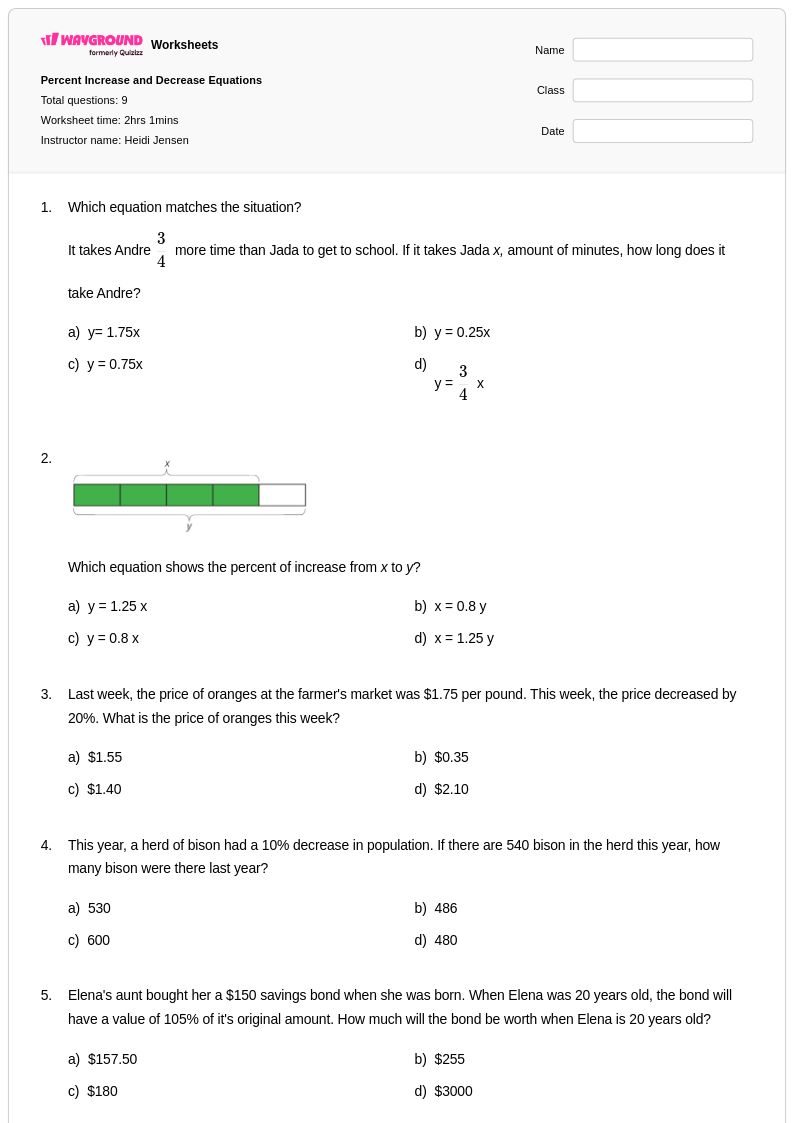
9 Q
7th
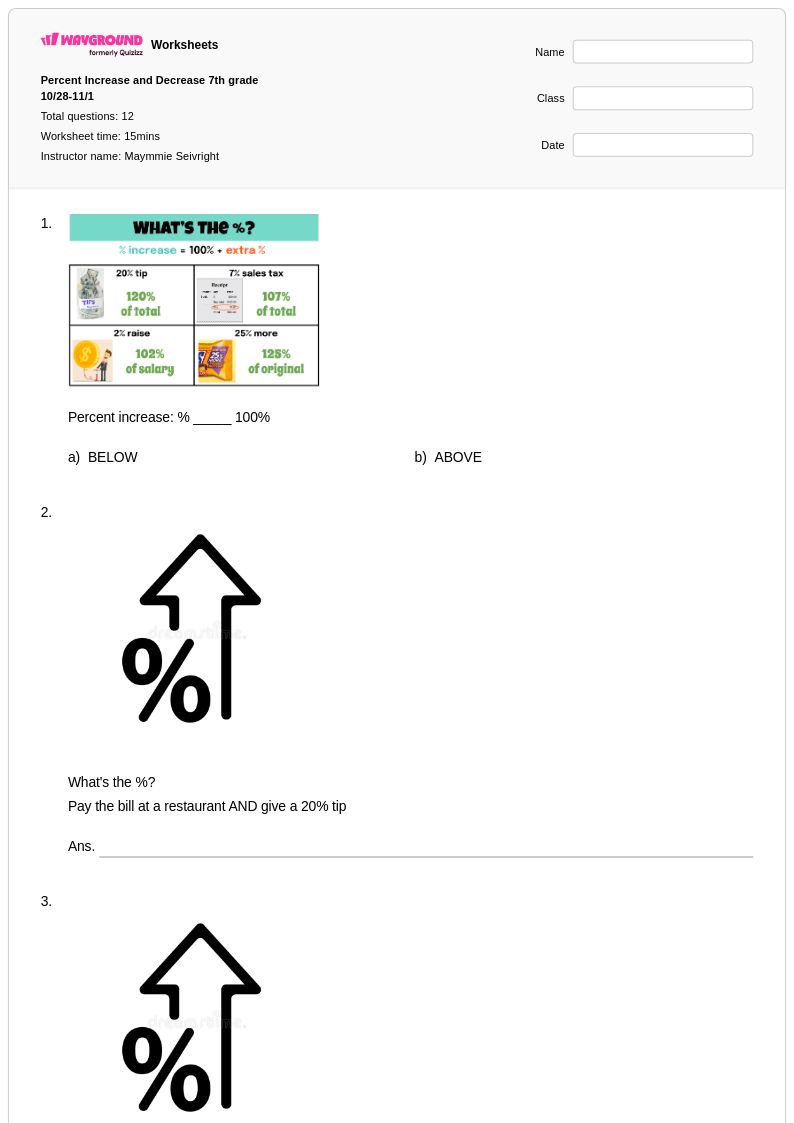
12 Q
7th
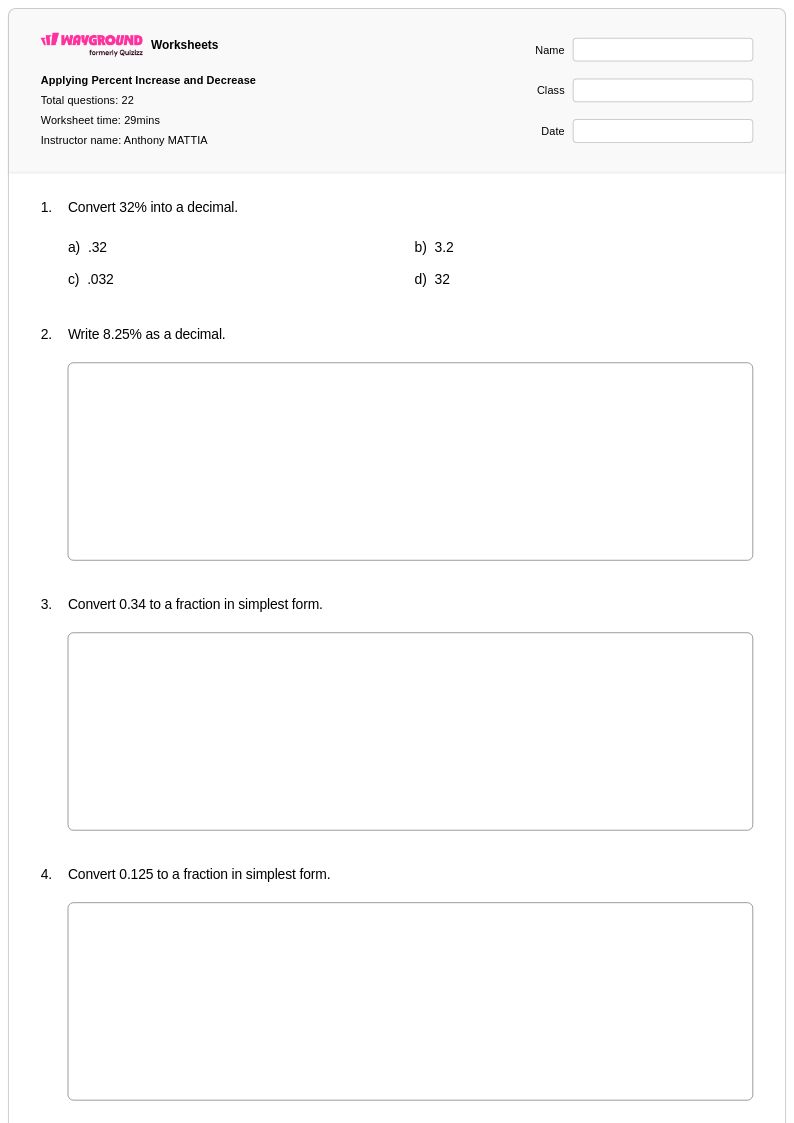
22 Q
7th
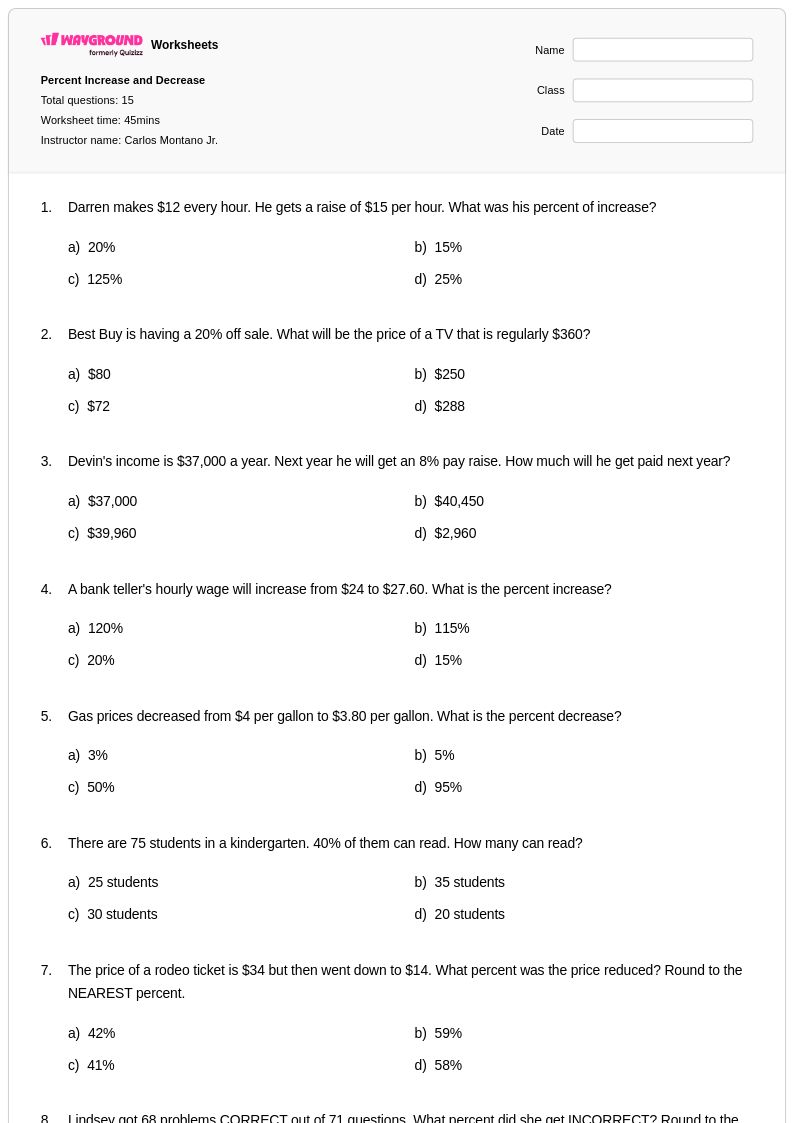
15 Q
7th
5 Q
7th
15 Q
7th - Uni
14 Q
7th - Uni
16 Q
7th
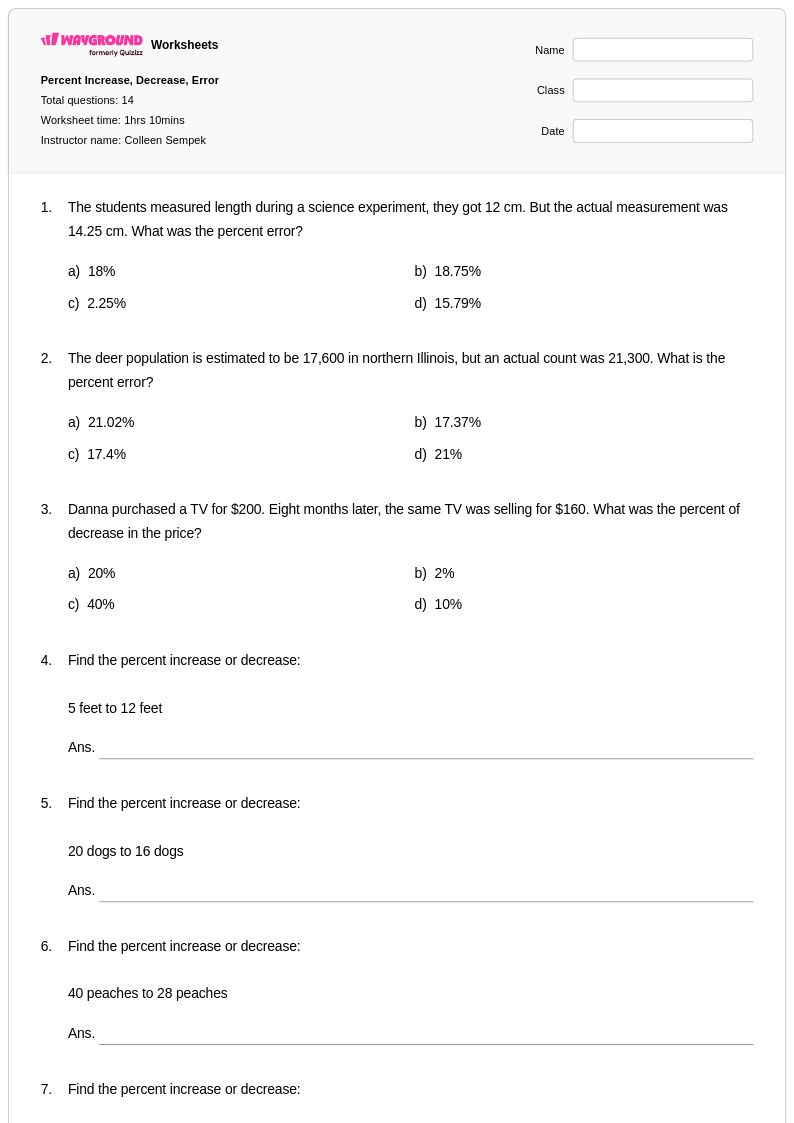
14 Q
7th
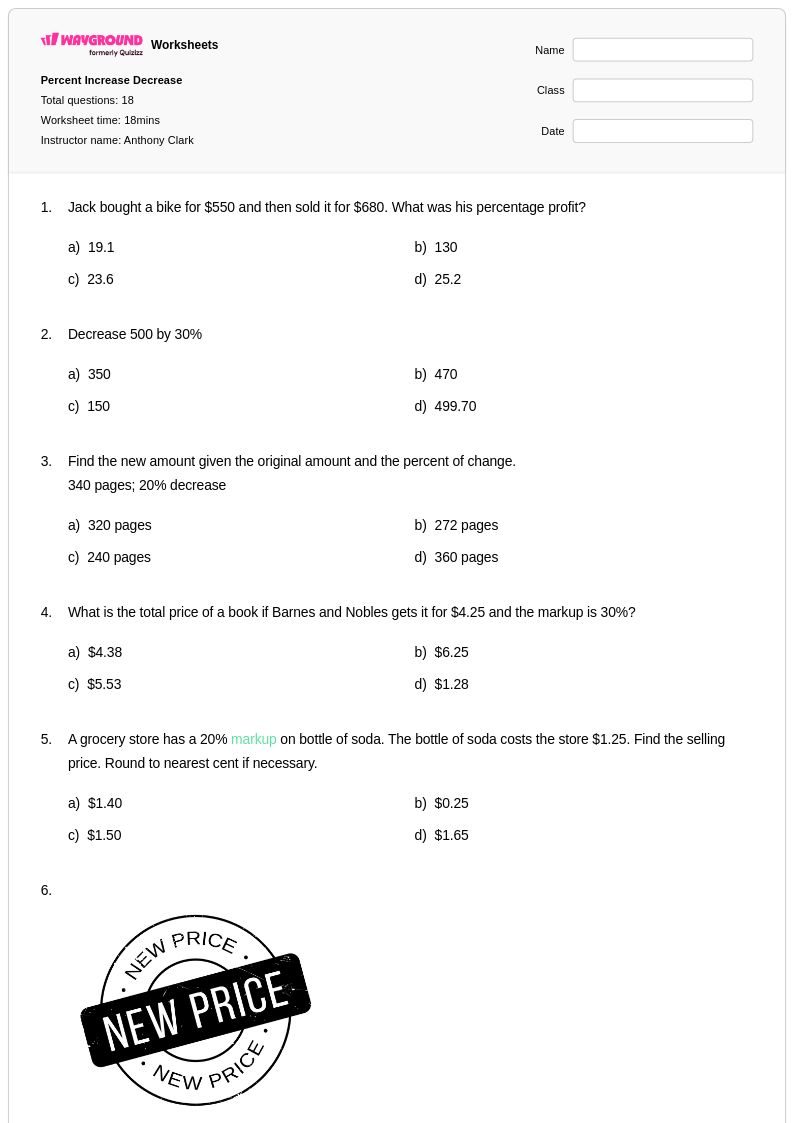
18 Q
7th - Uni
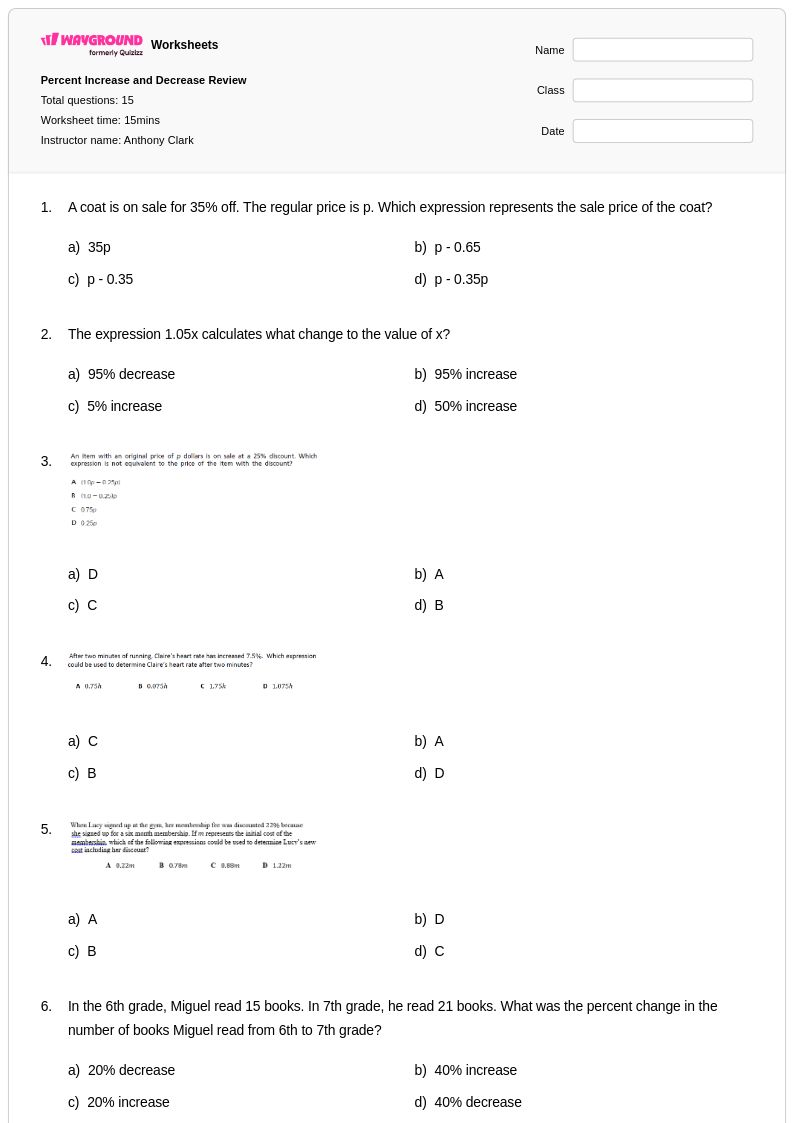
15 Q
7th - Uni
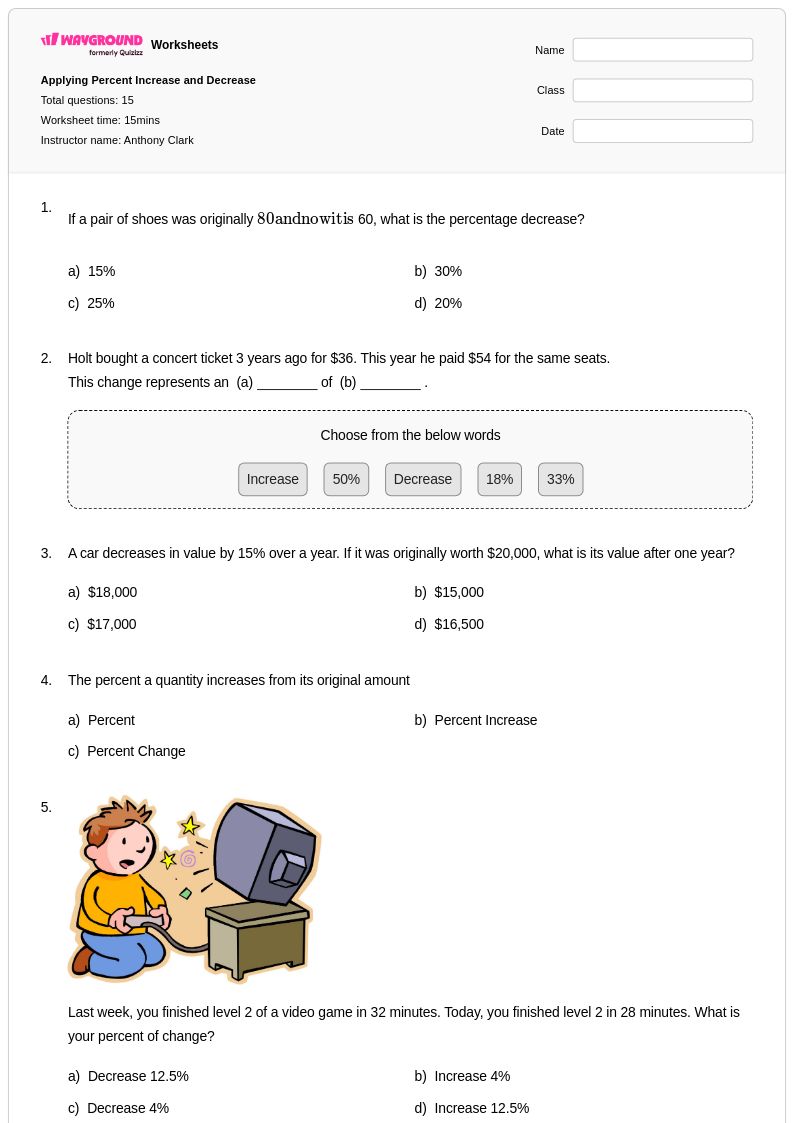
15 Q
7th - Uni
Explore Percent Increase and Decrease Worksheets by Grades
Explore Other Subject Worksheets for year 7
Explore printable Percent Increase and Decrease worksheets for Year 7
Percent increase and decrease worksheets for Year 7 through Wayground (formerly Quizizz) provide comprehensive practice with calculating how quantities grow and shrink over time. These worksheets strengthen essential mathematical skills including determining percentage changes in real-world scenarios such as price markdowns, population growth, and salary increases. Students develop proficiency in applying the percent change formula, distinguishing between increases and decreases, and interpreting results in context. Each worksheet collection includes detailed practice problems that progress from basic calculations to complex multi-step applications, complete with answer keys and free printable pdf formats that support both classroom instruction and independent study.
Wayground (formerly Quizizz) empowers teachers with millions of educator-created percent increase and decrease resources that streamline lesson planning and differentiated instruction. The platform's robust search and filtering capabilities allow teachers to locate worksheets aligned with specific Year 7 mathematics standards and customize difficulty levels to meet diverse learning needs. Teachers can access materials in both printable and digital formats, including downloadable pdfs, making it simple to provide targeted remediation for struggling students or enrichment activities for advanced learners. This extensive collection supports flexible implementation whether teachers need quick skill practice activities, comprehensive assessment tools, or supplementary homework assignments that reinforce percent change concepts across various mathematical contexts.
FAQs
What grade are percent increase and decrease problems taught?
How can I teach percent change in a 7th-grade class?
What types of problems help 7th graders practice percent change?
What's a common mistake 7th graders make with these problems?
How do I use this Wayground worksheet with my students?
How does this topic connect to 7th-grade curriculum standards?