Free Printable Personal Allowance Worksheets for Year 3
Explore Year 3 personal allowance worksheets and printables that help students learn money management basics through engaging practice problems, with free PDF downloads and answer keys available.
Explore printable Personal Allowance worksheets for Year 3
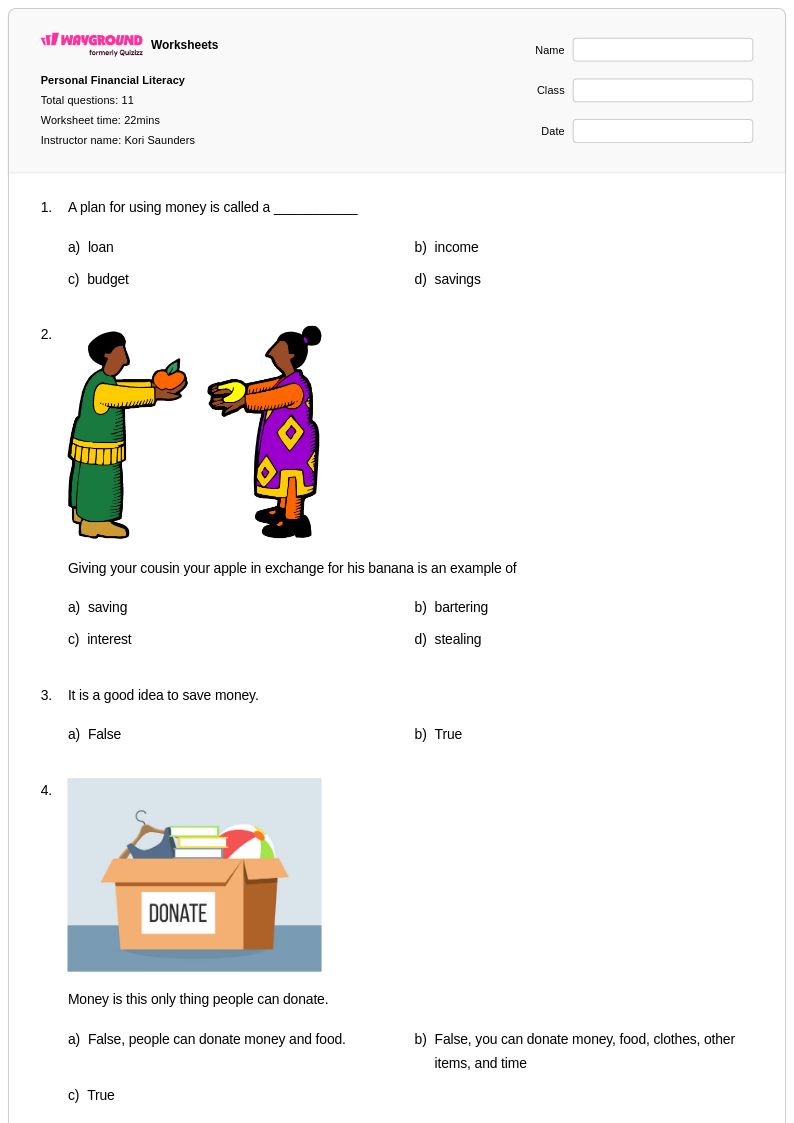
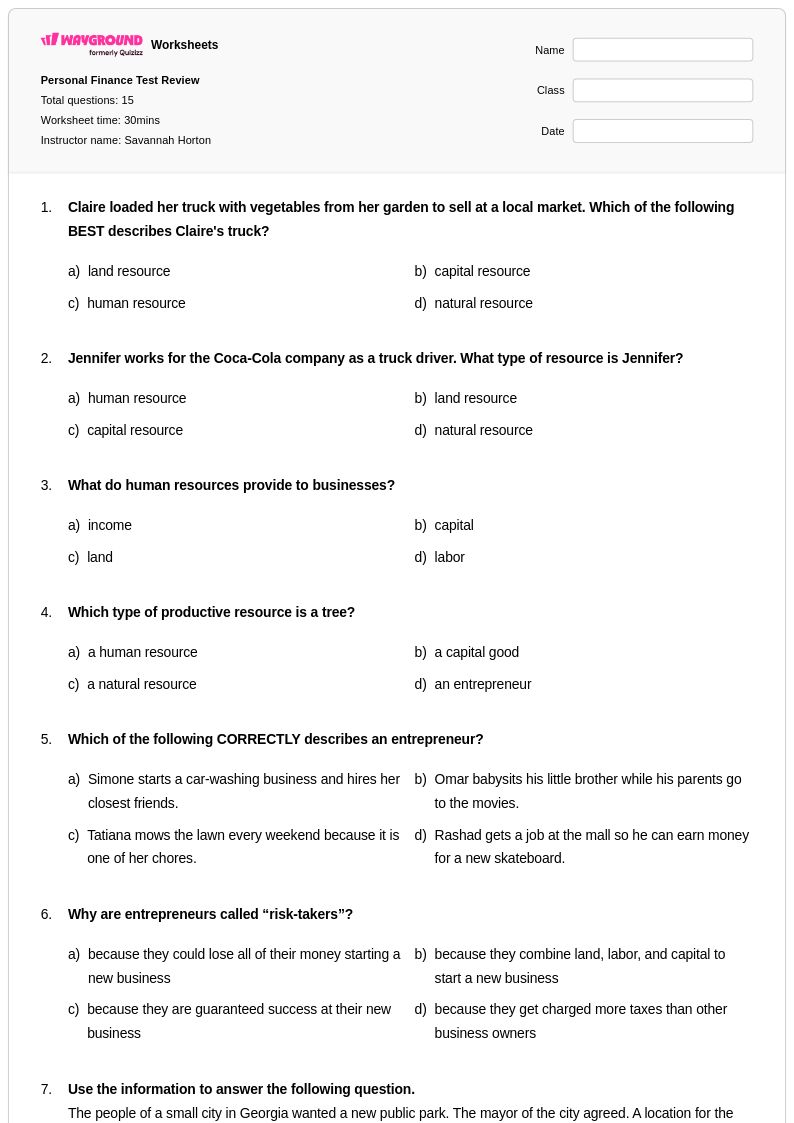
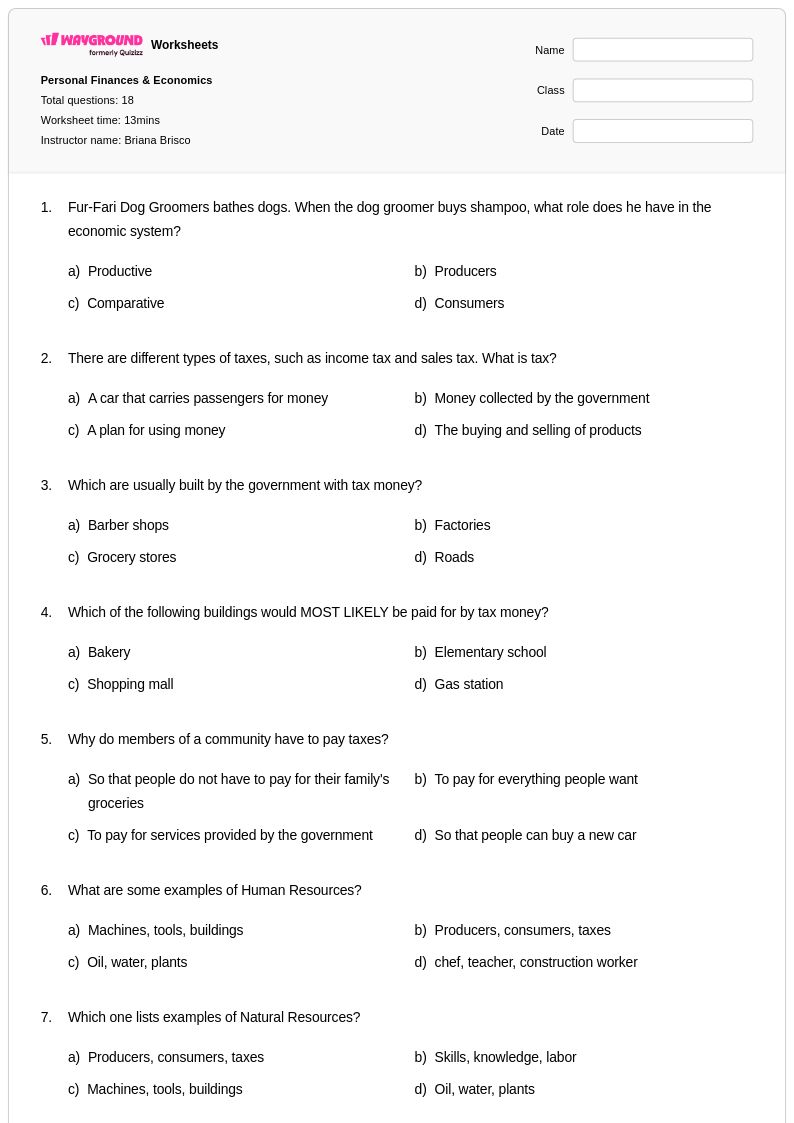
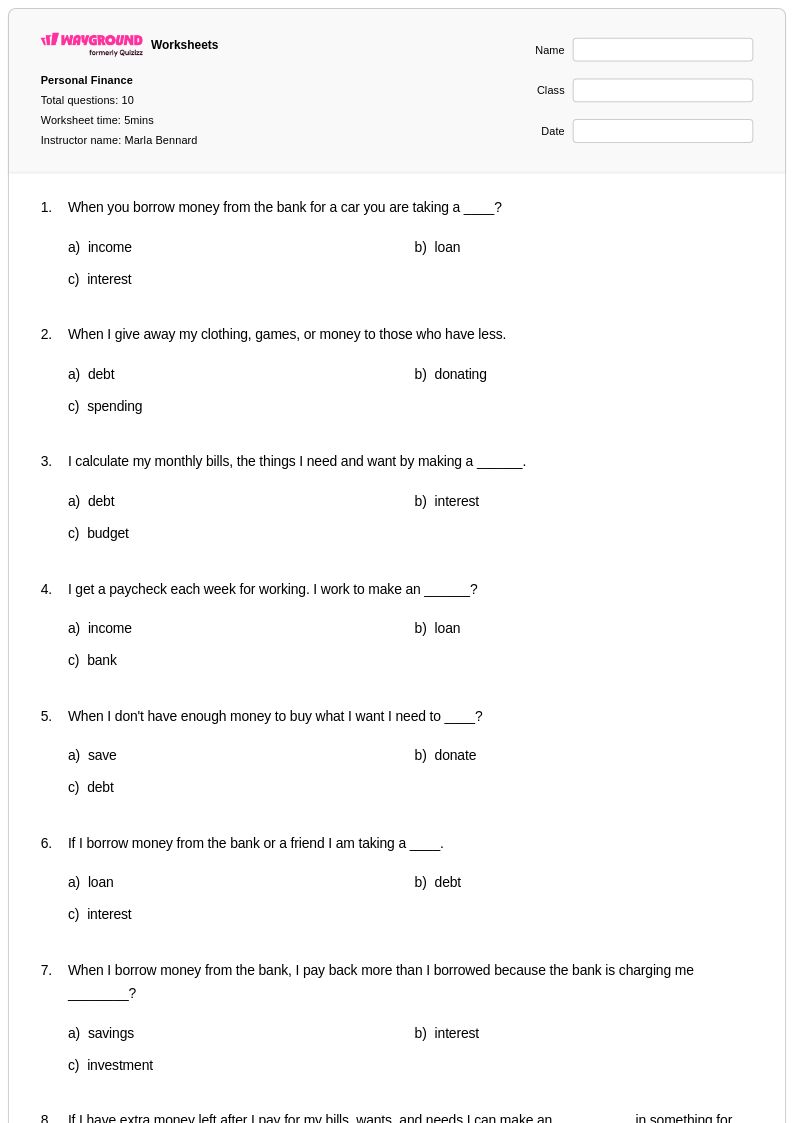
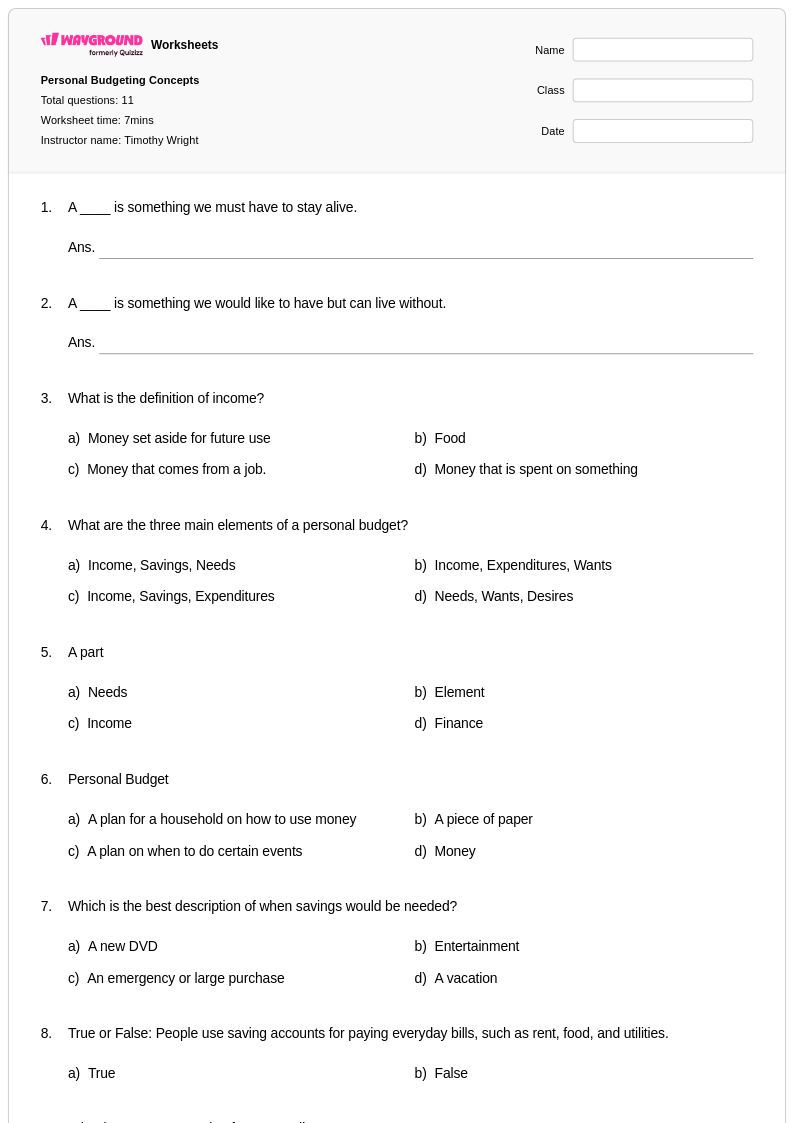
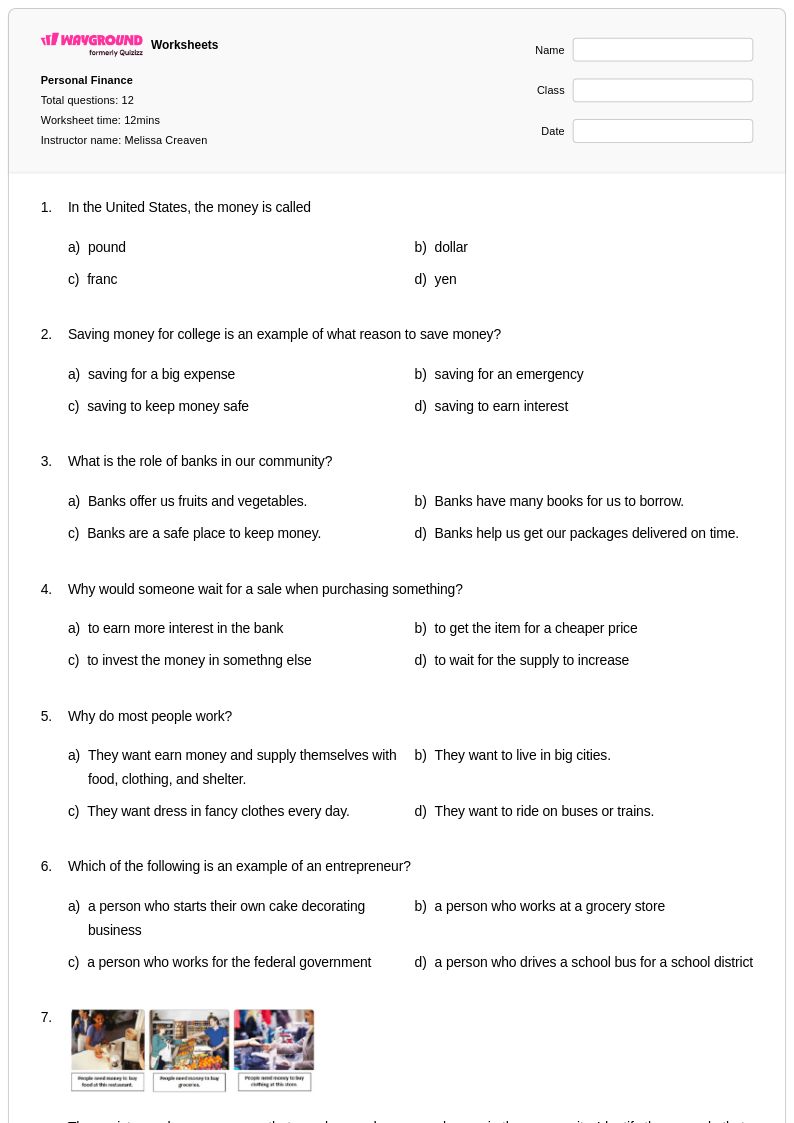
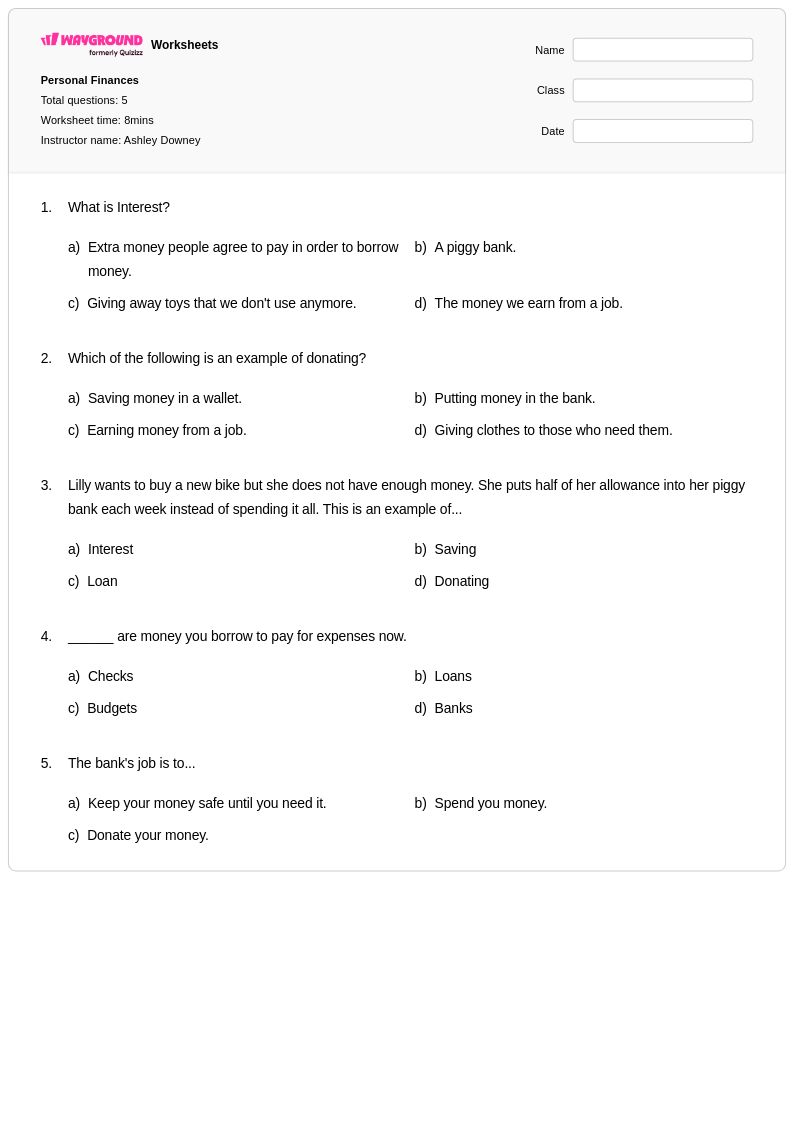
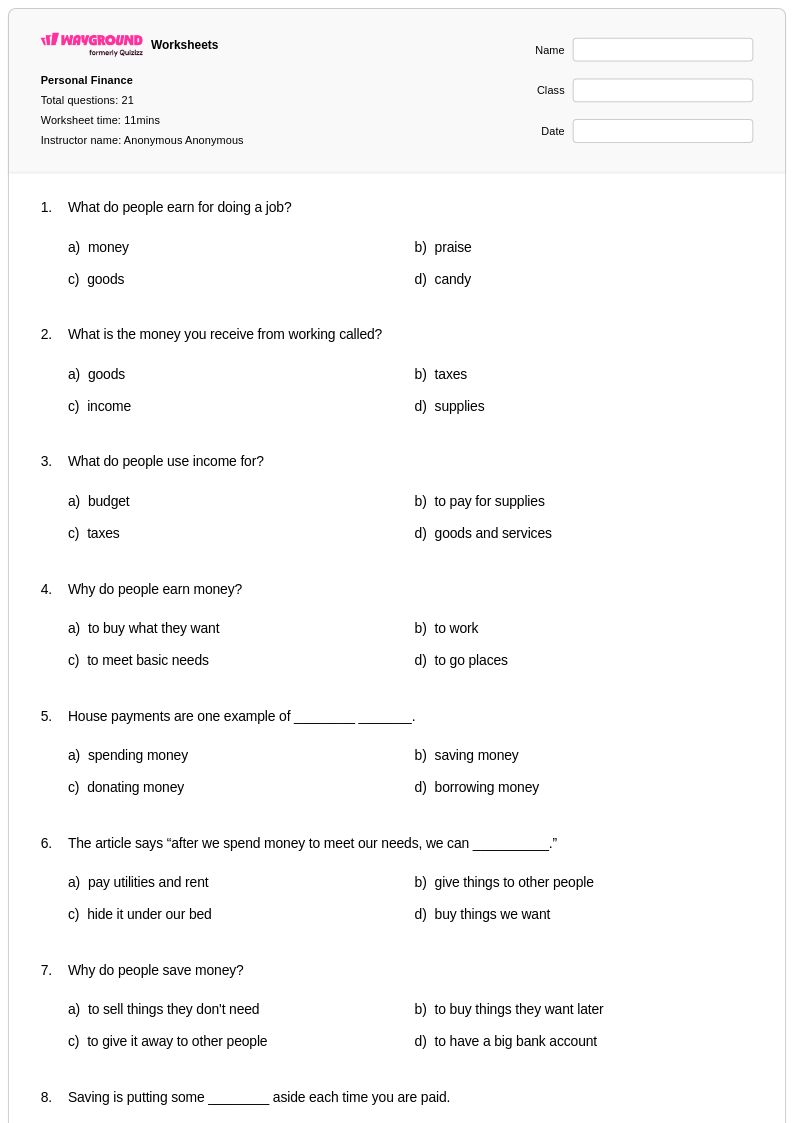
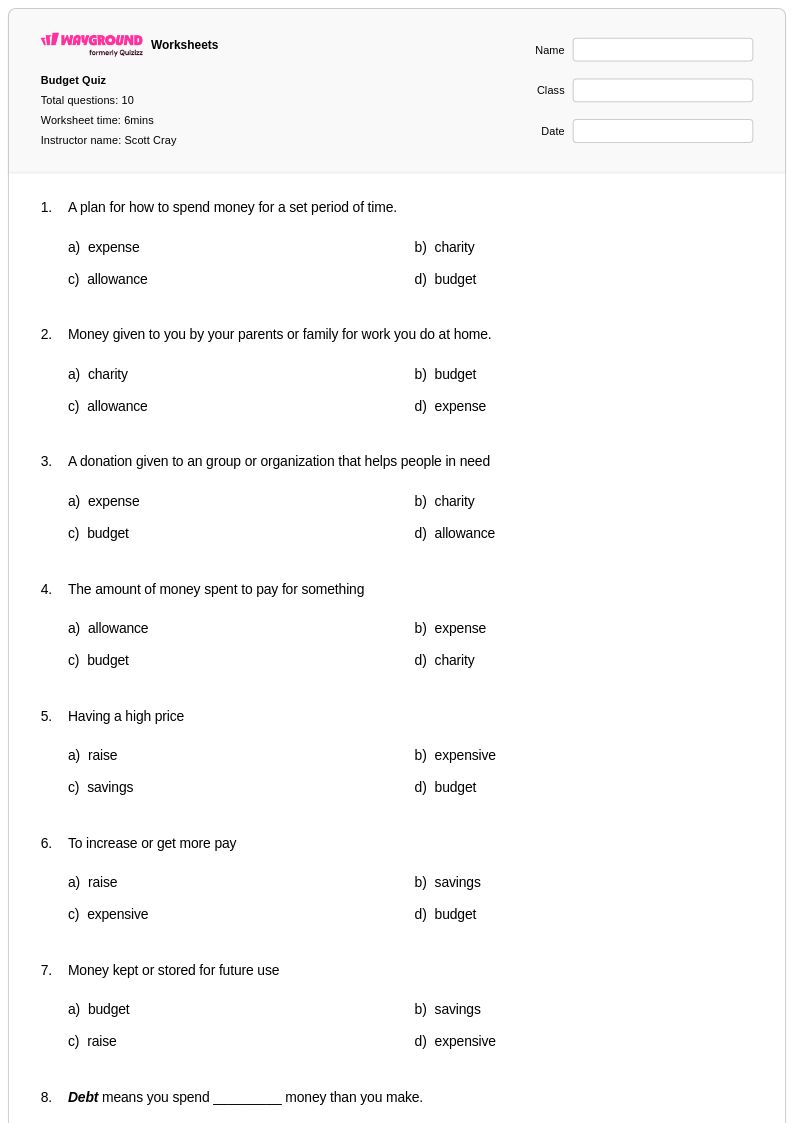
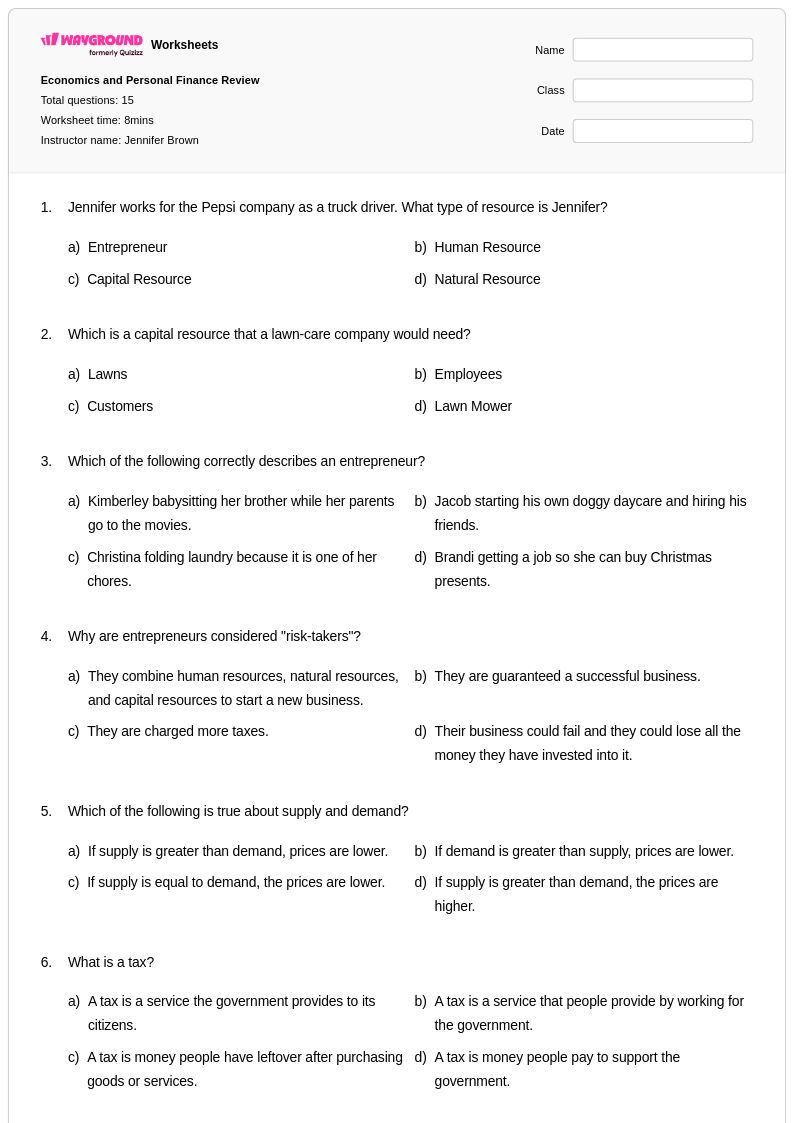
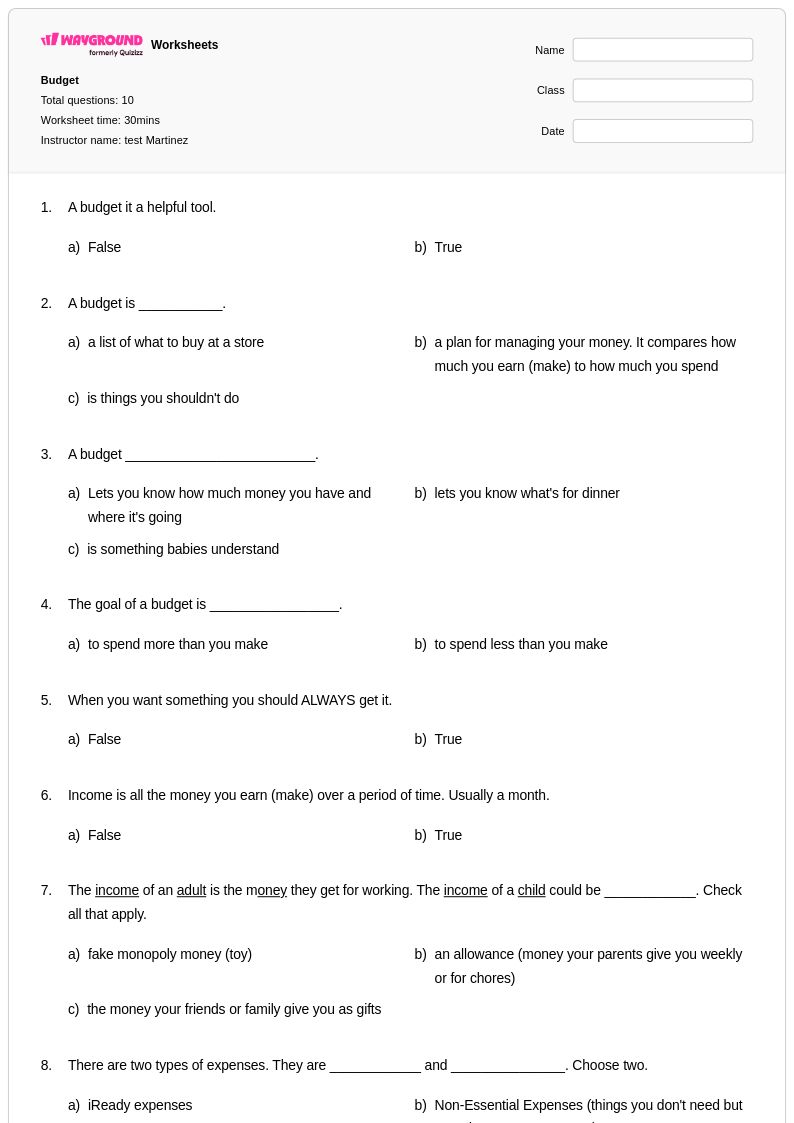
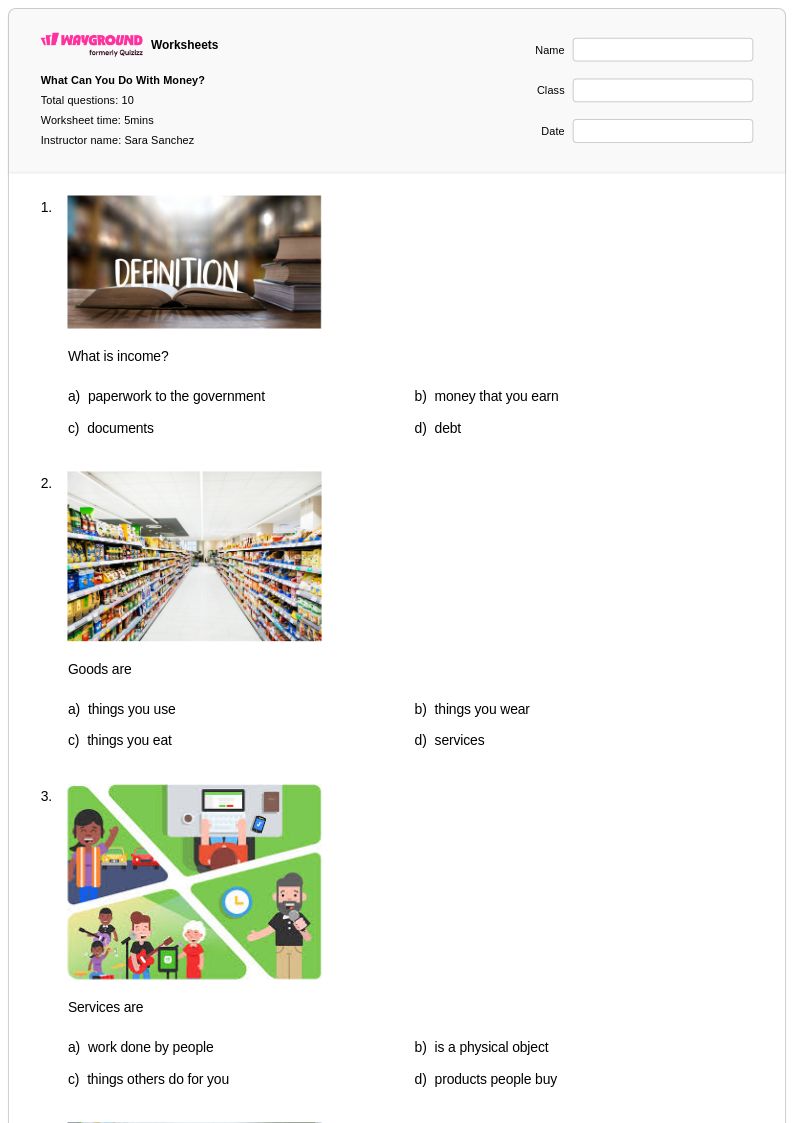
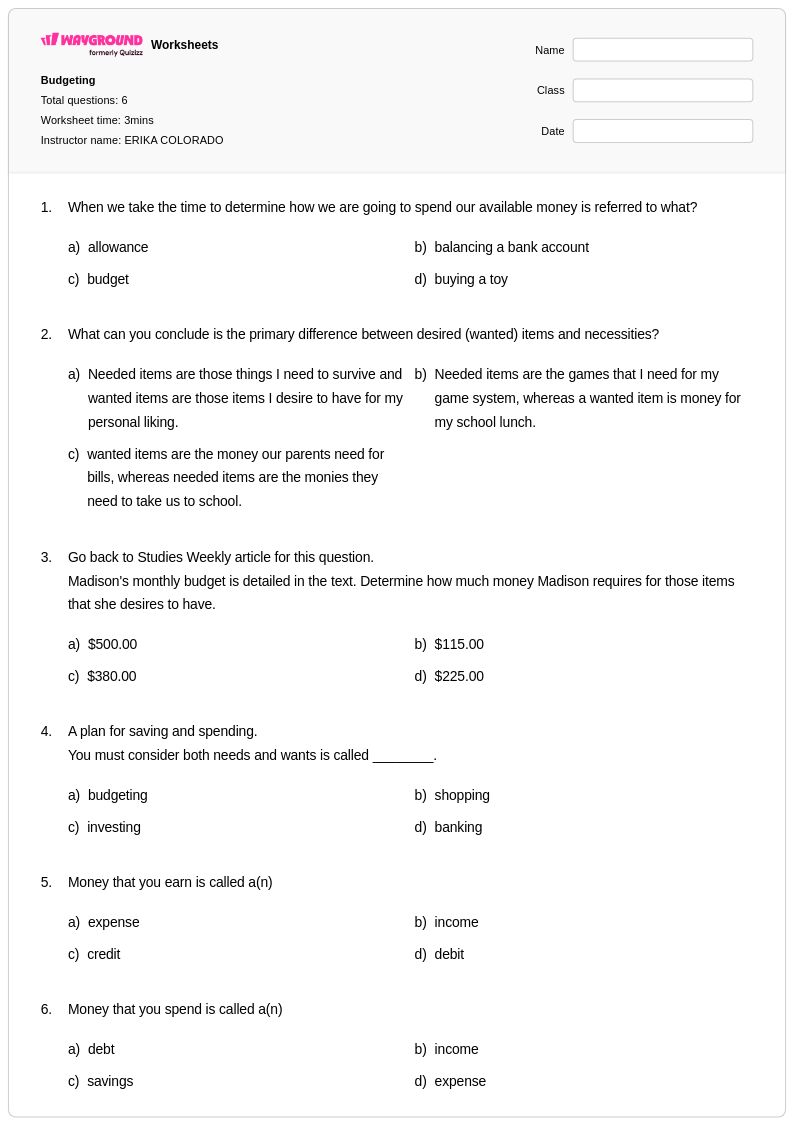
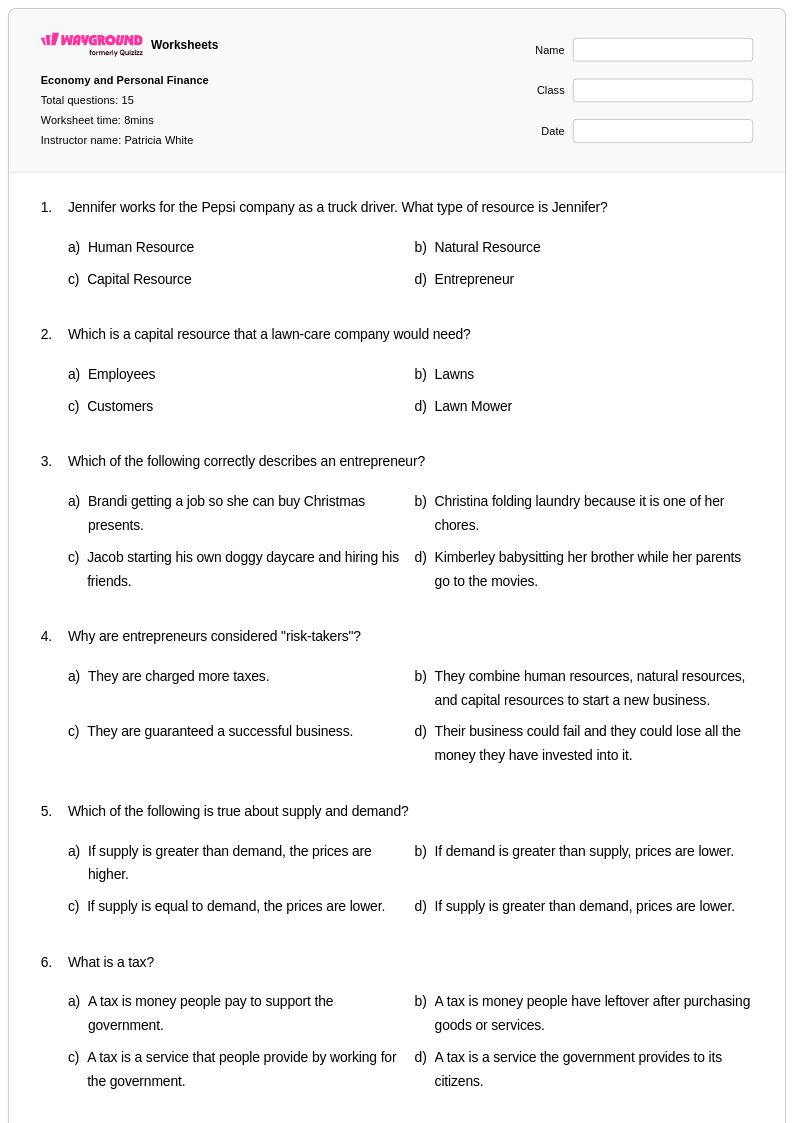
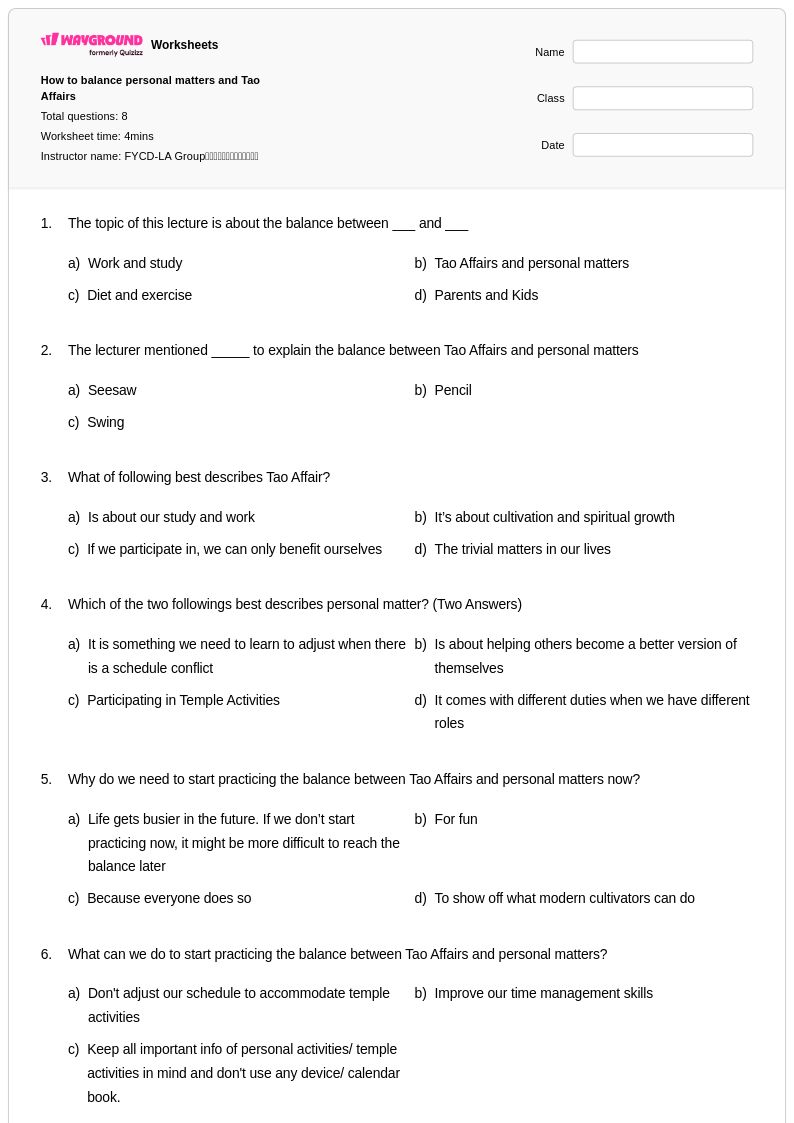
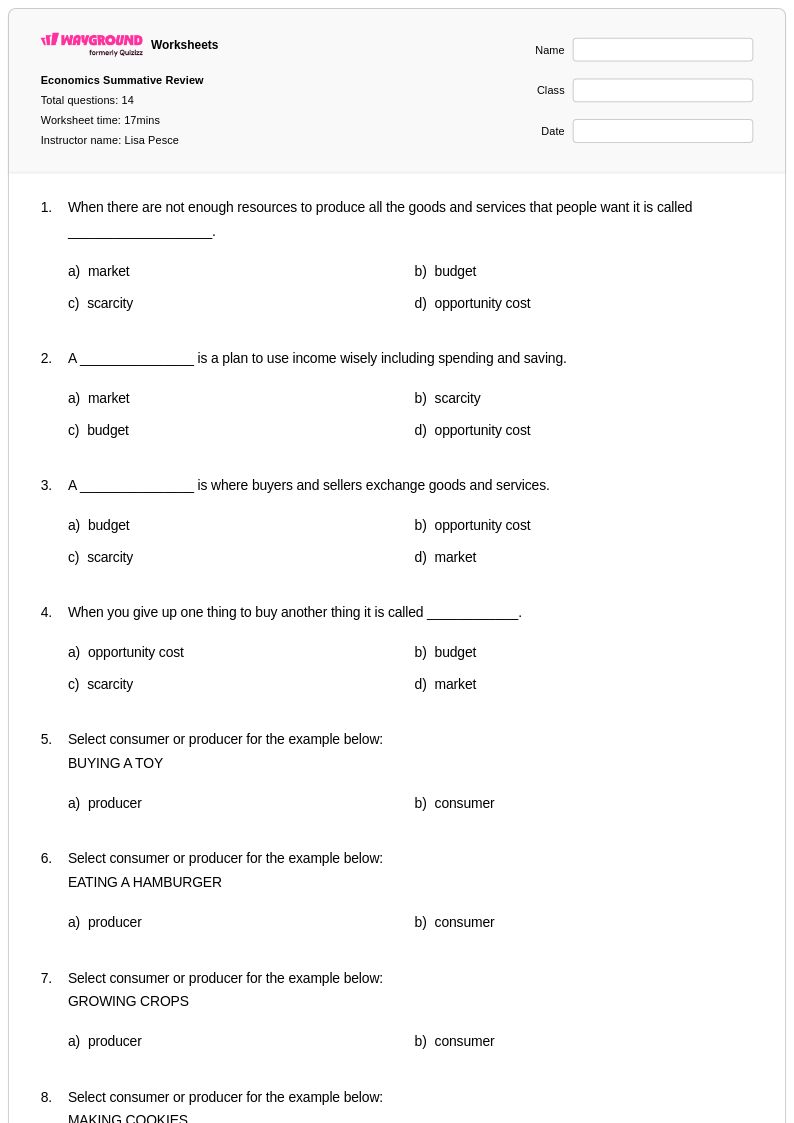
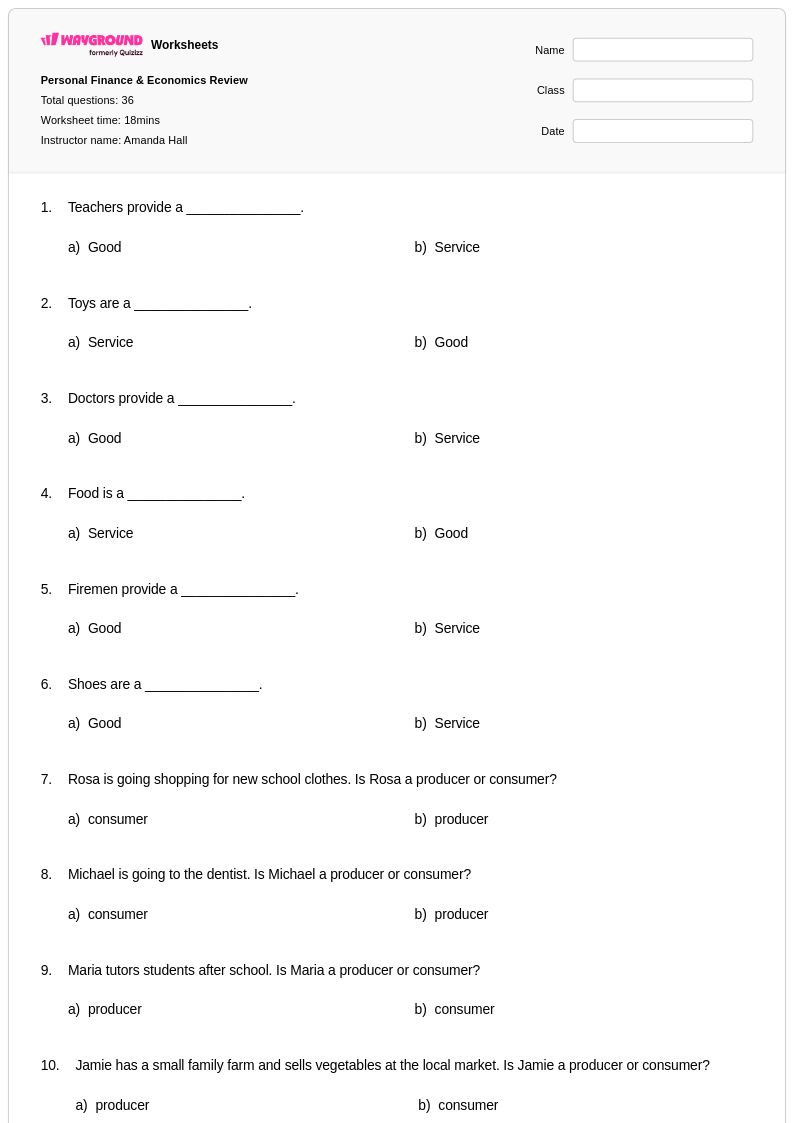
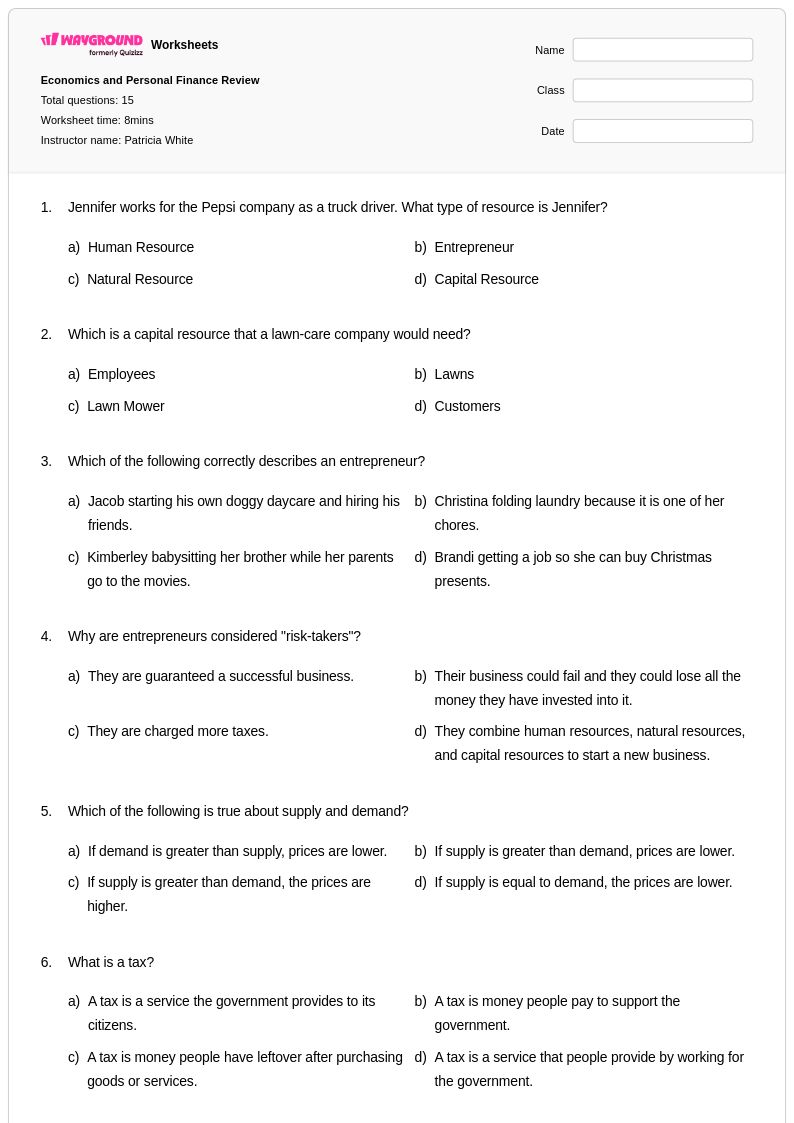
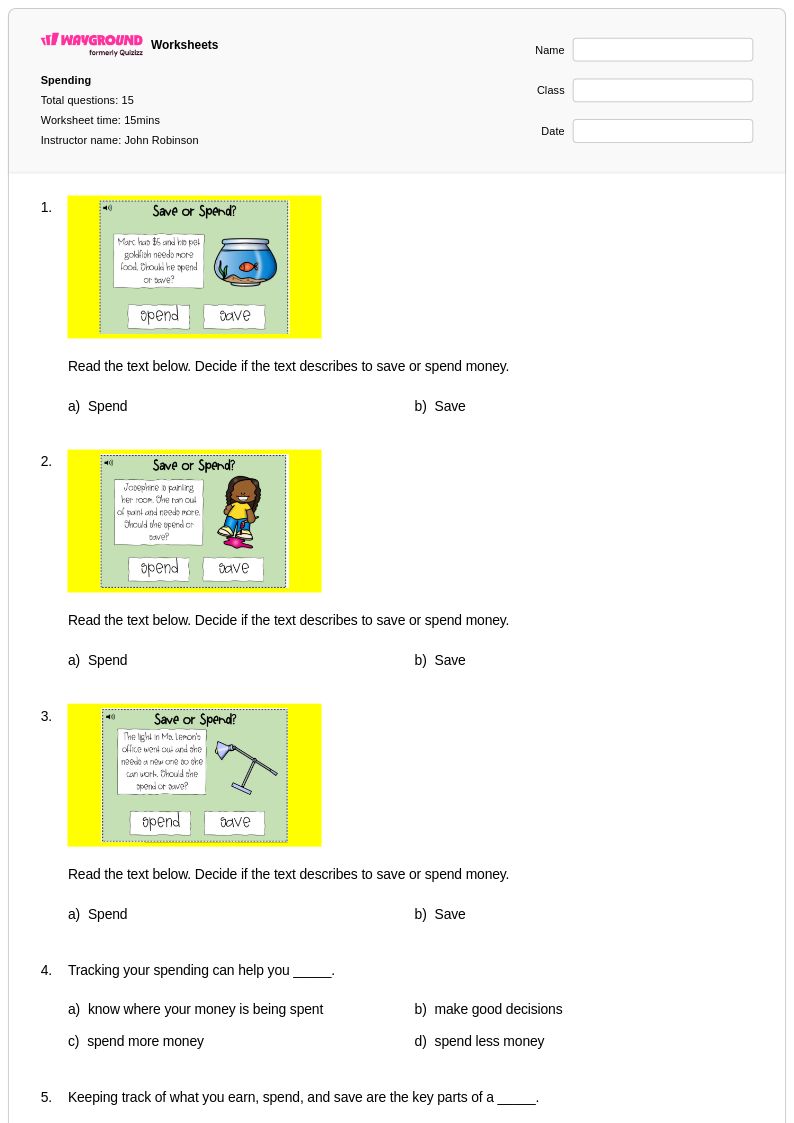
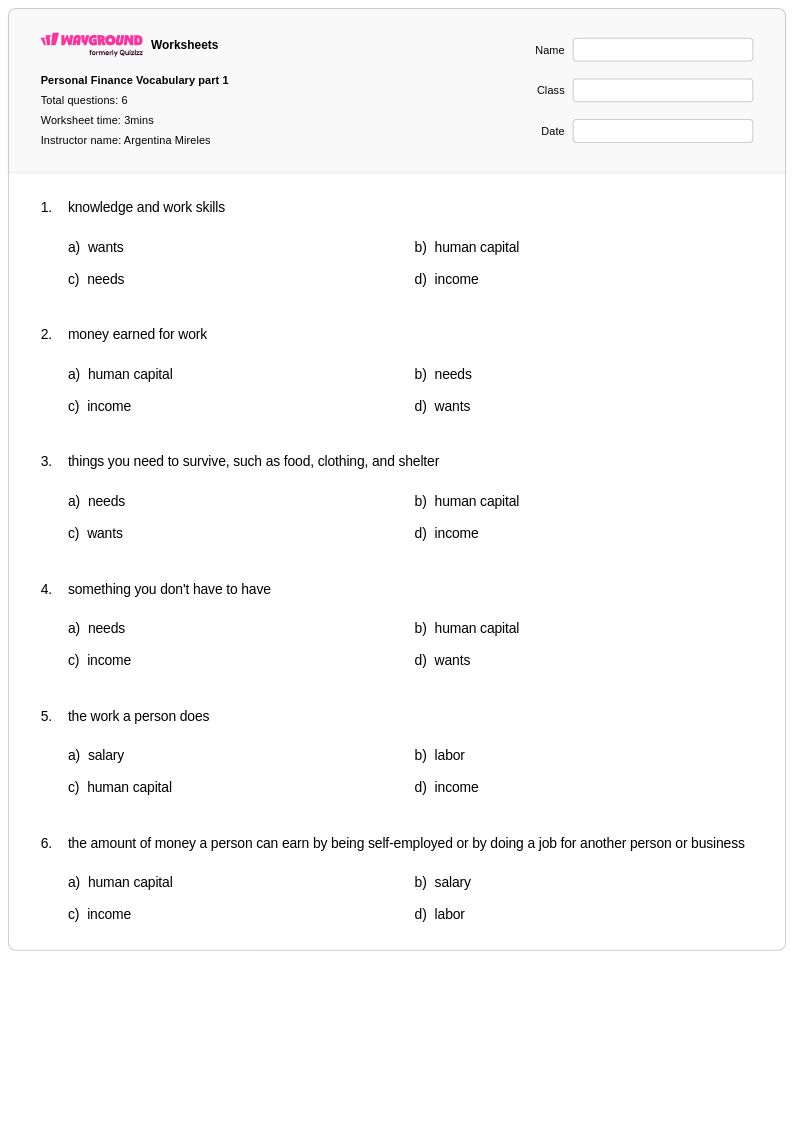
Personal allowance worksheets for Year 3 students provide essential foundation-building exercises that introduce young learners to fundamental money management concepts and personal financial responsibility. These carefully designed educational materials help third-grade students understand the basics of earning, saving, and spending money through age-appropriate scenarios and engaging practice problems. Students develop critical thinking skills as they work through real-world situations involving weekly allowances, simple budgeting decisions, and the concept of making choices with limited resources. The worksheets feature clear answer keys that support both independent learning and guided instruction, while the free printable format ensures accessibility for diverse classroom environments and home learning situations.
Wayground, formerly Quizizz, empowers educators with an extensive collection of millions of teacher-created resources specifically designed to support comprehensive instruction in personal finance concepts for elementary students. The platform's robust search and filtering capabilities allow teachers to quickly locate standards-aligned materials that match their specific curriculum requirements and student needs. These differentiation tools enable educators to customize worksheets for various learning levels within their Year 3 classrooms, supporting both remediation for struggling learners and enrichment opportunities for advanced students. Available in both printable pdf formats and interactive digital versions, these resources streamline lesson planning while providing flexible options for skill practice, formative assessment, and reinforcement of essential money management concepts that serve as building blocks for future financial literacy education.
FAQs
How do I teach students about personal allowance and money management?
Teaching personal allowance starts with helping students distinguish between needs and wants, then moves into building simple spending plans using their own allowance as a real-world context. Introduce calculating percentages for savings goals so students see how small decisions compound over time. Using realistic scenarios, such as deciding how to split a weekly allowance among spending, saving, and giving, grounds abstract financial concepts in everyday decision-making.
What exercises help students practice budgeting with a personal allowance?
Effective practice exercises include tracking allowance income over time, creating spending plans with fixed categories, and calculating percentage-based savings targets. Scenario-based problems that require students to make trade-off decisions, such as choosing between two purchases within a set budget, build both arithmetic skills and financial reasoning. Repeated exposure to these problem types helps students internalize responsible spending habits rather than just solving isolated math problems.
What mistakes do students commonly make when learning about personal allowance and budgeting?
A common error is treating all spending as equal priority rather than categorizing expenses by need versus want, which leads to faulty budget plans. Students also frequently miscalculate percentage-based savings goals by applying the percentage to the wrong base amount. Another recurring misconception is failing to account for recurring expenses over time, causing students to underestimate how quickly small purchases deplete a budget.
How can I differentiate personal allowance instruction for students at different skill levels?
For students who need additional support, simplify scenarios by using round numbers and fewer budget categories before introducing percentages. More advanced students can work with multi-week tracking problems that require them to reconcile projected versus actual spending. On Wayground, teachers can apply accommodations such as reduced answer choices to lower cognitive load for individual students, or enable Read Aloud so that word problems are accessible to students who struggle with reading fluency, without notifying the rest of the class.
How do I use Wayground's personal allowance worksheets in my classroom?
Wayground's personal allowance worksheets are available as printable PDFs for traditional classroom use and in digital formats for technology-integrated environments, making them flexible for in-class instruction, homework, or remediation. Teachers can also host the worksheets as a quiz directly on Wayground, enabling real-time progress monitoring. Each worksheet includes a complete answer key, so teachers can use them for independent practice with minimal setup time.