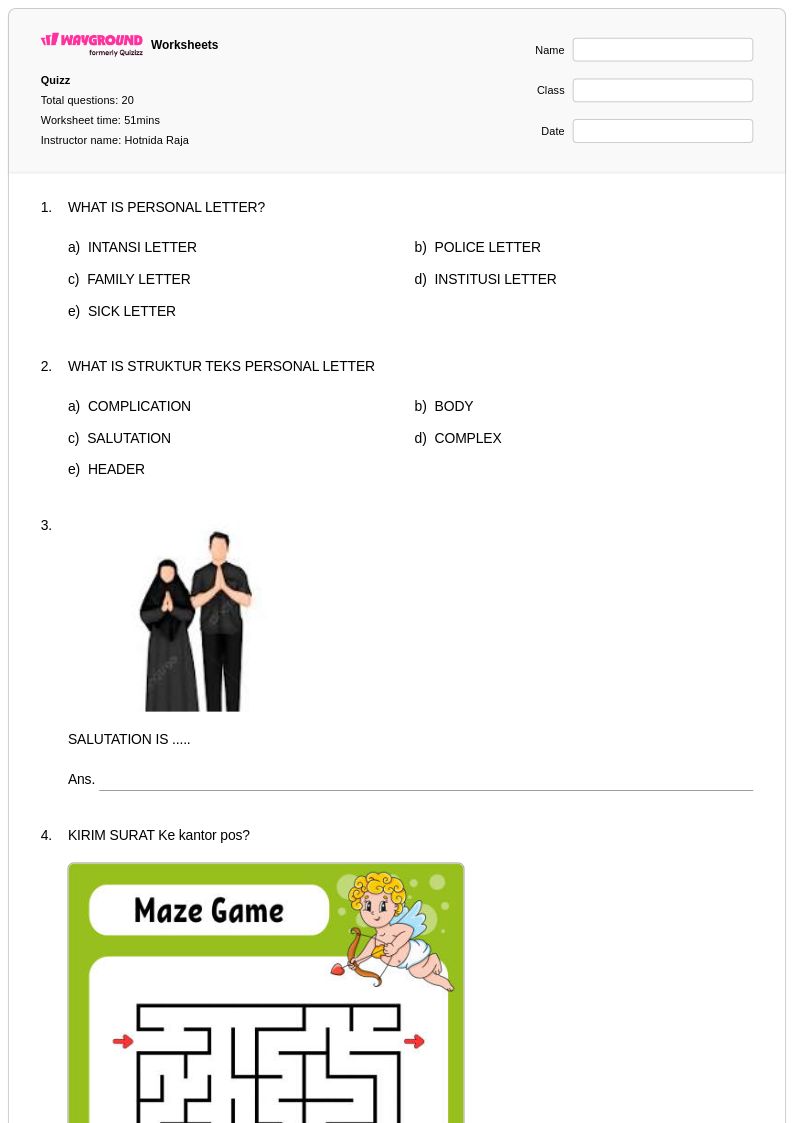
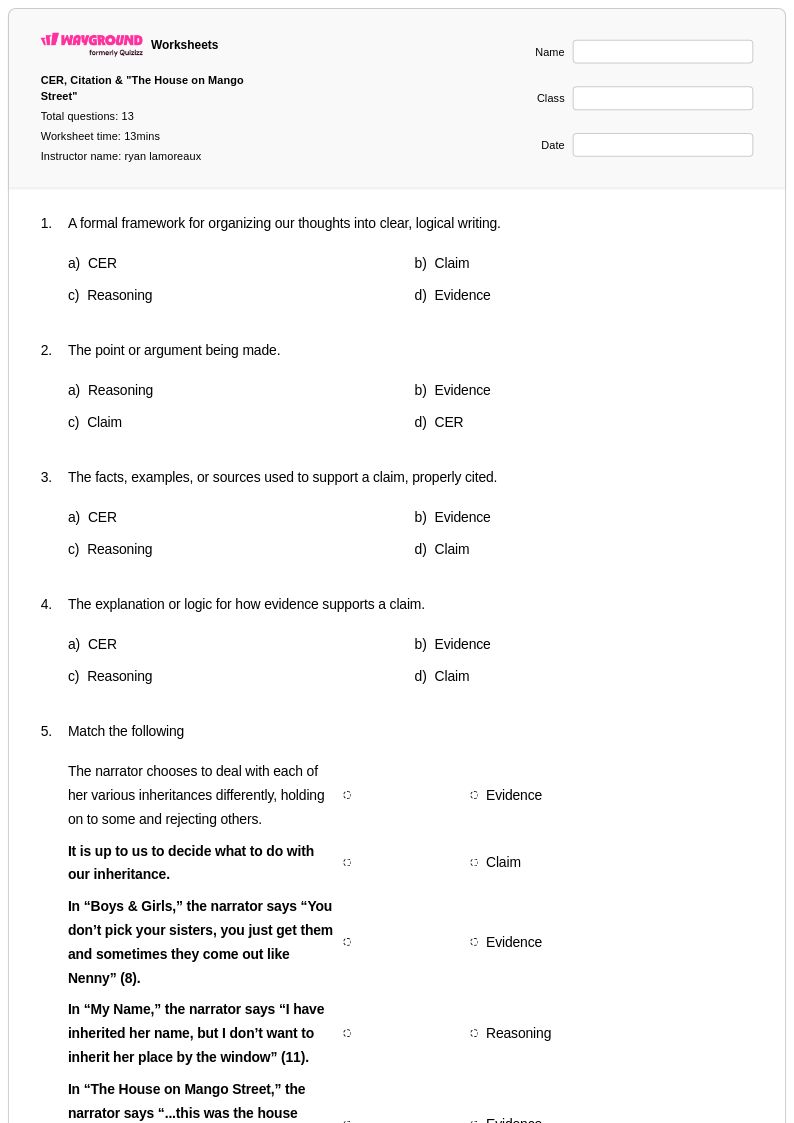
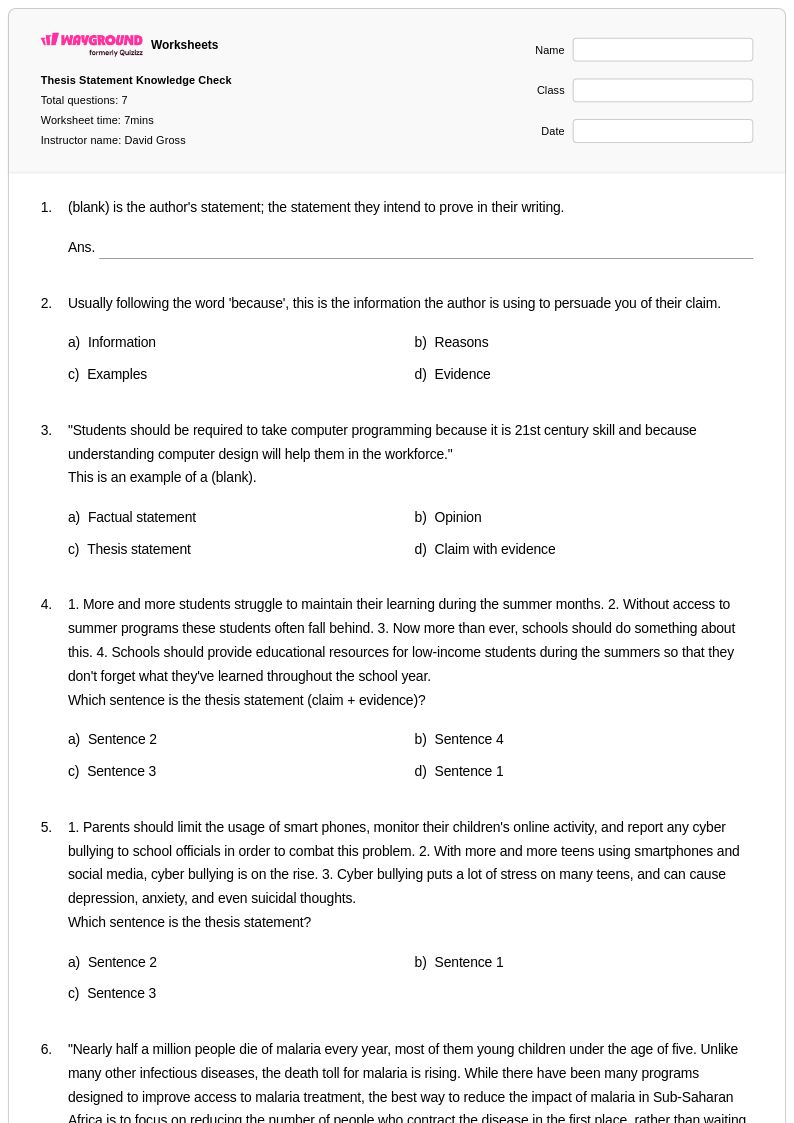
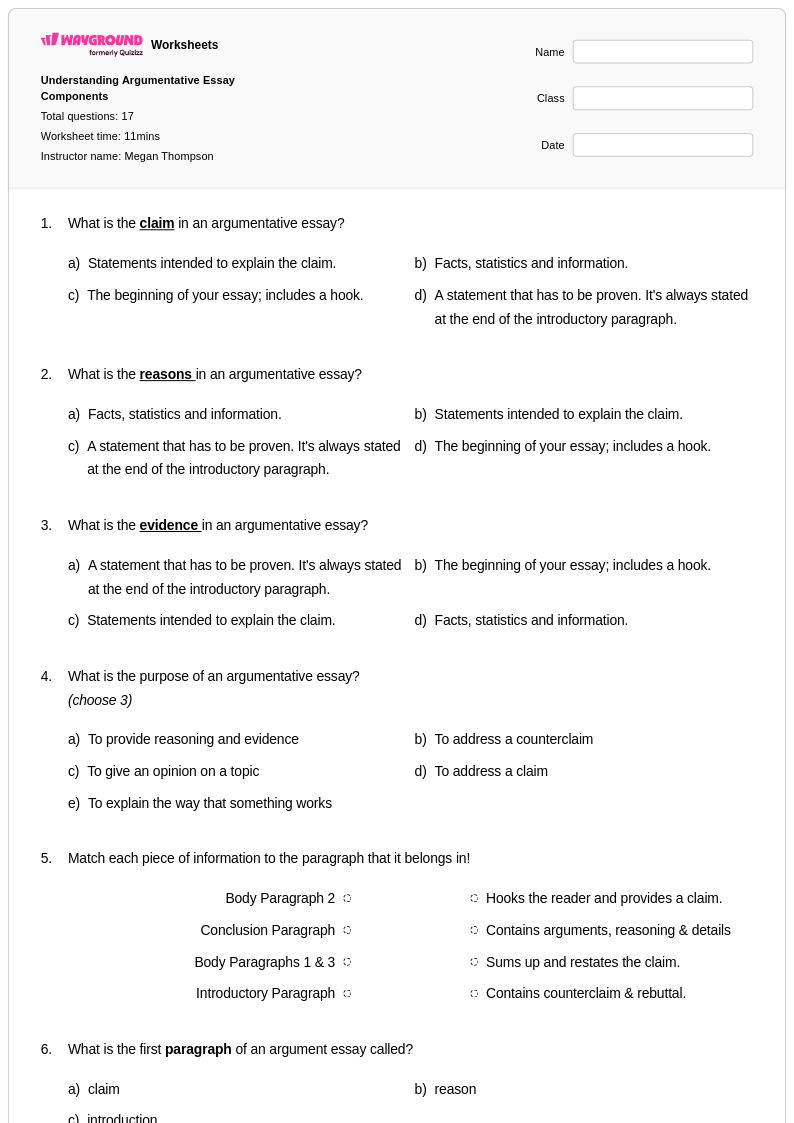
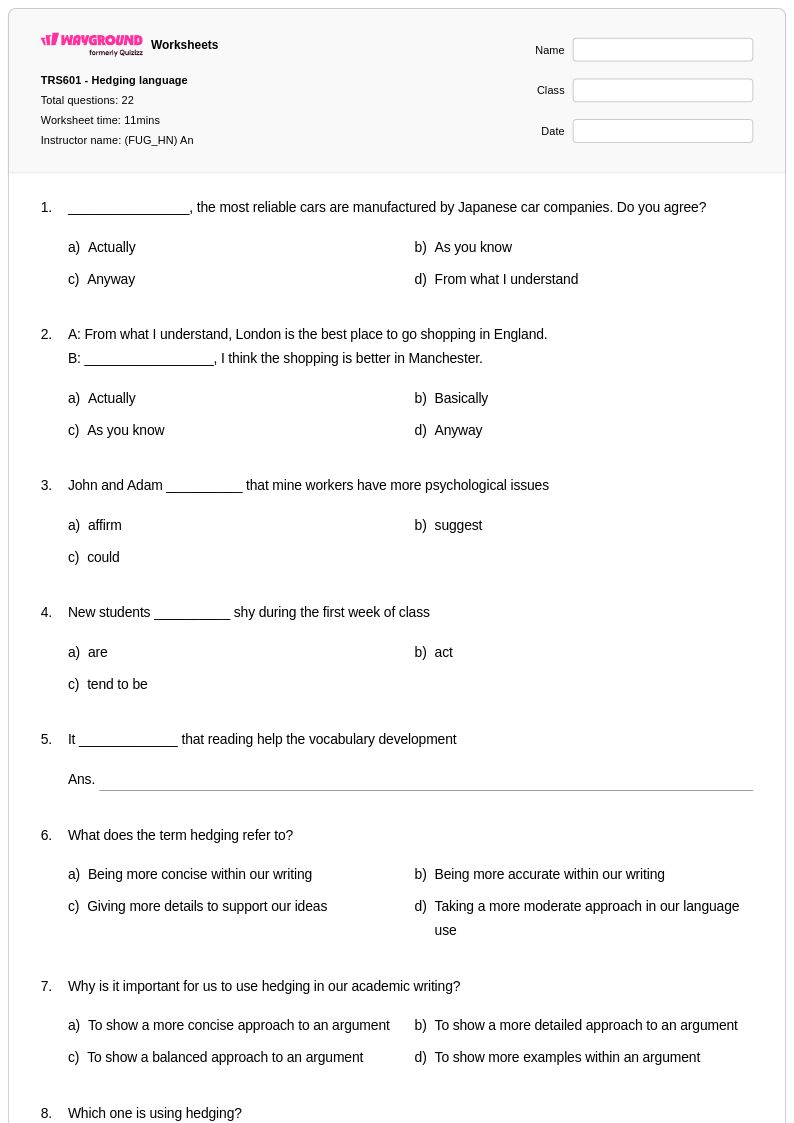
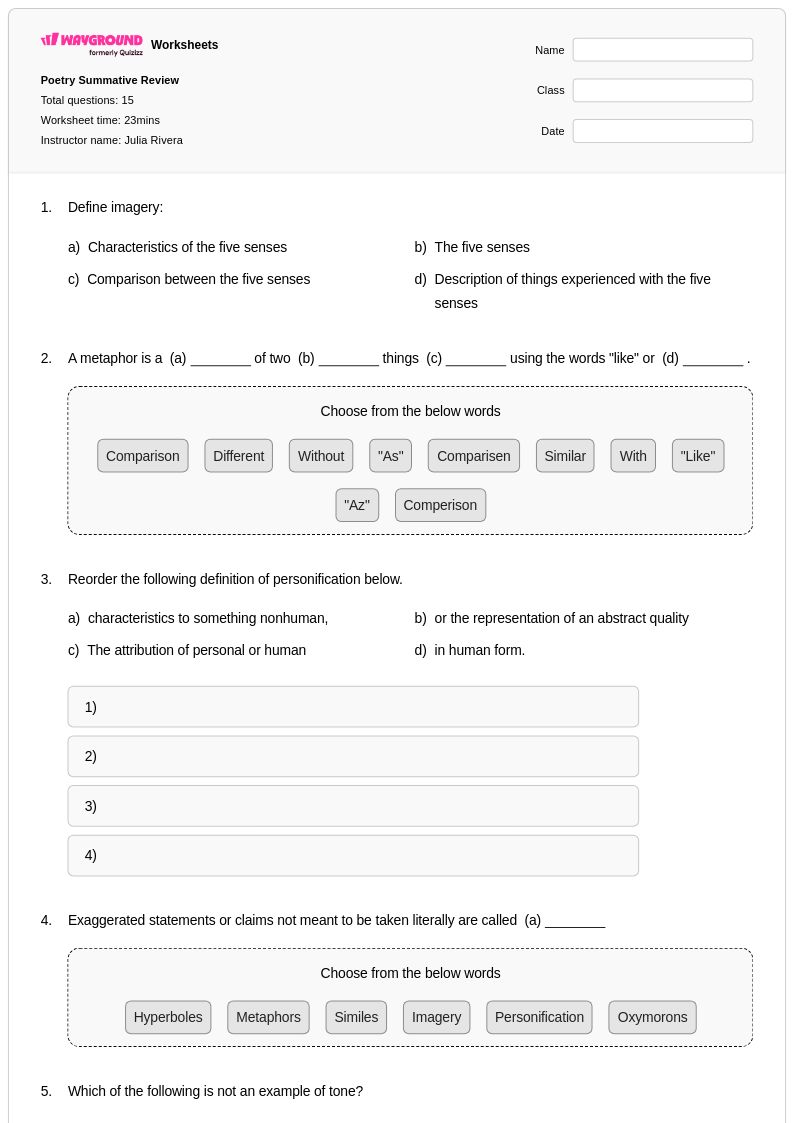
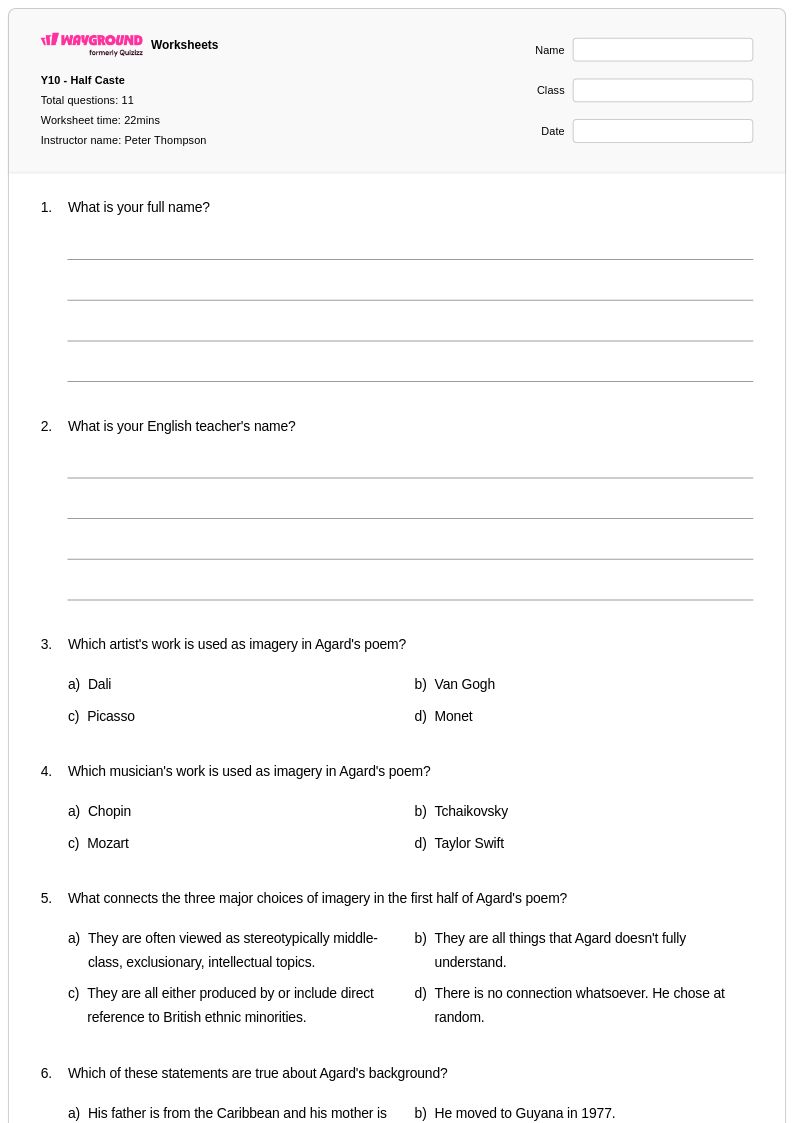
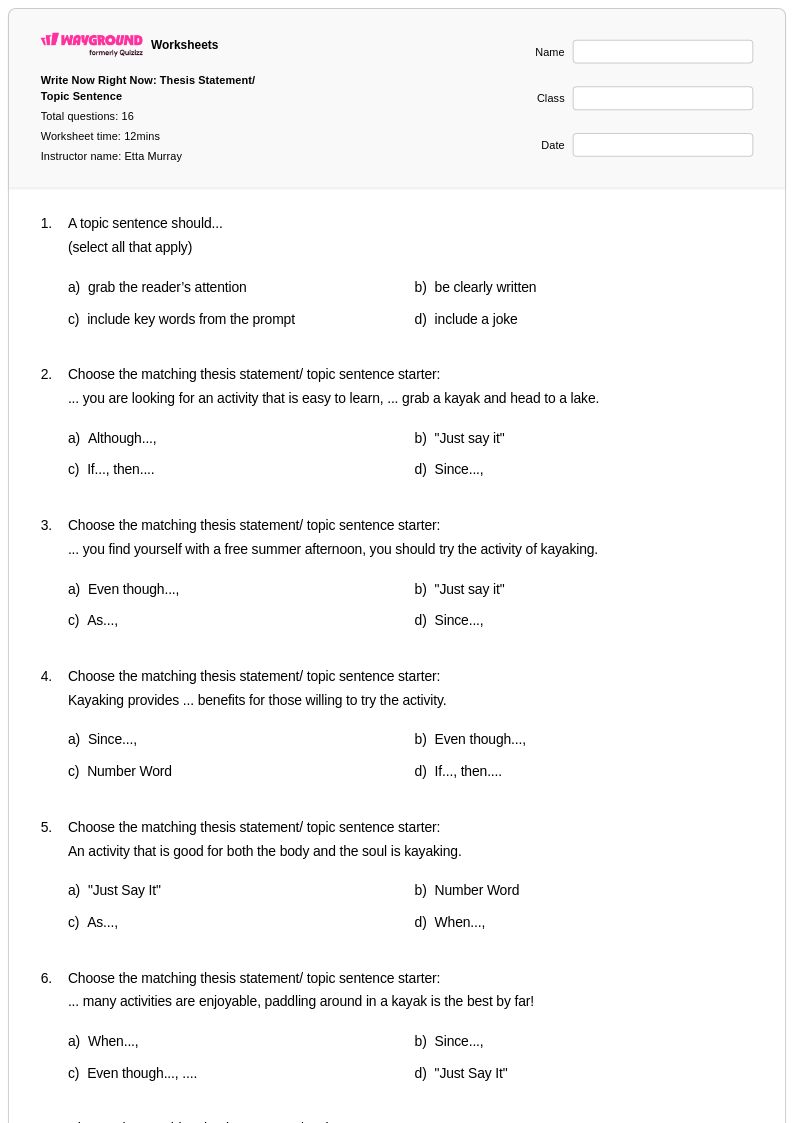
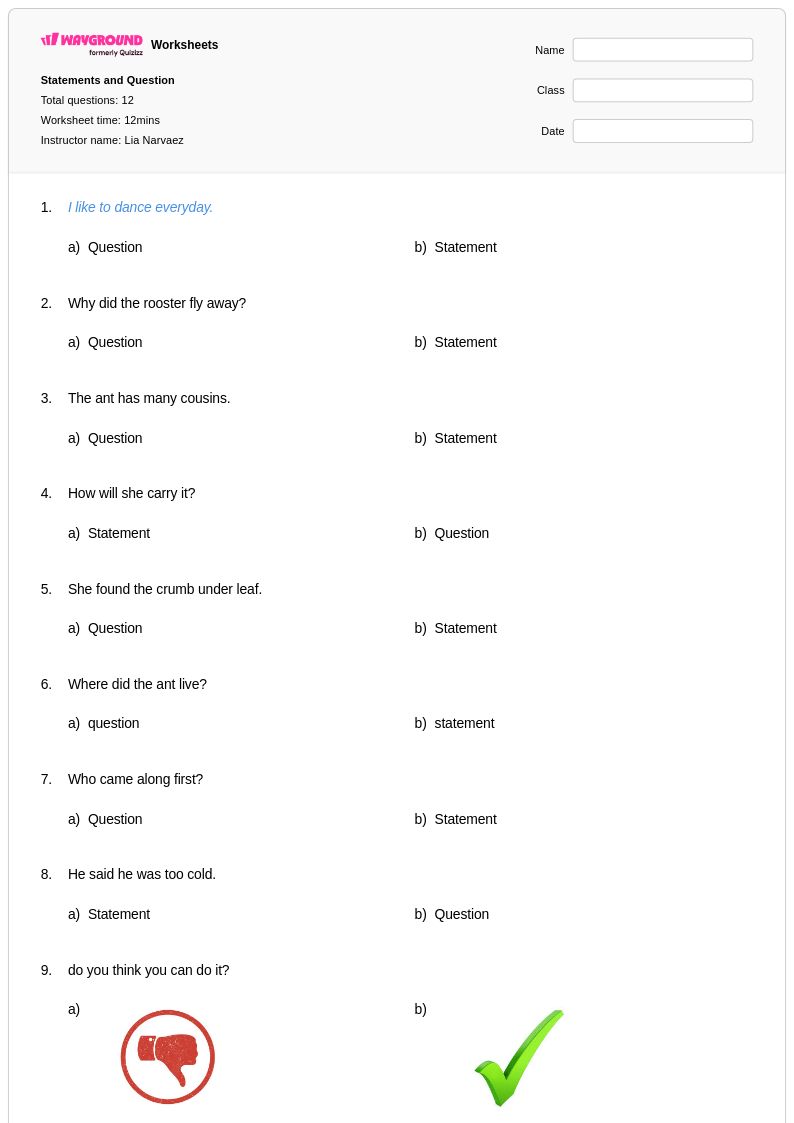
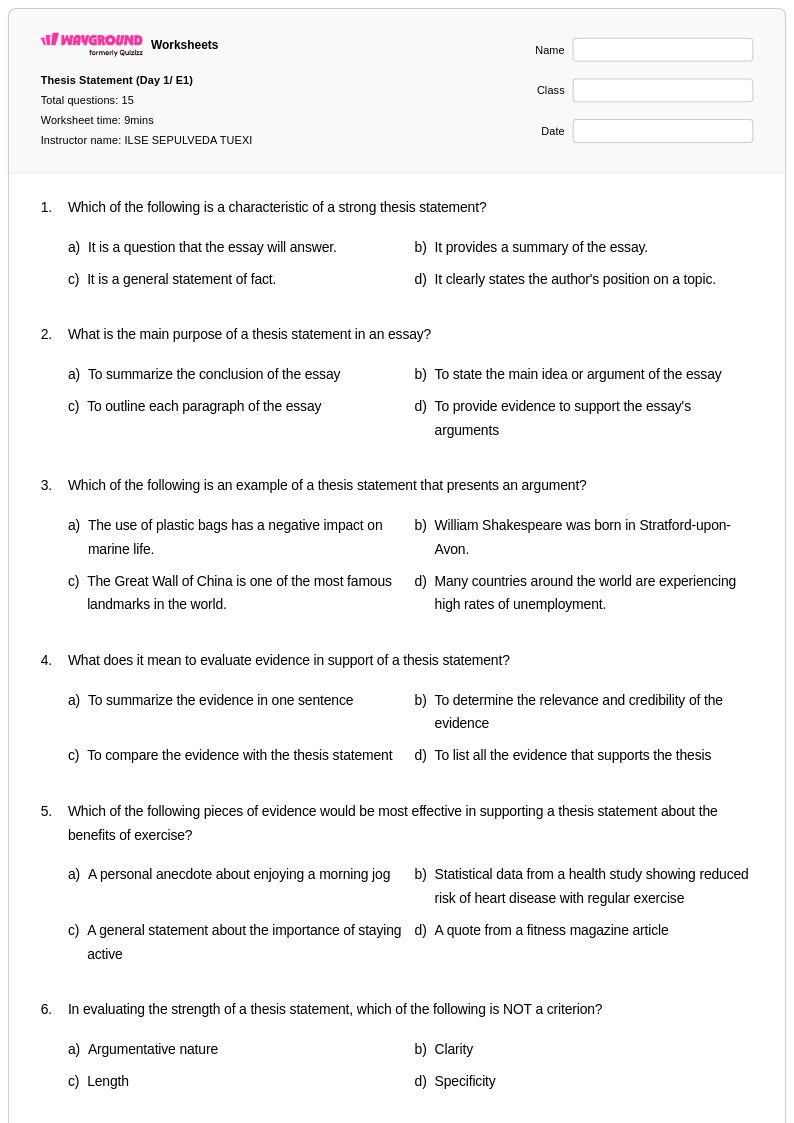
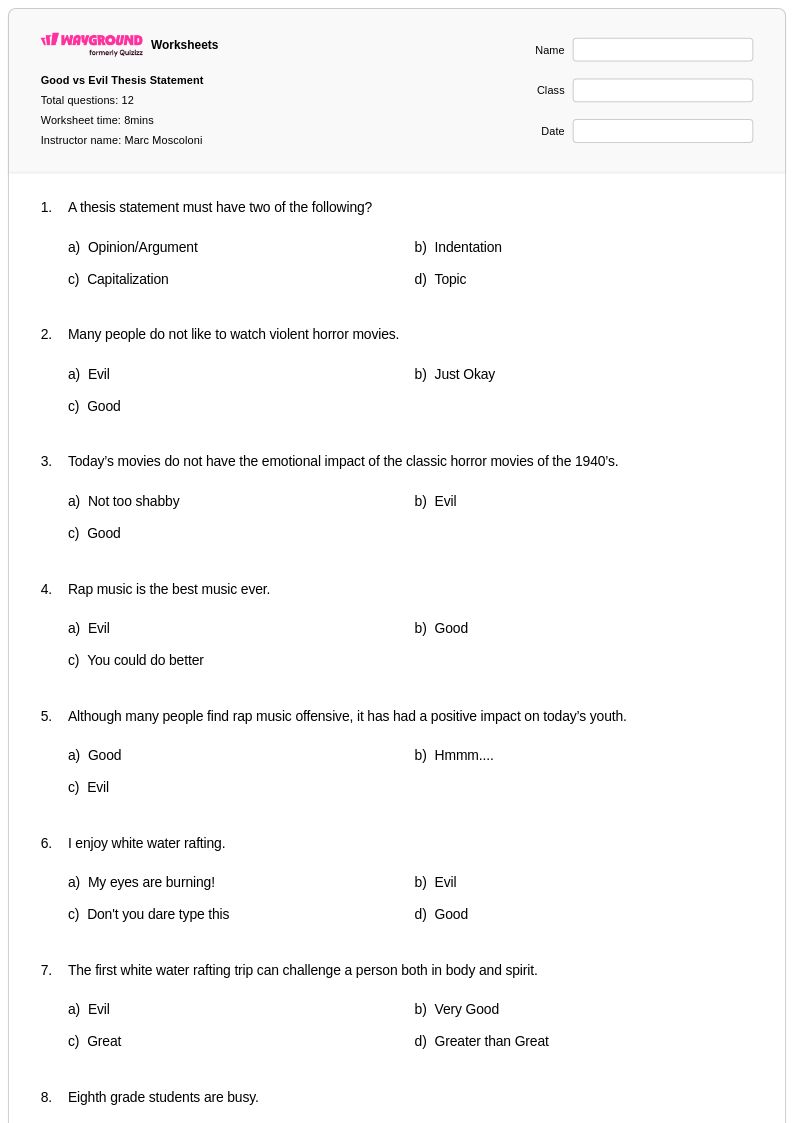
Enhance your personal statement writing skills with Wayground's comprehensive collection of free worksheets and printables, featuring guided practice problems and answer keys to help students craft compelling, well-structured personal narratives.
Personal statement worksheets available through Wayground (formerly Quizizz) provide comprehensive guidance for students learning to craft compelling personal narratives for college applications, scholarship opportunities, and professional development. These expertly designed resources strengthen essential writing skills including narrative structure, voice development, audience awareness, and authentic self-reflection. Students work through systematic practice problems that build their ability to identify meaningful experiences, articulate personal growth, and connect individual stories to broader themes. The collection includes detailed answer keys that help students understand effective techniques, while printable pdf formats ensure accessibility for both classroom instruction and independent study sessions. Free resources complement premium materials, offering educators flexible options to support diverse learning needs and writing abilities.
Wayground's extensive library draws from millions of teacher-created resources, providing educators with robust search and filtering capabilities to locate personal statement worksheets that align with specific curriculum standards and learning objectives. The platform's differentiation tools enable teachers to customize materials for varying skill levels, while flexible formatting options support both digital instruction and traditional printable assignments in convenient pdf layouts. These comprehensive collections facilitate targeted lesson planning, allowing educators to address individual student needs through focused remediation activities or challenge advanced writers with enrichment exercises. Teachers can seamlessly integrate these resources into writing workshop models, one-on-one conferencing sessions, or structured skill practice routines, ensuring students develop the confidence and technical proficiency necessary for successful personal statement composition across academic and professional contexts.
FAQs
How do I teach students to write a strong personal statement?
Effective personal statement instruction begins with helping students identify experiences that reveal character rather than simply listing achievements. Teachers typically move through a structured sequence: brainstorming meaningful moments, drafting a clear narrative arc, developing authentic voice, and revising for audience awareness. Modeling the process with annotated examples and providing structured reflection prompts gives students a concrete framework before they write independently.
What exercises help students practice personal statement writing?
Practice exercises that isolate specific skills tend to be most effective. Useful formats include 'show don't tell' rewriting tasks, opening-line workshops where students draft and compare multiple hooks, and structured self-reflection prompts that ask students to connect a specific experience to a broader insight. Peer response activities using targeted feedback protocols also strengthen revision skills and help students see their writing from a reader's perspective.
What mistakes do students commonly make when writing personal statements?
The most frequent errors are writing about the topic rather than themselves, opening with a cliché or dictionary definition, and listing accomplishments instead of telling a story. Students also struggle with ending strongly — conclusions often restate the introduction rather than leaving the reader with a lasting impression. A lack of specific detail is another consistent weakness; vague language undermines authenticity and makes personal statements feel interchangeable.
How do I help struggling writers approach a personal statement without feeling overwhelmed?
Breaking the personal statement into discrete, low-stakes tasks reduces the intimidation factor significantly. Start with oral storytelling or free-writing before students put anything on the page in formal draft form. Providing sentence frames, structured graphic organizers, and examples of strong opening lines gives reluctant writers a concrete entry point. On Wayground, teachers can enable Read Aloud support and adjust font size through Reading Mode for students who benefit from accessibility accommodations during the drafting and revision process.
How can I use Wayground's personal statement worksheets in my classroom?
Wayground's personal statement worksheets are available as printable PDFs for traditional classroom use and in digital formats for technology-integrated or blended learning environments. Teachers can assign them as independent practice, use them in writing workshop rotations, or host them as a quiz directly on Wayground to gather real-time data on student progress. The included answer keys help both teachers and students evaluate responses against clear criteria for effective personal narrative writing.
How do I differentiate personal statement instruction for students at different writing levels?
Advanced writers benefit from open-ended prompts that push them to move beyond safe, surface-level topics and develop a distinctive voice. Students who are earlier in their writing development need more scaffolding: structured outlines, sentence-level modeling, and prompts that narrow the scope of what they need to address. Wayground's differentiation tools allow teachers to customize materials for varying skill levels and use focused remediation activities or enrichment exercises based on individual student need.