
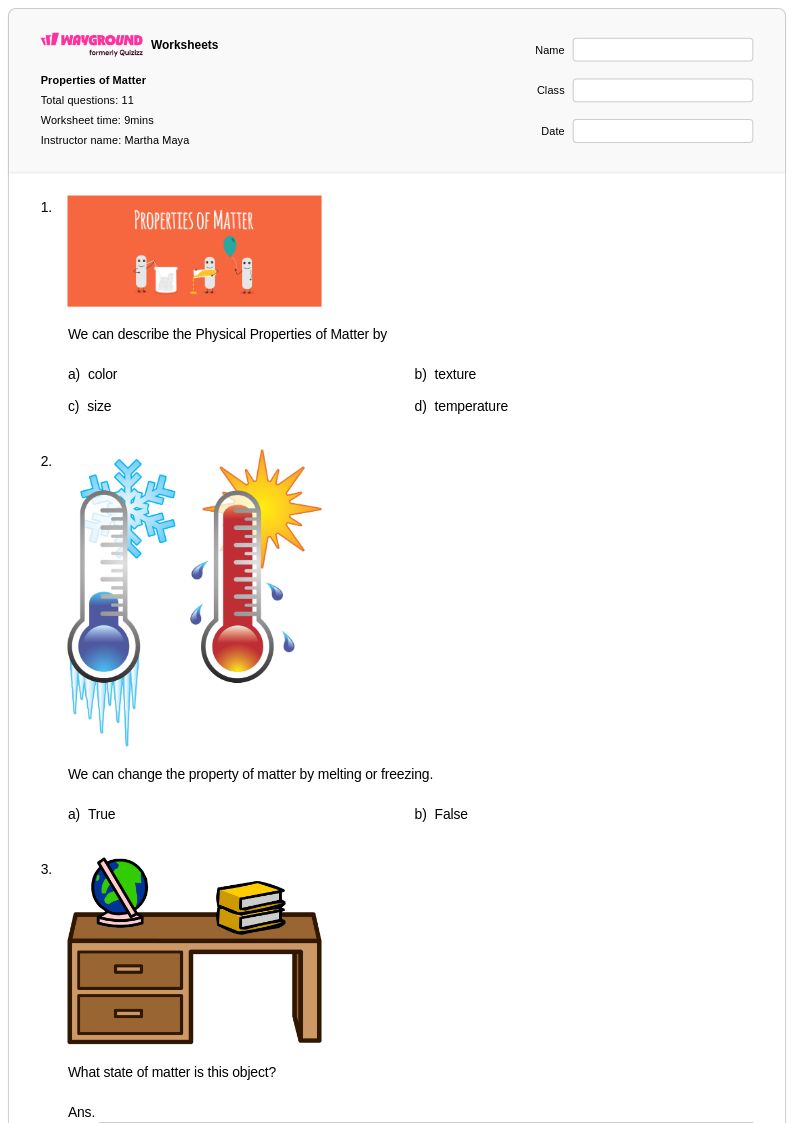
11 Q
KG - 2nd
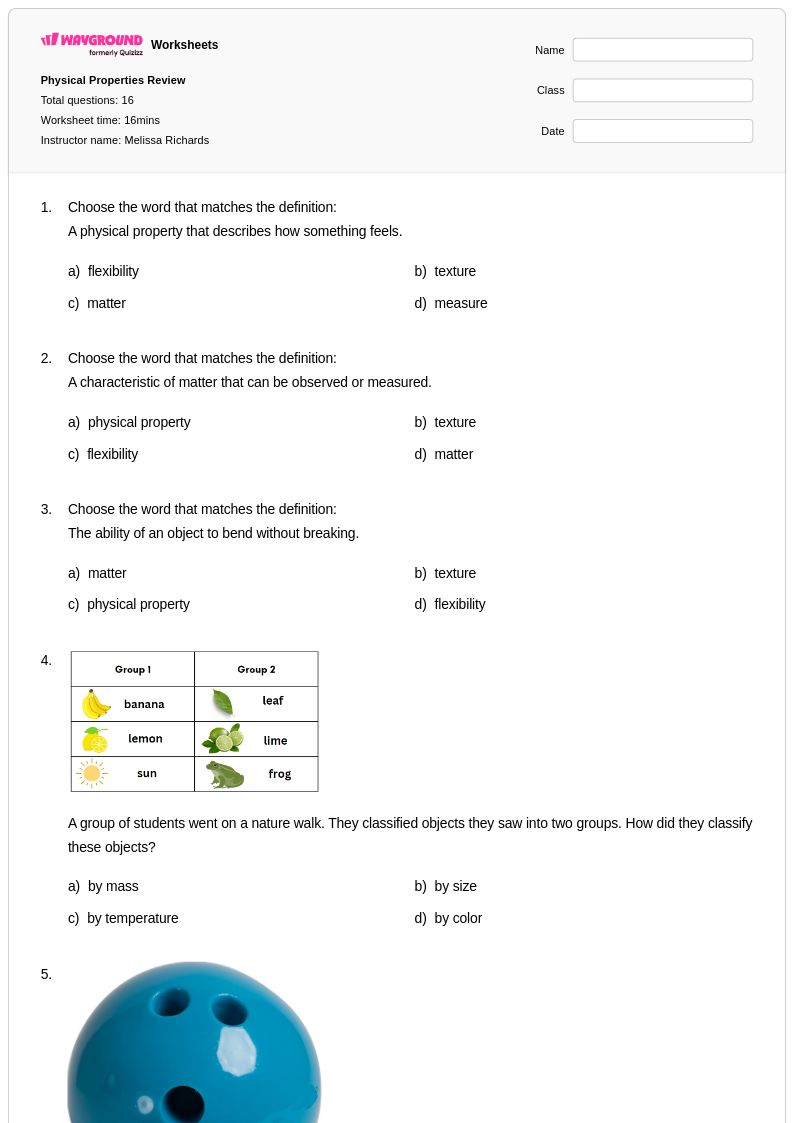
16 Q
2nd
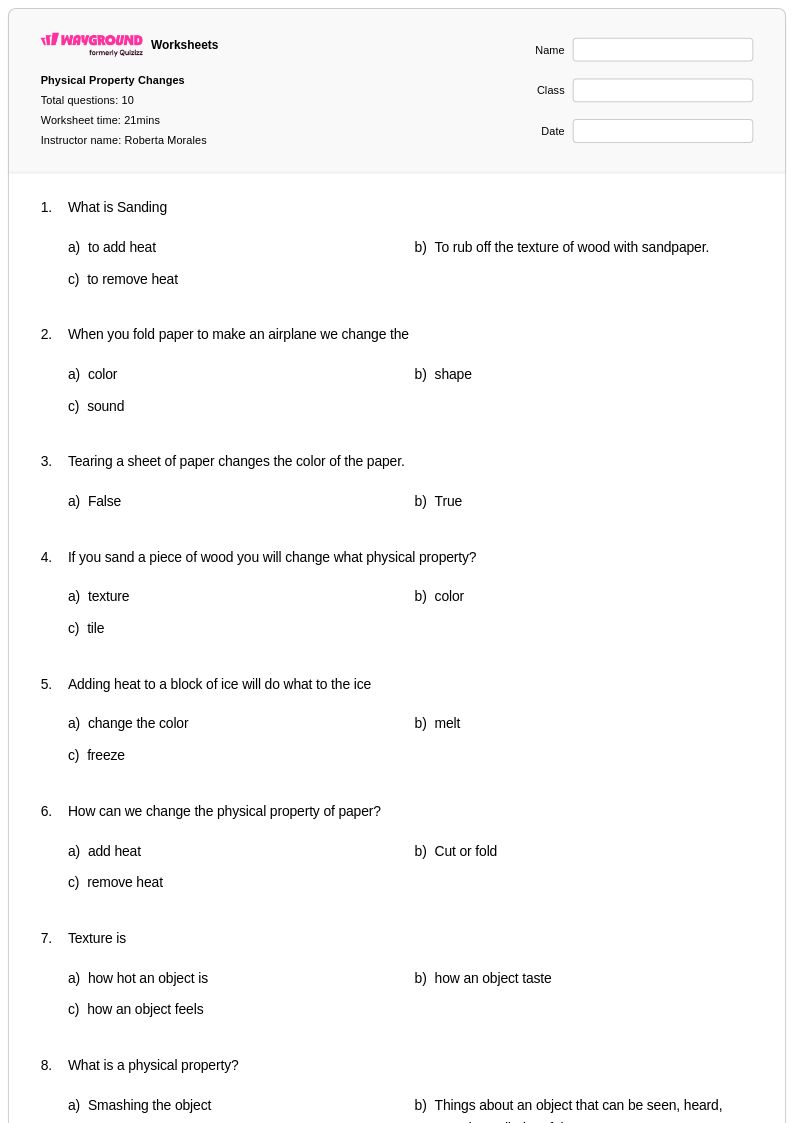
10 Q
2nd
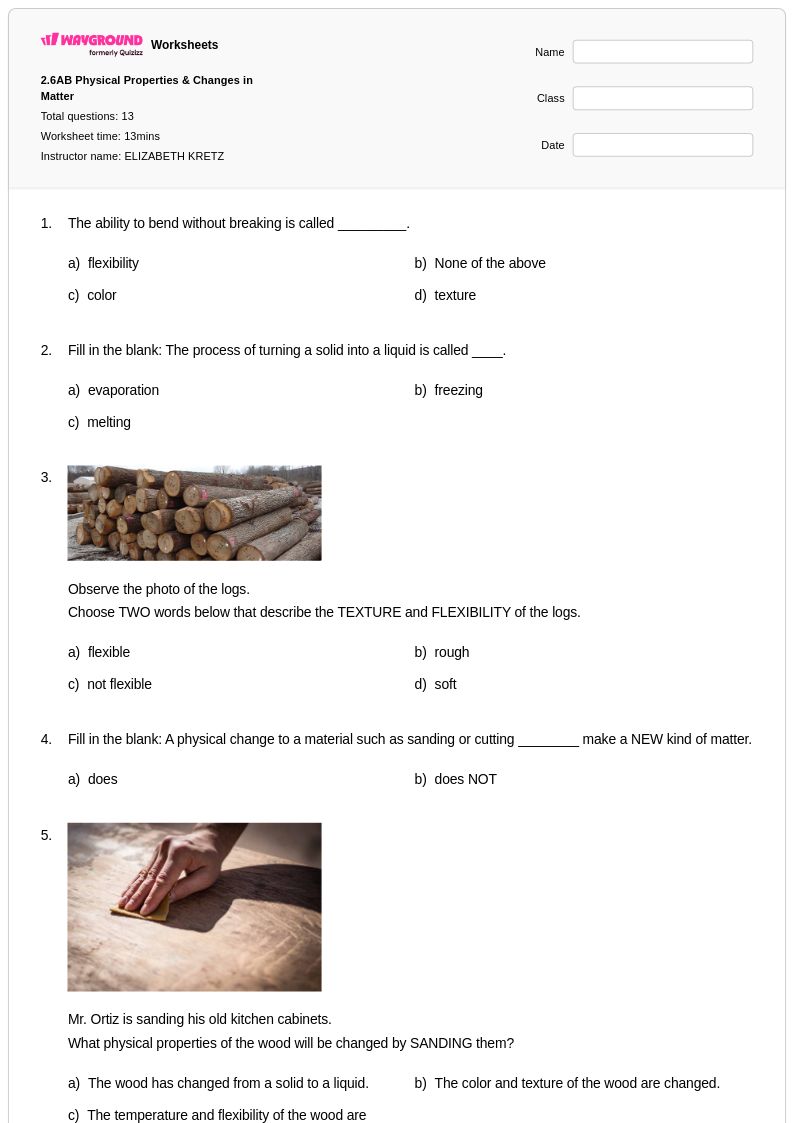
13 Q
2nd
11 Q
2nd
12 Q
1st - 5th
10 Q
KG - 2nd
10 Q
2nd
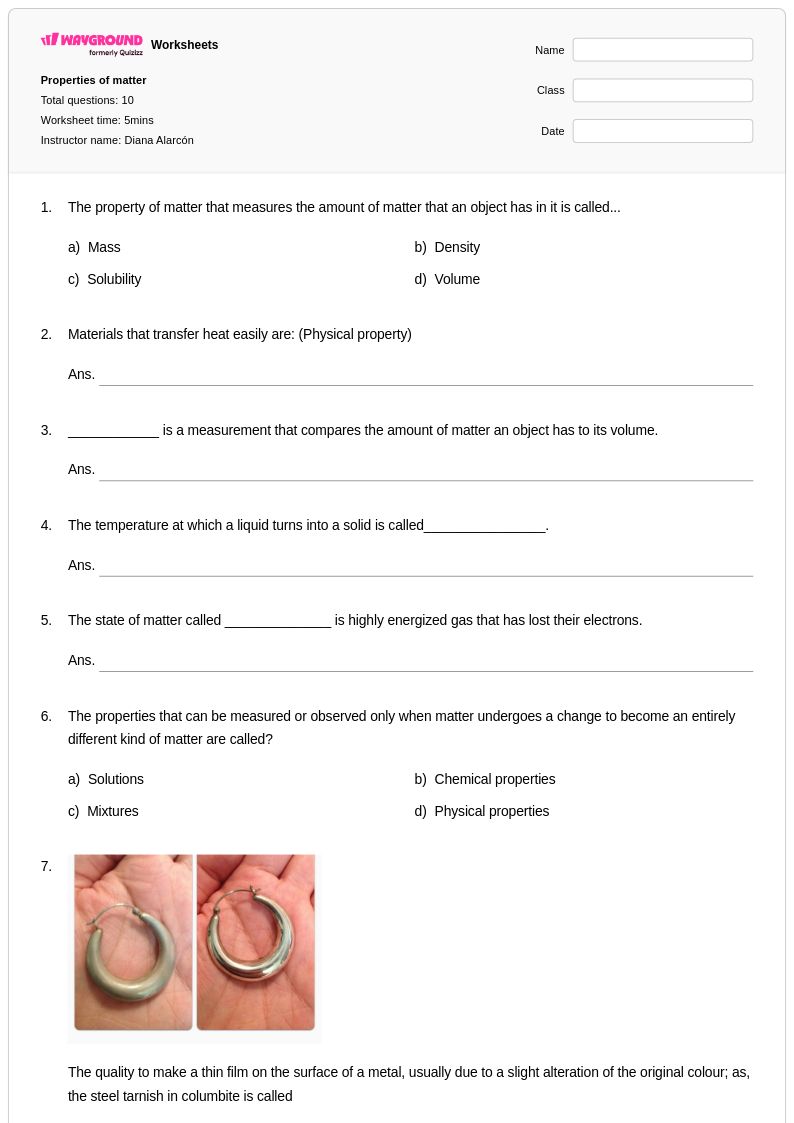
10 Q
KG - Uni
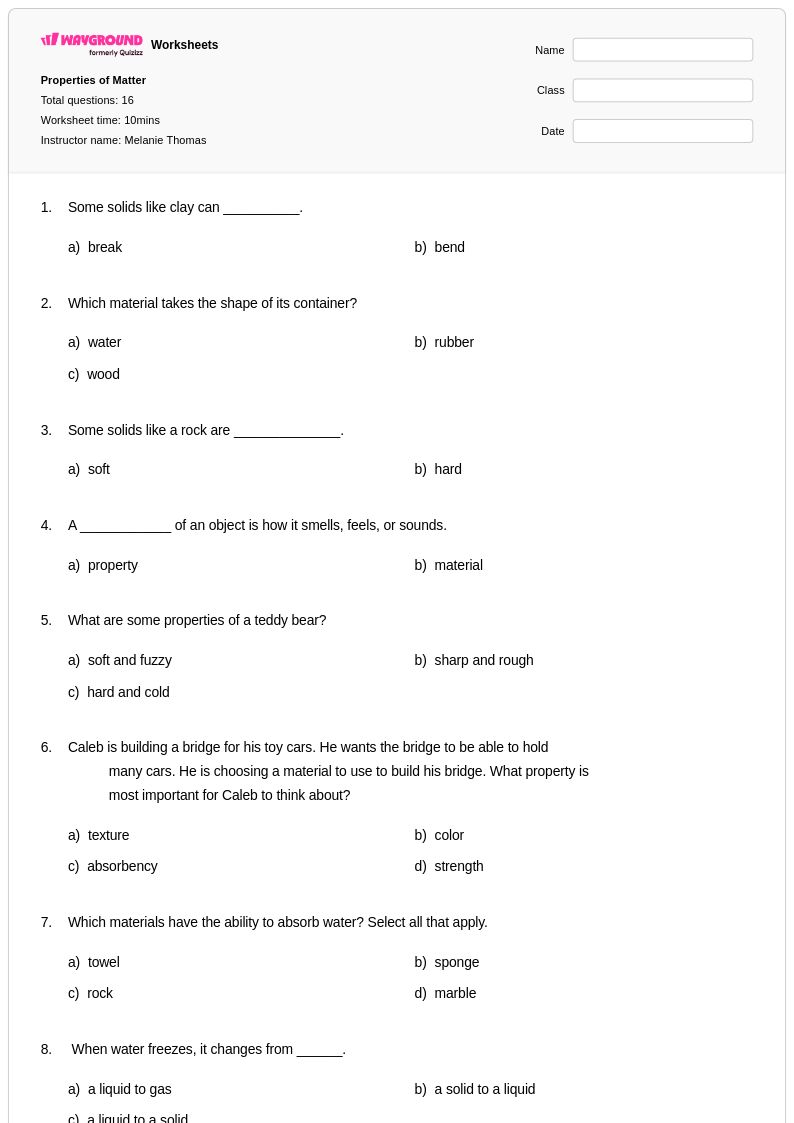
16 Q
2nd
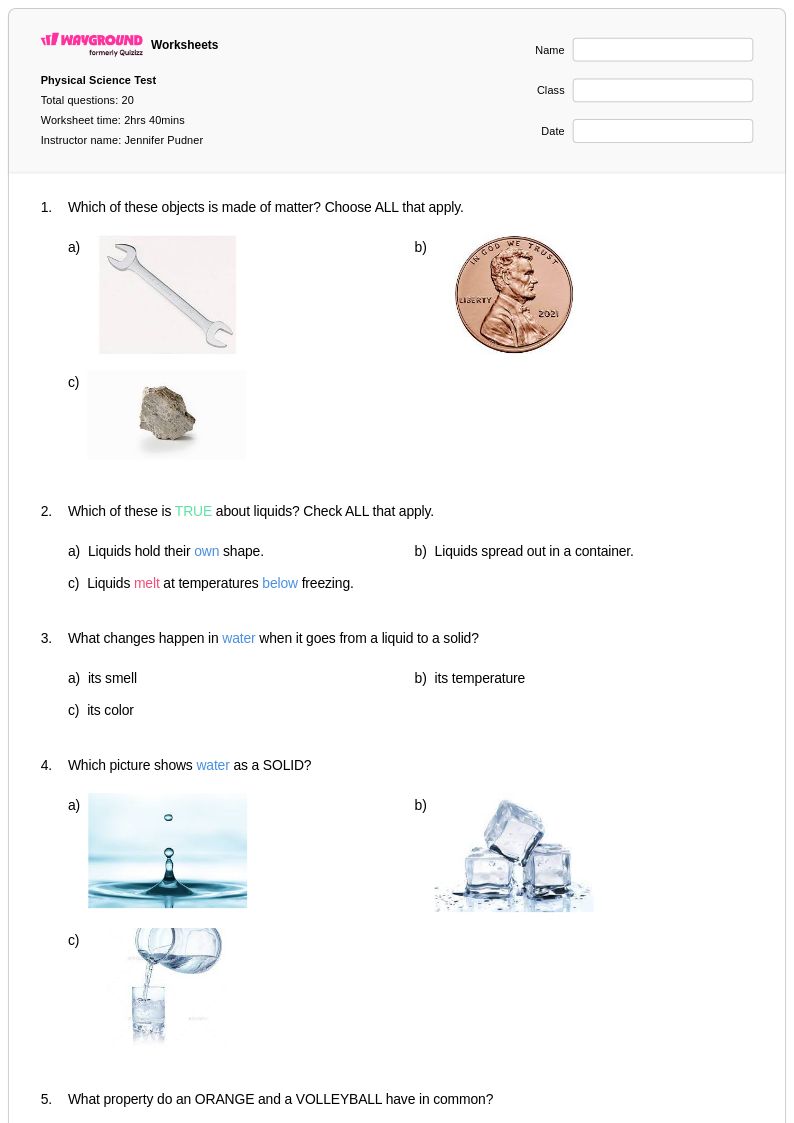
20 Q
2nd
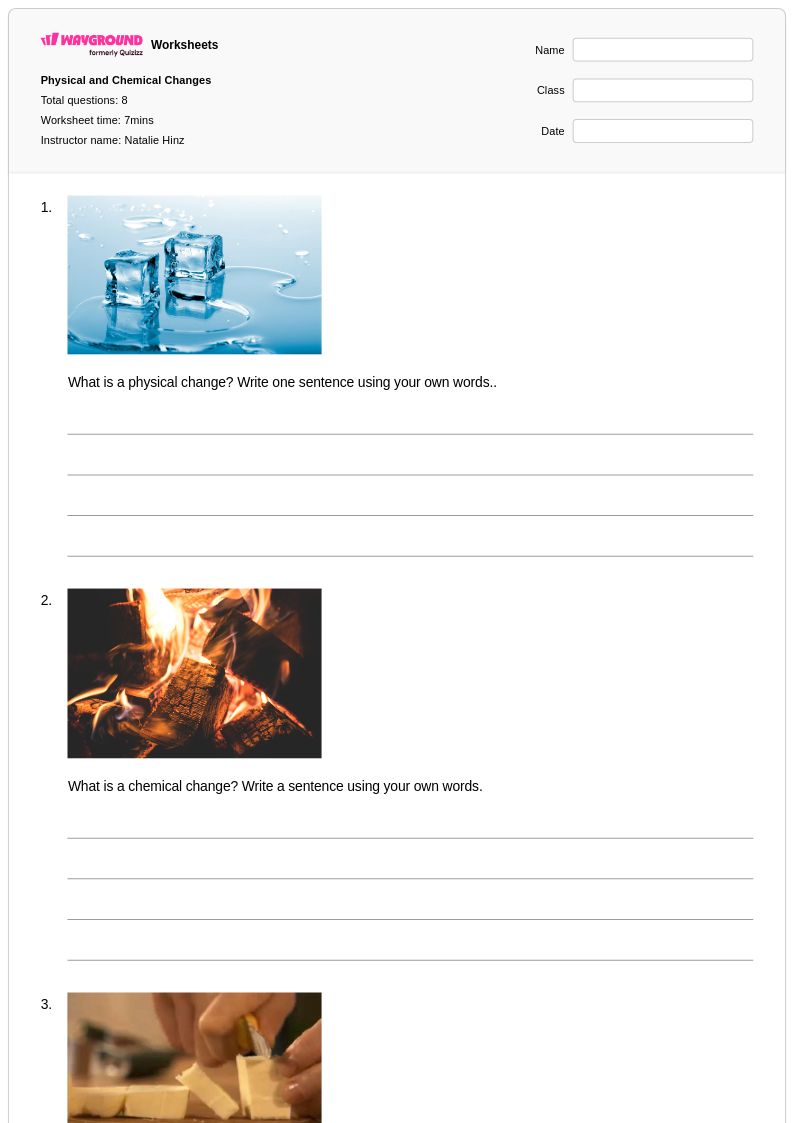
8 Q
2nd
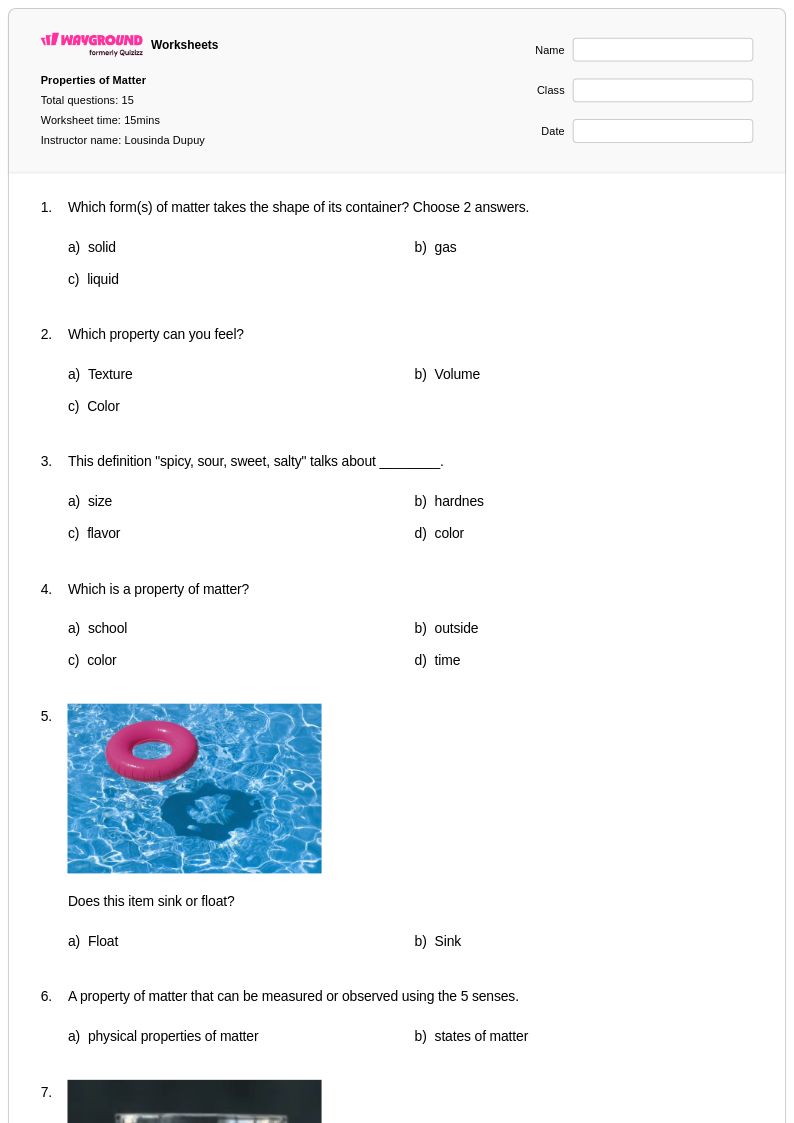
15 Q
2nd
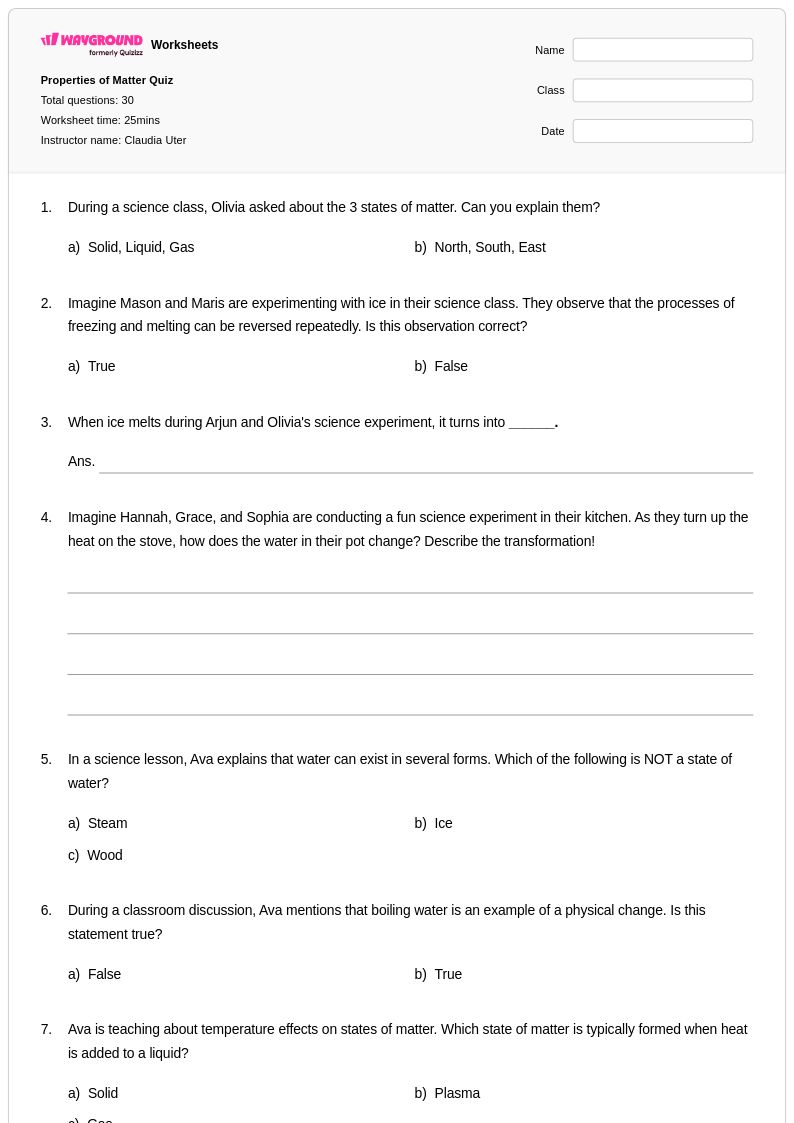
30 Q
2nd
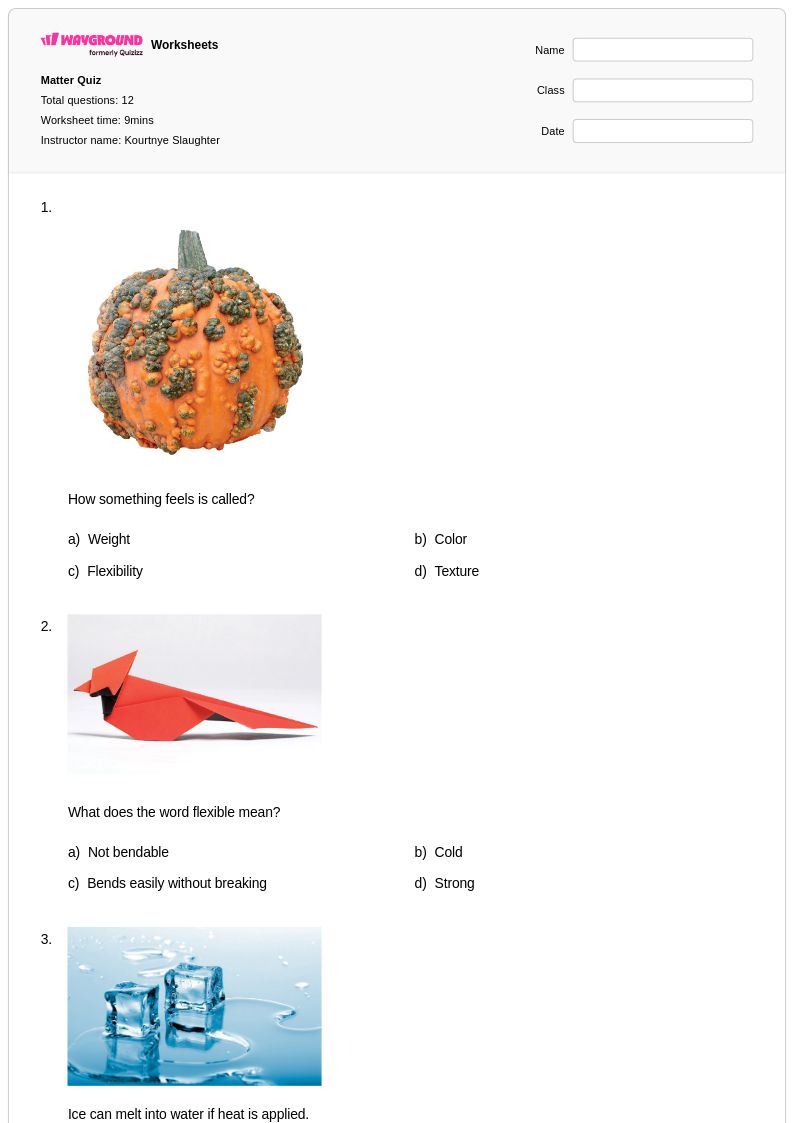
12 Q
2nd
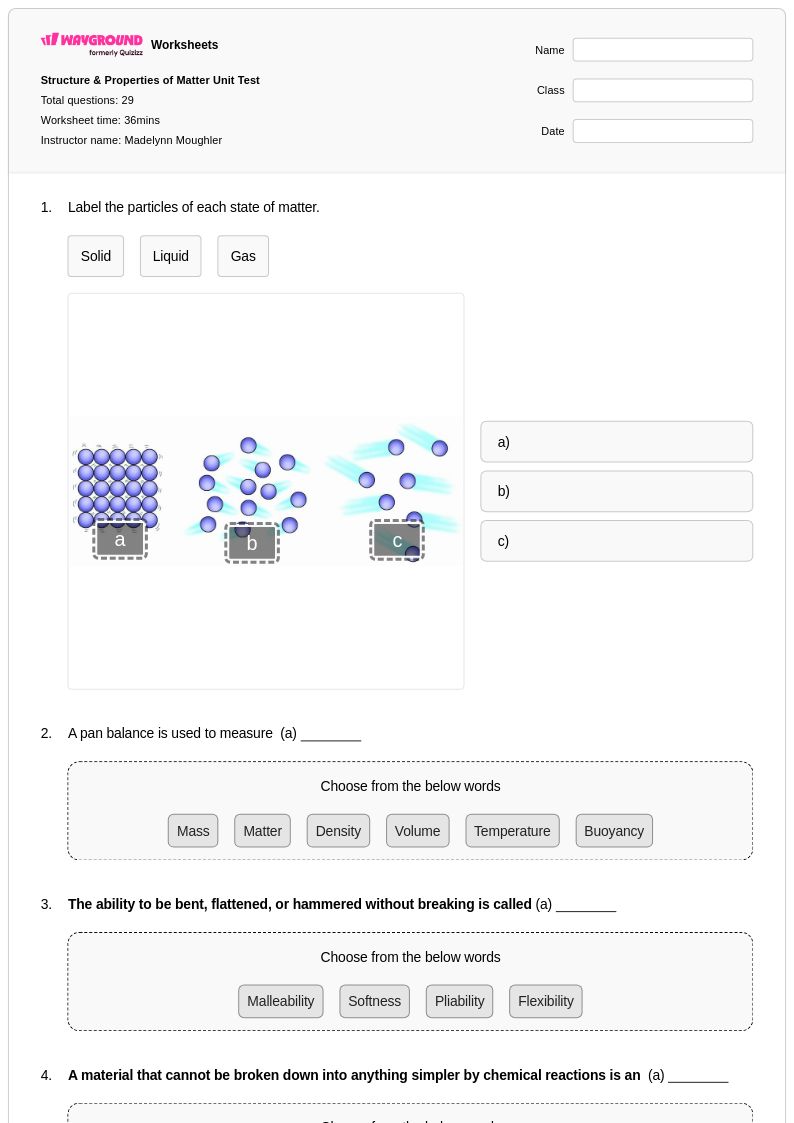
29 Q
1st - 5th
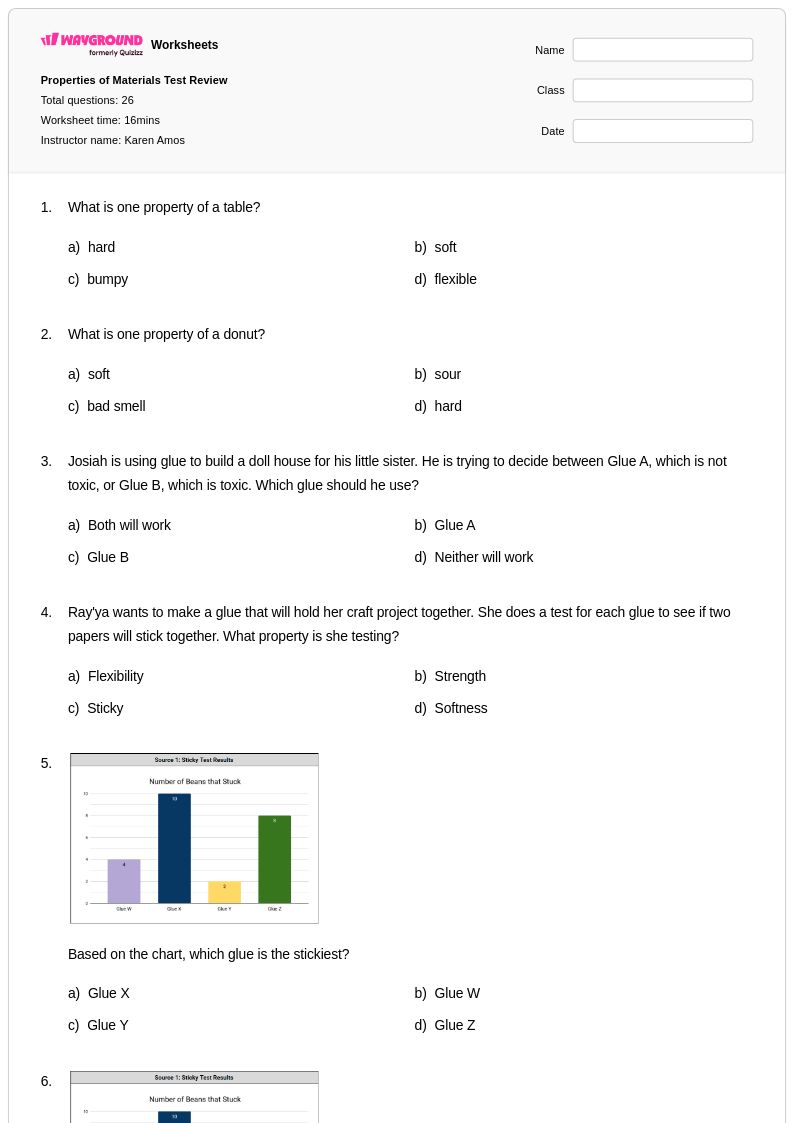
26 Q
2nd - 4th
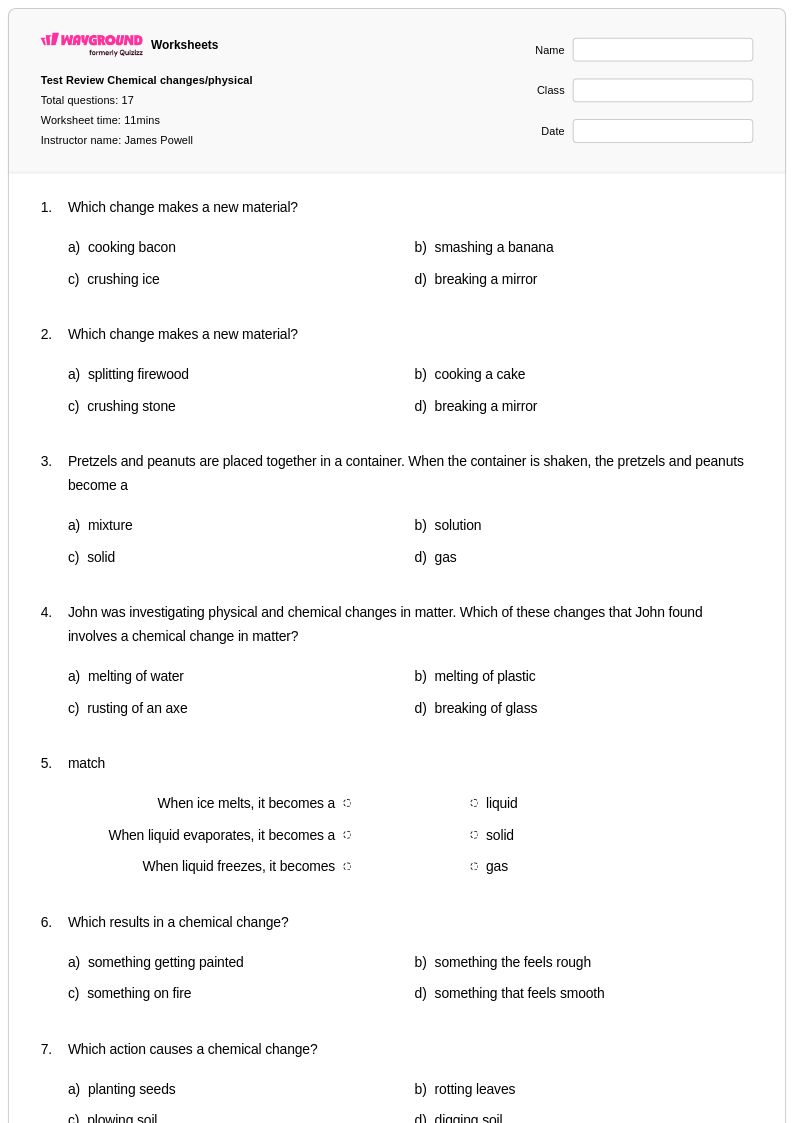
17 Q
2nd
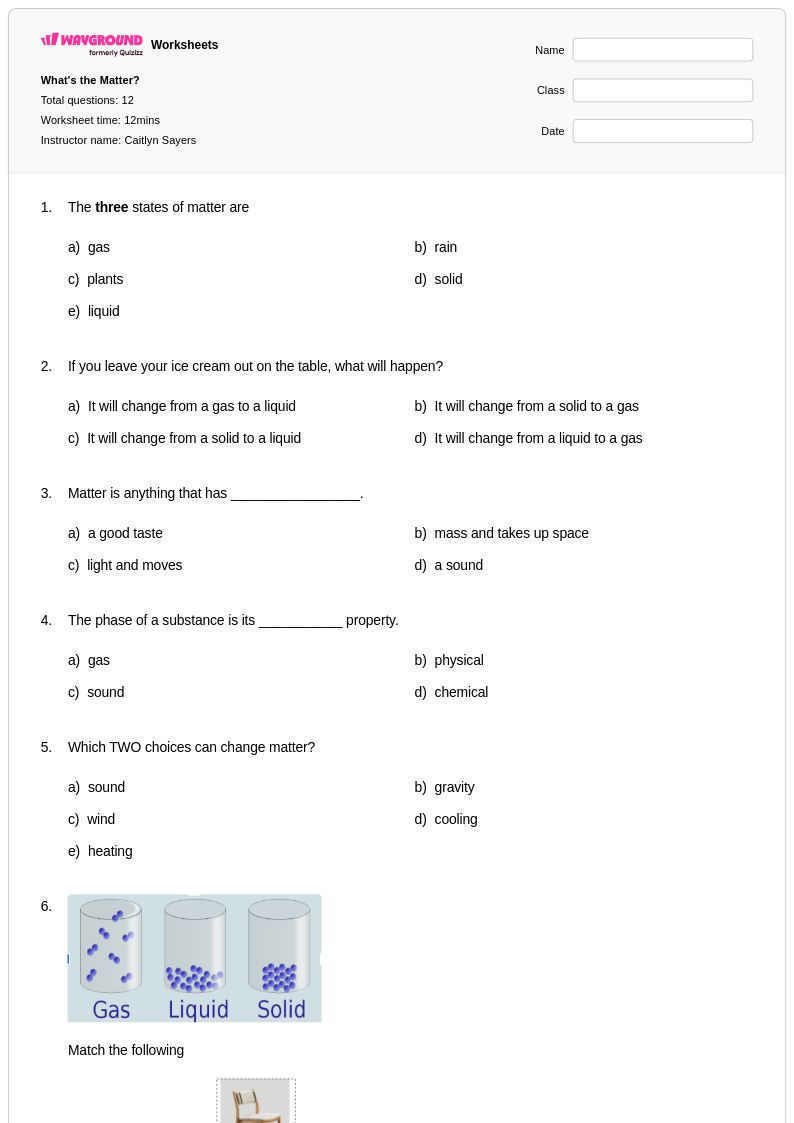
12 Q
2nd
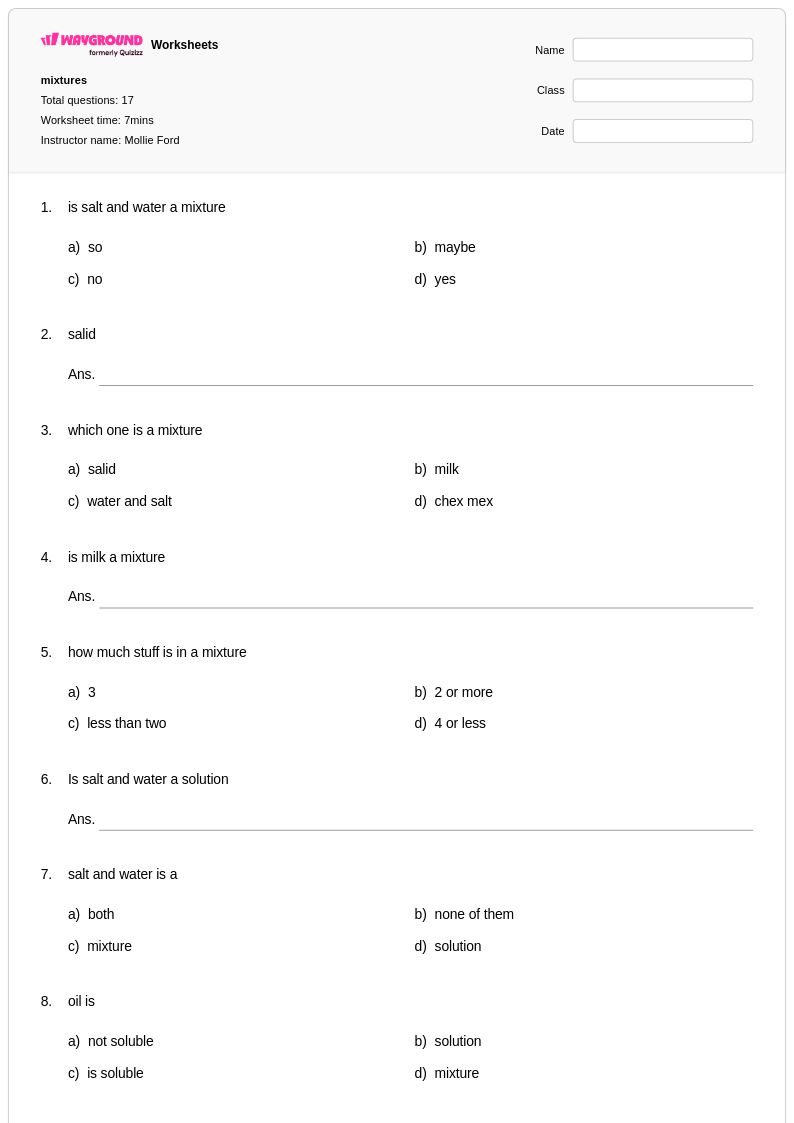
17 Q
1st - 5th
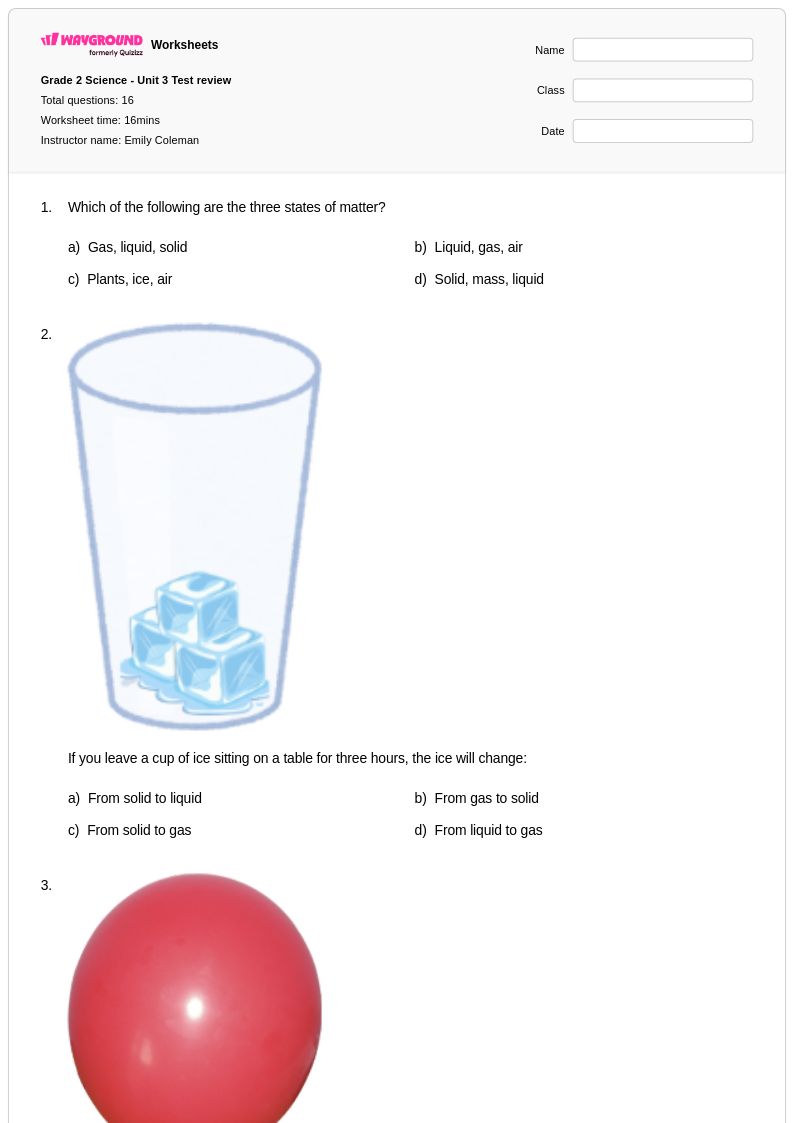
16 Q
2nd
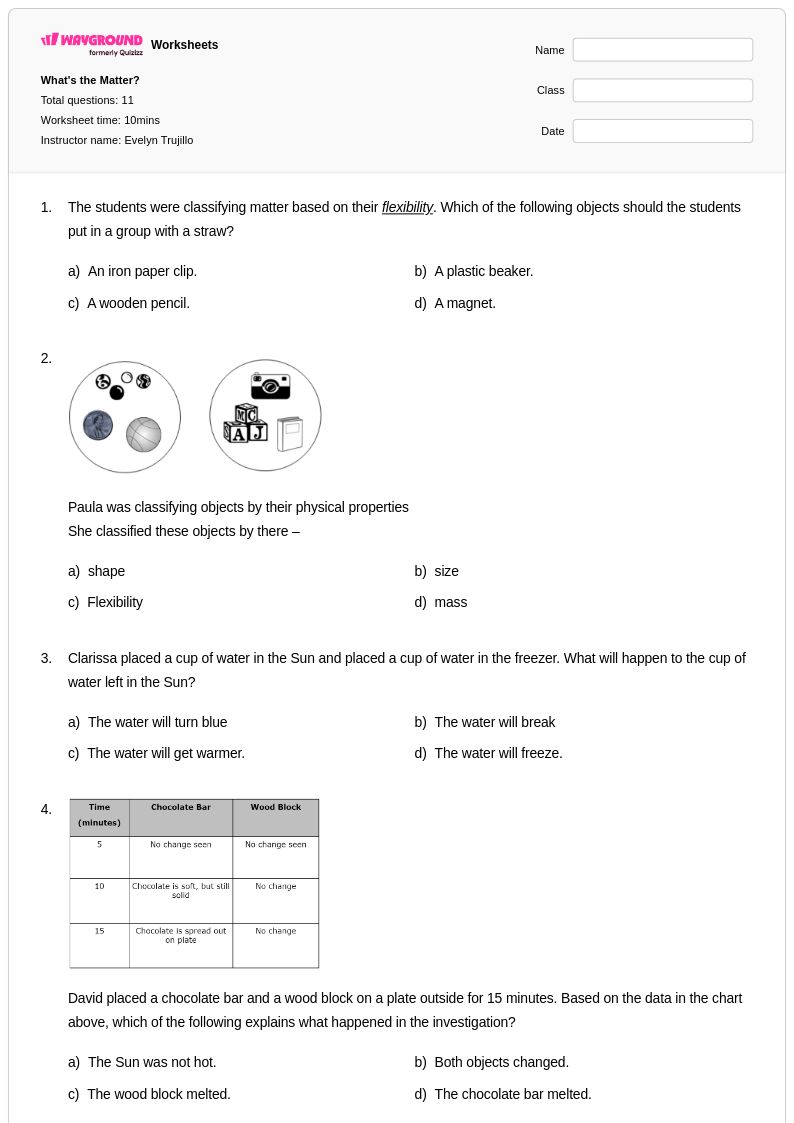
11 Q
2nd - 3rd
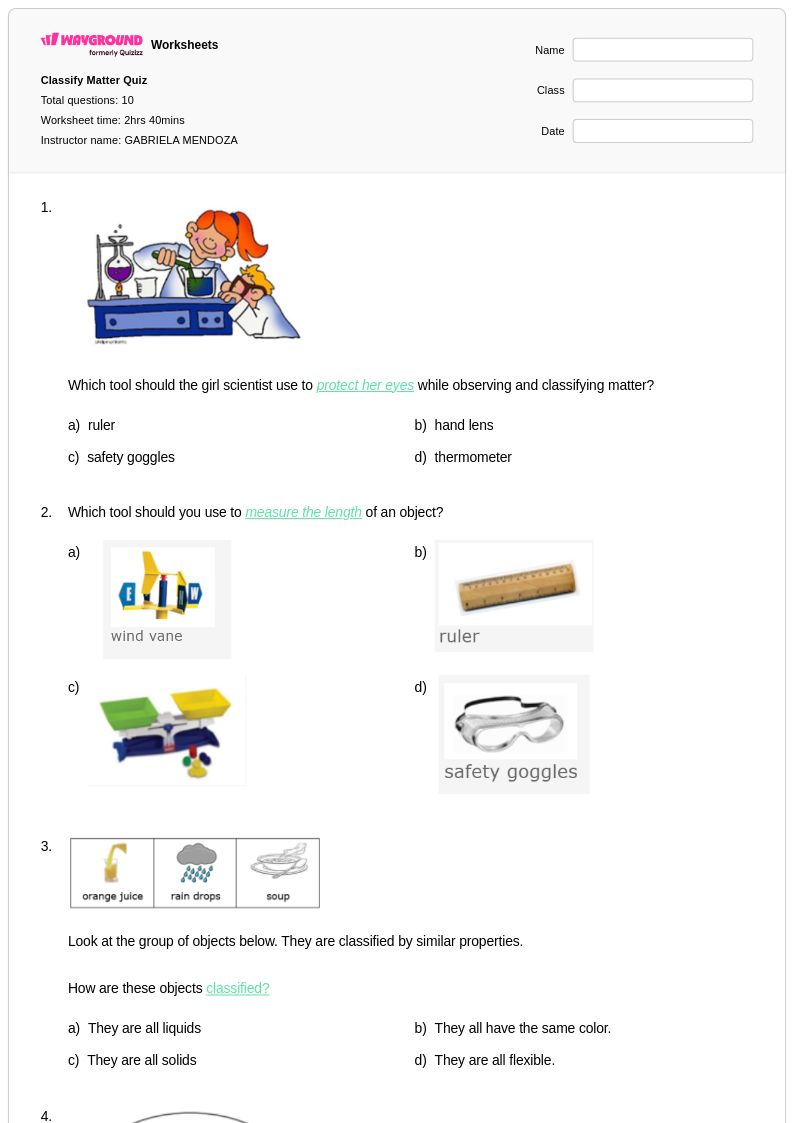
10 Q
2nd
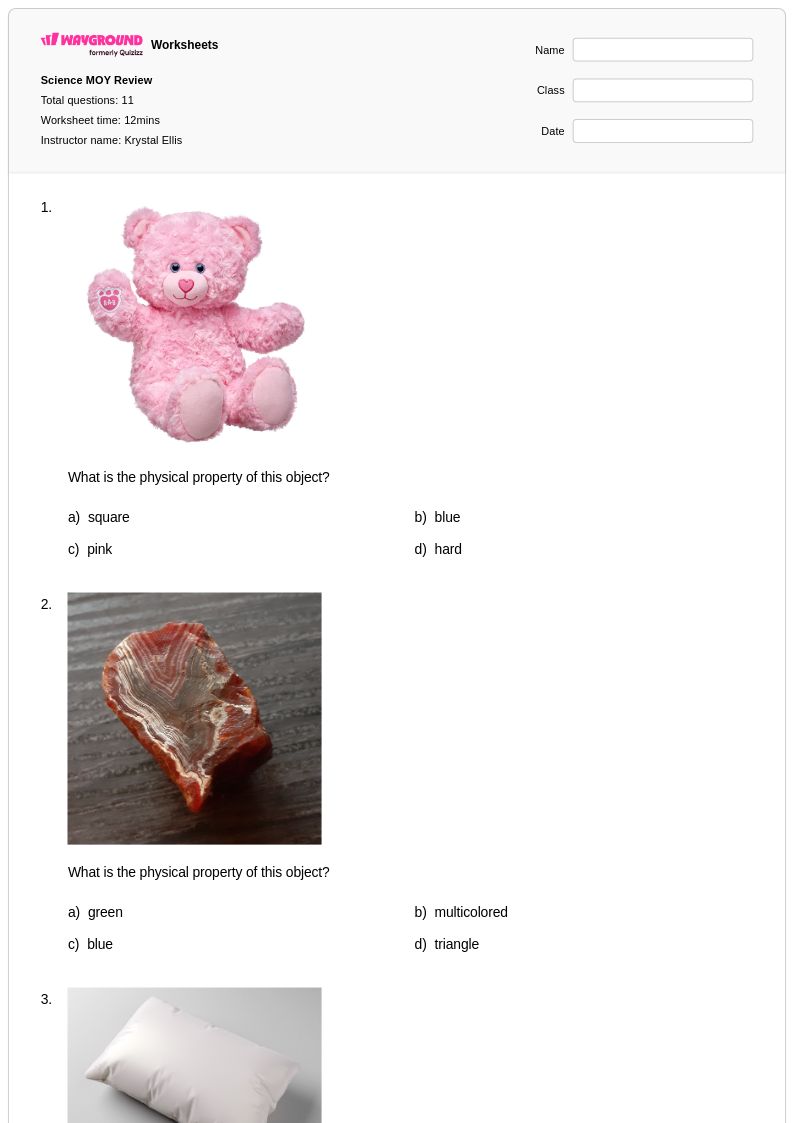
11 Q
2nd
Explore Physical Property Worksheets by Grades
Explore Other Subject Worksheets for year 2
Explore printable Physical Property worksheets for Year 2
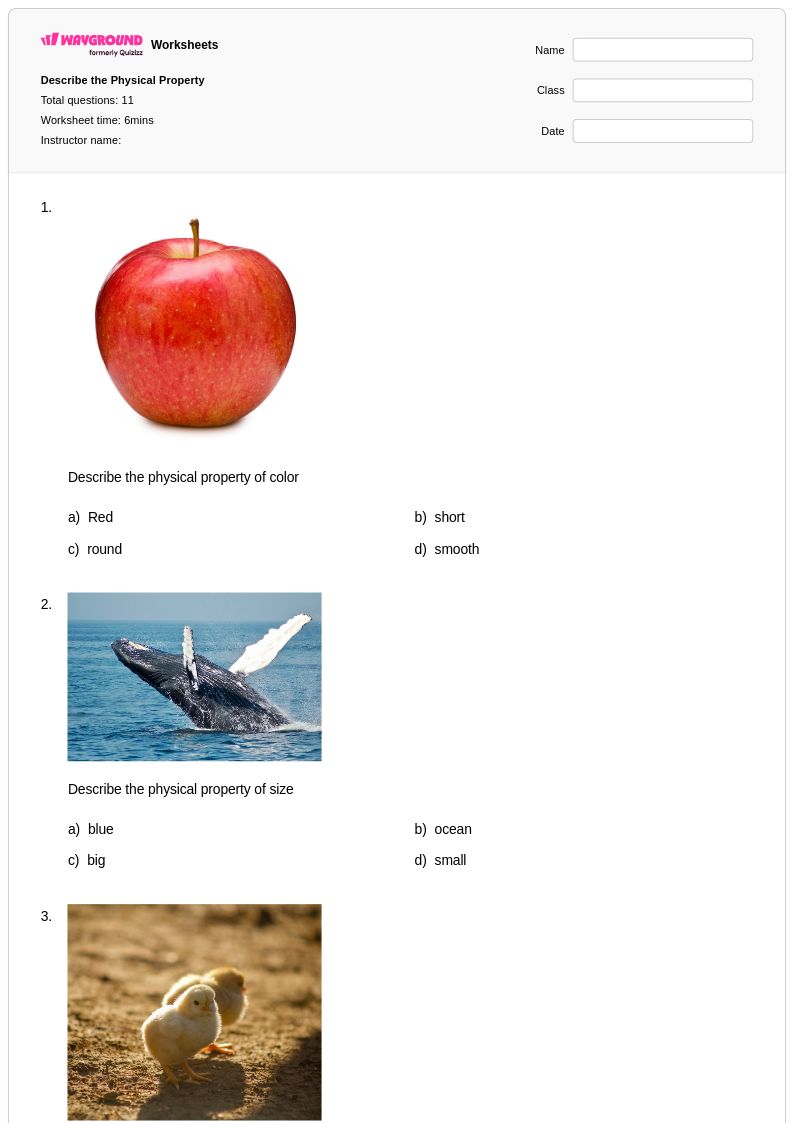
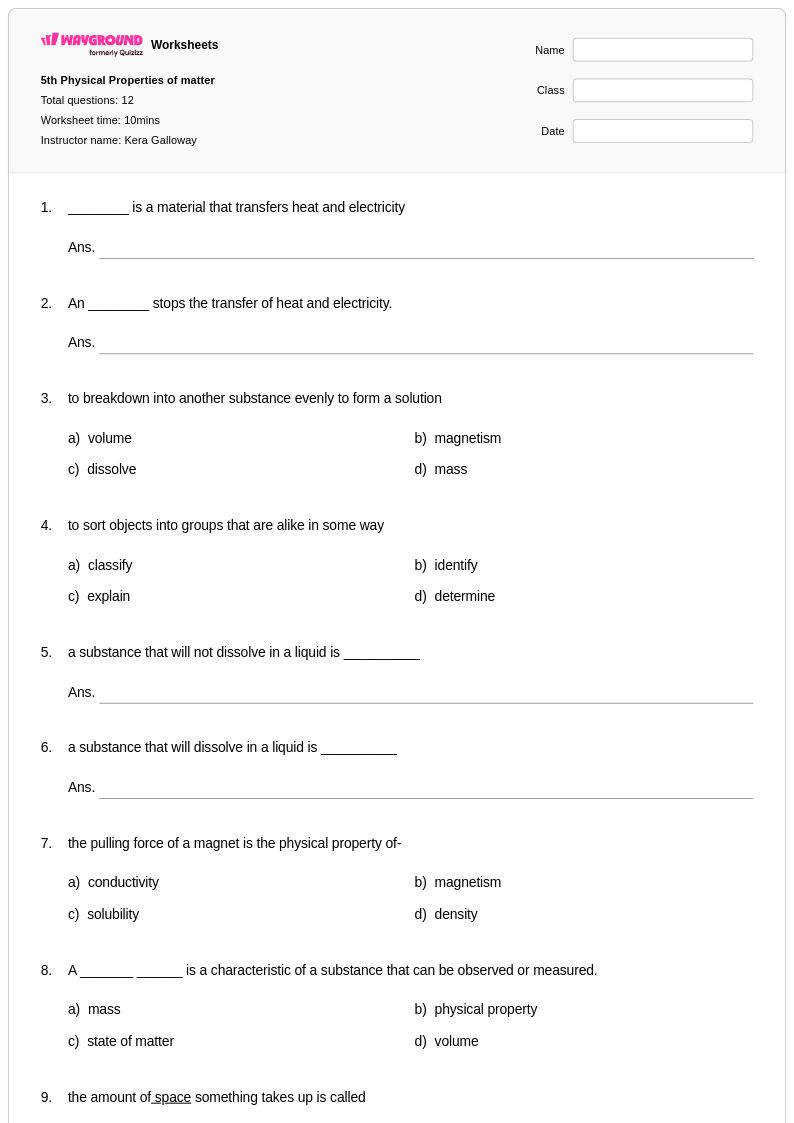
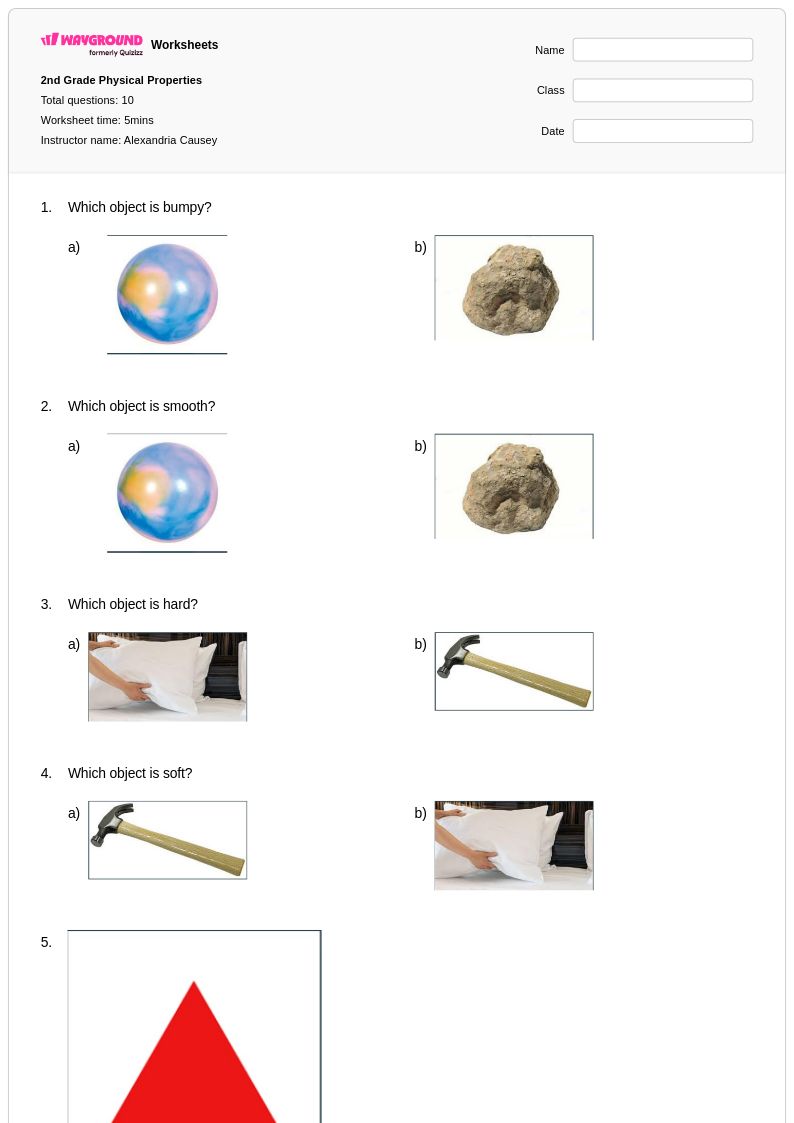
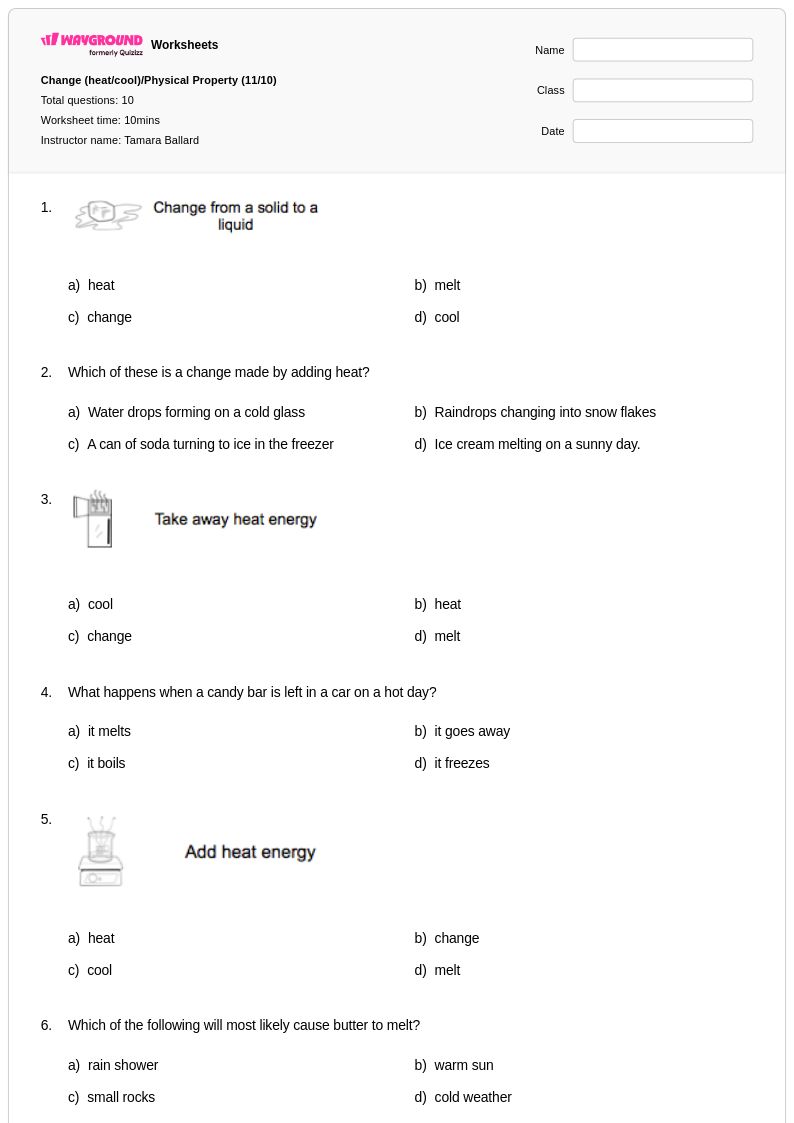
Physical property worksheets for Year 2 students available through Wayground (formerly Quizizz) provide young learners with engaging opportunities to explore the fundamental characteristics of matter that can be observed and measured without changing the substance itself. These carefully designed educational resources help second graders develop critical observation skills as they investigate properties such as color, shape, size, texture, weight, and temperature through hands-on activities and visual exercises. The worksheets strengthen scientific vocabulary development and analytical thinking while offering practice problems that encourage students to classify objects based on their observable characteristics. Teachers can access comprehensive answer keys and free printable materials that support systematic learning progression, ensuring students build a solid foundation in recognizing and describing the physical properties that distinguish different materials and objects in their everyday environment.
Wayground (formerly Quizizz) empowers educators with an extensive collection of millions of teacher-created physical property resources specifically tailored for Year 2 science instruction, featuring robust search and filtering capabilities that allow teachers to quickly locate materials aligned with specific learning standards and curriculum requirements. The platform's differentiation tools enable instructors to customize worksheets to meet diverse learning needs, while flexible formatting options provide both printable pdf versions and interactive digital alternatives that accommodate various classroom settings and teaching preferences. These comprehensive features streamline lesson planning by offering educators ready-to-use materials for skill practice, targeted remediation for students who need additional support, and enrichment activities for advanced learners, ultimately supporting effective science instruction that helps young students develop strong observational skills and scientific thinking patterns essential for future chemistry learning.
FAQs
How do I teach physical properties of matter to students?
What exercises help students practice identifying physical properties?
What mistakes do students commonly make when learning about physical properties?
How do I differentiate physical property instruction for students at different ability levels?
How can I use Wayground's physical property worksheets in my classroom?