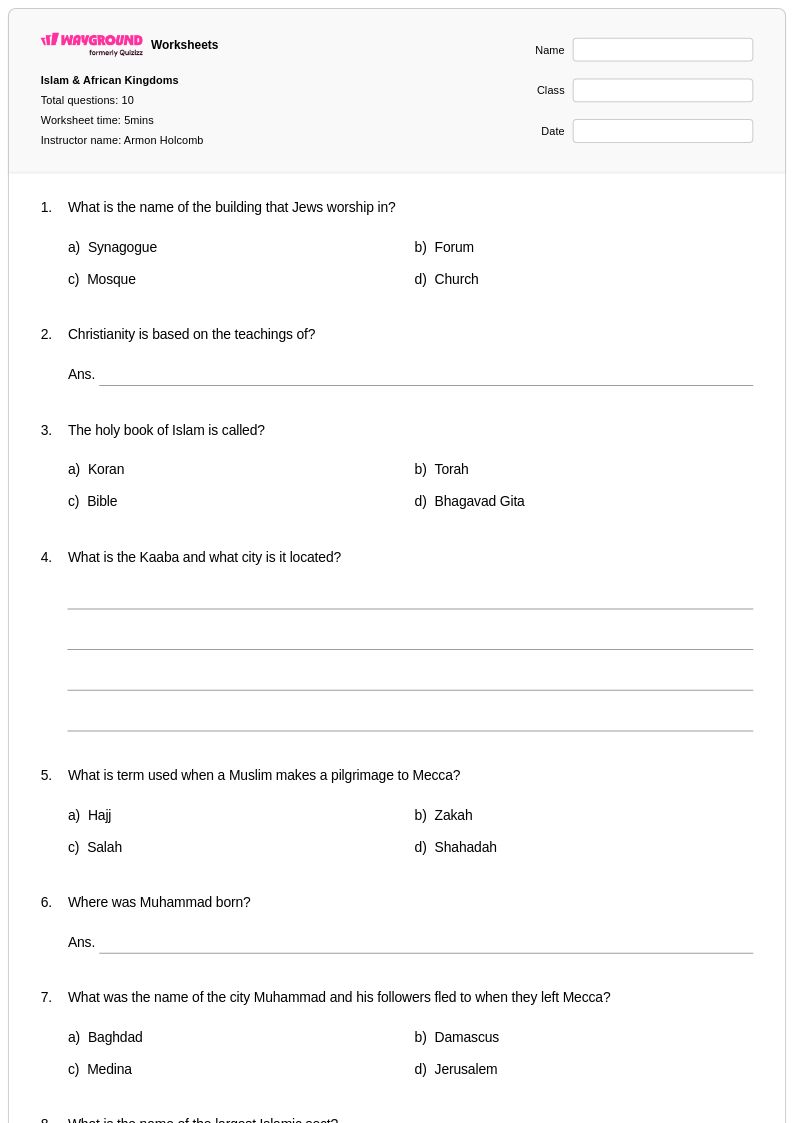
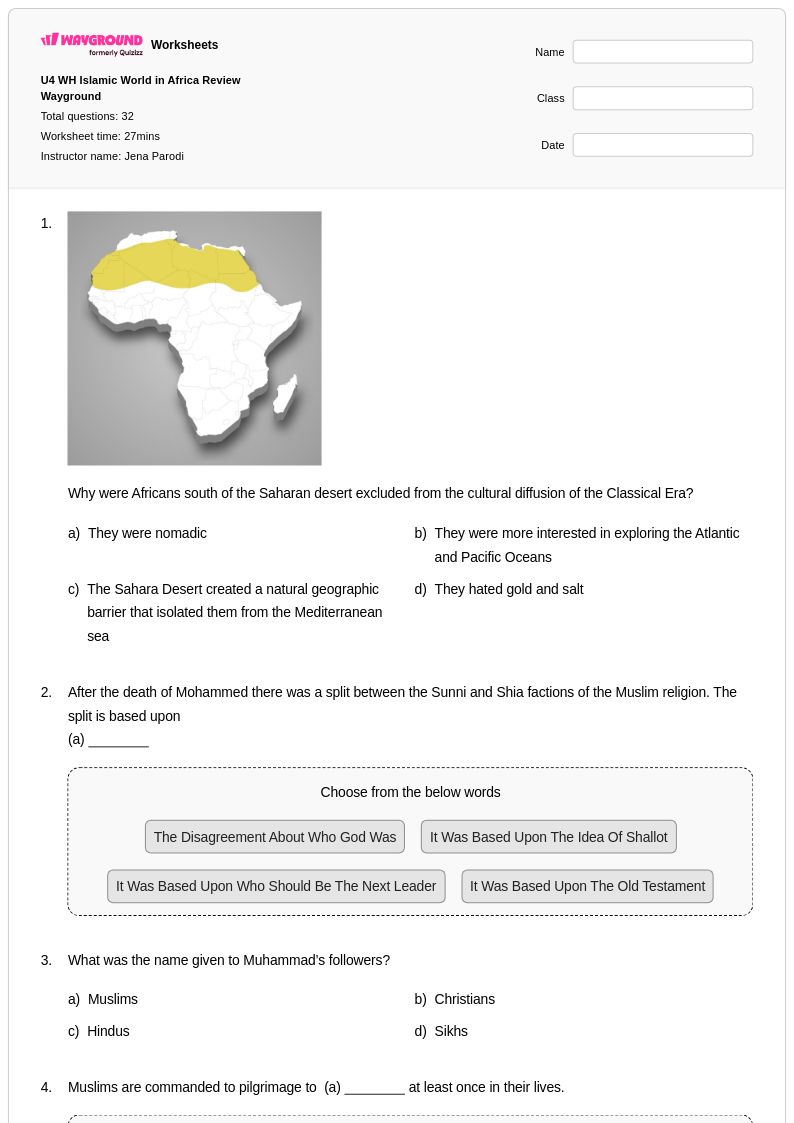
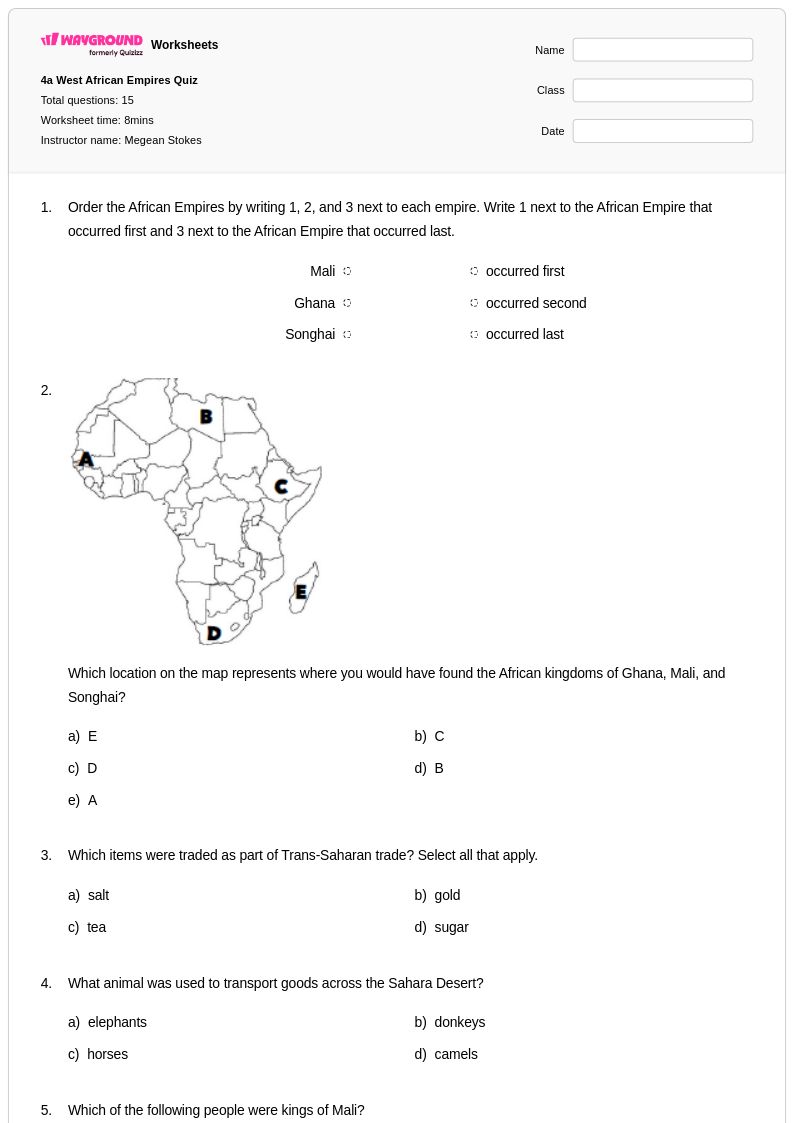
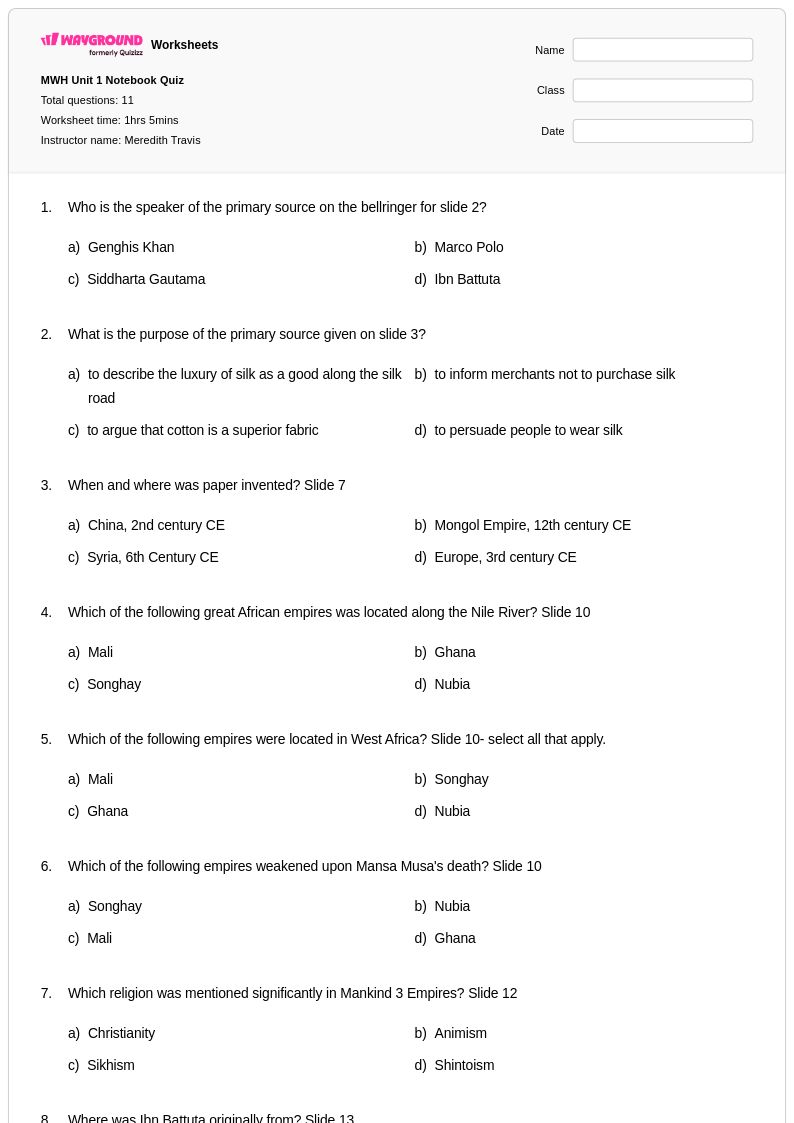
Explore free Year 10 pilgrimage worksheets and printables from Wayground that help students analyze religious journeys, cultural significance, and historical contexts through engaging practice problems with comprehensive answer keys.
Explore printable Pilgrimage worksheets for Year 10
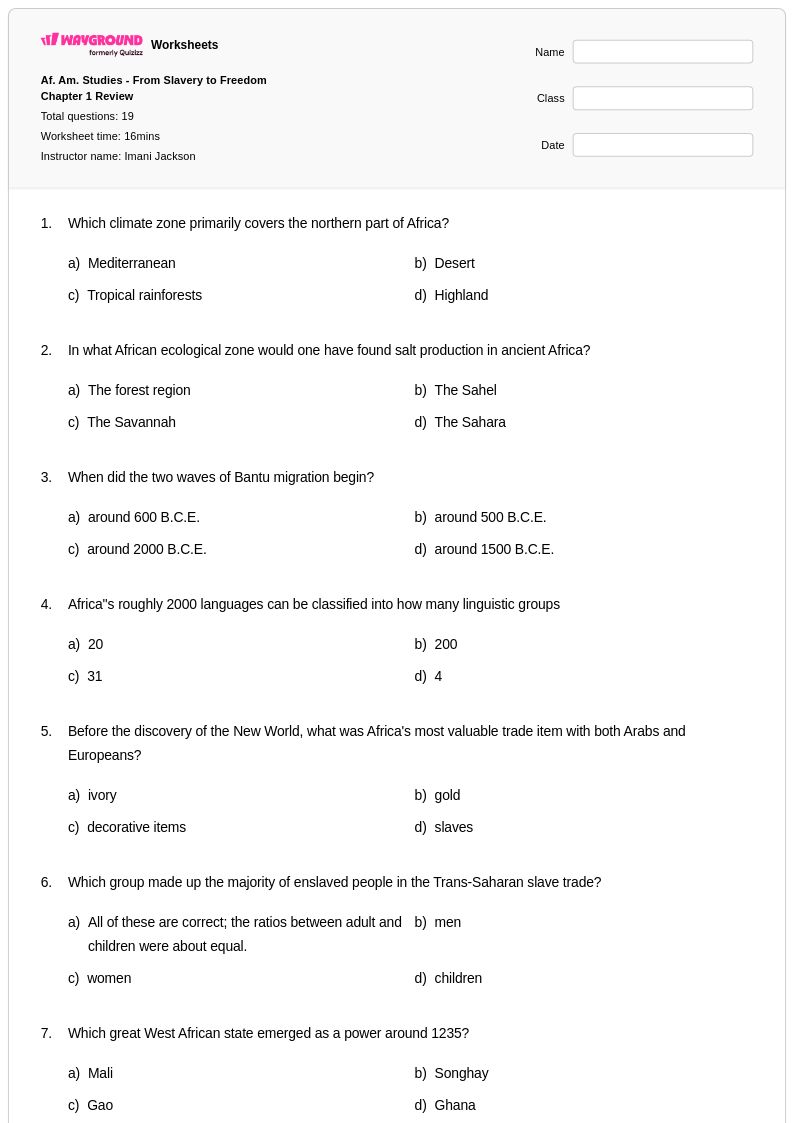
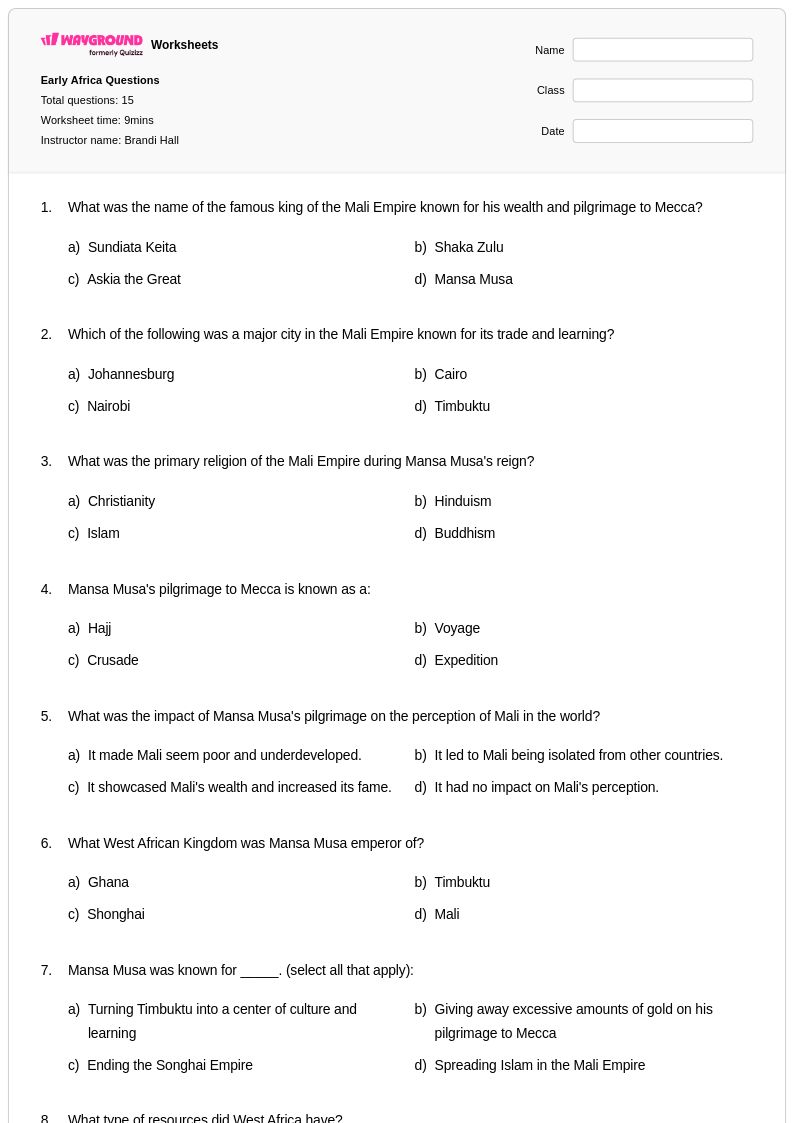
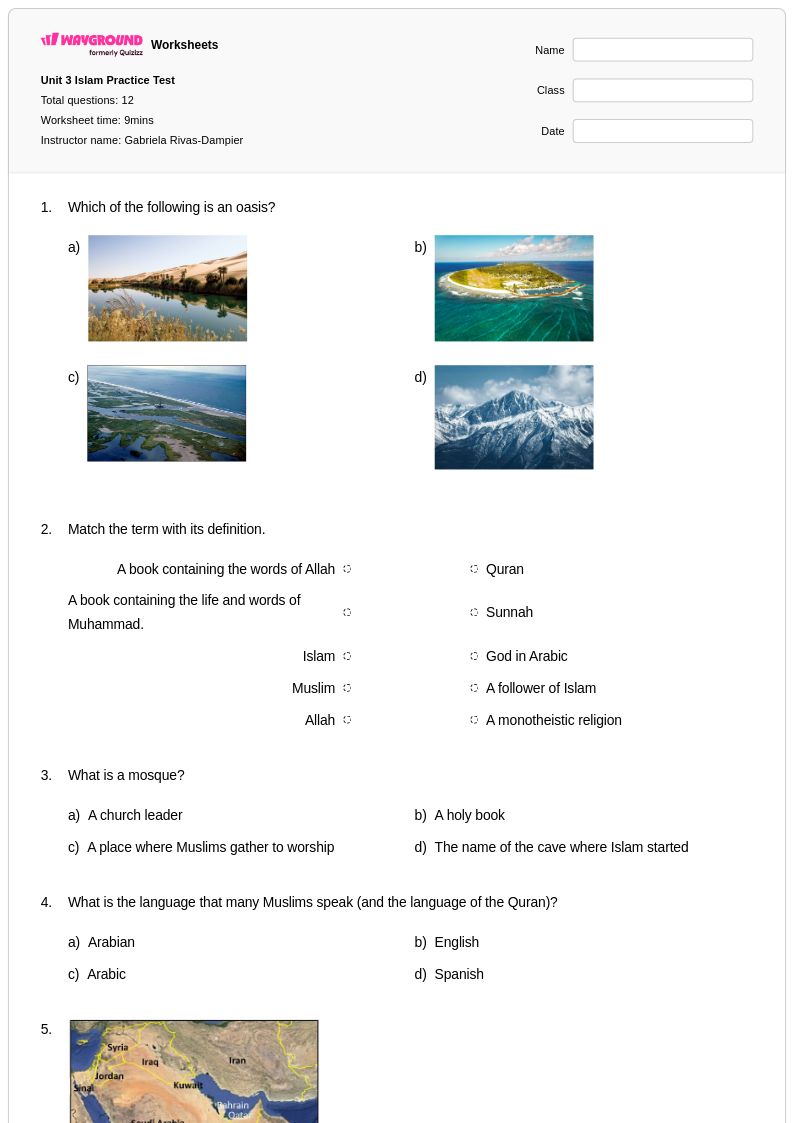
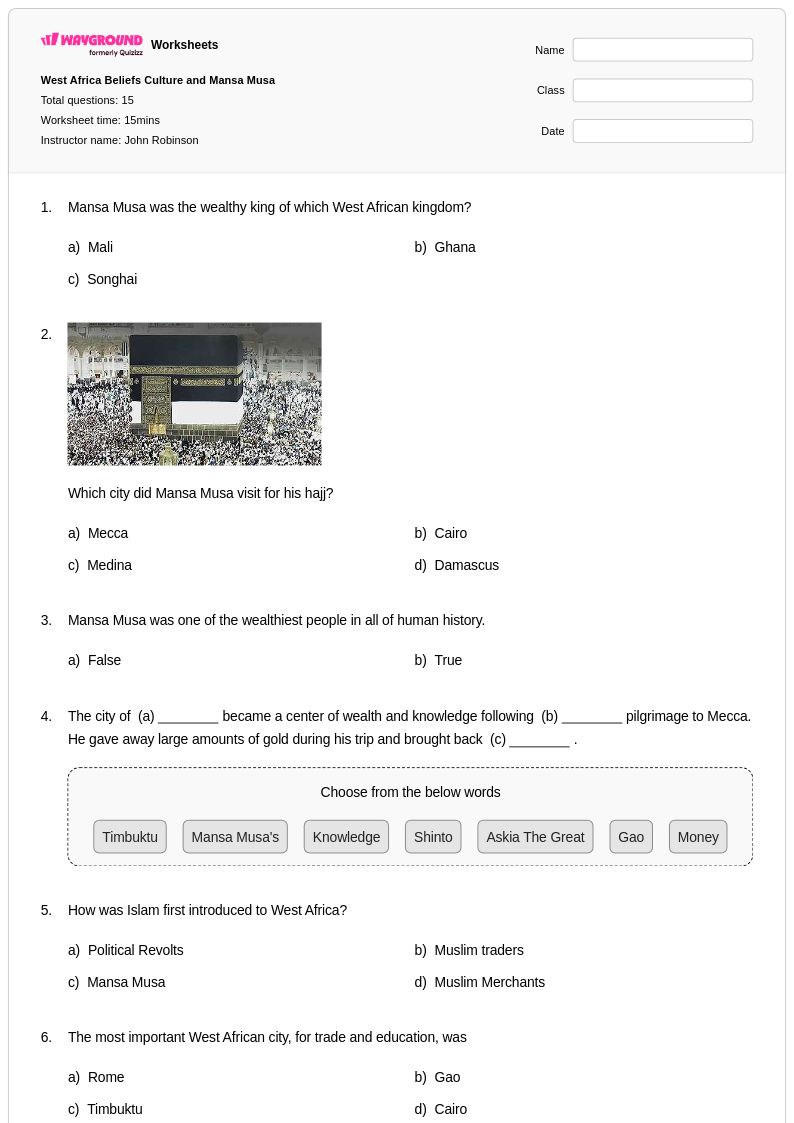
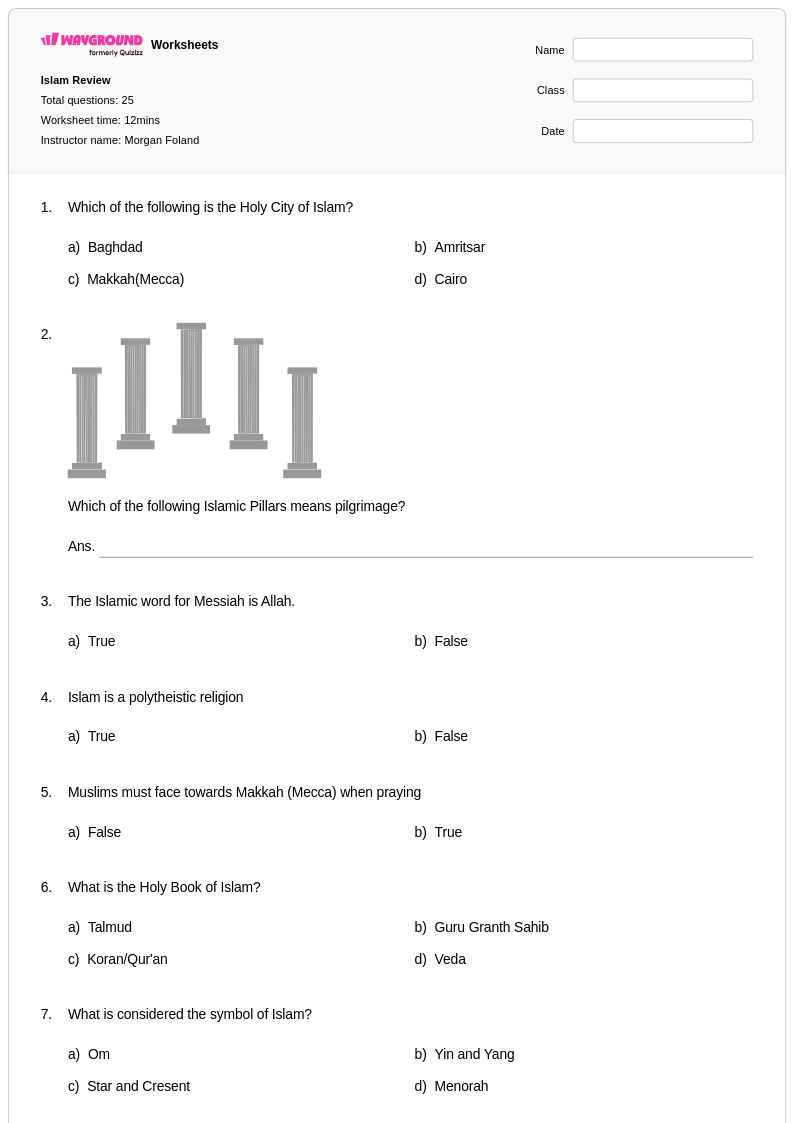
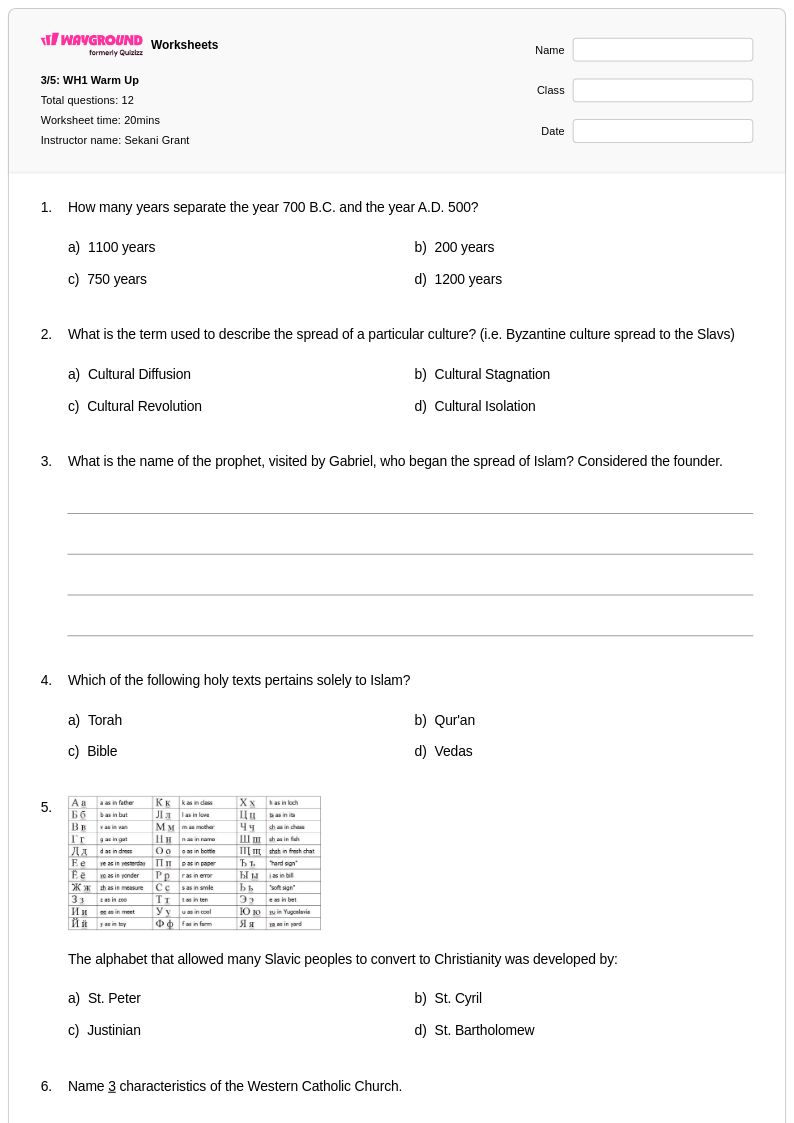
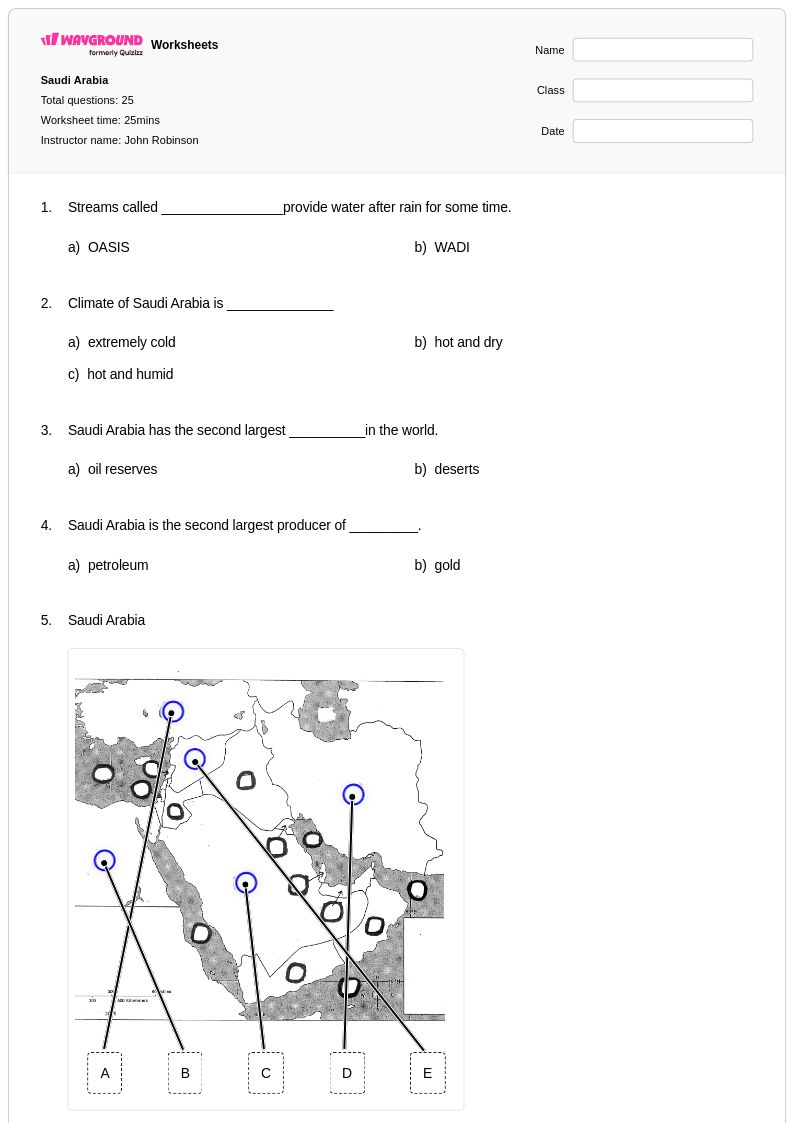
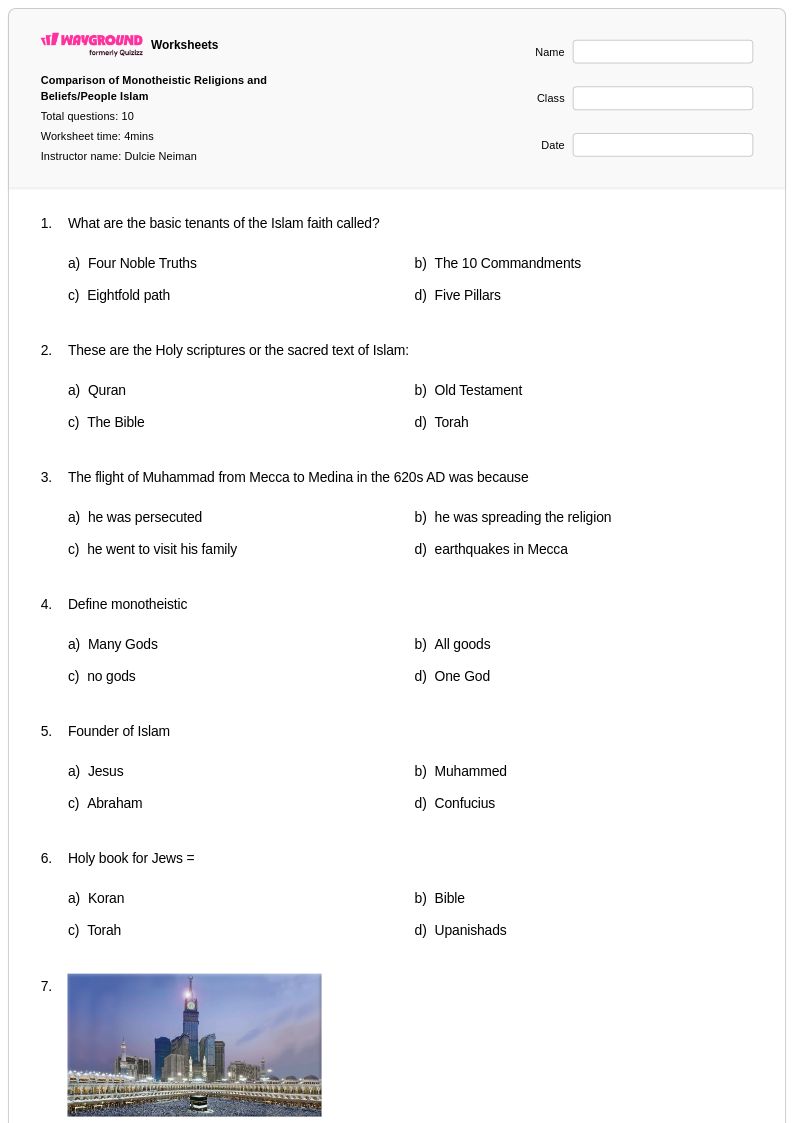
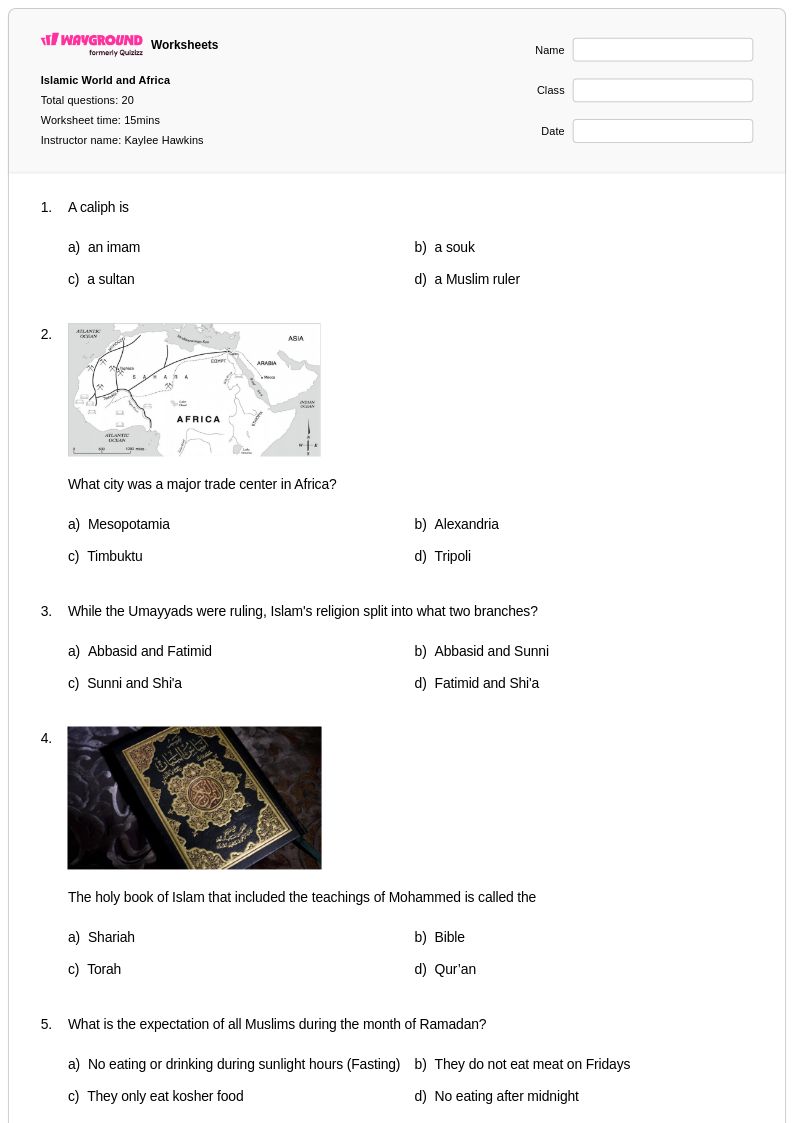
Pilgrimage worksheets for Year 10 students available through Wayground (formerly Quizizz) provide comprehensive exploration of religious and cultural journeys that have shaped human societies throughout history. These educational resources help students develop critical thinking skills by analyzing the motivations, experiences, and impacts of pilgrimage traditions across different cultures and time periods. Students engage with practice problems that examine famous pilgrimage routes like the Camino de Santiago, Hajj to Mecca, and Buddhist pilgrimages in Asia, while building their ability to compare and contrast religious practices, understand cultural significance, and evaluate historical sources. Each worksheet collection includes detailed answer keys and is available as free printables in pdf format, allowing educators to seamlessly integrate these materials into their social studies curriculum while strengthening students' analytical and research capabilities.
Wayground (formerly Quizizz) supports educators with millions of teacher-created pilgrimage and cultural studies resources that can be easily searched and filtered by specific learning objectives and grade-level requirements. The platform's robust differentiation tools enable teachers to customize worksheets for diverse learning needs, whether providing additional scaffolding for struggling students or offering enrichment activities for advanced learners. These materials align with social studies standards and are available in both printable pdf formats and interactive digital versions, giving educators flexibility in lesson planning and delivery. Teachers can efficiently use these resources for skill practice sessions, remediation work with students who need additional support understanding religious and cultural concepts, or as enrichment materials that deepen students' appreciation for the role of pilgrimage in global communities and historical development.
FAQs
How do I teach pilgrimage to students who come from different religious backgrounds?
The most effective approach is to frame pilgrimage as a universal human practice before examining specific traditions, which helps students engage academically rather than personally. Start with shared themes — sacred destination, ritual journey, community belonging — then move into case studies such as the Hajj, the Camino de Santiago, Hindu journeys to the Ganges, and Buddhist visits to Bodh Gaya. This comparative structure allows students from any background to analyze pilgrimage objectively while still connecting to its cultural significance.
What are the most important pilgrimage traditions students should know about in a world religions or social studies class?
Students should have working knowledge of at least four major traditions: the Hajj to Mecca in Islam, Christian pilgrimages to sites like Santiago de Compostela and Jerusalem, Hindu sacred journeys to the Ganges River, and Buddhist pilgrimages to Bodh Gaya. Each tradition illustrates different motivations for pilgrimage — religious obligation, penance, spiritual merit, and historical commemoration — making them ideal for comparative analysis across cultures and historical periods.
What exercises help students practice analyzing the social and economic impacts of pilgrimage on local communities?
Case-study worksheets that ask students to examine a specific pilgrimage site from multiple perspectives work well here — pilgrims, local residents, governments, and religious institutions each experience pilgrimage differently. Compare-and-contrast activities that pair, for example, the economic infrastructure around Mecca during Hajj with a smaller Christian pilgrimage site help students see scale and impact at the same time. Short-answer and document-based questions that provide statistics or firsthand accounts push students beyond surface-level description toward genuine analysis.
What misconceptions do students commonly have when studying pilgrimage?
The most common misconception is that pilgrimage is exclusively a religious act confined to ancient or traditional societies — students often underestimate how economically and politically significant modern pilgrimage remains. Another frequent error is conflating tourism with pilgrimage; students need guided instruction to distinguish between sacred intent and recreational travel, even when the physical destination is identical. Some students also assume pilgrimage is unique to one religion, so explicit cross-cultural comparison is essential to correct this early.
How can I use pilgrimage worksheets to support students with different learning needs in the same classroom?
Pilgrimage worksheets can be differentiated by adjusting the complexity of the source materials students analyze — struggling readers benefit from scaffolded texts or graphic organizers, while advanced students can engage with primary sources or extended comparative essays. On Wayground, teachers can enable Read Aloud so questions and content are read to students who need audio support, and Reduced Answer Choices can be applied for students who experience cognitive overload on multiple-choice assessments. These accommodations are set per student and do not affect the experience of the rest of the class.
How do I use Wayground's pilgrimage worksheets in my classroom?
Wayground's pilgrimage worksheets are available as printable PDFs, making them easy to distribute in traditional classroom settings, and in digital formats for technology-integrated instruction. Teachers can also host the worksheets as a live or self-paced quiz directly on Wayground, which allows for real-time progress monitoring. Each worksheet includes a complete answer key, so grading and feedback can be returned to students quickly without additional preparation time.