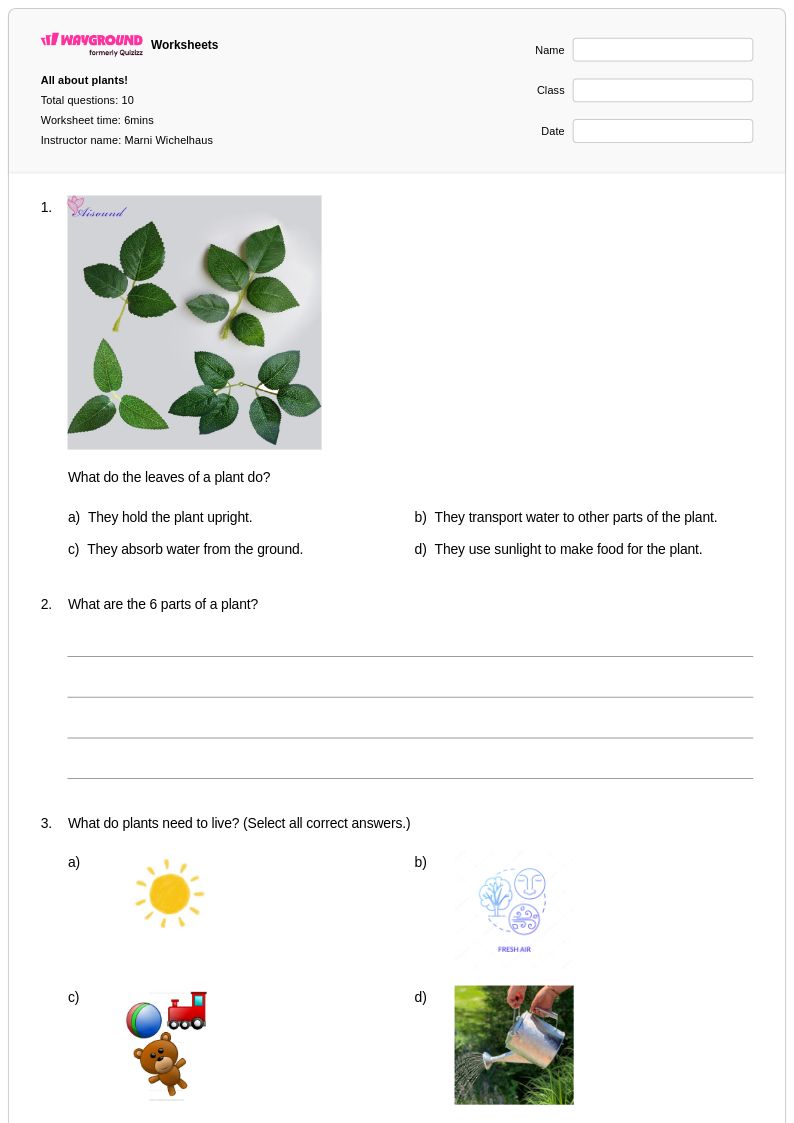
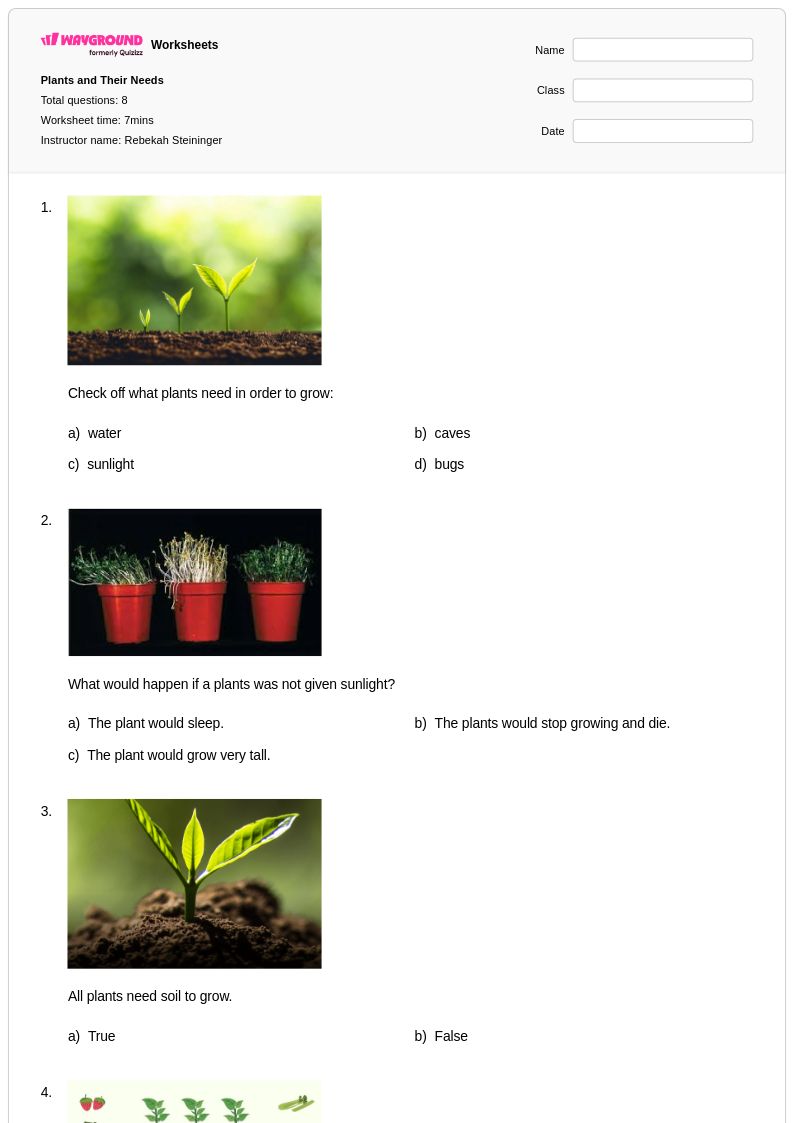
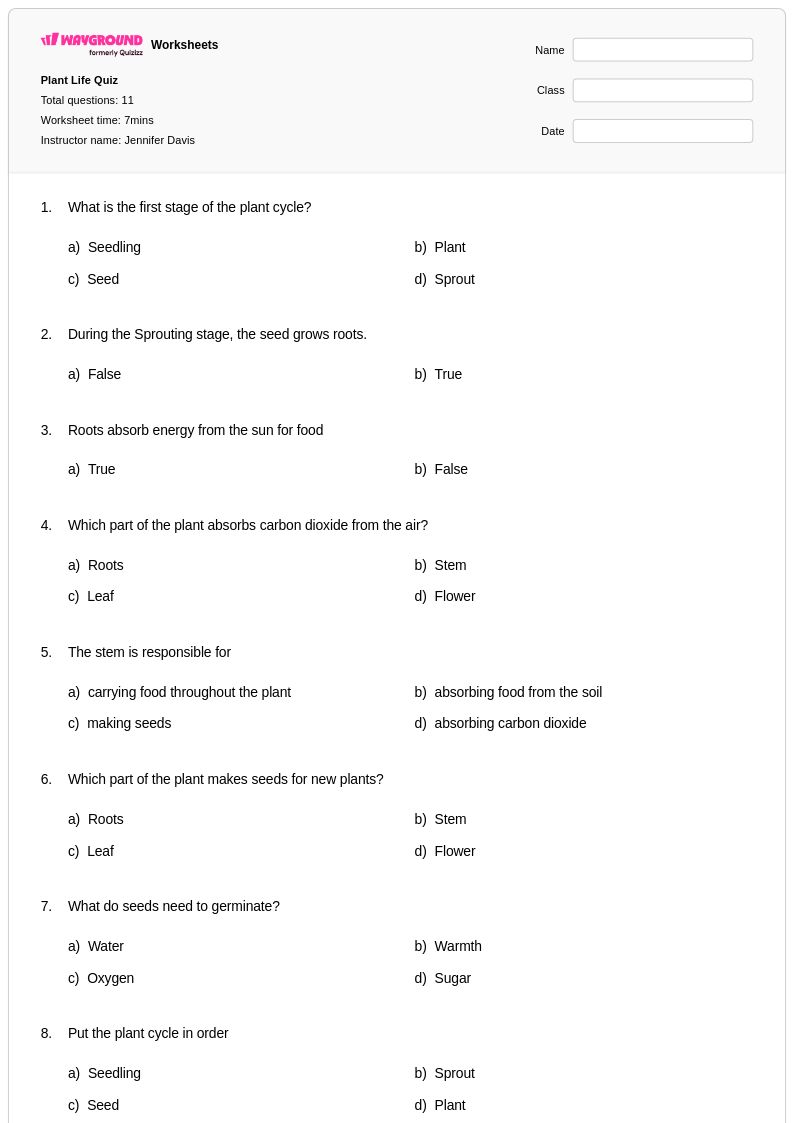
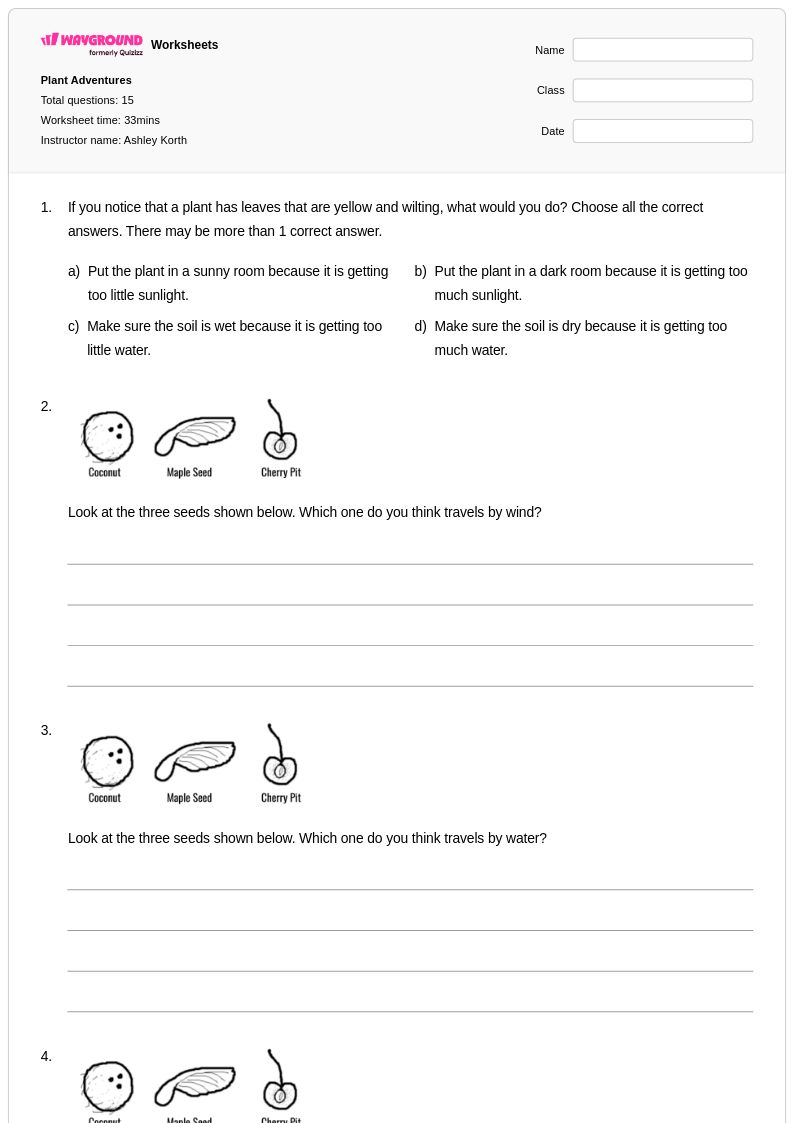
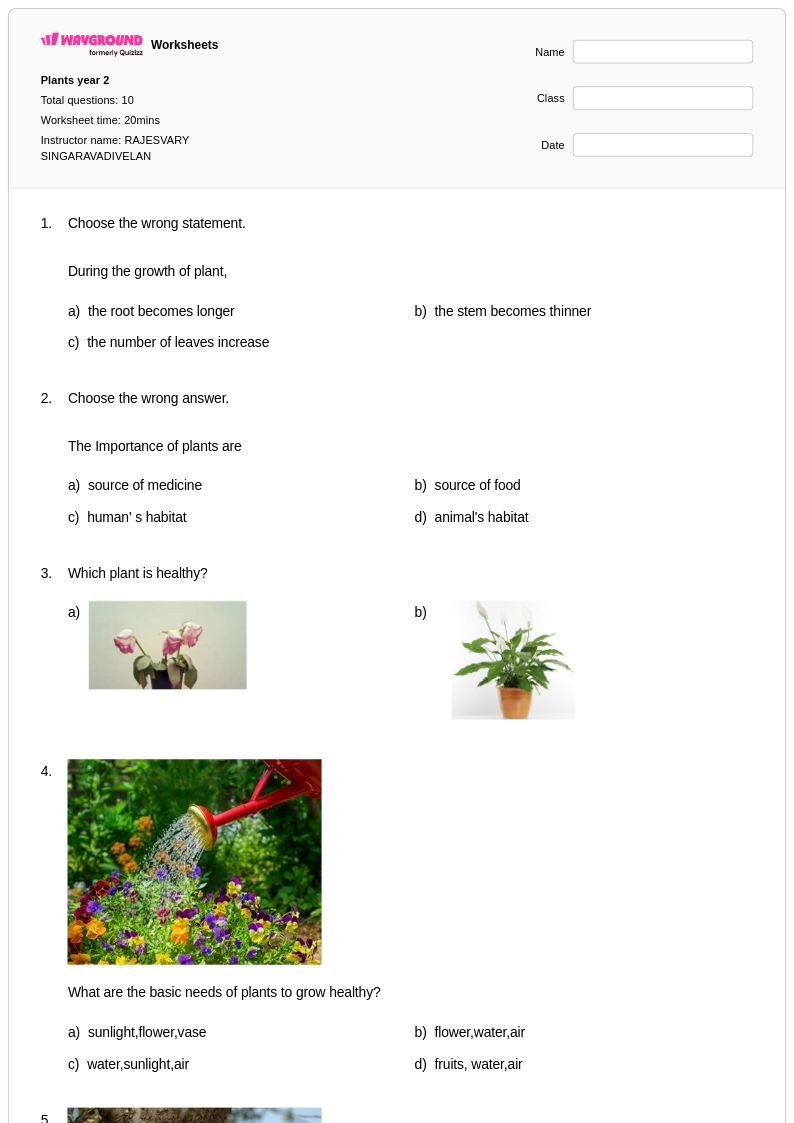
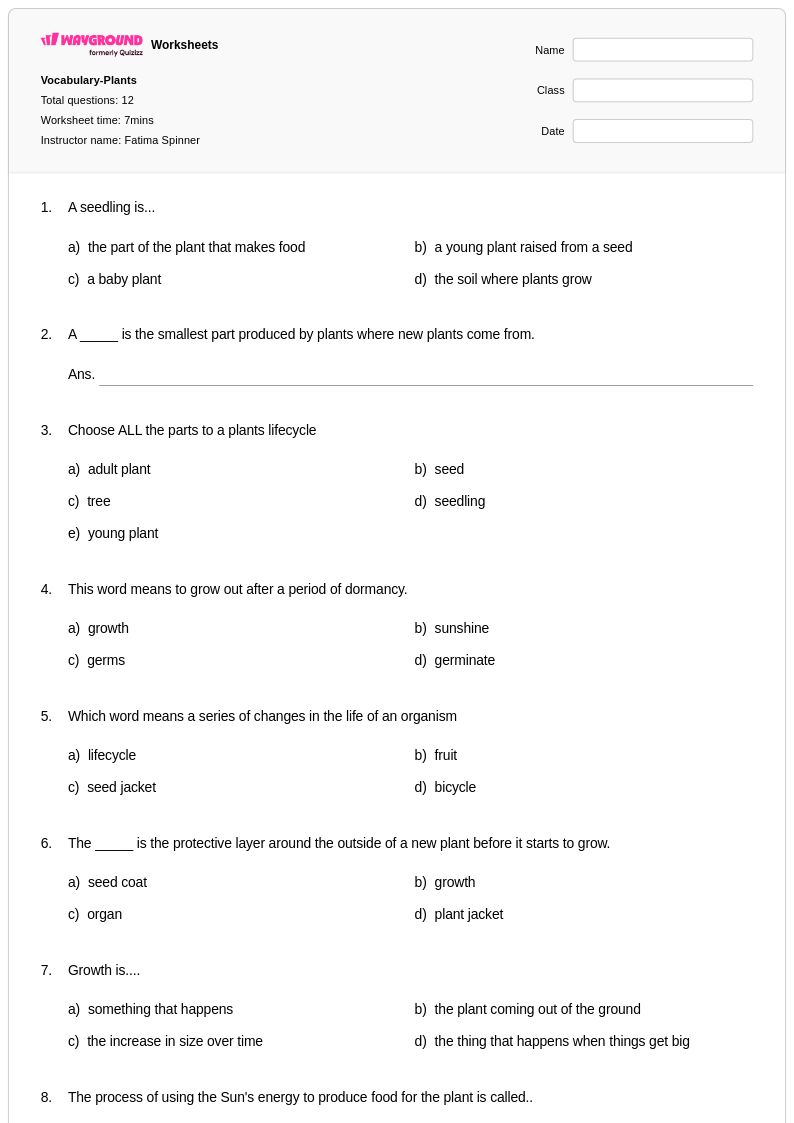
Explore free Year 2 plant growth worksheets and printables from Wayground that help students learn about seeds, roots, stems, and leaves through engaging practice problems with complete answer keys.
Explore printable Plant Growth worksheets for Year 2
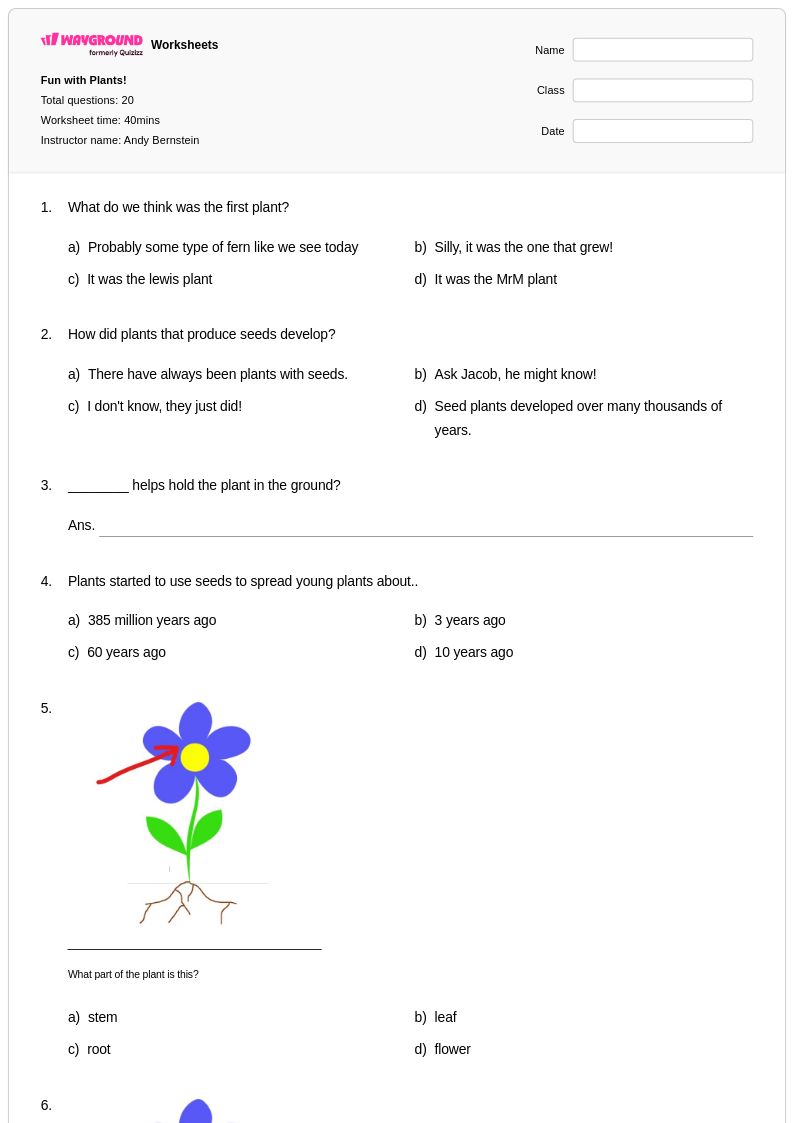
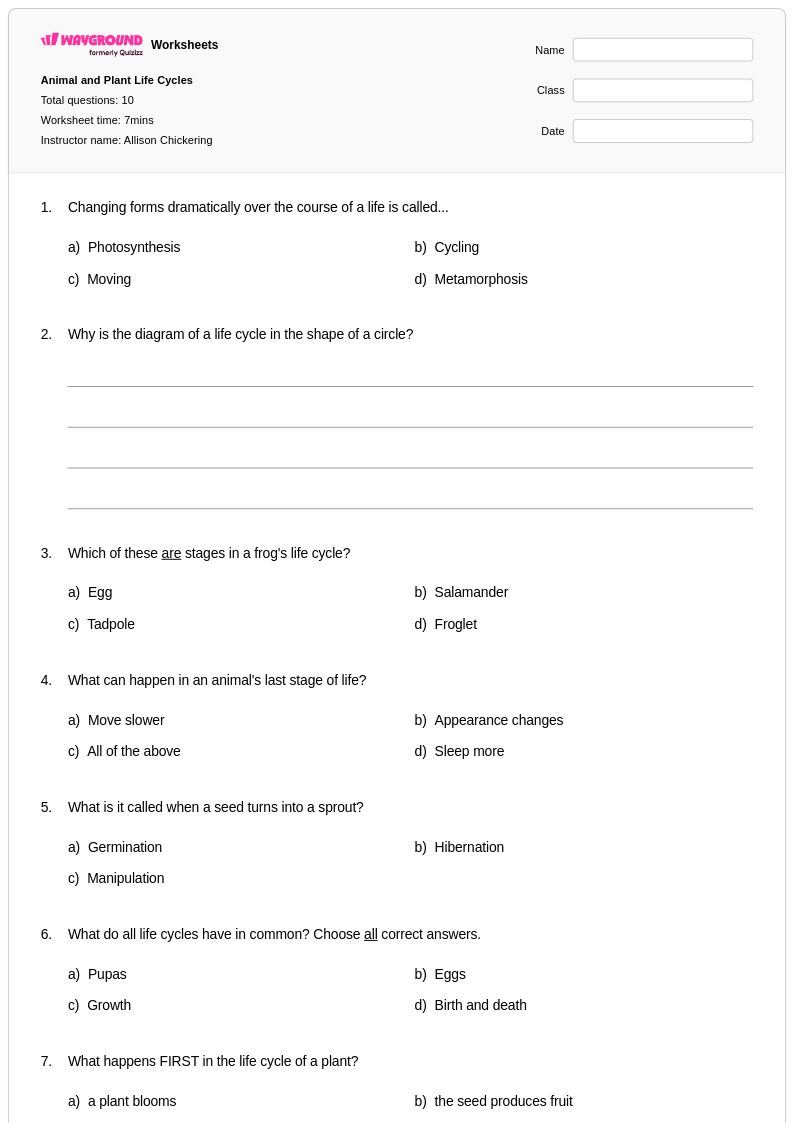
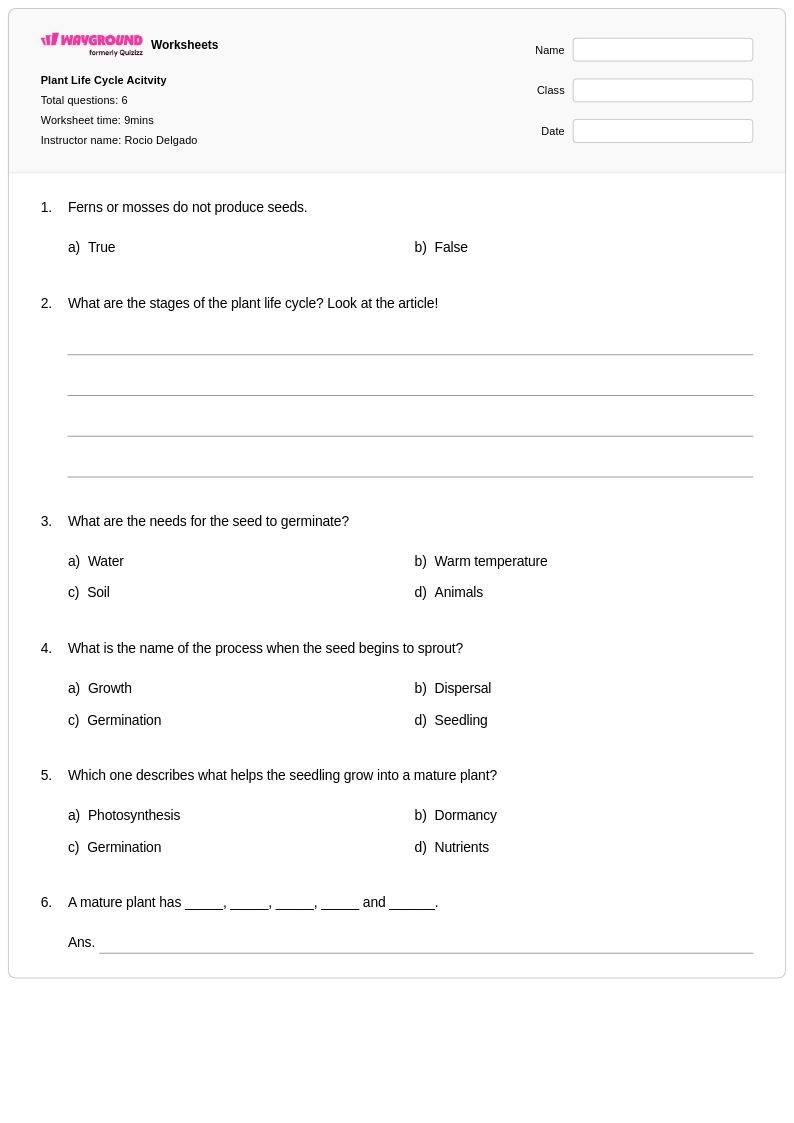
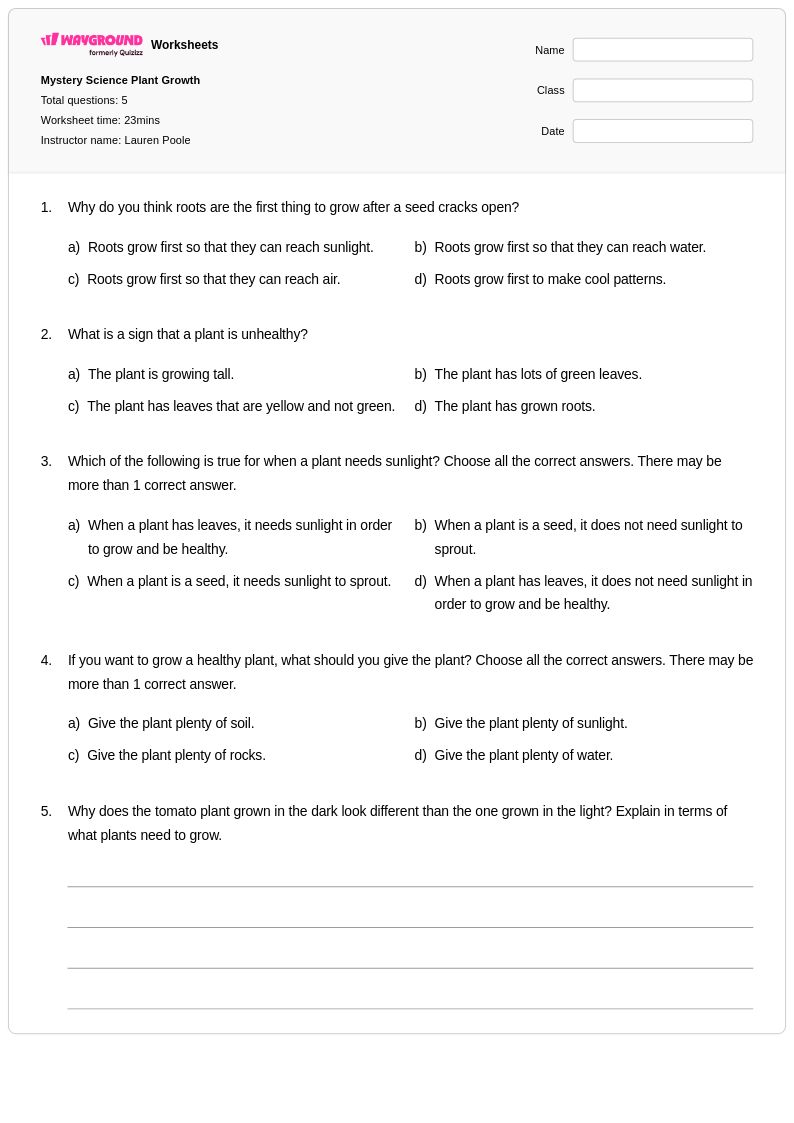
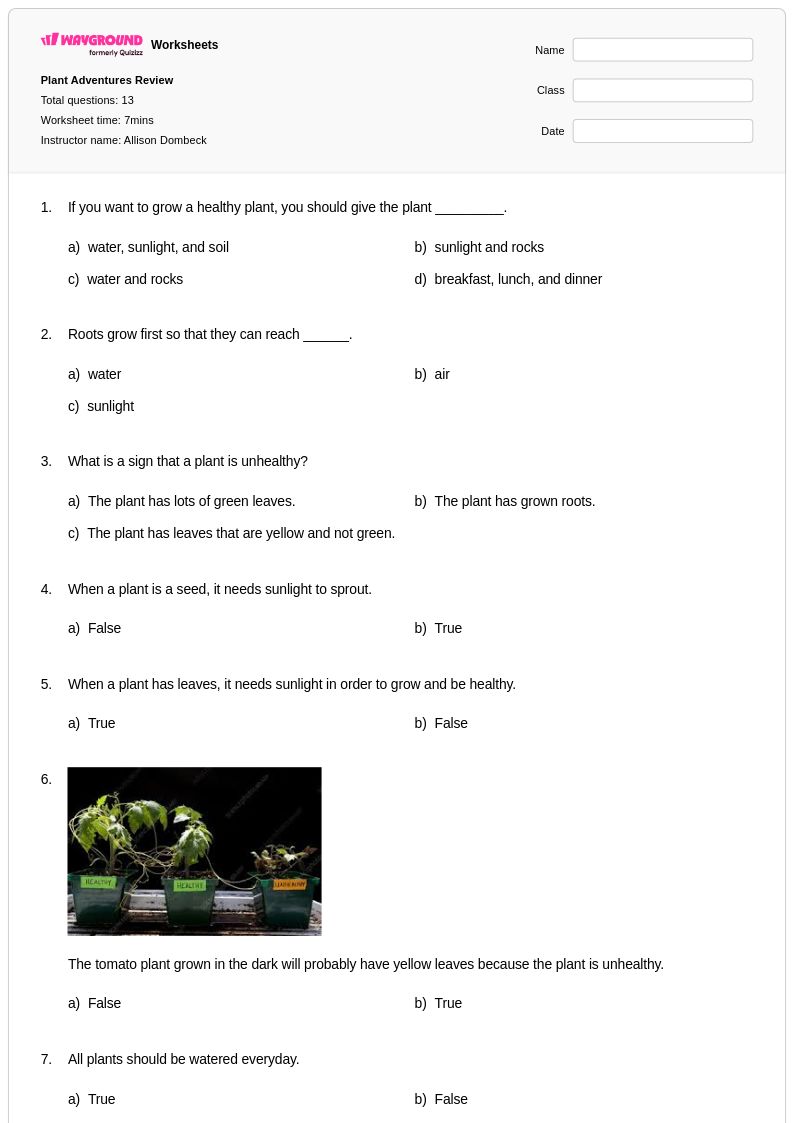
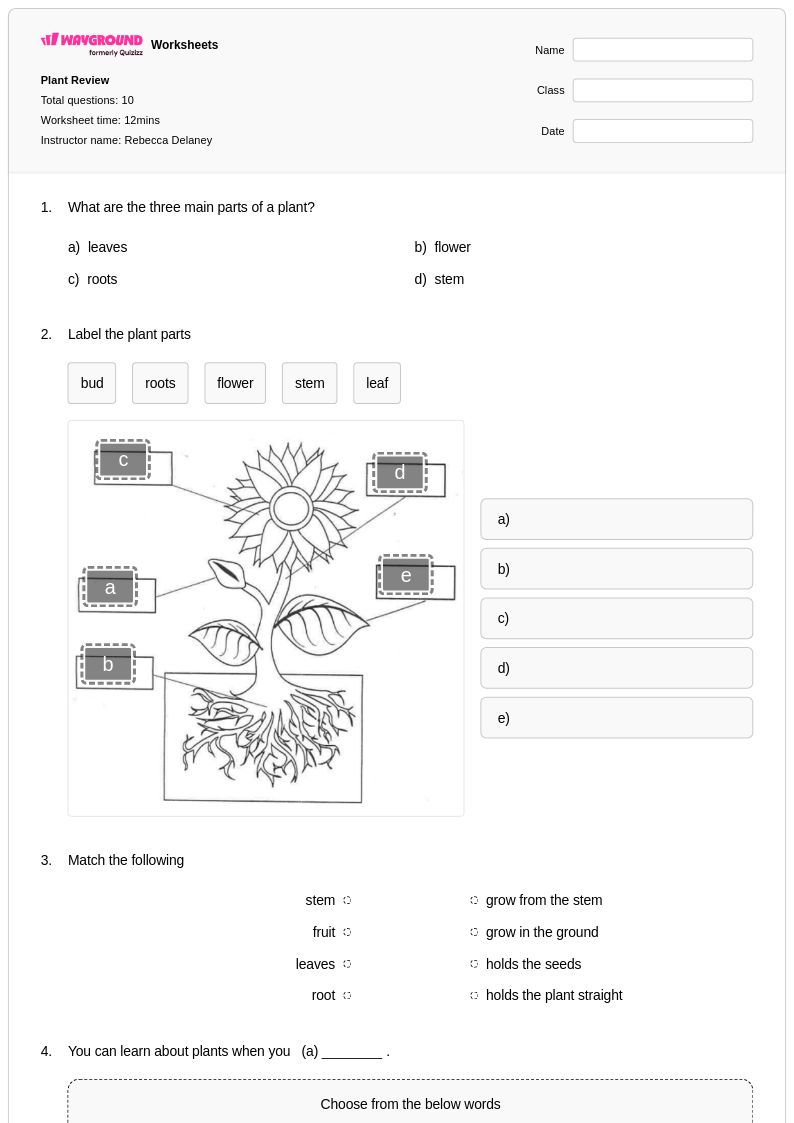
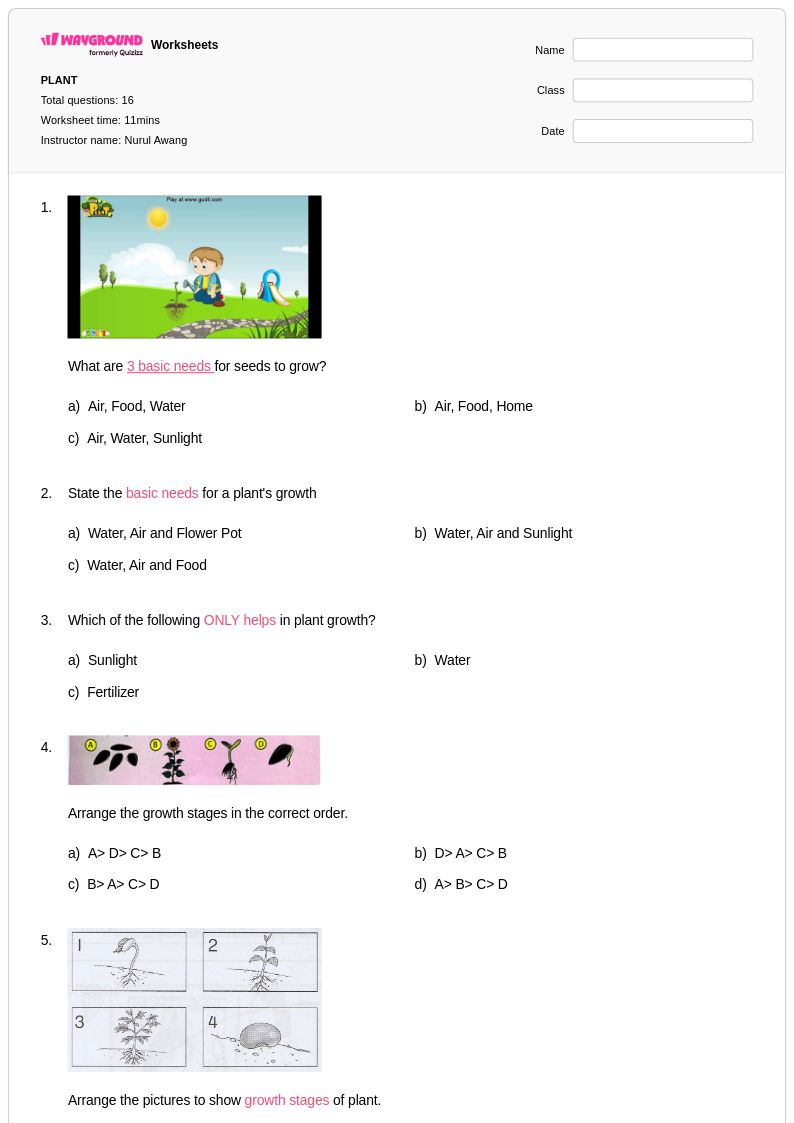
Plant growth worksheets for Year 2 students available through Wayground (formerly Quizizz) provide young learners with foundational experiences in understanding how plants develop and thrive. These educational resources focus on essential concepts such as what plants need to survive, the basic parts of plants, and the stages of plant development from seed to mature plant. The worksheets strengthen critical observation skills, scientific vocabulary, and early understanding of life cycles through age-appropriate activities that include labeling plant parts, sequencing growth stages, and identifying plant needs. Teachers can access comprehensive collections that include detailed answer keys, making assessment and feedback more efficient, while students benefit from engaging practice problems that reinforce key botanical concepts. These free printables offer versatile learning opportunities that can be used for individual practice, small group activities, or whole-class instruction.
Wayground (formerly Quizizz) empowers educators with millions of teacher-created plant growth resources specifically designed for Year 2 learners, featuring robust search and filtering capabilities that help locate materials aligned with specific learning objectives and curriculum standards. The platform's differentiation tools enable teachers to customize worksheets based on individual student needs, supporting both remediation for struggling learners and enrichment opportunities for advanced students. These comprehensive collections are available in both printable and digital formats, including convenient pdf downloads that facilitate flexible lesson planning and implementation across various learning environments. Teachers can efficiently organize their instruction around plant growth concepts while providing students with consistent skill practice opportunities that build scientific understanding progressively, making these resources invaluable for developing young scientists' appreciation for the natural world and foundational life science principles.
FAQs
How do I teach plant growth to students?
Effective plant growth instruction moves from concrete to abstract: start with germination observations using fast-growing seeds like beans or radishes so students can record real changes before encountering diagrams and vocabulary. From there, connect physical observations to underlying processes such as photosynthesis, cellular respiration, and tropisms. Tying environmental variables like light, water, and temperature to measurable outcomes helps students understand cause-and-effect relationships rather than memorizing isolated facts.
What worksheets or exercises help students practice plant growth concepts?
Practice exercises that ask students to analyze growth data, interpret experimental results, and sequence life cycle stages are particularly effective for reinforcing plant growth concepts. Worksheets that connect photosynthesis, germination, and tropisms to real-world scenarios push students beyond recall toward application. Including graph interpretation tasks and short-answer questions about environmental factors builds the analytical skills students need for science assessments.
What mistakes do students commonly make when learning about plant growth?
One of the most common misconceptions is that plants get their food from soil rather than producing it through photosynthesis, which leads students to conflate nutrient absorption with food production. Students also frequently confuse germination with growth, not recognizing germination as a distinct phase triggered by specific conditions. Another persistent error is assuming that more light always means more growth, without accounting for variables like water availability or temperature that limit photosynthetic output.
How do I use plant growth worksheets in my classroom?
Plant growth worksheets on Wayground are available as printable PDFs for traditional classroom and lab settings, as well as in digital formats for technology-integrated environments, including the option to host them as a quiz directly on Wayground. Printable versions work well as pre-lab preparation or post-lab analysis tasks, while digital formats support remote learning and self-paced review. Each worksheet includes a complete answer key, making it straightforward to use for guided practice, independent work, or formative assessment.
How can I differentiate plant growth worksheets for students at different ability levels?
For students who need additional support, Wayground's accommodation tools allow teachers to enable Read Aloud for audio playback of worksheet content, reduce answer choices to lower cognitive load, and grant extended time on digital assignments. These settings can be applied to individual students without notifying the rest of the class, so differentiation happens seamlessly. For advanced learners, worksheets that require interpreting experimental data or connecting multiple concepts like photosynthesis and tropisms to environmental conditions provide meaningful enrichment.
How does plant growth connect to photosynthesis and the plant life cycle in a unit plan?
Plant growth serves as the organizing framework that ties photosynthesis, germination, and the plant life cycle together: students first understand how seeds germinate under specific conditions, then explore how photosynthesis fuels subsequent growth stages, and finally examine how reproduction closes the life cycle. Structuring a unit around plant growth as the central thread helps students see these processes as interconnected rather than separate topics. Worksheets that ask students to trace energy flow from sunlight through to biomass are especially effective for building this coherence.