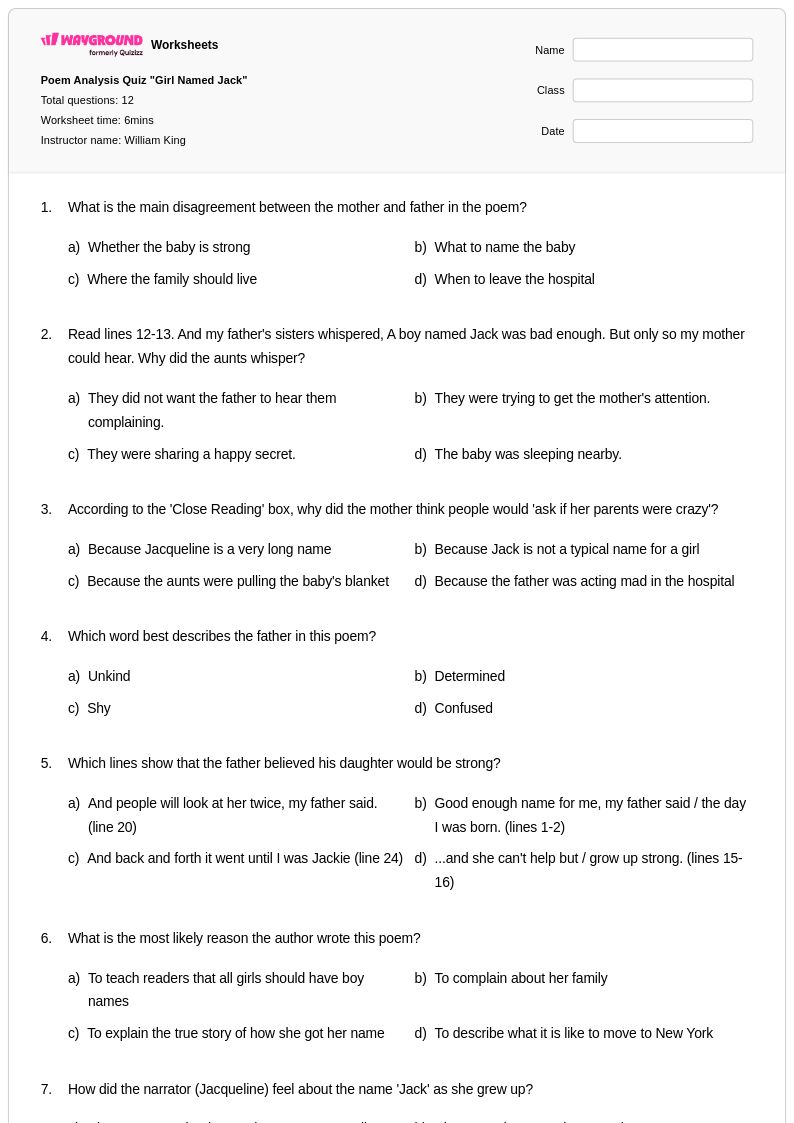
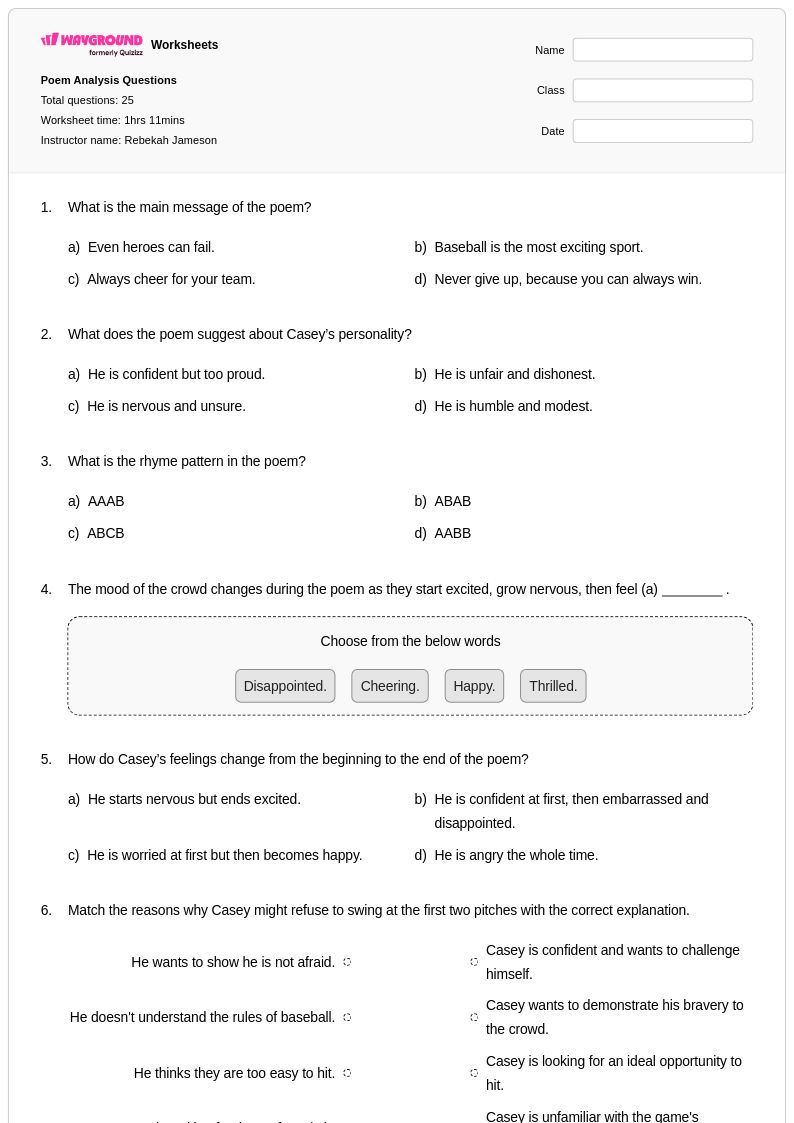
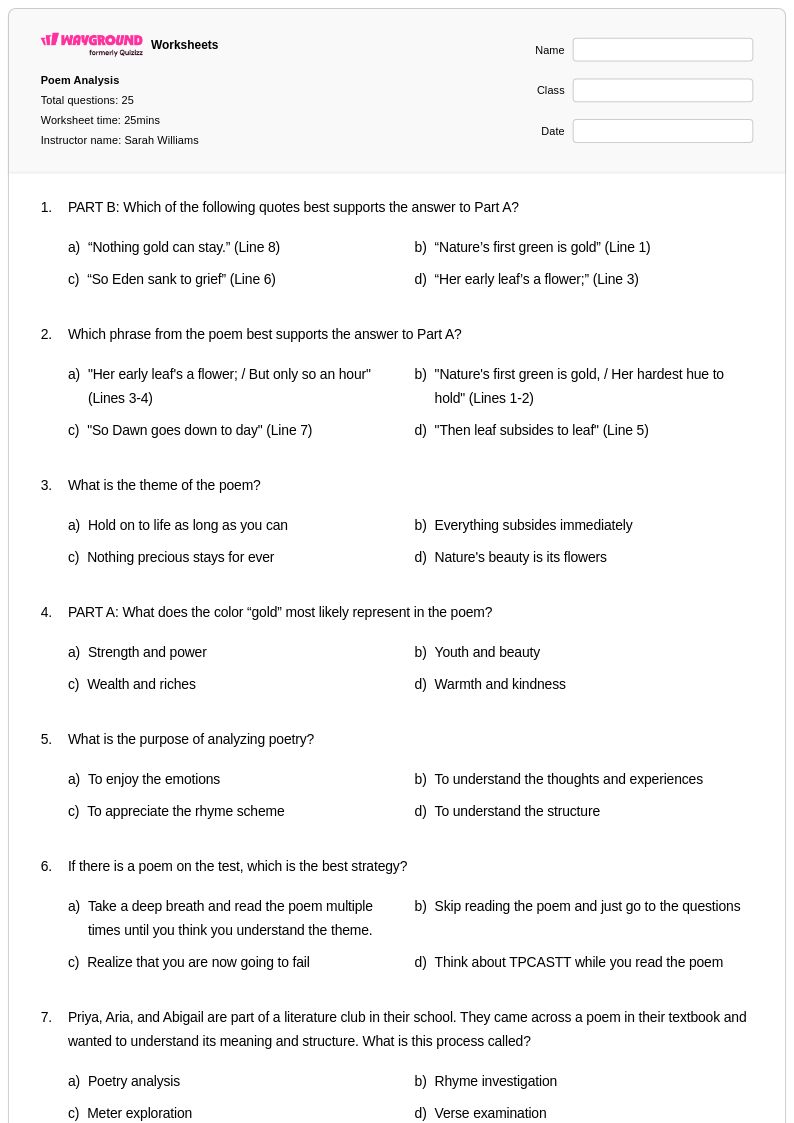
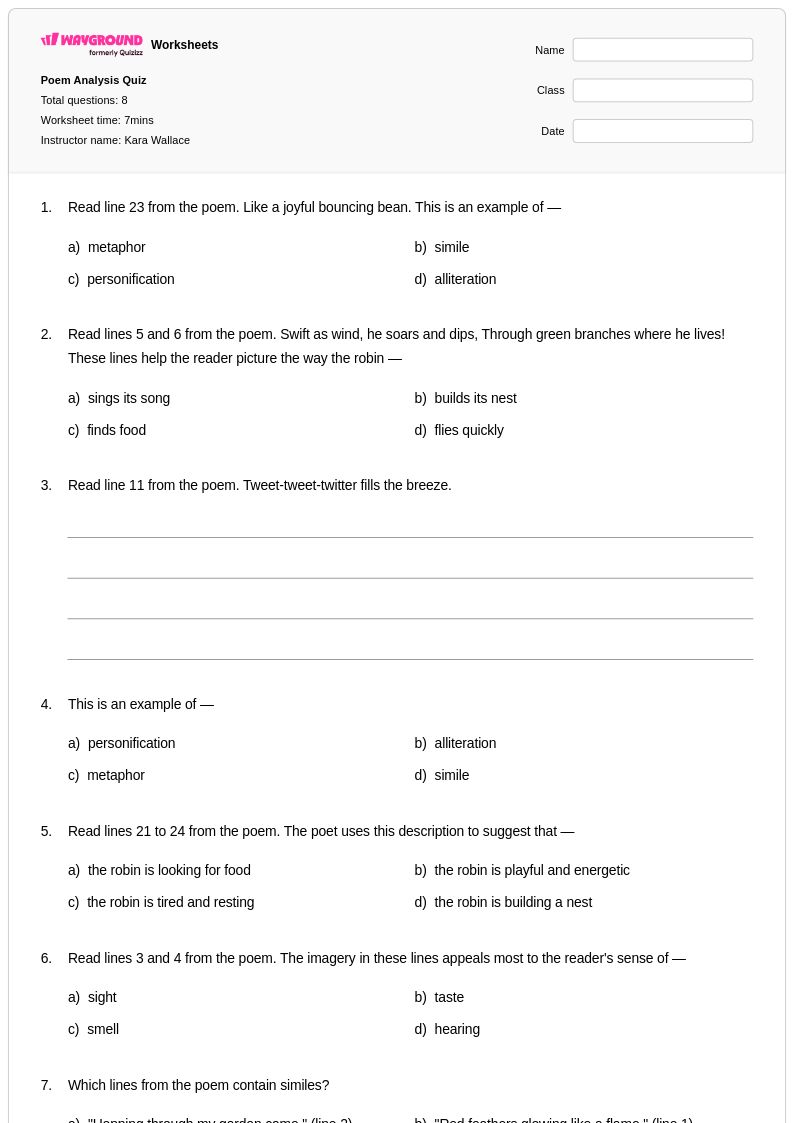
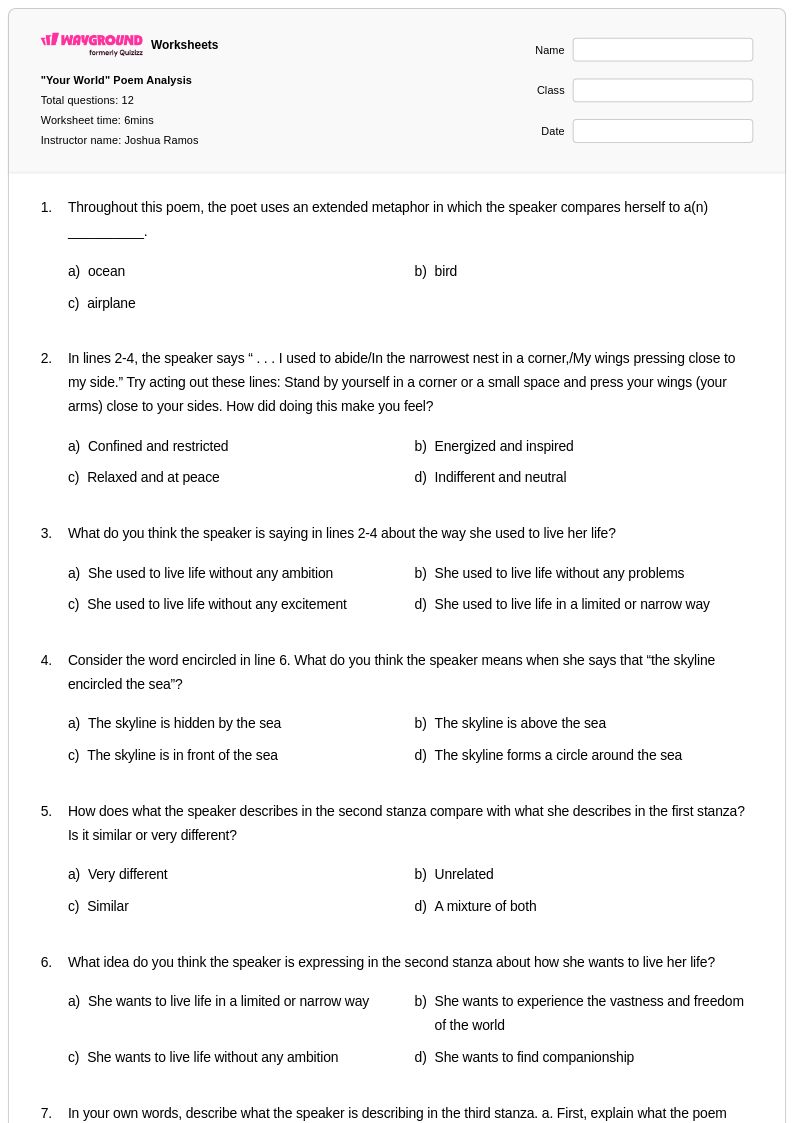
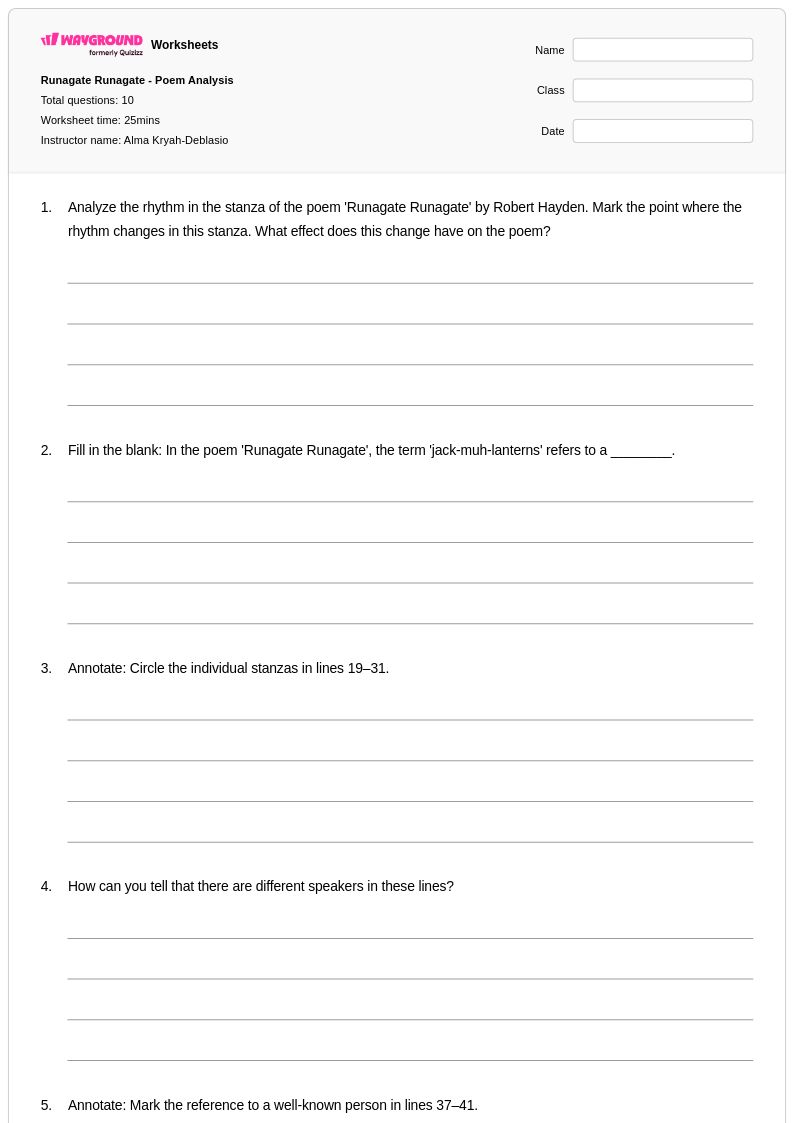
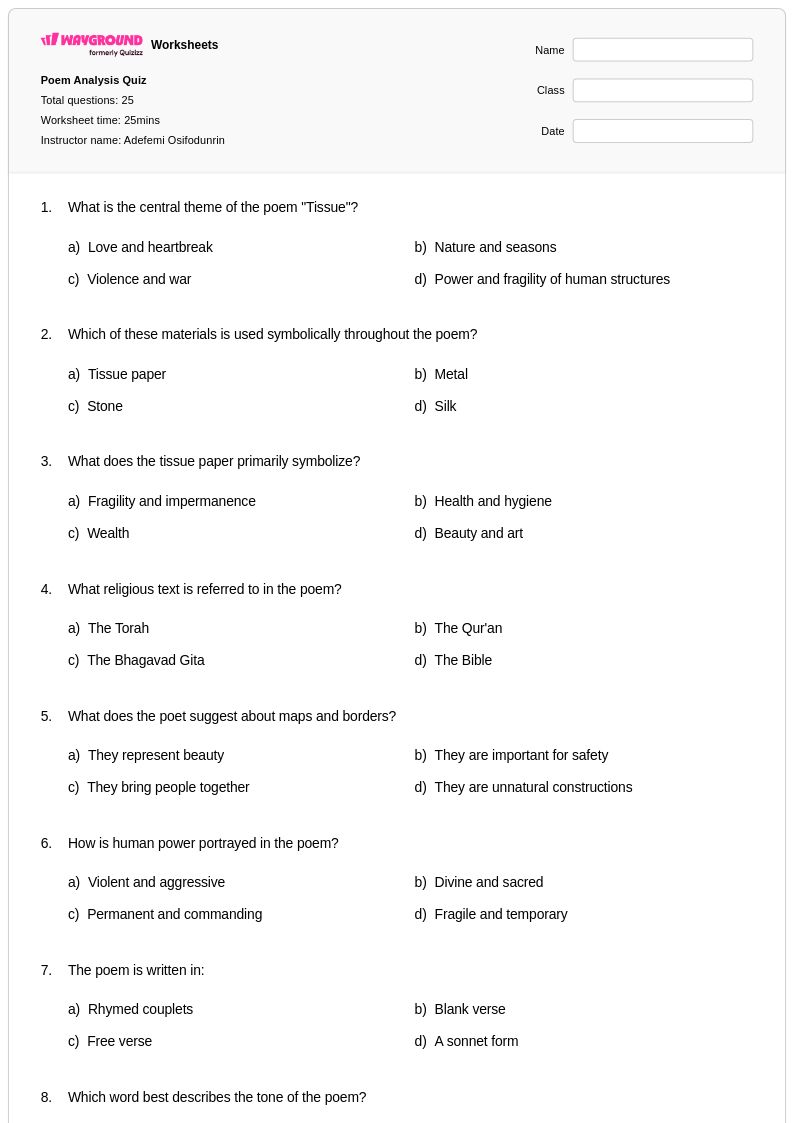
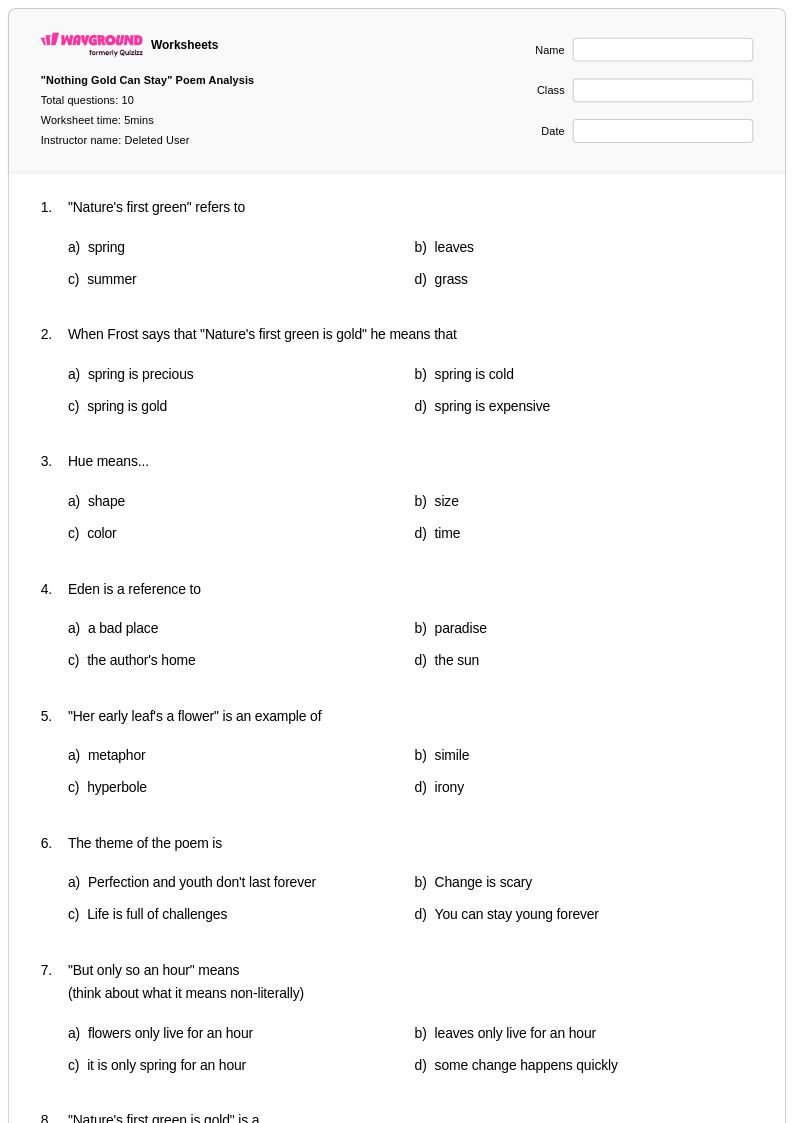
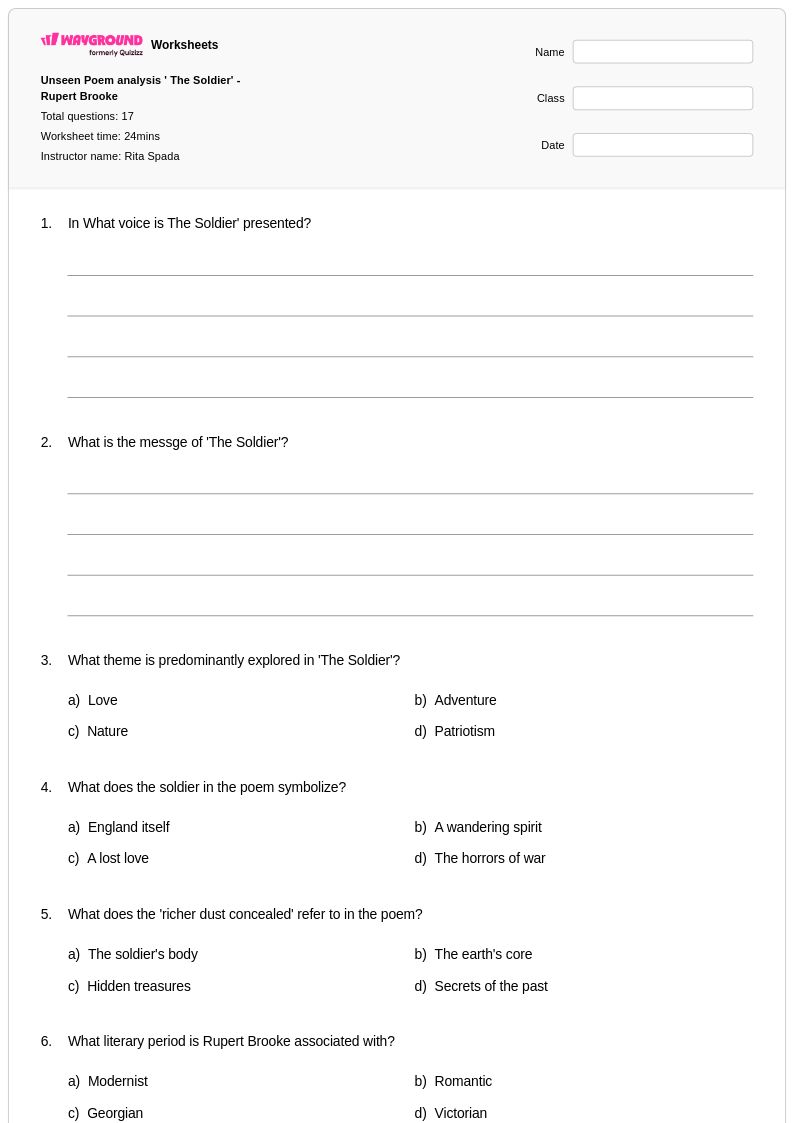
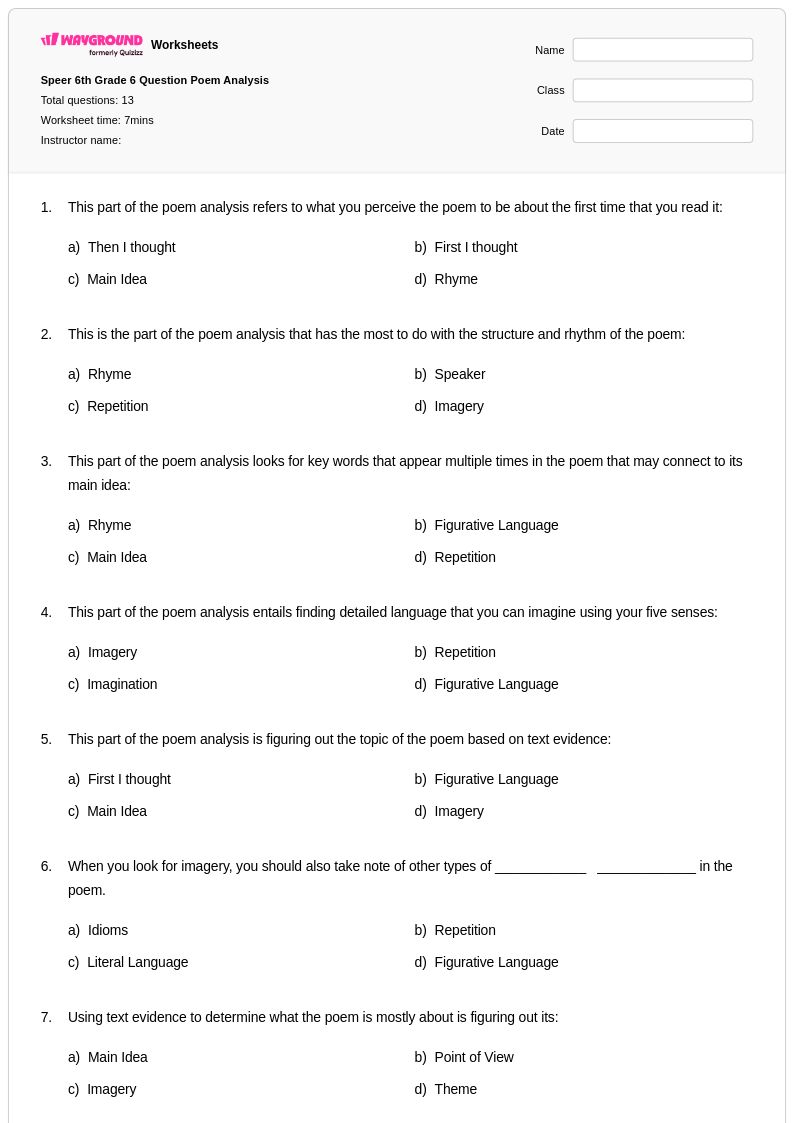
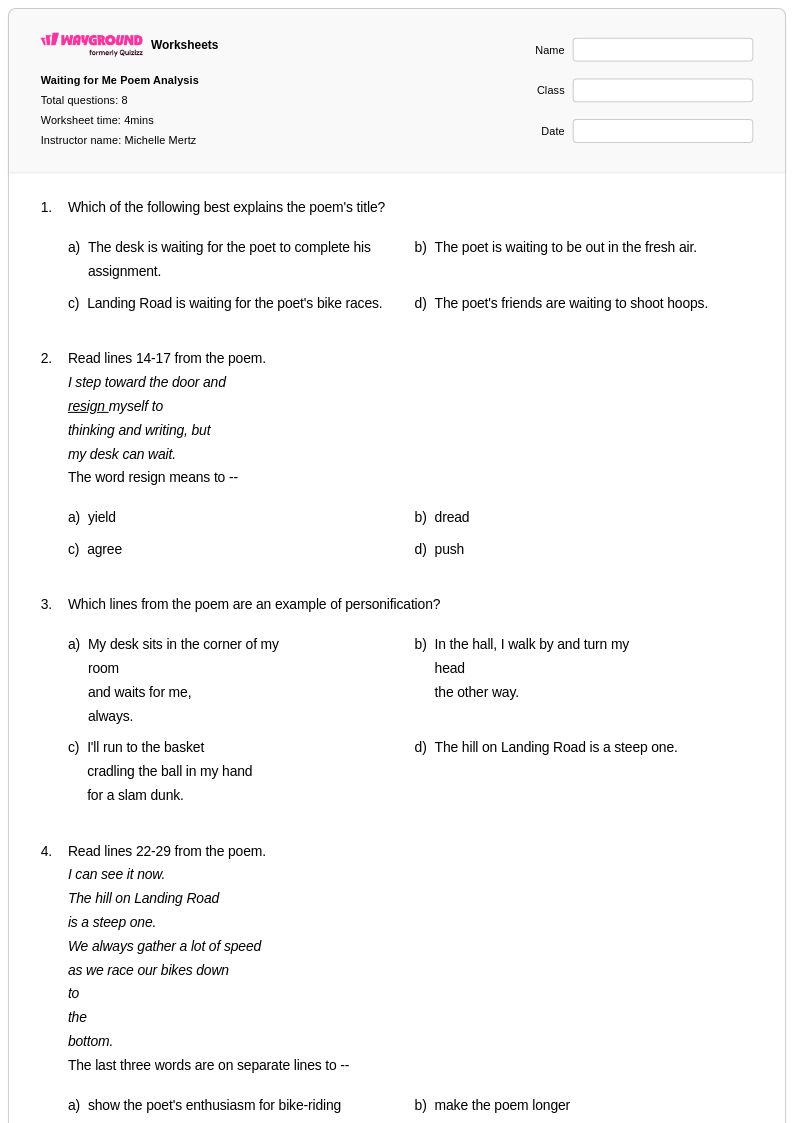
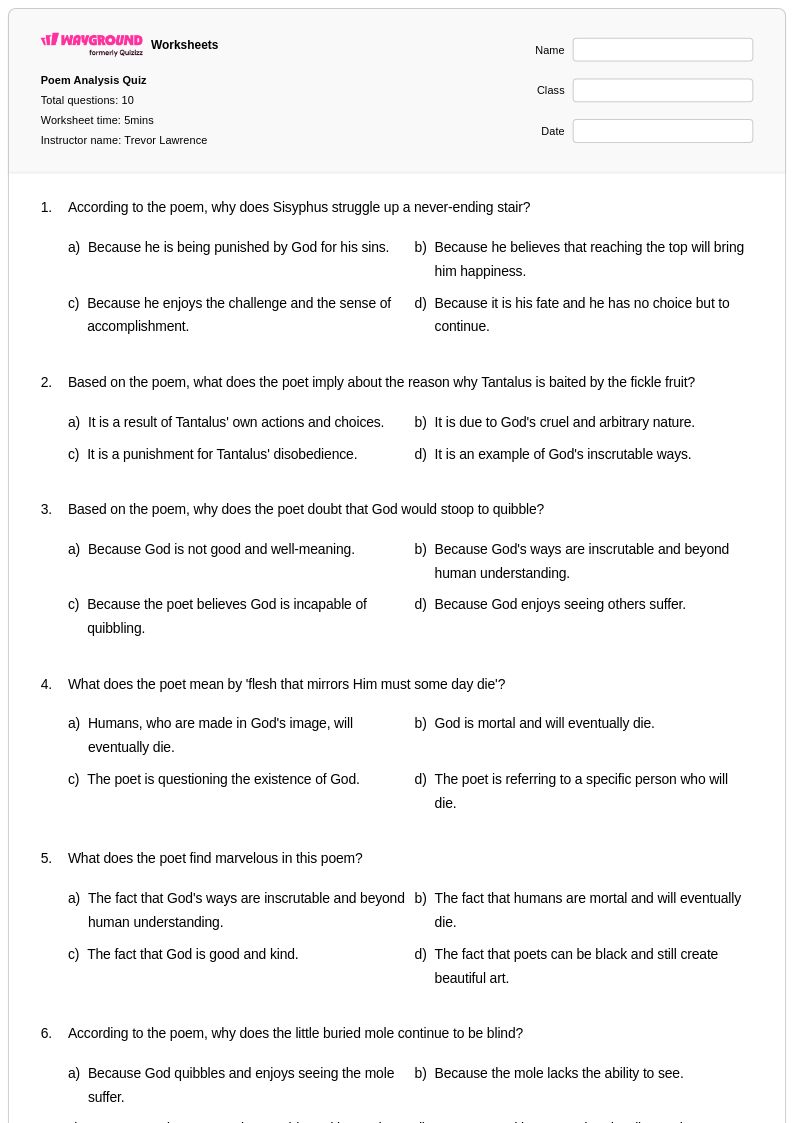
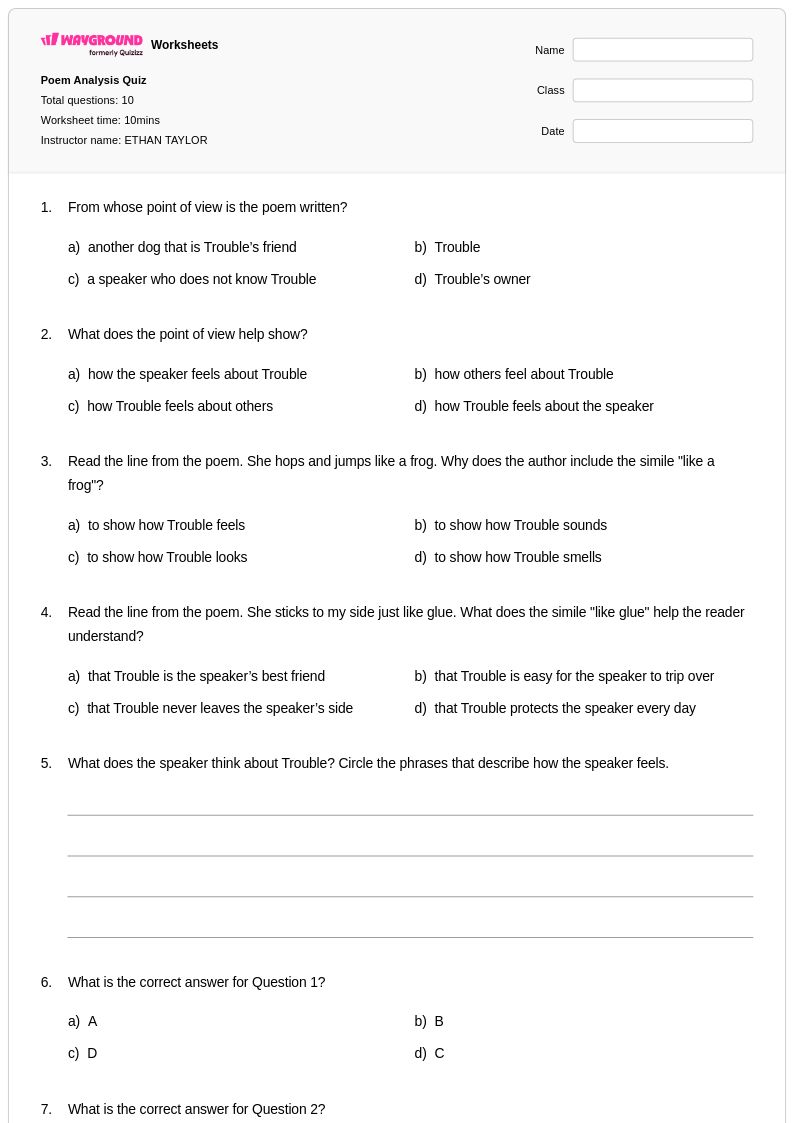
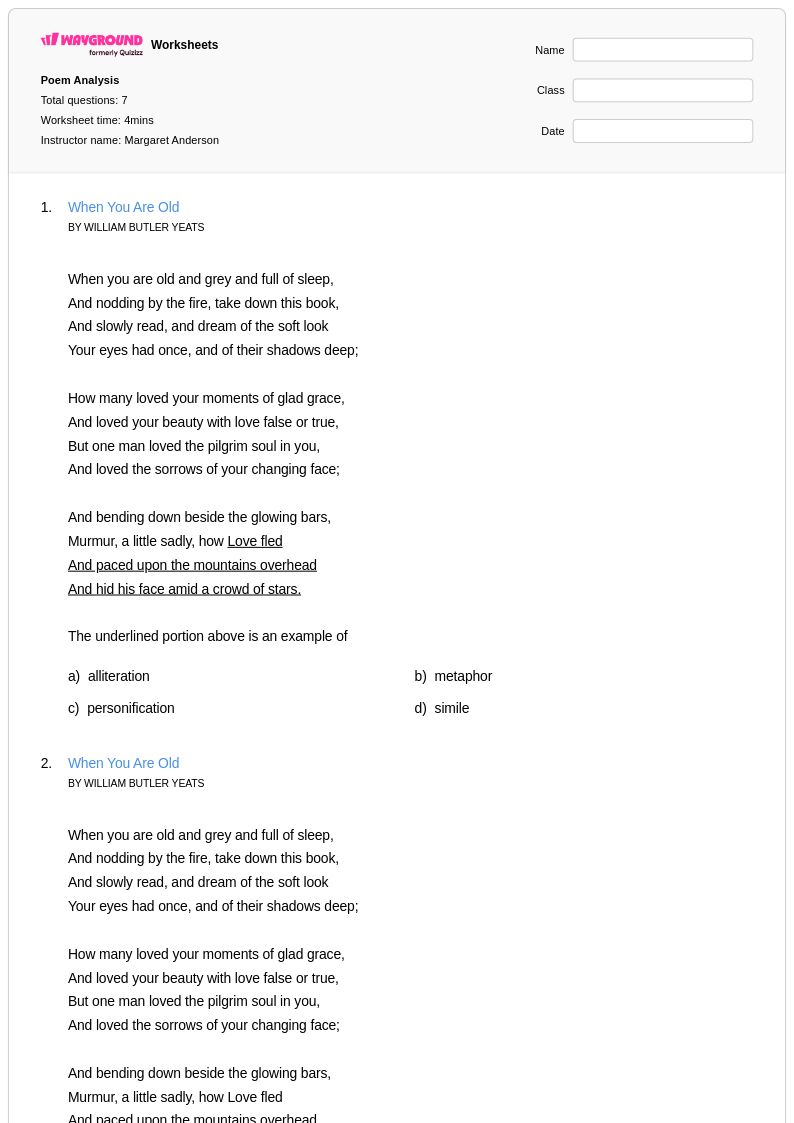
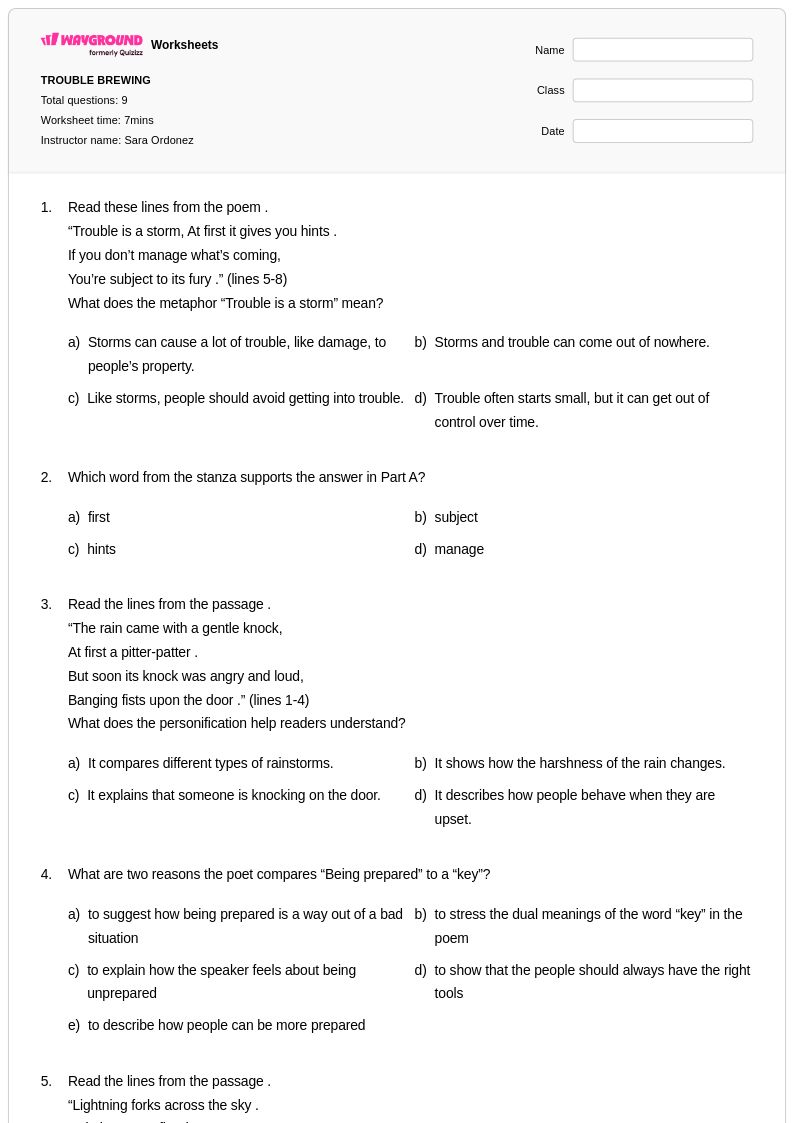
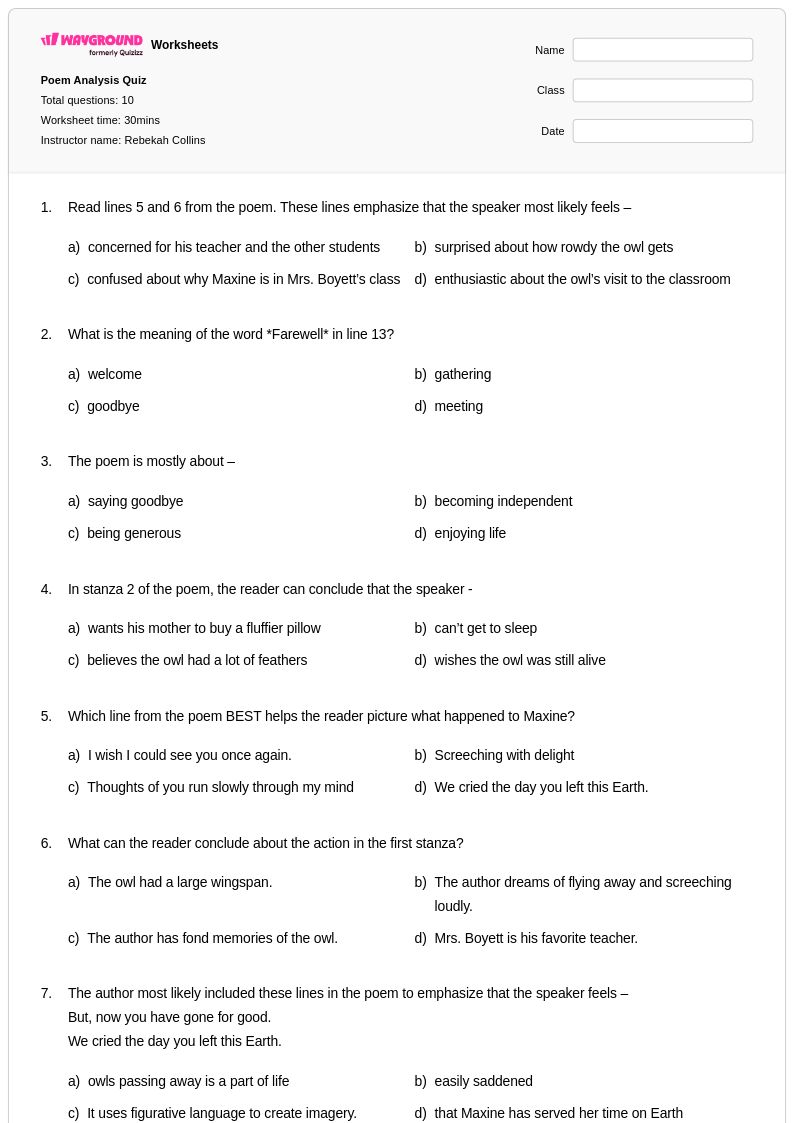
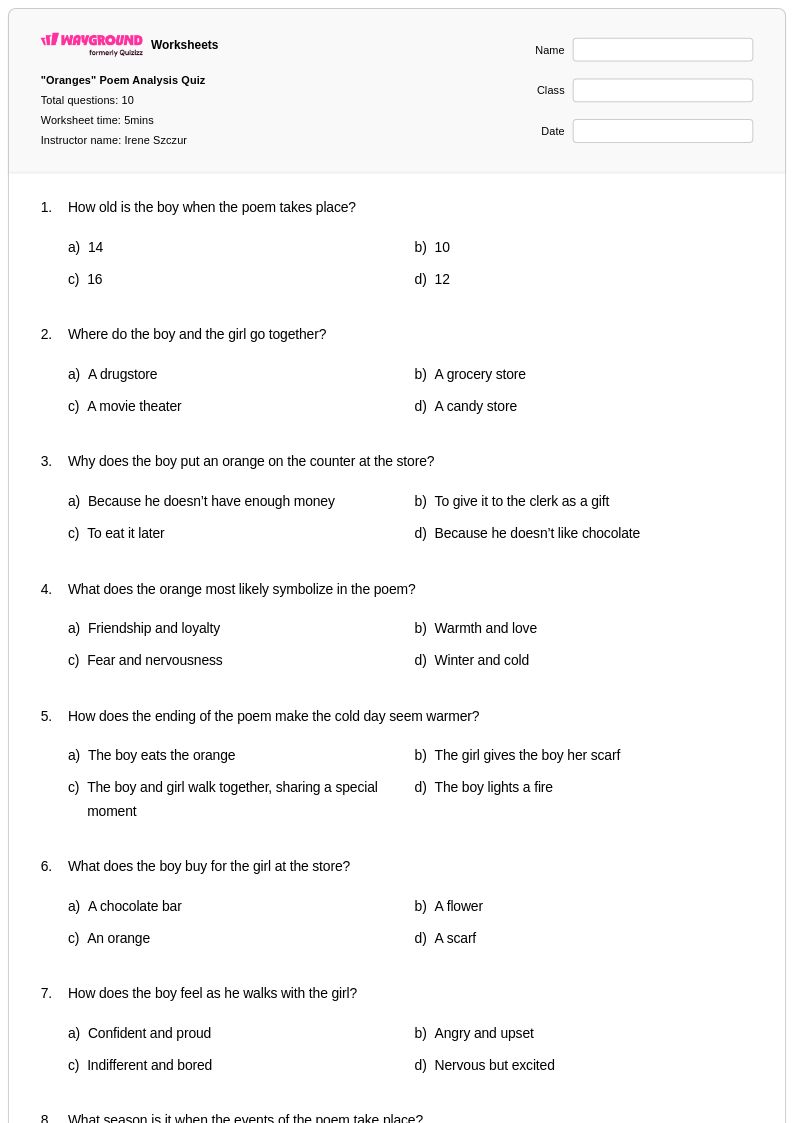
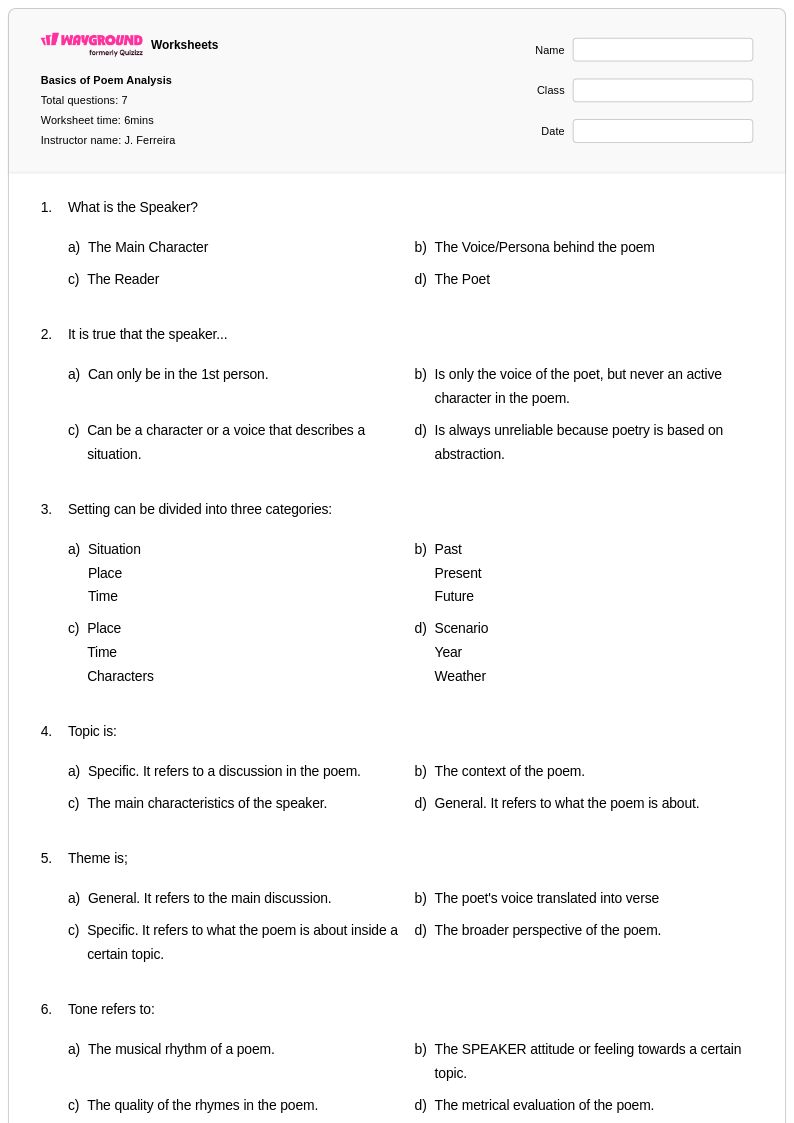
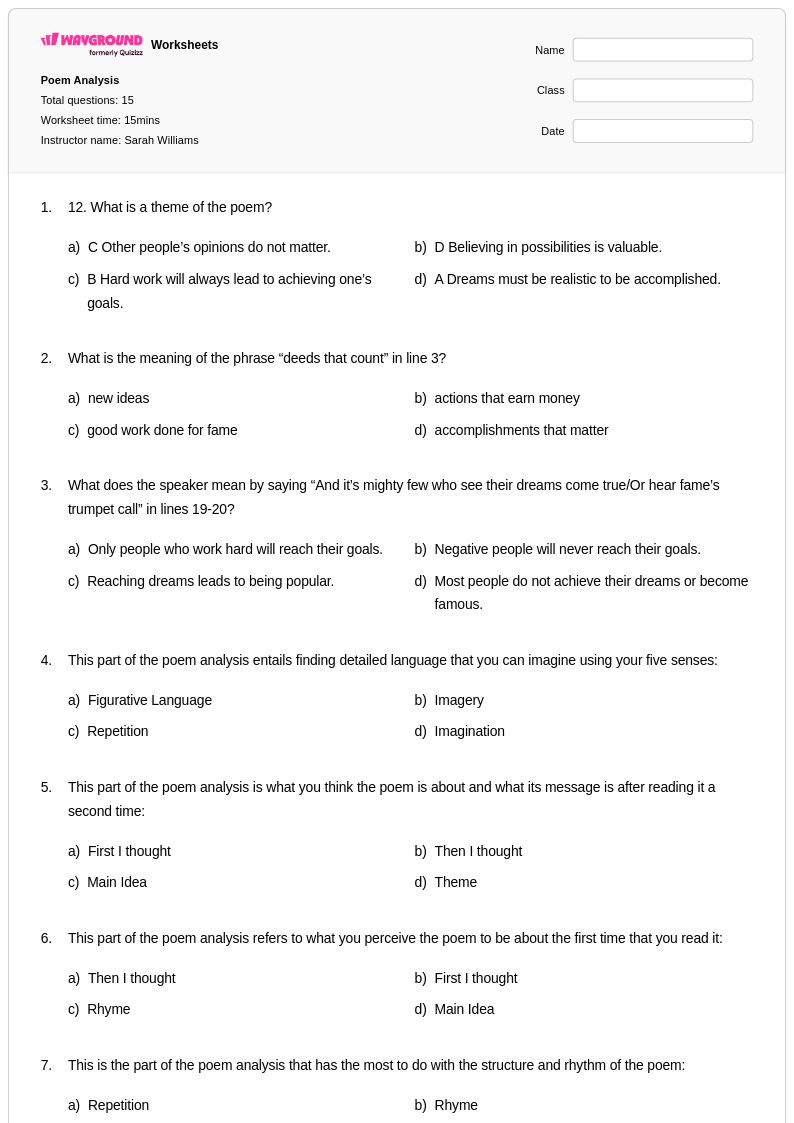
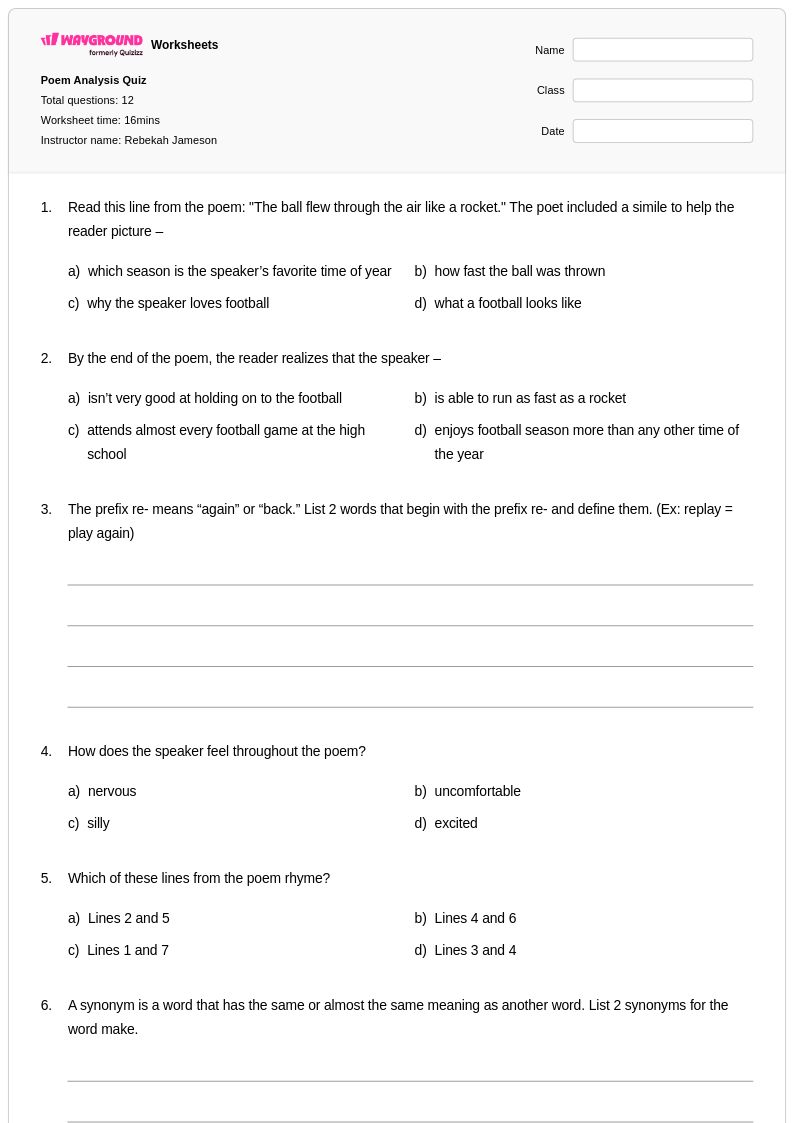
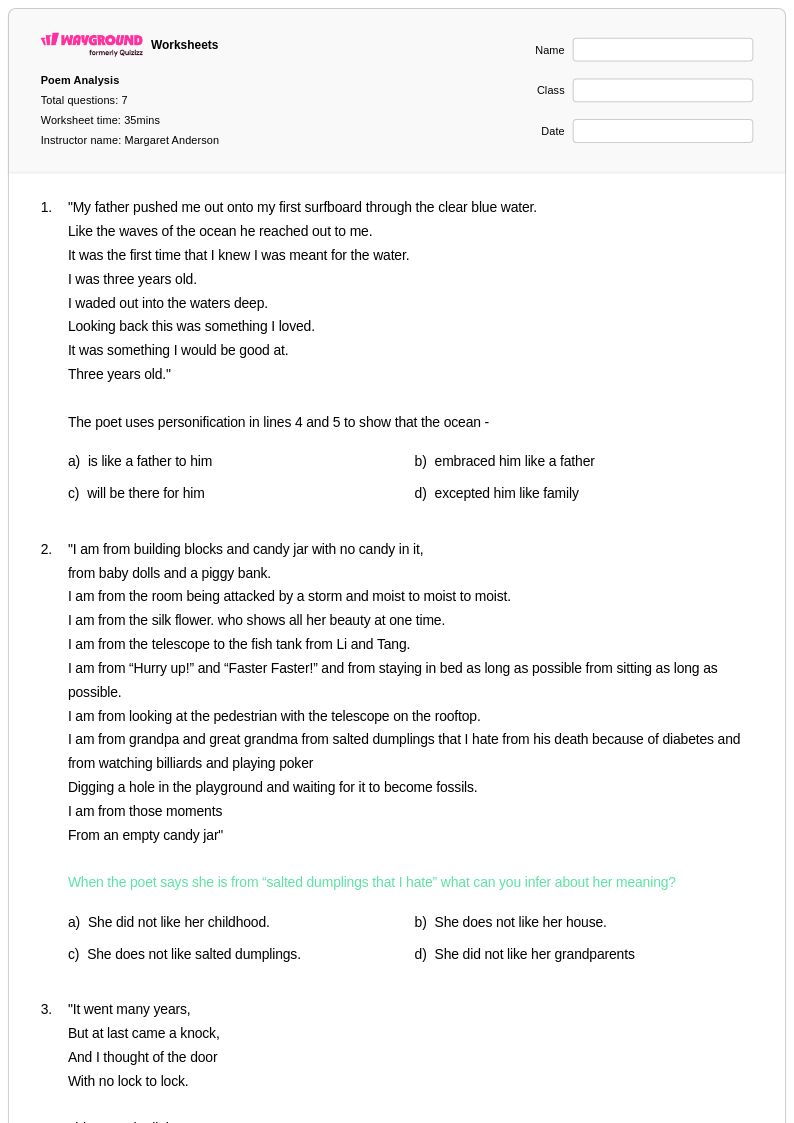
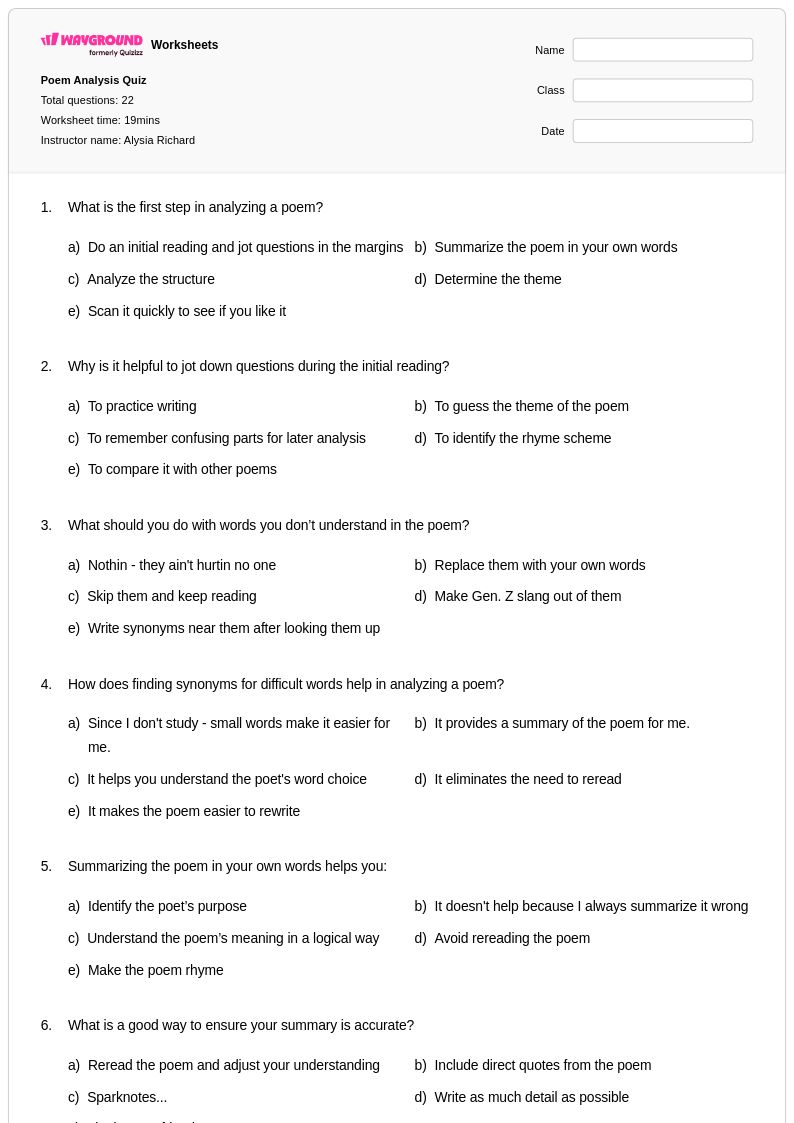
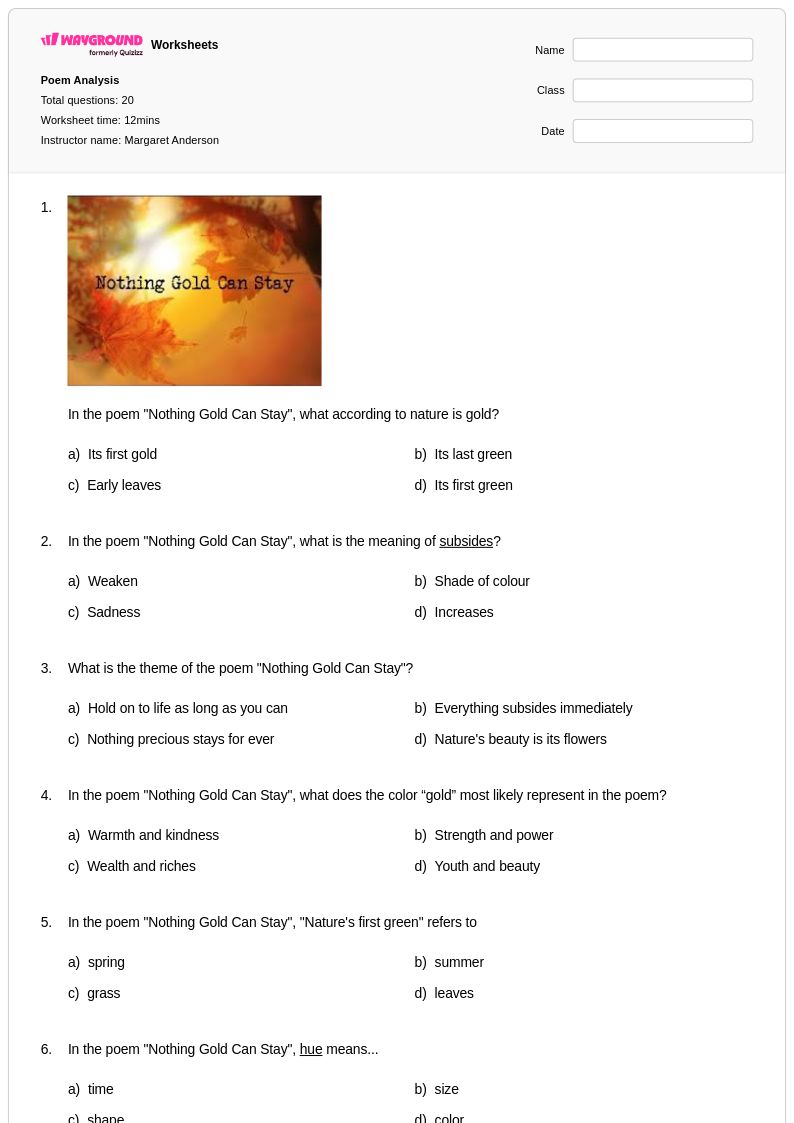
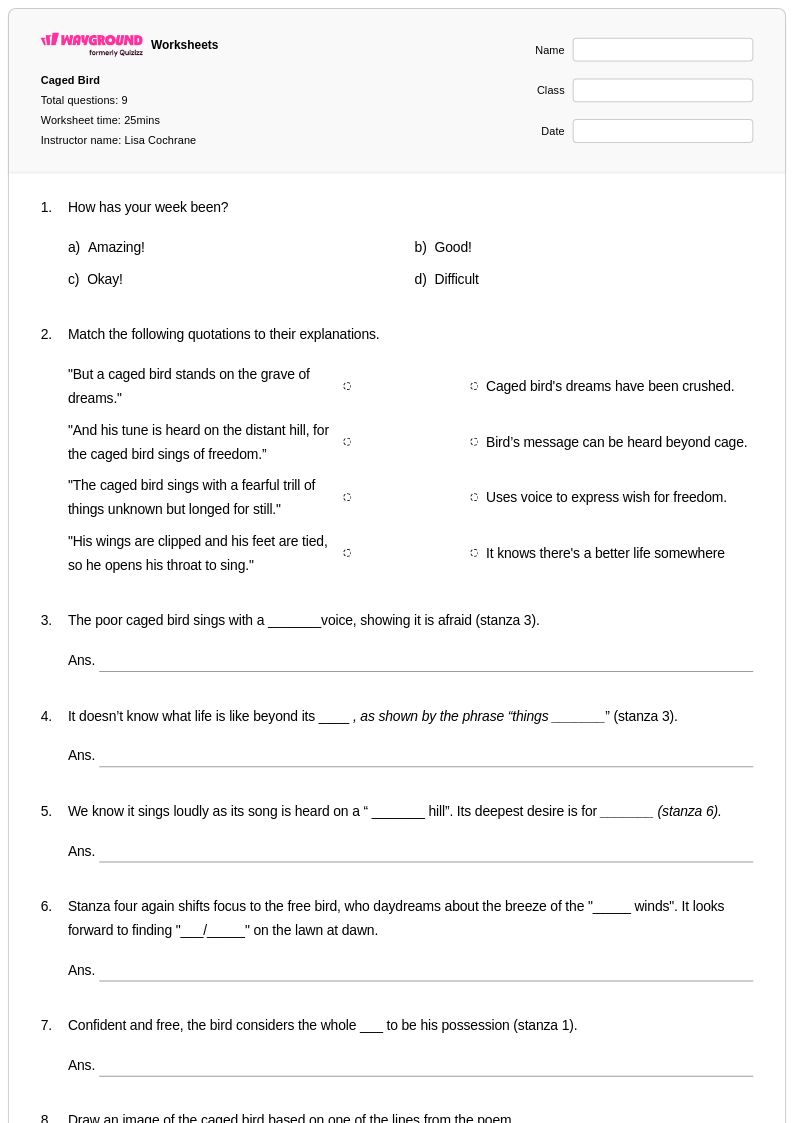
Poem analysis worksheets available through Wayground (formerly Quizizz) provide comprehensive tools for developing critical thinking and literary interpretation skills across all educational levels. These carefully designed resources guide students through systematic examination of poetic elements including meter, rhyme scheme, figurative language, theme, and literary devices while building essential analytical writing abilities. Each worksheet collection includes structured practice problems that progress from basic identification exercises to complex comparative analysis tasks, complete with detailed answer keys that support both independent study and classroom instruction. The free printable materials offer flexible pdf formats that accommodate diverse learning environments and teaching approaches.
Wayground (formerly Quizizz) empowers educators with access to millions of teacher-created poem analysis resources that streamline lesson planning and enhance instructional effectiveness. The platform's robust search and filtering capabilities enable teachers to quickly locate worksheets aligned with specific curriculum standards and learning objectives, while built-in differentiation tools allow for seamless customization based on individual student needs and proficiency levels. These comprehensive collections are available in both printable and digital formats, including downloadable pdf versions, making them ideal for remediation sessions, enrichment activities, and targeted skill practice. The extensive library supports teachers in creating cohesive poetry units that build analytical competency through scaffolded exercises ranging from basic comprehension checks to sophisticated literary criticism assignments.
FAQs
How do I teach poem analysis to students who have never done it before?
Start by anchoring students to a single poetic element at a time rather than asking them to analyze everything at once. Teach meter, rhyme scheme, figurative language, and theme as separate skills before combining them in full analyses. Modeling the process aloud with a short, accessible poem before students attempt independent work dramatically reduces early frustration and builds the analytical vocabulary they need to write about poetry with confidence.
What exercises help students practice literary analysis of poems?
Effective practice moves from identification to interpretation: students first label devices like metaphor, alliteration, or enjambment, then explain why the poet uses them and what effect they create. Structured annotation tasks, comparative analysis between two poems on the same theme, and short written response prompts all build analytical writing stamina. Scaffolded worksheets that progress from basic comprehension questions to open-ended critical responses are particularly effective for developing these skills systematically.
What mistakes do students commonly make when analyzing a poem?
The most common error is summarizing the poem instead of analyzing it — students describe what happens rather than explaining how the poet's choices create meaning. A close second is identifying a literary device without explaining its effect, which produces surface-level responses that lack analytical depth. Students also frequently ignore structural elements like line breaks, stanza form, and punctuation, even though these choices are as deliberate and meaningful as word choice.
How do I help struggling readers engage with poem analysis?
Struggling readers often disengage from poetry because unfamiliar vocabulary and compressed syntax create comprehension barriers before analysis can even begin. Reading poems aloud multiple times, providing line-by-line paraphrasing scaffolds, and using visual annotation guides can lower the entry point significantly. On Wayground, the Read Aloud accommodation can be enabled for individual students so questions and content are read to them, and font sizes can be adjusted through Reading Mode to improve accessibility without disrupting the rest of the class.
How do I use Wayground's poem analysis worksheets in my classroom?
Wayground's poem analysis worksheets are available as printable PDFs for traditional classroom use and in digital formats for technology-integrated environments, giving teachers flexibility across in-person, hybrid, and remote settings. Digital versions can be hosted as a quiz directly on Wayground, allowing teachers to assign work, track completion, and review student responses in one place. Each worksheet includes a complete answer key, making them practical for independent practice, guided instruction, or homework assignments without requiring additional teacher prep.
How do I differentiate poem analysis instruction for students at different skill levels?
Differentiation in poem analysis works best when the same poem is used across proficiency levels but the task complexity varies — foundational students identify and label devices, while advanced students evaluate their cumulative effect on tone and theme. Scaffolded sentence starters, graphic organizers, and tiered questioning within a single worksheet can support this without creating entirely separate lessons. Wayground allows teachers to assign individual accommodations such as reduced answer choices or extended time on digital assignments, so each student engages with the material at an appropriate level of challenge.