
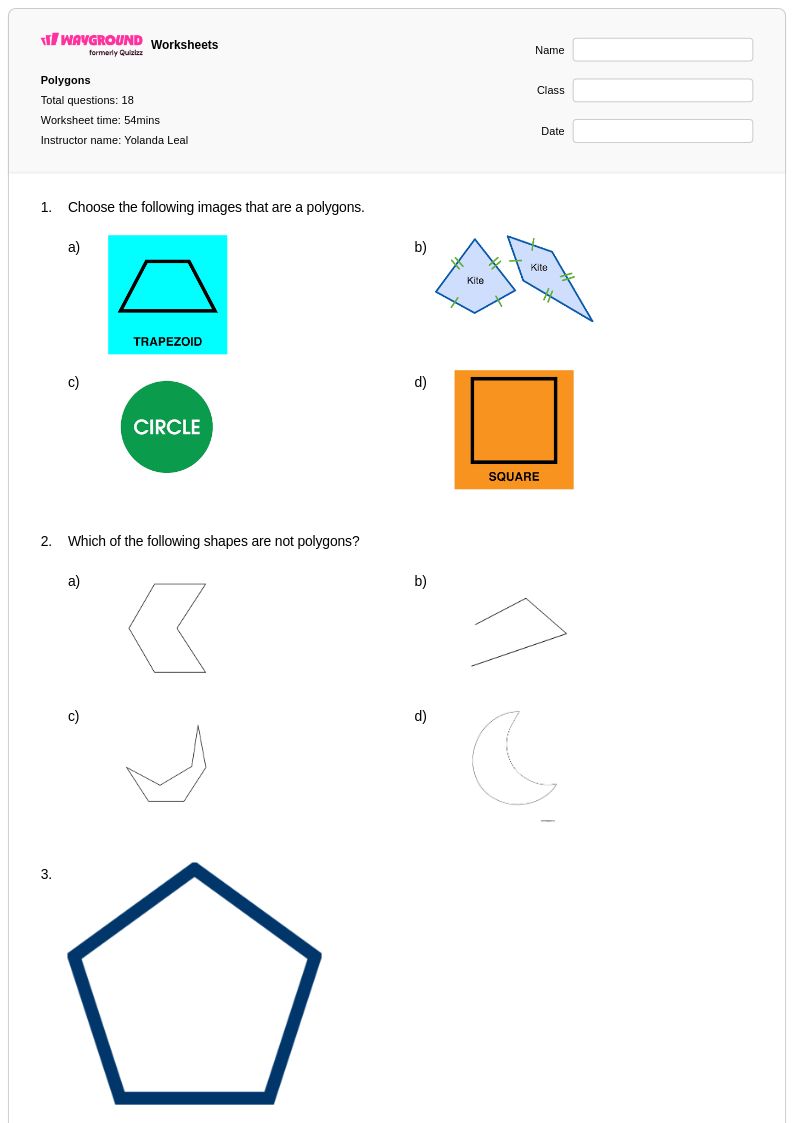
18 Q
5th
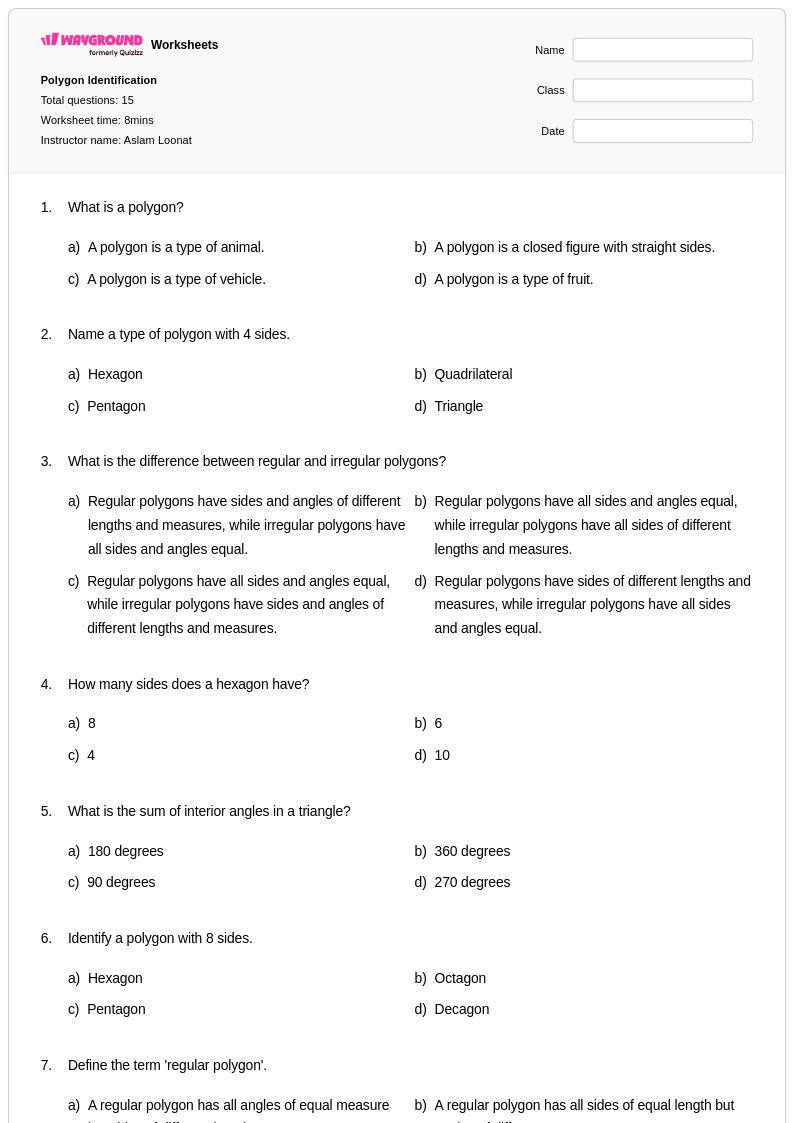
15 Q
5th
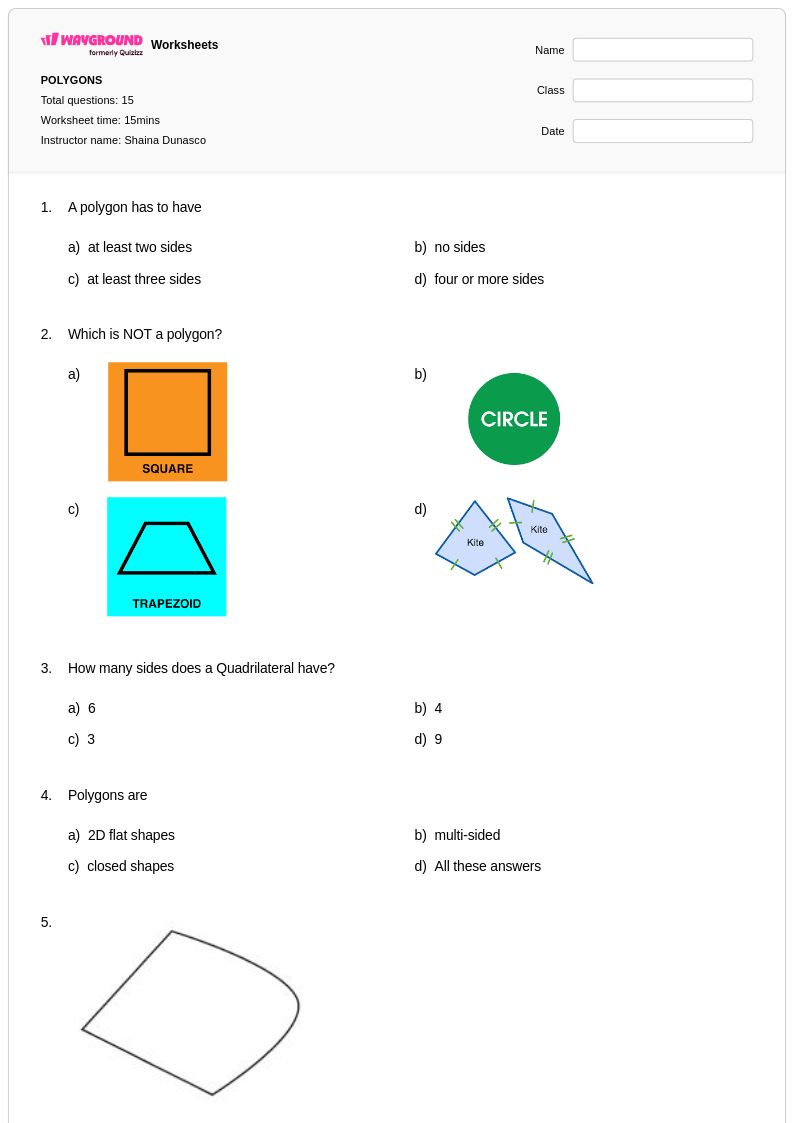
15 Q
5th
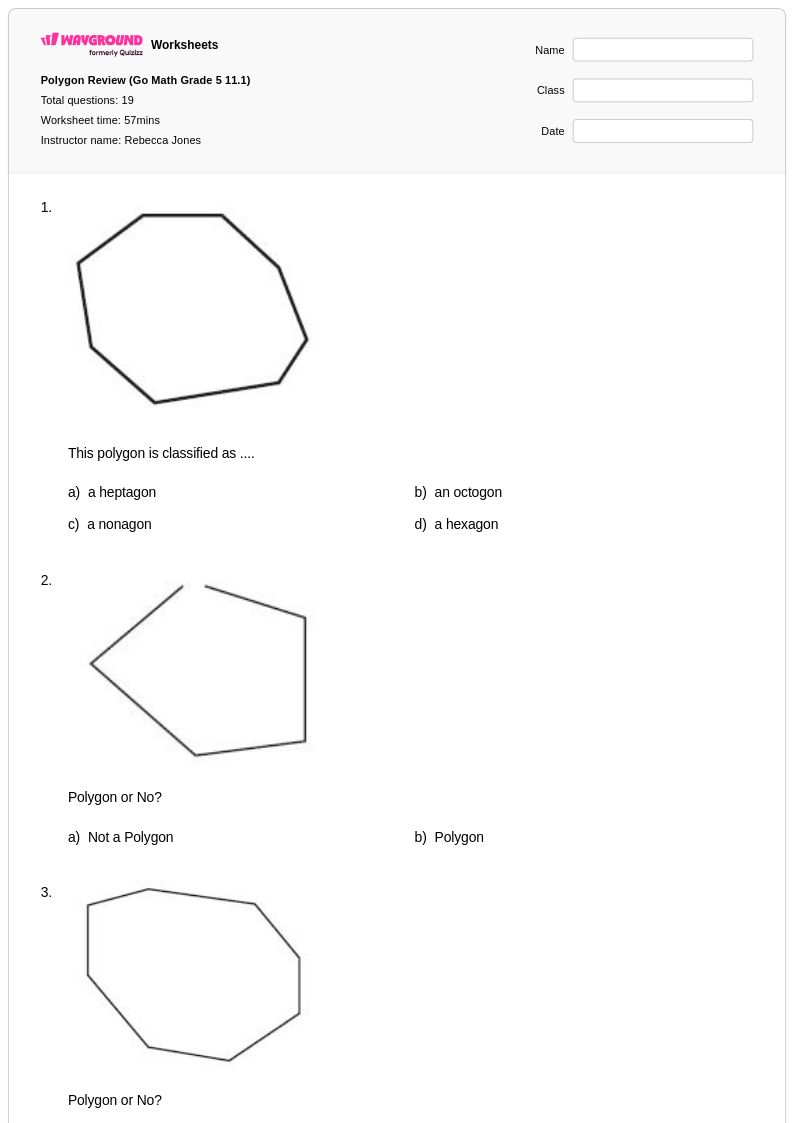
19 Q
5th
17 Q
3rd - 7th
22 Q
5th
20 Q
5th
20 Q
3rd - Uni
20 Q
3rd - Uni
54 Q
3rd - 5th
20 Q
3rd - Uni
20 Q
3rd - 5th
10 Q
5th
10 Q
5th - 7th
20 Q
3rd - Uni
20 Q
5th - Uni
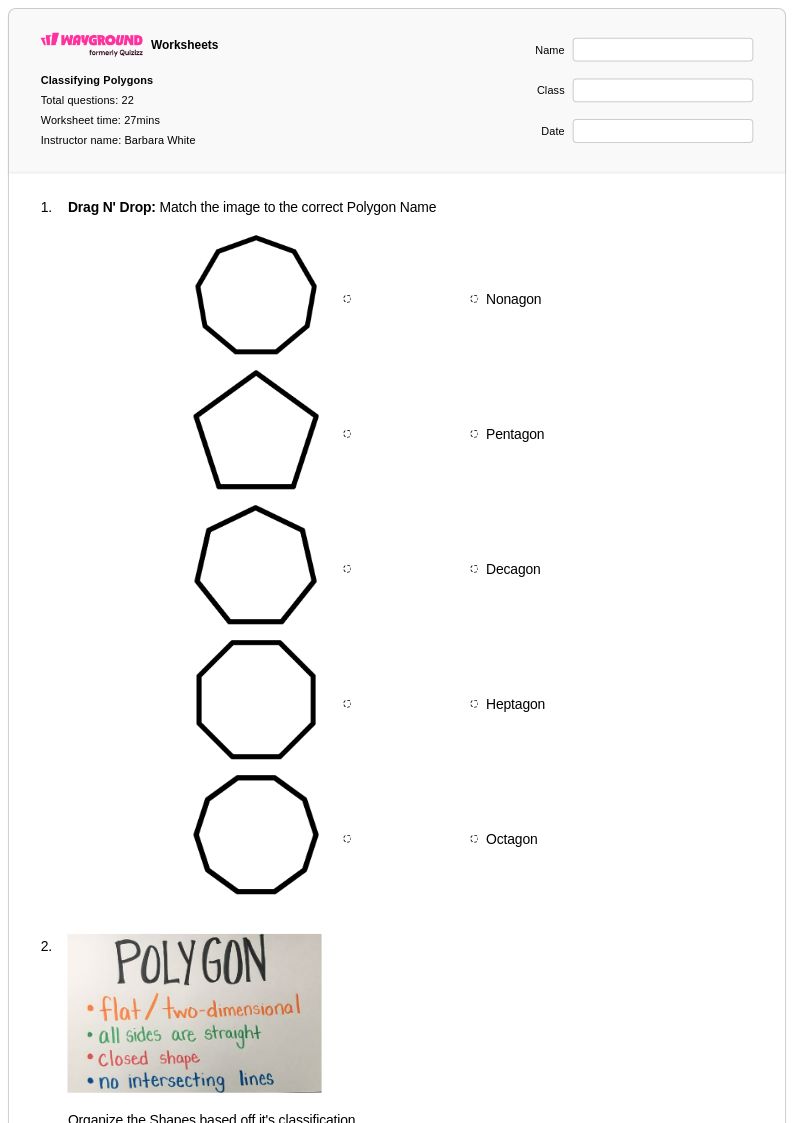
22 Q
5th
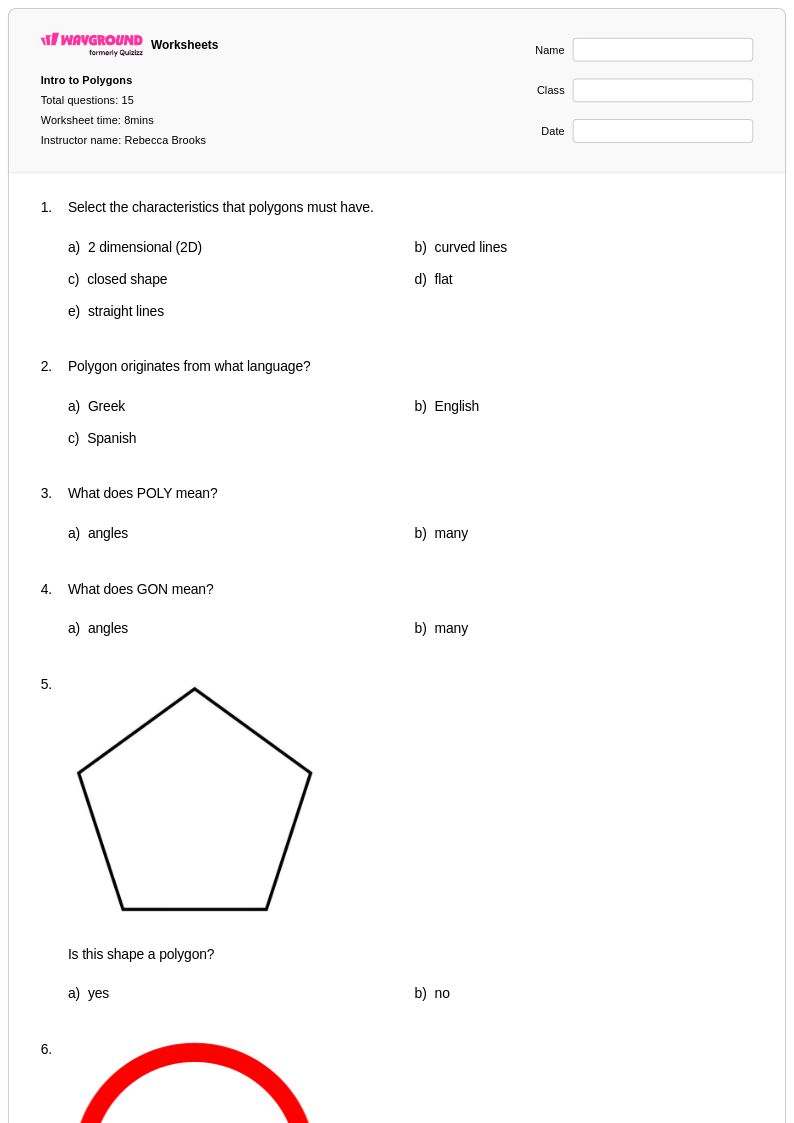
15 Q
3rd - 6th
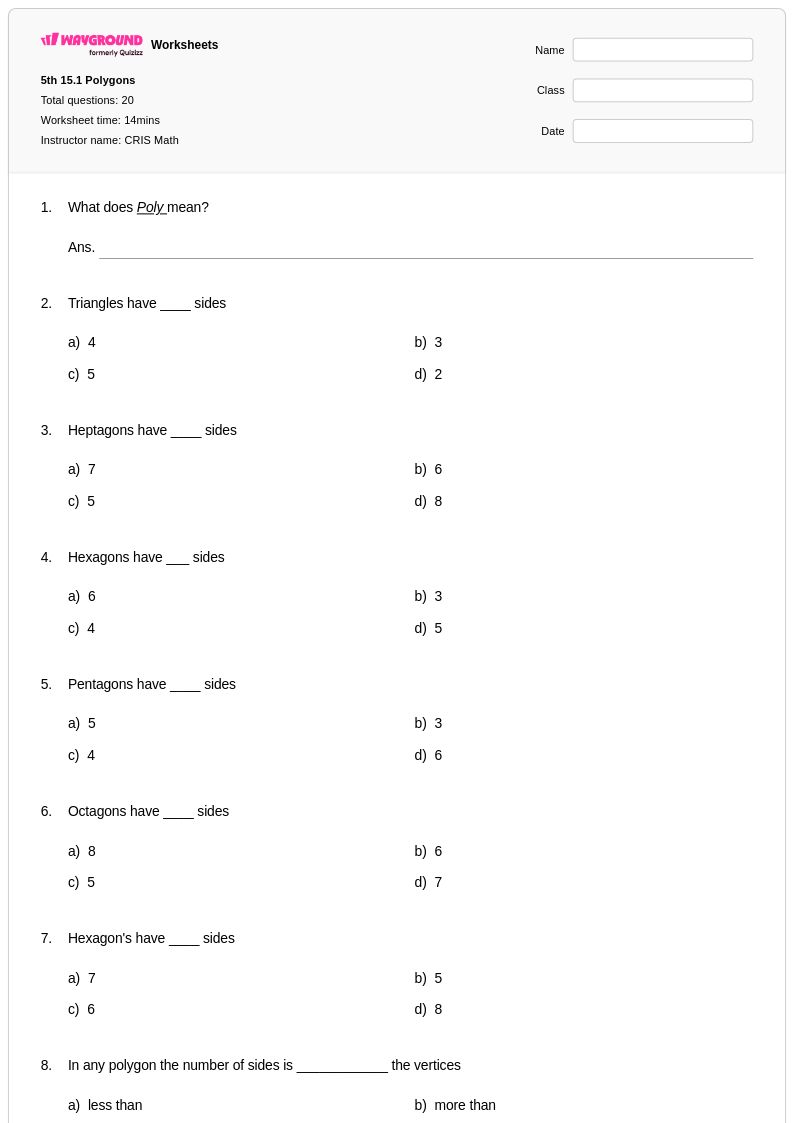
20 Q
5th
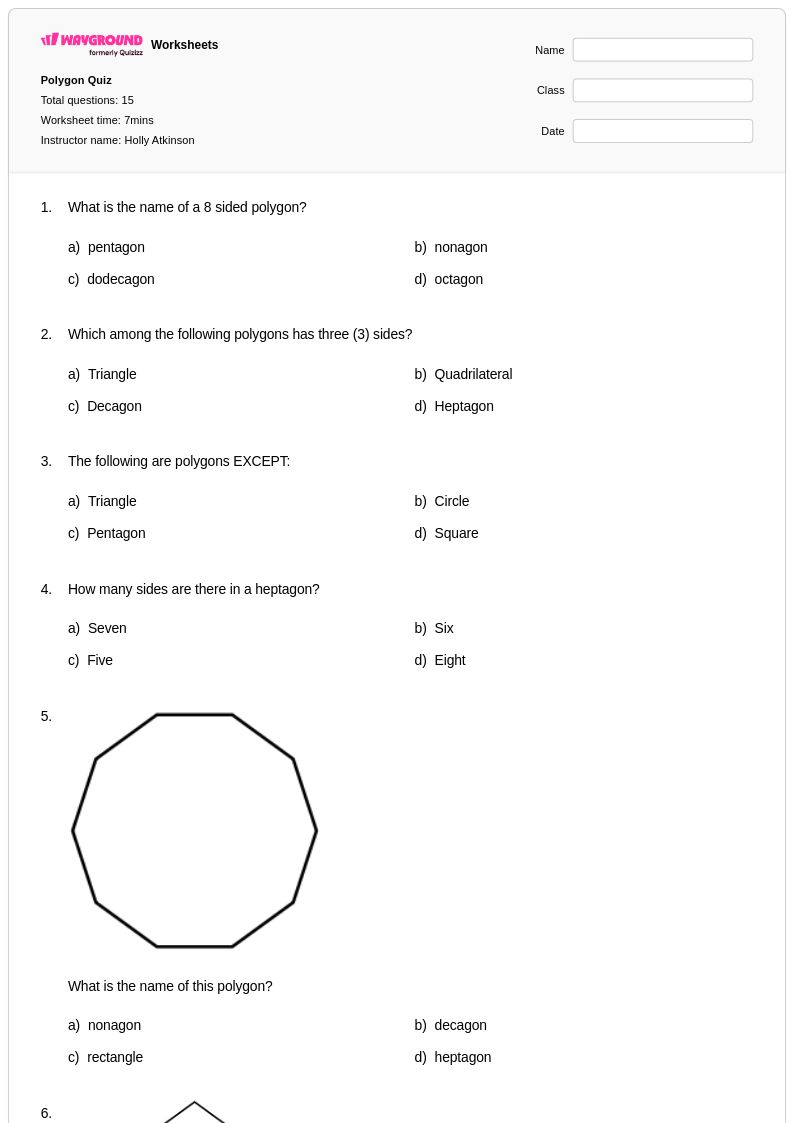
15 Q
5th
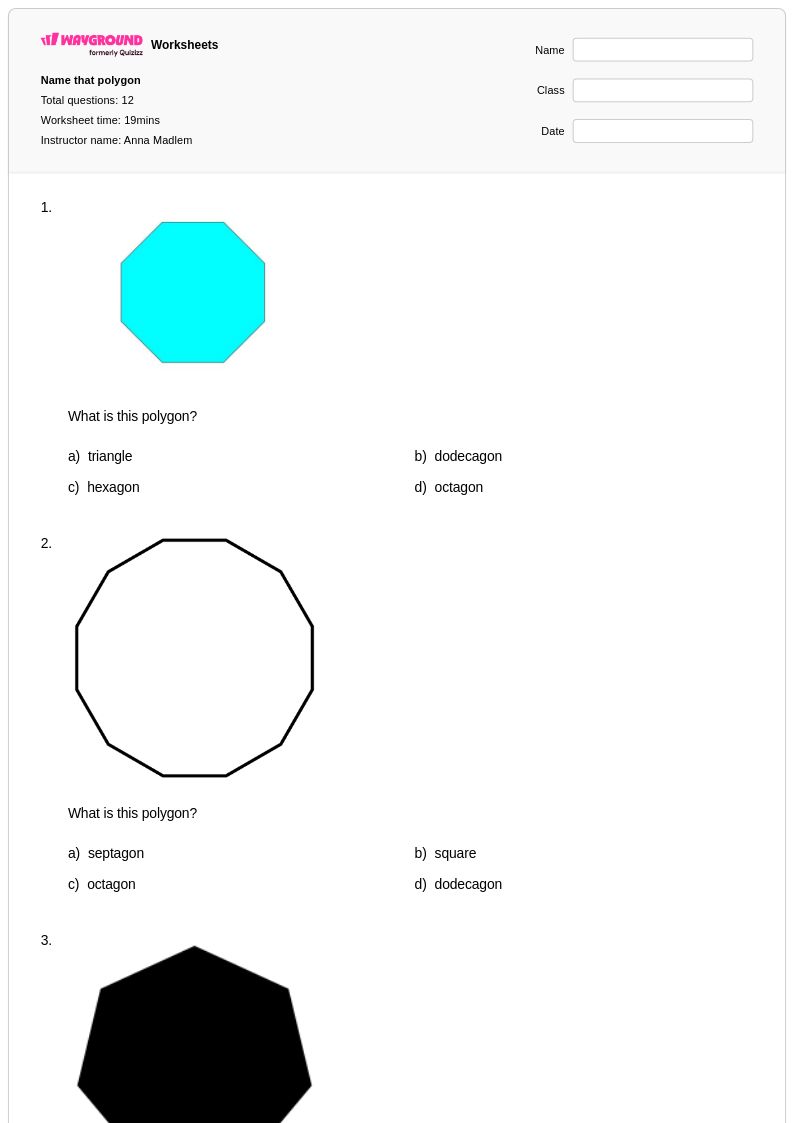
12 Q
5th
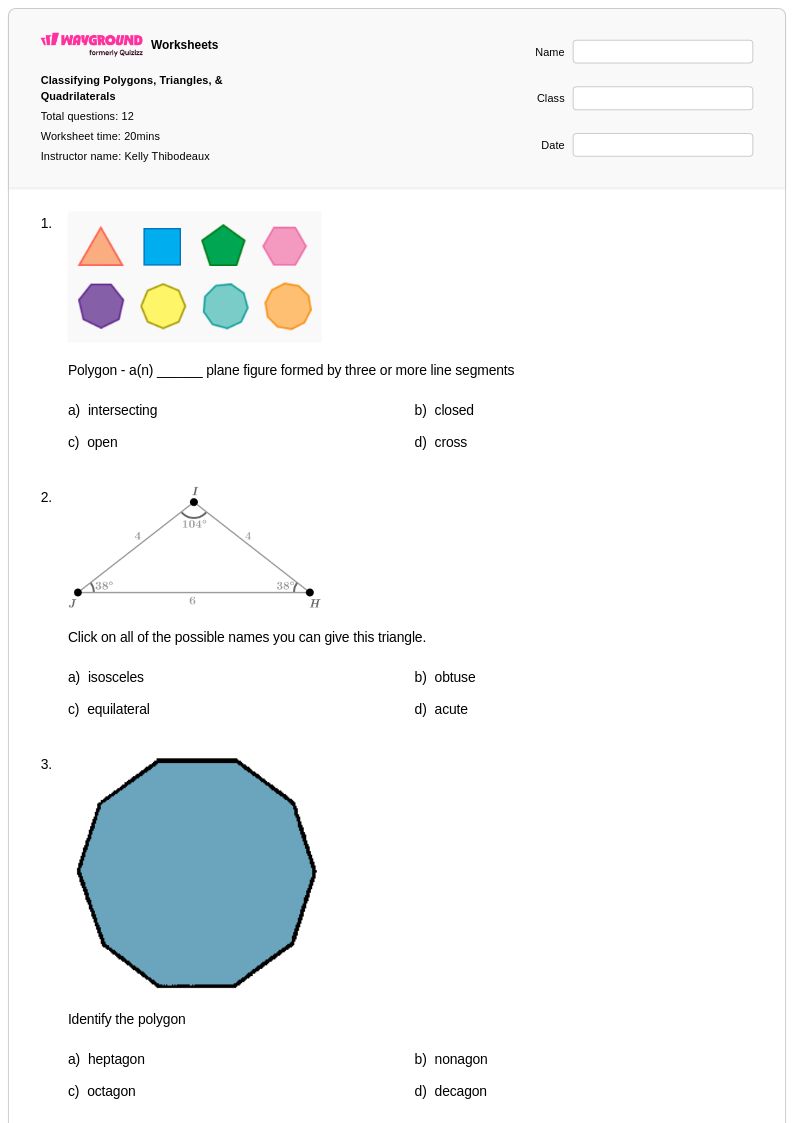
12 Q
5th
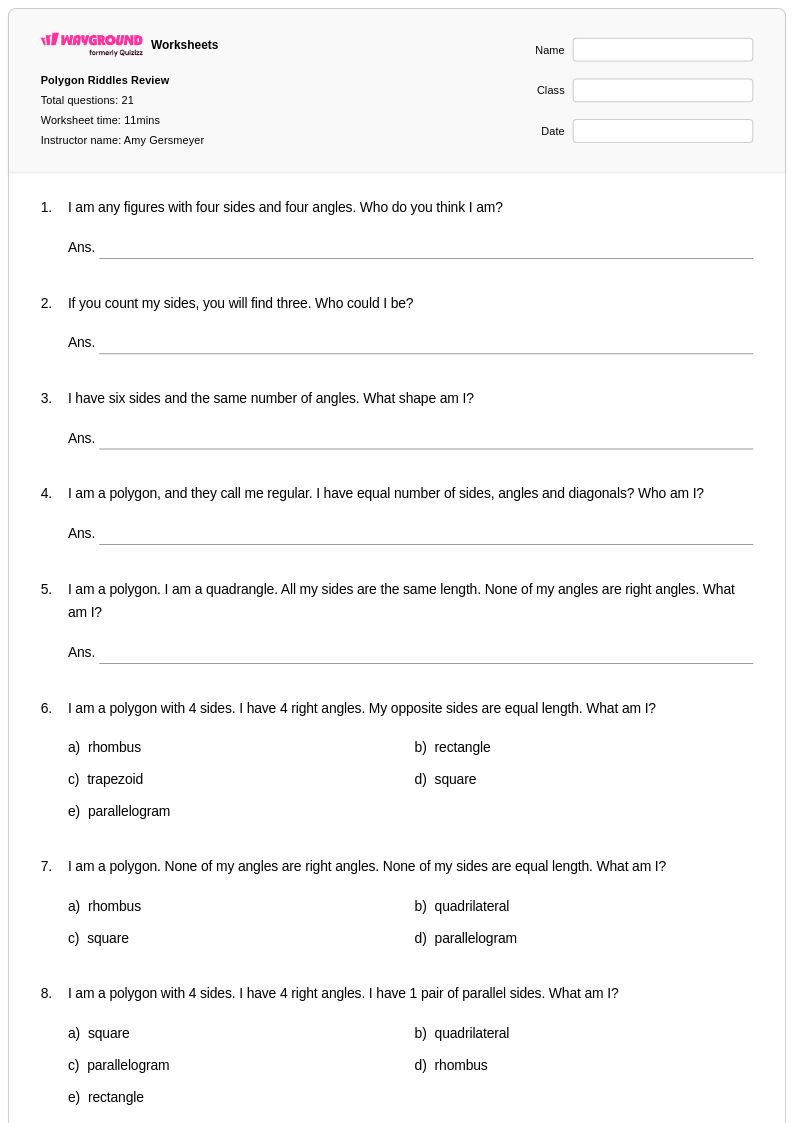
21 Q
5th
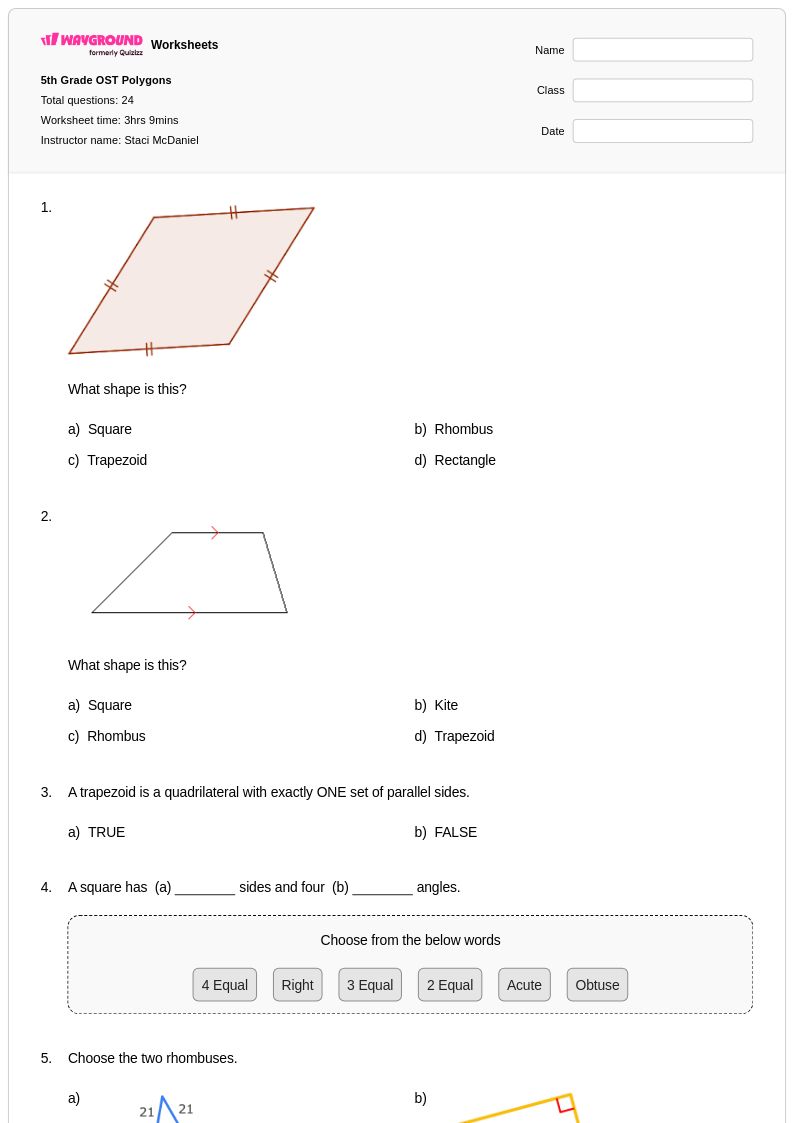
24 Q
5th
Explore Other Subject Worksheets for year 5
Explore printable Polygon Identification worksheets for Year 5
Polygon identification worksheets for Year 5 students available through Wayground (formerly Quizizz) provide comprehensive practice in recognizing and classifying fundamental geometric shapes. These expertly crafted materials strengthen students' ability to distinguish between triangles, quadrilaterals, pentagons, hexagons, and other polygons based on their defining characteristics such as number of sides, angles, and vertices. The practice problems progressively build complexity, beginning with simple shape recognition and advancing to more nuanced classification tasks that require students to analyze properties like parallel sides, equal angles, and symmetry. Each worksheet collection includes detailed answer keys and is available as free printable PDFs, making them accessible resources for reinforcing essential geometry concepts that form the foundation for more advanced mathematical learning.
Wayground (formerly Quizizz) empowers educators with millions of teacher-created polygon identification resources that seamlessly integrate into Year 5 mathematics instruction. The platform's robust search and filtering capabilities allow teachers to quickly locate materials aligned with specific curriculum standards and learning objectives, while differentiation tools enable customization for diverse student needs and ability levels. These comprehensive worksheet collections are available in both printable and digital formats, including downloadable PDFs, providing flexibility for classroom instruction, homework assignments, and independent practice. Teachers can efficiently plan targeted geometry lessons, implement remediation strategies for struggling learners, offer enrichment opportunities for advanced students, and provide consistent skill practice that builds geometric reasoning abilities essential for mathematical success.