Free Printable Predicate Noun Worksheets for Year 9
Year 9 predicate noun worksheets from Wayground help students master identifying and using predicate nouns through engaging printables, practice problems, and comprehensive answer keys in convenient PDF format.
Explore printable Predicate Noun worksheets for Year 9
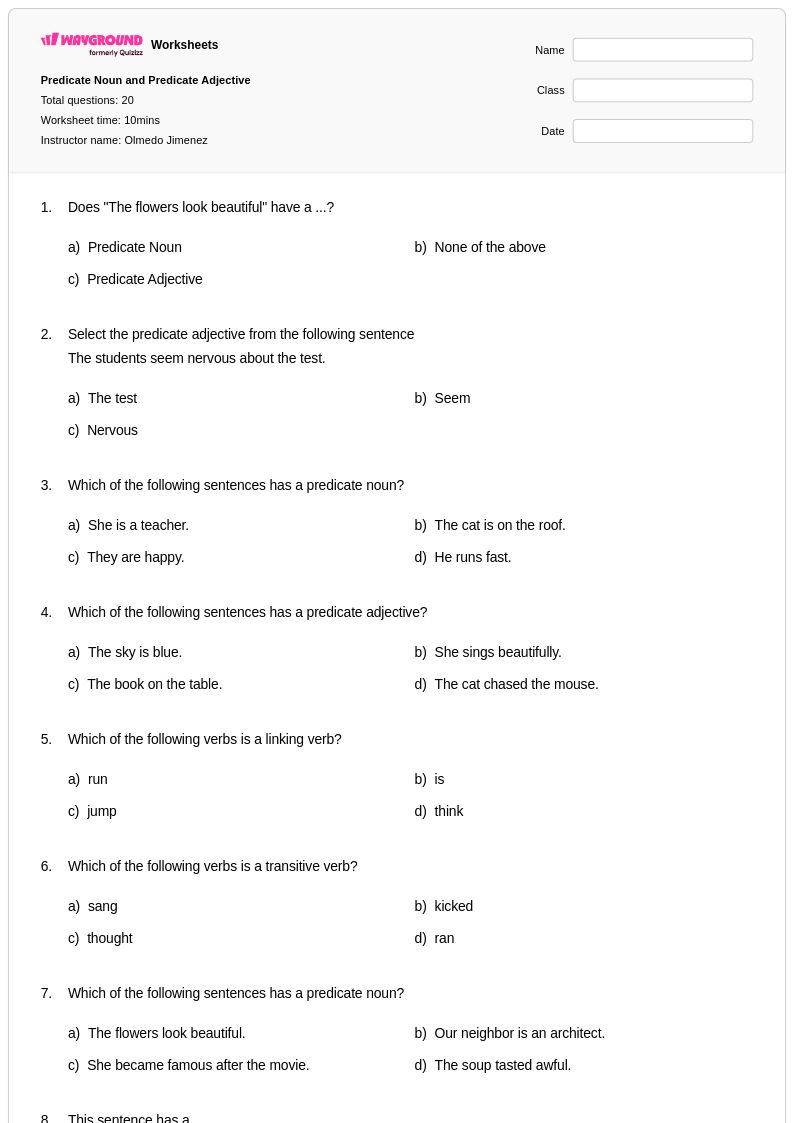
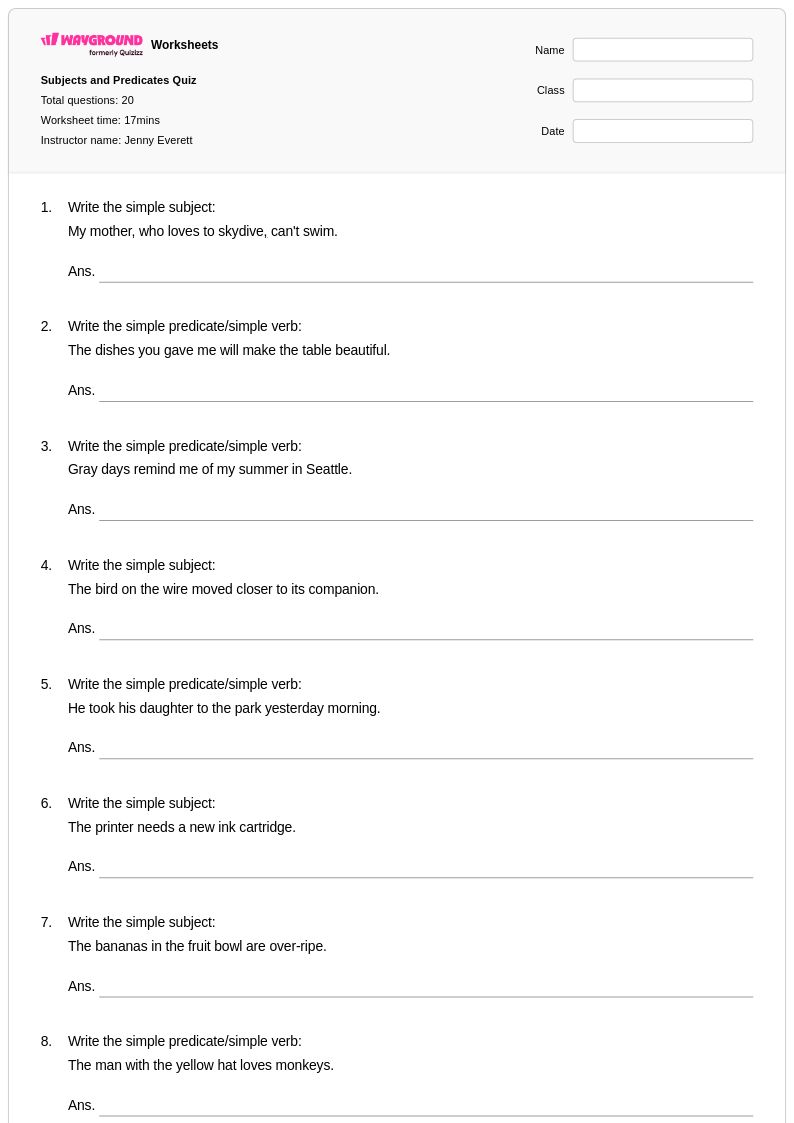
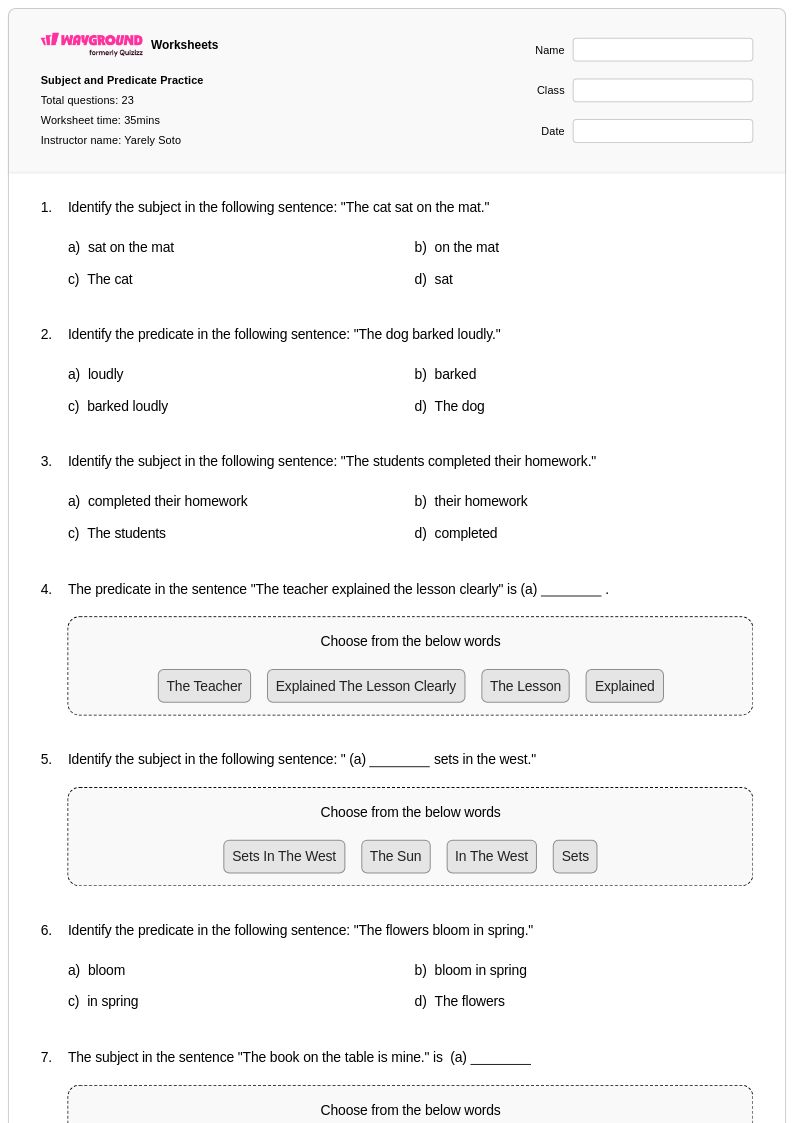
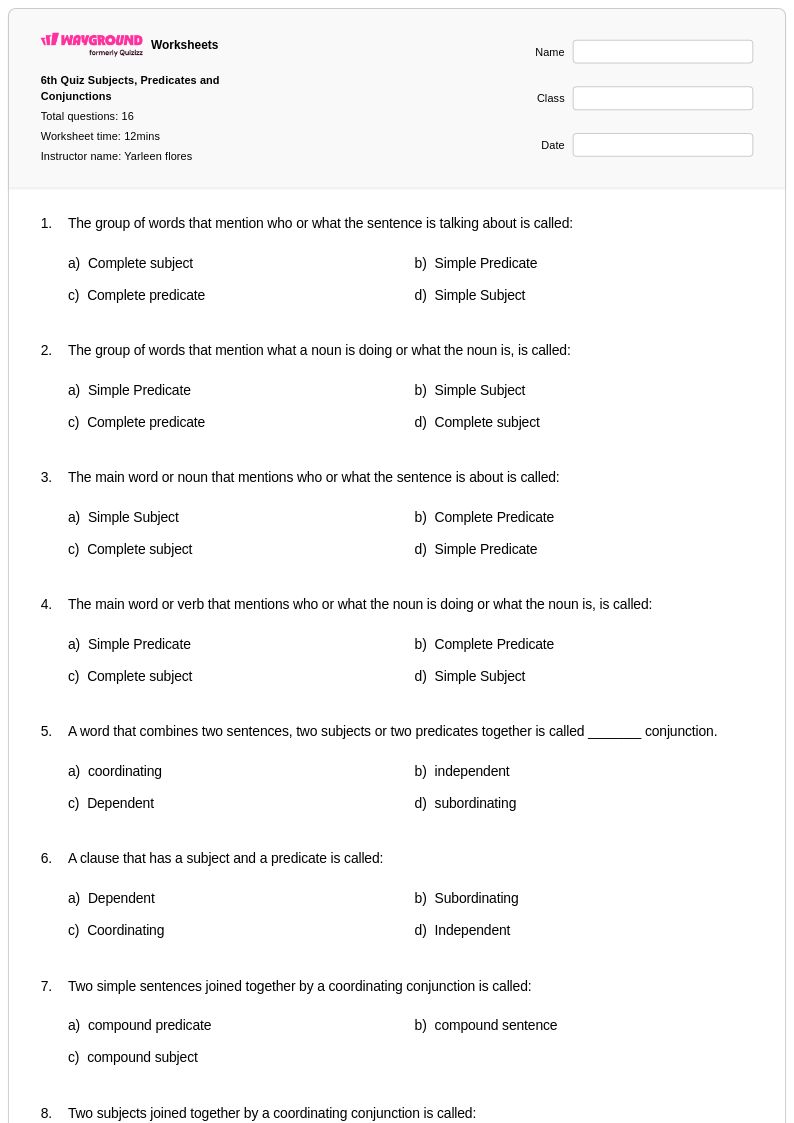
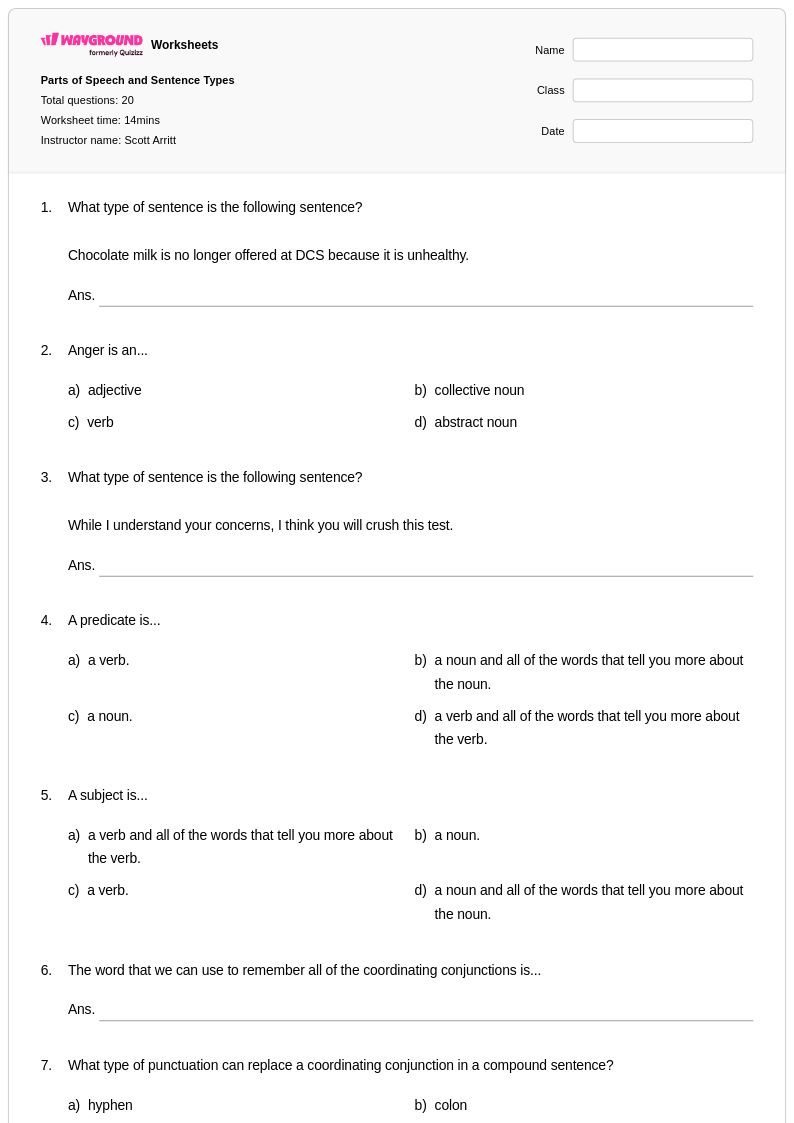
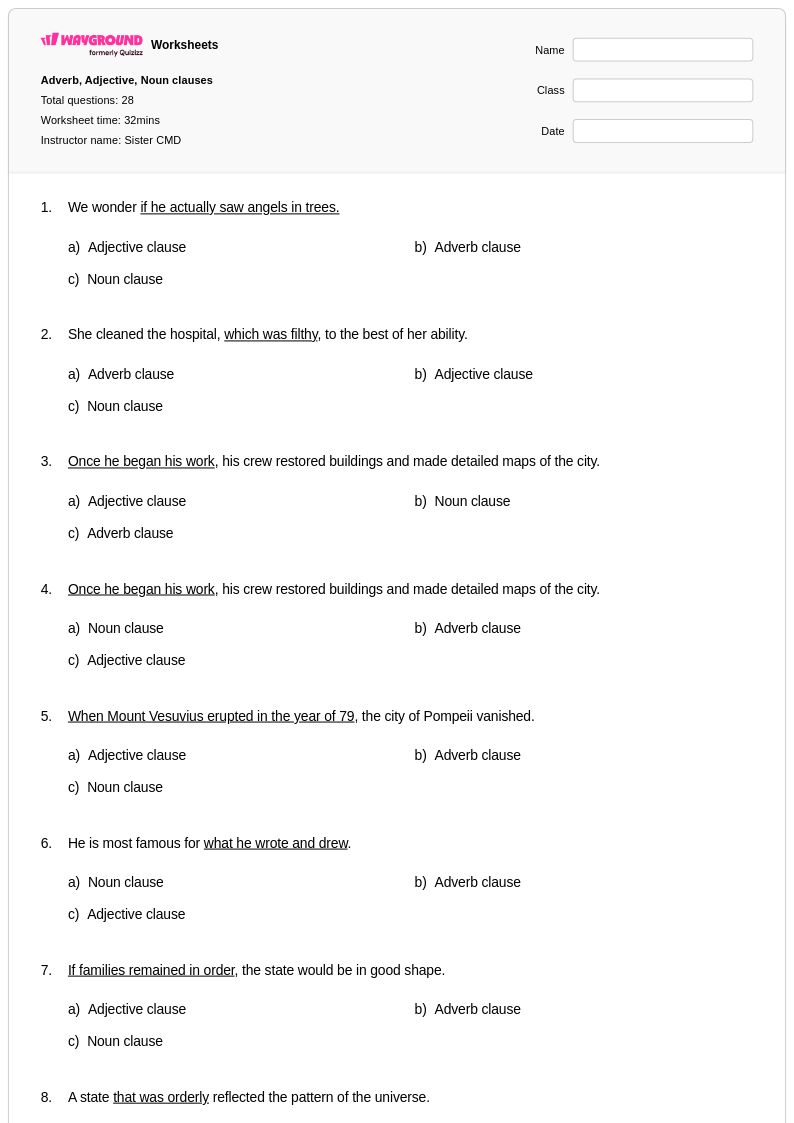
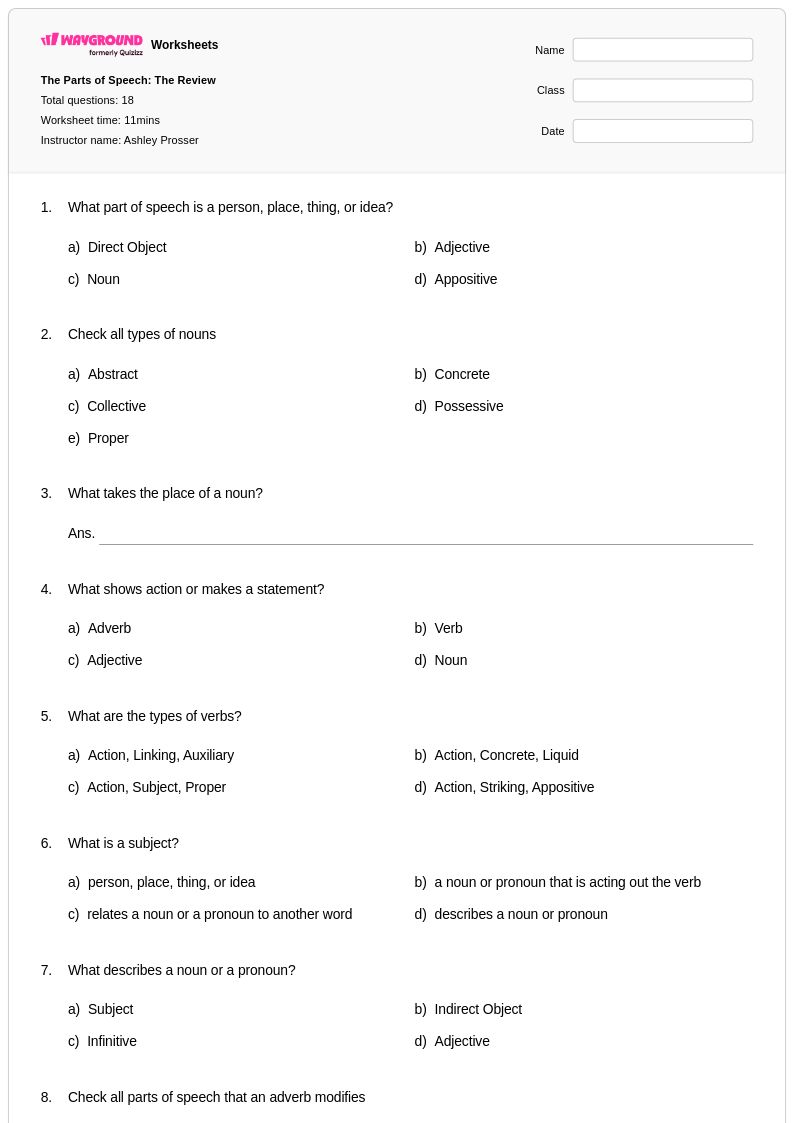
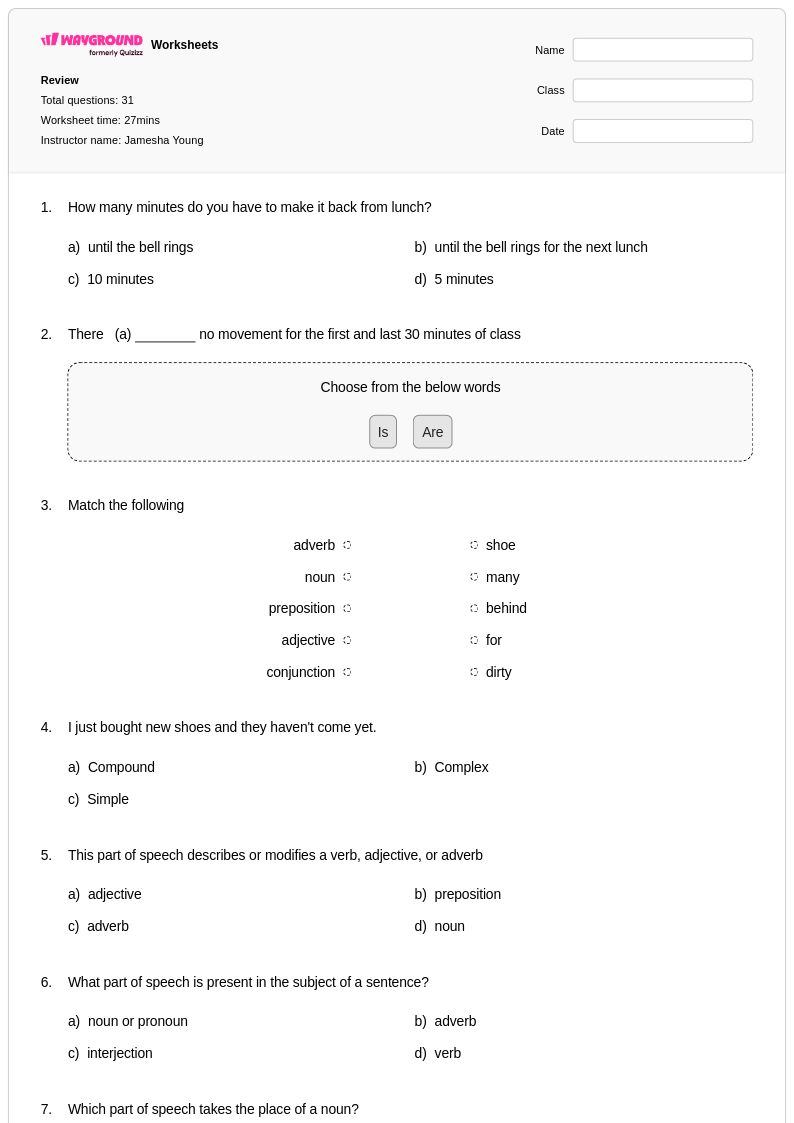
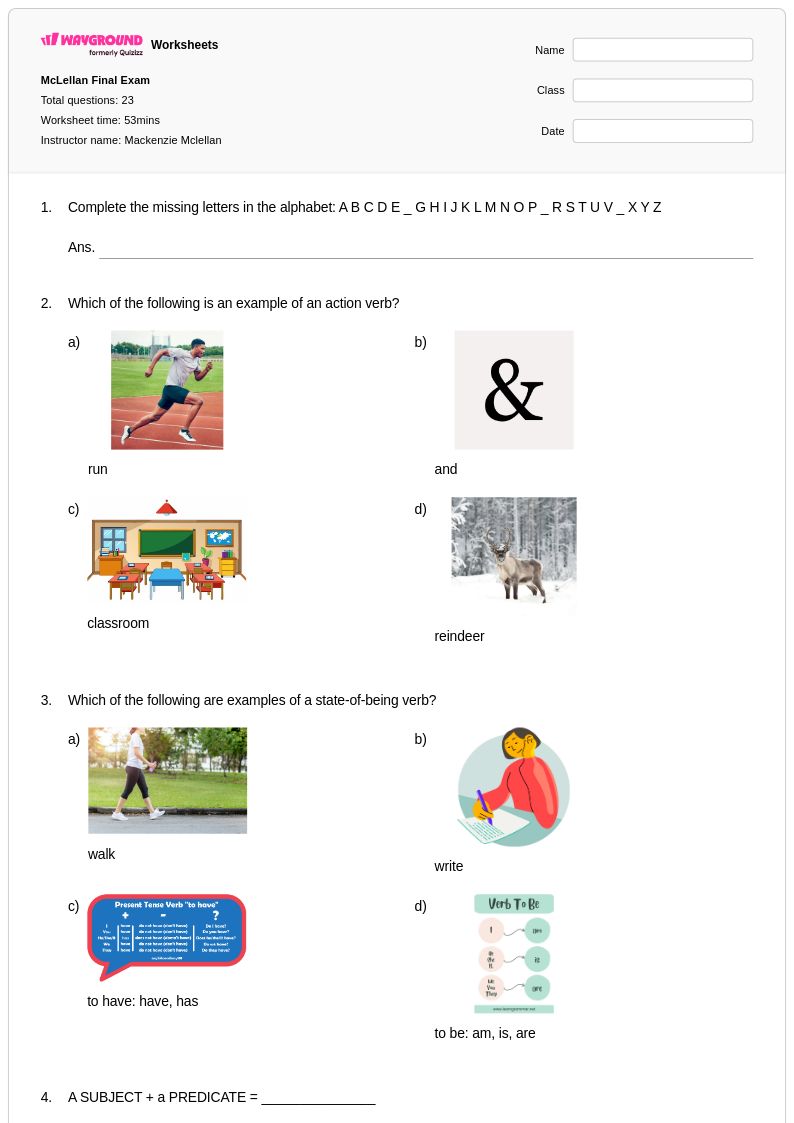
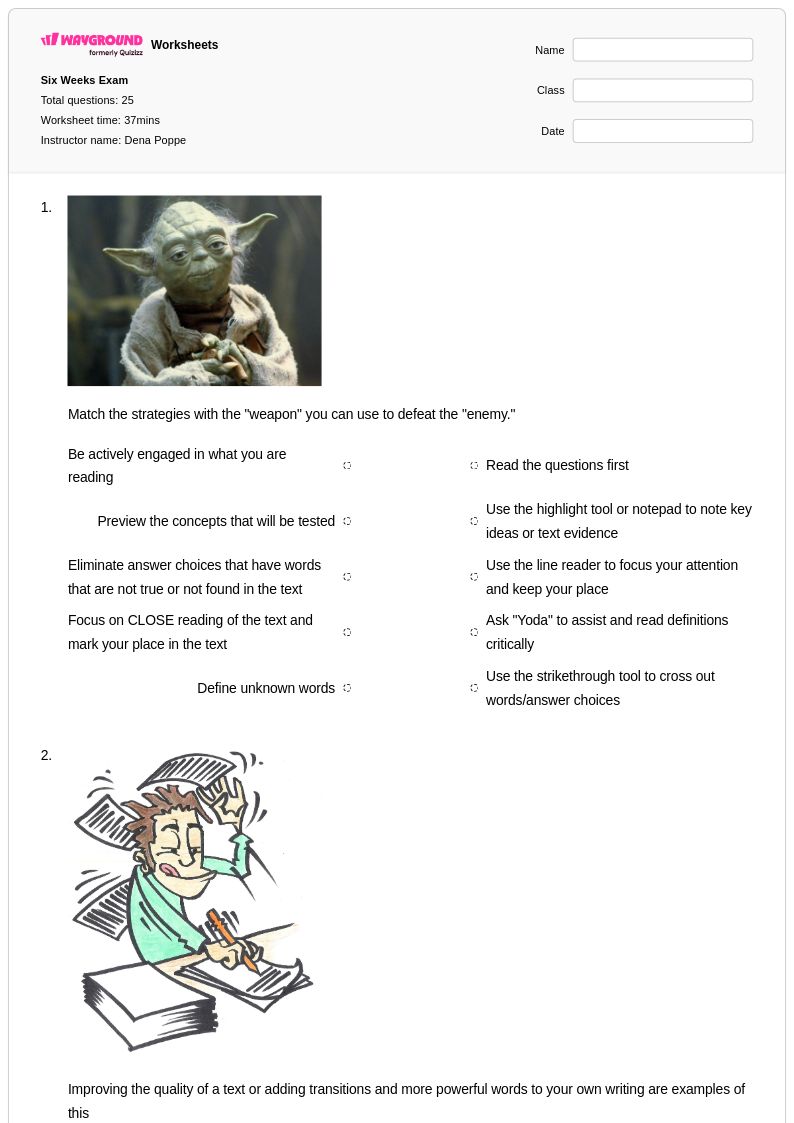
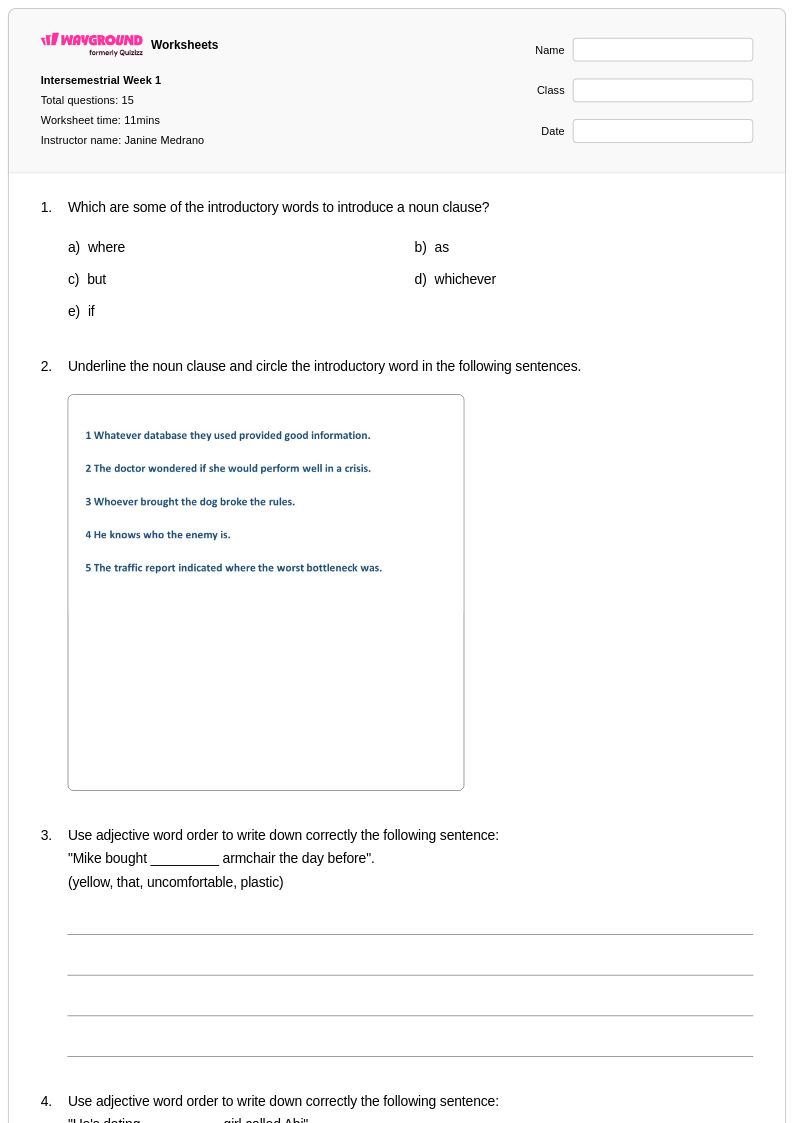
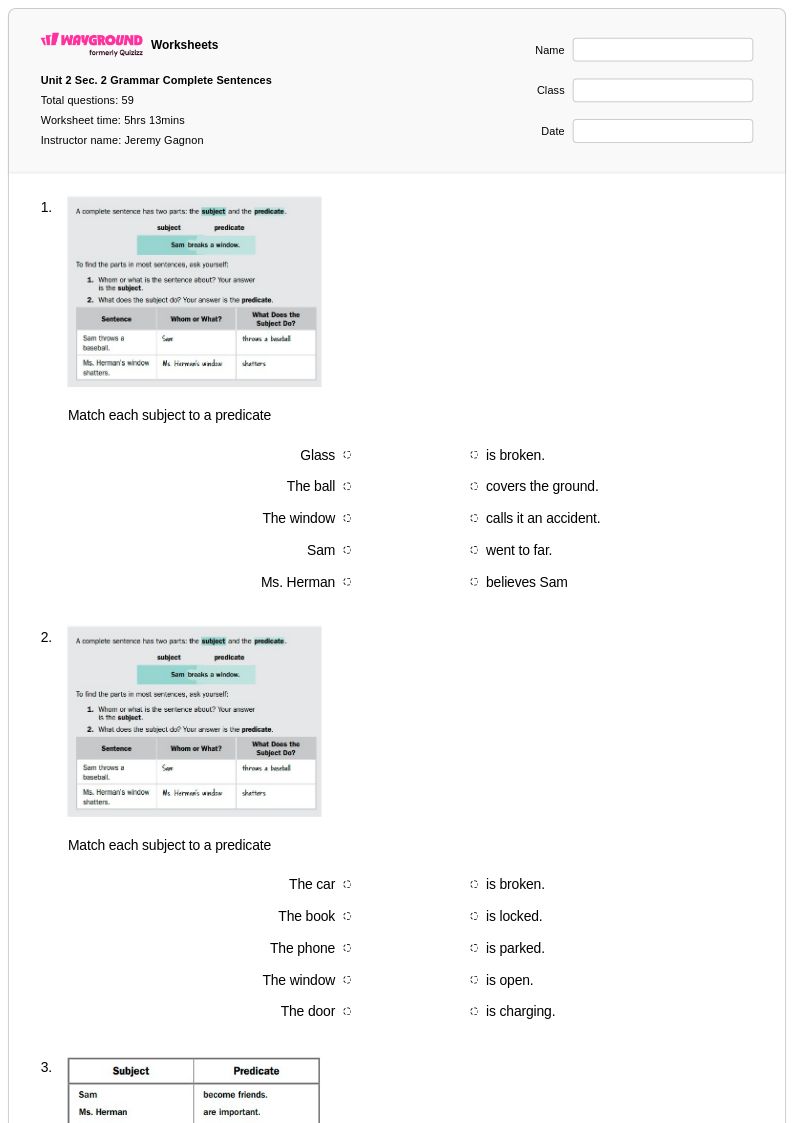
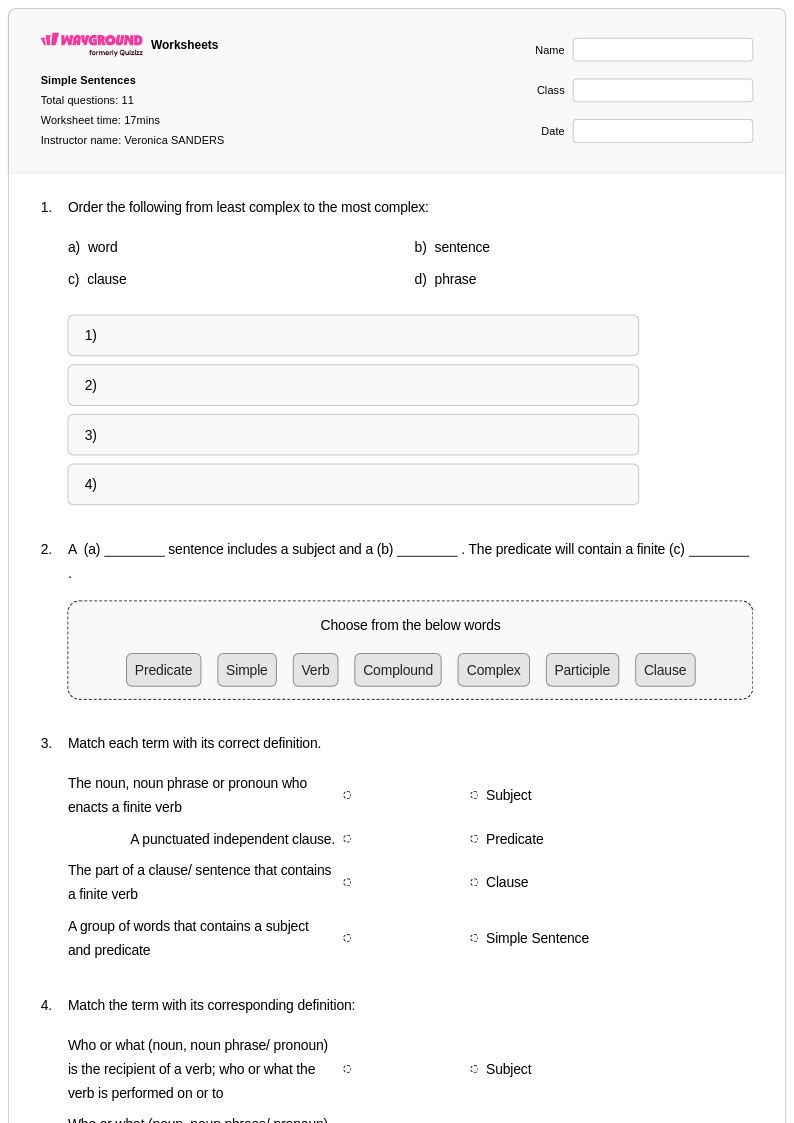
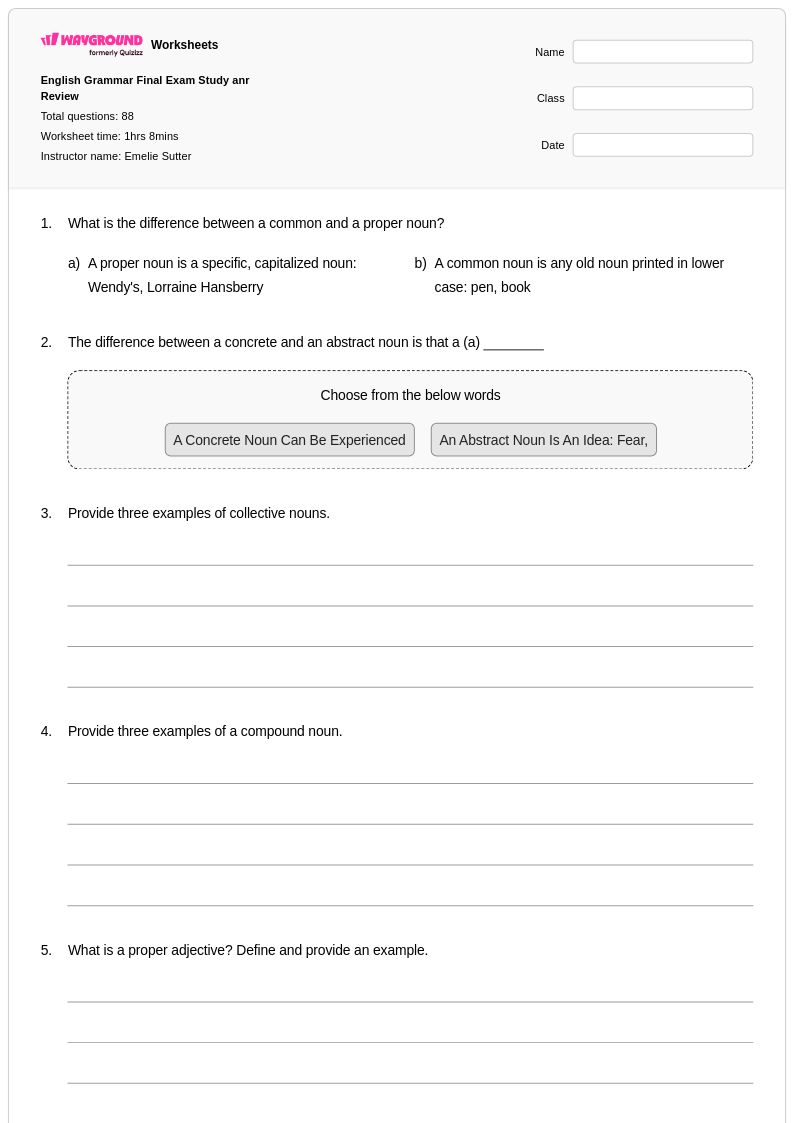
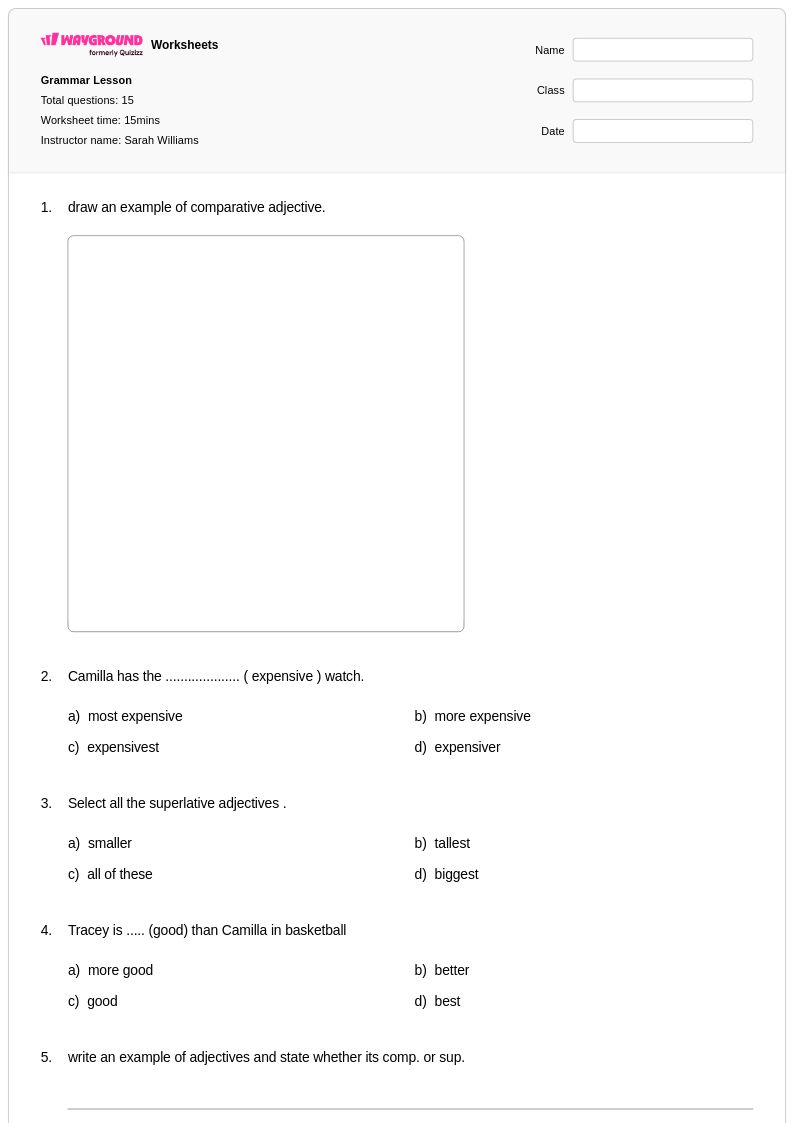
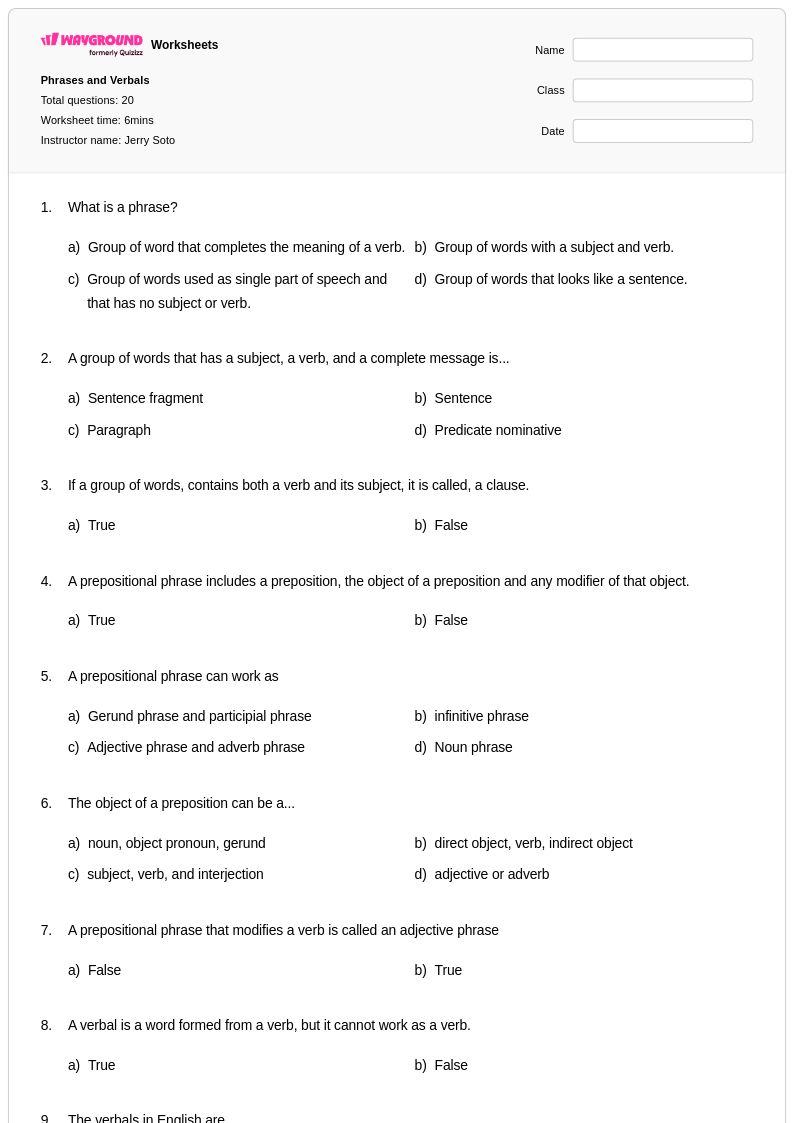
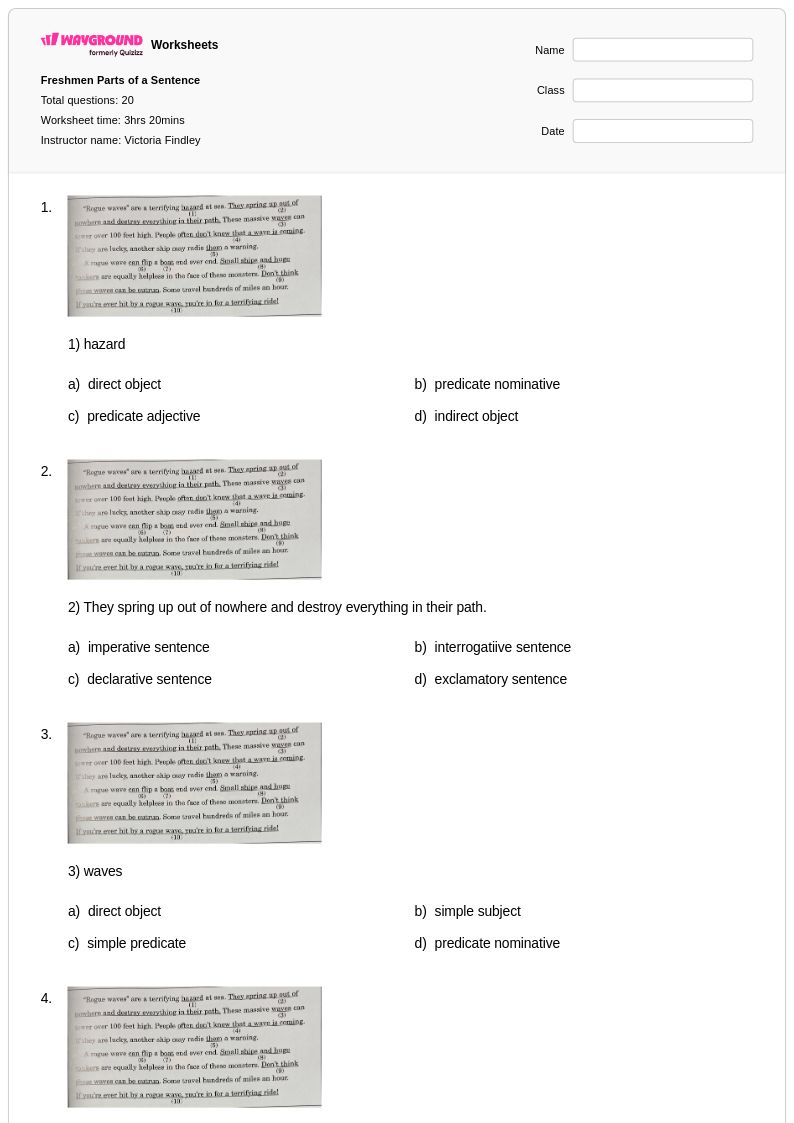
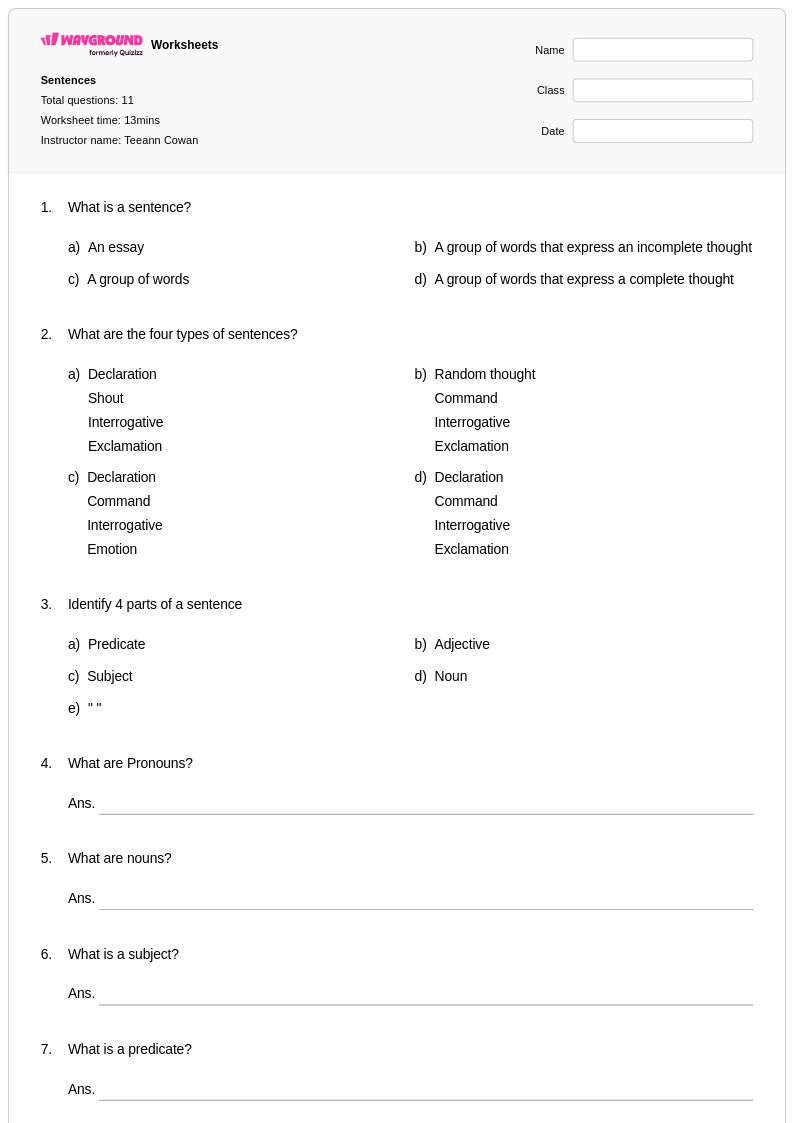
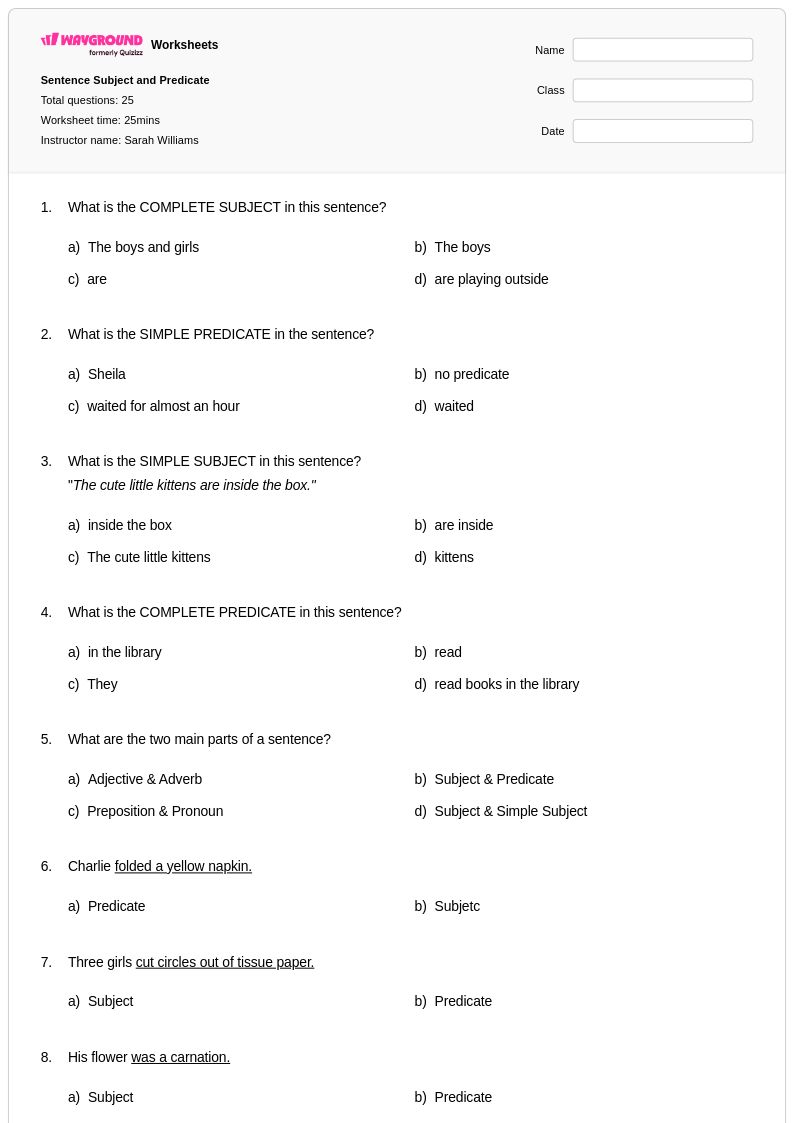
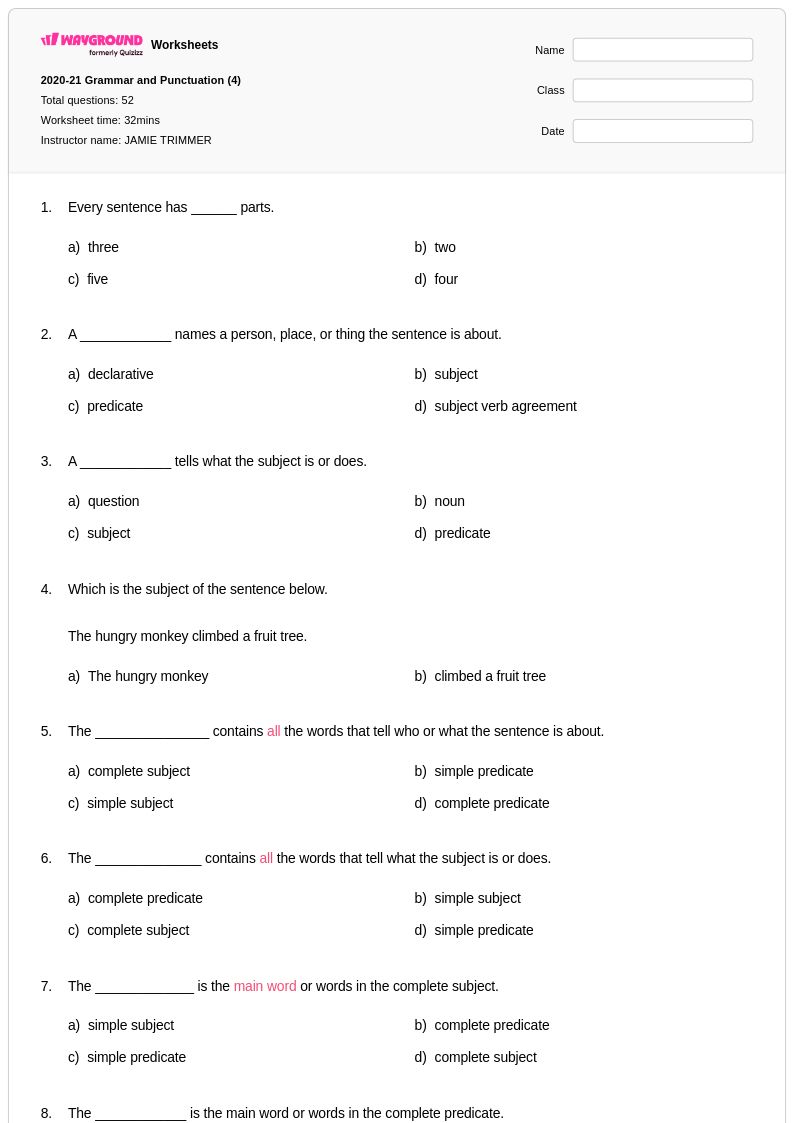
Predicate noun worksheets for Year 9 students available through Wayground (formerly Quizizz) provide comprehensive practice in identifying and understanding this essential grammatical concept. These educational resources help students master the ability to recognize predicate nouns—nouns that follow linking verbs and rename or identify the subject of a sentence. The worksheets strengthen critical grammar skills by offering varied practice problems that challenge students to distinguish between predicate nouns and other sentence elements, analyze sentence structure, and apply their understanding in both recognition and construction exercises. Teachers can access these free printables complete with answer keys, allowing for efficient assessment and immediate feedback to support student learning in this fundamental area of English grammar and mechanics.
Wayground (formerly Quizizz) supports educators with an extensive collection of teacher-created predicate noun resources that streamline lesson planning and differentiated instruction for Year 9 English classes. The platform's millions of worksheets include robust search and filtering capabilities that enable teachers to quickly locate materials aligned with specific learning standards and student proficiency levels. These versatile resources are available in both printable pdf format and digital versions, providing flexibility for various classroom environments and learning preferences. Teachers can customize worksheets to meet individual student needs, making them invaluable tools for targeted skill practice, remediation for struggling learners, and enrichment opportunities for advanced students, while the comprehensive answer keys facilitate efficient grading and enable students to engage in self-directed learning and review.
FAQs
How do I teach predicate nouns to students?
Start by establishing a solid understanding of linking verbs, since predicate nouns only appear in sentences that use them. Teach students to locate the linking verb first, then identify the noun that follows it and renames or re-identifies the subject. Using clear sentence pairs — such as 'She is a doctor' versus 'She became tired' — helps students see the difference between predicate nouns and predicate adjectives, which is one of the most common points of confusion at this stage.
What exercises help students practice identifying predicate nouns?
Effective practice exercises include underlining the predicate noun in a given sentence, distinguishing predicate nouns from predicate adjectives in mixed sets, and completing sentence frames using a provided linking verb. Sentence construction tasks — where students write original sentences using specific linking verbs like 'is', 'became', or 'remained' — deepen understanding by requiring active application rather than passive recognition. Progressing from identification to construction builds both accuracy and confidence.
What mistakes do students commonly make with predicate nouns?
The most frequent error is confusing predicate nouns with predicate adjectives, since both follow linking verbs. Students often label any word after 'is' or 'was' as a predicate noun without checking whether that word is a noun or an adjective. A second common mistake is misidentifying direct objects as predicate nouns — students need to consistently check whether the verb is an action verb or a linking verb before labeling the complement. Reinforcing the test question 'Does this word rename the subject?' helps students self-correct.
How do I differentiate predicate noun instruction for struggling students?
For students who struggle with predicate nouns, narrow the scope initially by working only with 'is' and 'are' as the linking verb before introducing others like 'became' or 'seemed'. Color-coding sentence parts — subject in one color, linking verb in another, predicate noun in a third — provides a visual scaffold that reduces cognitive load. On Wayground, teachers can enable reduced answer choices for individual students, which limits the number of options displayed and makes identification tasks more manageable without altering the core content.
How do I use Wayground's predicate noun worksheets in my classroom?
Wayground's predicate noun worksheets are available as printable PDFs for traditional classroom use and in digital formats for technology-integrated lessons, and teachers can also host them as a quiz directly on Wayground. Each worksheet includes a detailed answer key, making them suitable for independent practice, peer review, or guided instruction. The digital format allows teachers to assign worksheets to individual students or the whole class, with the option to apply accommodations such as read aloud or extended time for students who need additional support.
How is a predicate noun different from a direct object?
A predicate noun follows a linking verb and renames or re-identifies the subject, while a direct object follows an action verb and receives the action. For example, in 'Marcus is a musician,' 'musician' is a predicate noun because 'is' is a linking verb and 'musician' refers back to Marcus. In 'Marcus plays guitar,' 'guitar' is a direct object because 'plays' is an action verb. Teaching students to first classify the verb as linking or action is the most reliable way to distinguish between these two sentence components.