
Recommended Topics for you
16 Q
KG - Uni
8 Q
1st - 3rd
18 Q
1st - 2nd
10 Q
1st - 4th
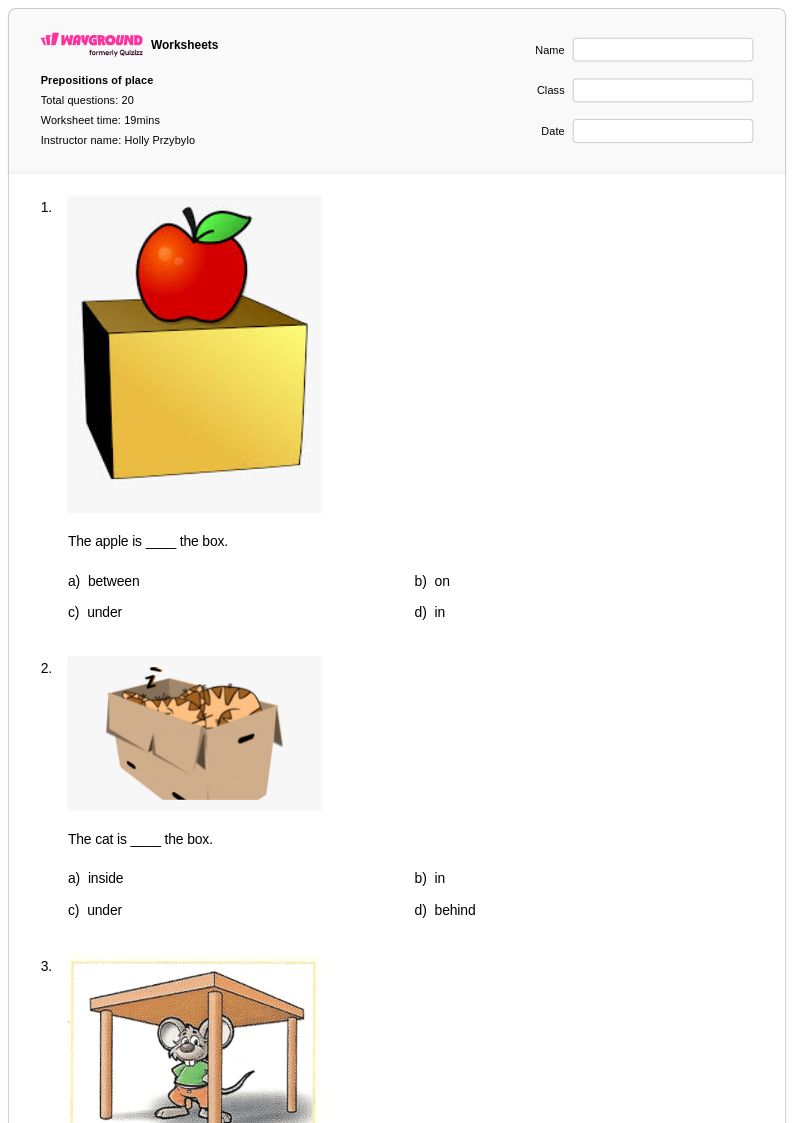
20 Q
KG - 3rd
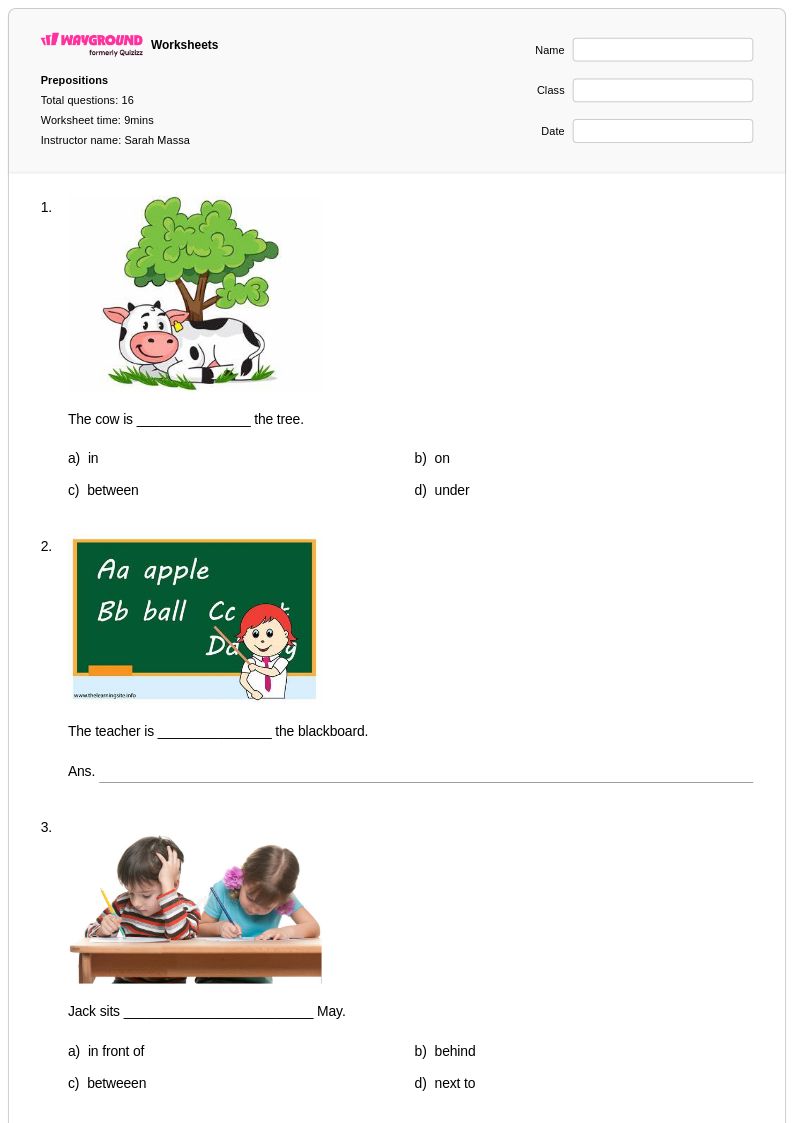
16 Q
1st - 3rd
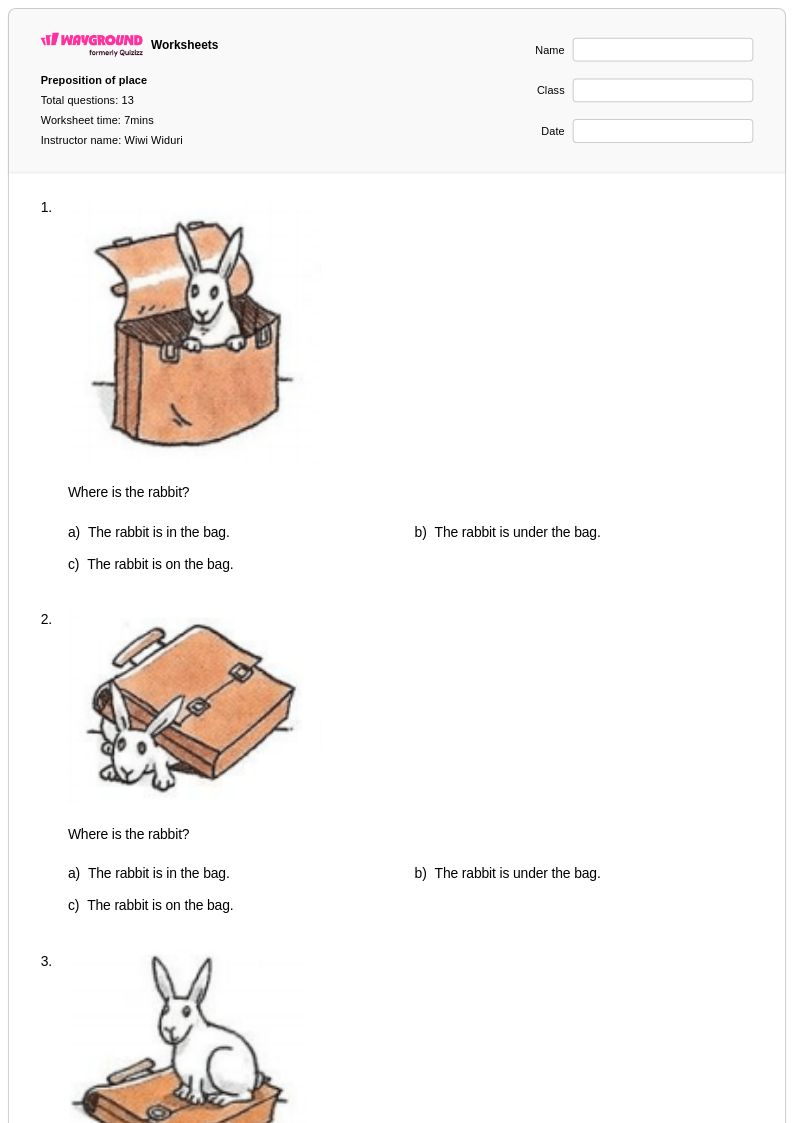
13 Q
2nd
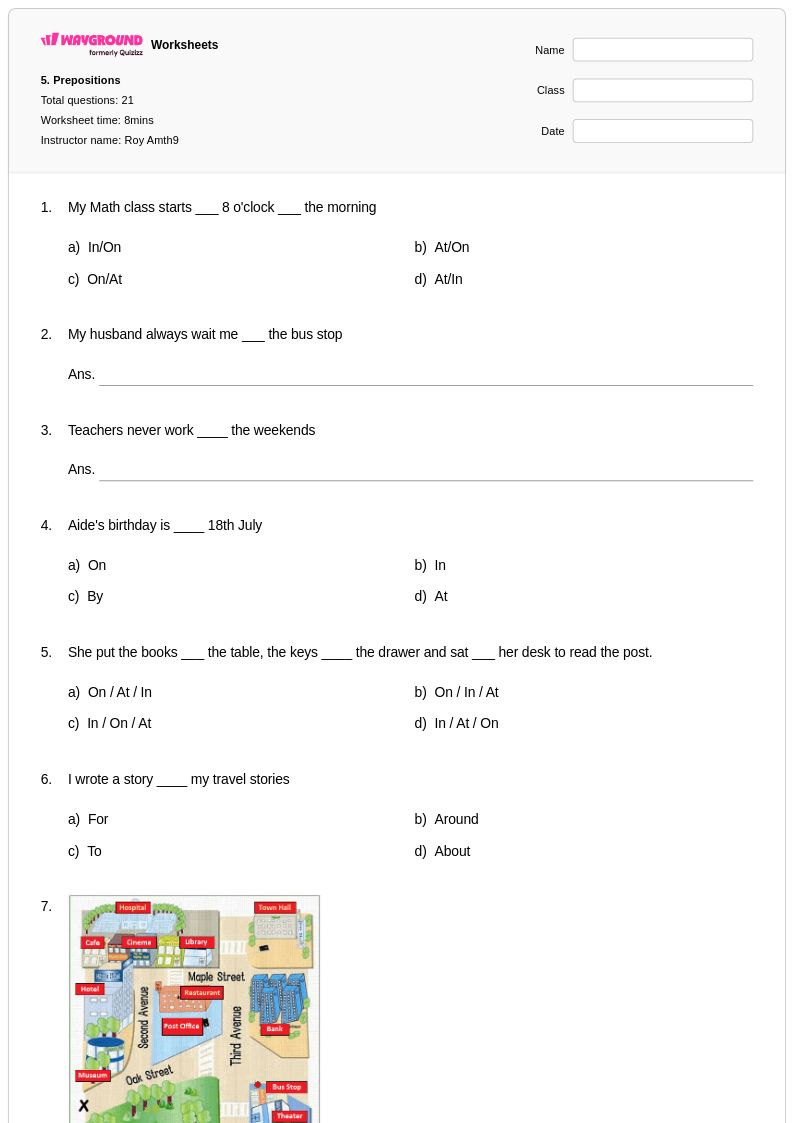
21 Q
1st - 3rd
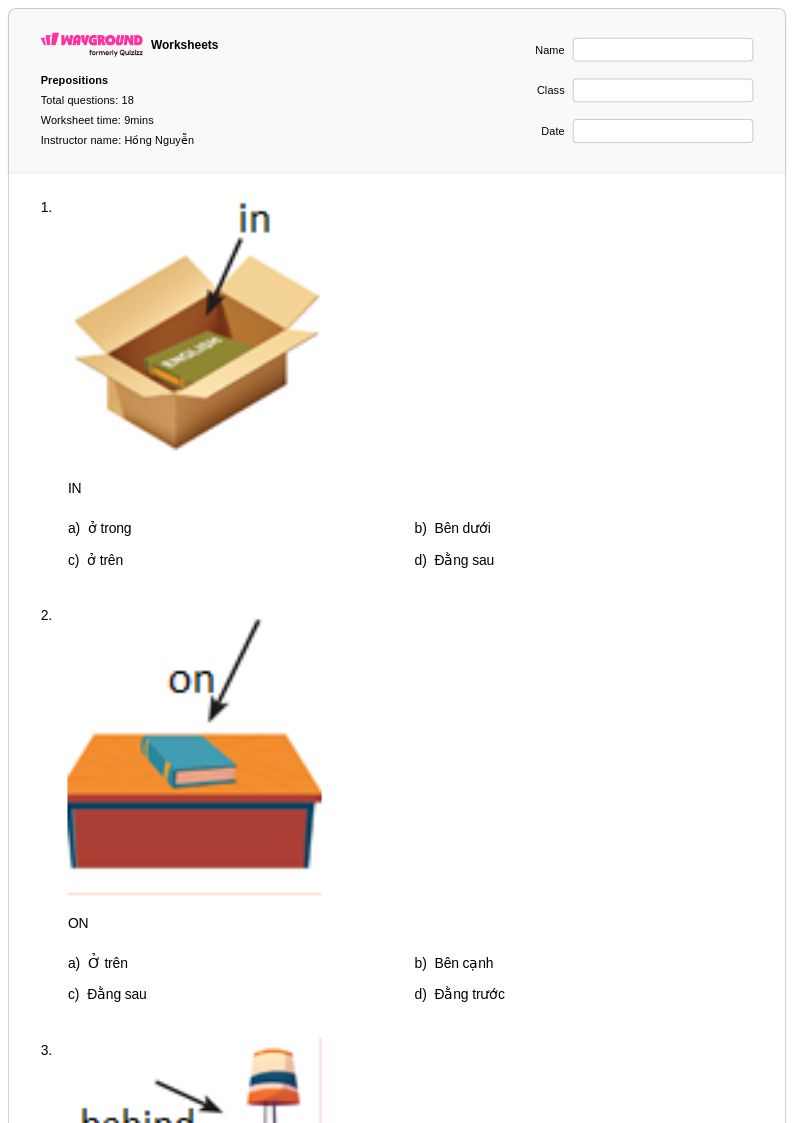
18 Q
1st - 5th
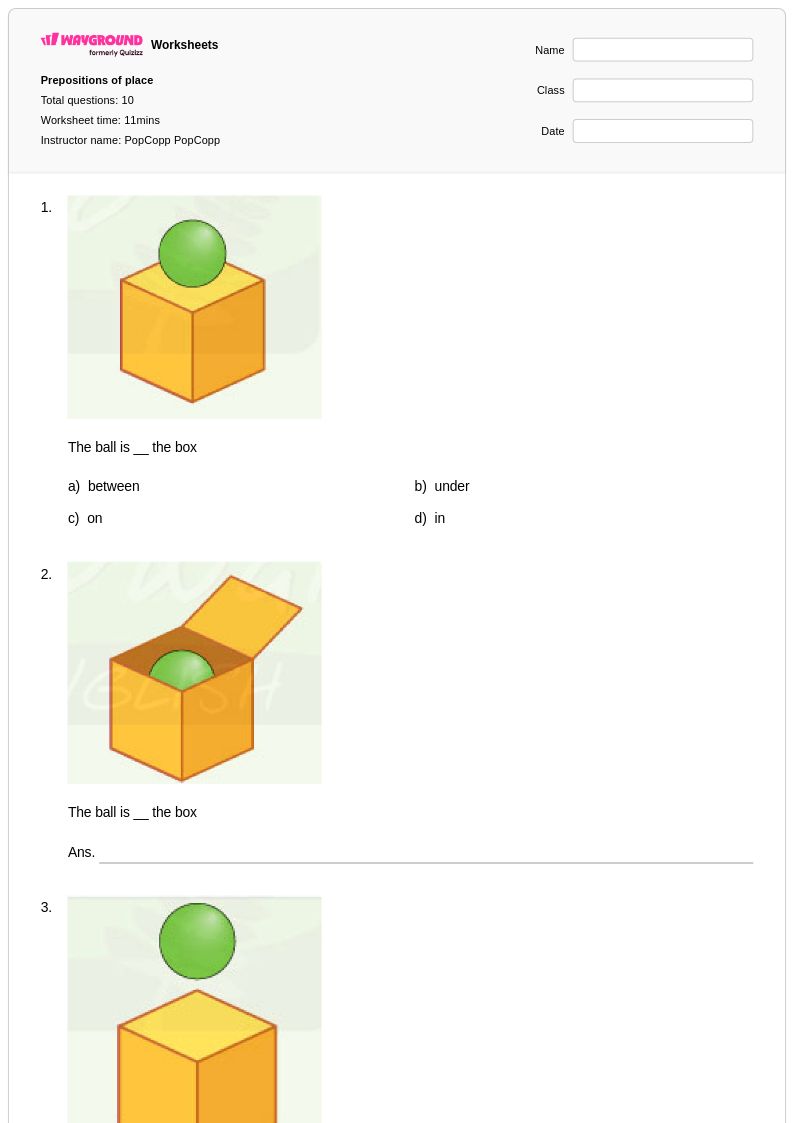
10 Q
1st - 3rd
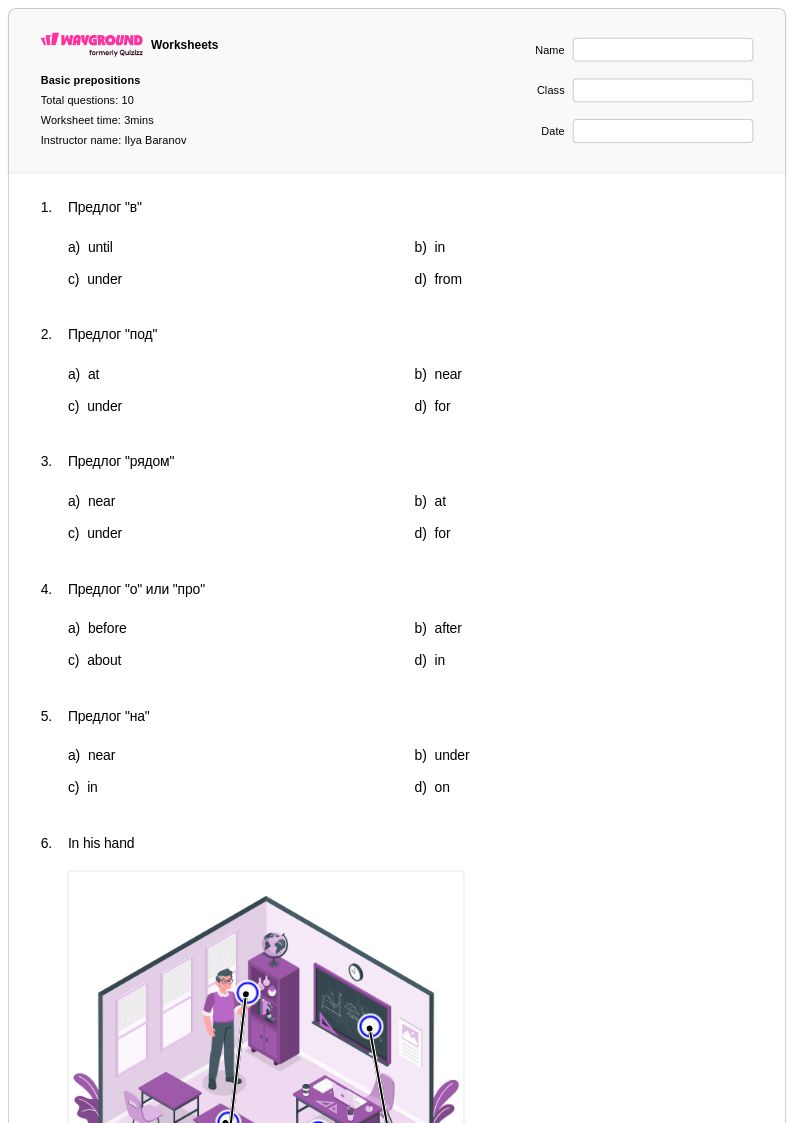
10 Q
1st - 5th
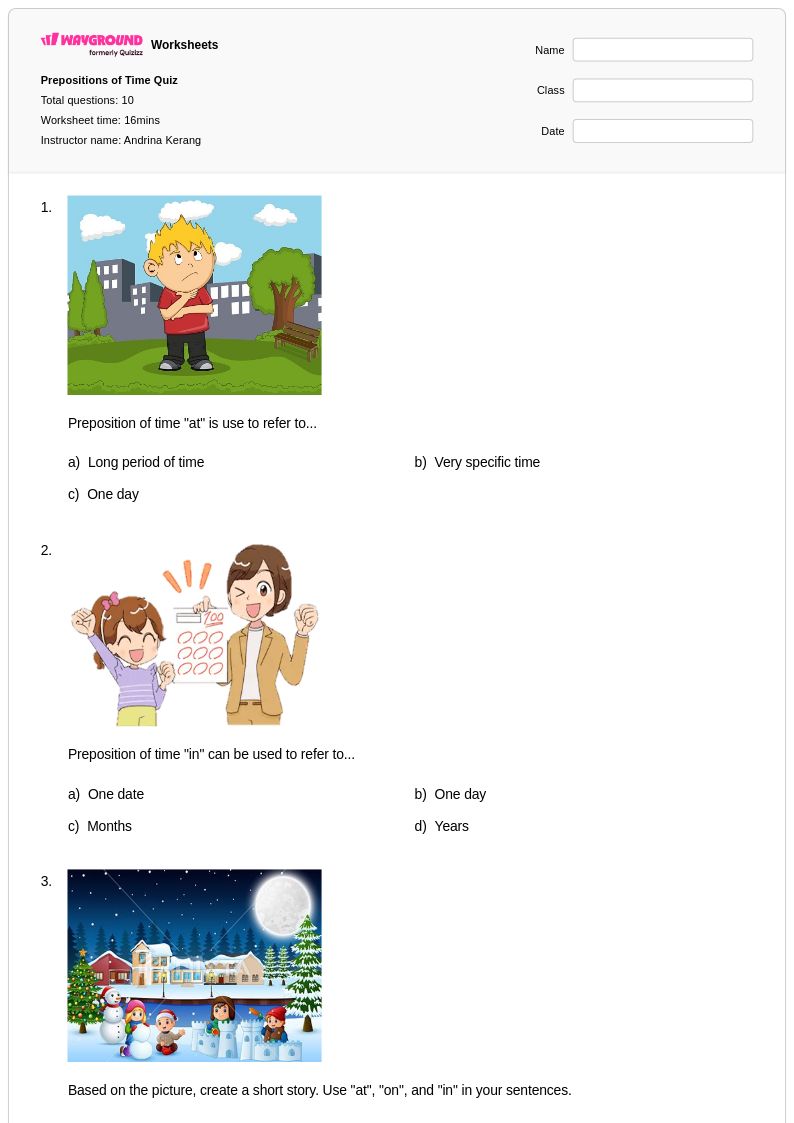
10 Q
2nd
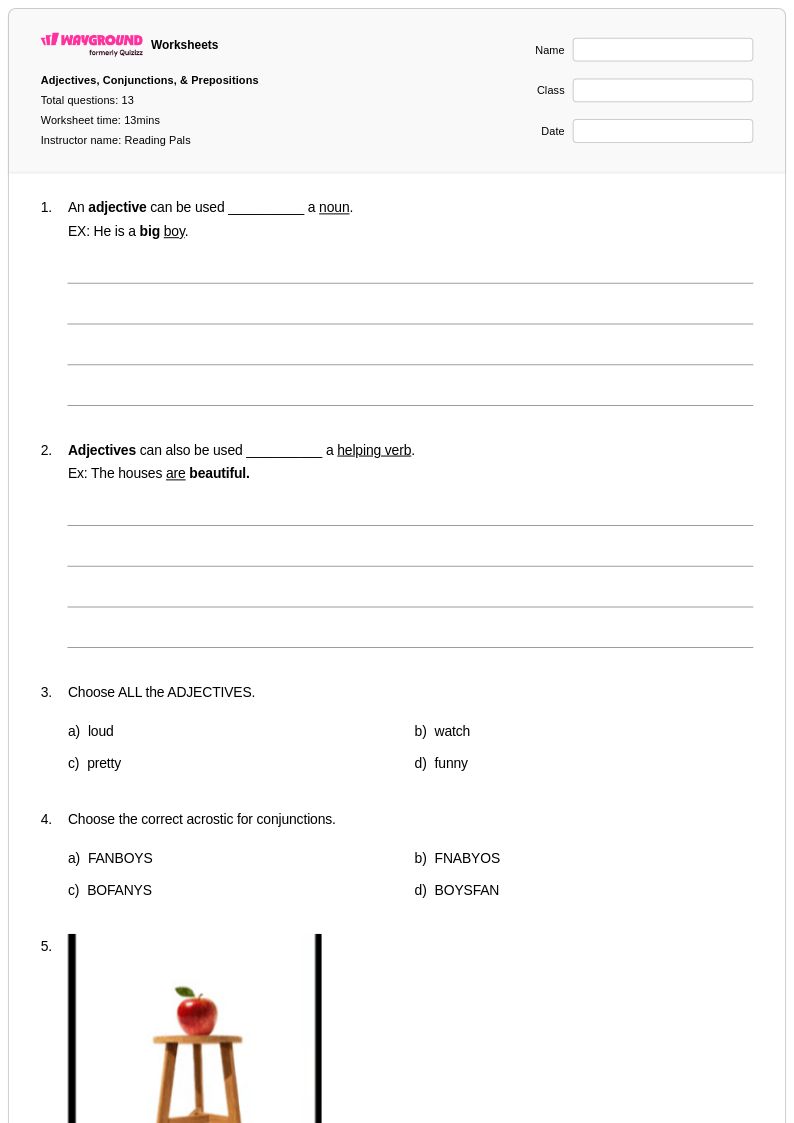
13 Q
1st - 5th
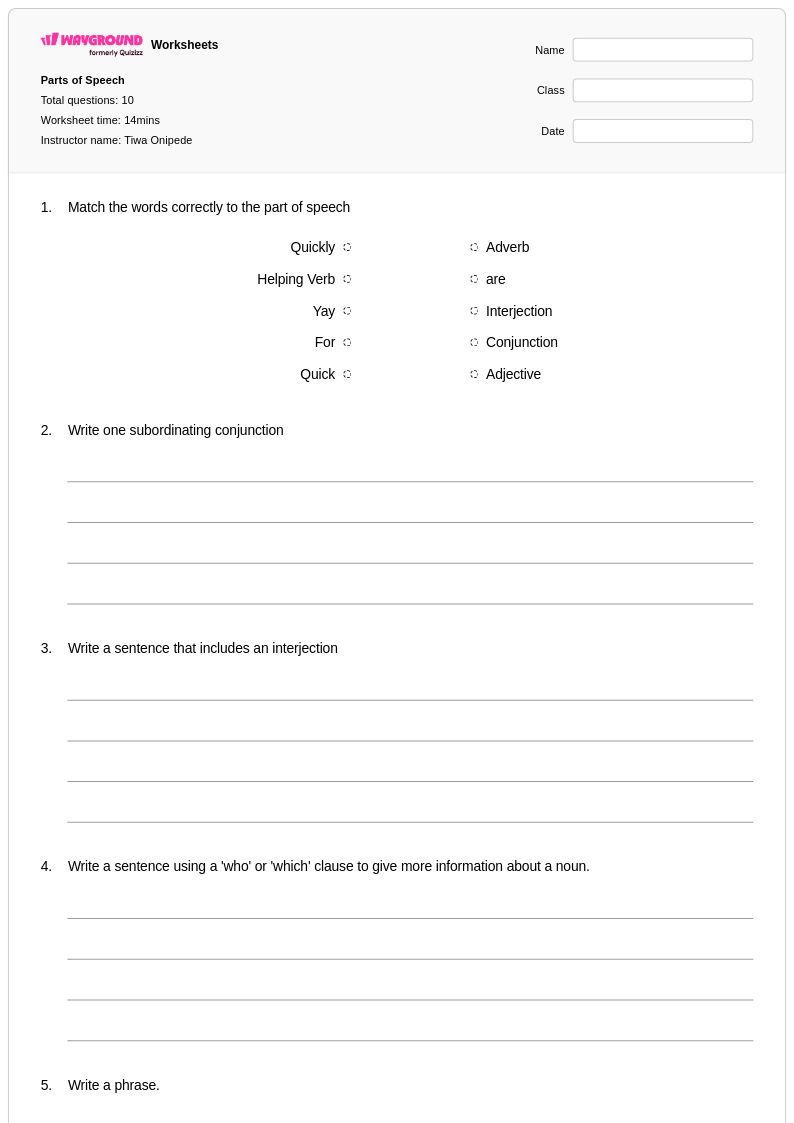
10 Q
1st - 5th
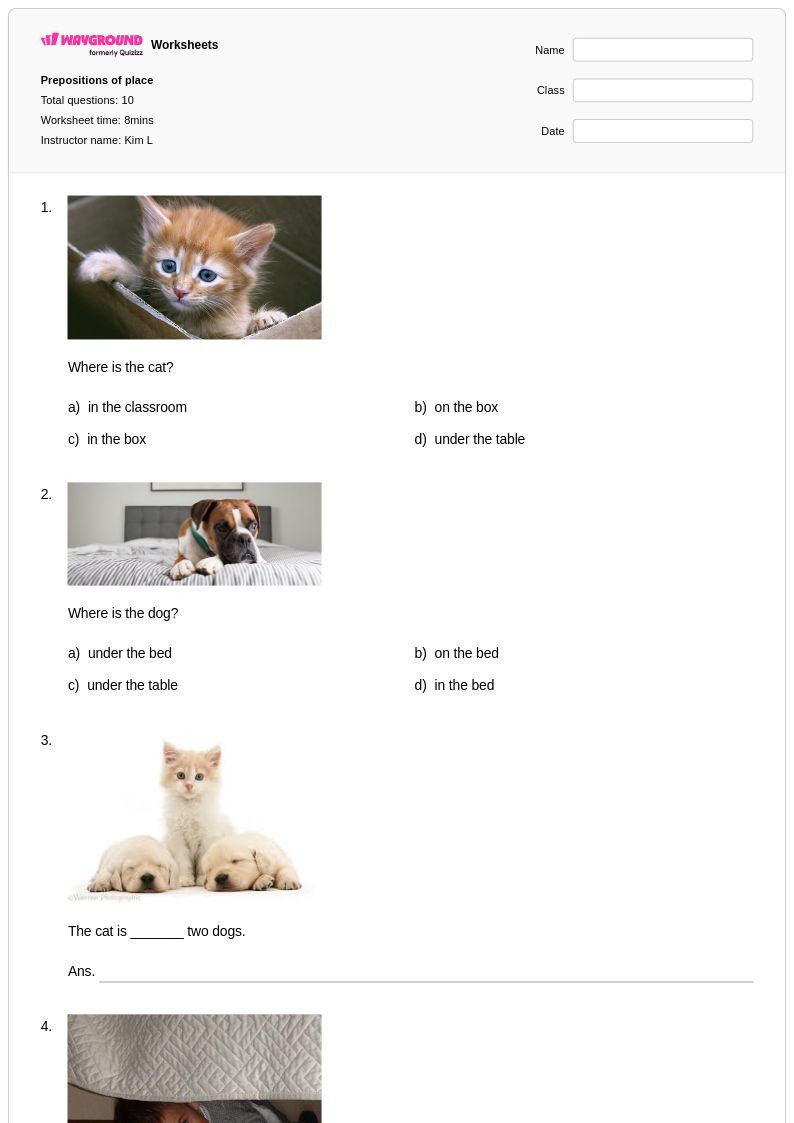
10 Q
2nd
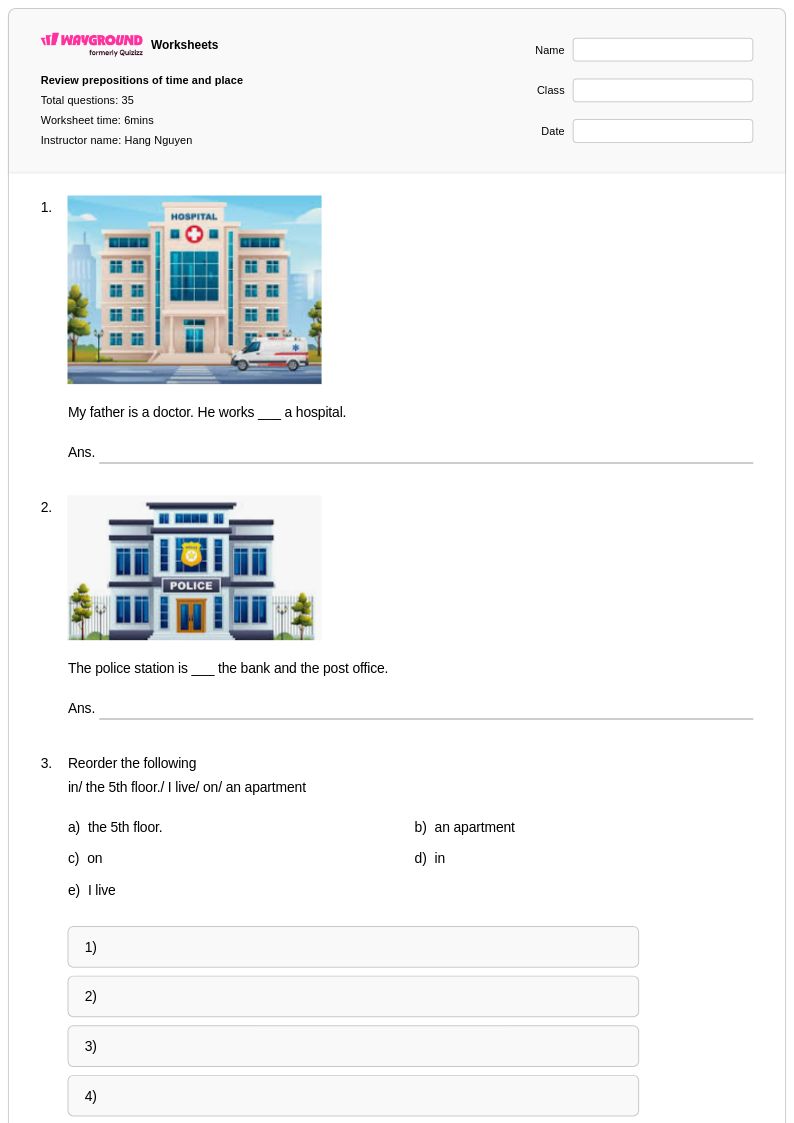
35 Q
1st - 5th
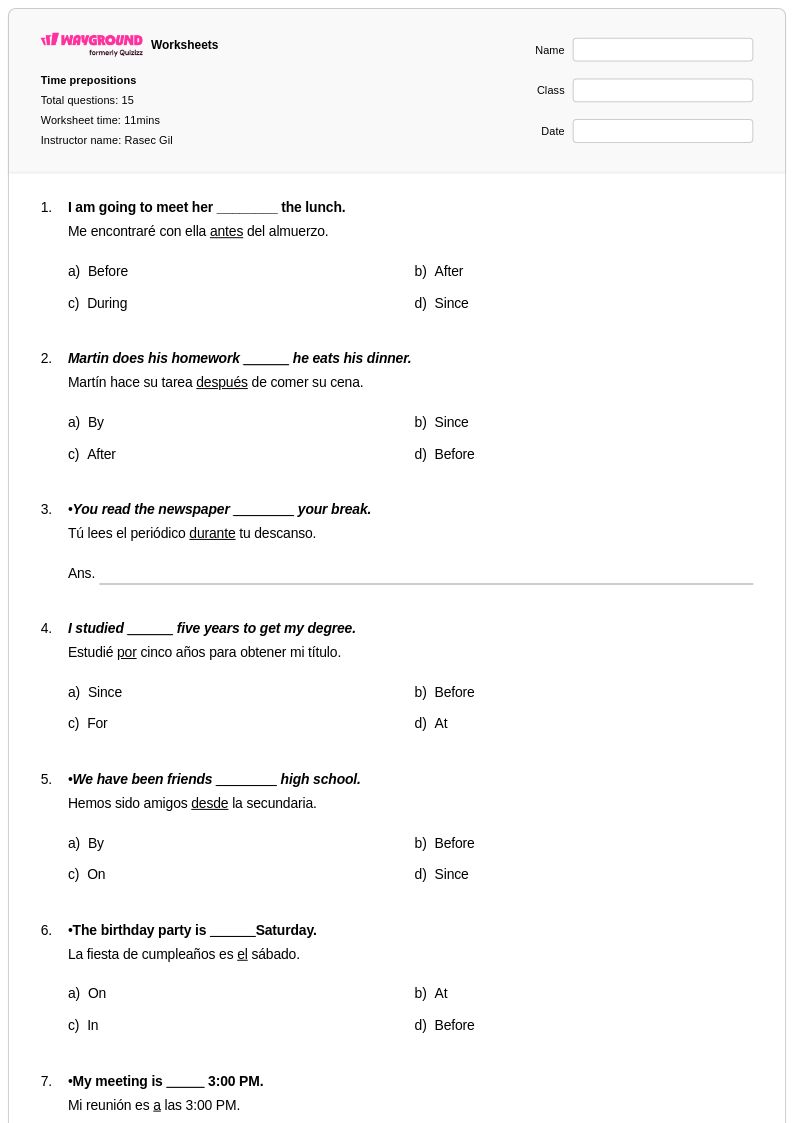
15 Q
1st - 5th
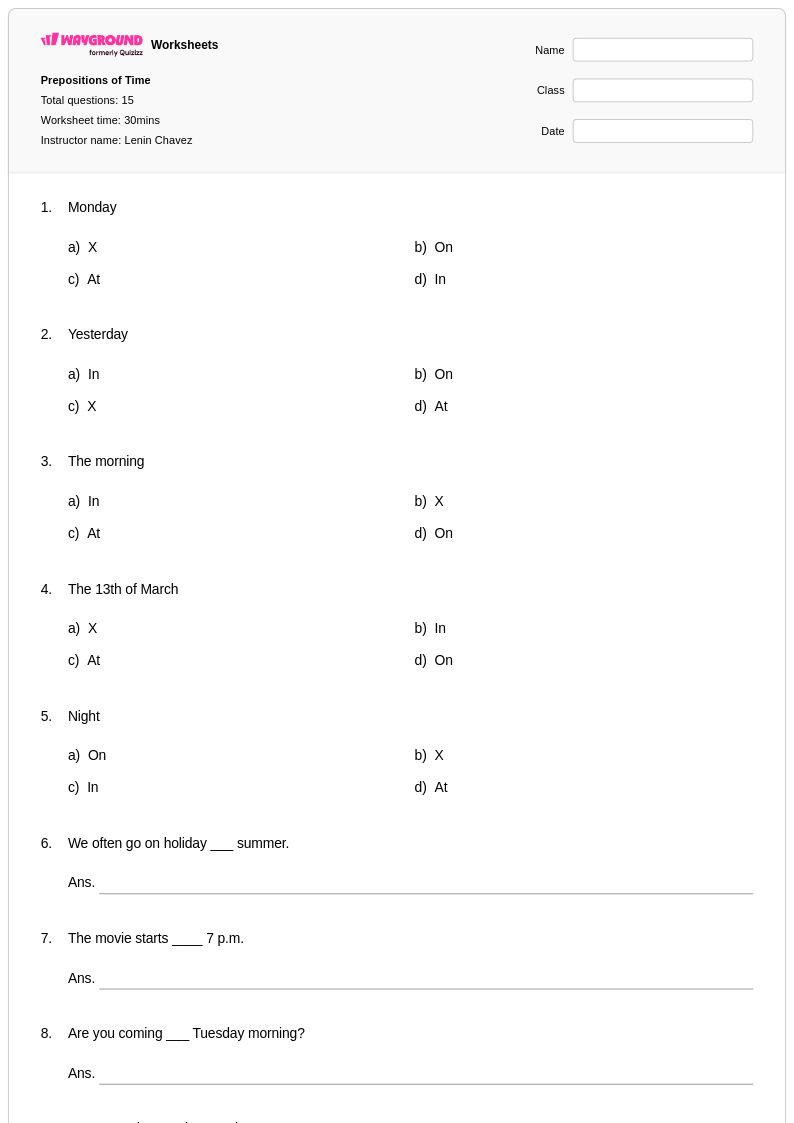
15 Q
2nd
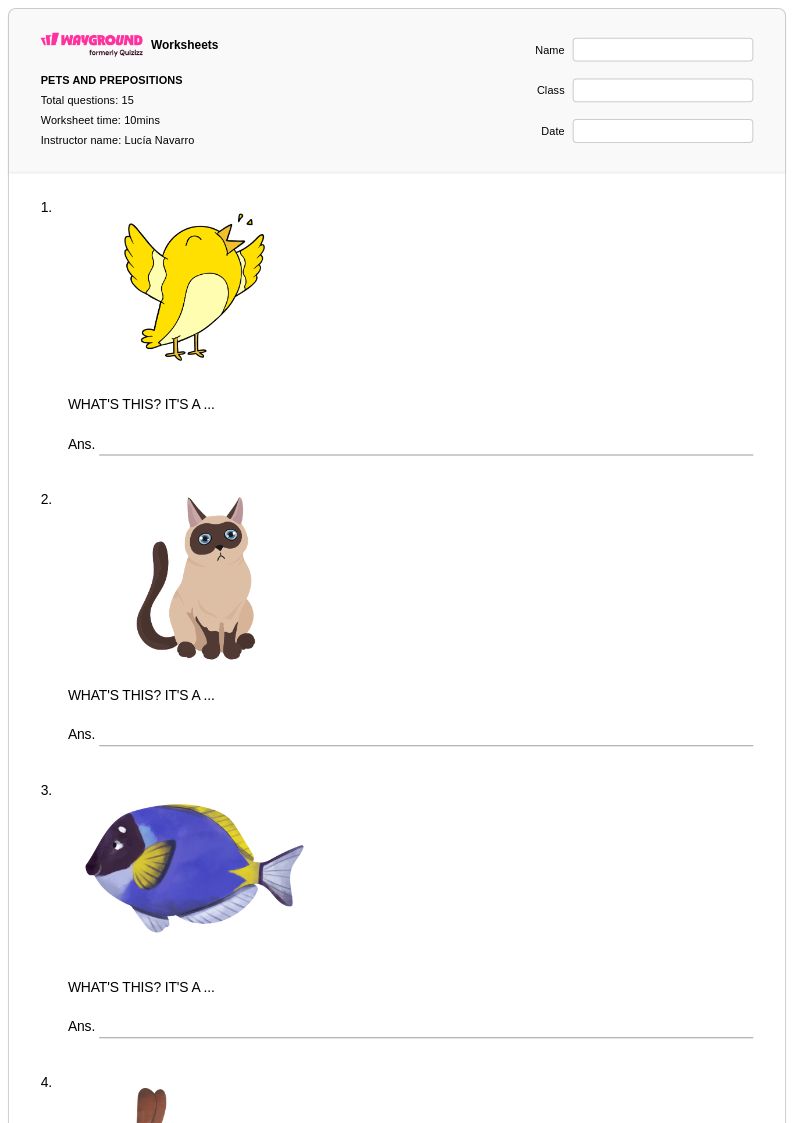
15 Q
2nd
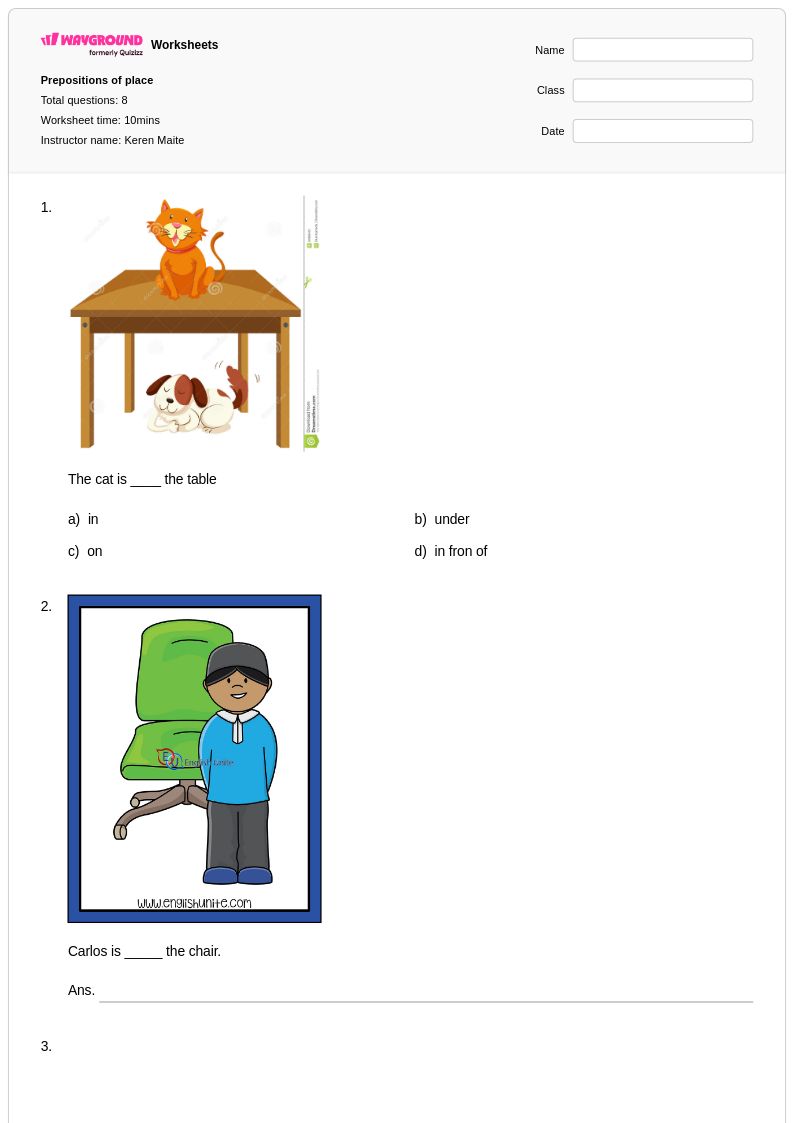
8 Q
2nd
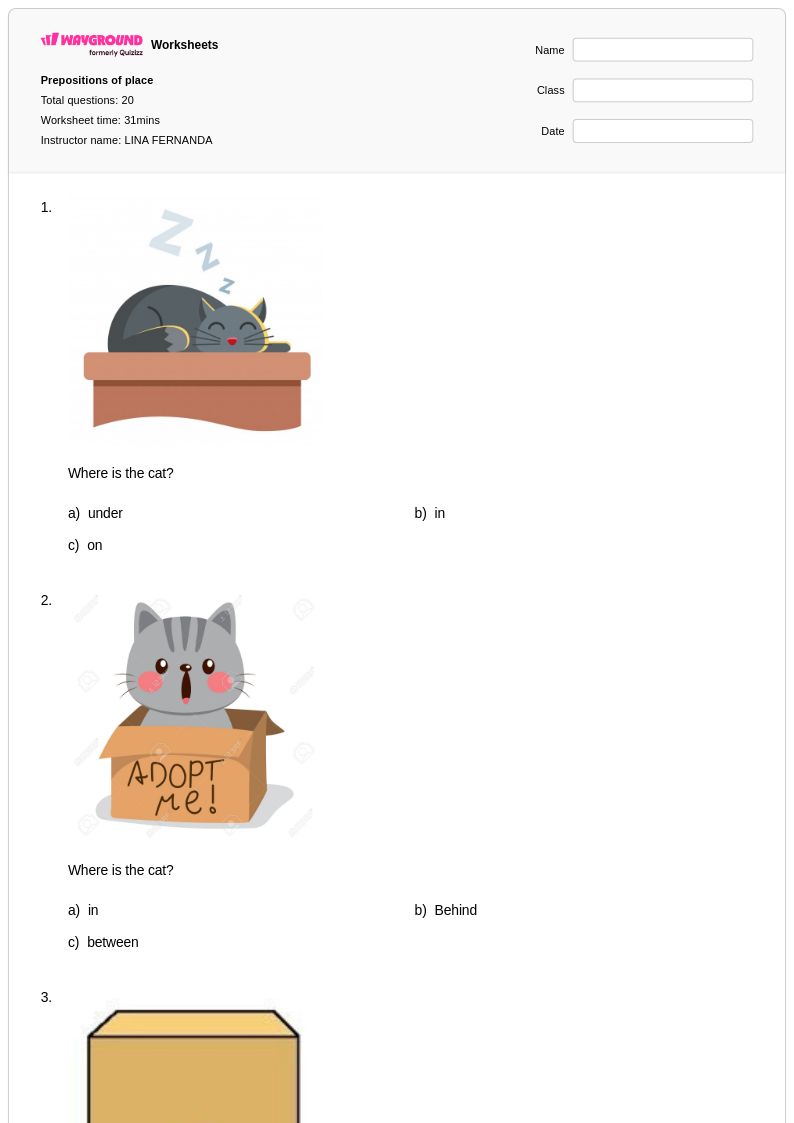
20 Q
2nd
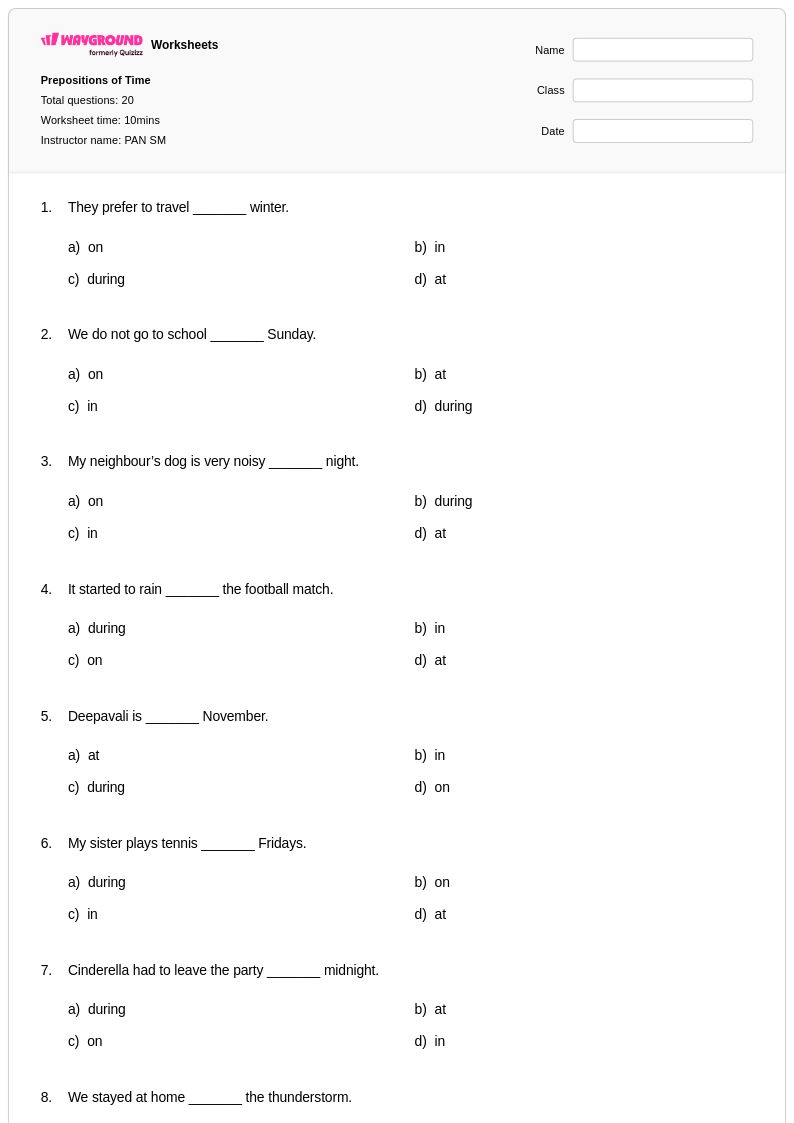
20 Q
2nd
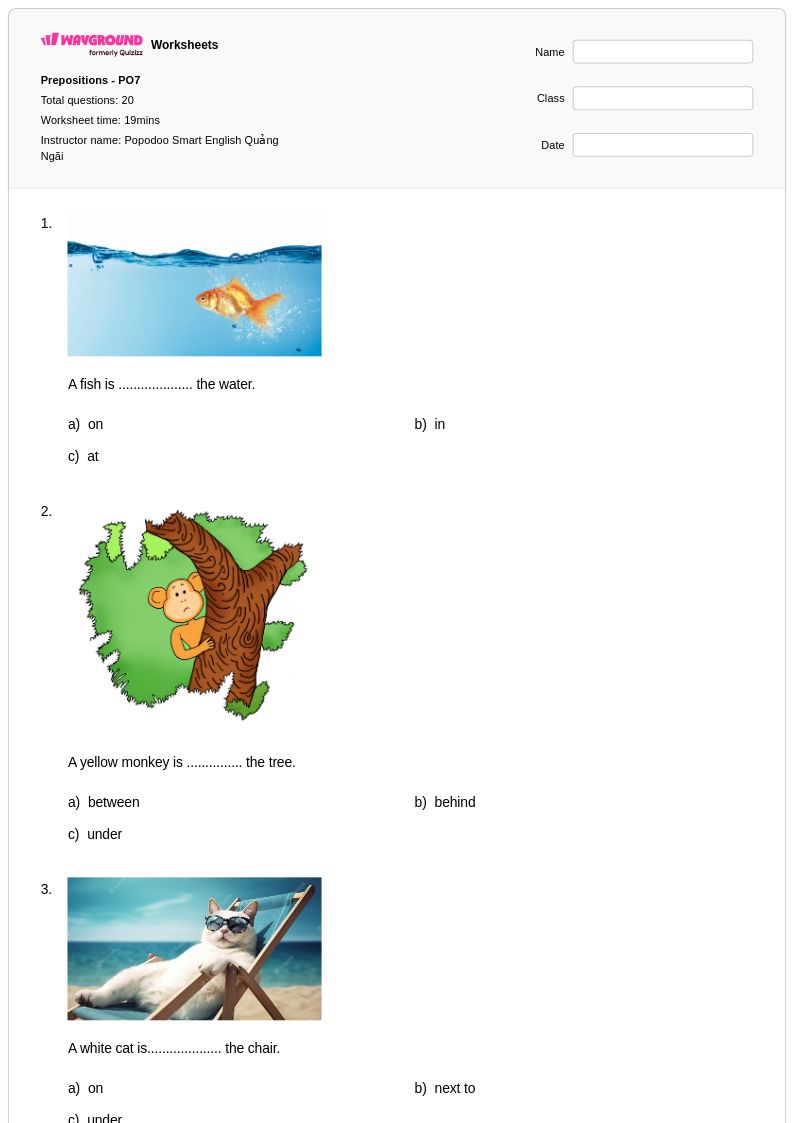
20 Q
1st - 5th
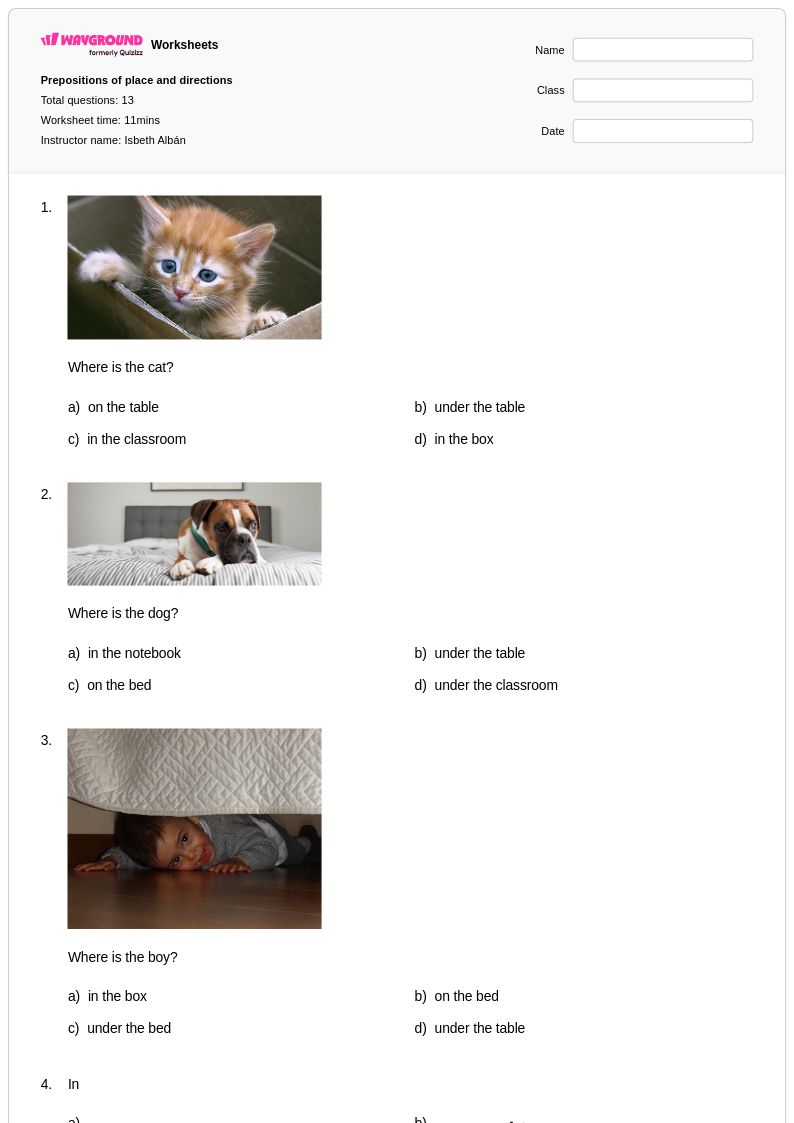
13 Q
2nd
Explore Prepositions Worksheets for year 2 by Topic
Explore Other Subject Worksheets for year 2
Explore printable Prepositions worksheets for Year 2
Year 2 preposition worksheets available through Wayground (formerly Quizizz) provide young learners with essential practice in understanding and using these crucial connecting words that show relationships between nouns, pronouns, and other sentence elements. These carefully crafted educational resources focus on common prepositions such as in, on, under, over, beside, and through, helping second-grade students develop spatial awareness and improve their sentence construction skills. The comprehensive collection includes engaging activities that teach children to identify prepositions in context, complete sentences with appropriate prepositions, and understand how these words clarify meaning in both written and spoken communication. Each worksheet features age-appropriate exercises with clear instructions and comes with an answer key, making them valuable free printables for both classroom instruction and home practice. These pdf resources contain varied practice problems that reinforce preposition recognition through colorful illustrations, fill-in-the-blank exercises, and simple sentence writing activities that build confidence in this fundamental grammar concept.
Wayground (formerly Quizizz) supports educators with an extensive library of millions of teacher-created preposition worksheets specifically designed for Year 2 learners, featuring robust search and filtering capabilities that allow teachers to quickly locate materials aligned with their curriculum standards and learning objectives. The platform's differentiation tools enable educators to customize worksheets based on individual student needs, whether for remediation support or enrichment challenges, while the flexible format options provide both printable pdf versions for traditional classroom use and digital formats for interactive learning experiences. Teachers can efficiently plan their grammar instruction by accessing worksheets that target specific preposition skills, from basic identification to more complex usage in sentences, supporting systematic skill development throughout the academic year. These comprehensive resources streamline lesson preparation while providing consistent practice opportunities that help students master prepositions through repeated exposure and varied application, ultimately strengthening their overall language arts foundation and reading comprehension abilities.
FAQs
How do I teach prepositions to students who keep confusing them with other parts of speech?
What exercises help students practice identifying prepositional phrases in sentences?
What mistakes do students most commonly make when using prepositions?
How can I differentiate preposition practice for students at different skill levels?
How do I use Wayground's preposition worksheets in my classroom?
How do I teach prepositional phrases as opposed to standalone prepositions?