Free Printable Primary Sources Worksheets for Year 5
Explore Year 5 primary sources worksheets and printables that help students analyze historical documents, artifacts, and firsthand accounts to develop critical thinking skills about the past.
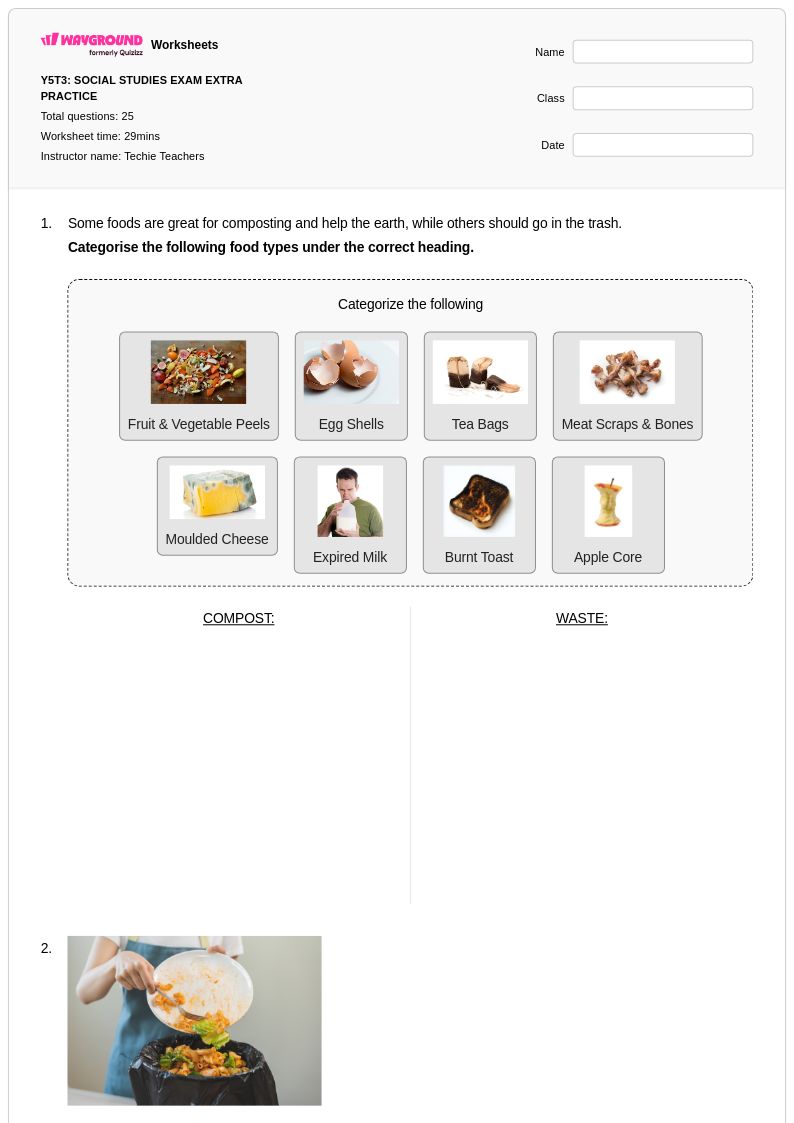
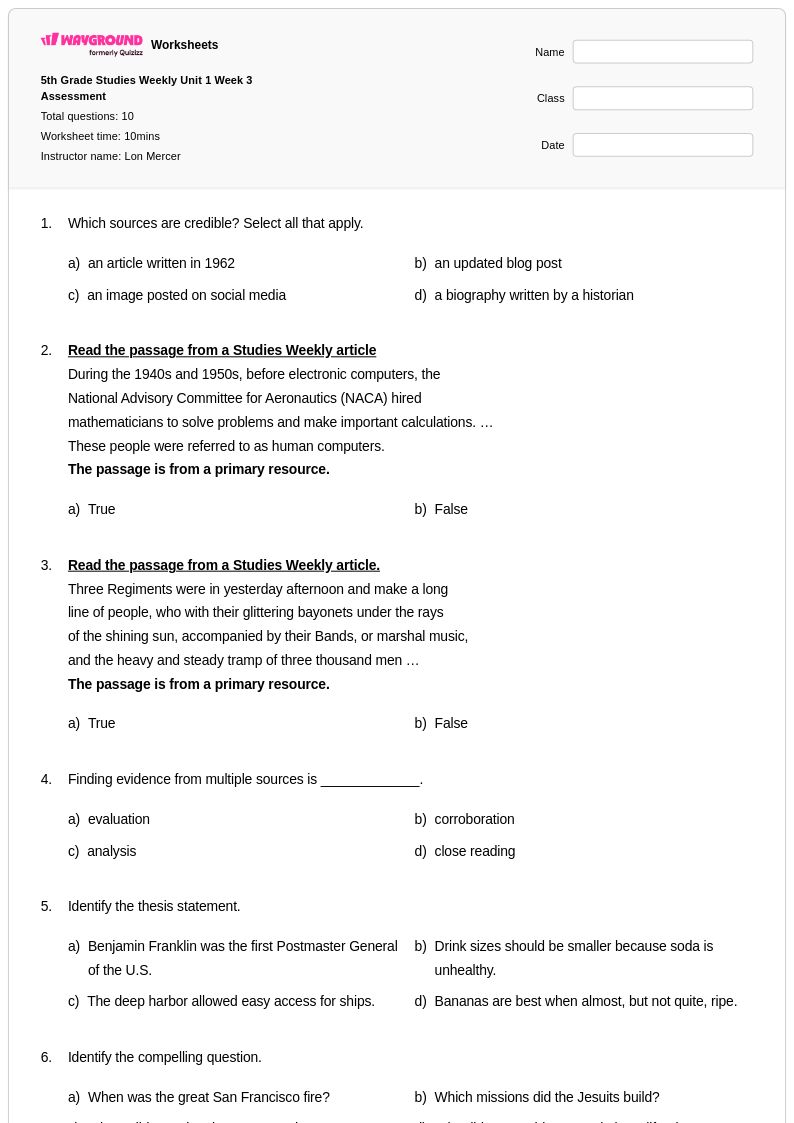
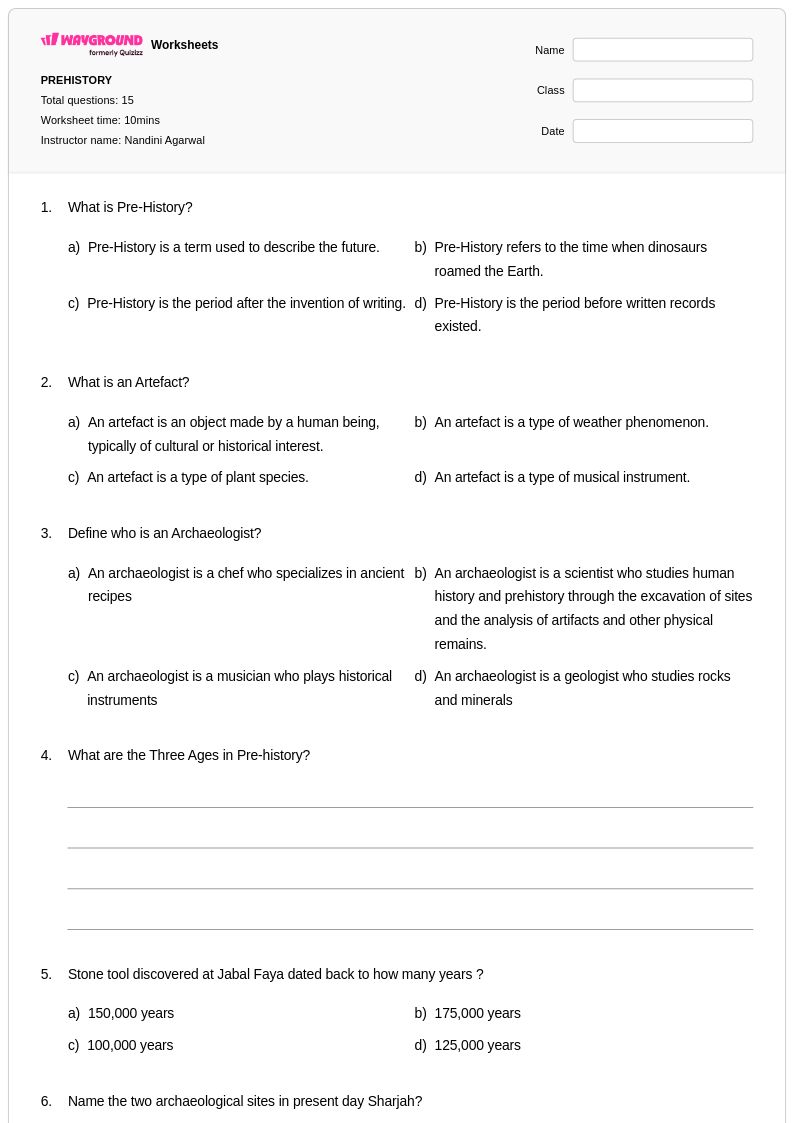
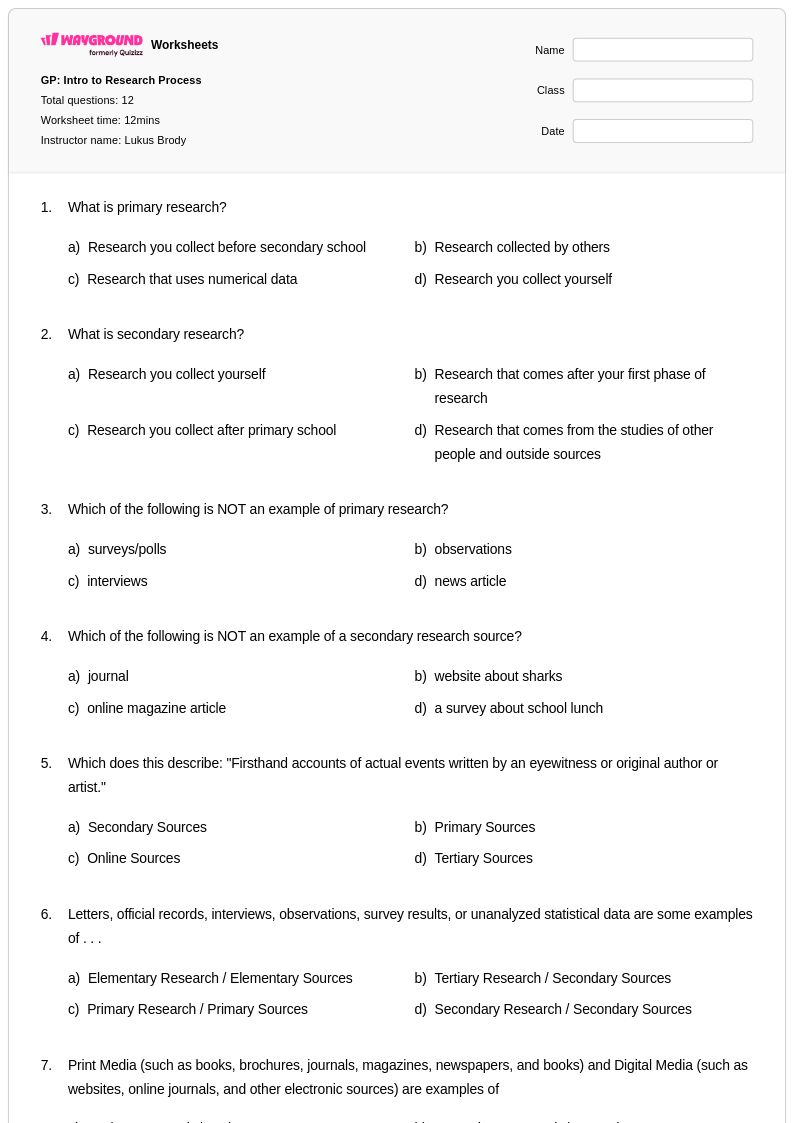
Explore printable Primary Sources worksheets for Year 5
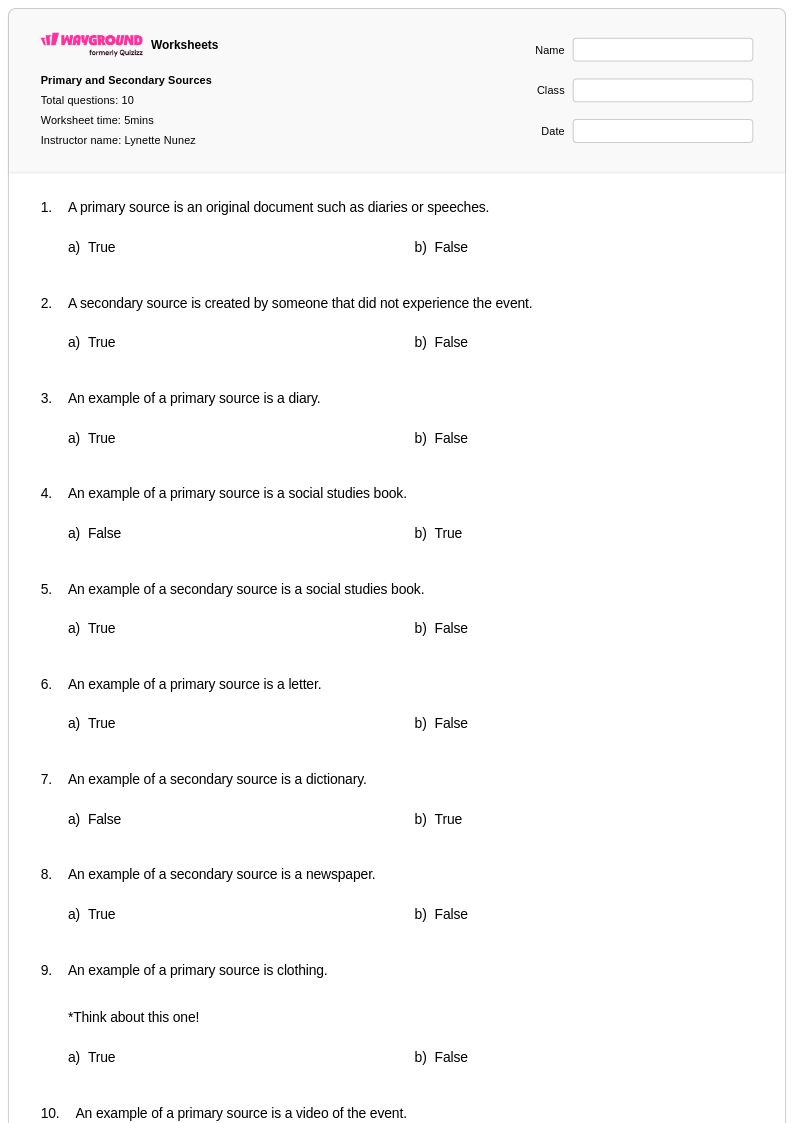
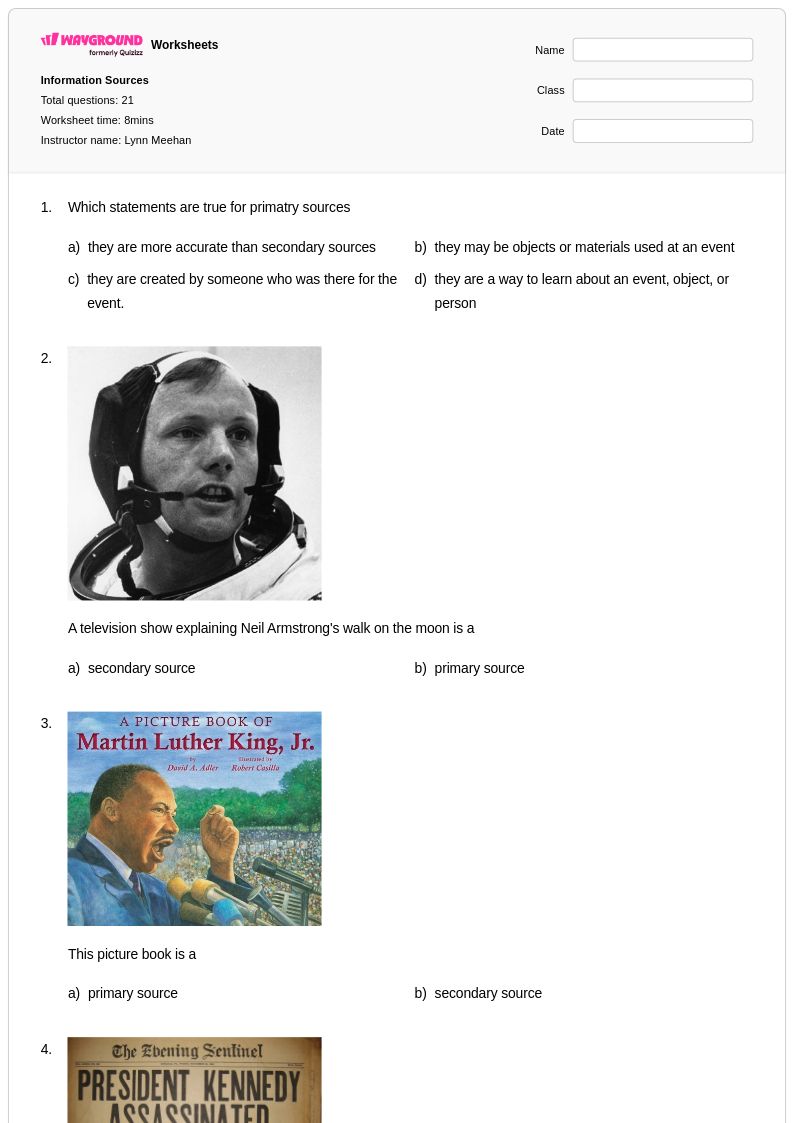
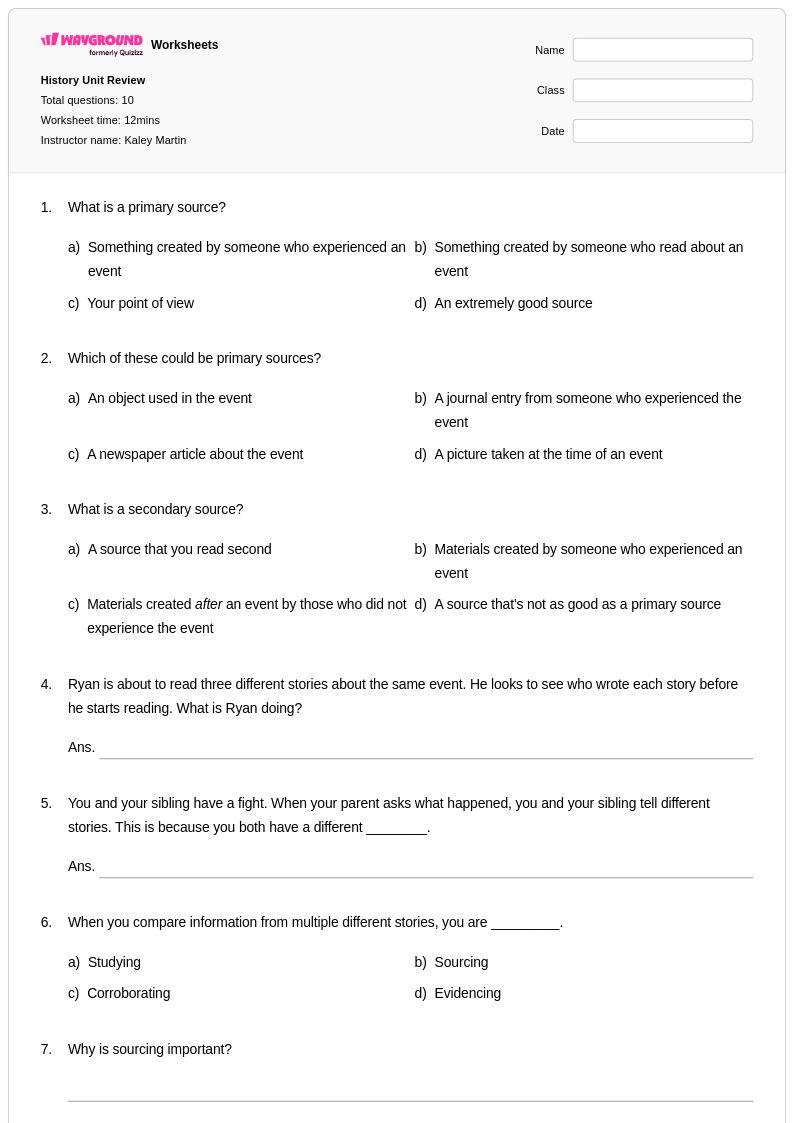
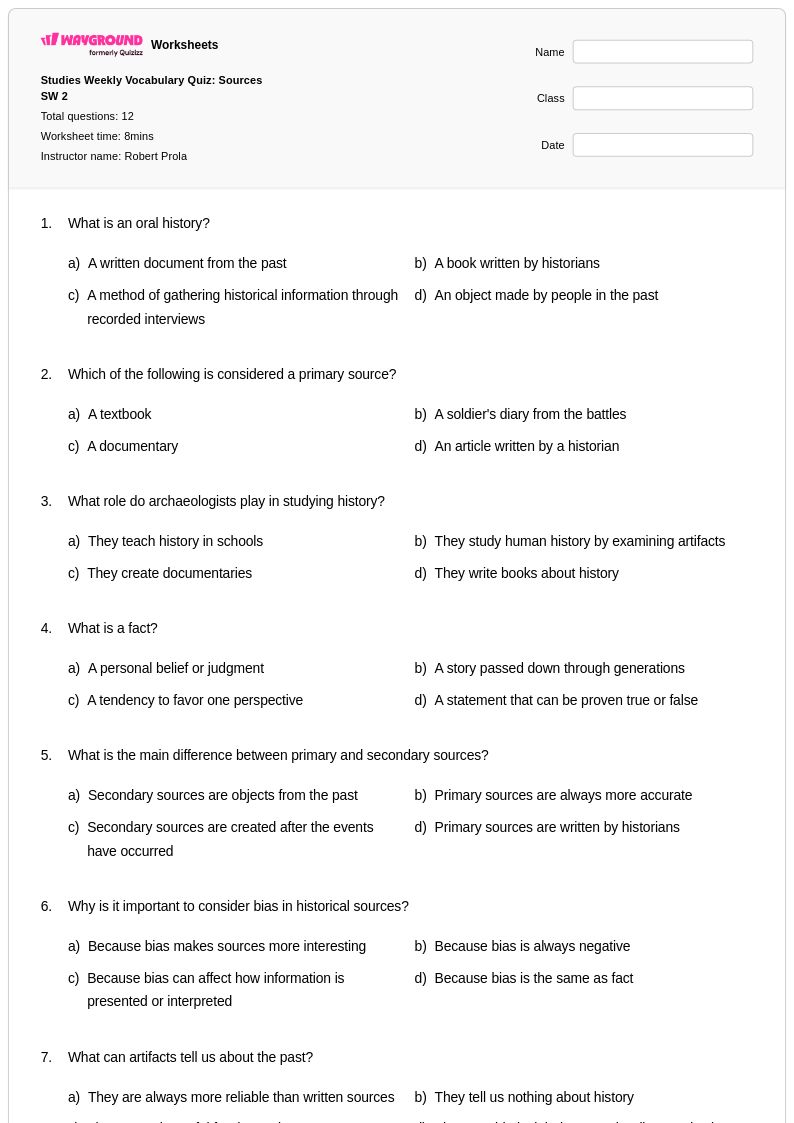
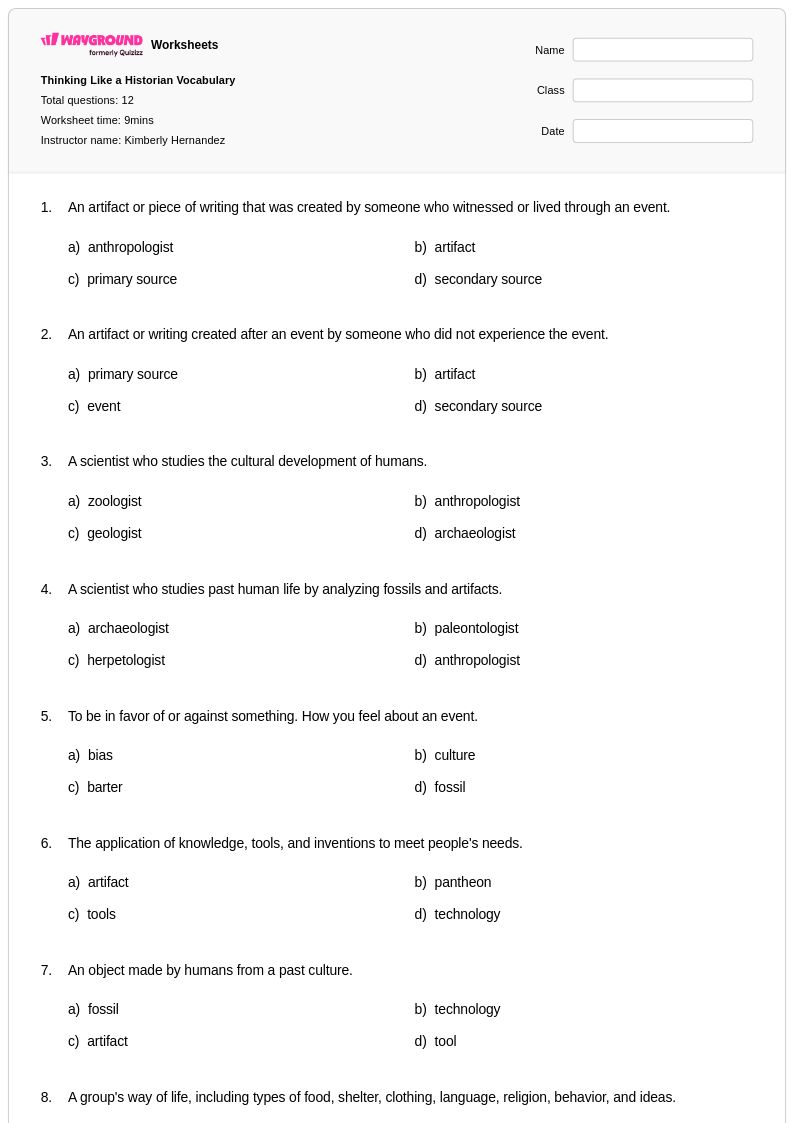
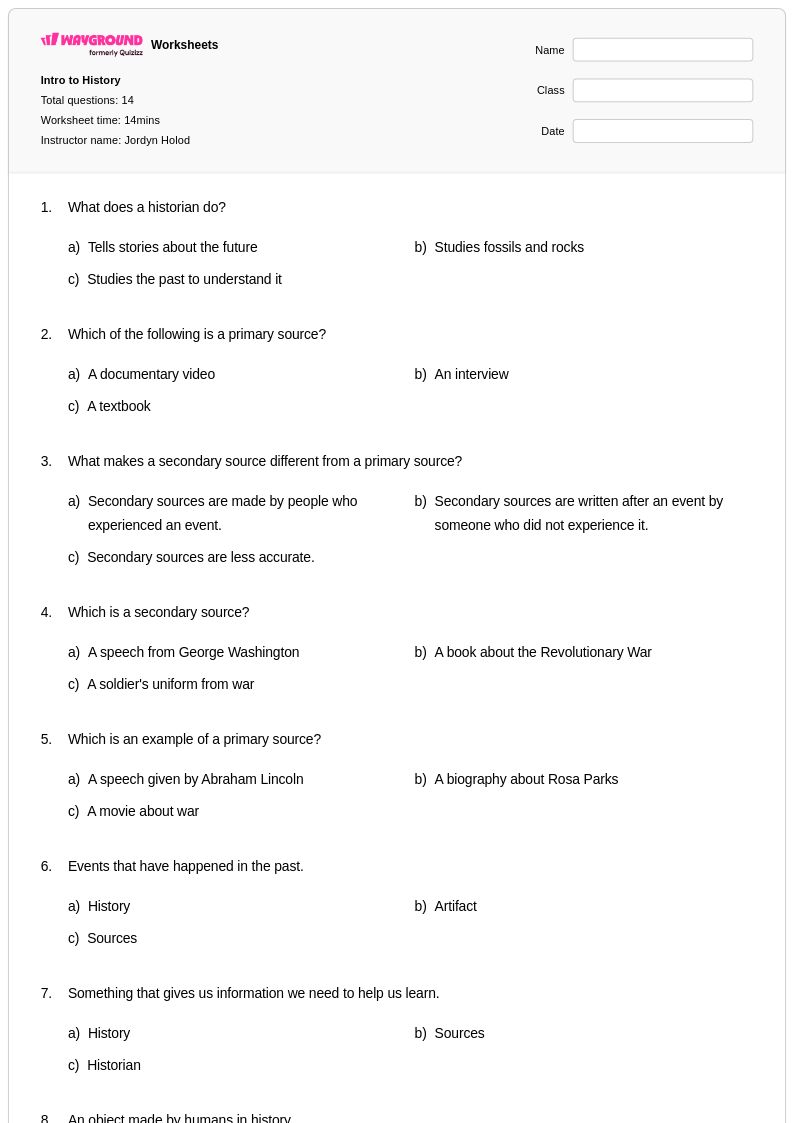
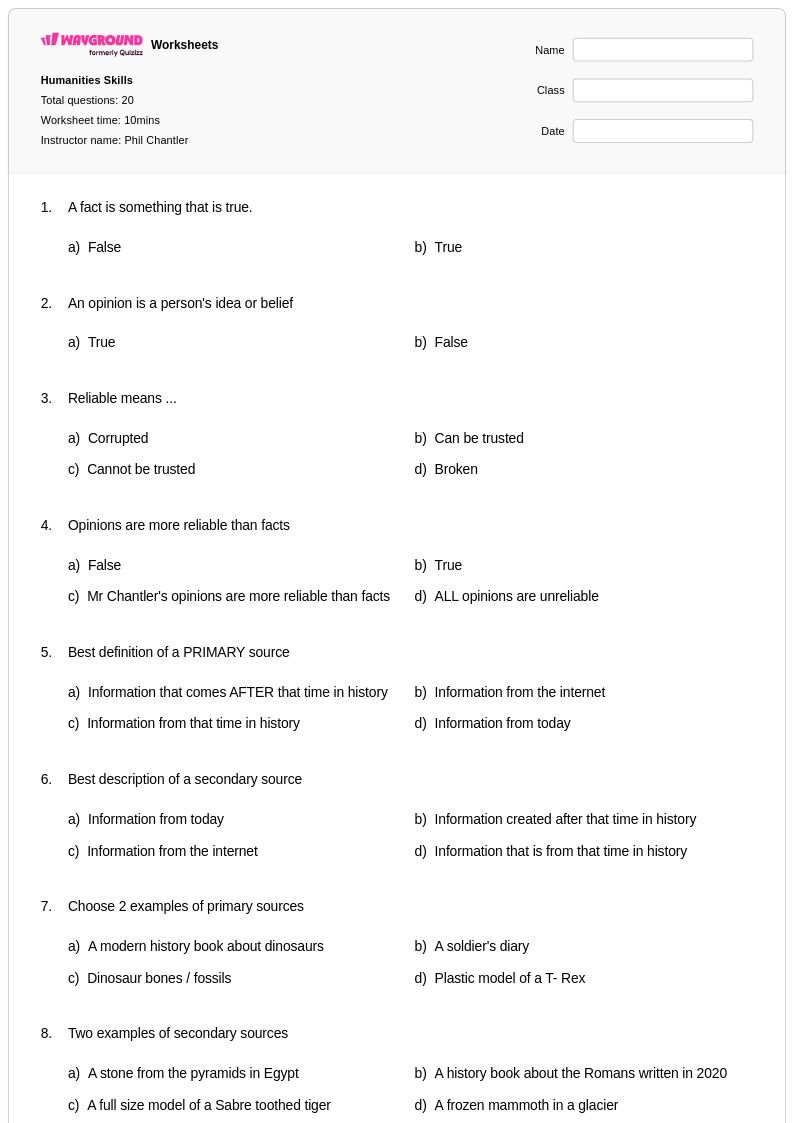
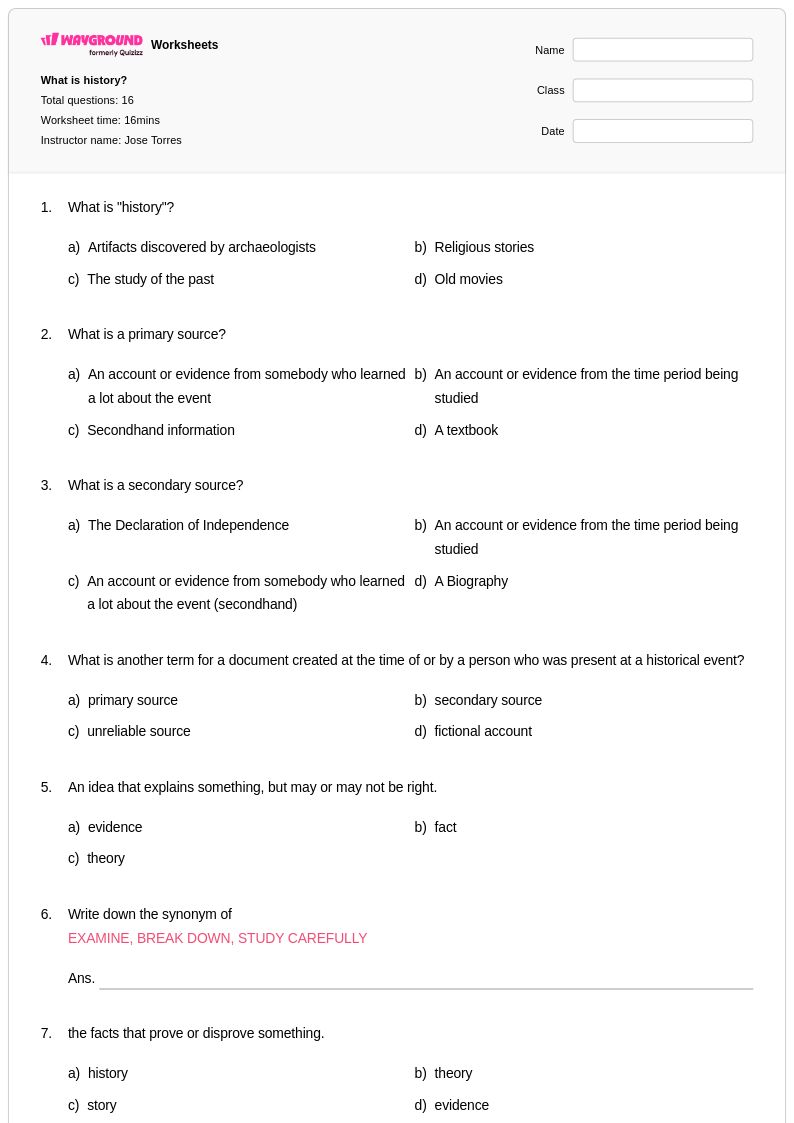
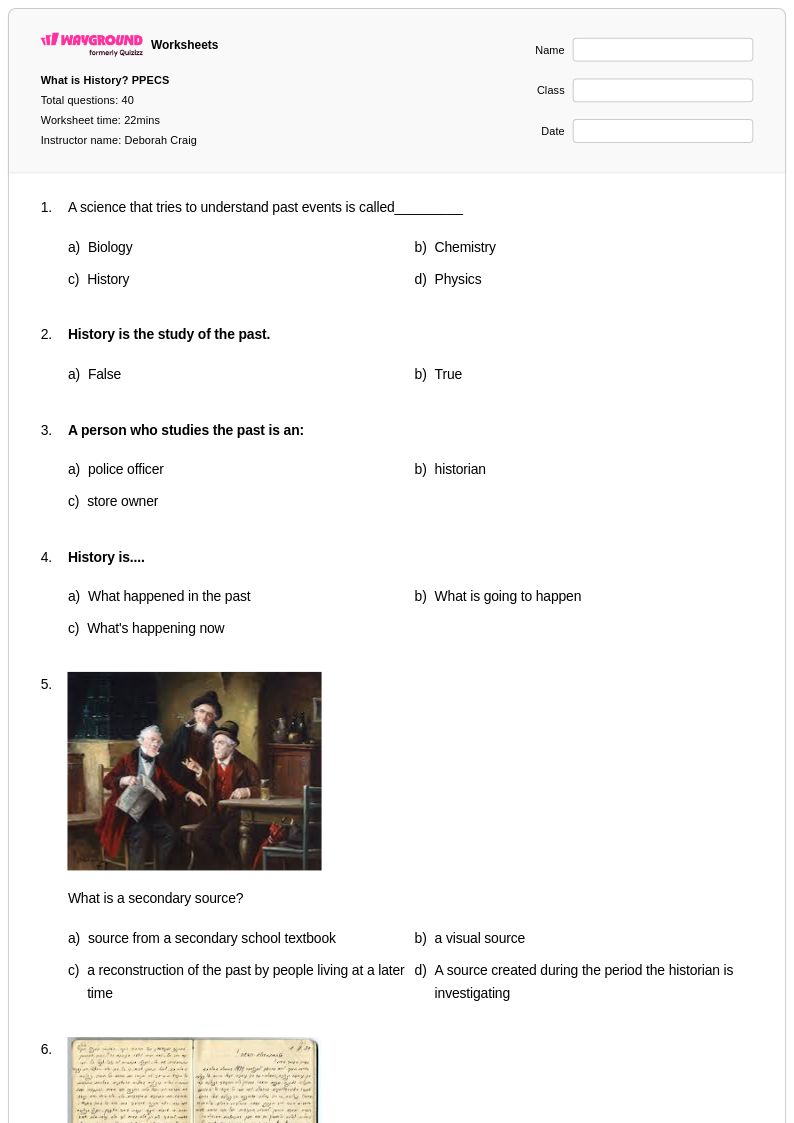
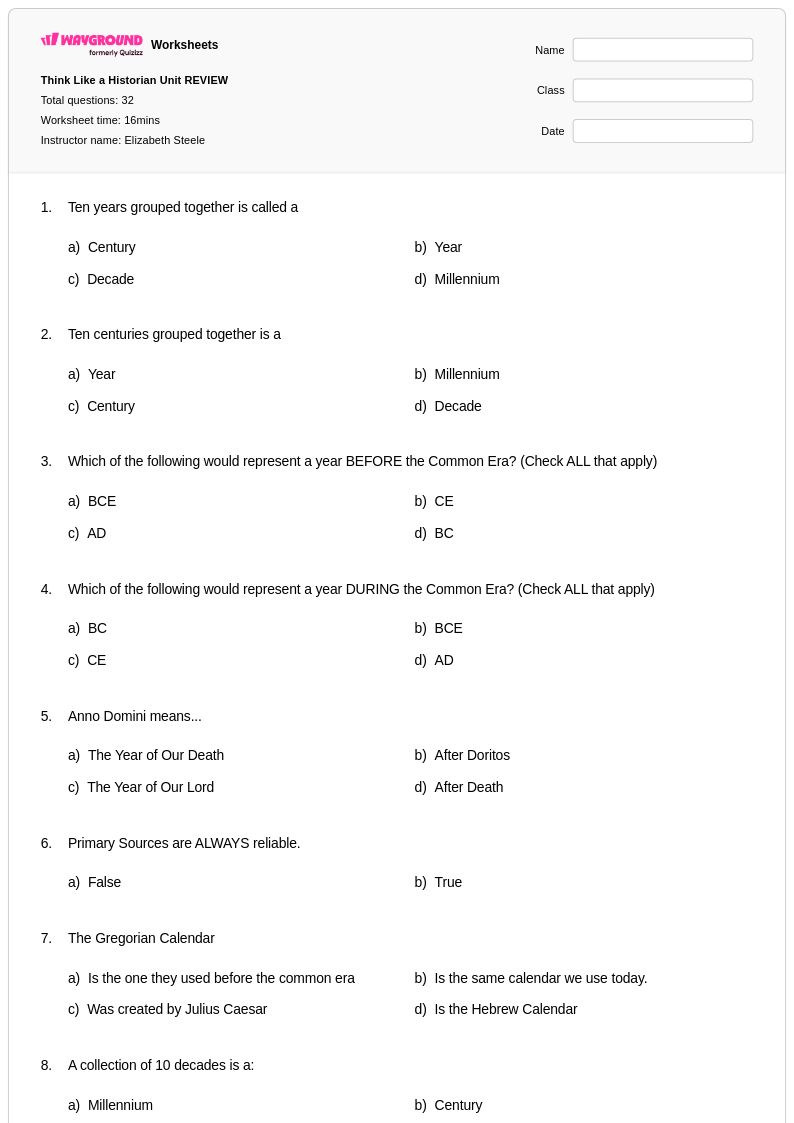
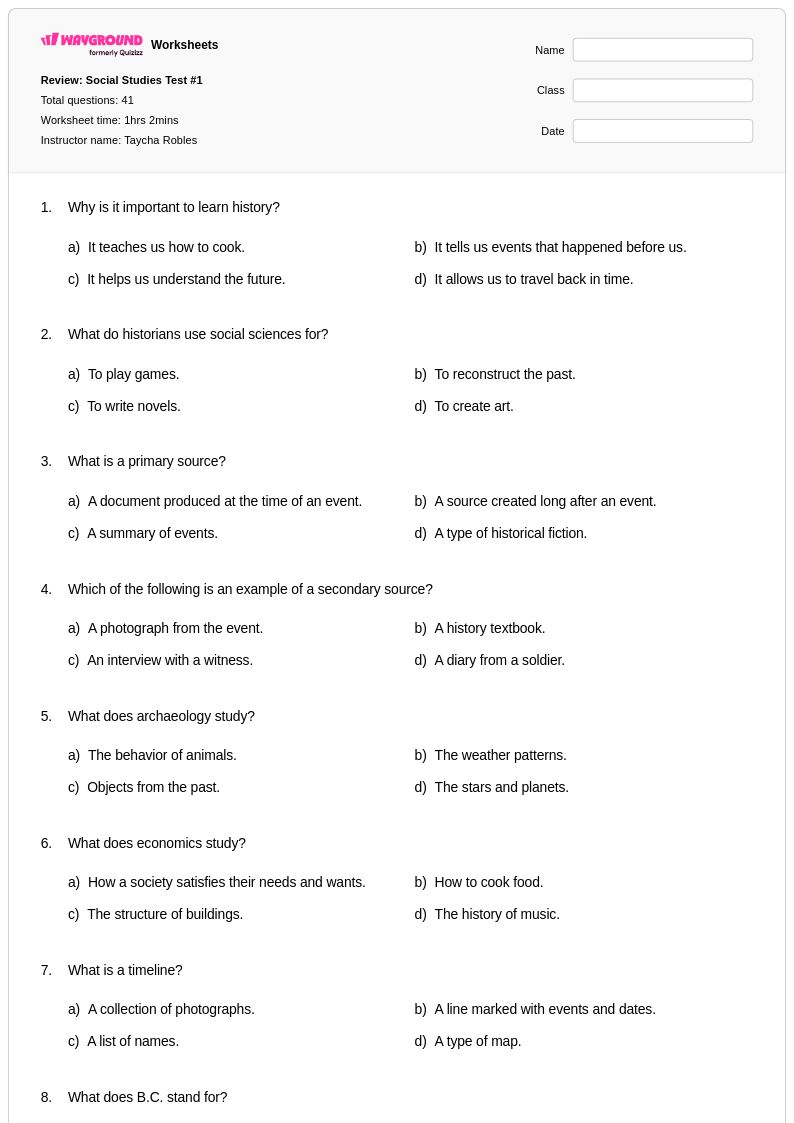
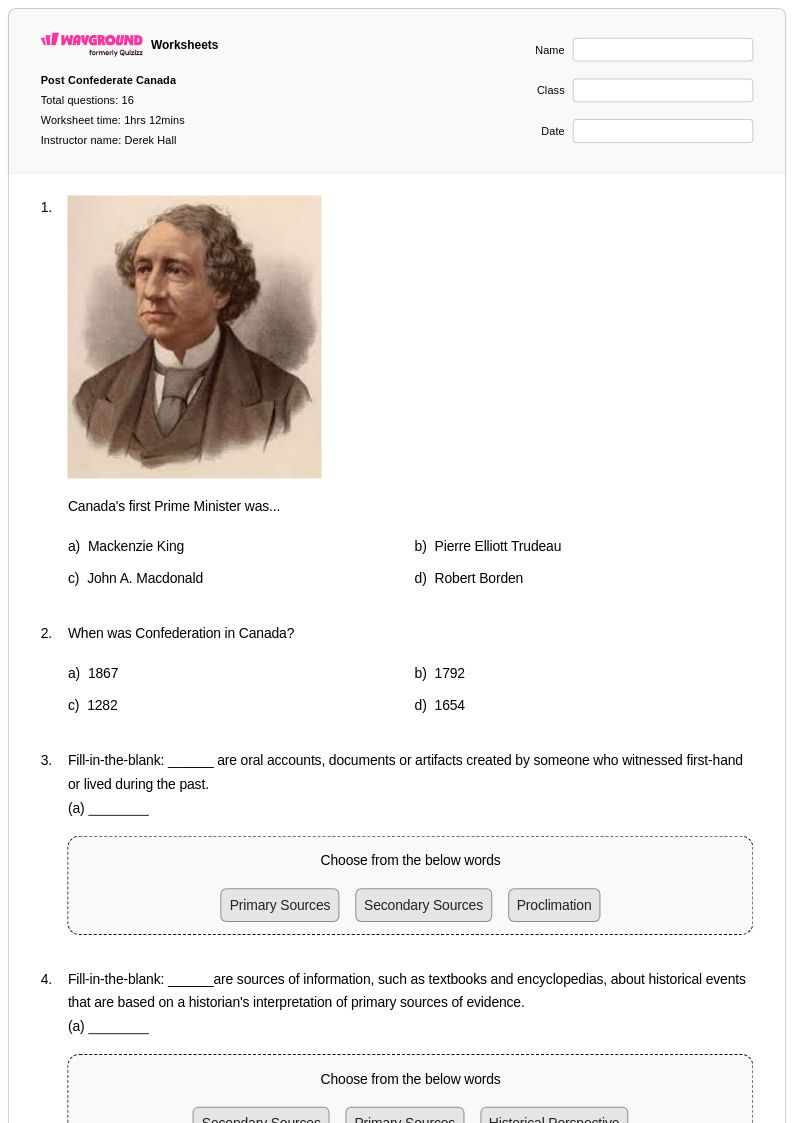
Primary sources worksheets for Year 5 students available through Wayground (formerly Quizizz) provide essential practice in analyzing historical documents, artifacts, and firsthand accounts that bring the past to life. These carefully designed worksheets strengthen critical thinking skills by teaching students to examine evidence, distinguish between fact and opinion, and draw conclusions from original historical materials such as diaries, letters, photographs, and government documents. Each printable worksheet includes comprehensive answer keys and practice problems that guide fifth-grade students through the process of historical inquiry, helping them develop the analytical skills necessary to understand how historians construct knowledge about the past. The free pdf format ensures accessibility while maintaining the visual quality essential for examining primary source materials effectively.
Wayground (formerly Quizizz) supports educators with millions of teacher-created primary sources worksheets specifically tailored for Year 5 social studies instruction. The platform's robust search and filtering capabilities allow teachers to quickly locate resources aligned with curriculum standards, while differentiation tools enable customization based on individual student needs and reading levels. These comprehensive worksheet collections are available in both printable and digital pdf formats, providing flexibility for classroom instruction, homework assignments, and independent practice sessions. Teachers can efficiently plan lessons that incorporate historical thinking skills, use these resources for targeted remediation with struggling learners, and provide enrichment opportunities for advanced students, all while ensuring that fifth graders develop proficiency in evaluating primary sources as evidence of historical events and perspectives.
FAQs
How do I teach students to analyze primary sources?
Teaching primary source analysis works best when students follow a structured process: first observe what they see or read, then question the source's origin and purpose, and finally connect it to broader historical context. Scaffolding is essential early on — give students guiding prompts that direct their attention to authorship, audience, date, and bias before asking for open-ended interpretation. Over time, reduce the scaffolding as students internalize the process and can analyze documents independently.
What is the difference between a primary source and a secondary source?
A primary source is an original, firsthand record created at the time of an event or by someone who directly experienced it — such as letters, photographs, diaries, speeches, or government documents. A secondary source is an interpretation or analysis of primary sources, created after the fact, such as a textbook, biography, or documentary. Teaching students to distinguish between the two is a foundational skill in historical literacy and research.
What exercises help students practice primary source analysis?
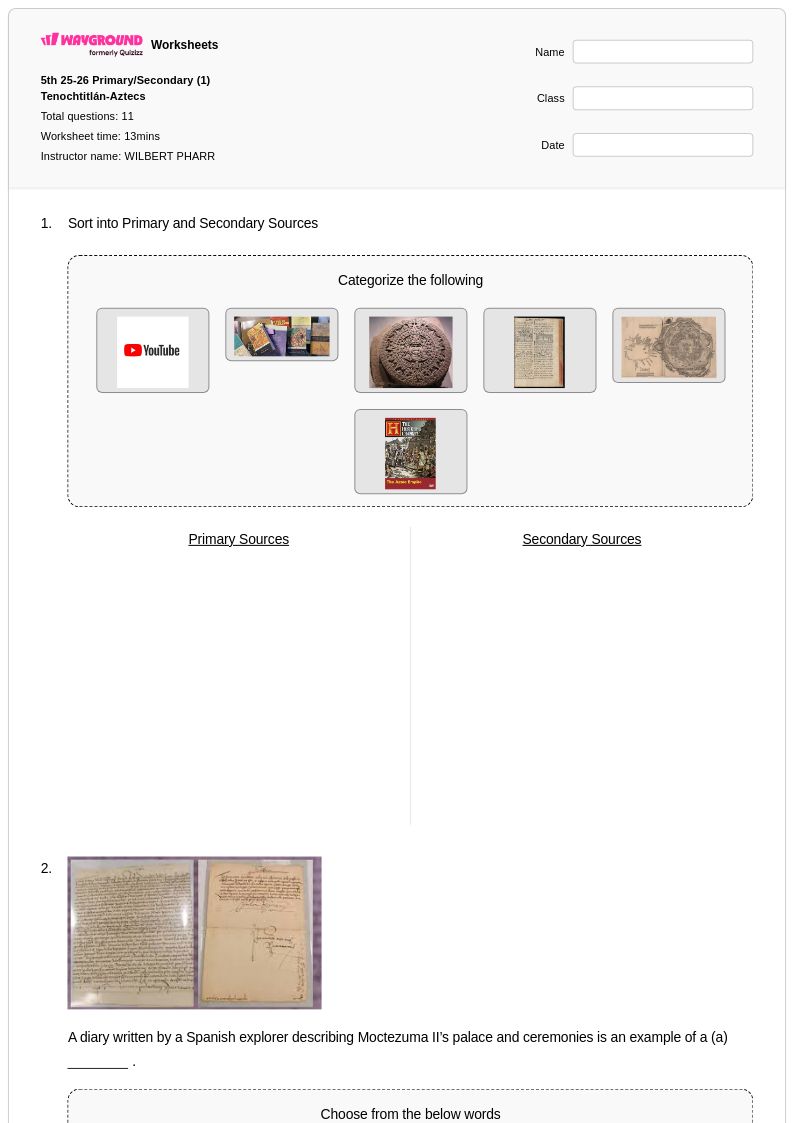
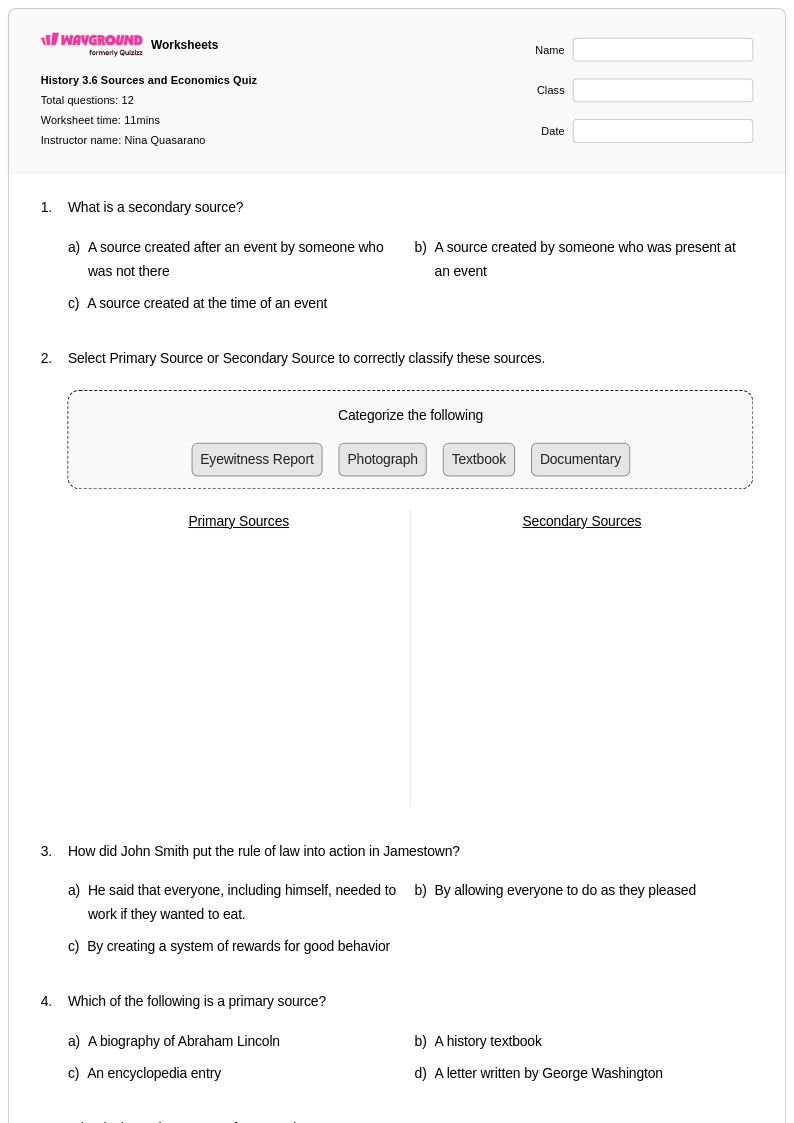
Effective practice exercises include document identification tasks where students sort sources into primary or secondary categories, close-reading activities that ask students to annotate a historical document for purpose and bias, and comparative analysis tasks that place two sources from the same event side by side. Structured graphic organizers that prompt students to record the source type, author, audience, and main argument help build consistent analytical habits before students attempt open-ended written responses.
What mistakes do students commonly make when working with primary sources?
The most common error is accepting a primary source as objective fact rather than recognizing it as a perspective shaped by the author's identity, purpose, and historical moment. Students also frequently confuse primary and secondary sources, particularly with textbooks that quote original documents. Another recurring mistake is analyzing a source in isolation without considering its historical context, which leads to misinterpretation of the language, intent, or significance of the document.
How can I differentiate primary source activities for students at different skill levels?
For students who are new to document analysis, begin with shorter, more accessible texts and provide sentence starters or structured graphic organizers to guide their responses. More advanced students can work with longer or more complex documents, compare multiple sources, and construct written arguments using evidence from their analysis. On Wayground, teachers can also apply accommodations such as Read Aloud, which reads questions and content aloud for students who need additional support, and reduced answer choices to lower cognitive load for selected students while the rest of the class works with standard settings.
How do I use Wayground's primary source worksheets in my classroom?
Wayground's primary source worksheets are available as printable PDFs for traditional classroom use and in digital formats for technology-integrated environments, including the option to host them as a quiz directly on Wayground. Teachers can use these materials for direct instruction, independent practice, targeted remediation, or enrichment depending on the activity type. All worksheets include complete answer keys, so they work equally well for teacher-led lessons and self-paced independent work.