Free Printable Probability of Compound Events Worksheets for Year 7
Enhance Year 7 students' understanding of probability of compound events with Wayground's comprehensive collection of free worksheets, featuring engaging practice problems, printable PDFs, and detailed answer keys.
Explore printable Probability of Compound Events worksheets for Year 7
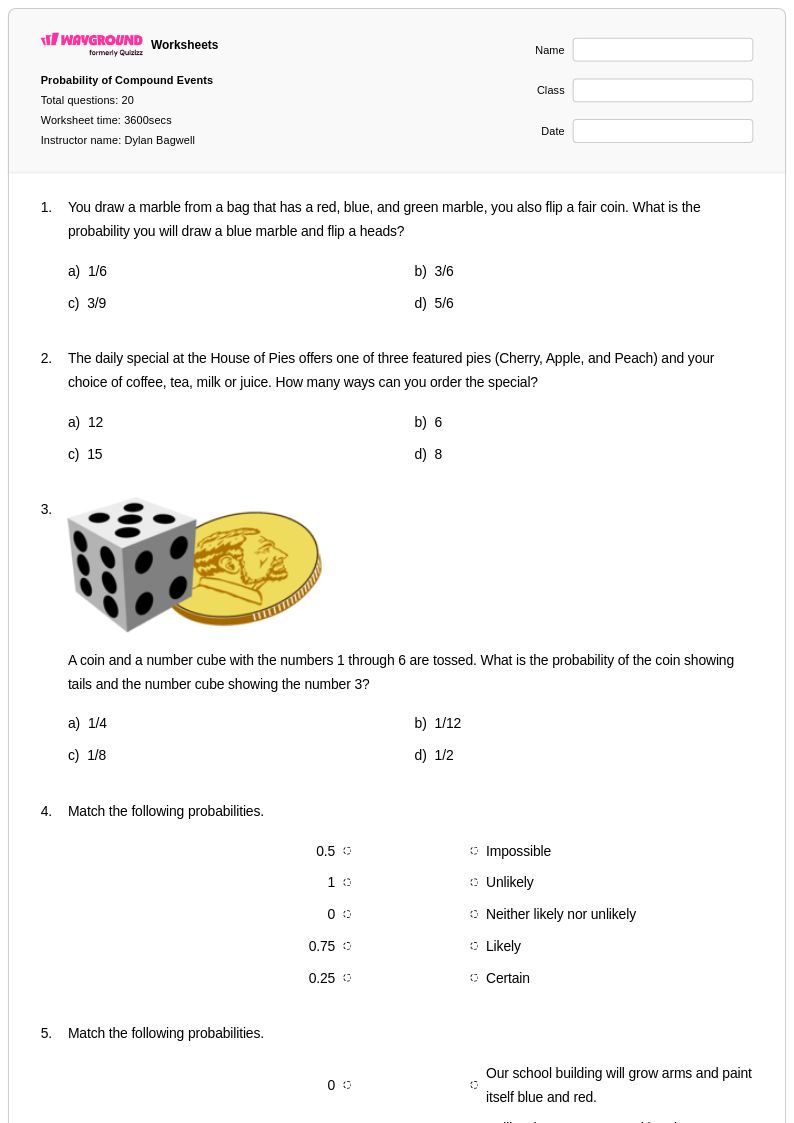
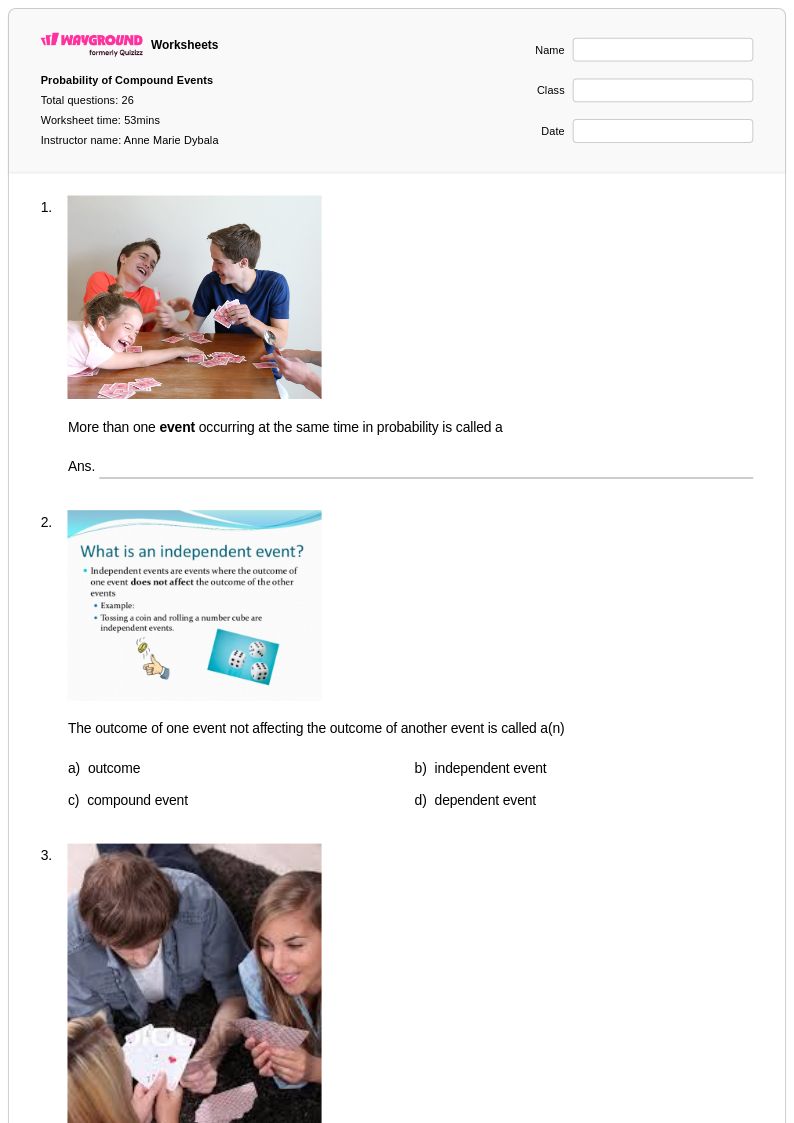
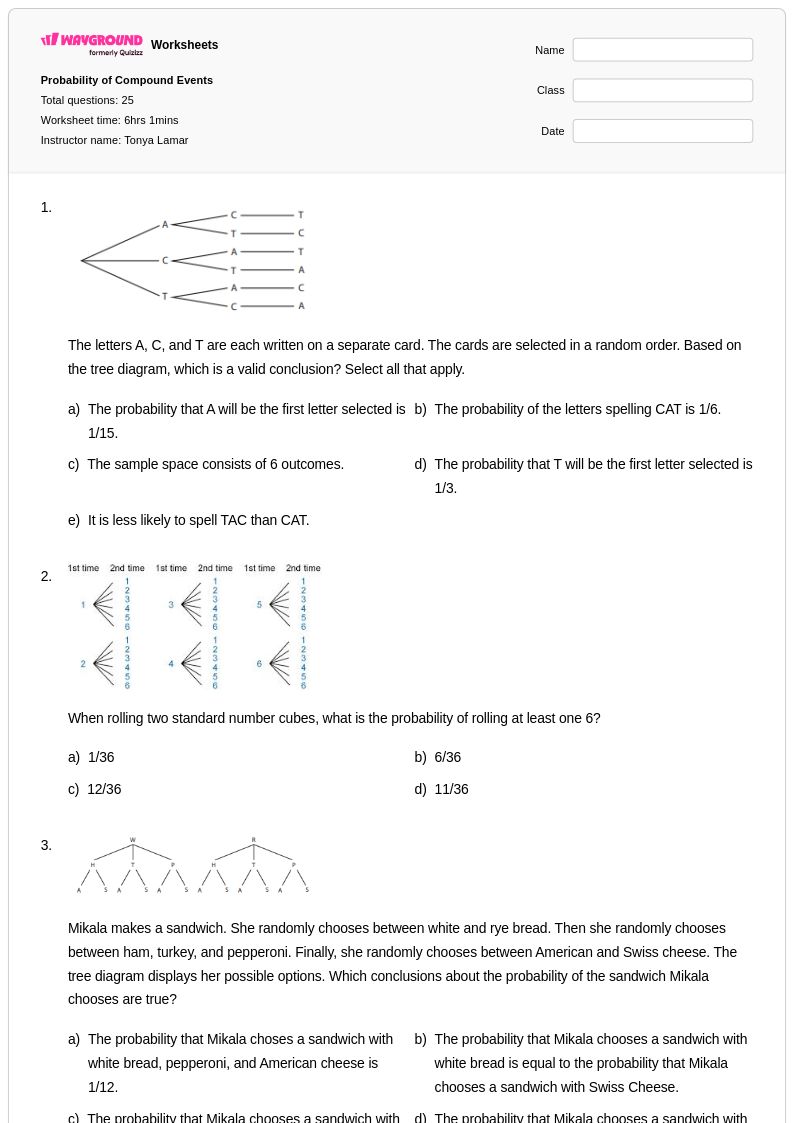
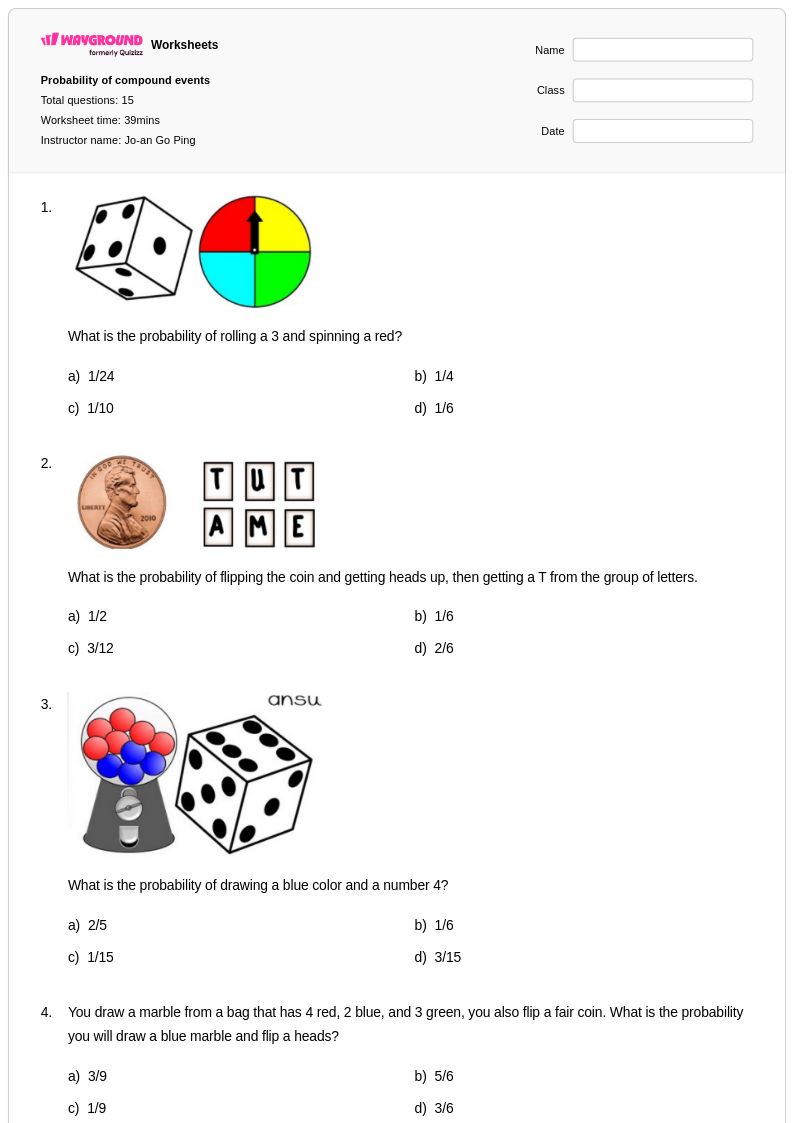
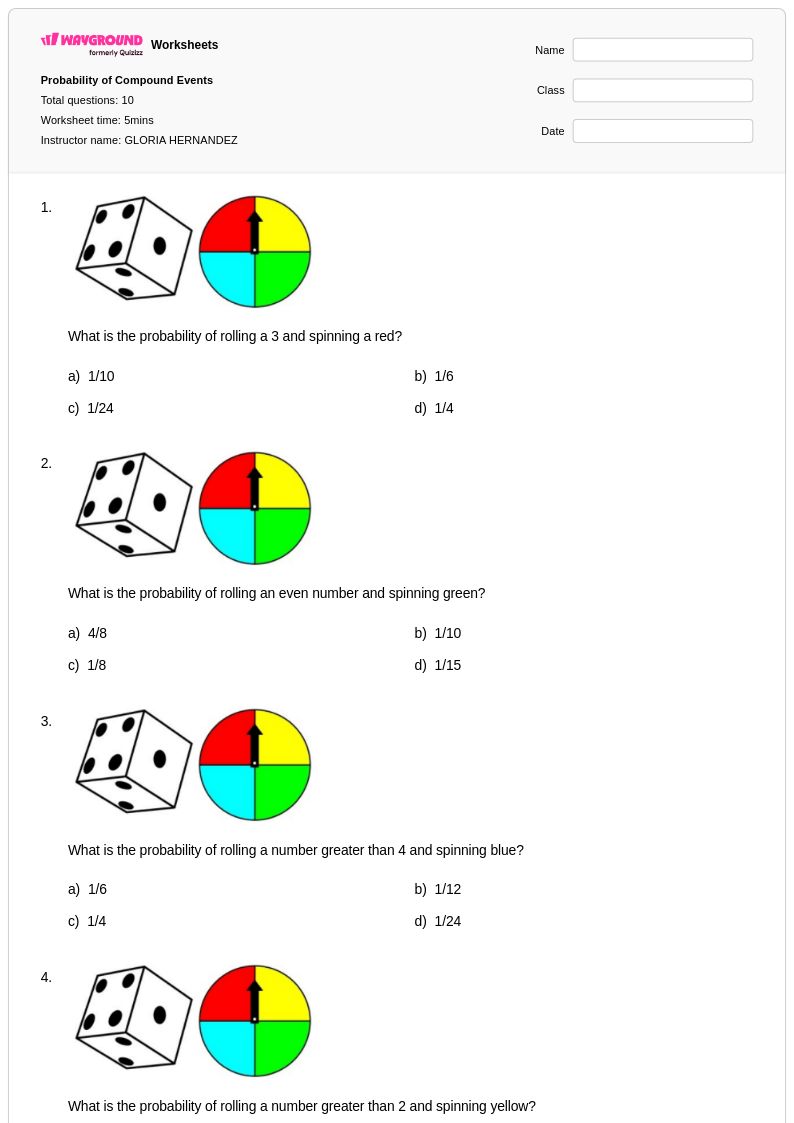
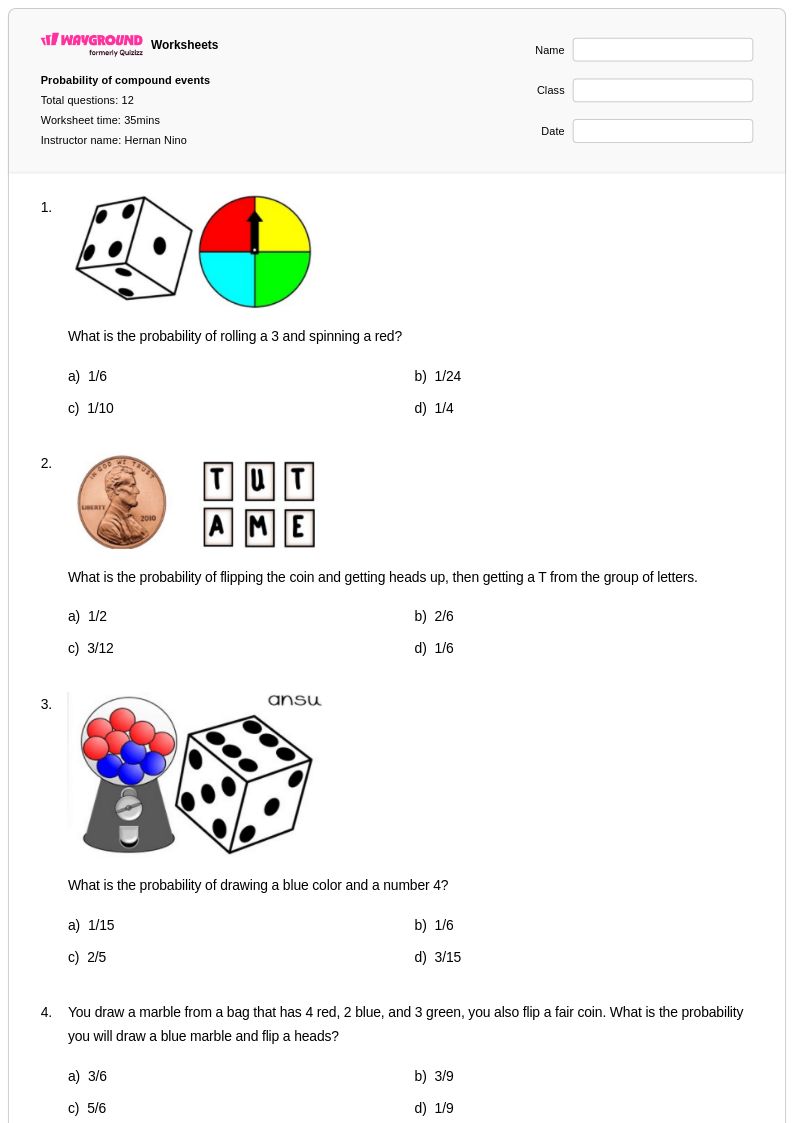
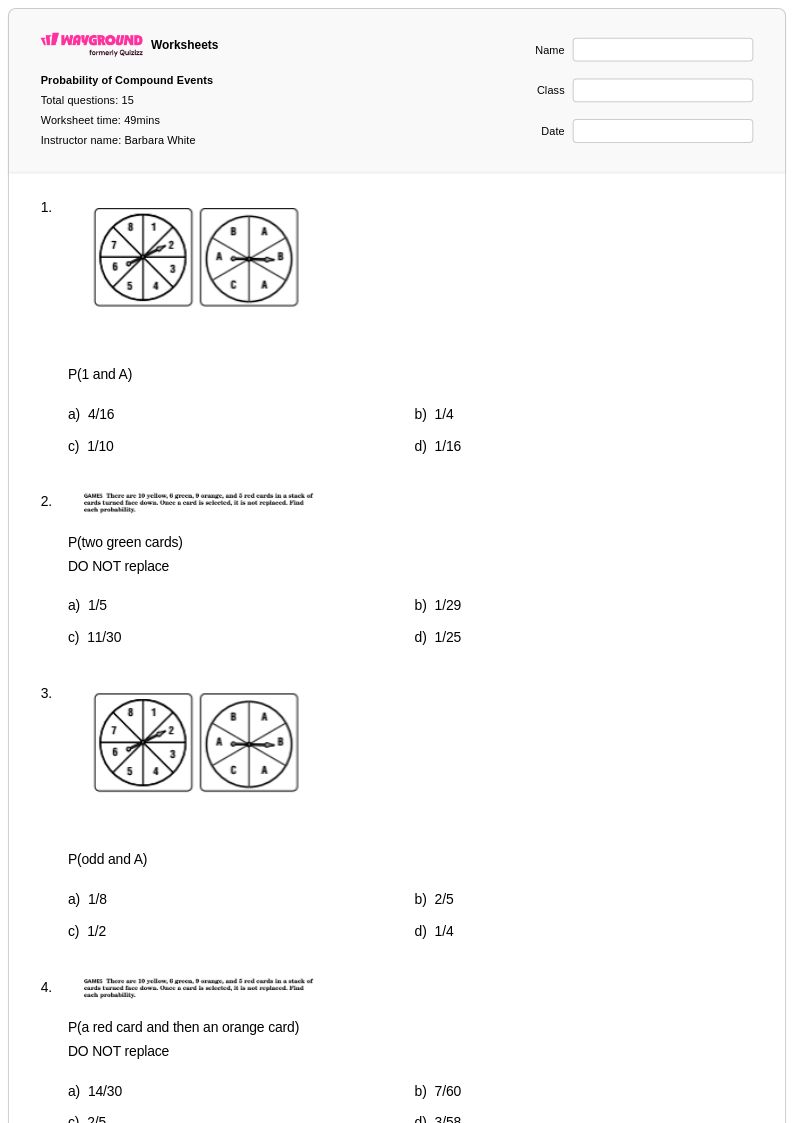
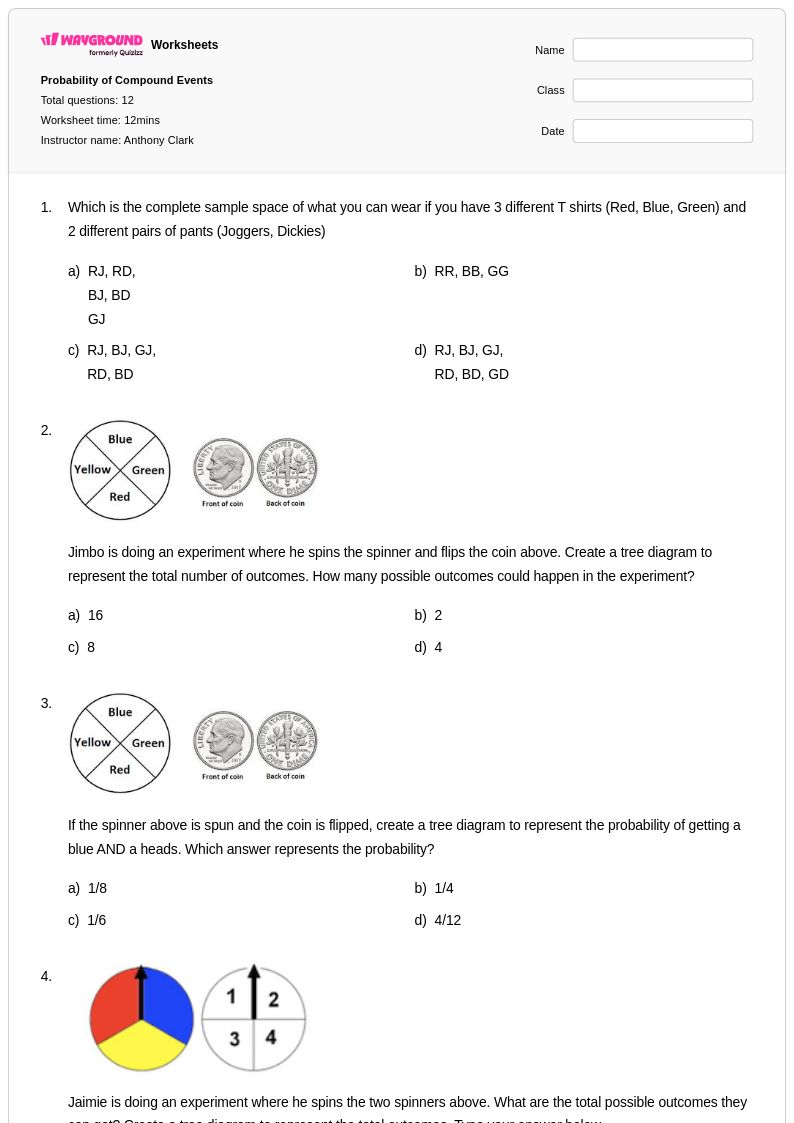
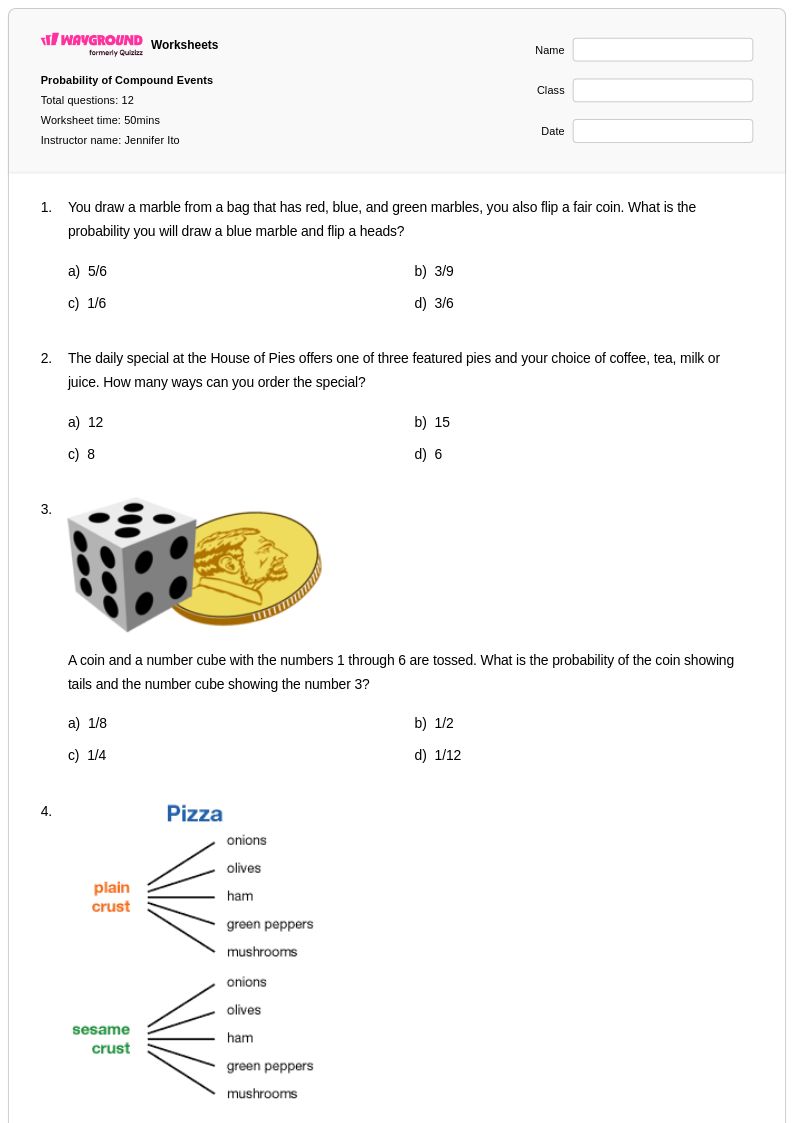
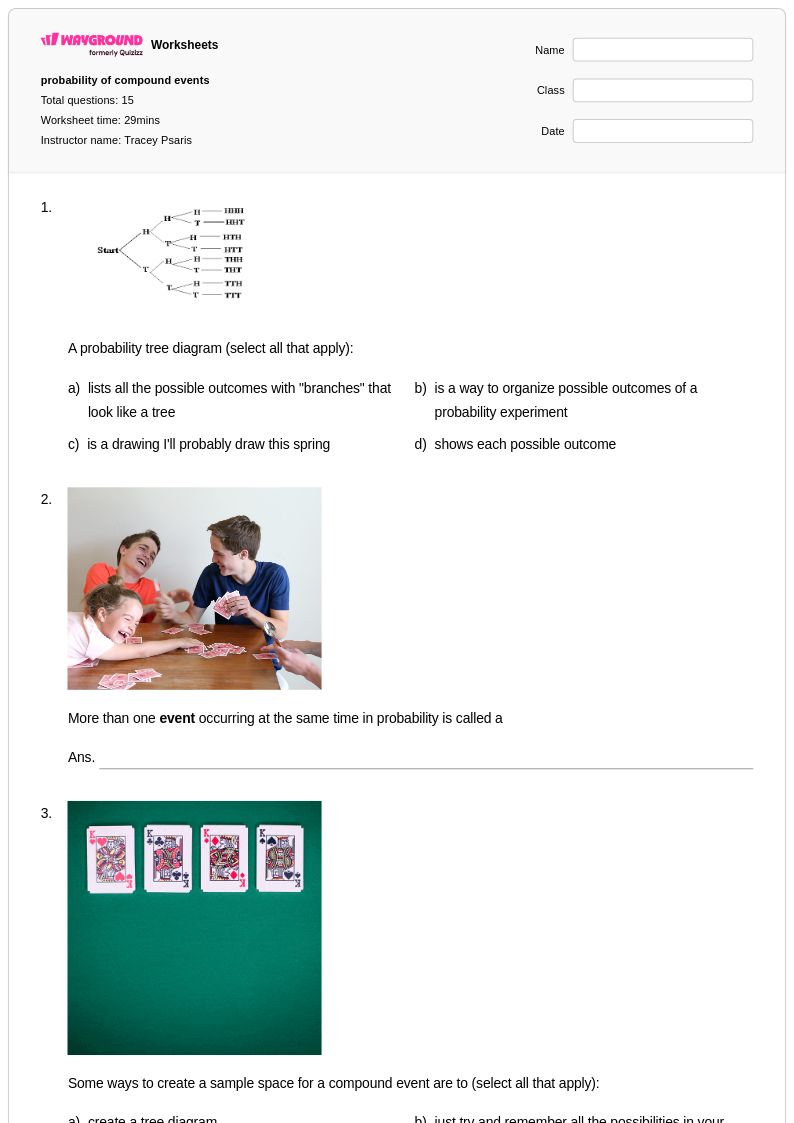
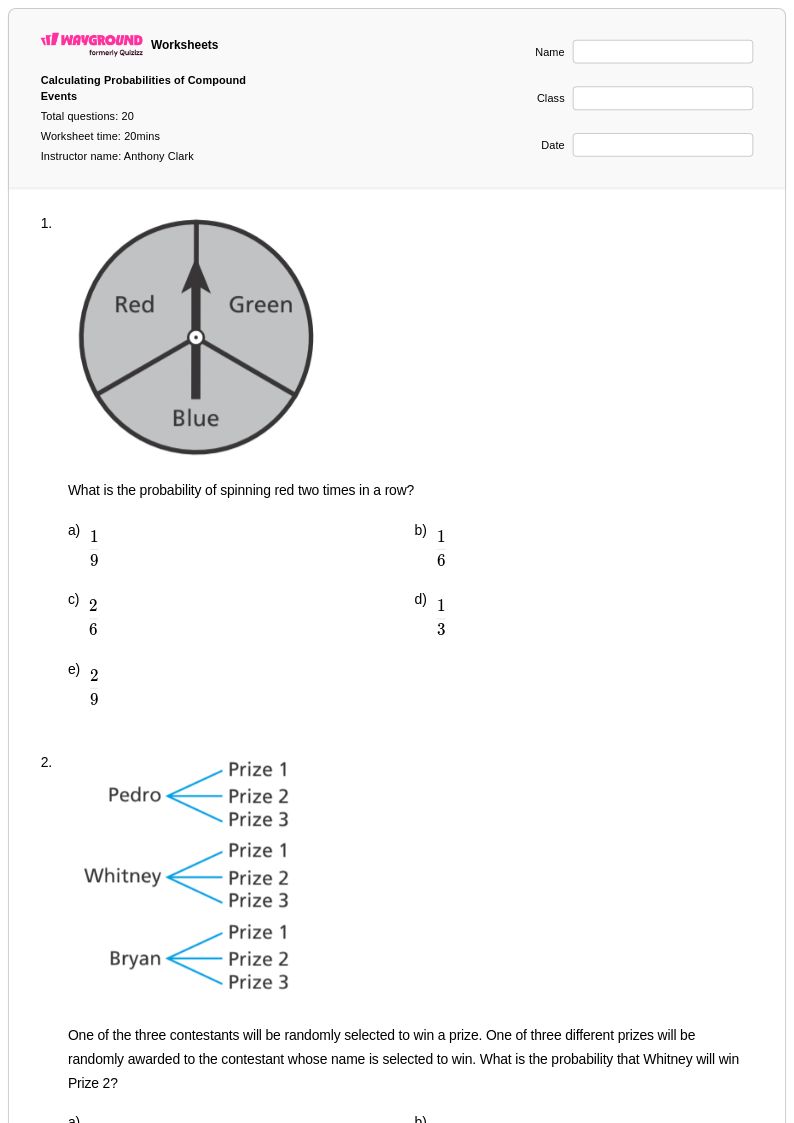
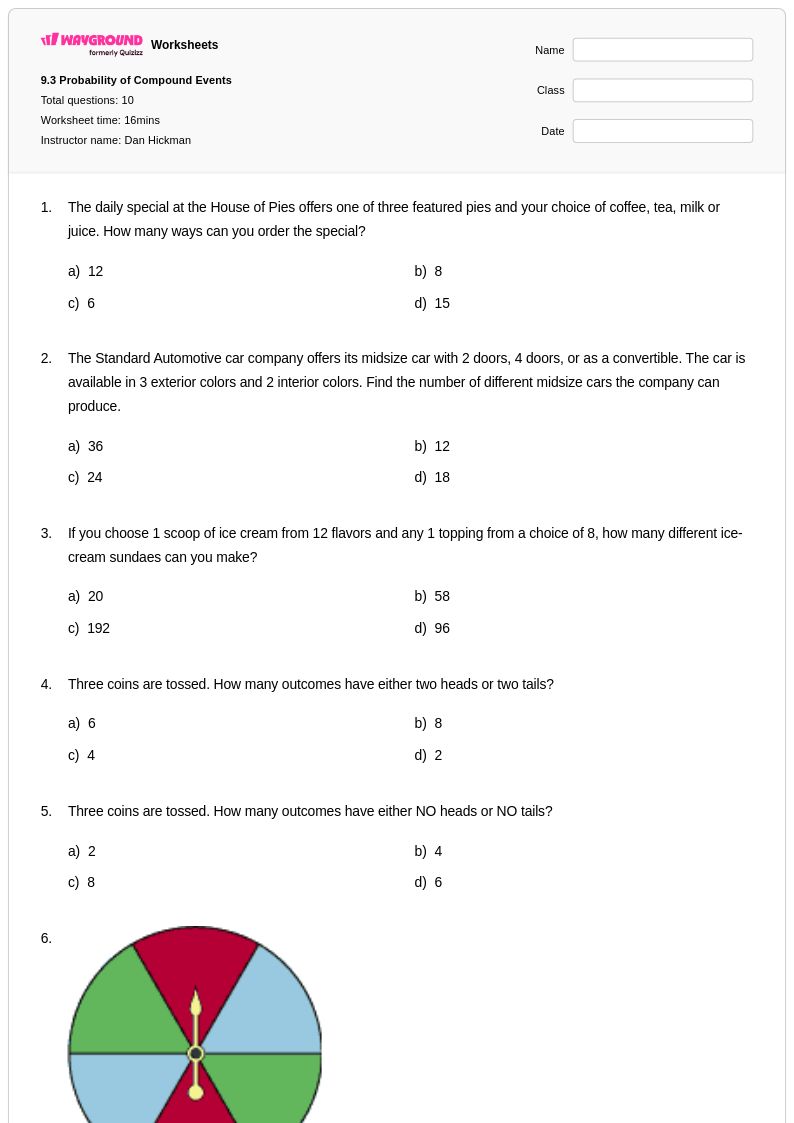
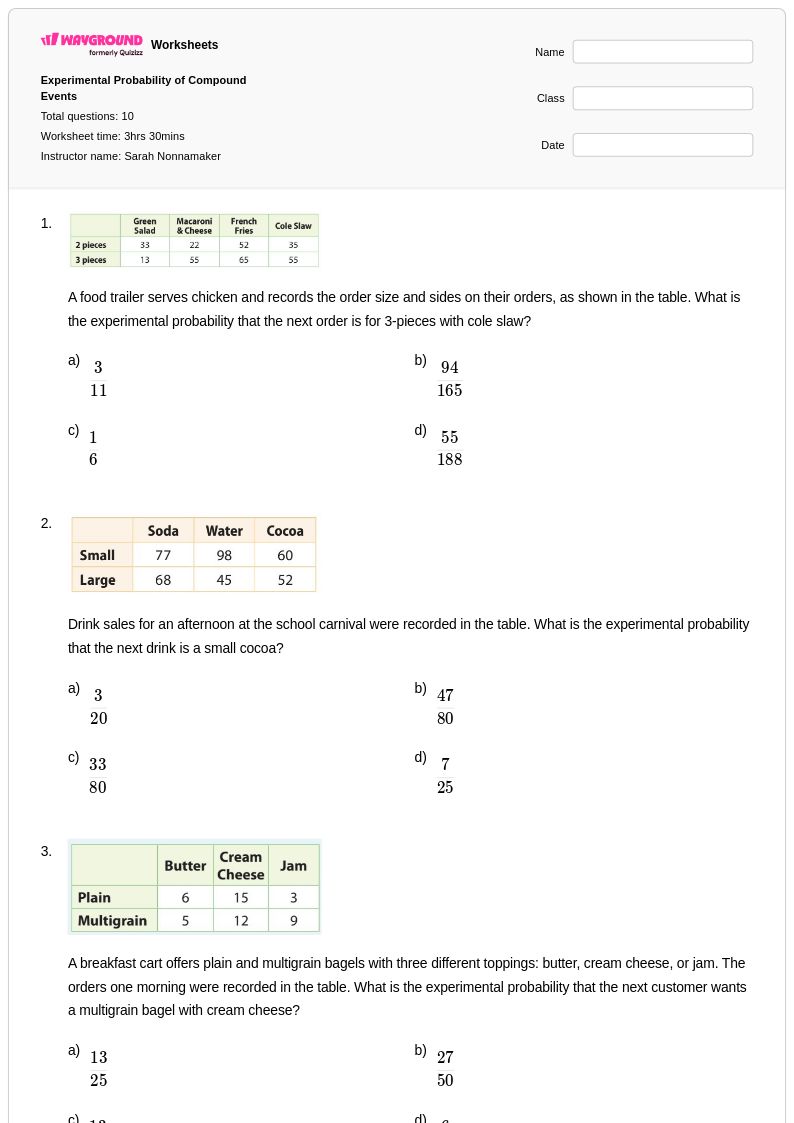
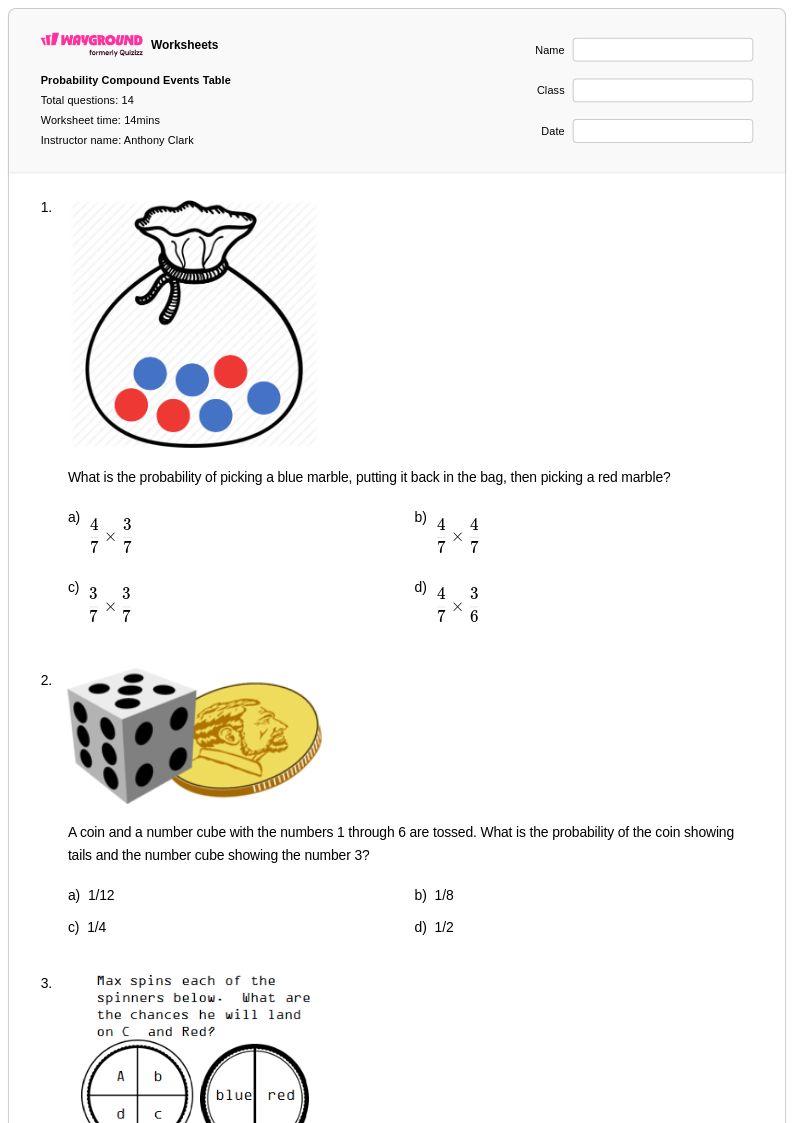
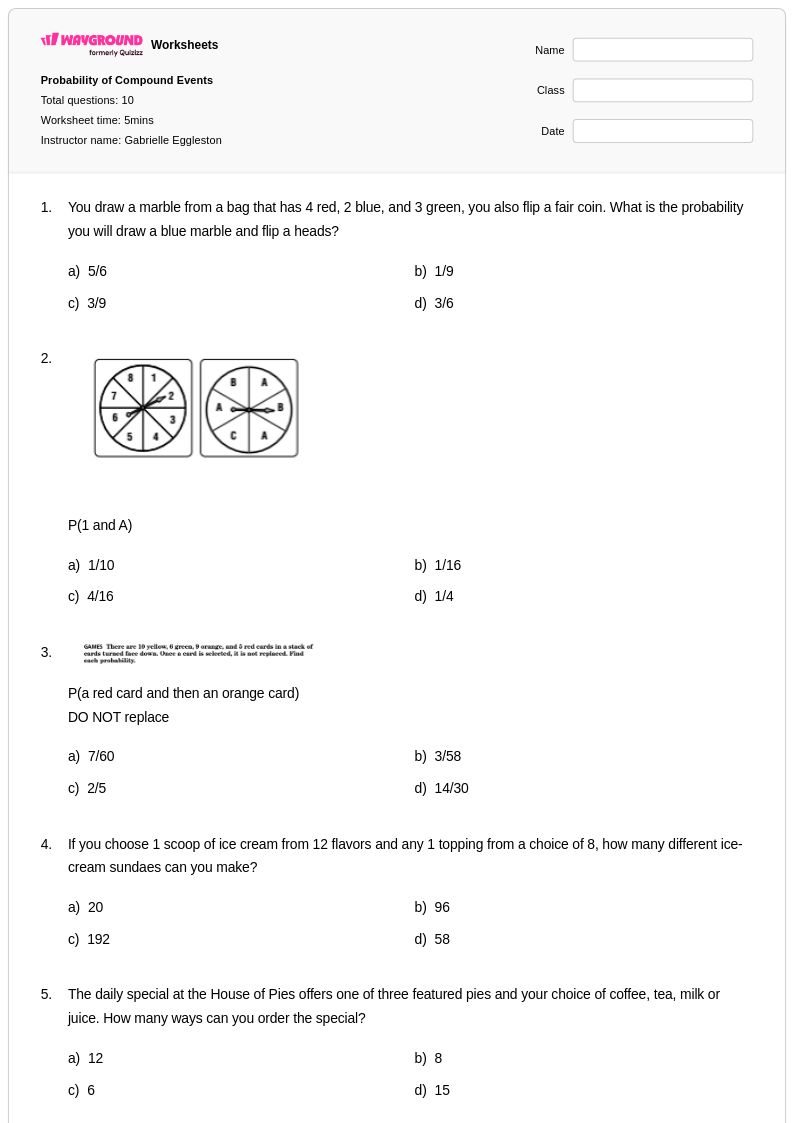
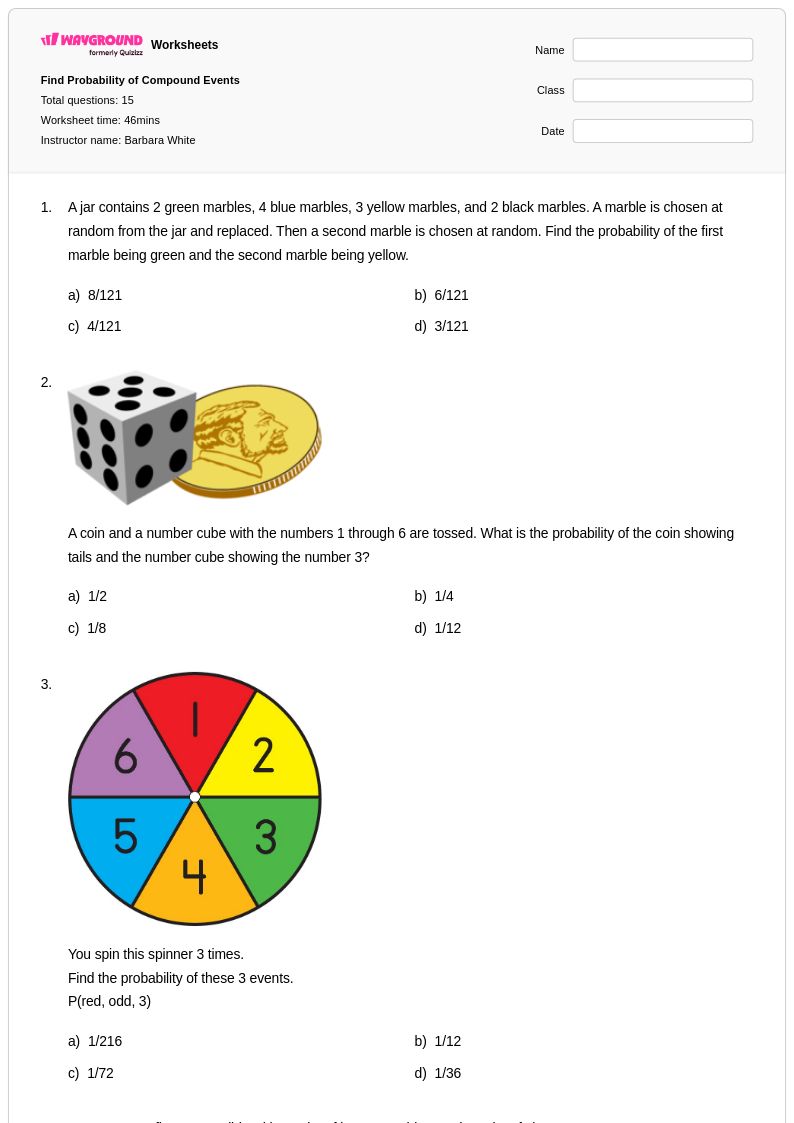
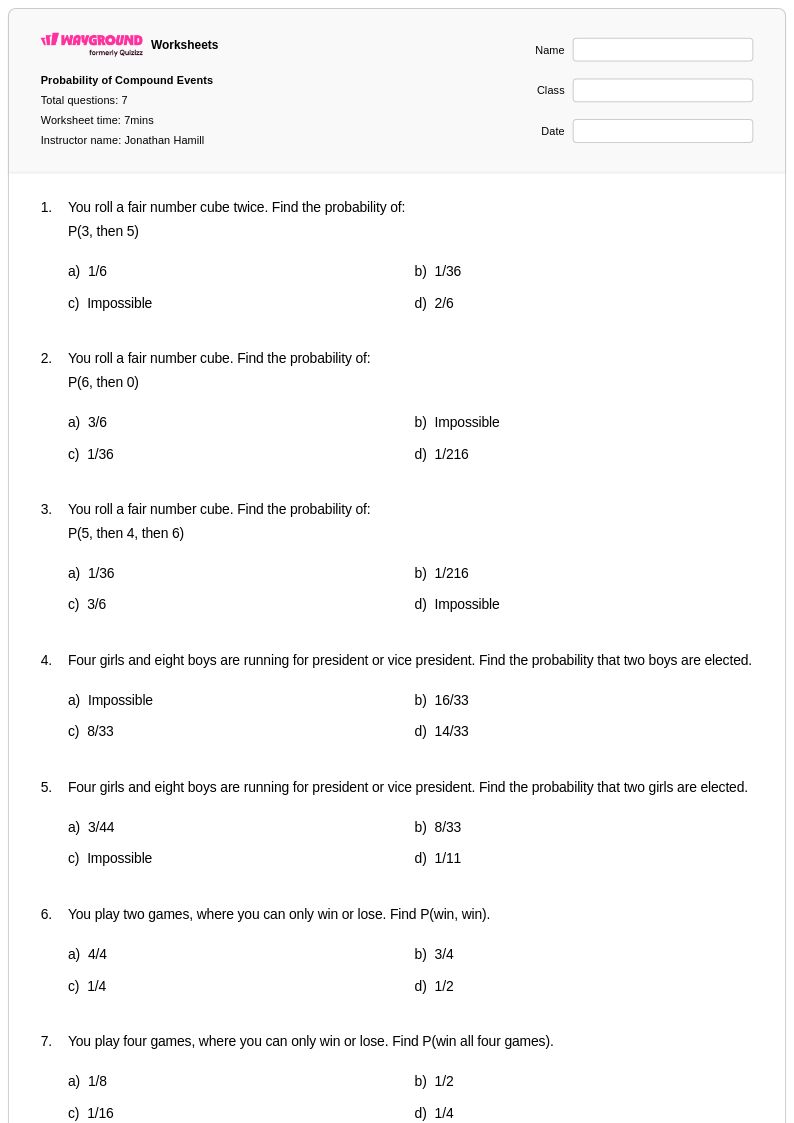
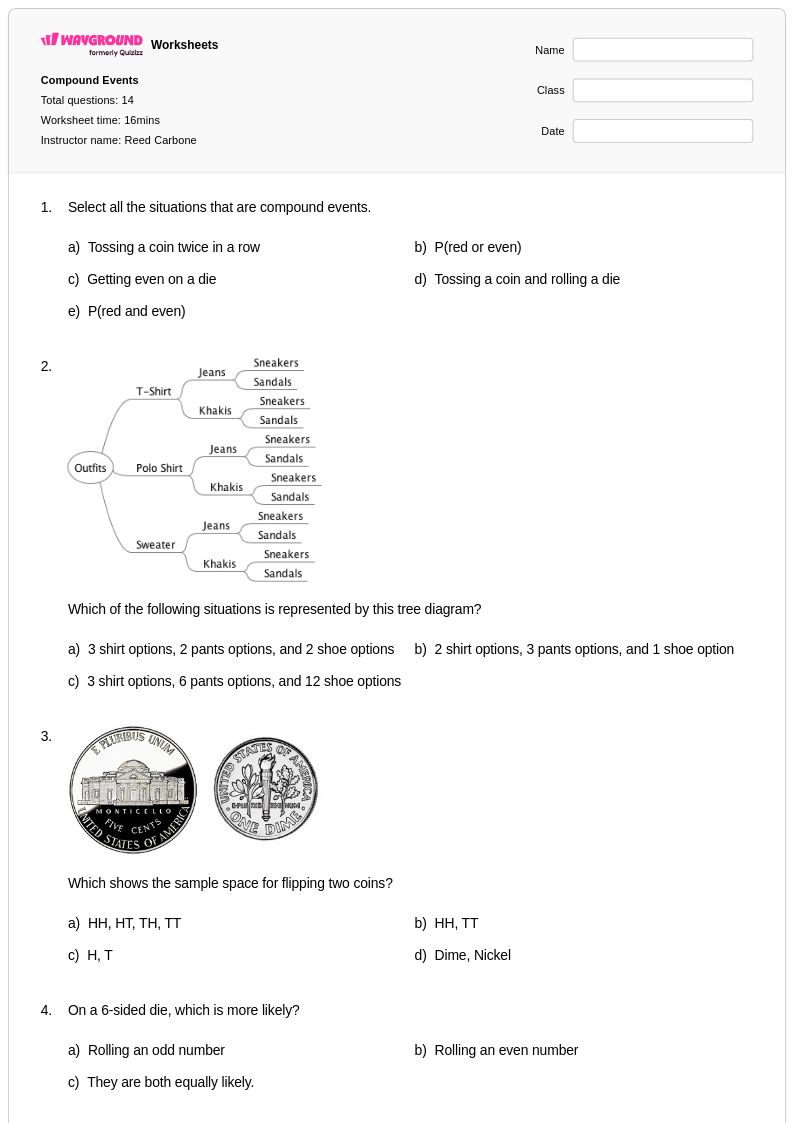
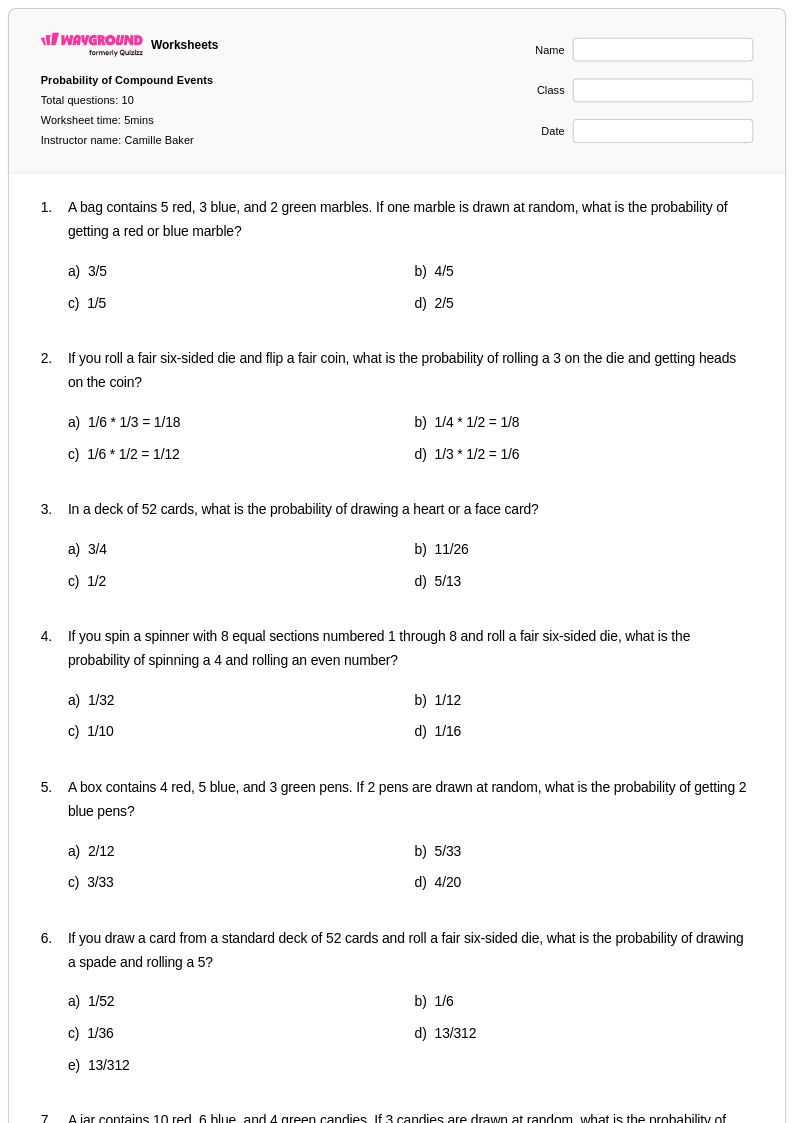
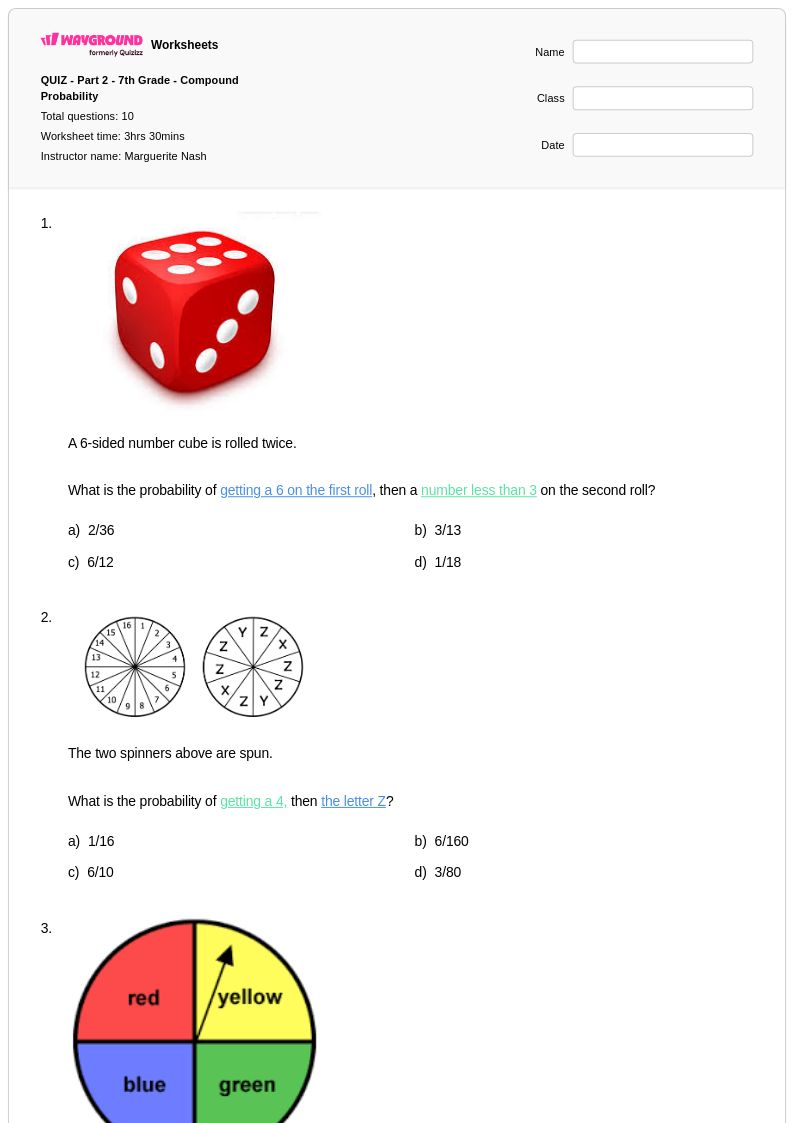
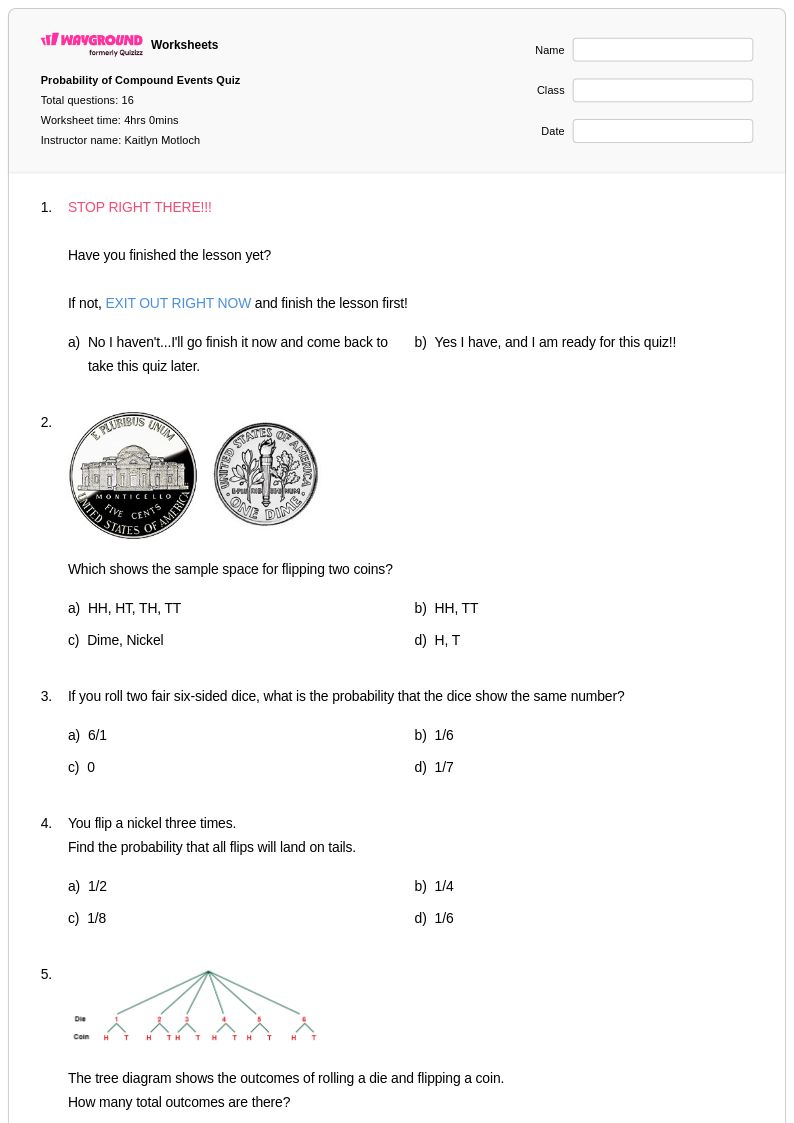
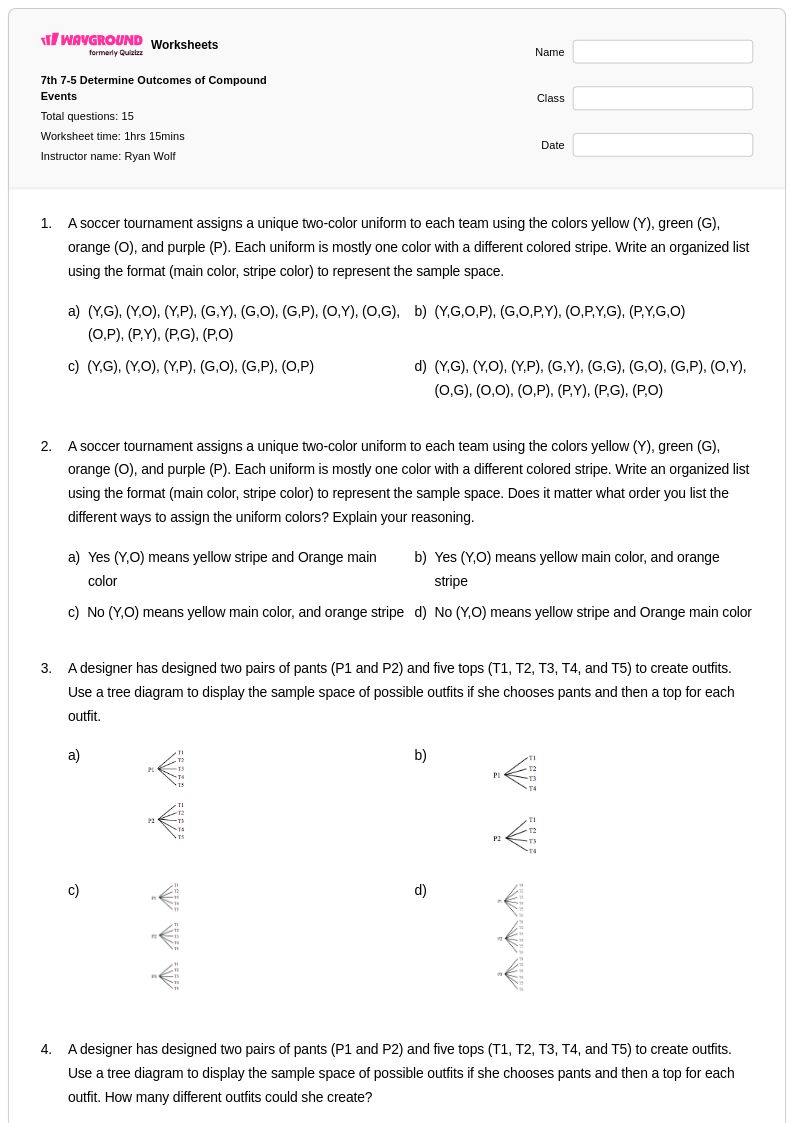
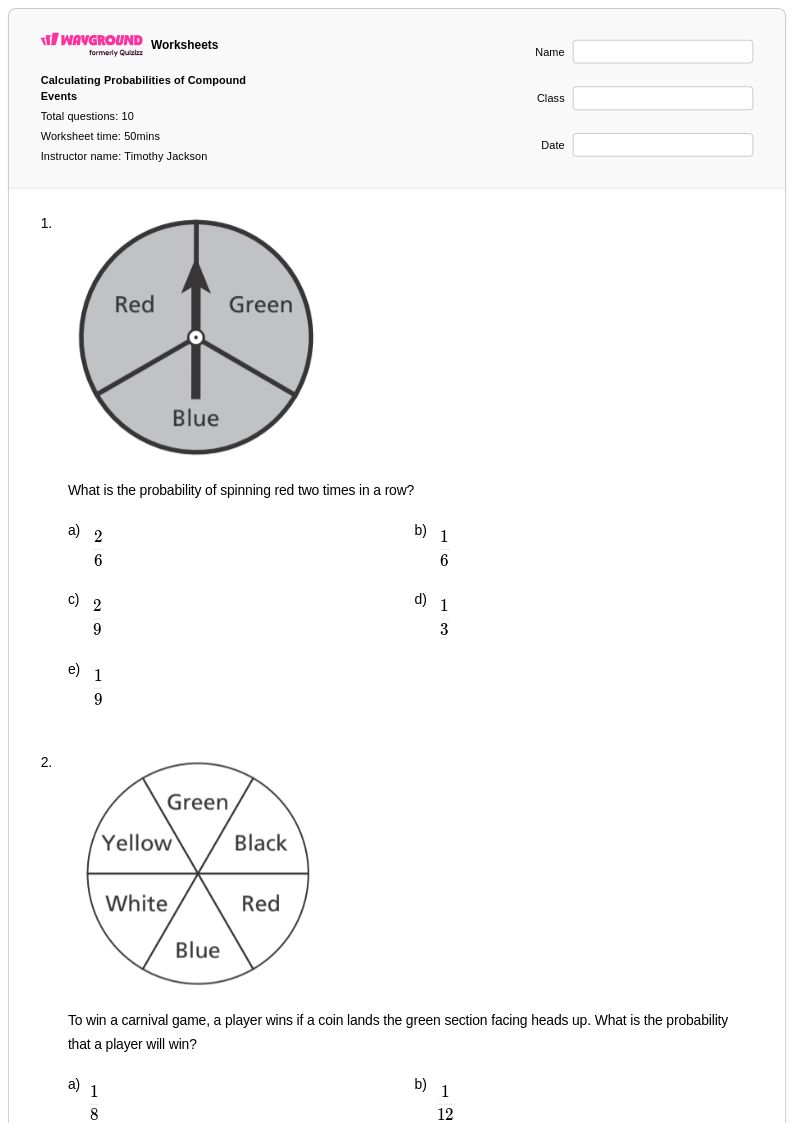
Probability of compound events worksheets for Year 7 students available through Wayground (formerly Quizizz) provide comprehensive practice with determining the likelihood of multiple events occurring together or in sequence. These carefully structured resources strengthen students' ability to calculate probabilities using multiplication rules, addition rules, and tree diagrams while distinguishing between independent and dependent events. The practice problems progress systematically from simple compound scenarios like flipping coins and rolling dice to more complex real-world applications involving conditional probability. Each worksheet includes detailed answer keys that guide students through step-by-step solutions, making these free printables invaluable for both classroom instruction and independent study as students master this foundational probability concept.
Wayground (formerly Quizizz) empowers educators with access to millions of teacher-created probability of compound events worksheets that can be easily searched, filtered, and customized to meet diverse classroom needs. The platform's robust collection aligns with mathematical standards and offers differentiation tools that allow teachers to modify difficulty levels, adjust problem types, and incorporate visual aids like probability trees and Venn diagrams. These resources are available in both printable pdf format and interactive digital versions, giving instructors flexibility to support varied learning preferences while planning targeted remediation for struggling students or enrichment activities for advanced learners. The extensive customization options enable teachers to create cohesive lesson sequences that build conceptual understanding of compound probability through carefully scaffolded skill practice.
FAQs
What are the 7th-grade expectations for compound probability?
In 7th grade, students move beyond simply listing outcomes and begin to formalize their understanding. They learn to identify events as independent or dependent and use organized lists, tables, and tree diagrams to calculate probabilities. This is the grade where they are formally introduced to the idea that P(A and B) = P(A) × P(B) for independent events.
How can I help students understand when to multiply probabilities?
Connect the multiplication rule back to tree diagrams. Show them how each path on the diagram represents a multiplication of probabilities to find the likelihood of that specific sequence of events. For example, the probability of flipping heads (1/2) AND then rolling a 6 (1/6) is found by multiplying along that path: 1/2 × 1/6 = 1/12.
What kinds of practice problems are appropriate for 7th graders?
Seventh-grade problems should require students to first identify if events are independent or dependent. Good examples include drawing two marbles from a bag with replacement (independent) versus without replacement (dependent). Problems should encourage the use of tree diagrams to model the situation before applying a formula.
What mistakes do 7th graders make with compound probability?
A common error is applying the simple multiplication rule for independent events to dependent event scenarios, forgetting to adjust the probability of the second event. Students may also struggle to set up the sample space correctly for multi-step experiments, leading to an incorrect denominator in their final probability calculation.
How can I use this 7th-grade probability worksheet?
These worksheets can be assigned as a printable PDF for in-class work or as a digital activity on the Wayground platform. Every worksheet includes a complete answer key. When using the printable version, you can grade submissions quickly by scanning them with the Wayground for Teachers mobile app.
Is teaching compound events aligned with 7th-grade Common Core standards?
Yes, this is a key topic in the 7th-grade Common Core State Standards for Statistics and Probability. The standards explicitly require students to find probabilities of compound events using organized lists, tables, tree diagrams, and simulation. This work builds directly on 6th-grade single-event probability and prepares them for high school statistics.
How can I support struggling students with compound probability?
Use Wayground's worksheet-level tools to create a scaffolded version with a dyslexia-friendly font or wider font spacing to improve readability. For digital assignments, enable the Read Aloud feature to help students process complex word problems. Providing sentence starters like "The events are [independent/dependent] because..." can also help them structure their reasoning.