Free Printable Properties of Light Worksheets for Year 8
Explore Year 8 properties of light worksheets with free printables and answer keys that help students master reflection, refraction, and electromagnetic spectrum concepts through engaging practice problems and PDF activities.
Explore printable Properties of Light worksheets for Year 8
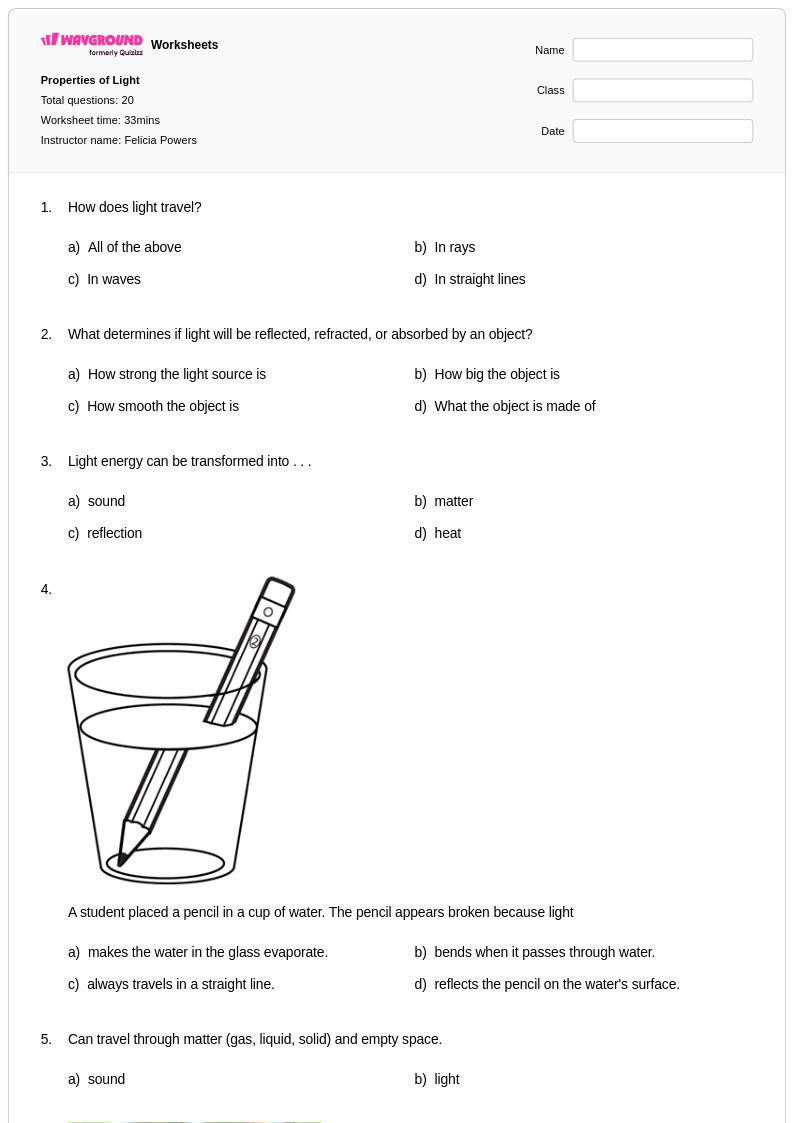
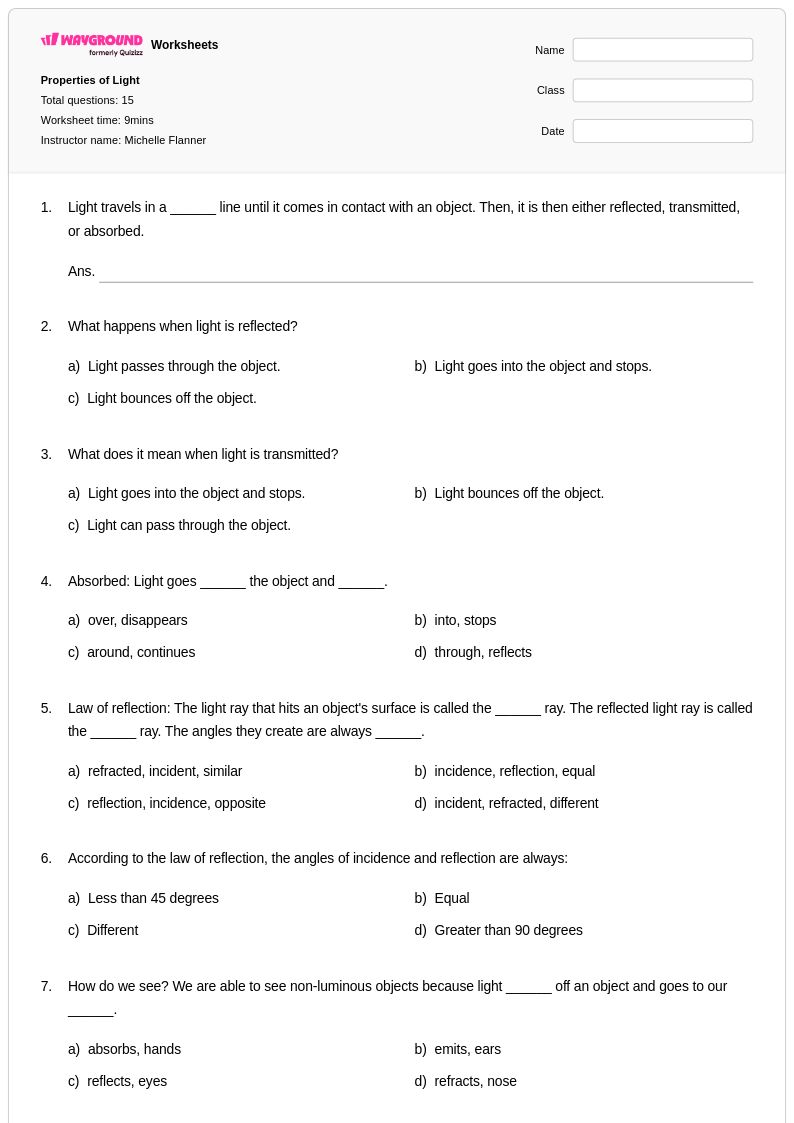
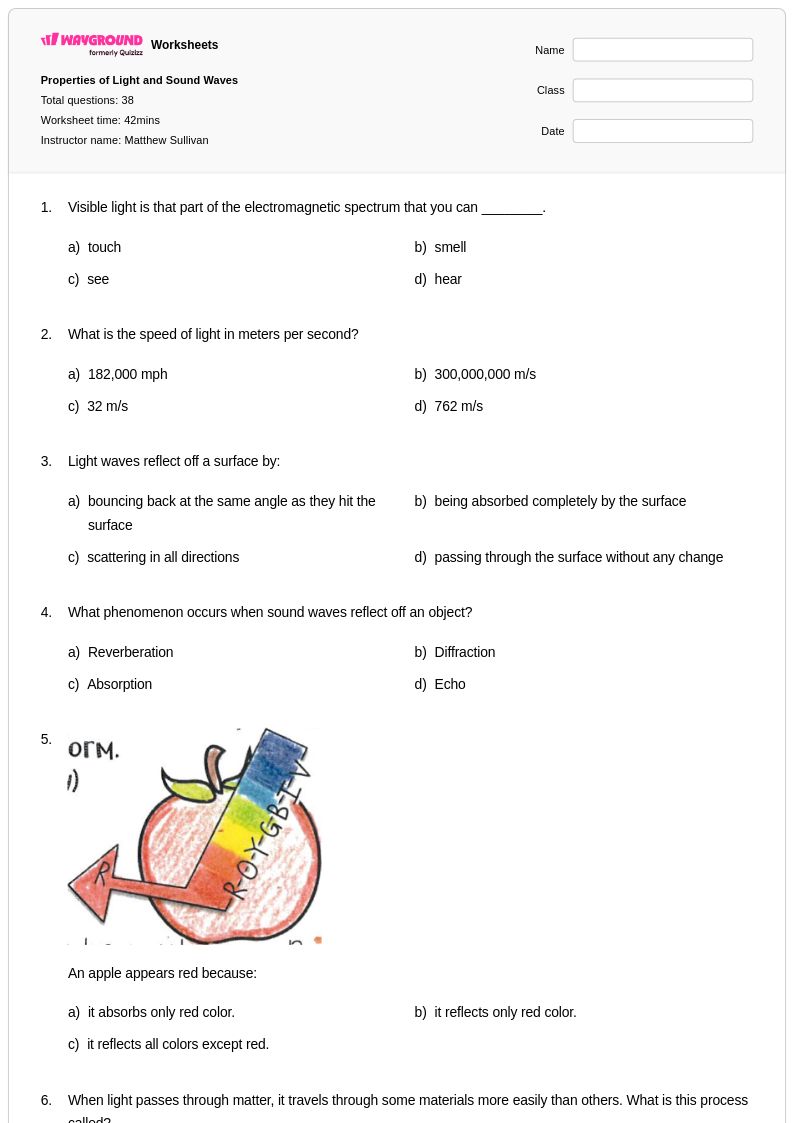
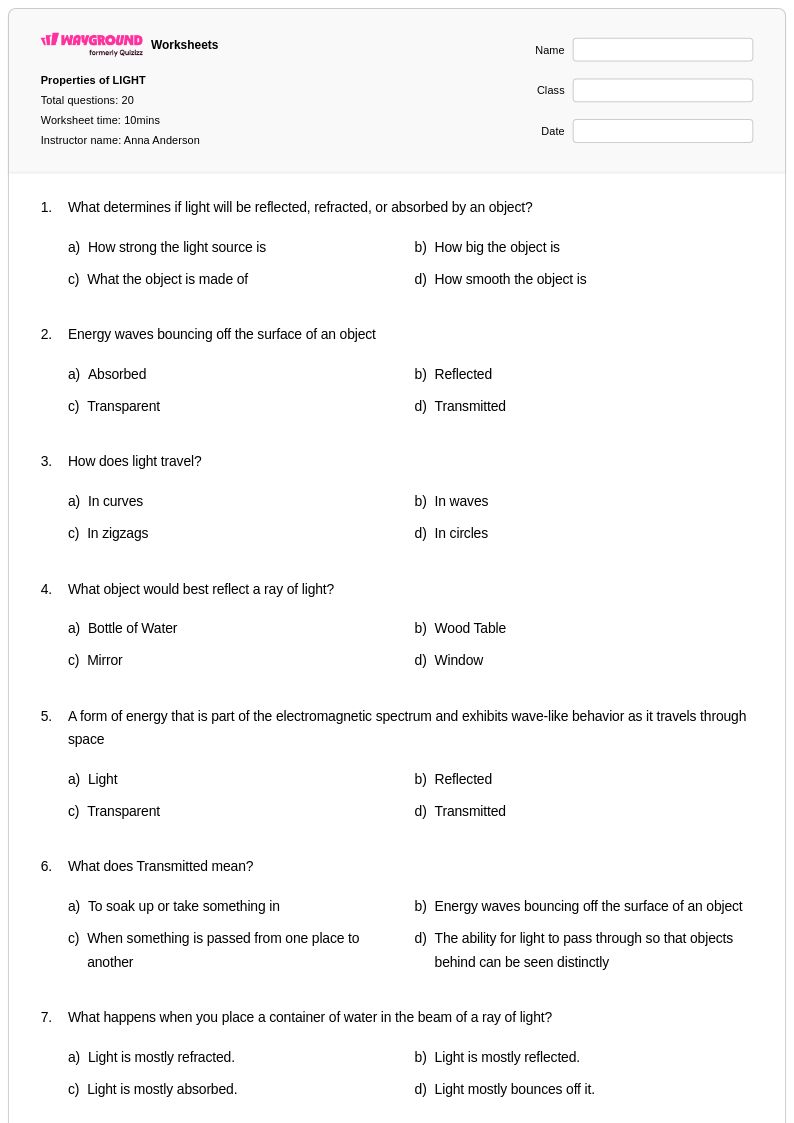
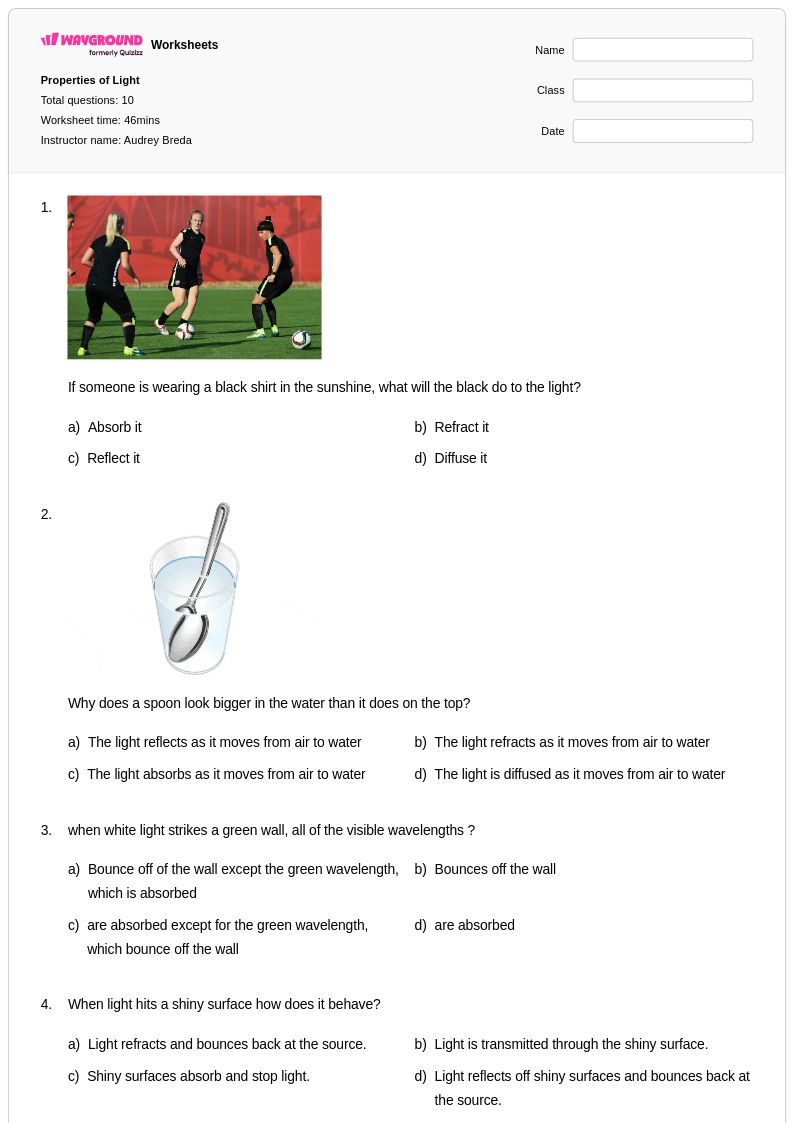
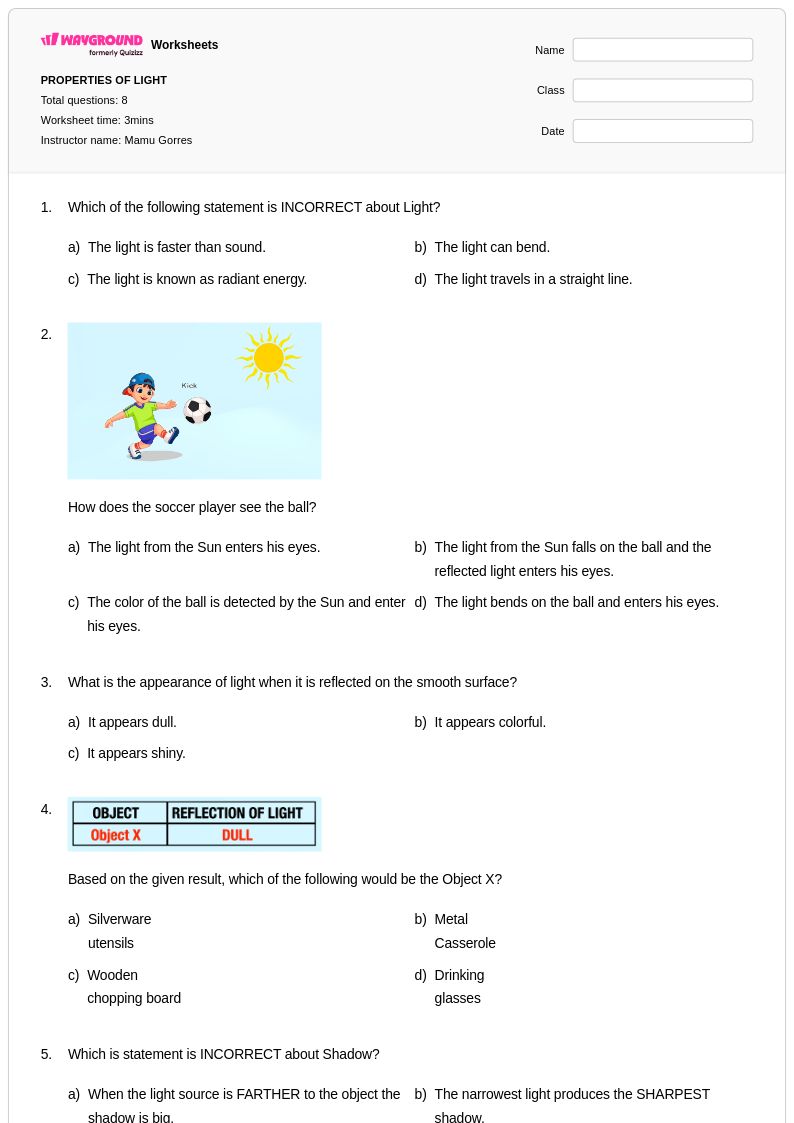
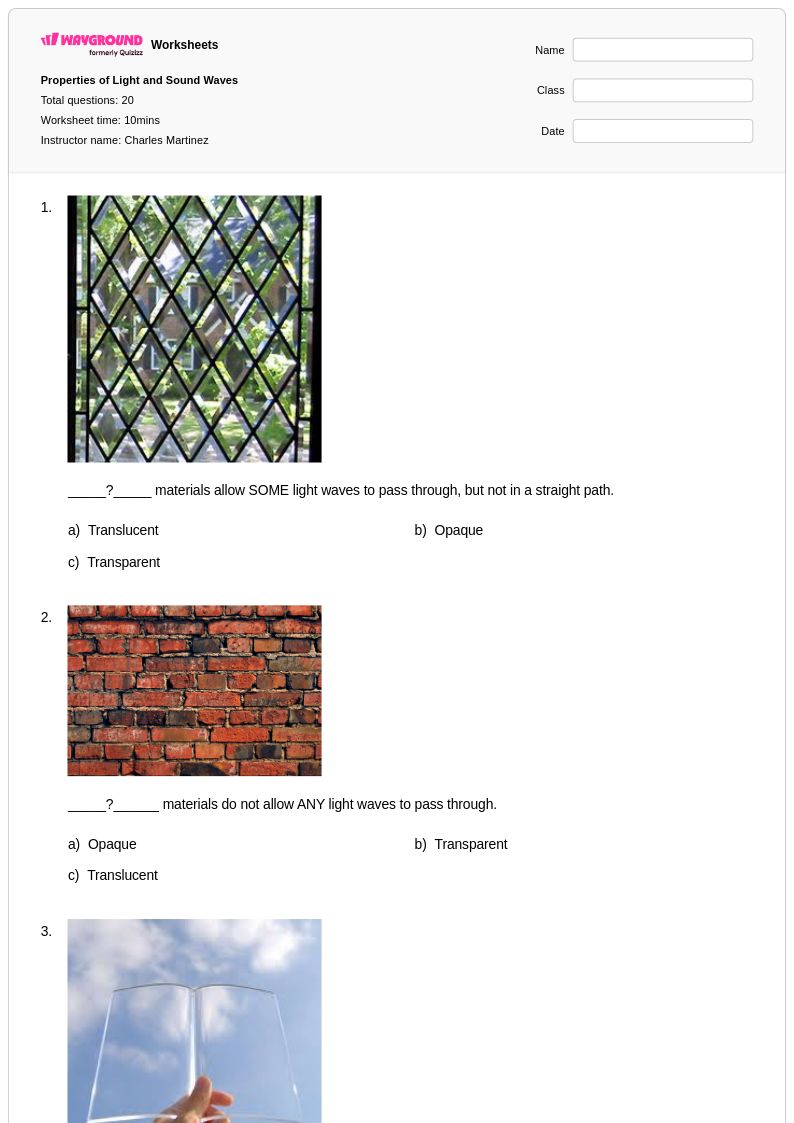
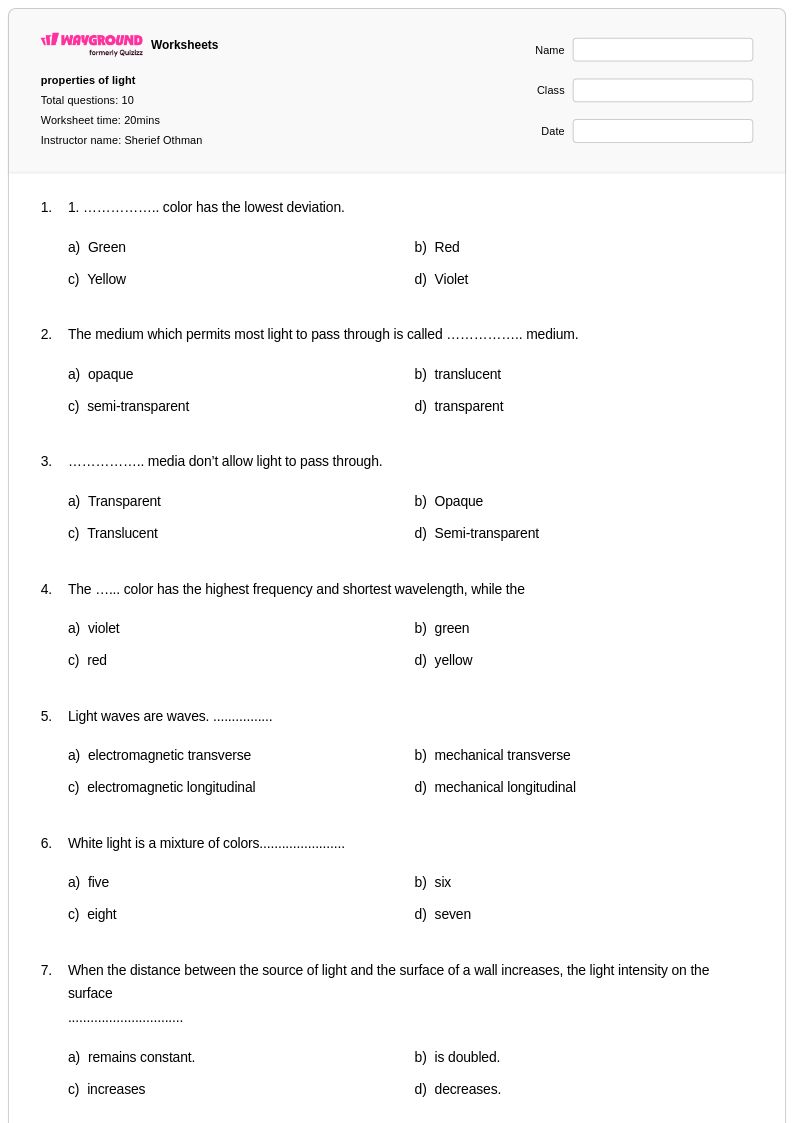
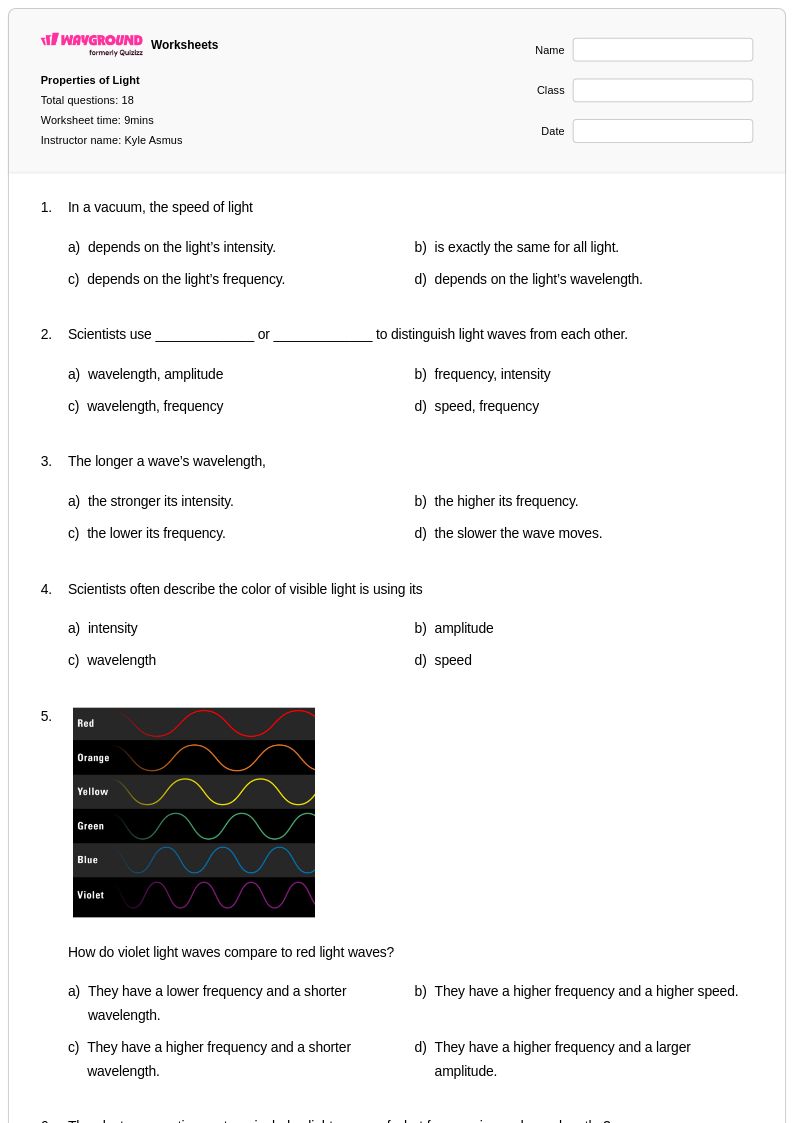
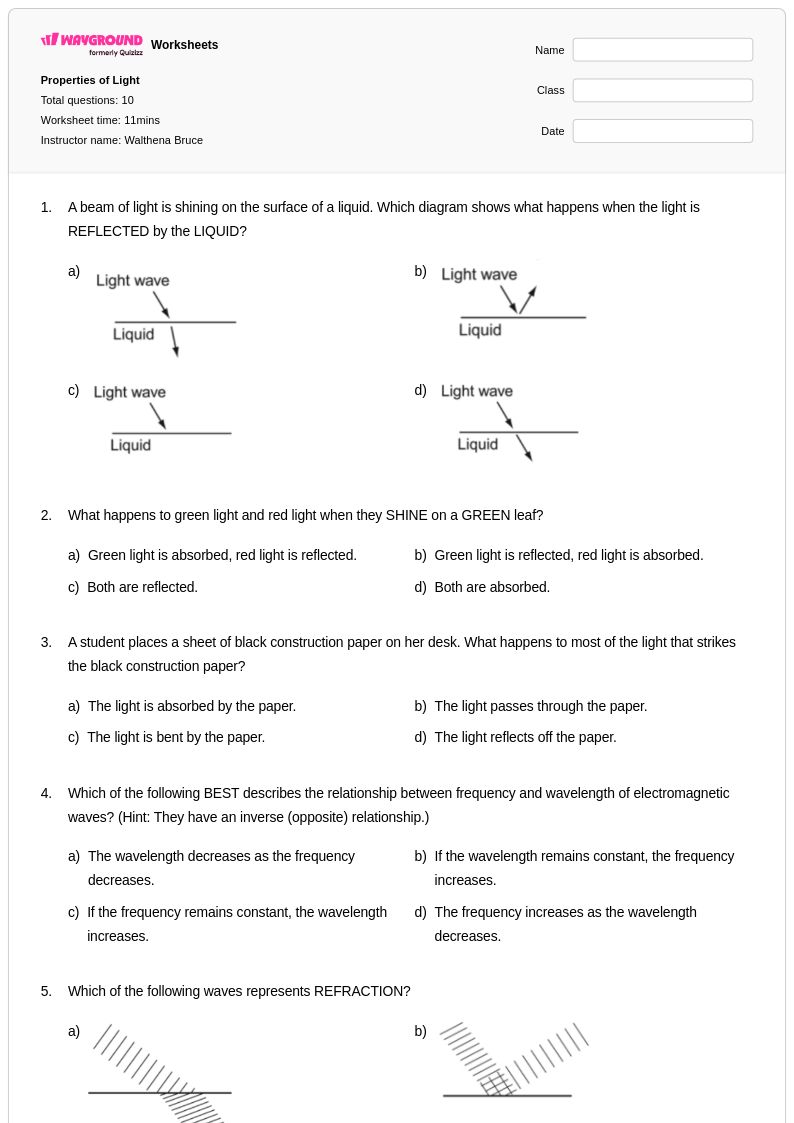
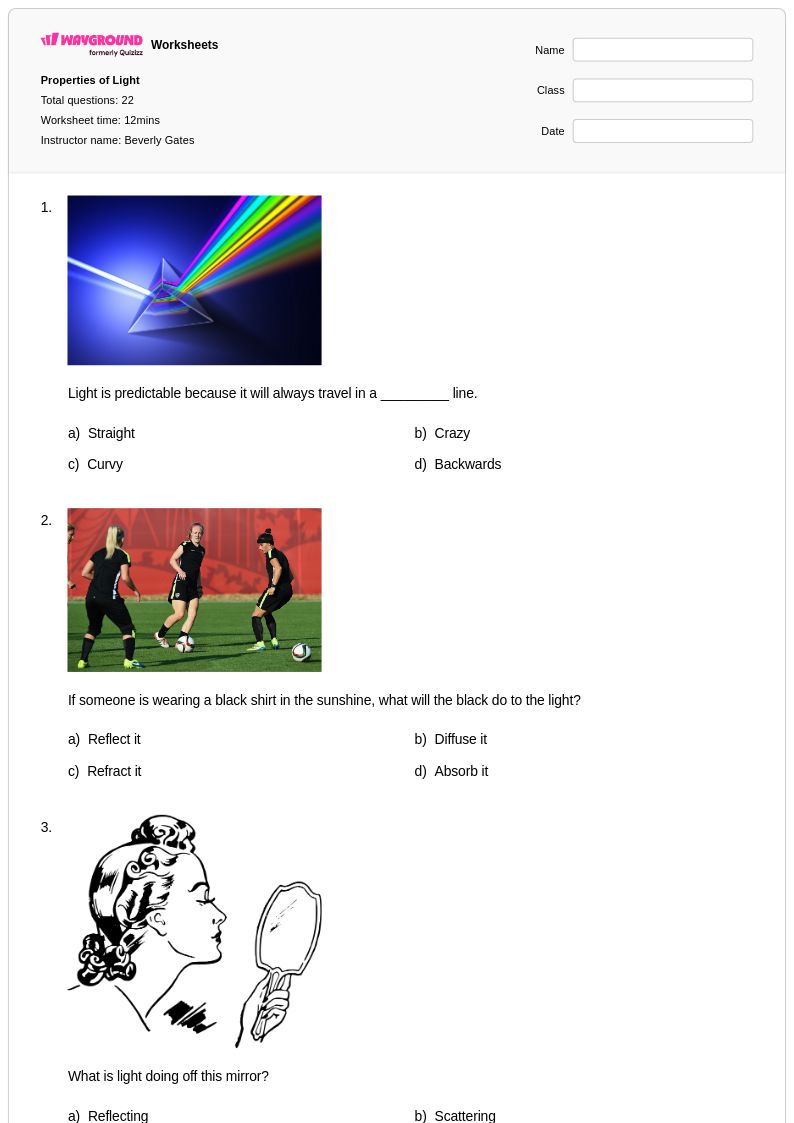
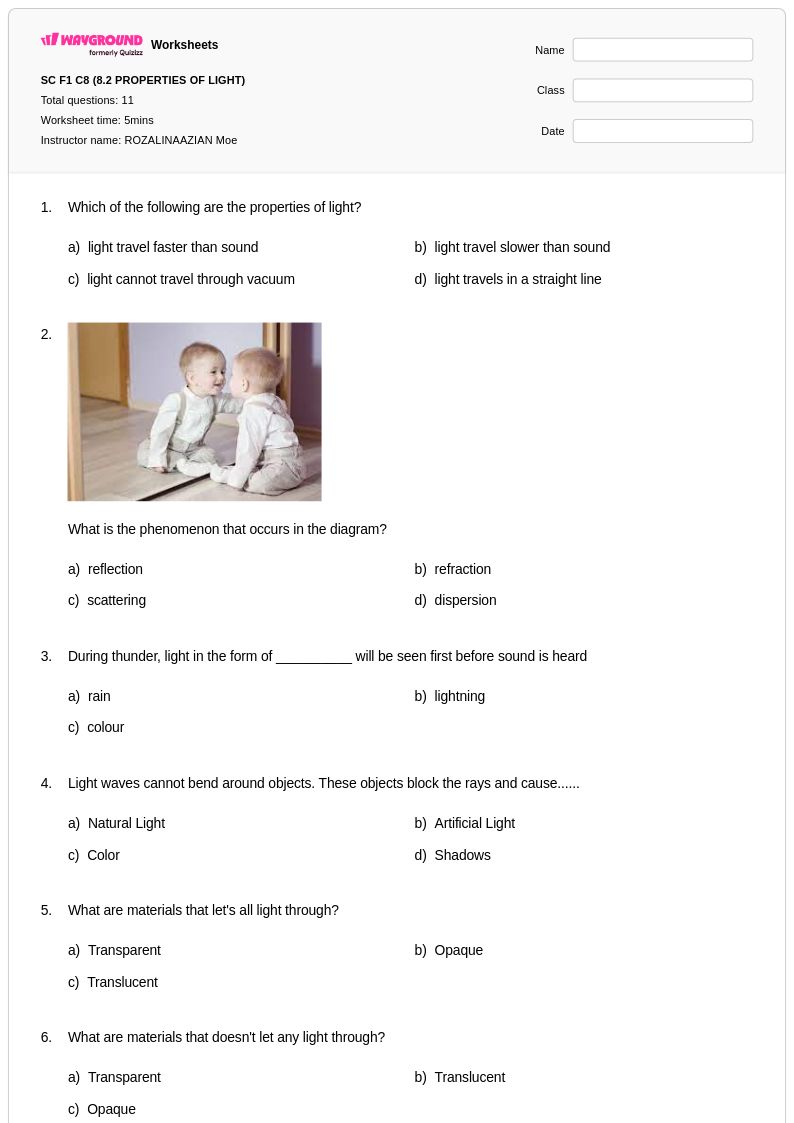
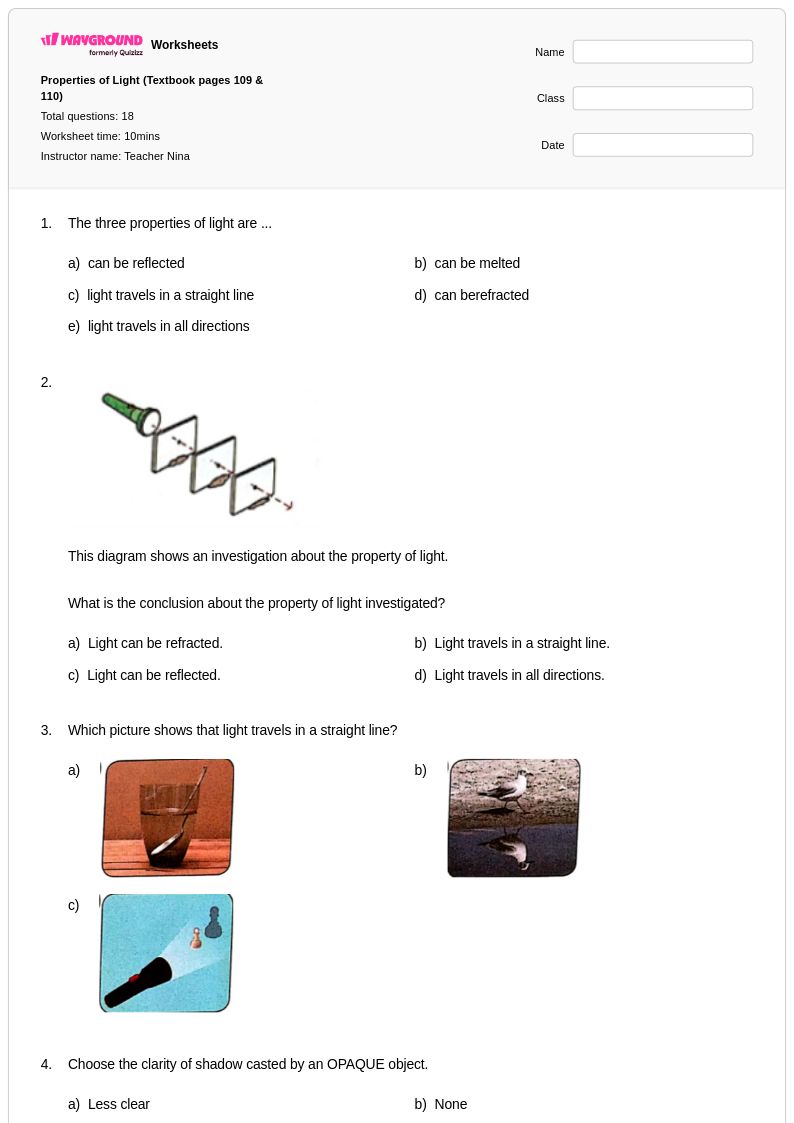
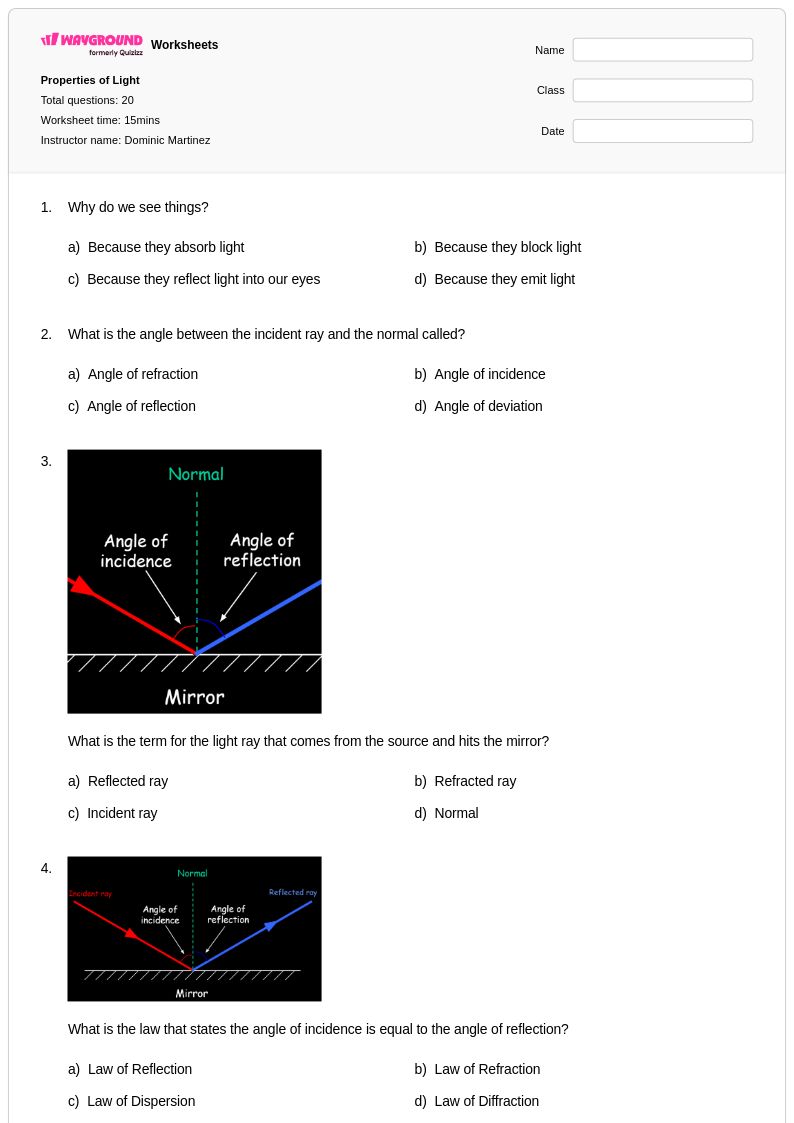
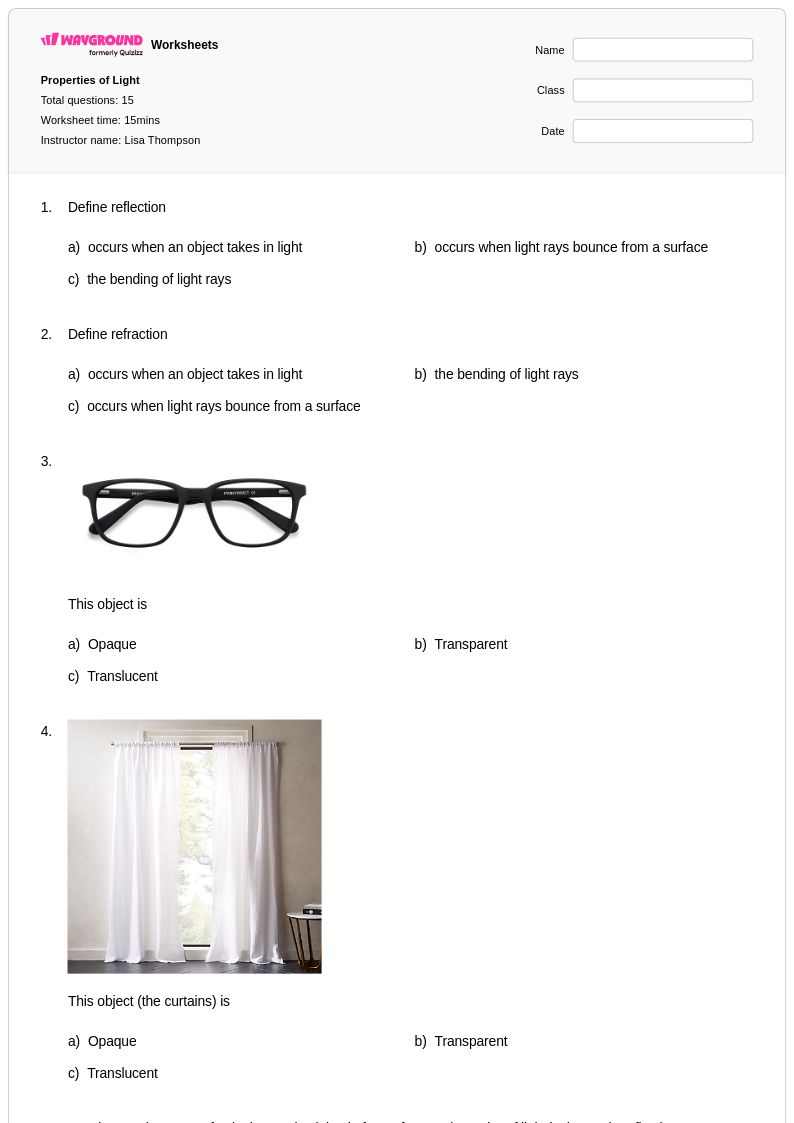
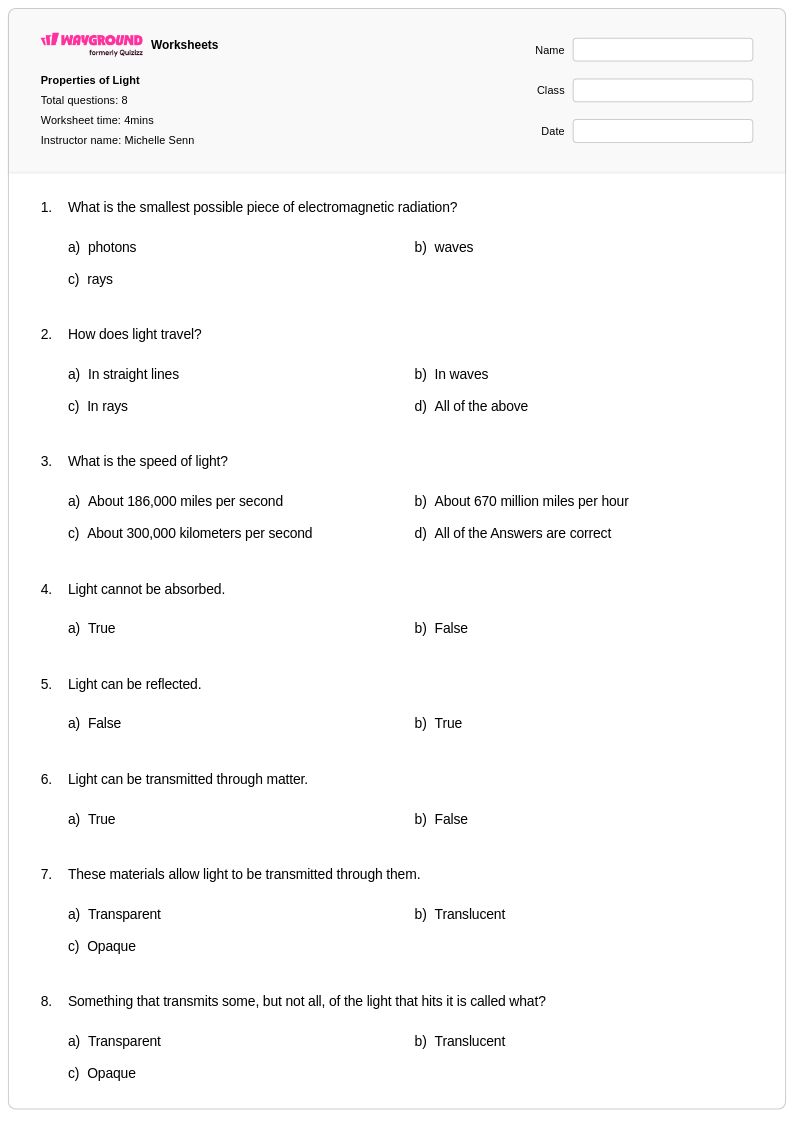
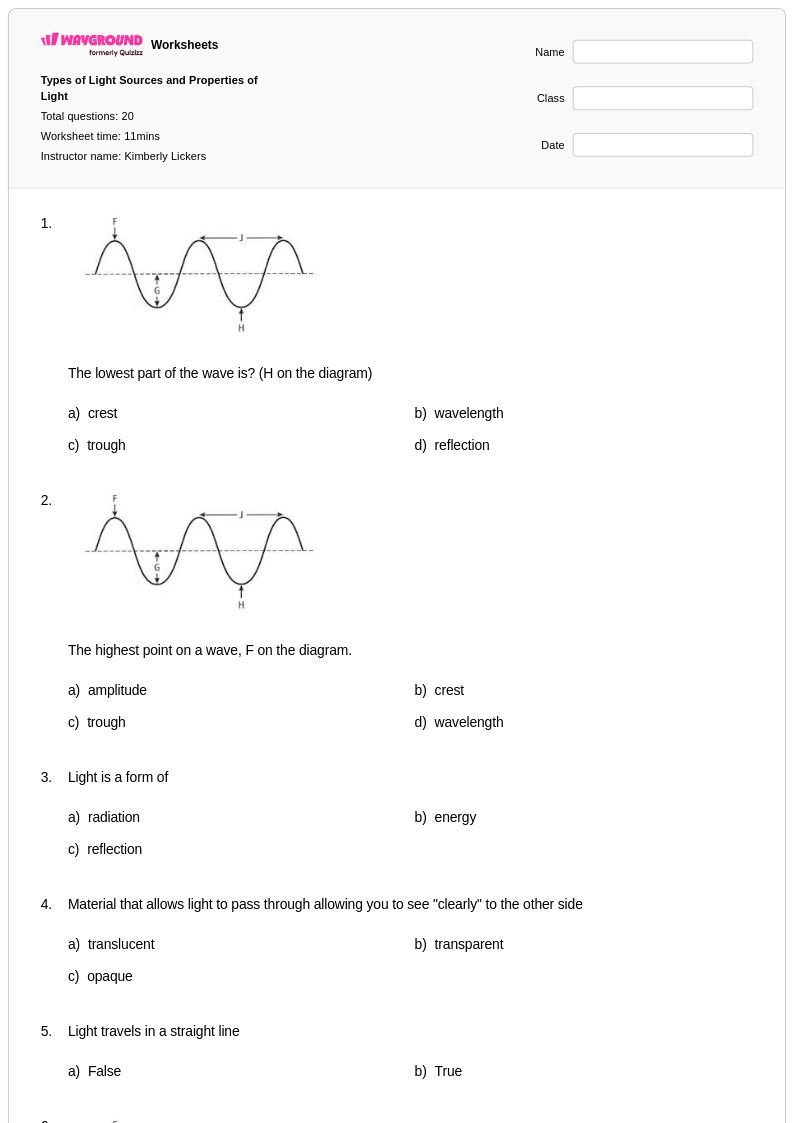
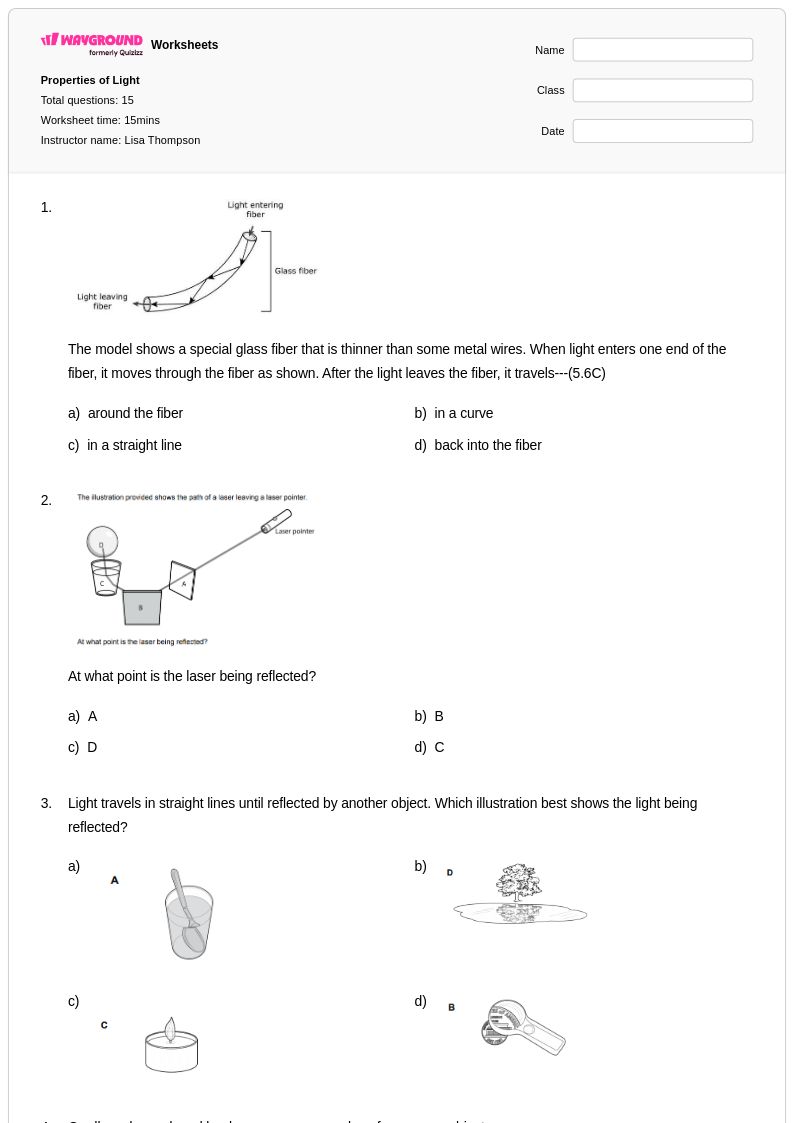
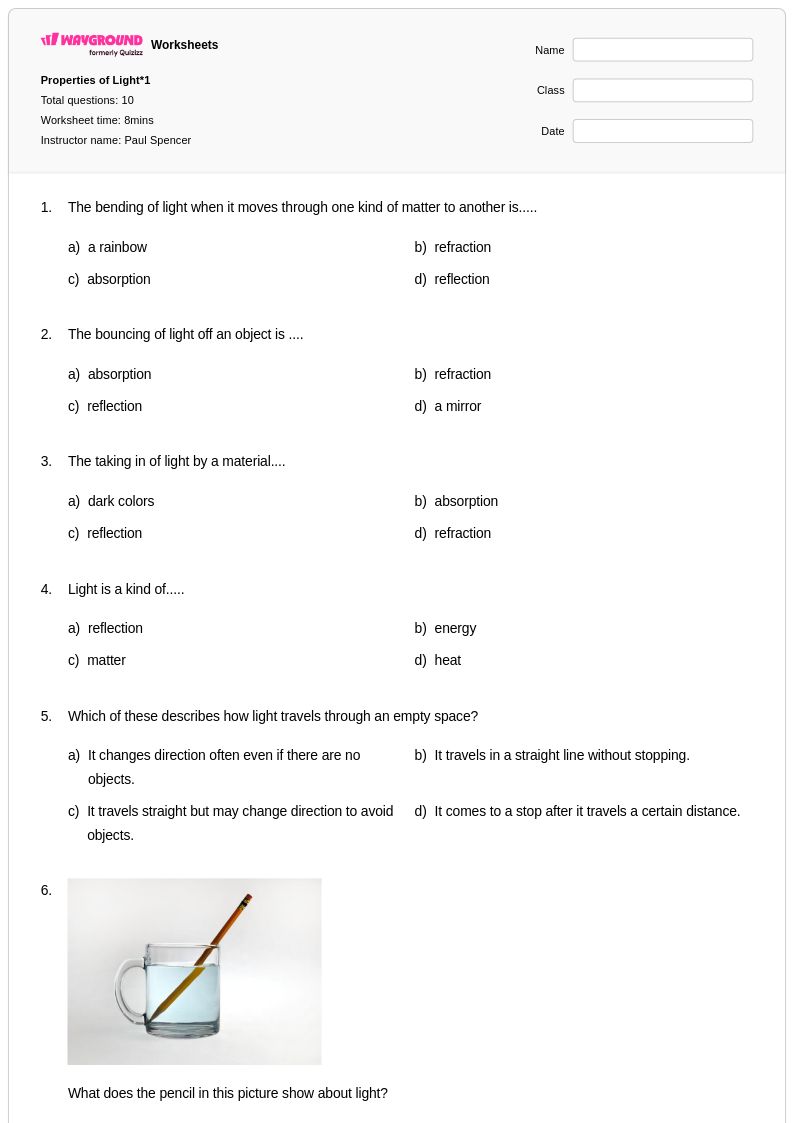
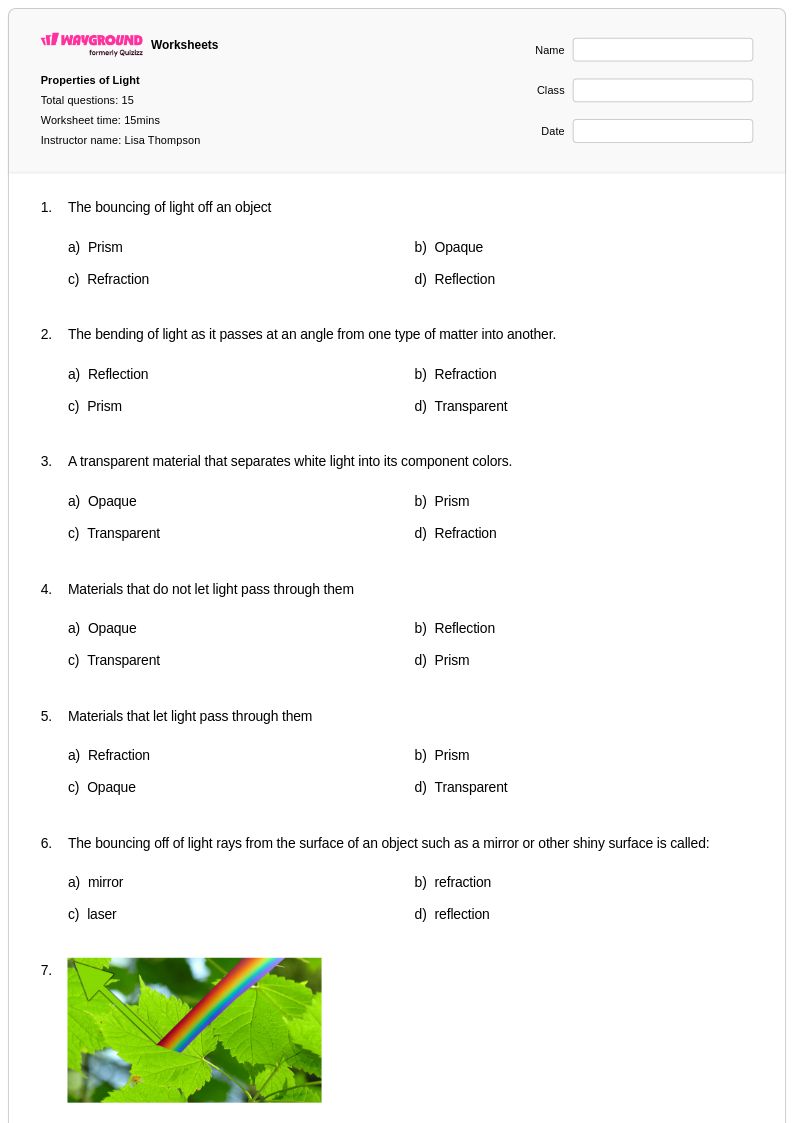
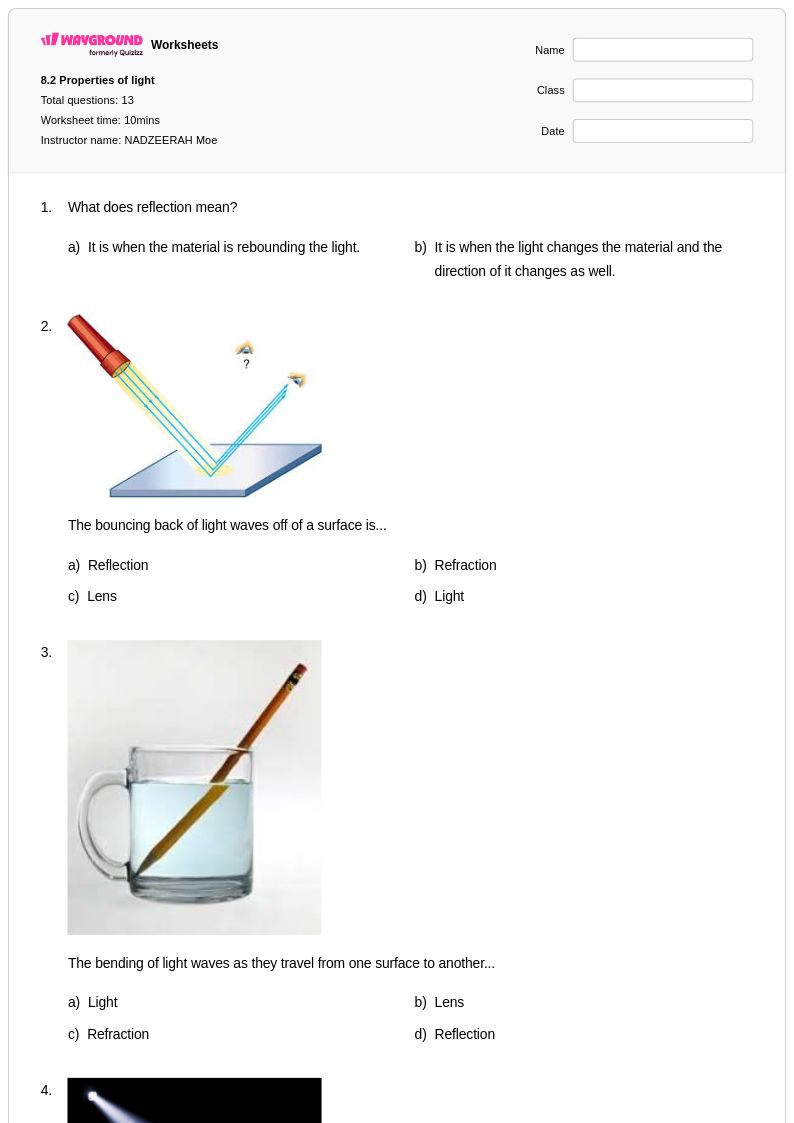
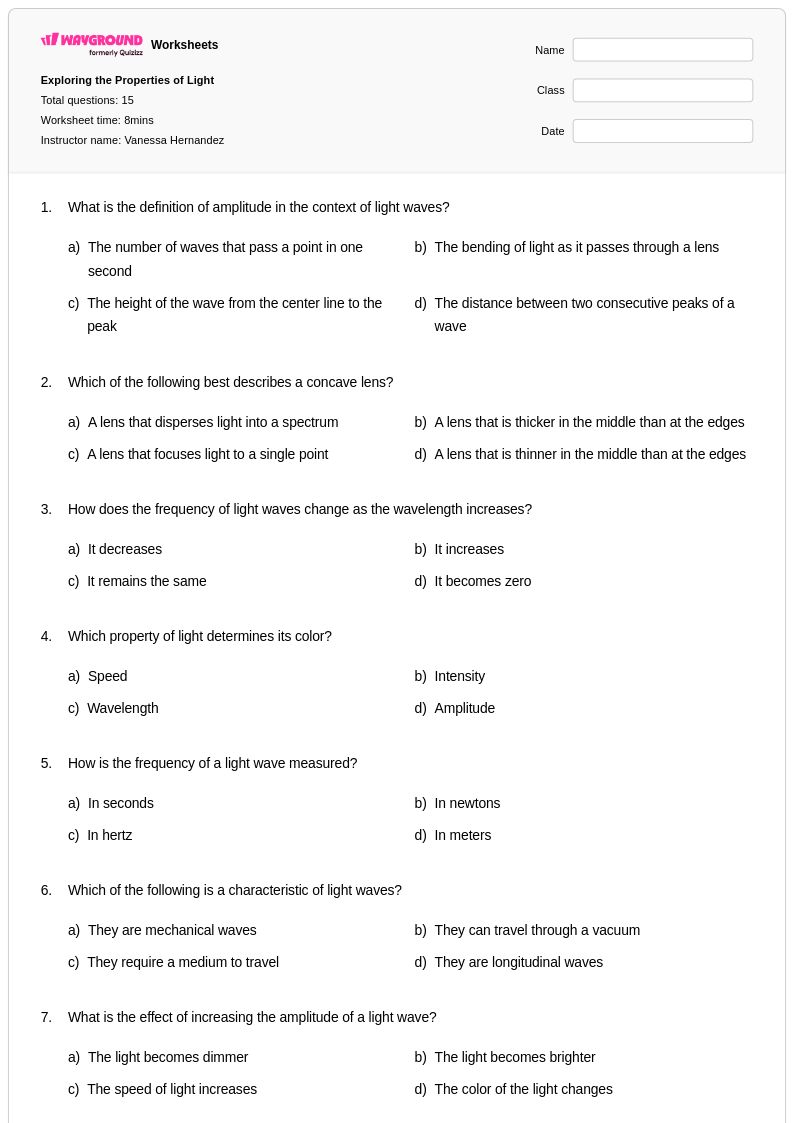
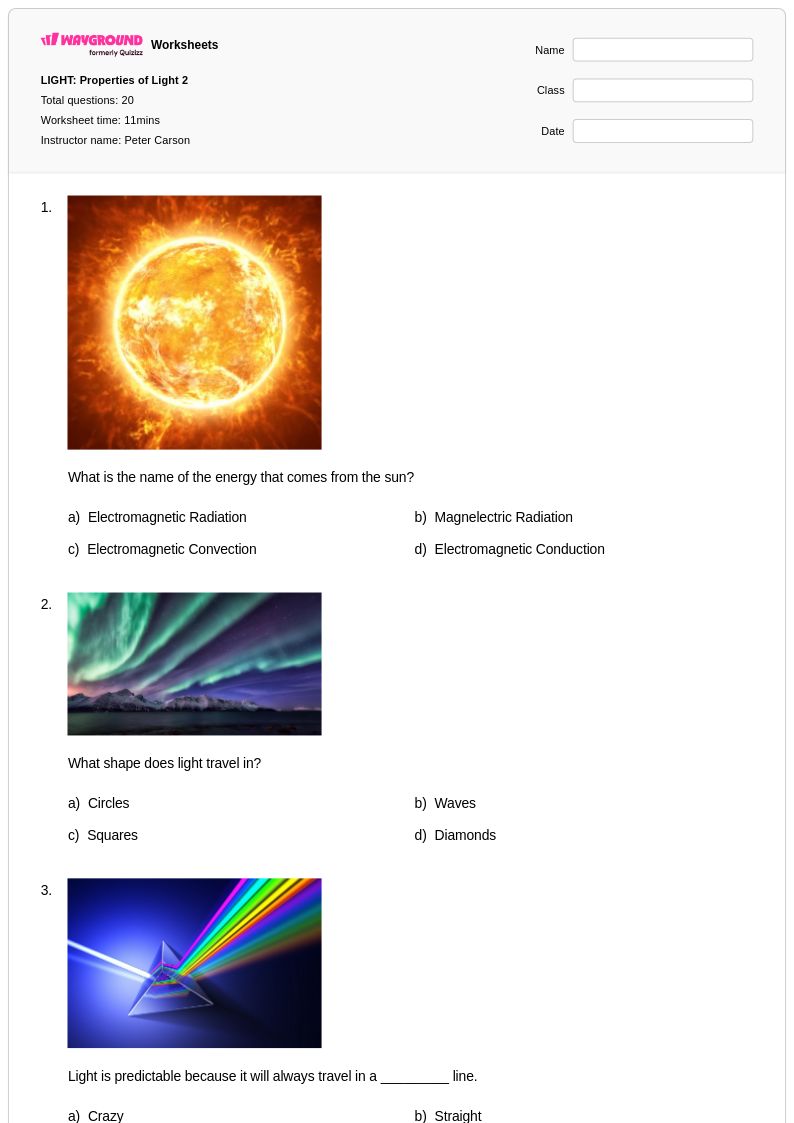
Properties of light worksheets for grade 8 students available through Wayground (formerly Quizizz) provide comprehensive coverage of fundamental optical concepts that form the cornerstone of physical science education. These expertly crafted materials guide students through essential topics including reflection, refraction, absorption, transmission, and the electromagnetic spectrum, helping them develop critical analytical skills needed to understand how light behaves in different materials and environments. Each worksheet collection includes detailed answer keys and step-by-step solutions that support independent learning, while the free printable format ensures accessibility for all classrooms. The practice problems range from basic light ray diagrams to more complex scenarios involving mirrors, lenses, and prisms, allowing students to progressively build their understanding of optical phenomena through hands-on problem solving.
Wayground (formerly Quizizz) empowers educators with an extensive library of millions of teacher-created resources specifically designed to support grade 8 physics instruction on light properties. The platform's robust search and filtering capabilities enable teachers to quickly locate materials aligned with specific learning standards, whether focusing on wave characteristics, color theory, or practical applications of optical principles. Teachers can easily differentiate instruction by selecting from various difficulty levels and question types, then customize worksheets to match their students' individual needs and learning objectives. These versatile resources are available in both printable pdf formats for traditional classroom use and digital formats for interactive learning, making them invaluable tools for lesson planning, targeted remediation sessions, enrichment activities, and regular skill practice that reinforces conceptual understanding of how light interacts with matter.
FAQs
How do I teach properties of light to students?
Start by grounding students in the wave model of light before introducing specific behaviors such as reflection, refraction, absorption, and transmission. Use everyday examples like mirrors, lenses, and rainbows to make abstract optical concepts tangible. From there, sequence instruction from basic light interactions toward more complex applications involving lenses, mirrors, and optical instruments, so students build conceptual understanding before encountering mathematical relationships.
What exercises help students practice reflection and refraction?
Effective practice exercises include ray diagram problems where students trace reflected and refracted rays across different media, as well as Snell's Law calculations that reinforce the mathematical relationship between angles and refractive indices. Worksheets that sequence problems from basic light interactions to complex optical instrument applications give students the scaffolded repetition needed to internalize these concepts. Mixing diagram-based and calculation-based problems ensures students can reason both visually and quantitatively.
What mistakes do students commonly make when learning about the electromagnetic spectrum?
A frequent misconception is that visible light is the only form of electromagnetic radiation, leading students to treat the spectrum as a list of unrelated phenomena rather than a continuous range of wave frequencies. Students also commonly confuse wavelength and frequency relationships, mistakenly believing that longer wavelengths carry more energy. Explicitly reinforcing the inverse relationship between wavelength and energy across the spectrum helps correct these errors before they become entrenched.
How do students typically confuse reflection and refraction?
Students often conflate reflection and refraction because both involve light changing direction at a boundary. The key distinction is that reflection involves light bouncing back into the same medium, while refraction involves light passing into a new medium and bending due to a change in speed. Targeted practice problems that require students to identify which phenomenon is occurring in a given scenario, before solving for angles, are particularly effective at resolving this confusion.
How can I use properties of light worksheets in my classroom?
Properties of light worksheets on Wayground are available as printable PDFs for traditional classroom use and in digital formats for technology-integrated learning environments, making them flexible for both in-person and remote assignments. Teachers can also host worksheets as a quiz directly on Wayground, enabling real-time student responses and instant feedback. Complete answer keys accompany each worksheet, supporting efficient grading and follow-up instruction.
How do I differentiate properties of light instruction for students with different needs?
Wayground supports individual student accommodations including read aloud, which audio-reads questions for students who need it, reduced answer choices to lower cognitive load, and extended time configurable per student. These settings can be applied to individual students or the whole class and are saved for reuse across future sessions, so setup is a one-time investment. Students receiving default settings are not notified of any accommodations applied to peers, preserving a comfortable classroom environment.