Free Printable Pure Substance Vs Mixture Worksheets for Year 5
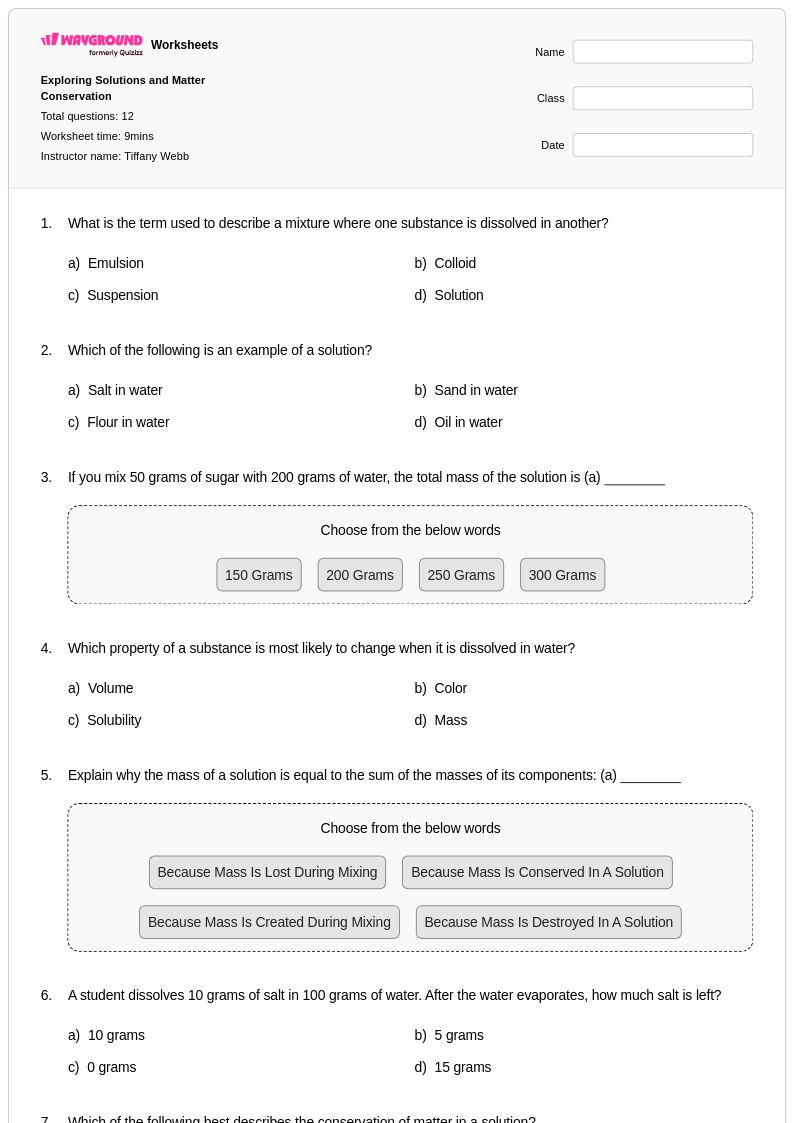
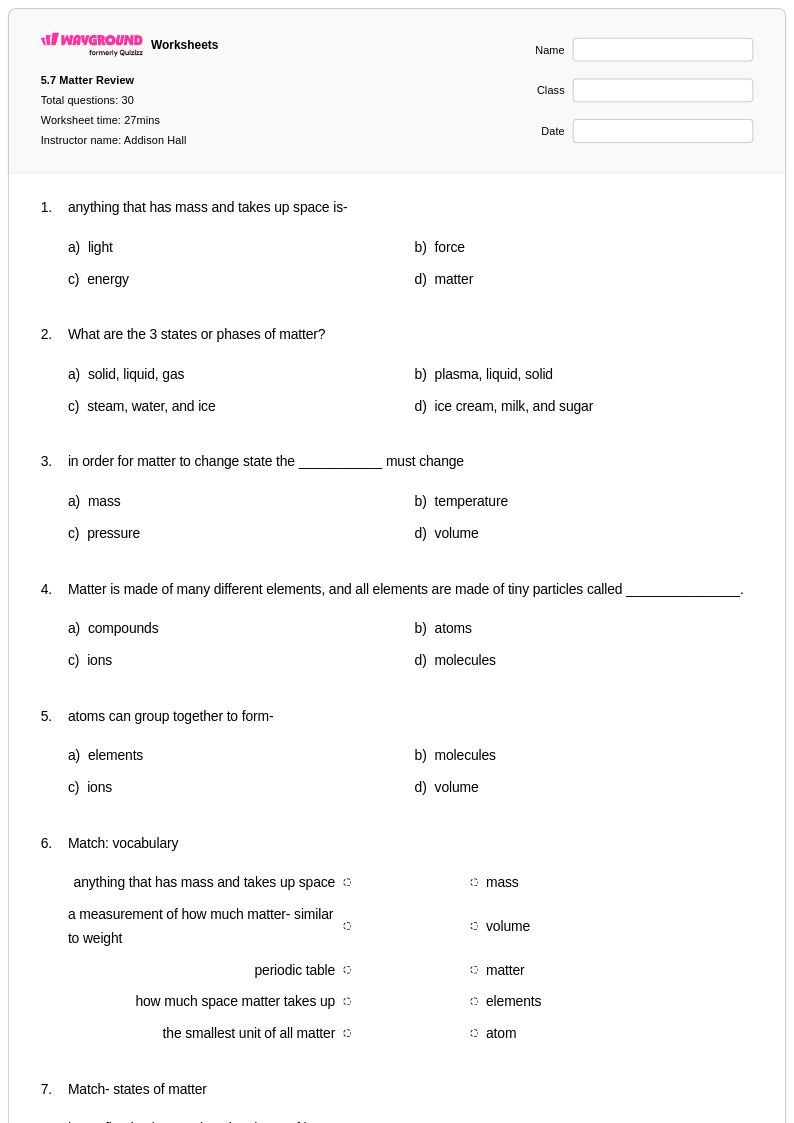
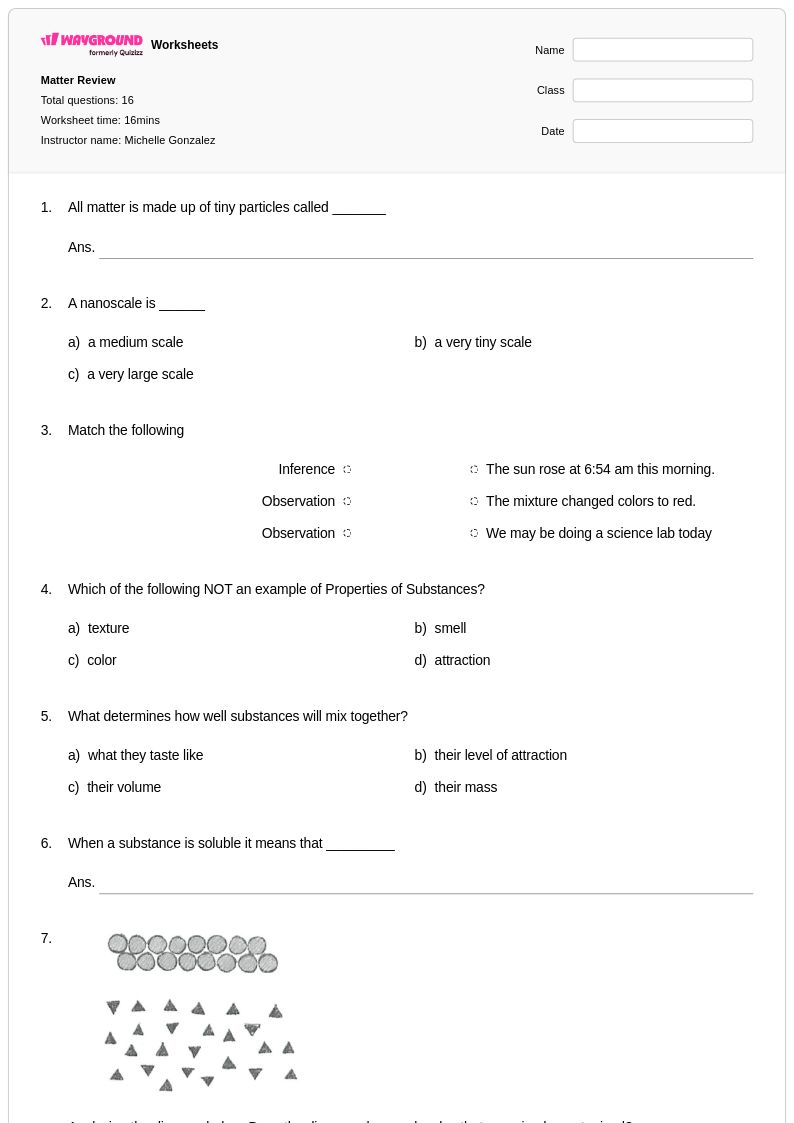
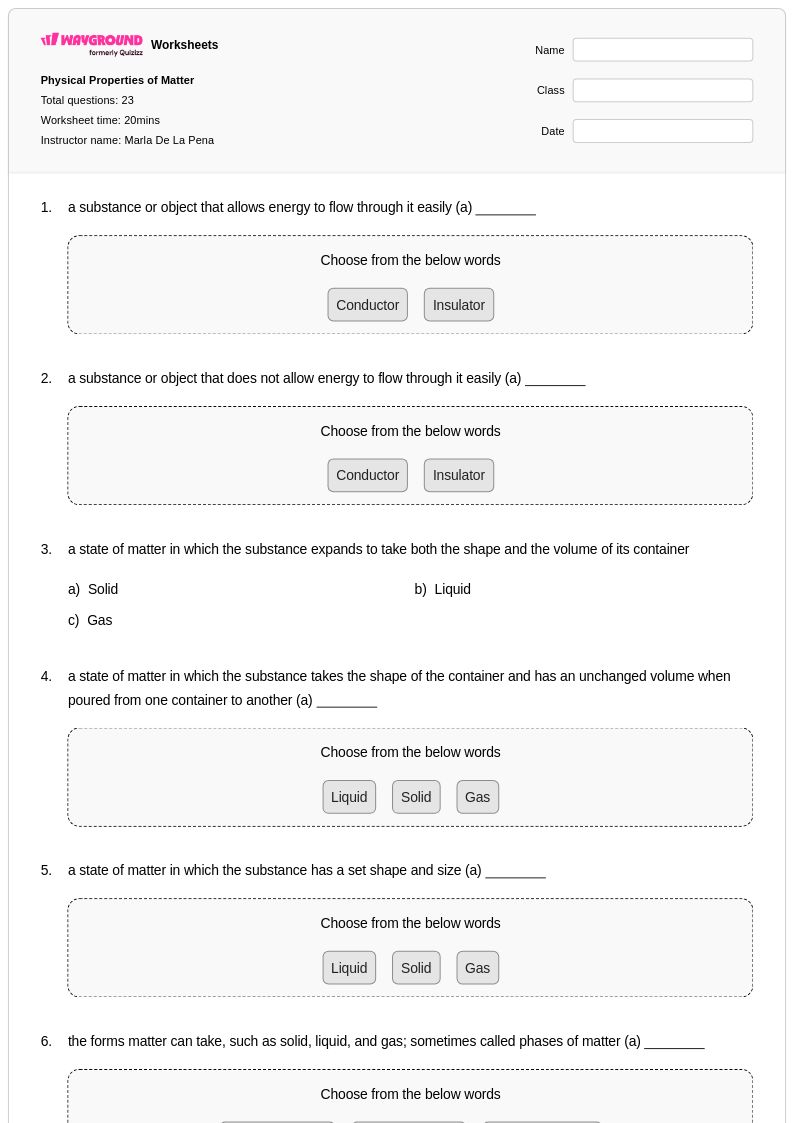
Wayground's Year 5 pure substance vs mixture worksheets provide free printables and practice problems with answer keys to help students master identifying and distinguishing between pure substances and mixtures in chemistry.
Explore printable Pure Substance Vs Mixture worksheets for Year 5
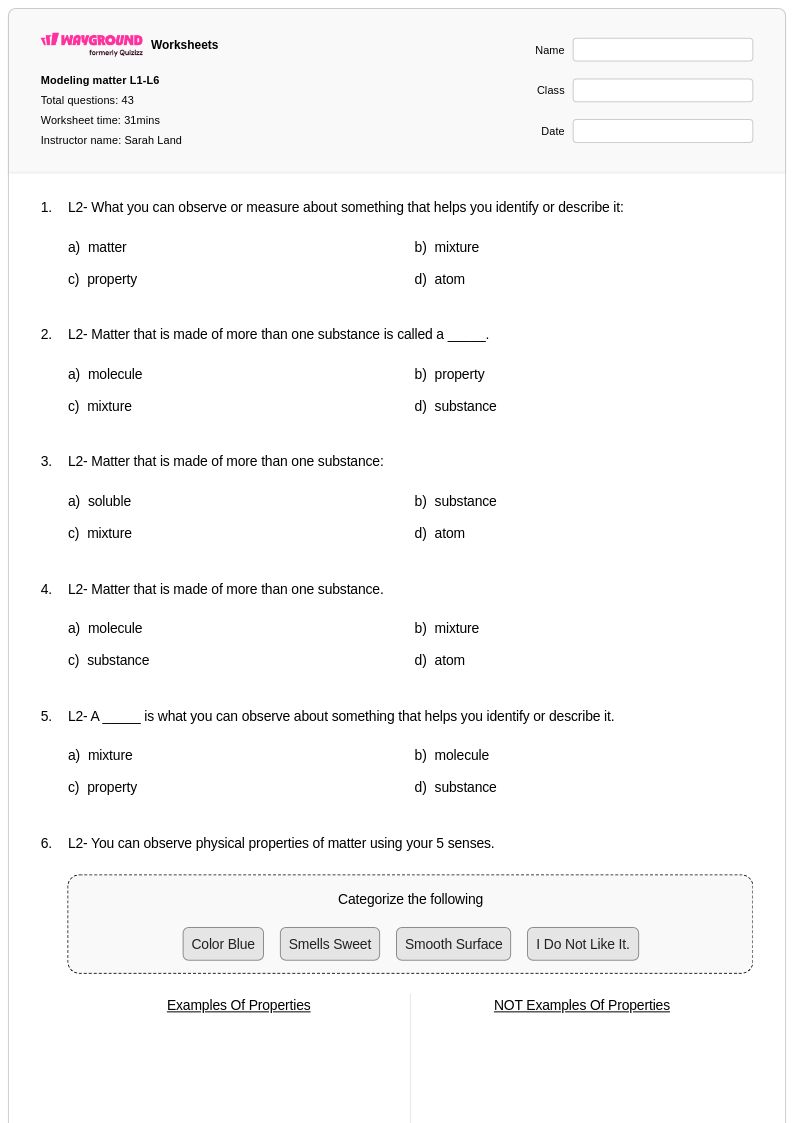
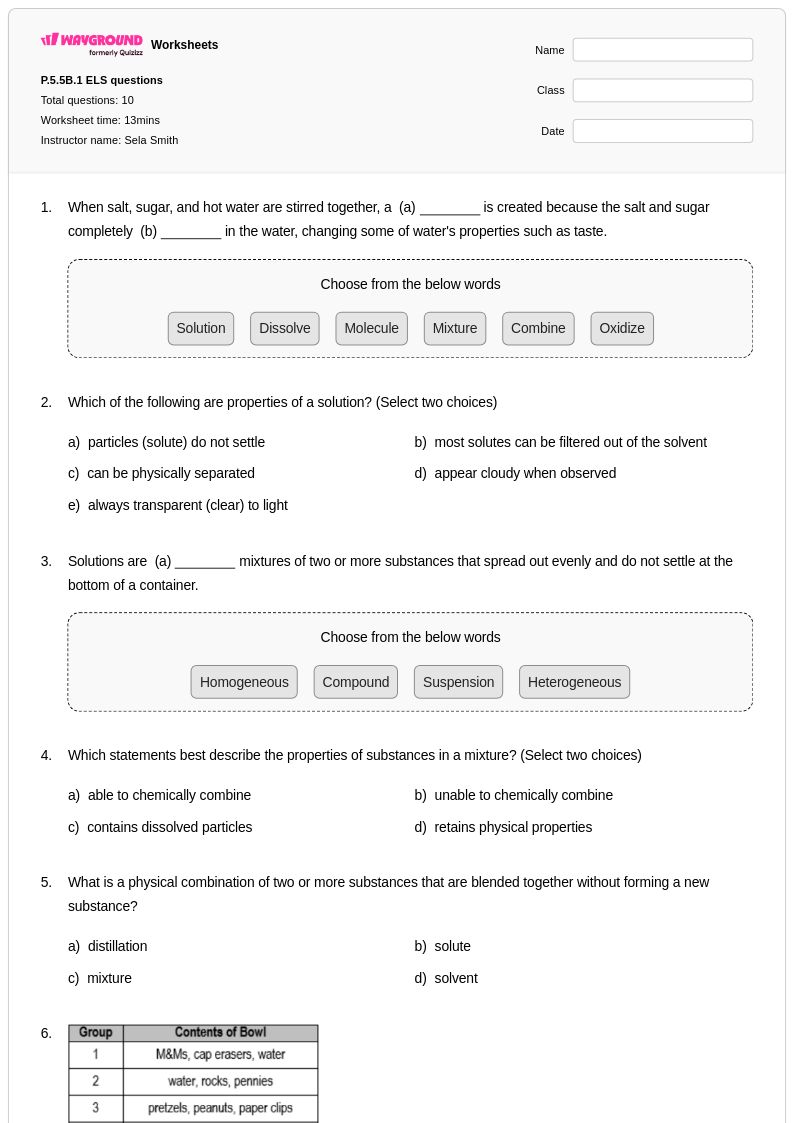
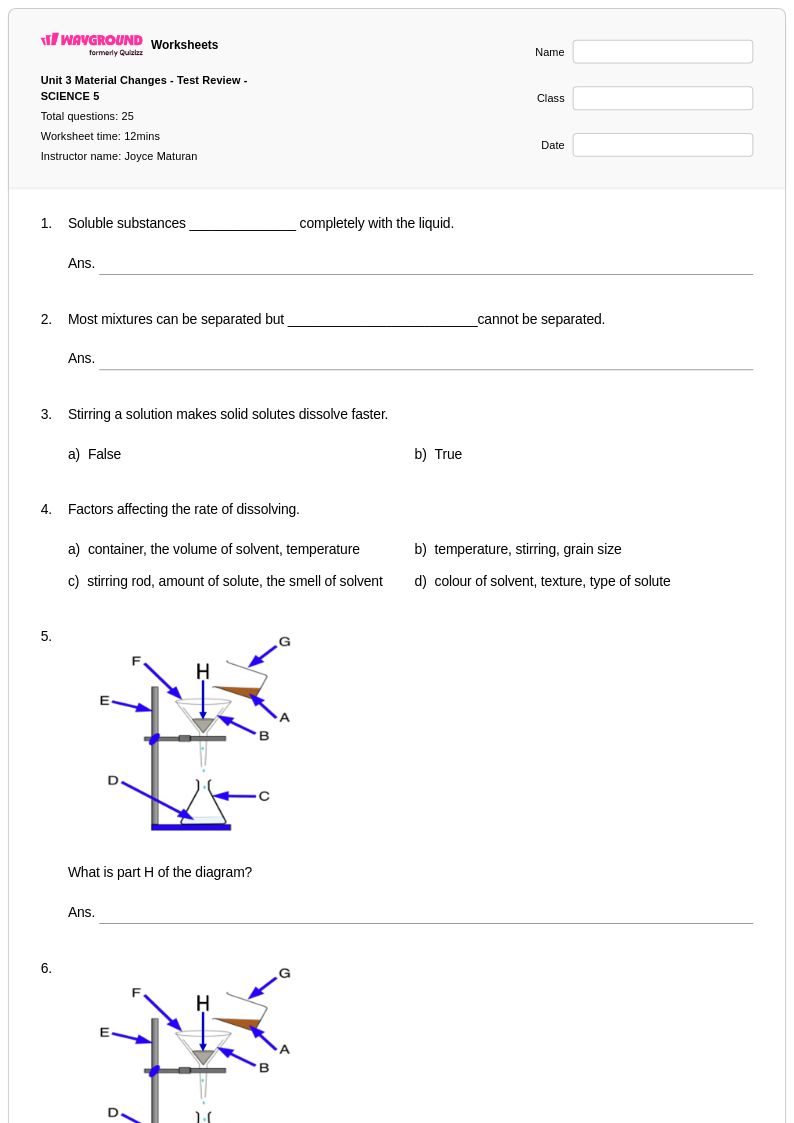
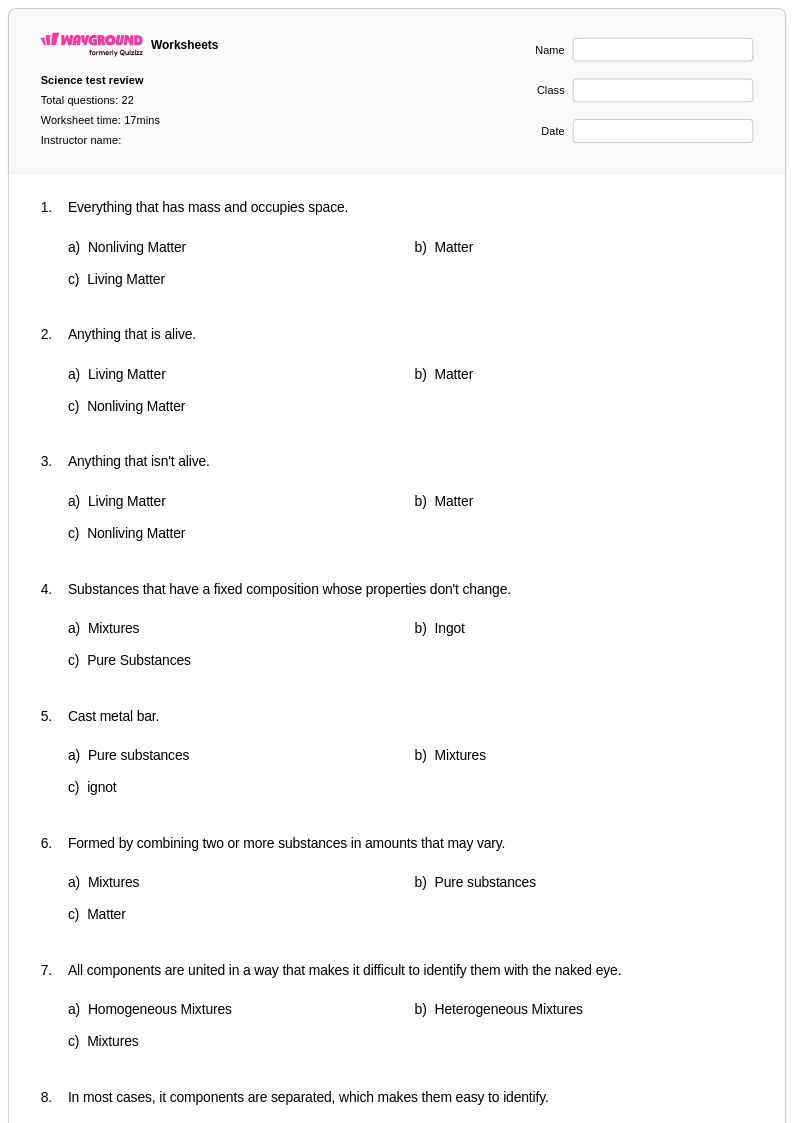
Pure substance vs mixture worksheets for Year 5 students available through Wayground (formerly Quizizz) provide essential foundational practice in distinguishing between materials that contain only one type of particle and those composed of multiple substances combined together. These comprehensive worksheets strengthen critical thinking skills as students learn to classify everyday materials like salt water, pure gold, chocolate chip cookies, and distilled water into their appropriate categories. The practice problems guide young scientists through identifying characteristic properties of pure substances, such as consistent melting and boiling points, while exploring how mixtures maintain the individual properties of their components. Each worksheet includes detailed answer keys that support both independent study and classroom instruction, with free printable options available in convenient pdf format for immediate use.
Wayground (formerly Quizizz) empowers educators with access to millions of teacher-created resources specifically designed for Year 5 chemistry concepts, including extensive collections focused on pure substances and mixtures. The platform's robust search and filtering capabilities allow teachers to quickly locate worksheets aligned with state science standards, while built-in differentiation tools enable customization for diverse learning needs within the same classroom. Teachers can seamlessly switch between printable pdf versions for traditional paper-based activities and digital formats for interactive online learning, making these resources ideal for lesson planning, targeted remediation sessions, and enrichment activities. The flexible customization options support effective skill practice by allowing educators to modify difficulty levels, add visual aids, and incorporate real-world examples that resonate with fifth-grade students' everyday experiences.
FAQs
How do I teach students the difference between pure substances and mixtures?
Start by establishing that pure substances have a uniform composition throughout and contain only one type of particle, while mixtures combine two or more substances that retain their individual properties. Use everyday examples to ground the concept — salt water as a homogeneous mixture, trail mix as a heterogeneous mixture, and gold as a pure element. From there, progress to molecular diagrams so students can visualize particle-level differences before moving to classification exercises with real-world substances.
What exercises help students practice identifying pure substances and mixtures?
Effective practice exercises include sorting activities where students categorize substances as elements, compounds, homogeneous mixtures, or heterogeneous mixtures, along with molecular diagram interpretation tasks that require students to identify whether a particle model shows a pure substance or a mixture. Data table analysis, where students examine physical properties and decide on classification, also builds strong analytical habits. Combining visual, textual, and real-world example tasks ensures students can apply the concept across multiple contexts.
What mistakes do students commonly make when classifying pure substances and mixtures?
A frequent misconception is that all liquids or all clear solutions must be pure substances — students often classify salt water or lemonade as pure because they appear uniform. Another common error is confusing compounds with mixtures, since both involve more than one type of element, but compounds are chemically bonded with fixed ratios while mixtures are physically combined and variable. Students also struggle to distinguish homogeneous from heterogeneous mixtures when a substance appears visually uniform, such as air or alloys.
How do I use pure substance vs. mixture worksheets in my classroom?
Pure substance vs. mixture worksheets on Wayground are available as printable PDFs for traditional classroom use and in digital formats for technology-integrated environments, making them adaptable to in-person, hybrid, or remote instruction. Teachers can assign them as independent practice, guided group work, or homework to reinforce classification skills introduced during direct instruction. Worksheets can also be hosted as a quiz on Wayground, allowing teachers to track student responses and identify misconceptions in real time. Built-in answer keys support self-assessment and reduce grading time.
How can I differentiate pure substance and mixture instruction for students at different skill levels?
For students who need additional support, begin with basic identification tasks using familiar real-world substances and visual molecular diagrams before introducing written definitions or data interpretation. Advanced learners can be challenged with analysis problems that require them to justify classifications using evidence from particle models or property data. On Wayground, teachers can also apply individual accommodations such as read aloud support or reduced answer choices for students who need them, without disrupting the experience for the rest of the class.
How does classifying pure substances and mixtures fit into a broader chemistry curriculum?
The pure substance vs. mixture distinction is foundational to matter classification and directly supports later study of physical and chemical changes, separation techniques, and solution chemistry. Students who can reliably distinguish elements, compounds, homogeneous mixtures, and heterogeneous mixtures are better prepared to analyze reactions and understand why different separation methods apply to different types of matter. Teaching this concept early in a chemistry unit builds the classification vocabulary students need throughout the course.