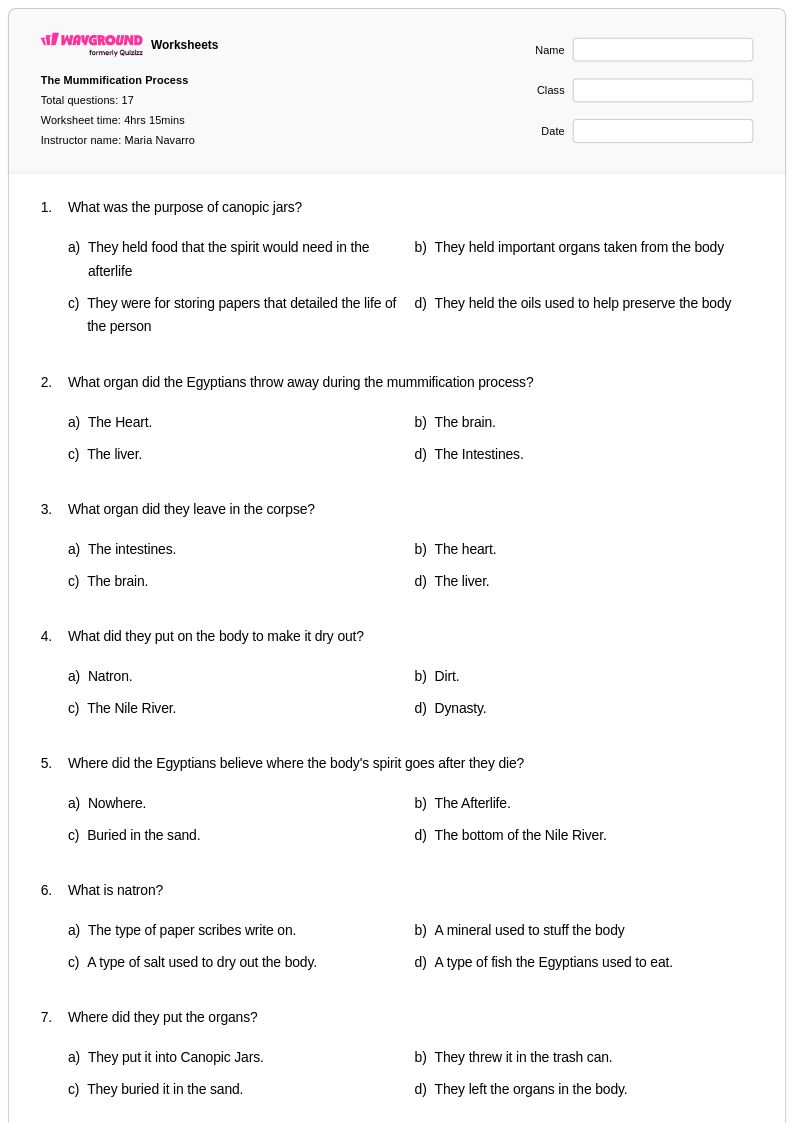
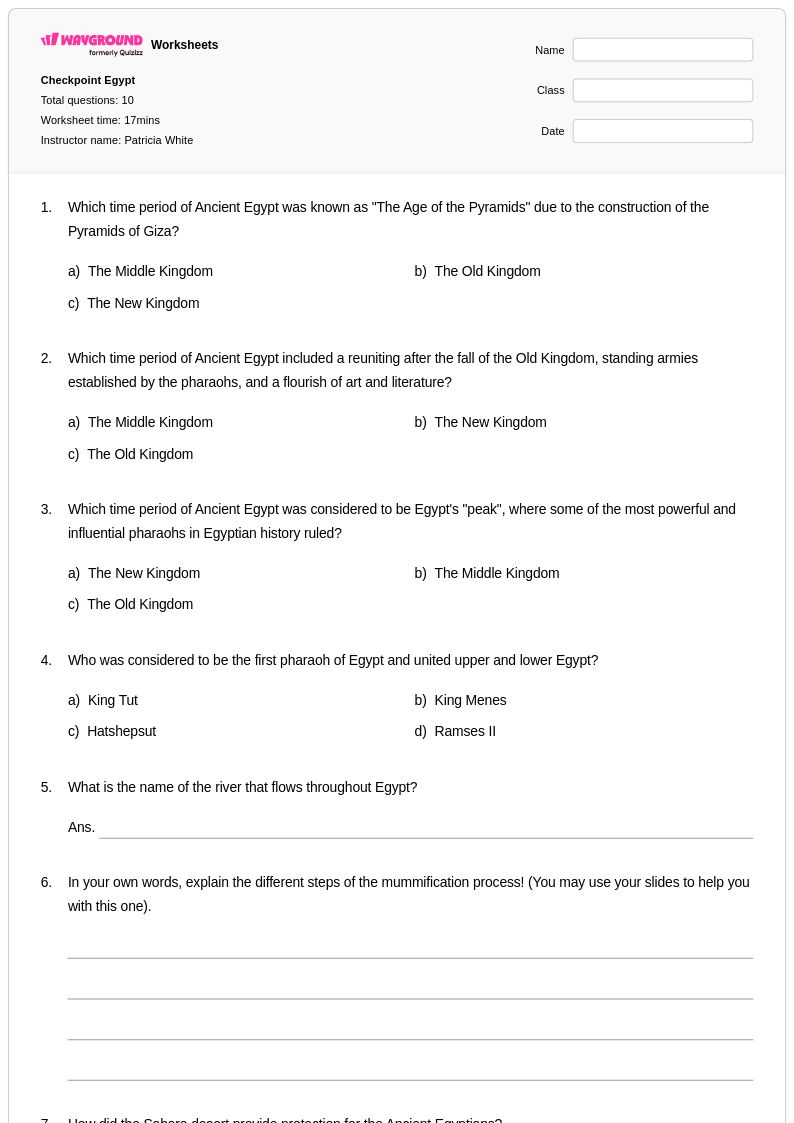
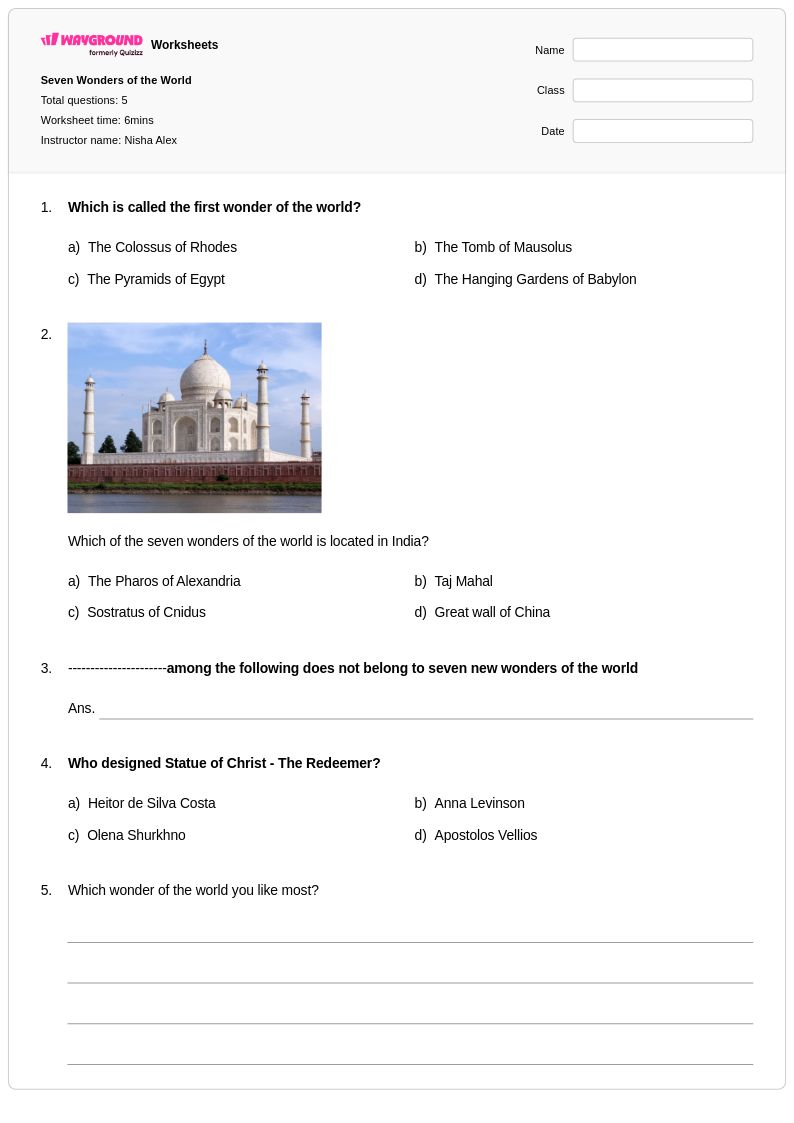
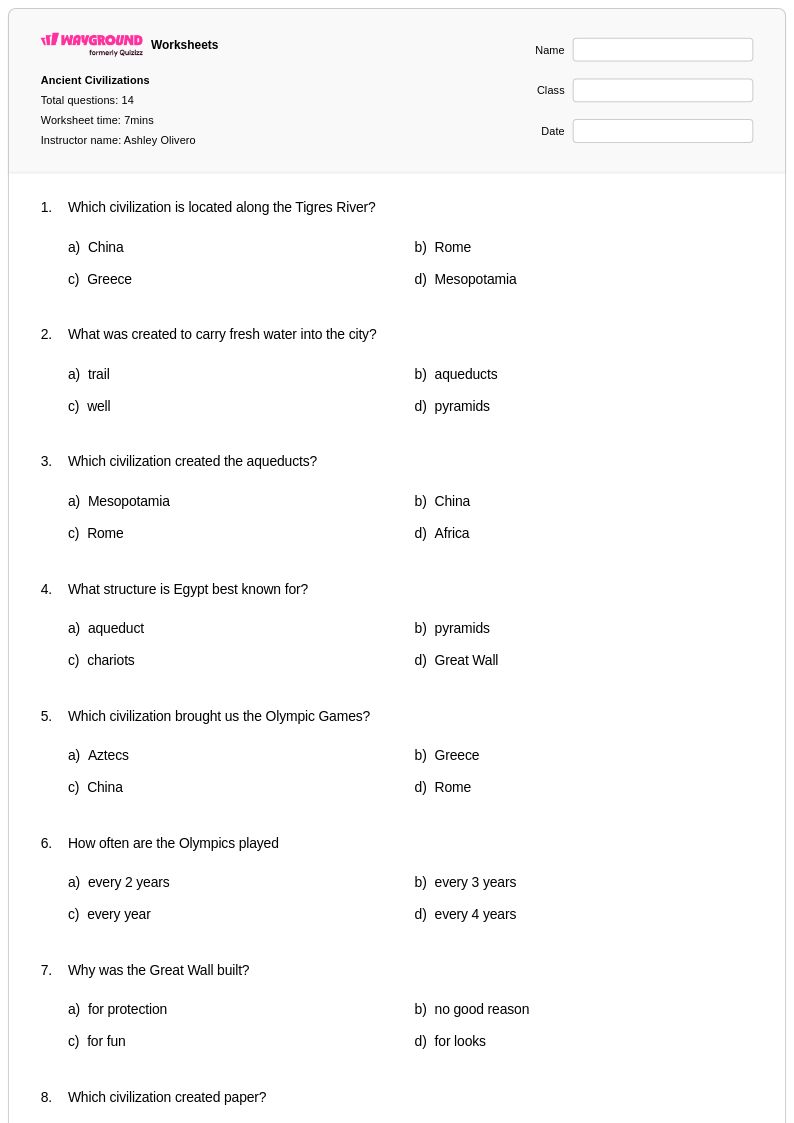
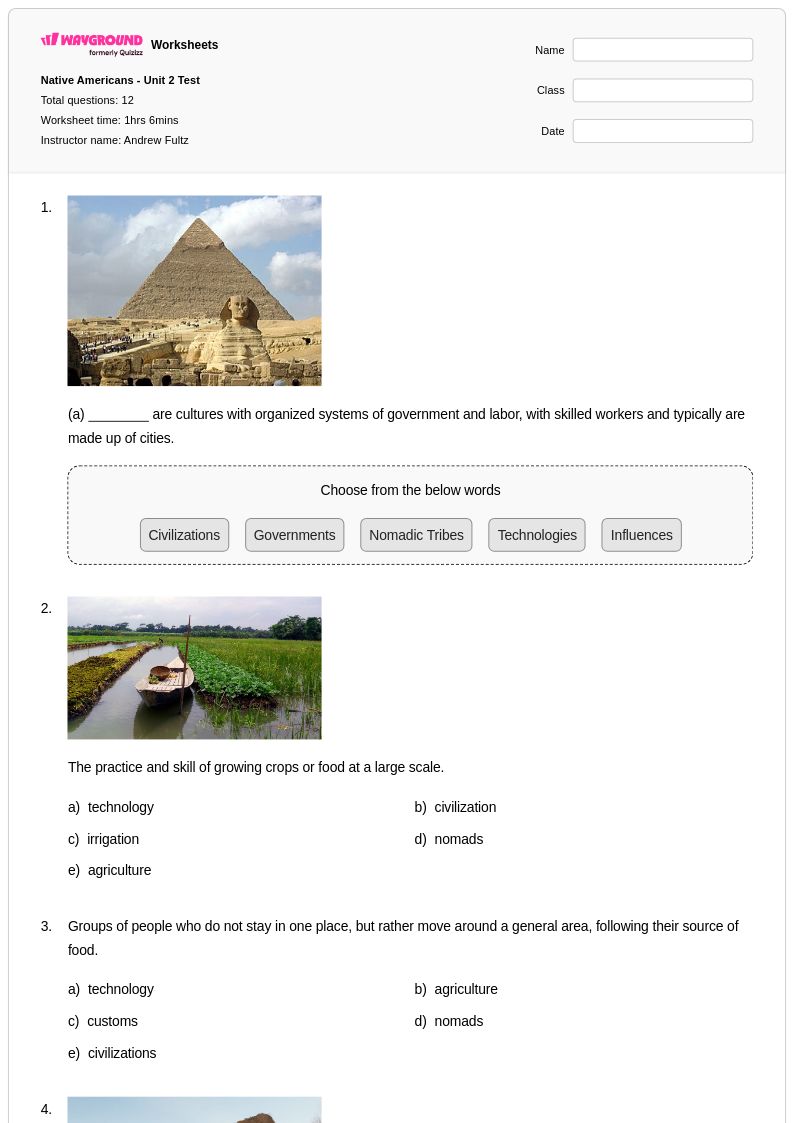
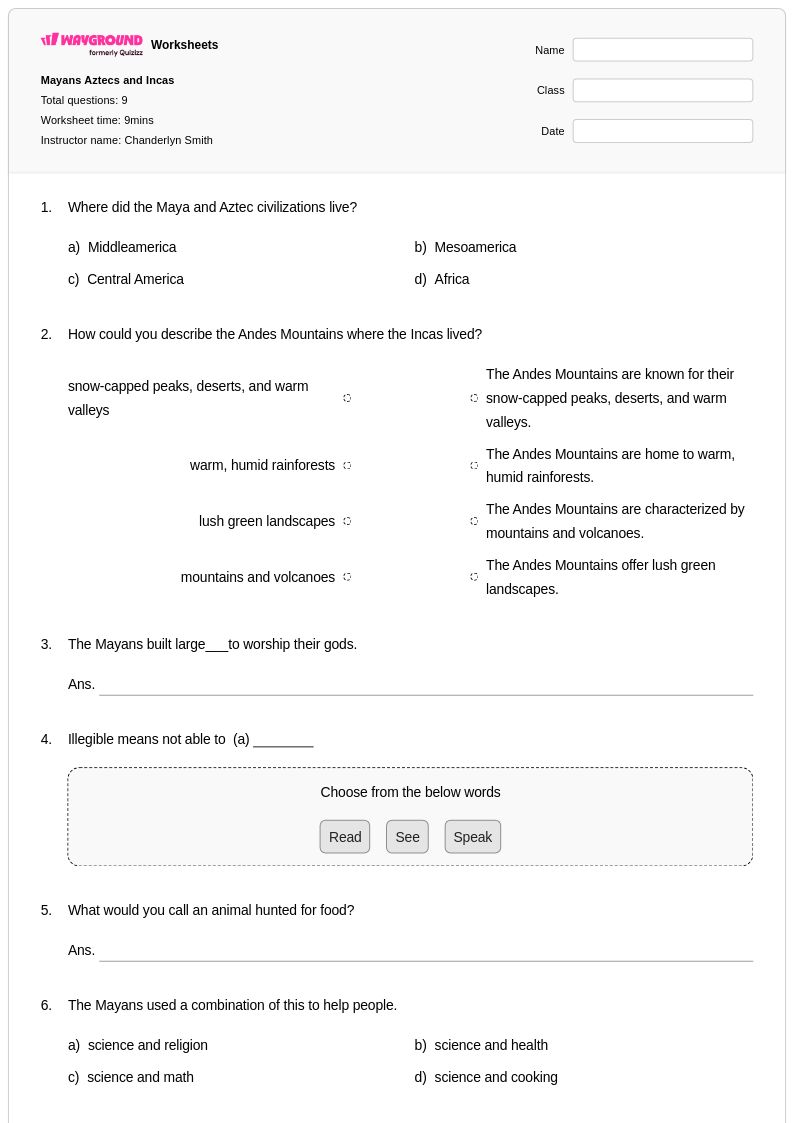
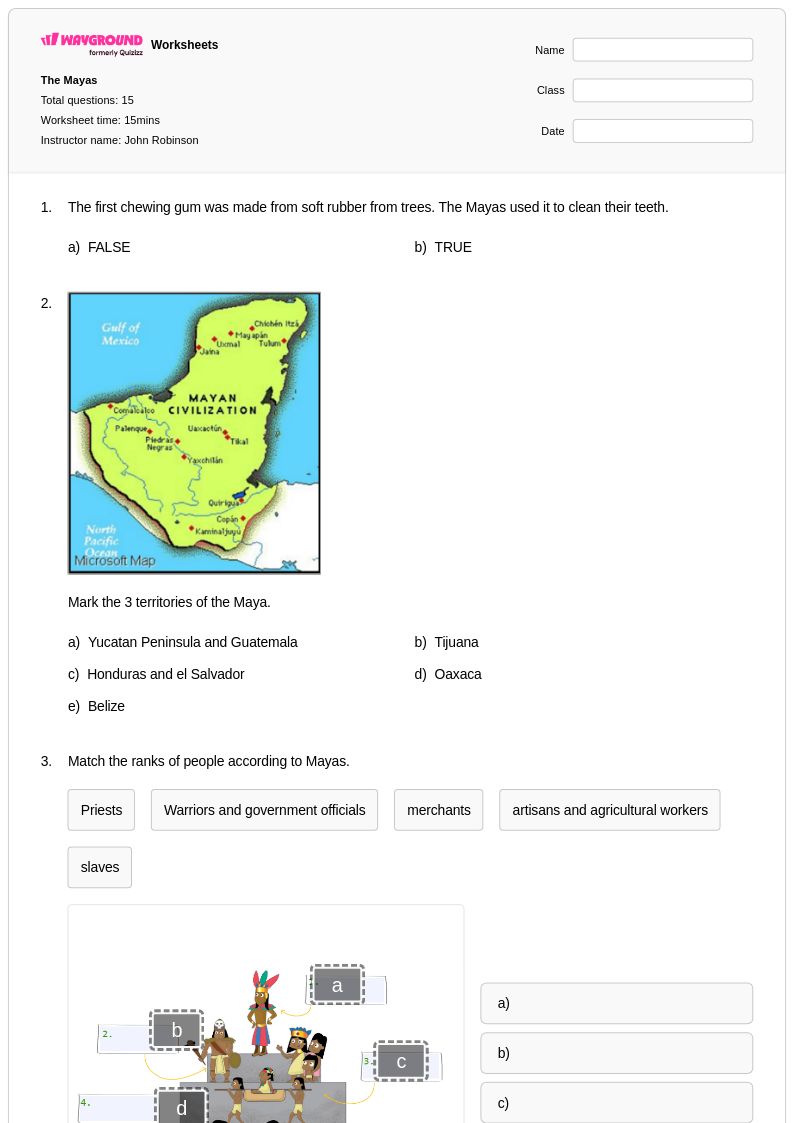
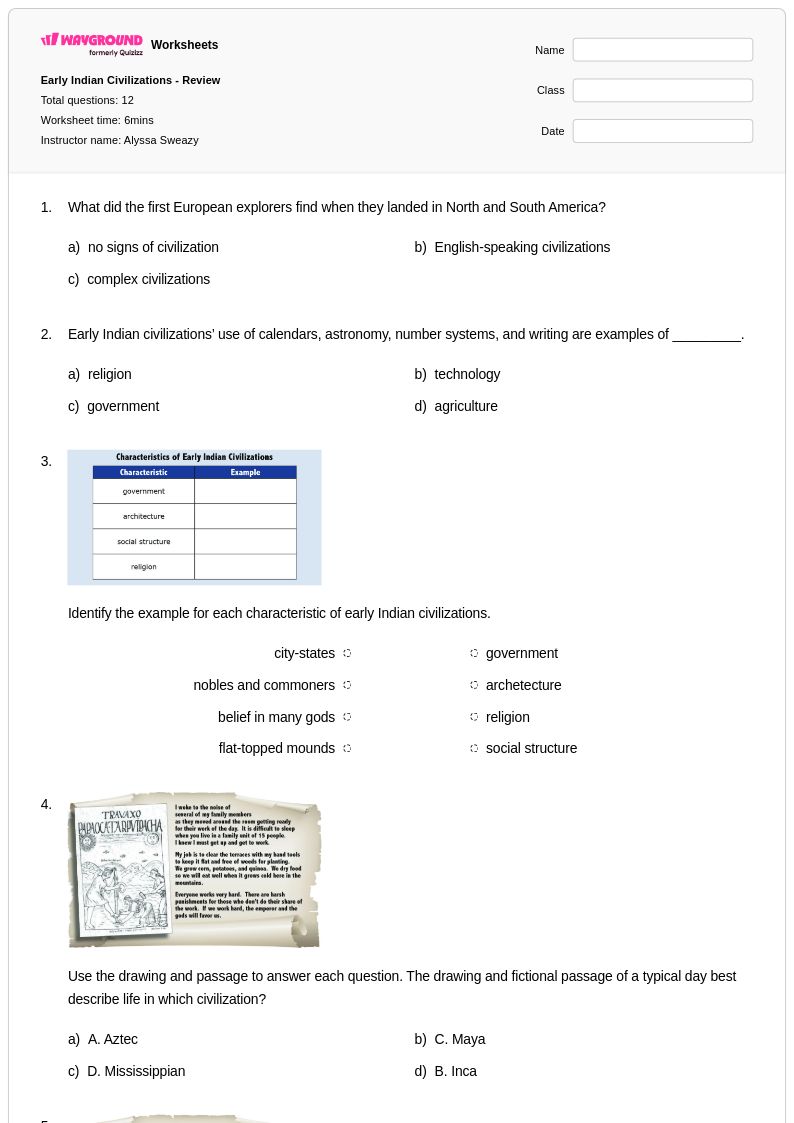
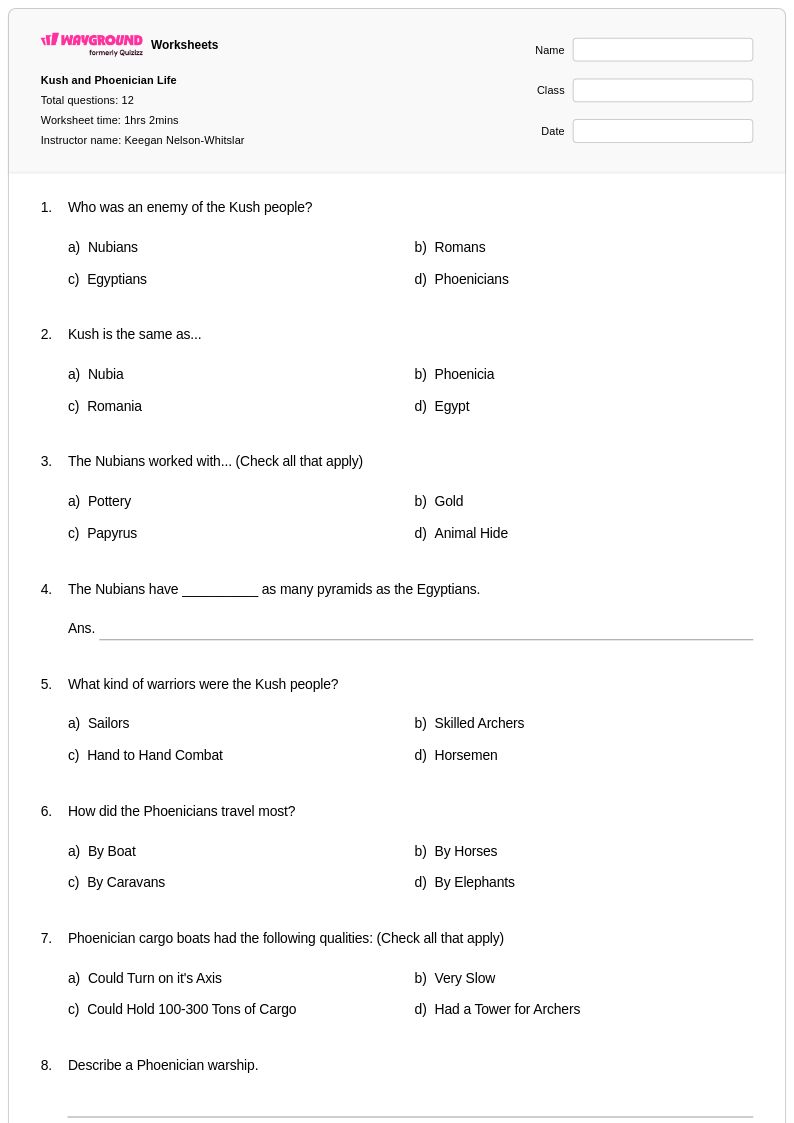
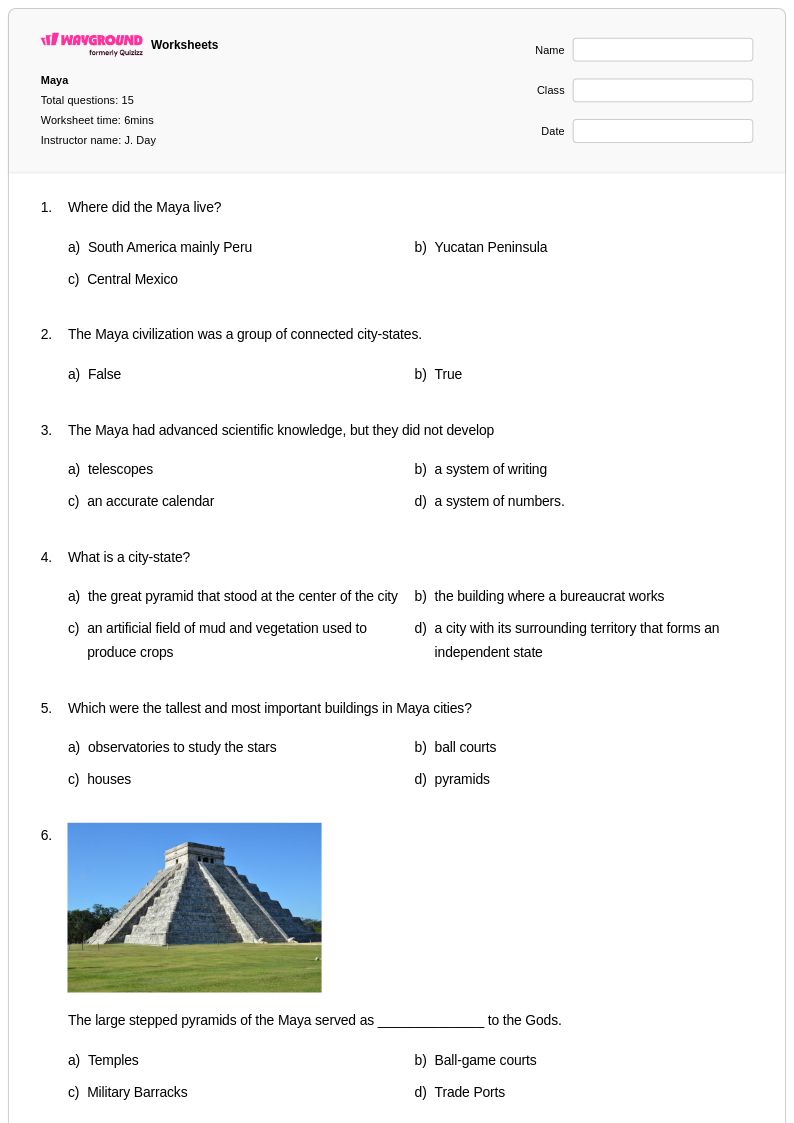
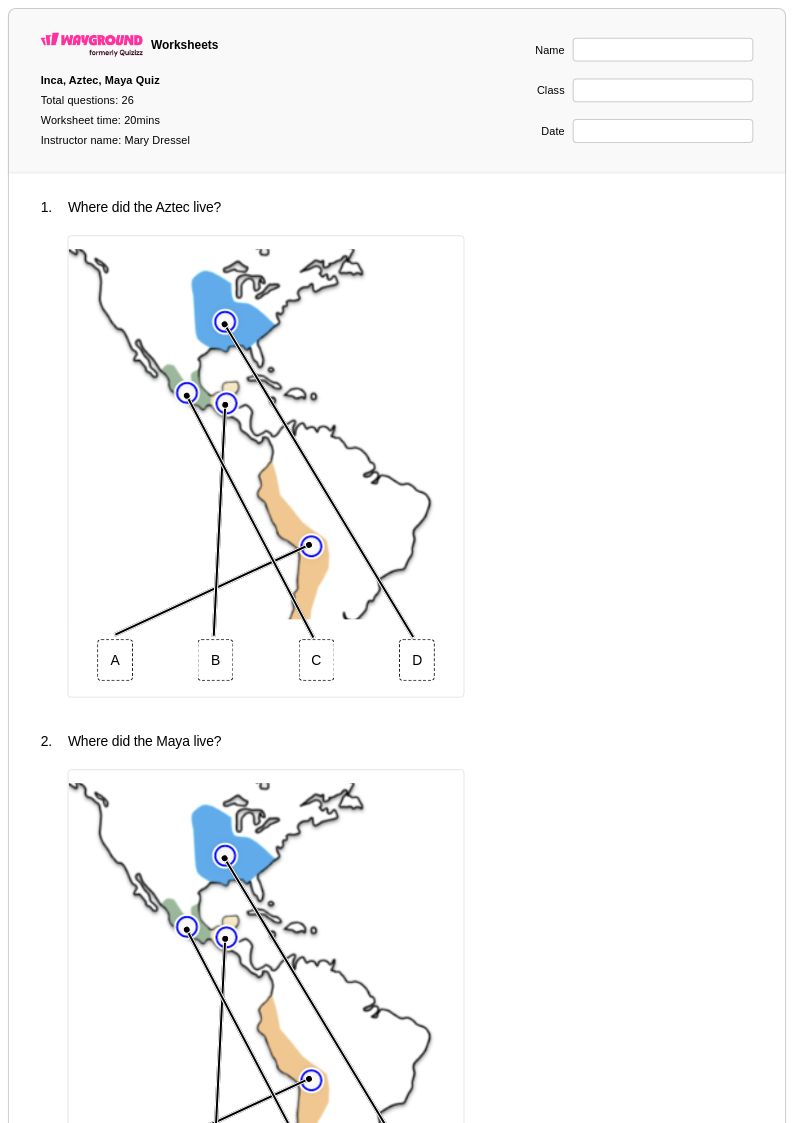
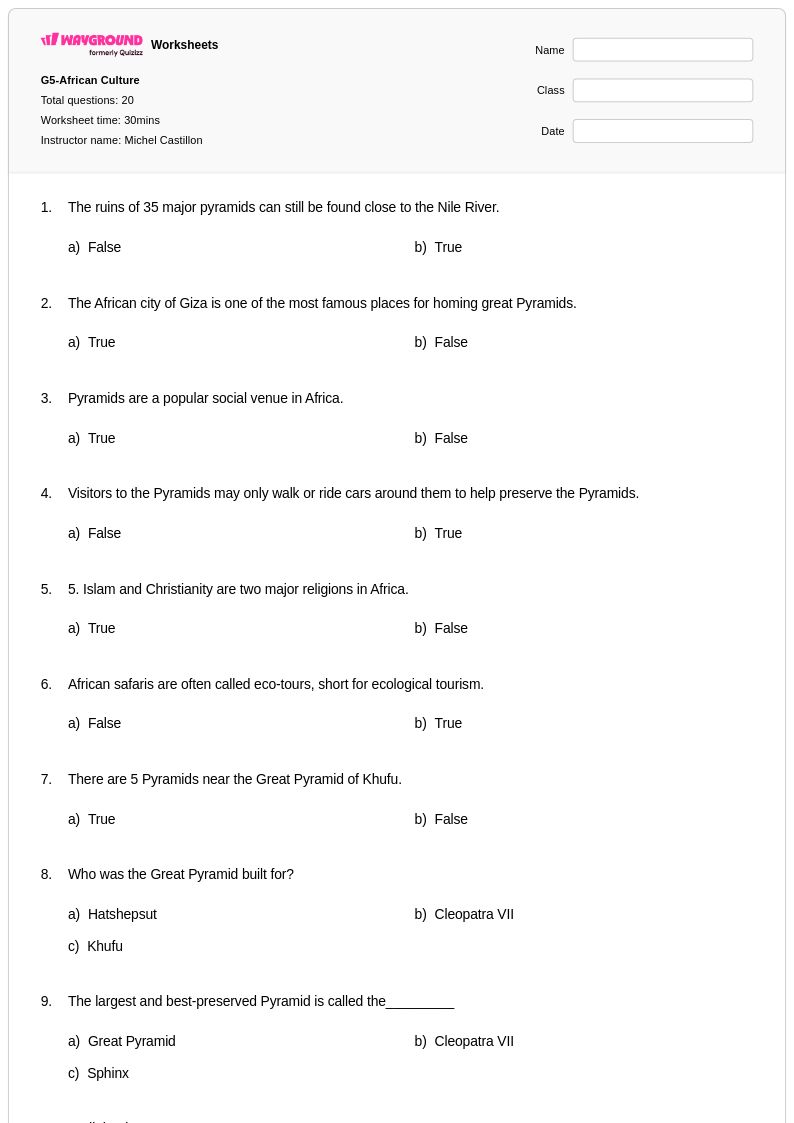
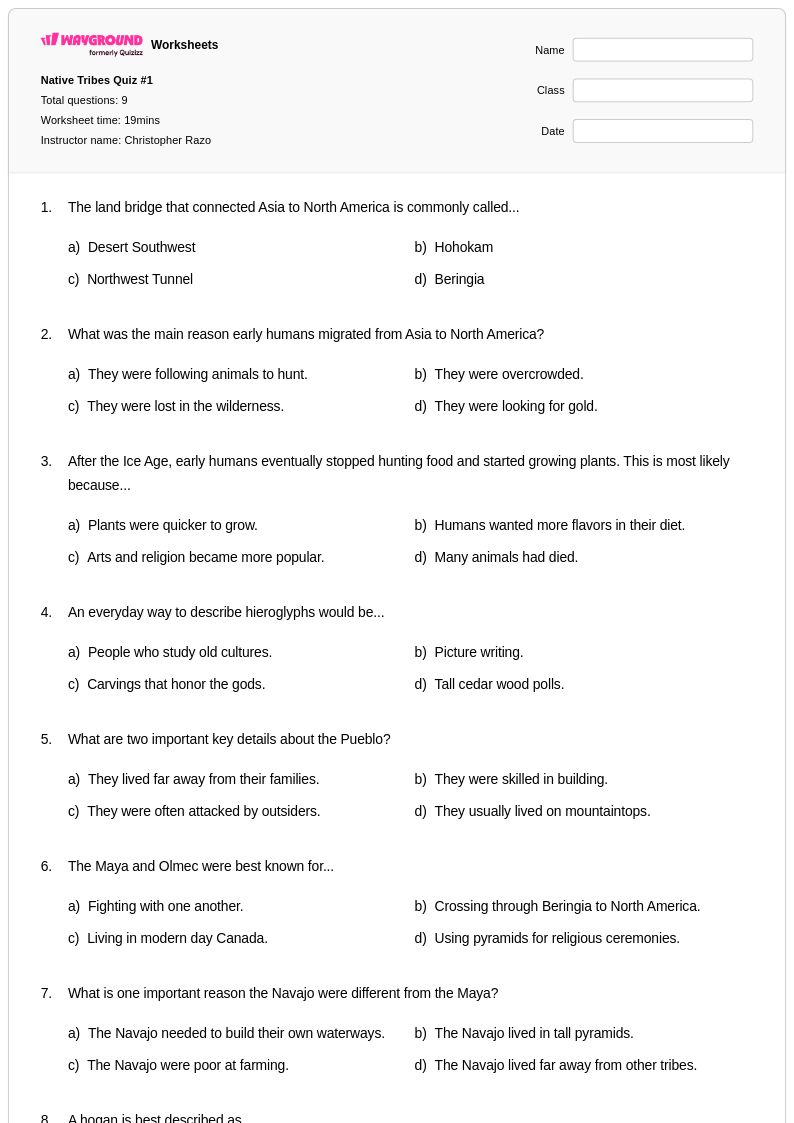
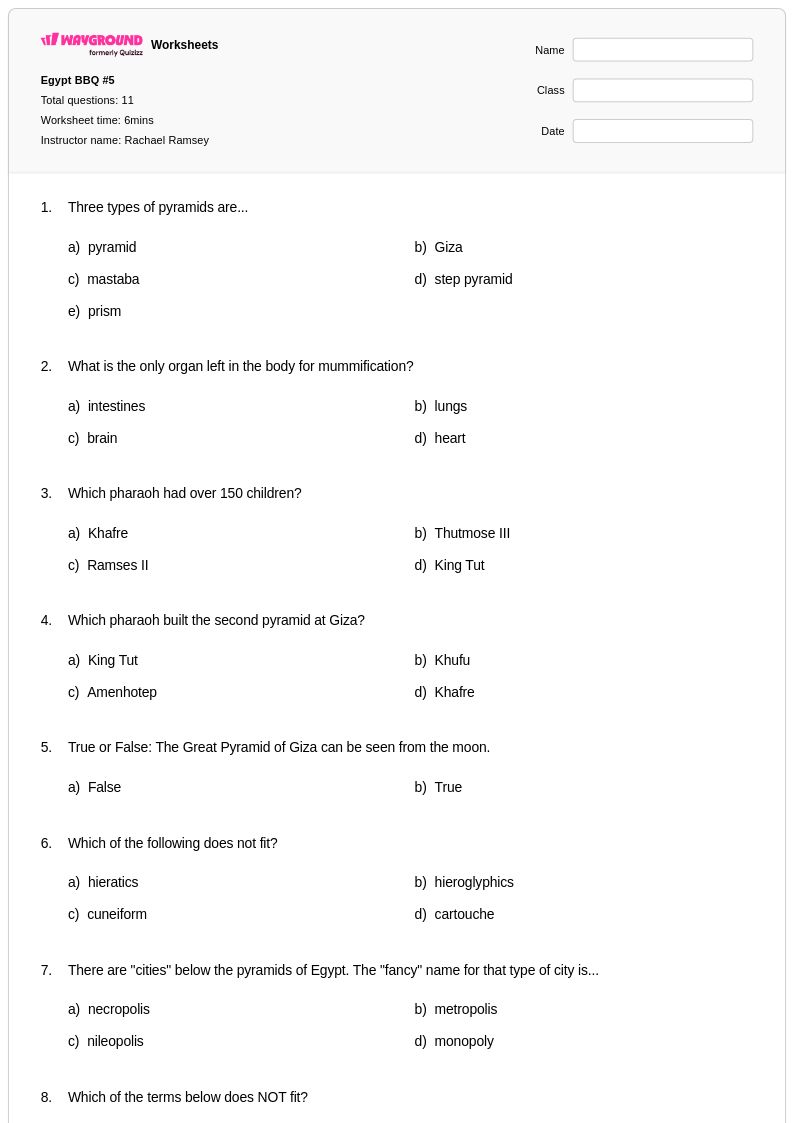
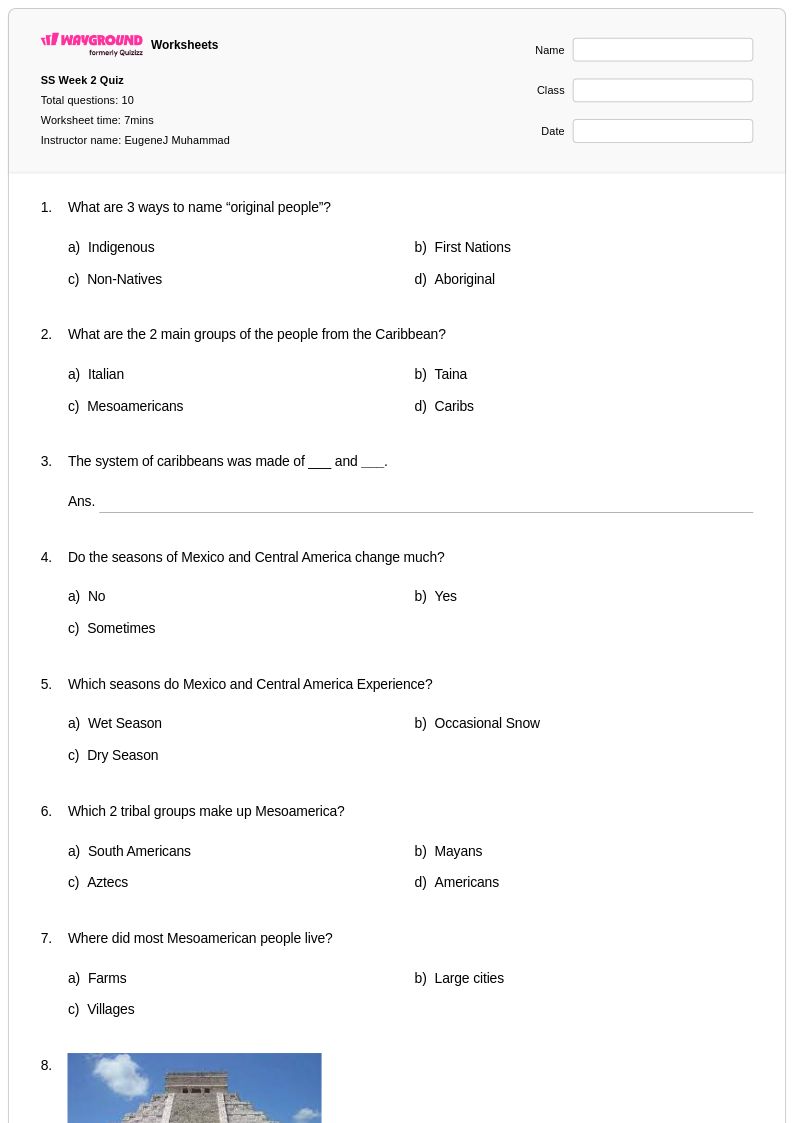
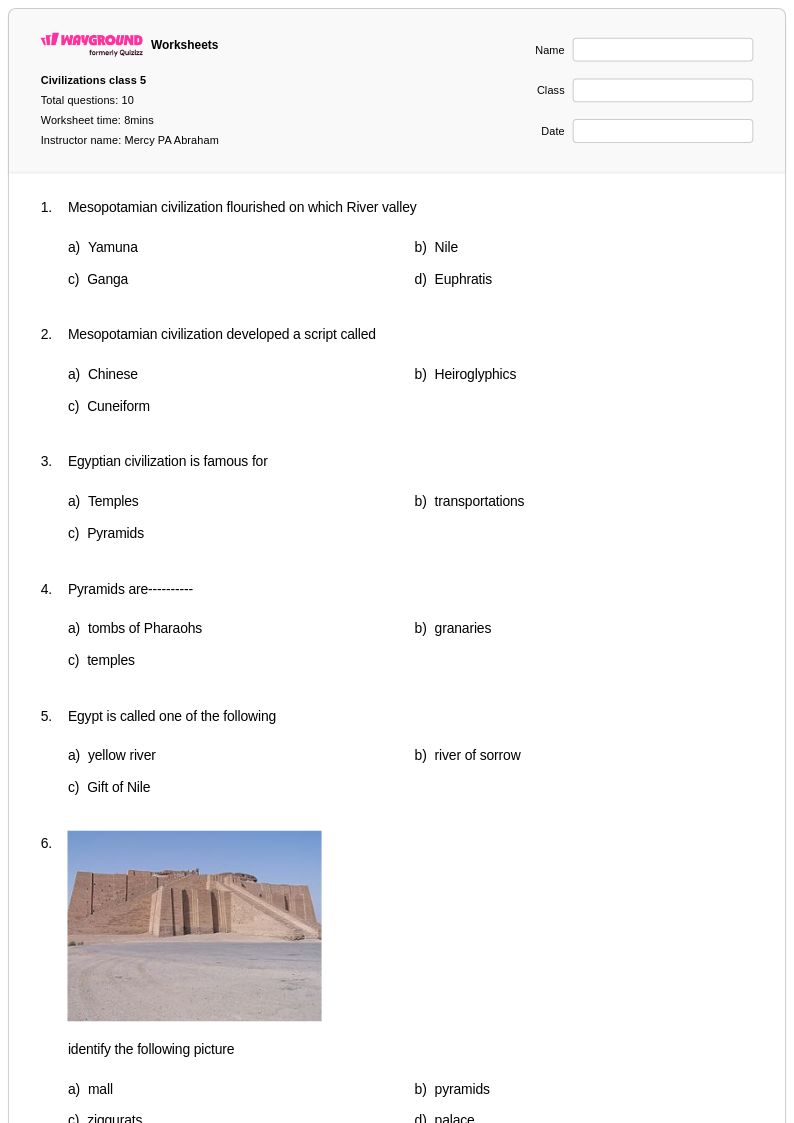
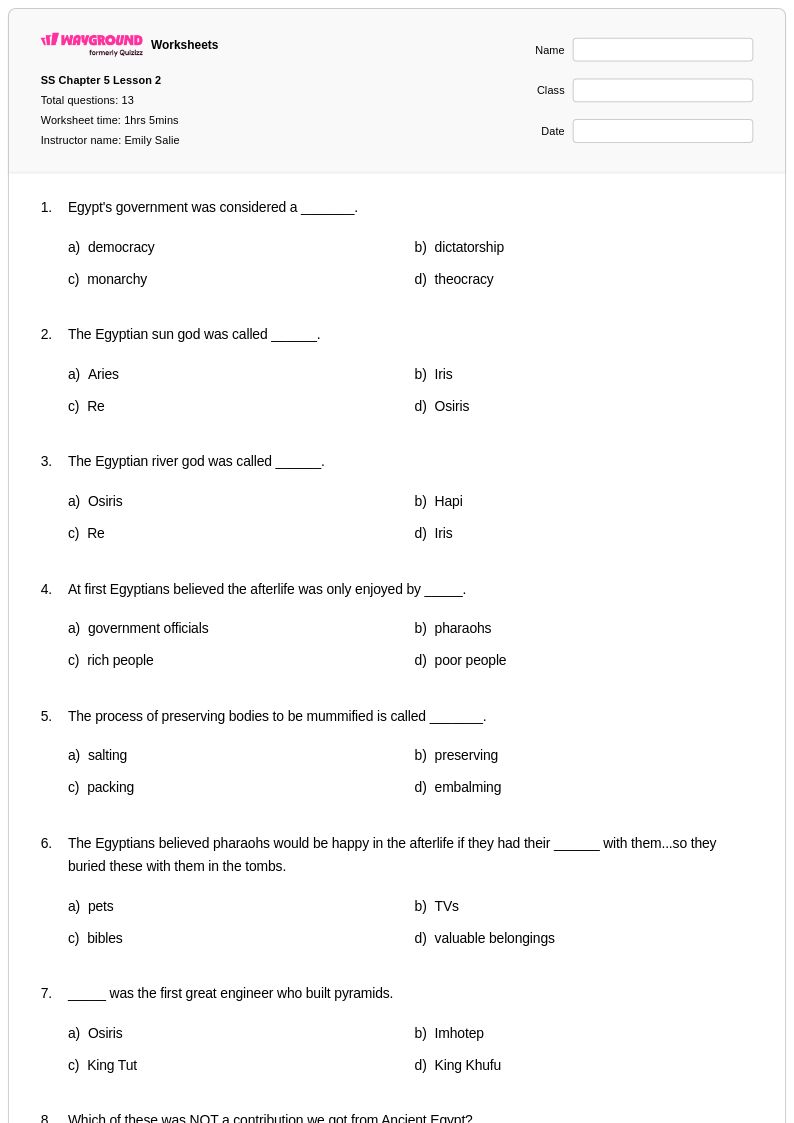
Explore Year 5 pyramid worksheets and free printables that help students discover ancient Egyptian architecture, construction techniques, and cultural significance through engaging practice problems with complete answer keys.
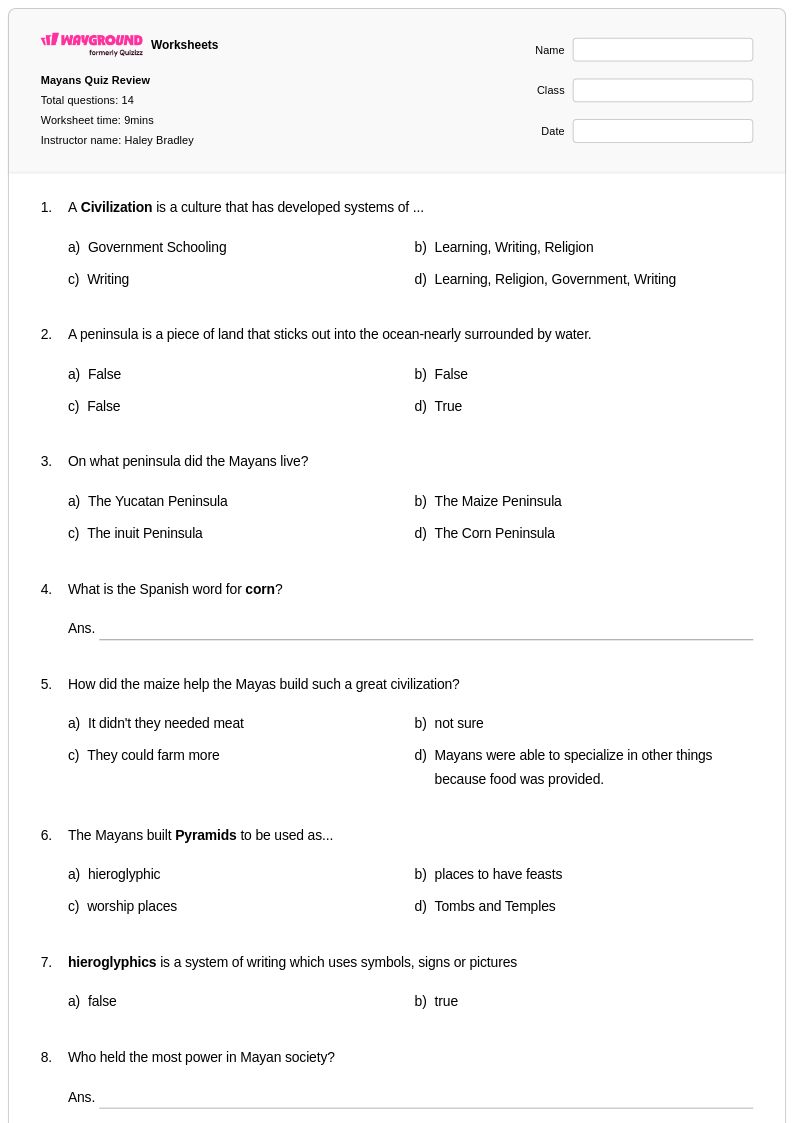
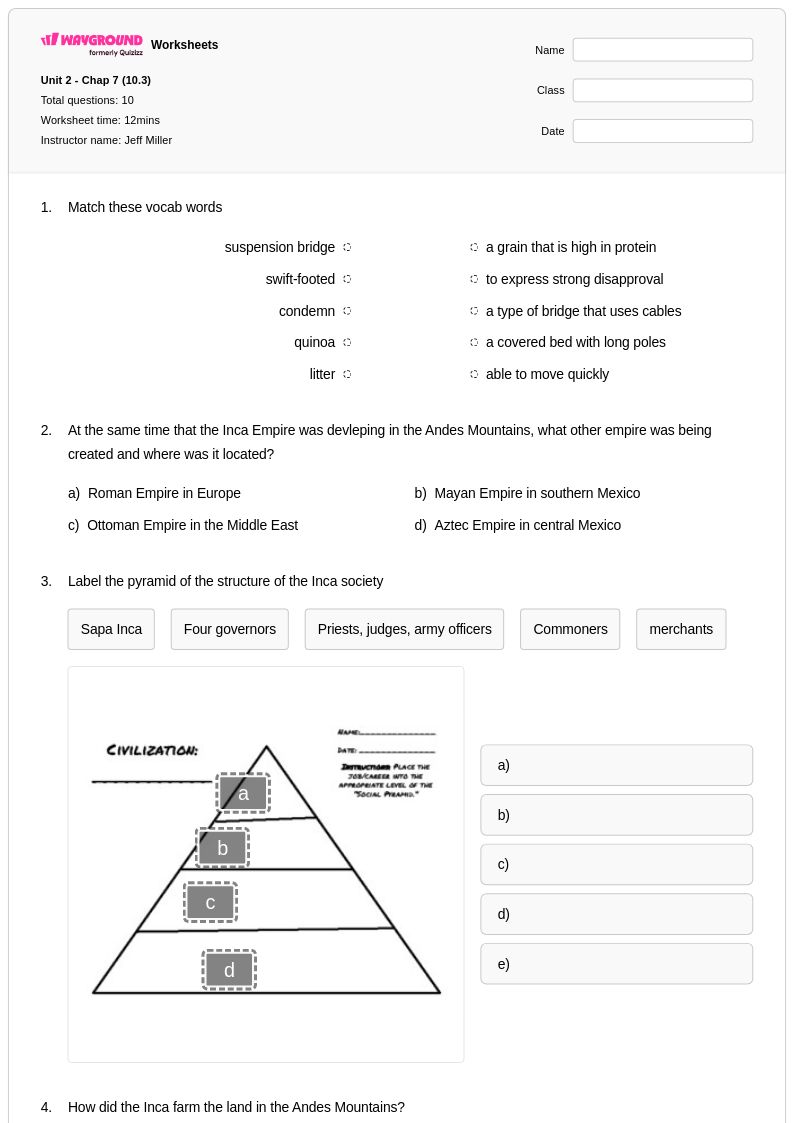
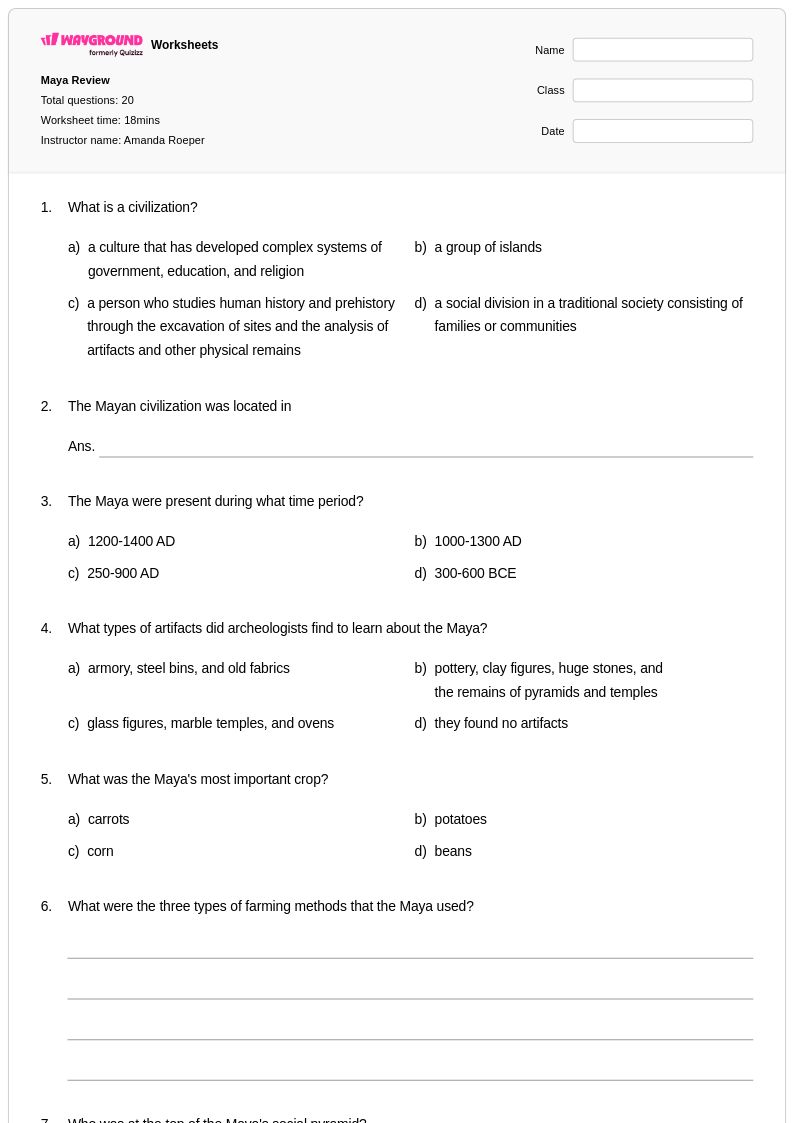
Pyramids worksheets for Year 5 students available through Wayground (formerly Quizizz) provide comprehensive exploration of these magnificent ancient structures that dominated the landscapes of Egypt, Mesopotamia, and Mesoamerica. These educational resources strengthen critical thinking skills as students analyze pyramid construction techniques, examine the cultural and religious significance of these monuments, and compare pyramid building across different civilizations. The worksheets incorporate practice problems that challenge students to calculate pyramid dimensions, timeline activities that place pyramid construction within historical context, and research-based questions that develop analytical skills. Each printable resource includes a detailed answer key to support independent learning, and the free pdf format ensures easy classroom distribution and home study accessibility.
Wayground (formerly Quizizz) empowers educators with access to millions of teacher-created pyramid worksheets specifically designed for Year 5 social studies curriculum requirements. The platform's robust search and filtering system allows teachers to locate resources aligned with specific learning standards, while differentiation tools enable customization for diverse learning needs and ability levels. Teachers can seamlessly adapt worksheets for remediation by focusing on basic pyramid facts and vocabulary, or enhance them for enrichment by incorporating complex architectural analysis and cross-cultural comparisons. The flexible format options support both traditional classroom instruction through printable pdf worksheets and modern digital learning environments, giving educators the versatility needed for effective lesson planning and skill practice across various teaching scenarios.
FAQs
How do I teach ancient pyramids in a history or social studies class?
Teaching ancient pyramids works best when students examine them through multiple lenses: engineering, religion, politics, and economics. Start with the physical structure and construction methods, then expand to why each civilization built pyramids and what they reveal about social hierarchy. Comparing Egyptian and Mesoamerican pyramids side by side helps students see that pyramid-building was a cross-cultural phenomenon, not isolated to one region. This comparative approach builds critical thinking and prevents students from treating ancient history as a single, linear narrative.
What are good practice activities for students learning about Egyptian pyramids?
Effective practice activities include analyzing primary source images of pyramid construction, calculating slope and dimensions using the mathematical ratios ancient Egyptians applied, and comparing burial practices across dynasties. Worksheet-based tasks that ask students to evaluate the engineering decisions behind pyramid design, such as why the angle of inclination changed between the Step Pyramid and the Great Pyramid, give students concrete analytical problems to solve rather than passive reading comprehension alone.
What misconceptions do students commonly have about ancient pyramids?
The most persistent misconception is that pyramids were built by enslaved people working under brutal conditions. Current archaeological evidence strongly supports that the Great Pyramid was built by a paid, organized workforce of skilled laborers. Students also frequently assume that pyramids existed only in Egypt, overlooking the pyramid-building traditions of the Maya, Aztec, and other Mesoamerican civilizations. Addressing these errors directly in instruction deepens historical accuracy and encourages students to question popular assumptions.
How can I use pyramid worksheets to compare ancient civilizations?
Pyramid worksheets designed around civilizational comparison ask students to examine similarities and differences in construction purpose, architectural style, materials used, and religious function across Egypt and Mesoamerica. These structured comparisons build the skill of historical analysis because students must identify patterns across cultures rather than memorize isolated facts. This kind of cross-civilizational thinking is a core expectation in most world history and ancient civilizations curricula.
How do I use Wayground's pyramid worksheets in my classroom?
Wayground's pyramid worksheets are available as printable PDFs for traditional classroom use and in digital formats for technology-integrated or remote learning environments. Teachers can also host the content as a quiz directly on Wayground, making it easy to assign for independent practice or formative assessment. Each worksheet includes a complete answer key, so grading is straightforward and students can review correct answers independently.
How can I differentiate pyramid instruction for students at different skill levels?
For struggling learners, reduce cognitive load by focusing on one civilization at a time before introducing comparisons, and use visual supports like labeled diagrams. For advanced students, introduce primary sources such as ancient Egyptian texts or archaeological site reports and ask them to evaluate the reliability of historical evidence. On Wayground, teachers can apply individual accommodations such as read-aloud support, reduced answer choices, and extended time to specific students without disrupting the rest of the class.