Free Printable Quad Stretch Worksheets for Year 11
Enhance Year 11 students' flexibility and injury prevention skills with our comprehensive quad stretch worksheets, featuring printable PDF exercises, practice problems, and detailed answer keys for effective physical education learning.
Explore printable Quad Stretch worksheets for Year 11
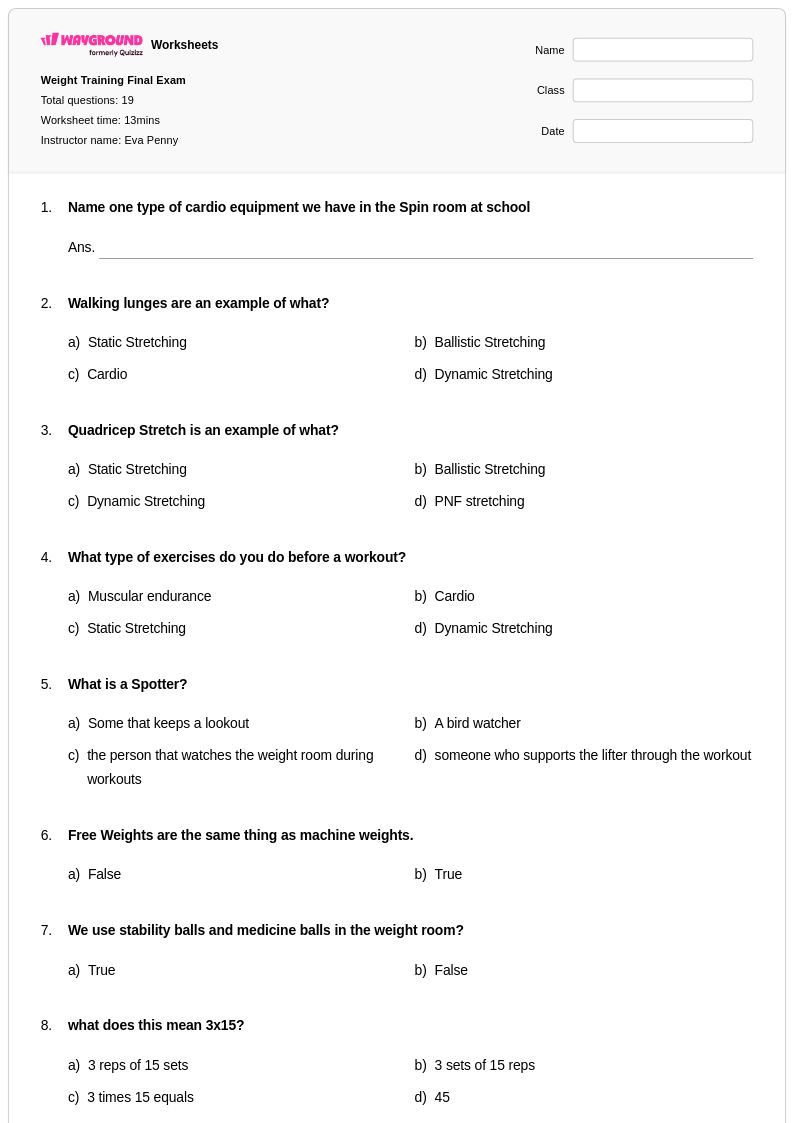
Quad stretch worksheets available through Wayground (formerly Quizizz) provide Year 11 students with comprehensive resources to master proper quadriceps stretching techniques and understand their critical role in athletic performance and injury prevention. These expertly designed materials guide students through the biomechanics of effective quad stretching, including standing quad stretches, prone quad stretches, and seated variations, while emphasizing proper form, duration, and breathing techniques. The worksheets strengthen students' knowledge of muscle anatomy, flexibility principles, and the physiological benefits of consistent stretching routines through engaging practice problems that connect theoretical concepts to real-world applications. Each printable resource includes detailed answer keys that allow students to self-assess their understanding of stretching protocols, safety considerations, and the relationship between quadriceps flexibility and overall lower body function, making these free educational materials invaluable for both classroom instruction and independent study.
Wayground (formerly Quizizz) empowers physical education teachers with access to millions of teacher-created quad stretch worksheet collections that streamline lesson planning and enhance student learning outcomes. The platform's robust search and filtering capabilities enable educators to quickly locate age-appropriate materials that align with curriculum standards while supporting diverse learning needs through built-in differentiation tools. Teachers can seamlessly customize worksheets to address specific skill gaps, provide targeted remediation for students struggling with stretching concepts, or offer enrichment activities for advanced learners ready to explore complex flexibility training principles. The flexibility of both printable and digital formats, including easily downloadable pdf versions, ensures that educators can deliver consistent, high-quality instruction whether teaching in traditional classroom settings, hybrid environments, or remote learning situations, ultimately supporting comprehensive skill practice that prepares students for lifelong fitness and wellness.
FAQs
How do I teach proper quad stretching technique in PE class?
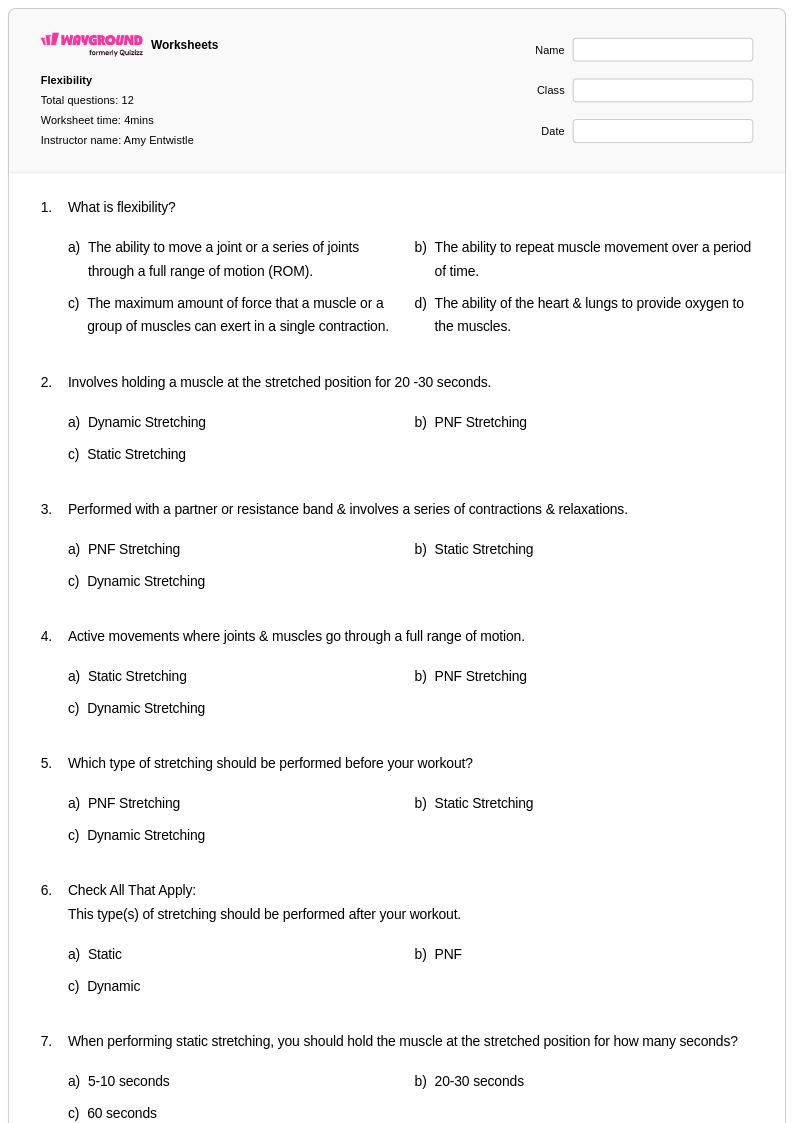
Teaching proper quad stretching begins with explaining the anatomy of the quadriceps muscle group and why flexibility in this area matters for injury prevention and athletic performance. Demonstrate the standing quad stretch with correct alignment: students should stand on one foot, pull the opposite heel toward the glutes, keep knees together, and maintain an upright posture. Reinforce the difference between static stretching, held for 20–30 seconds, and dynamic stretching, which involves controlled movement through a range of motion, so students understand when each type is appropriate.
What are common mistakes students make when performing a quad stretch?
The most frequent error is allowing the knee of the stretching leg to drift outward rather than staying aligned with the standing knee, which reduces stretch effectiveness and can stress the hip joint. Students also frequently arch their lower back while pulling the heel up, compensating for tight hip flexors rather than isolating the quadriceps. Another common issue is holding the stretch for too short a time, often just a few seconds, which is insufficient for meaningful flexibility gains. Pointing these out explicitly during instruction helps students self-correct and build better body awareness.
What exercises or worksheets help students practice quad stretching concepts?
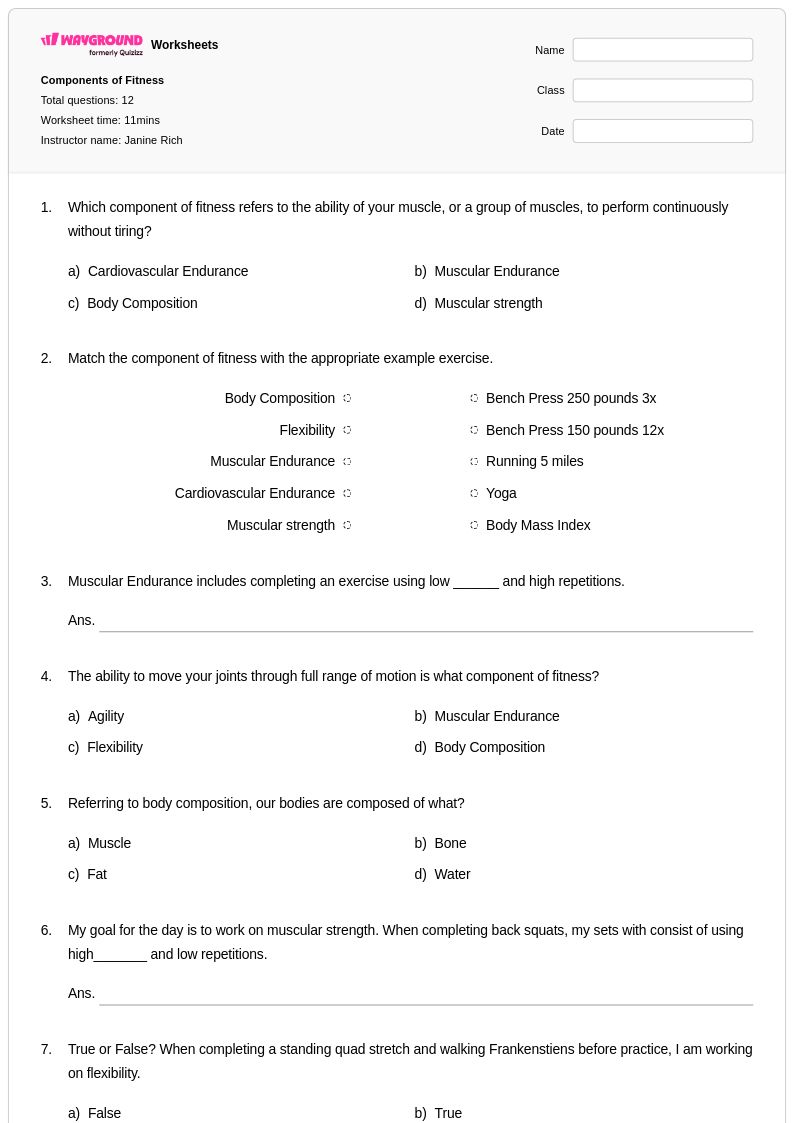
Practice worksheets that walk students through stretching positions, hold durations, and safety guidelines are effective for reinforcing both the physical and conceptual dimensions of quad stretching. Diagram-based exercises where students label the quadriceps muscle group and identify correct versus incorrect form help bridge anatomy knowledge with physical practice. Worksheets that compare static and dynamic stretching protocols give students a structured framework they can apply across warm-up and cool-down routines.
How do I use Wayground's quad stretch worksheets in my PE class?
Wayground's quad stretch worksheets are available as printable PDFs, making them easy to distribute for pre-activity warm-ups, post-activity reflection, or homework reinforcement. They are also available in digital formats, so teachers can assign them through technology-integrated learning environments or host them as a quiz directly on Wayground. Each worksheet includes an answer key, supporting both self-assessment by students and efficient evaluation by the instructor.
How can I differentiate quad stretch instruction for students with varying flexibility levels or physical limitations?
For students with limited flexibility or physical limitations, modify the standing quad stretch by having them perform it near a wall for balance support, or use a seated or lying variation that reduces balance demands. When assigning digital worksheets on Wayground, you can enable accommodations such as Read Aloud for students who need audio support, or adjust font size and display settings using Reading Mode to improve accessibility. These accommodations can be set per individual student and saved for reuse across future sessions, so differentiation does not require repeated setup.
What are the physiological benefits of regular quadriceps stretching that I should teach students?
Regular quad stretching improves the flexibility of the quadriceps muscle group, which runs along the front of the thigh and is responsible for knee extension and hip flexion. Maintaining flexibility in this area reduces the risk of common injuries such as patellar tendinopathy and hip flexor strain, particularly in students who sit for long periods or participate in running and jumping sports. Teaching students about these benefits connects physical education to health literacy and helps motivate consistent stretching habits.