Free Printable R.A.C.E. Strategy Worksheets for Year 12
Master the R.A.C.E. strategy for Year 12 writing with Wayground's comprehensive collection of free worksheets, printables, and practice problems complete with answer keys to strengthen analytical response skills.
Explore printable R.A.C.E. Strategy worksheets for Year 12
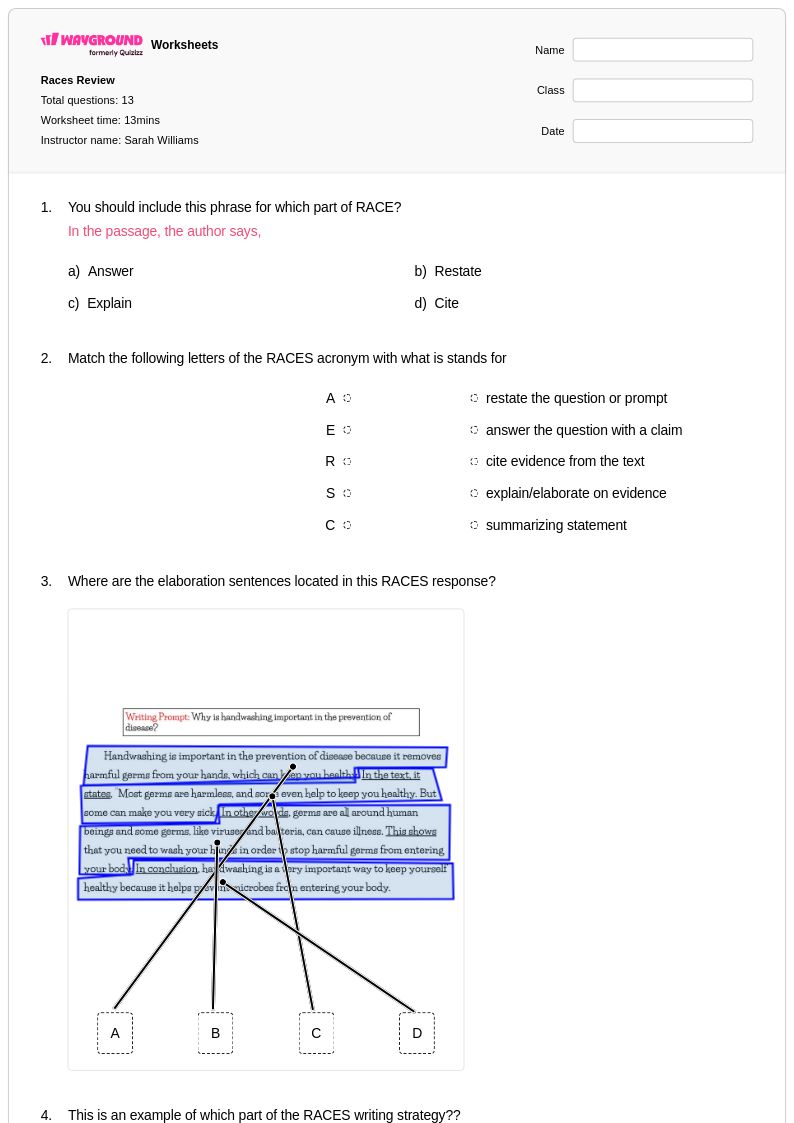
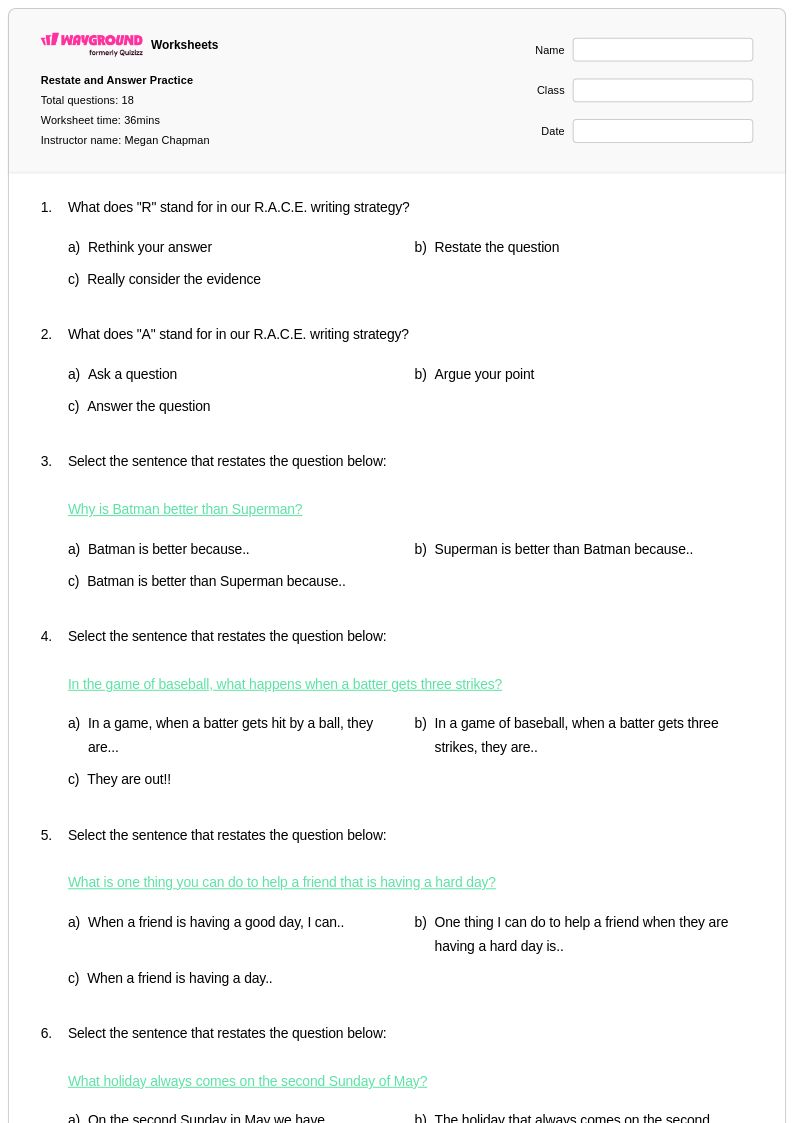
R.A.C.E. Strategy worksheets for Year 12 students available through Wayground (formerly Quizizz) provide comprehensive practice in this essential structured response framework that helps students Restate the question, Answer with evidence, Cite sources, and Explain their reasoning. These expertly crafted worksheets strengthen critical analytical writing skills by guiding twelfth-grade students through systematic approaches to constructing well-supported responses across various text types and genres. Students work through practice problems that reinforce each component of the R.A.C.E. method, developing proficiency in textual analysis, evidence selection, and coherent explanation of their thinking. The free printable resources include detailed answer keys that enable both independent study and instructional support, while pdf formats ensure consistent formatting and easy distribution for classroom or homework assignments.
Wayground (formerly Quizizz) empowers educators with millions of teacher-created R.A.C.E. Strategy resources specifically designed to meet the sophisticated analytical demands of Year 12 English instruction. The platform's advanced search and filtering capabilities allow teachers to locate worksheets aligned with specific standards and tailored to diverse learning needs, supporting both remediation for students still developing structured response skills and enrichment for advanced writers ready for complex textual analysis challenges. These differentiation tools enable seamless customization of practice materials, while the availability of both printable and digital pdf formats provides flexibility for various classroom environments and learning preferences. Teachers can efficiently plan targeted skill practice sessions, identify areas requiring additional support through comprehensive answer keys, and implement systematic writing instruction that prepares students for college-level analytical writing demands.
FAQs
How do I teach the R.A.C.E. strategy to students?
Introduce each component of R.A.C.E. explicitly and in sequence: Restate the question, Answer with evidence, Cite sources, and Explain reasoning. Model the process using a shared text before asking students to apply each step independently. Breaking instruction into stages prevents students from skipping steps and helps them internalize the framework as a writing habit rather than a one-time checklist.
What kinds of exercises help students practice the R.A.C.E. strategy?
Text-based response prompts tied to short reading passages are the most effective practice format because they require students to locate evidence and explain their thinking in context. Scaffolded sentence frames for each R.A.C.E. component help emerging writers get started, while open-ended prompts challenge more advanced students. Repeated practice across different genres, including literary and informational texts, builds transferable skill.
What mistakes do students commonly make when using the R.A.C.E. strategy?
The most frequent error is skipping the Restate step and jumping directly to the answer, which weakens the response structure. Students also commonly cite evidence without explaining how it supports their answer, leaving the connection implicit. Coaching students to treat each component as a non-negotiable part of the response, and using peer review checklists aligned to R.A.C.E., helps address both patterns.
How can I differentiate R.A.C.E. strategy instruction for different skill levels?
For struggling writers, provide sentence starters for each step and use shorter, more accessible texts so cognitive load stays focused on the writing structure itself. For advanced students, remove scaffolds and increase text complexity or require multiple pieces of evidence per response. On Wayground, teachers can apply accommodations such as read aloud support and reduced answer choices to individual students, ensuring each learner engages with the framework at an appropriate level.
How do I use R.A.C.E. strategy worksheets from Wayground in my classroom?
Wayground's R.A.C.E. strategy worksheets are available as printable PDFs for traditional classroom use and in digital formats for technology-integrated learning, including the option to host them as a quiz directly on Wayground. Each worksheet includes a detailed answer key, supporting both independent student practice and guided whole-class instruction. Teachers can use the platform's search and filtering tools to find materials aligned to specific standards and grade-level expectations, and can customize worksheets for remediation or enrichment as needed.
How does the R.A.C.E. strategy support evidence-based writing across subject areas?
The R.A.C.E. framework gives students a repeatable structure for responding to text-dependent questions in any subject, not just English language arts. In science, students can cite data; in social studies, primary source evidence. Because the framework emphasizes restating the question and explaining reasoning, it builds the analytical writing habits that transfer across disciplines and standardized assessments.