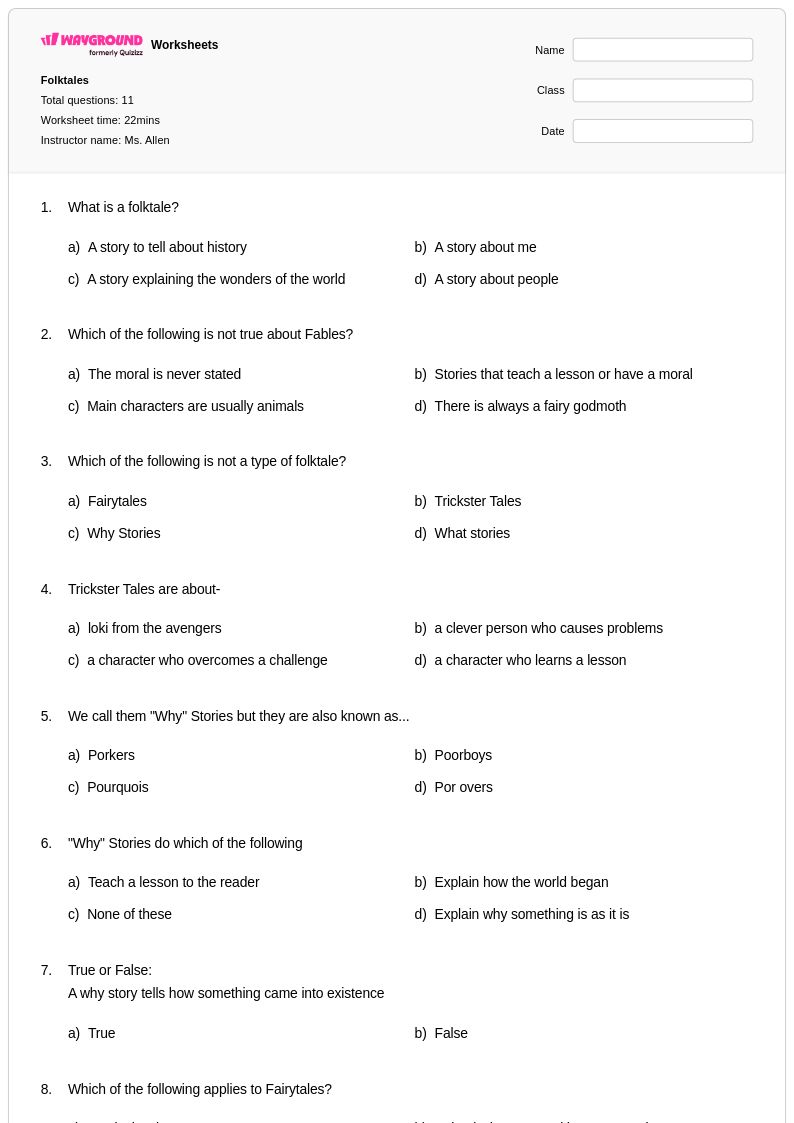
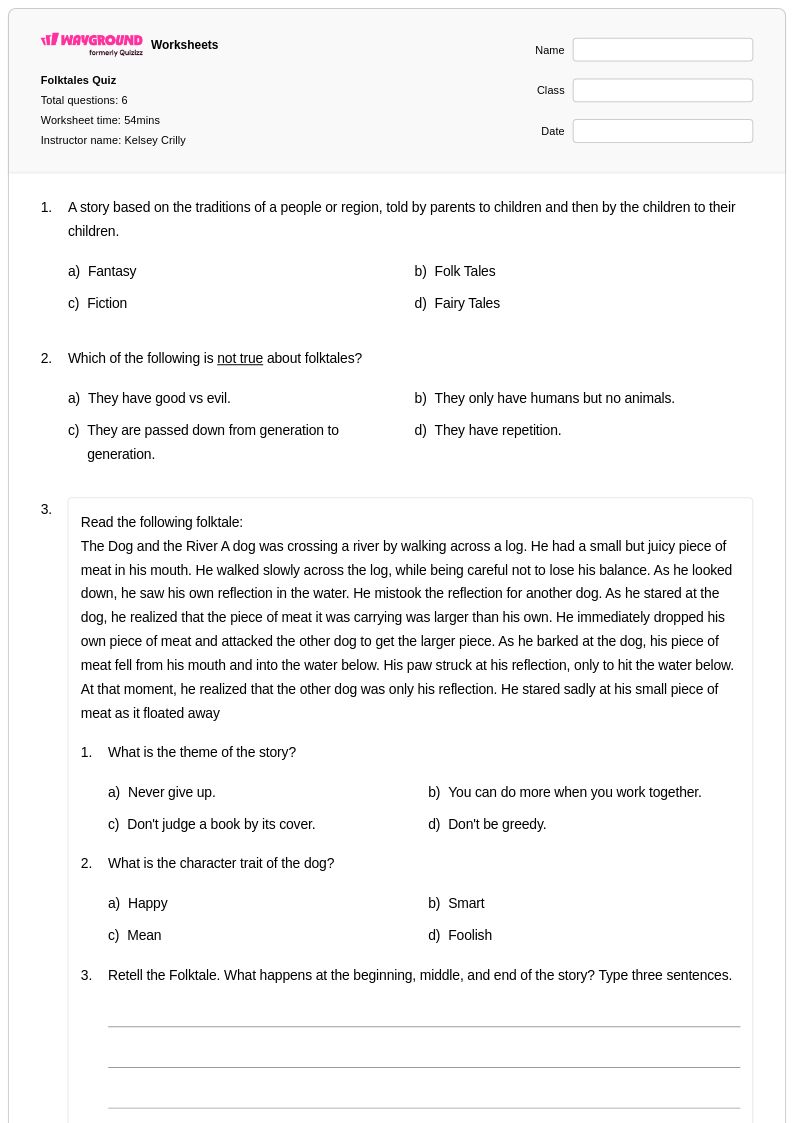
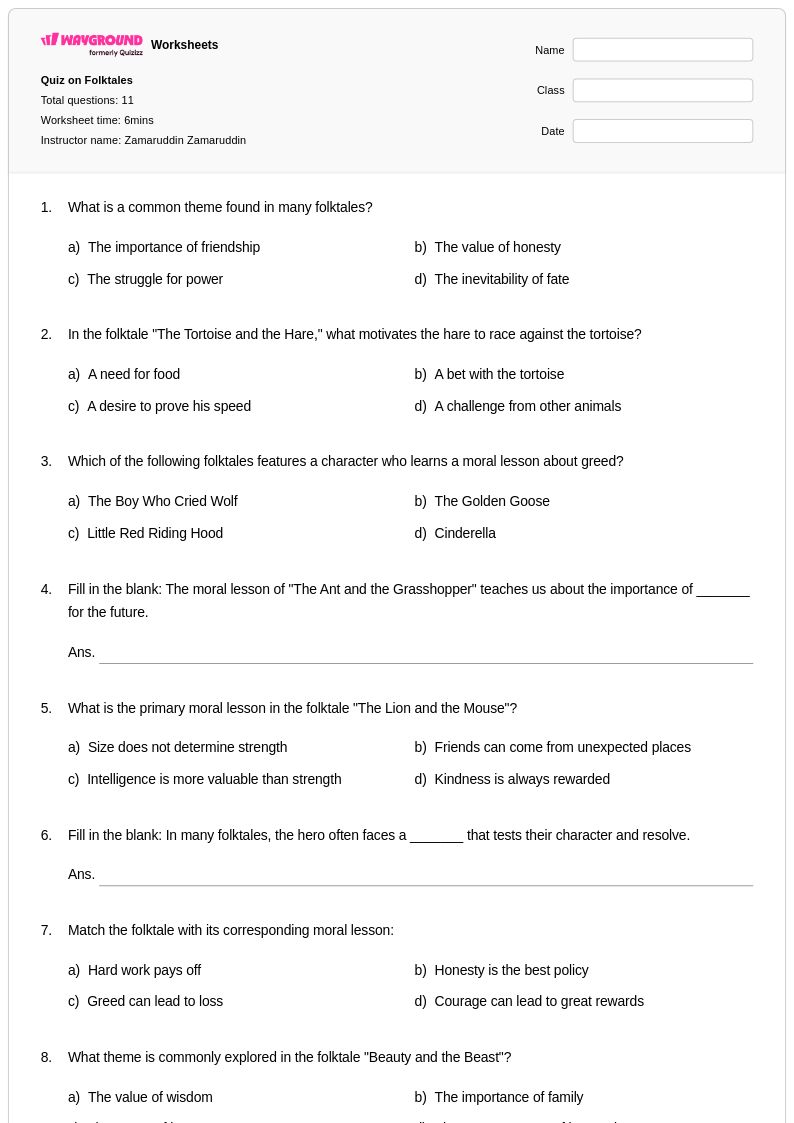
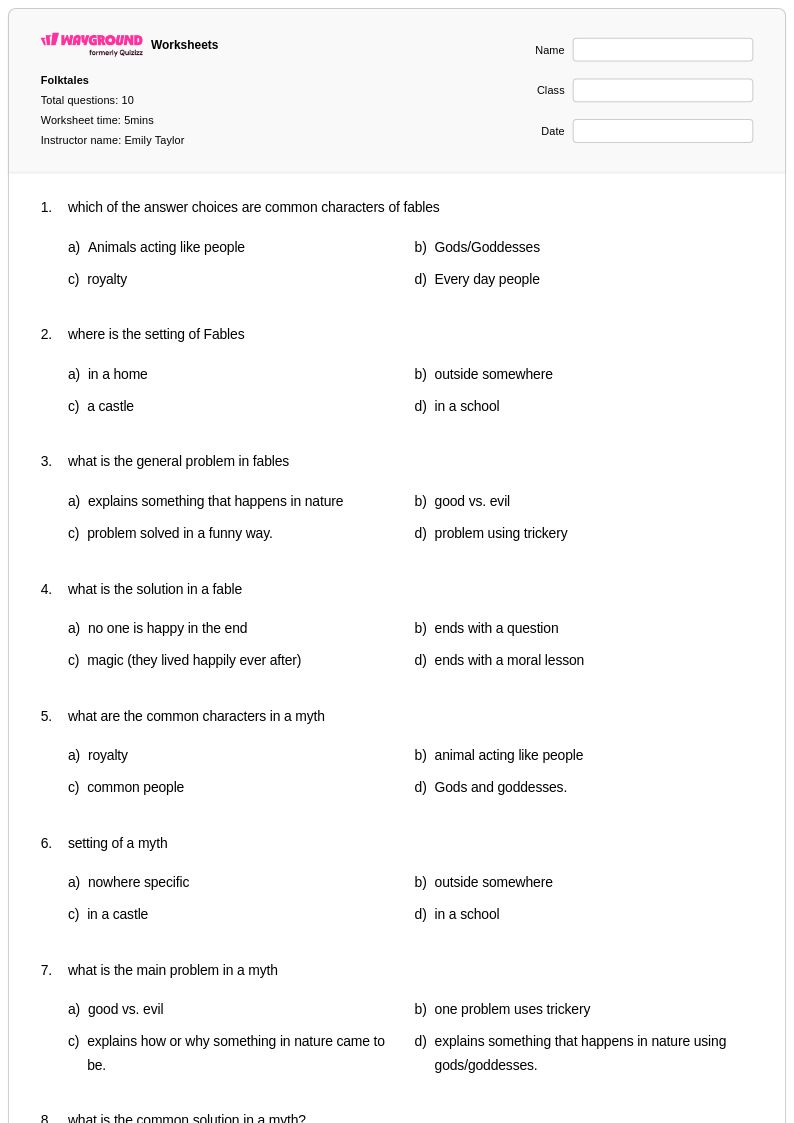
Discover free folktales worksheets and printables from Wayground that help students explore traditional stories, develop reading comprehension skills, and practice identifying story elements through engaging PDF activities with answer keys.
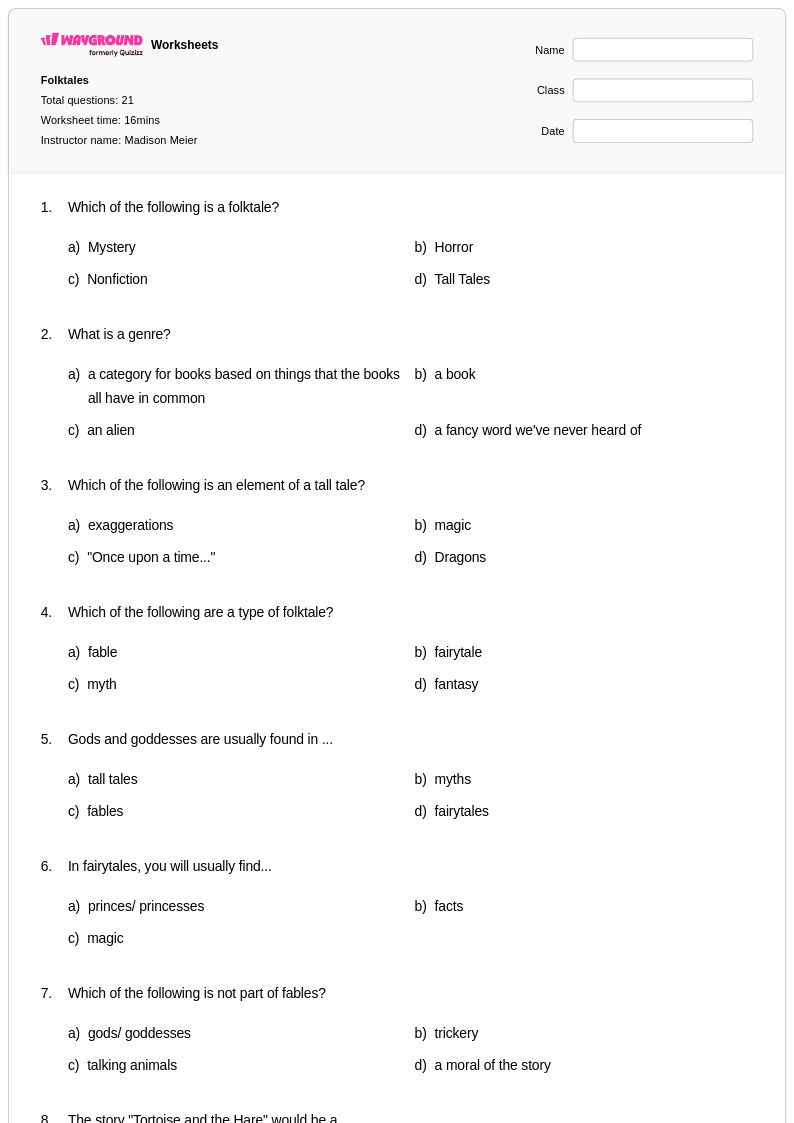
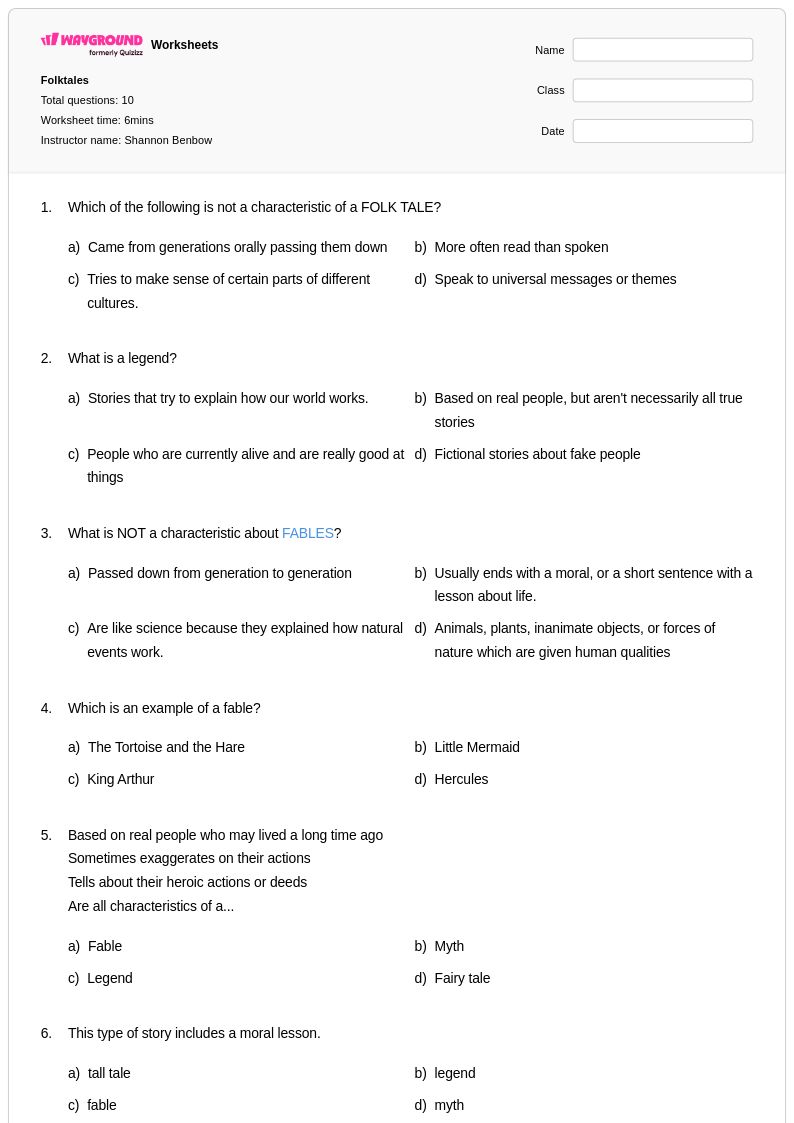
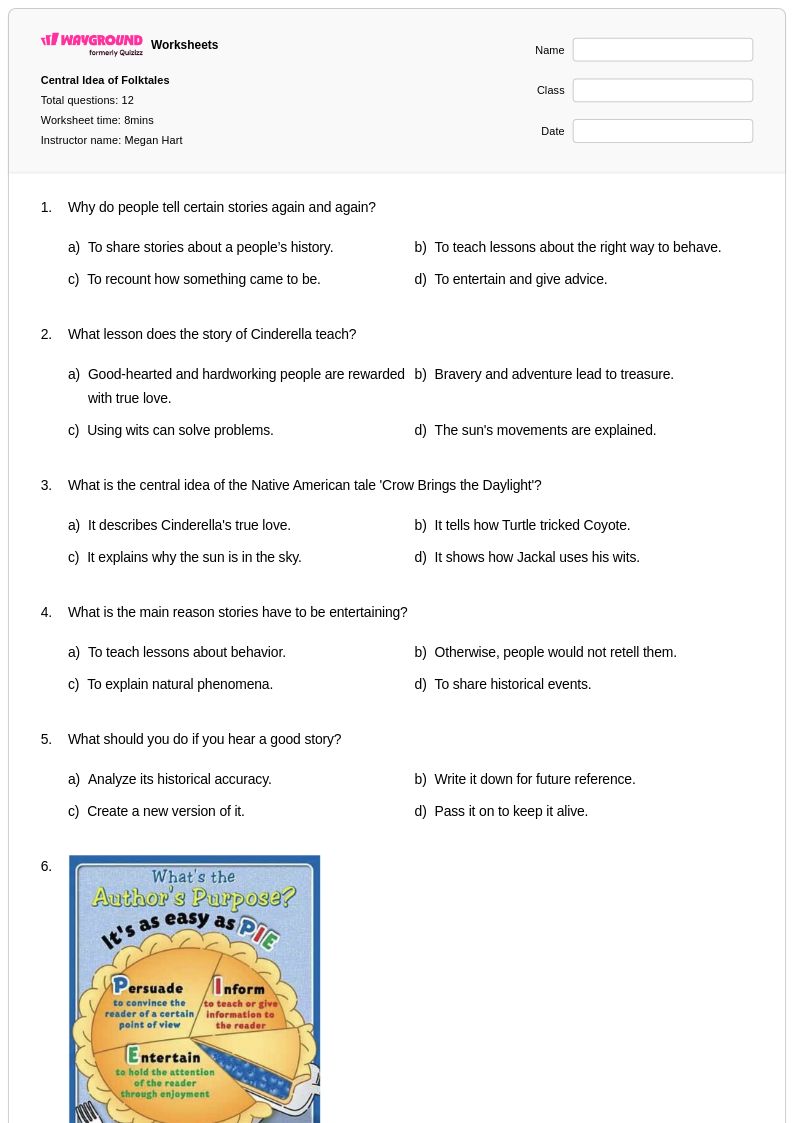
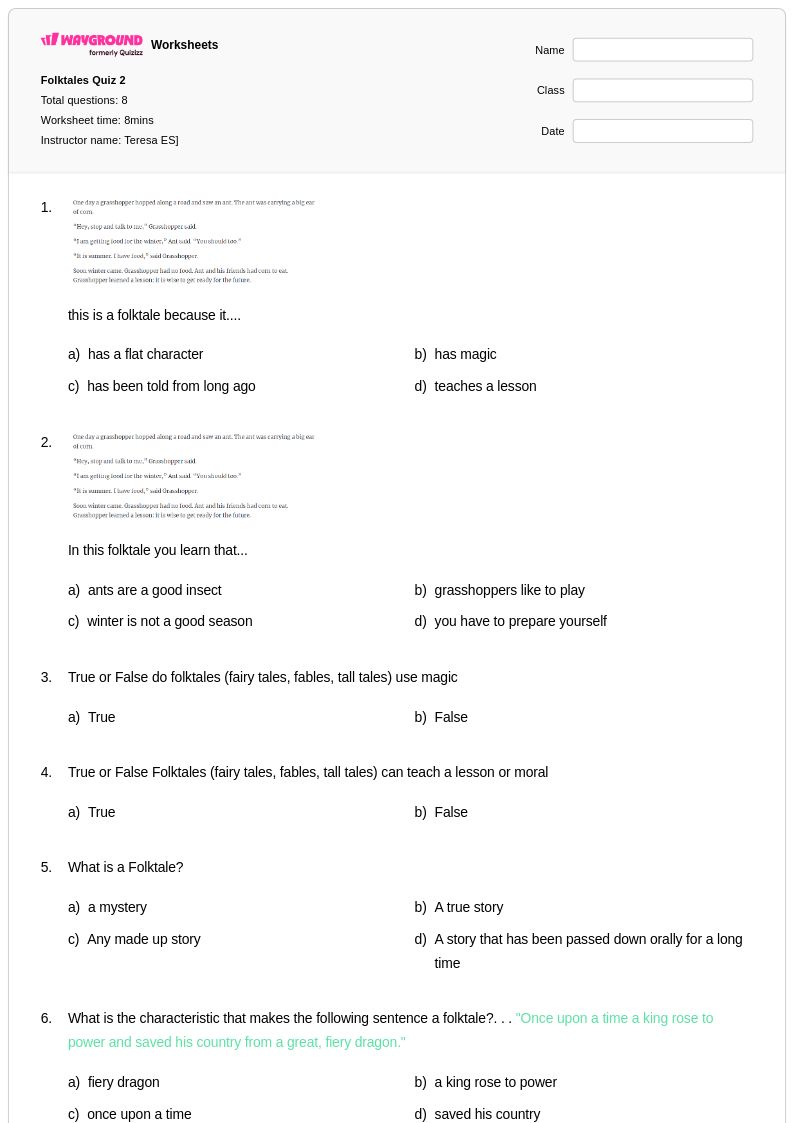
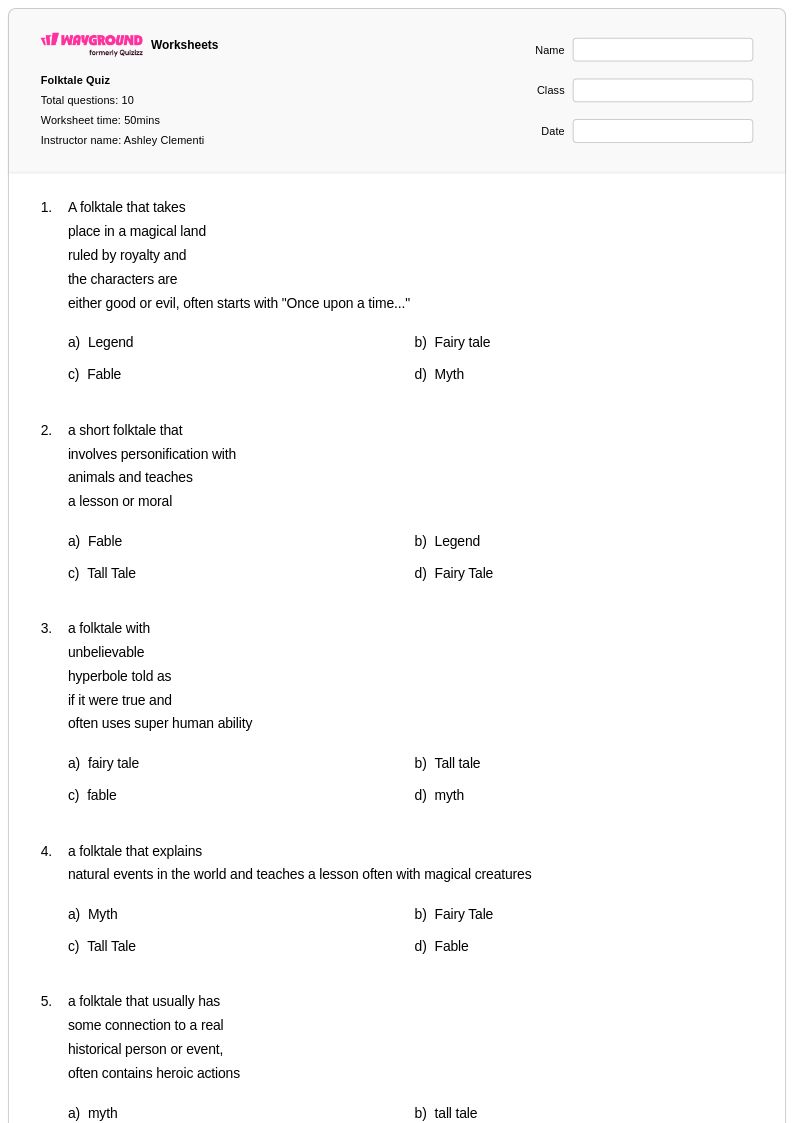
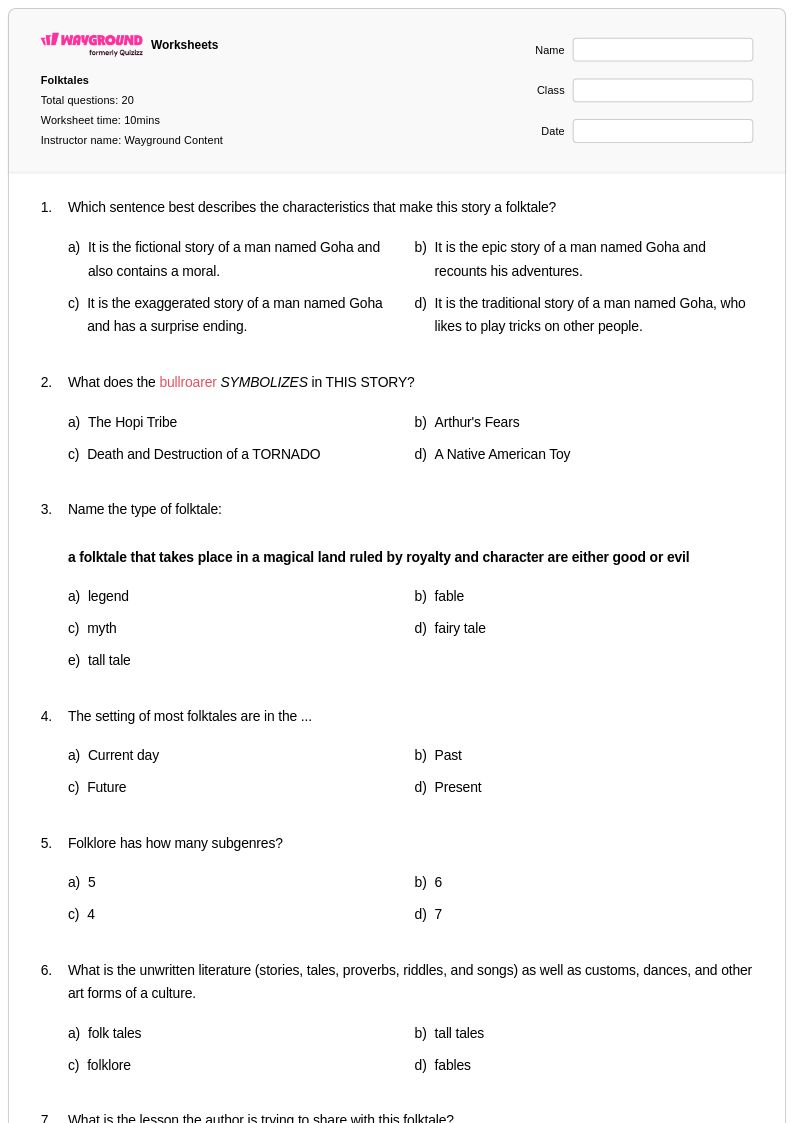
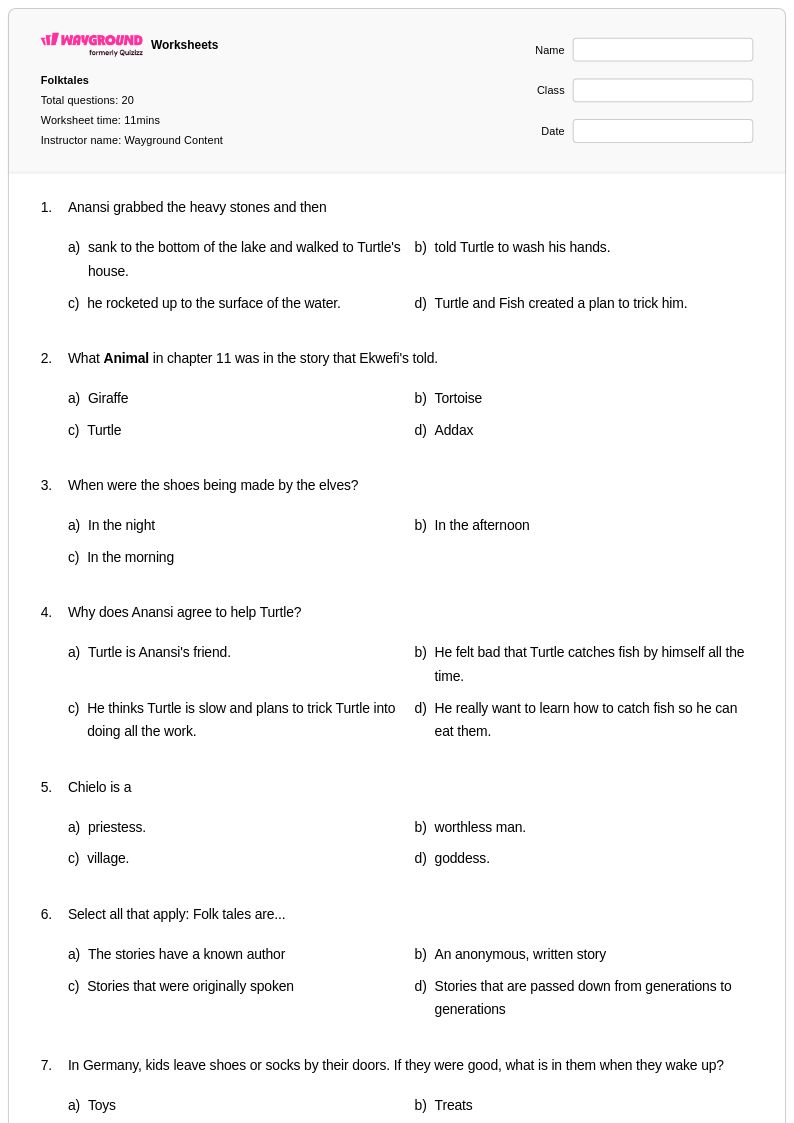
Folktales worksheets available through Wayground (formerly Quizizz) provide comprehensive practice materials that help students analyze and understand this foundational narrative genre. These educational resources strengthen critical reading skills by guiding learners through the distinctive elements of folktales, including archetypal characters, moral lessons, cultural origins, and traditional storytelling patterns. Students engage with practice problems that examine plot structures, character motivations, and thematic elements while building vocabulary specific to folklore terminology. The worksheets include detailed answer keys that support independent learning and feature printable pdf formats for flexible classroom use. These free resources cover various folktale traditions from around the world, enabling students to compare narrative techniques, identify universal themes, and recognize how oral storytelling traditions have shaped written literature across cultures.
Wayground (formerly Quizizz) empowers educators with an extensive collection of teacher-created folktales worksheets drawn from millions of educational resources that can be easily accessed through robust search and filtering capabilities. Teachers can locate materials that align with specific learning standards and utilize built-in differentiation tools to modify content complexity for diverse student needs. The platform's flexible customization options allow educators to adapt existing worksheets or combine multiple resources to create targeted practice sessions for remediation or enrichment activities. Whether delivered in traditional printable formats or interactive digital versions, these comprehensive worksheet collections support systematic skill development in literary analysis and genre recognition. The seamless integration of pdf downloads with digital accessibility ensures that teachers can efficiently plan lessons that accommodate various learning environments while maintaining consistent focus on folktale comprehension and analytical thinking skills.
FAQs
How do I teach folktales to elementary and middle school students?
Start by establishing what makes folktales distinct from other narrative genres: oral origins, archetypal characters, a clear moral lesson, and cultural specificity. Introduce students to examples from multiple traditions so they can see how universal themes like justice, greed, and bravery appear across cultures. Anchor instruction around story elements first, then move toward comparing how different cultures handle the same narrative problem. This progression builds both comprehension and cultural literacy simultaneously.
What exercises help students practice identifying story elements in folktales?
Exercises that ask students to isolate character archetypes, trace plot structure, and identify the stated or implied moral are most effective for folktale practice. Graphic organizers comparing two folktales from different cultures reinforce how universal themes manifest differently depending on origin. Vocabulary practice around folklore-specific terminology, such as 'archetype,' 'oral tradition,' and 'motif,' strengthens the analytical language students need for written responses.
What mistakes do students commonly make when analyzing folktales?
Students frequently confuse the moral with the plot summary, restating what happened rather than identifying the lesson the story teaches. Another common error is treating archetypal characters as fully developed individuals rather than recognizing them as representative types serving a narrative function. Students also tend to overlook cultural context, which leads them to misread character motivations or misidentify what counts as a reward or punishment within a specific tradition.
How can I use folktale worksheets to support reading comprehension across different skill levels?
Folktale worksheets work well for differentiation because the genre's clear structure gives struggling readers predictable scaffolding while still offering enough interpretive depth for advanced students. Lower-level tasks can focus on sequencing events and identifying characters, while higher-level tasks push students to analyze theme, compare cultural versions, and evaluate how storytelling patterns reflect values. On Wayground, teachers can apply accommodations such as read aloud support, extended time, and reduced answer choices for individual students without disrupting the rest of the class.
How do I use Wayground's folktales worksheets in my classroom?
Wayground's folktales worksheets are available as printable PDFs for traditional classroom use and in digital formats for technology-integrated learning environments, including the option to host them as a quiz directly on the platform. Teachers can search and filter the collection to find materials aligned to specific standards or traditions, then customize them to target particular skills such as plot analysis, vocabulary, or theme identification. Answer keys are included with each worksheet, supporting both teacher grading and independent student review.
How do I help students recognize the difference between folktales and other traditional narrative genres?
Folktales are best distinguished by their combination of cultural specificity, an anonymous communal origin, and a didactic purpose, though they share some features with myths, fables, and legends. Teach students to ask three questions: Does this story explain a natural phenomenon? (myth) Does it feature only animals with a stated moral? (fable) Does it center a historical figure or place? (legend) If none of these apply but the story reflects cultural values through ordinary or magical characters, it is likely a folktale. Comparison charts and side-by-side reading tasks make this distinction concrete rather than abstract.