Free Year 11 Red Scare worksheets and printables from Wayground help students explore McCarthyism, communist fears, and Cold War paranoia through engaging practice problems and comprehensive answer keys.
Explore printable Red Scare worksheets for Year 11
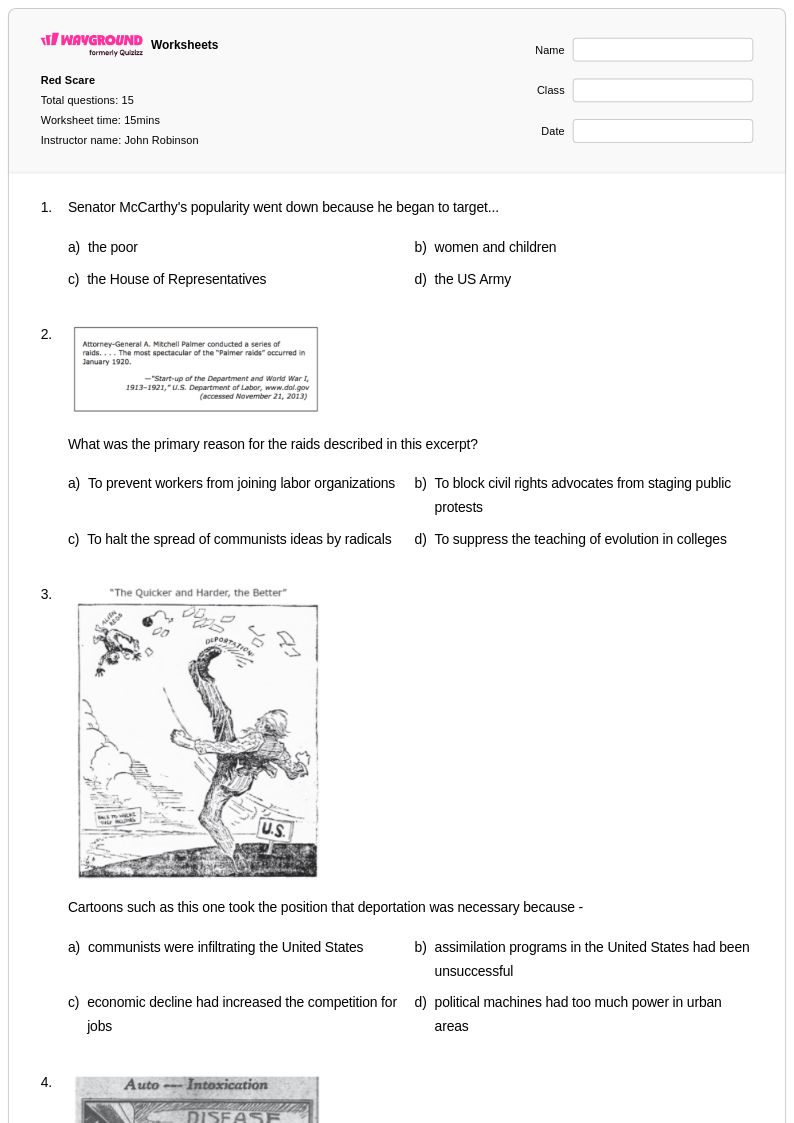
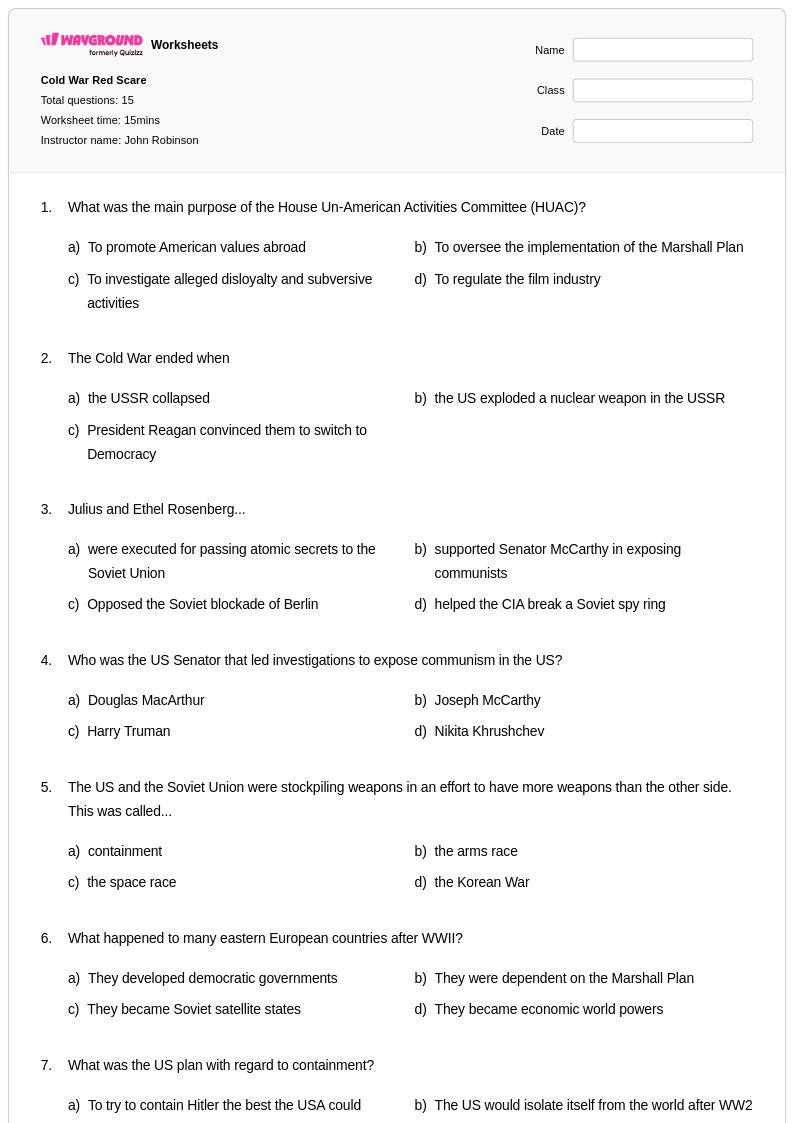
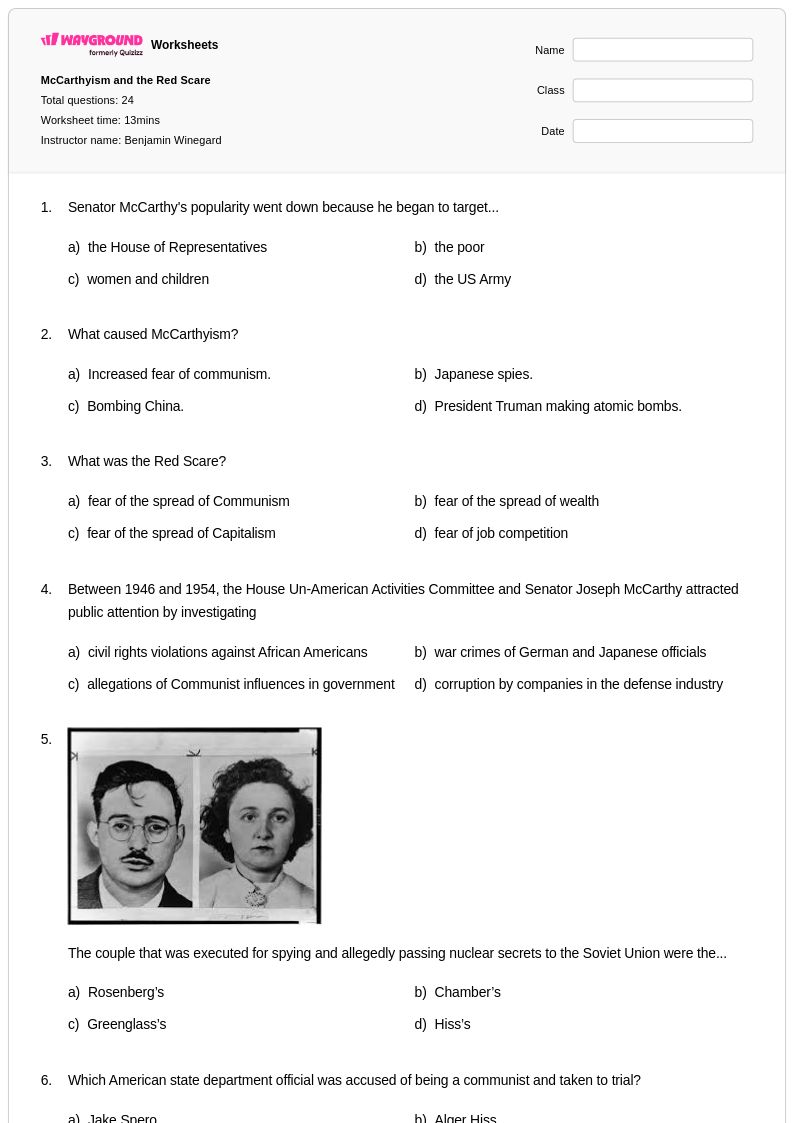
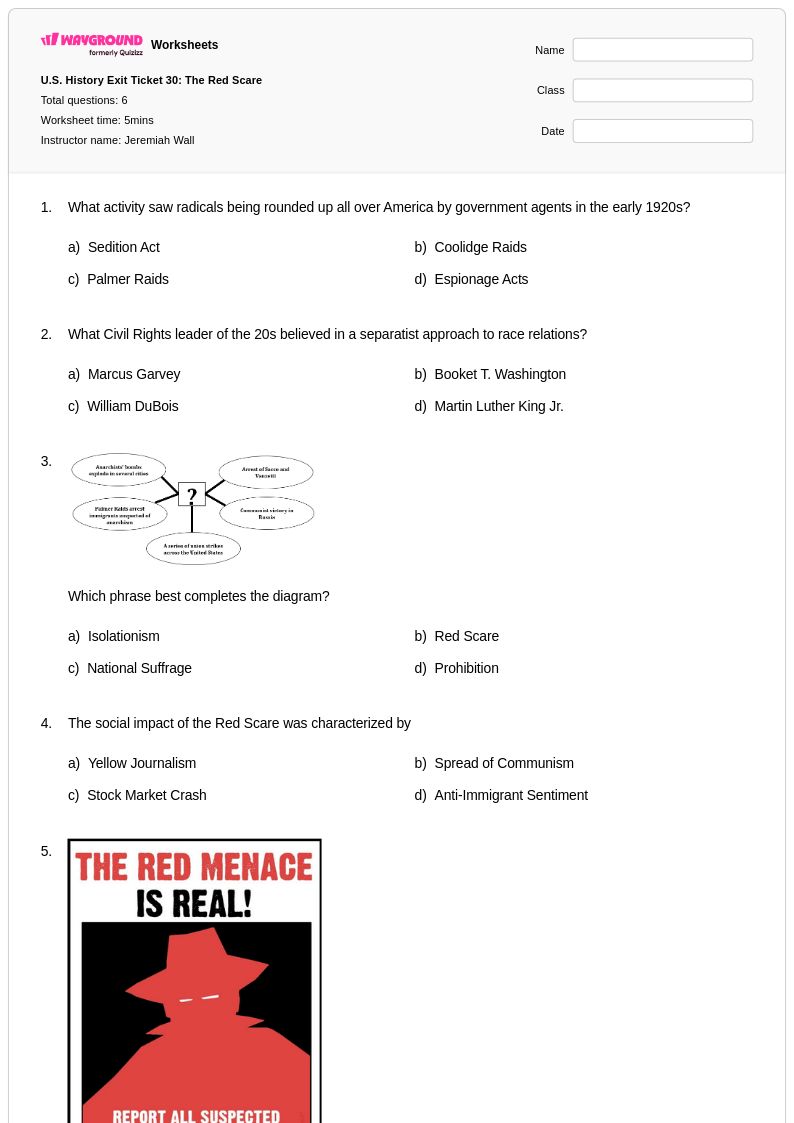
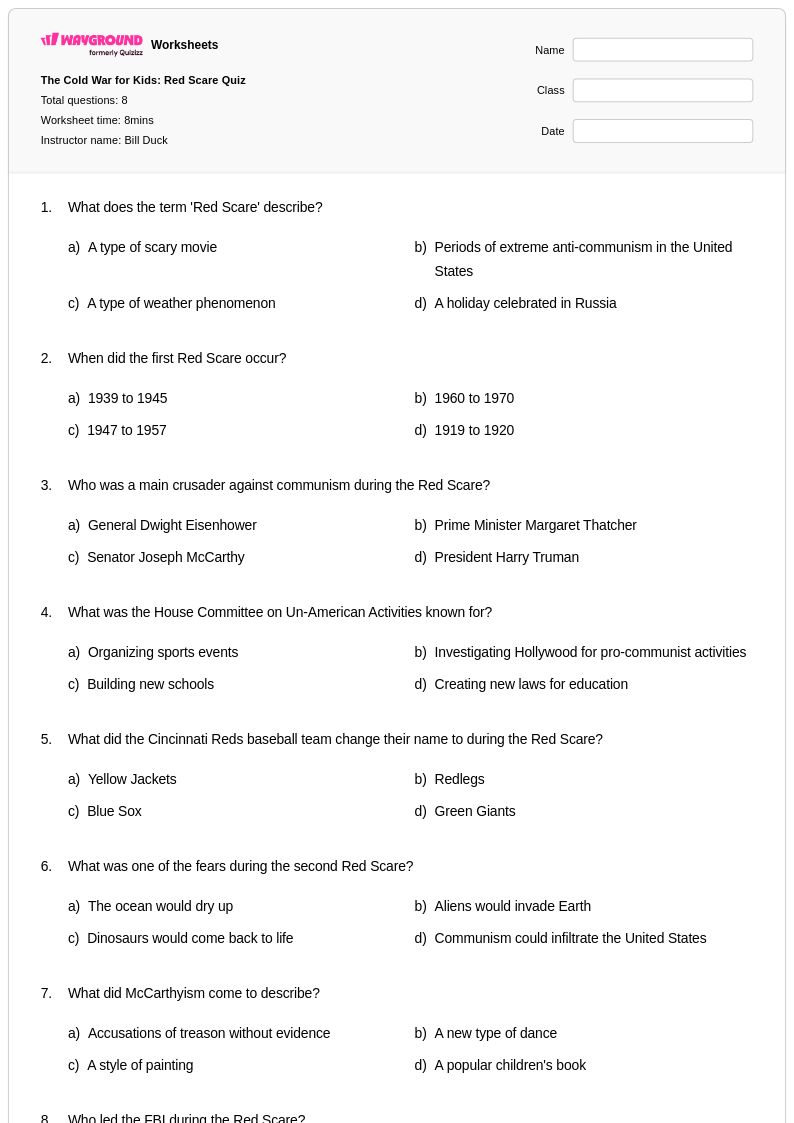
Red Scare worksheets for Year 11 students through Wayground (formerly Quizizz) provide comprehensive resources for exploring one of the most significant periods of political tension in American history. These expertly crafted materials help students analyze the post-World War I and Cold War eras when fear of communist infiltration gripped the United States, leading to widespread suspicion, government investigations, and civil liberties violations. The worksheets strengthen critical thinking skills by guiding students through primary source analysis, cause-and-effect relationships, and historical interpretation as they examine events like the Palmer Raids, McCarthyism, and the Hollywood blacklist. Each resource includes detailed answer keys and practice problems that challenge students to evaluate the impact of fear-based politics on American society, while free printables in pdf format make these materials accessible for various learning environments and study sessions.
Wayground (formerly Quizizz) supports educators teaching about the Red Scare through its extensive collection of millions of teacher-created resources that offer exceptional search and filtering capabilities for finding grade-appropriate content. The platform's standards alignment features ensure that worksheets meet curriculum requirements while differentiation tools allow teachers to modify materials for diverse learning needs and ability levels. Flexible customization options enable educators to adapt content for specific classroom objectives, whether focusing on the First Red Scare of 1919-1920 or the Second Red Scare of the 1940s and 1950s. Available in both printable and digital formats including downloadable pdf versions, these resources streamline lesson planning while providing targeted practice for skill development, remediation for struggling learners, and enrichment opportunities for advanced students exploring the complex intersection of national security concerns and constitutional freedoms.
FAQs
How do I teach the Red Scare to high school students?
Teaching the Red Scare effectively means grounding students in the specific historical events that fueled anti-communist sentiment, from the Palmer Raids of 1919–1920 through McCarthyism in the 1950s. Start by establishing the political climate of each era before asking students to evaluate how fear shaped government policy and civil liberties. Primary source analysis, such as examining HUAC transcripts or political cartoons from the period, helps students move beyond surface-level recall toward genuine historical thinking. Connecting the Red Scare to broader democratic values gives students a framework for assessing its long-term significance.
What are good activities for practicing Red Scare analysis in class?
Effective practice activities for the Red Scare include primary source document analysis, political cartoon interpretation, and cause-and-effect mapping of events like the Palmer Raids, the Hollywood Ten trials, and McCarthyism. Having students compare the First and Second Red Scares helps reinforce chronological thinking and pattern recognition across historical periods. Short constructed-response prompts that ask students to evaluate the impact of anti-communist policies on civil liberties are particularly useful for building analytical writing skills. These types of exercises push students to synthesize evidence rather than simply recall facts.
What misconceptions do students commonly have about the Red Scare?
A common misconception is that the Red Scare was a single event rather than two distinct periods, the First Red Scare following World War I and the Second Red Scare during the Cold War. Students also frequently conflate McCarthyism with the broader Red Scare, not recognizing McCarthy as one actor within a wider culture of suspicion that predated him. Another error is assuming all accused individuals were Communist Party members; in reality, many were targeted due to political beliefs, associations, or personal vendettas. Addressing these misconceptions directly through evidence-based activities strengthens students' ability to apply accurate historical reasoning.
How does studying the Red Scare connect to civil liberties and constitutional rights?
The Red Scare is one of the most instructive case studies for examining how fear can erode constitutional protections, particularly First and Fourth Amendment rights. During both the First and Second Red Scares, individuals were surveilled, blacklisted, or imprisoned based on suspected associations rather than proven criminal acts. Teaching this connection helps students evaluate the tension between national security interests and individual liberties, a conflict that remains relevant today. It also provides a concrete historical example for discussions of due process and the role of political ideology in shaping legal interpretation.
How can I use Red Scare worksheets from Wayground in my classroom?
Red Scare worksheets on Wayground are available as printable PDFs for traditional classroom use and in digital formats for technology-integrated learning environments, giving teachers flexibility depending on their classroom setup. Teachers can also host the worksheets as quizzes directly on Wayground, making them suitable for formative assessment or independent practice. The worksheets cover key topics such as the Palmer Raids, McCarthyism, and the impact of anti-communist policies on civil liberties, so they can be used for initial instruction, review, or targeted remediation. Complete answer keys are included, reducing grading time and allowing teachers to return meaningful feedback efficiently.
How do I differentiate Red Scare instruction for students with varying skill levels?
Differentiation for Red Scare instruction can involve scaffolding primary source documents with guiding questions for students who need additional support, while offering open-ended analysis tasks for more advanced learners. On Wayground, teachers can apply individual accommodations such as read-aloud support, extended time, and reduced answer choices to specific students without alerting the rest of the class, making it easier to meet diverse needs during digital practice. Grouping students by readiness for discussion-based activities and adjusting the complexity of written prompts are also practical strategies for mixed-ability classrooms.