Free Printable Robber Barons Worksheets for Year 11
Enhance Year 11 students' understanding of Robber Barons with Wayground's comprehensive collection of free worksheets, printables, and practice problems featuring detailed answer keys to explore these influential industrialists in U.S. History.
Explore printable Robber Barons worksheets for Year 11
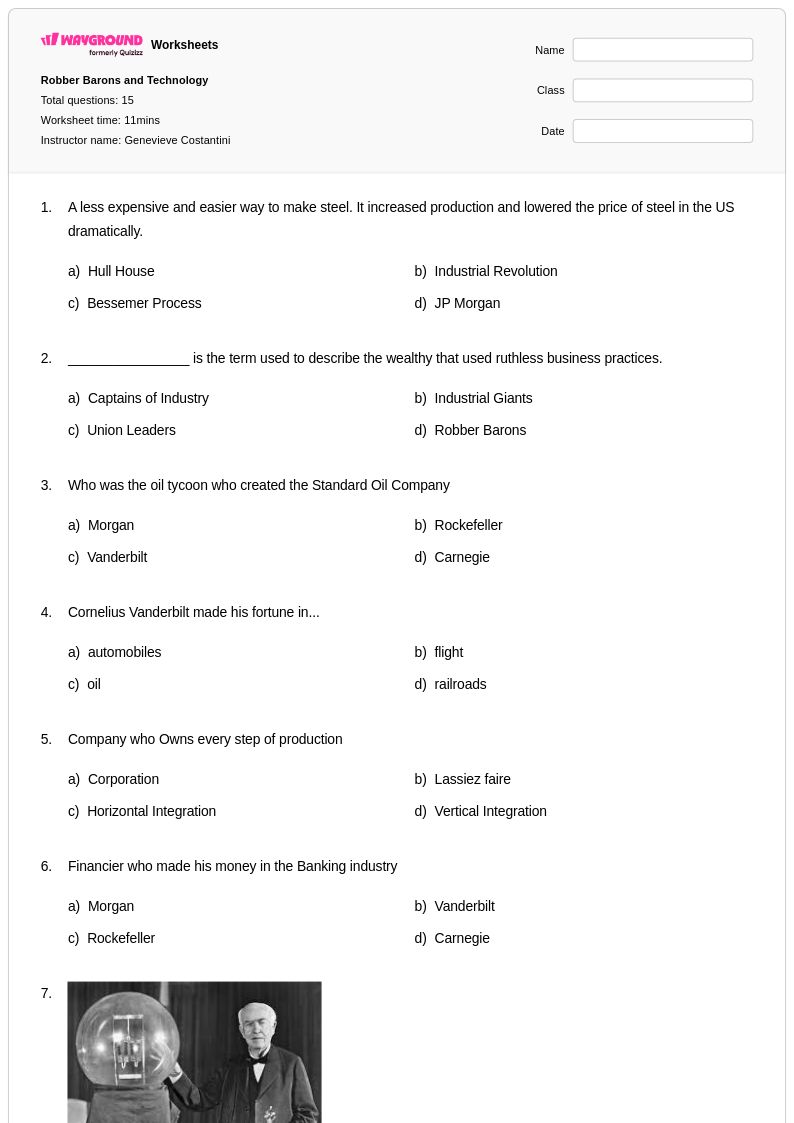
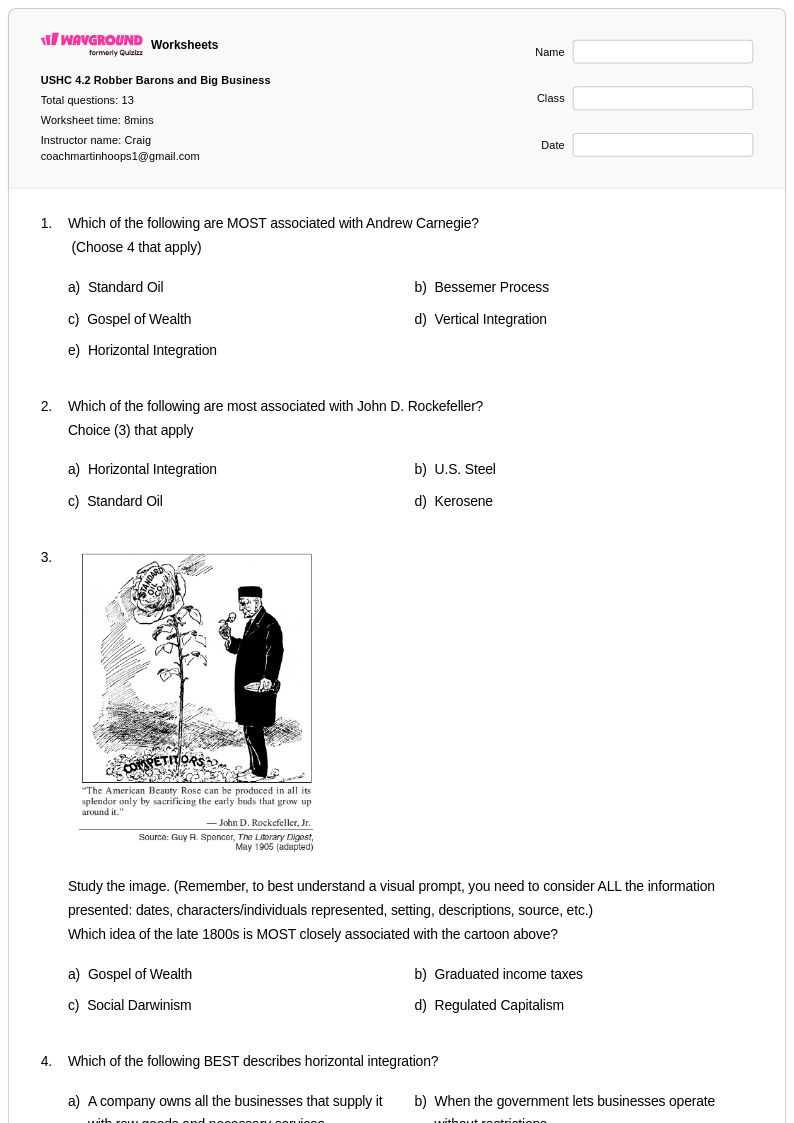
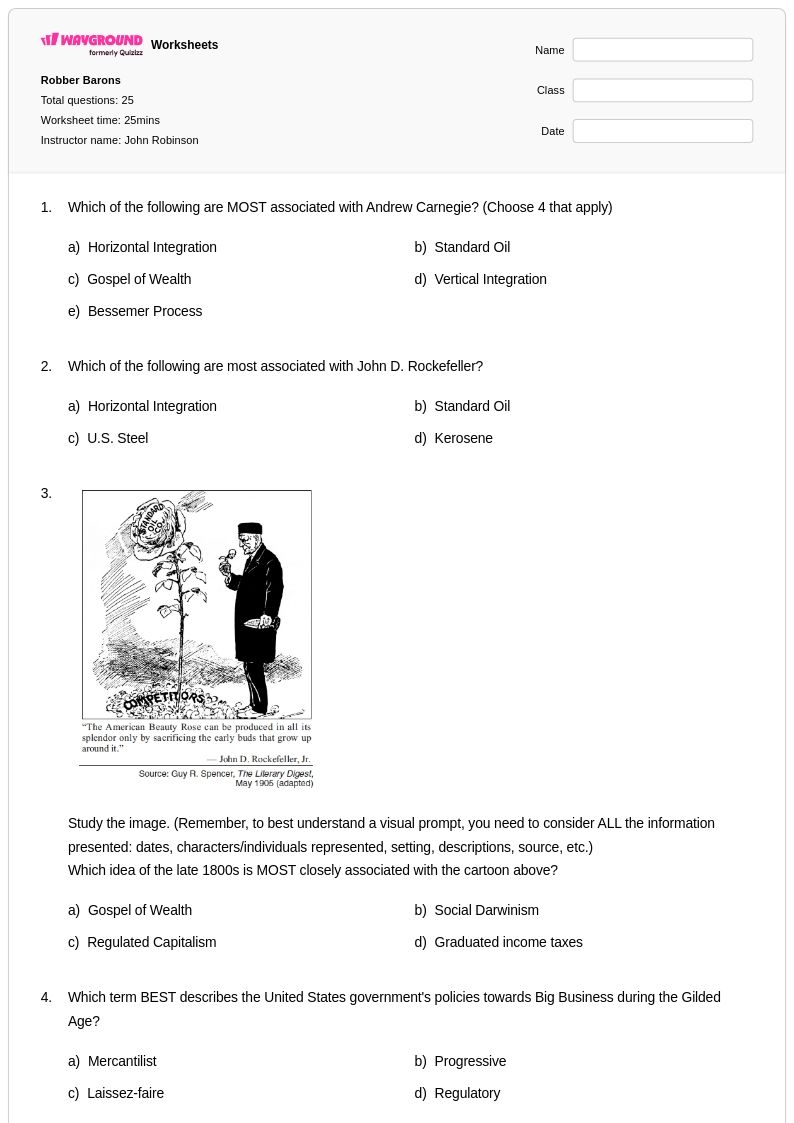
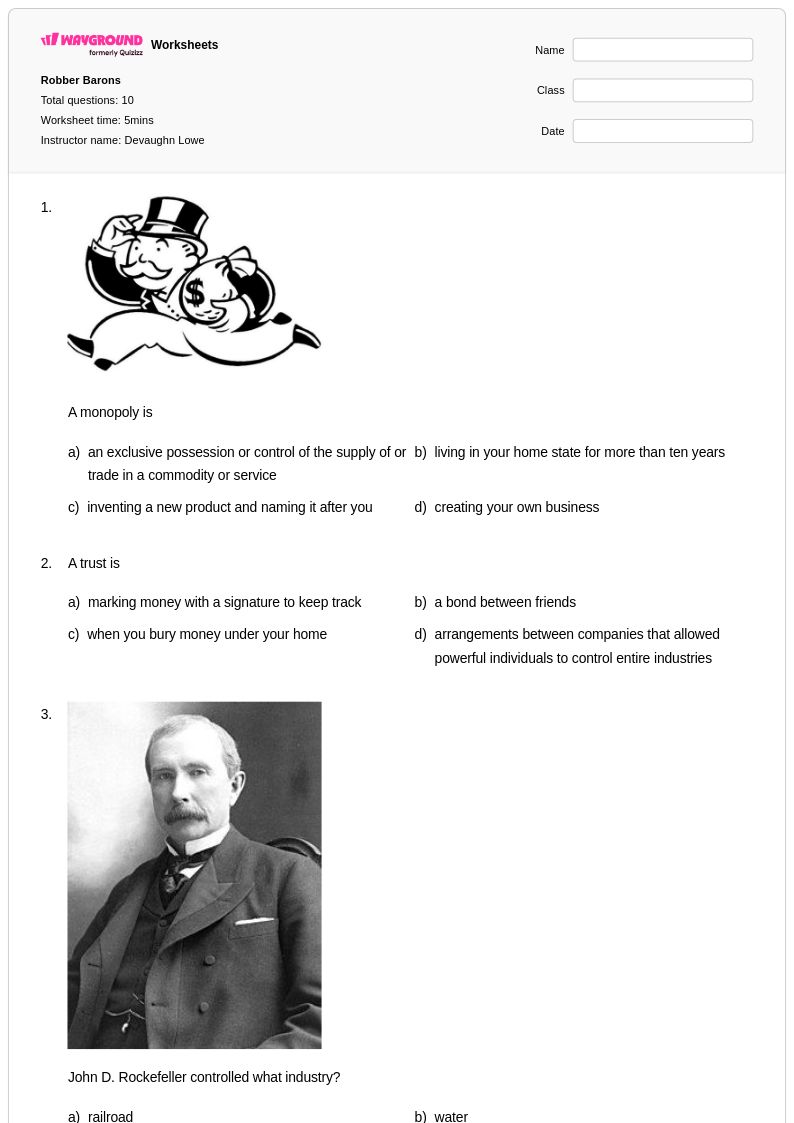
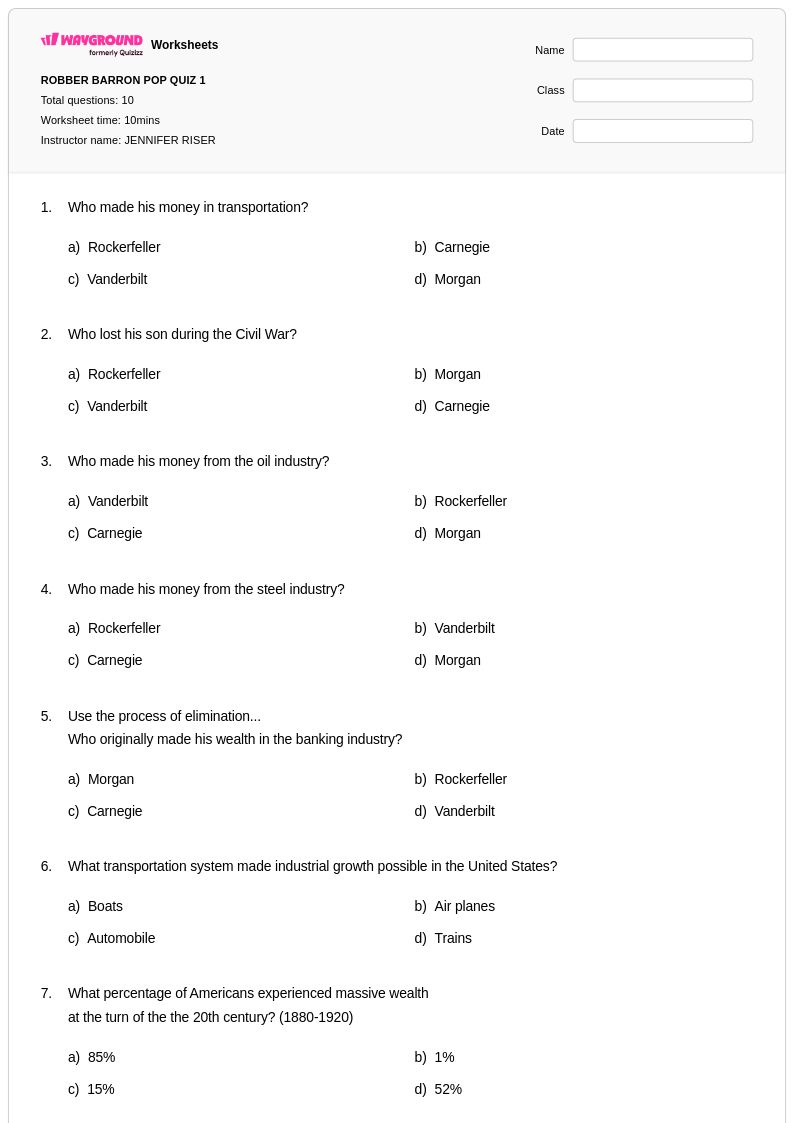
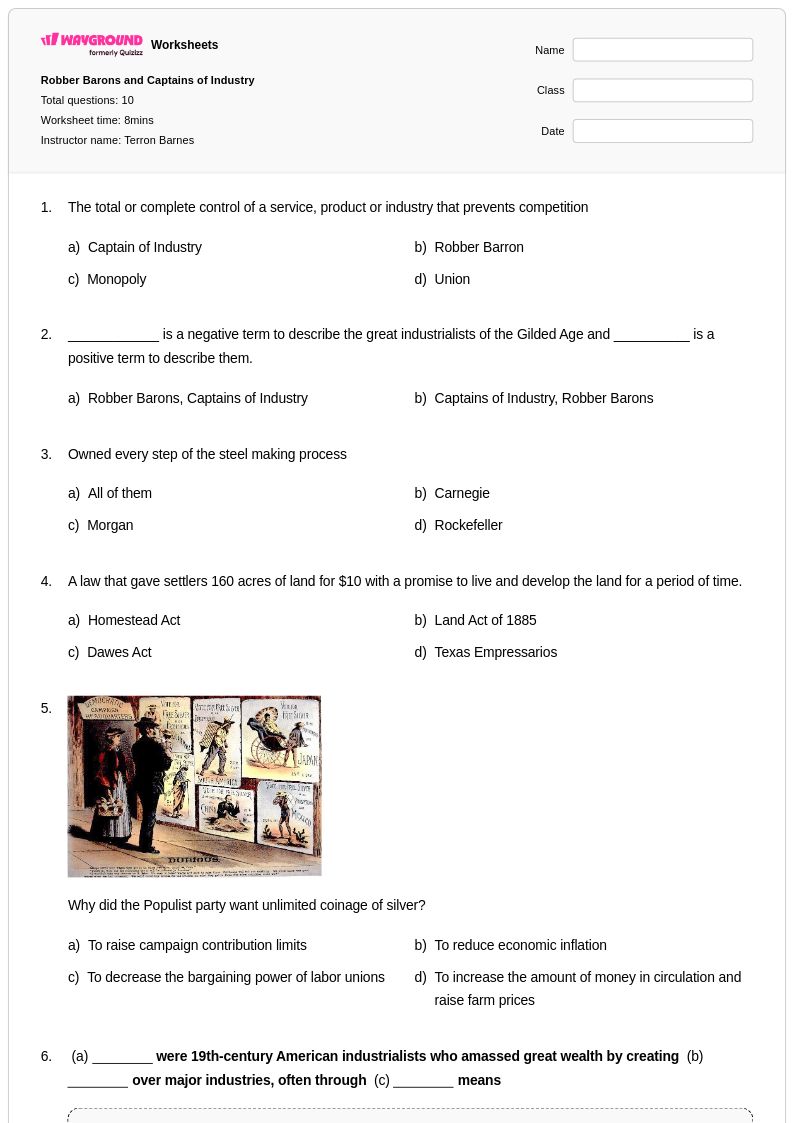
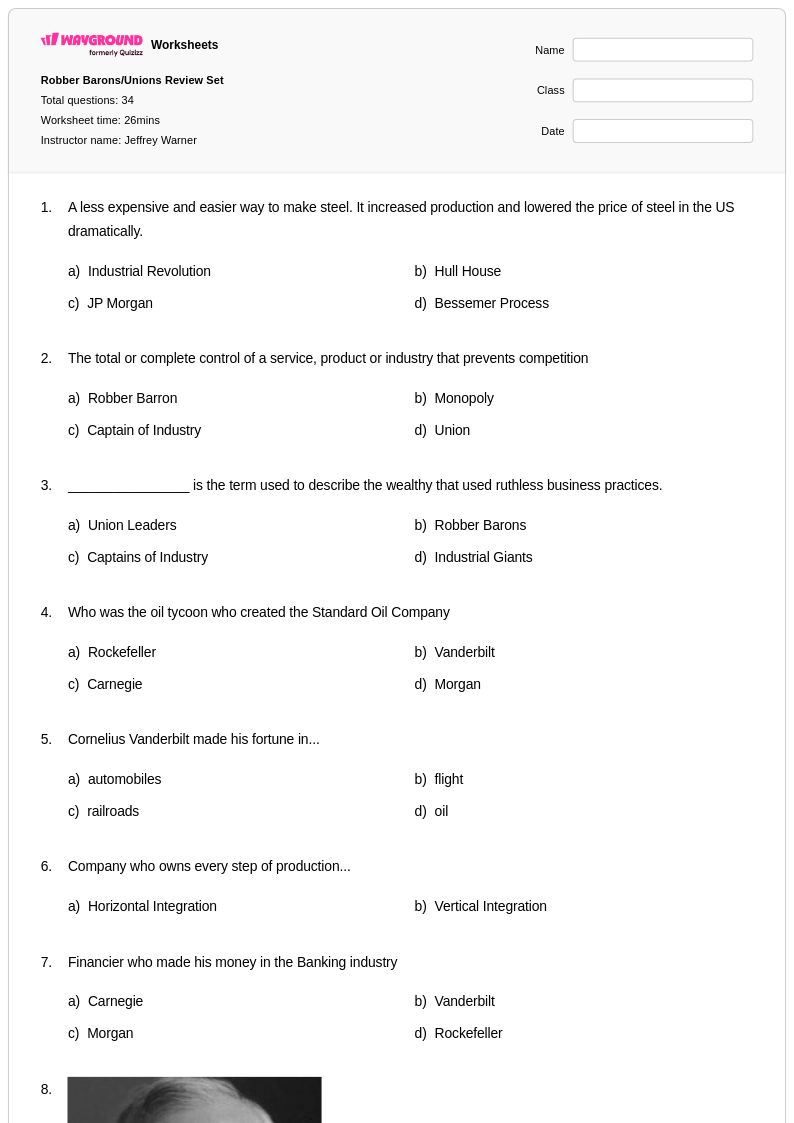
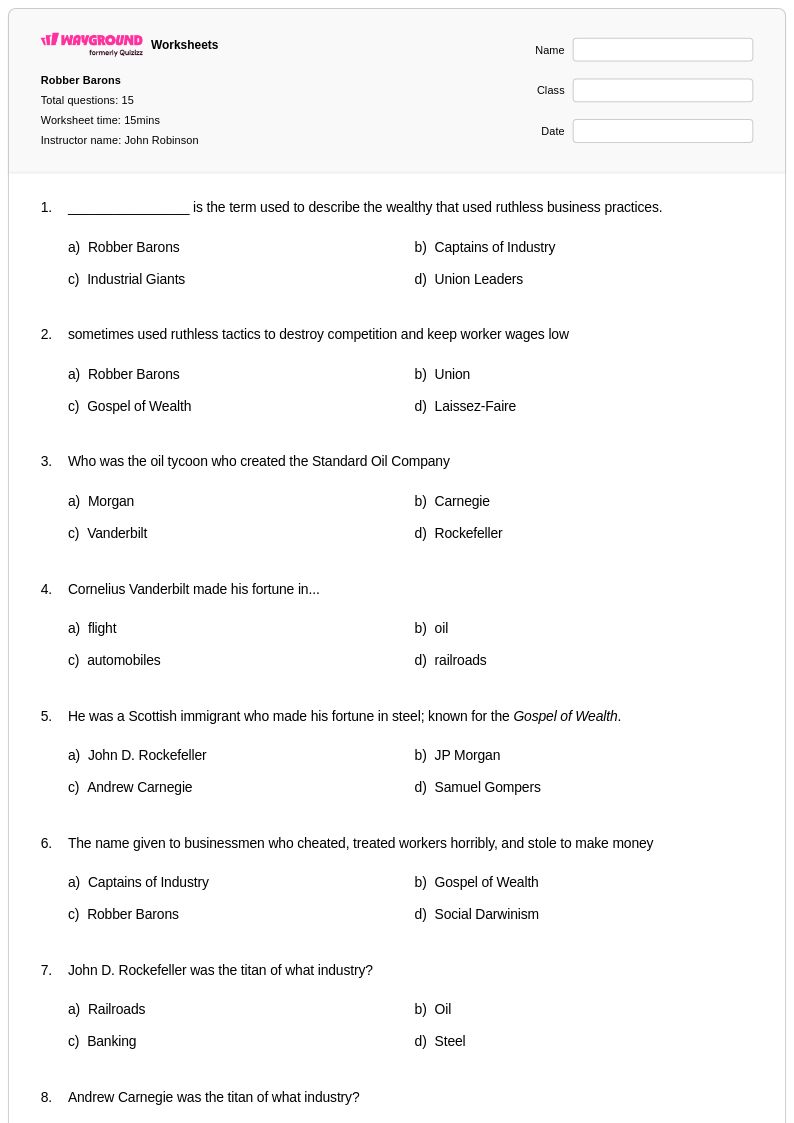
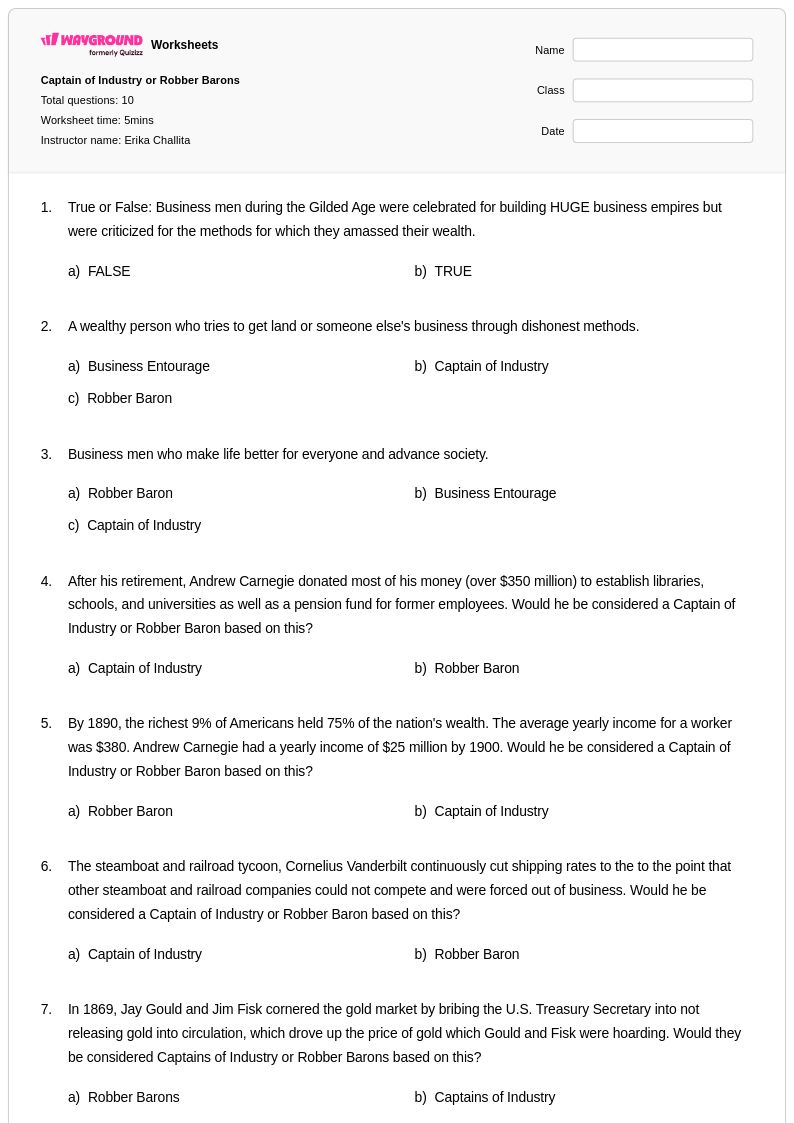
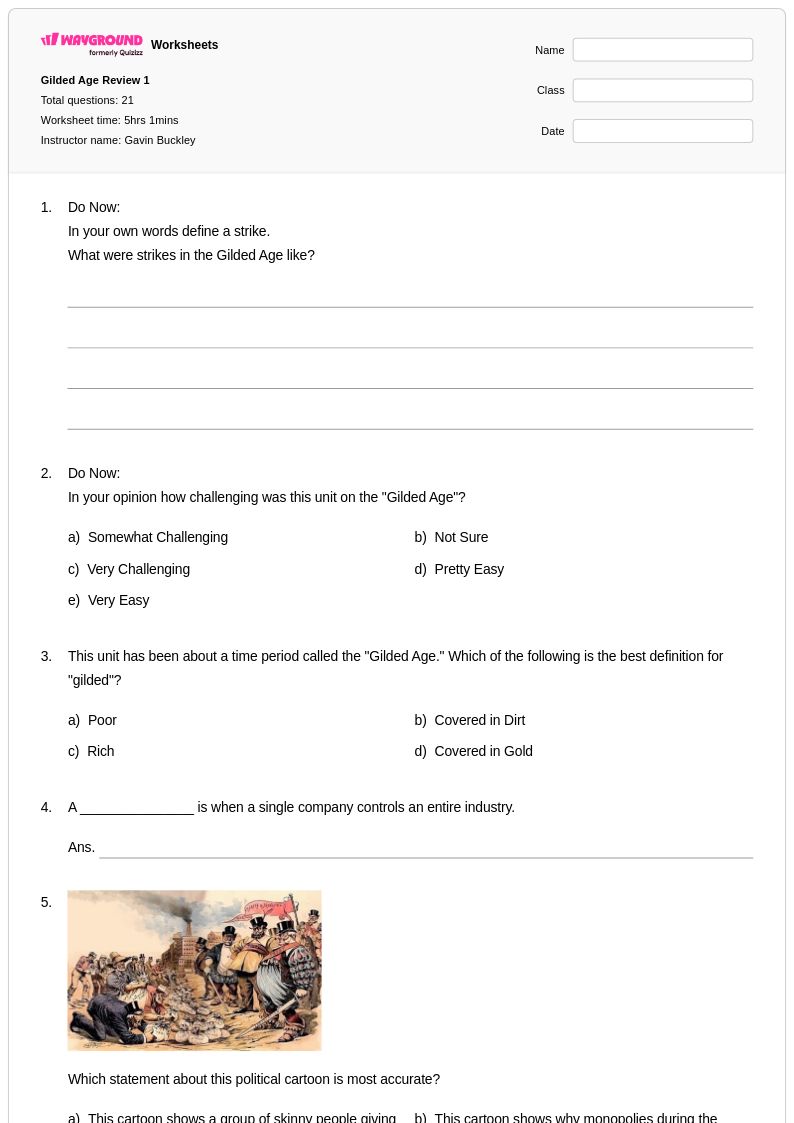
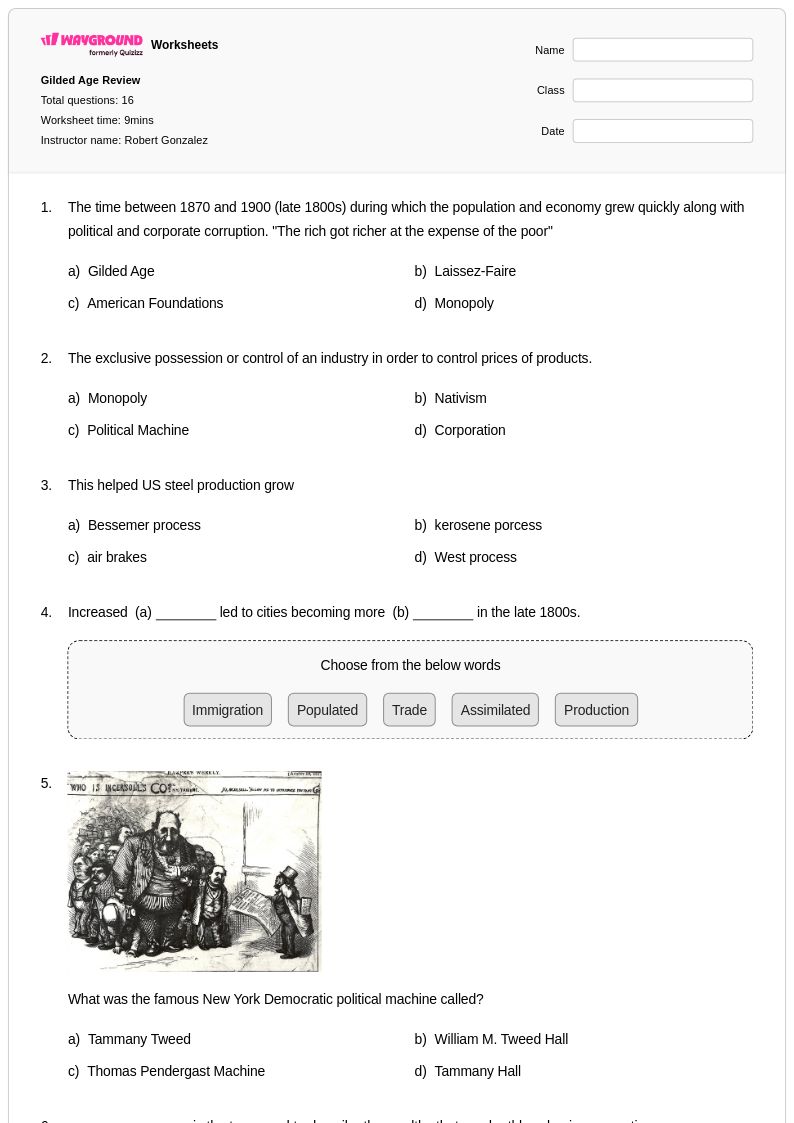
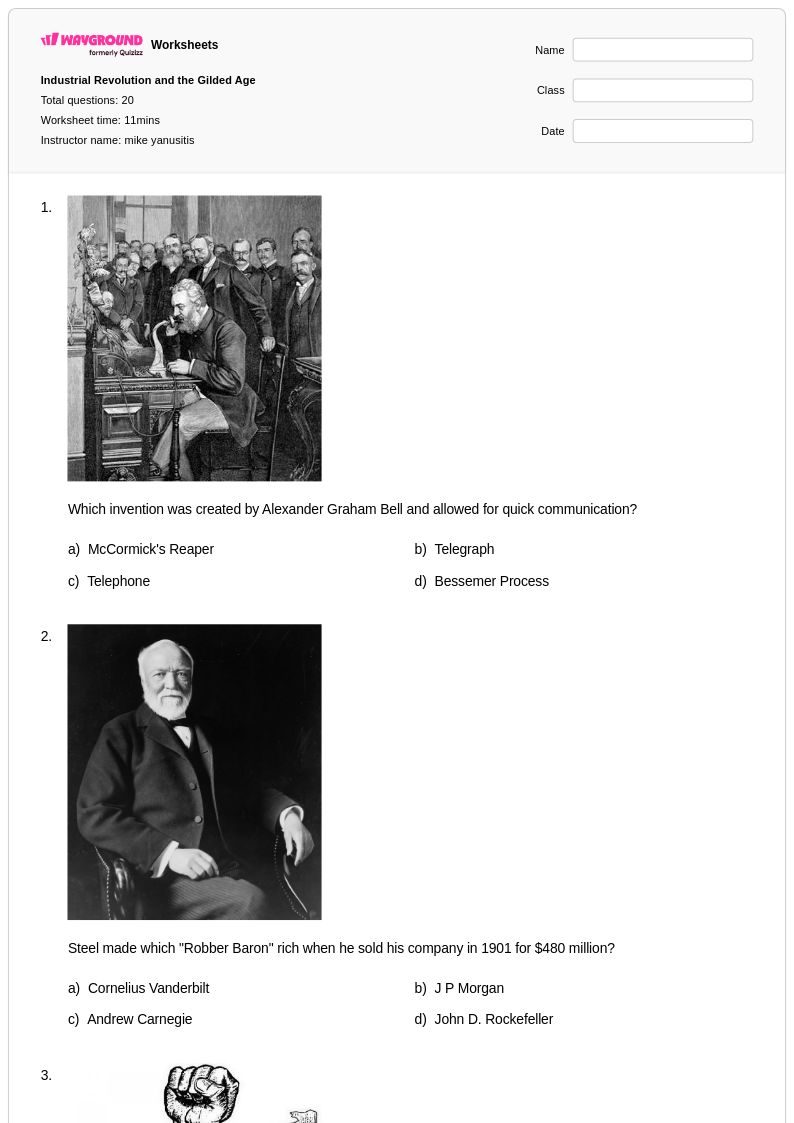
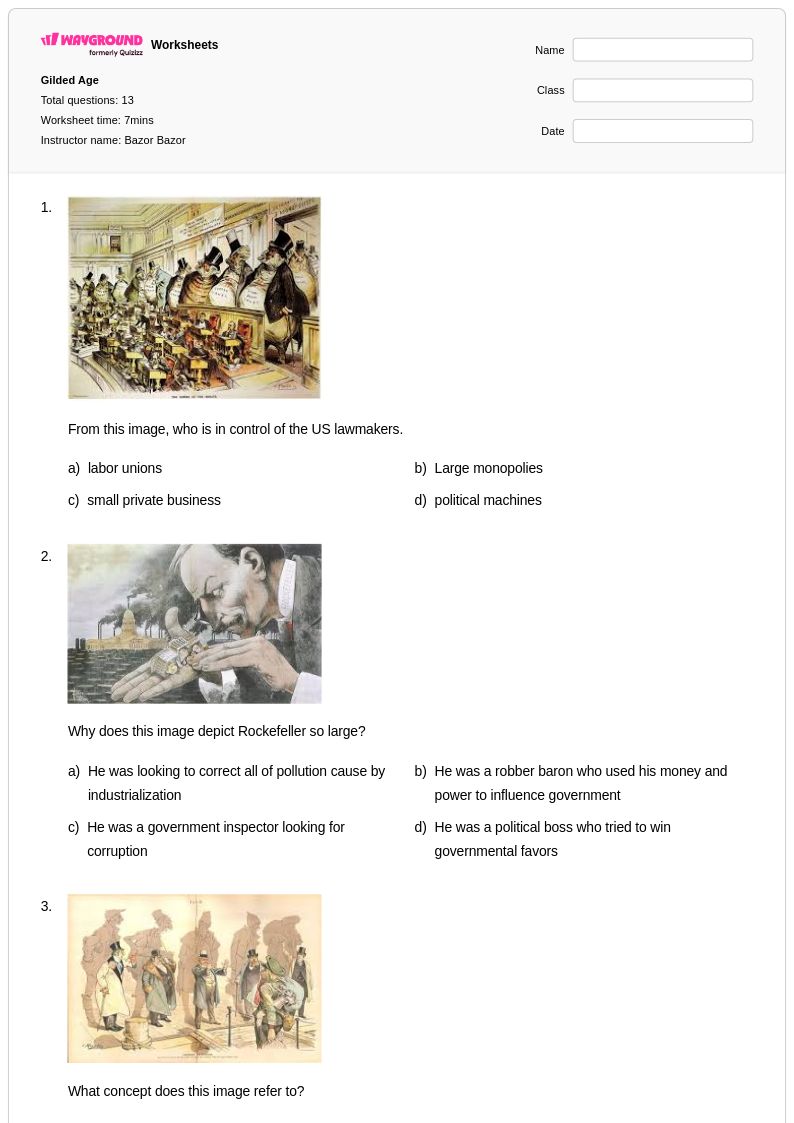
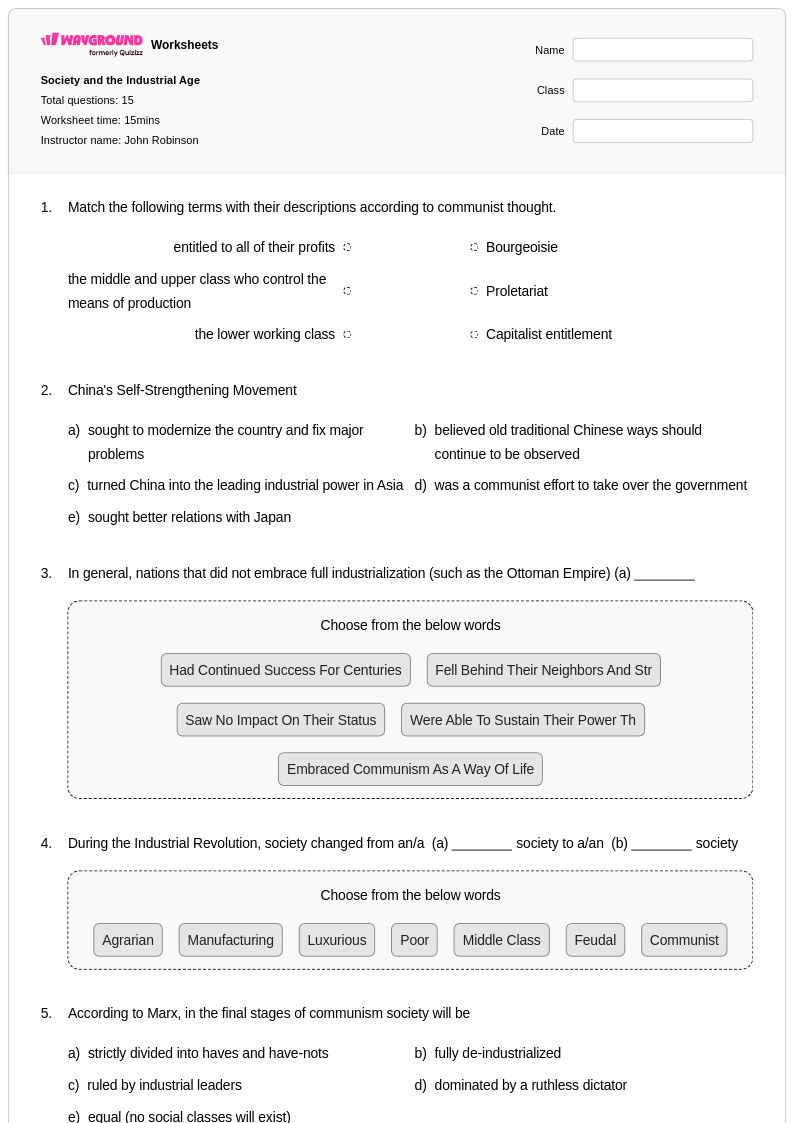
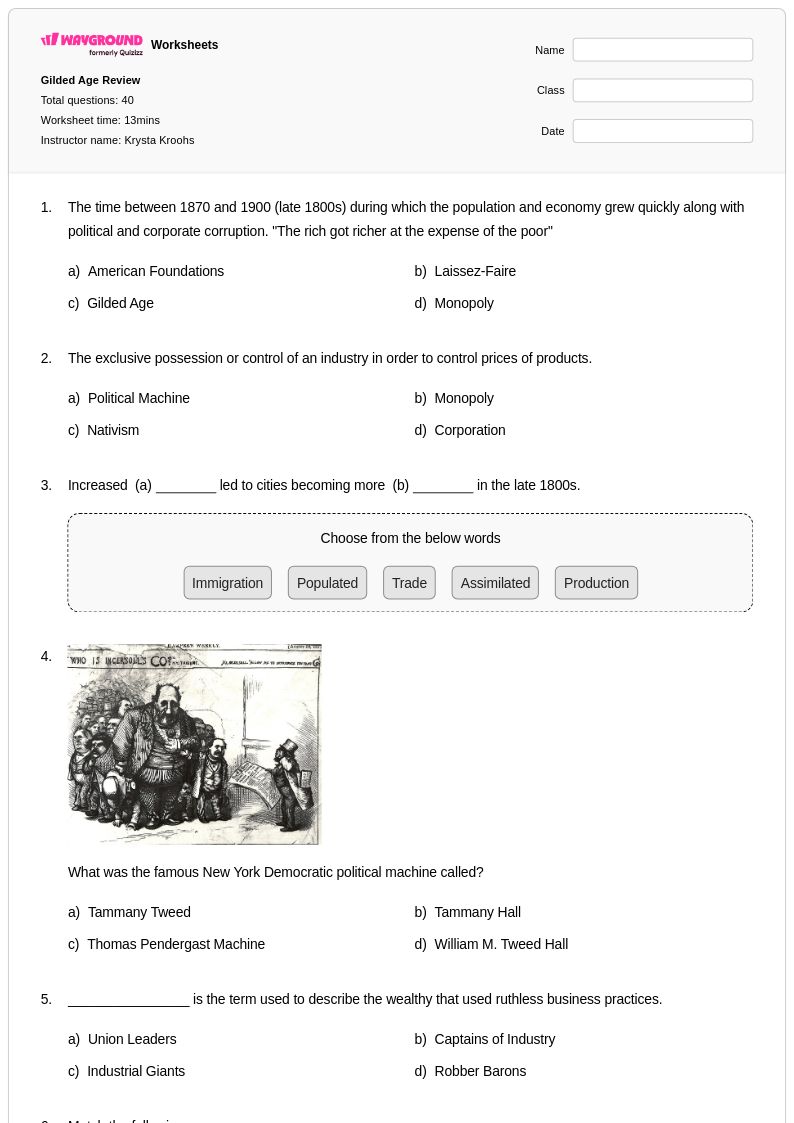
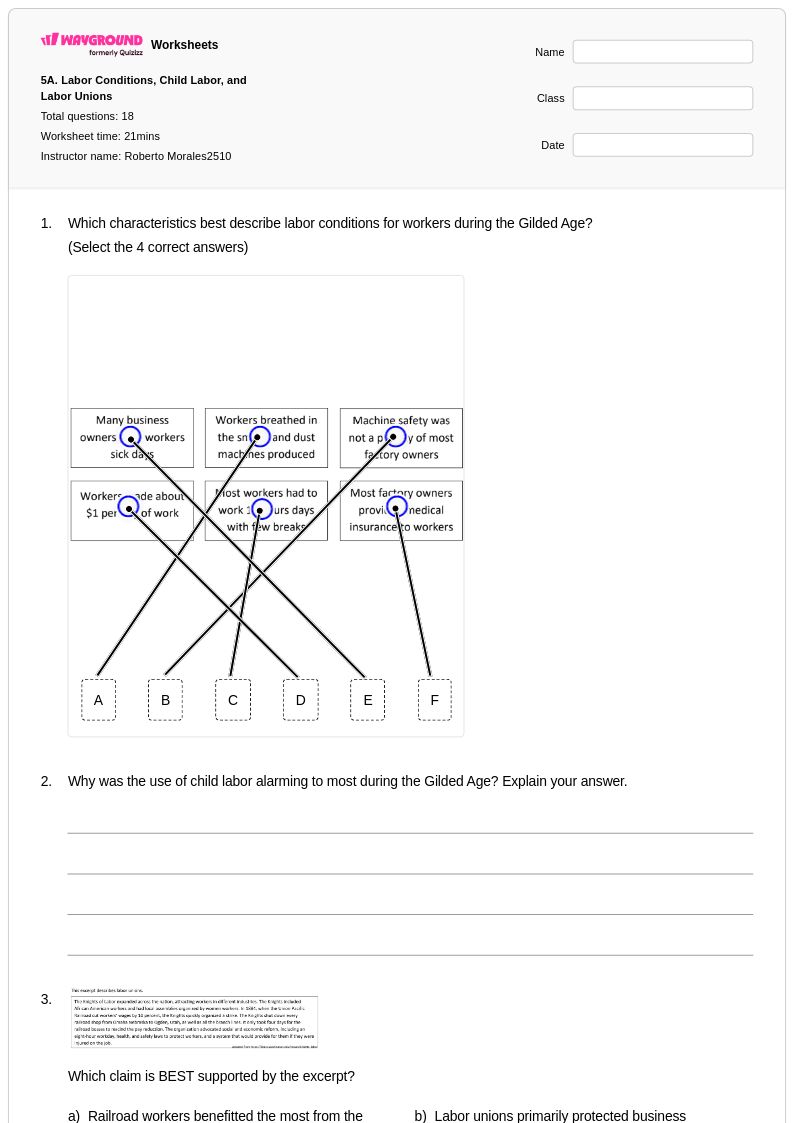
Robber Barons worksheets for Year 11 students available through Wayground provide comprehensive exploration of the powerful industrialists who dominated America's Gilded Age economy from the 1870s through the early 1900s. These educational materials examine figures like Andrew Carnegie, John D. Rockefeller, and Cornelius Vanderbilt, analyzing their business practices, monopolistic strategies, and profound impact on American society and labor relations. Students develop critical thinking skills by evaluating primary sources, examining the debate between viewing these figures as innovative captains of industry versus exploitative robber barons, and understanding the complex relationship between rapid industrialization and social inequality. The worksheets strengthen analytical writing abilities through document-based questions, reinforce comprehension through practice problems that connect economic concepts to historical events, and include answer keys that support both independent study and classroom instruction. These free printables cover essential topics including vertical and horizontal integration, the rise of trusts and monopolies, labor conflicts, and the eventual Progressive Era reforms that sought to regulate corporate power.
Wayground's extensive collection of teacher-created resources supports educators with millions of high-quality materials specifically designed for Year 11 U.S. History instruction on industrial capitalism and its key figures. The platform's robust search and filtering capabilities enable teachers to quickly locate worksheets aligned with state and national social studies standards, ensuring content meets curriculum requirements while addressing diverse learning needs through built-in differentiation tools. Teachers can customize these resources to match their specific classroom objectives, whether focusing on economic analysis, biographical studies, or comparative assessments of different industrial leaders' legacies. Available in both printable pdf format for traditional classroom use and digital formats for online learning environments, these materials support flexible lesson planning and accommodate various teaching scenarios. The comprehensive nature of these worksheet collections facilitates targeted skill practice, enables effective remediation for struggling students, and provides enrichment opportunities for advanced learners ready to tackle complex historical interpretations and economic concepts.
FAQs
How do I teach the Robber Barons to middle or high school students?
Teaching the Robber Barons effectively means grounding students in the economic context of the Gilded Age before introducing specific figures like Carnegie, Rockefeller, and Morgan. Start with the structural conditions that enabled monopolistic growth, such as railroad expansion and weak antitrust regulation, then move into case studies that let students evaluate each industrialist's methods and impact. A central debate prompt, such as whether these figures were visionary entrepreneurs or exploitative monopolists, gives students a clear analytical lens and encourages evidence-based argumentation.
What exercises help students practice analyzing the Robber Barons?
Effective practice exercises for this topic include primary source analysis of political cartoons, corporate charters, and labor dispute records from the late 19th century. Comparison charts prompting students to evaluate the business practices of multiple industrialists side by side build analytical depth, while short-response questions connecting Gilded Age monopolies to modern economic principles reinforce transferable thinking. Worksheets that ask students to weigh competing historical perspectives, such as worker testimony versus business owner accounts, are especially useful for developing critical evaluation skills.
What common misconceptions do students have about the Robber Barons?
A frequent misconception is that Robber Barons were simply corrupt villains with no productive impact, when in reality their industrial investments drove significant infrastructure growth, including the transcontinental railroad system. Students also often conflate all industrialists as identical in their methods, missing meaningful differences between figures like Carnegie, who promoted philanthropy, and Rockefeller, whose Standard Oil used aggressive horizontal integration. Another common error is treating the debate as settled, when historians still genuinely disagree about whether the net effect of this era was predominantly harmful or beneficial to American society.
How do I use Robber Barons worksheets in my classroom?
Robber Barons worksheets on Wayground are available as printable PDFs for traditional classroom use and in digital formats for technology-integrated environments, including the option to host them as a quiz directly on Wayground. Printable versions work well as structured note-taking guides or post-lecture assessment tools, while digital formats support self-paced review and remote learning. Teachers can use these resources for direct instruction support, targeted remediation for students struggling with economic concepts, or enrichment activities for advanced learners ready to engage with more nuanced historiographical debate.
How do I connect Robber Baron content to current economic concepts students will recognize?
Bridging Gilded Age industrialism to modern economics helps students see the material as relevant rather than purely historical. Use present-day examples of monopolistic behavior, such as antitrust scrutiny of major tech companies, to illustrate how the regulatory debates of the 1880s and 1890s are structurally similar to contemporary concerns about market concentration. Asking students to compare Sherman Antitrust Act provisions with current competition law gives them a concrete framework for understanding why this era continues to shape U.S. economic policy.
How can I differentiate Robber Barons instruction for students at different reading and skill levels?
For students who struggle with dense historical texts, pairing primary sources with scaffolded reading guides and simplified vocabulary supports comprehension without removing analytical challenge. On Wayground, teachers can enable individual accommodations such as Read Aloud for students who need audio support and reduced answer choices for those who benefit from decreased cognitive load, while the rest of the class receives standard settings. For advanced learners, enrichment activities that push beyond identification toward historiographical analysis, such as evaluating how different historians have framed the Robber Baron debate over time, provide meaningful extension.