Free Printable Response to Literature Worksheets for Year 10
Year 10 response to literature worksheets and printables help students analyze, interpret, and craft thoughtful written responses to literary texts through guided practice problems with comprehensive answer keys.
Explore printable Response to Literature worksheets for Year 10
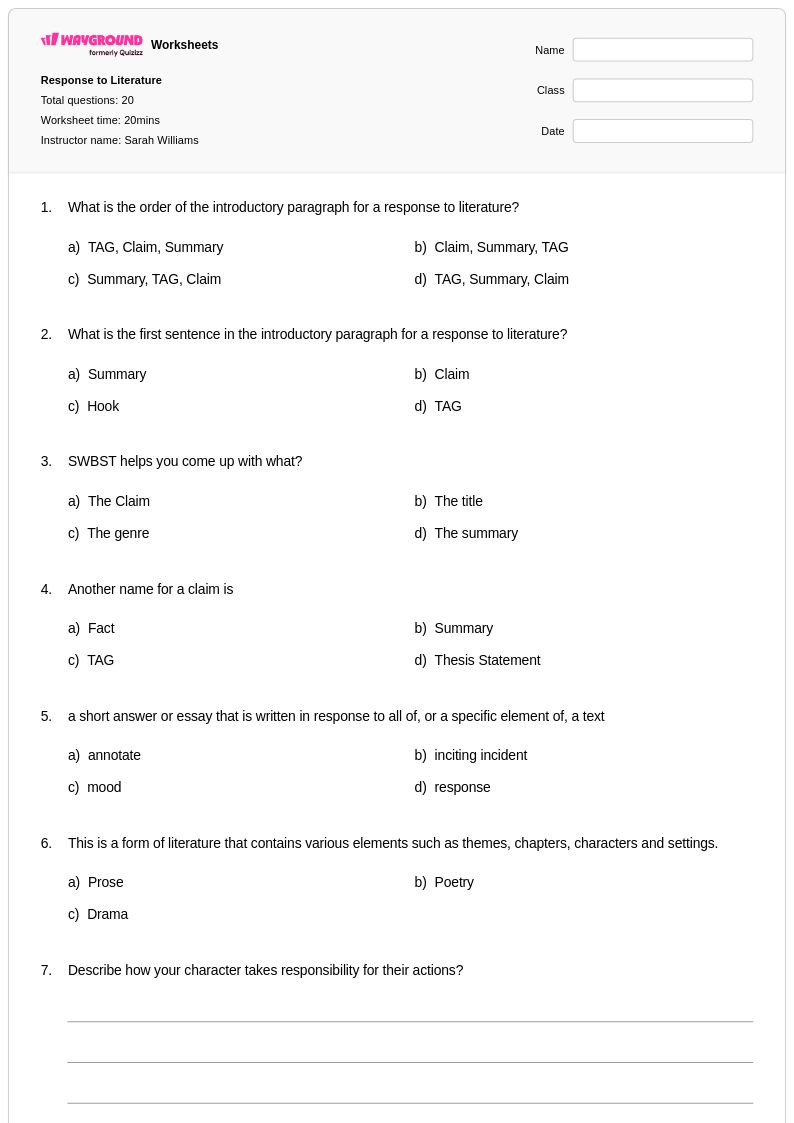
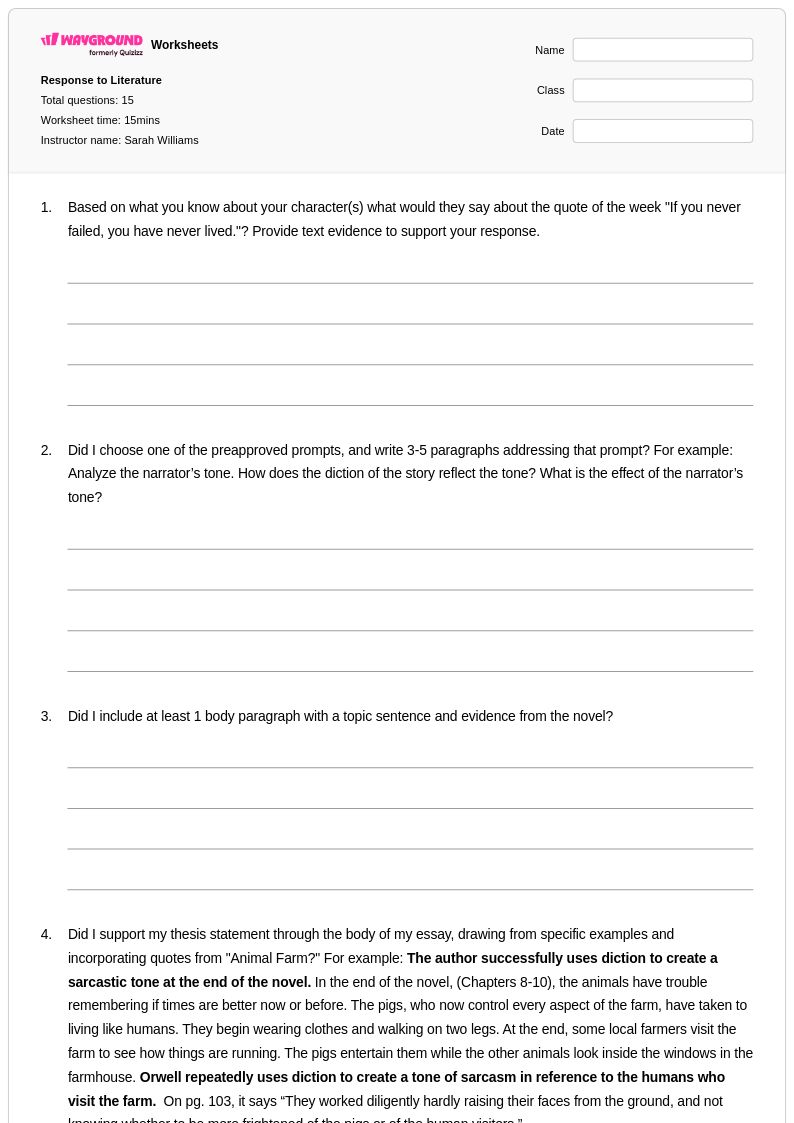
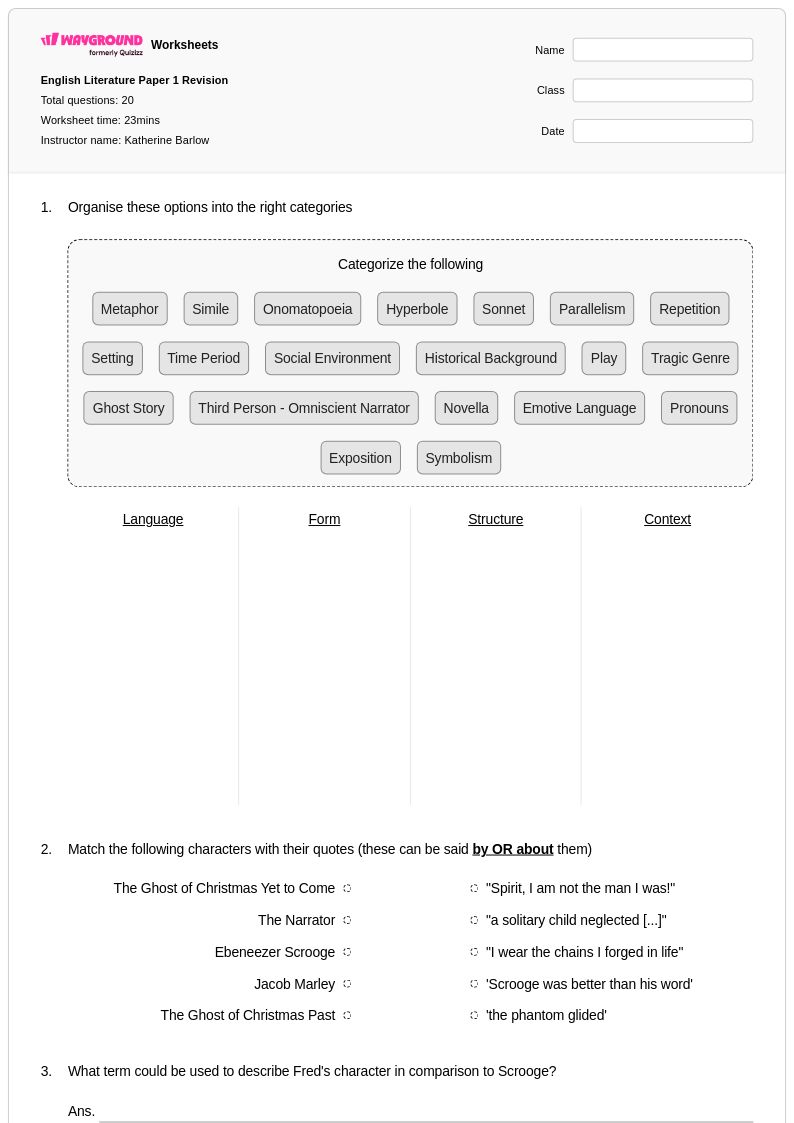
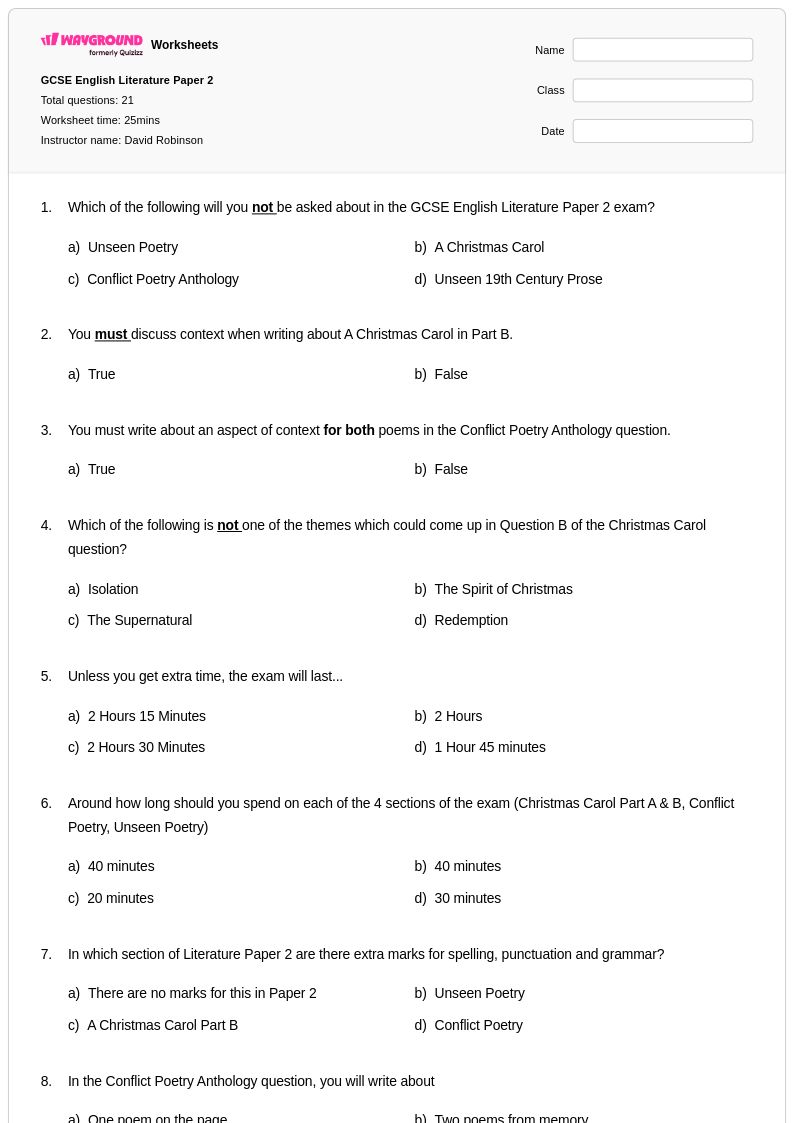
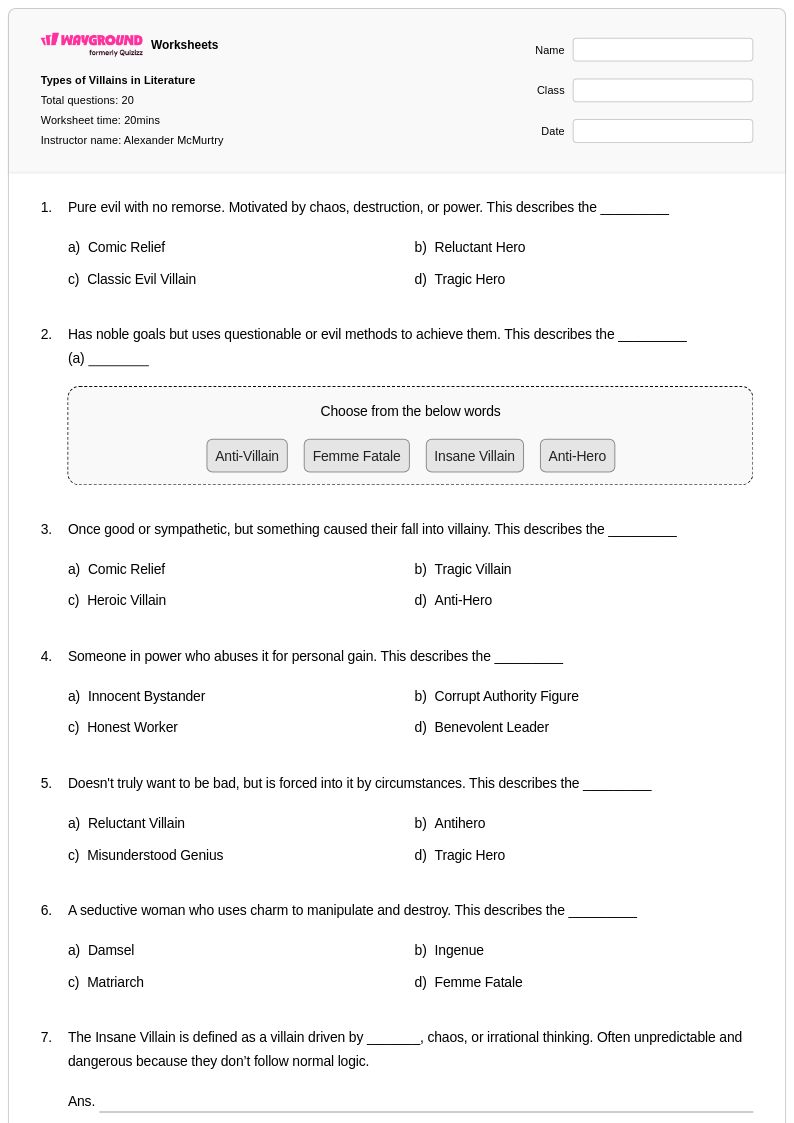
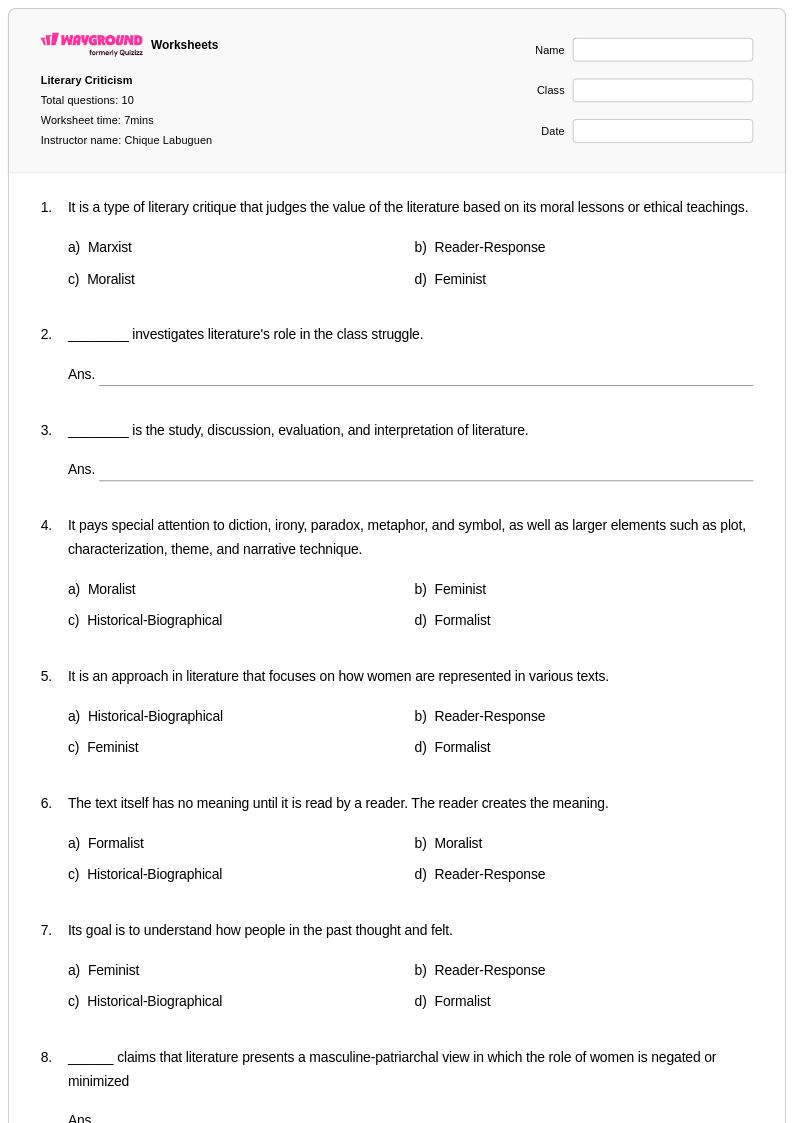
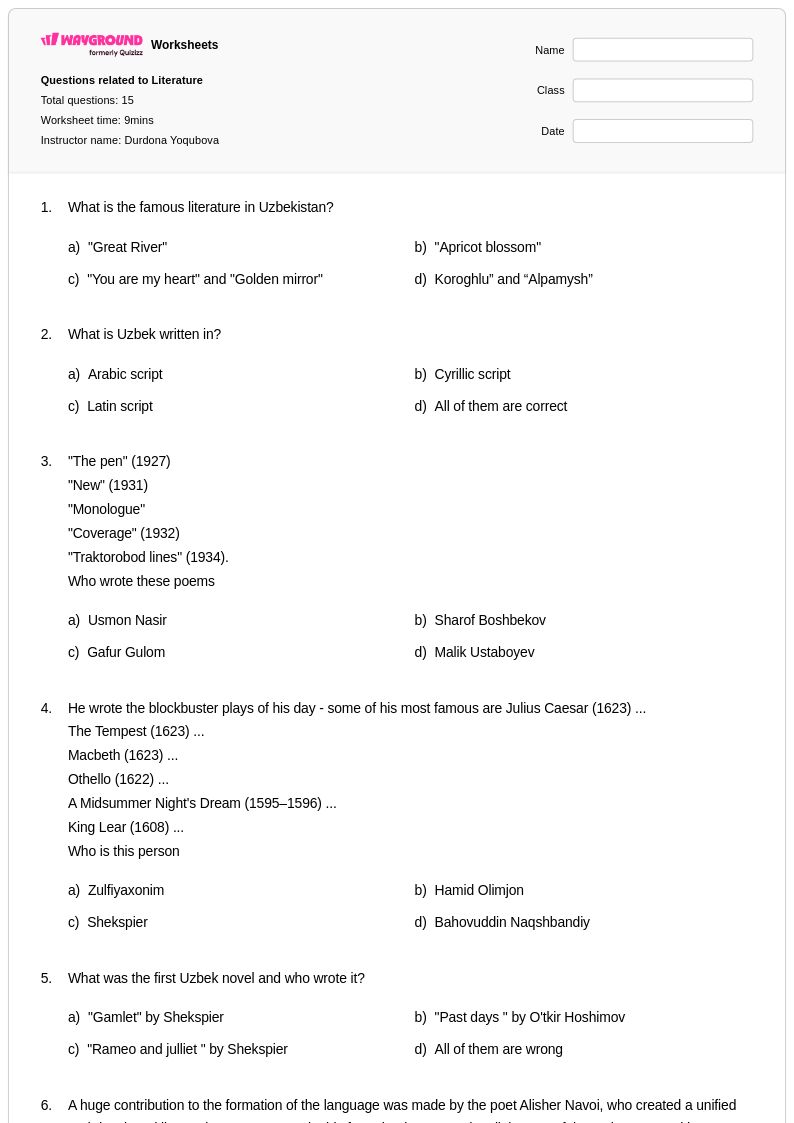
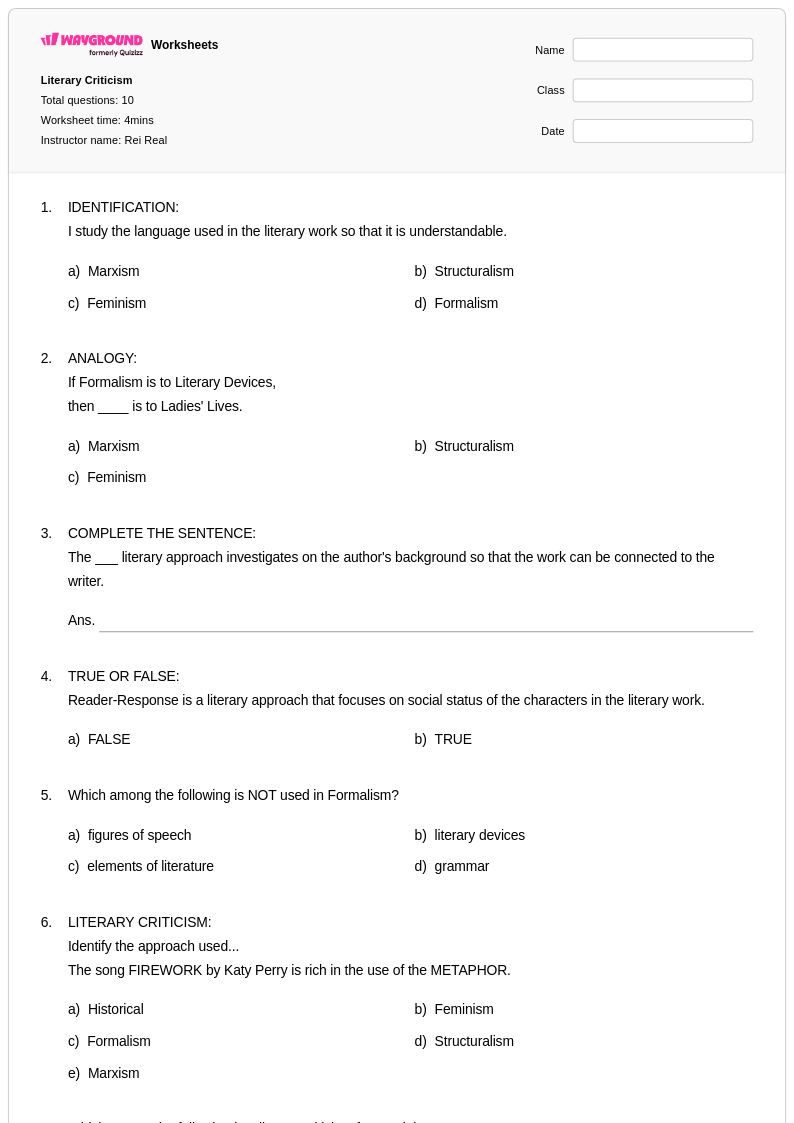
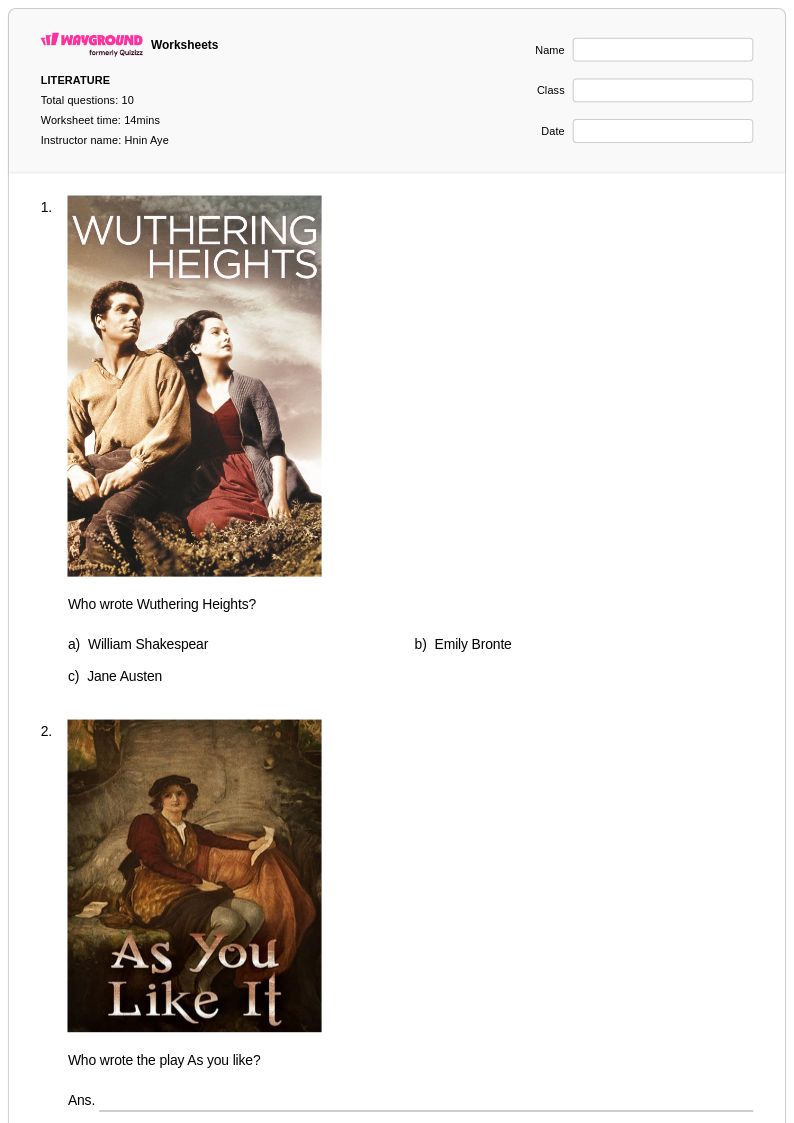
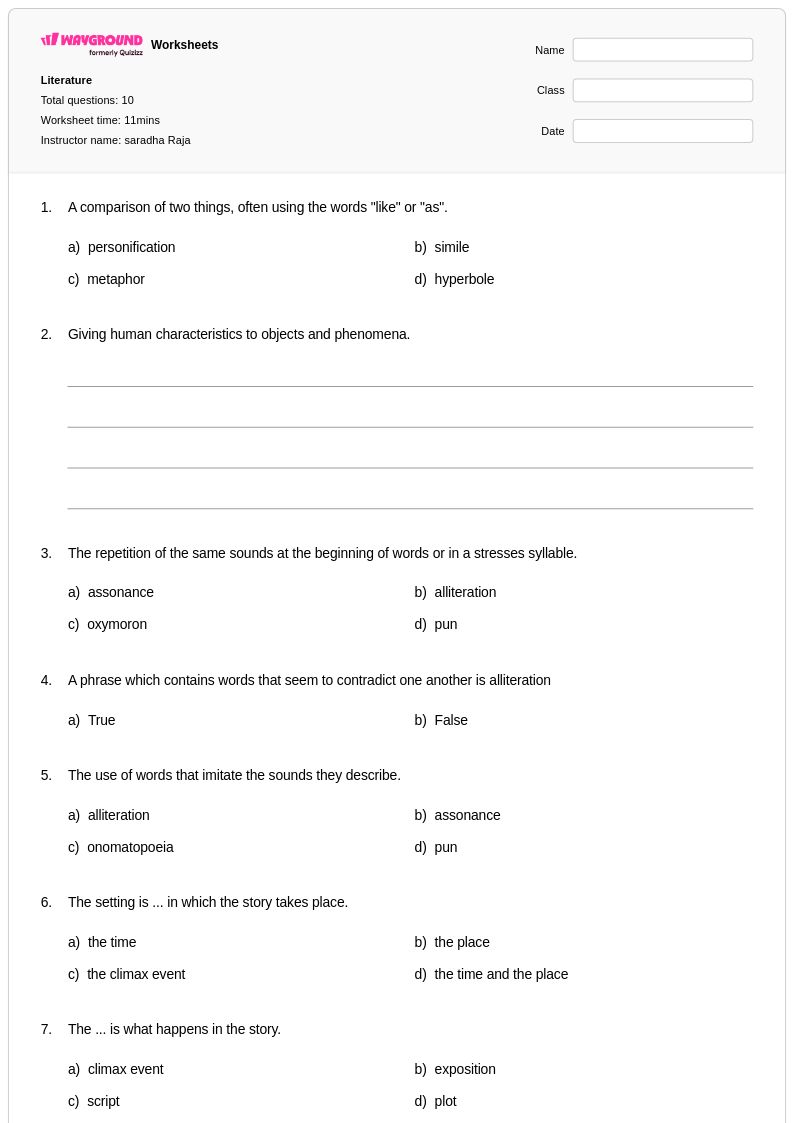
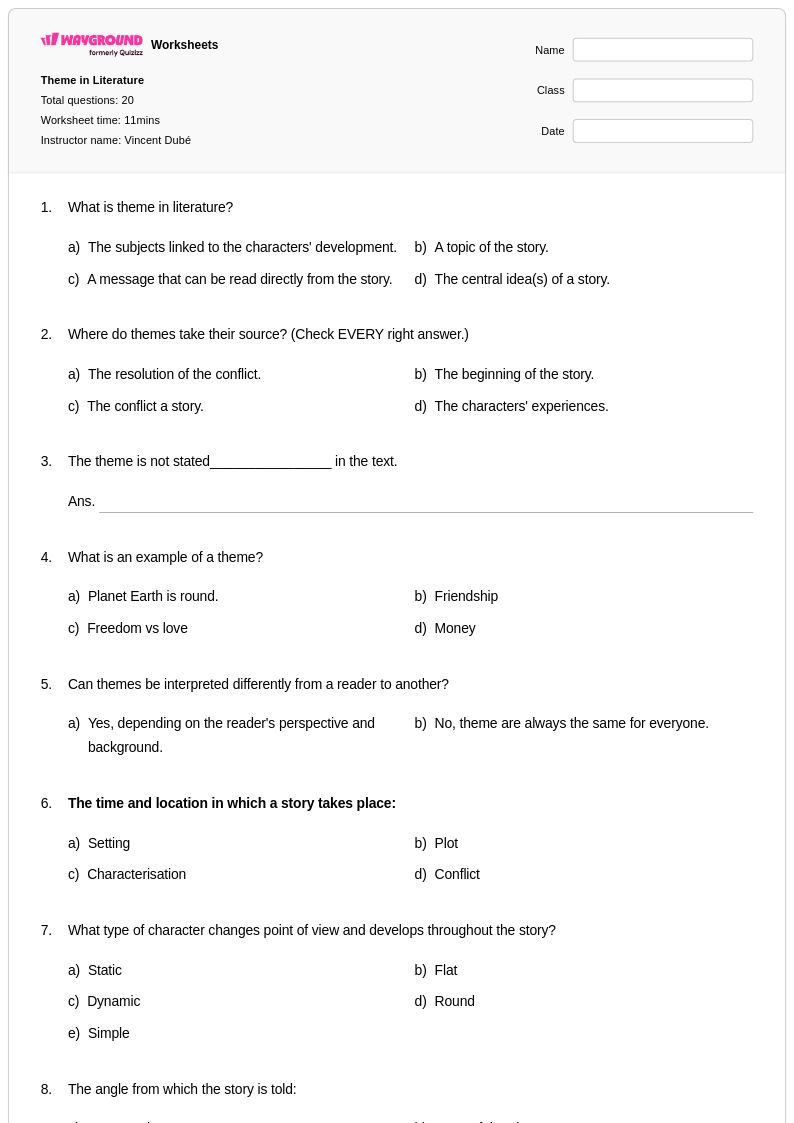
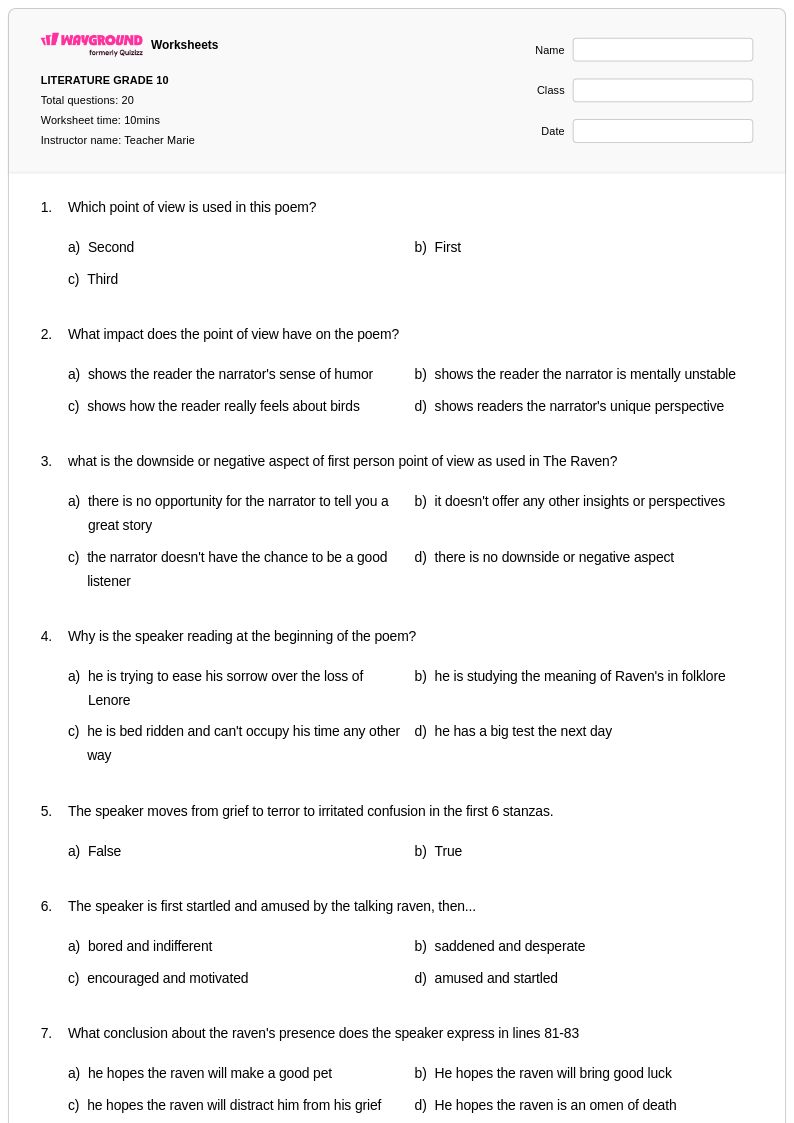
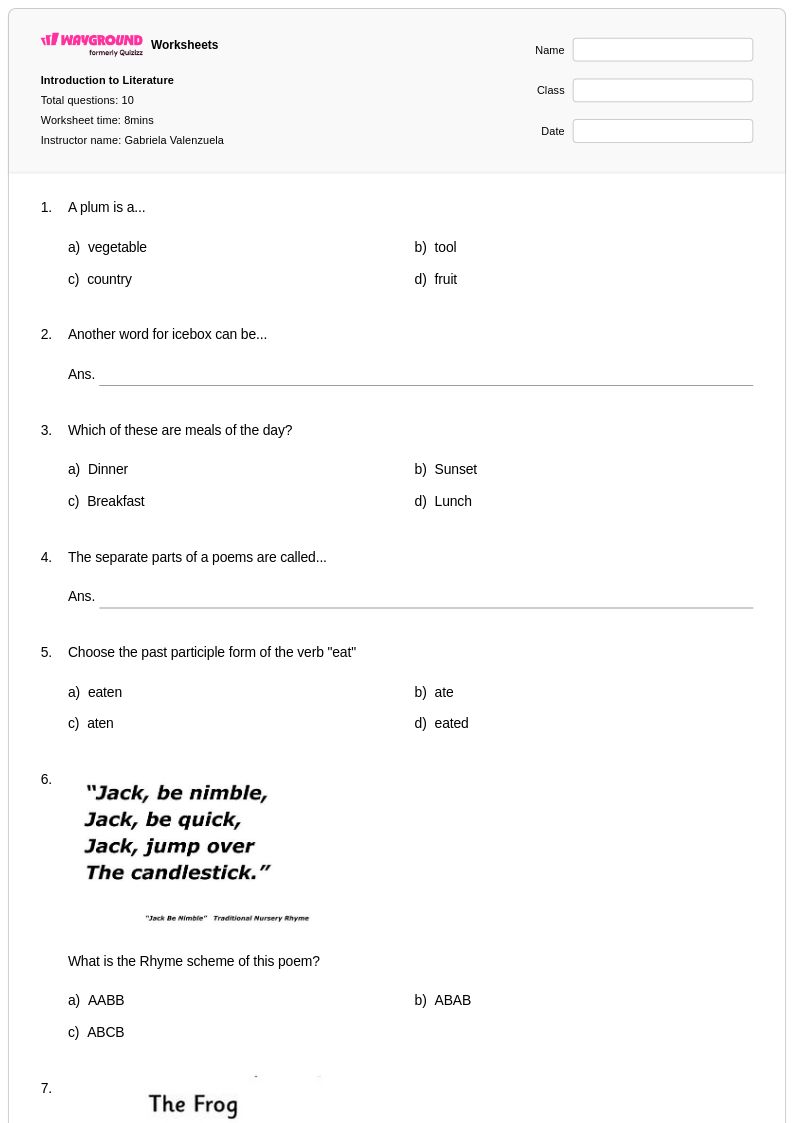
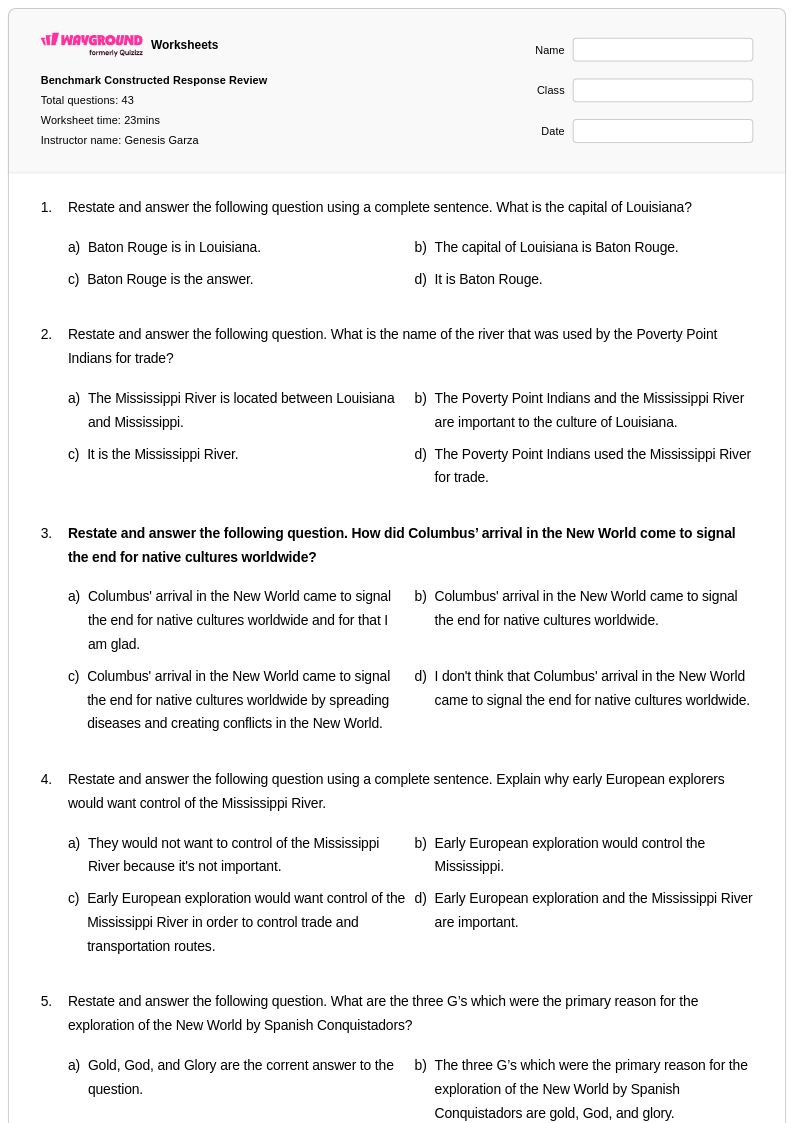
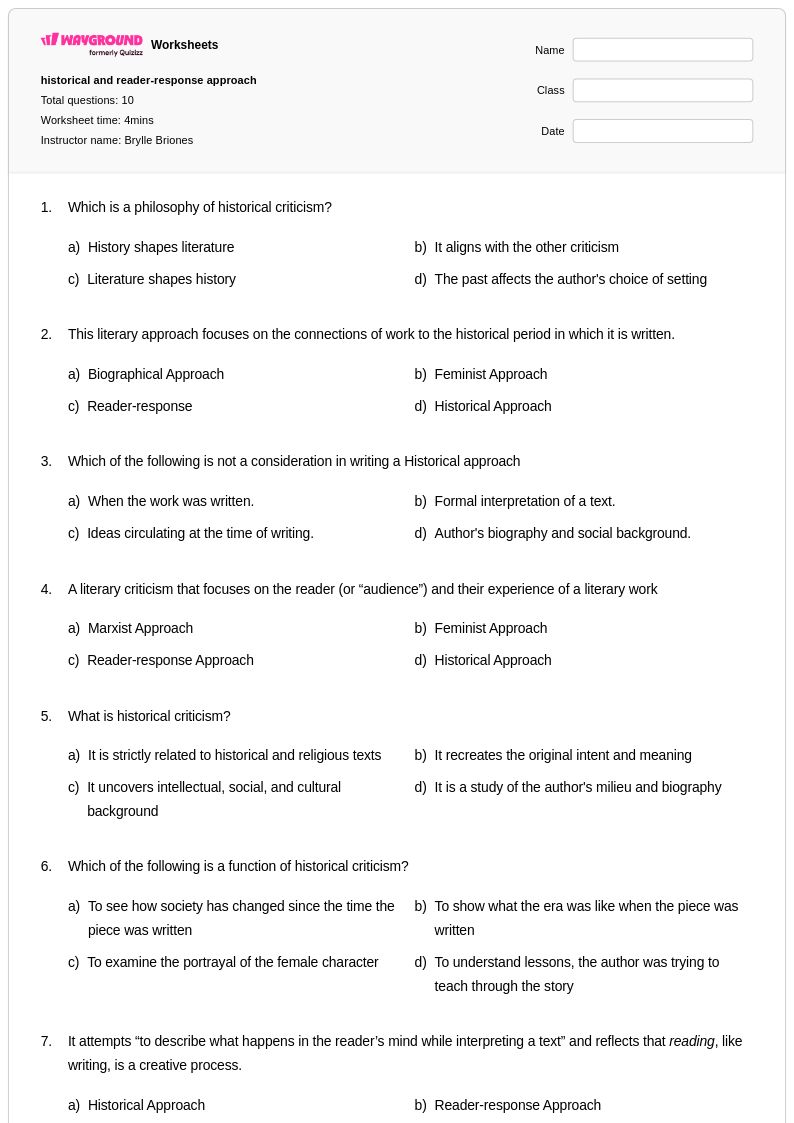
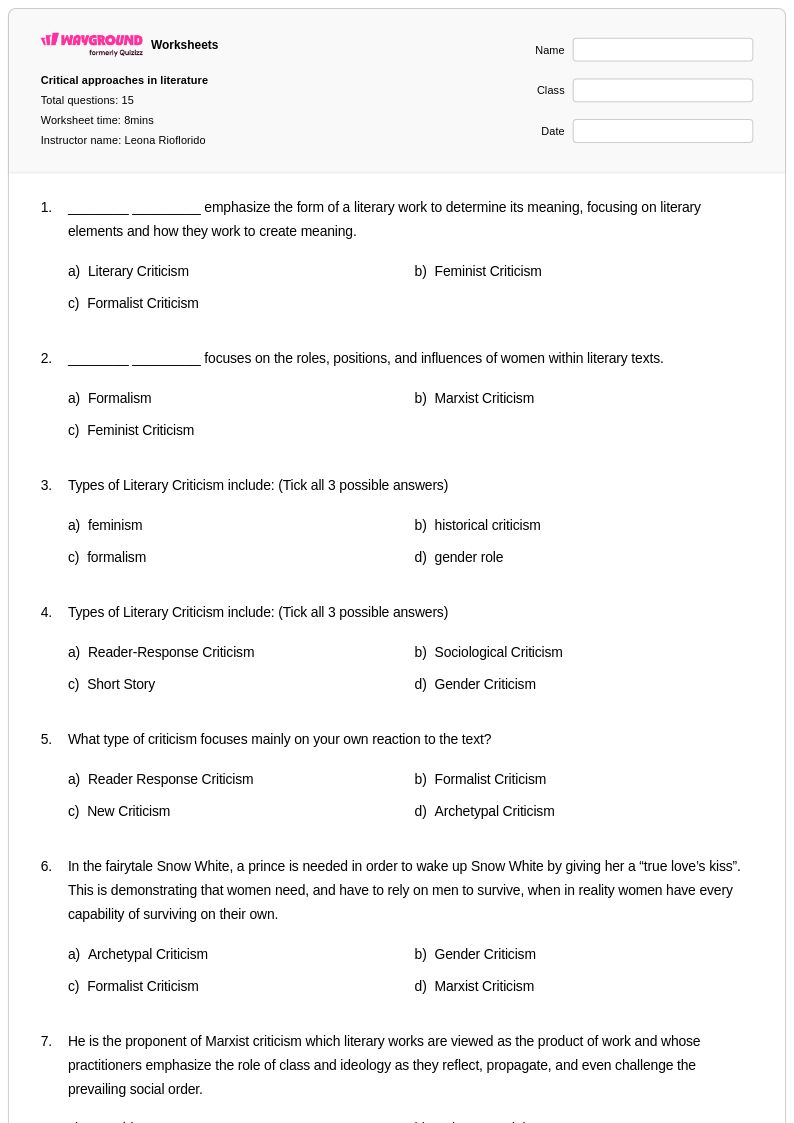
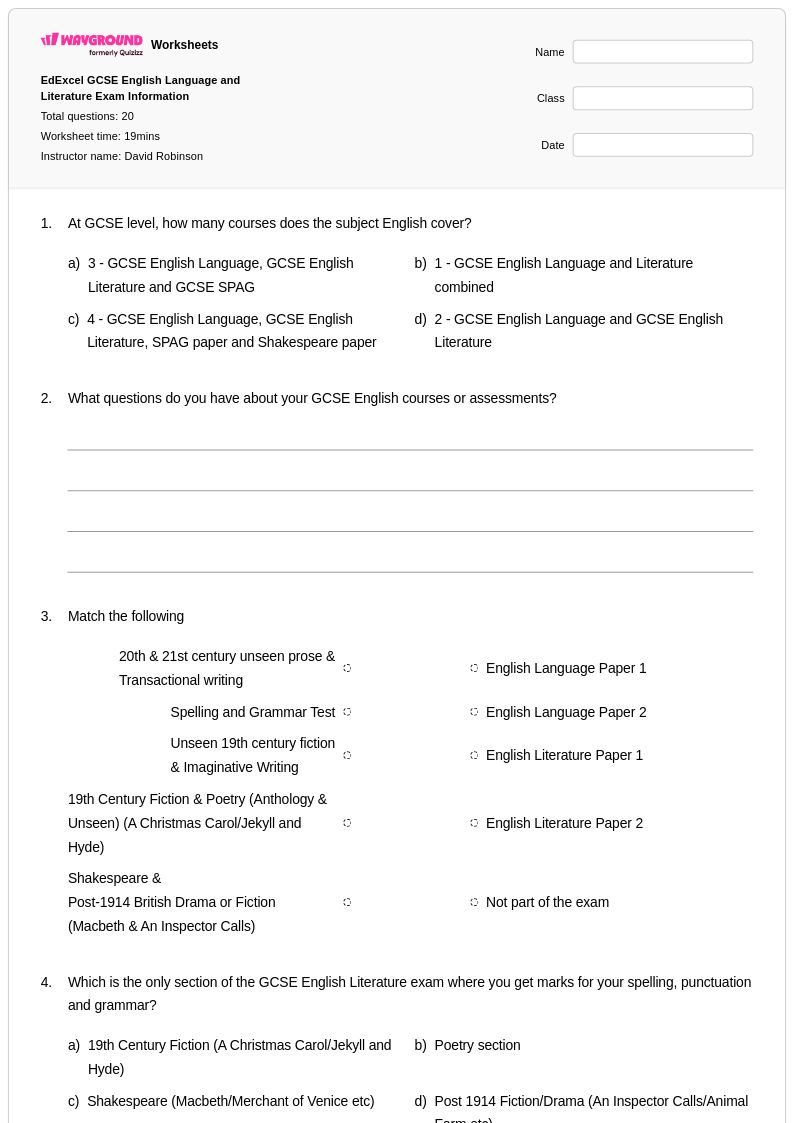
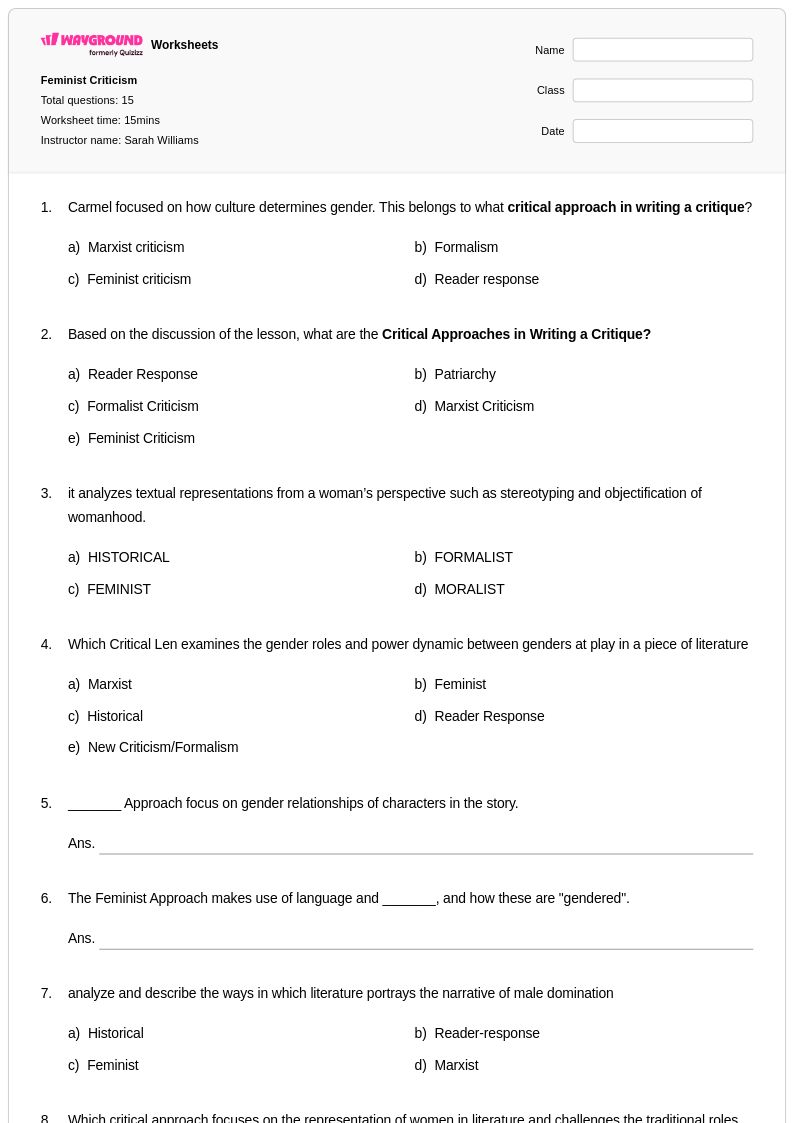
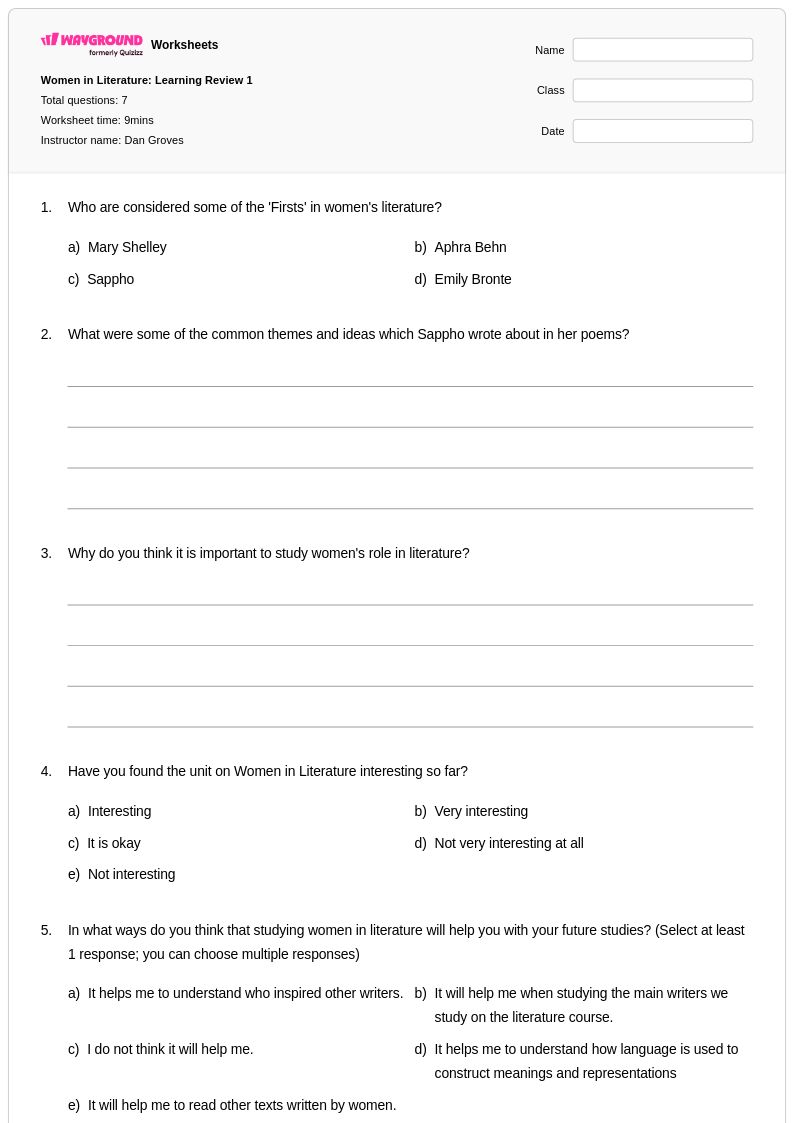
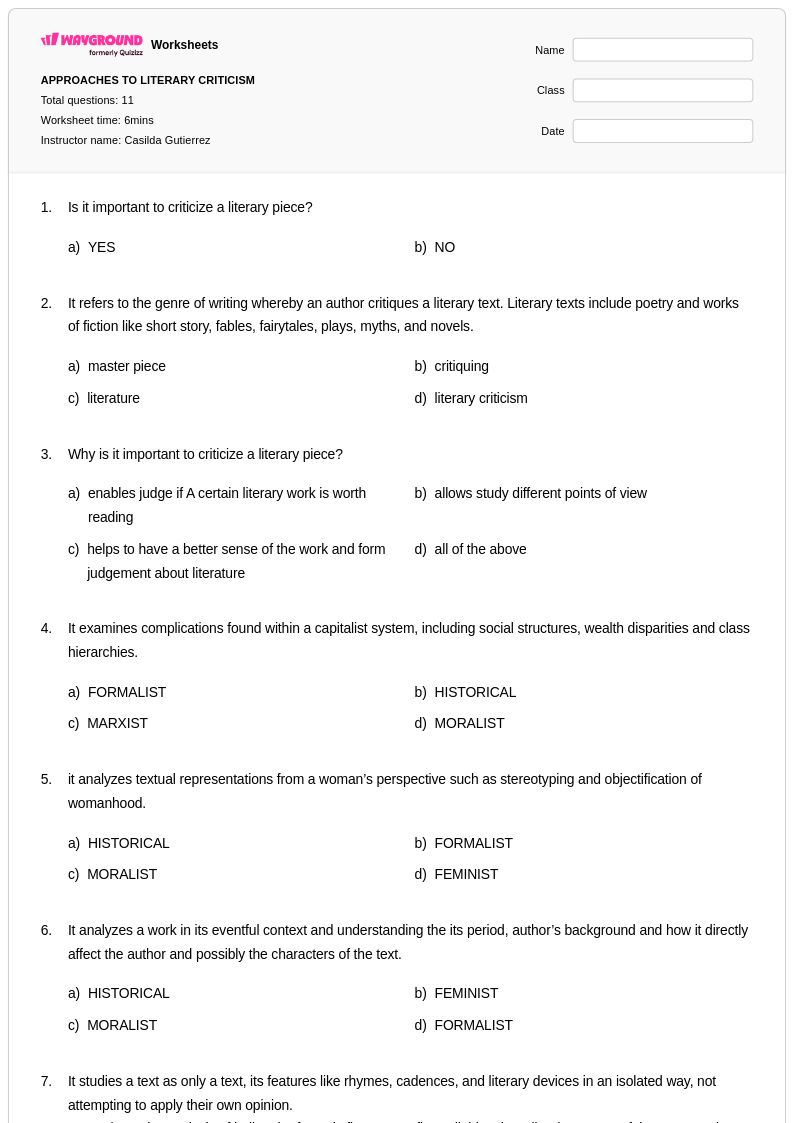
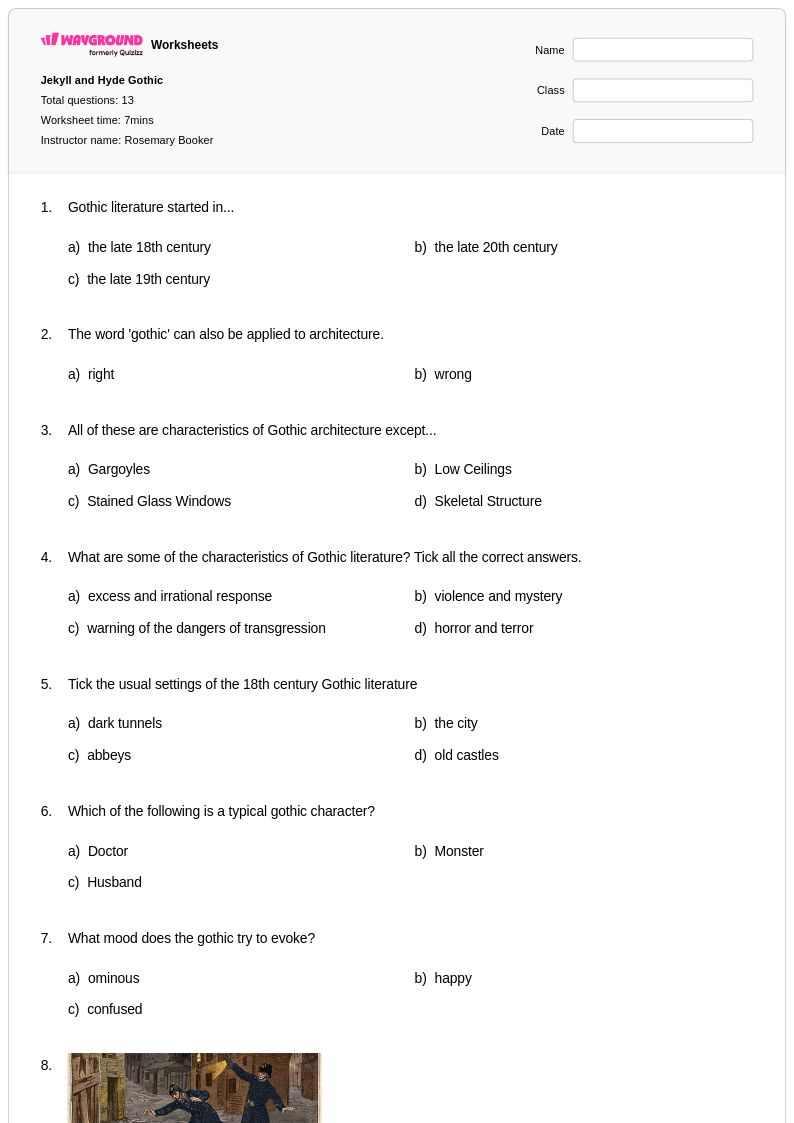
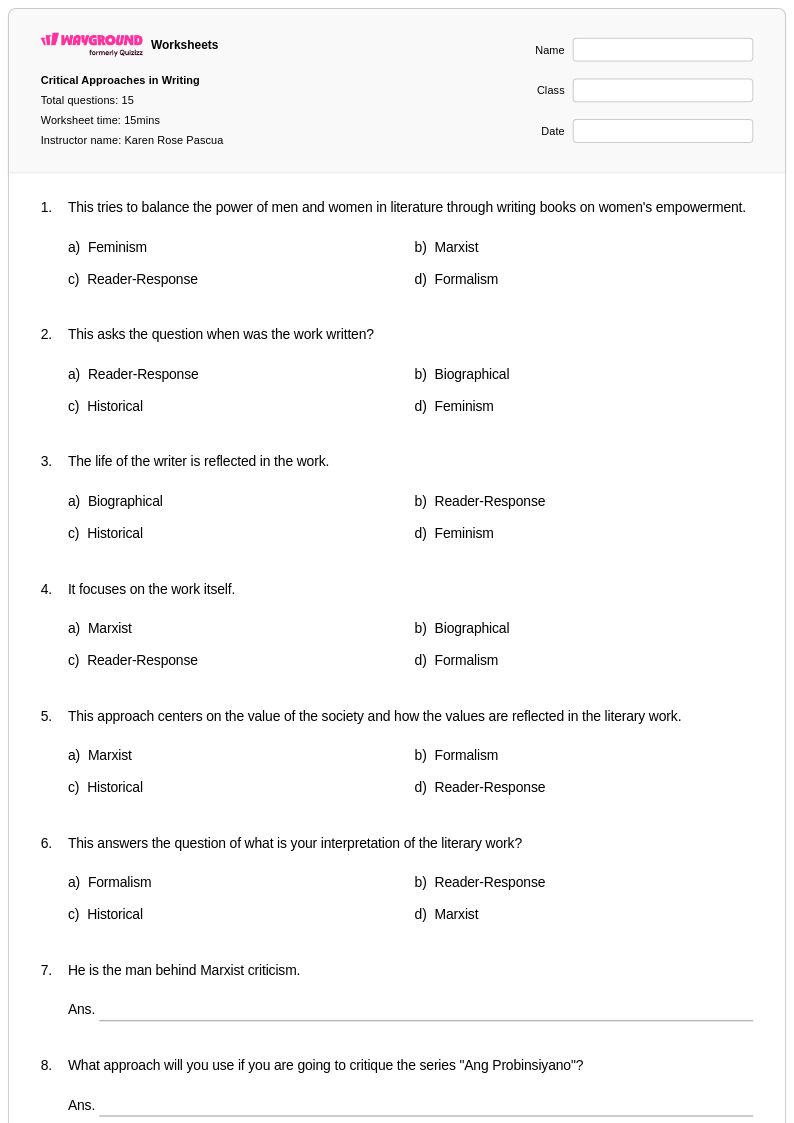
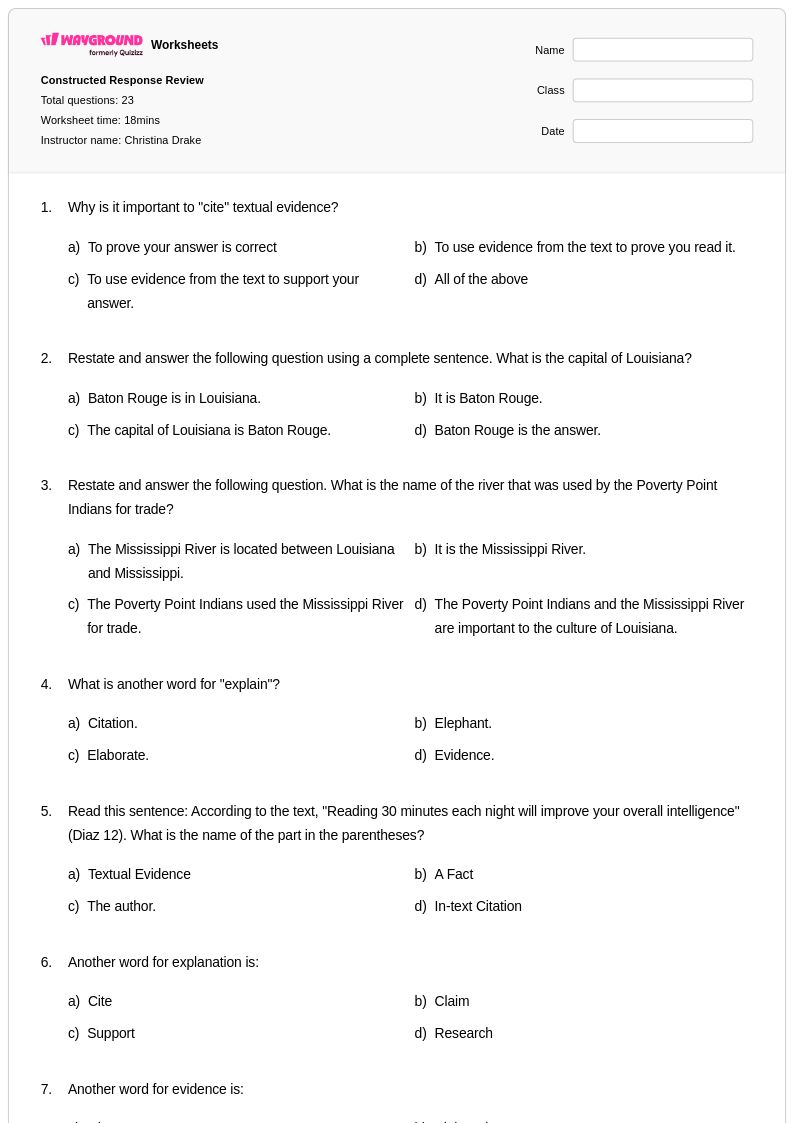
Response to Literature worksheets for Year 10 students available through Wayground (formerly Quizizz) provide comprehensive practice in analyzing, interpreting, and responding critically to literary texts. These carefully crafted resources strengthen essential academic skills including textual analysis, evidence-based argumentation, comparative literature study, and sophisticated written communication that Year 10 English students need to master. The worksheets feature diverse practice problems that guide students through close reading techniques, thematic analysis, character development evaluation, and literary device identification, while accompanying answer keys allow for immediate feedback and self-assessment. Available as free printables and digital resources, these materials help students develop the analytical thinking and writing proficiency required for advanced literary response assignments.
Wayground (formerly Quizizz) supports English educators with an extensive collection of millions of teacher-created Response to Literature resources specifically designed for Year 10 instruction. The platform's robust search and filtering capabilities enable teachers to quickly locate worksheets aligned with curriculum standards and targeted to specific literary works, genres, or analytical skills. Differentiation tools allow educators to customize content complexity and modify assignments to meet diverse learning needs, while flexible formatting options include both printable pdf versions for traditional classroom use and interactive digital formats for technology-enhanced learning environments. These comprehensive features streamline lesson planning and provide teachers with versatile options for skill practice, targeted remediation, and enrichment activities that deepen students' capacity for sophisticated literary analysis and response.
FAQs
How do I teach students to write a response to literature?
Teaching response to literature begins with modeling close reading strategies: annotating for theme, tone, author's craft, and key evidence before drafting. From there, guide students through structured response frameworks that move from claim to evidence to analysis, emphasizing that opinions must always be grounded in the text itself. Scaffolded worksheets that break the process into discrete steps, such as identifying the author's argument, selecting supporting quotes, and explaining their significance, help students internalize the structure before writing independently.
What exercises help students practice responding to literature?
Effective practice exercises include guided annotation tasks, evidence-ranking activities where students evaluate which quotes best support a given claim, and short constructed-response prompts that require students to analyze author technique or evaluate an argument. Repeated practice with structured response frames builds fluency, while gradually removing scaffolding pushes students toward independent analytical writing. Worksheets that target specific skills, such as citation formatting, theme identification, or evaluating rhetorical strategies, allow teachers to address gaps without reteaching the entire writing process.
What mistakes do students commonly make when writing a response to literature?
The most common error is summary substitution, where students retell the text instead of analyzing it. A related mistake is dropping quotes into a response without explanation, treating evidence as self-sufficient rather than using it to support a specific claim. Students also frequently make broad, unsupported generalizations about theme or author intent without tying their assertions back to specific textual details. Targeted practice on the claim-evidence-analysis structure, with explicit feedback on each component, is the most reliable way to correct these patterns.
How do I help struggling readers engage with response to literature tasks?
For struggling readers, breaking the task into smaller steps, such as reading for one specific element at a time, significantly reduces cognitive load. Pre-reading supports like vocabulary previews and guiding questions help students access the text before they are asked to analyze it. On Wayground, teachers can enable the Read Aloud accommodation so questions and content are read to students who need it, and Reduced Answer Choices can be applied to lower cognitive demand for students who need additional support, all without signaling any difference to the rest of the class.
How can I use response to literature worksheets in my classroom?
Response to literature worksheets on Wayground are available as printable PDFs for traditional classroom use and in digital formats for technology-integrated or hybrid learning environments, and teachers can also host them as a quiz directly on Wayground. They work well as guided practice during a lesson, independent work following direct instruction, or formative assessment checkpoints. The included answer keys make it straightforward to review responses and identify which analytical skills need additional reinforcement.
How do I align response to literature activities to specific standards?
When searching for response to literature materials, filtering by standard ensures students are practicing the exact skills assessed on grade-level benchmarks, such as CCSS standards for citing textual evidence, analyzing theme development, or evaluating an author's argument. Wayground's search and filtering tools allow teachers to locate worksheets aligned to specific learning objectives quickly, reducing the time spent building materials from scratch. Selecting worksheets that target one standard at a time also makes it easier to track student progress toward mastery.