Free Printable Restating Questions Worksheets for Year 7
Wayground offers free Year 7 restating questions worksheets and printables that help students master the essential writing skill of transforming questions into clear topic sentences and thesis statements through guided practice problems with comprehensive answer keys.
Explore printable Restating Questions worksheets for Year 7
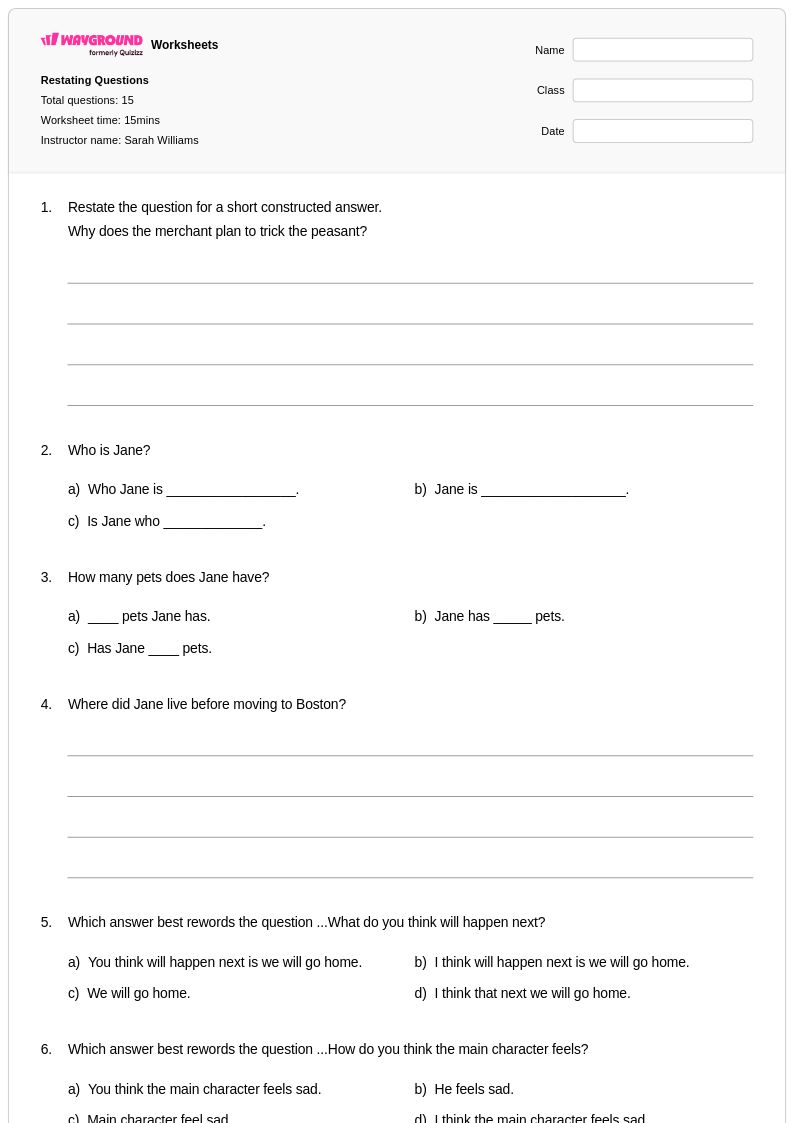
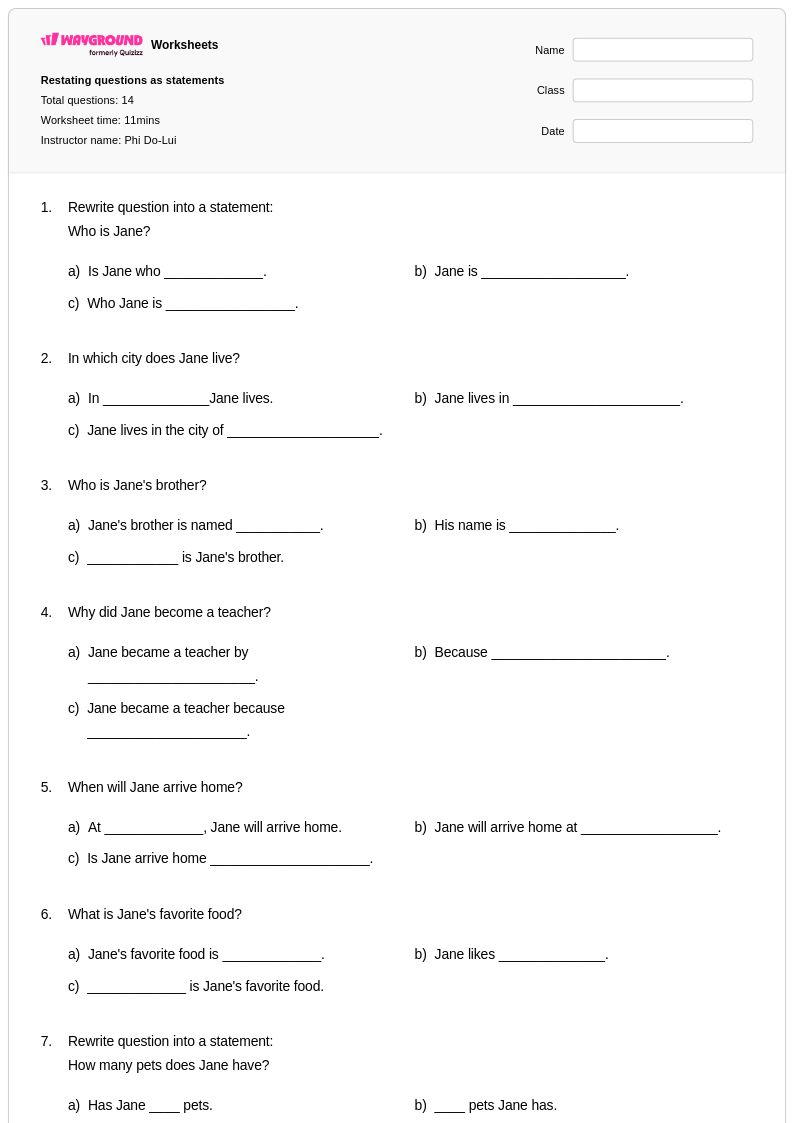
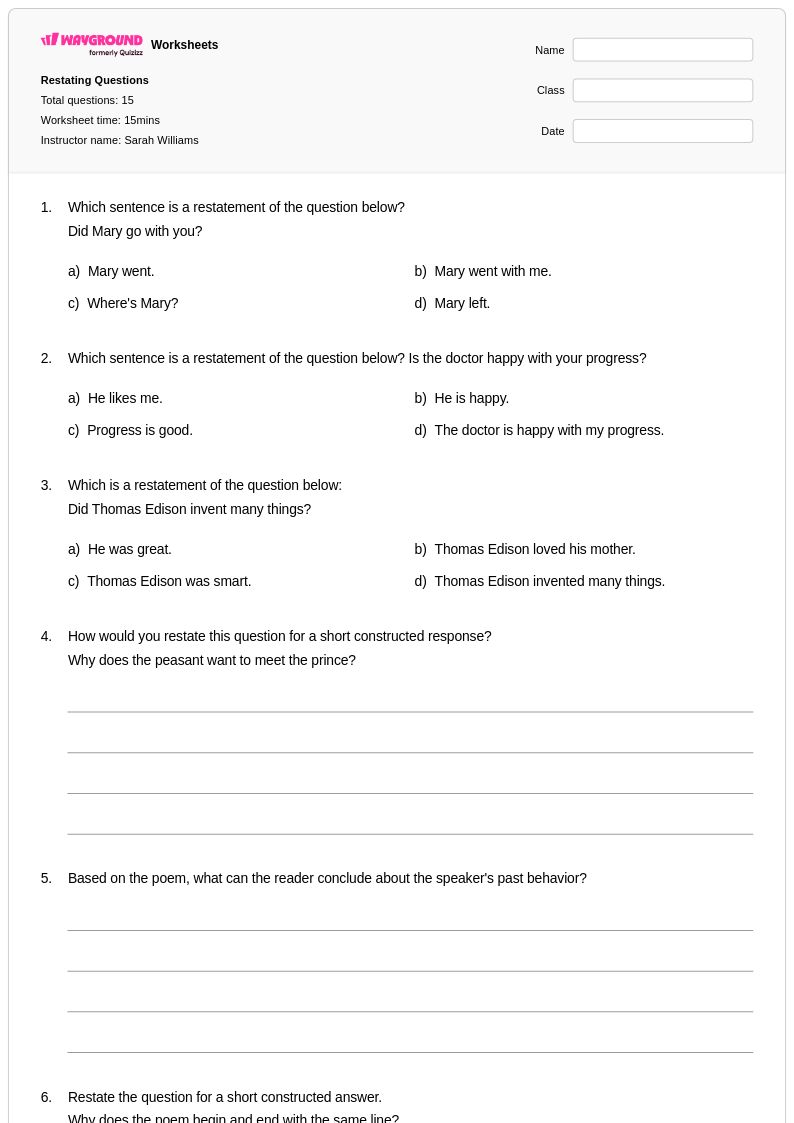
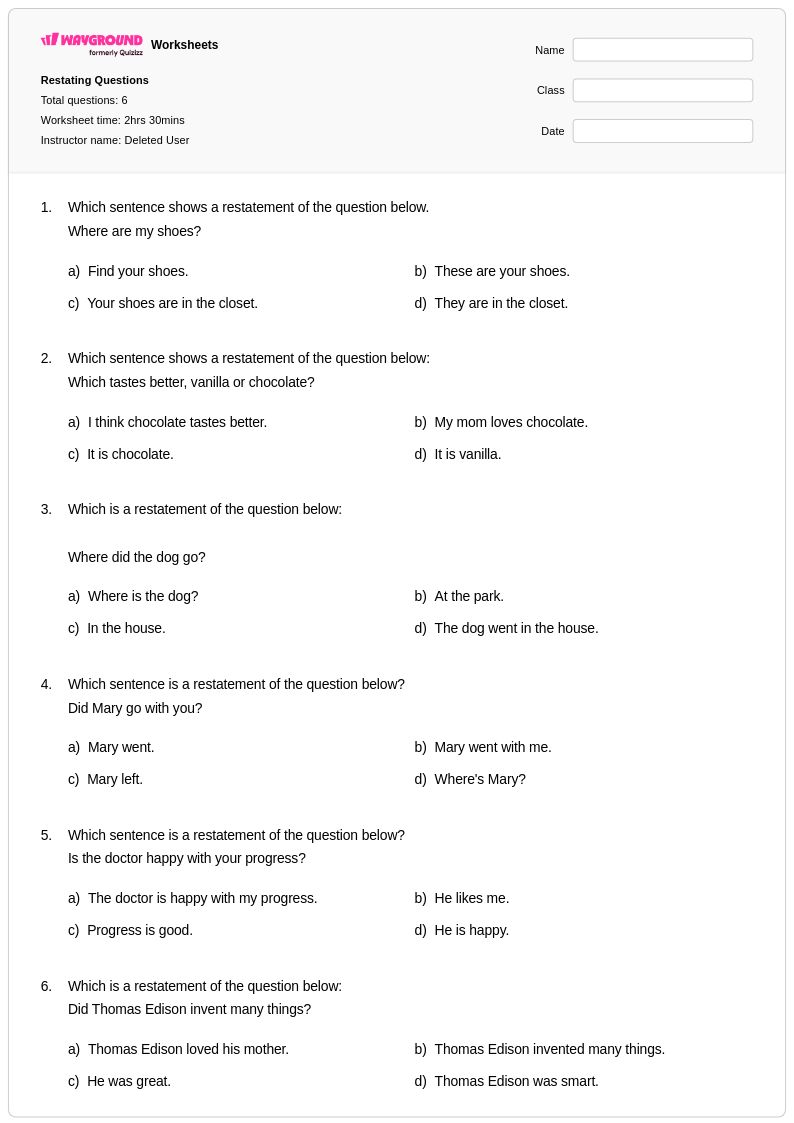
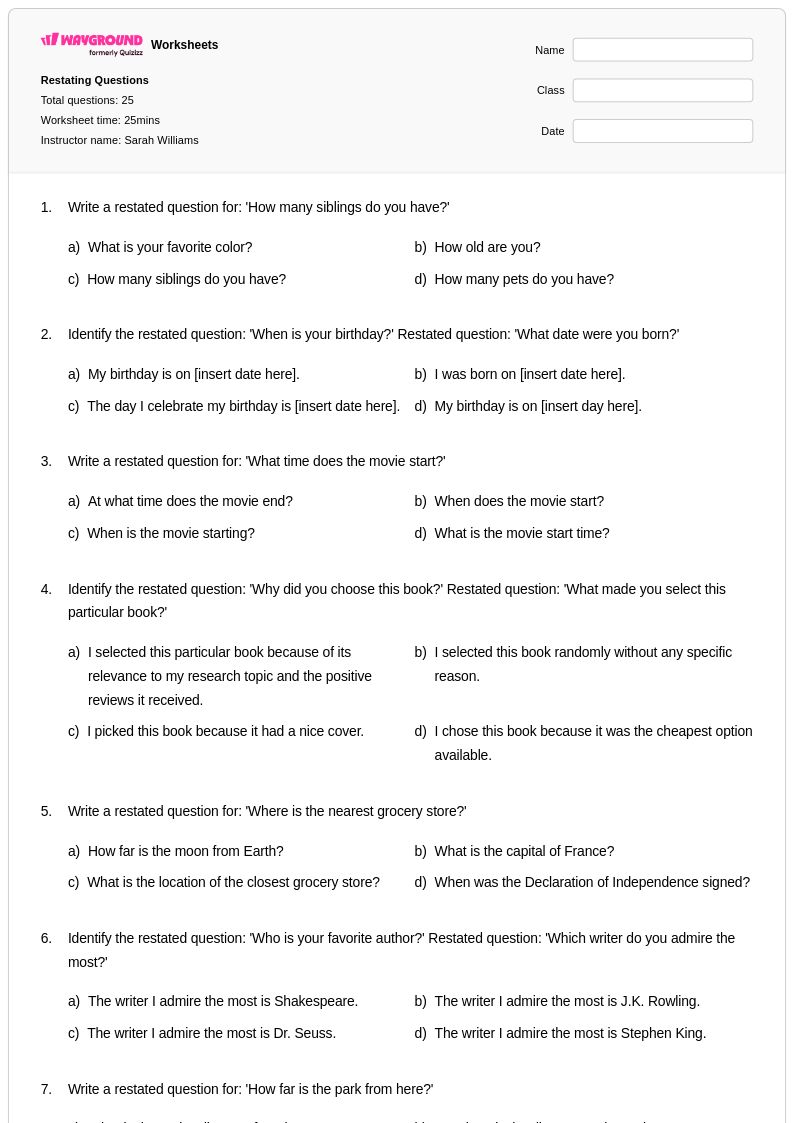
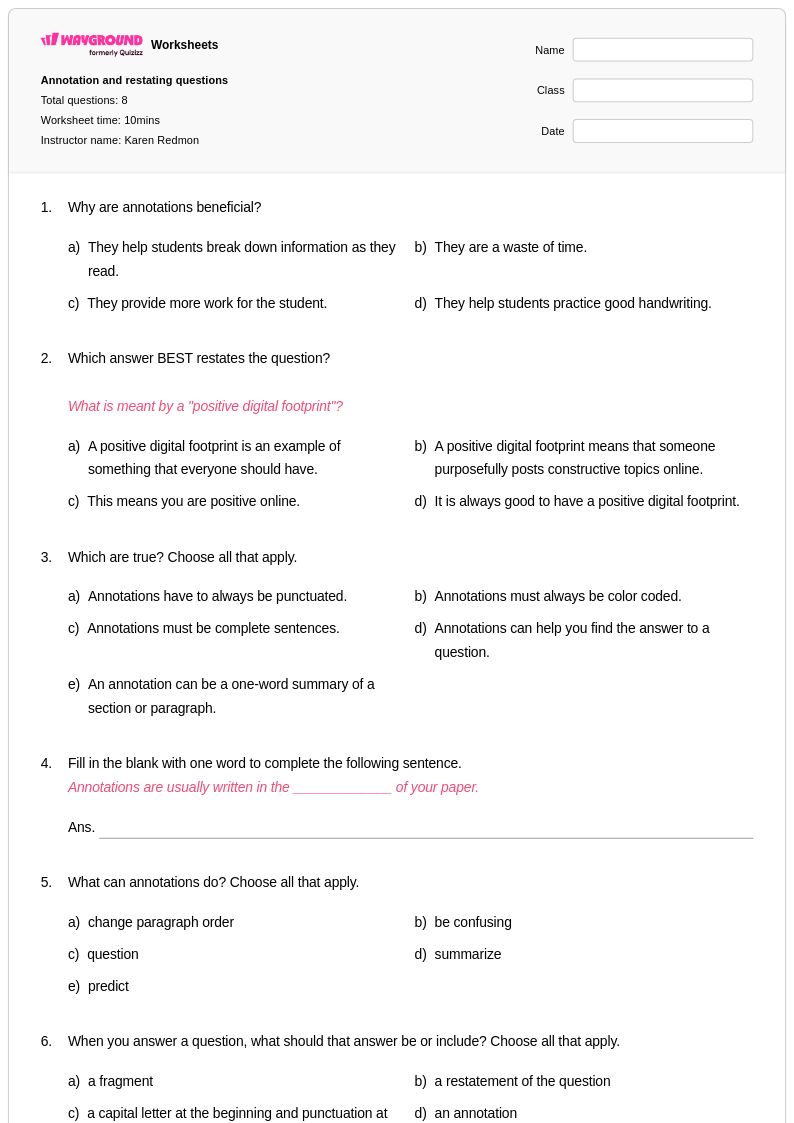
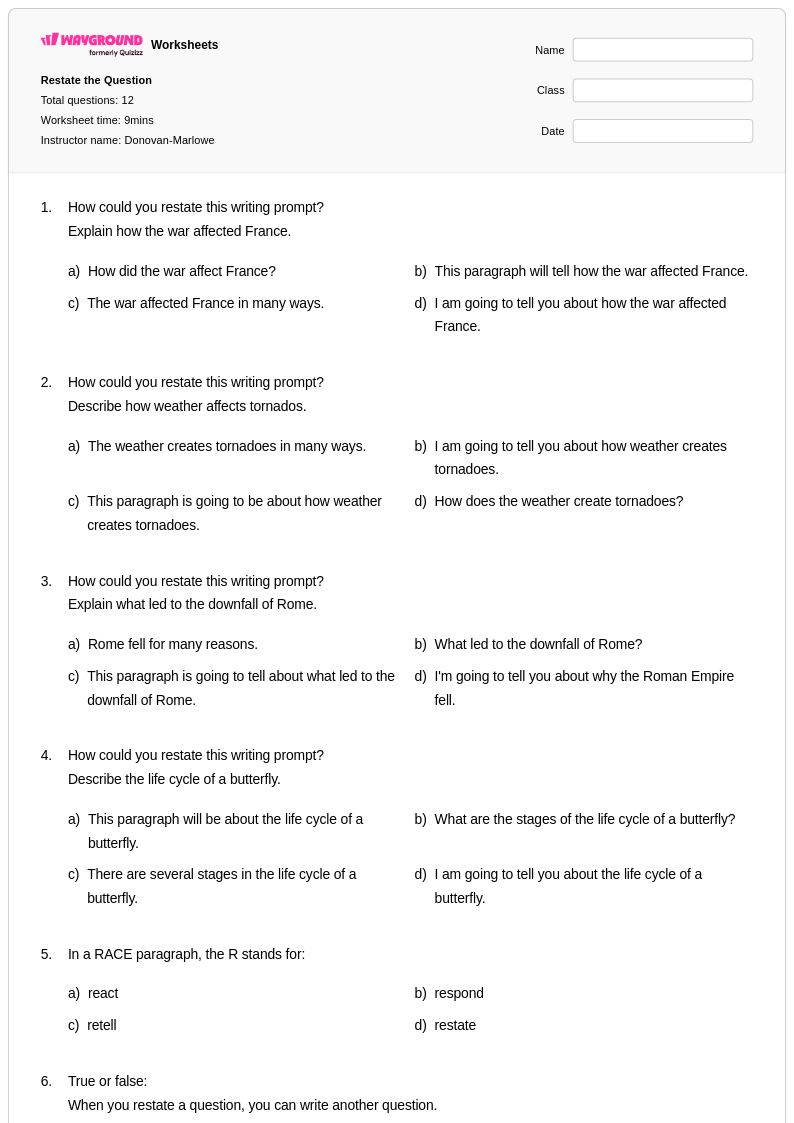
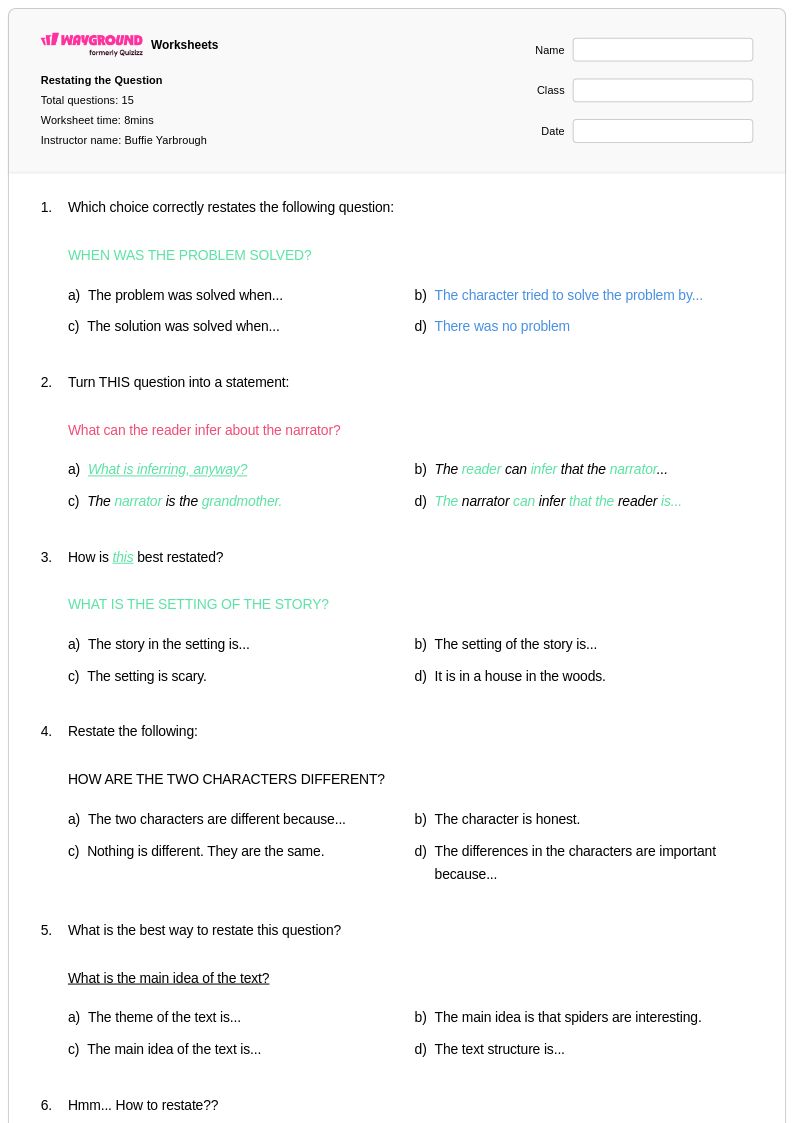
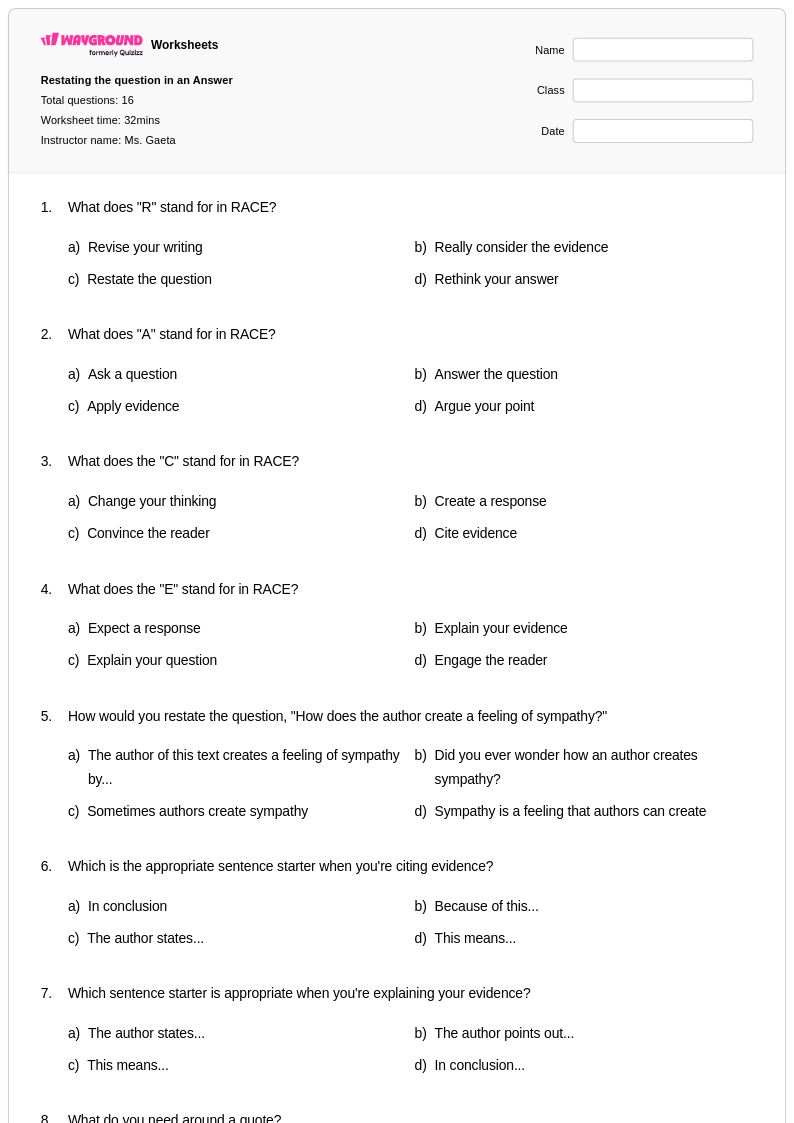
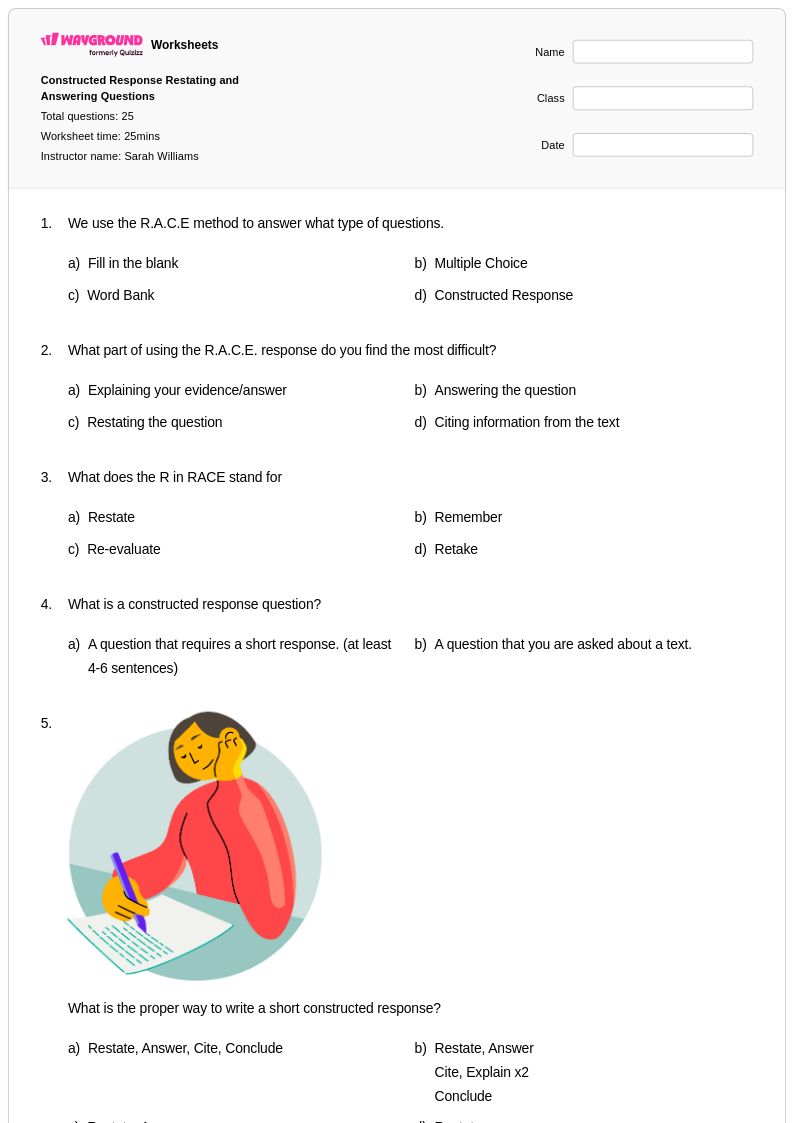
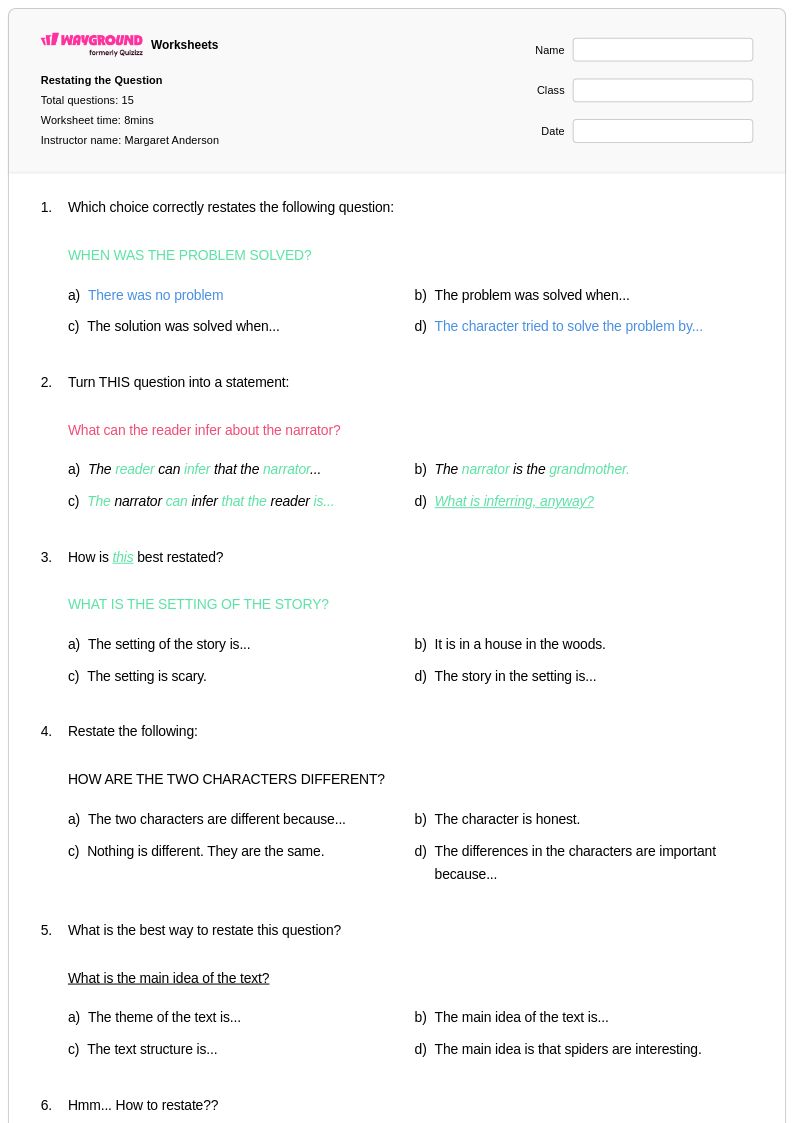
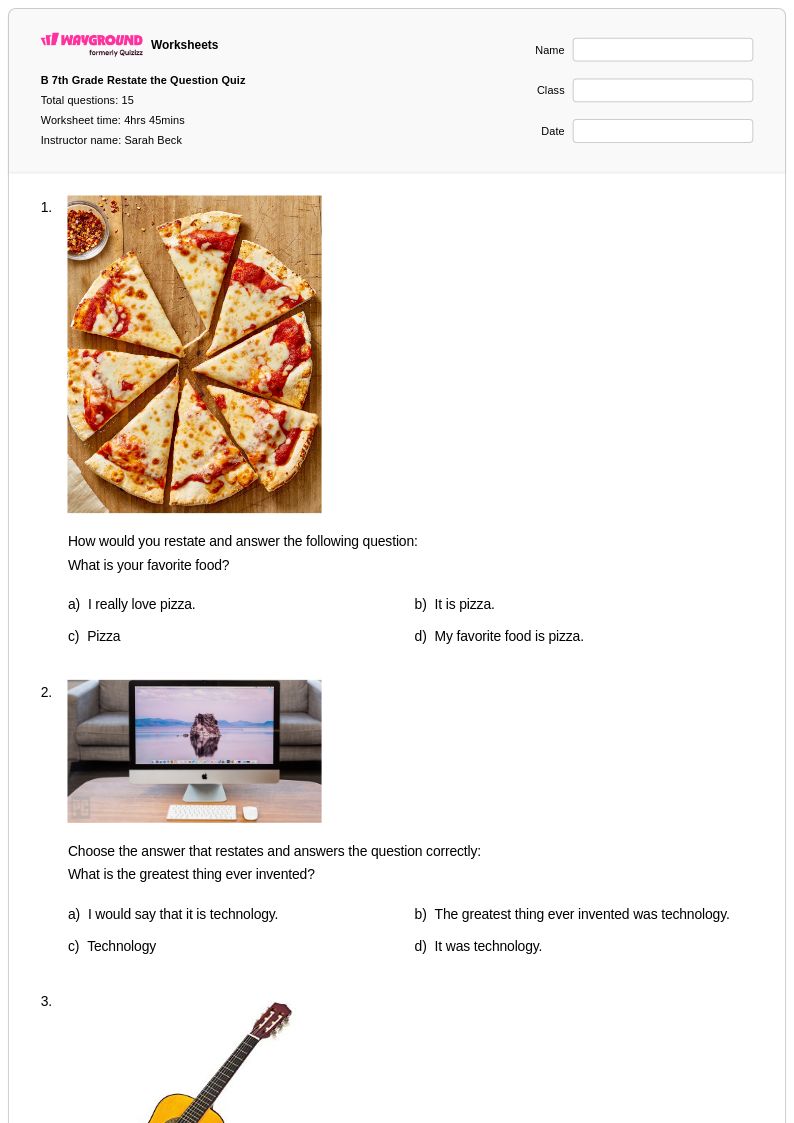
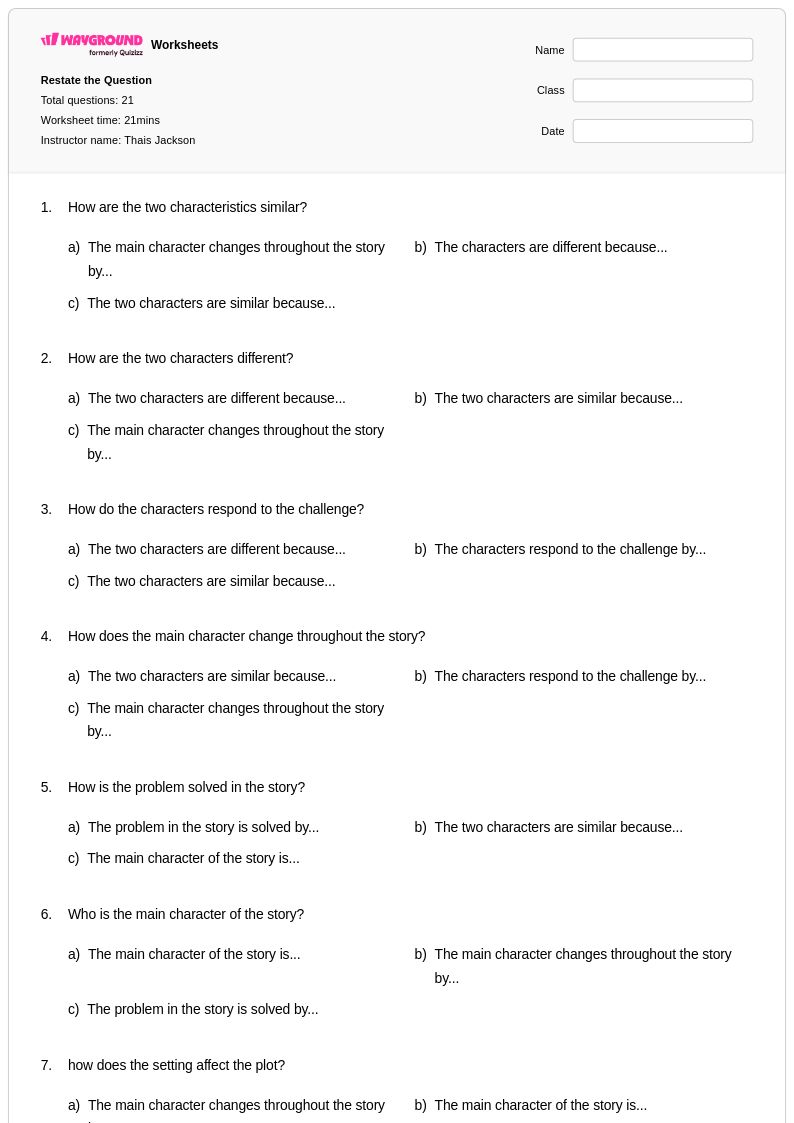
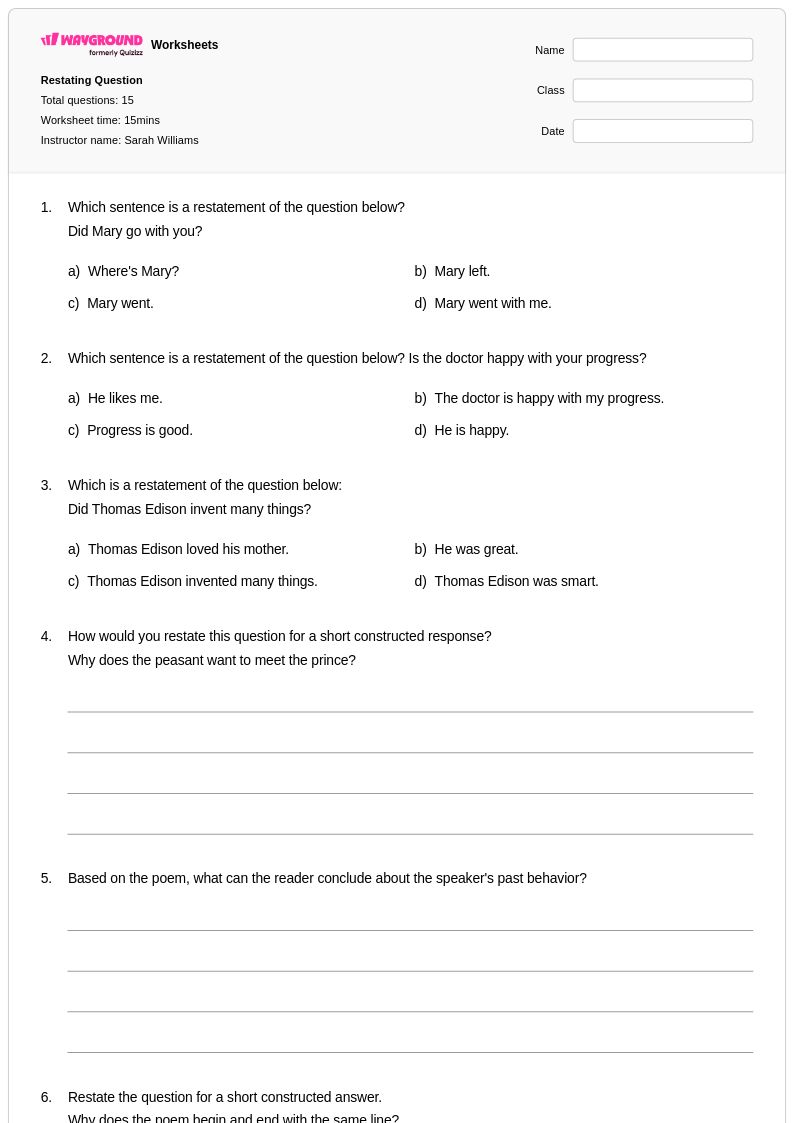
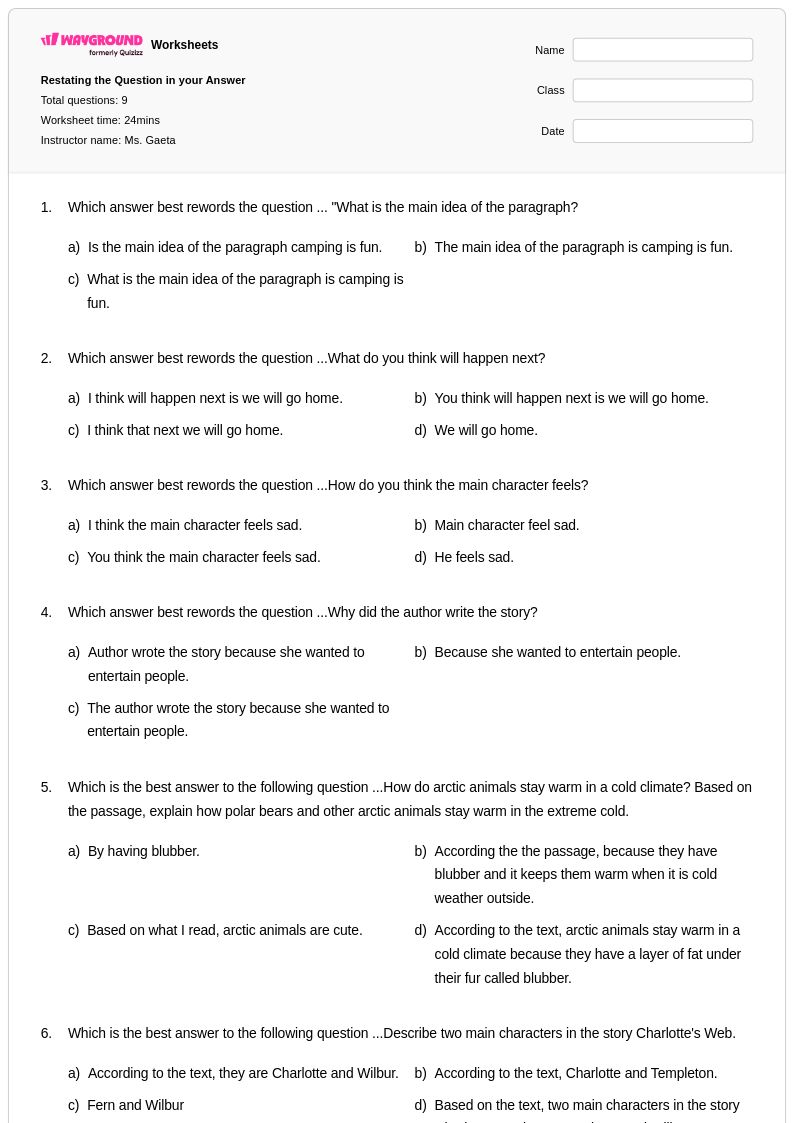
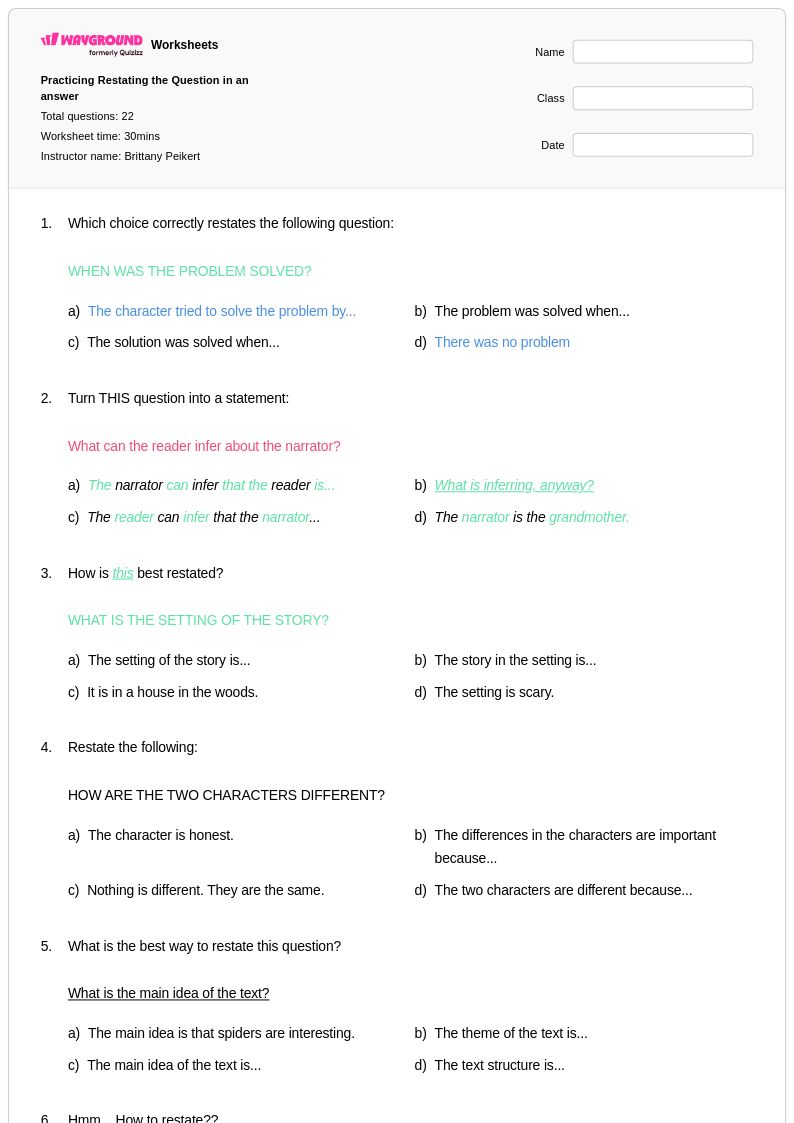
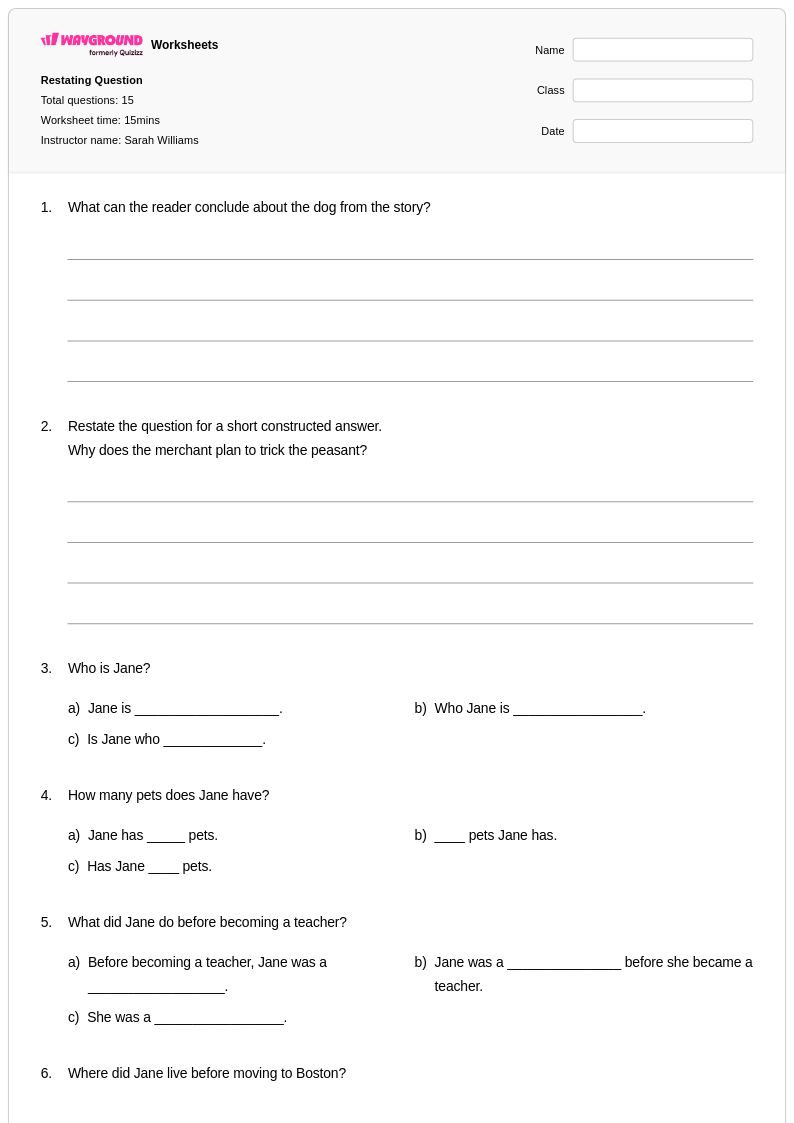
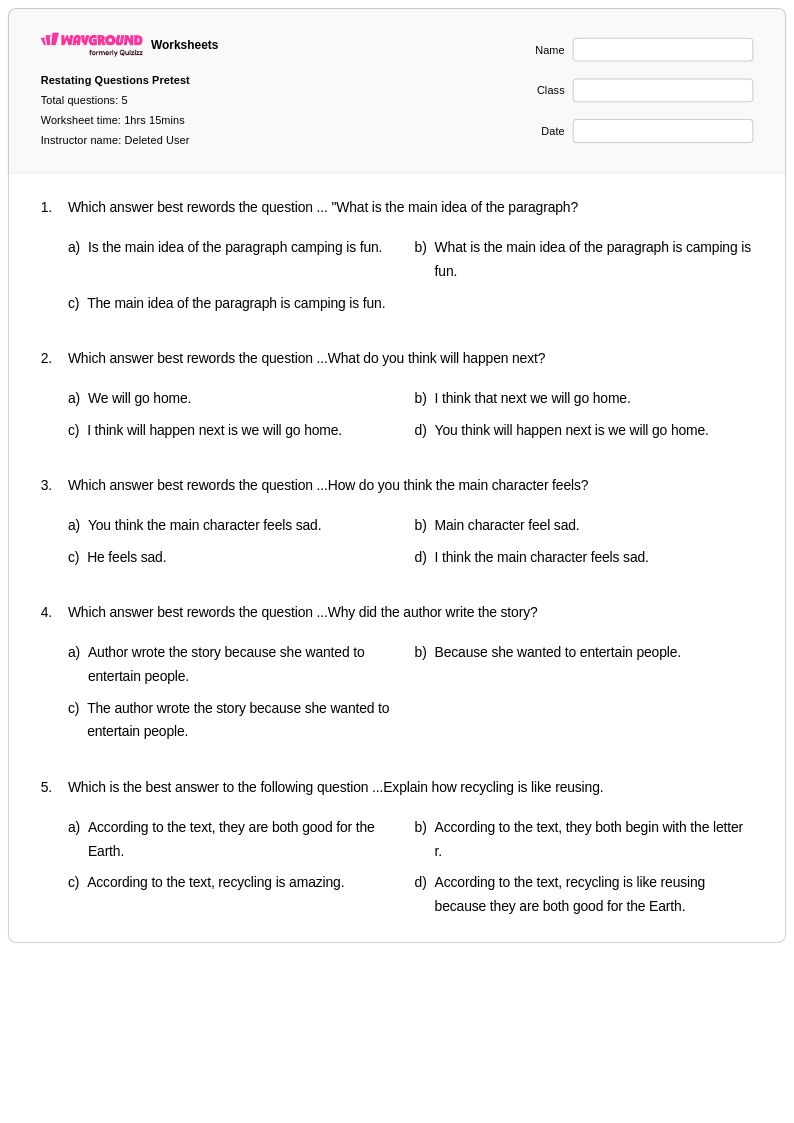
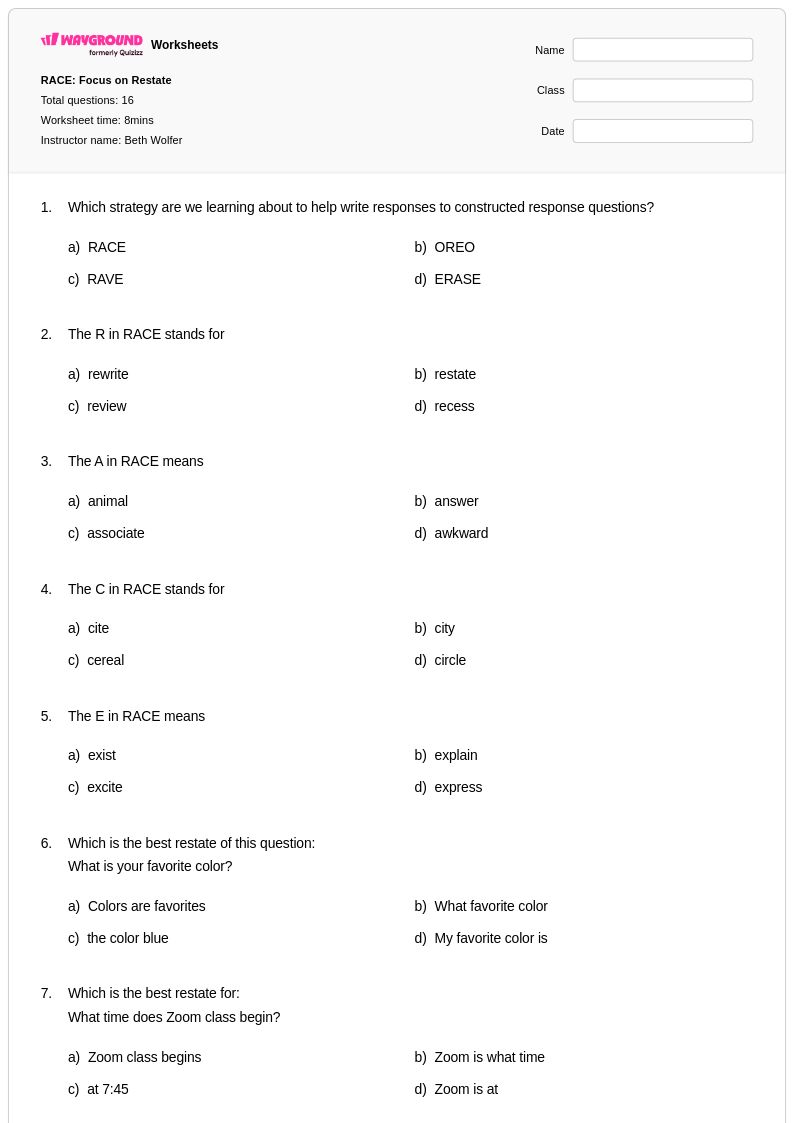
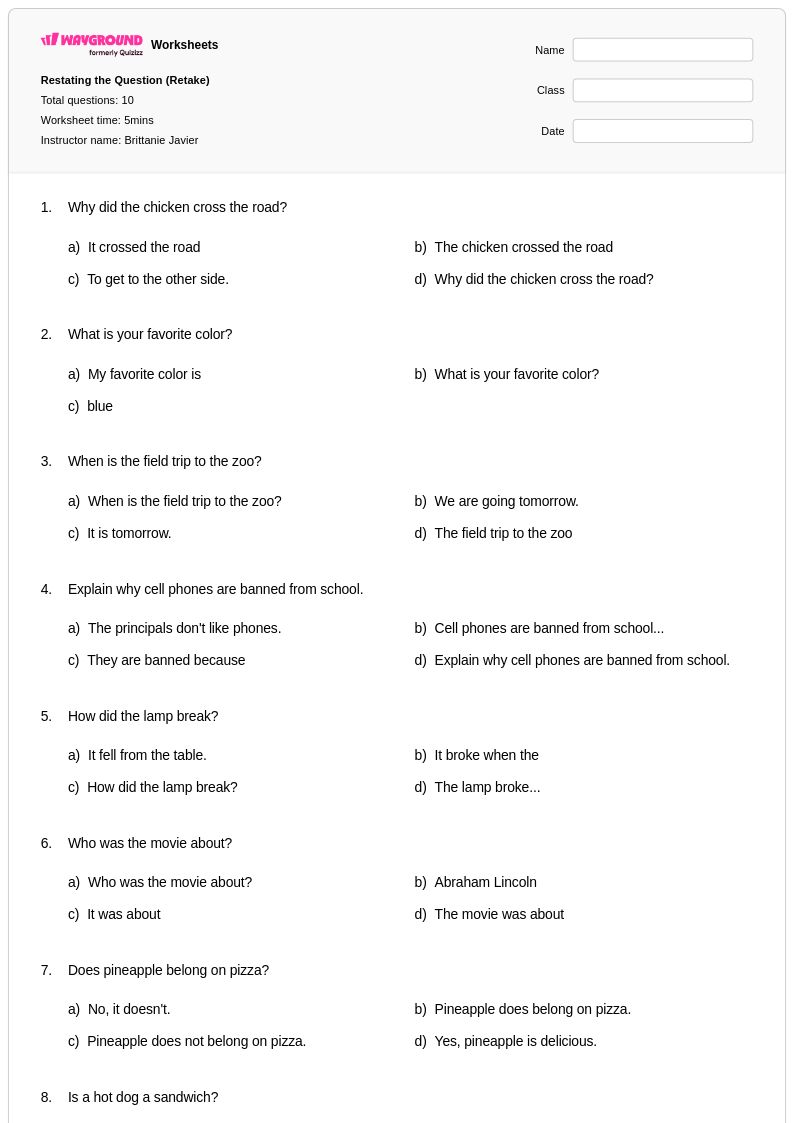
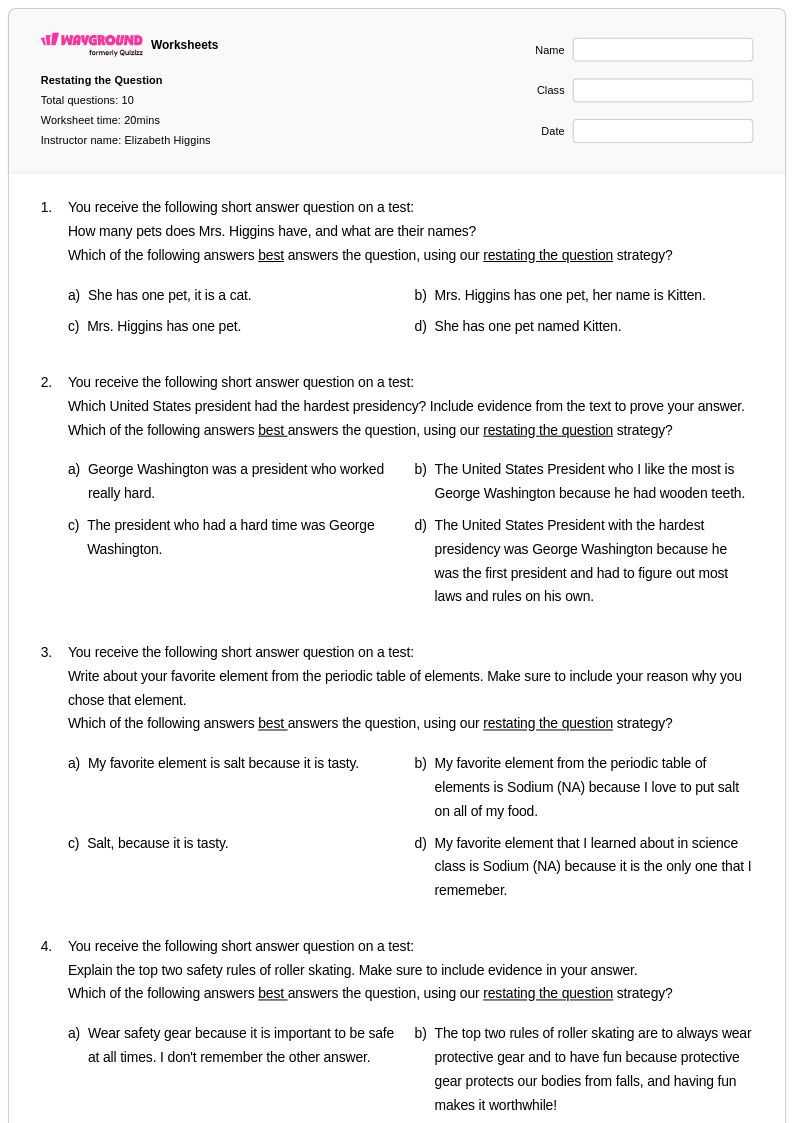
Restating questions represents a fundamental skill within the writing process that Year 7 students must master to develop strong analytical and comprehension abilities. Wayground's comprehensive collection of restating questions worksheets provides targeted practice opportunities that help students learn to rephrase prompts, questions, and statements while maintaining their original meaning and intent. These carefully designed worksheets strengthen critical thinking skills by requiring students to demonstrate understanding through paraphrasing, identify key components of complex questions, and practice transforming interrogative statements into declarative formats. Each worksheet includes detailed answer keys and step-by-step examples that guide students through the process of effective restatement, while printable pdf formats ensure easy access for both classroom instruction and independent practice problems at home.
Wayground's extensive library of teacher-created resources supports educators with millions of professionally developed worksheets specifically designed for Year 7 writing process instruction, including comprehensive collections focused on restating questions skills. The platform's advanced search and filtering capabilities allow teachers to quickly locate materials aligned with specific learning standards and curriculum requirements, while built-in differentiation tools enable customization based on individual student needs and reading levels. Teachers can access these resources in both digital and printable formats, including downloadable pdf versions that facilitate seamless integration into lesson plans, homework assignments, and assessment activities. This flexibility empowers educators to provide targeted remediation for struggling students, offer enrichment opportunities for advanced learners, and implement consistent skill practice that reinforces proper question restatement techniques across various writing contexts and academic disciplines.
FAQs
How do I teach students to restate questions in their writing?
Start by modeling the process explicitly: show students how to identify the key nouns and verbs in a question, then rewrite them into a declarative statement that answers the prompt directly. A useful scaffold is the 'flip and rephrase' technique, where students physically underline keywords, then reconstruct the sentence structure. Practice with short-answer responses before moving to full paragraphs or essays, so students build the habit in low-stakes contexts first.
What exercises help students practice restating questions?
Targeted practice worksheets that present a question alongside a blank for a rewritten topic sentence are highly effective because they isolate the skill before students apply it in full writing tasks. Exercises that ask students to compare a strong restatement against a weak one help them internalize what makes a restatement clear and direct. Repeated practice across multiple subject areas, such as science prompts and social studies questions, reinforces that restating questions is a transferable writing process skill.
What mistakes do students commonly make when restating questions?
The most frequent error is simply copying the question word-for-word rather than transforming it into a declarative statement, which signals a misunderstanding of the task's purpose. Students also commonly drop essential keywords from the original question, producing a restatement that no longer addresses the actual prompt. A third pattern is adding their opinion or answer too early, blurring the line between restating the question and responding to it.
Why is restating questions an important writing skill for students?
Restating a question correctly grounds a written response in the prompt, which is a foundational expectation on standardized assessments and extended-response tasks across all subject areas. It teaches students to read questions analytically, identify what is actually being asked, and construct a focused opening statement, which directly improves writing clarity and coherence. Without this skill, students often write off-topic responses even when they understand the underlying content.
How can I use Wayground's restating questions worksheets in my classroom?
Wayground's restating questions worksheets are available as printable PDFs for traditional classroom use and in digital formats for technology-integrated or online learning environments, giving teachers flexibility for whole-class instruction, small-group remediation, or independent practice. Teachers can also host worksheets as a quiz directly on Wayground, which supports real-time completion and review. Wayground's differentiation tools allow teachers to customize resources for diverse learning needs, including accommodations such as read aloud, extended time, and reduced answer choices for individual students.
How do I differentiate restating questions practice for struggling writers?
For students who struggle, provide sentence frames that preserve the original question's keywords while giving structural support, such as 'There are three reasons why ___.' Reducing the complexity of the source question, starting with one-clause prompts before multi-part questions, also lowers the cognitive load. On Wayground, teachers can apply individual accommodations such as read aloud and reduced answer choices to support students with language processing challenges without disrupting the rest of the class.