Free Printable Romeo and Juliet Worksheets for Year 9
Year 9 Romeo and Juliet free worksheets and printables from Wayground help students analyze Shakespeare's timeless tragedy through engaging practice problems, PDF activities, and comprehensive answer keys.
Explore printable Romeo and Juliet worksheets for Year 9
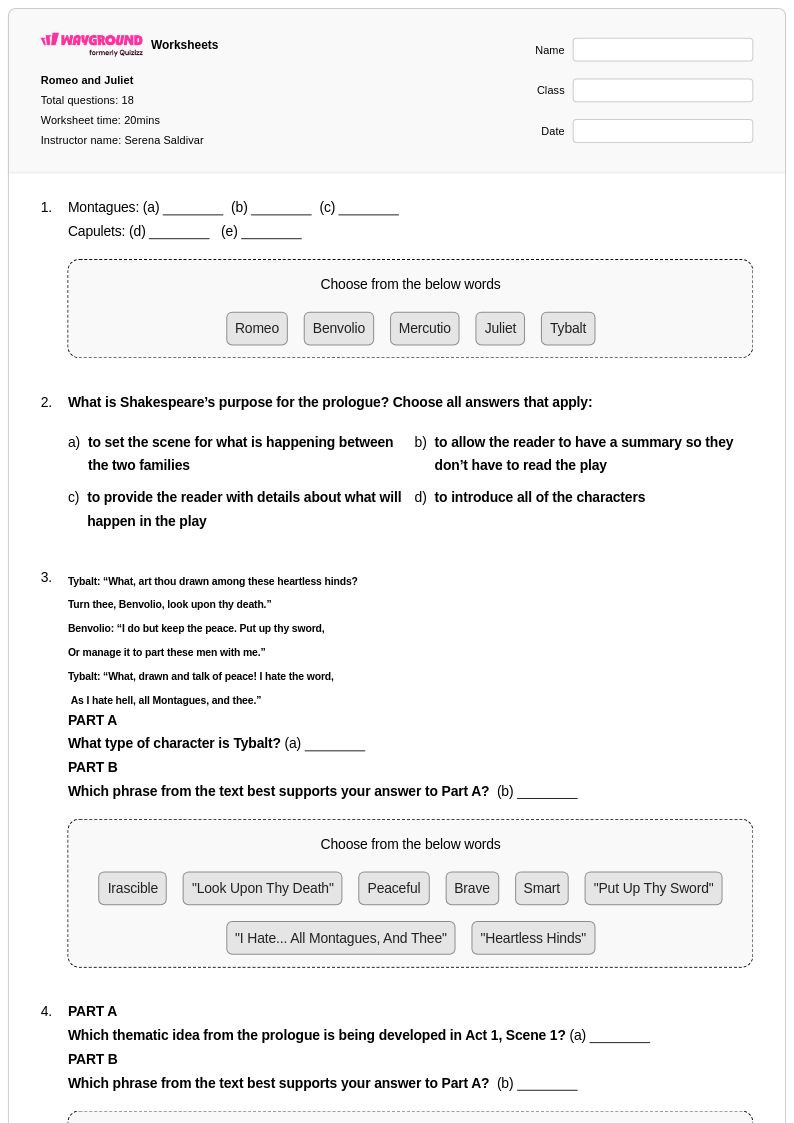
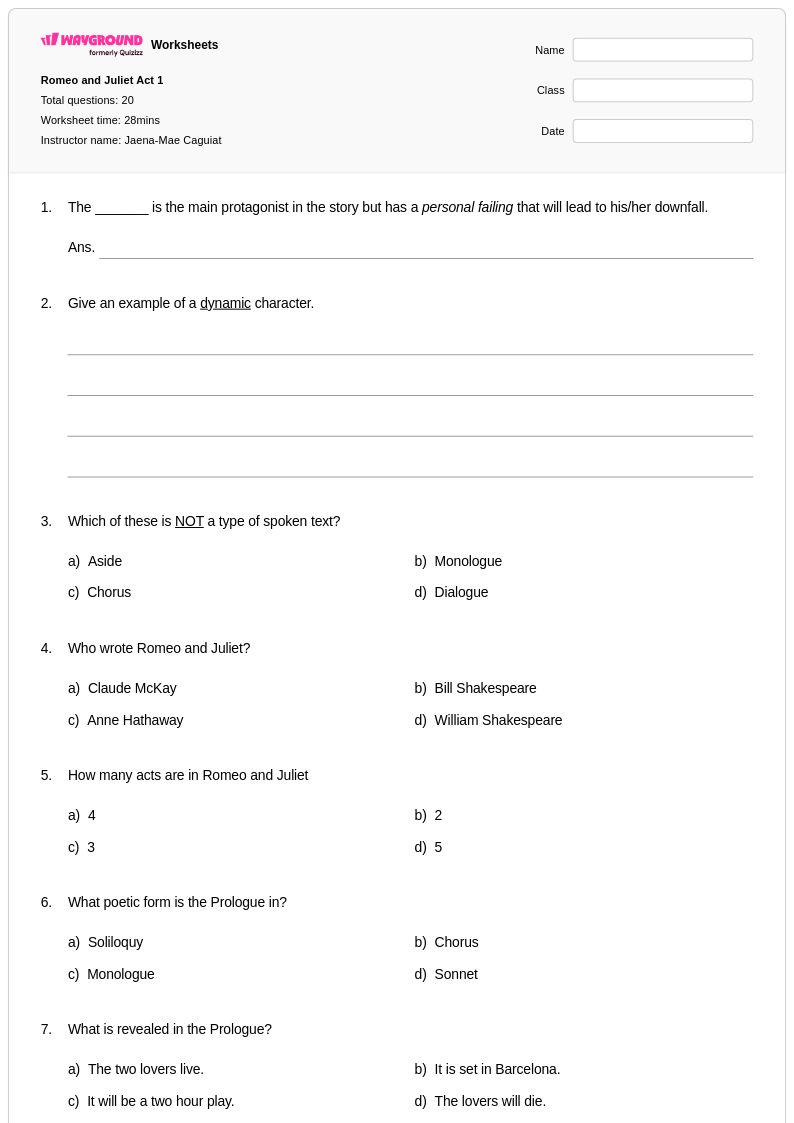
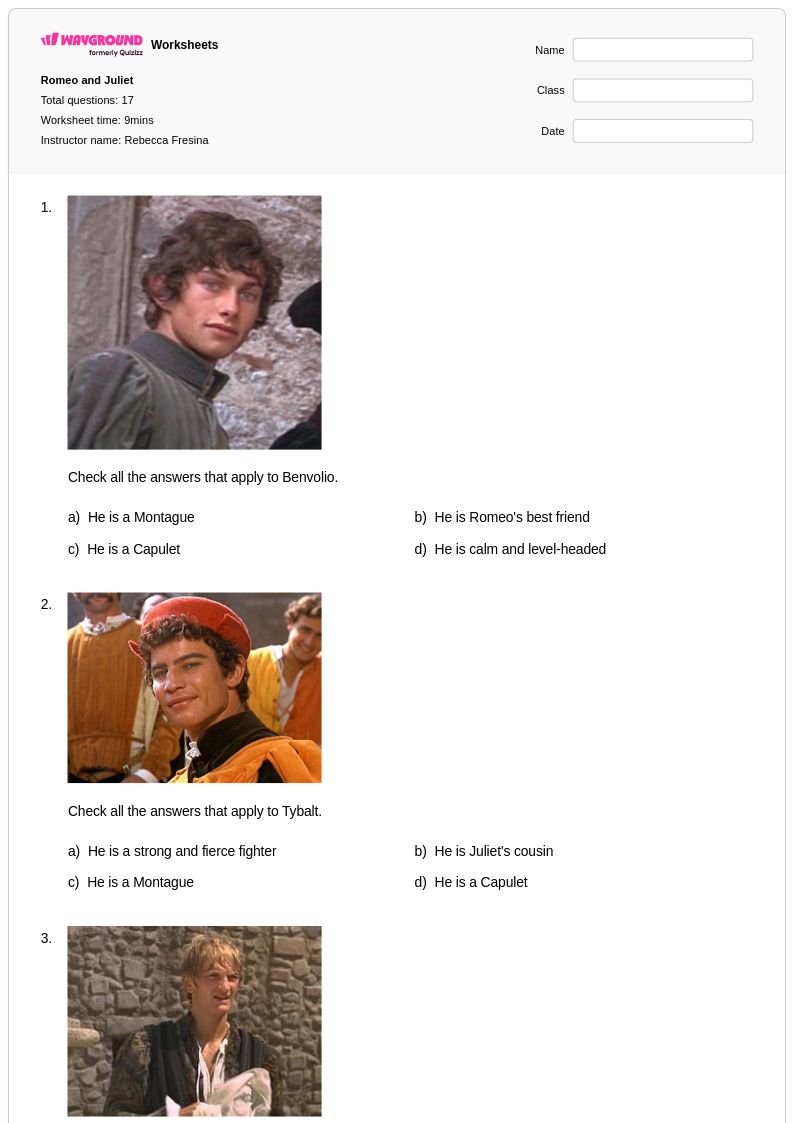
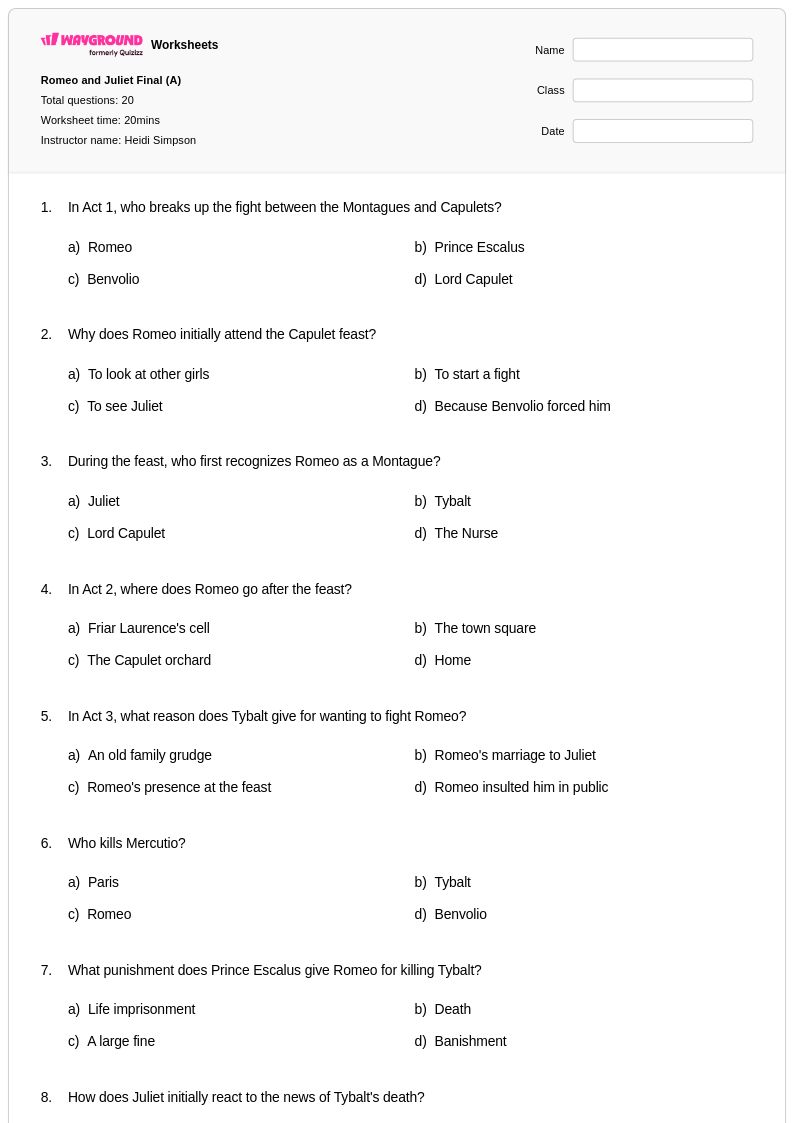
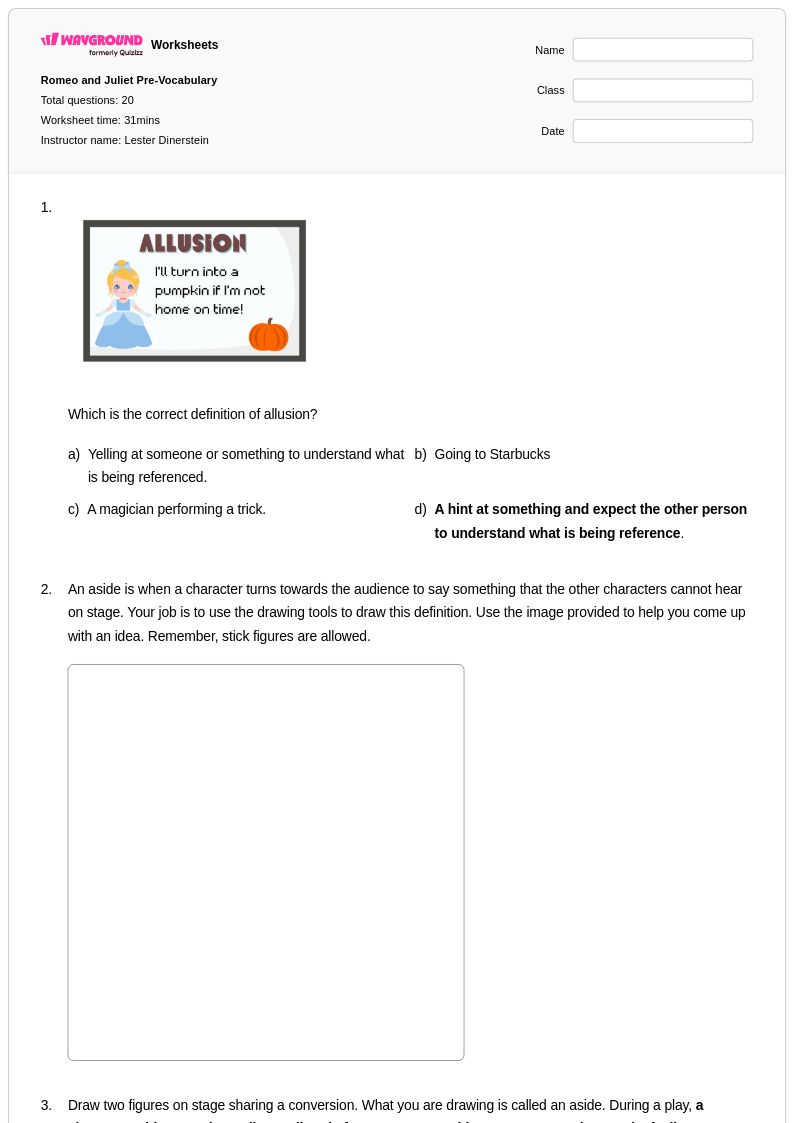
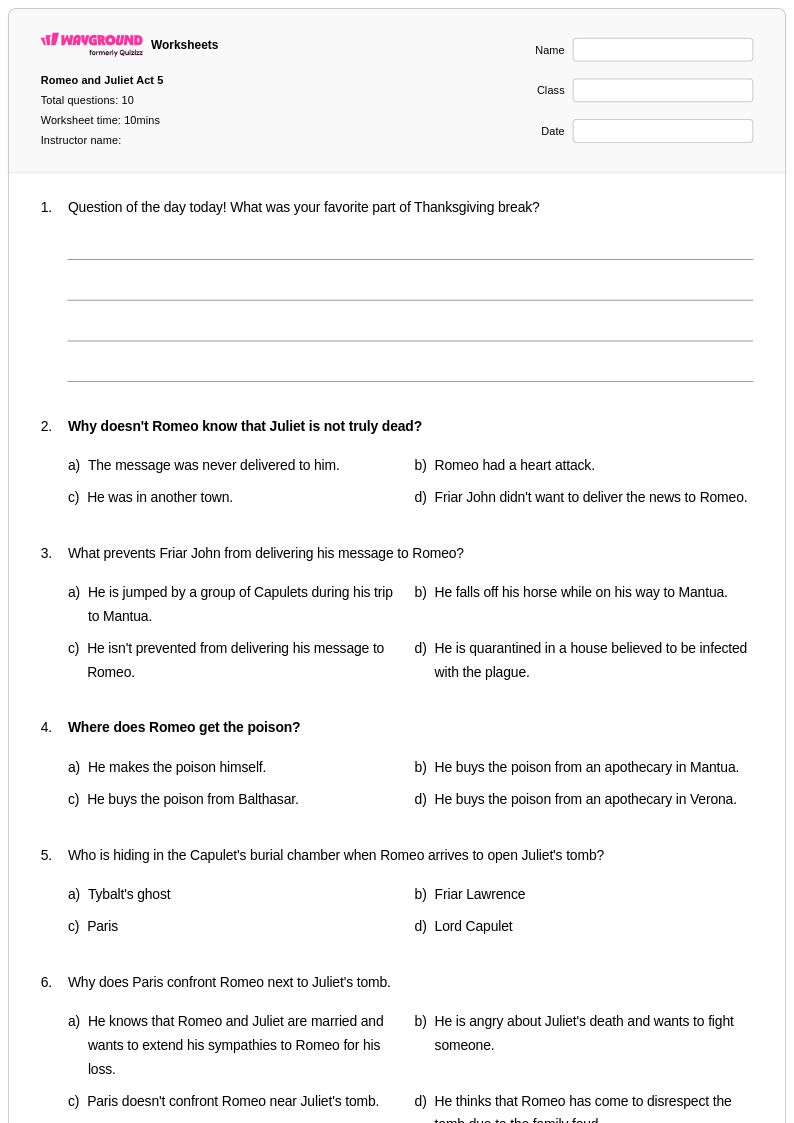
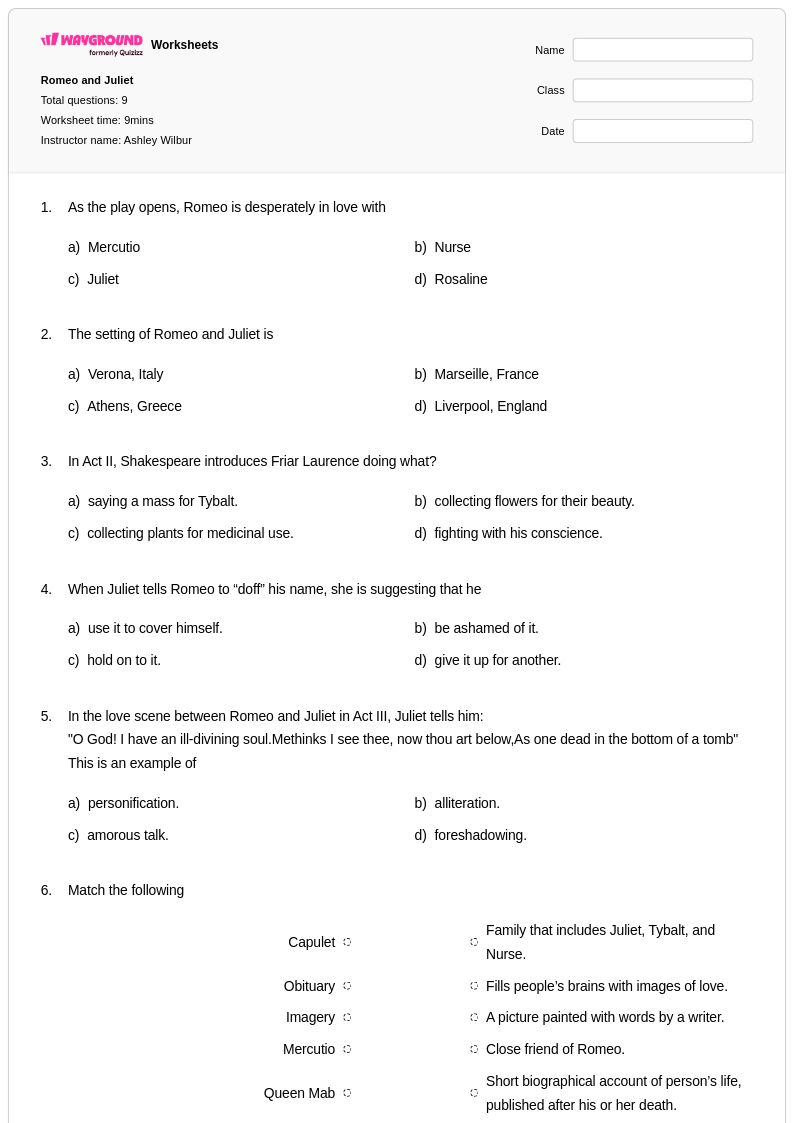
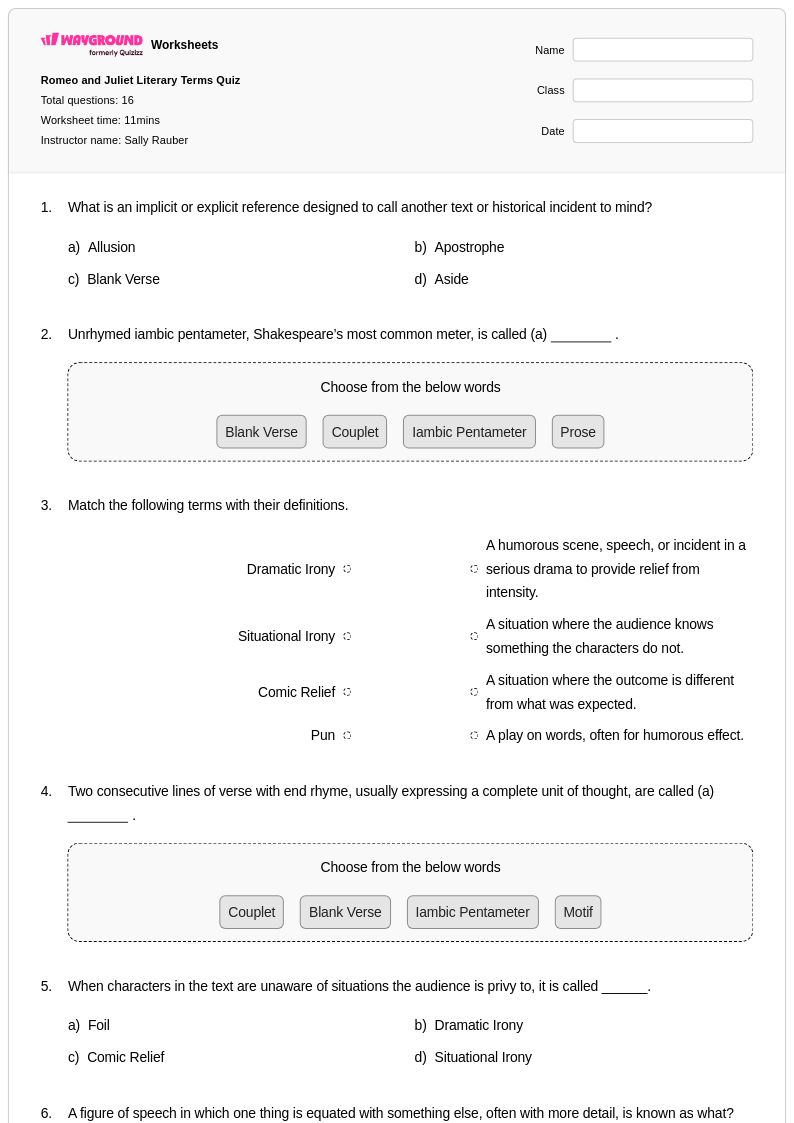
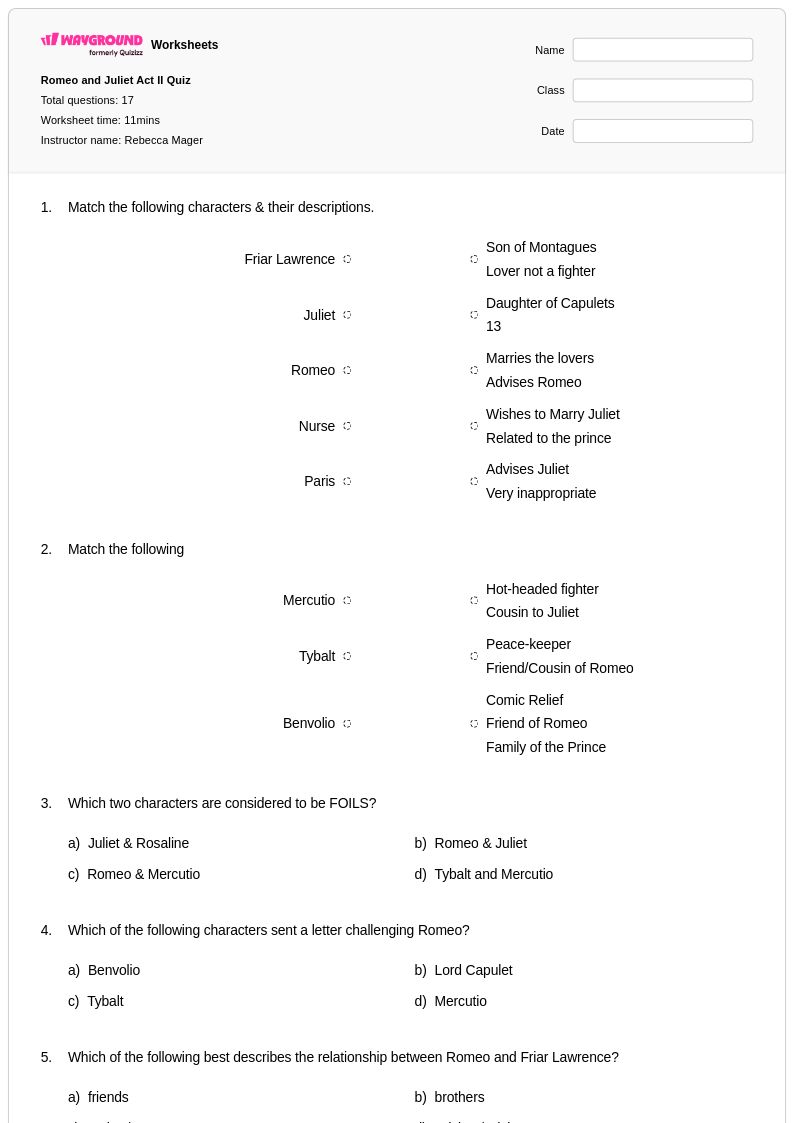
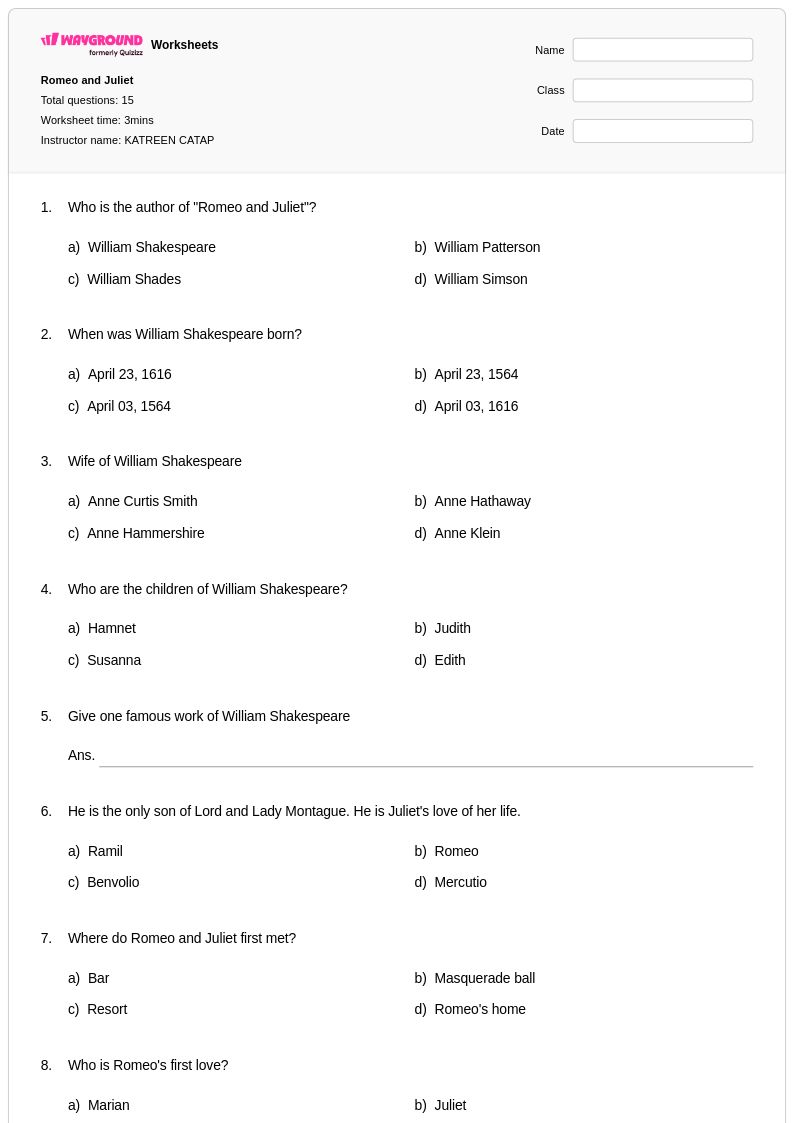
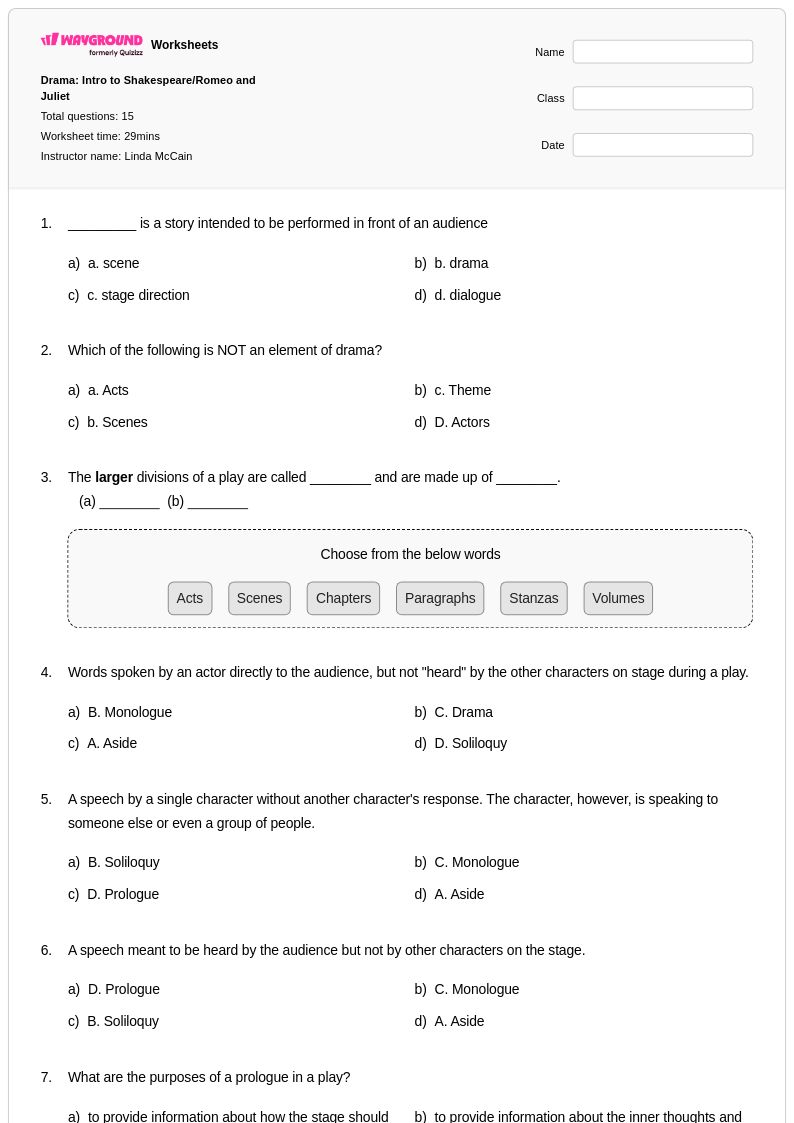
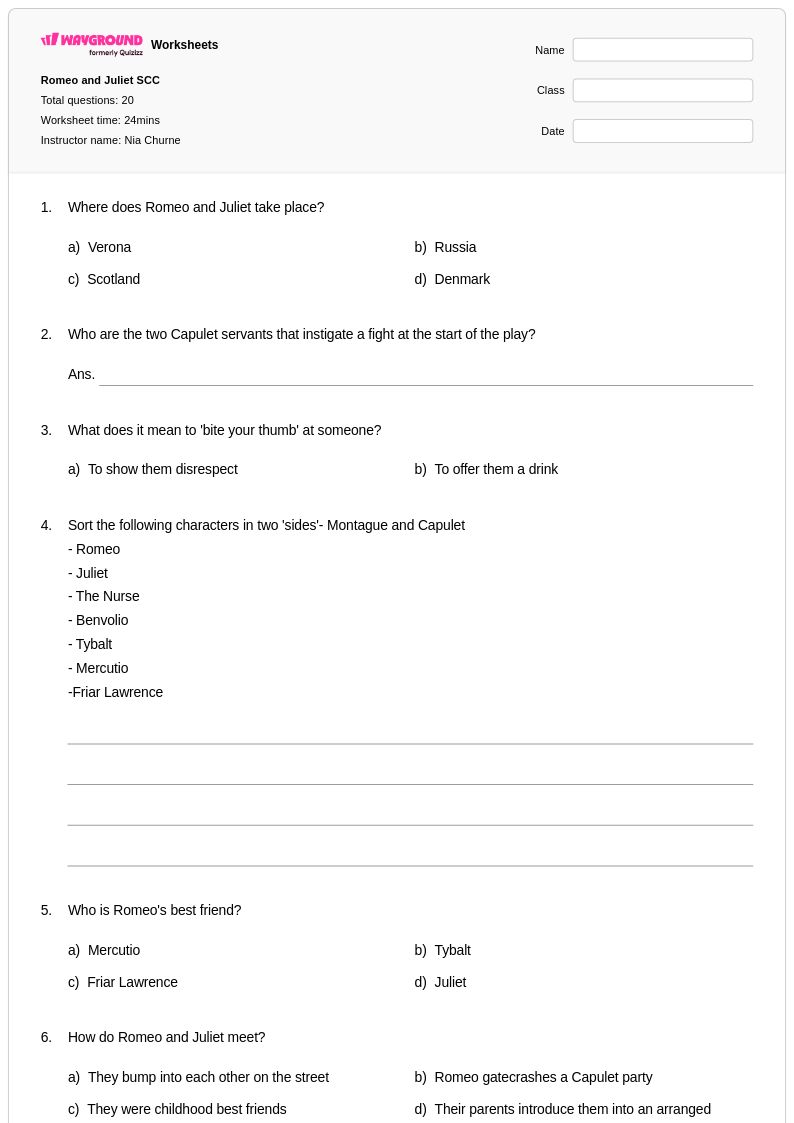
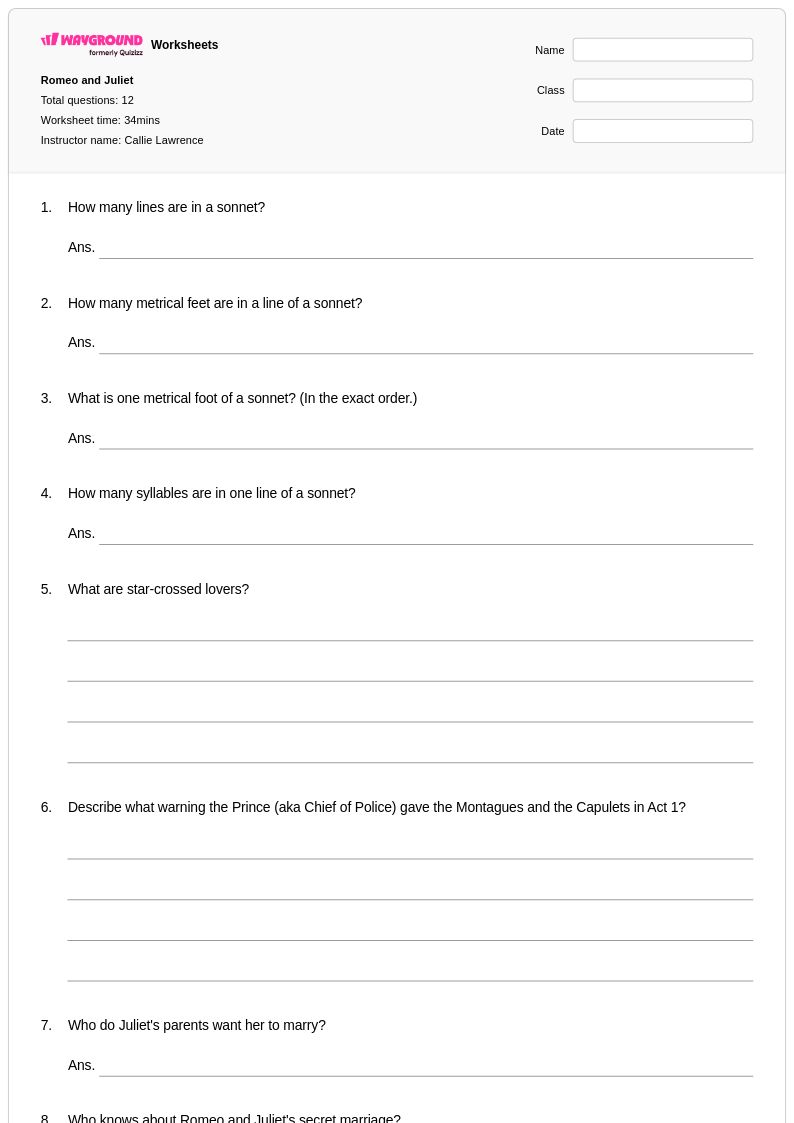
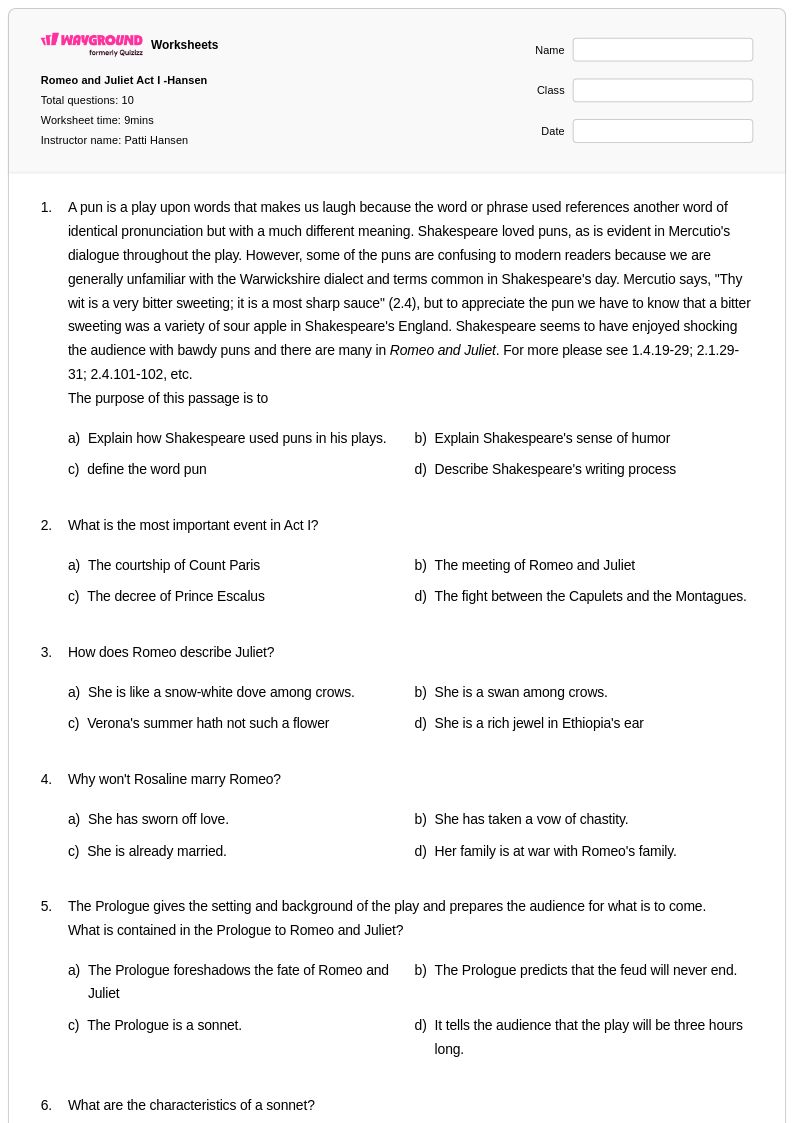
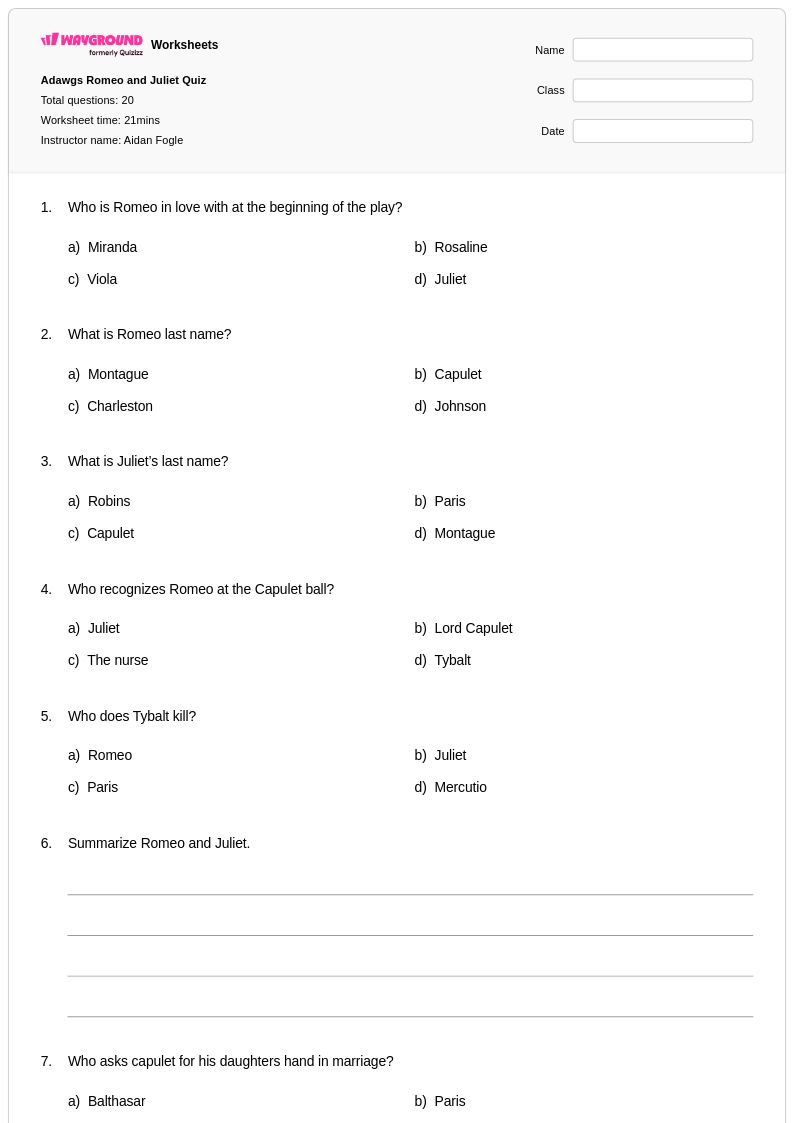
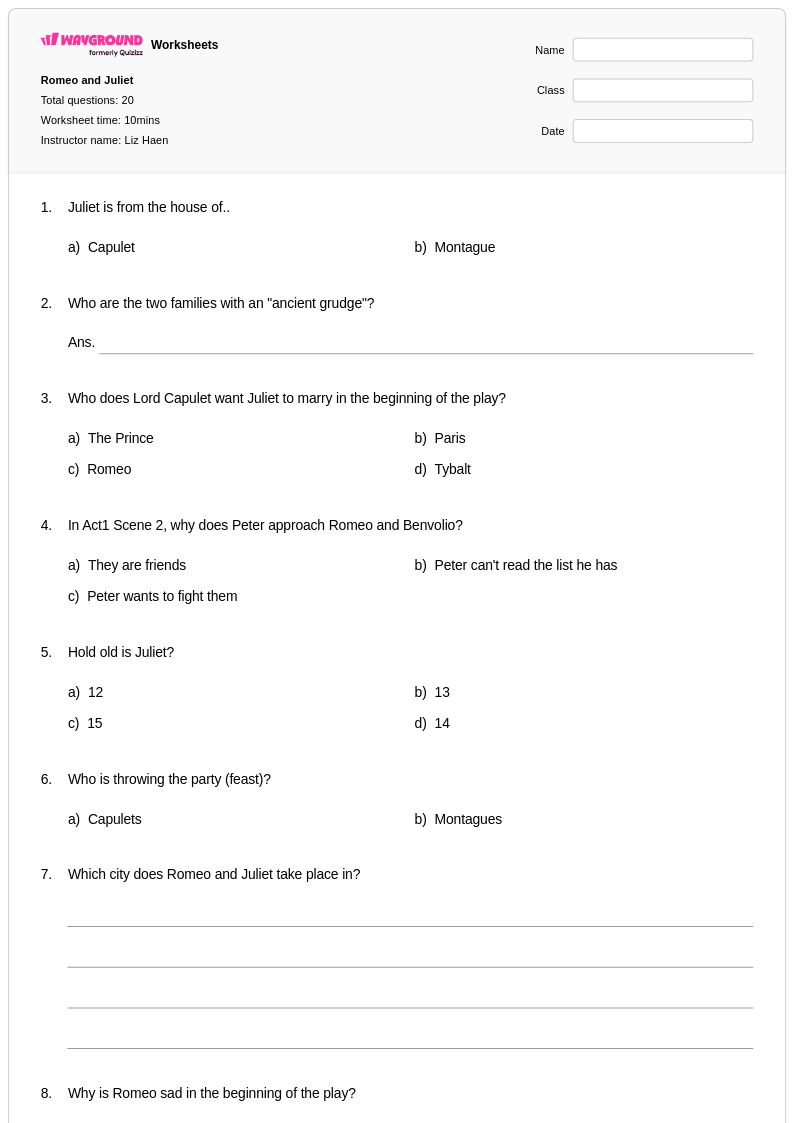
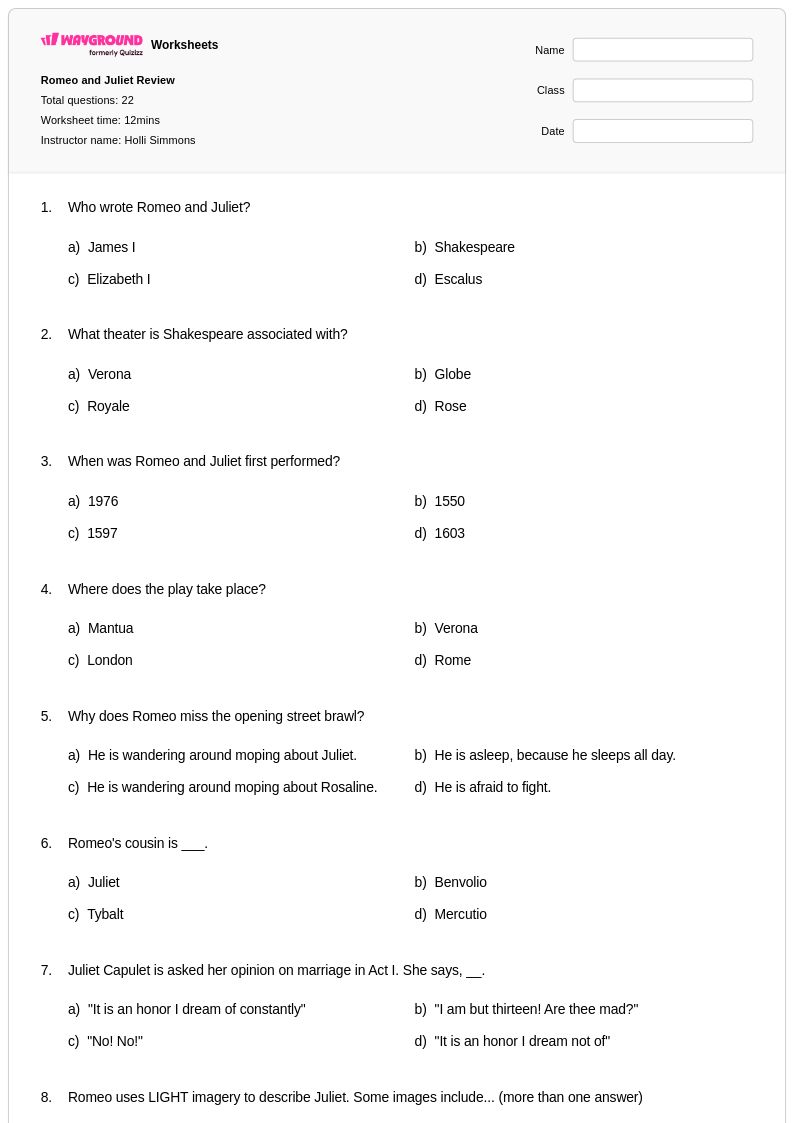
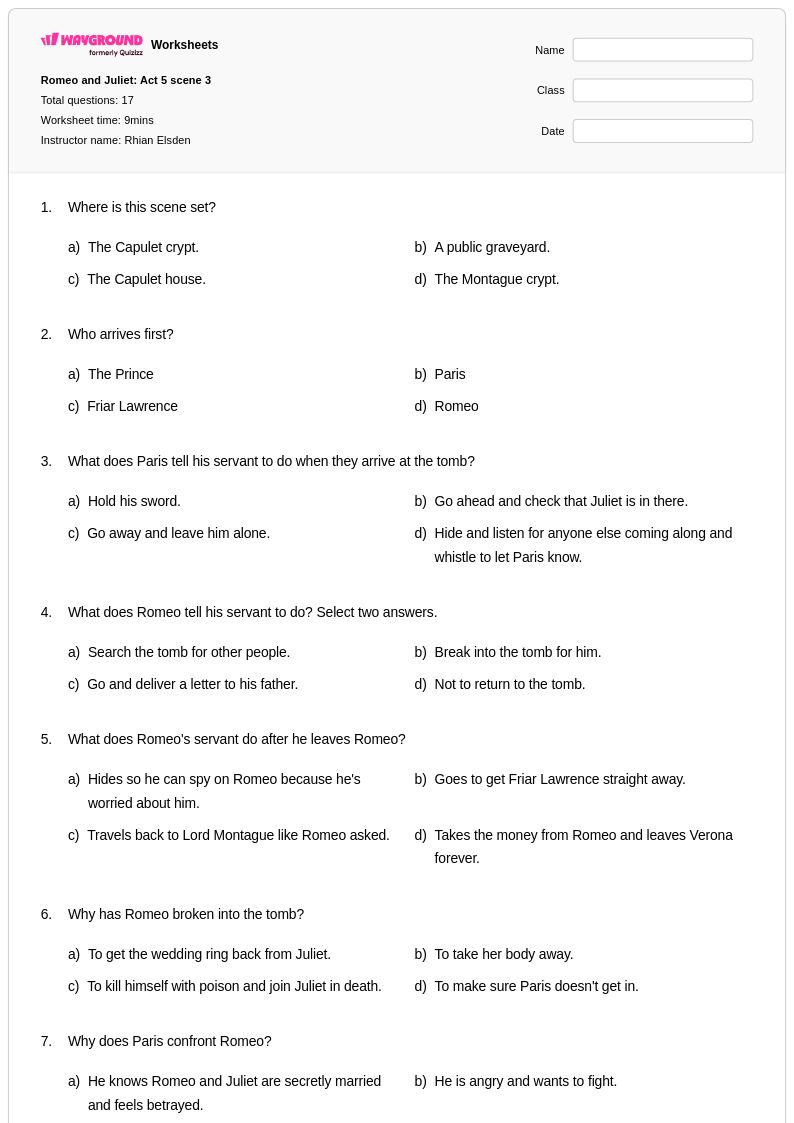
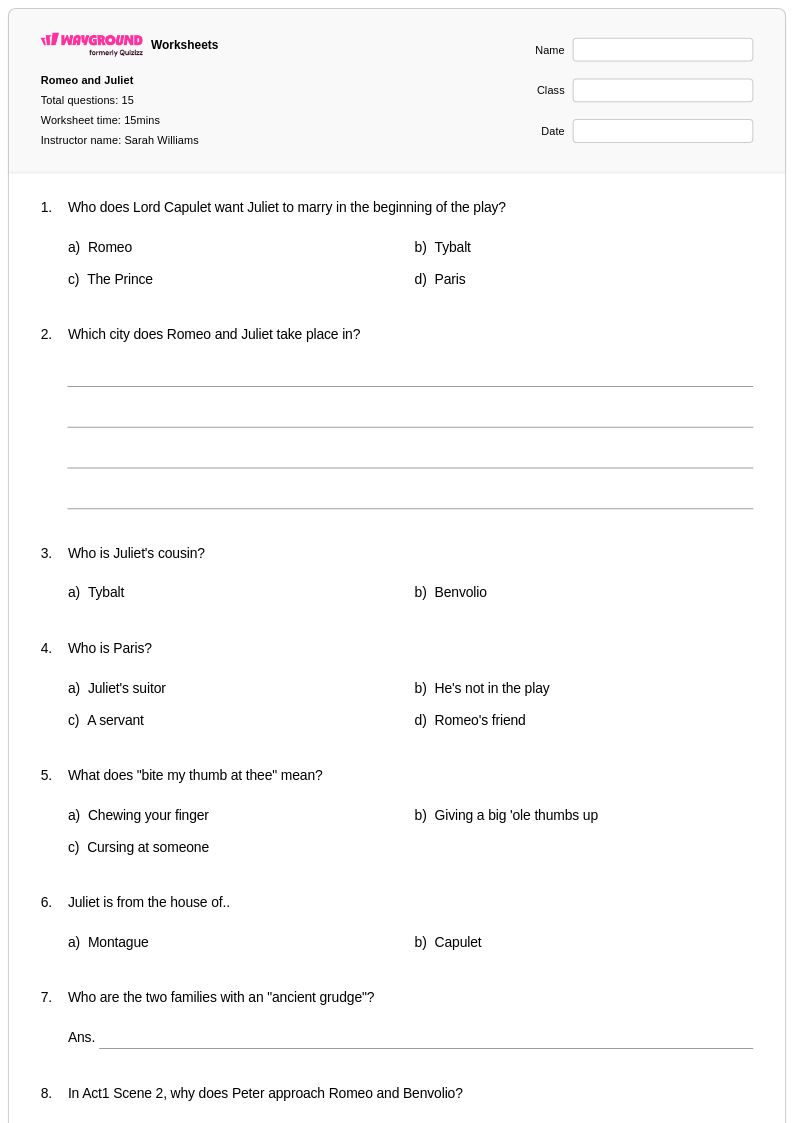
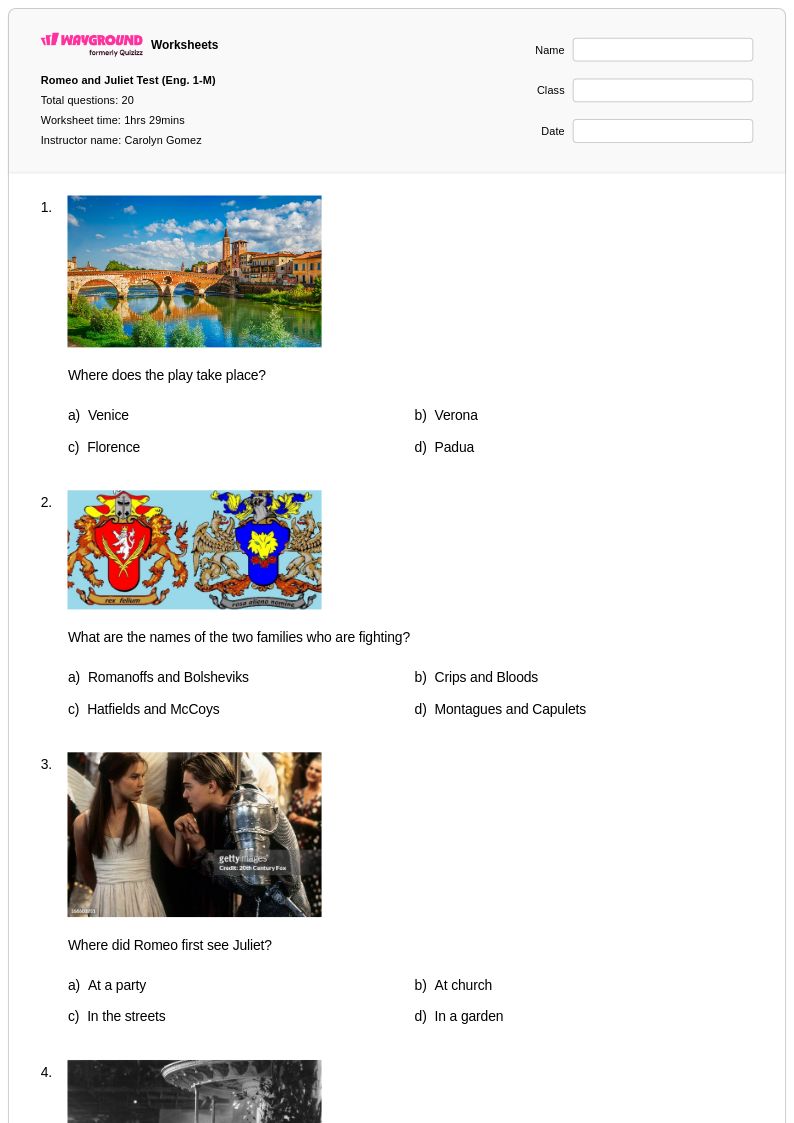
Romeo and Juliet worksheets for Year 9 students available through Wayground (formerly Quizizz) provide comprehensive exploration of Shakespeare's timeless tragedy while developing critical reading genre analysis skills. These educational resources guide ninth-grade learners through the complex layers of dramatic literature, examining character development, thematic elements, figurative language, and the structural components that define classic drama. Students engage with practice problems that challenge them to identify literary devices, analyze character motivations, and interpret the cultural and historical context surrounding this foundational text. Each worksheet includes detailed answer keys that support both independent study and classroom instruction, with free printables available in convenient PDF format to ensure accessibility for diverse learning environments.
Wayground's extensive collection draws from millions of teacher-created resources specifically designed to support educators in delivering engaging Romeo and Juliet instruction that meets rigorous academic standards. The platform's robust search and filtering capabilities enable teachers to quickly locate materials aligned with state standards and curriculum objectives, while differentiation tools allow for seamless customization to accommodate varying student reading levels and learning needs. Whether utilized for initial skill-building, targeted remediation, or advanced enrichment activities, these digital and printable resources provide flexible options for lesson planning and assessment. Teachers can easily modify worksheets to focus on specific scenes, characters, or literary concepts, ensuring that Romeo and Juliet instruction effectively builds the analytical thinking and textual interpretation skills essential for Year 9 English language arts success.
FAQs
How do I teach Romeo and Juliet to students who struggle with Elizabethan language?
Start by building vocabulary before students encounter the text, focusing on high-frequency archaic words and Shakespeare's syntactic inversions. Pairing close reading worksheets with glossaries and guiding students through short passages scene by scene helps reduce language overwhelm. Structured character analysis and plot comprehension activities reinforce meaning as students work through each act, so they build cumulative understanding rather than getting lost in unfamiliar phrasing.
What are the most common mistakes students make when analyzing Romeo and Juliet?
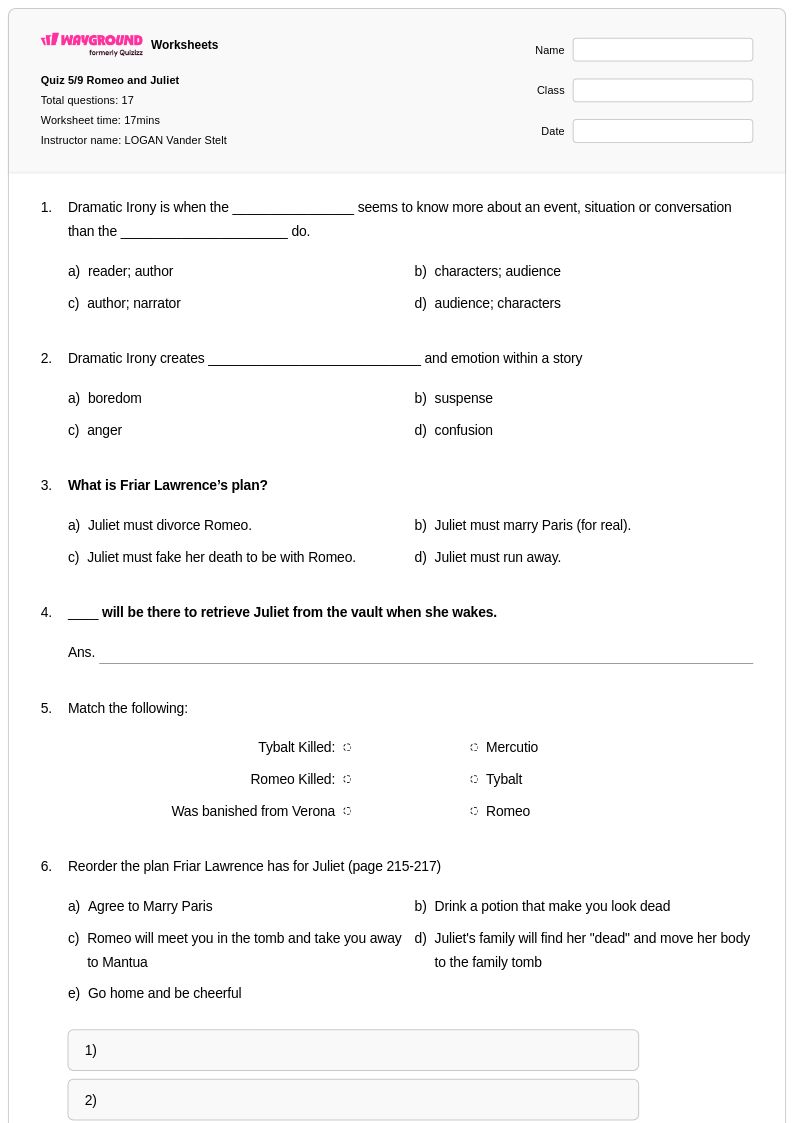
One of the most frequent errors is treating Romeo and Juliet as a straightforward love story without accounting for the role of fate, family conflict, and social structure in driving the tragedy. Students also commonly confuse theme with plot summary, writing what happens rather than what it means. Another recurring mistake is misidentifying literary devices — particularly dramatic irony — because students forget what the audience knows versus what the characters know at any given moment.
What kinds of exercises help students practice literary analysis for Romeo and Juliet?
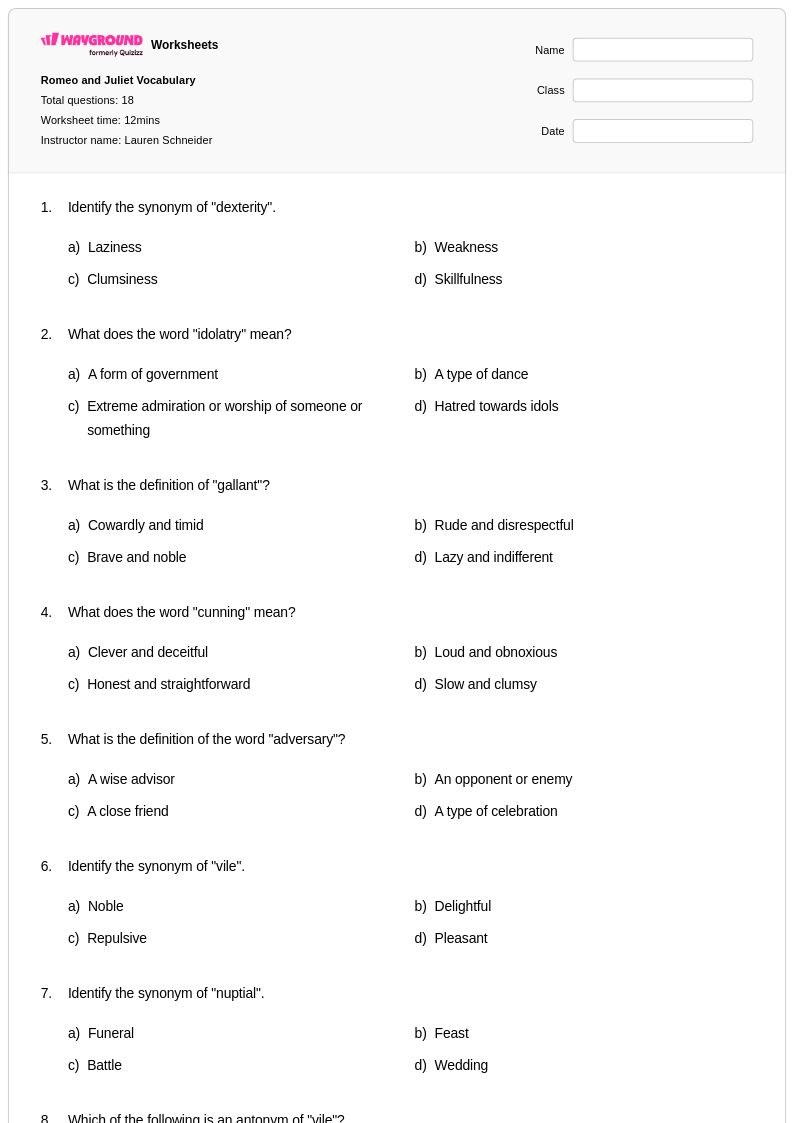
Effective practice exercises include character motivation worksheets that ask students to cite textual evidence, thematic analysis tasks that connect recurring motifs like light and dark to the play's central conflicts, and scene-level comprehension checks that build plot retention. Vocabulary activities targeting Elizabethan diction and figurative language help students decode the text independently, while interpretive writing prompts push students to move beyond summary into argumentation.
How can I use Romeo and Juliet worksheets to differentiate instruction in my classroom?
Romeo and Juliet worksheets can be differentiated by targeting specific acts or scenes for students who need scaffolded entry points, while more advanced students work through complex thematic and literary device analysis tasks. On Wayground, teachers can apply individual student accommodations such as read aloud support for struggling readers, reduced answer choices to lower cognitive load, and extended time settings — all configurable per student without disrupting the rest of the class.
How do I use Wayground's Romeo and Juliet worksheets in my classroom?
Wayground's Romeo and Juliet worksheets are available as printable PDFs for traditional classroom use and in digital formats for online or hybrid learning environments. Teachers can also host worksheets as a quiz directly on Wayground, making it easy to assign and track student responses. Each worksheet includes a complete answer key, which supports both independent student practice and efficient classroom instruction or review.
What themes and literary elements should students be able to identify in Romeo and Juliet?
Students should be able to identify and analyze major themes including fate versus free will, love and violence, and family loyalty versus individual desire. Key literary elements to cover include dramatic irony, foreshadowing, soliloquy, metaphor, and the structural conventions of Shakespearean tragedy. Grounding students in these elements before and during reading gives them a framework for deeper analytical writing and class discussion.