Free Printable The Great Gatsby Worksheets for Year 9
Year 9 students can explore F. Scott Fitzgerald's The Great Gatsby with our comprehensive collection of free worksheets, printables, and practice problems featuring detailed answer keys to enhance literary analysis skills.
Explore printable The Great Gatsby worksheets for Year 9
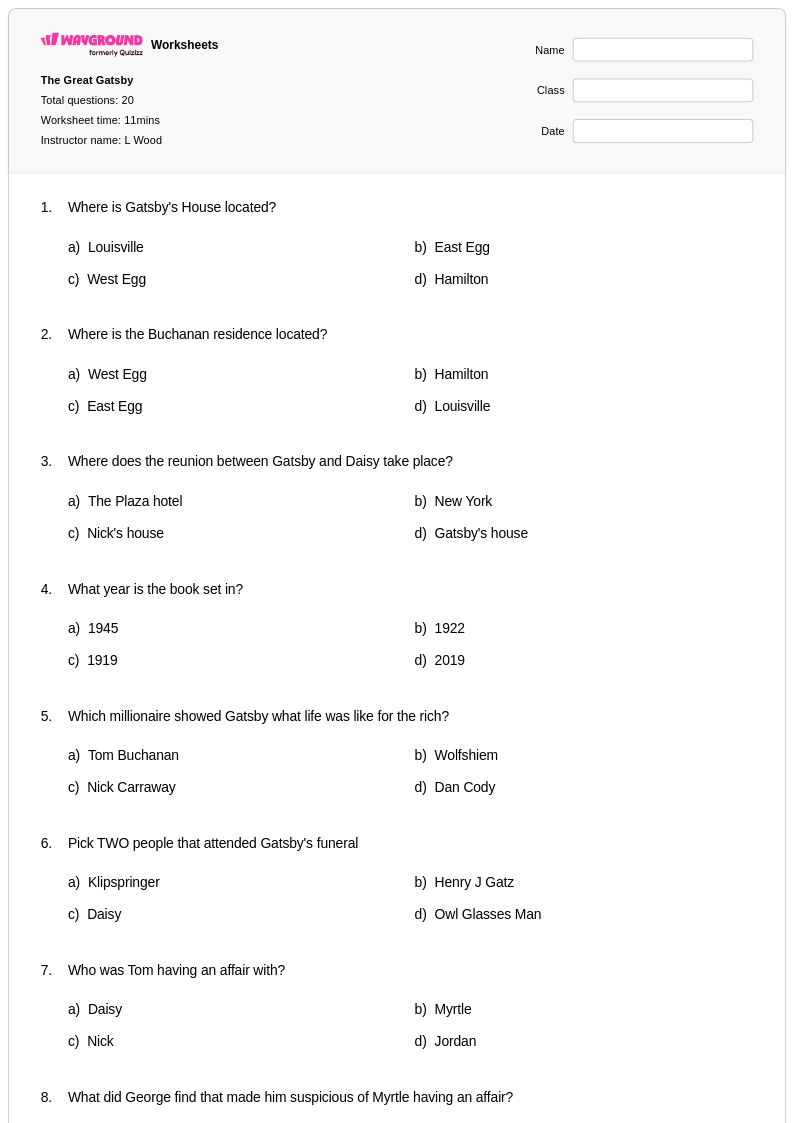
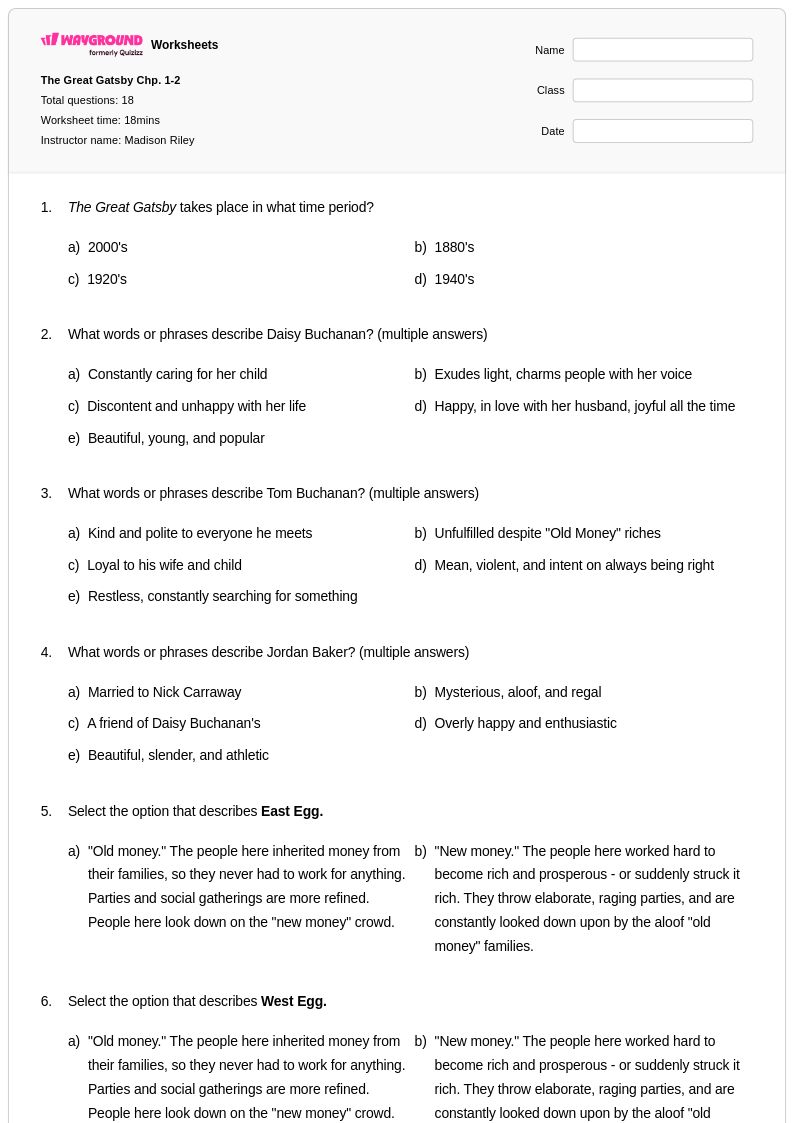
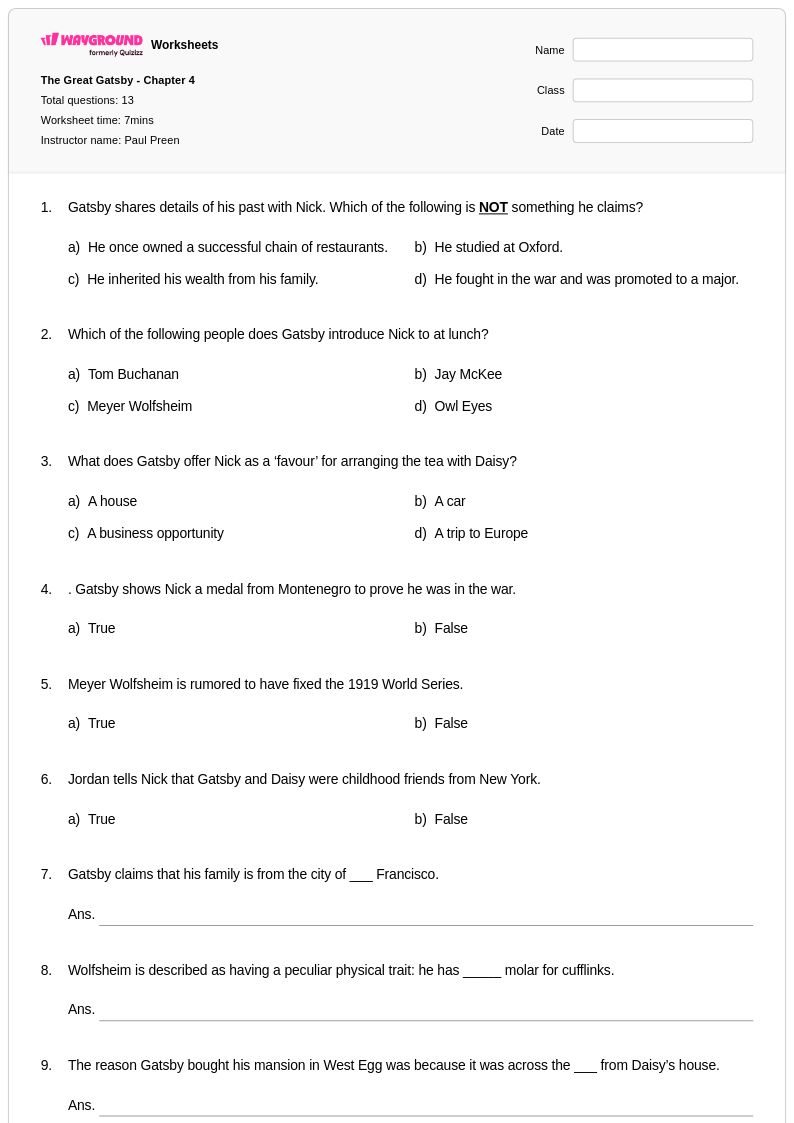
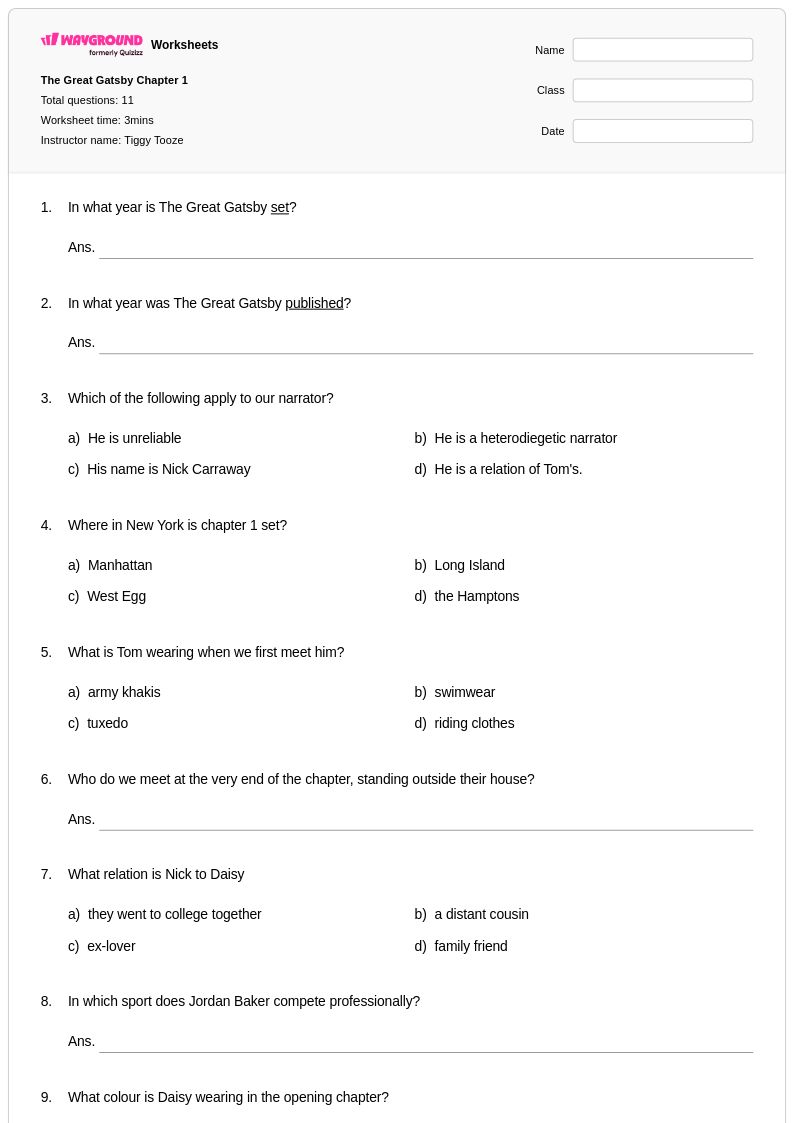
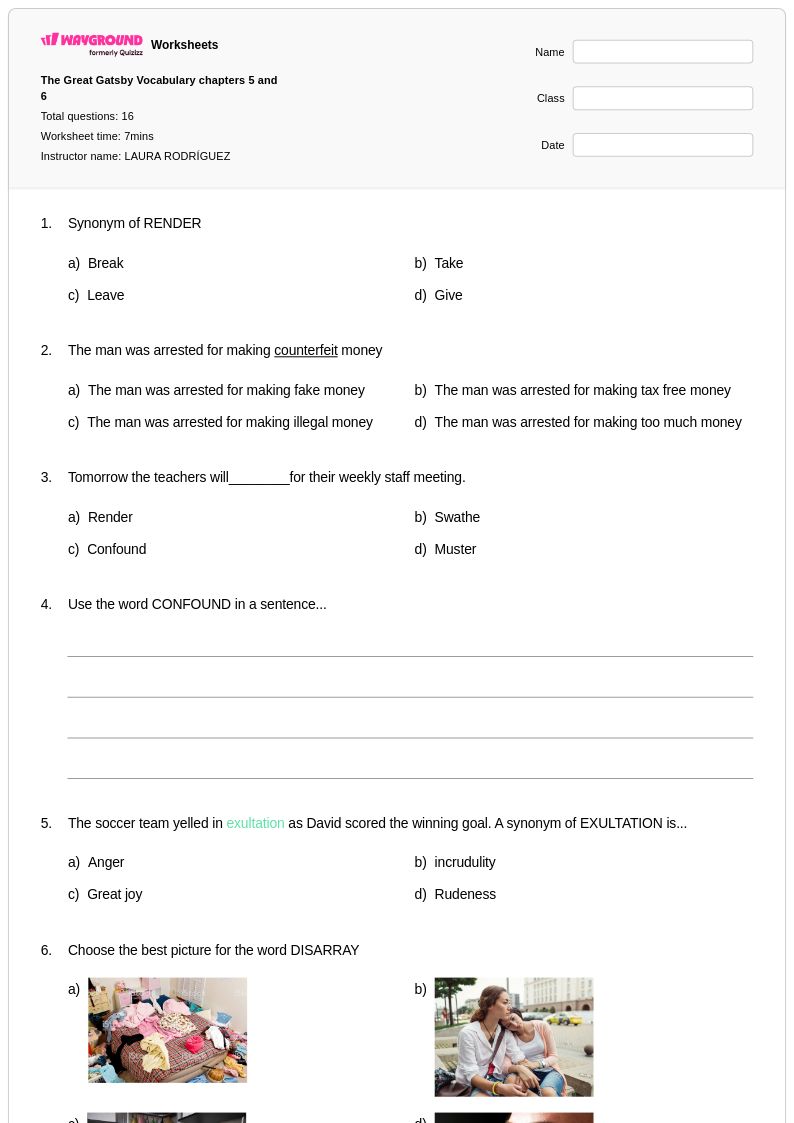
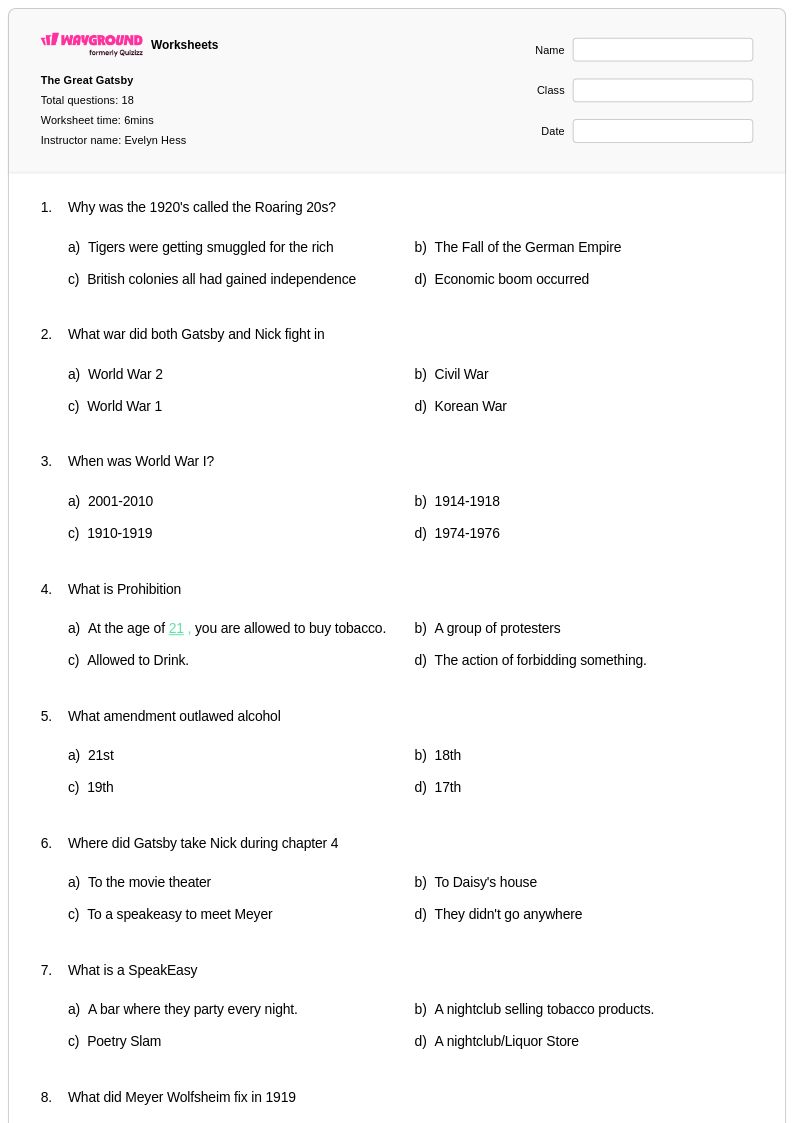
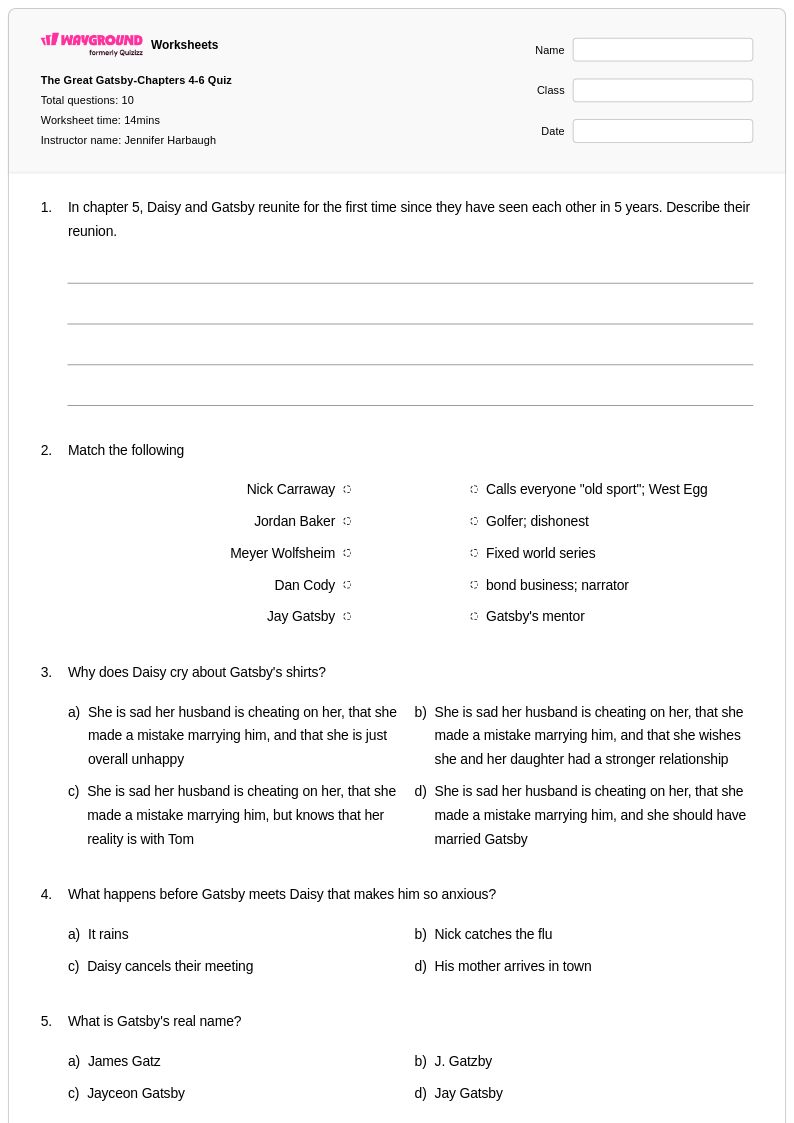
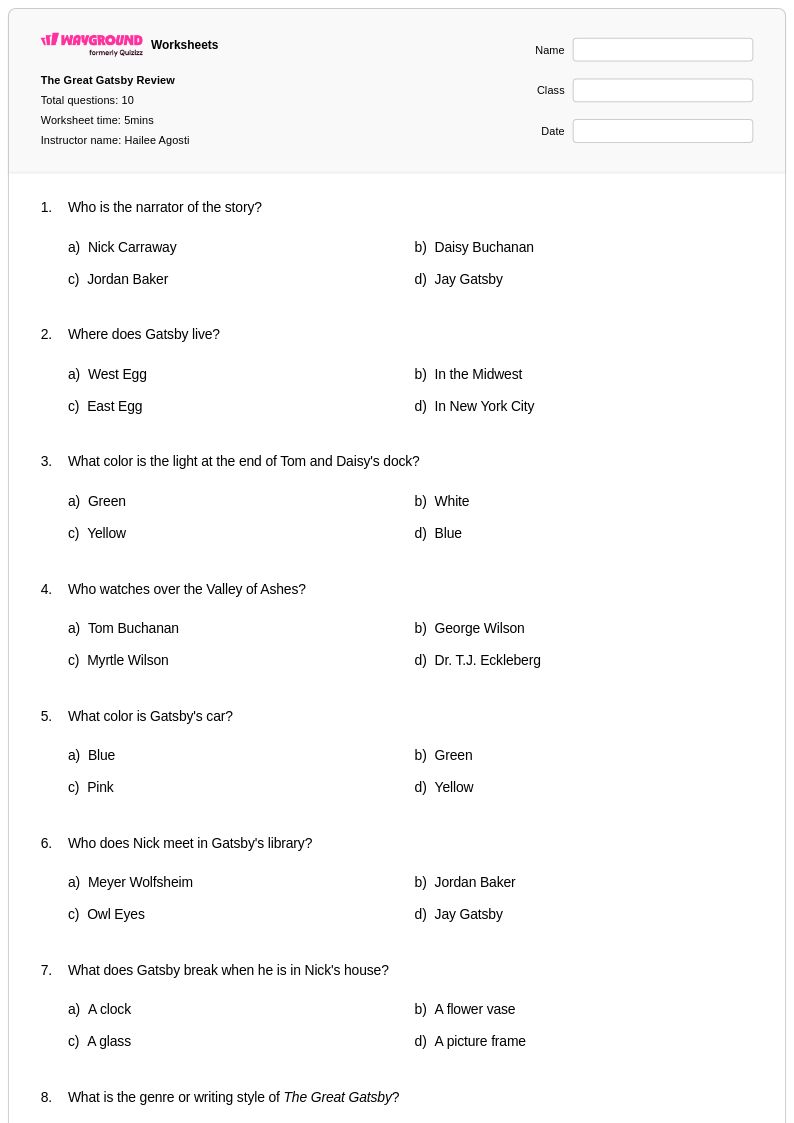
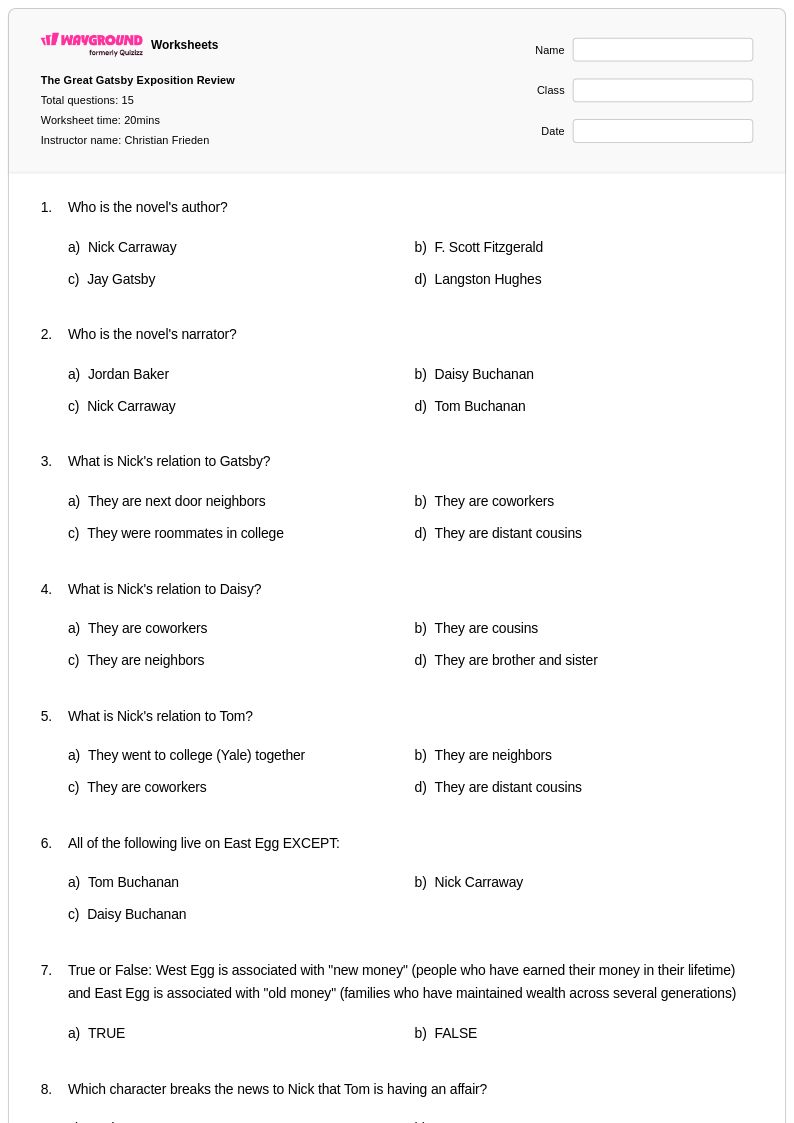
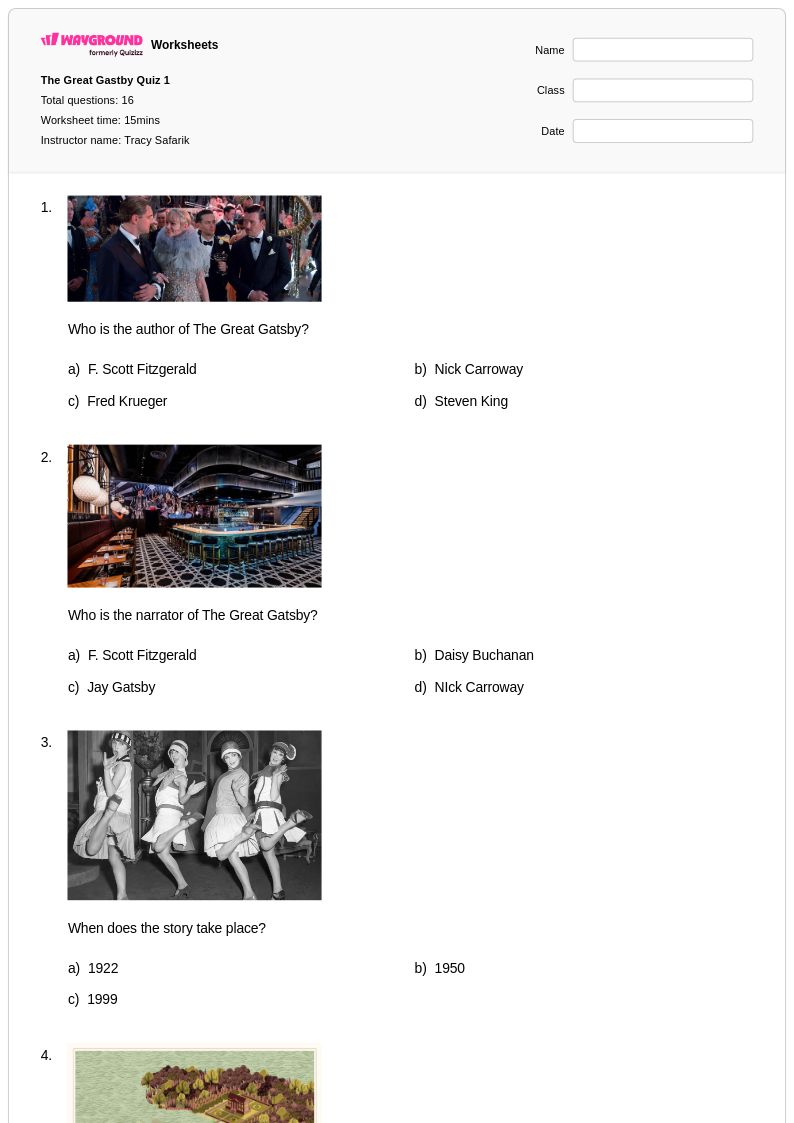
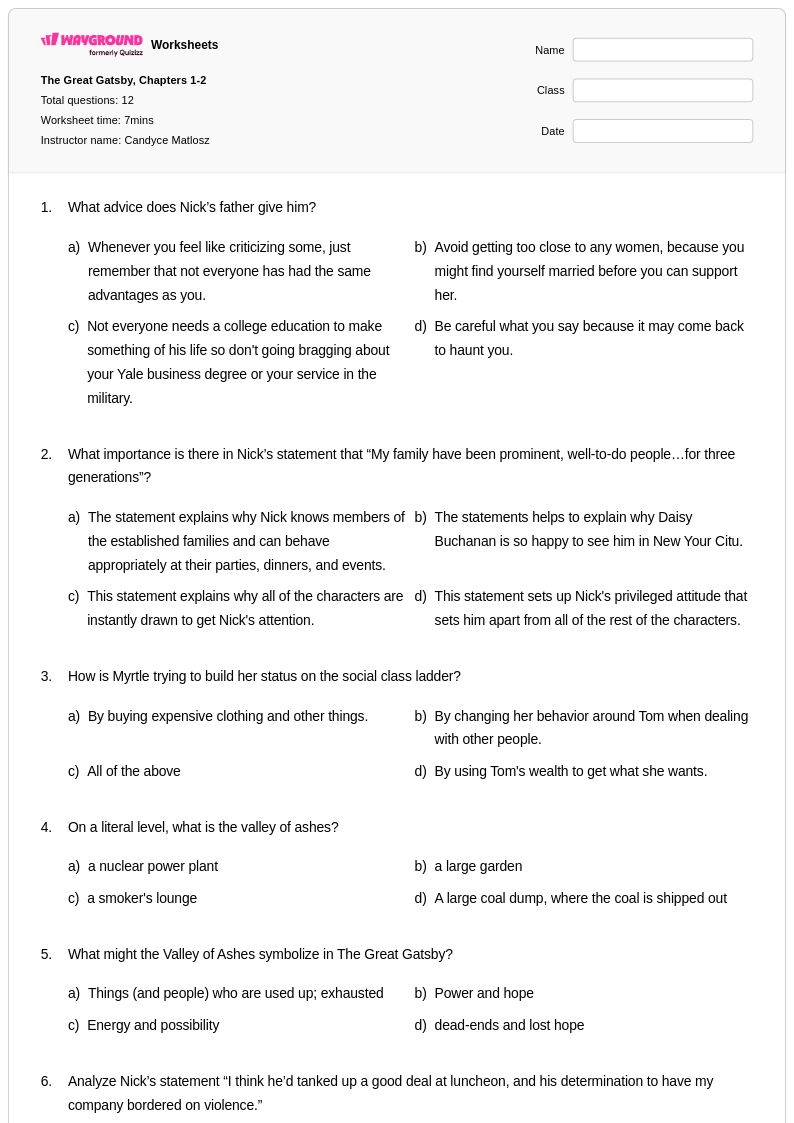
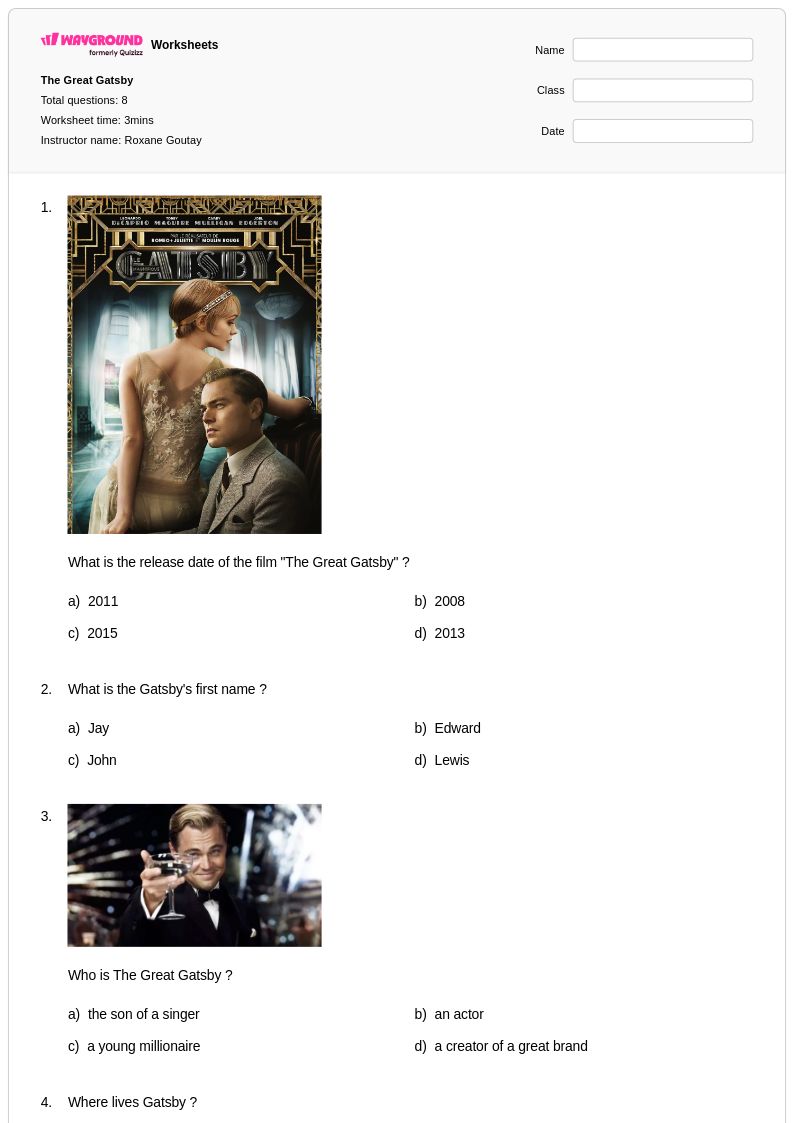
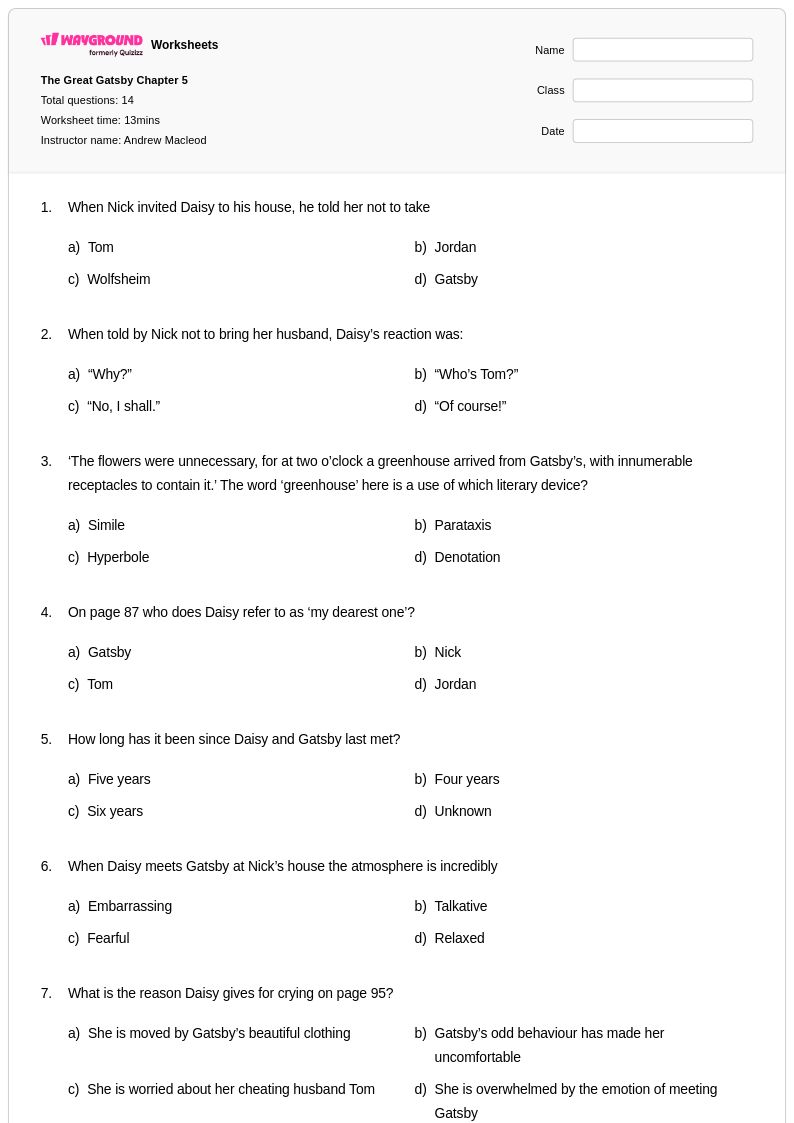
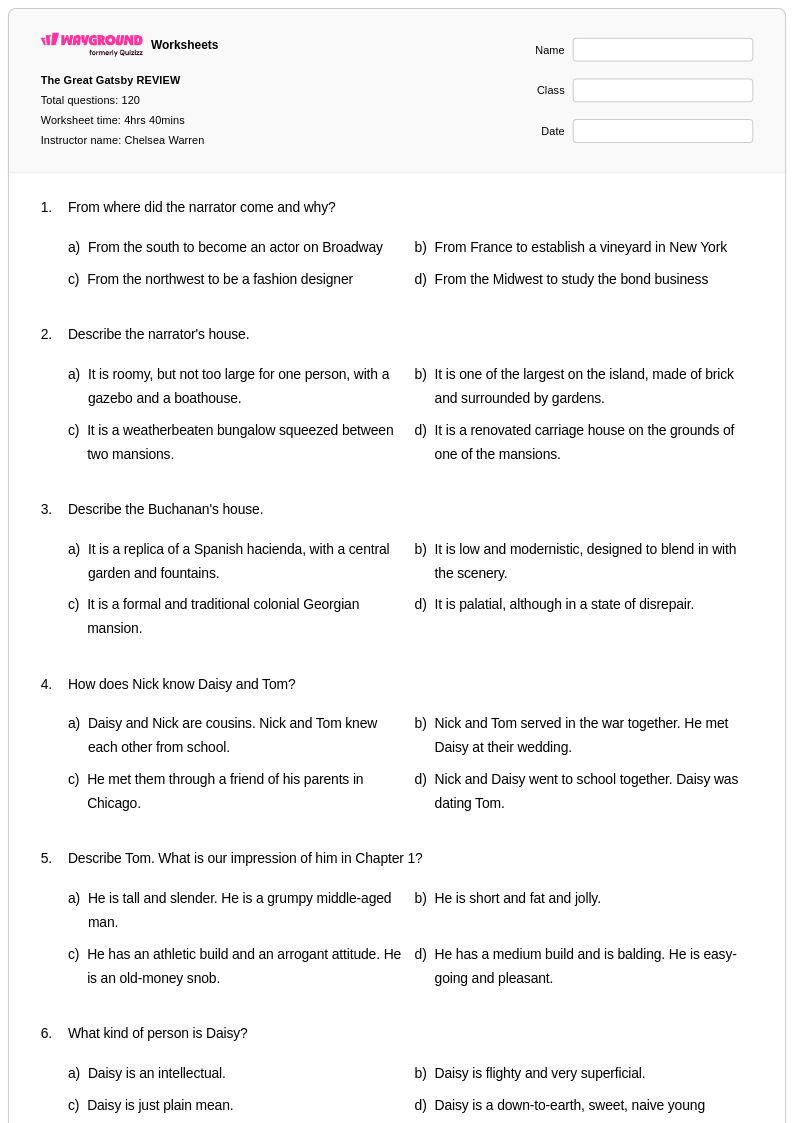
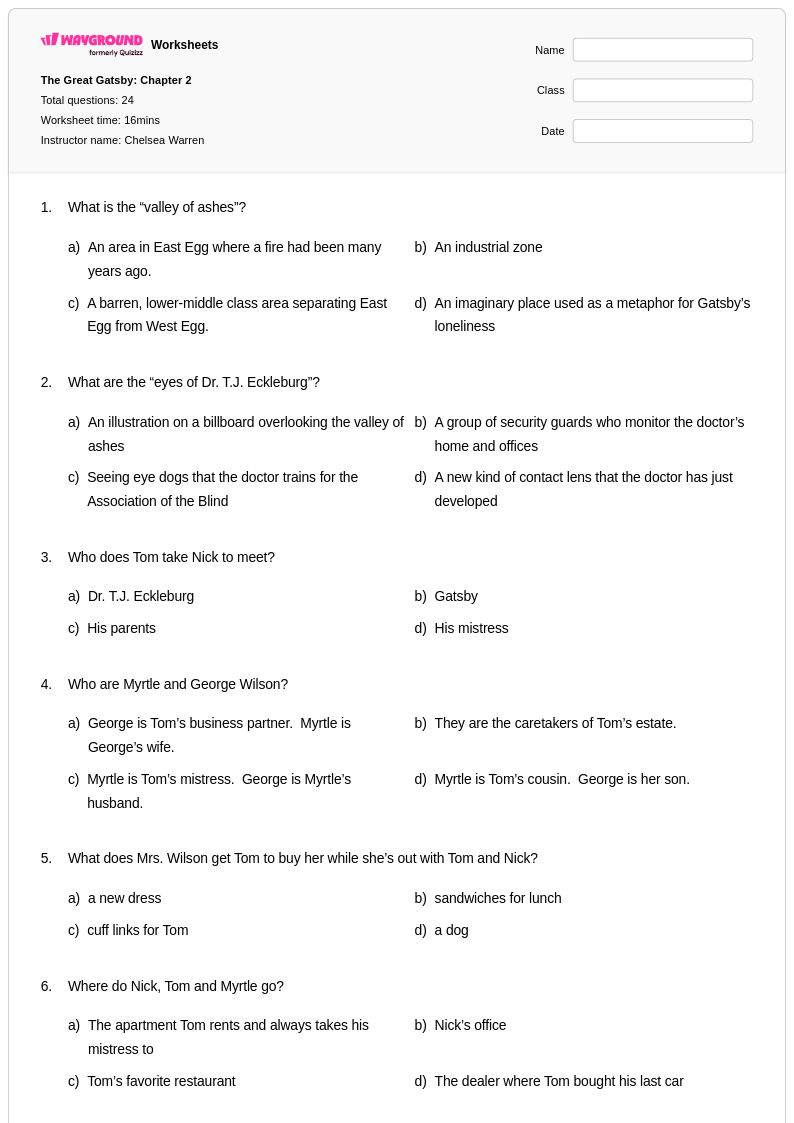
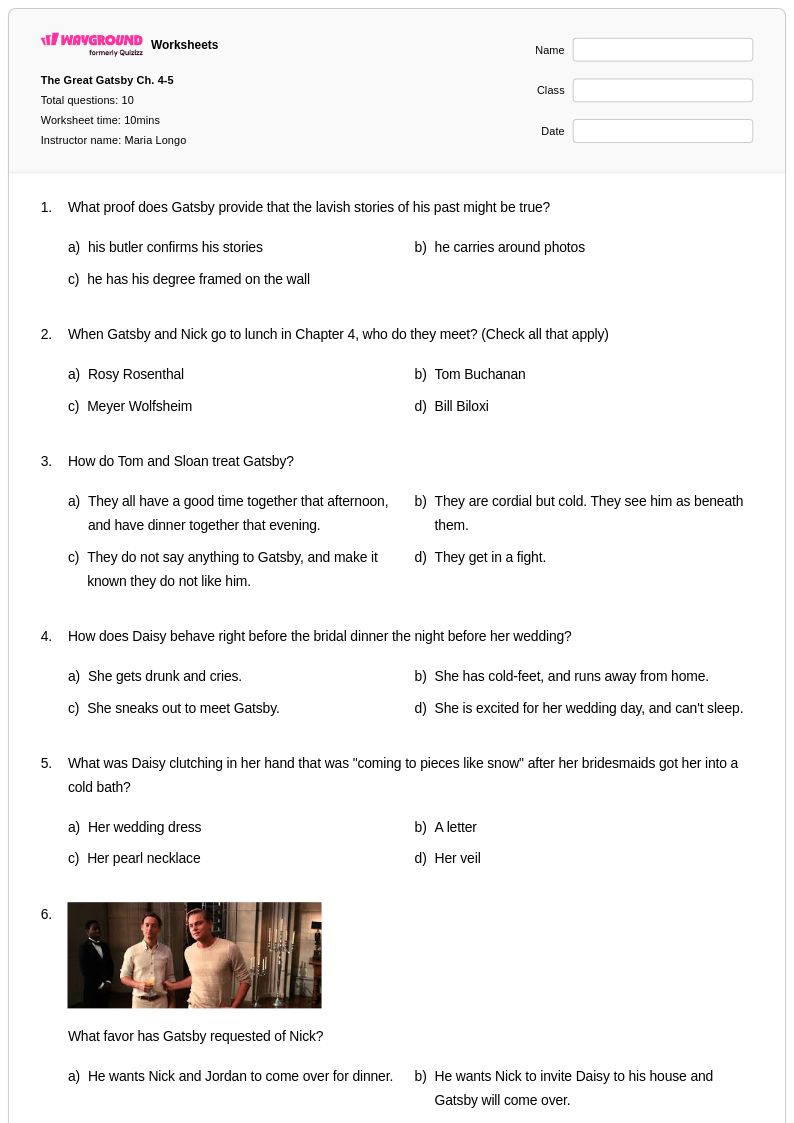
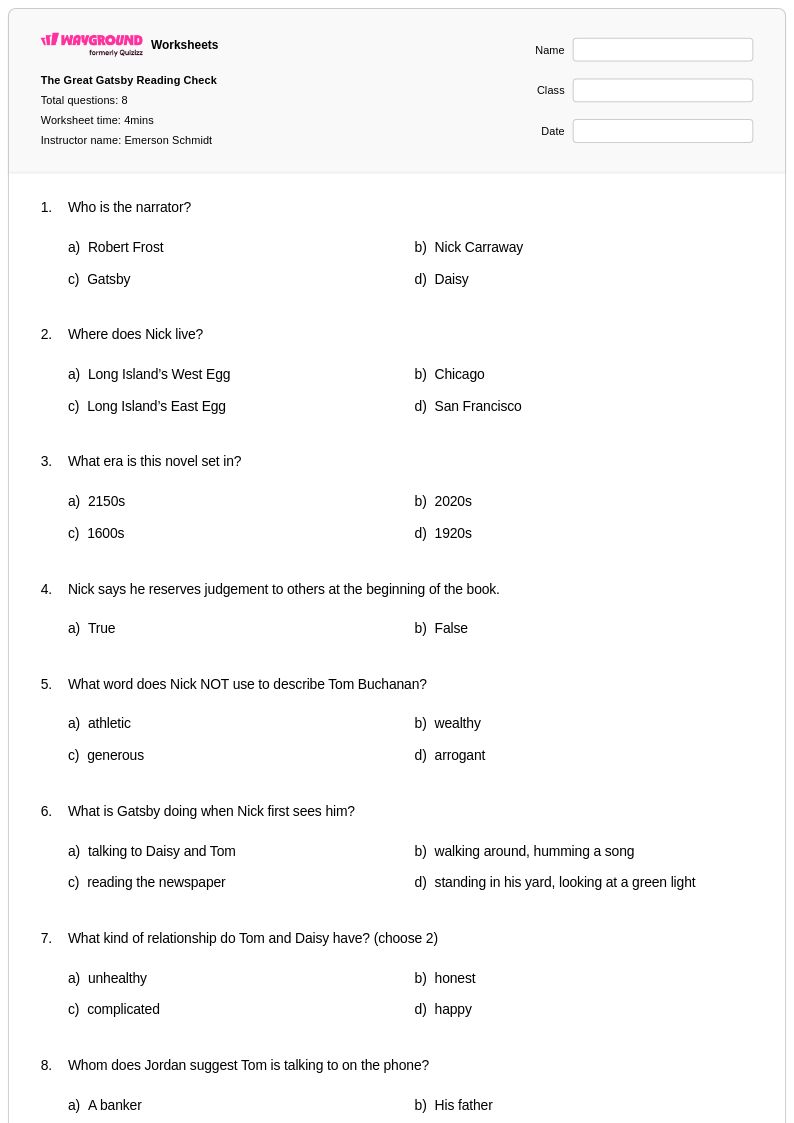
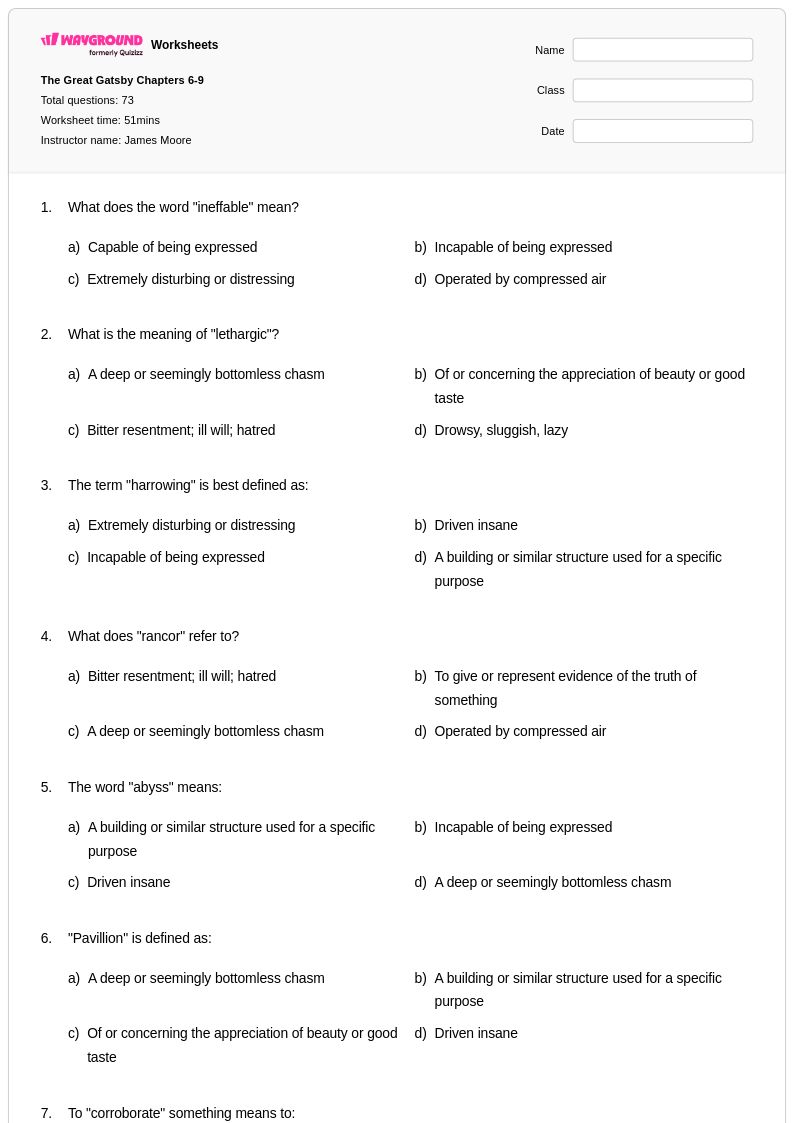
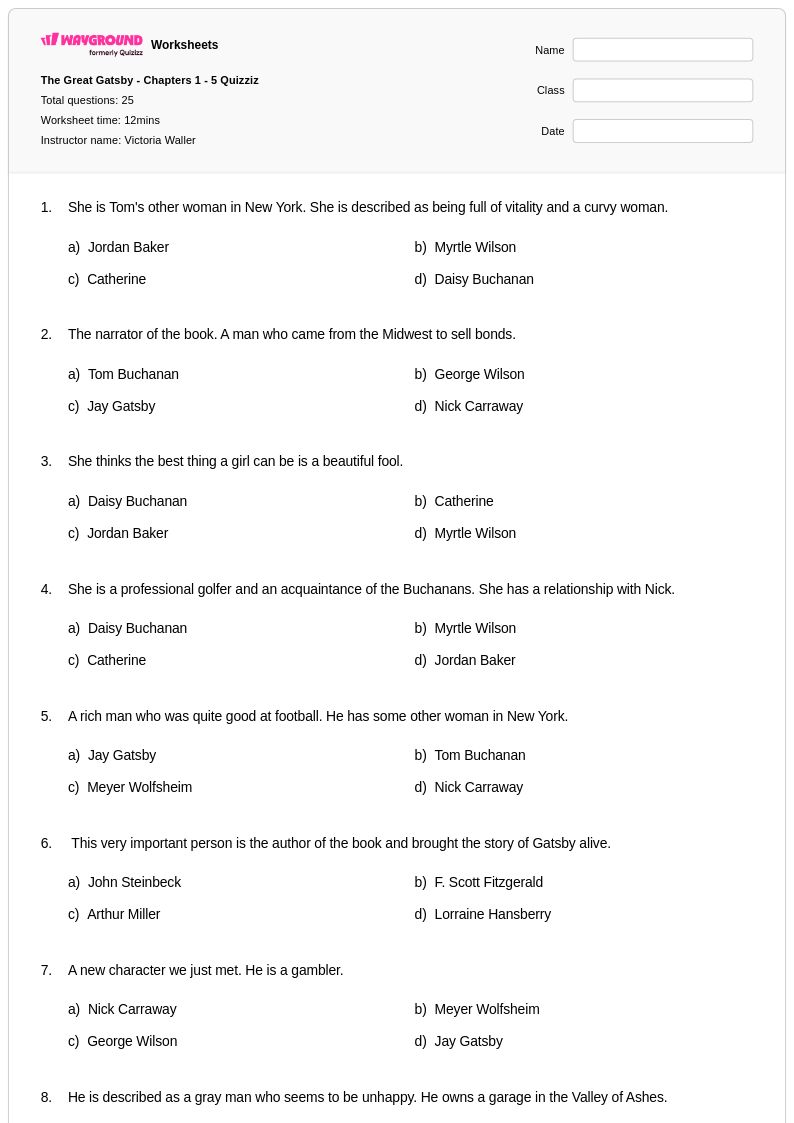
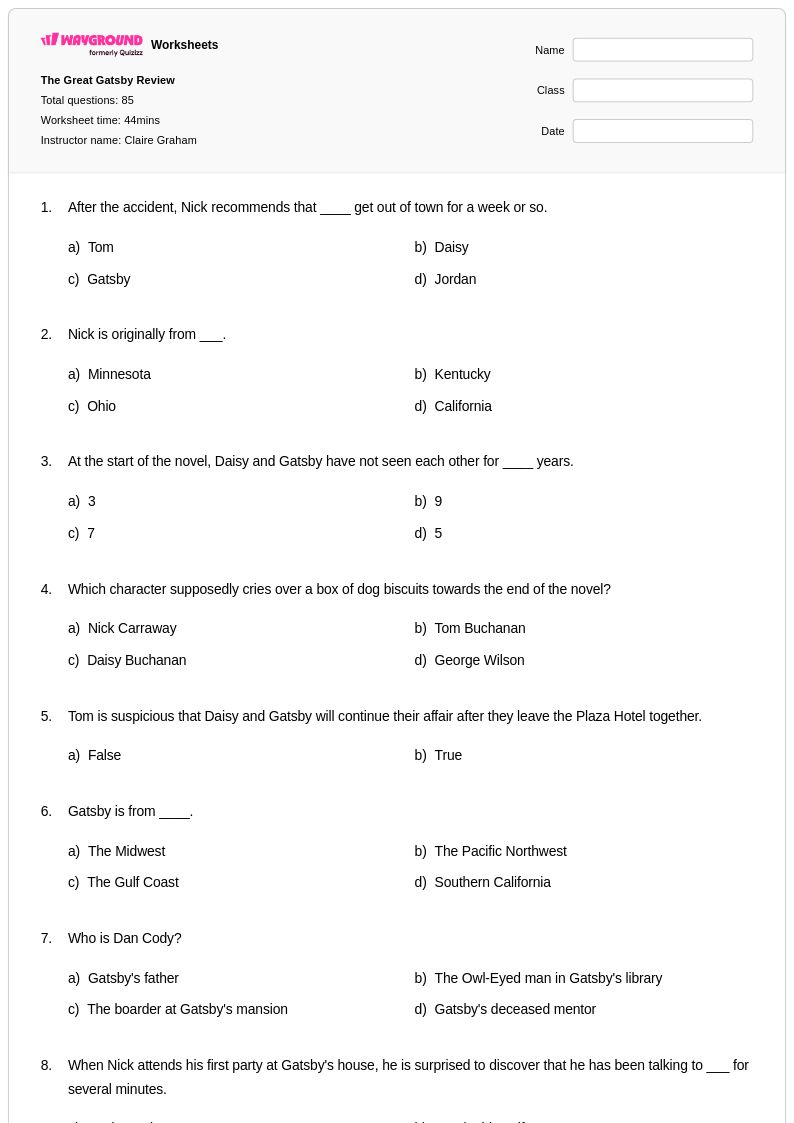
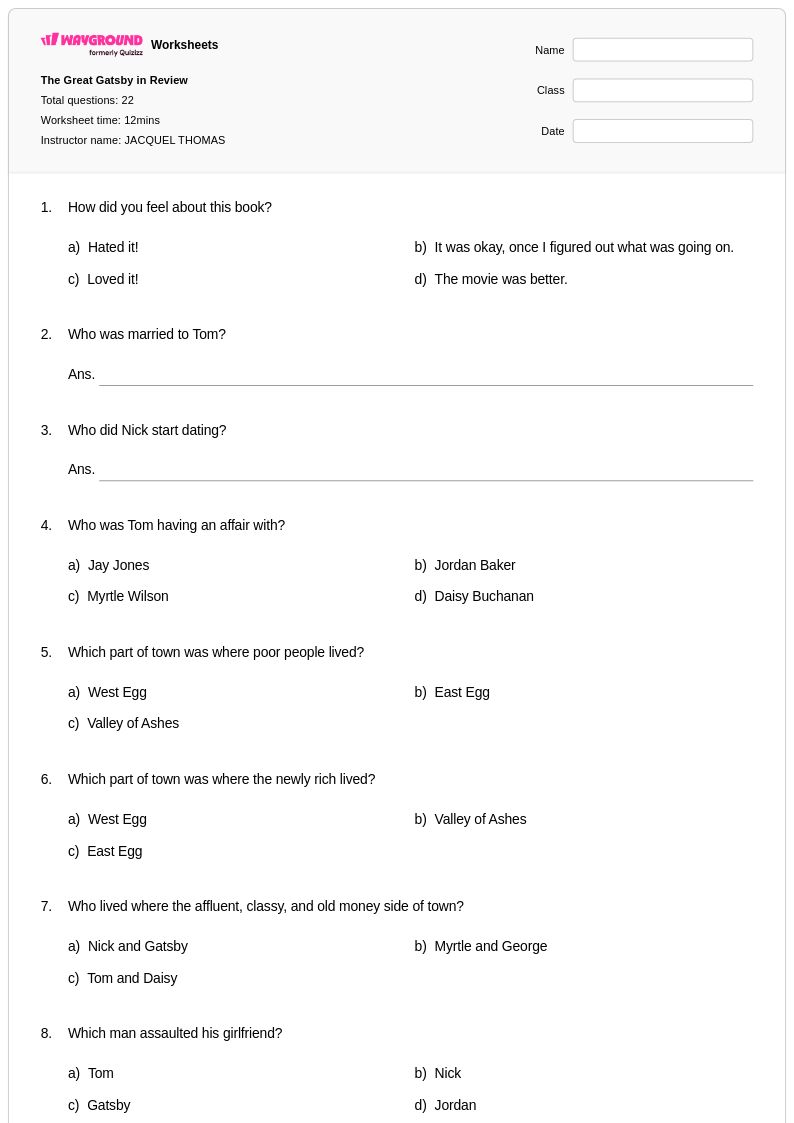
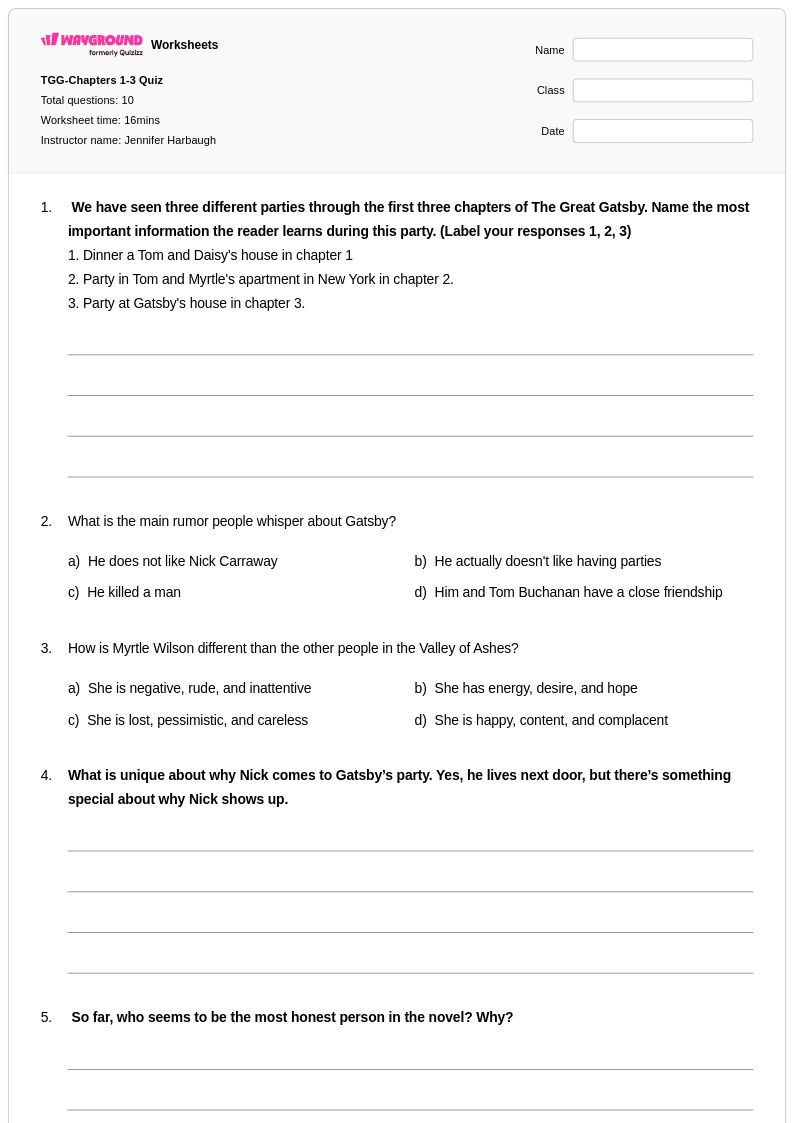
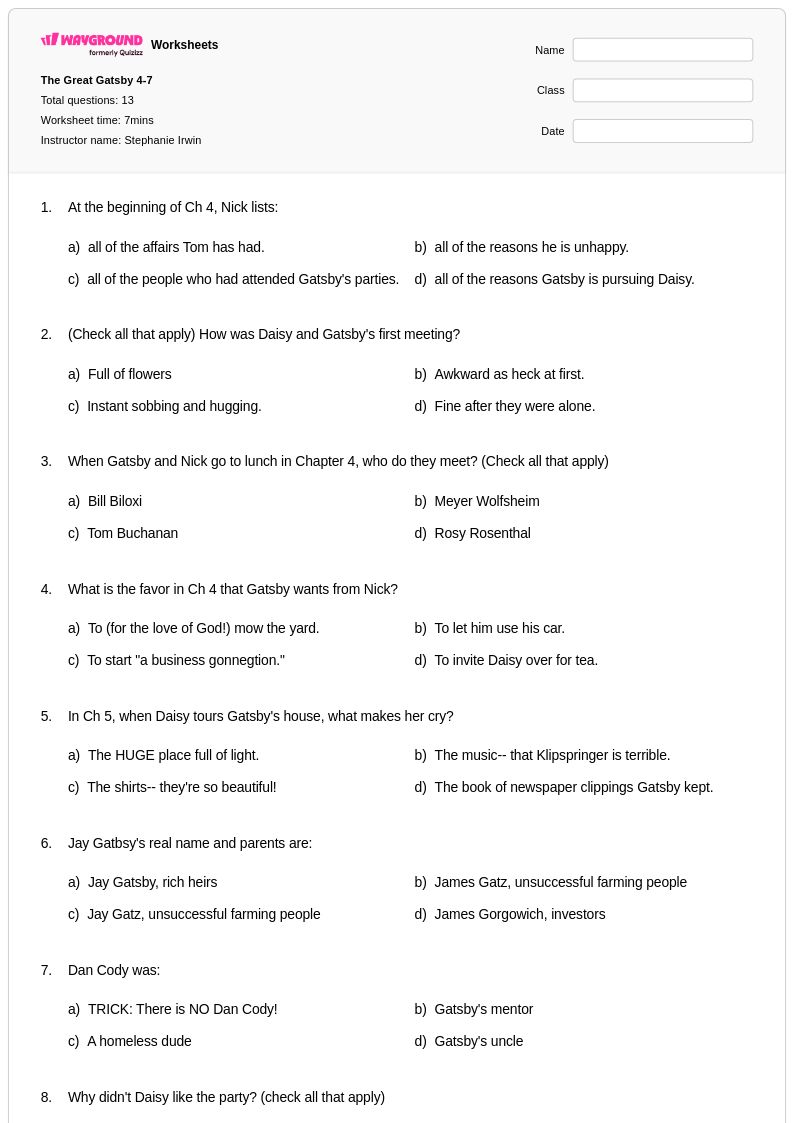
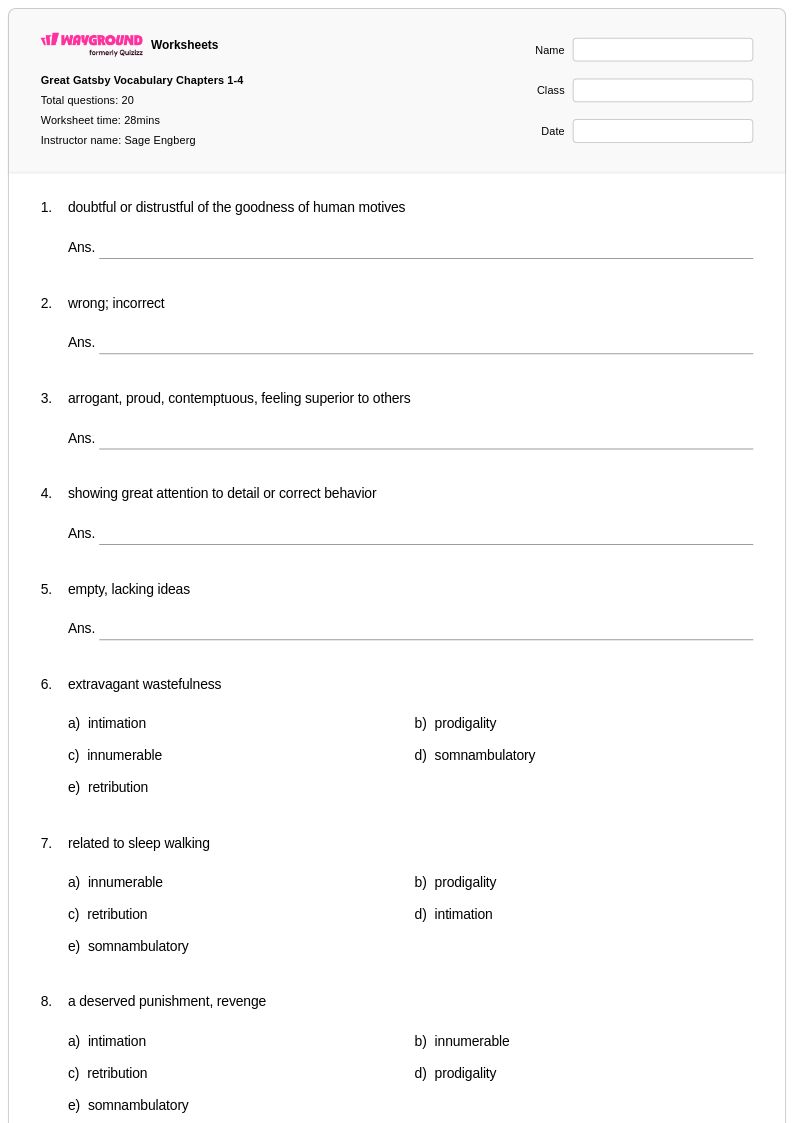
The Great Gatsby worksheets available through Wayground (formerly Quizizz) provide Year 9 students with comprehensive practice materials that deepen their understanding of F. Scott Fitzgerald's masterpiece while strengthening critical reading and literary analysis skills. These expertly crafted resources guide students through essential elements of the novel including character development, symbolism, themes of the American Dream, and the distinctive narrative techniques that define this cornerstone of American literature. Students engage with practice problems that require close reading of key passages, analysis of Nick Carraway's unreliable narration, and examination of the novel's historical context within the Jazz Age, with each worksheet including a detailed answer key to support independent learning and self-assessment. The free printable materials are designed as comprehensive pdf resources that enable students to develop sophisticated literary analysis skills while exploring the complex social commentary embedded within Gatsby's tragic story.
Wayground (formerly Quizizz) empowers educators with an extensive collection of teacher-created resources focused on The Great Gatsby, drawn from millions of high-quality materials that support diverse instructional approaches for Year 9 English curricula. The platform's robust search and filtering capabilities allow teachers to quickly locate worksheets aligned with specific learning standards, whether focusing on character analysis, thematic exploration, or historical context, while differentiation tools enable customization for varying student ability levels and learning needs. These versatile resources are available in both printable and digital formats, including downloadable pdf versions, making them ideal for classroom instruction, homework assignments, remediation support, and enrichment activities that challenge advanced readers to explore deeper layers of Fitzgerald's complex narrative structure and social critique.
FAQs
How do I teach The Great Gatsby in a high school English class?
Teaching The Great Gatsby effectively means anchoring instruction in its central themes — the American Dream, class inequality, and moral corruption — while helping students connect Fitzgerald's 1920s context to broader literary conversations. Begin with historical background on the Jazz Age and Prohibition to ground students in the social world the novel critiques. From there, use close reading exercises that track how Fitzgerald uses symbols like the green light, the Valley of Ashes, and Gatsby's parties to carry thematic weight. Structured character analysis activities help students move beyond plot summary into genuine literary interpretation.
What exercises help students practice literary analysis with The Great Gatsby?
Effective practice exercises for The Great Gatsby focus on close reading, symbolism identification, and character motivation analysis rather than simple recall. Students benefit from activities that ask them to trace a single symbol or motif across multiple chapters, annotate passages for tone and diction, and compare characters' relationships to the American Dream. Thematic discussion prompts that require textual evidence push students to build the evidence-based argument skills central to literary analysis. Scaffolded worksheets that break these tasks into discrete steps are especially useful for students encountering complex prose for the first time.
What are common mistakes students make when analyzing The Great Gatsby?
One of the most frequent errors is treating Gatsby as an uncritical hero rather than recognizing Fitzgerald's ironic distance from his narrator, Nick Carraway, and the values Nick sometimes endorses. Students also tend to interpret the green light and other symbols too literally, missing how Fitzgerald layers meaning across the novel's arc. Another common misconception is conflating the novel's critique of wealth with a simple condemnation of the wealthy, when Fitzgerald's target is specifically the hollow promise of the American Dream. Addressing these patterns early — through guided annotation and discussion — prevents surface-level analysis from hardening into habit.
How can I differentiate Great Gatsby instruction for students reading below grade level?
For students who struggle with Fitzgerald's dense prose, scaffolding comprehension before analysis is essential — chapter summaries, vocabulary pre-teaching, and guided reading questions reduce cognitive load and allow students to focus on interpretation rather than decoding. On Wayground, teachers can enable the Read Aloud accommodation so questions and content are read to students who need audio support, and Reduced Answer Choices can be applied to individual students to lower the difficulty of multiple-choice tasks without altering the underlying content. Extended time settings can also be configured per student, ensuring pacing accommodations are built into the assignment rather than managed ad hoc. These settings are saved and reusable across future sessions, so the same accommodations apply consistently without requiring teacher setup each time.
How do I use The Great Gatsby worksheets from Wayground in my classroom?
Wayground's Great Gatsby worksheets are available as printable PDFs for traditional classroom distribution and in digital formats for technology-integrated instruction, including the option to host them as a quiz directly on Wayground. Teachers can use these materials for initial reading comprehension checks after key chapters, as the basis for Socratic seminar preparation, or as formative assessment tools to identify where students need additional support before a summative essay or exam. Each worksheet includes a complete answer key, which supports efficient grading and allows teachers to use the materials for self-paced or independent work settings as well.
How do I help students understand the American Dream as Fitzgerald presents it in The Great Gatsby?
Fitzgerald presents the American Dream not as an achievable ideal but as a corrupted myth — Gatsby's pursuit of wealth and status is ultimately revealed to be a pursuit of an illusion, and his failure indicts the culture that manufactured that illusion. Helping students understand this requires distinguishing between what Gatsby believes about the Dream and what the novel's structure and ending suggest about its validity. A useful classroom approach is to have students track Gatsby's language about the future — particularly the famous closing lines — alongside evidence of how the other characters actually treat him, revealing the gap between aspiration and social reality.