
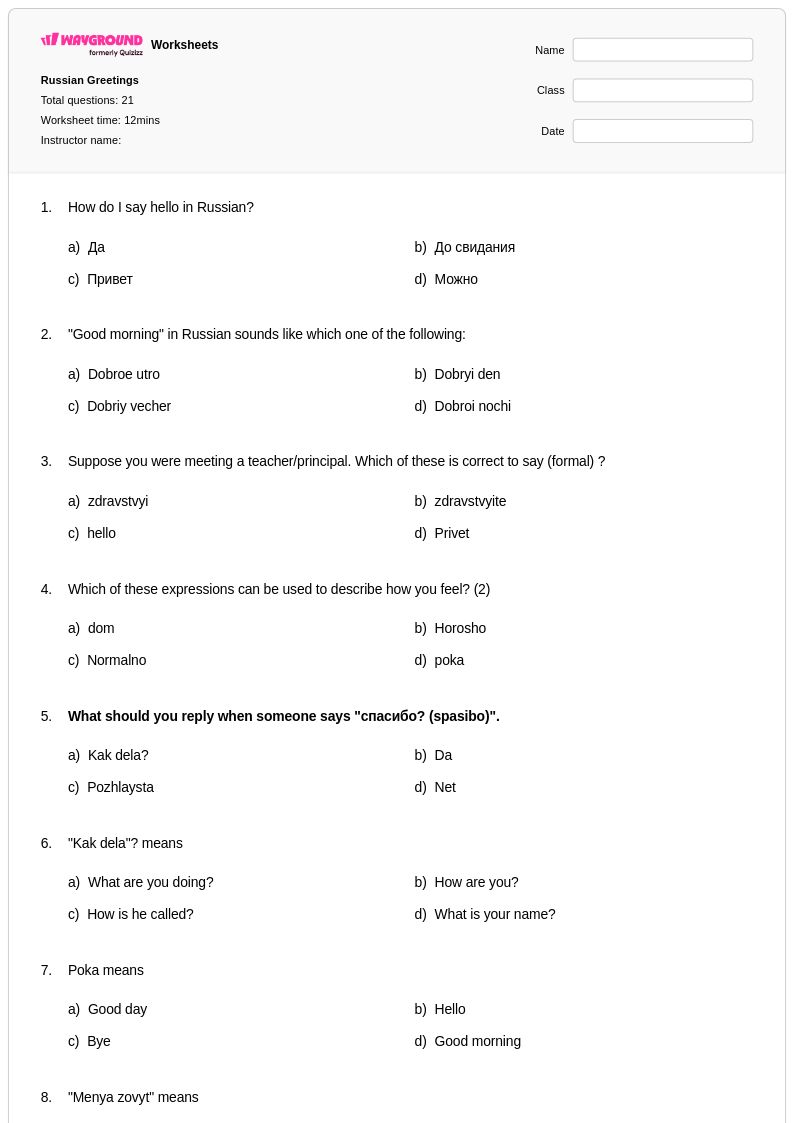
21 Hỏi
5th - 12th
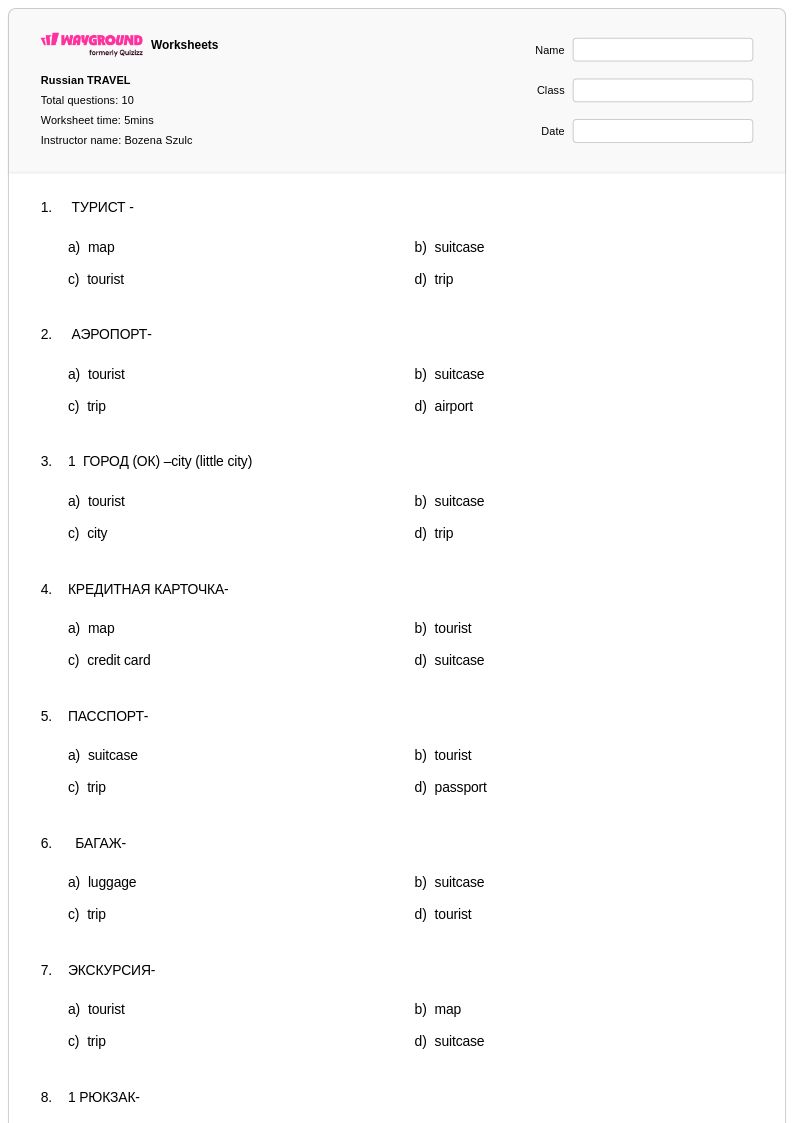
10 Hỏi
10th - 11th
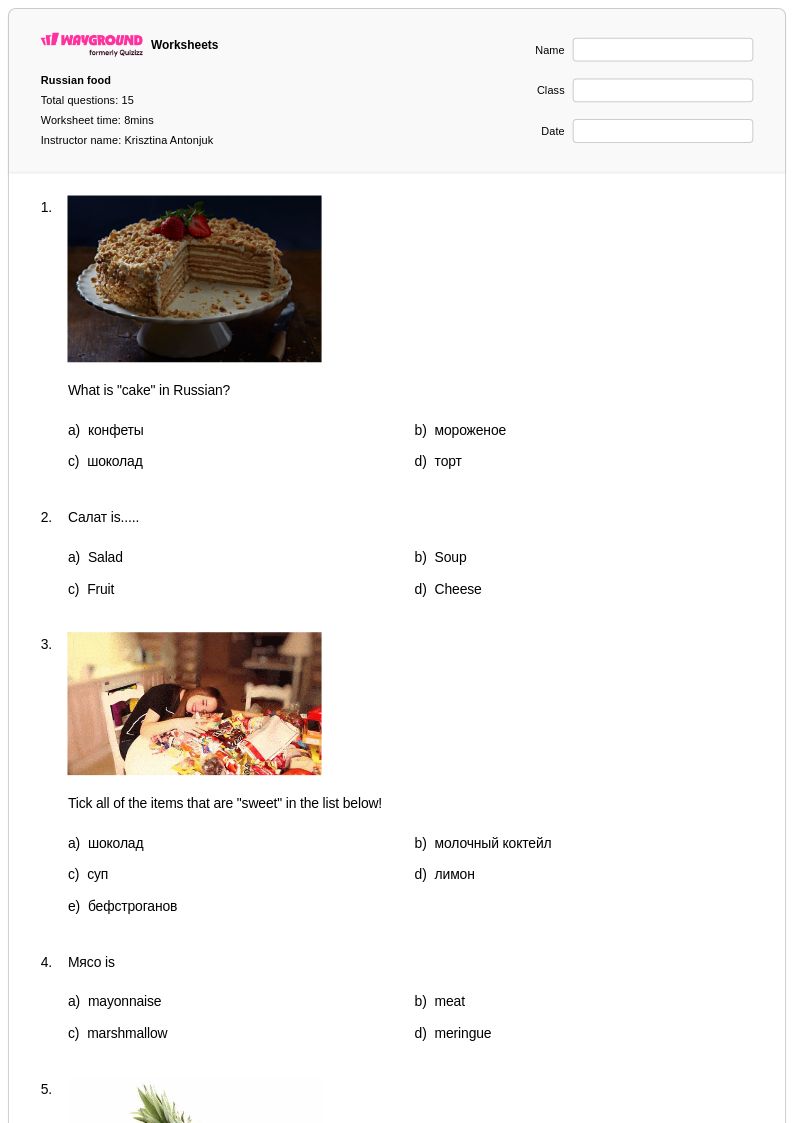
15 Hỏi
10th
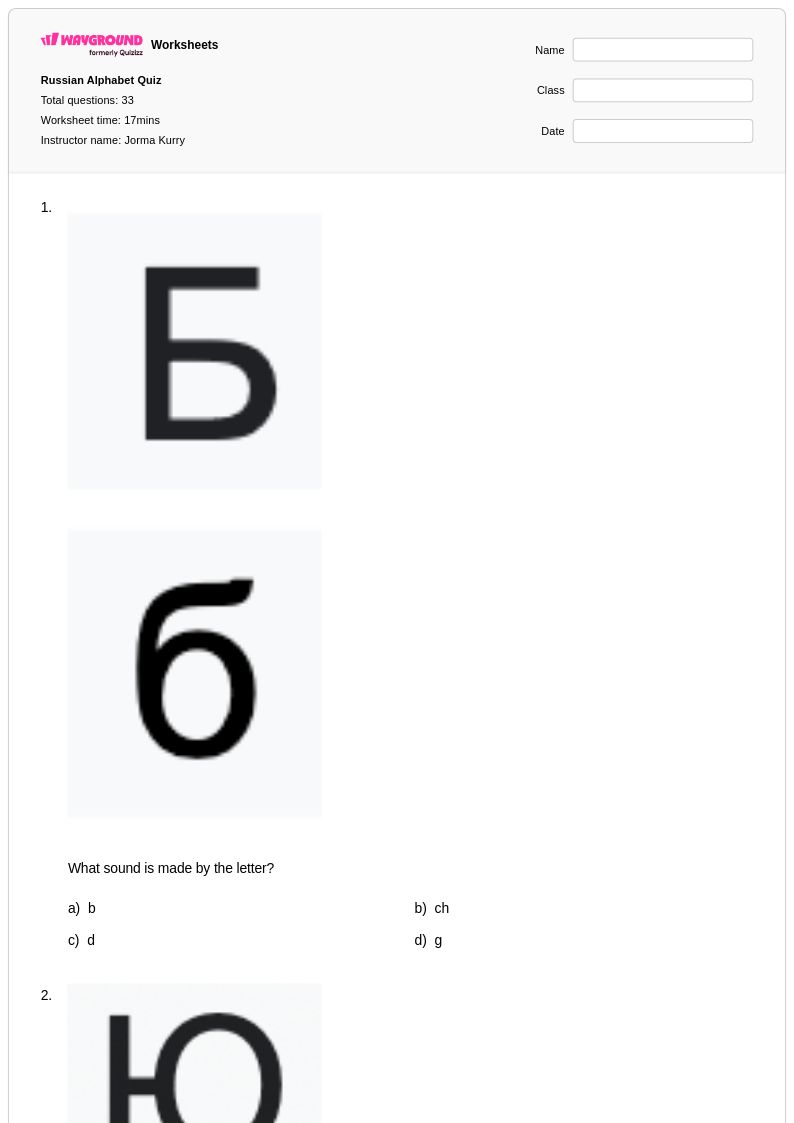
33 Hỏi
9th - 12th
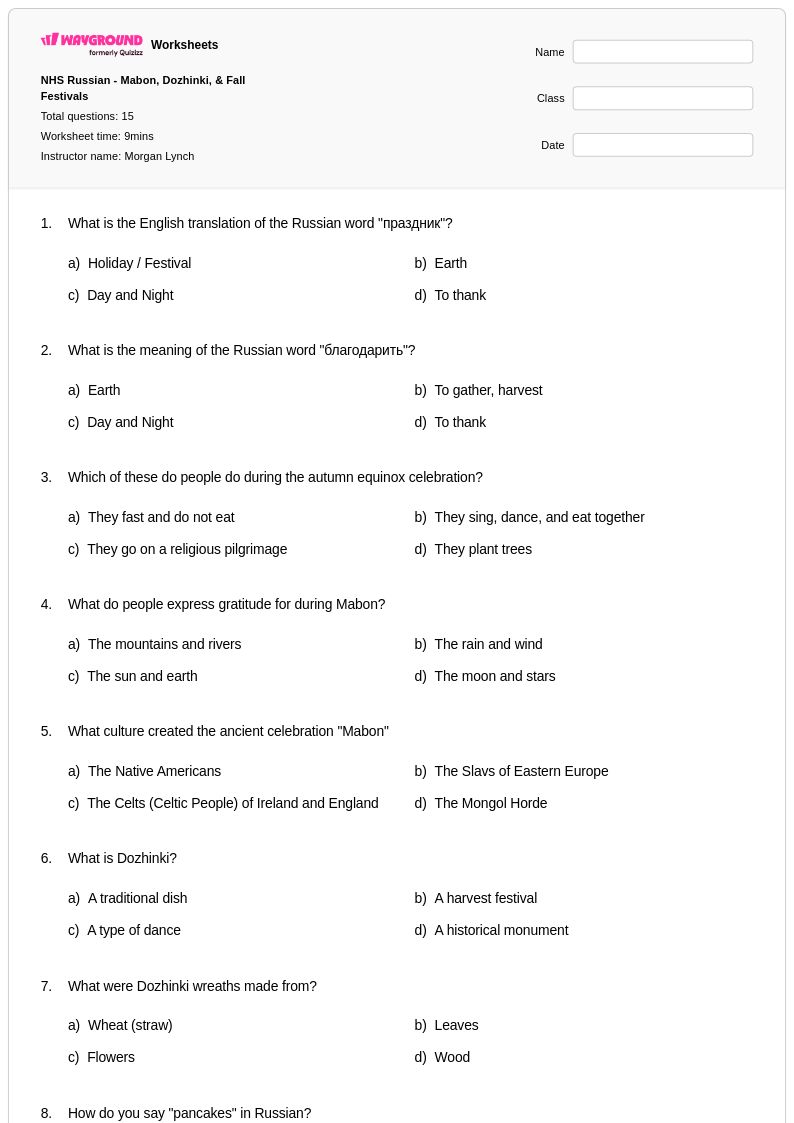
15 Hỏi
9th - Uni
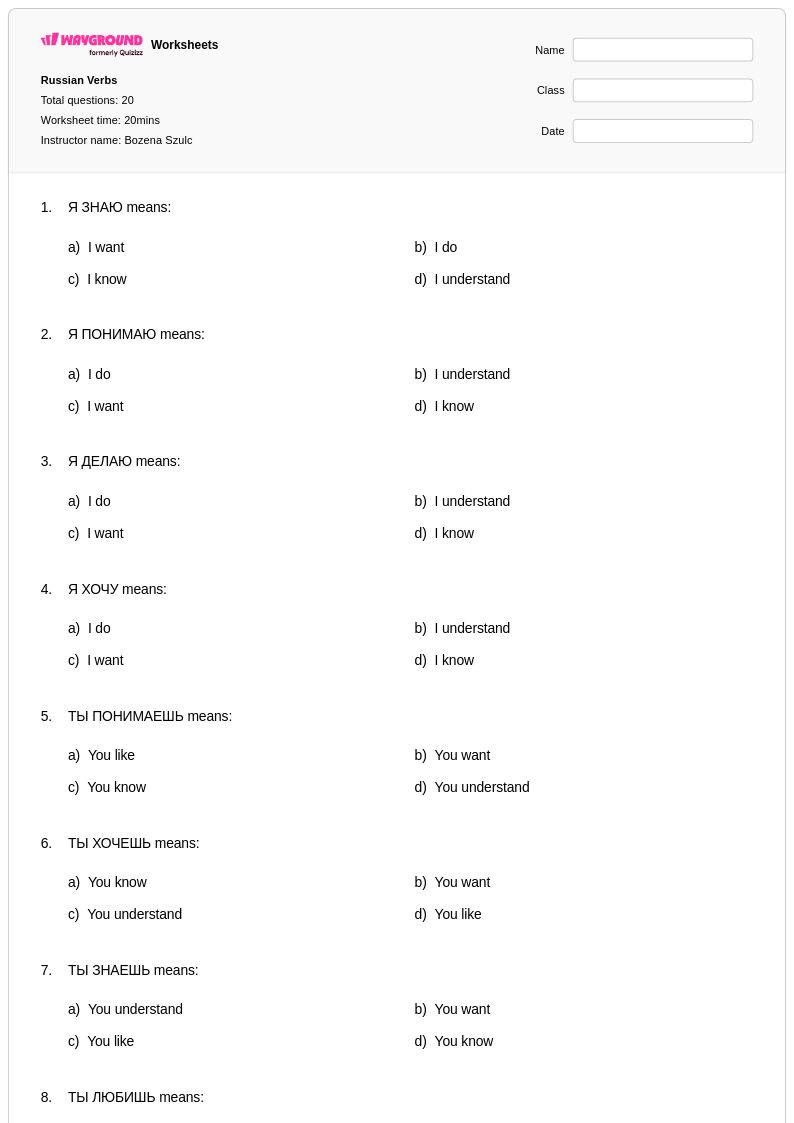
20 Hỏi
8th - 10th
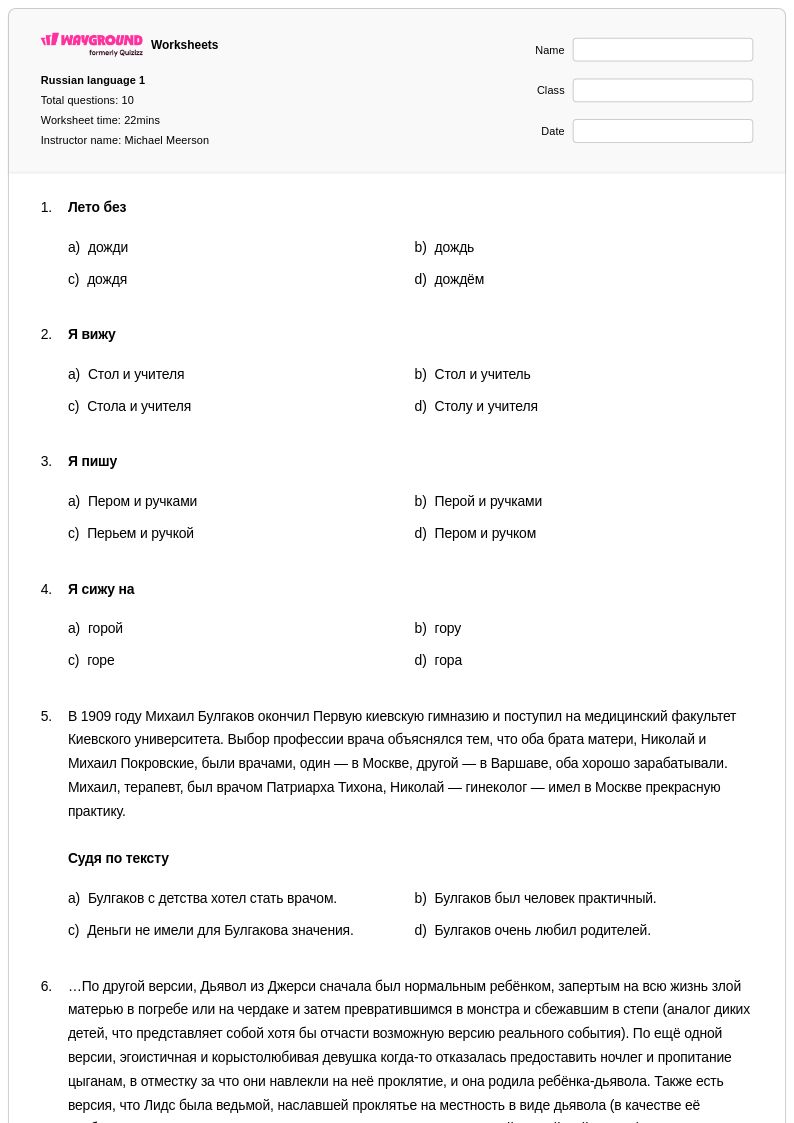
10 Hỏi
9th - 12th
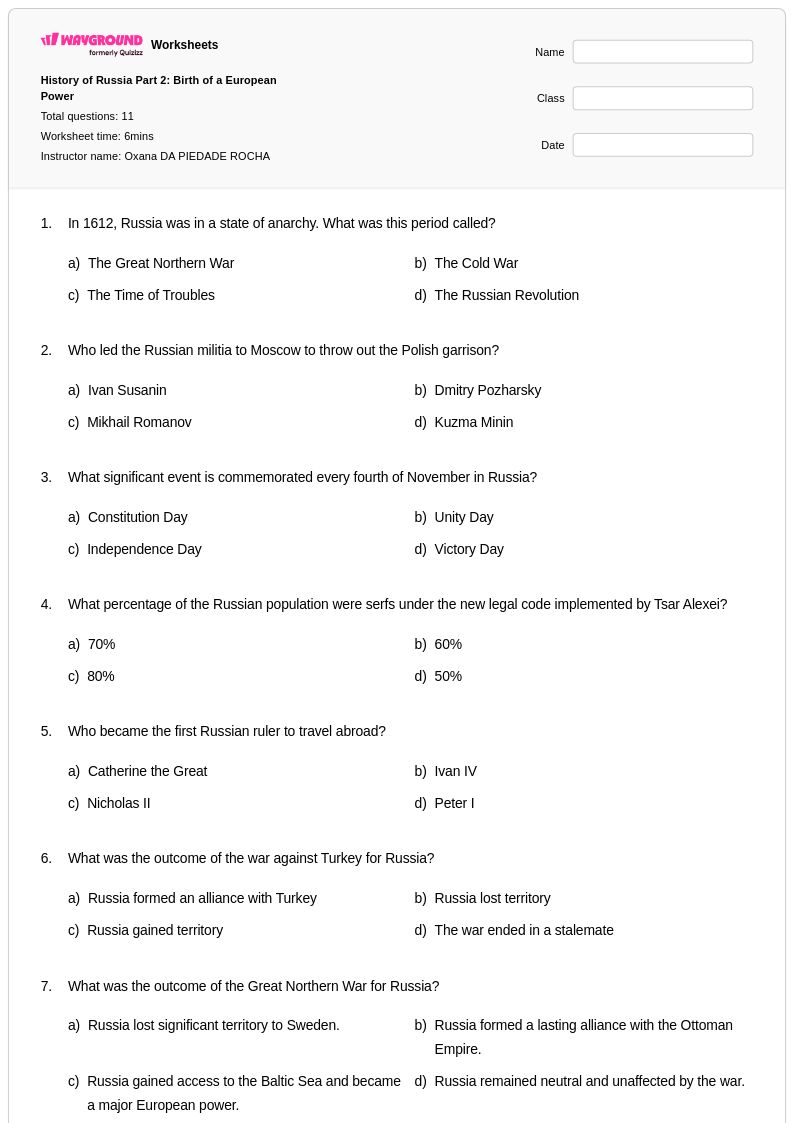
11 Hỏi
10th
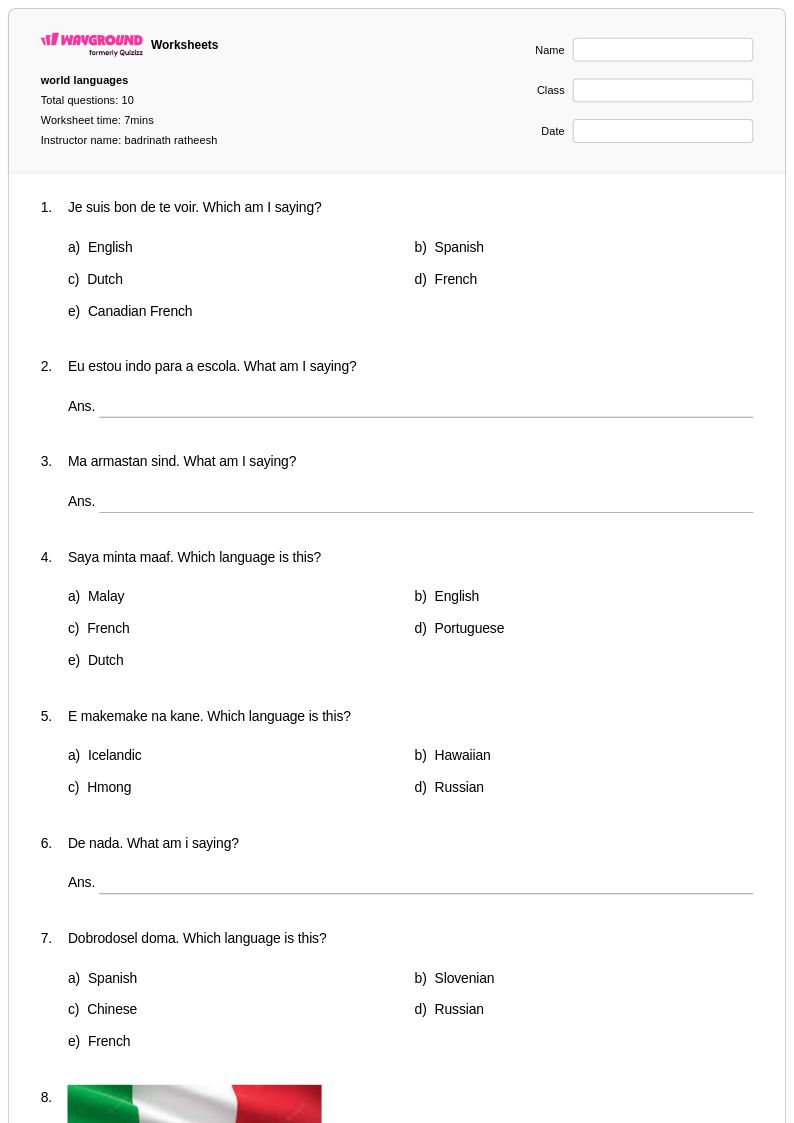
10 Hỏi
8th - 11th
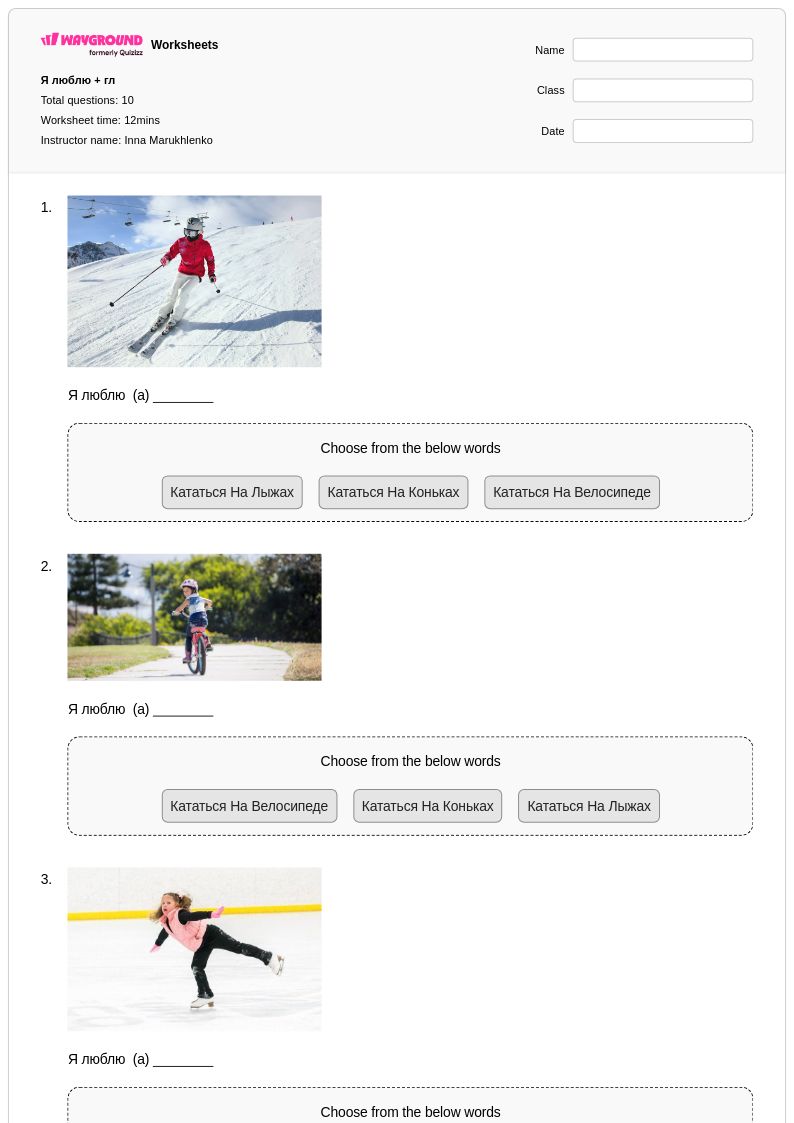
10 Hỏi
3rd - Uni
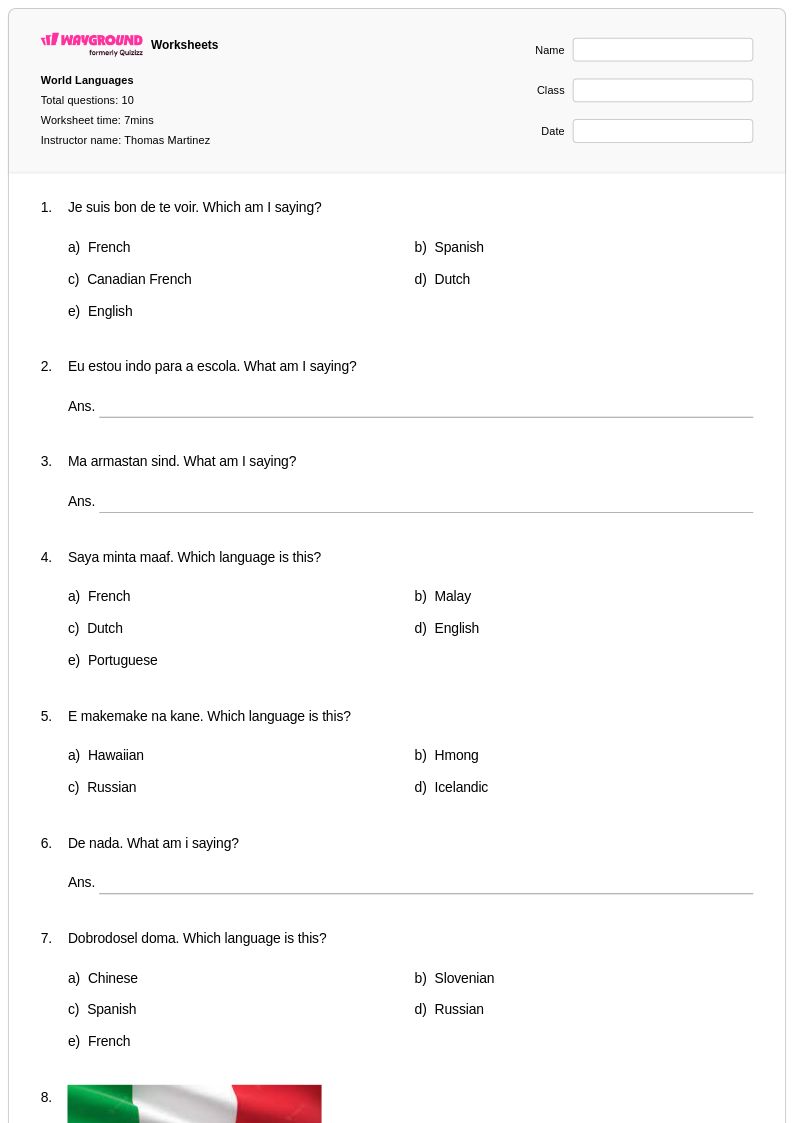
10 Hỏi
8th - 11th
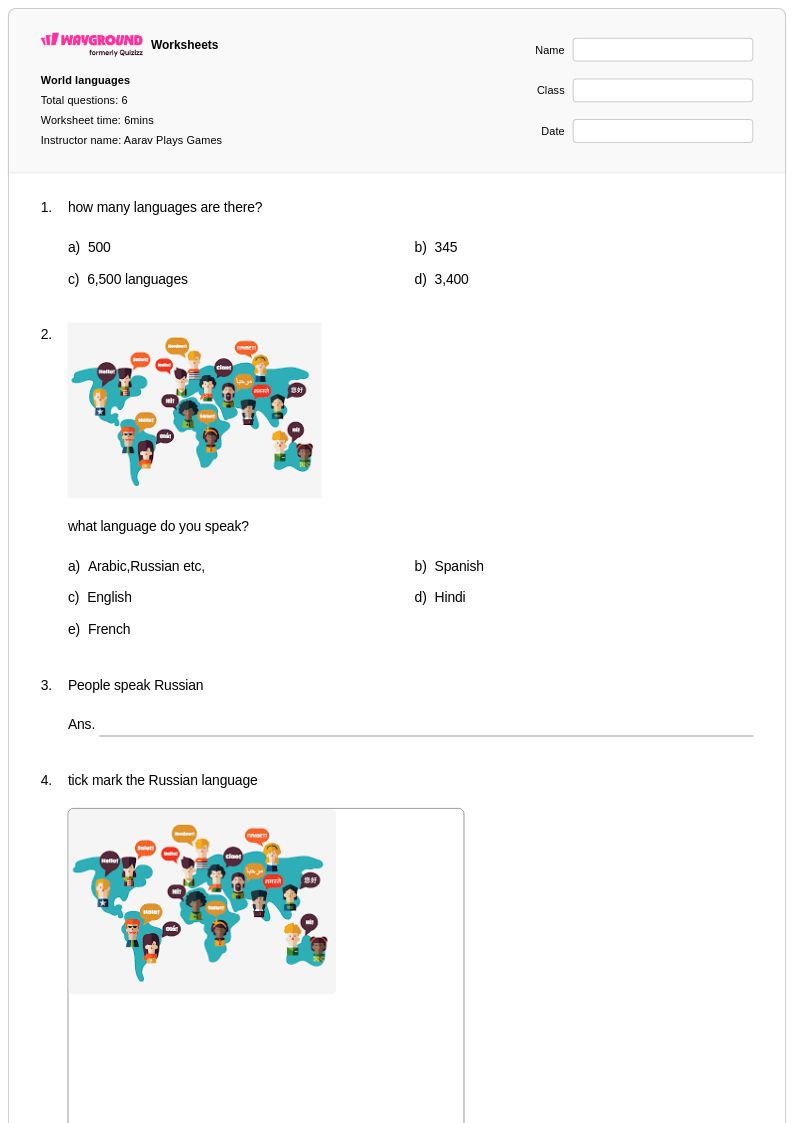
6 Hỏi
5th - Uni
6 Hỏi
5th - Uni
6 Hỏi
5th - Uni
6 Hỏi
5th - Uni
8 Hỏi
9th - 12th
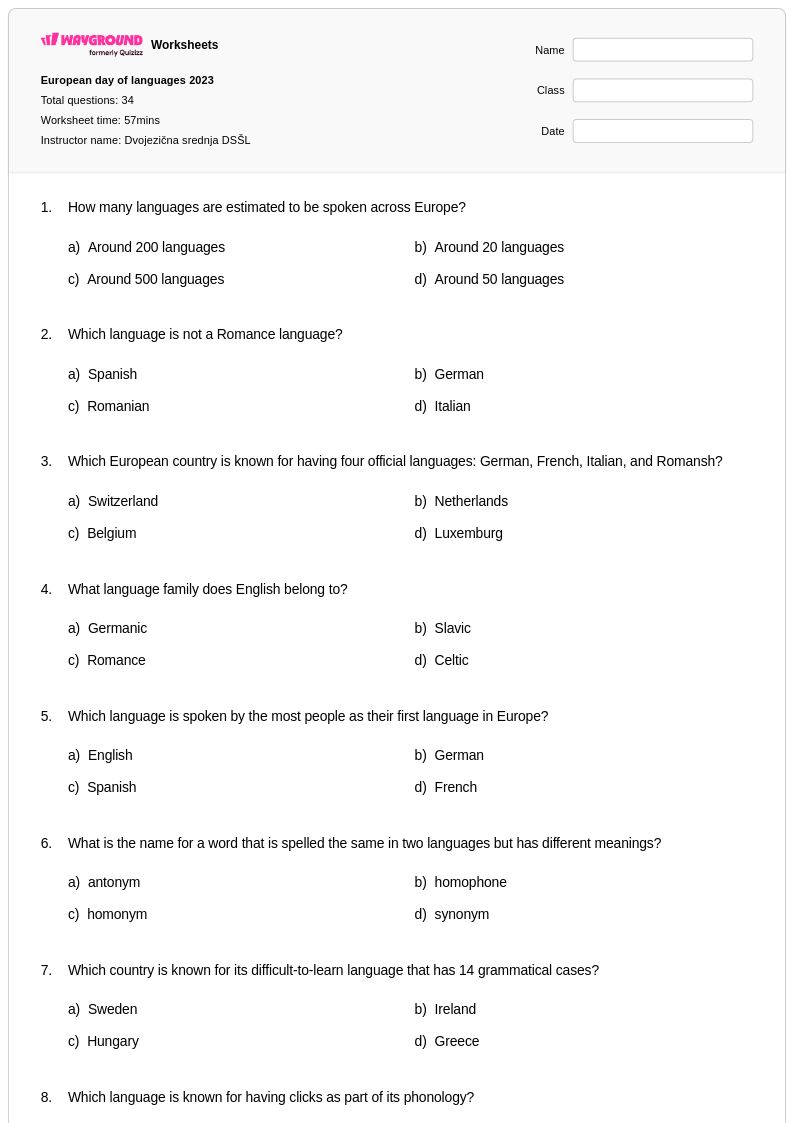
34 Hỏi
9th - 12th
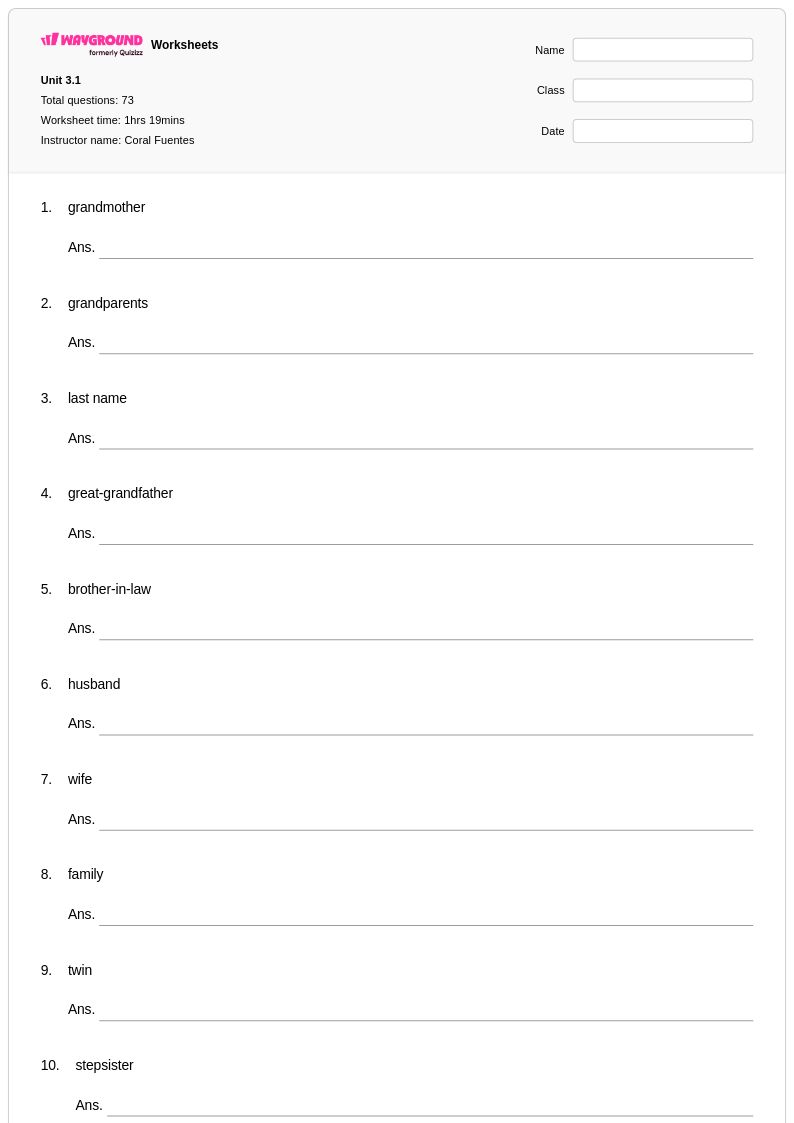
73 Hỏi
6th - Uni
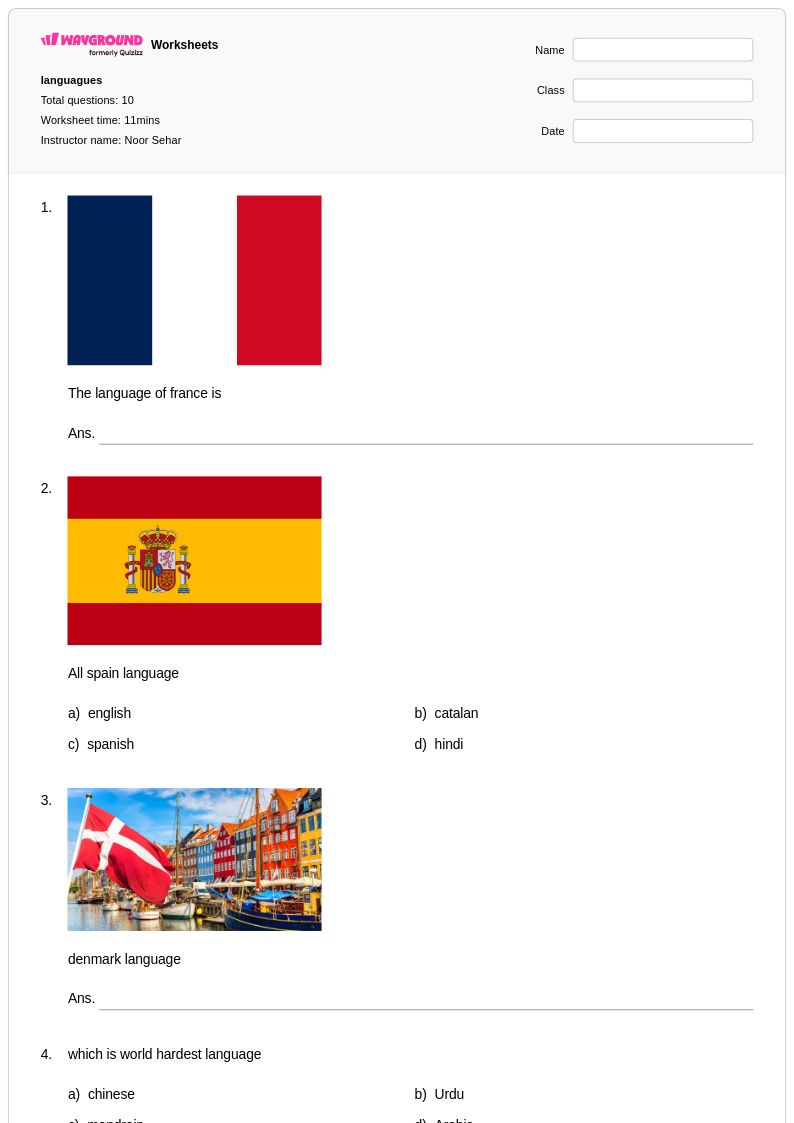
10 Hỏi
3rd - Uni
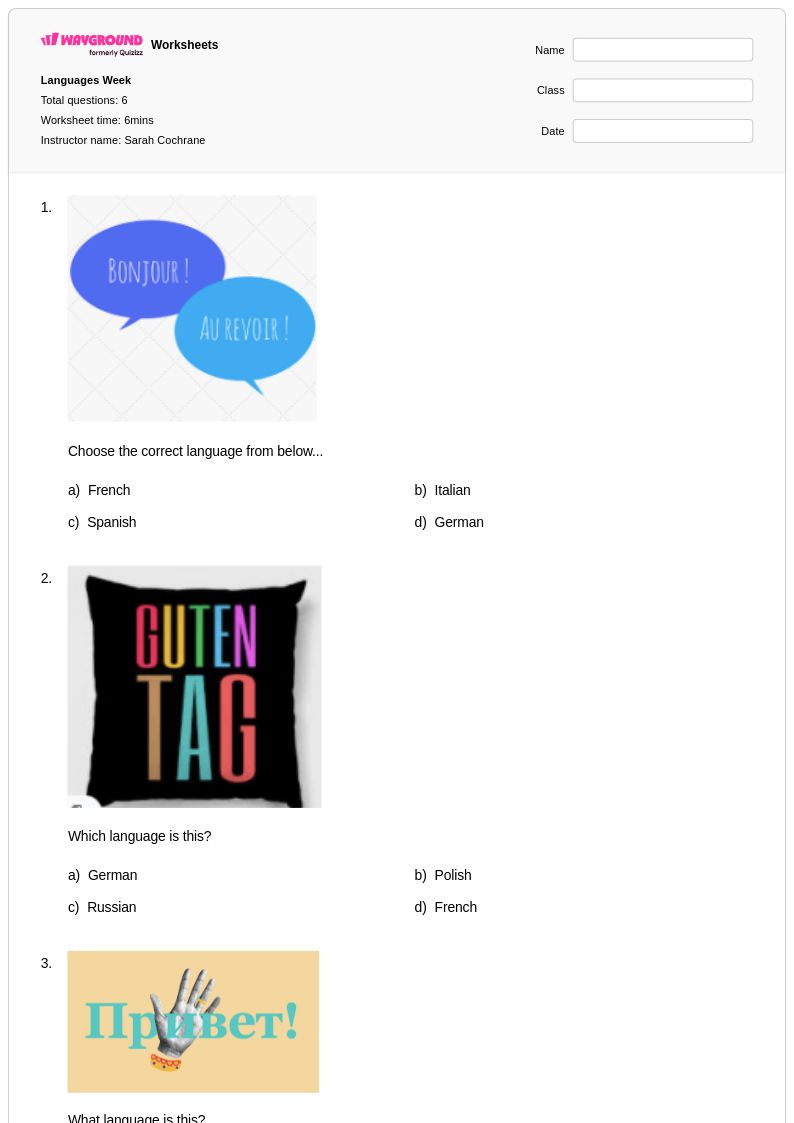
6 Hỏi
10th - 12th
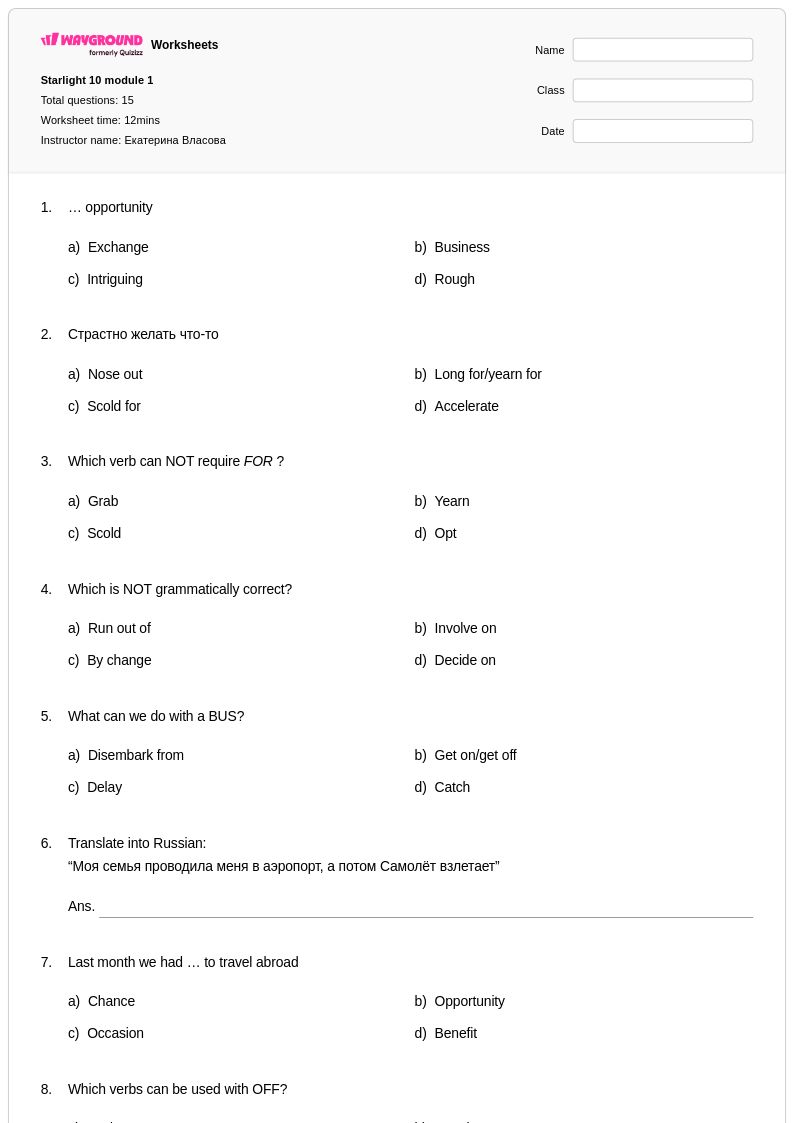
15 Hỏi
10th
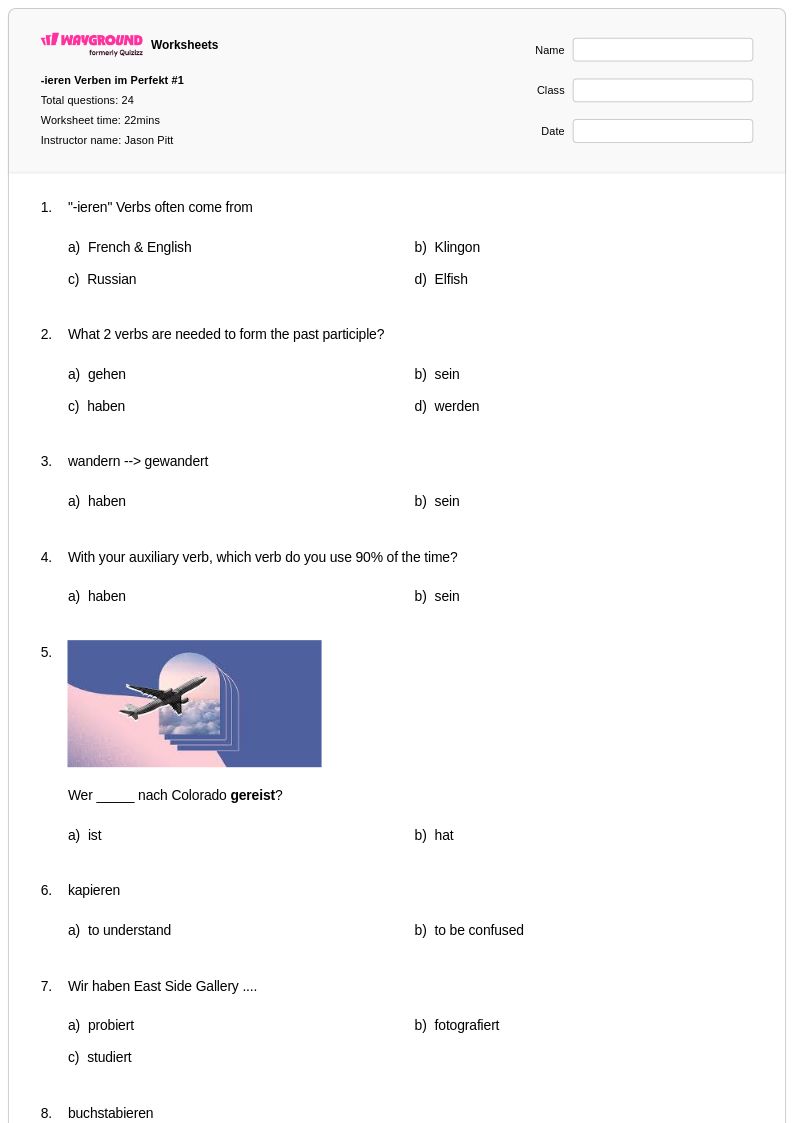
24 Hỏi
10th
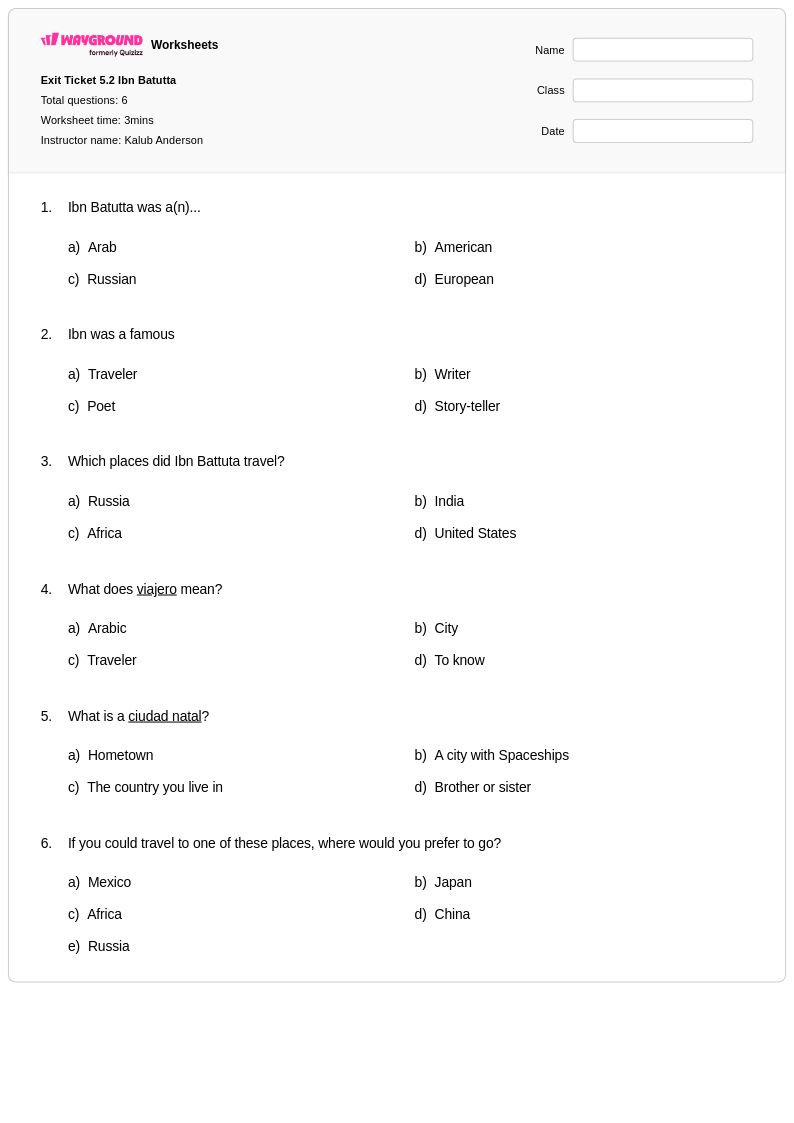
6 Hỏi
10th
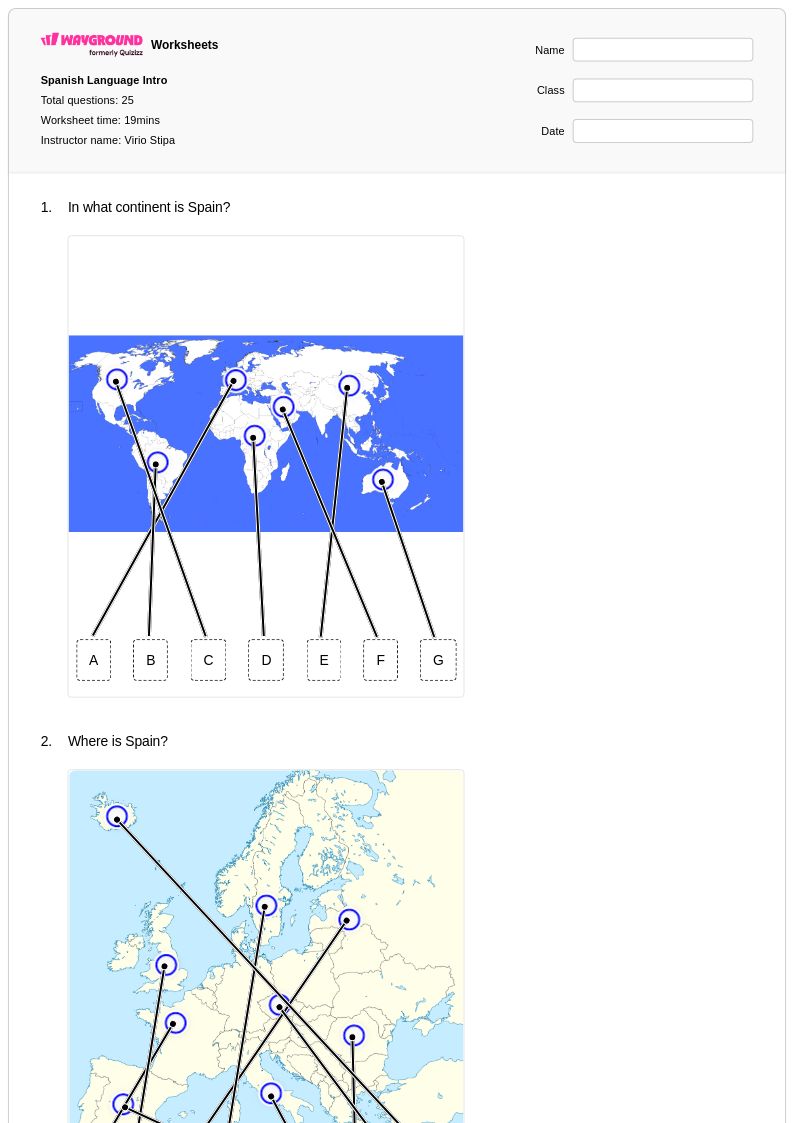
25 Hỏi
9th - 12th
Khám phá Russian Bảng tính theo cấp độ
Khám phá các bảng tính chủ đề khác cho year 10
Explore printable Russian worksheets for Year 10
Year 10 Russian worksheets available through Wayground (formerly Quizizz) provide comprehensive language learning materials that strengthen essential skills in Cyrillic alphabet mastery, grammar structures, vocabulary acquisition, and cultural understanding. These expertly designed resources focus on intermediate-level competencies including verb conjugations, case systems, sentence construction, and conversational patterns that align with second-year Russian language standards. Students benefit from systematic practice problems that reinforce phonetic patterns, morphological rules, and syntactic structures while building confidence in reading, writing, listening, and speaking skills. The collection includes free printables with comprehensive answer keys, allowing educators to implement effective assessment strategies and provide immediate feedback on student progress through structured pdf formats that support both classroom instruction and independent study.
Wayground (formerly Quizizz) empowers educators with millions of teacher-created Russian language resources that feature advanced search and filtering capabilities, enabling quick identification of materials that match specific curriculum standards and learning objectives. The platform's differentiation tools allow teachers to customize worksheets for varying proficiency levels within Year 10 classes, supporting both remediation for struggling learners and enrichment opportunities for advanced students. These flexible resources are available in both printable and digital formats, including downloadable pdf versions that facilitate seamless integration into hybrid learning environments. Teachers can efficiently plan comprehensive lesson sequences, target specific grammatical concepts for intensive practice, and create scaffolded learning experiences that build systematic progression through complex Russian language structures while maintaining student engagement through varied exercise formats and authentic cultural contexts.
FAQs
How do I teach the Cyrillic alphabet to beginners?
What exercises help students practice Russian verb conjugations?
What mistakes do students commonly make when learning Russian grammar?
How can I differentiate Russian language instruction for students at different proficiency levels?
How do I use Russian worksheets from Wayground in my classroom?
How do I help students build Russian vocabulary effectively?