
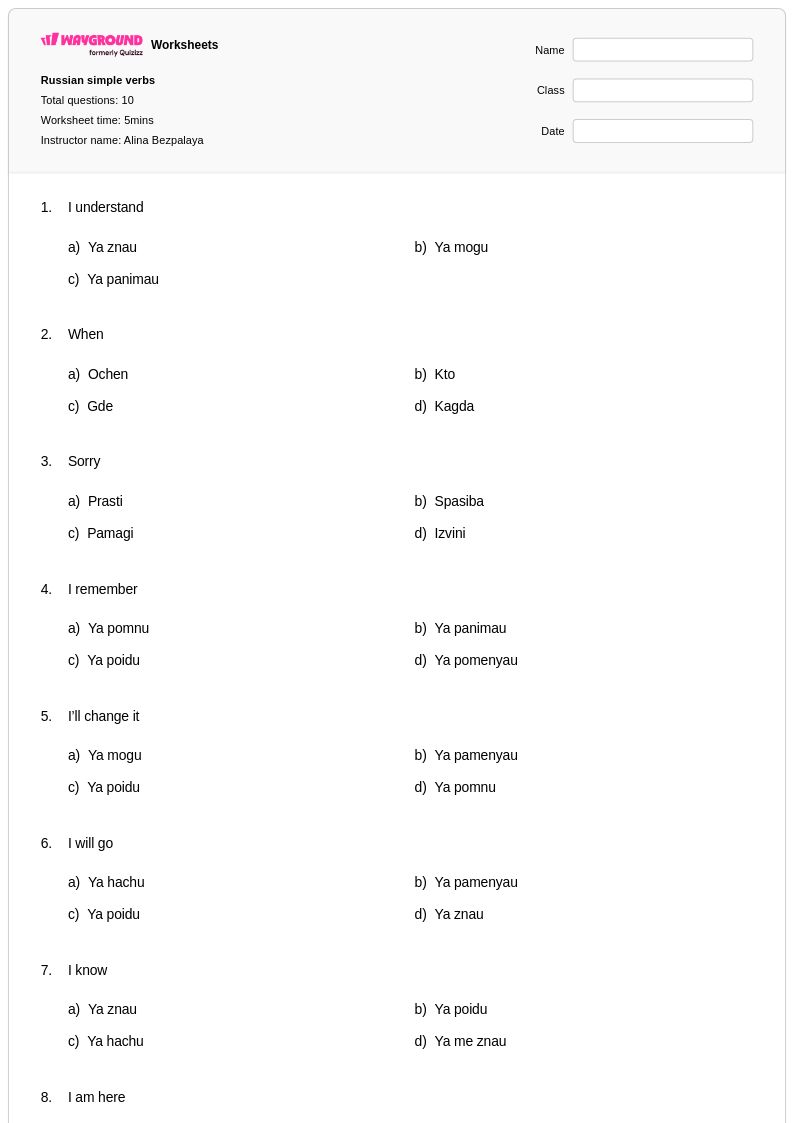
10 Q
1st - 5th
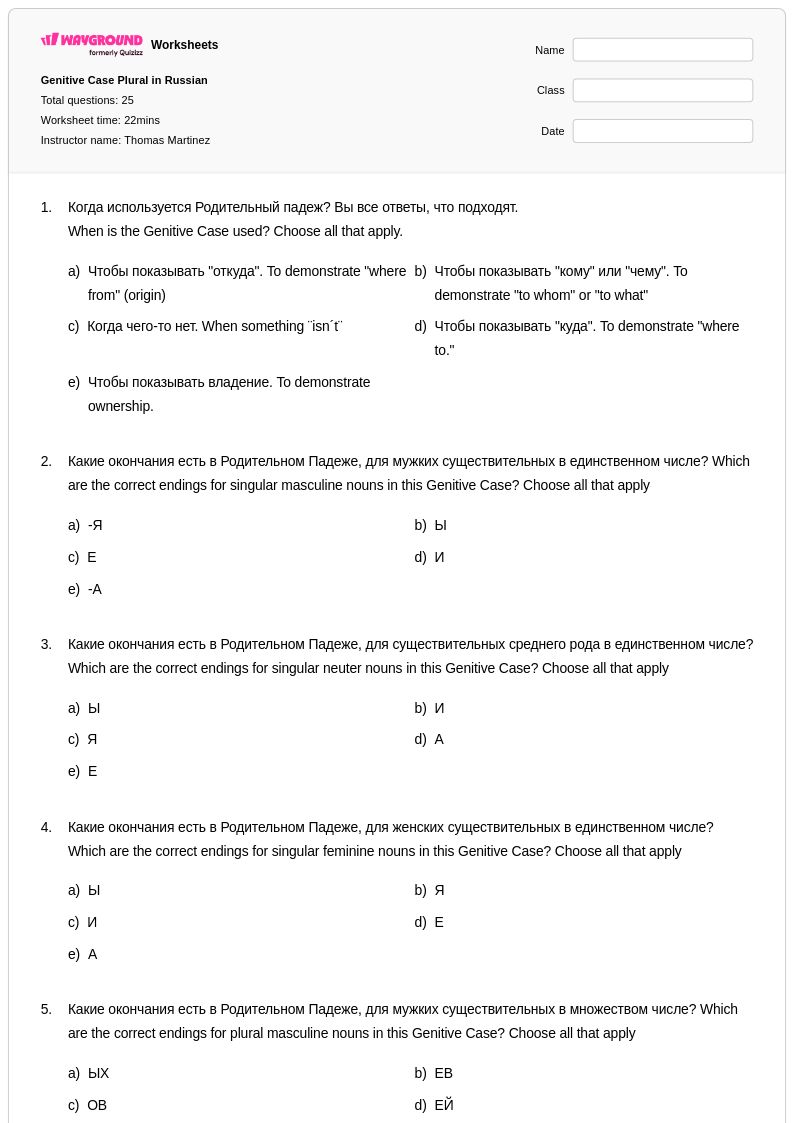
25 Q
3rd - 12th
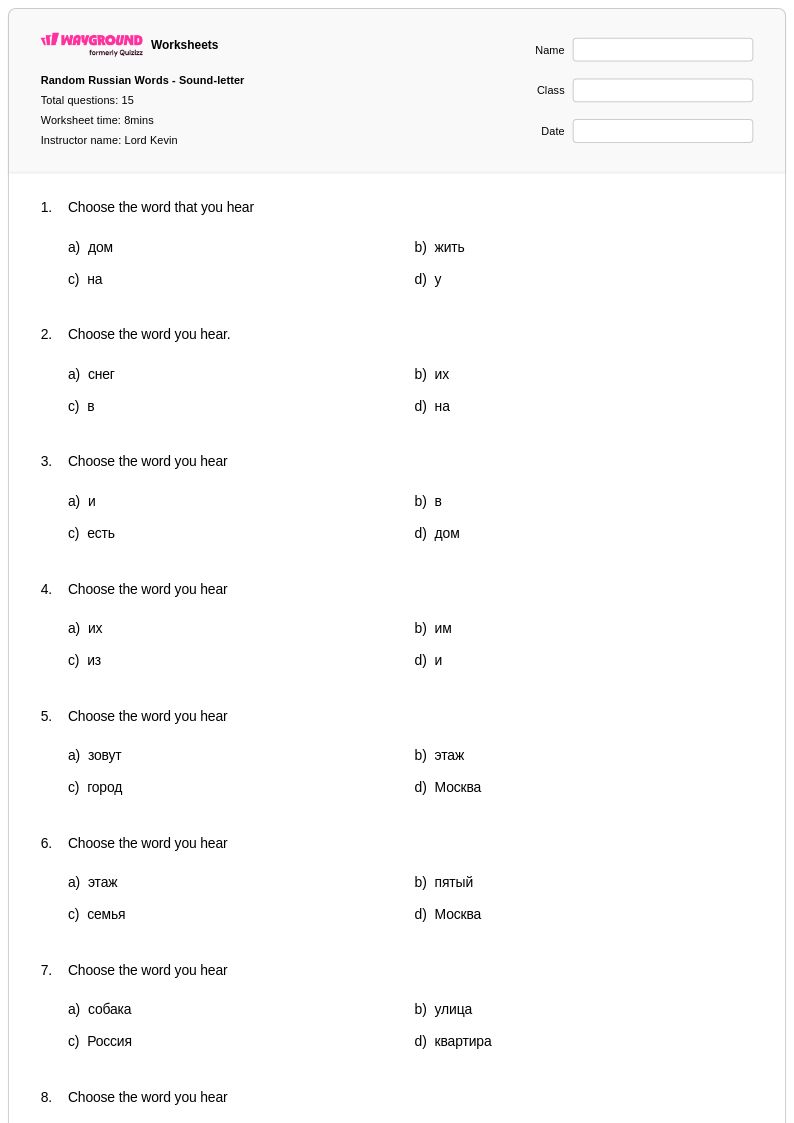
15 Q
3rd - 12th
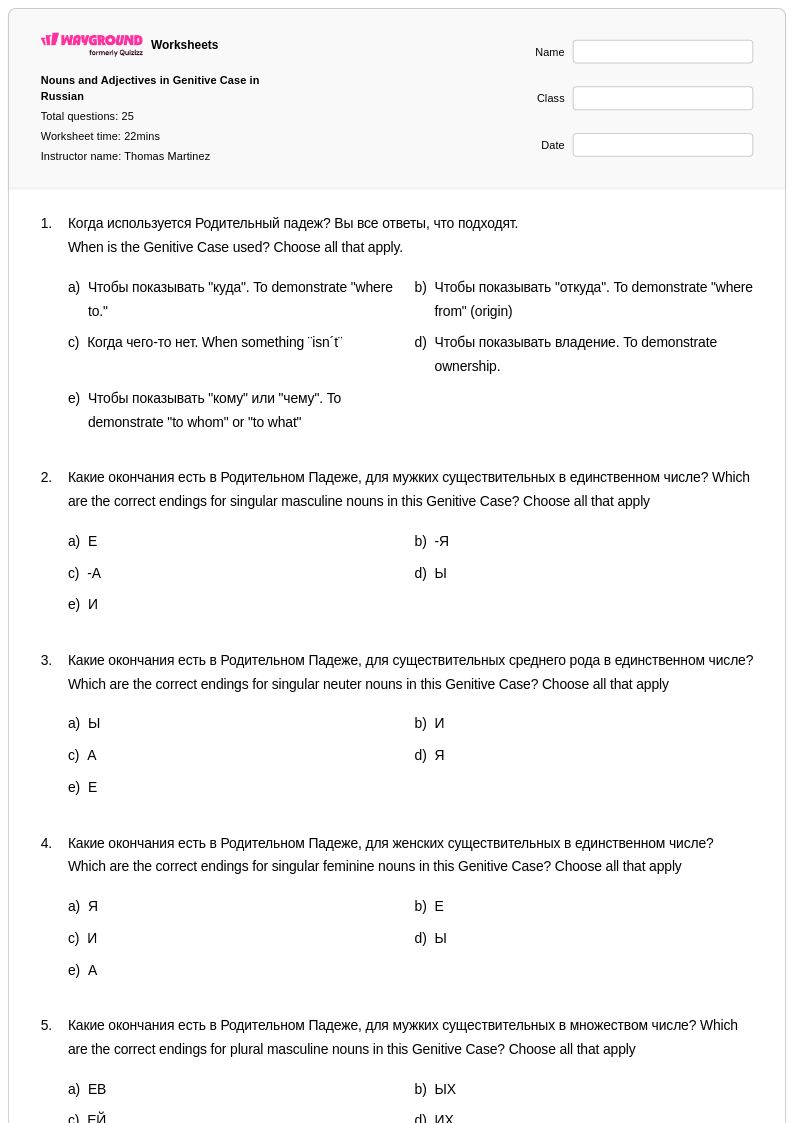
25 Q
3rd - 12th
![[Languages] - Printable Russian Worksheets Year 3 - Quizizz](https://quizizz-static.s3.amazonaws.com/_media/worksheets-new/62b6242e0655c0001ec461d9-languages)
11 Q
2nd - 4th
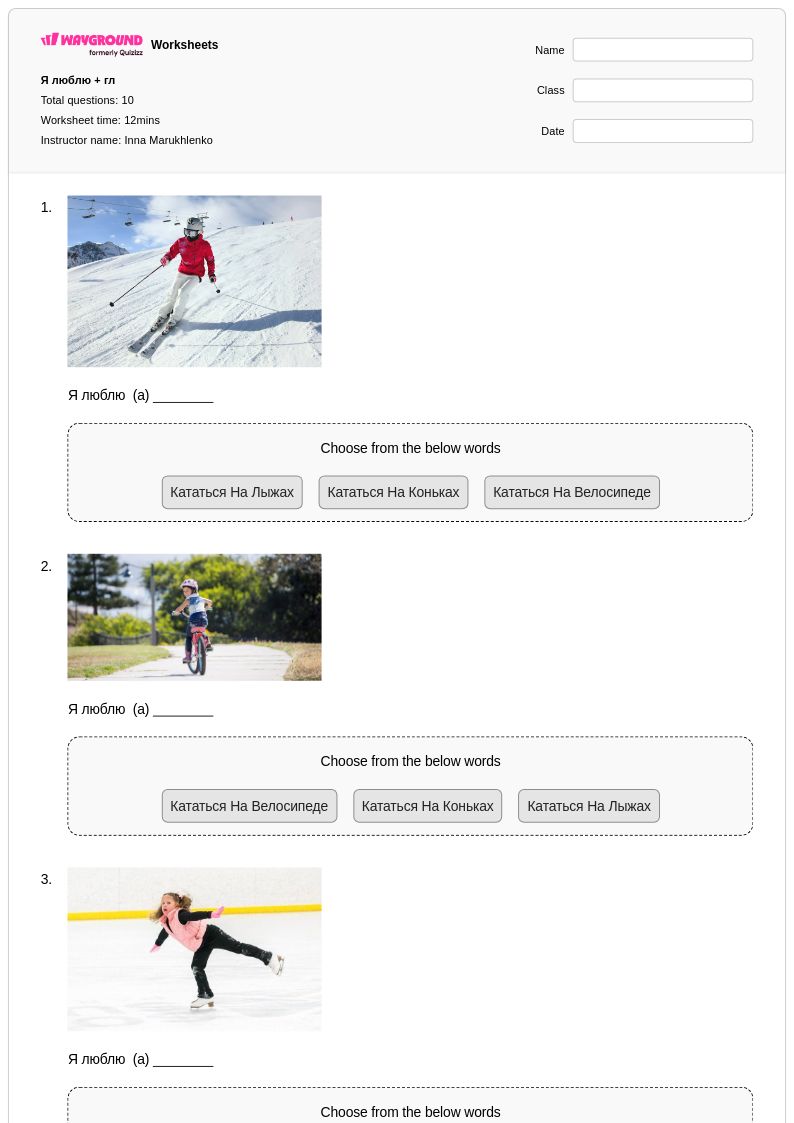
10 Q
3rd - Uni
15 Q
3rd - 5th
16 Q
2nd - 12th
14 Q
KG - 5th
15 Q
3rd
10 Q
KG - 5th
8 Q
3rd - 7th
17 Q
1st - 5th
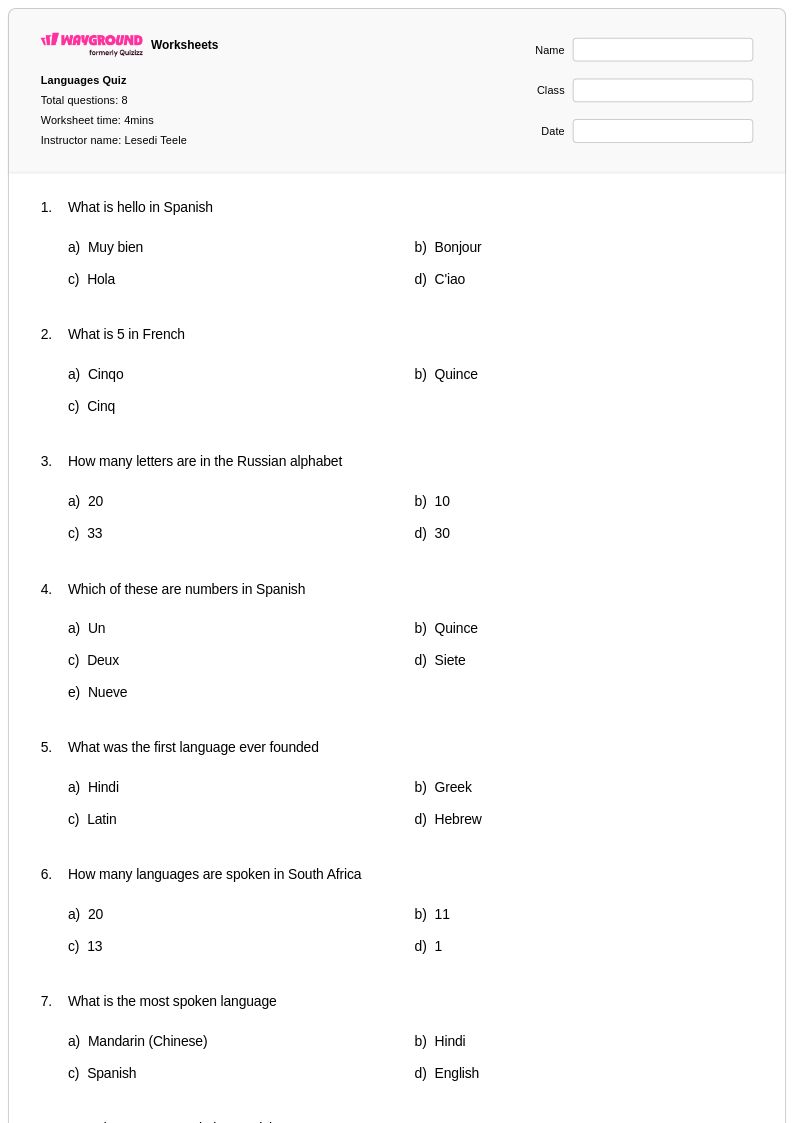
8 Q
KG - PD
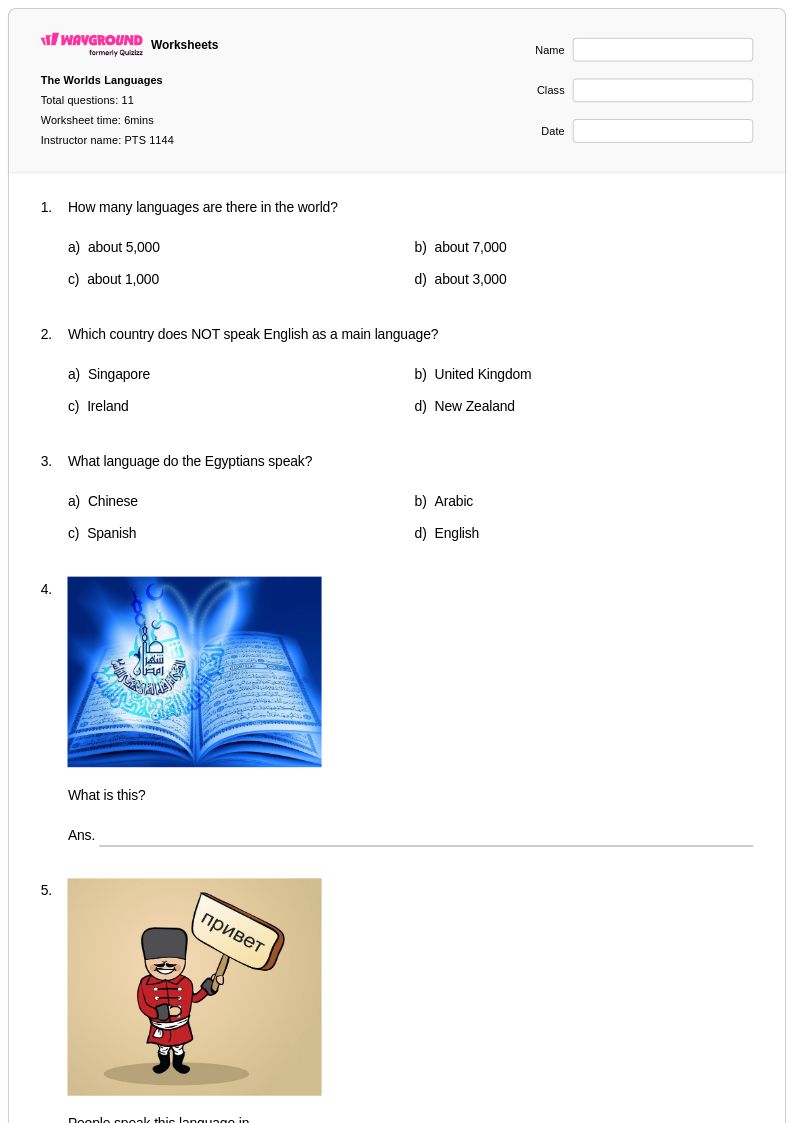
11 Q
2nd - PD
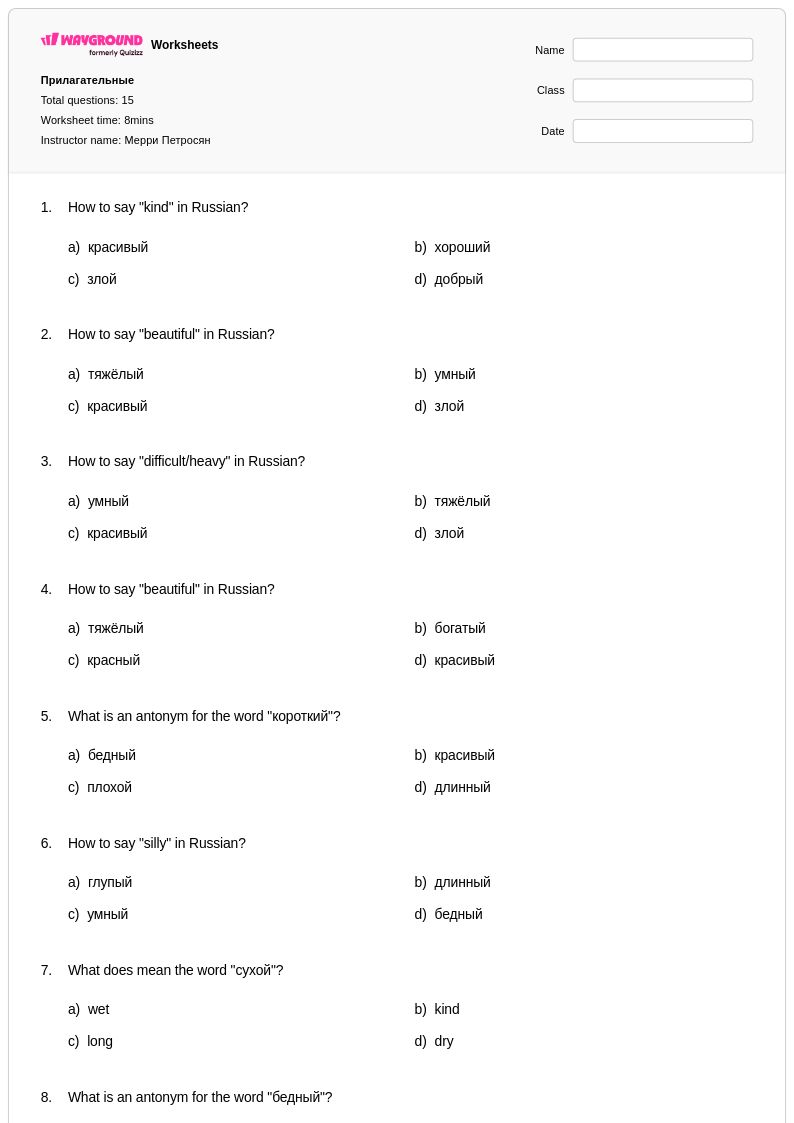
15 Q
1st - Uni
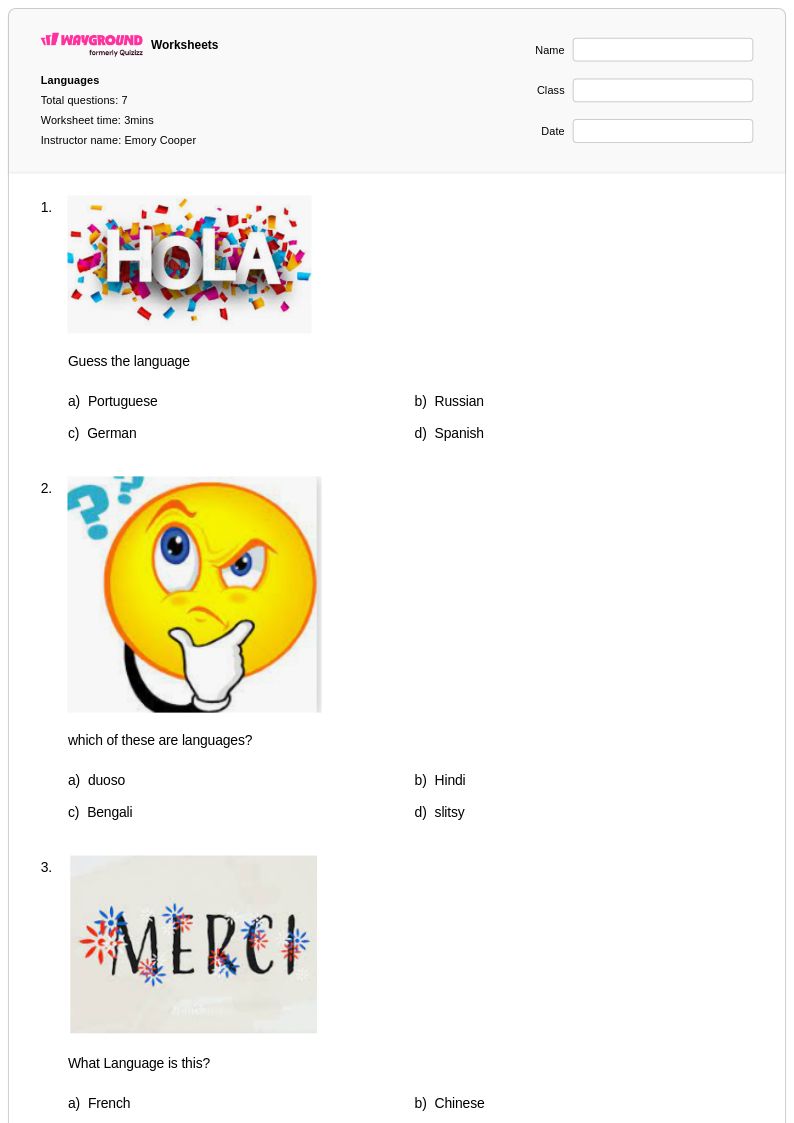
7 Q
3rd - 5th
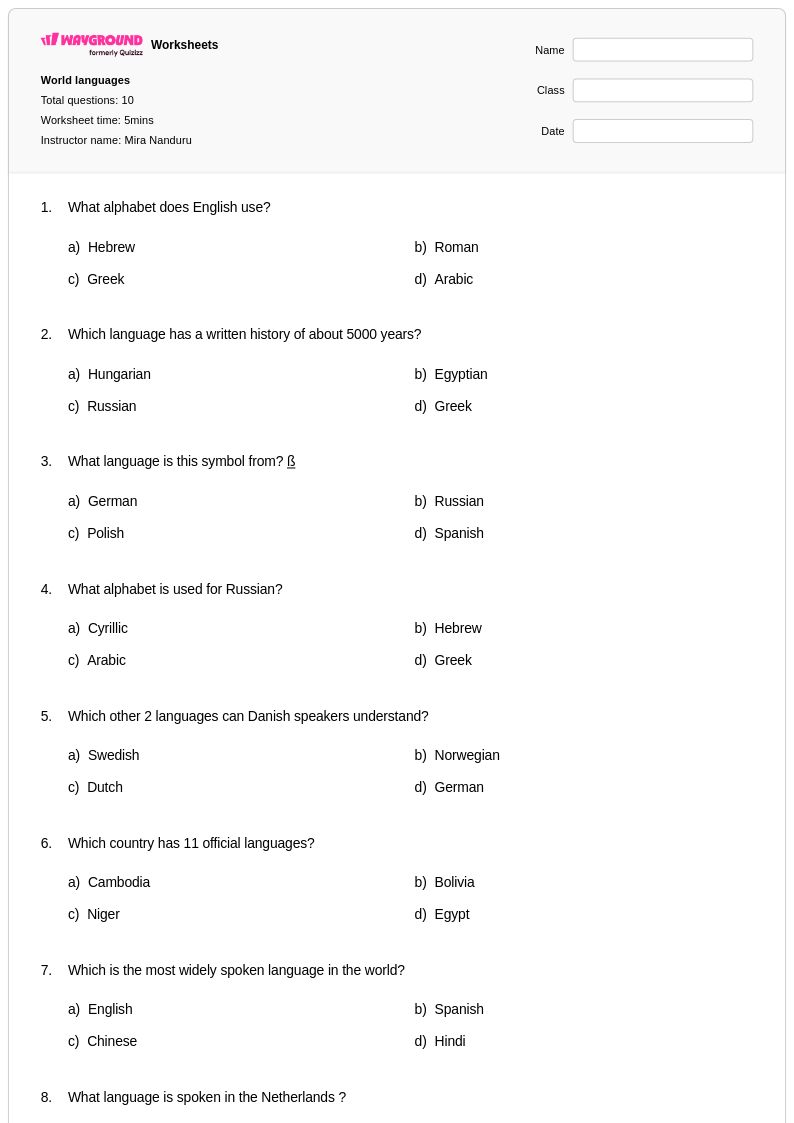
10 Q
3rd - PD
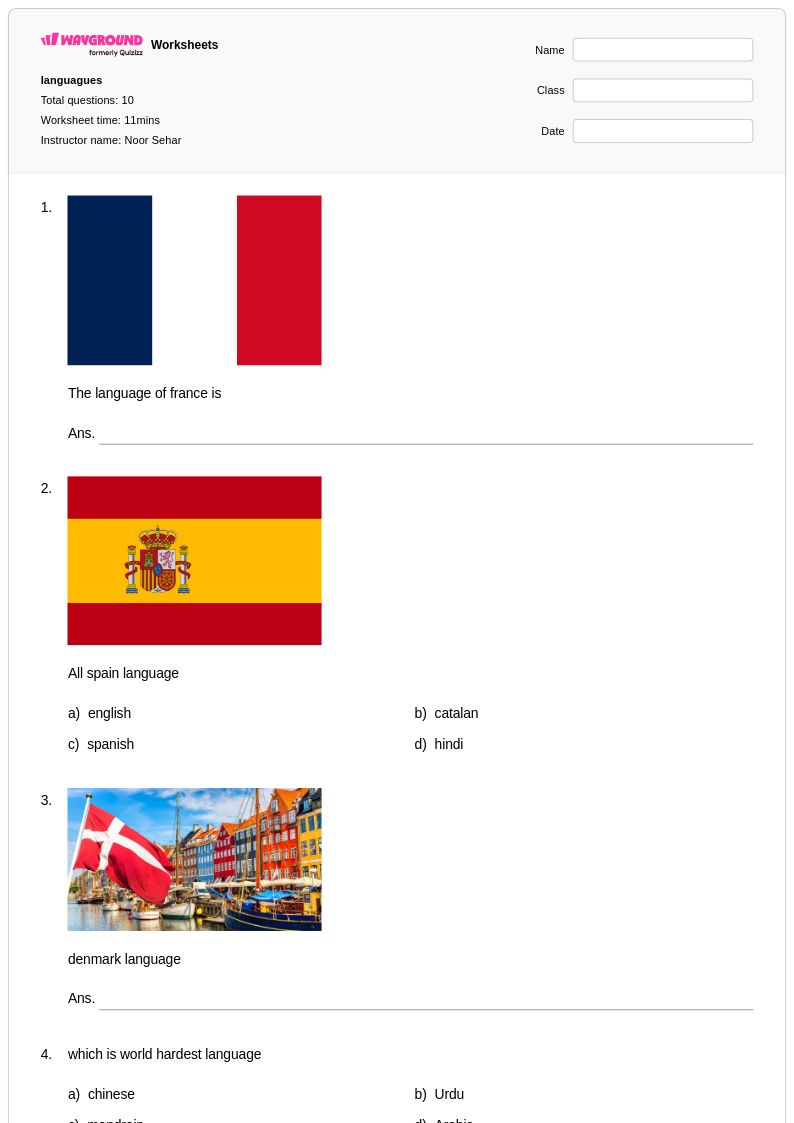
10 Q
3rd - Uni
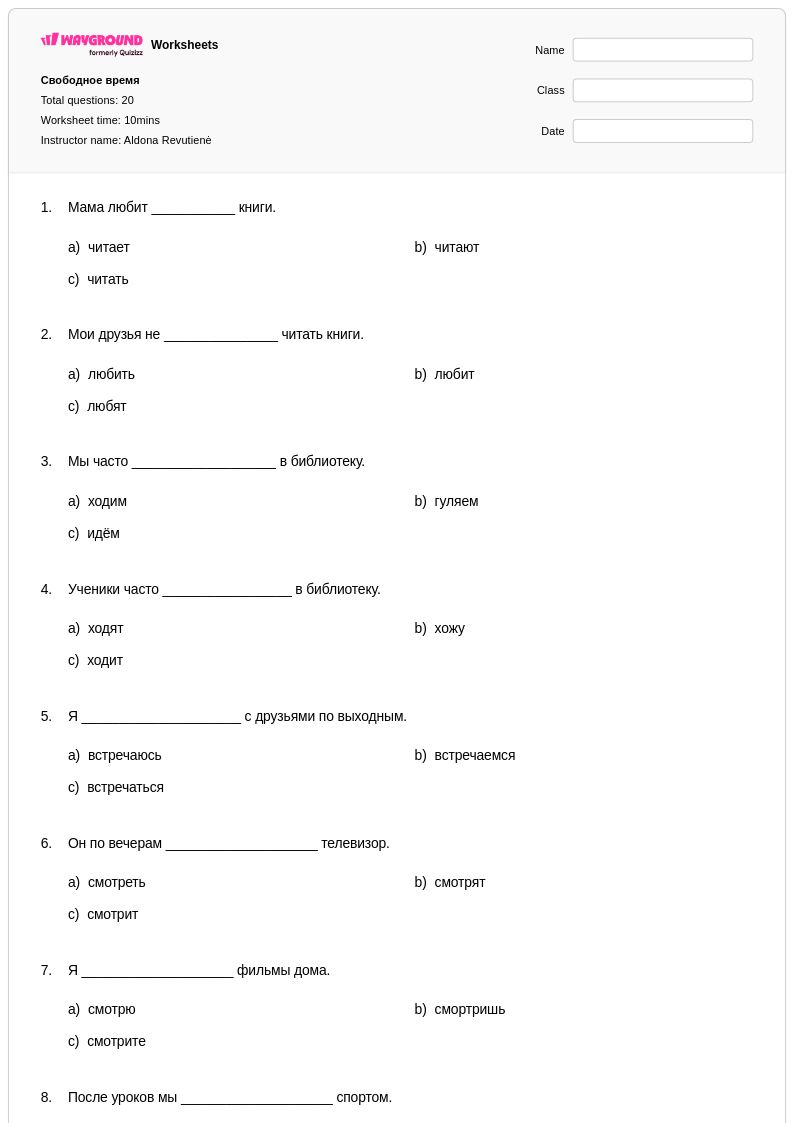
20 Q
3rd
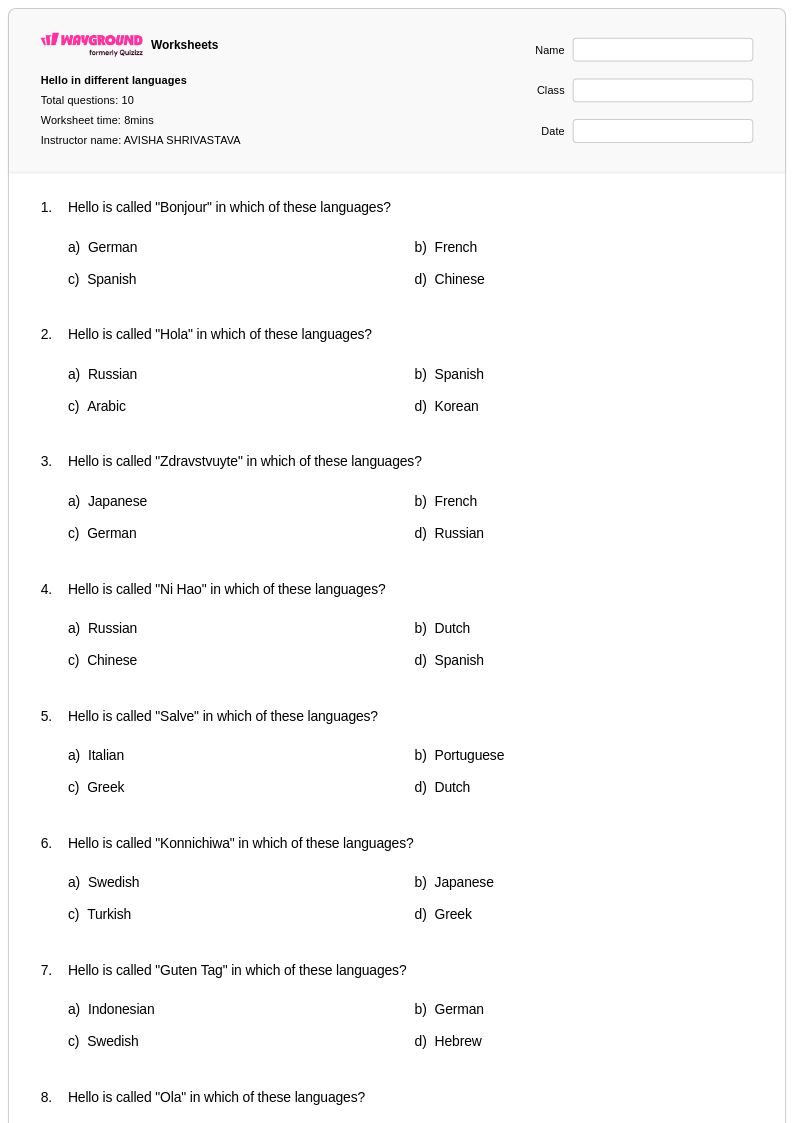
10 Q
3rd - PD
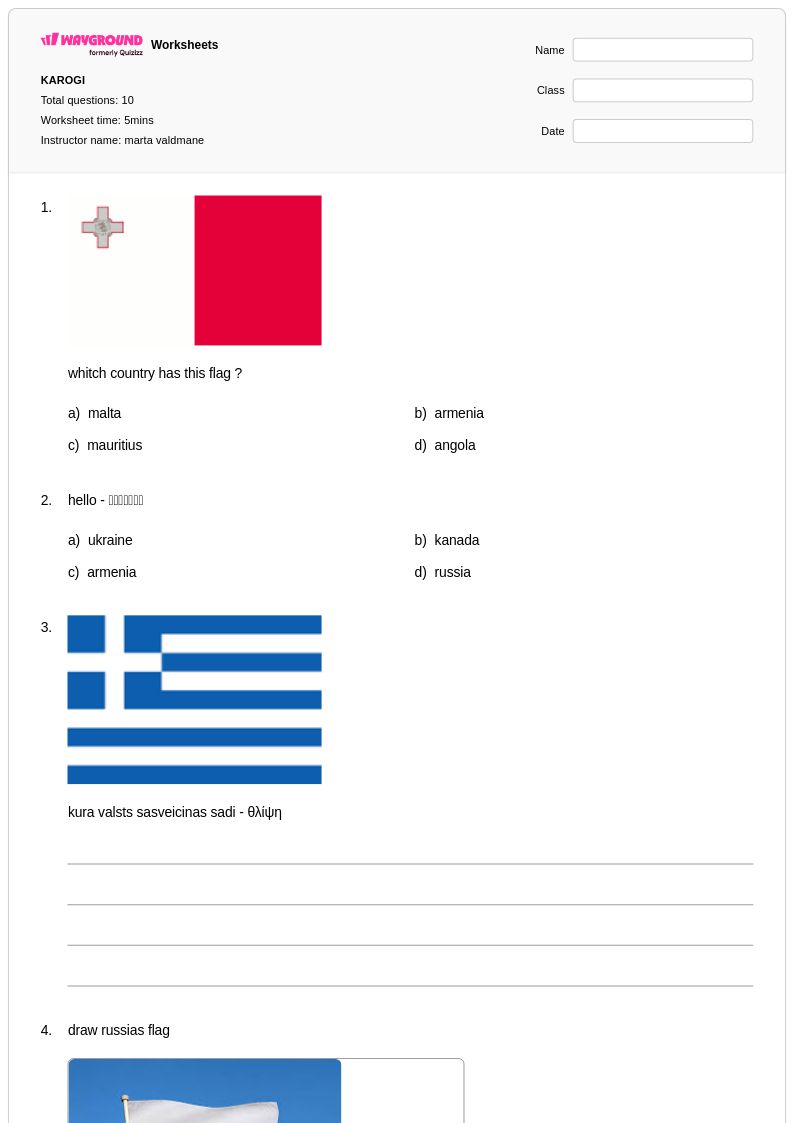
10 Q
1st - Uni
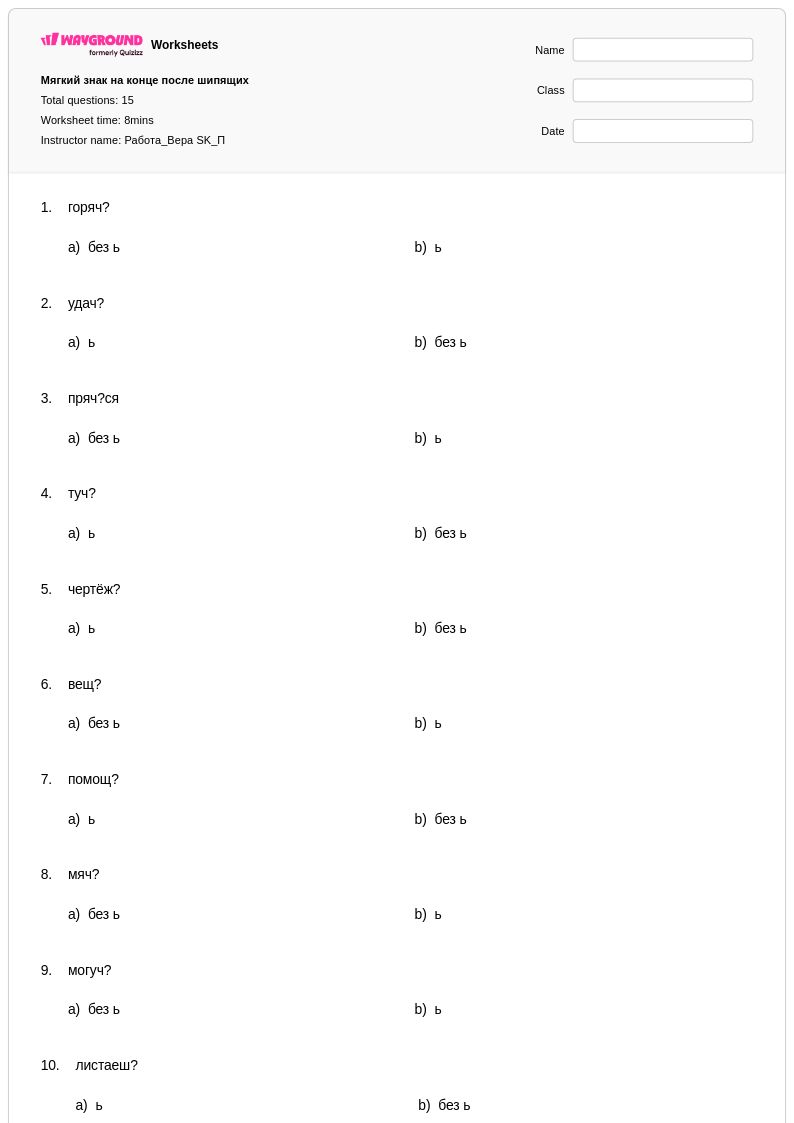
15 Q
3rd
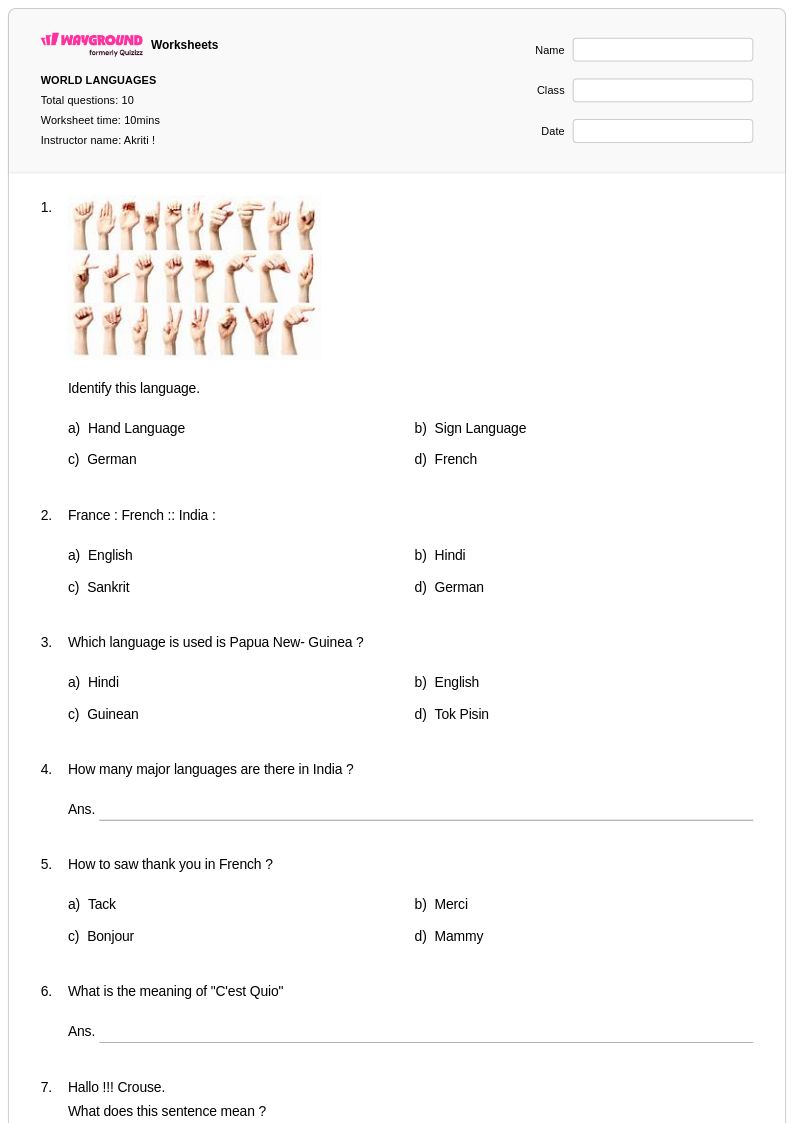
10 Q
KG - PD
Explore Russian Worksheets by Grades
Explore Other Subject Worksheets for year 3
Explore printable Russian worksheets for Year 3
Russian worksheets for Year 3 students available through Wayground provide foundational instruction in one of the world's most widely spoken Slavic languages, offering young learners their first structured exposure to Cyrillic script, basic vocabulary, and essential pronunciation patterns. These comprehensive printables focus on developing core language acquisition skills including letter recognition, simple word formation, and basic conversational phrases that form the building blocks of Russian literacy. Each worksheet collection includes carefully designed practice problems that progress from individual letter tracing to simple sentence construction, with accompanying answer keys that enable both independent study and guided instruction. The free pdf resources emphasize visual learning approaches particularly effective for elementary students, incorporating colorful illustrations and engaging activities that make the challenging task of mastering a new alphabet system both accessible and enjoyable for Year 3 learners.
Wayground's extensive collection of teacher-created Russian language worksheets draws from millions of educational resources specifically designed to support diverse classroom needs and learning objectives. The platform's advanced search and filtering capabilities allow educators to quickly locate materials aligned with specific language learning standards while providing differentiation tools that accommodate varying skill levels within Year 3 classrooms. Teachers can easily customize these printable and digital pdf worksheets to match their instructional pacing, whether implementing them for initial skill introduction, targeted remediation for struggling students, or enrichment activities for advanced learners. The flexible format options support both traditional paper-based instruction and modern digital learning environments, enabling educators to seamlessly integrate Russian language practice into their existing curriculum while maintaining the structured progression essential for successful elementary foreign language acquisition.
FAQs
How do I teach the Cyrillic alphabet to beginners?
What exercises help students practice Russian verb conjugations?
What mistakes do students commonly make when learning Russian grammar?
How can I differentiate Russian language instruction for students at different proficiency levels?
How do I use Russian worksheets from Wayground in my classroom?
How do I help students build Russian vocabulary effectively?