Free Printable Scientific Tools Worksheets for Year 1
Year 1 scientific tools worksheets help young learners identify and understand basic science instruments through engaging printables, practice problems, and activities with complete answer keys available as free PDF downloads.
Explore printable Scientific Tools worksheets for Year 1
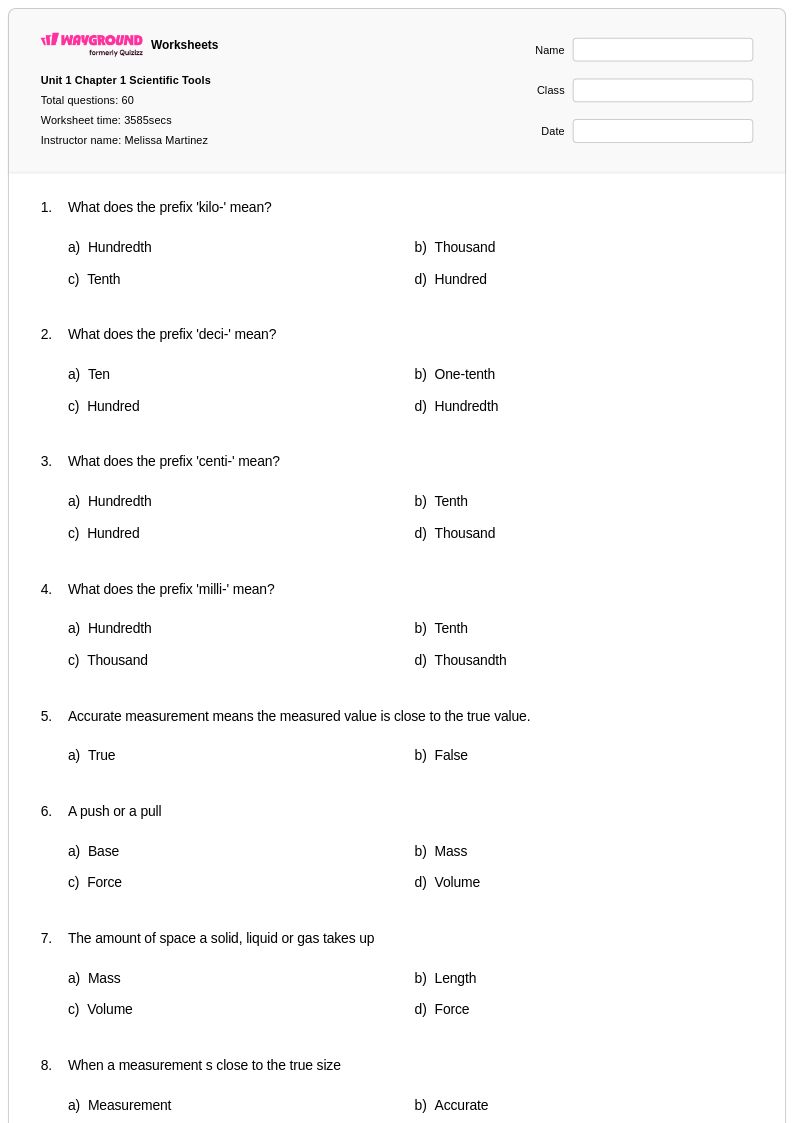
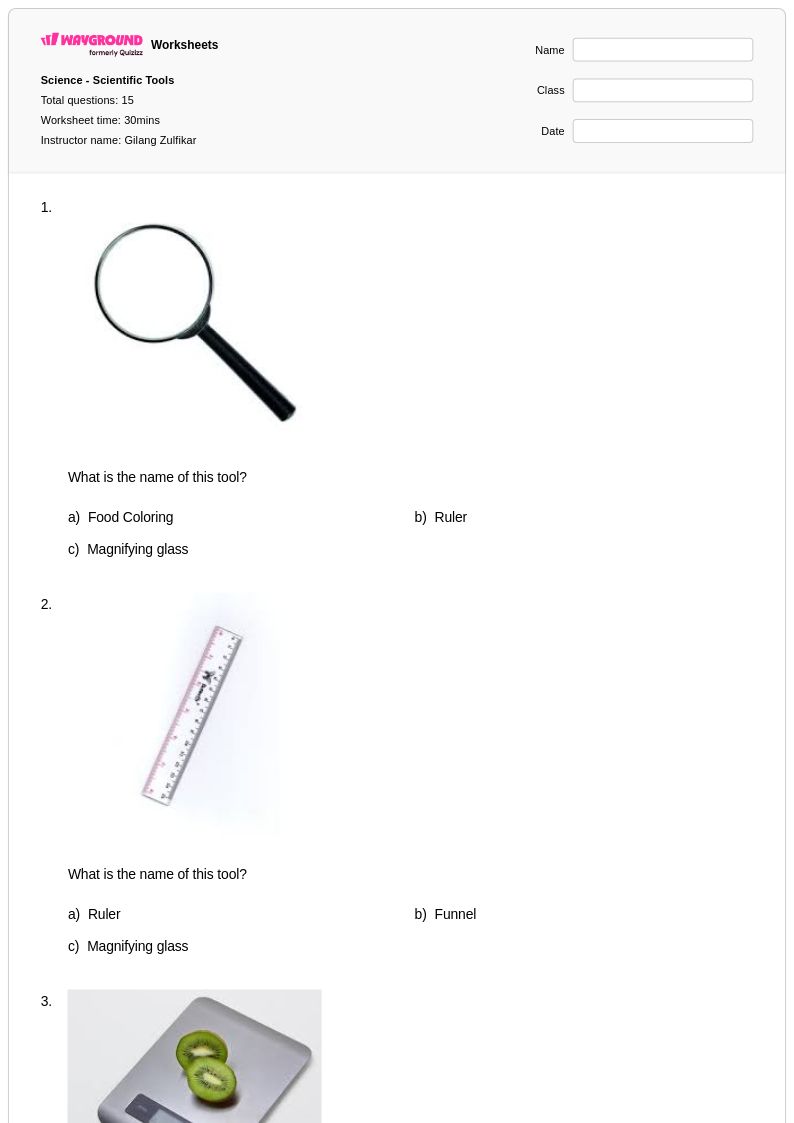
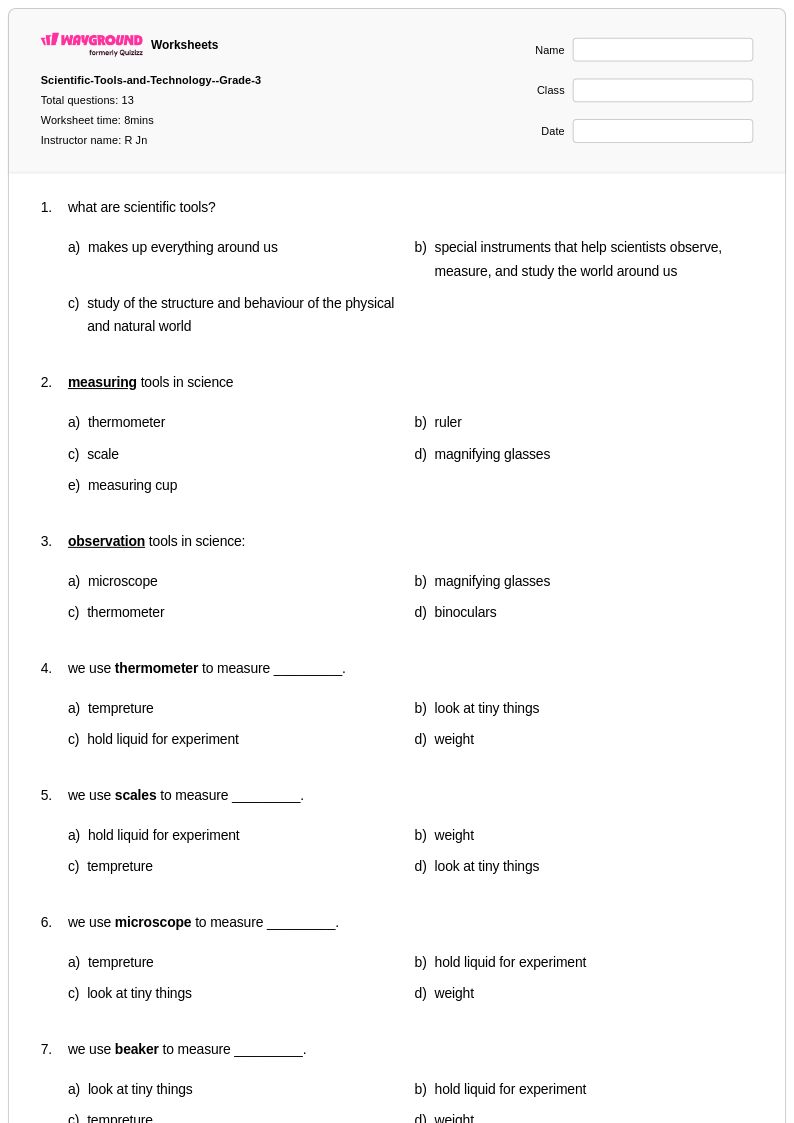
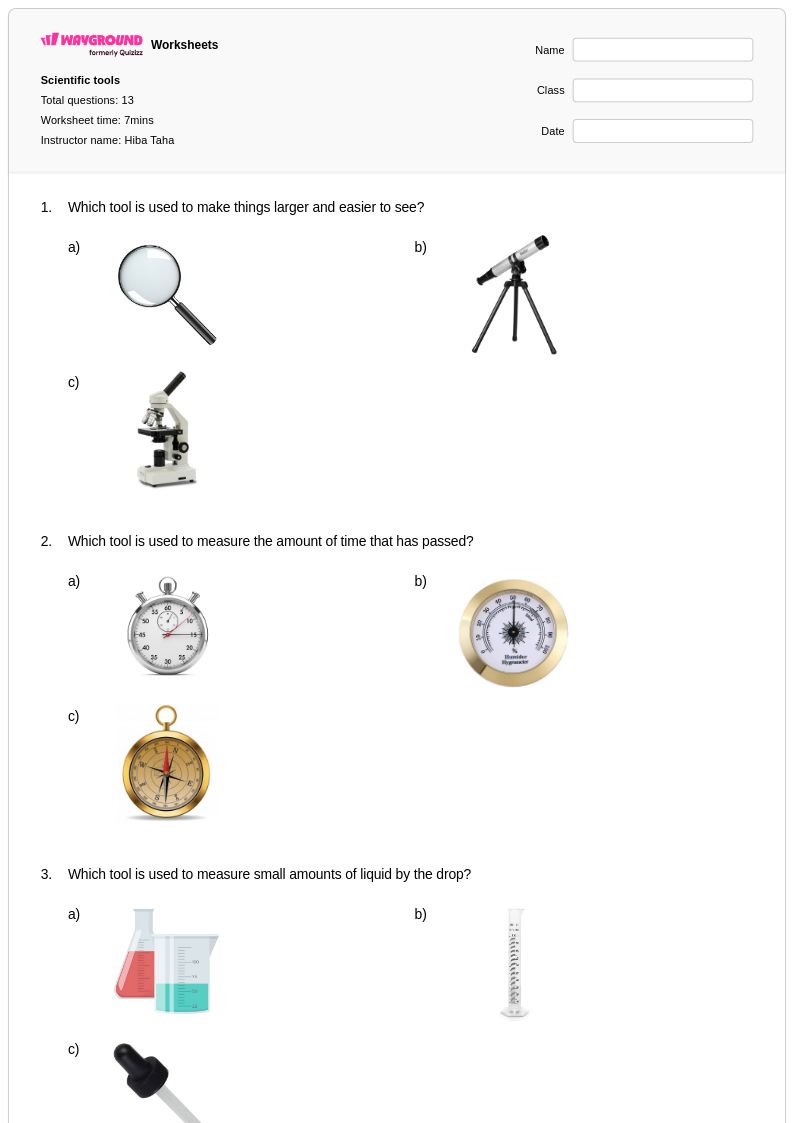
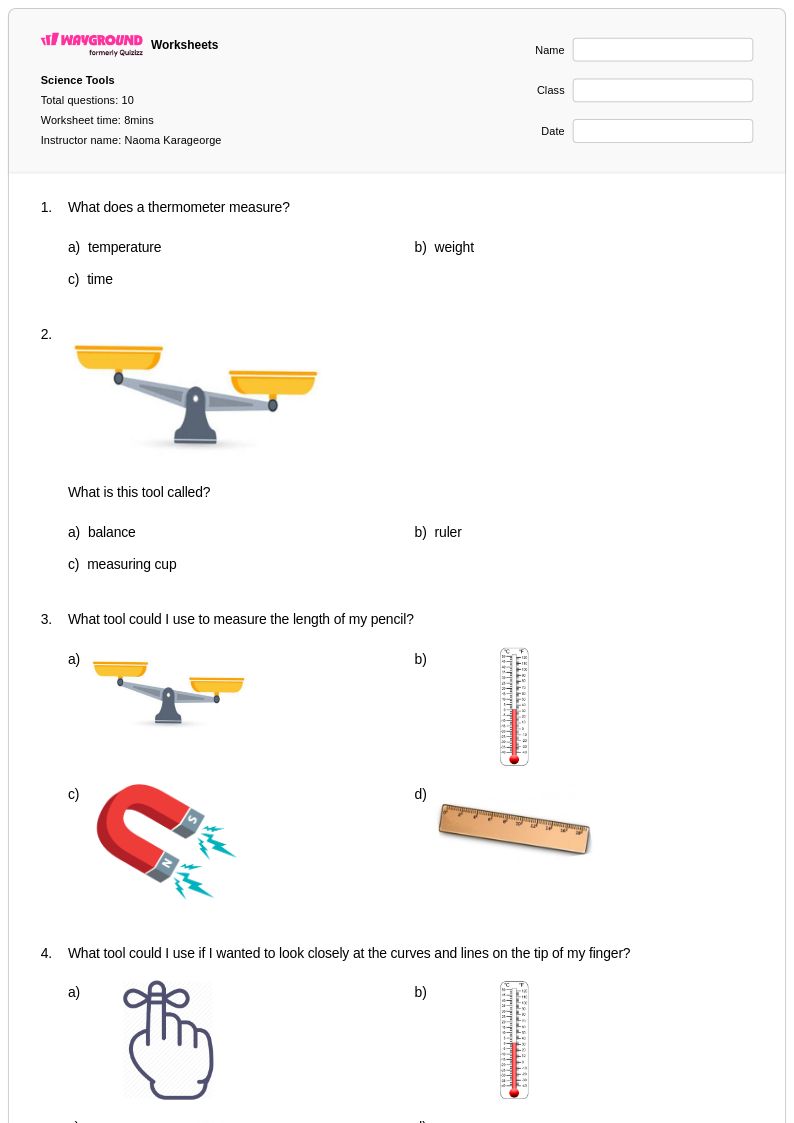
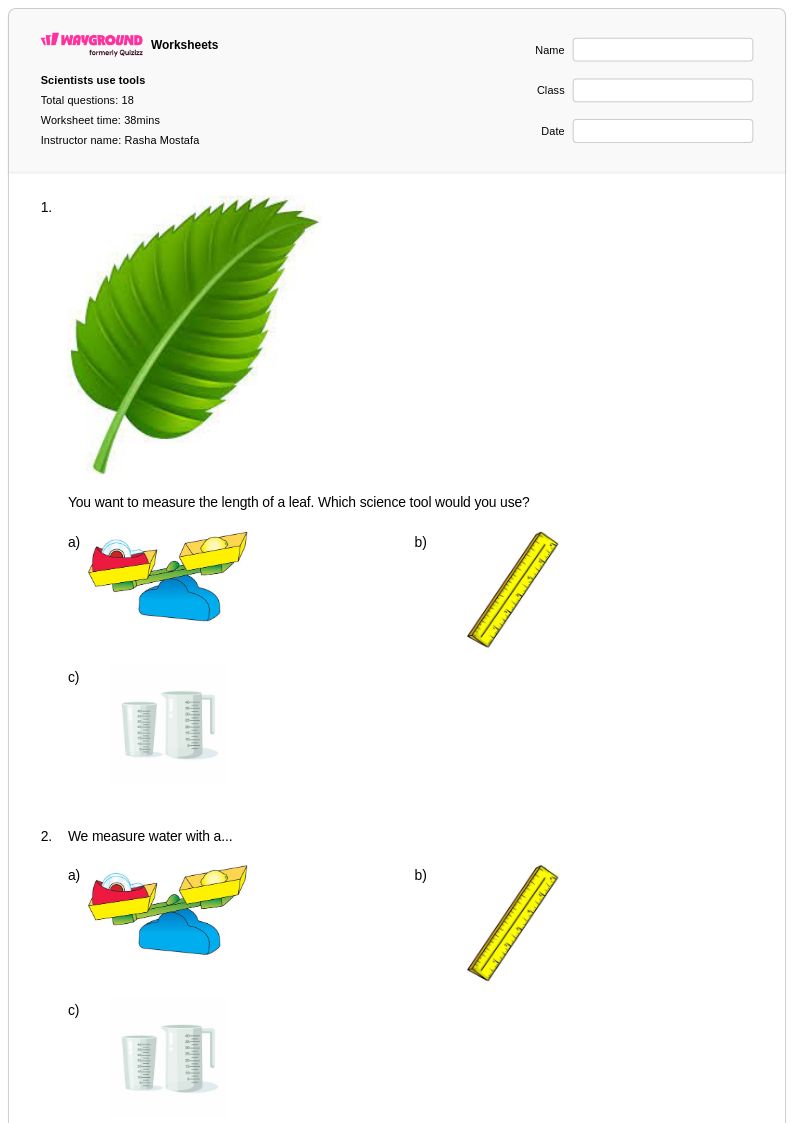
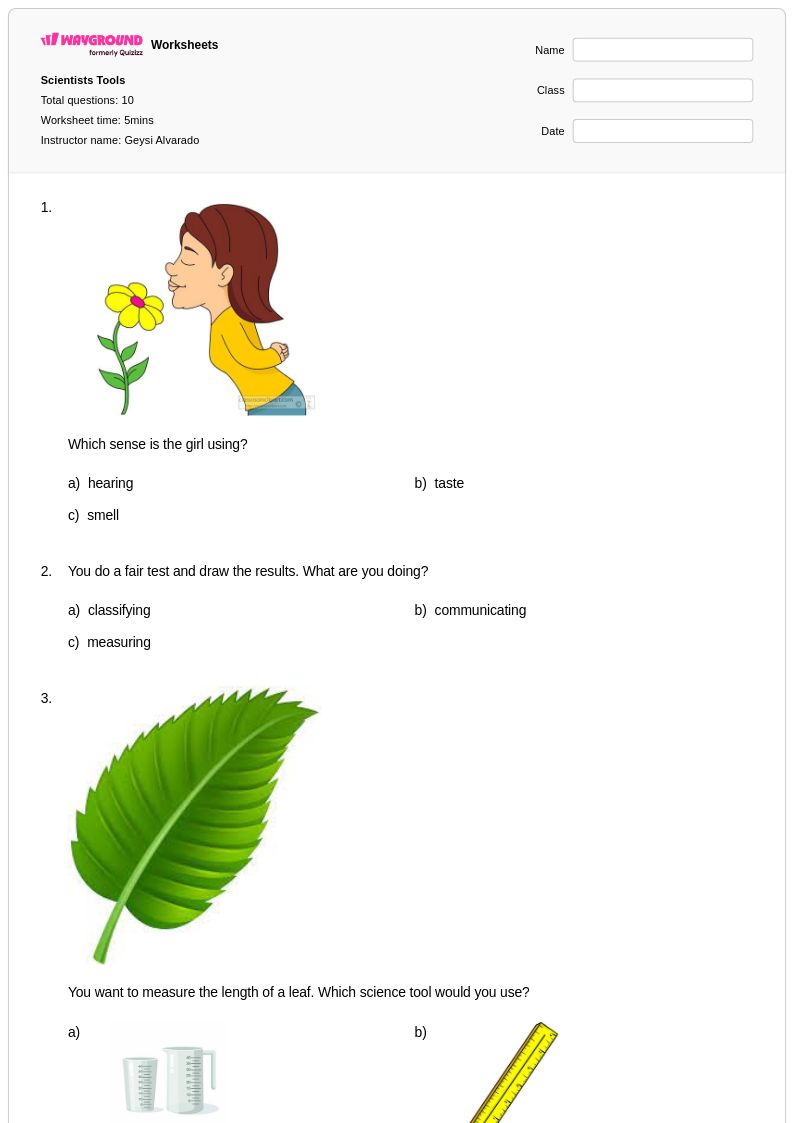
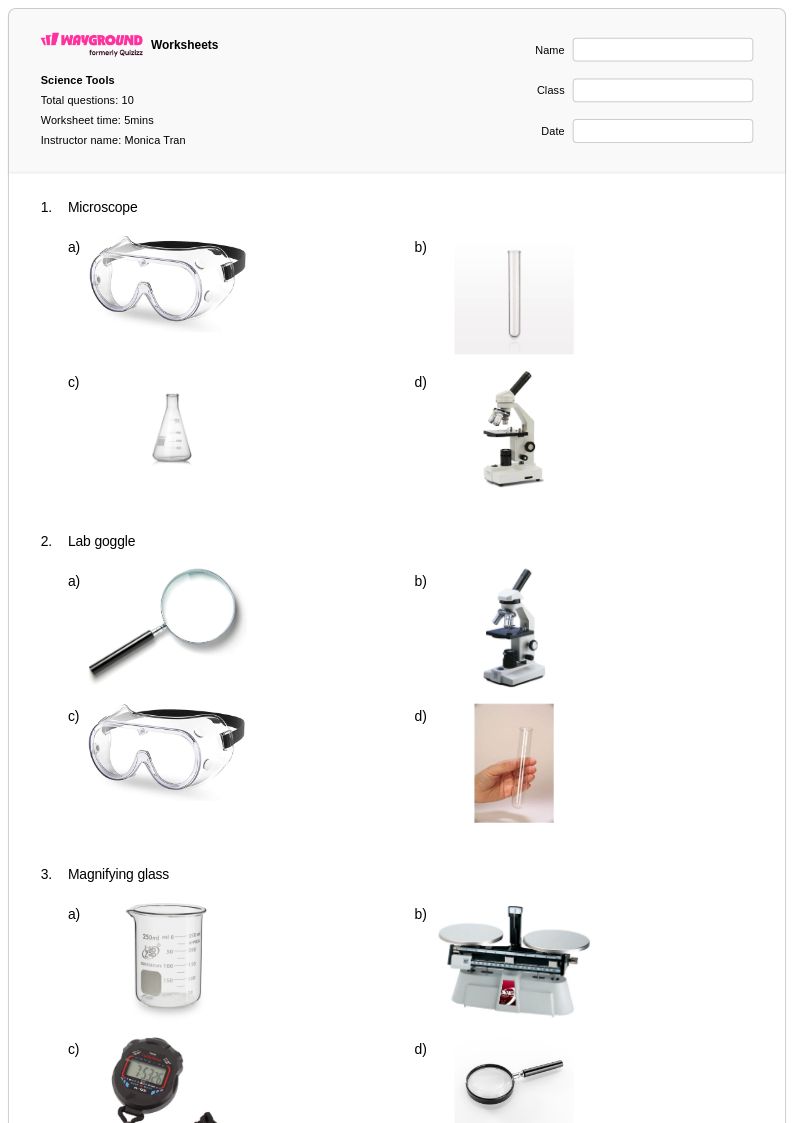
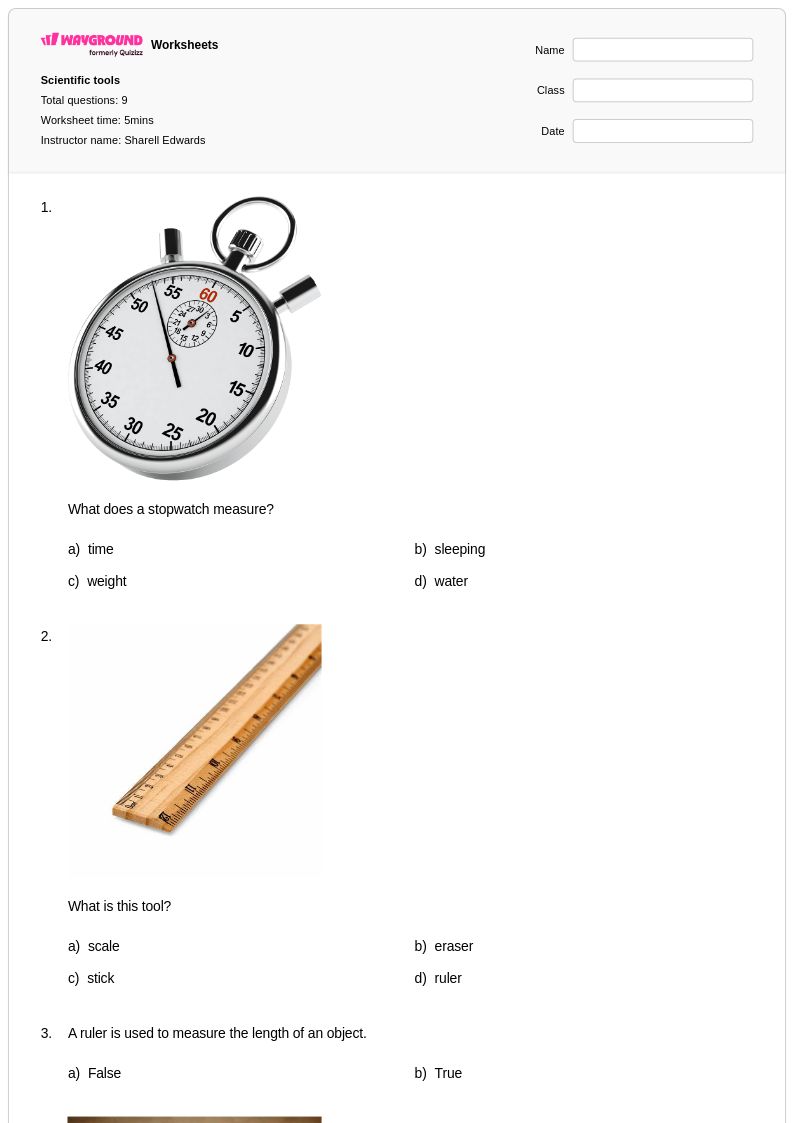
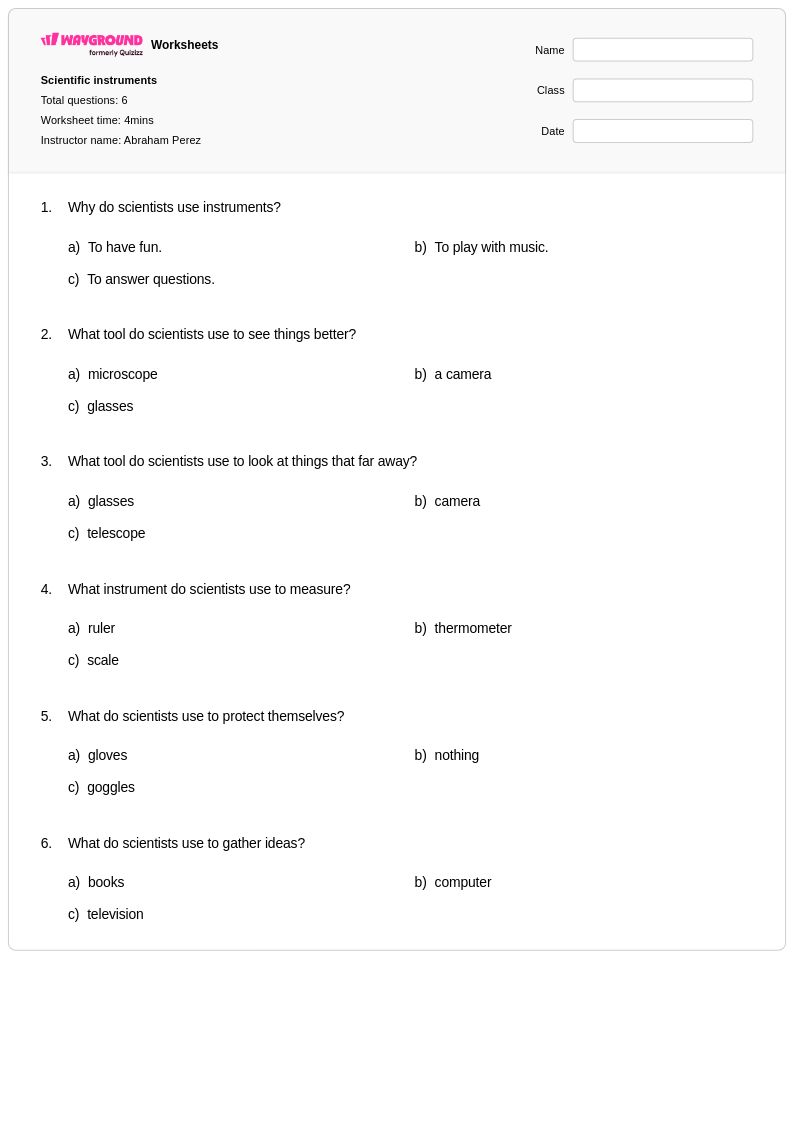
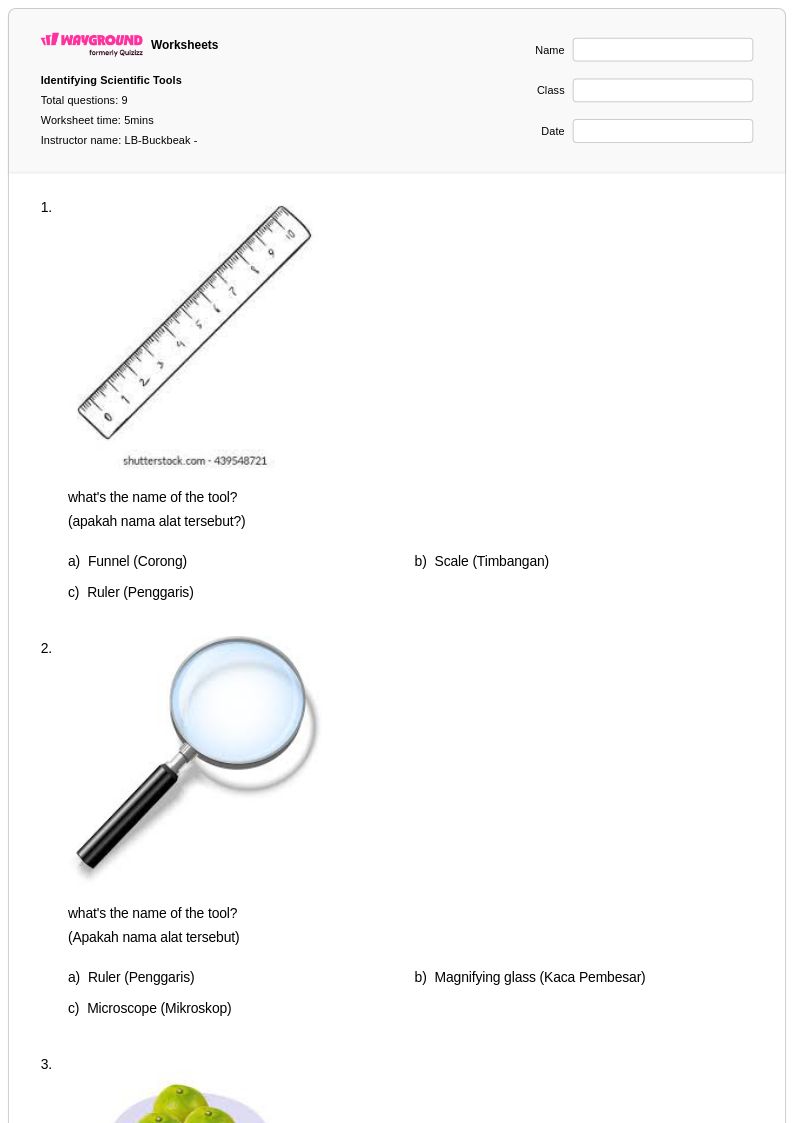
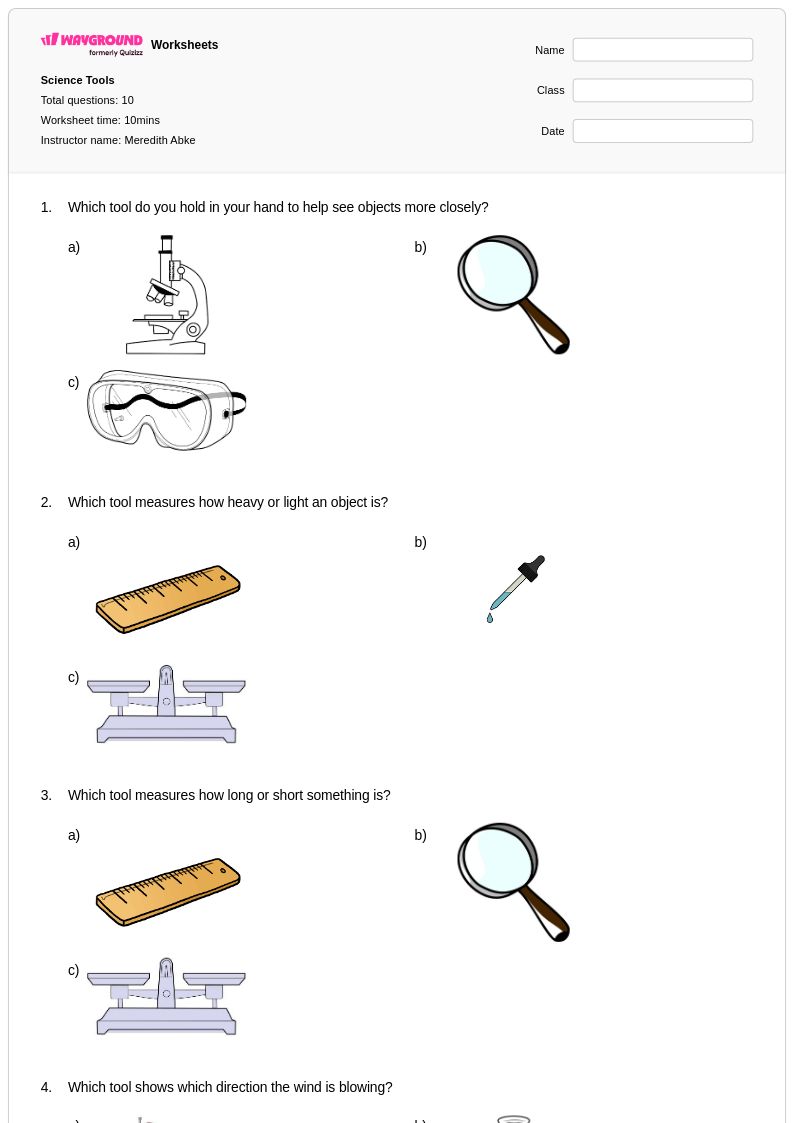
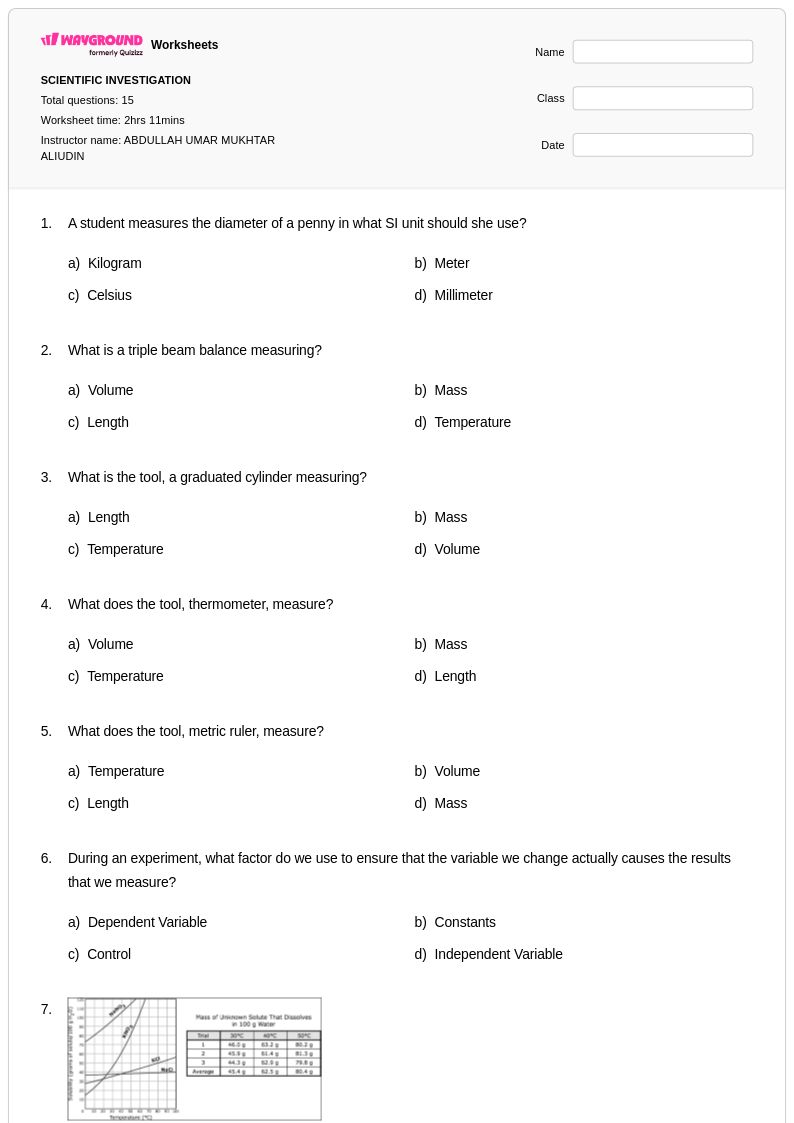
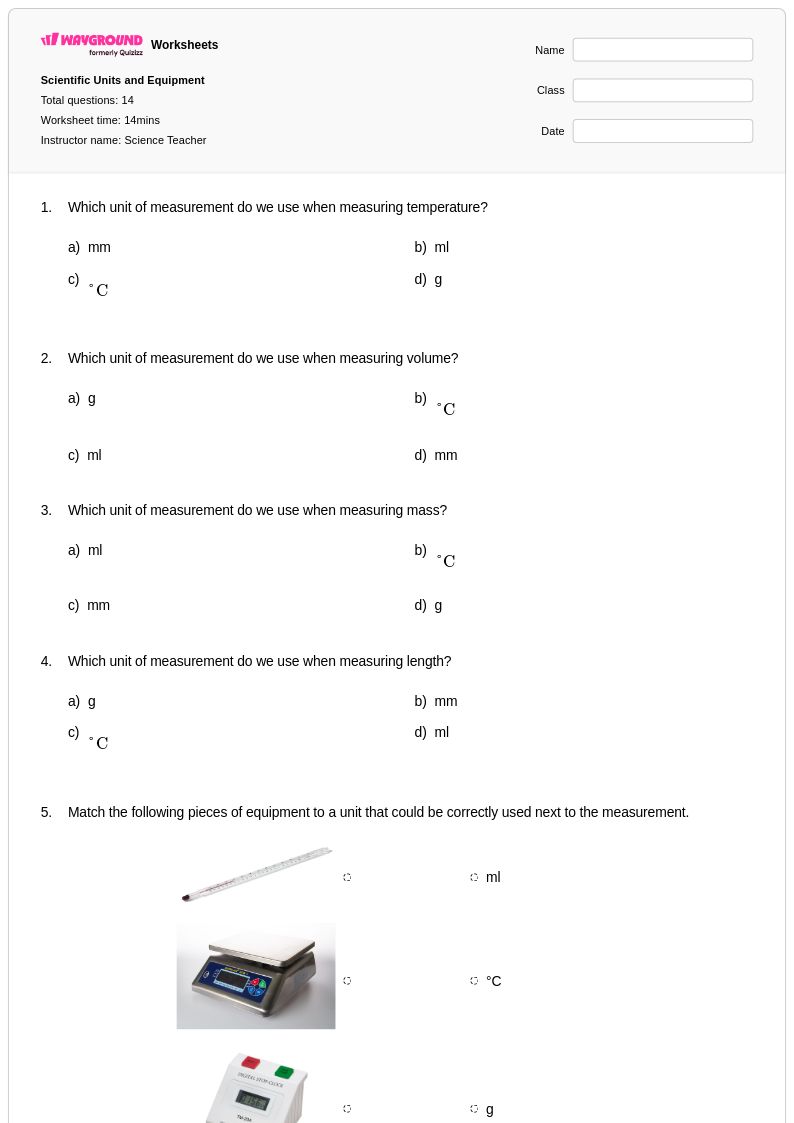
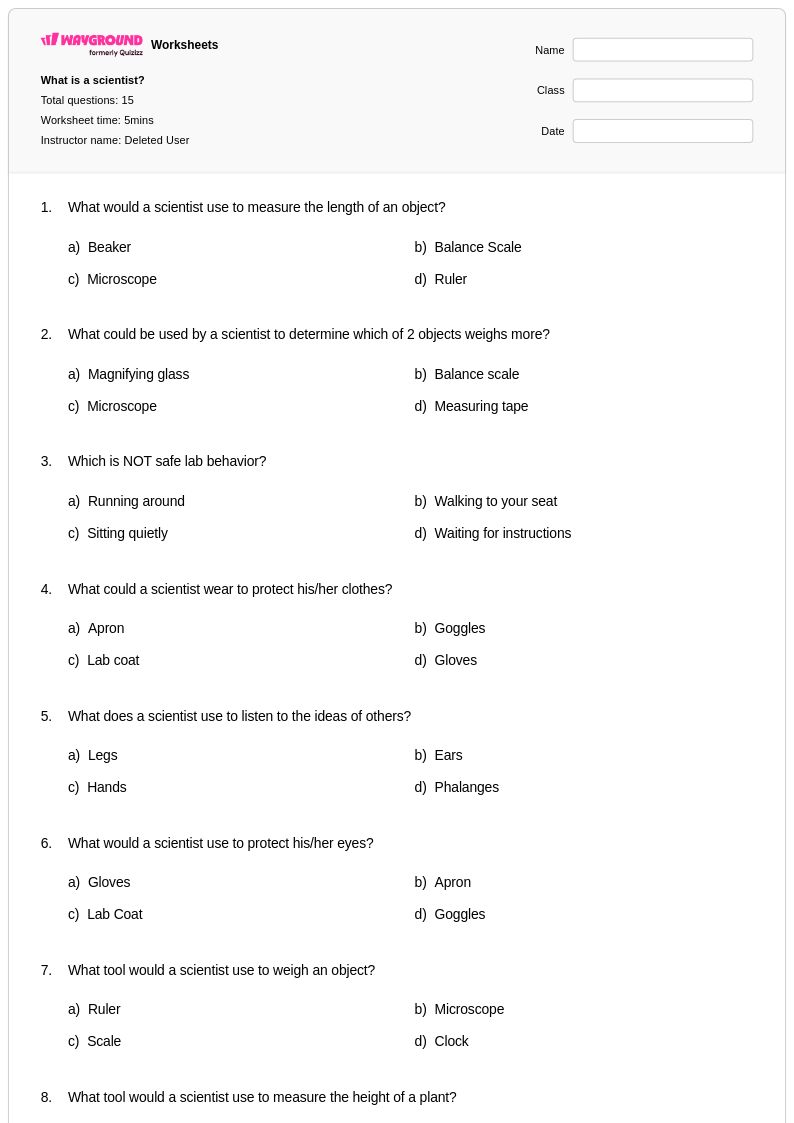
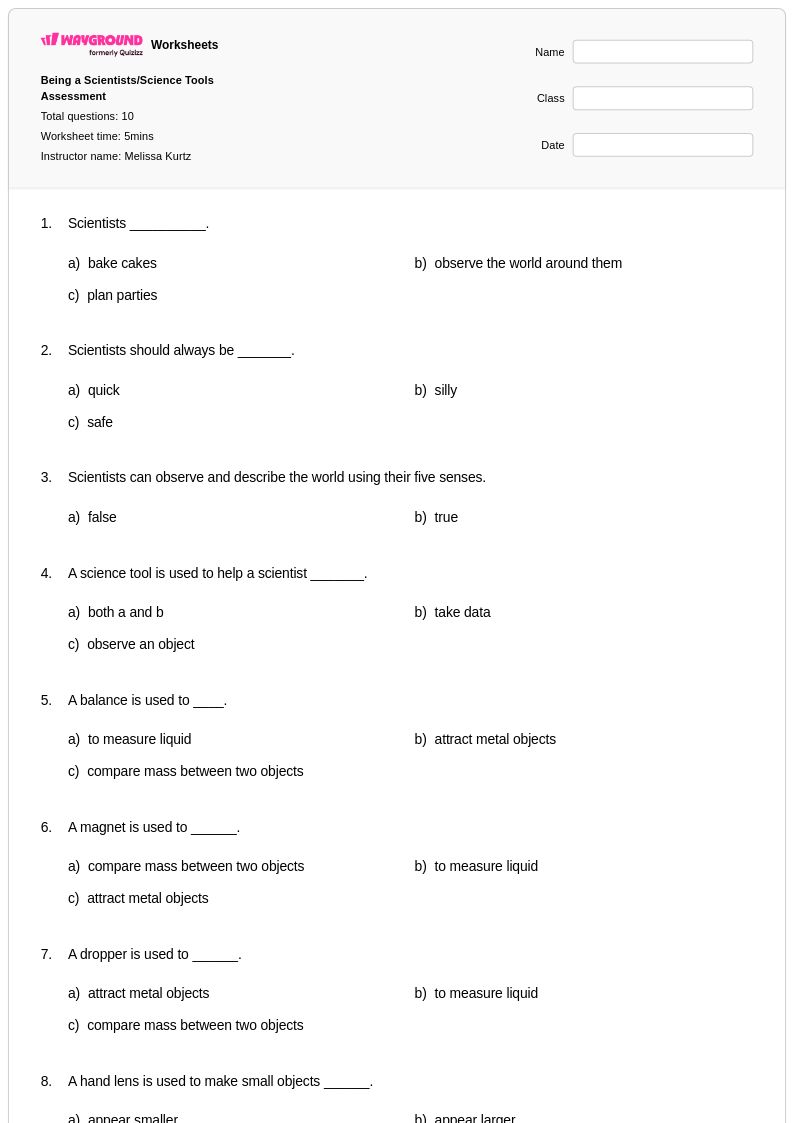
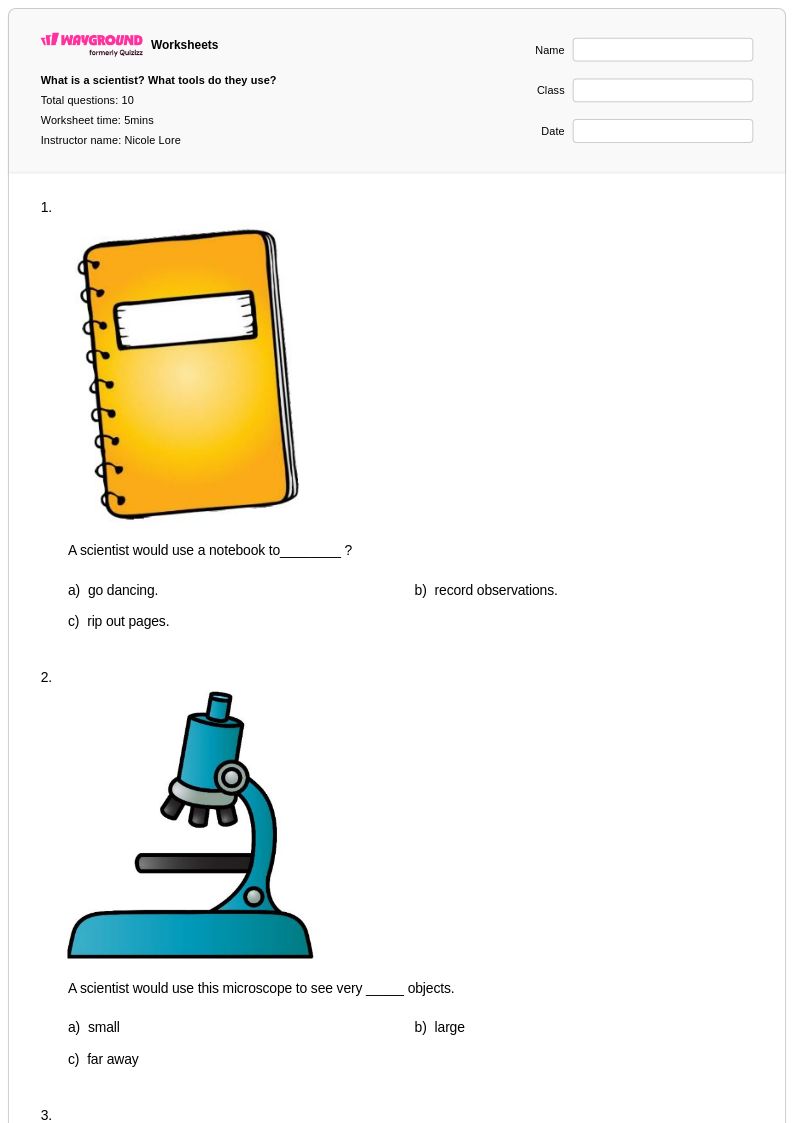
Scientific tools worksheets for Year 1 students available through Wayground (formerly Quizizz) introduce young learners to the fundamental instruments and equipment that scientists use to observe, measure, and explore the world around them. These carefully designed educational resources help first-grade students develop essential skills in identifying common scientific tools such as magnifying glasses, rulers, thermometers, and balance scales, while building their understanding of how each tool serves specific purposes in scientific investigation. The comprehensive collection includes free printable worksheets with answer keys, practice problems that encourage hands-on thinking, and pdf downloads that make classroom implementation seamless for educators seeking to strengthen their students' foundational knowledge of scientific instruments.
Wayground (formerly Quizizz) empowers teachers with millions of educator-created scientific tools worksheets specifically tailored for Year 1 learners, featuring robust search and filtering capabilities that allow quick access to standards-aligned content. The platform's differentiation tools enable teachers to customize worksheets based on individual student needs, supporting both remediation for struggling learners and enrichment opportunities for advanced students. Available in both printable and digital formats including downloadable pdfs, these scientific tools resources facilitate flexible lesson planning whether teachers need quick practice activities, comprehensive skill assessments, or interactive learning experiences that help young scientists build confidence in recognizing and understanding the purpose of essential scientific equipment.
FAQs
How do I teach students to use scientific tools correctly in the classroom?
Start by introducing each tool in isolation before combining them in lab activities. Explicitly model how to read measurements to the correct level of precision, and emphasize proper tool selection based on the variable being measured. Reinforcing tool identification and measurement reading through structured practice problems helps students internalize correct technique before they encounter tools in a live lab setting.
What exercises help students practice reading scientific measurements accurately?
Practice problems that require students to read graduated cylinders, thermometers, rulers, and balances from illustrated diagrams are highly effective for building measurement accuracy. Exercises that progress from basic scale reading to unit conversion and measurement comparison reinforce precision at multiple levels. Including problems that ask students to identify the appropriate tool for a given scenario also strengthens their decision-making around measurement.
What mistakes do students commonly make when using or reading scientific tools?
One of the most frequent errors is parallax misreading, where students read a graduated cylinder or ruler from an angle rather than at eye level, producing inaccurate values. Students also commonly confuse units or fail to record measurements to the correct number of significant figures. Another common misconception is assuming all measuring tools have the same precision, when in practice the level of precision varies significantly between instruments like a ruler and a digital balance.
How can I differentiate scientific tools instruction for students at different skill levels?
For struggling students, begin with tool identification and single-scale reading before introducing unit conversion or multi-step measurement tasks. Advanced learners benefit from scenarios that require selecting the best tool from several options and justifying their choice based on precision and context. On Wayground, teachers can apply accommodations such as reduced answer choices or read-aloud support to individual students, allowing the same worksheet to serve diverse learners without requiring separate materials.
How do I use Wayground's scientific tools worksheets in my classroom?
Wayground's scientific tools worksheets are available as printable PDFs, making them easy to distribute during hands-on lab preparation or as take-home review. They are also available in digital formats, allowing teachers to assign them through technology-integrated environments and host them as a quiz directly on Wayground. Each worksheet includes a complete answer key, so teachers can use them for guided practice, independent work, or formative assessment with minimal prep.
Which scientific tools should students know how to use at the middle and high school level?
At the middle school level, students are typically expected to demonstrate proficiency with rulers, graduated cylinders, triple-beam balances, thermometers, and basic microscopes. High school students build on this foundation by working with more precise instruments such as digital sensors, analytical balances, and volumetric glassware, and are expected to understand the limitations and appropriate use cases for each tool. Consistent practice with measurement accuracy and tool selection across these instruments prepares students for both standardized assessments and laboratory coursework.