Free Printable Scramble for Africa Worksheets for Year 6
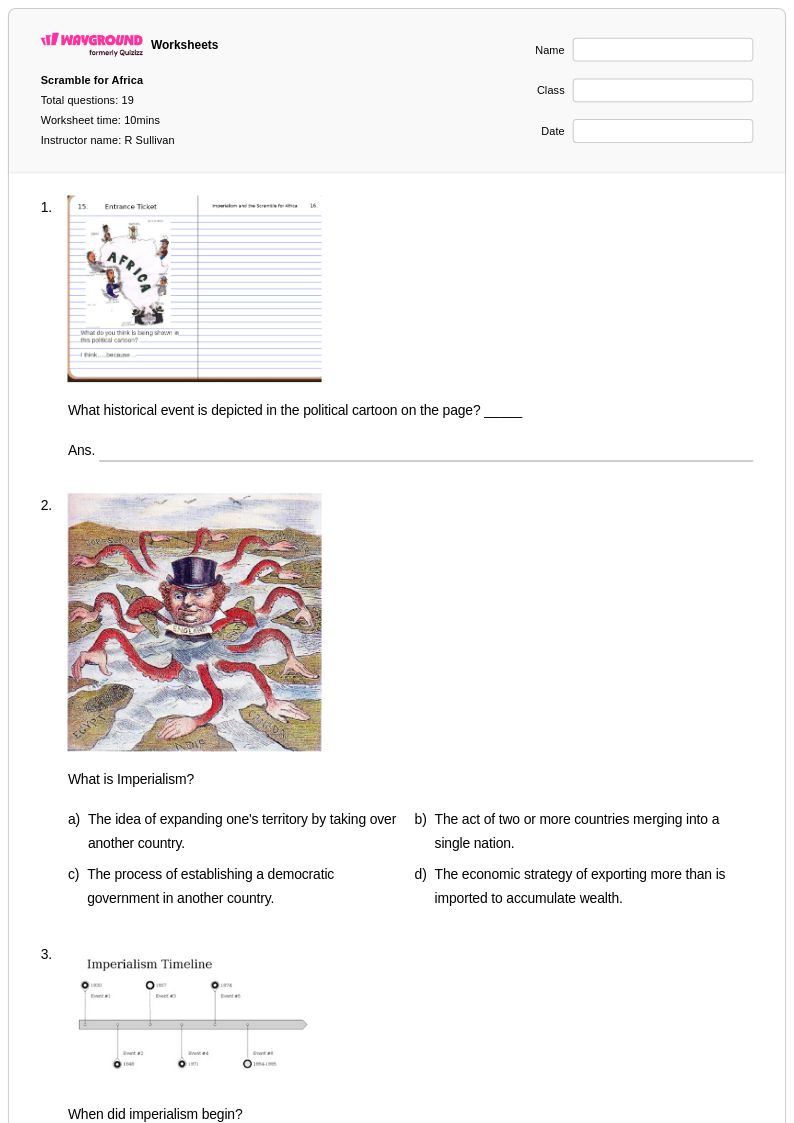
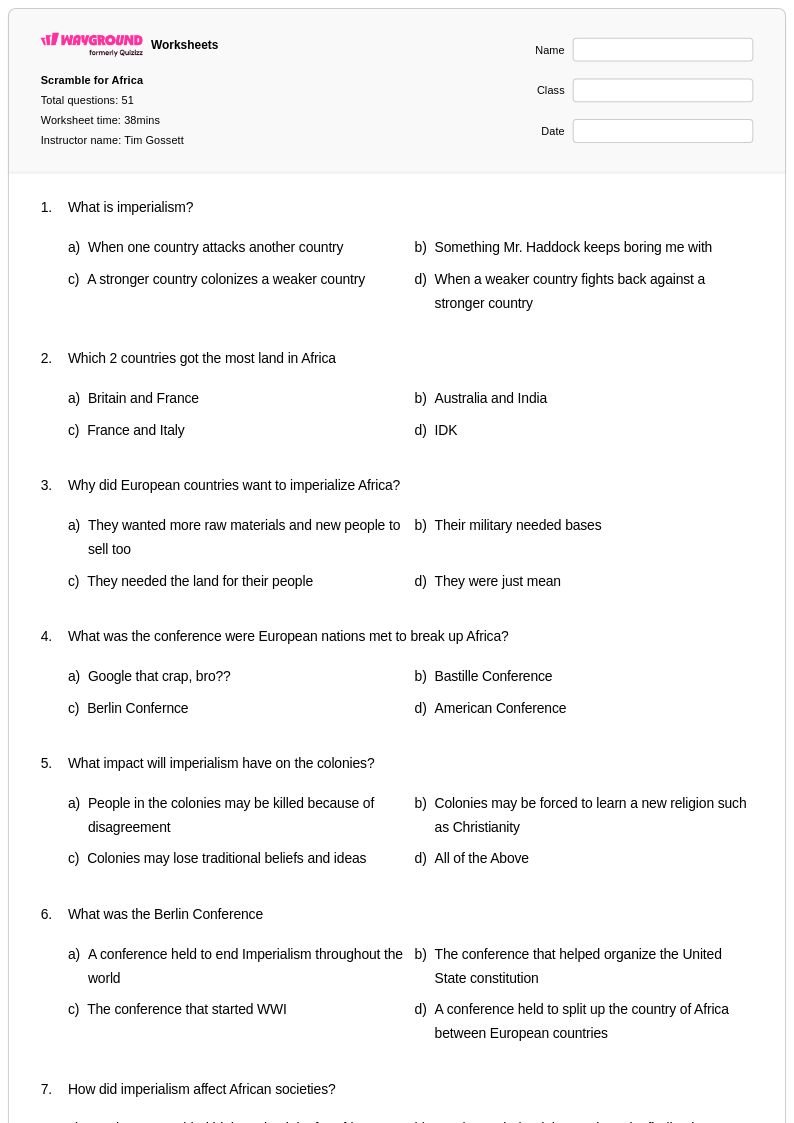
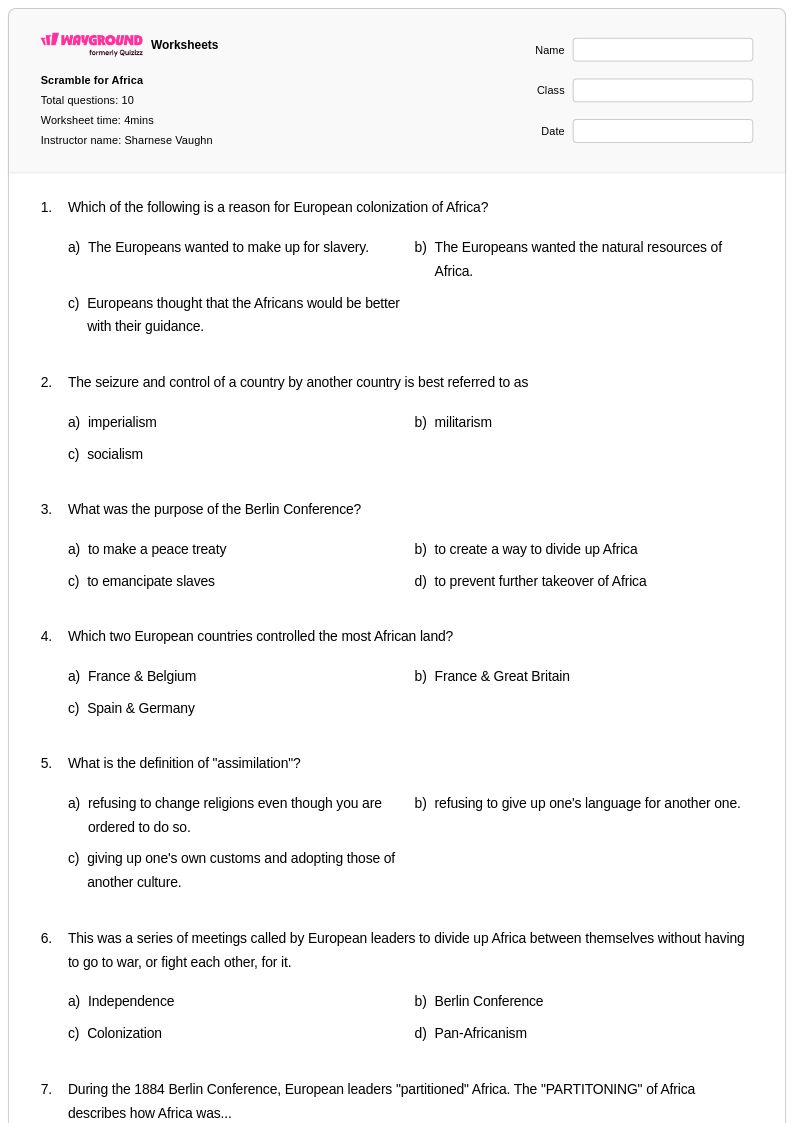
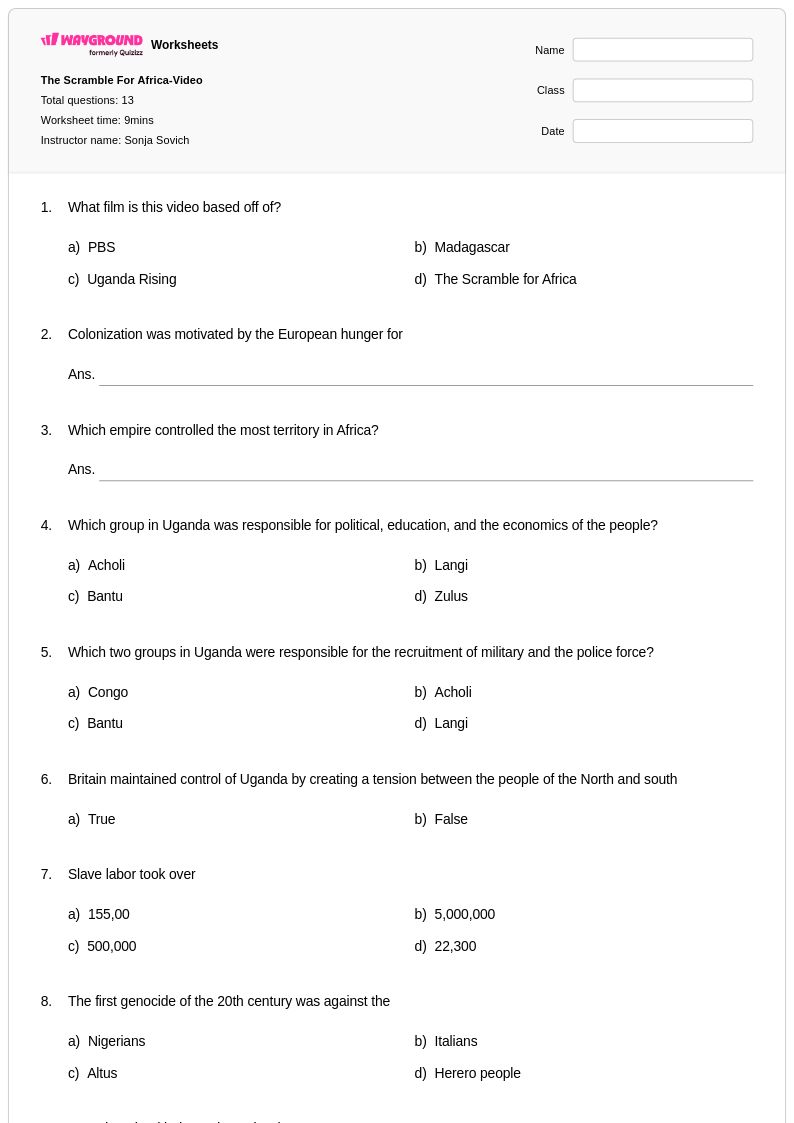
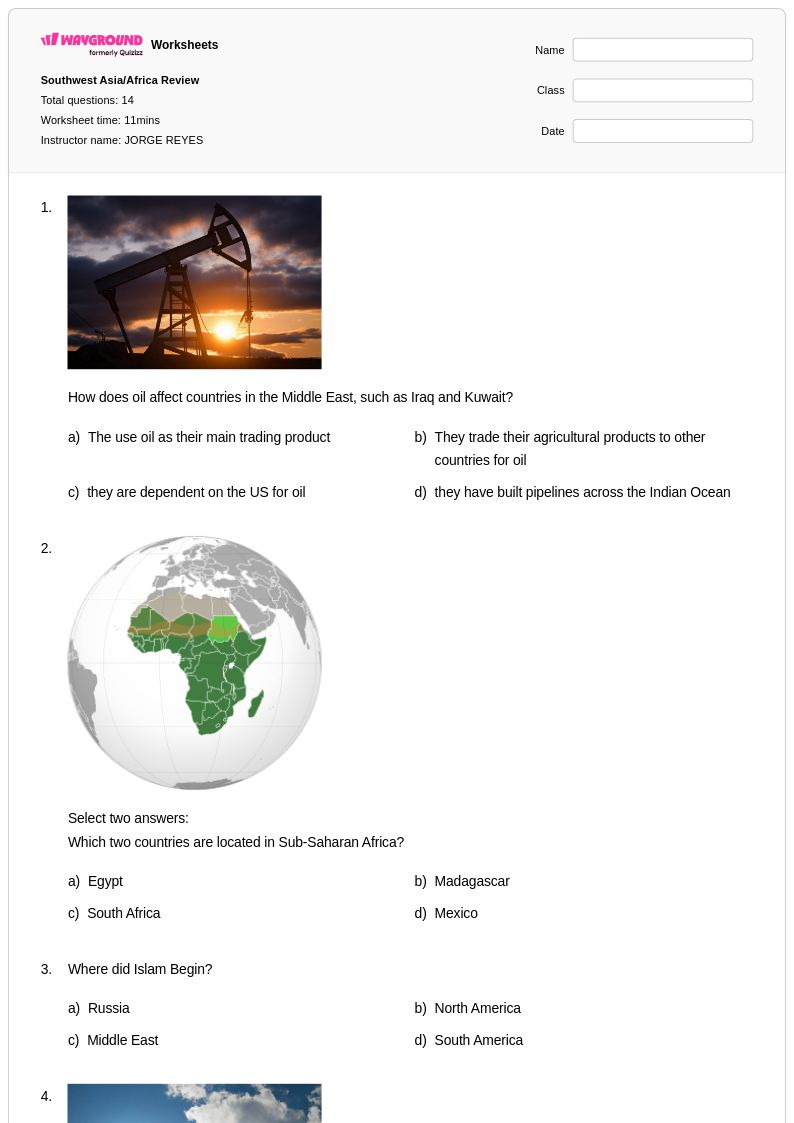
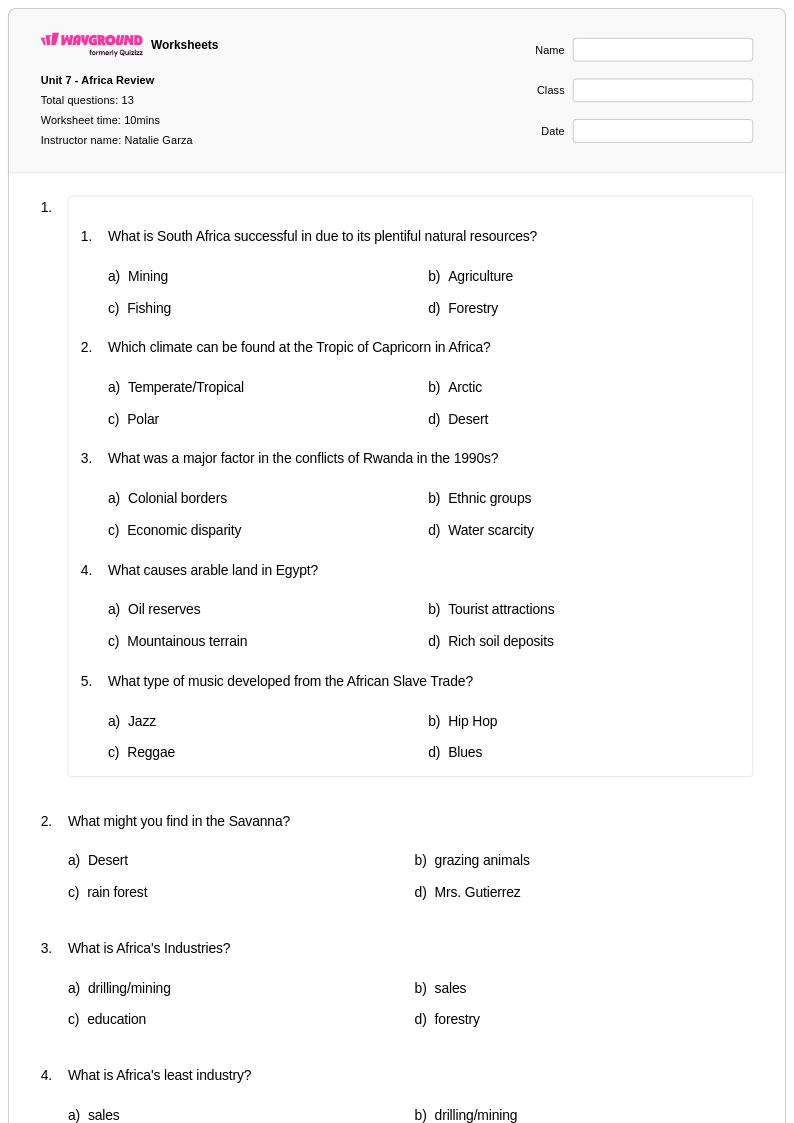
Year 6 Scramble for Africa worksheets from Wayground help students explore European colonization of Africa through engaging printables, practice problems, and comprehensive answer keys for effective social studies learning.
Explore printable Scramble for Africa worksheets for Year 6
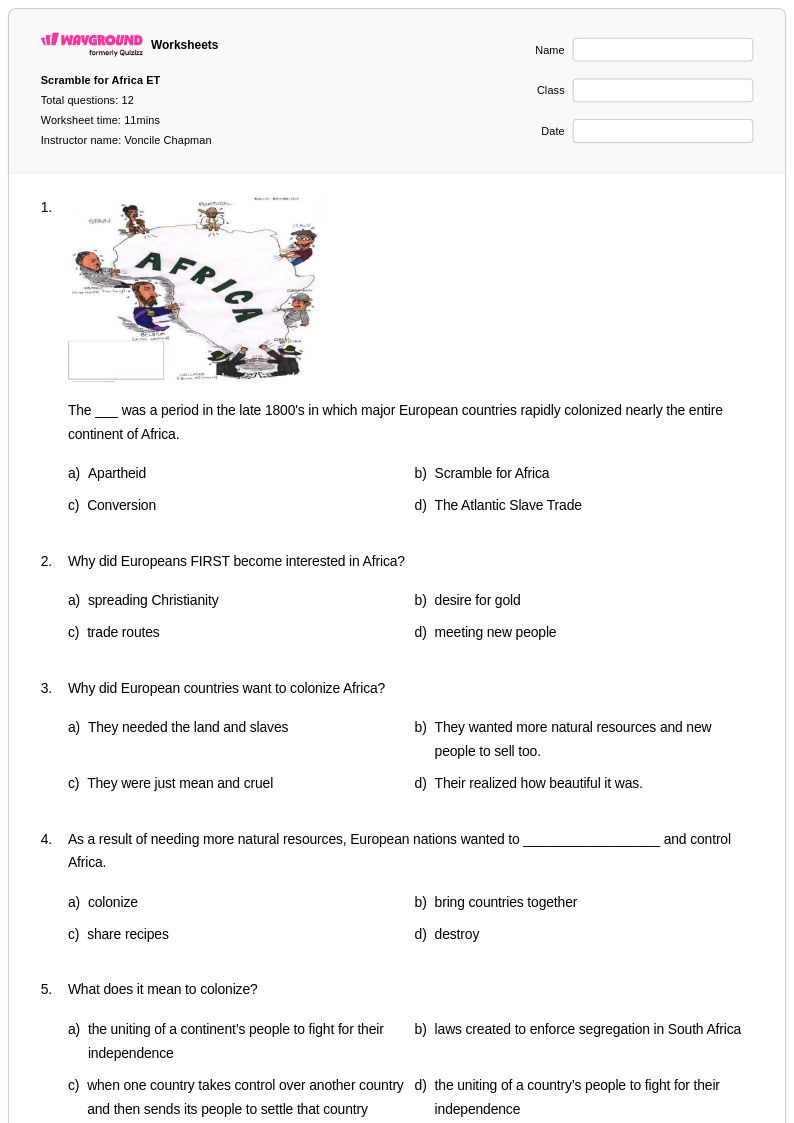
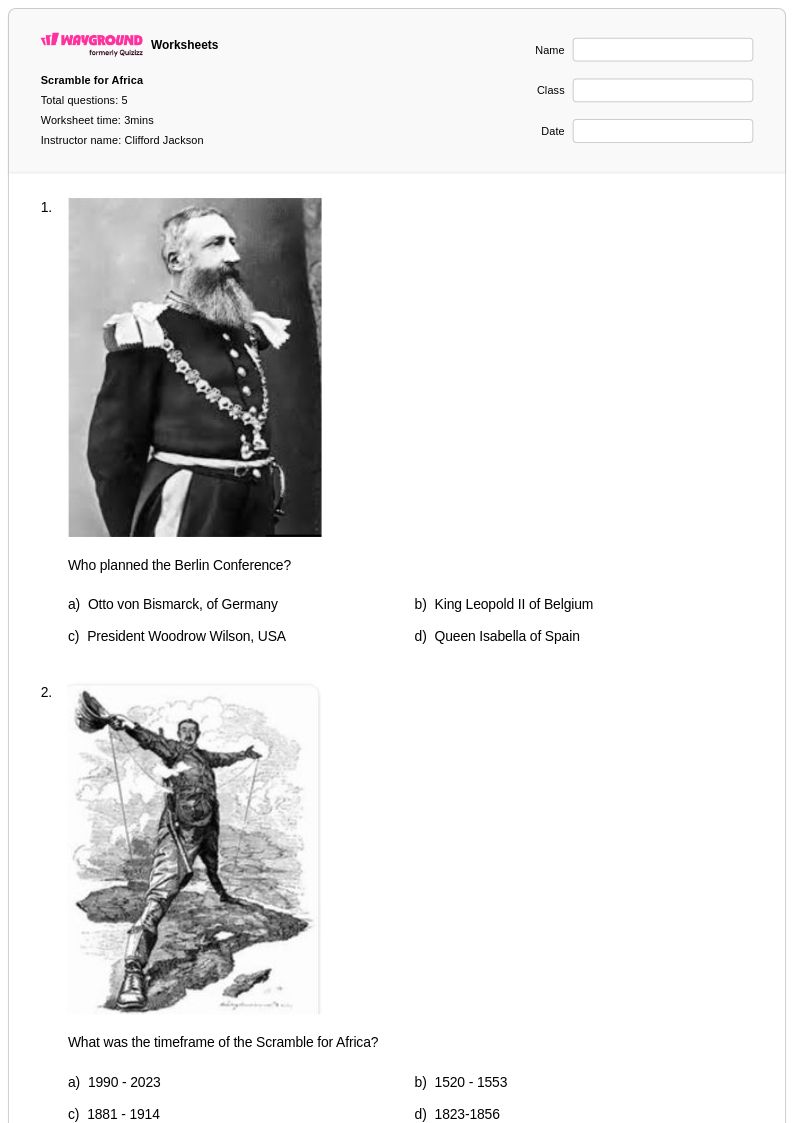
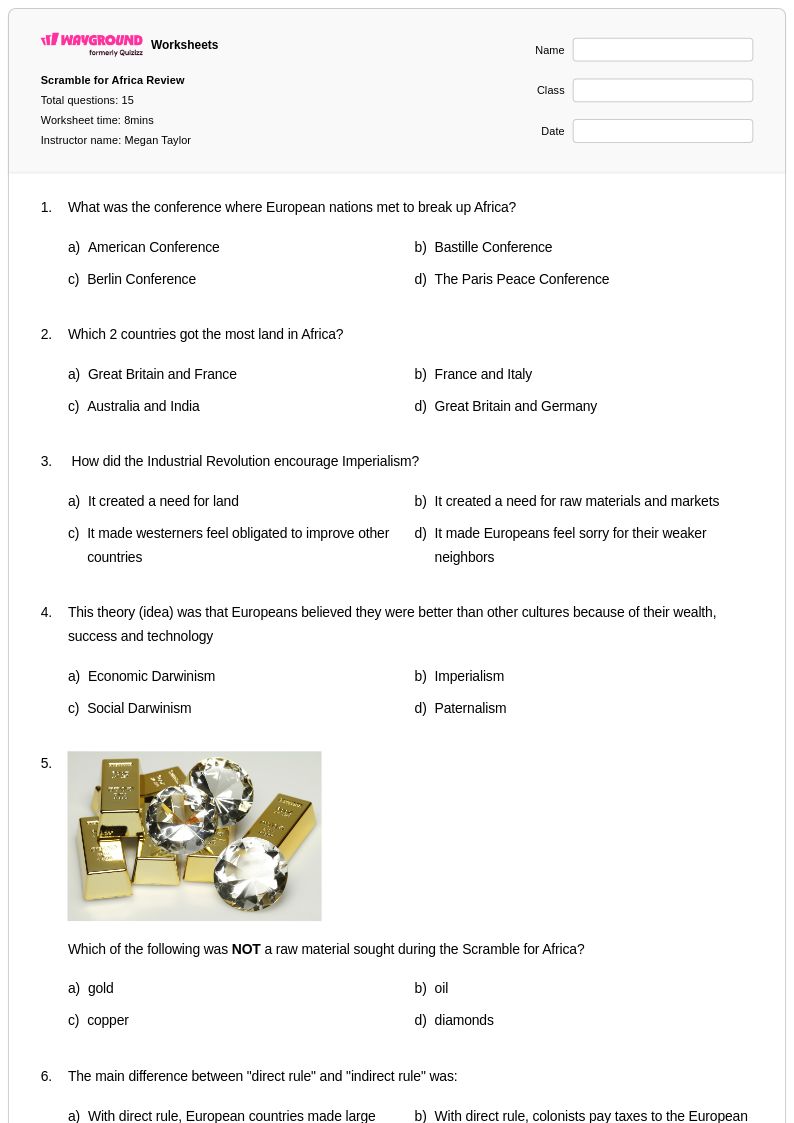
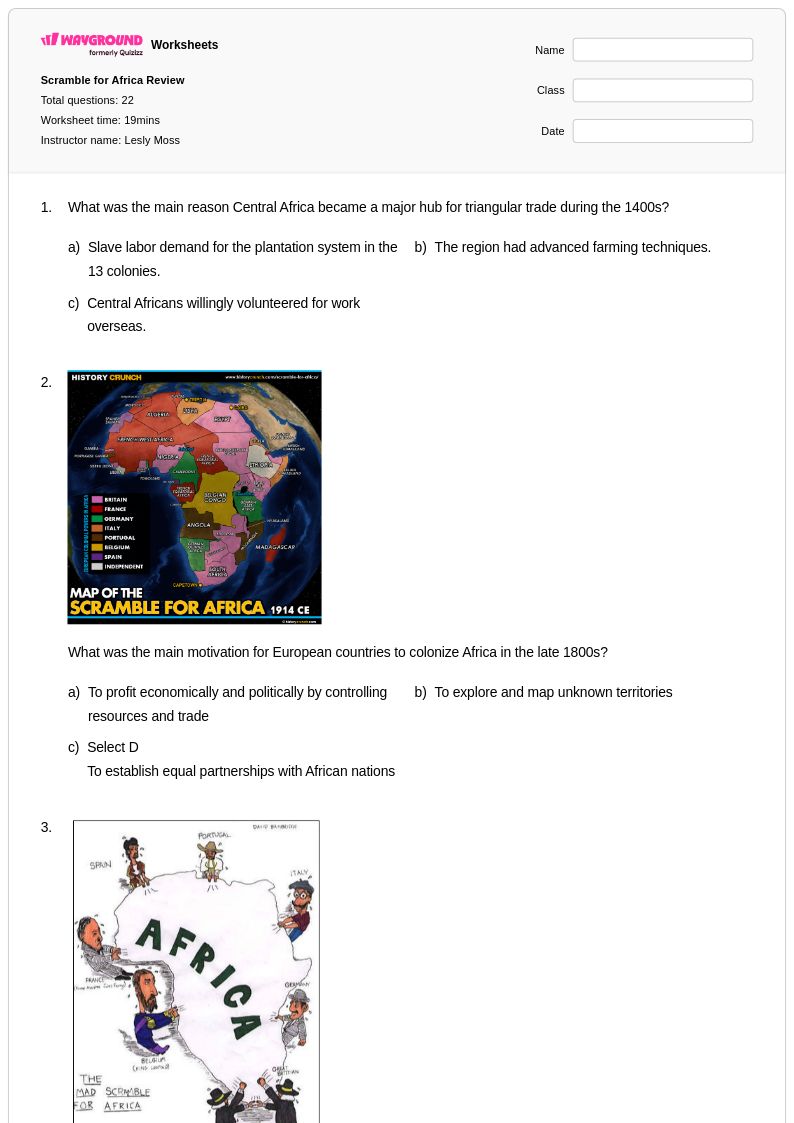
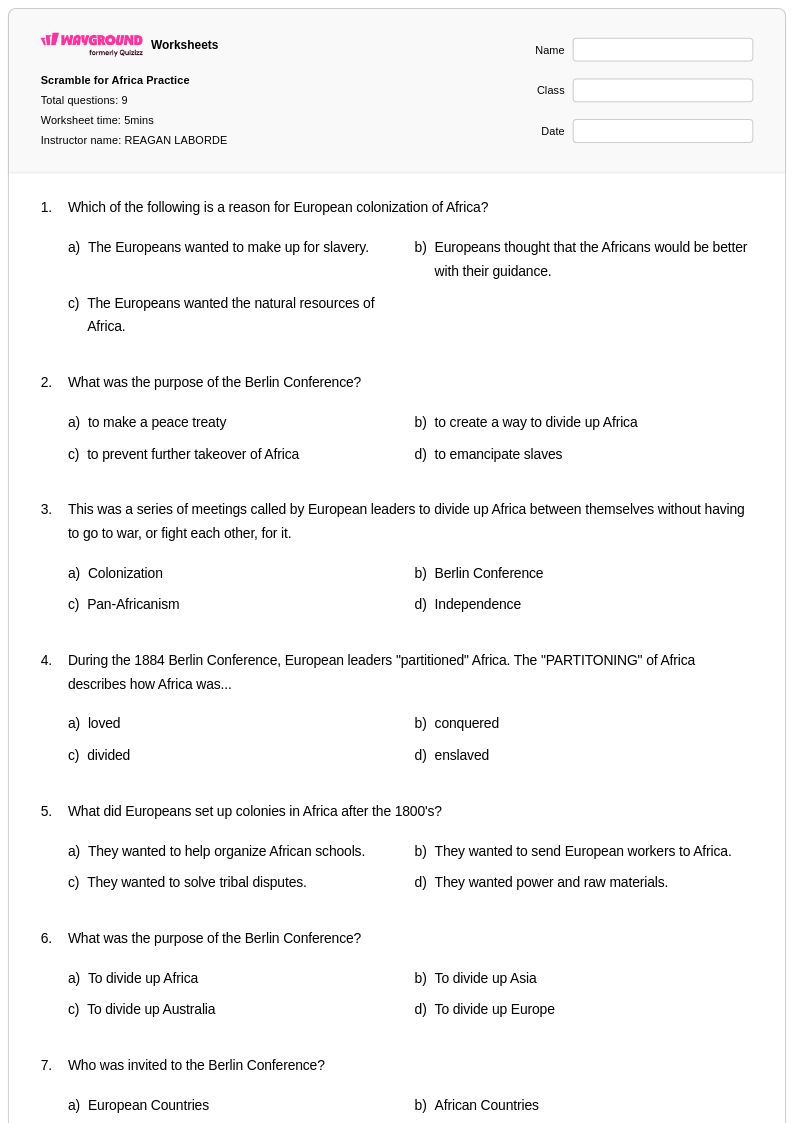
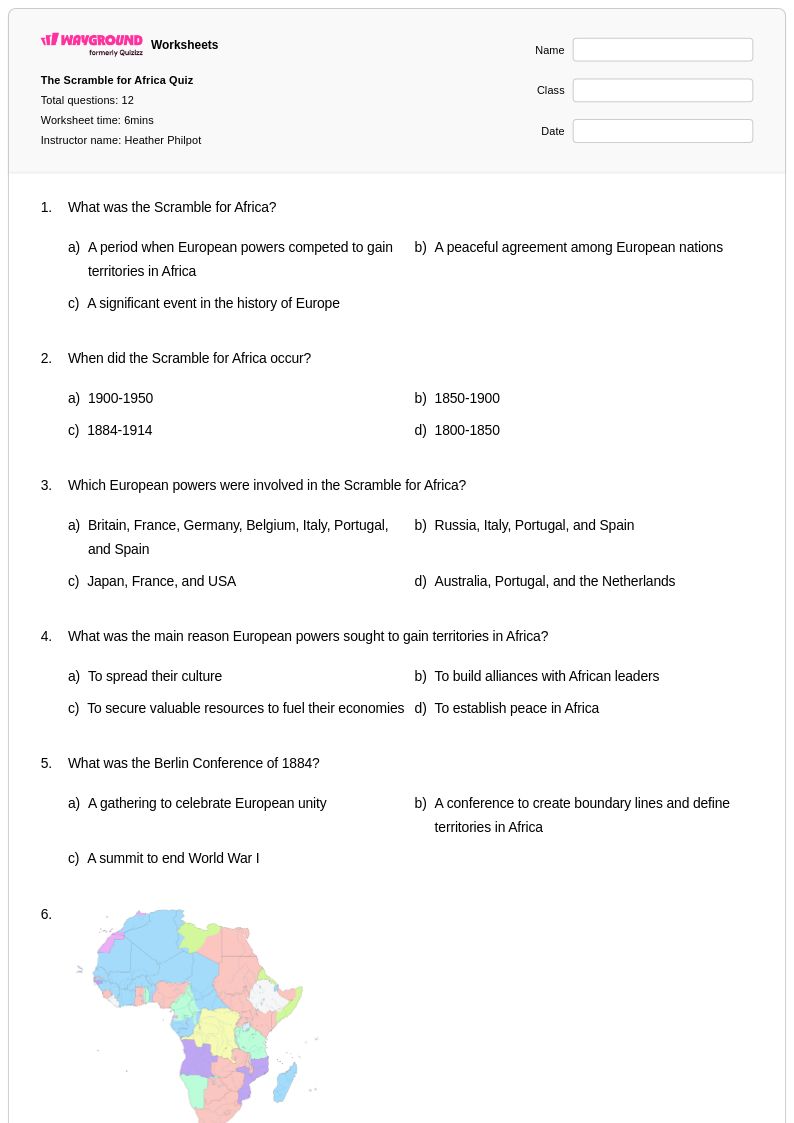
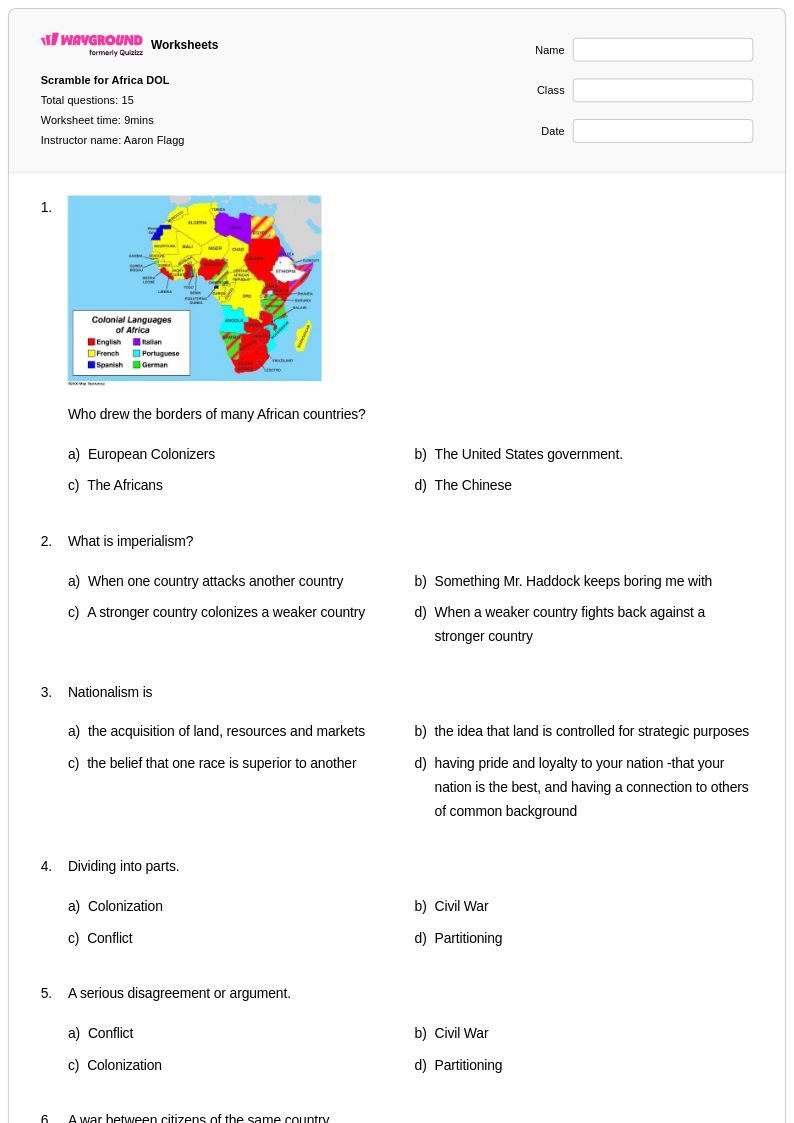
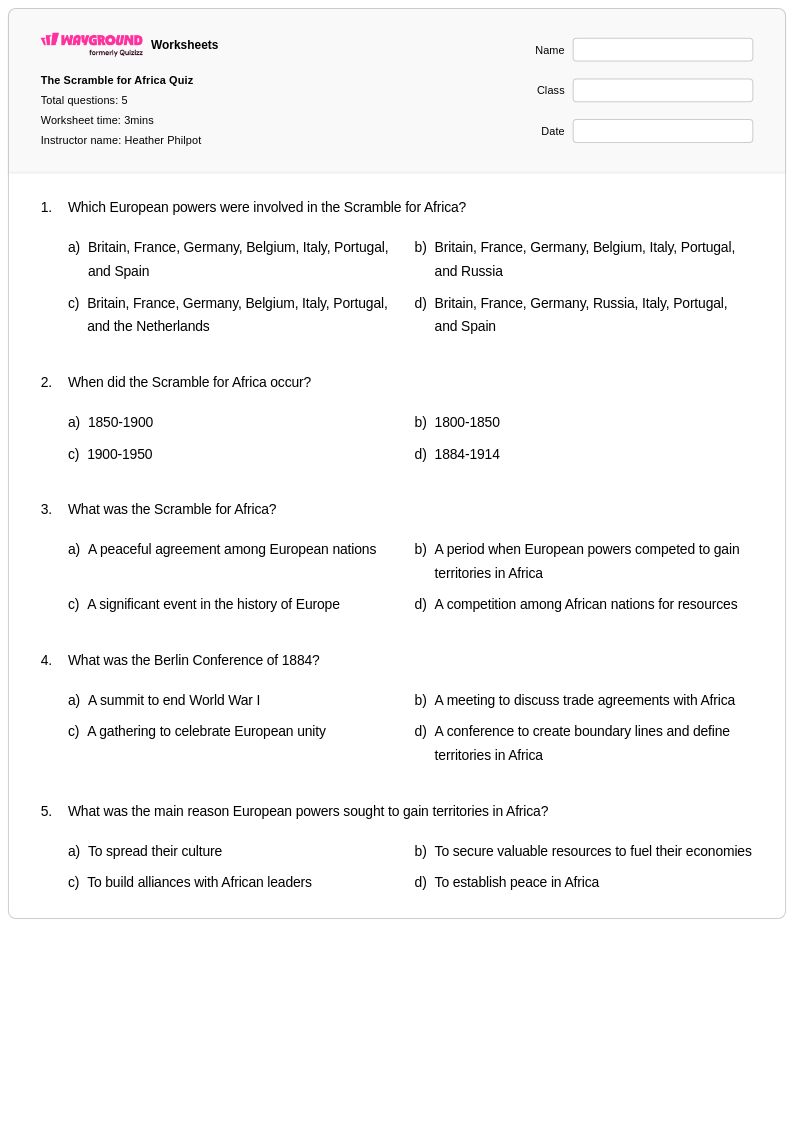
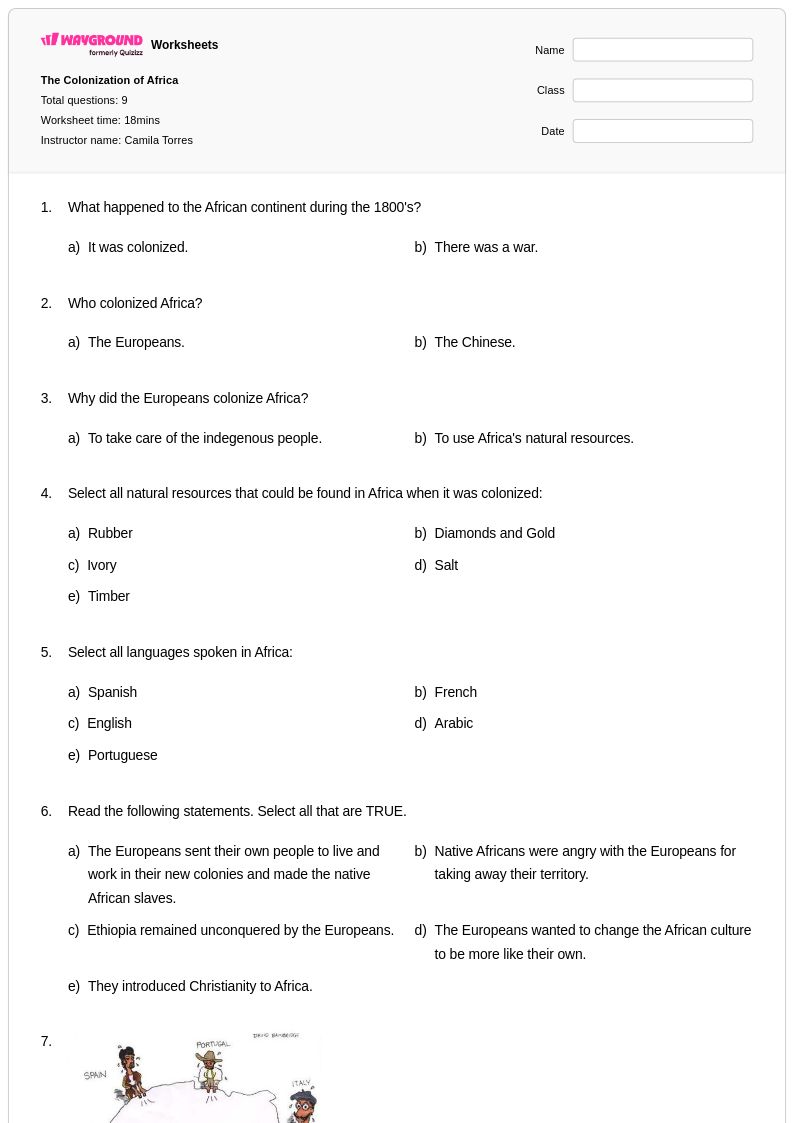
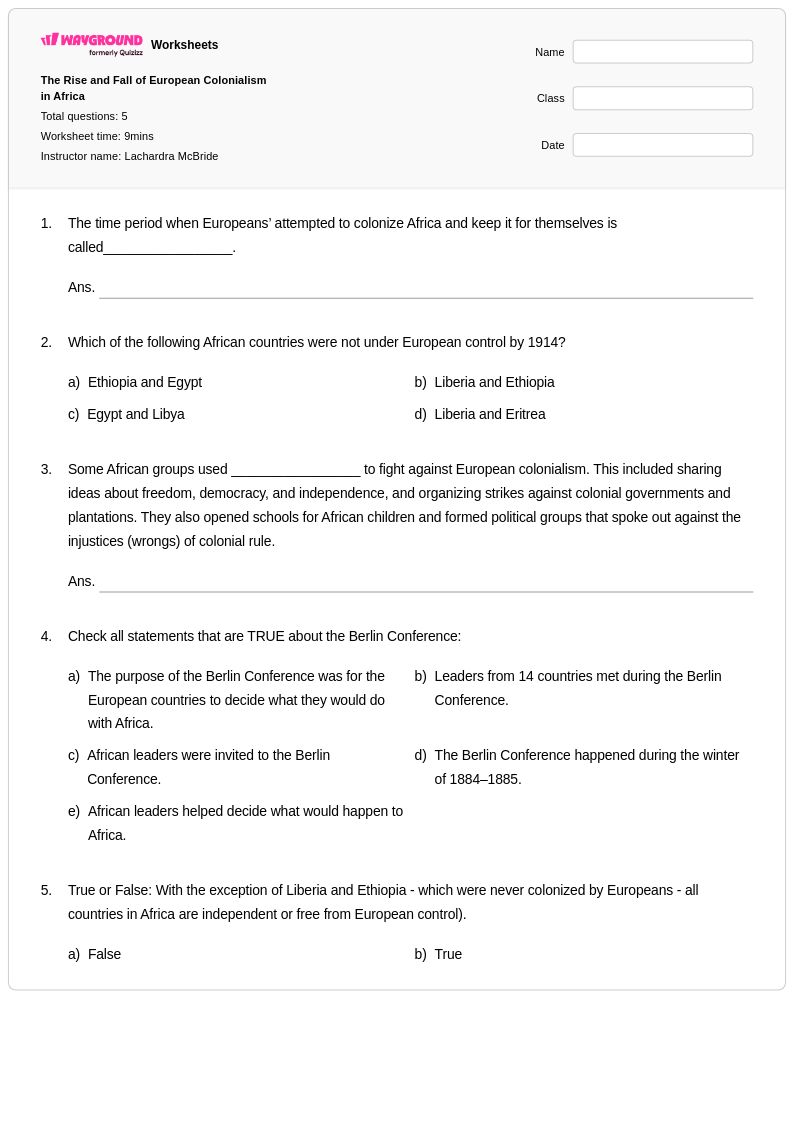
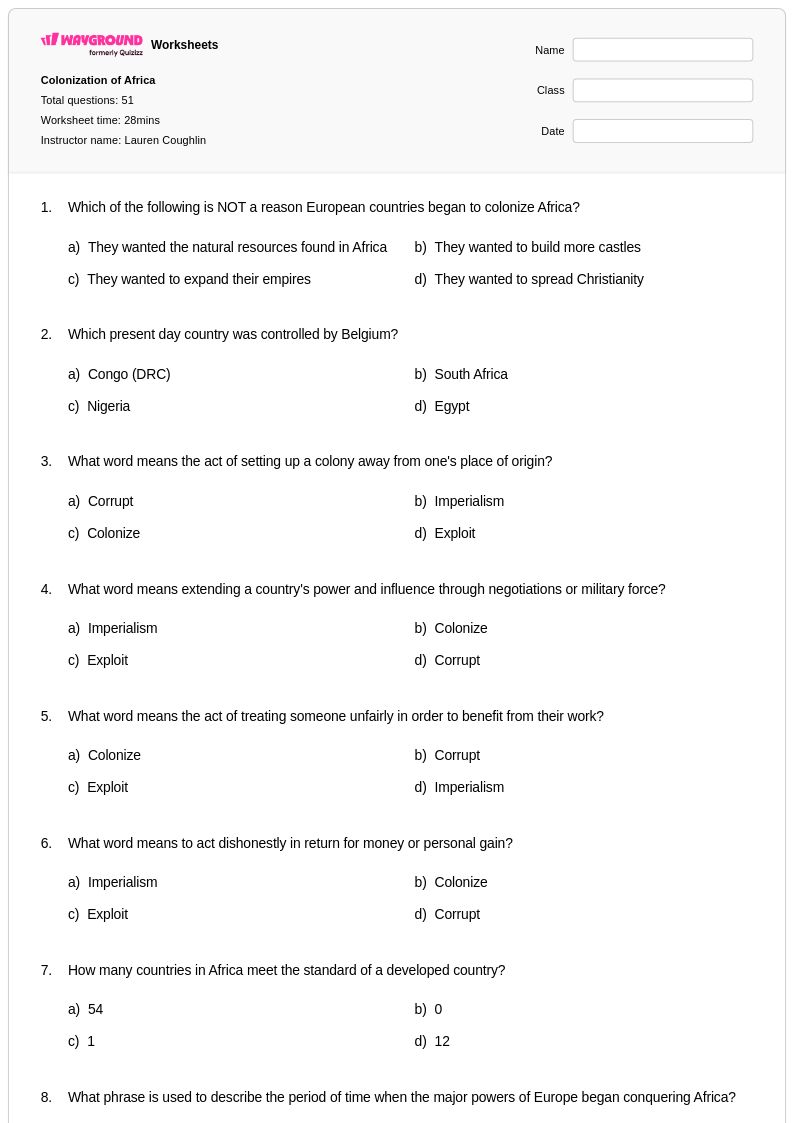
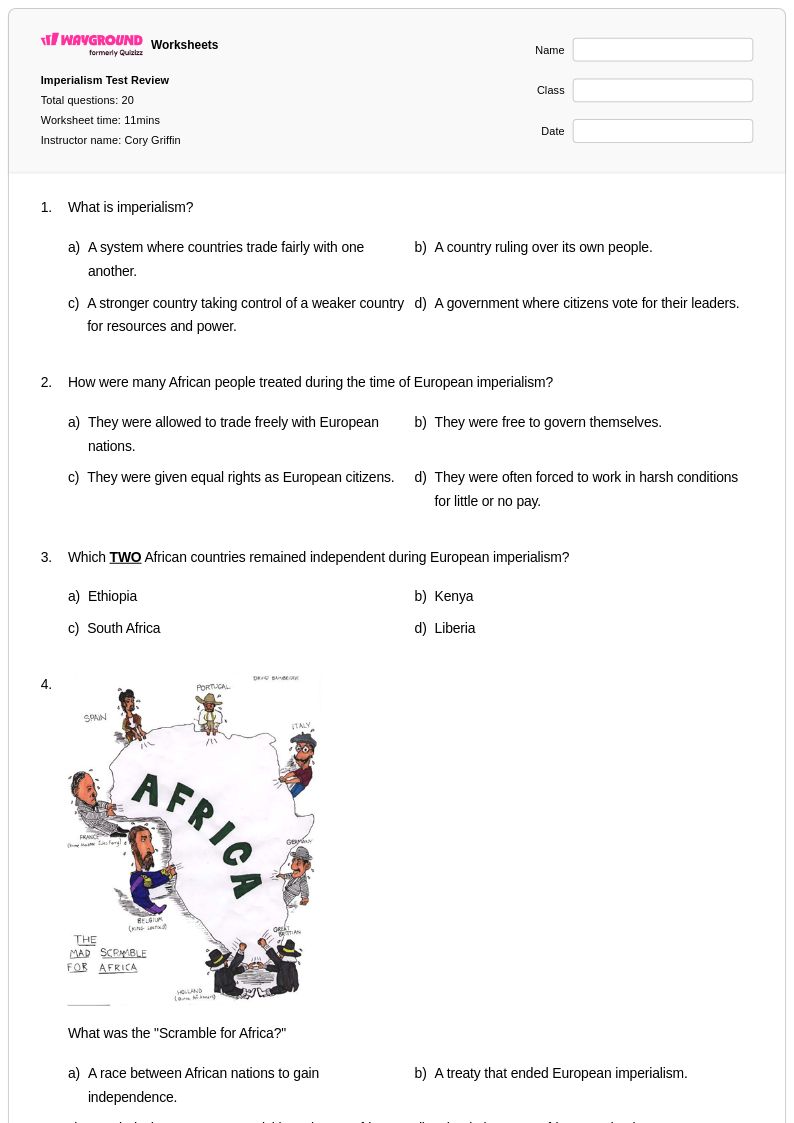
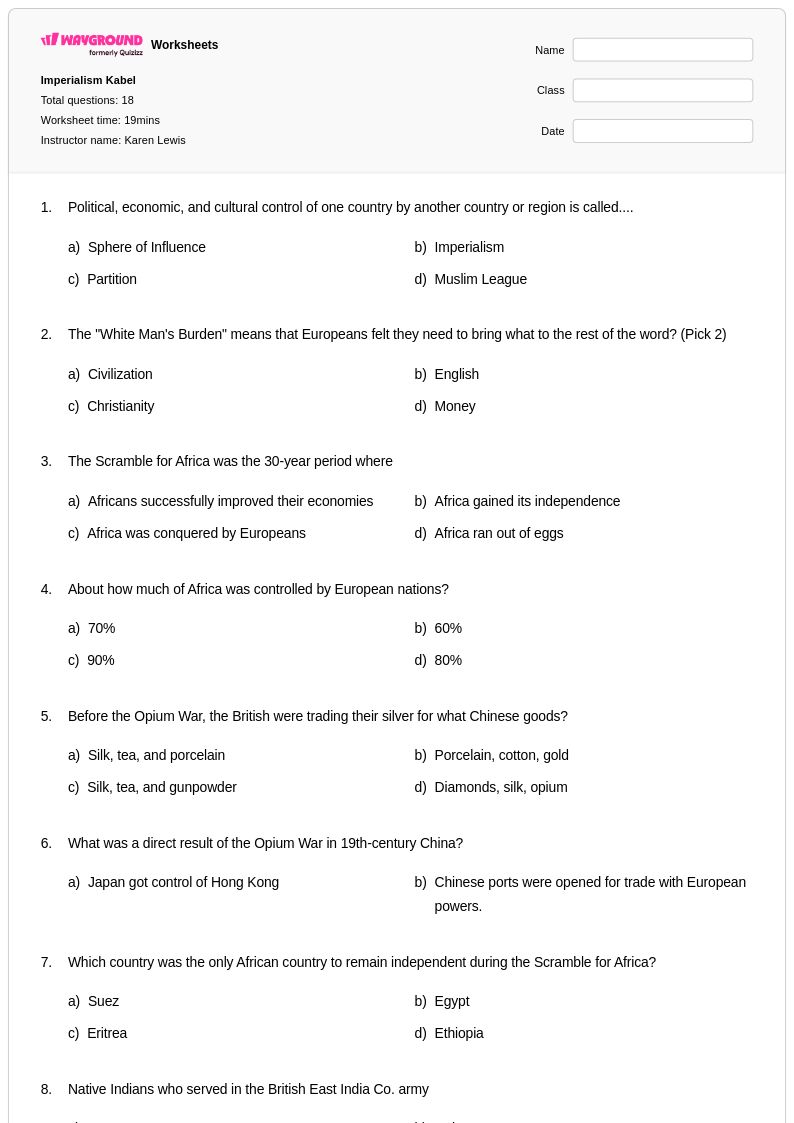
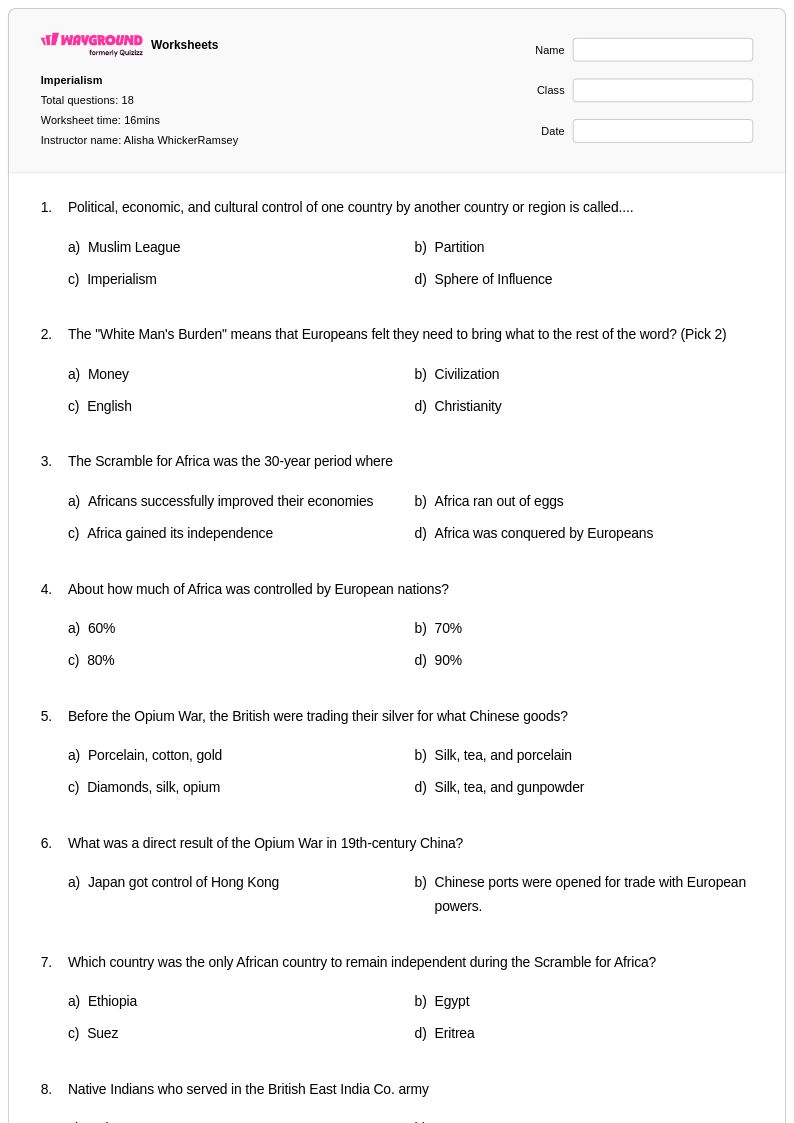
Scramble for Africa worksheets for Year 6 students provide comprehensive resources to explore this pivotal period in world history when European powers rapidly colonized the African continent during the late 19th century. These educational materials strengthen critical thinking skills by guiding students through the complex political, economic, and social factors that drove European imperialism, including the search for raw materials, new markets, and strategic advantages. Through carefully crafted practice problems, students analyze primary source documents, examine maps showing territorial changes, and evaluate the lasting impact of colonization on African societies. Each worksheet collection includes detailed answer keys to support independent learning and assessment, while printable pdf formats ensure easy classroom distribution and homework assignments that reinforce understanding of this transformative historical period.
Wayground, formerly Quizizz, empowers educators with millions of teacher-created Scramble for Africa resources that streamline lesson planning and enhance student engagement with world history content. The platform's robust search and filtering capabilities allow teachers to quickly locate grade-appropriate materials aligned with social studies standards, while built-in differentiation tools enable customization for diverse learning needs and ability levels. These comprehensive worksheet collections are available in both digital and printable pdf formats, providing flexibility for in-class activities, remote learning environments, and traditional homework assignments. Teachers utilize these resources for targeted skill practice, remediation support for struggling learners, and enrichment opportunities that challenge advanced students to develop deeper analytical skills when examining the complex legacy of European colonialism in Africa.
FAQs
How do I teach the Scramble for Africa to middle or high school students?
Start by grounding students in the geopolitical context of late 19th-century Europe, including industrialization, nationalism, and imperial rivalry, before introducing Africa's pre-colonial political landscape. Use historical maps to show how the continent was partitioned between 1881 and 1914, and incorporate primary source documents such as excerpts from the Berlin Conference to help students analyze the motivations of colonizing powers. Pairing European perspectives with African resistance movements gives students a more complete and critical understanding of the period.
What exercises help students practice analyzing the Scramble for Africa?
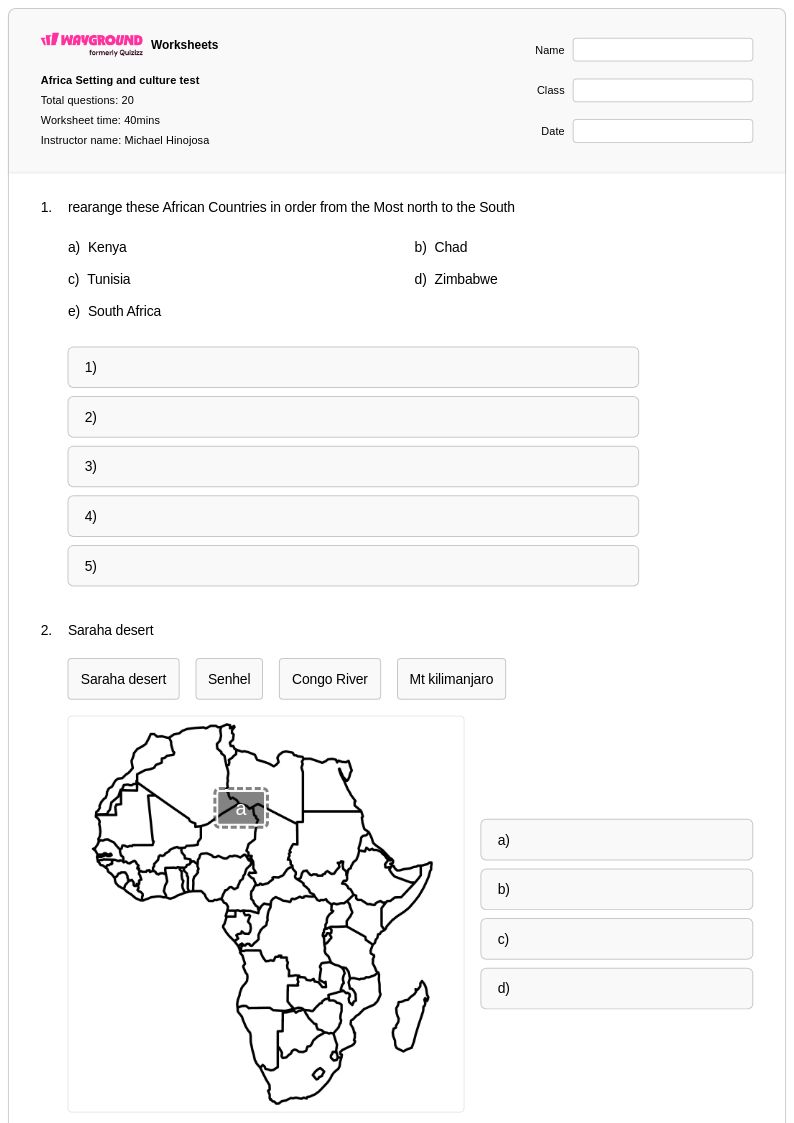
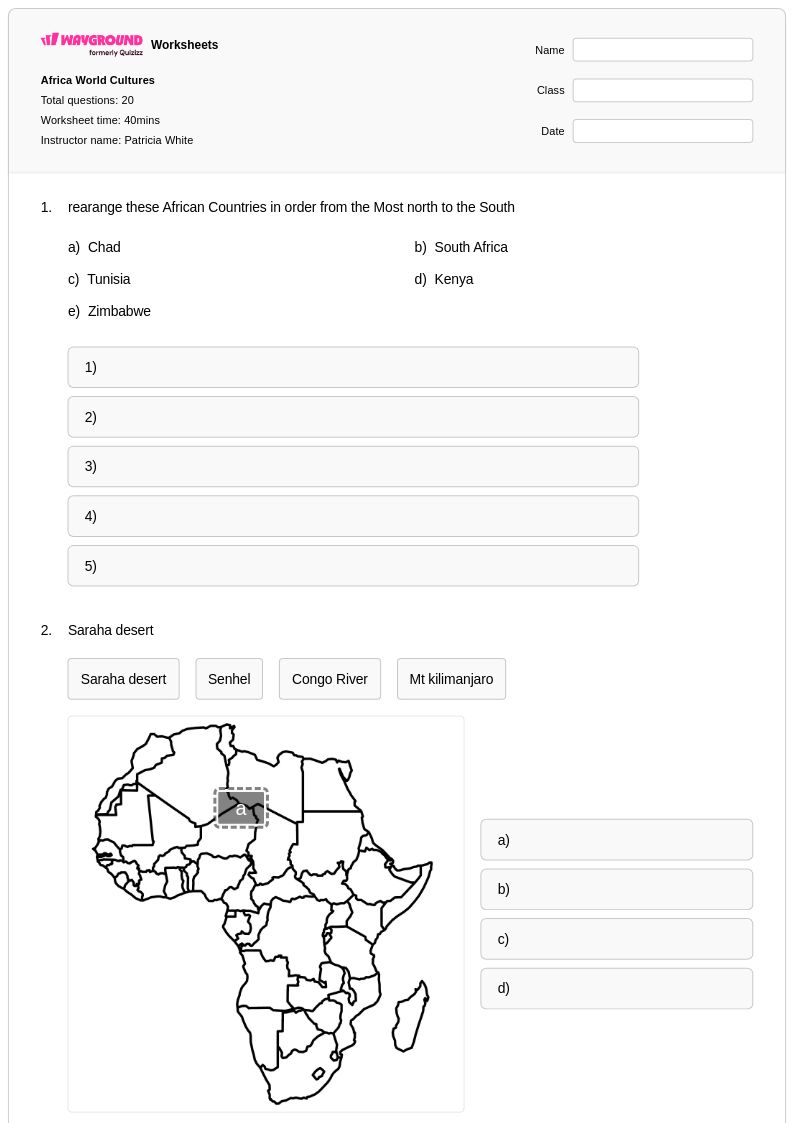
Map-based activities are especially effective, asking students to identify colonial territories, trace boundary changes, and connect geographic decisions to political outcomes. Document analysis tasks using Berlin Conference records or colonial-era treaties push students to evaluate bias, purpose, and perspective in primary sources. Cause-and-effect graphic organizers that link economic motivations, political rivalries, and humanitarian justifications to specific colonial actions help students build analytical frameworks they can apply across other historical topics.
What common misconceptions do students have about the Scramble for Africa?
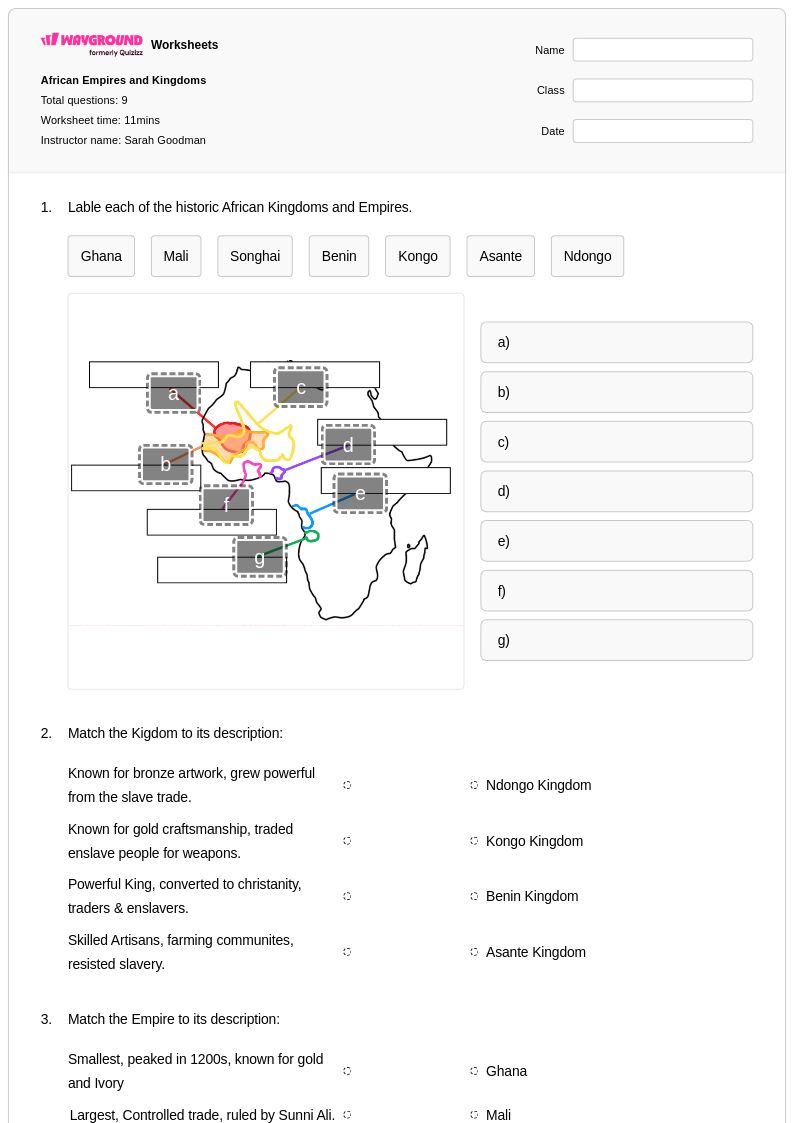
A frequent misconception is that Africa had no organized political structures before European colonization, when in fact the continent had complex kingdoms, trade networks, and governance systems. Students also often misattribute colonization solely to racism while underweighting the role of economic competition for raw materials and markets among European powers. Another common error is treating the Berlin Conference as a single decisive moment rather than part of a longer process of negotiation, conflict, and African resistance that continued well into the 20th century.
How do I assess whether students understand the causes and consequences of the Scramble for Africa?
Strong assessment tasks require students to explain the interconnected causes, including economic demand for resources, imperial competition, and the ideology of Social Darwinism, rather than listing them in isolation. Look for whether students can distinguish short-term political motives from long-term structural consequences such as arbitrary borders, economic extraction systems, and the suppression of African political agency. Asking students to evaluate the legacy of colonization on present-day Africa is an effective way to assess both historical comprehension and critical thinking depth.
How can I use Scramble for Africa worksheets in my classroom?
Scramble for Africa worksheets on Wayground are available as printable PDFs for traditional classroom use and in digital formats for technology-integrated or remote learning environments, and teachers can also host them as a quiz directly on Wayground. Printable versions work well for document analysis stations or individual assignments, while digital formats support real-time feedback and can be assigned for homework or flipped instruction. Each worksheet includes a complete answer key, making them practical for both guided instruction and independent student practice.
How do I differentiate Scramble for Africa instruction for students at different skill levels?
For struggling learners, scaffolded worksheets with sentence frames, vocabulary support, and guided reading questions reduce barriers to engagement with complex historical content. Advanced students benefit from open-ended analytical tasks such as comparing colonial justifications across different European powers or evaluating African resistance strategies. On Wayground, teachers can apply individual accommodations including read aloud support, reduced answer choices, and extended time, allowing students with different learning needs to access the same content without singling anyone out.