Free Printable Sea Creatures Worksheets for Year 5
Explore Year 5 sea creatures biology worksheets on Wayground with free printables and answer keys that help students learn about marine life through engaging practice problems and educational activities.
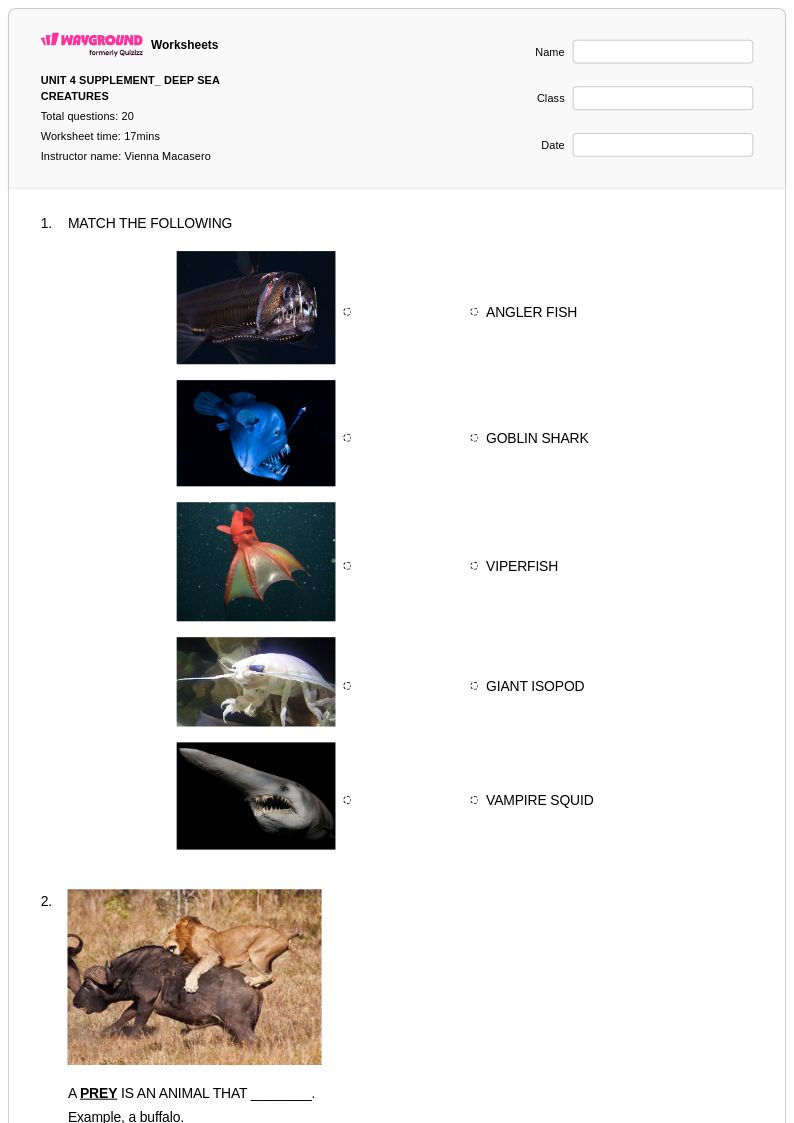
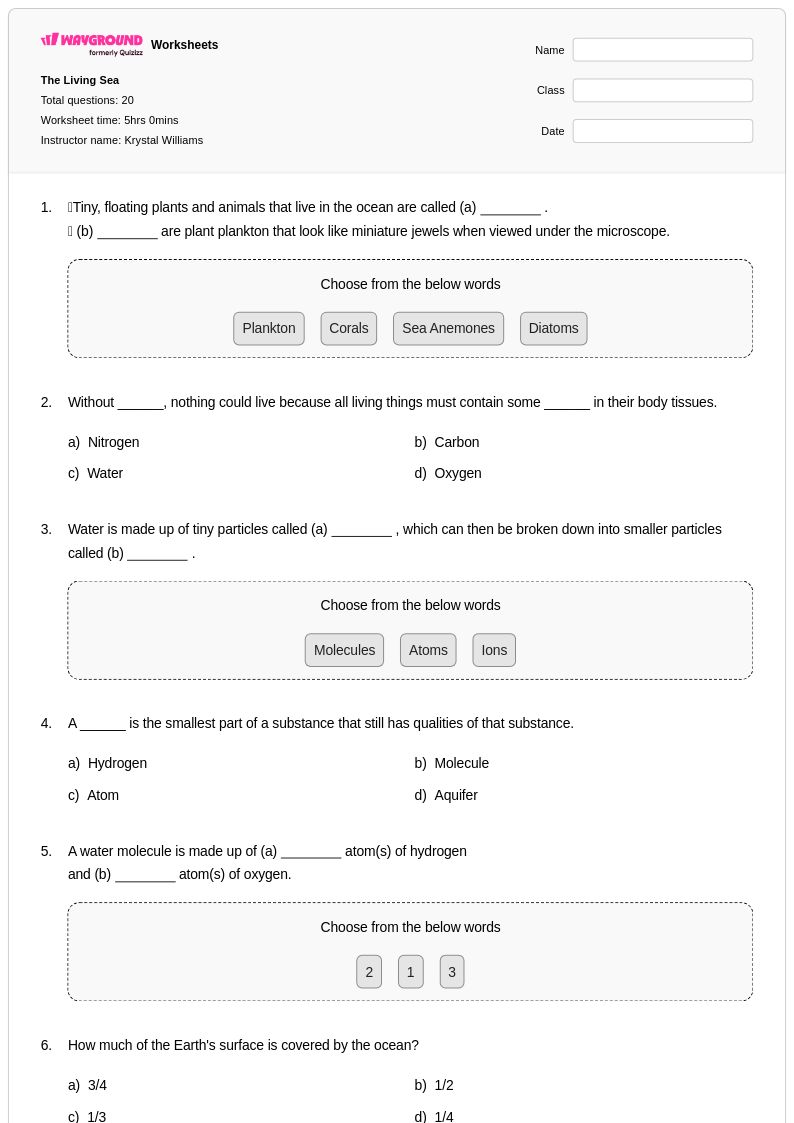
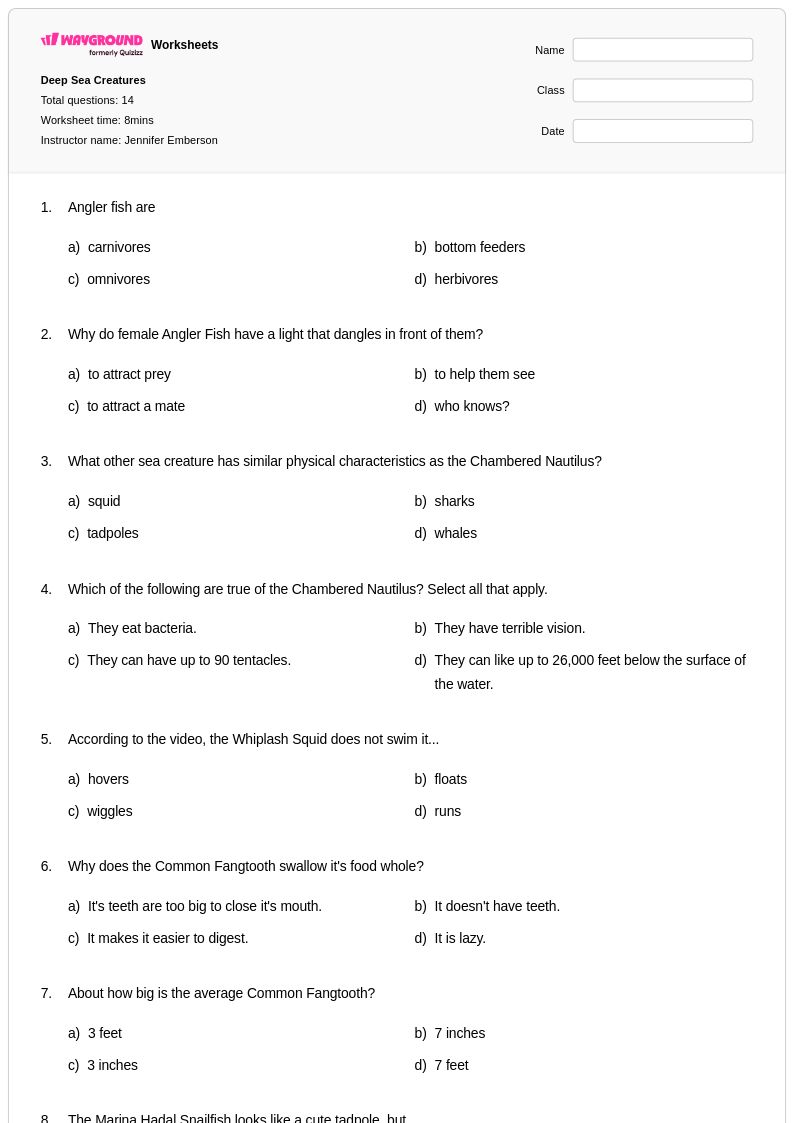
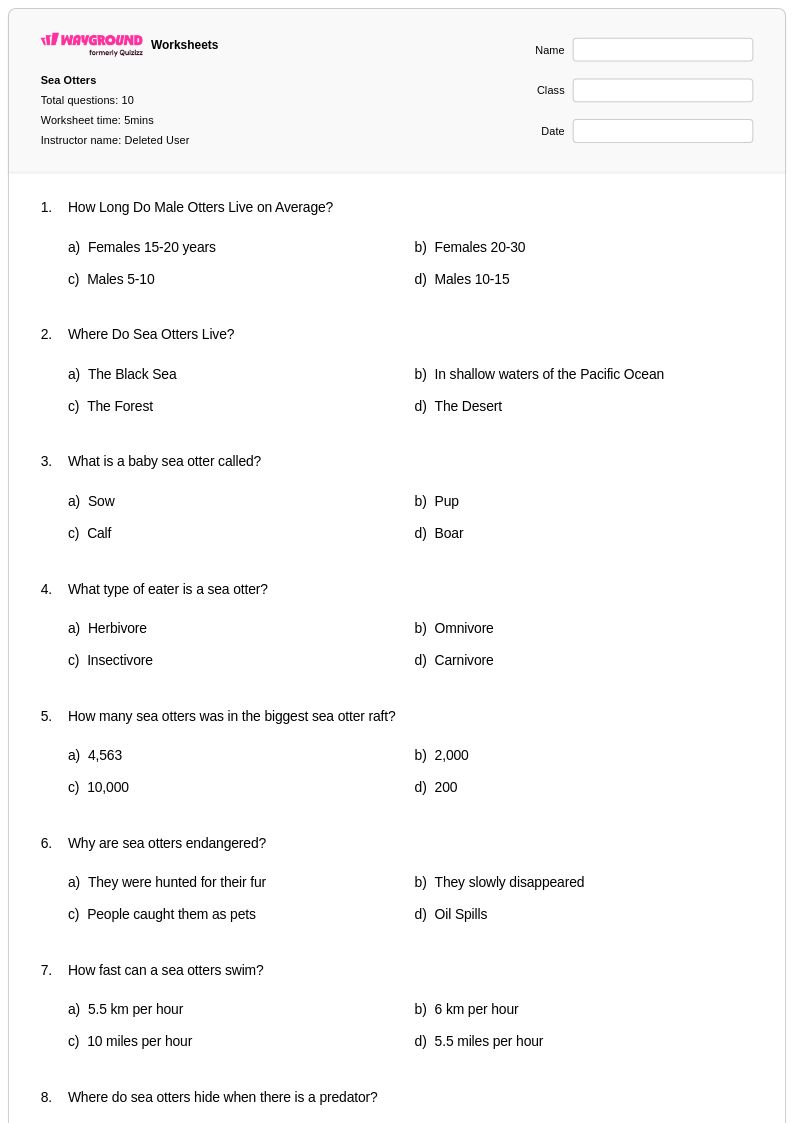
Explore printable Sea Creatures worksheets for Year 5
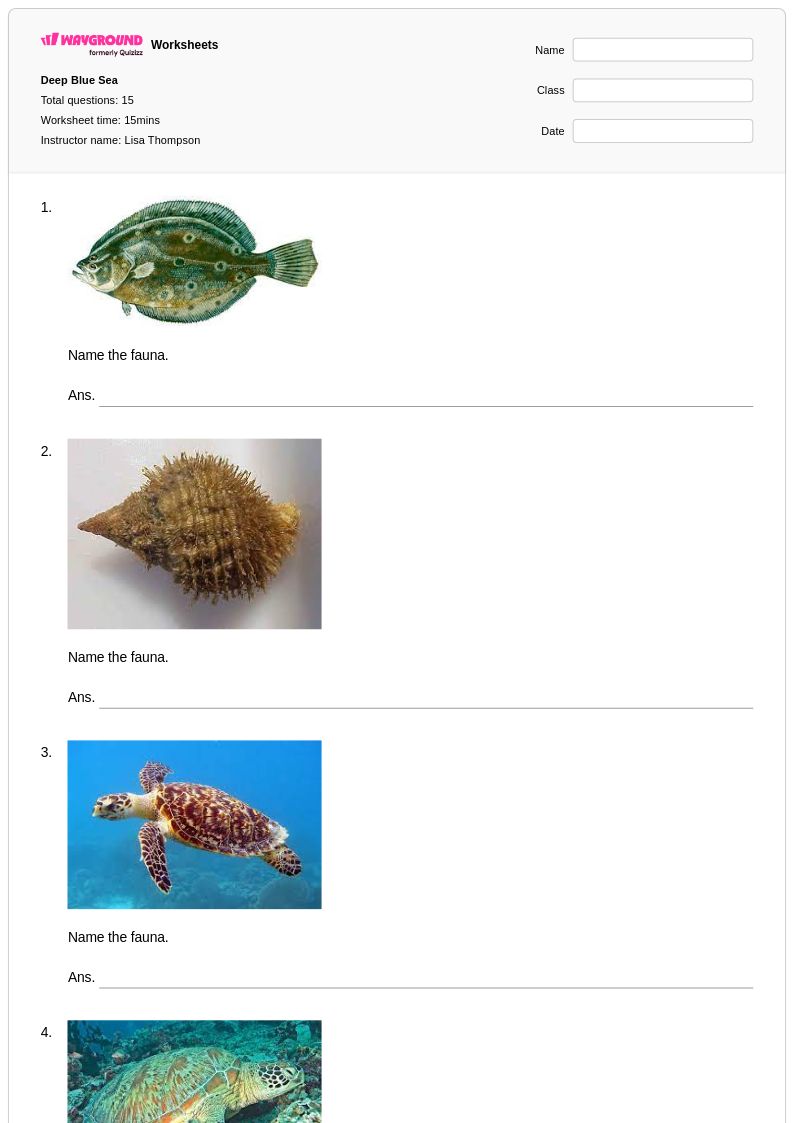
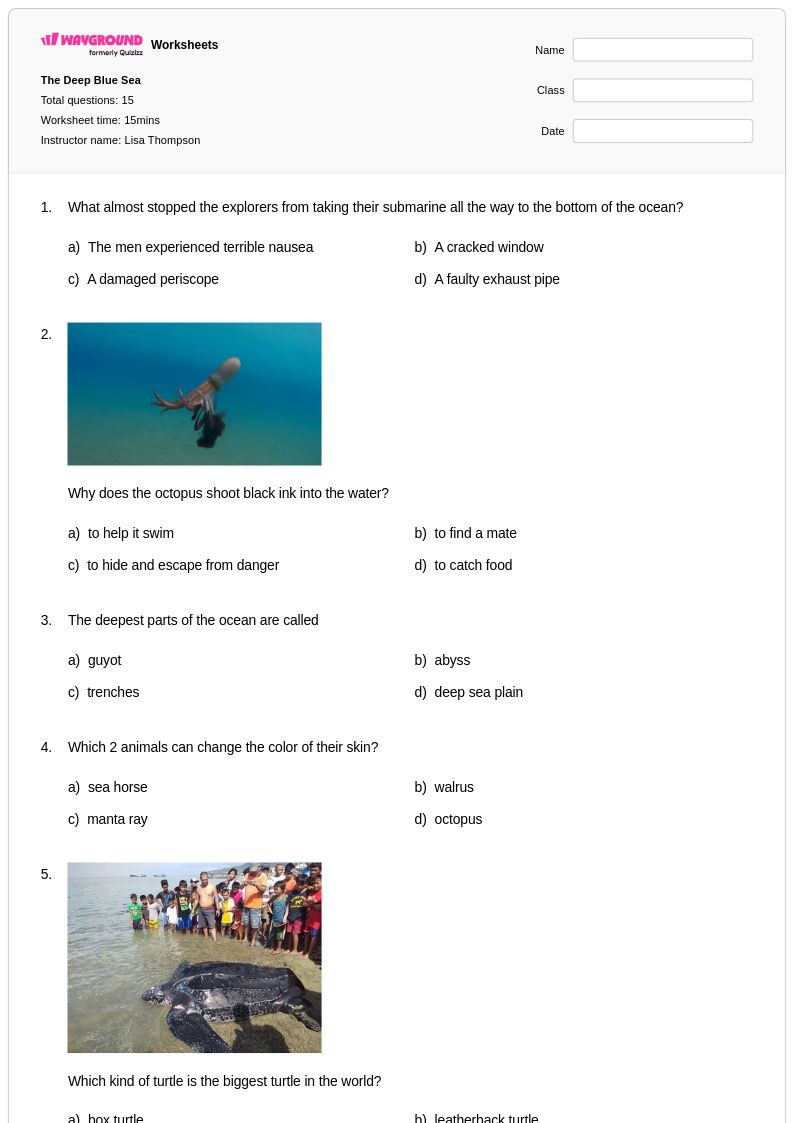
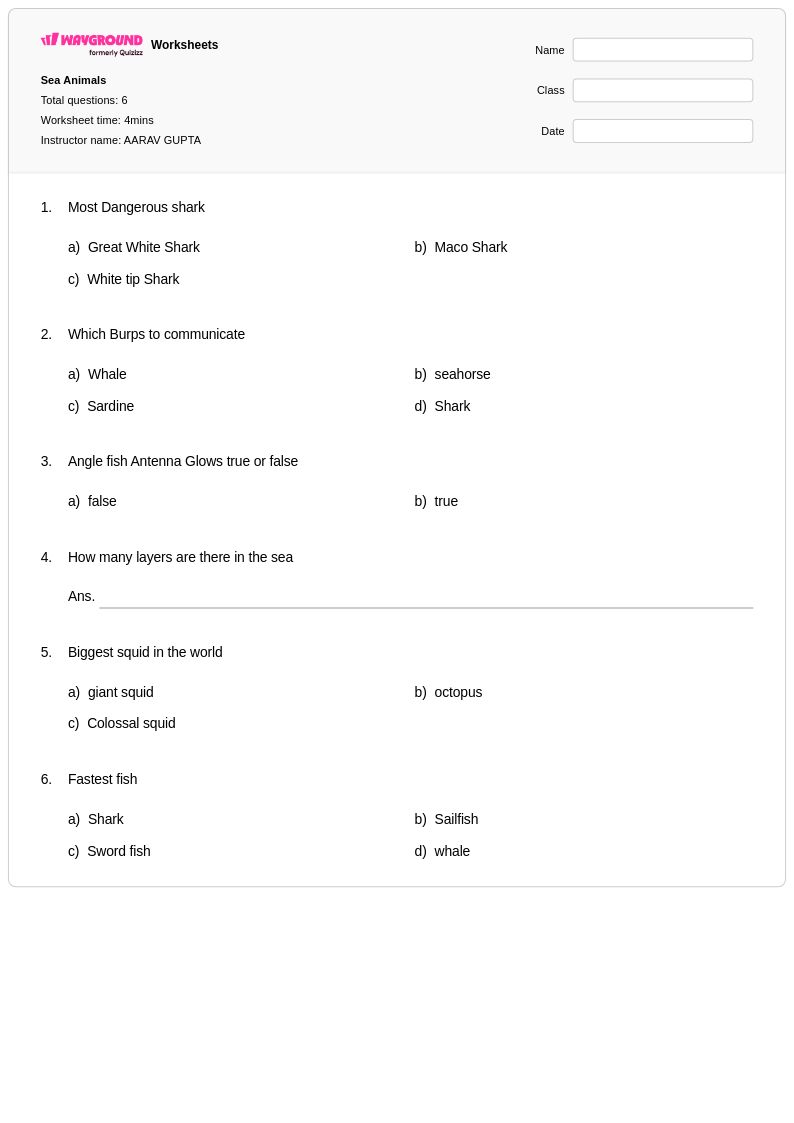
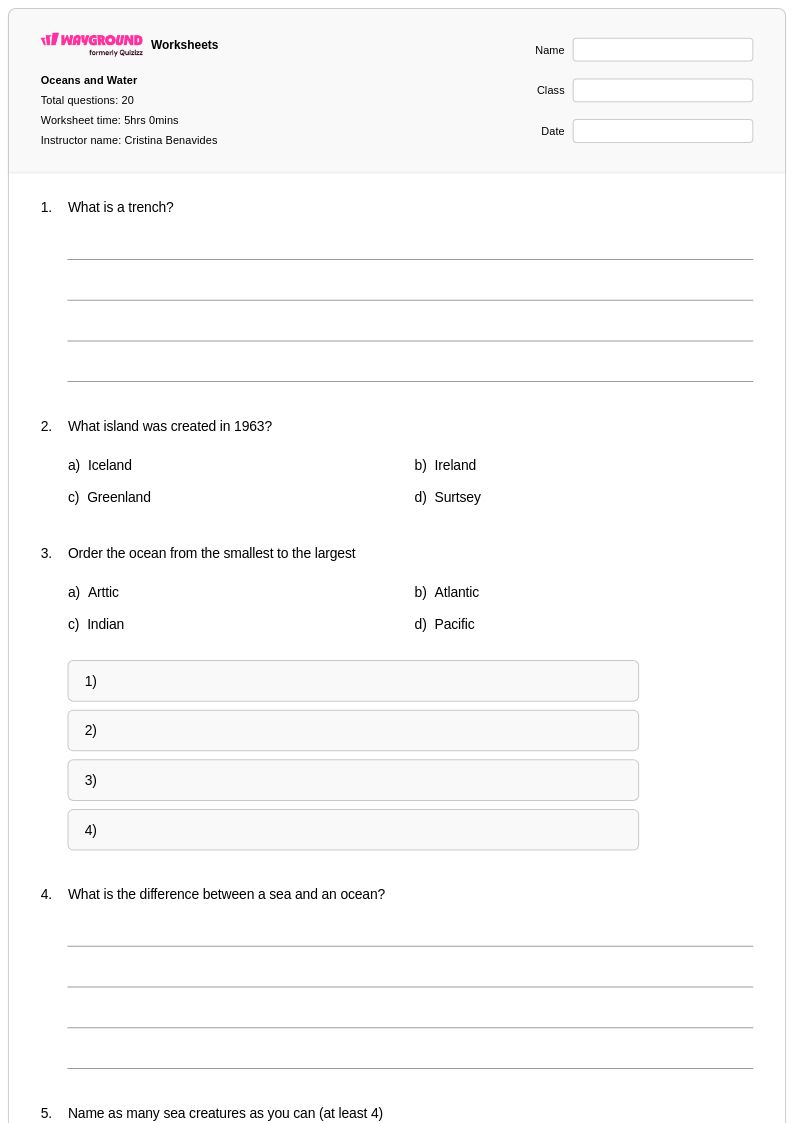
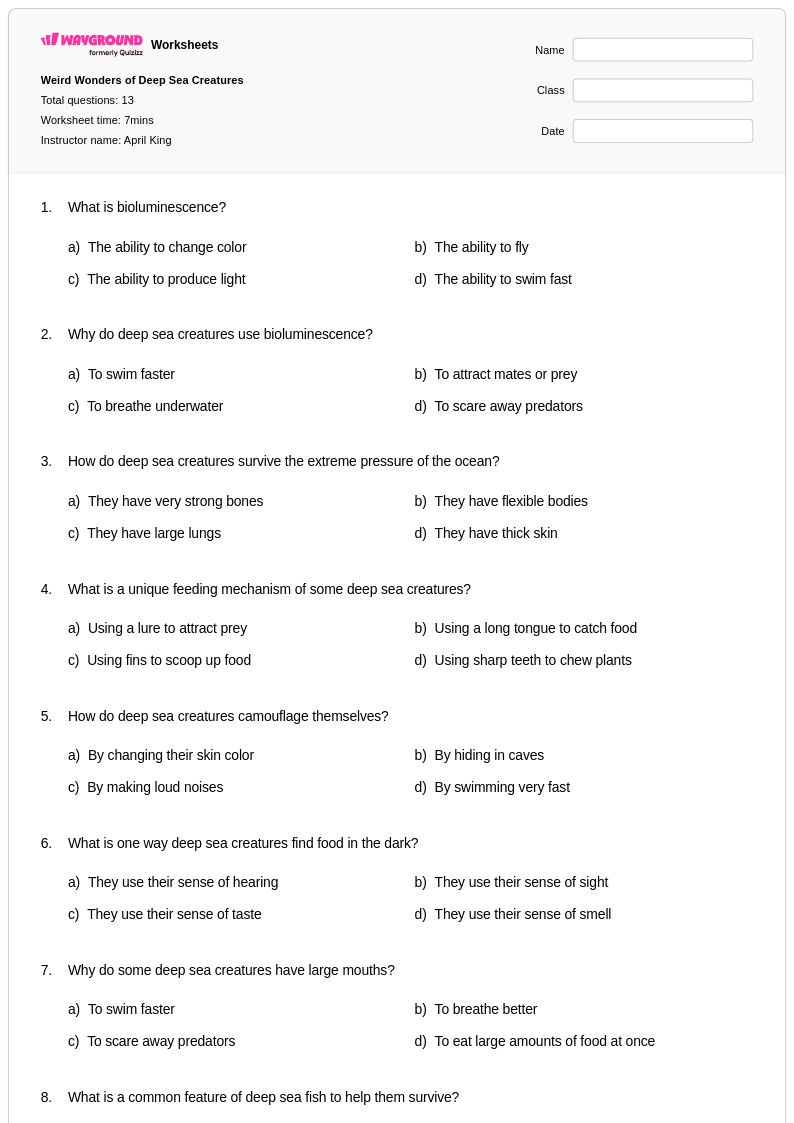
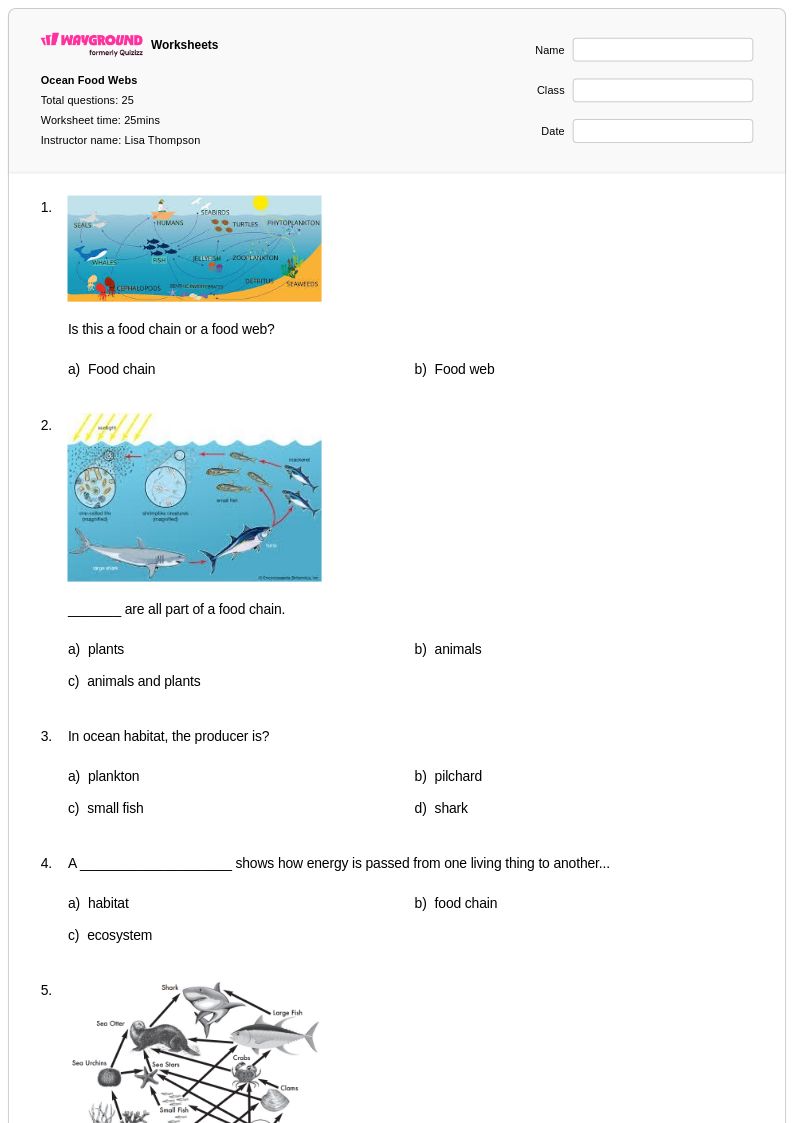
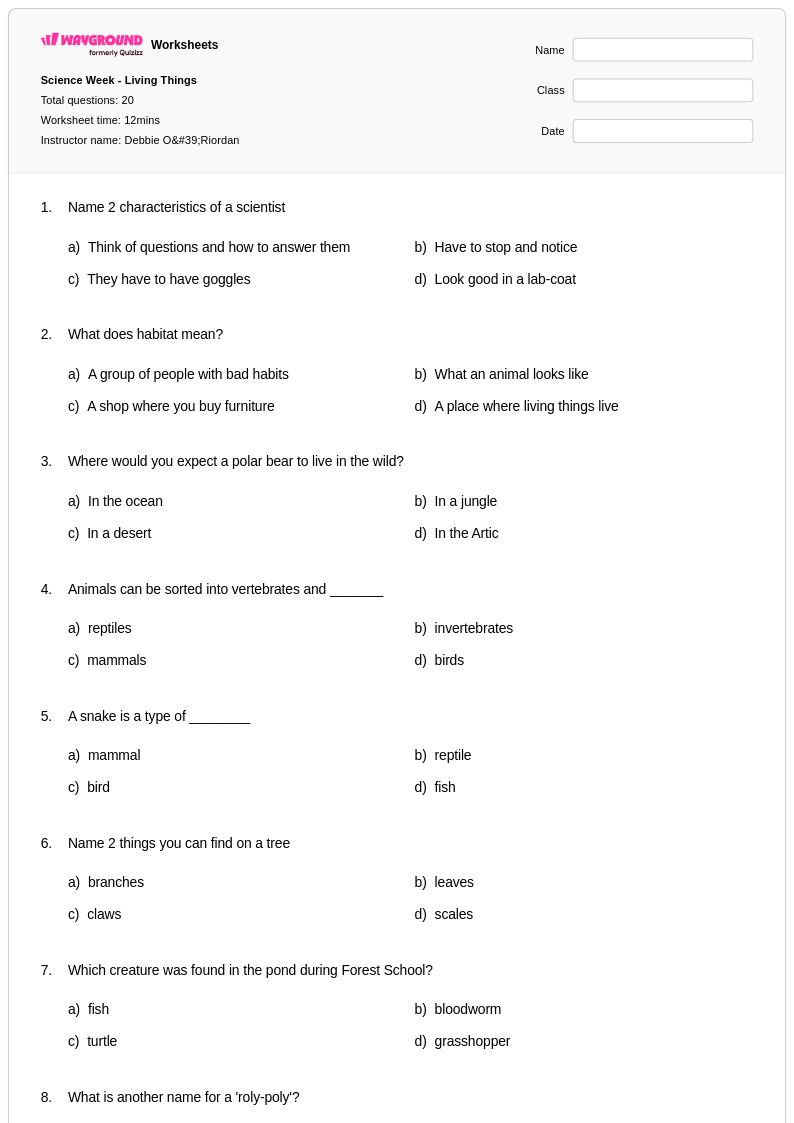
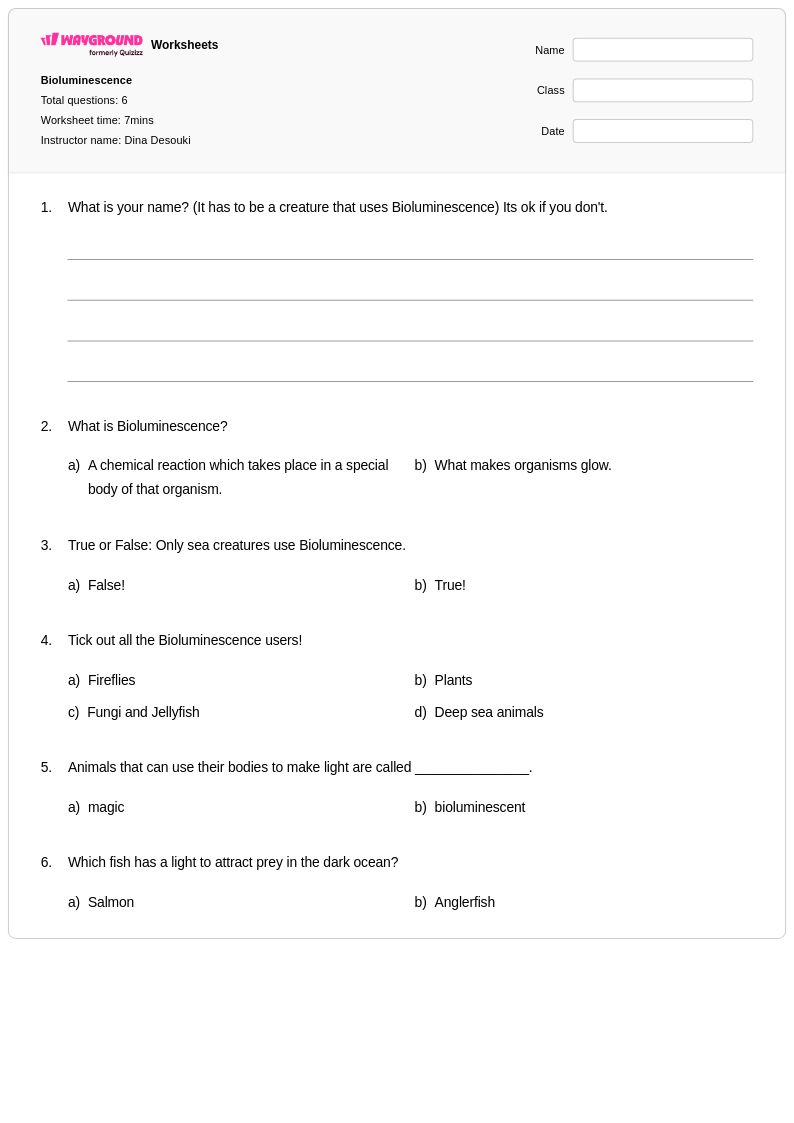
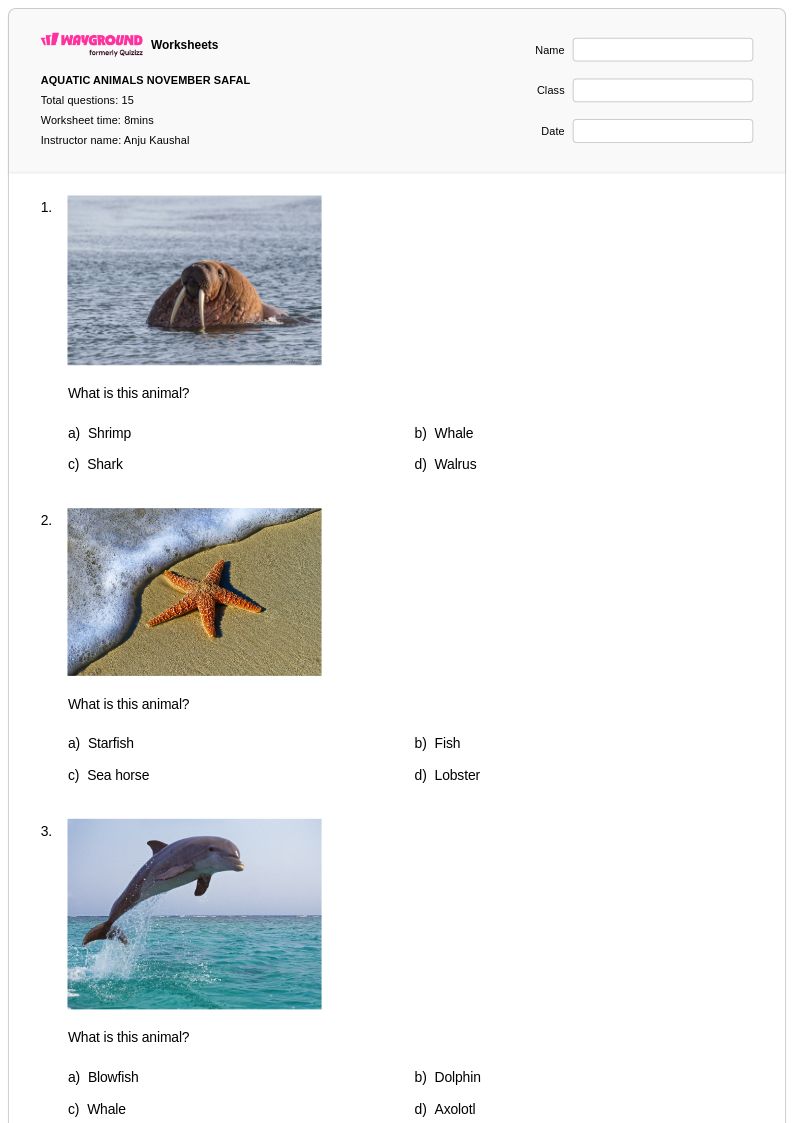
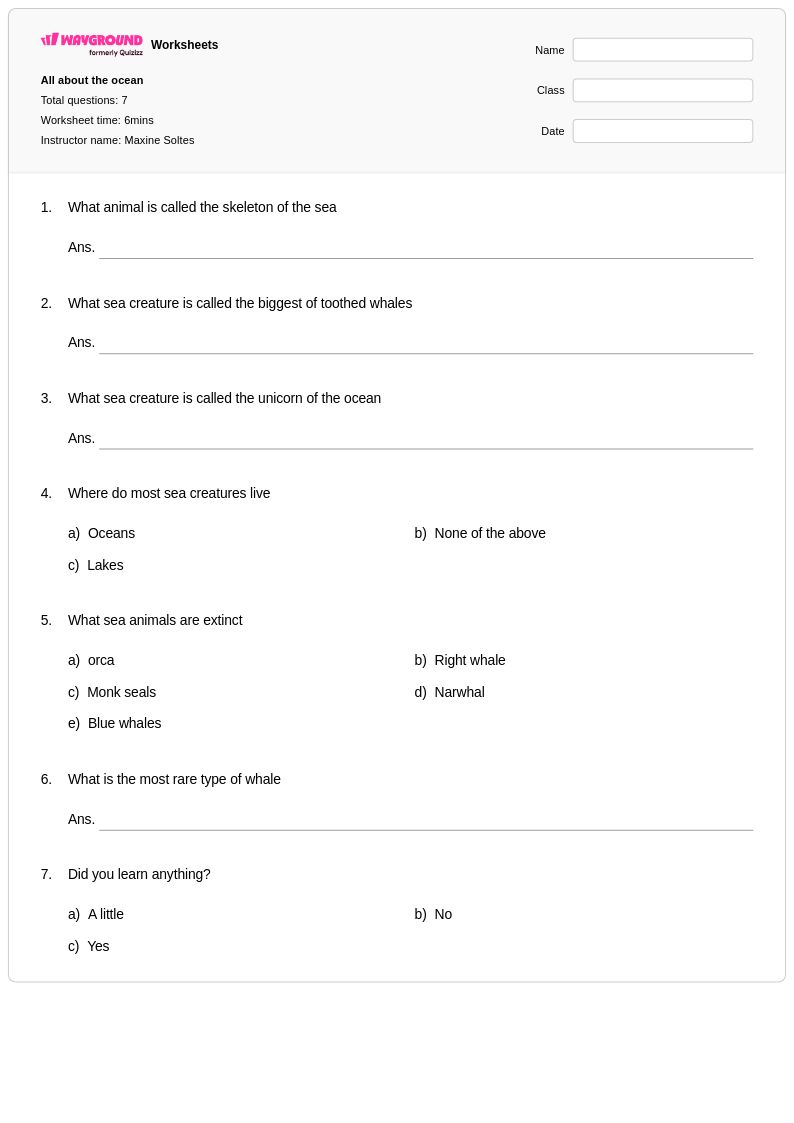
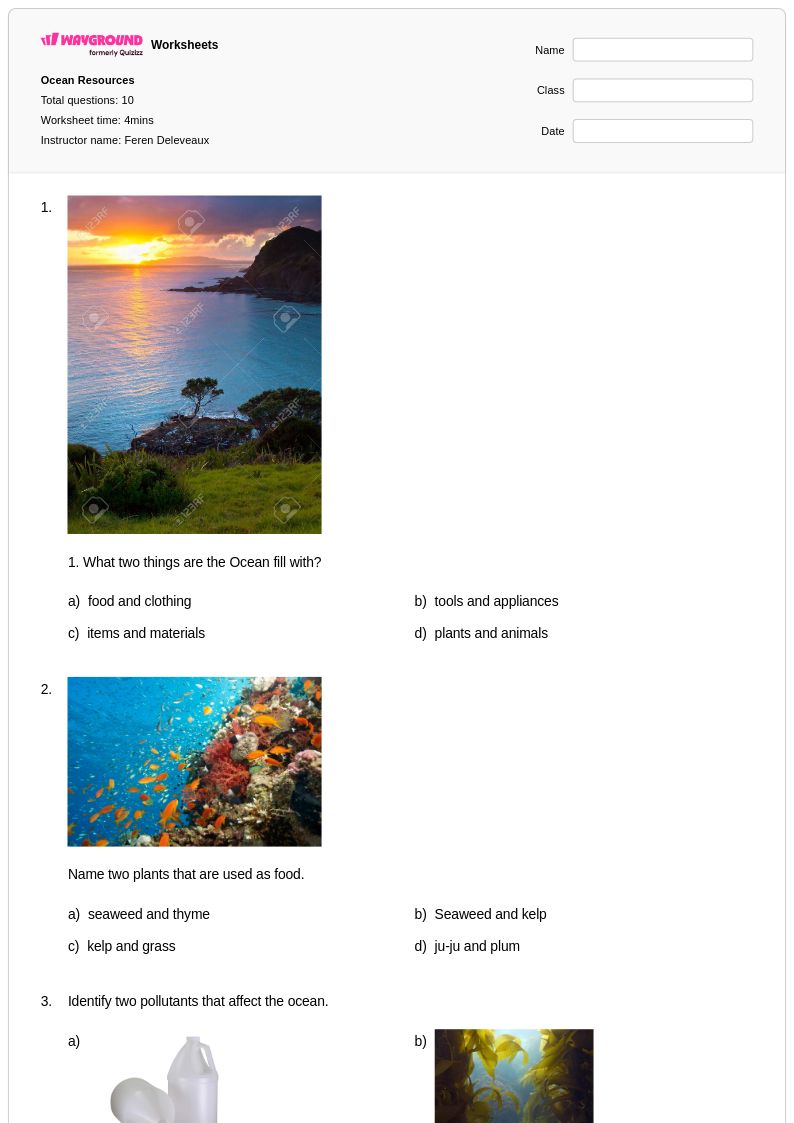
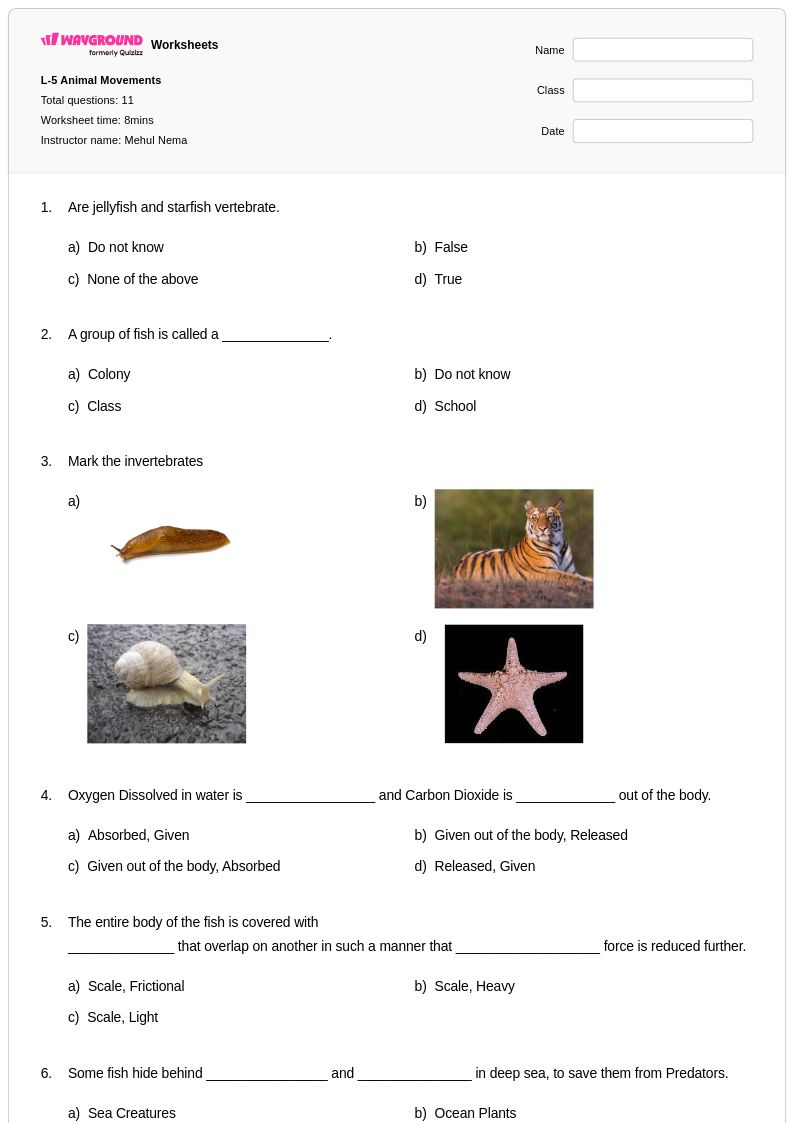
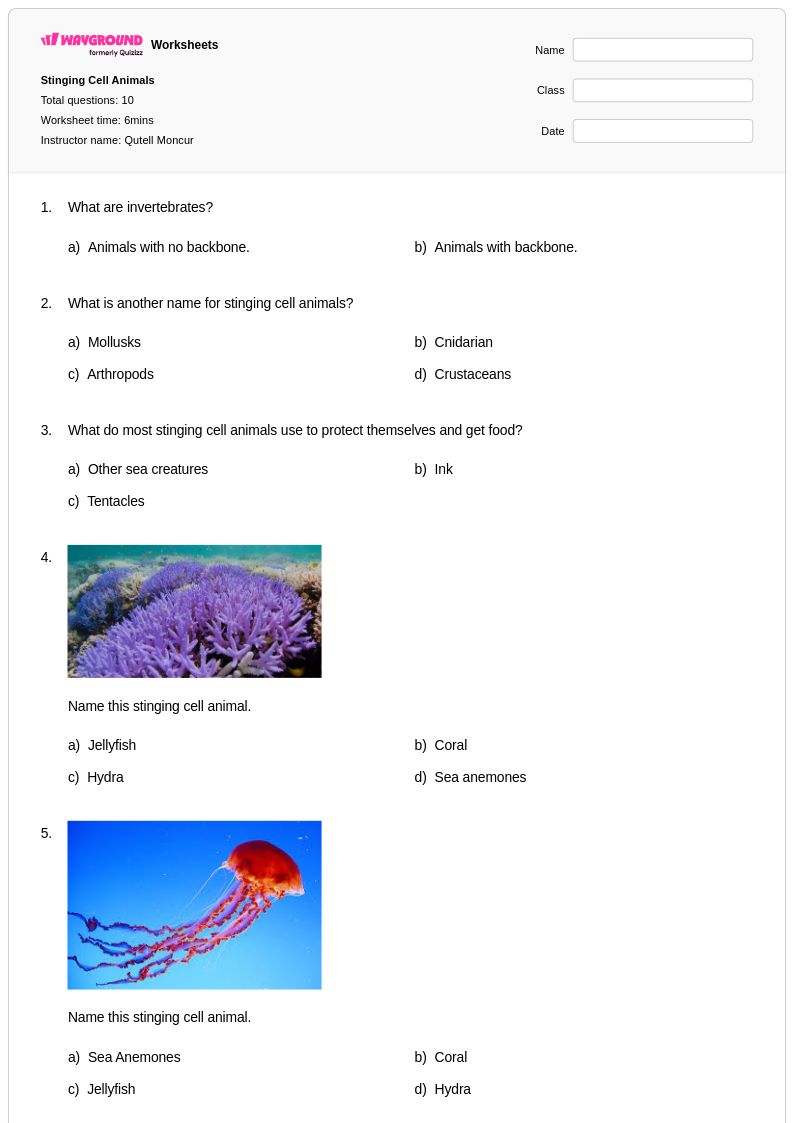
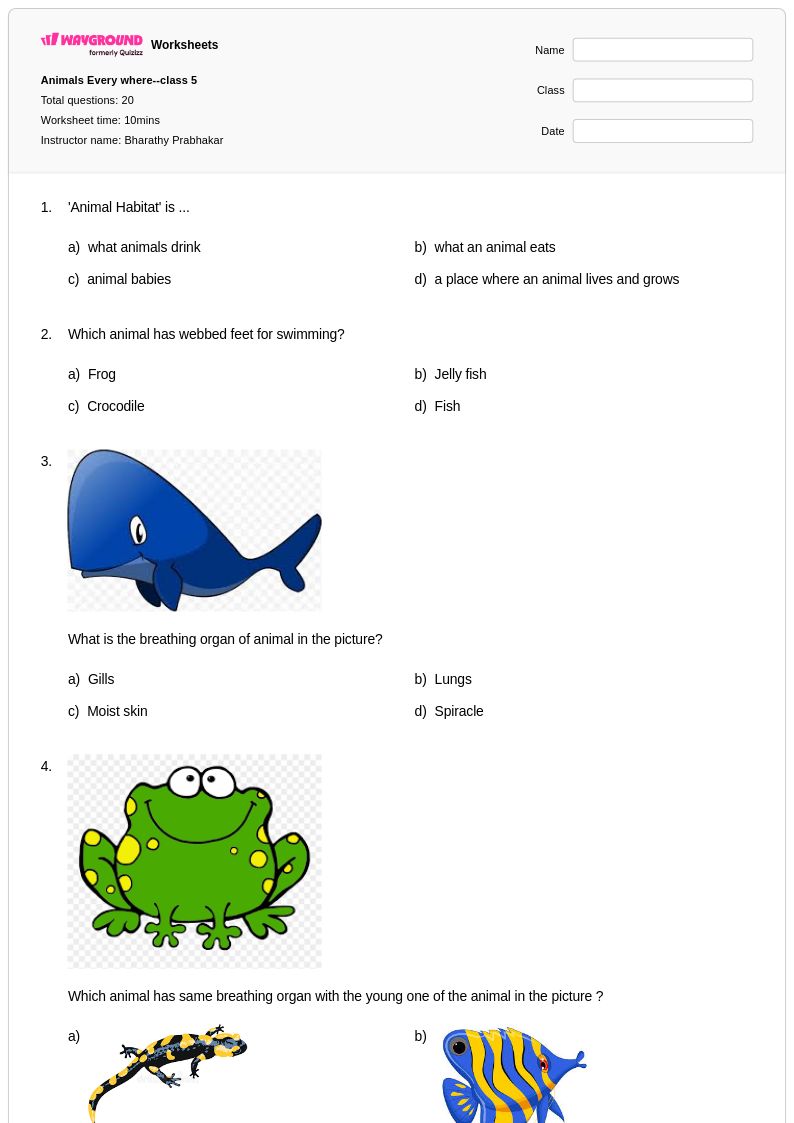
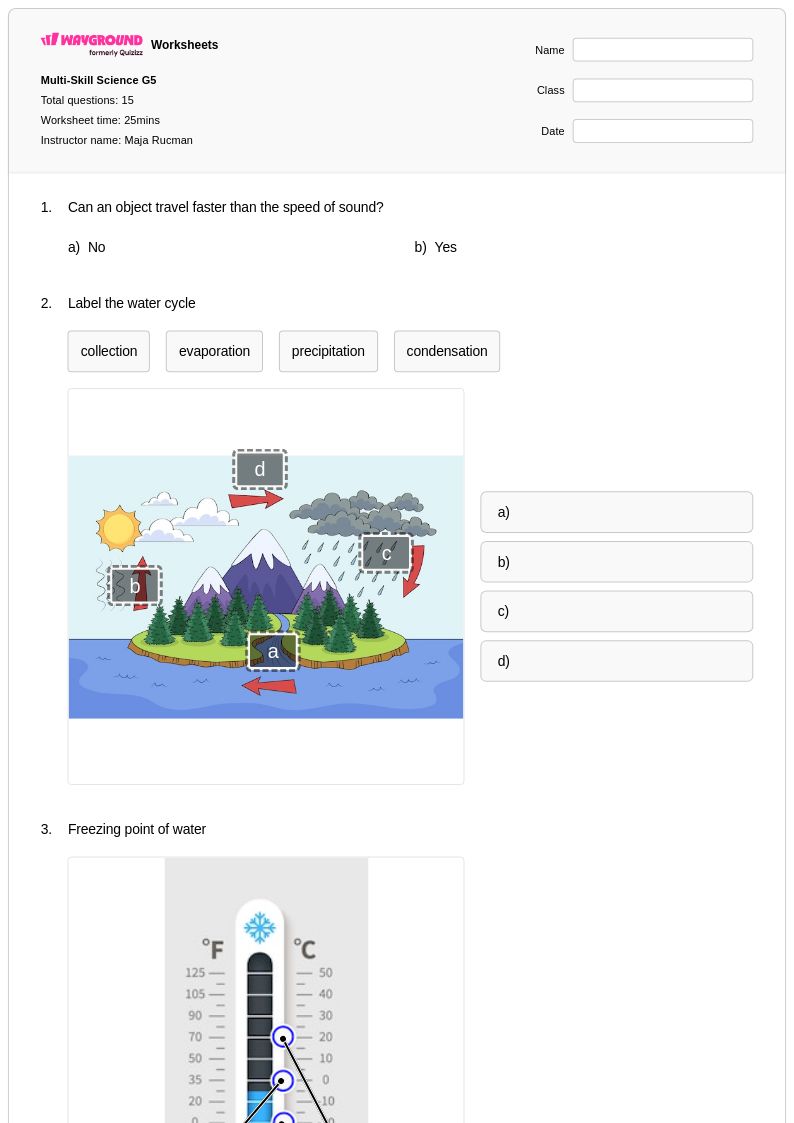
Sea creatures worksheets for Year 5 students available through Wayground (formerly Quizizz) provide comprehensive educational resources that explore the fascinating diversity of marine life and ocean ecosystems. These expertly designed materials strengthen essential scientific skills including classification, habitat analysis, adaptation studies, and marine food chain understanding while engaging students with the wonder of underwater biodiversity. The collection features detailed practice problems covering everything from vertebrate and invertebrate sea animals to coral reef ecosystems and deep ocean zones, with each worksheet including a complete answer key to support both independent learning and classroom instruction. Students can access these free printables in convenient pdf format, allowing teachers to seamlessly integrate hands-on learning activities that develop critical thinking skills about marine biology, ocean conservation, and the interconnected relationships between sea creatures and their environments.
Wayground (formerly Quizizz) empowers educators with millions of teacher-created resources specifically focused on sea creatures and marine biology topics, offering robust search and filtering capabilities that help locate precisely the right materials for any Year 5 classroom need. The platform's comprehensive collection aligns with science education standards and includes powerful differentiation tools that allow teachers to customize worksheets for various learning levels, from struggling students requiring additional scaffolding to advanced learners ready for enrichment challenges. These flexible resources are available in both printable and digital formats, including downloadable pdf versions, making lesson planning more efficient while supporting diverse instructional approaches for skill practice, remediation, and assessment. Teachers can easily modify content, track student progress, and access supplementary materials that enhance understanding of marine ecosystems, helping create engaging learning experiences that inspire students to explore the remarkable world of sea creatures.
FAQs
How do I teach sea creatures and marine biology to elementary and middle school students?
Start by anchoring instruction in familiar animals like sharks, dolphins, and sea turtles before expanding to less familiar organisms like echinoderms or cephalopods. Use habitat-based groupings to help students understand how ocean zones shape the adaptations of the creatures that live in them. Connecting taxonomy to real animals — such as explaining why a whale is a mammal, not a fish — gives students a concrete framework for classification concepts.
What exercises help students practice identifying and classifying sea creatures?
Sorting and classification activities are especially effective, where students group animals by habitat zone, body structure, or taxonomic category. Labeling diagrams of marine animals reinforces vocabulary like gills, fins, tentacles, and mantle, while compare-and-contrast tasks build analytical thinking. Practice problems that ask students to match adaptations to environments help them apply conceptual knowledge rather than simply recall facts.
What common misconceptions do students have about sea creatures?
Students frequently assume that all animals living in the ocean are fish, which leads to confusion when they encounter marine mammals, reptiles, or invertebrates. Many students also conflate habitat with taxonomy, believing that anything that swims must be closely related. Another persistent misconception is that larger sea creatures are always predators, which overlooks filter feeders like whale sharks and baleen whales.
How can I differentiate sea creatures instruction for students at different skill levels?
For students who need additional support, reduce cognitive load by focusing on a small set of well-known animals and using visual aids alongside text-based questions. Advanced students can explore evolutionary relationships, food web dynamics, or the impact of climate change on marine biodiversity. On Wayground, teachers can apply accommodations such as read aloud, reduced answer choices, and extended time to individual students, so differentiation happens within the same assignment without singling anyone out.
How do I use sea creatures worksheets effectively in my classroom?
Sea creatures worksheets on Wayground are available as printable PDFs for traditional classroom use and in digital formats for technology-integrated environments, including the option to host them as a quiz directly on the platform. Printable versions work well for independent practice, science stations, or homework, while digital formats support real-time feedback and remote learning. Each worksheet includes a complete answer key, which makes them practical for self-paced learning, sub plans, or quick formative checks.
How do sea creatures worksheets support science standards coverage?
Sea creatures worksheets reinforce core life science standards related to biodiversity, animal adaptations, ecosystems, and food chains, making them a natural fit for units on living systems or Earth's environments. Because marine biology spans classification, ecology, and evolution, a single worksheet set can address multiple standards simultaneously. This cross-concept coverage is especially useful for teachers working to consolidate review or spiral previously taught material.