
Recommended Topics for you
- Active and Passive Voice
- Compound-complex Sentences
- Compound Predicate
- Diagramming Sentences
- Key Sentences
- Misplaced and Dangling Modifiers
- Phrases and Clauses
- Rearranging Sentences
- Sentence Mapping
- Sentence Repair
- Subordinate Clauses
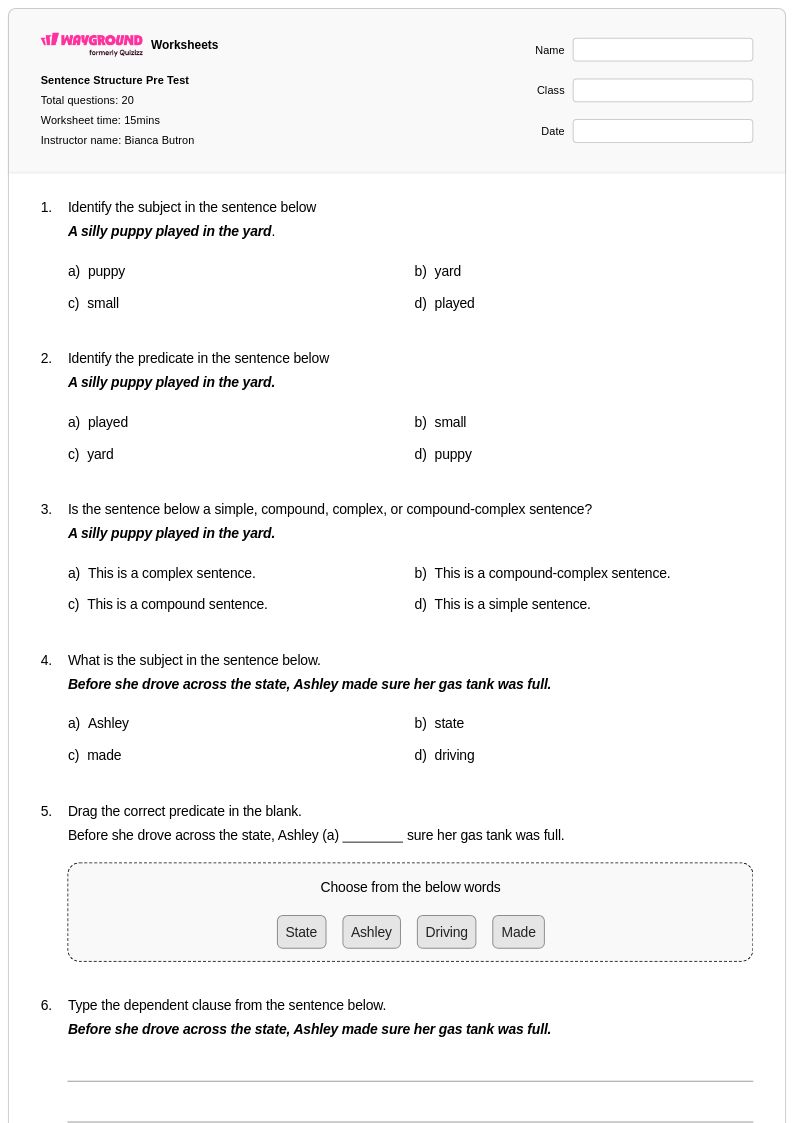
20 Q
7th - Uni
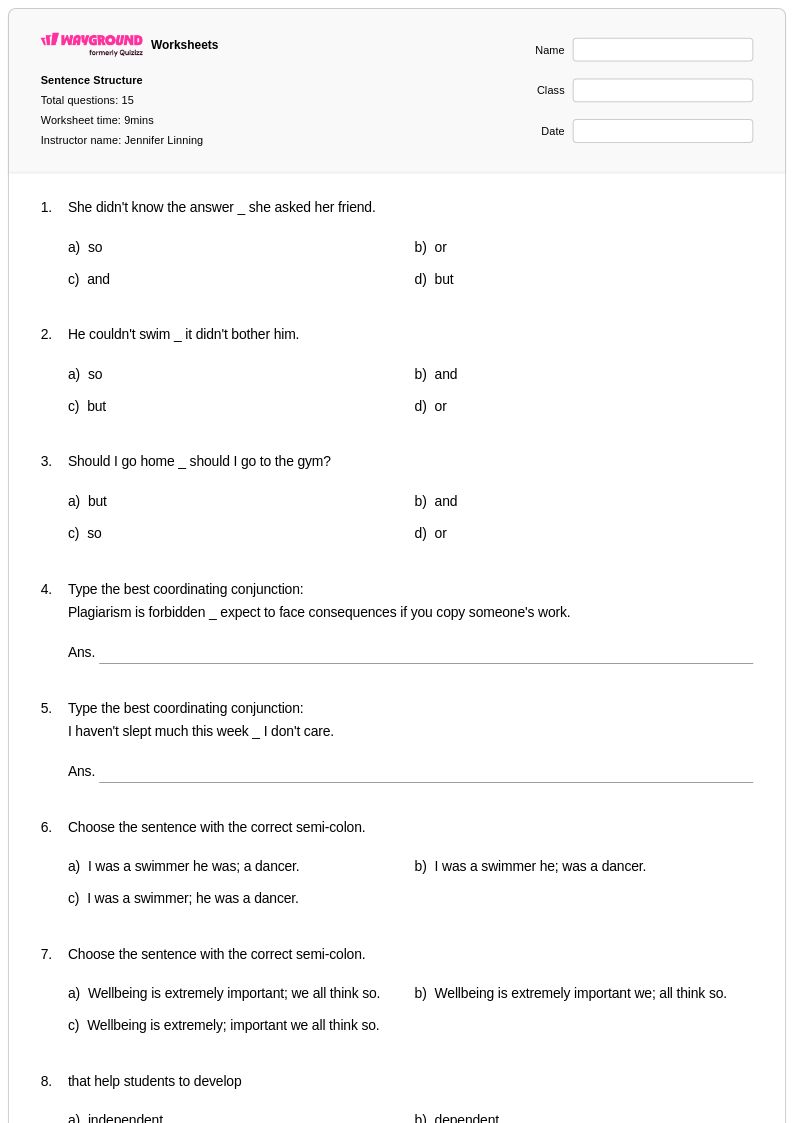
15 Q
8th - PD
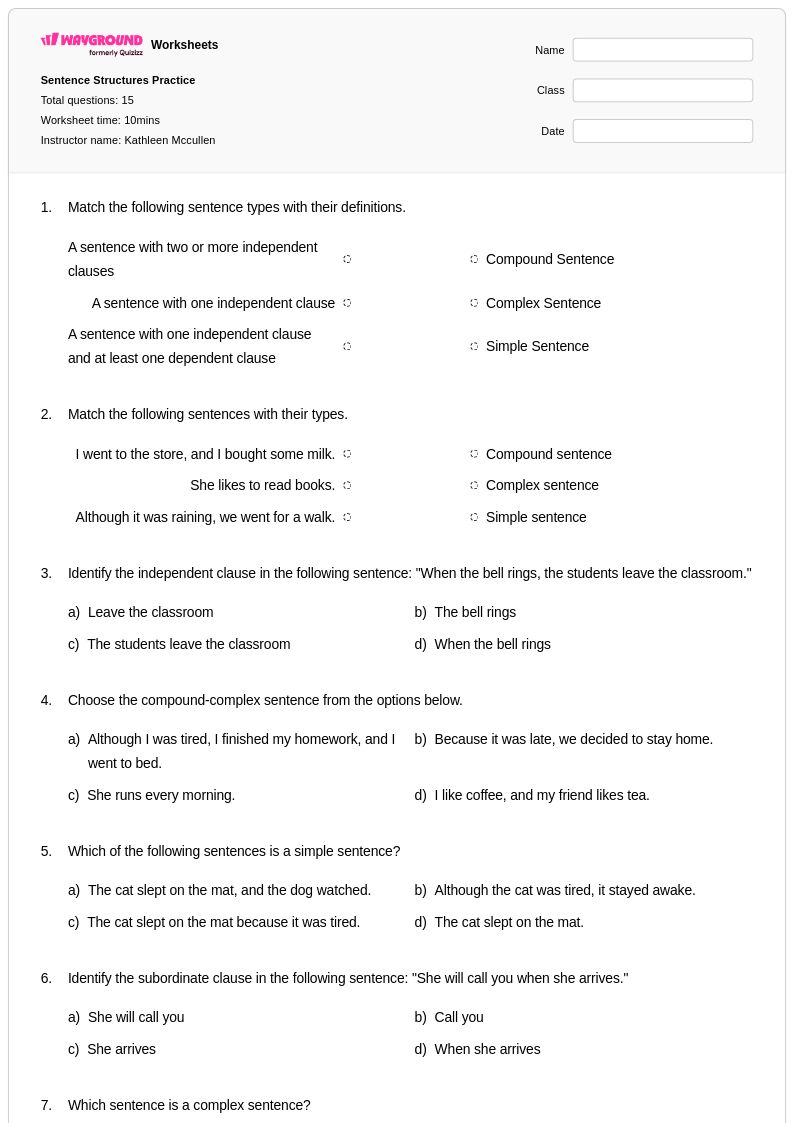
15 Q
7th - Uni
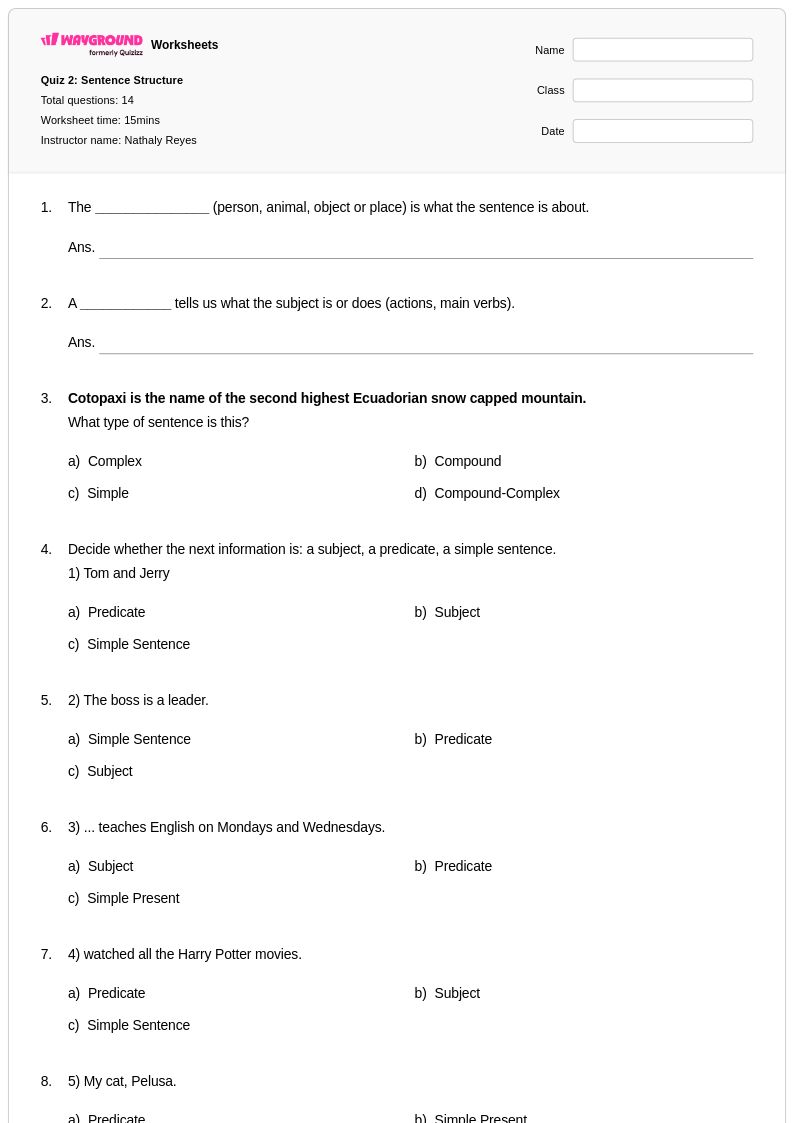
14 Q
1st - Uni
15 Q
6th - 10th
10 Q
7th - 12th
15 Q
6th - Uni
8 Q
10th - 11th
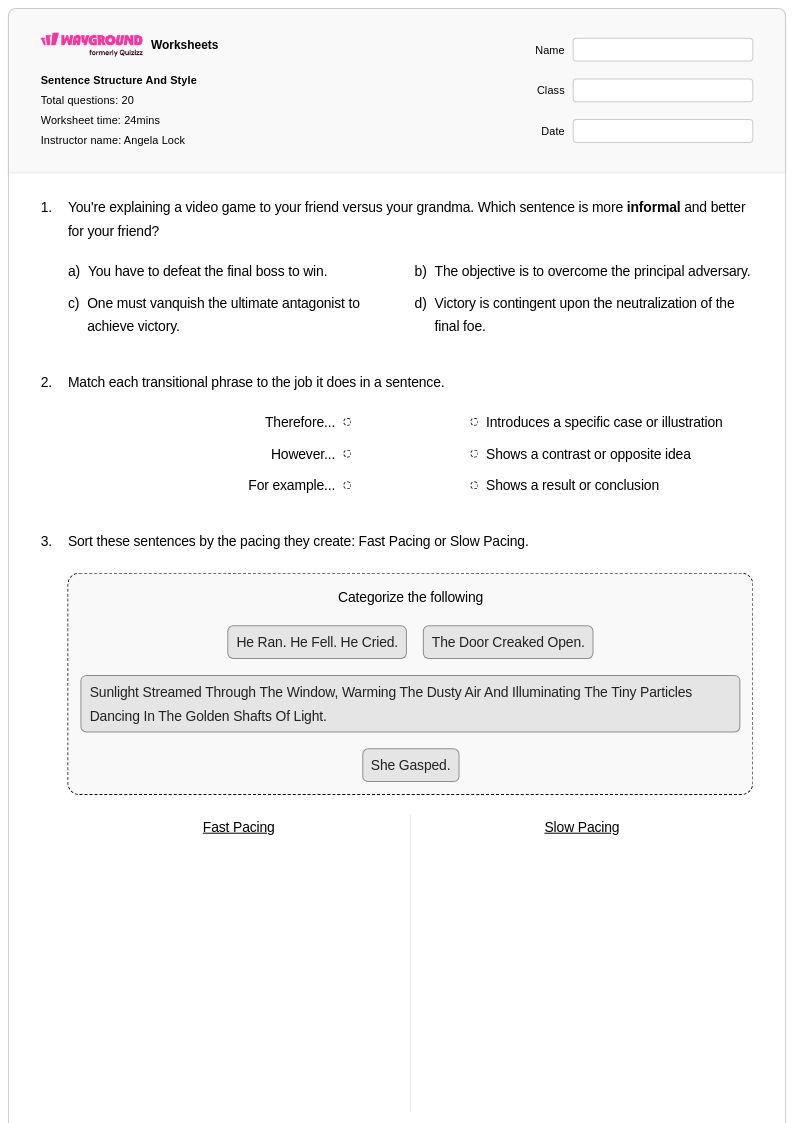
20 Q
6th - Uni
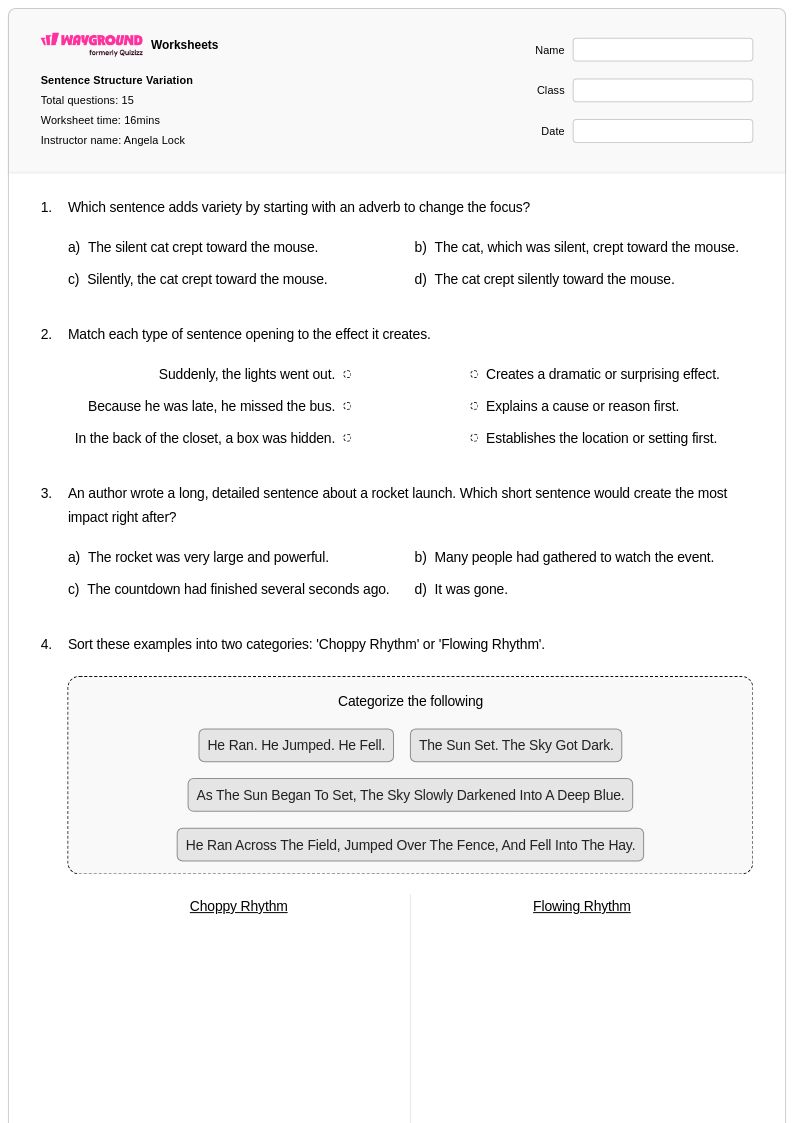
15 Q
6th - Uni
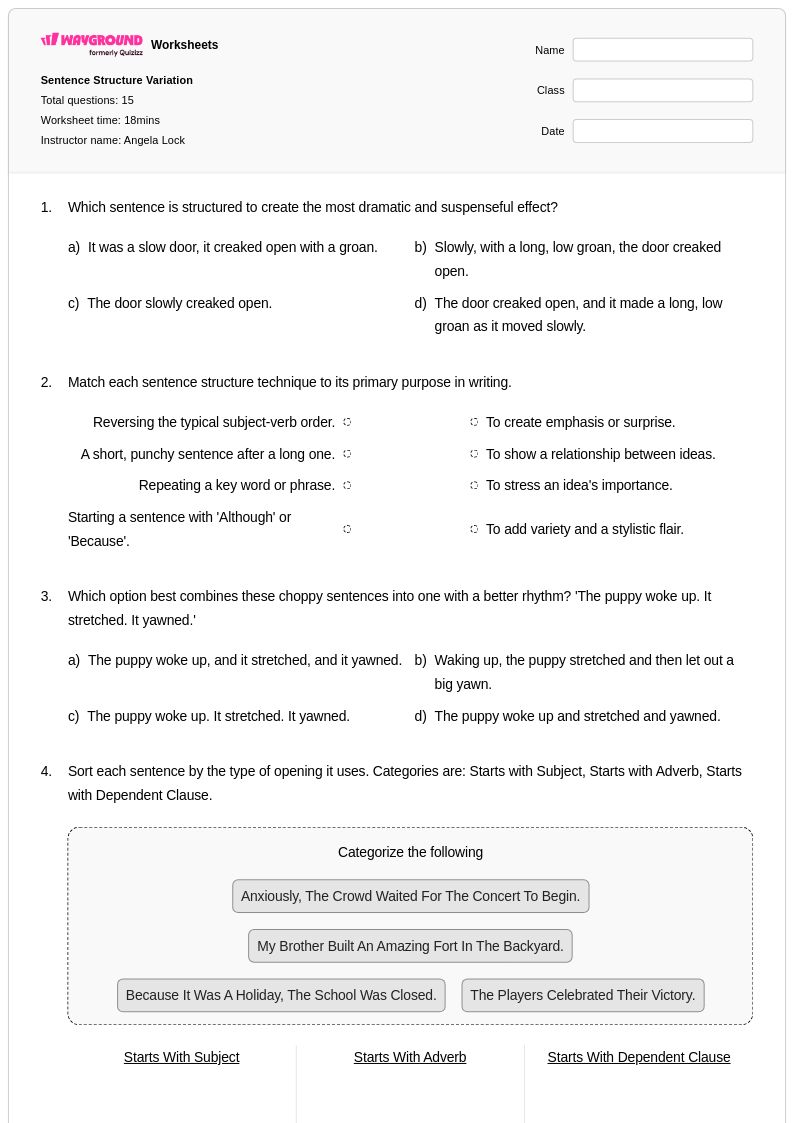
15 Q
6th - Uni
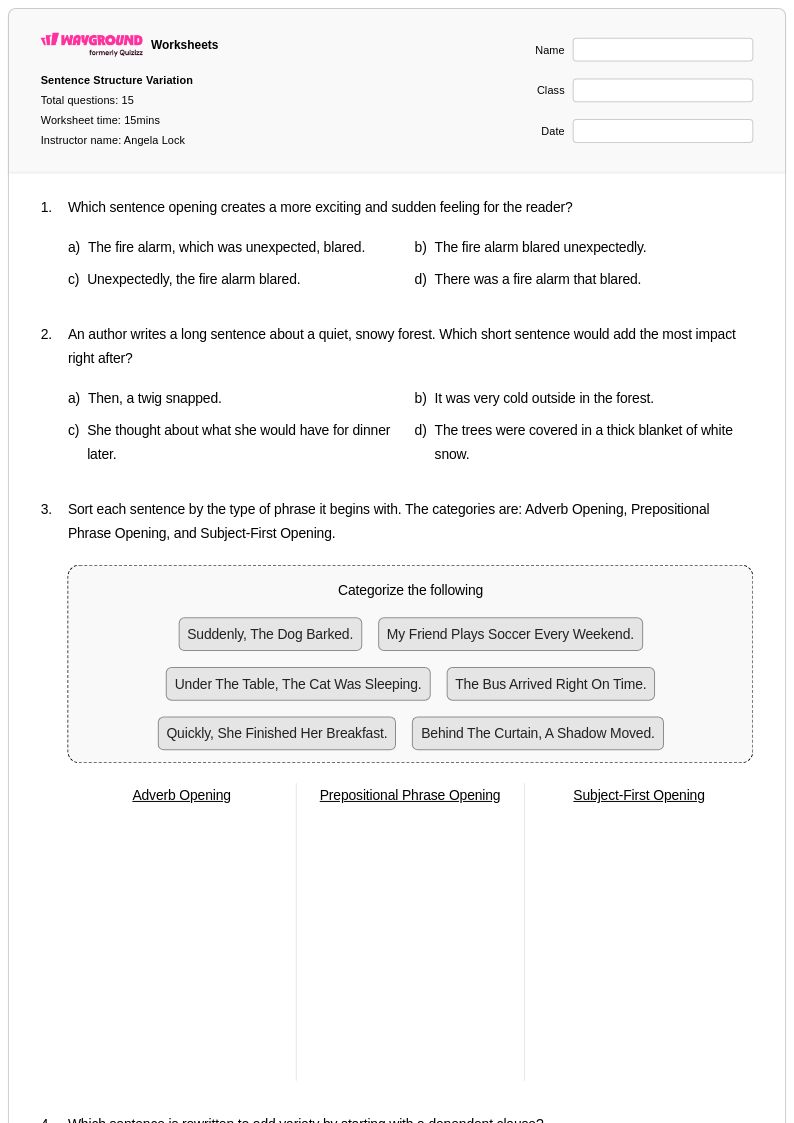
15 Q
6th - Uni
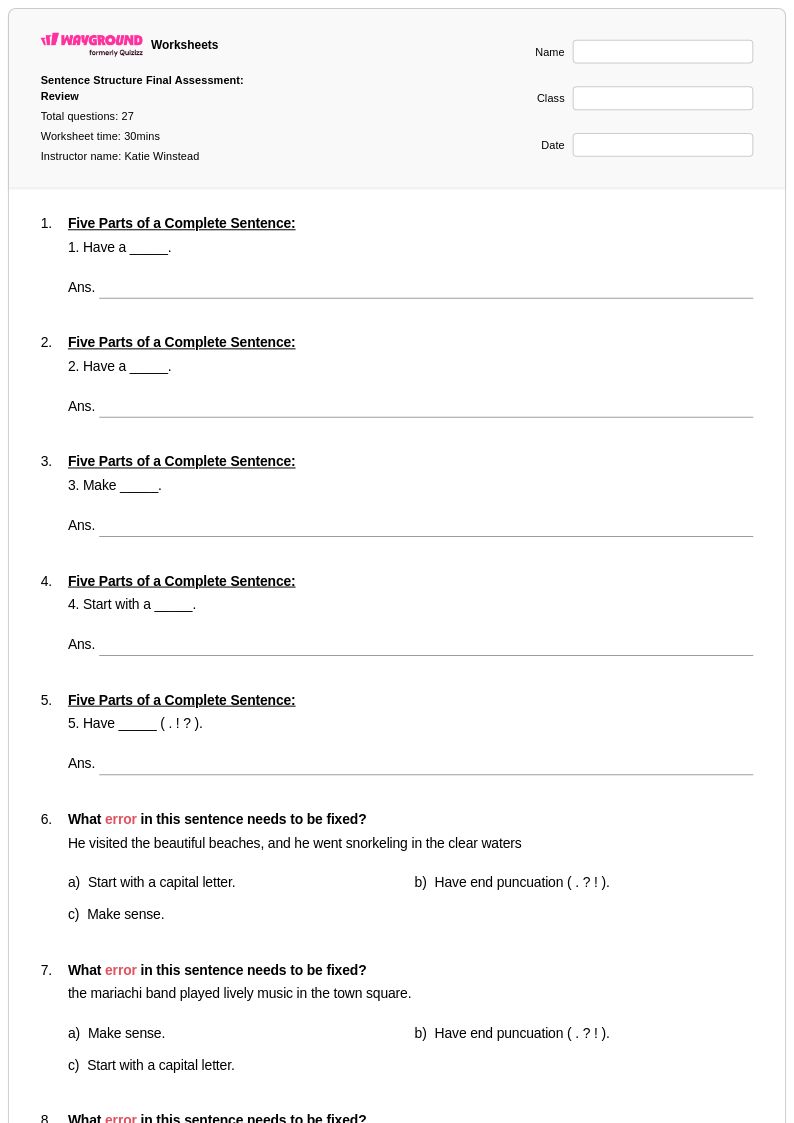
27 Q
10th
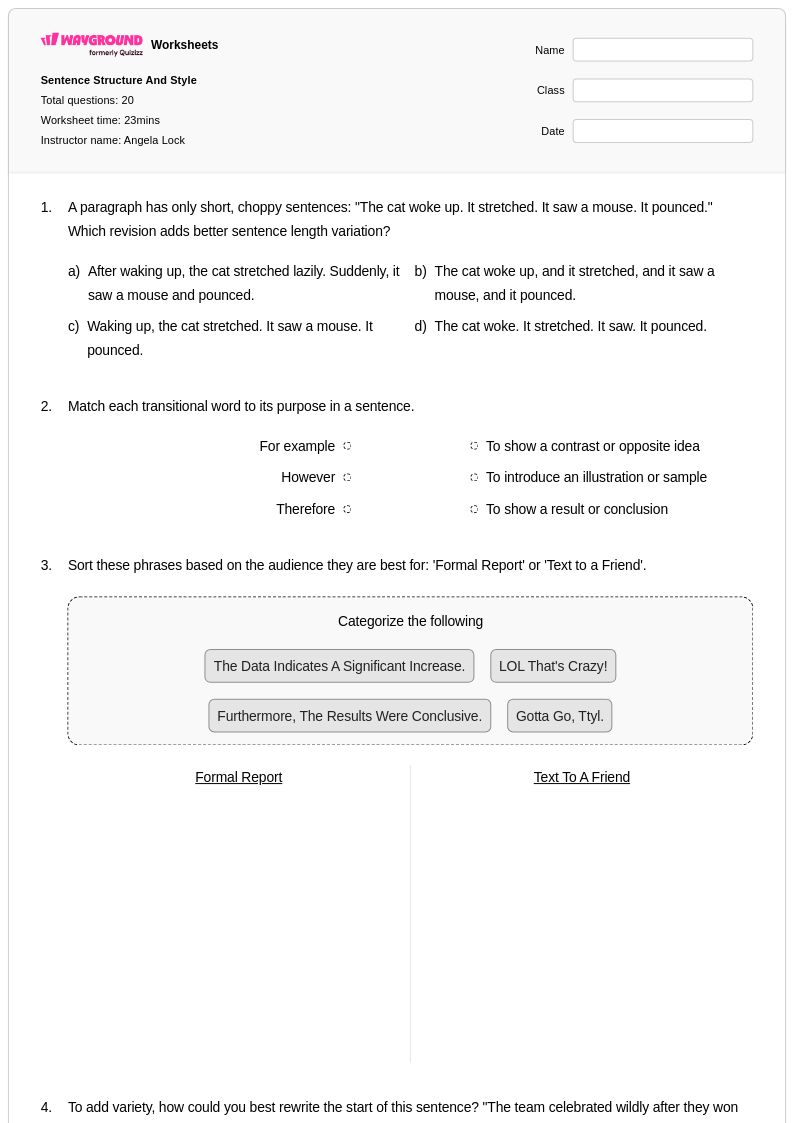
20 Q
6th - Uni
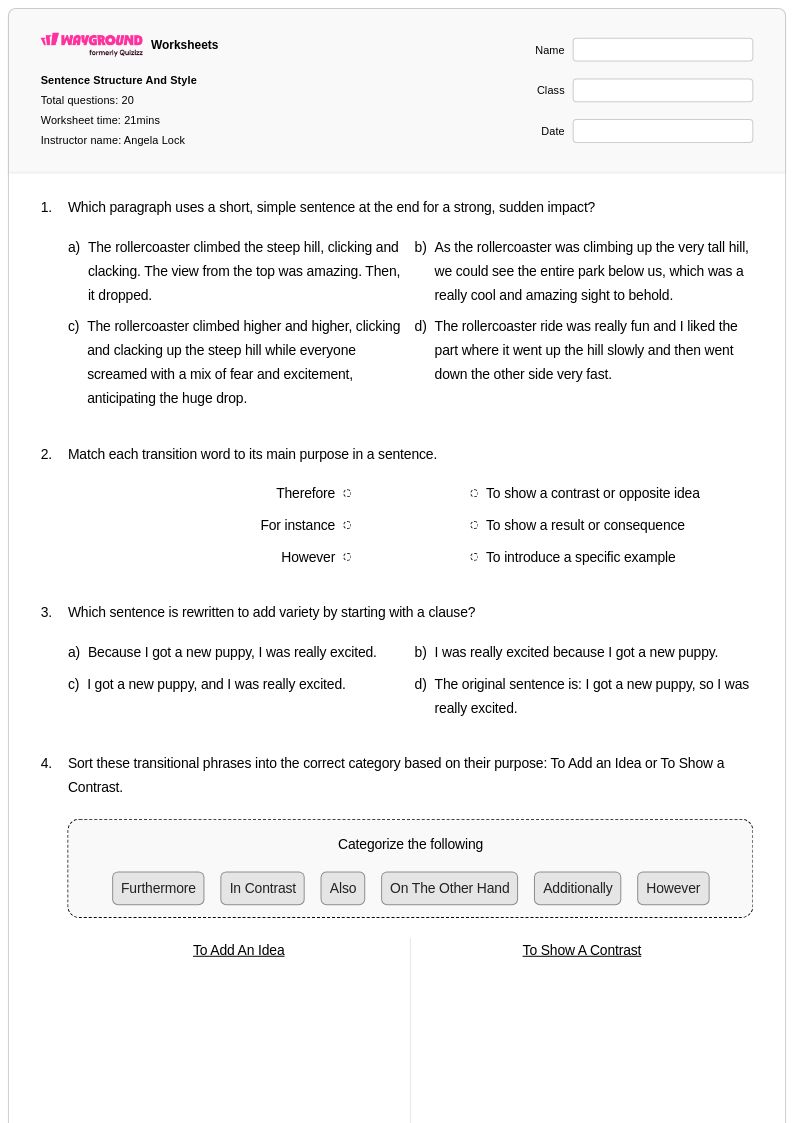
20 Q
6th - Uni
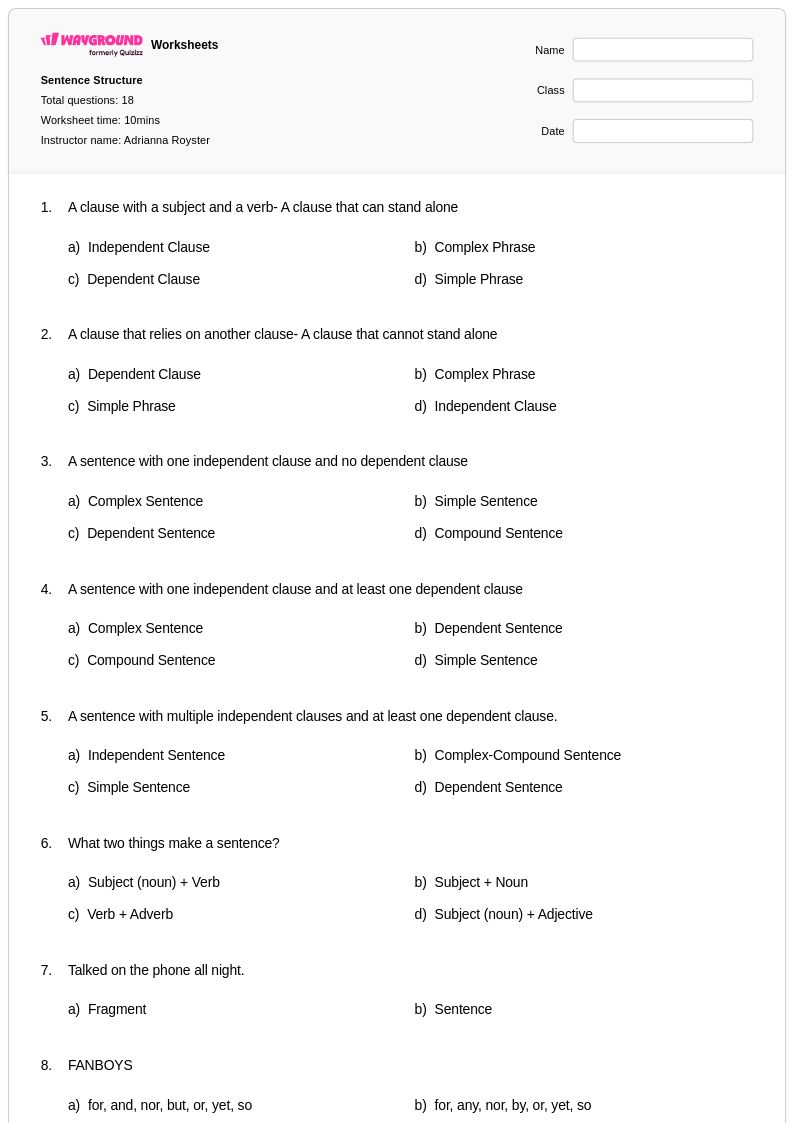
18 Q
9th - 12th
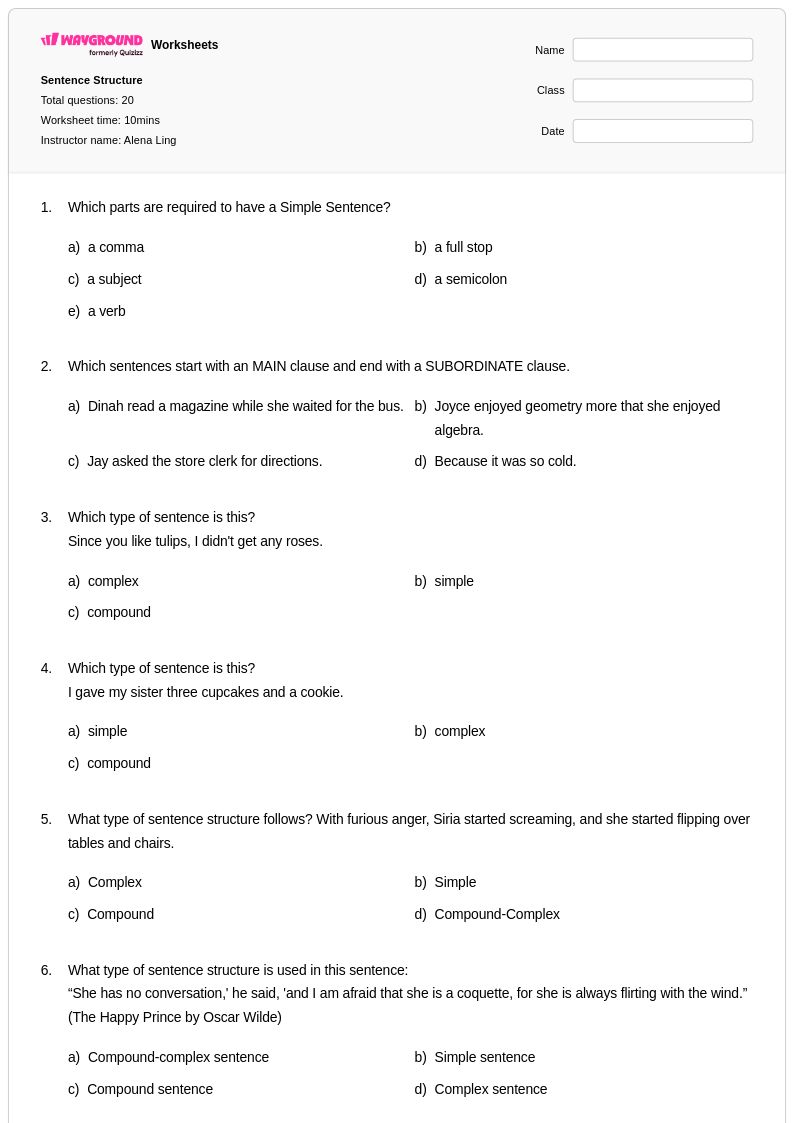
20 Q
10th
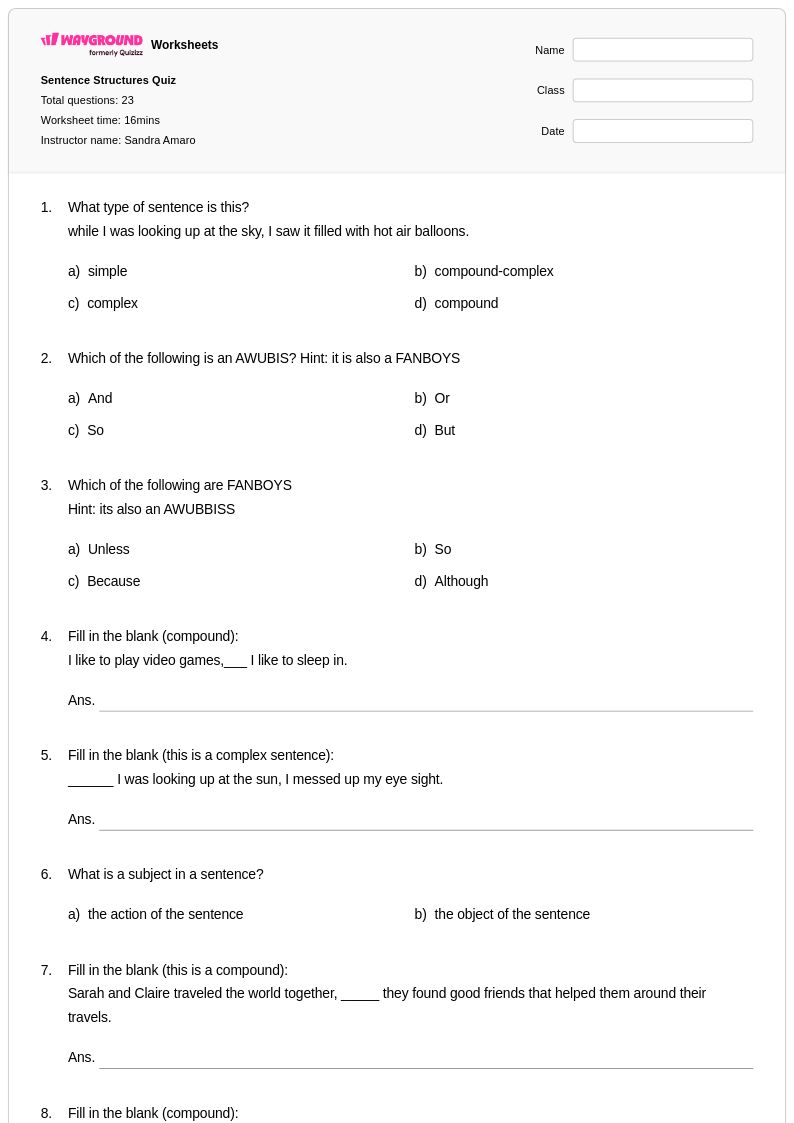
23 Q
10th
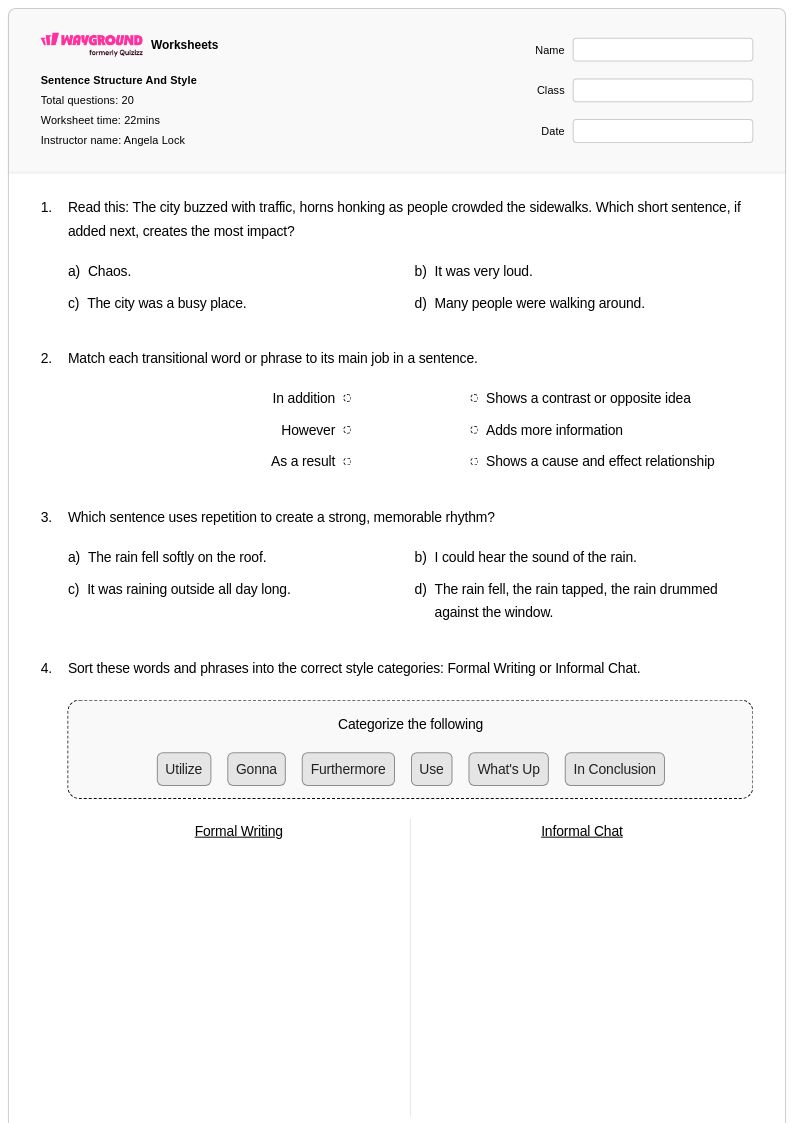
20 Q
6th - Uni
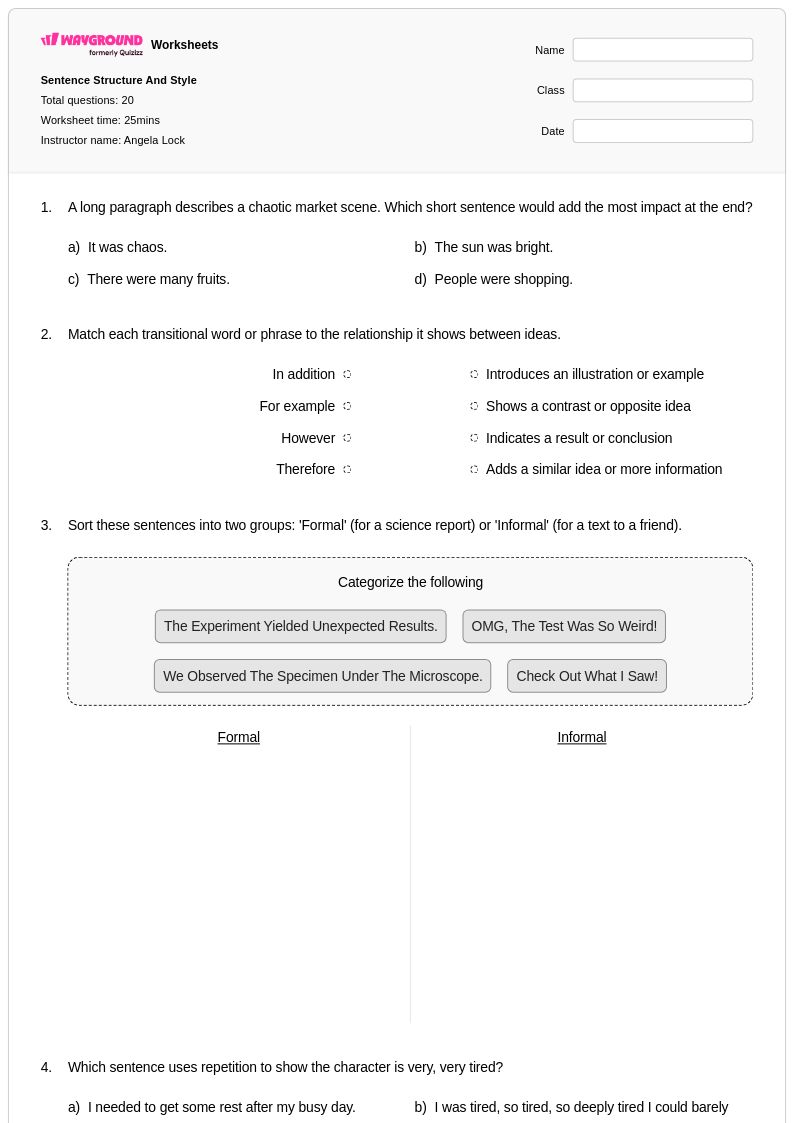
20 Q
6th - Uni
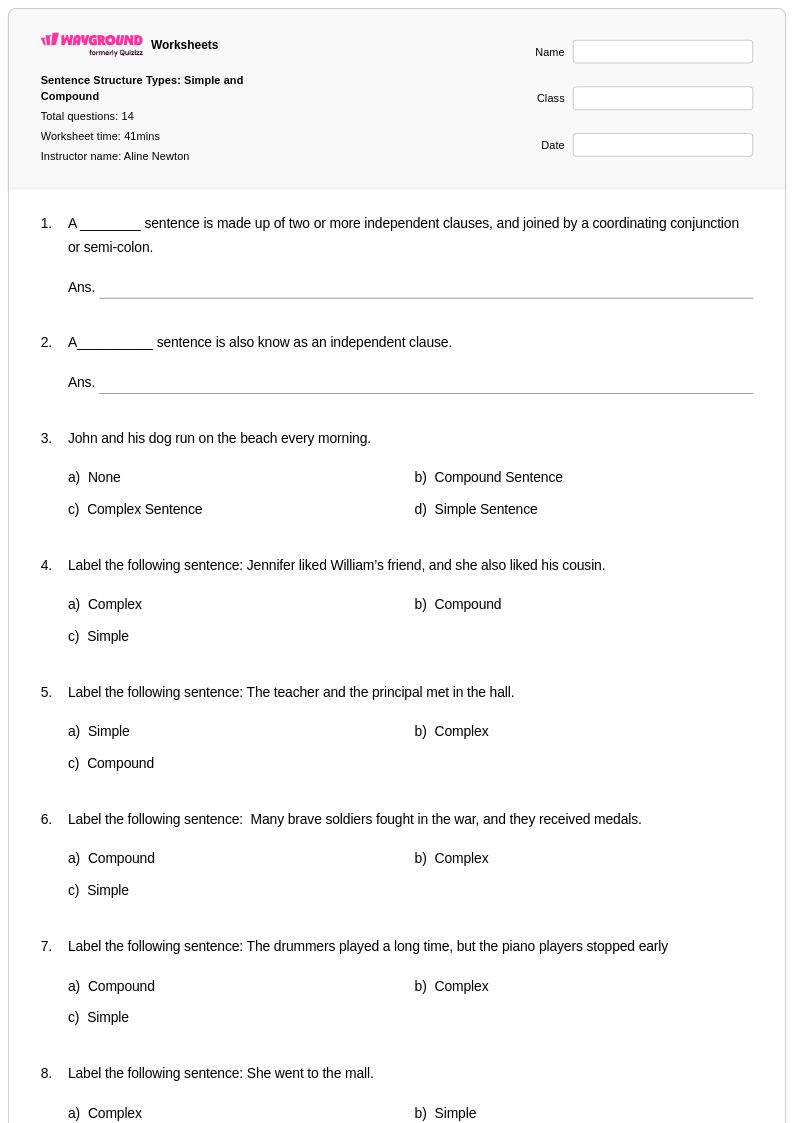
14 Q
9th - 10th
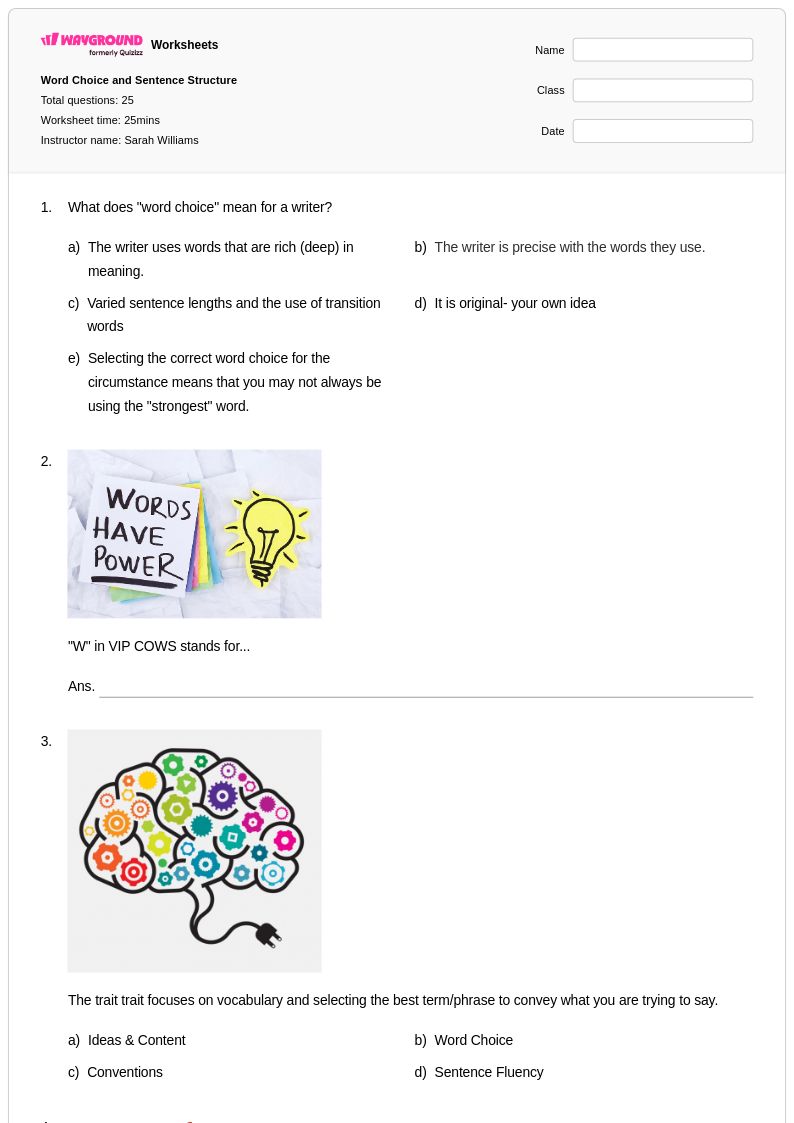
25 Q
6th - Uni
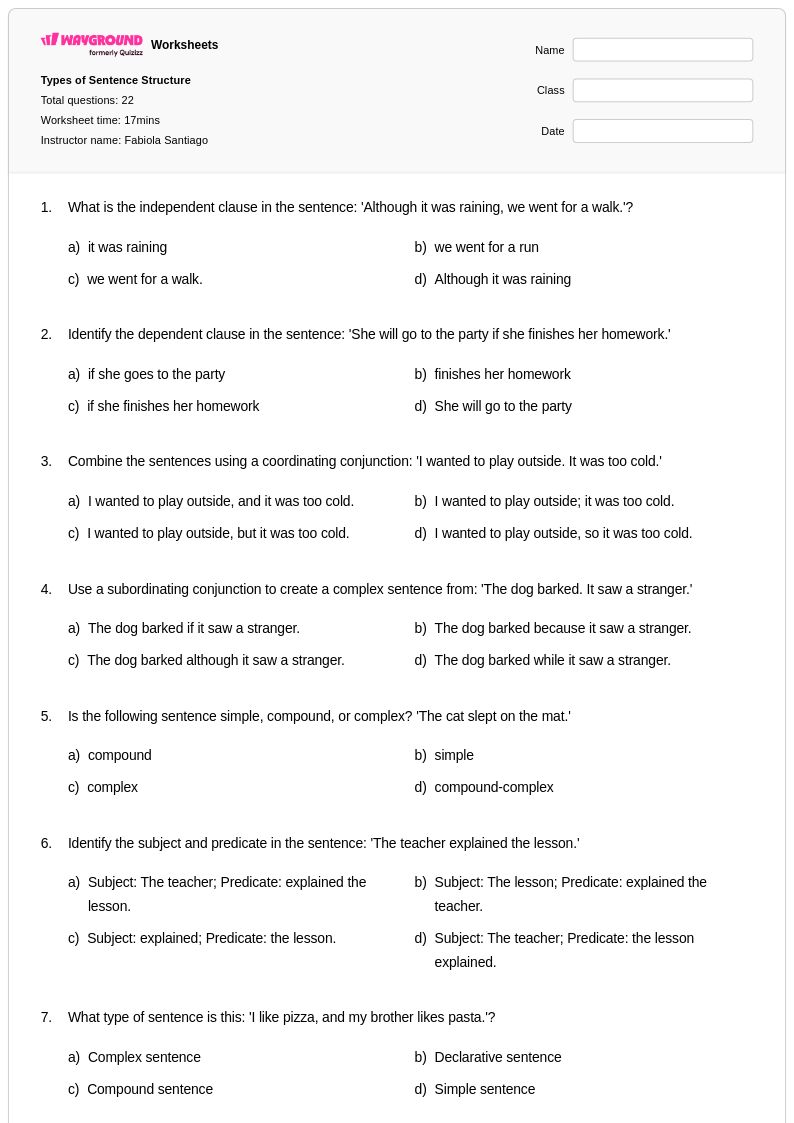
22 Q
6th - Uni
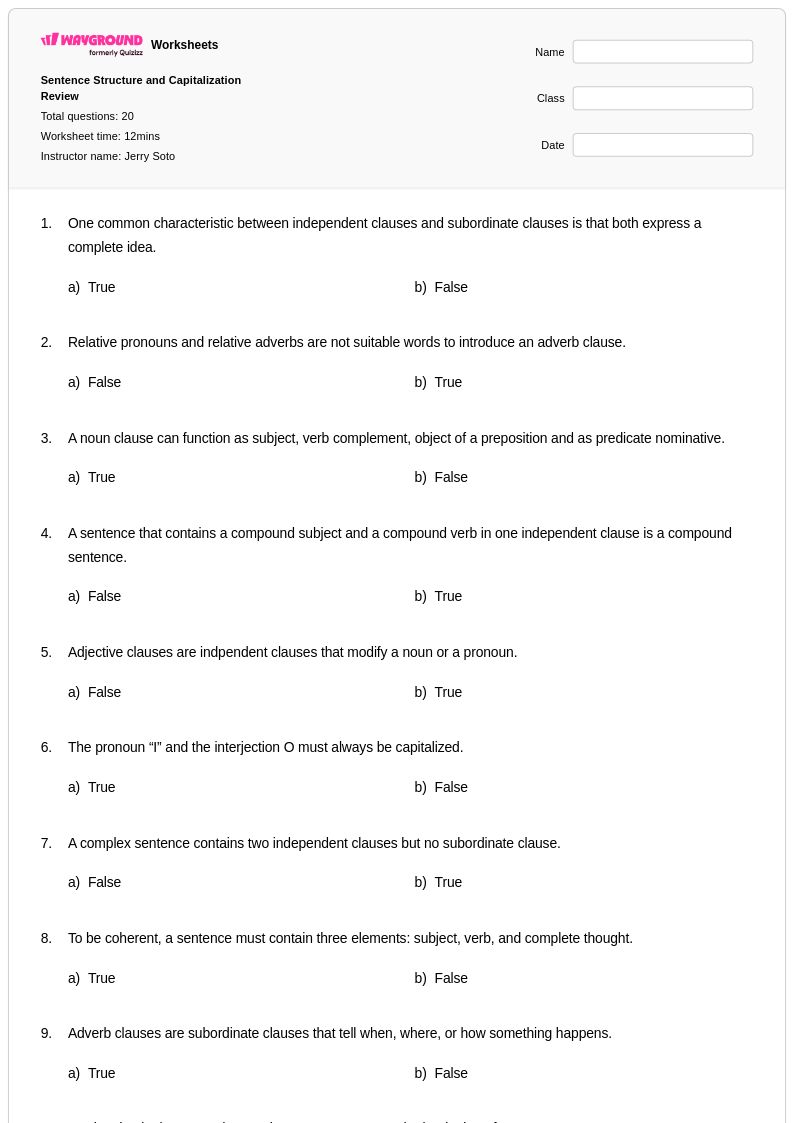
20 Q
8th - Uni
Explore Sentence Structure Worksheets by Grades
Explore Sentence Structure Worksheets for year 10 by Topic
Explore Other Subject Worksheets for year 10
Explore printable Sentence Structure worksheets for Year 10
Sentence structure worksheets for Year 10 students available through Wayground (formerly Quizizz) provide comprehensive practice in analyzing and constructing complex grammatical formations that are essential for advanced writing proficiency. These expertly designed resources help students master the intricacies of compound-complex sentences, parallel structure, subordination, and coordination while strengthening their ability to identify and correct sentence fragments, run-on sentences, and misplaced modifiers. Each worksheet collection includes detailed answer keys and explanations that guide students through the logical progression of sentence construction, from simple declarative statements to sophisticated rhetorical structures. The free printables offer varied practice problems that challenge students to manipulate sentence elements, combine clauses effectively, and develop the syntactic awareness necessary for college-level academic writing.
Wayground (formerly Quizizz) supports educators with an extensive library of millions of teacher-created sentence structure resources that can be easily customized to meet diverse classroom needs and learning objectives. The platform's robust search and filtering capabilities allow teachers to quickly locate materials aligned with specific standards and differentiate instruction based on individual student proficiency levels. These comprehensive worksheet collections are available in both printable pdf format and interactive digital versions, enabling seamless integration into traditional classroom instruction, homework assignments, or remote learning environments. Teachers can efficiently plan targeted remediation for struggling writers, provide enrichment opportunities for advanced students, and implement systematic skill practice that builds grammatical competency across diverse learning styles and academic preparation levels.
FAQs
How do I teach sentence structure to students who struggle with grammar basics?
What worksheets or exercises help students practice sentence structure effectively?
What are the most common mistakes students make with sentence structure?
How do I help students understand the difference between phrases and clauses?
How can I use sentence structure worksheets to support students at different skill levels?
How do I use Wayground's sentence structure worksheets in my classroom?