Free Printable Separation of Powers Worksheets for Year 9
Year 9 separation of powers free worksheets and printables help students master the division of government authority through engaging practice problems and comprehensive answer keys available as downloadable PDFs from Wayground.
Explore printable Separation of Powers worksheets for Year 9
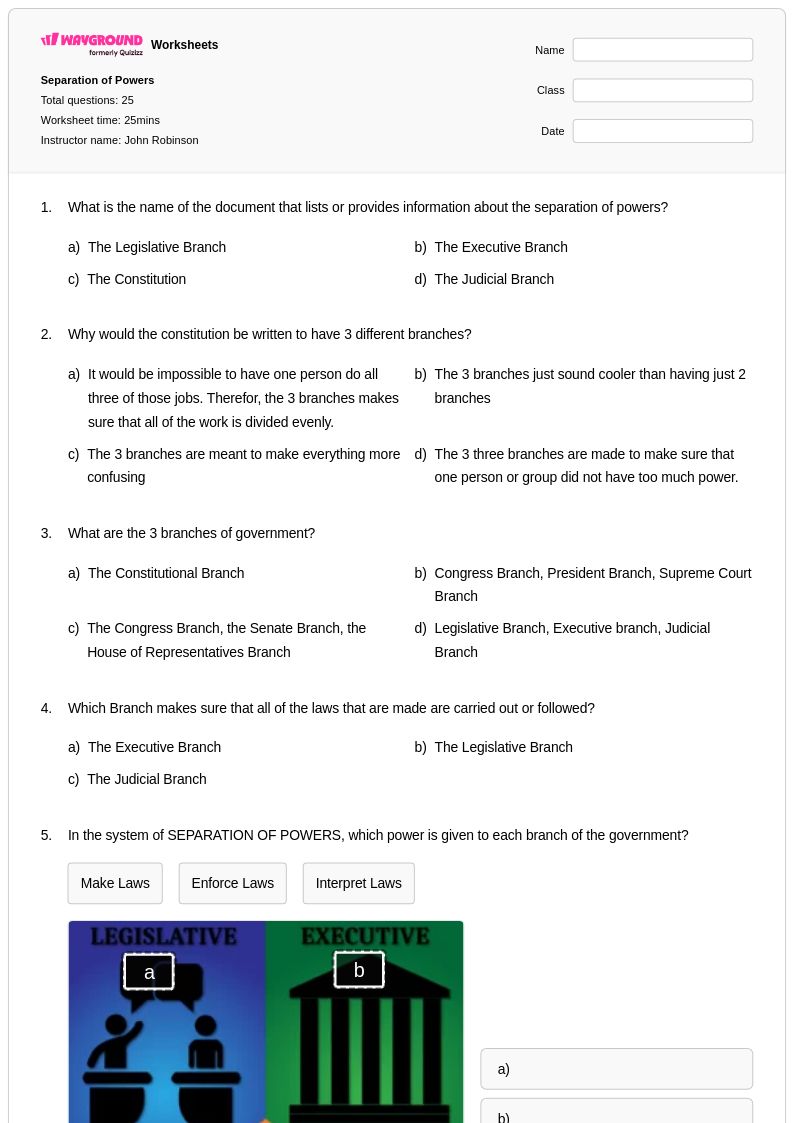
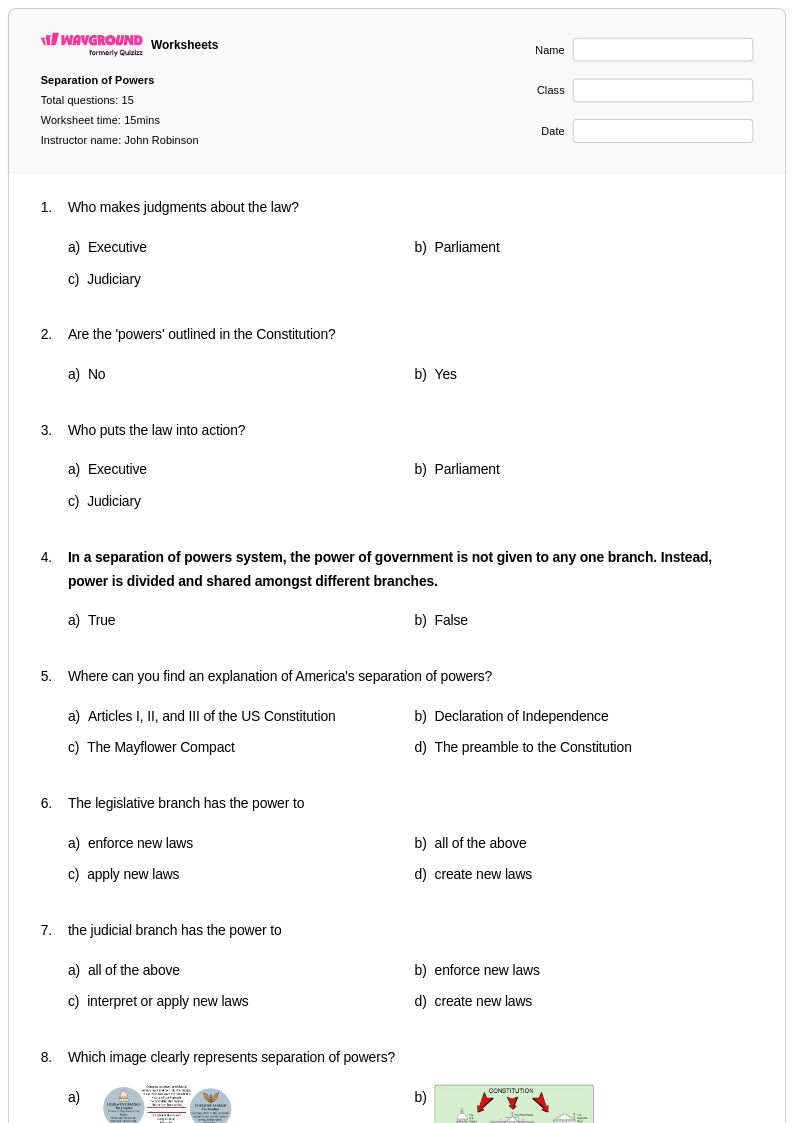
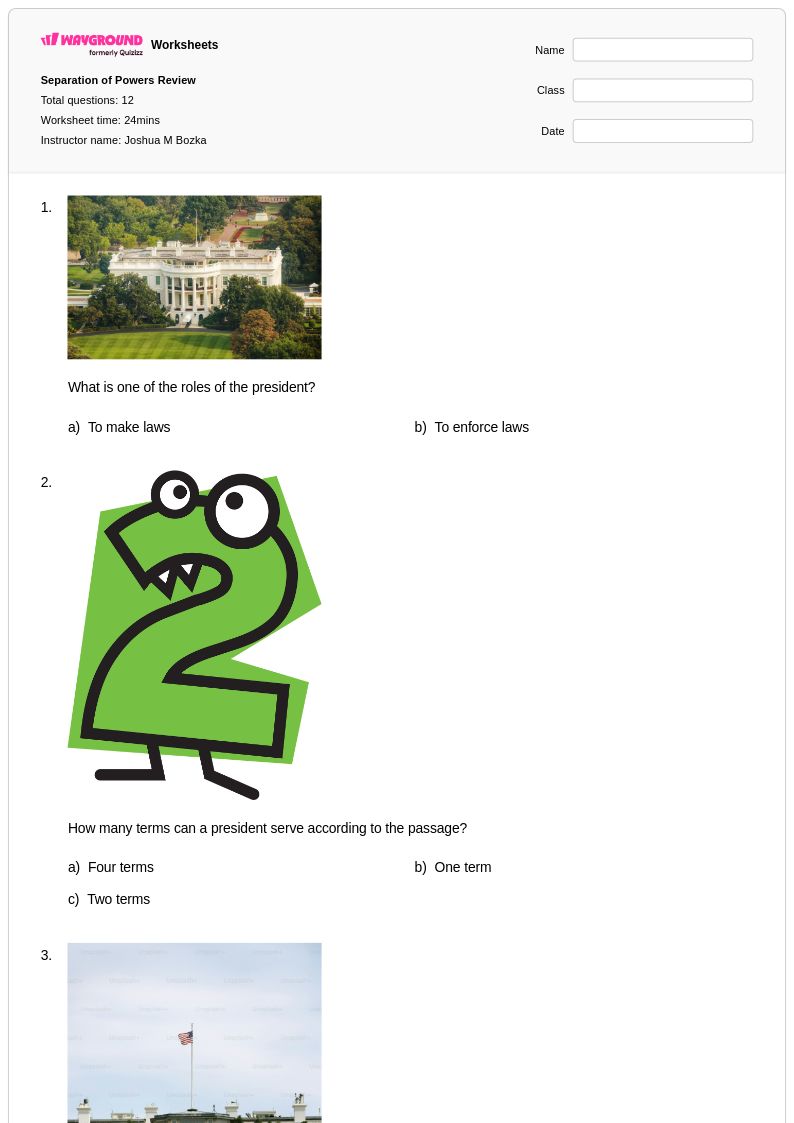
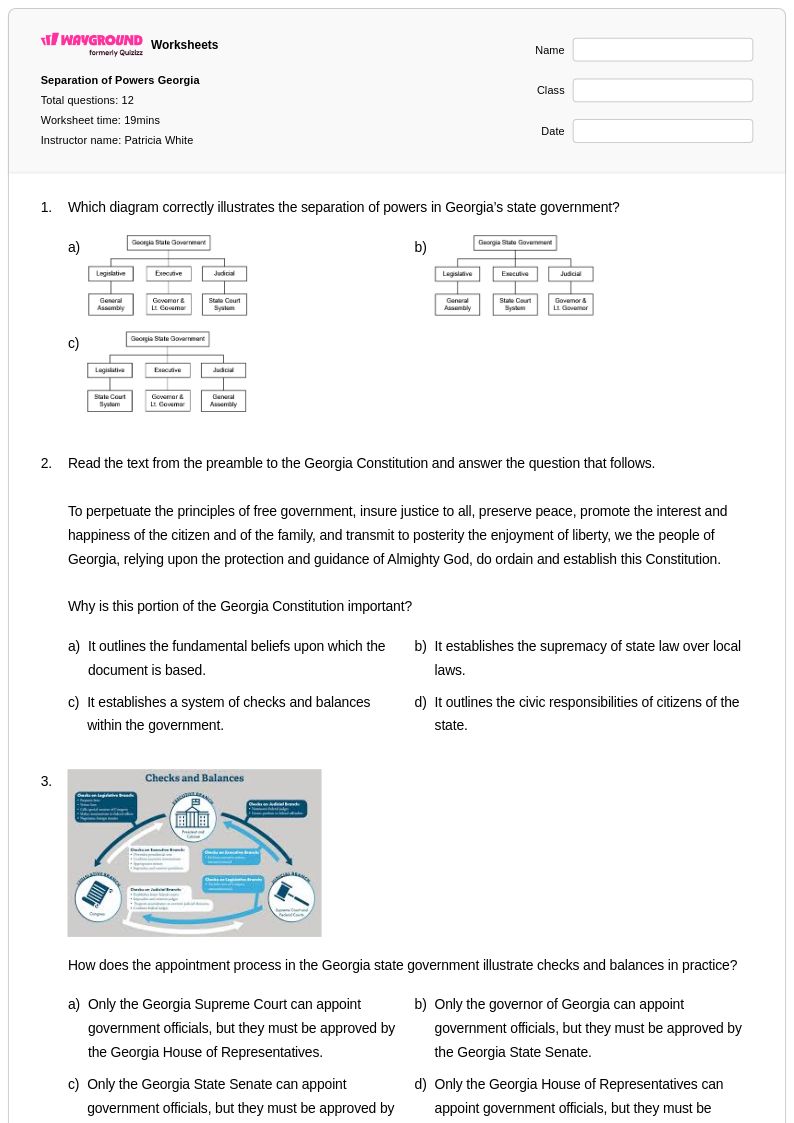
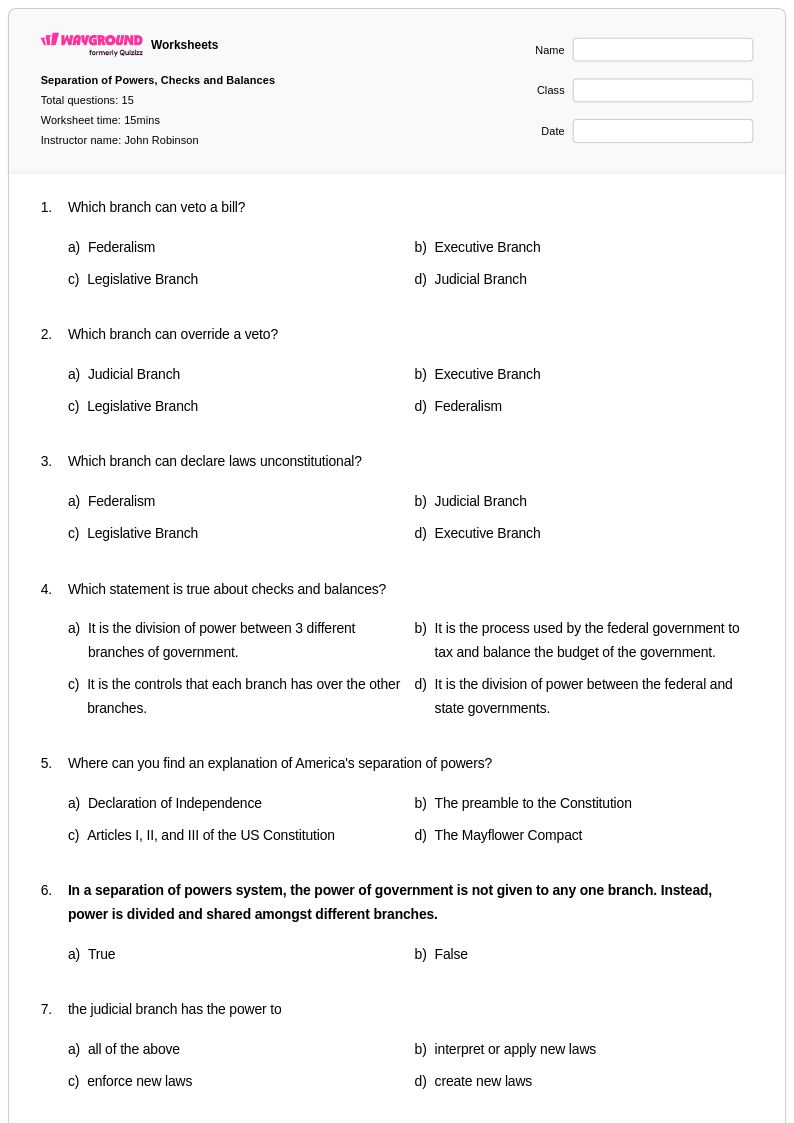
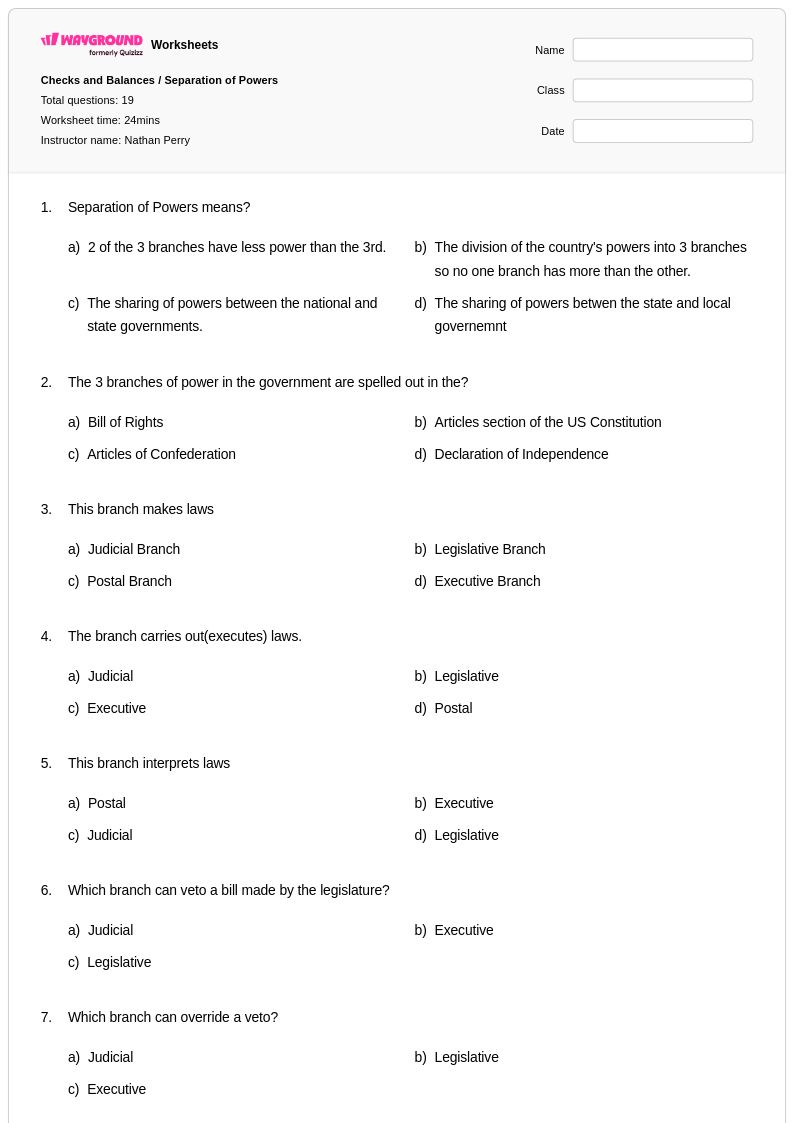
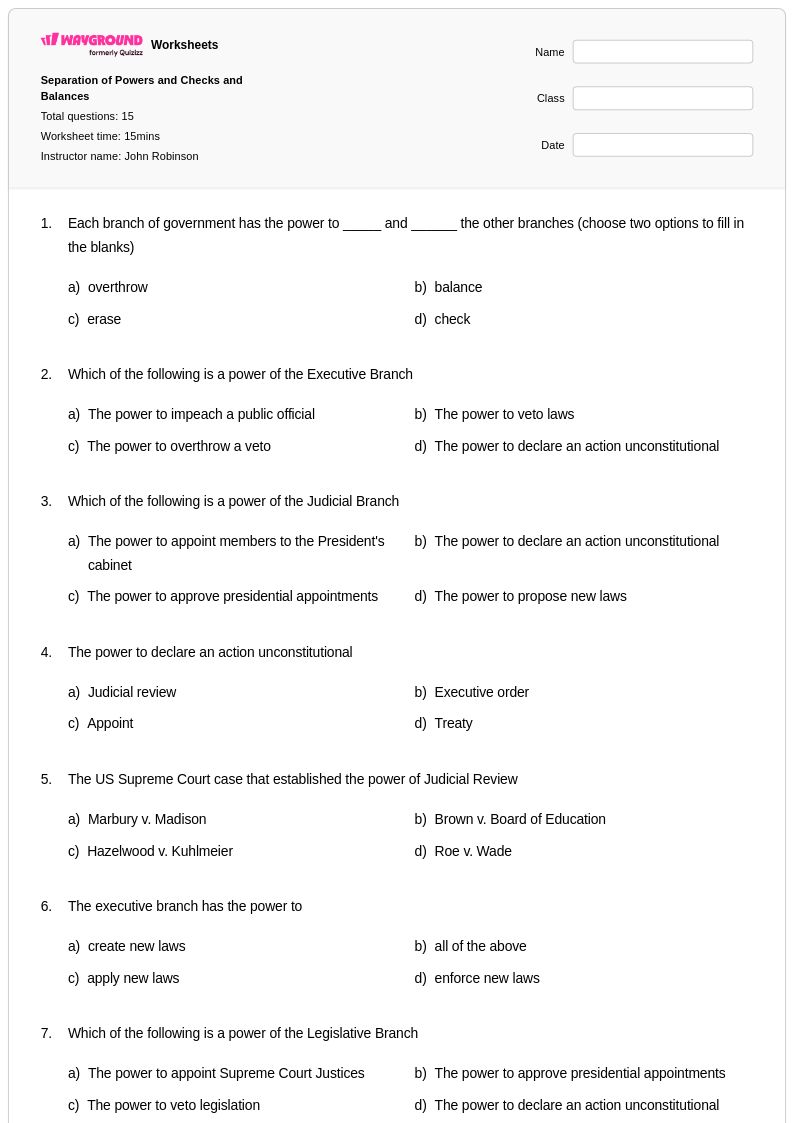
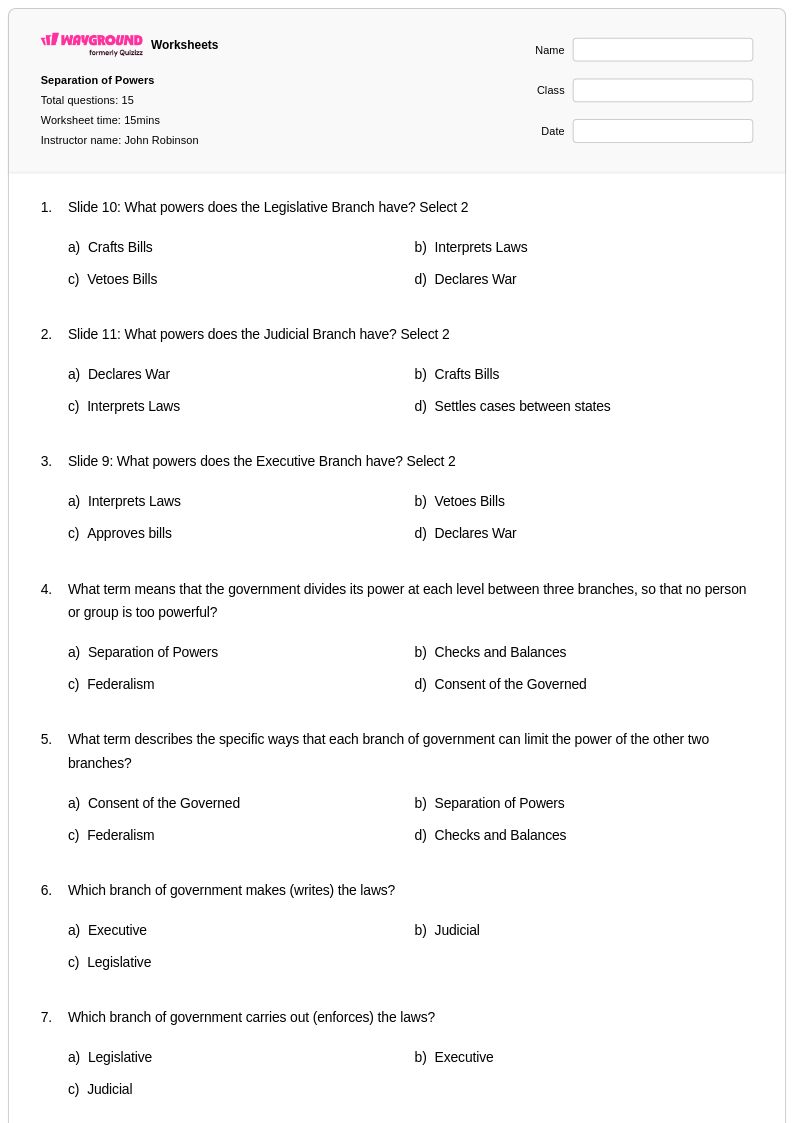
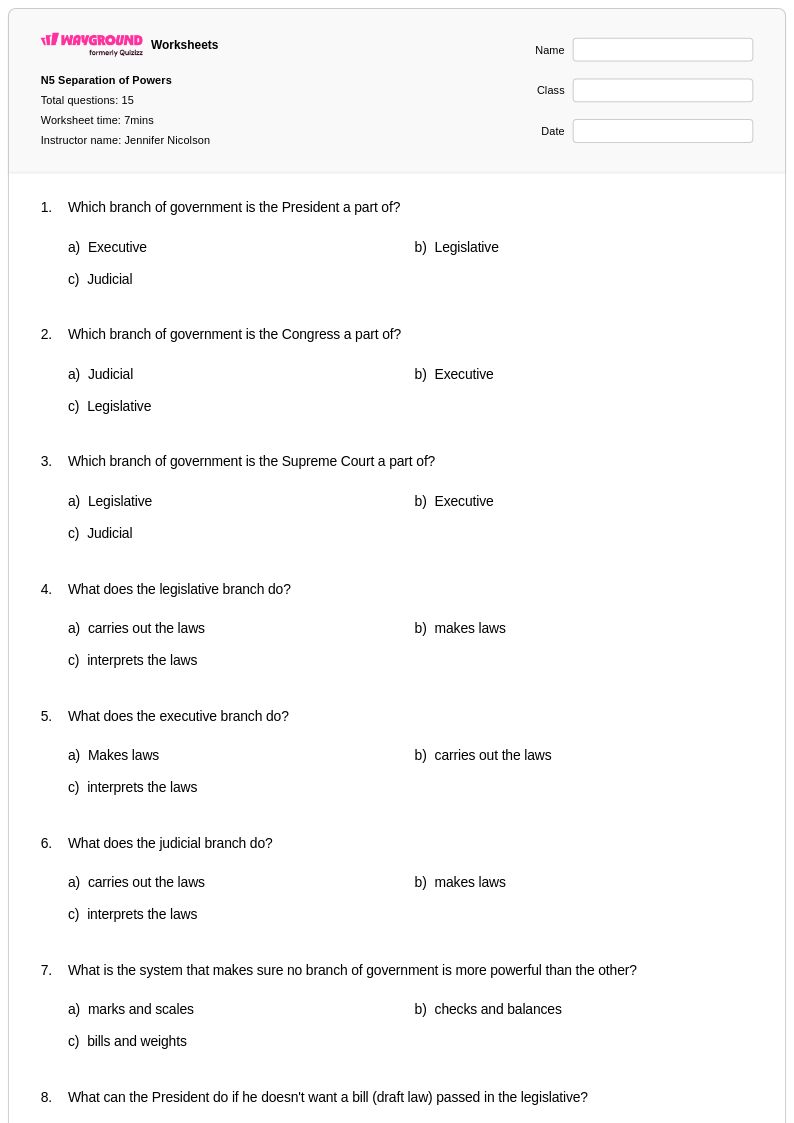
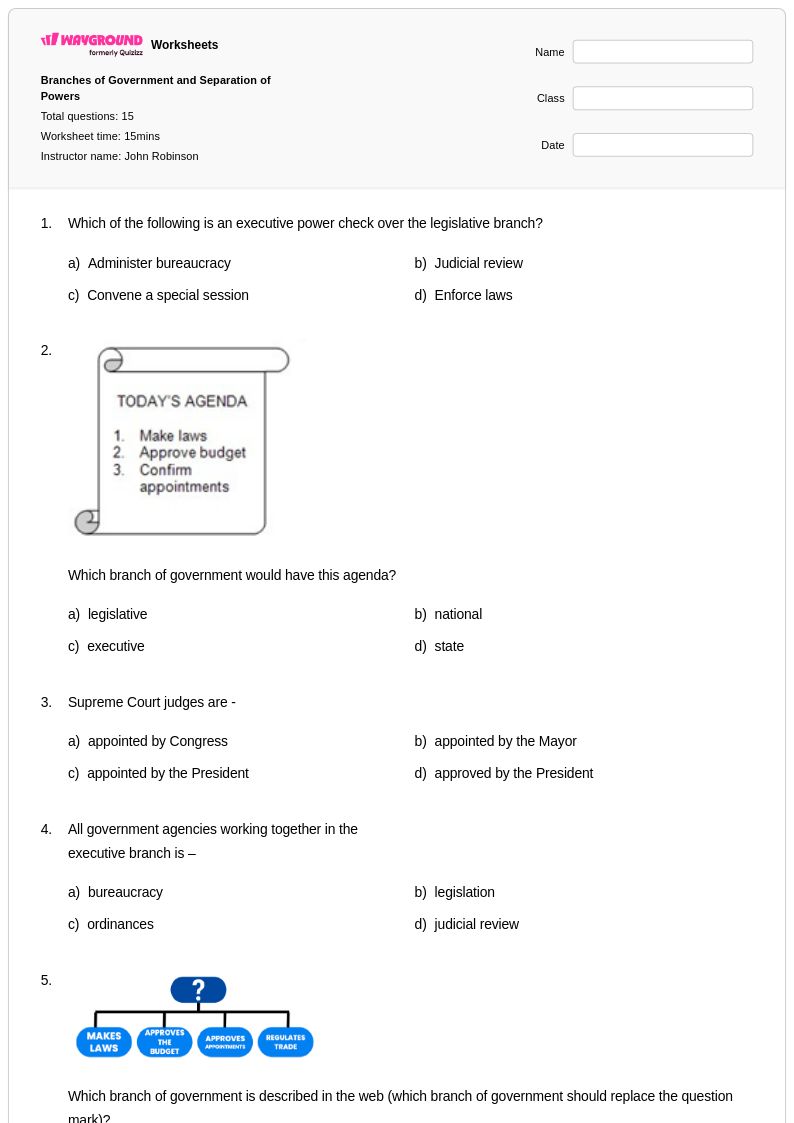
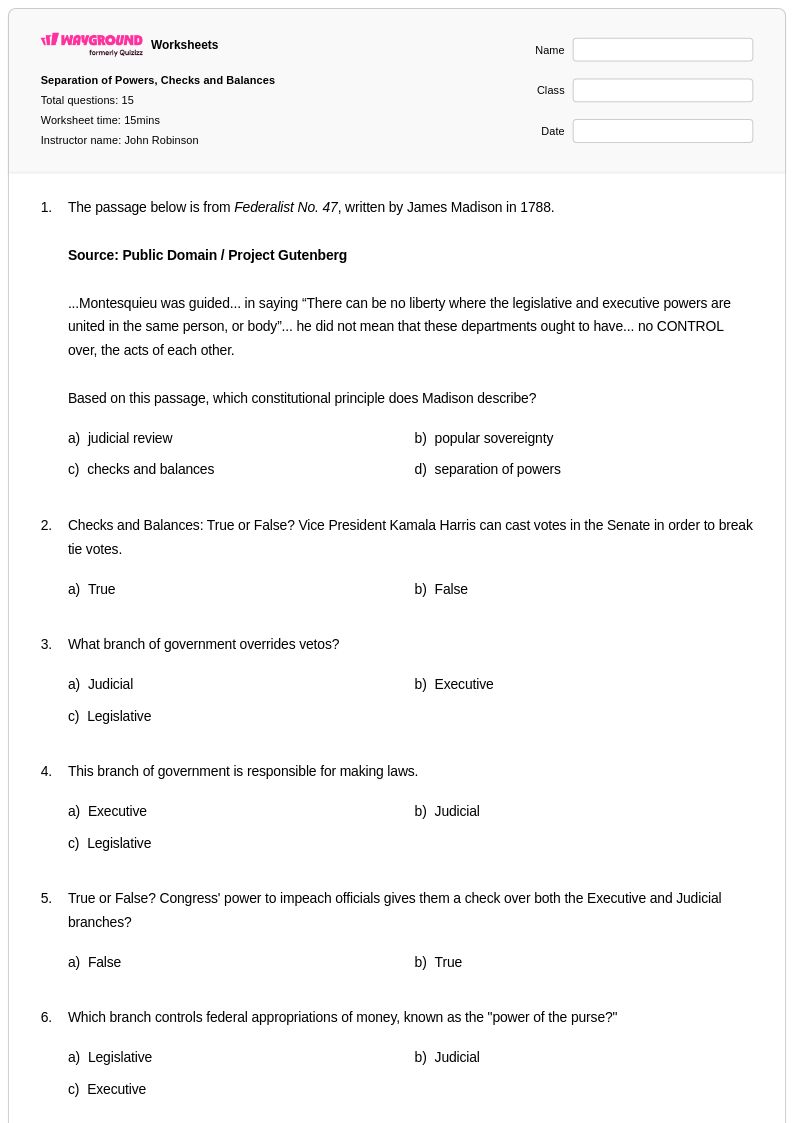
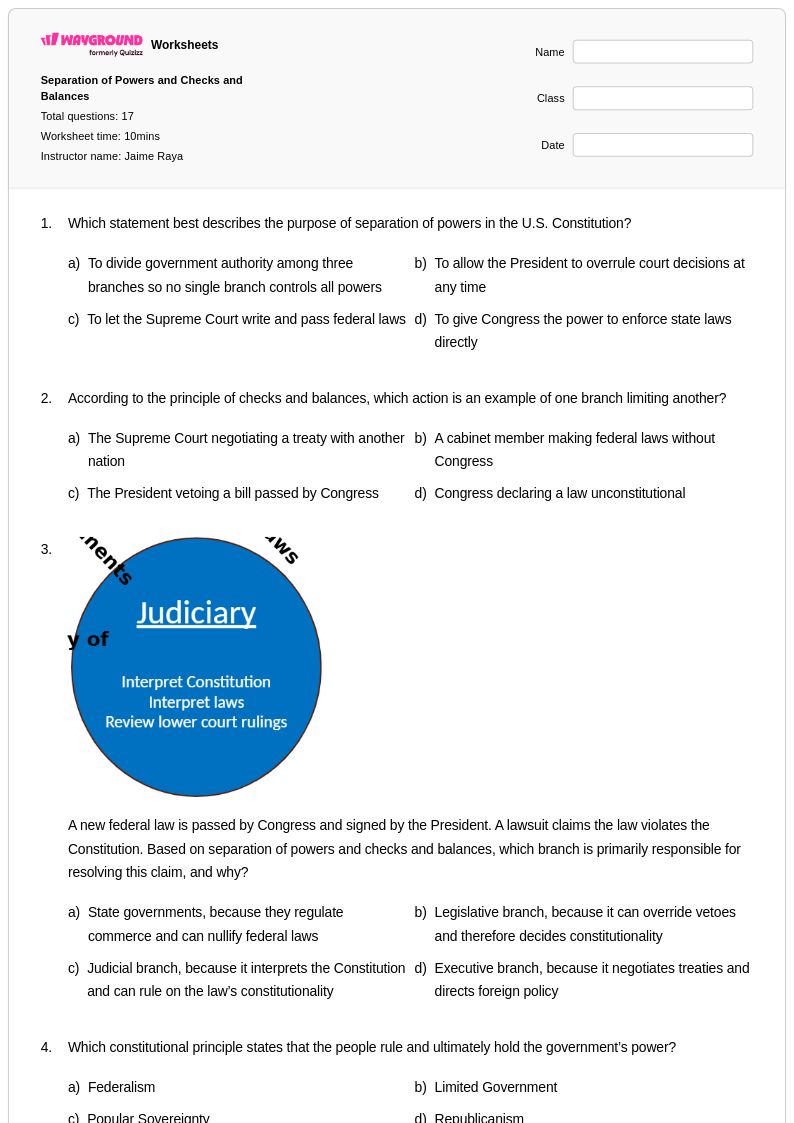
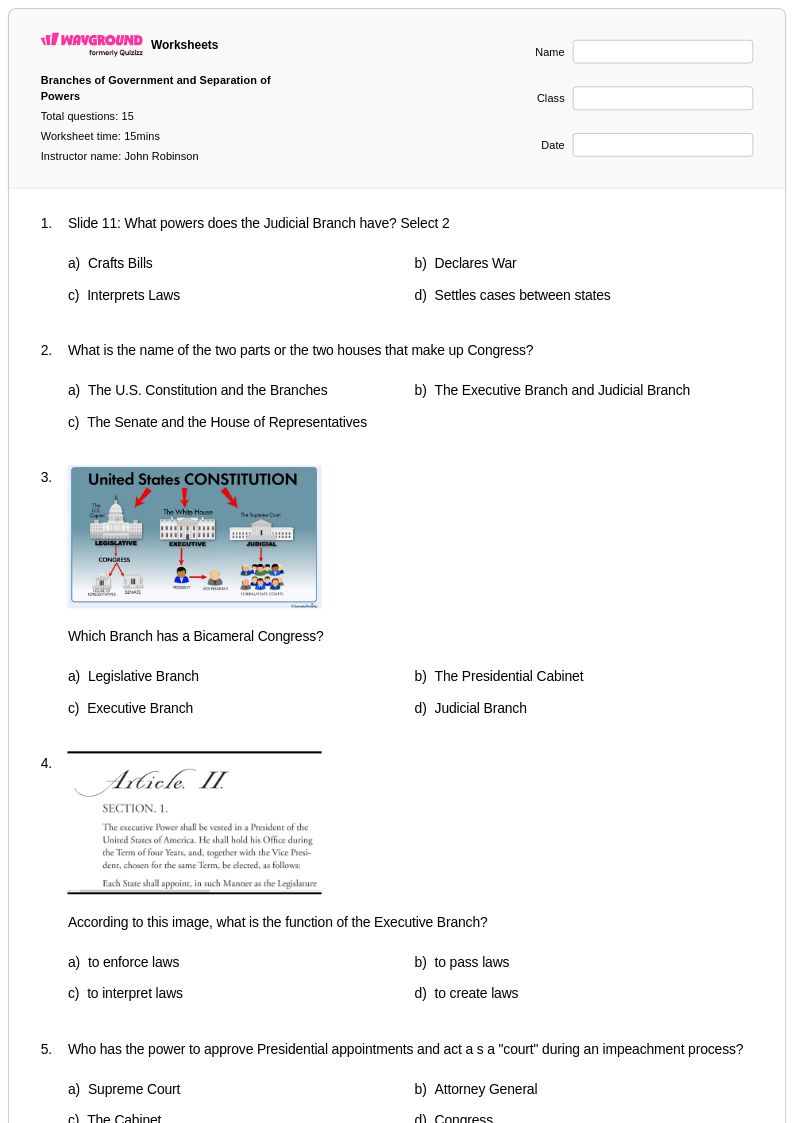
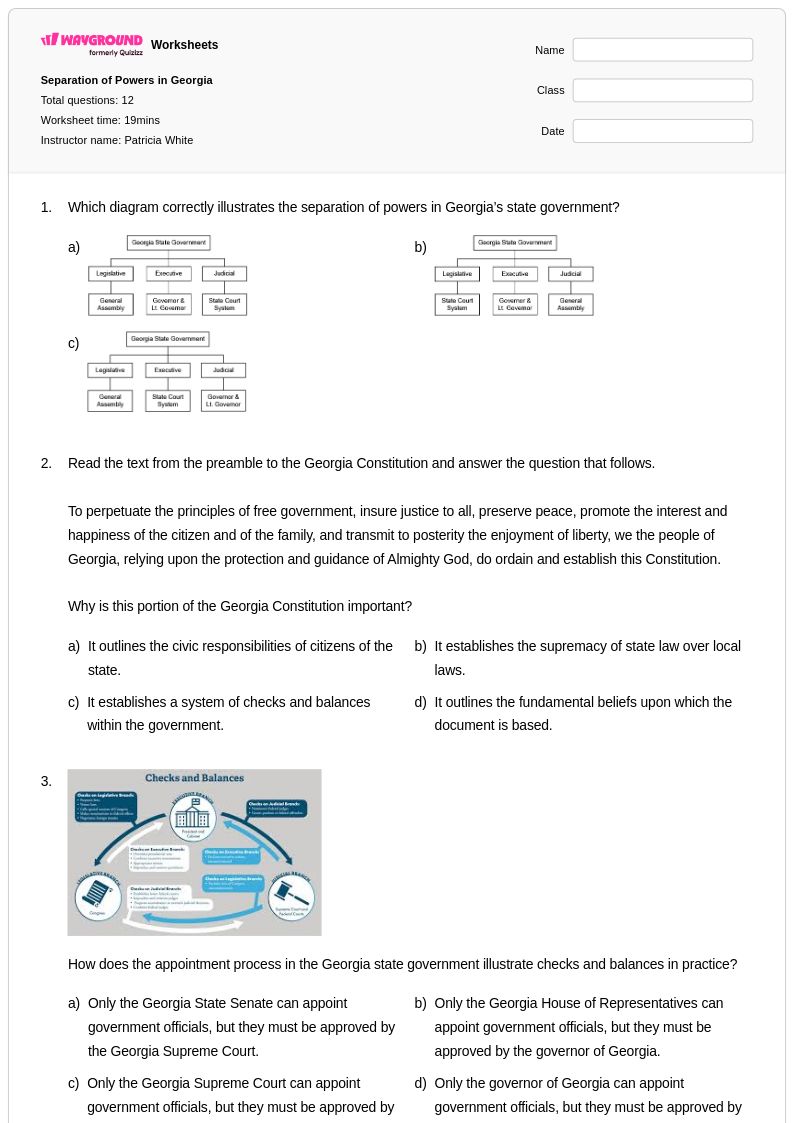
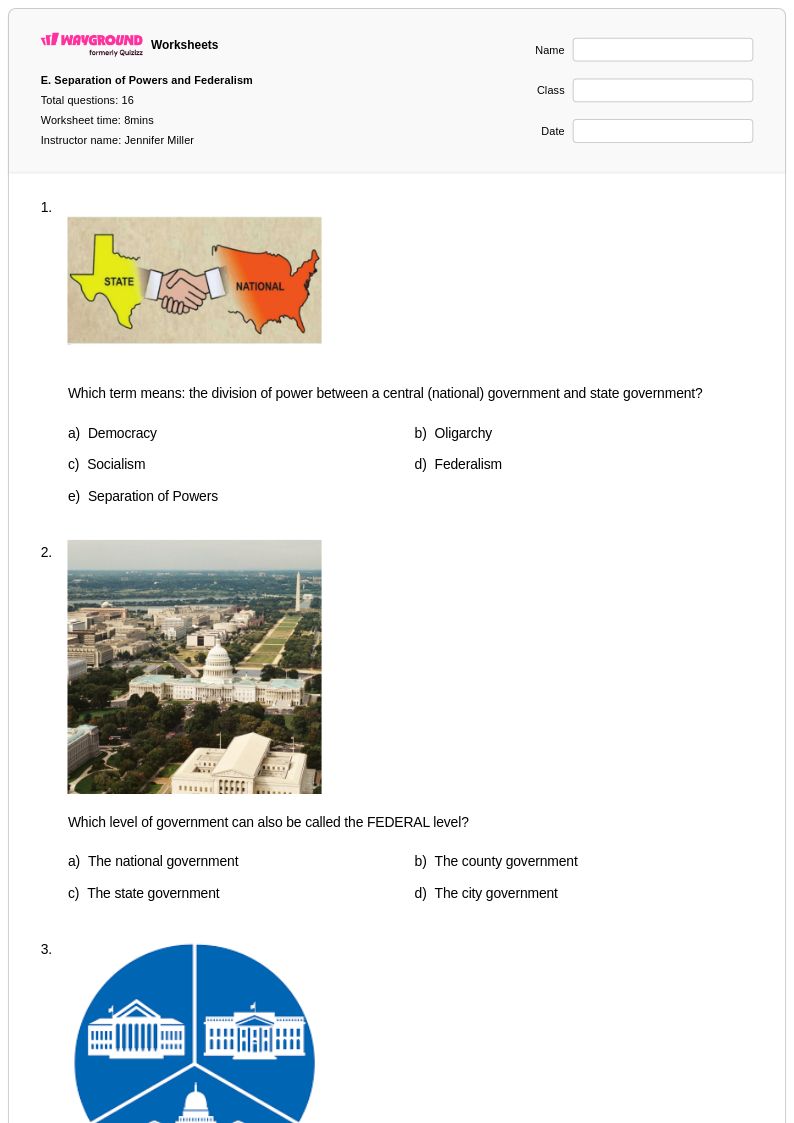
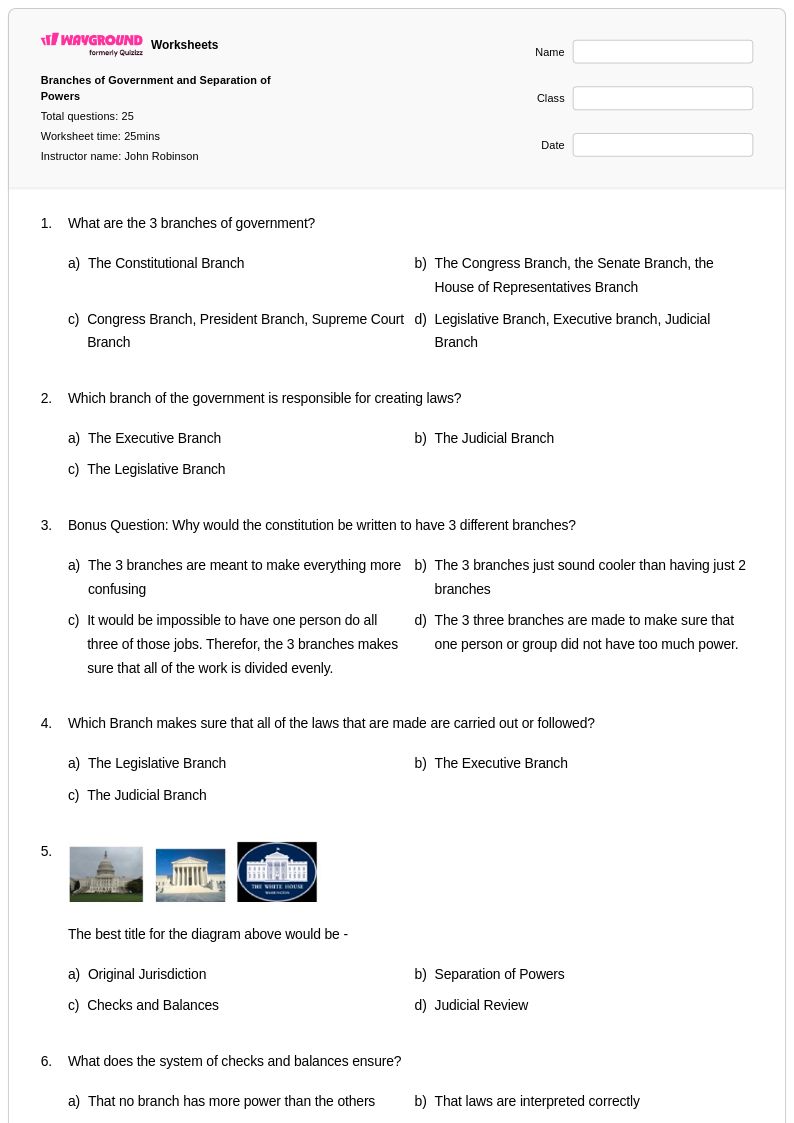
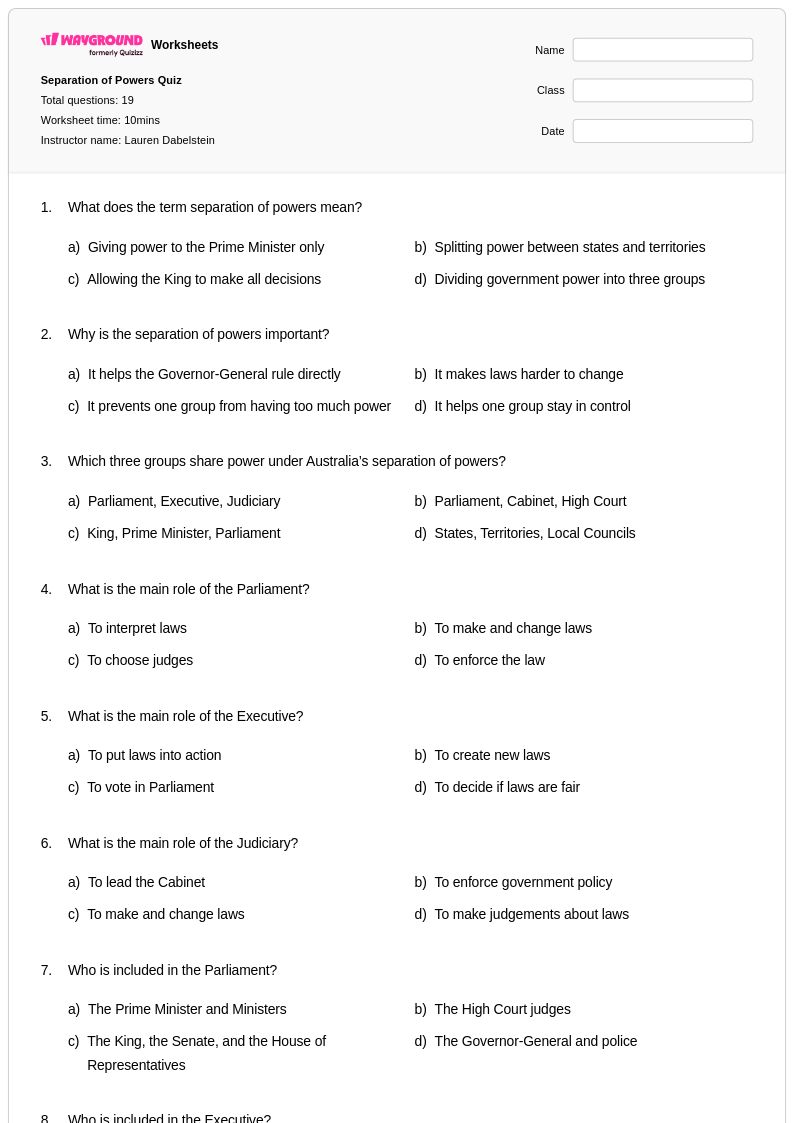
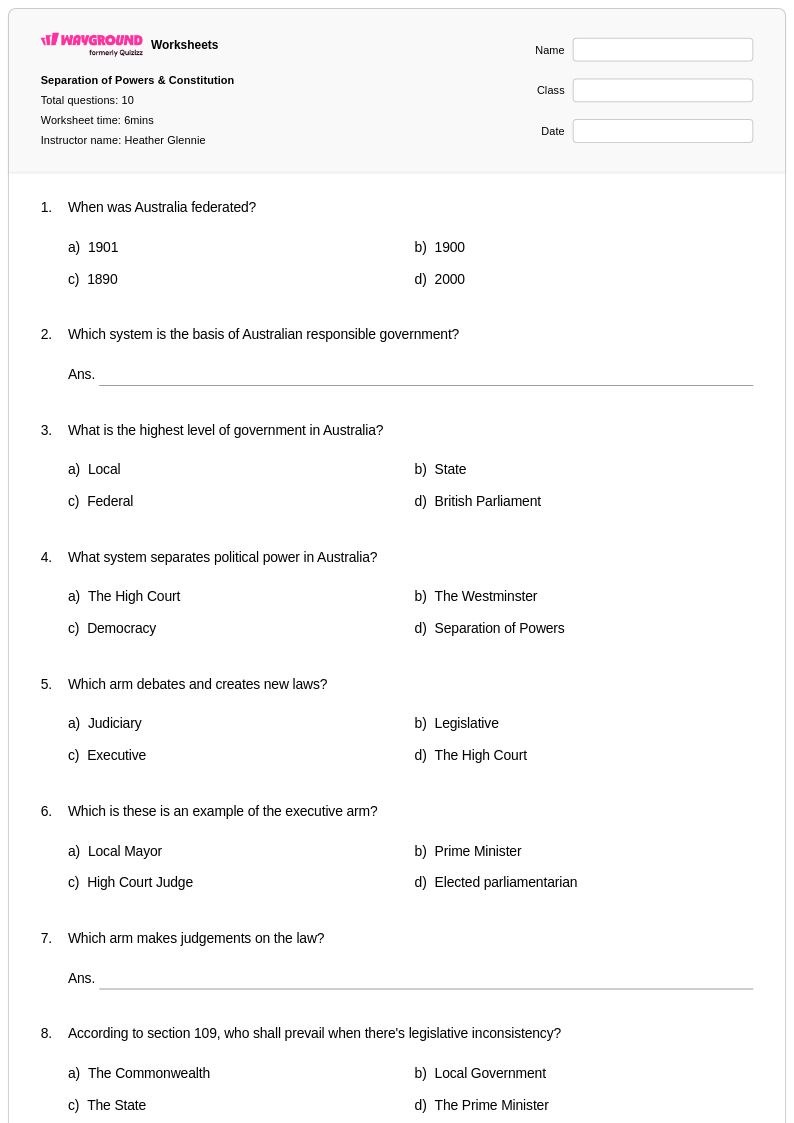
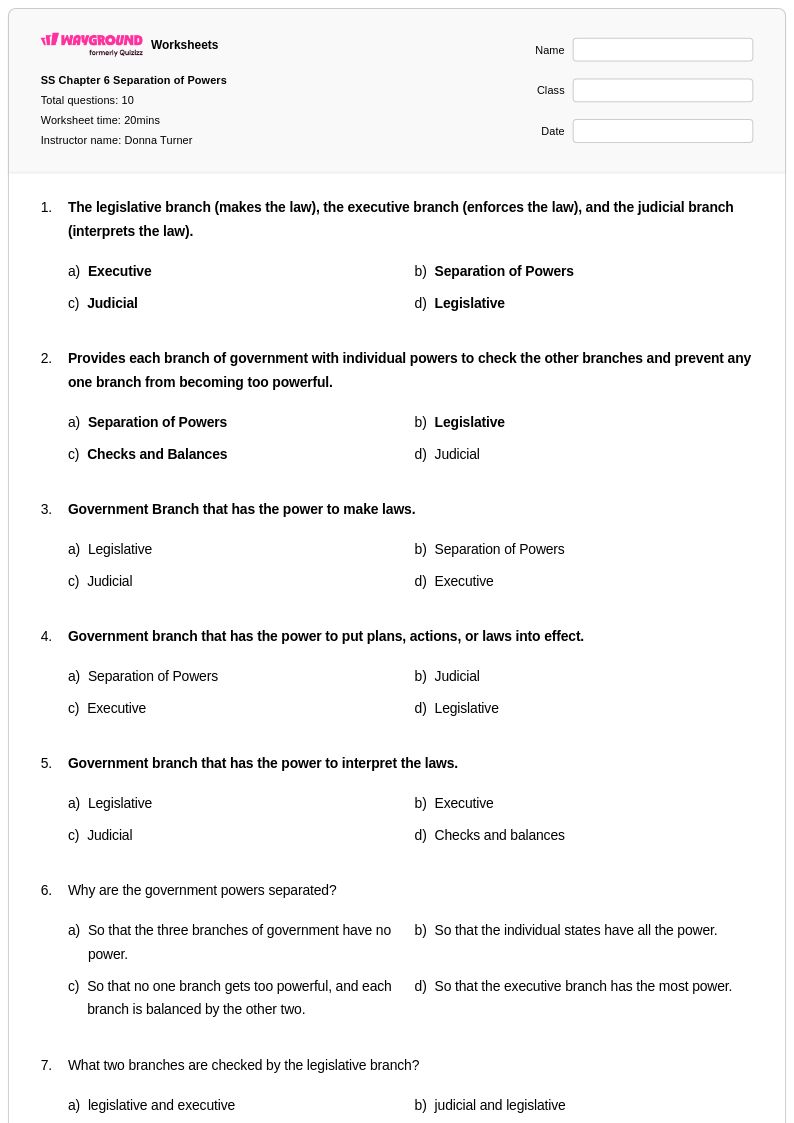
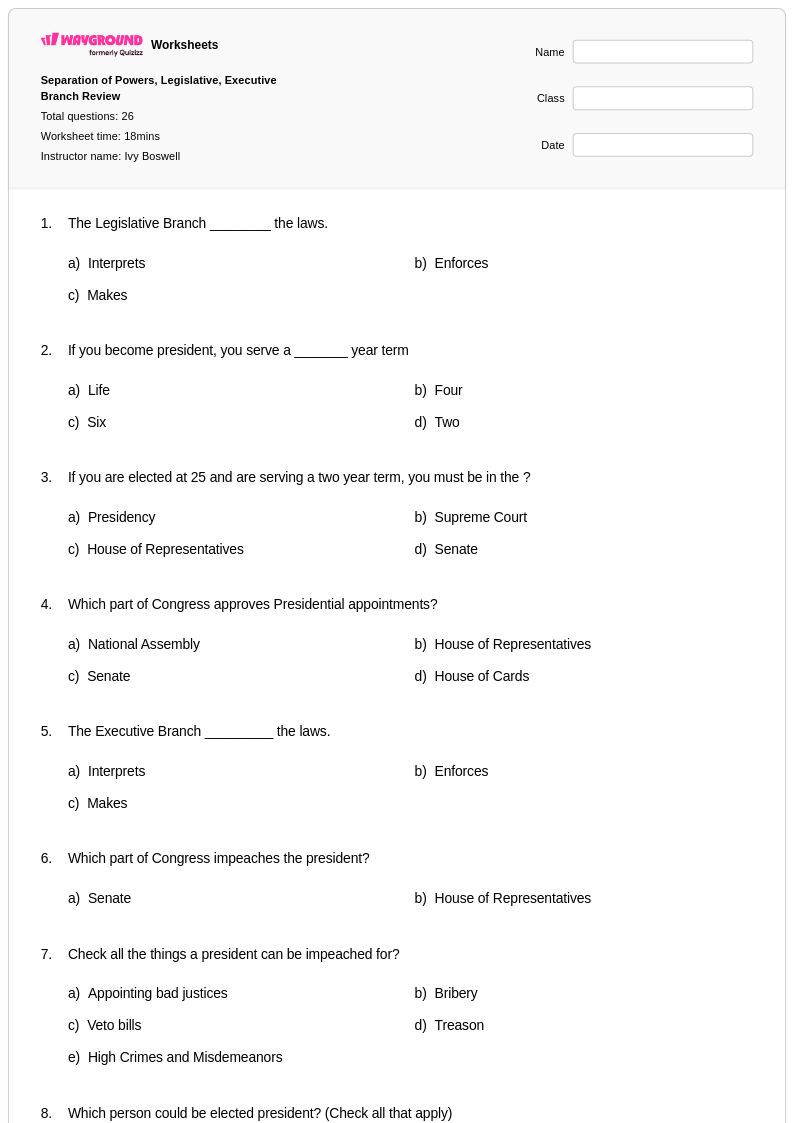
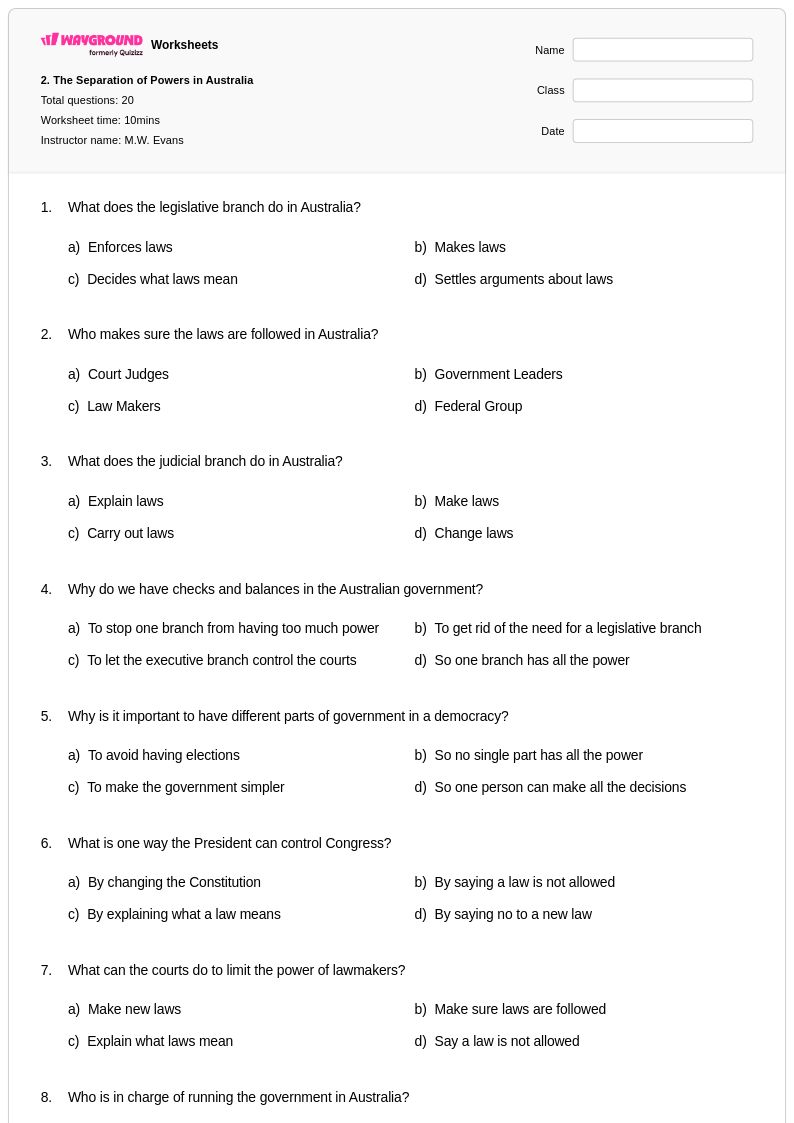
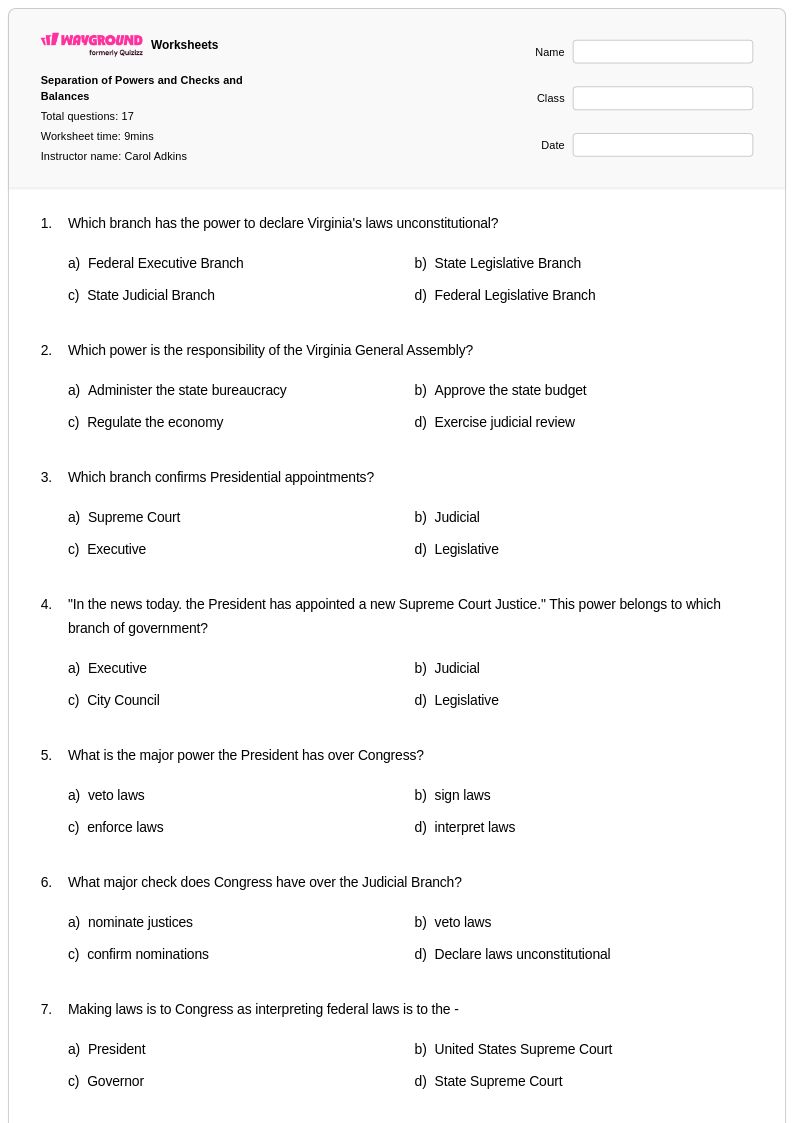
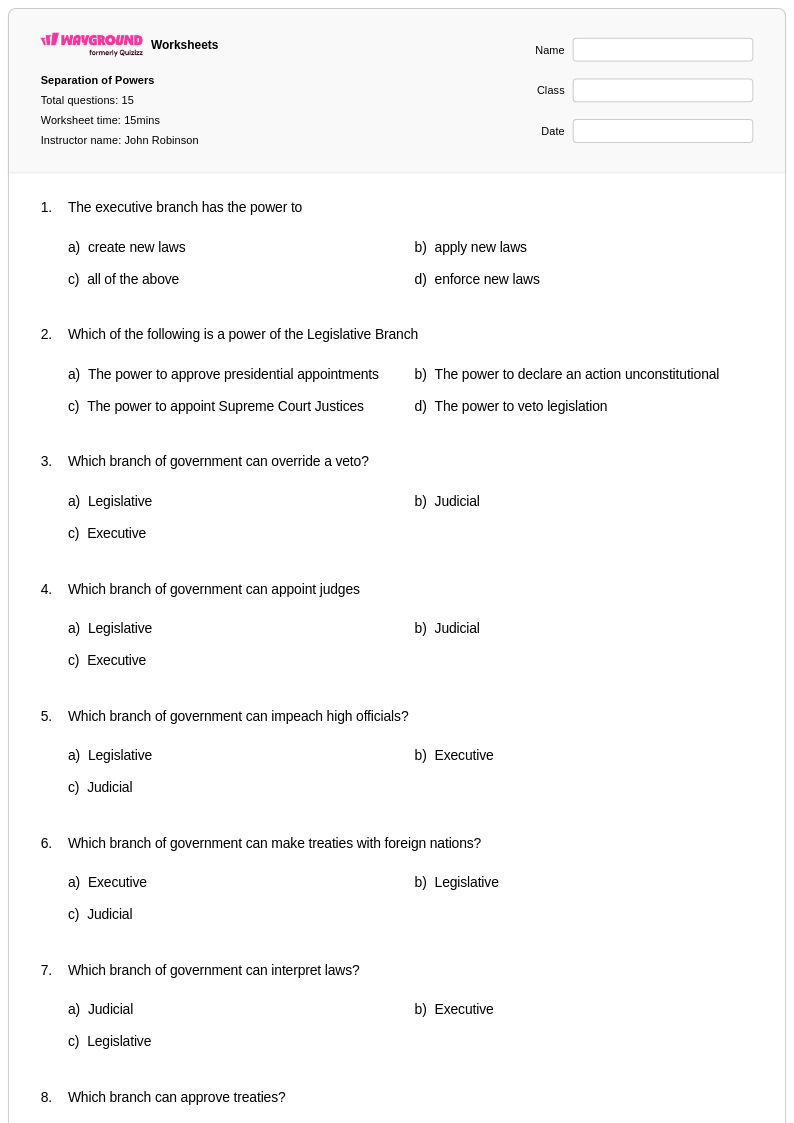
Separation of Powers worksheets available through Wayground (formerly Quizizz) provide Year 9 students with comprehensive practice materials that deepen understanding of this fundamental constitutional principle. These educational resources strengthen critical thinking skills by challenging students to analyze how legislative, executive, and judicial branches maintain governmental balance through their distinct roles and responsibilities. The worksheets feature engaging practice problems that require students to identify real-world examples of checks and balances, evaluate potential conflicts between branches, and assess the effectiveness of power distribution in democratic systems. Each printable resource includes detailed answer keys that support both independent study and classroom instruction, while free pdf formats ensure accessibility for diverse learning environments.
Wayground (formerly Quizizz) empowers educators with millions of teacher-created resources specifically designed for separation of powers instruction, featuring robust search and filtering capabilities that help locate materials aligned with state civics standards and Year 9 curriculum requirements. The platform's differentiation tools enable teachers to customize worksheets for varying ability levels, supporting both remediation for struggling learners and enrichment opportunities for advanced students. Available in both printable and digital formats, including downloadable pdf versions, these resources streamline lesson planning while providing flexible options for in-class activities, homework assignments, and assessment preparation. Teachers can efficiently integrate these materials into their civics instruction to reinforce constitutional concepts, build analytical skills, and prepare students for more complex governmental studies.
FAQs
How do I teach separation of powers to middle or high school students?
Start by establishing why the Founders deliberately divided governmental authority among three branches — the executive, legislative, and judicial — to prevent any single branch from accumulating too much power. Use concrete examples like the presidential veto, congressional override, and judicial review to show how each branch can check the others. Mapping out these relationships visually before moving to text-based analysis helps students build a working mental model before applying it to case studies or primary sources.
What exercises help students practice separation of powers concepts?
Scenario-based practice works well — give students a government action (e.g., a president issuing an executive order) and ask them to identify which branch acted, which branch could check that action, and what the constitutional basis is. Matching exercises that align specific powers to the correct branch reinforce foundational knowledge, while short-answer problems that require students to explain checks and balances in their own words build deeper comprehension. Separation of powers worksheets on Wayground include practice problems that cover presidential veto authority, judicial review, and congressional oversight.
What mistakes do students commonly make when learning about separation of powers?
The most frequent misconception is conflating separation of powers with checks and balances — students often treat them as the same concept rather than understanding that separation of powers divides authority among branches while checks and balances define how each branch limits the others. Students also commonly misattribute powers, for example believing the president can make laws or that Congress can overturn Supreme Court decisions directly. Targeted practice that requires students to justify which branch holds a specific power helps surface and correct these errors.
How do I use Wayground's separation of powers worksheets in my classroom?
Wayground's separation of powers worksheets are available as printable PDFs, making them easy to distribute in a traditional classroom setting, and in digital formats for technology-integrated or hybrid environments. Teachers can also host any worksheet as a live or self-paced quiz directly on the Wayground platform, which allows for real-time progress monitoring. For students who need additional support, Wayground offers built-in accommodations such as extended time, read-aloud, and reduced answer choices, which can be configured per student without disrupting the rest of the class.
How is separation of powers different from checks and balances?
Separation of powers refers to the structural division of government into three distinct branches — executive, legislative, and judicial — each with its own defined domain of authority. Checks and balances is the overlapping system by which each branch holds specific powers that allow it to limit, review, or override the actions of the other two branches. In practice, the two concepts work together: separation of powers creates the architecture, while checks and balances provides the enforcement mechanism that keeps any one branch from dominating.
How do I differentiate separation of powers instruction for students at different levels?
For students who need foundational support, focus first on identifying which branch performs which core function — making laws, enforcing laws, and interpreting laws — before introducing the complexity of checks and balances. On-level students can analyze specific constitutional provisions and apply them to real scenarios. Advanced students benefit from examining historical or contemporary cases where branches have contested the boundaries of their authority, such as landmark Supreme Court decisions or executive-legislative conflicts. Wayground's differentiation tools allow teachers to assign reduced answer choices or read-aloud support to individual students within the same assignment, so all learners can access the same material at an appropriate level.