Free Printable Shades of Meaning Worksheets for Year 10
Year 10 shades of meaning worksheets help students master vocabulary nuances through comprehensive printables, practice problems, and answer keys that develop precise word choice and semantic understanding skills.
Explore printable Shades of Meaning worksheets for Year 10
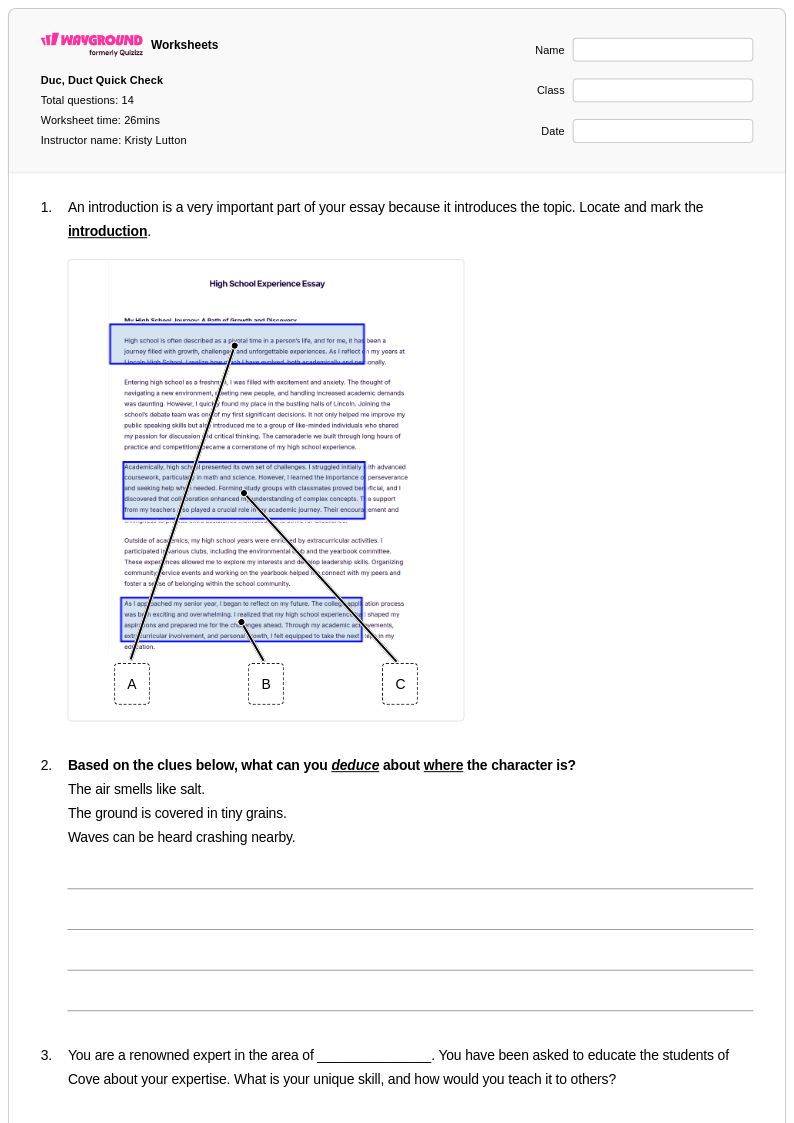
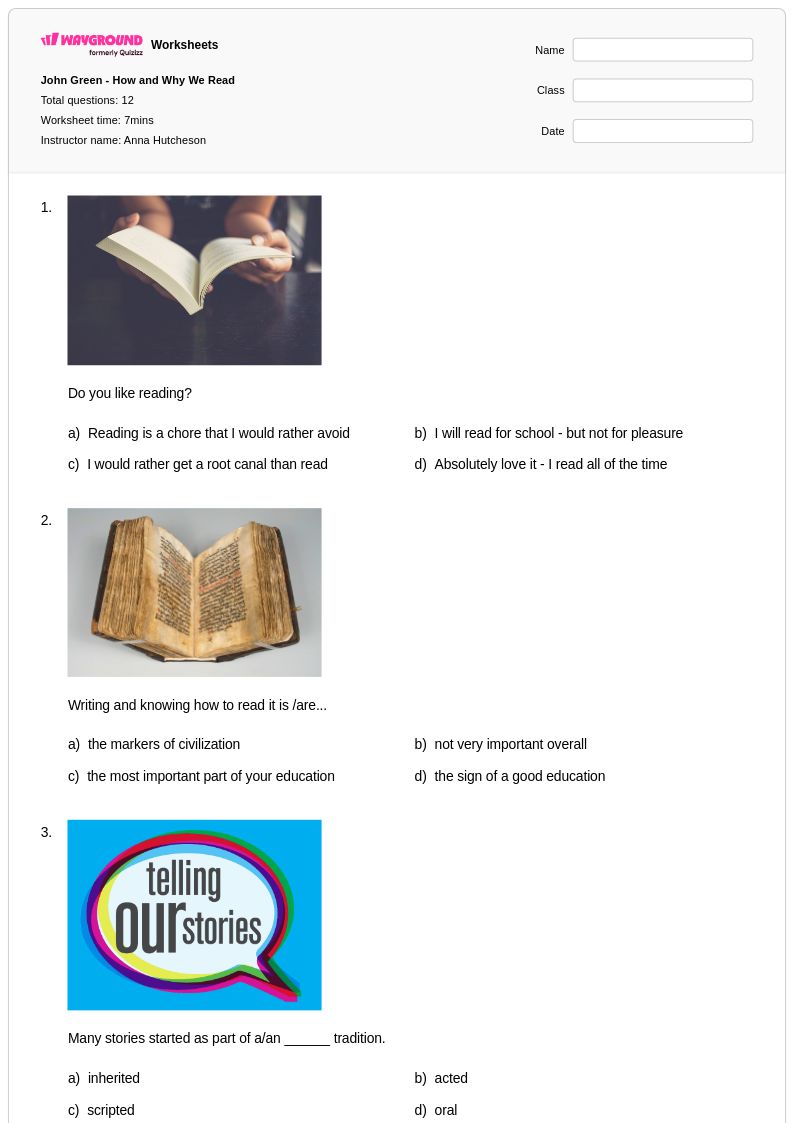
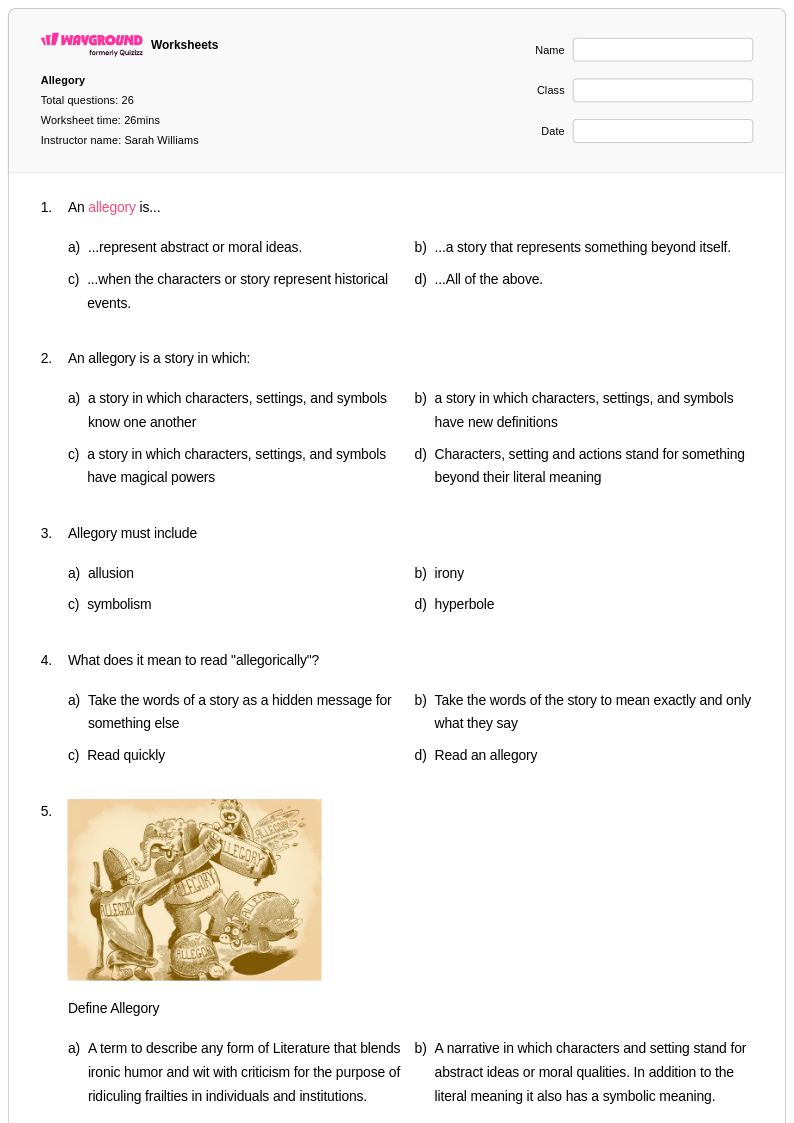
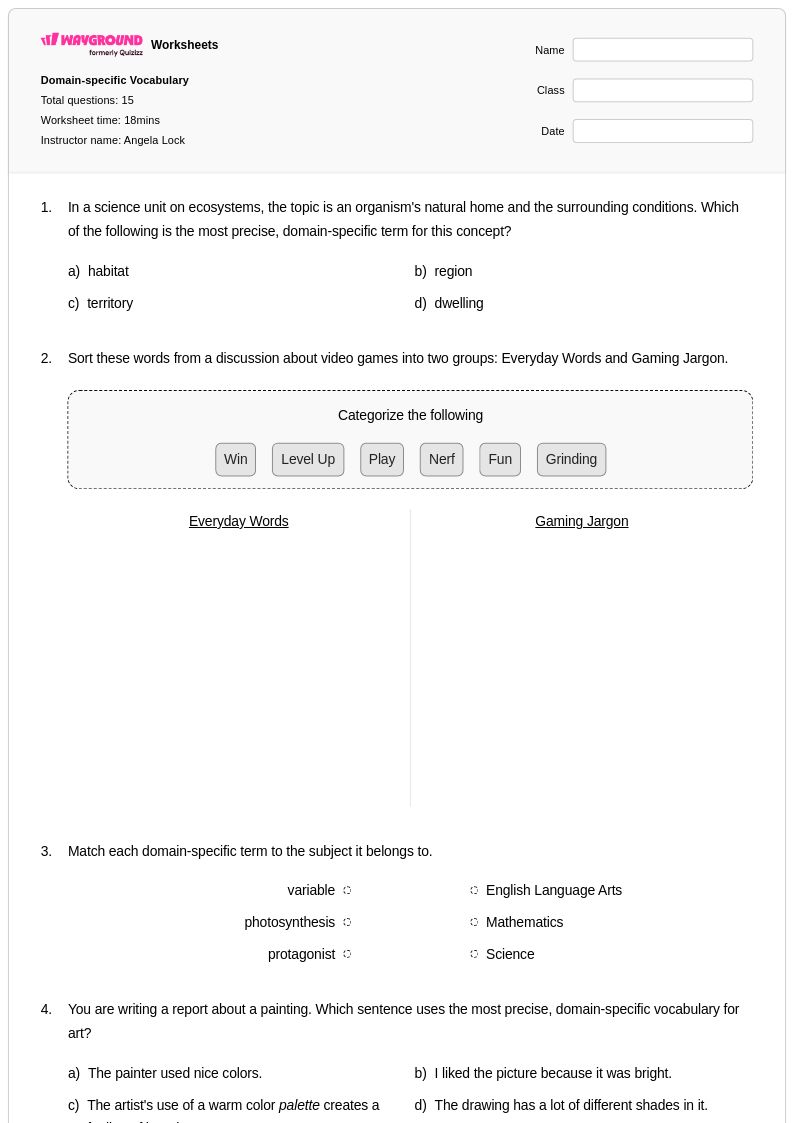
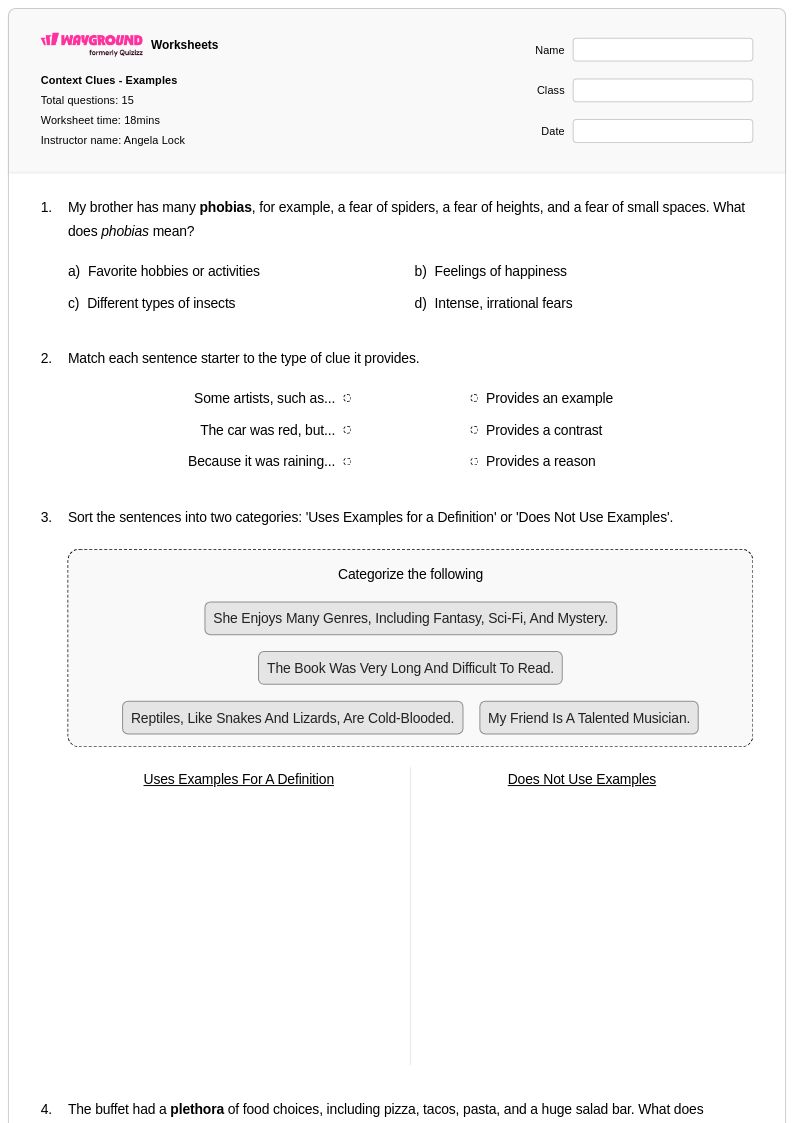
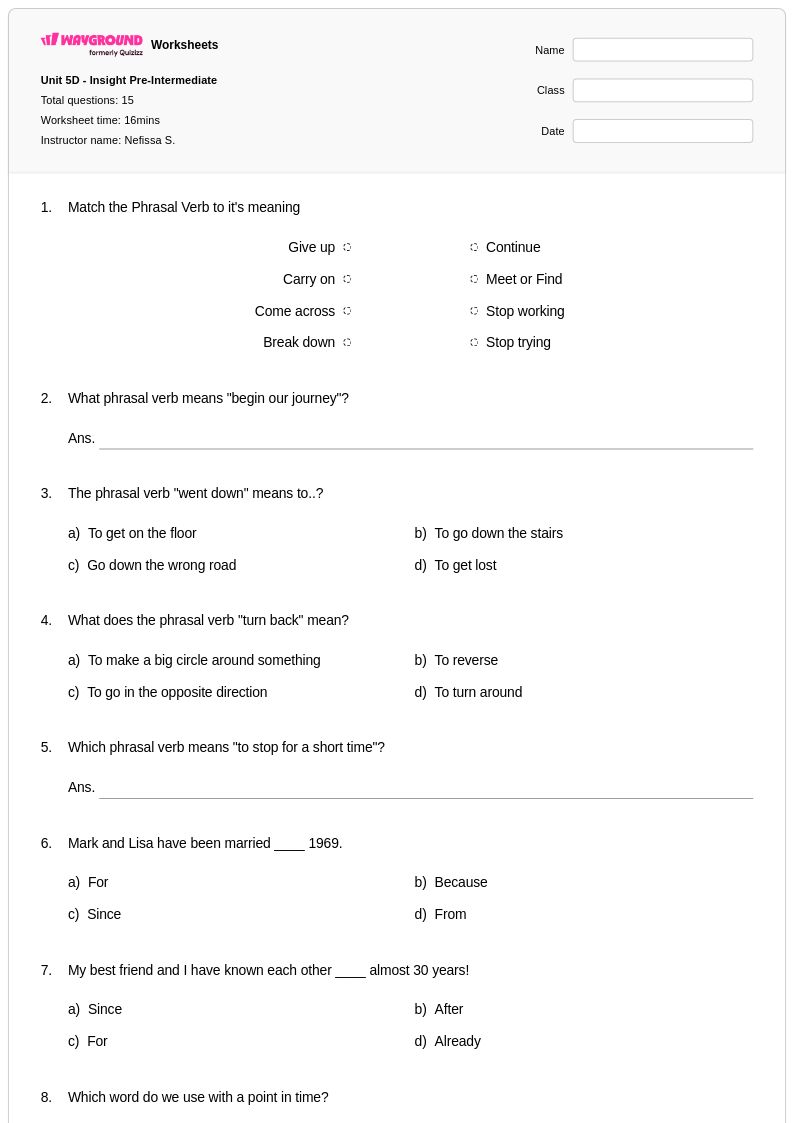
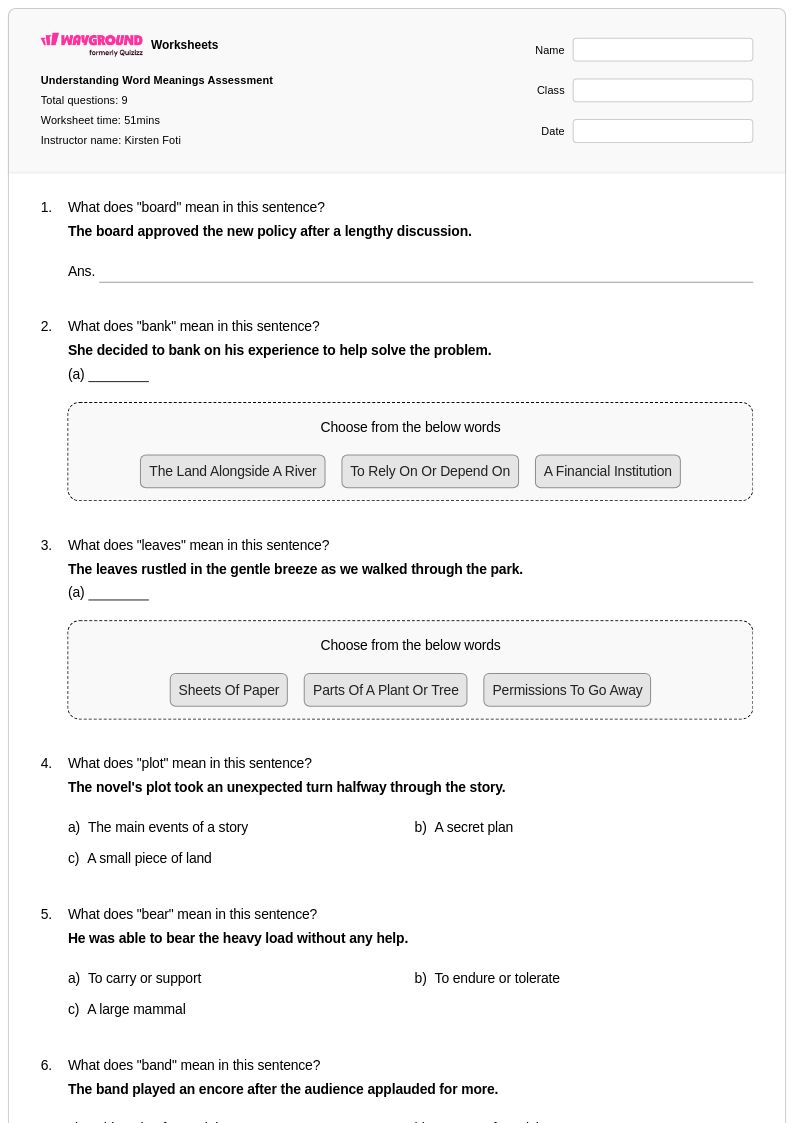
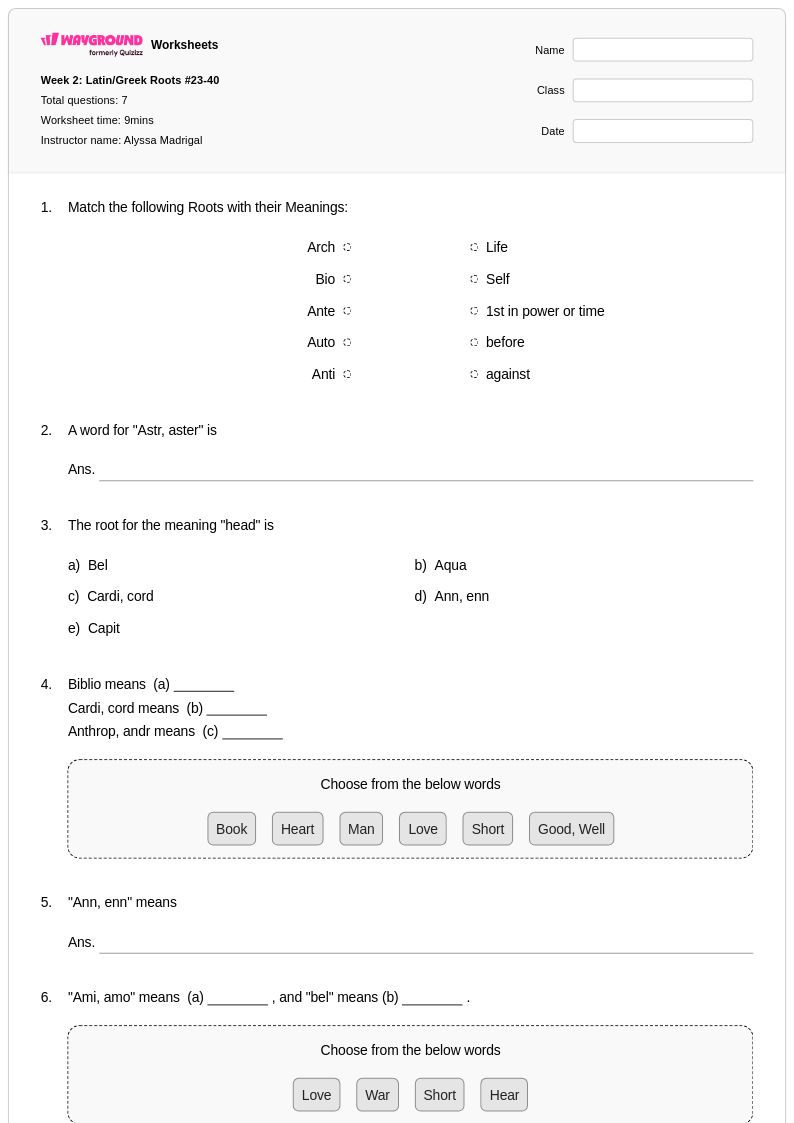
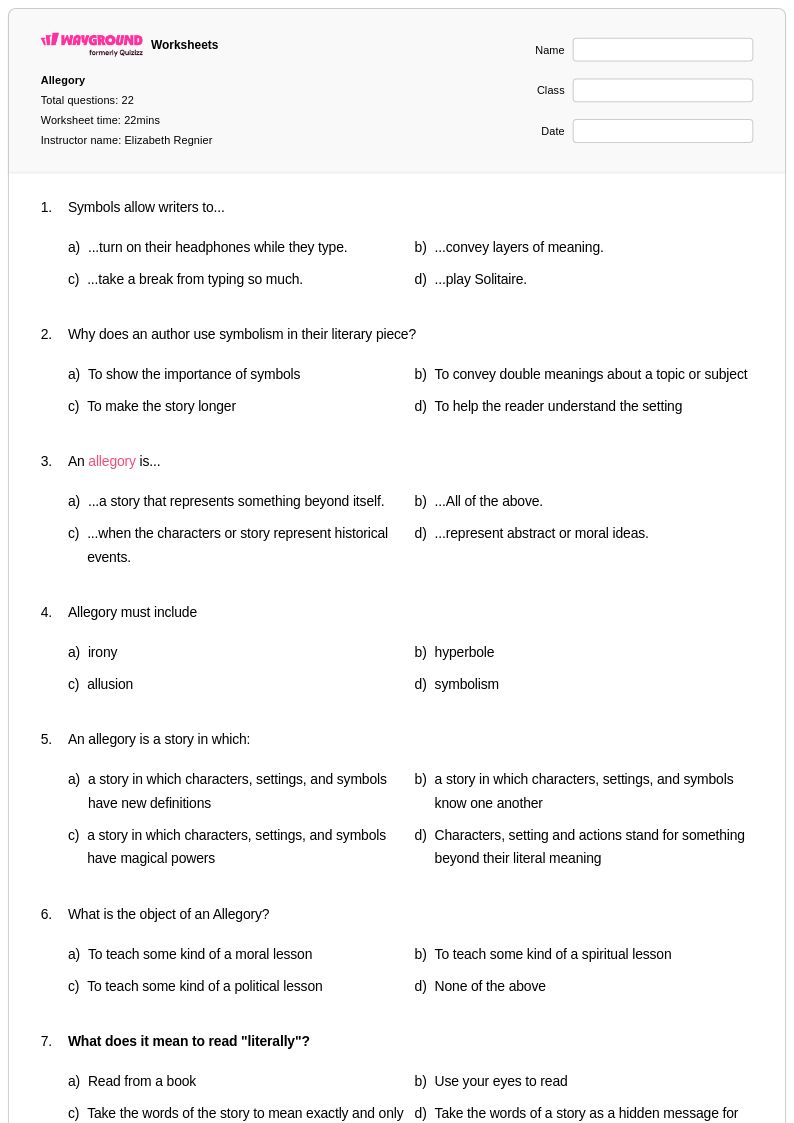
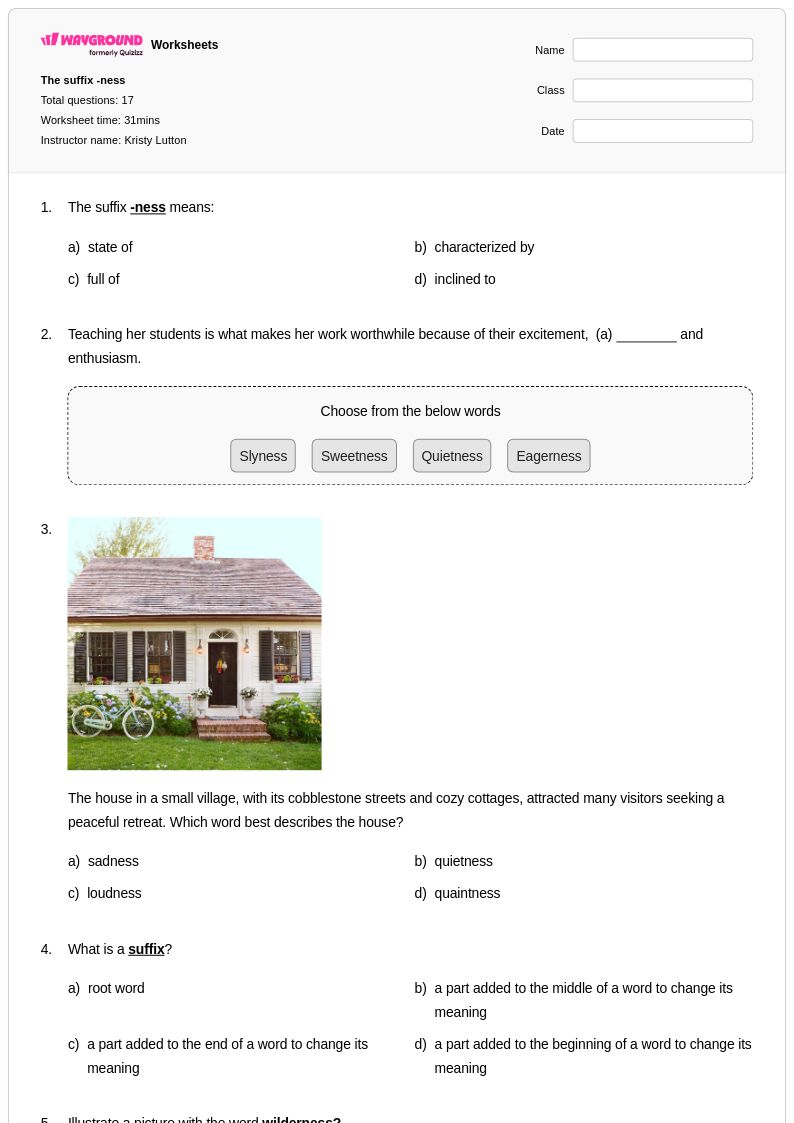
Shades of meaning worksheets for Year 10 students available through Wayground (formerly Quizizz) provide comprehensive practice in understanding the subtle distinctions between words that share similar definitions but carry different connotations, intensities, or contexts. These carefully designed printables help students develop sophisticated vocabulary skills by exploring synonyms, analyzing word choice impact, and recognizing how slight variations in meaning can dramatically alter tone and message effectiveness. Students work through practice problems that challenge them to distinguish between words like "confident" versus "arrogant," "frugal" versus "cheap," or "vintage" versus "old," building the nuanced language understanding essential for advanced reading comprehension and persuasive writing. Each worksheet includes a detailed answer key and focuses on developing the critical thinking skills necessary for analyzing author's word choice in literature and crafting precise, impactful prose in their own writing.
Wayground (formerly Quizizz) supports educators with an extensive collection of teacher-created shades of meaning resources, offering millions of professionally developed worksheets that can be easily located through robust search and filtering capabilities. Teachers can access standards-aligned materials in both printable pdf formats and interactive digital versions, allowing for seamless integration into diverse classroom environments and learning modalities. The platform's differentiation tools enable educators to customize worksheet difficulty levels and content focus areas, making it simple to provide targeted remediation for struggling students while offering enrichment opportunities for advanced learners. This flexibility proves invaluable for lesson planning, as teachers can quickly locate age-appropriate materials that address specific vocabulary gaps, support test preparation, or extend learning through challenging practice exercises that build sophisticated language analysis skills.
FAQs
How do I teach shades of meaning to elementary students?
Start by anchoring instruction in familiar synonym sets students already know, such as 'happy,' 'joyful,' and 'ecstatic,' and ask them to rank these words from weakest to strongest feeling. Visual tools like intensity scales or word ladders help make abstract connotation differences concrete and discussable. Once students can rank words, move to sentence-level practice where they choose the most precise word for a specific context, which builds the habit of evaluating word weight rather than just word meaning.
What exercises help students practice shades of meaning?
The most effective practice tasks include arranging synonym sets on intensity scales, selecting the best word to complete a sentence based on tone or degree, and writing brief explanations of why one word feels stronger or more specific than another. These exercises push students beyond simple synonym substitution and develop true vocabulary precision. Worksheets that present real sentences with plausible word choices are especially useful because they mirror the decisions students face in their own writing.
What mistakes do students commonly make with shades of meaning?
The most common error is treating synonyms as perfectly interchangeable, assuming that 'big,' 'enormous,' and 'large' can swap in any sentence without changing its effect. Students also frequently confuse intensity with formality, ranking a word as 'stronger' simply because it sounds more sophisticated rather than because it carries greater emotional weight. Direct instruction that asks students to explain their ranking choices, rather than just produce them, is the most reliable way to surface and correct these misconceptions.
How can I use shades of meaning worksheets to improve student writing?
Shades of meaning practice transfers most directly to writing when students are asked to revise weak or vague word choices in sample sentences, which mirrors the editing process they use in their own drafts. After completing a worksheet activity, have students scan a recent piece of their own writing and flag any place where a more precise synonym could strengthen the effect. This bridge from isolated practice to authentic writing is what makes vocabulary instruction stick.
How do I differentiate shades of meaning instruction for different skill levels?
For struggling readers, reduce the synonym set to two words instead of three and provide sentence context for every comparison so students are not evaluating words in isolation. For advanced learners, remove the sentence scaffolding and ask students to generate their own sentences that highlight the distinction between two closely related words. On Wayground, teachers can apply accommodations such as reduced answer choices or read-aloud support to individual students, so the same digital worksheet can serve multiple readiness levels simultaneously.
How do I use shades of meaning worksheets from Wayground in my classroom?
Wayground's shades of meaning worksheets are available as printable PDFs for traditional classroom use and in digital formats for technology-integrated environments, including the option to host the worksheet as a live quiz directly on the platform. The printable version works well for small-group vocabulary instruction or independent practice centers, while the digital format allows teachers to assign the activity remotely or collect responses for quick formative assessment. Answer keys are included with every worksheet, so feedback is immediate whether students are self-checking or a teacher is reviewing responses.