
9 Q
KG
7 Q
KG
10 Q
7th - 10th
14 Q
KG - 9th
20 Q
KG - Uni
12 Q
1st - 3rd
20 Q
KG
14 Q
KG - 11th
8 Q
KG
11 Q
KG - 2nd
20 Q
10th
13 Q
KG
13 Q
9th - 10th
13 Q
2nd
10 Q
2nd - 3rd
10 Q
KG
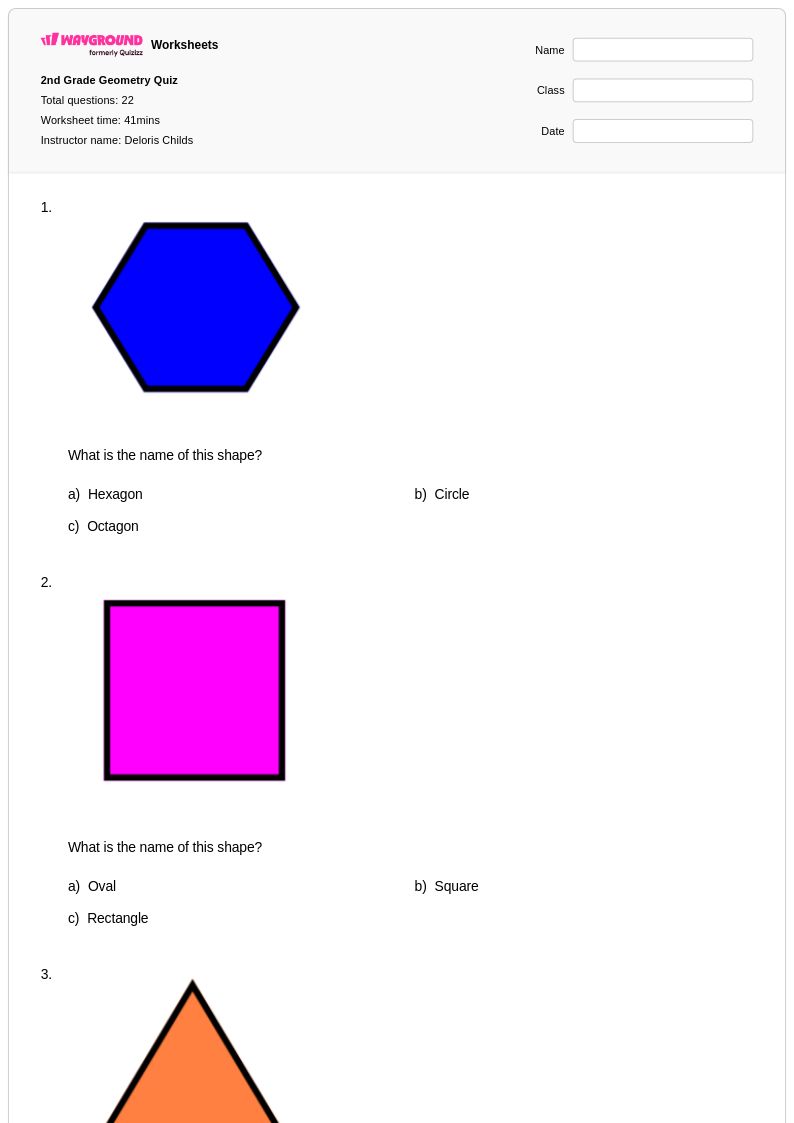
22 Q
2nd
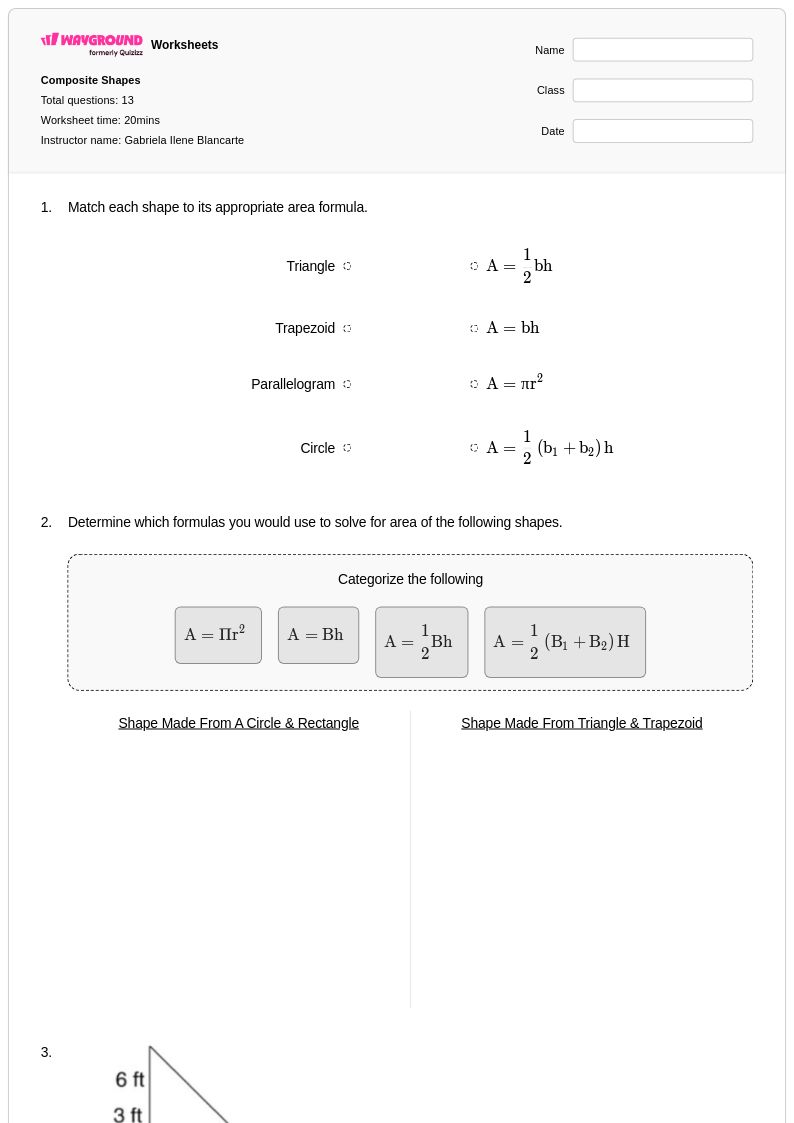
13 Q
7th
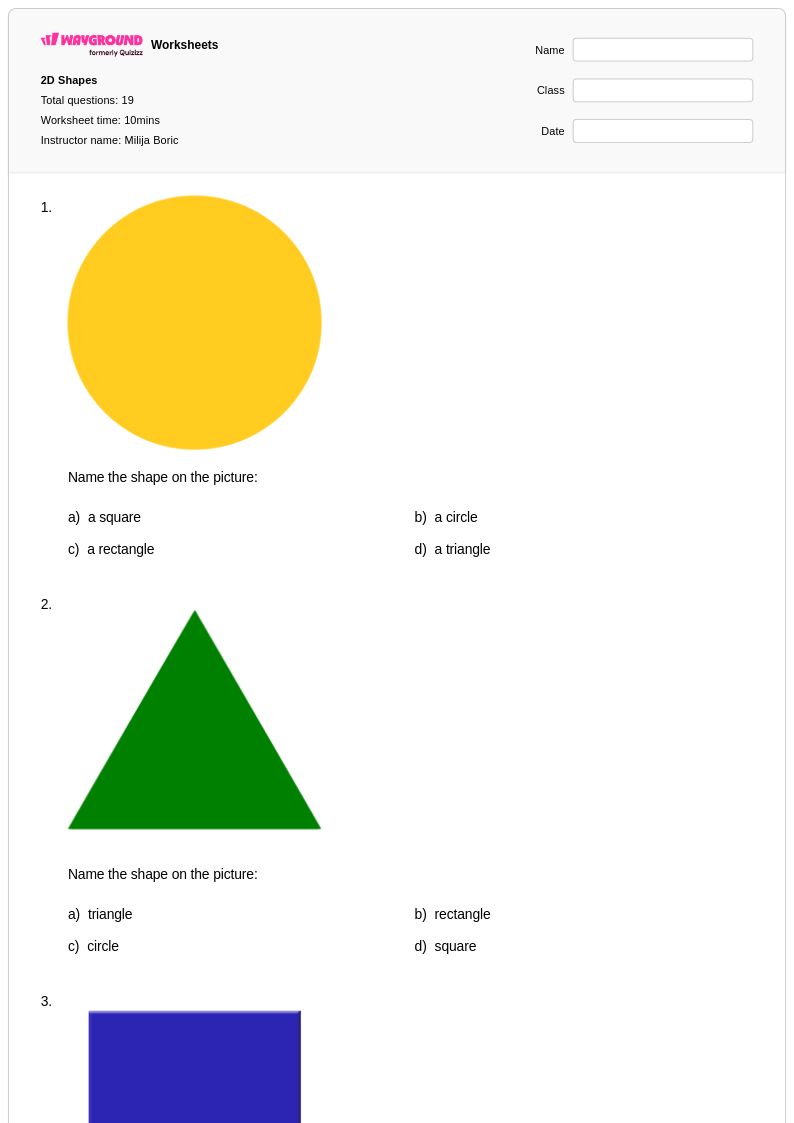
19 Q
1st
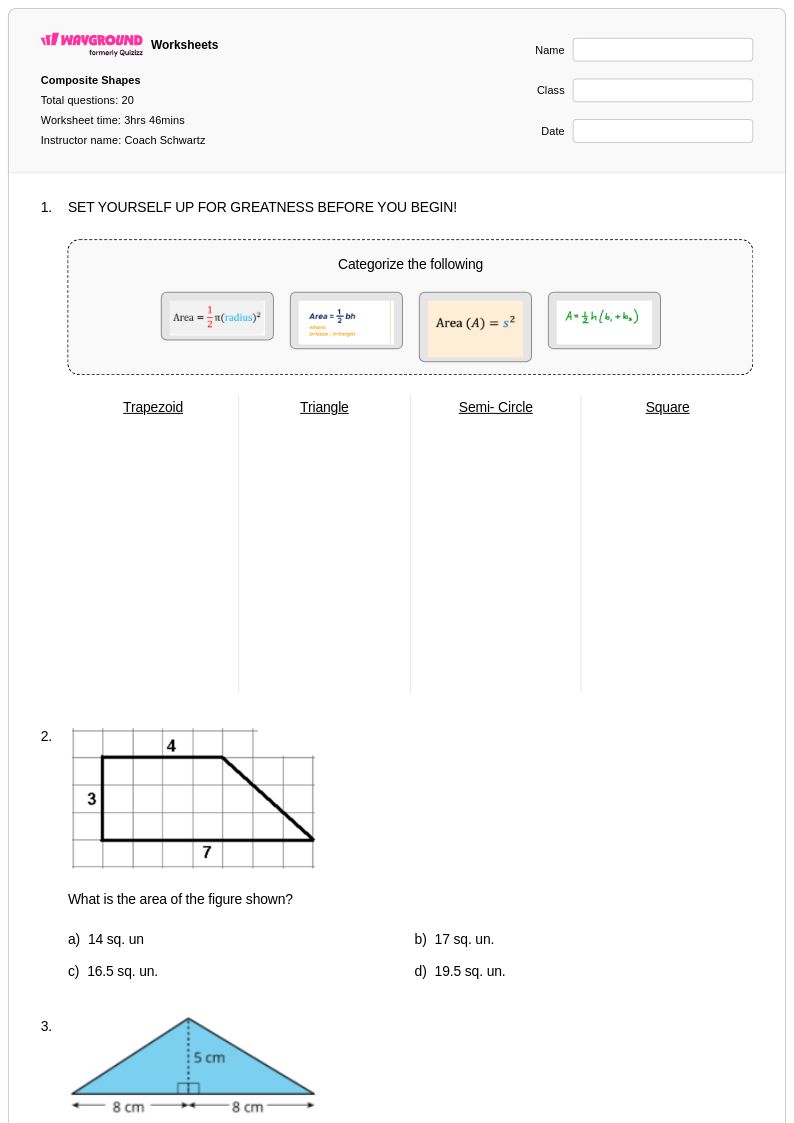
20 Q
7th
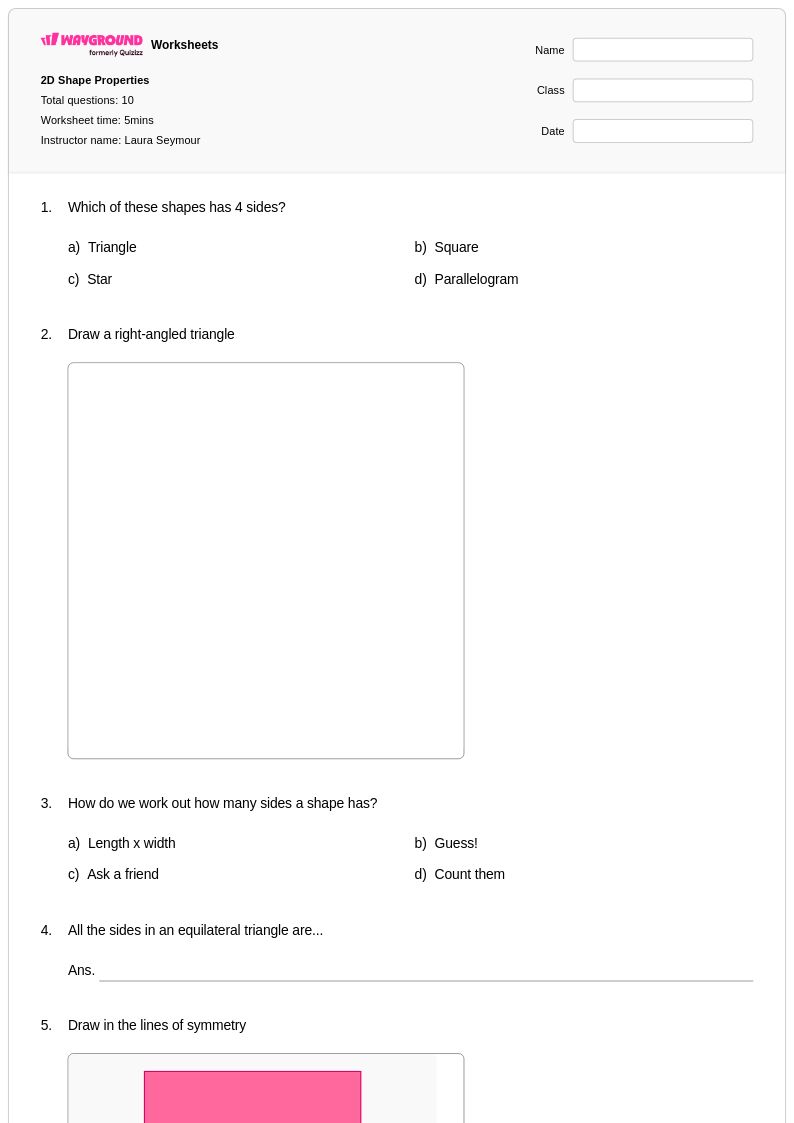
10 Q
5th
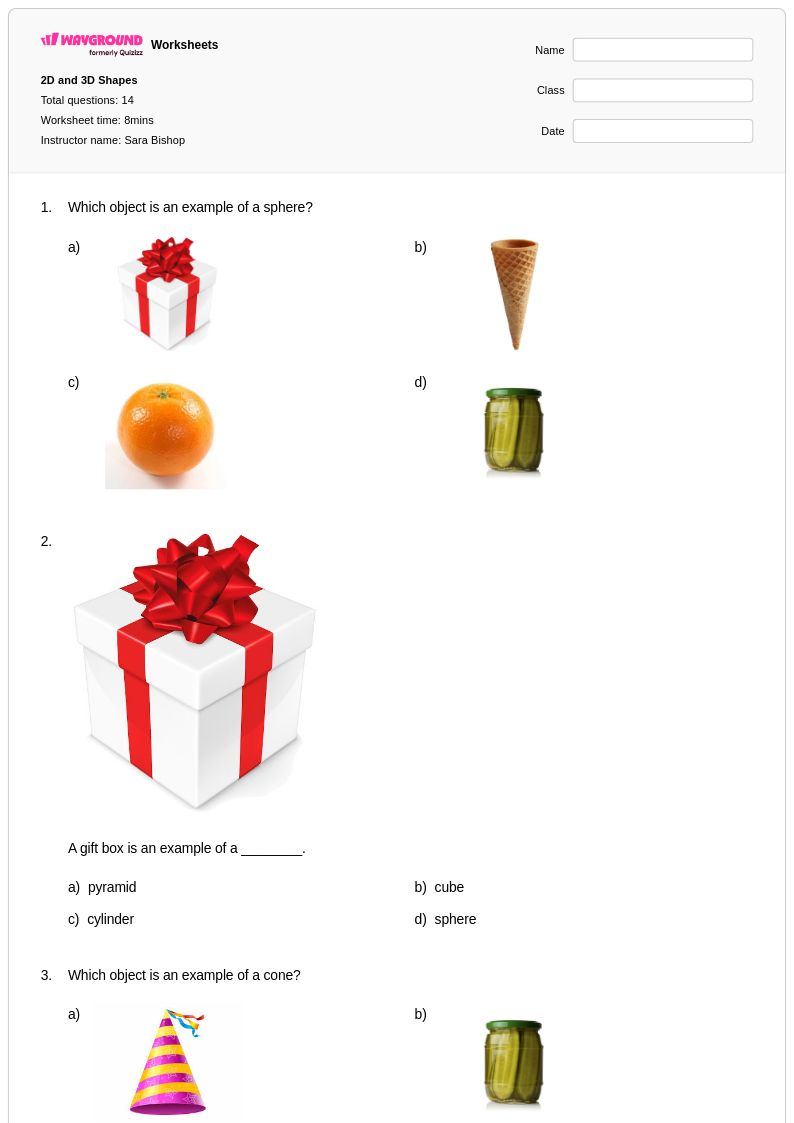
14 Q
2nd
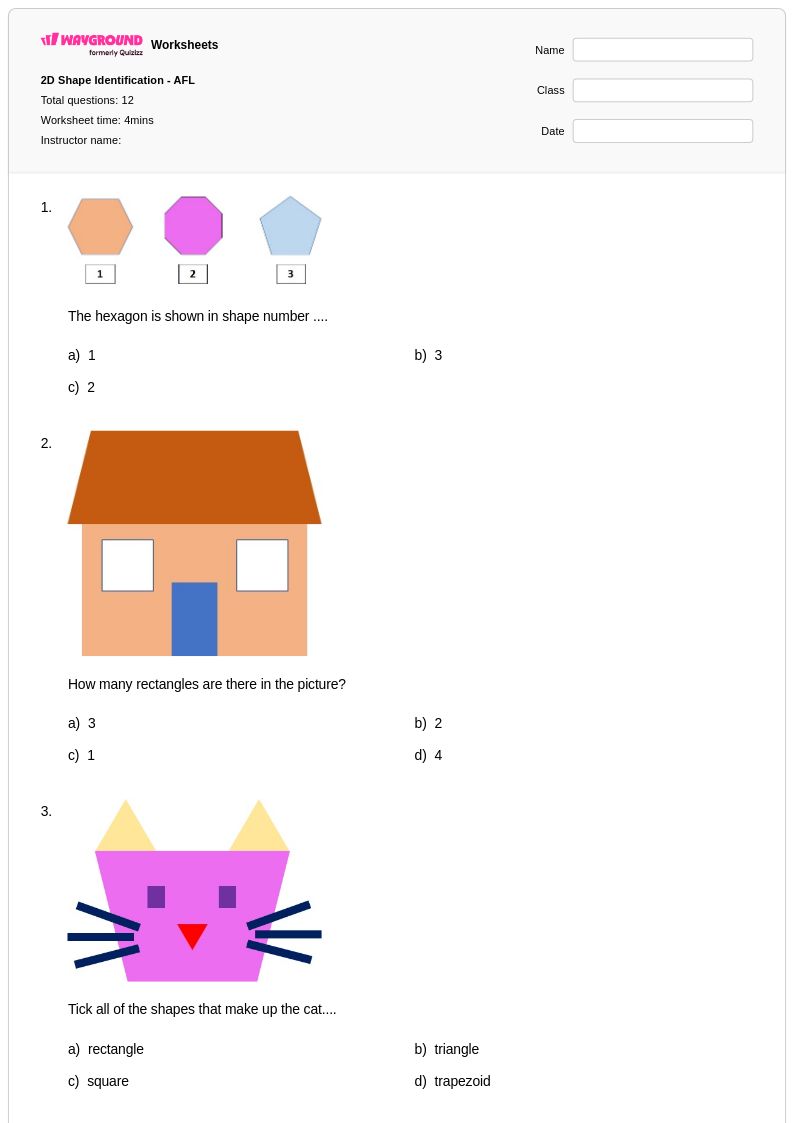
12 Q
3rd
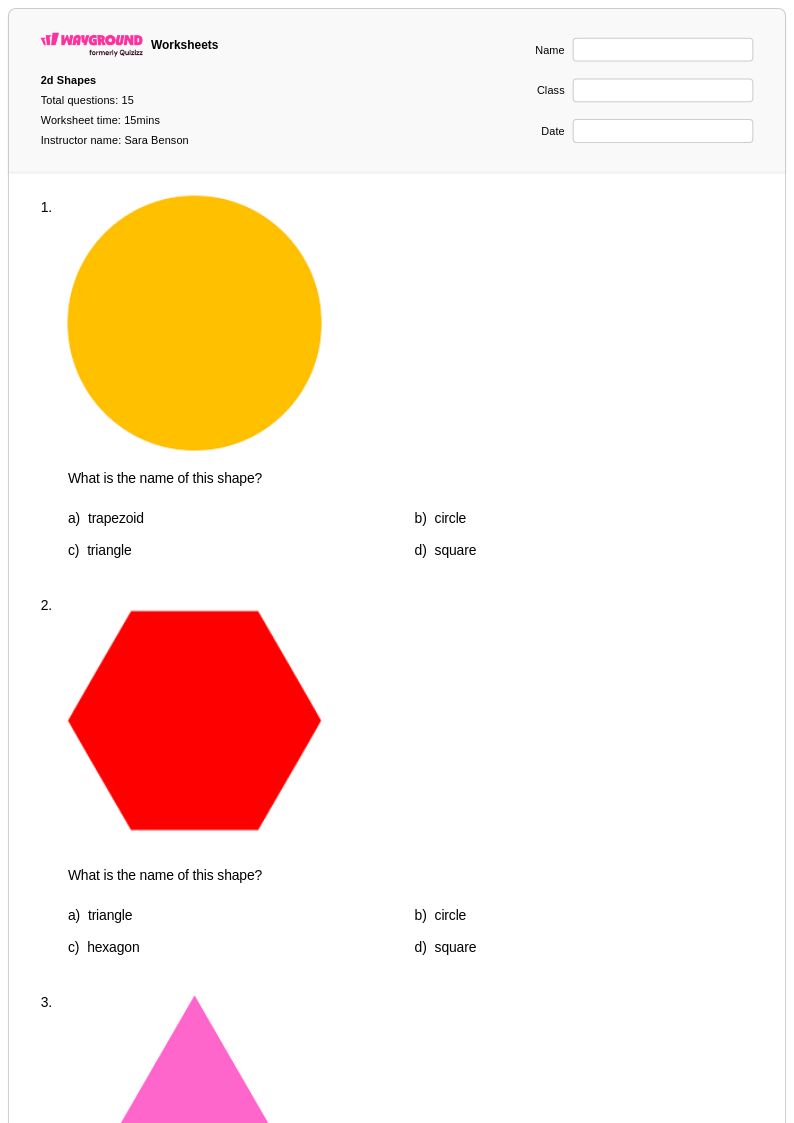
15 Q
1st
Explore Other Subject Worksheets for kindergarten
Explore printable Shape Recognition worksheets for Kindergarten
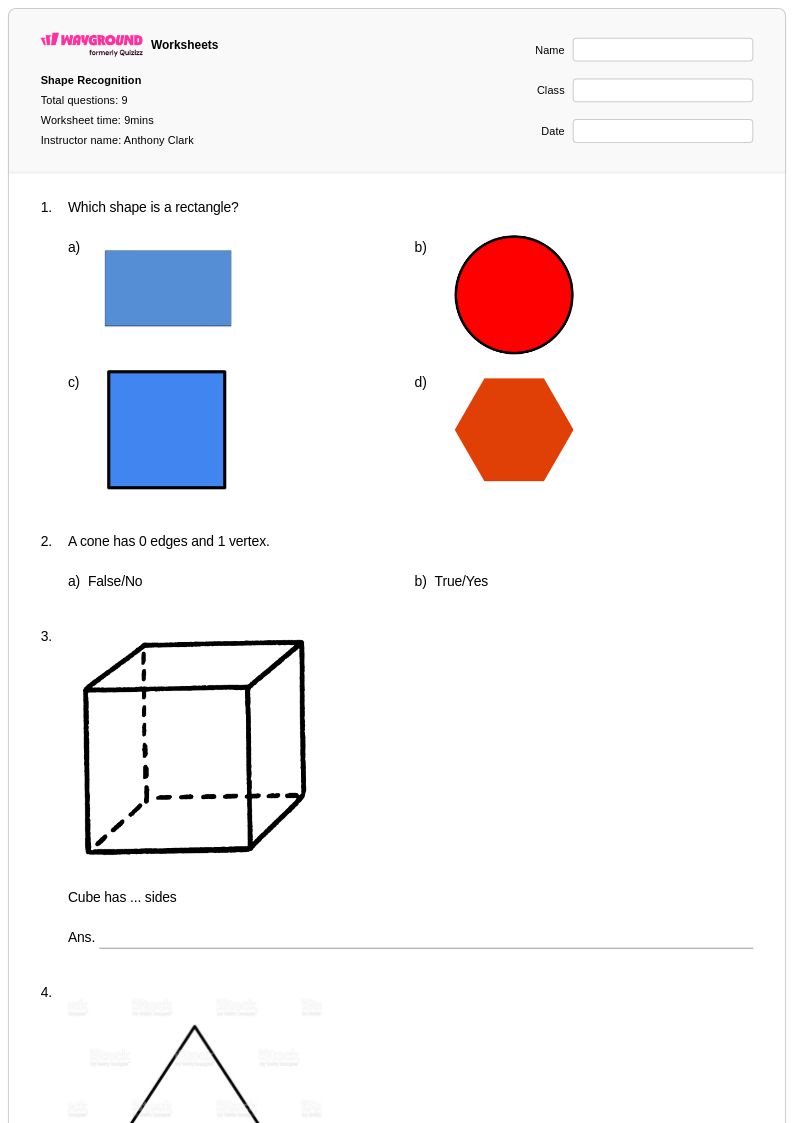
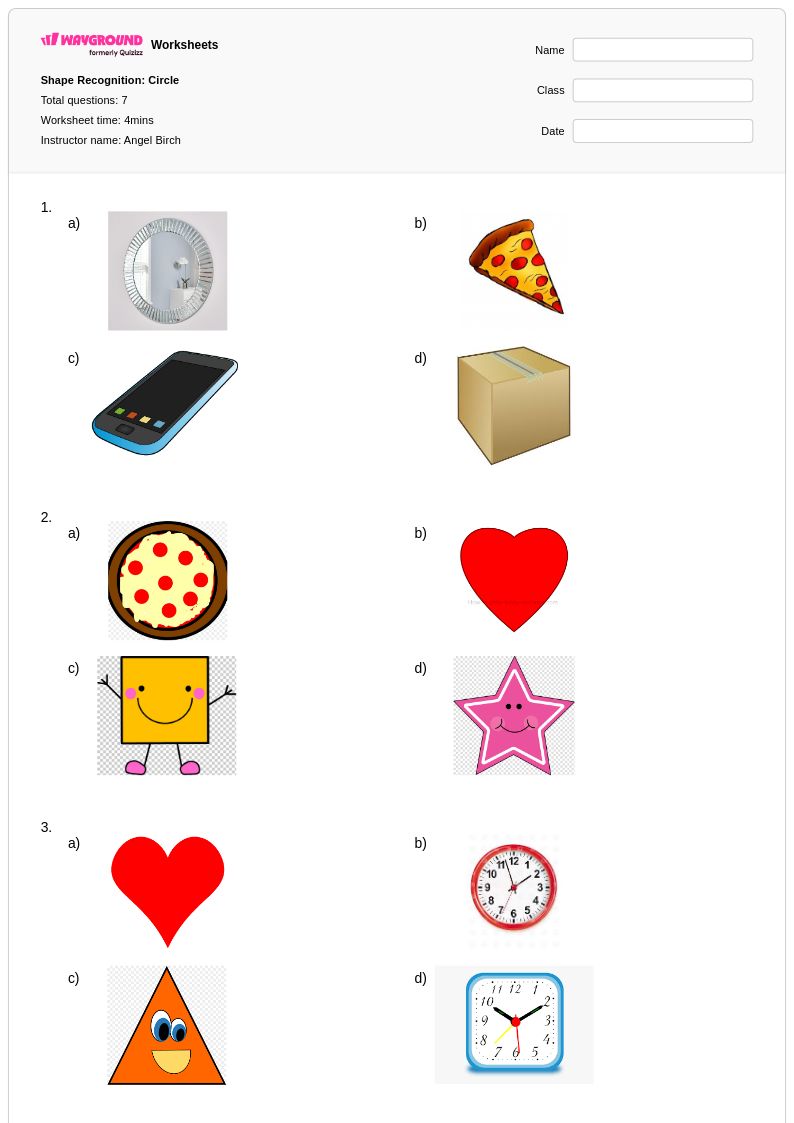
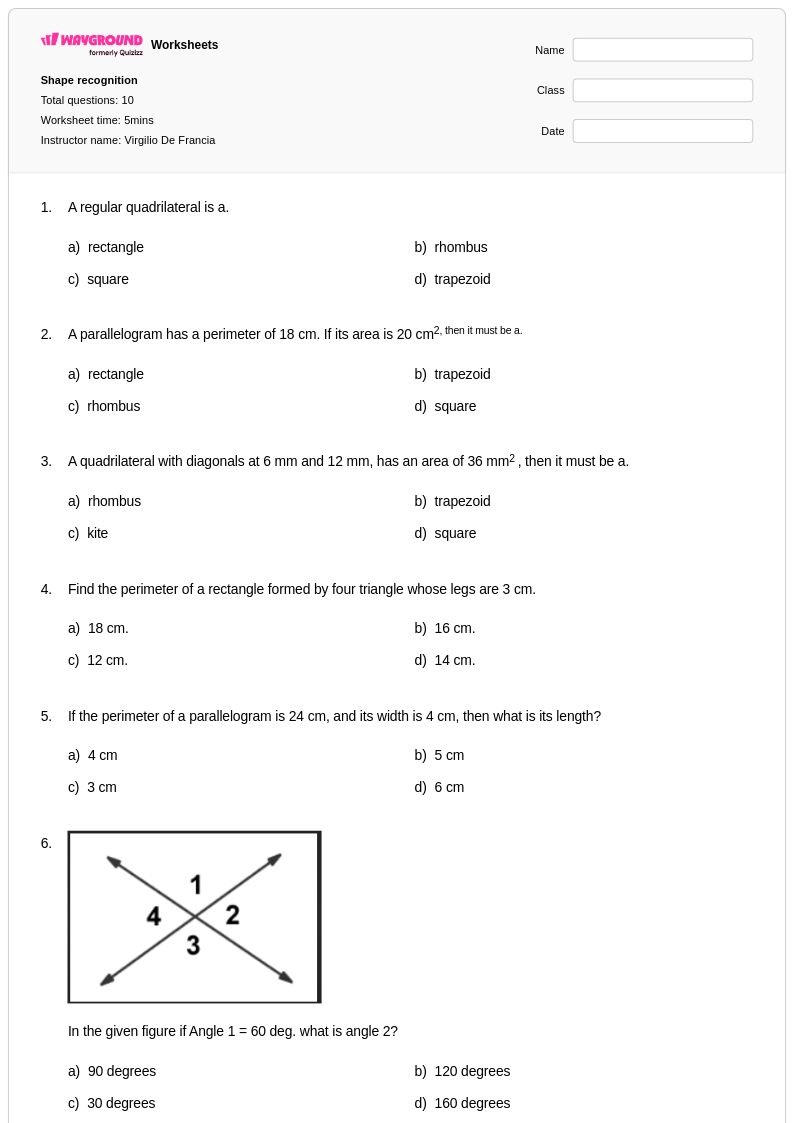
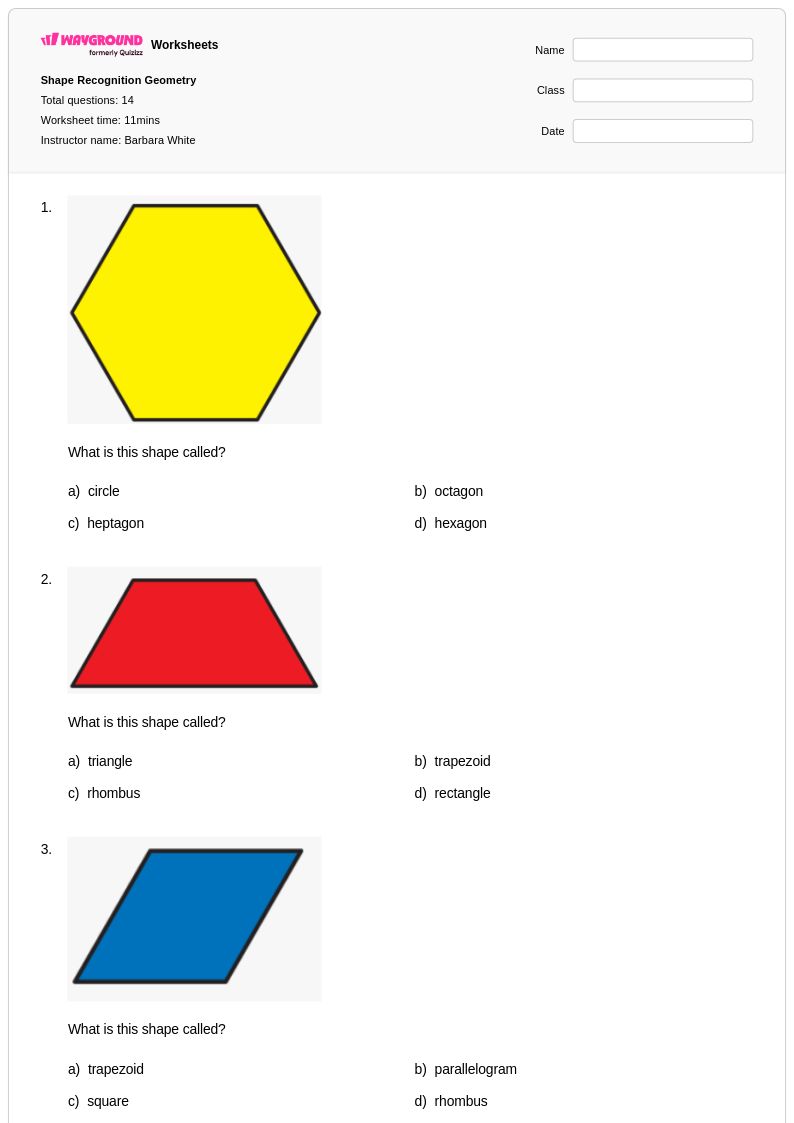
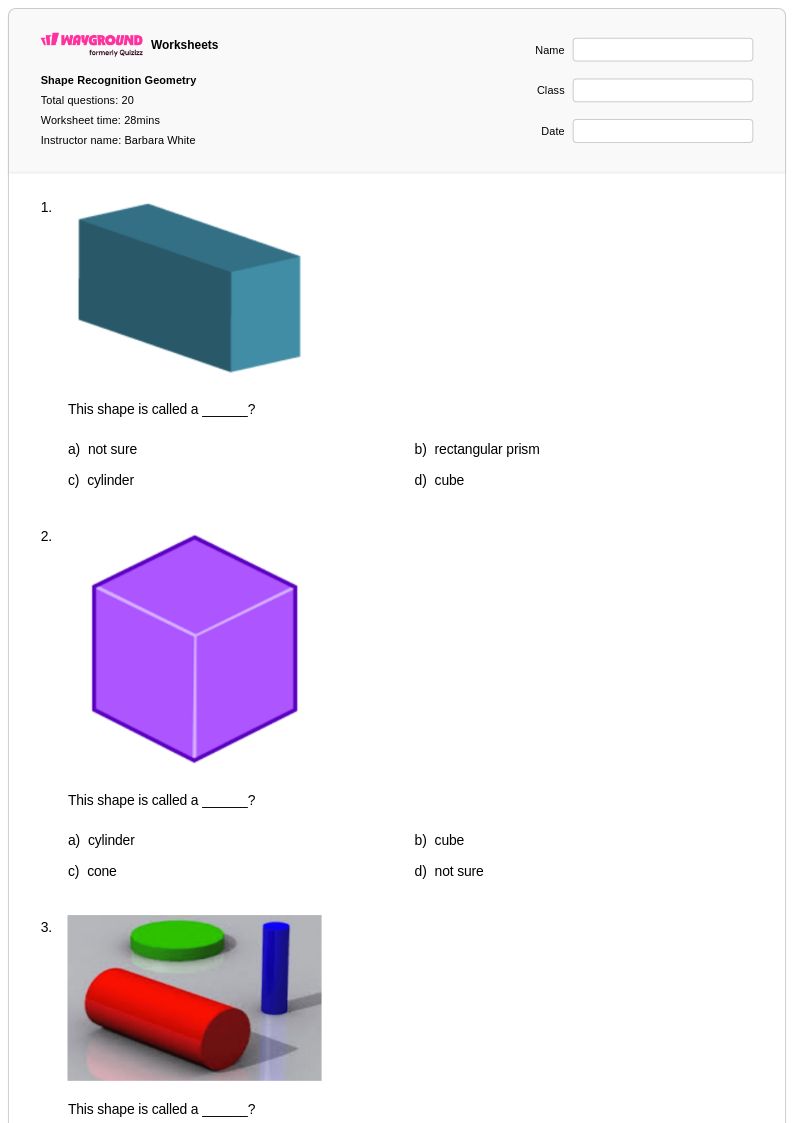
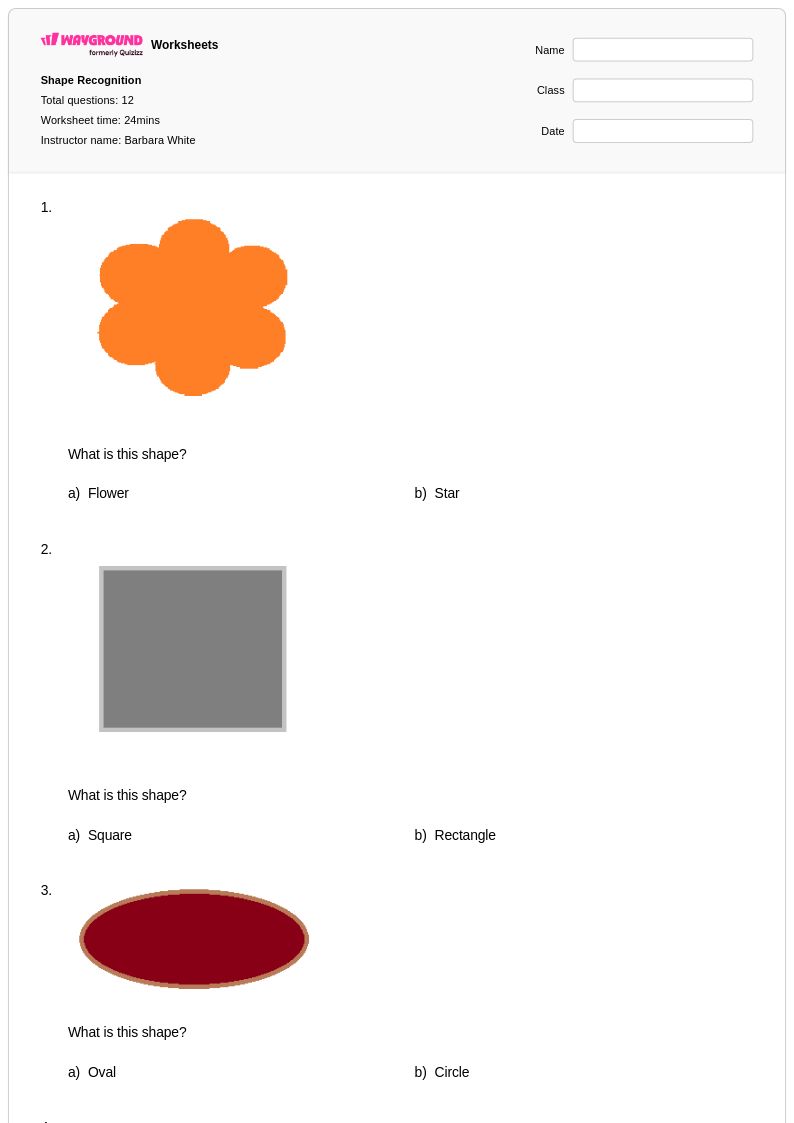
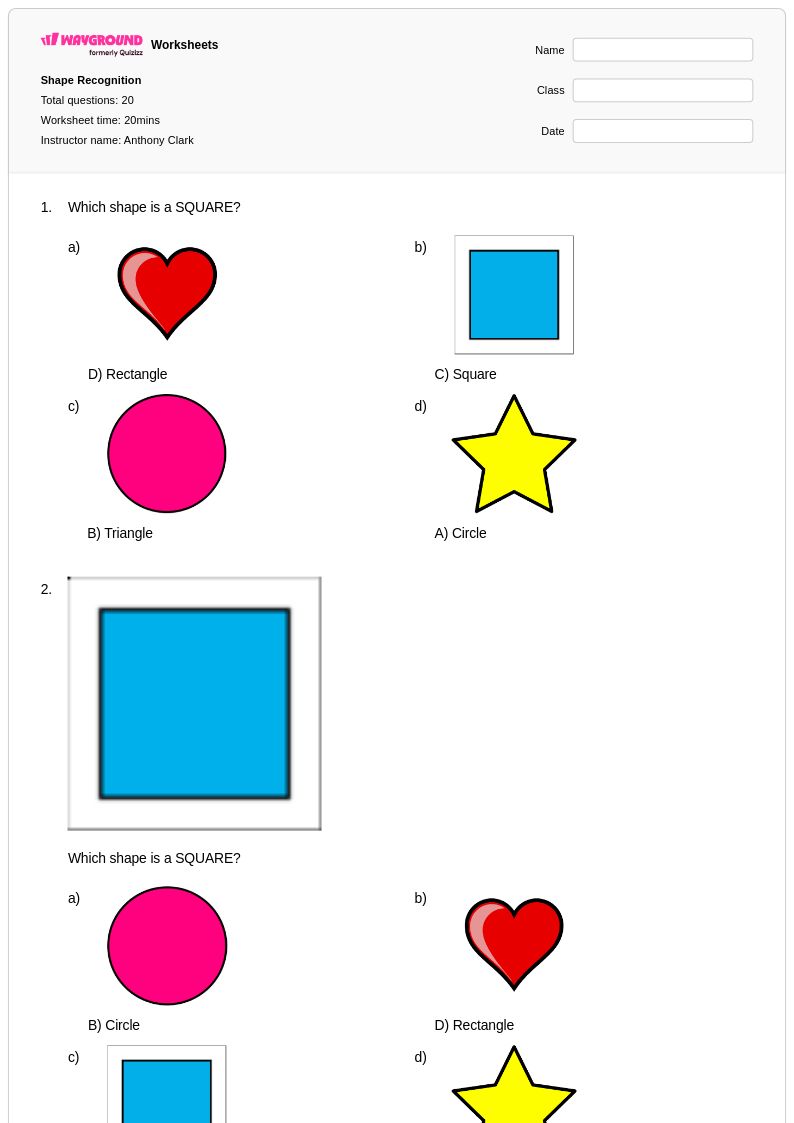
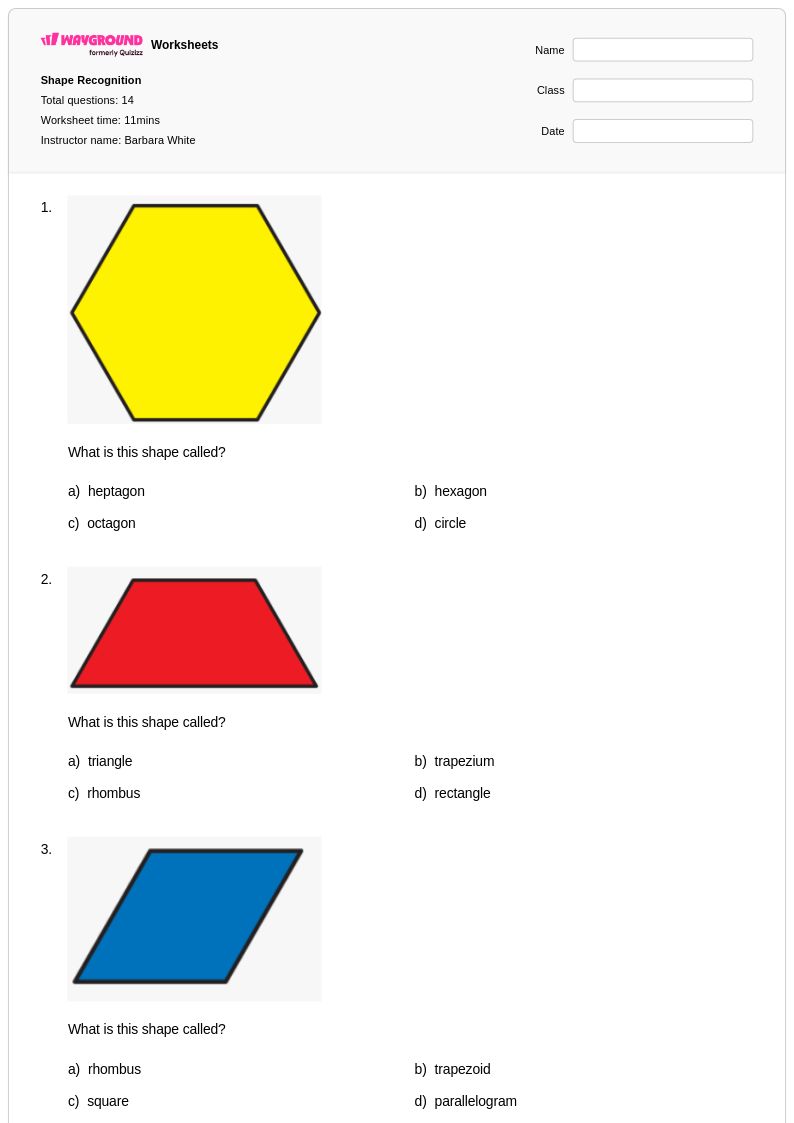
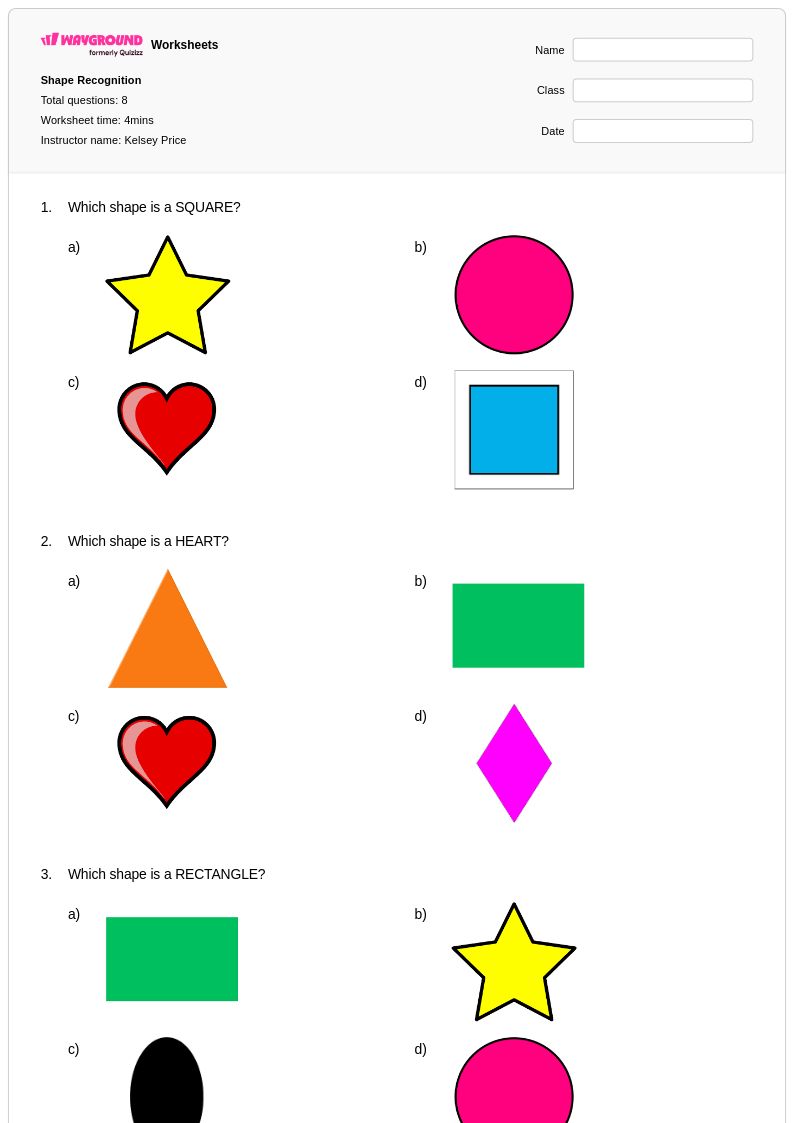
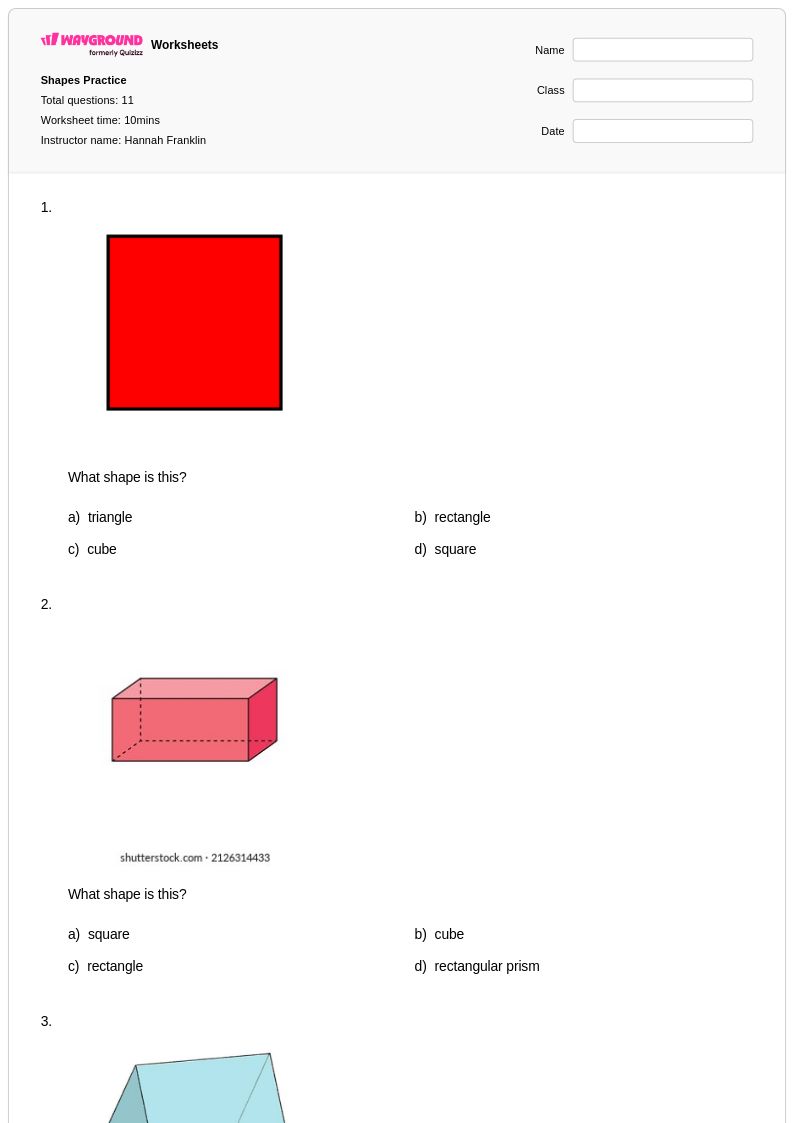
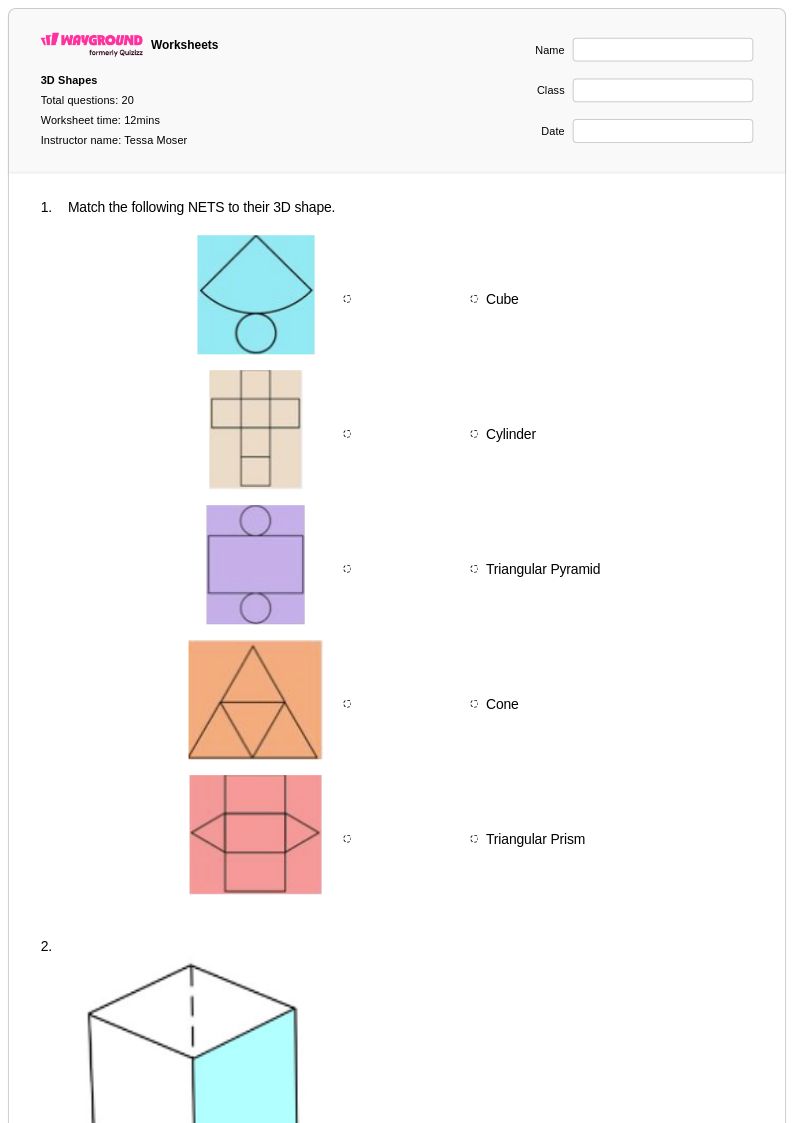
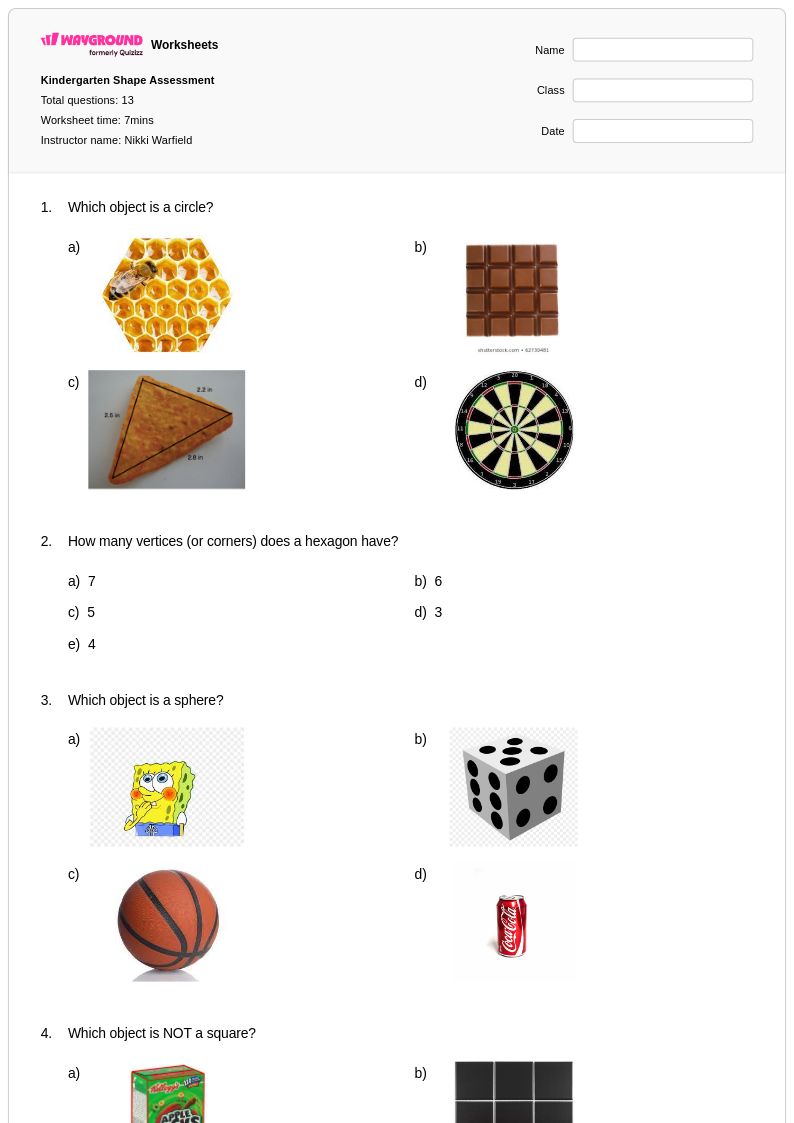
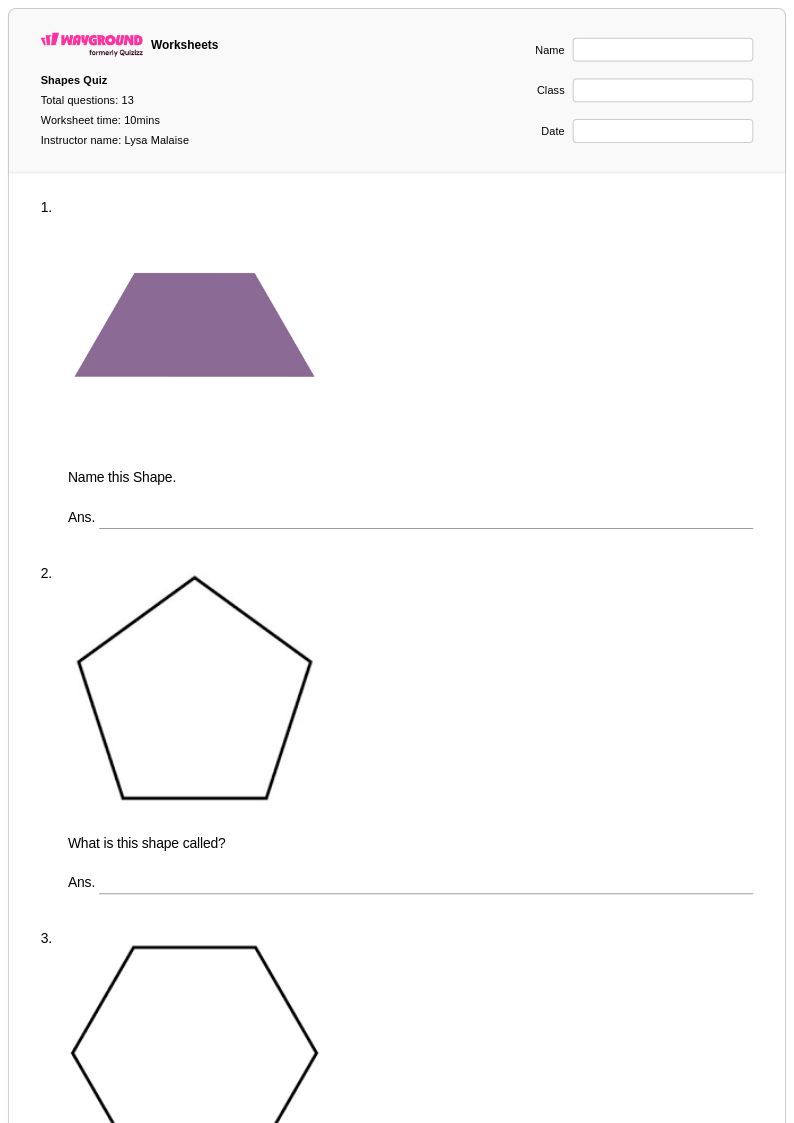
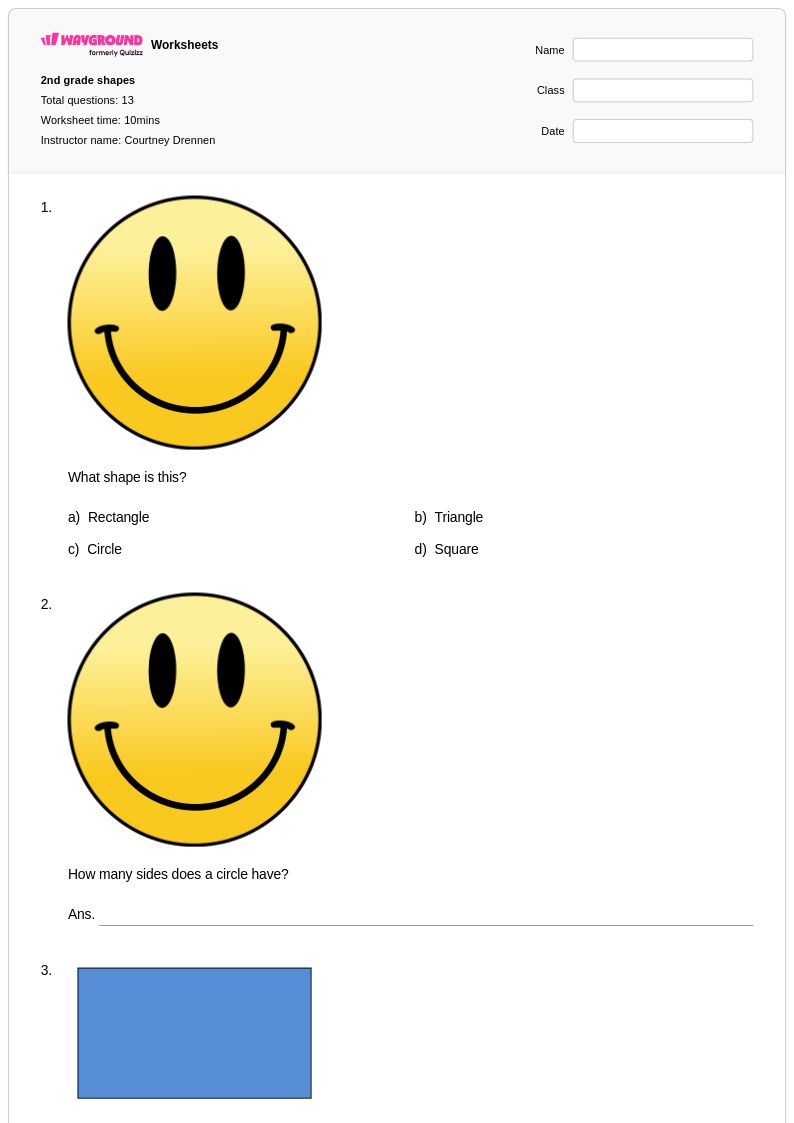
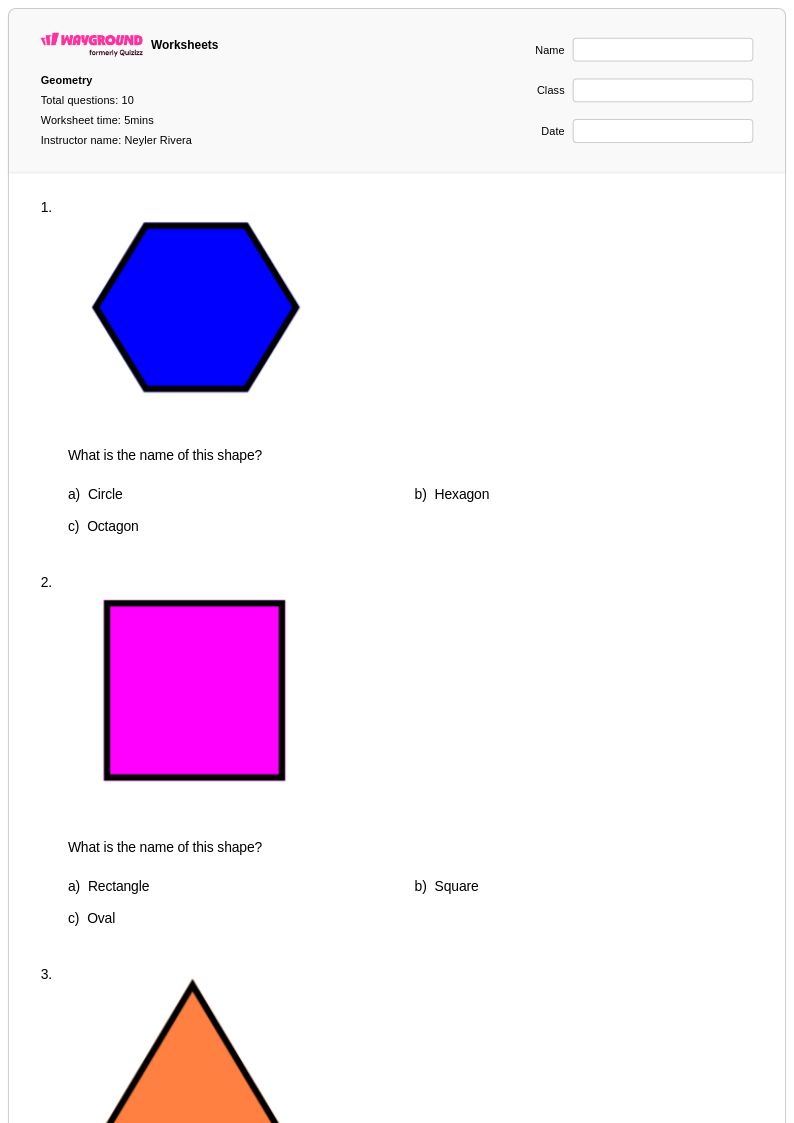
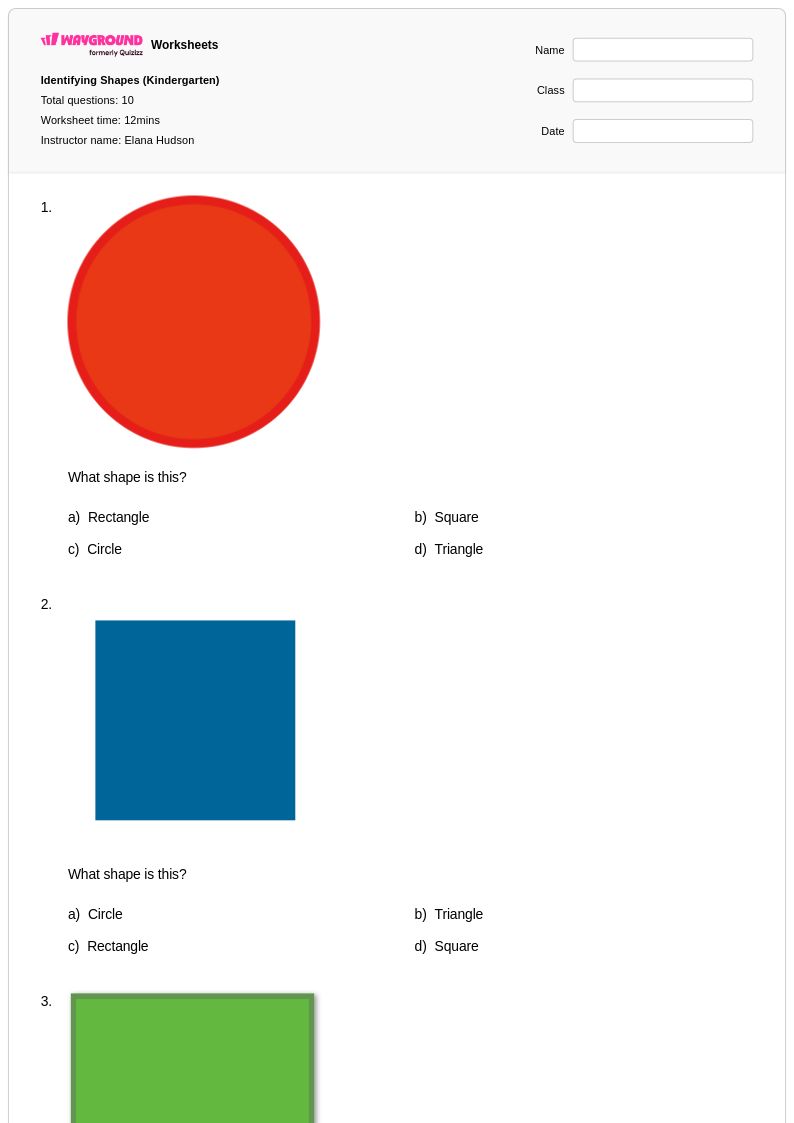
Shape recognition worksheets for kindergarten students available through Wayground (formerly Quizizz) provide foundational geometry practice that builds essential visual processing and spatial reasoning skills. These carefully designed printables help young learners identify, name, and distinguish between basic geometric shapes including circles, squares, triangles, rectangles, and other fundamental forms that appear in their everyday environment. Each worksheet collection includes structured practice problems that progress from simple shape identification to more complex activities like shape sorting, pattern completion, and real-world shape recognition, with comprehensive answer keys that support both independent learning and guided instruction. The free pdf resources emphasize hands-on learning through coloring activities, tracing exercises, and matching games that make geometry concepts accessible and engaging for early childhood education.
Wayground (formerly Quizizz) empowers kindergarten teachers with millions of educator-created shape recognition resources that streamline lesson planning and support differentiated instruction across diverse learning needs. The platform's robust search and filtering capabilities allow teachers to quickly locate worksheets aligned with early childhood mathematics standards, while customization tools enable educators to modify existing materials or create personalized practice sets that target specific geometric concepts. These versatile resources are available in both printable and digital formats, including downloadable pdf versions, making them ideal for classroom instruction, homework assignments, remediation activities, and enrichment opportunities. Teachers can efficiently assess student progress through varied practice problems that accommodate different learning styles, from visual learners who benefit from shape manipulation activities to kinesthetic learners who engage through hands-on geometric exploration.
FAQs
What shapes should a kindergartener know?
What are some effective ways to teach shapes to kindergarteners?
What activities help kindergarteners practice shape recognition?
Why do kindergarteners confuse shapes like squares and rectangles?
How can I use these kindergarten shape worksheets?
How does kindergarten shape recognition align with Common Core standards?