
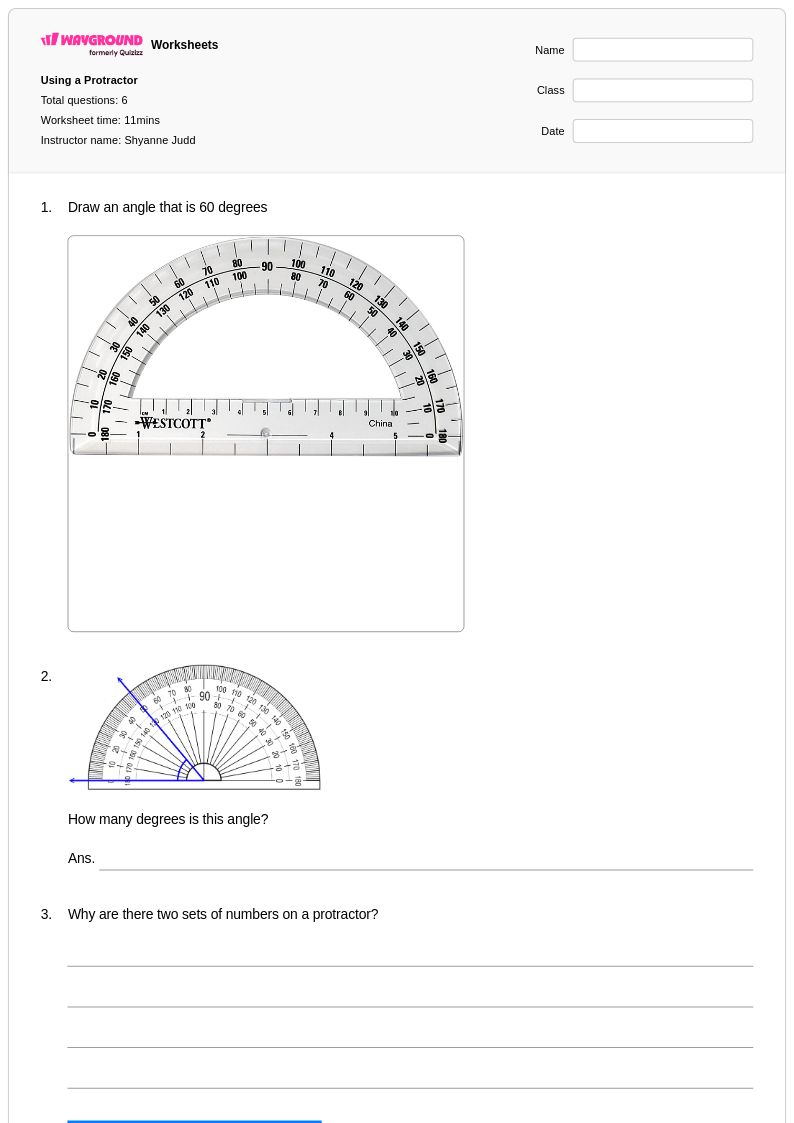
6 Q
4th
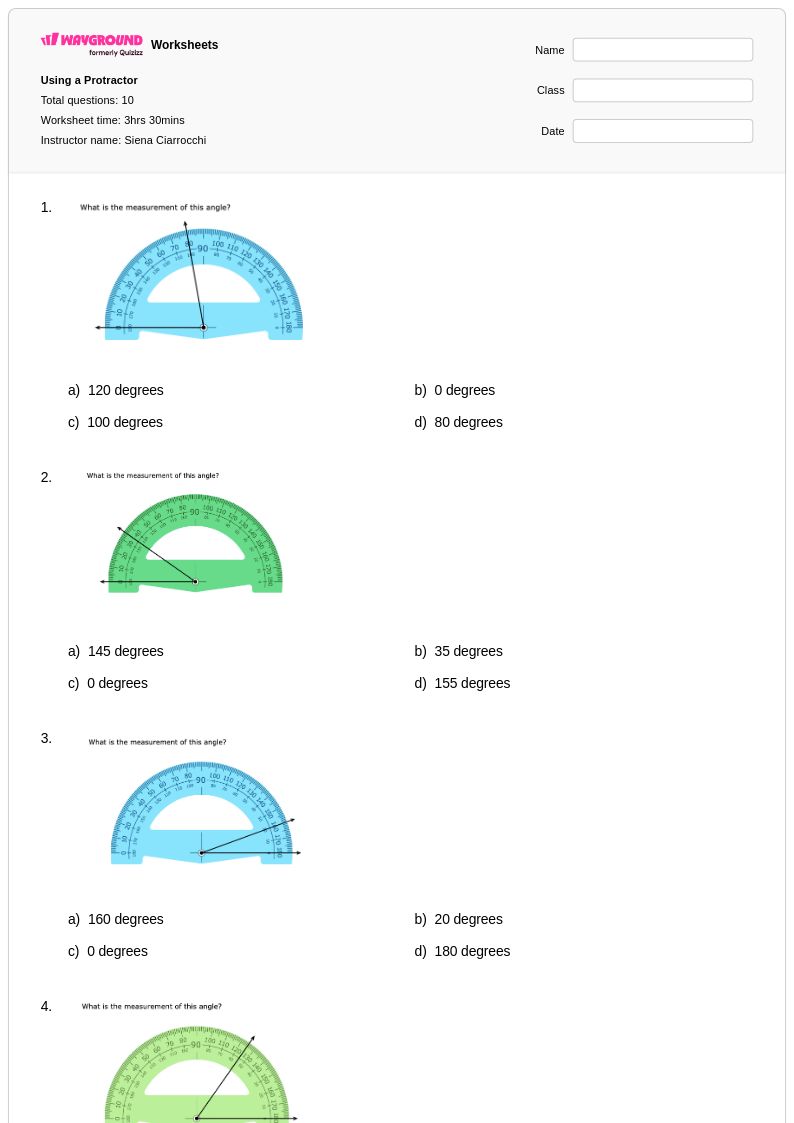
10 Q
4th
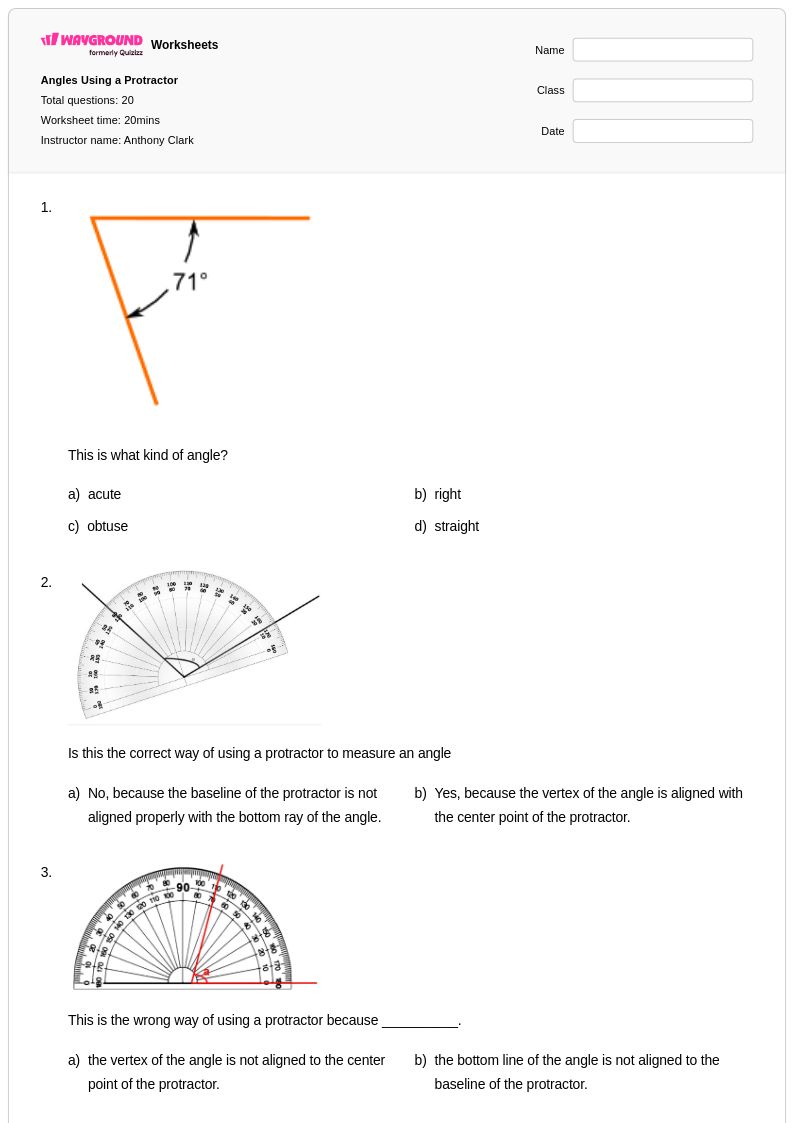
20 Q
4th - Uni
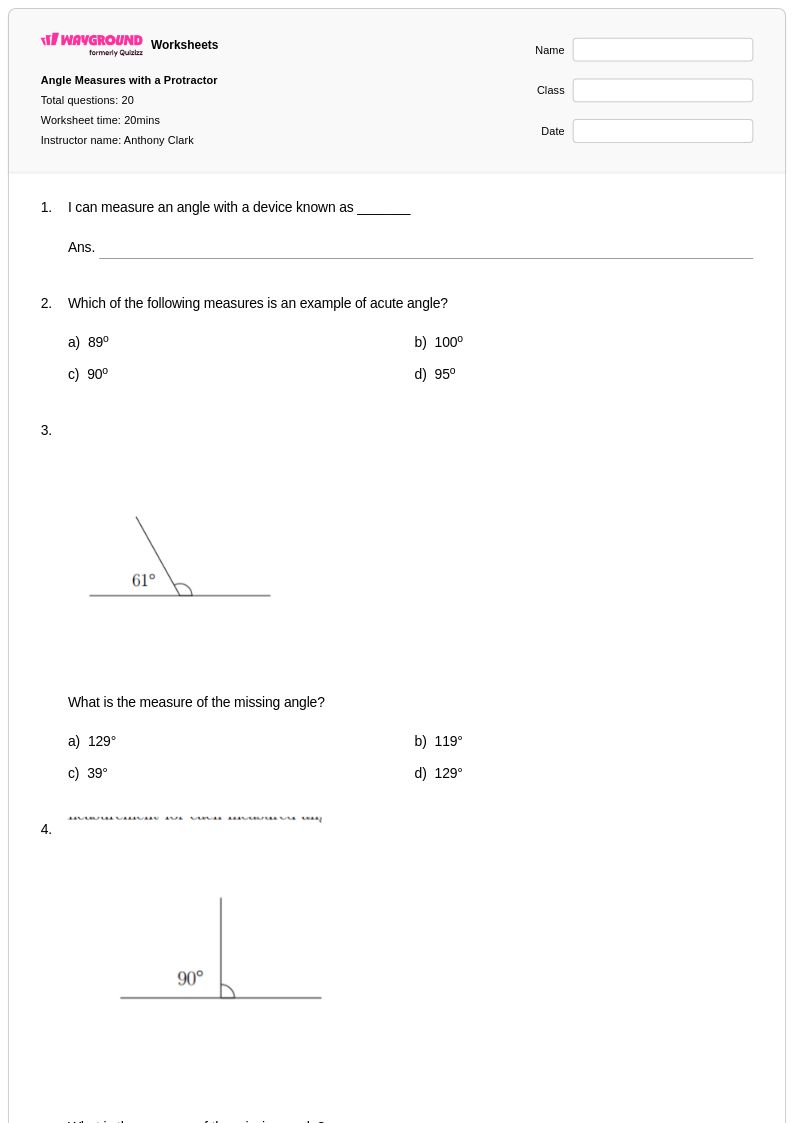
20 Q
4th - Uni
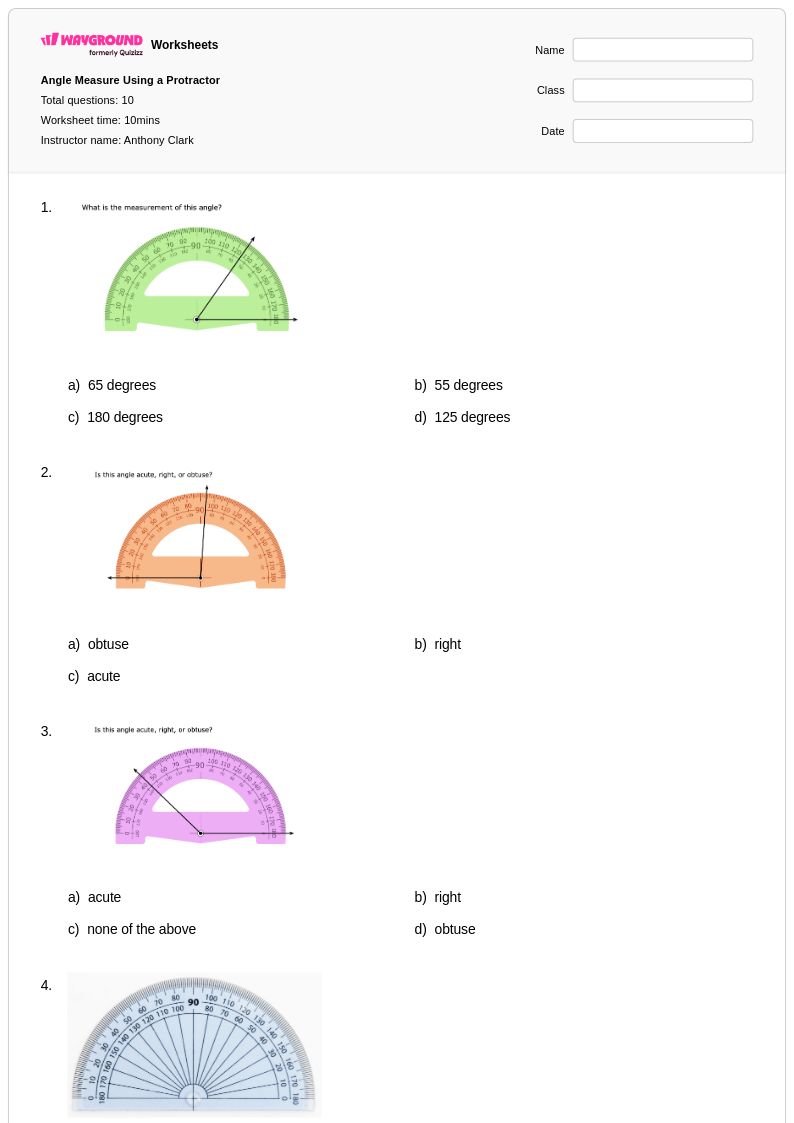
10 Q
4th - Uni
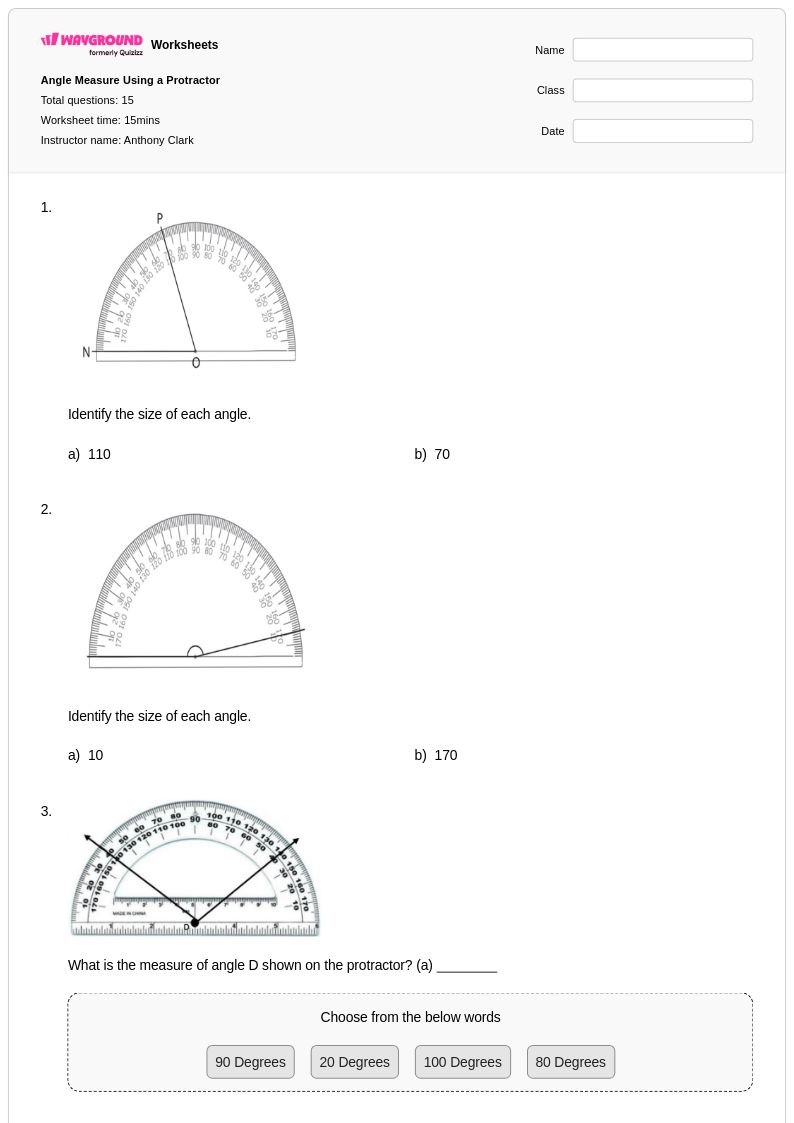
15 Q
4th - Uni
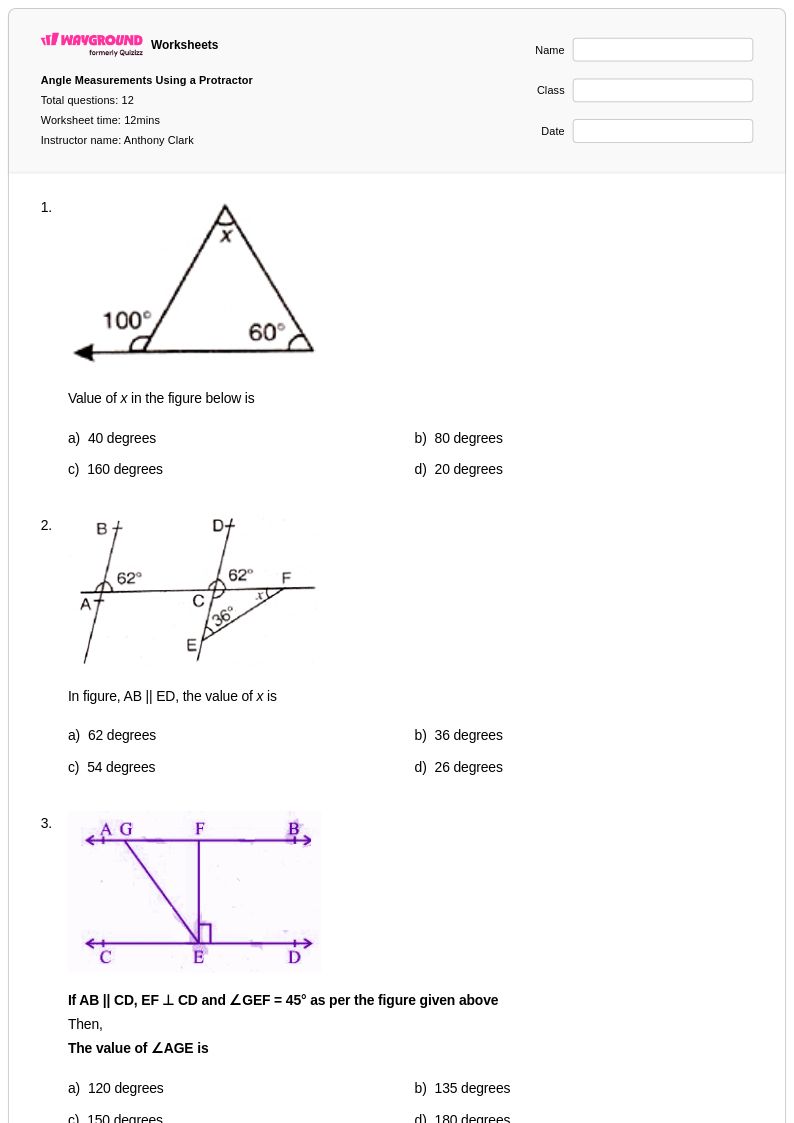
12 Q
9th - Uni
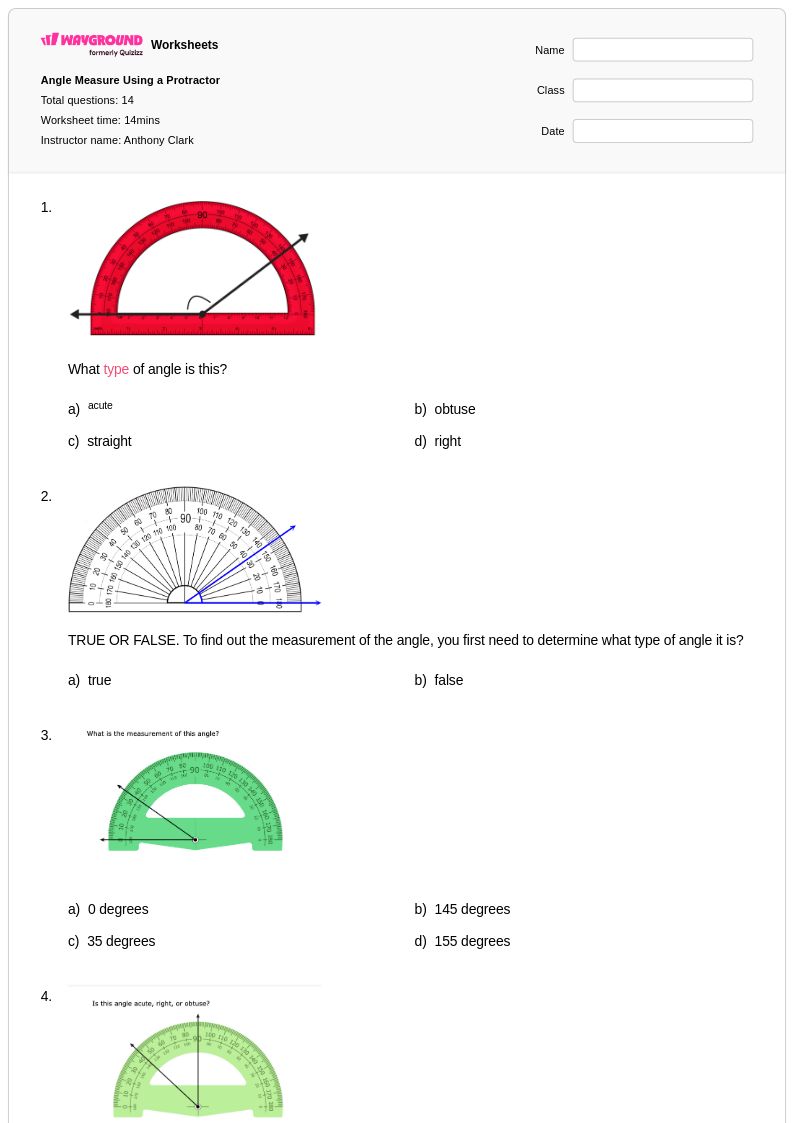
14 Q
4th - Uni
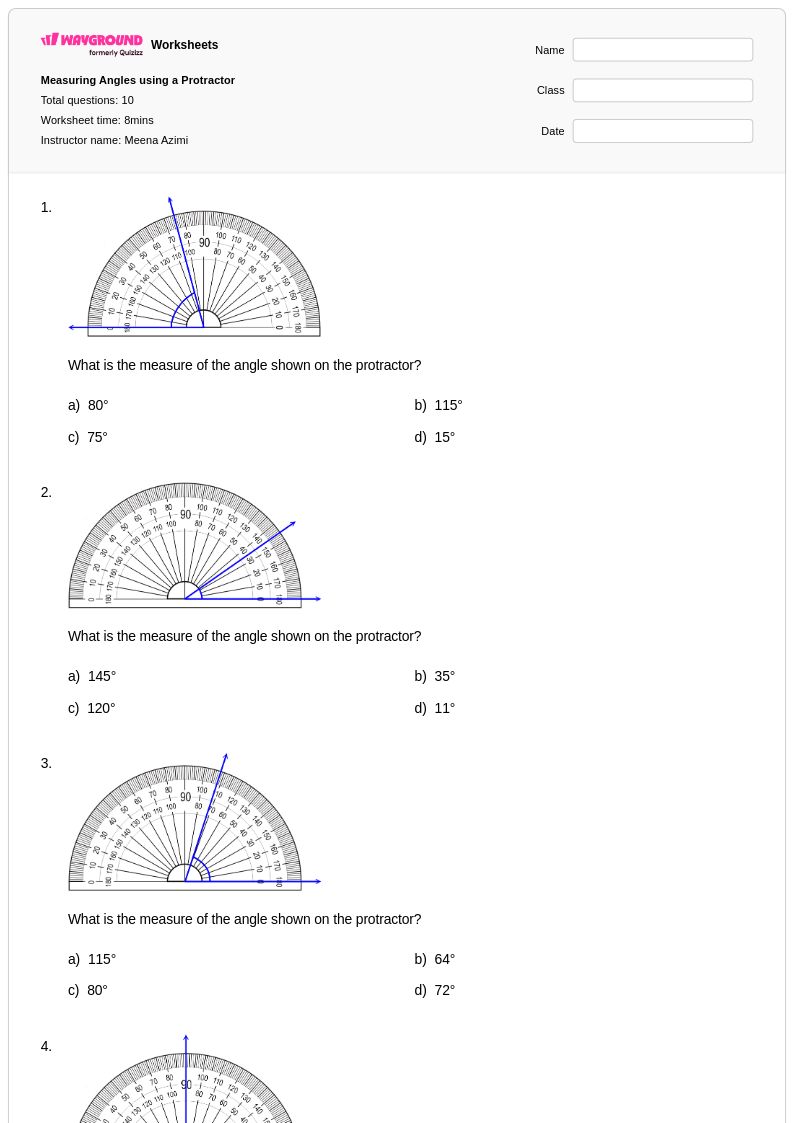
10 Q
4th
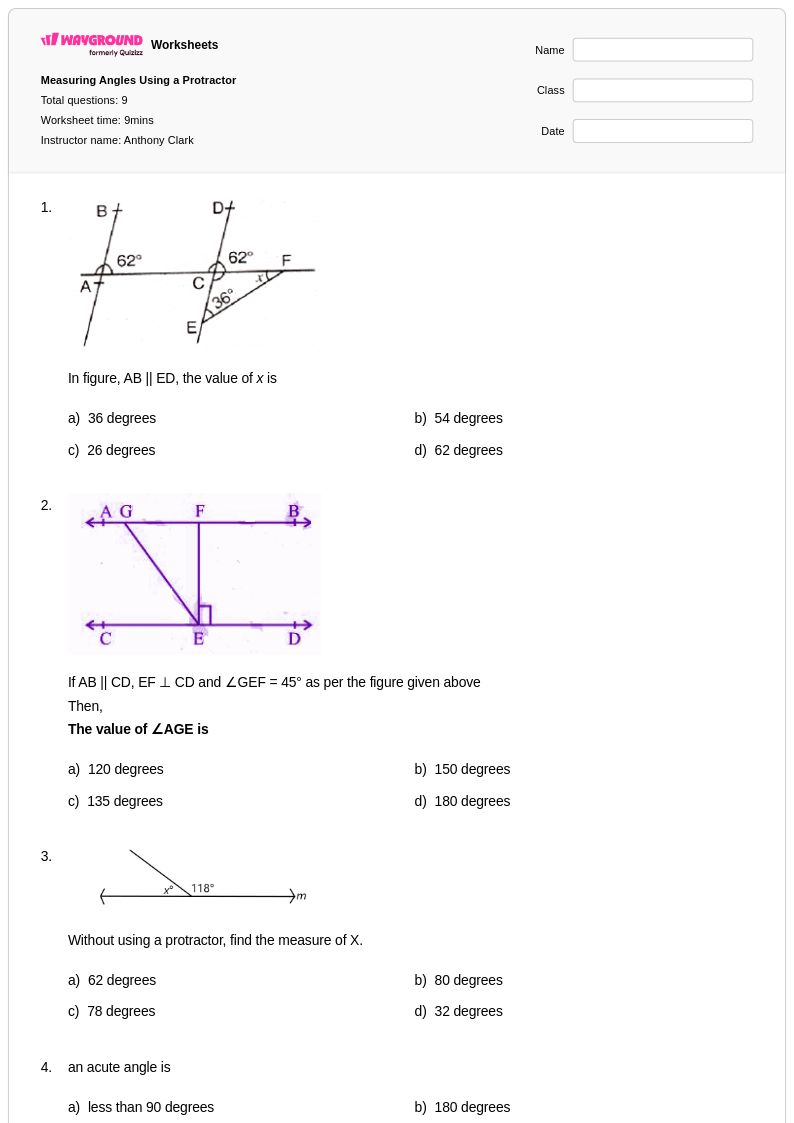
9 Q
9th - Uni
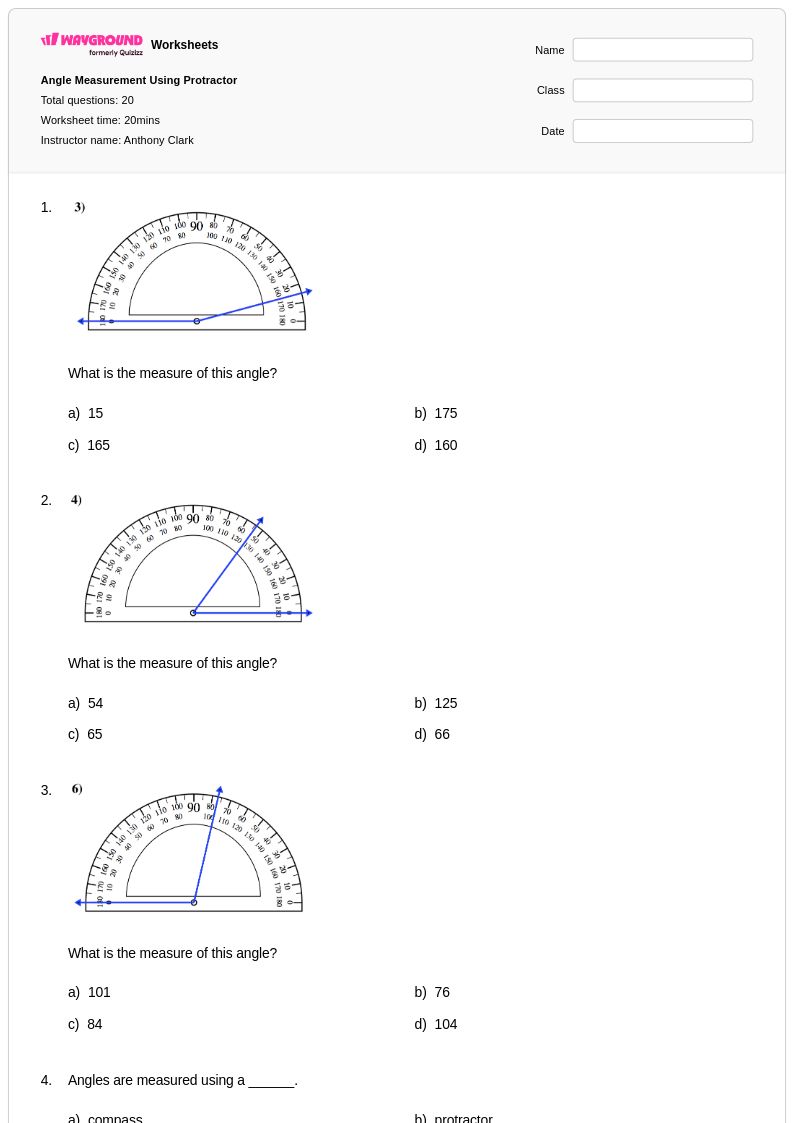
20 Q
4th - Uni
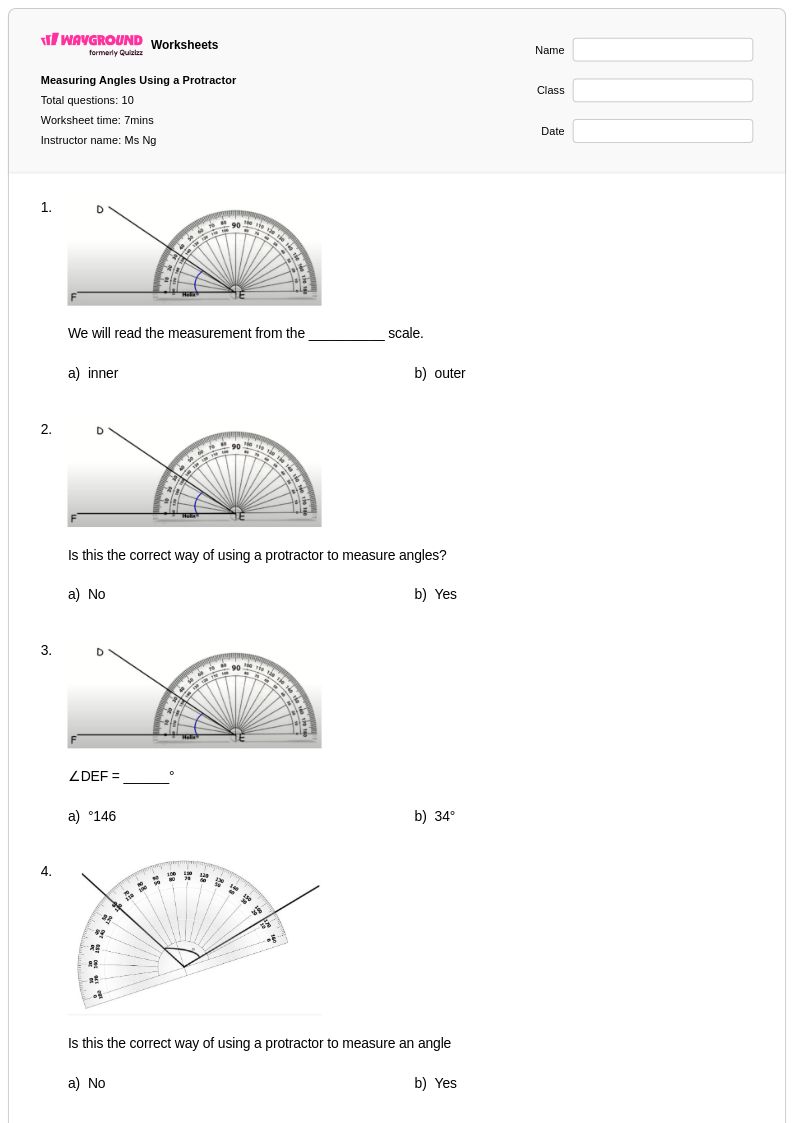
10 Q
4th
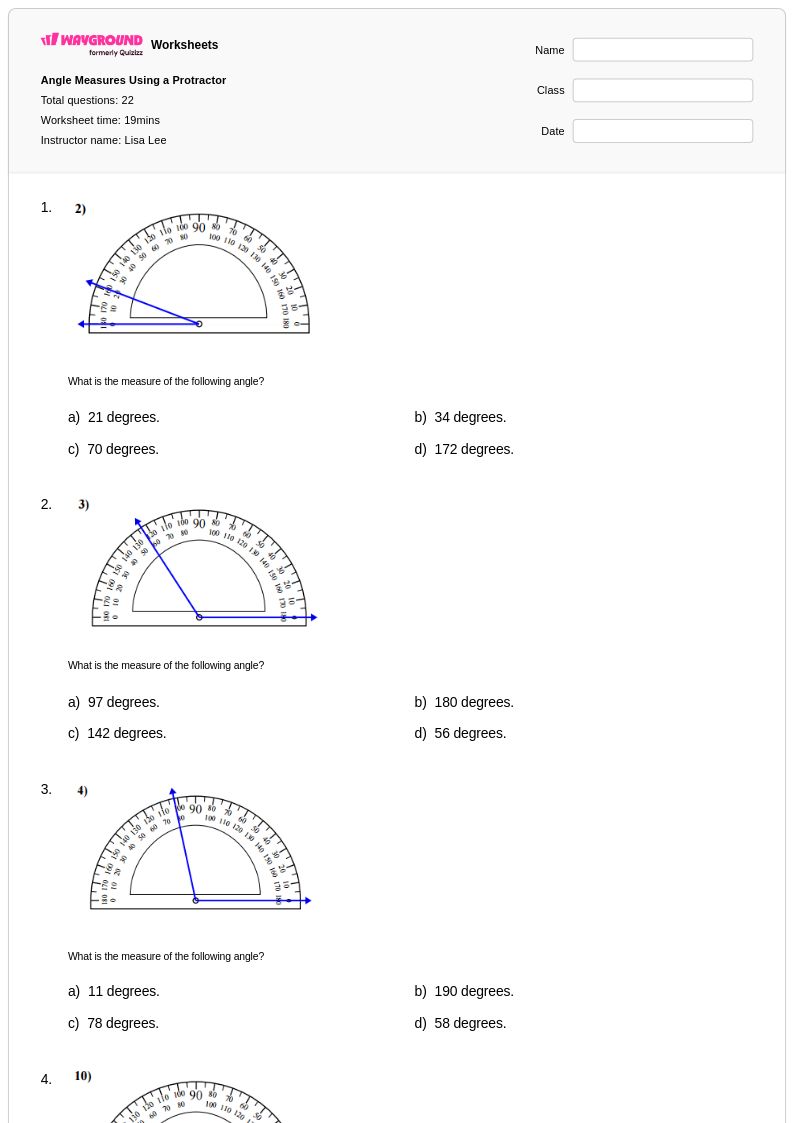
22 Q
7th
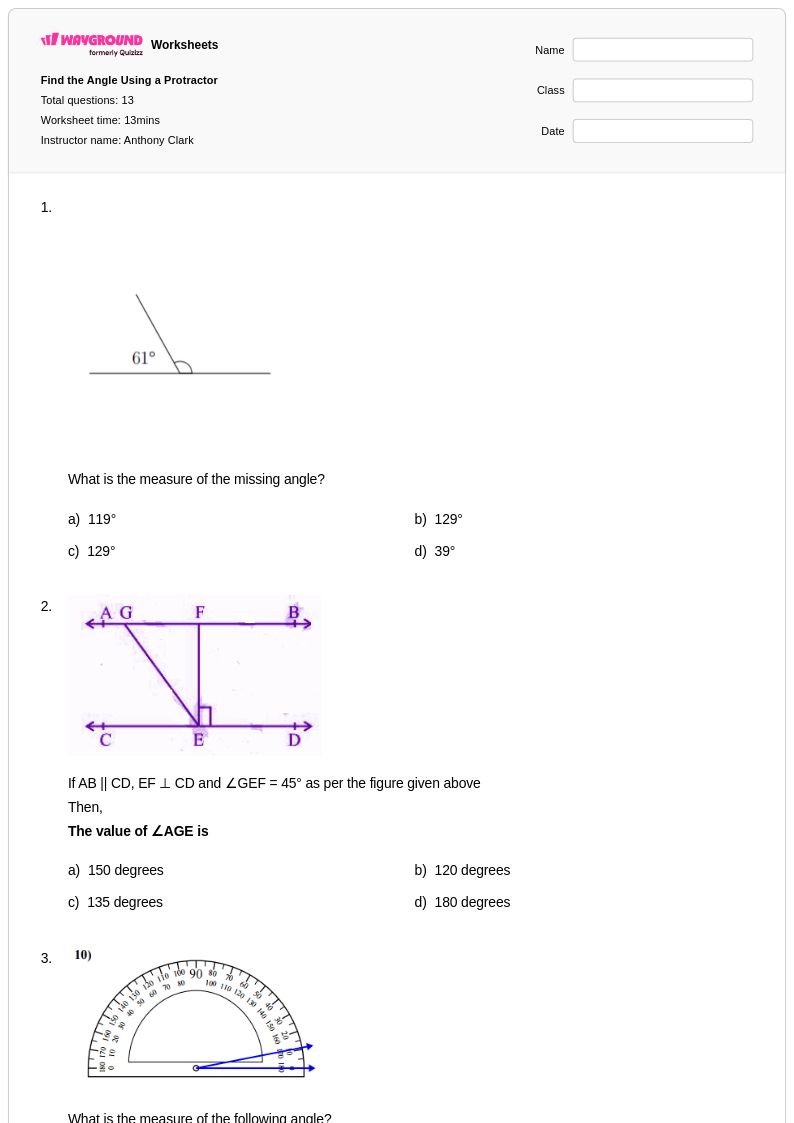
13 Q
6th - Uni
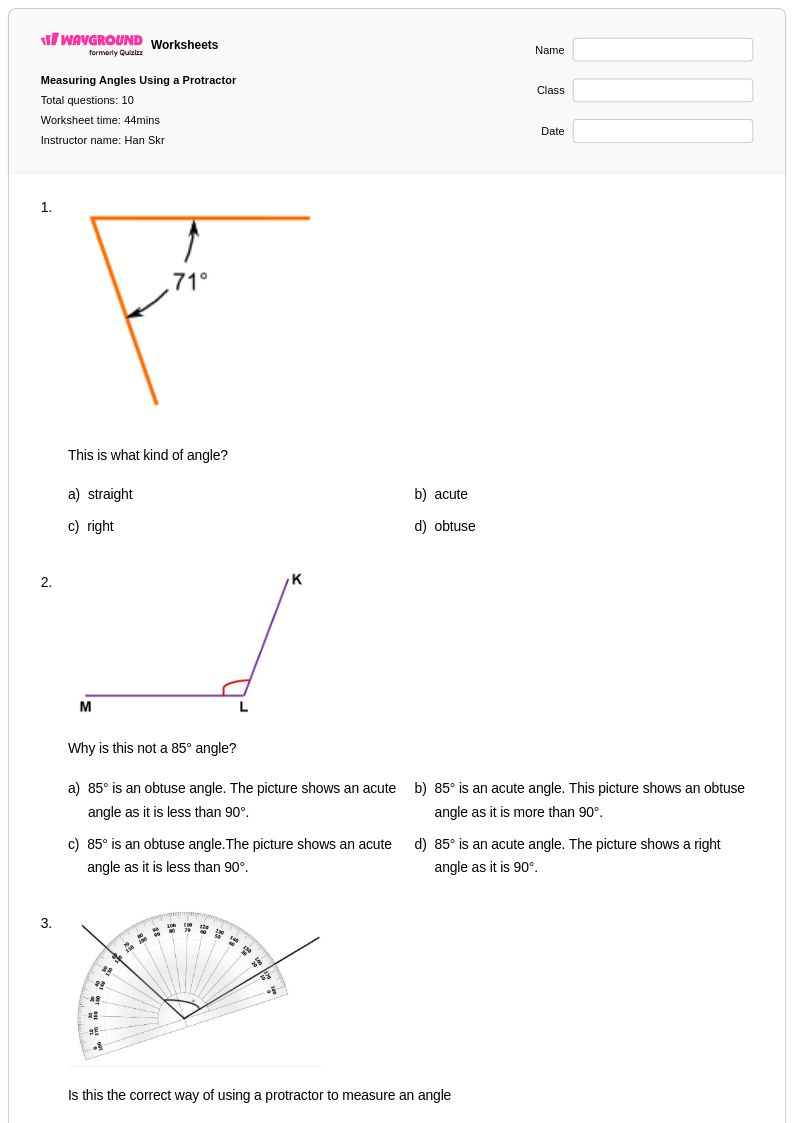
10 Q
4th
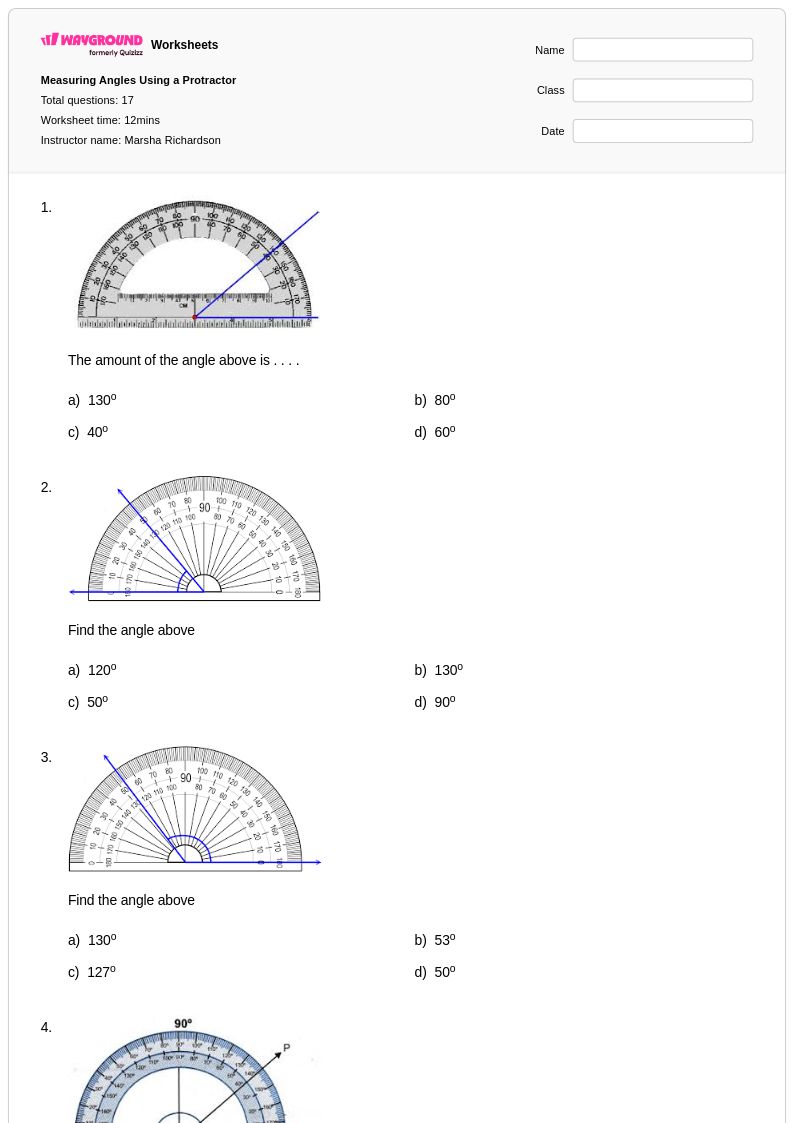
17 Q
4th
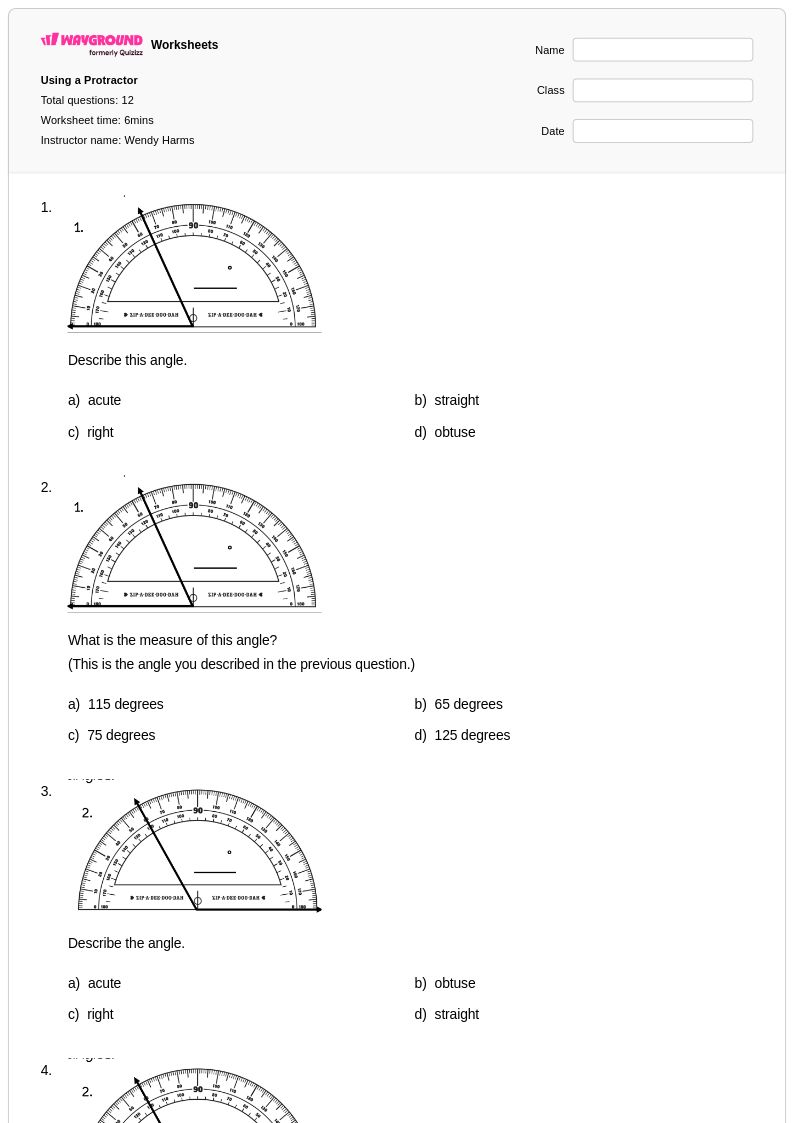
12 Q
4th
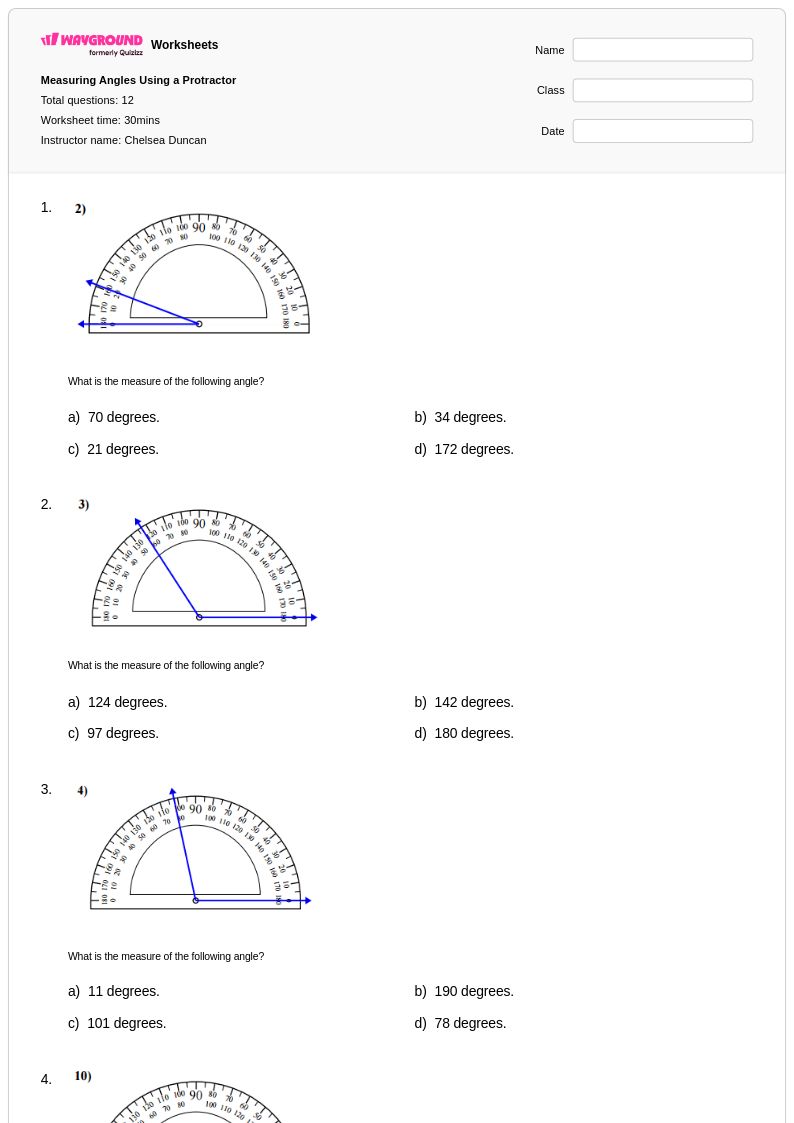
12 Q
5th
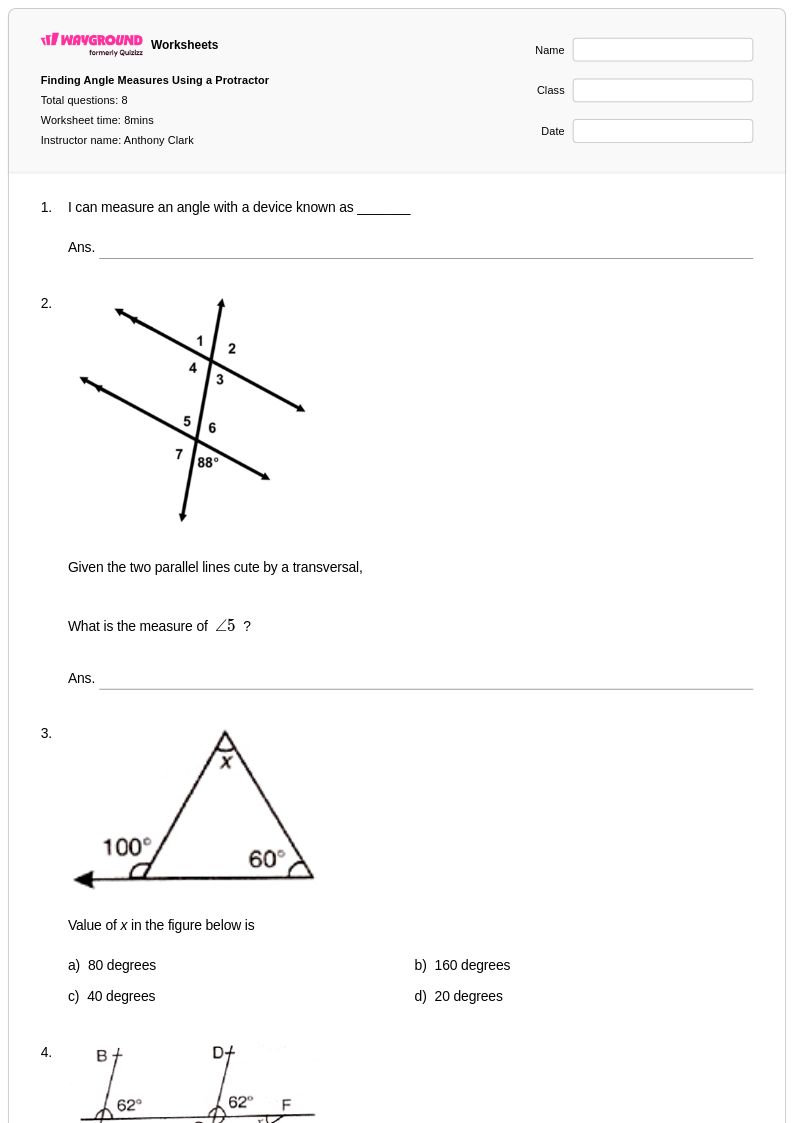
8 Q
10th - Uni
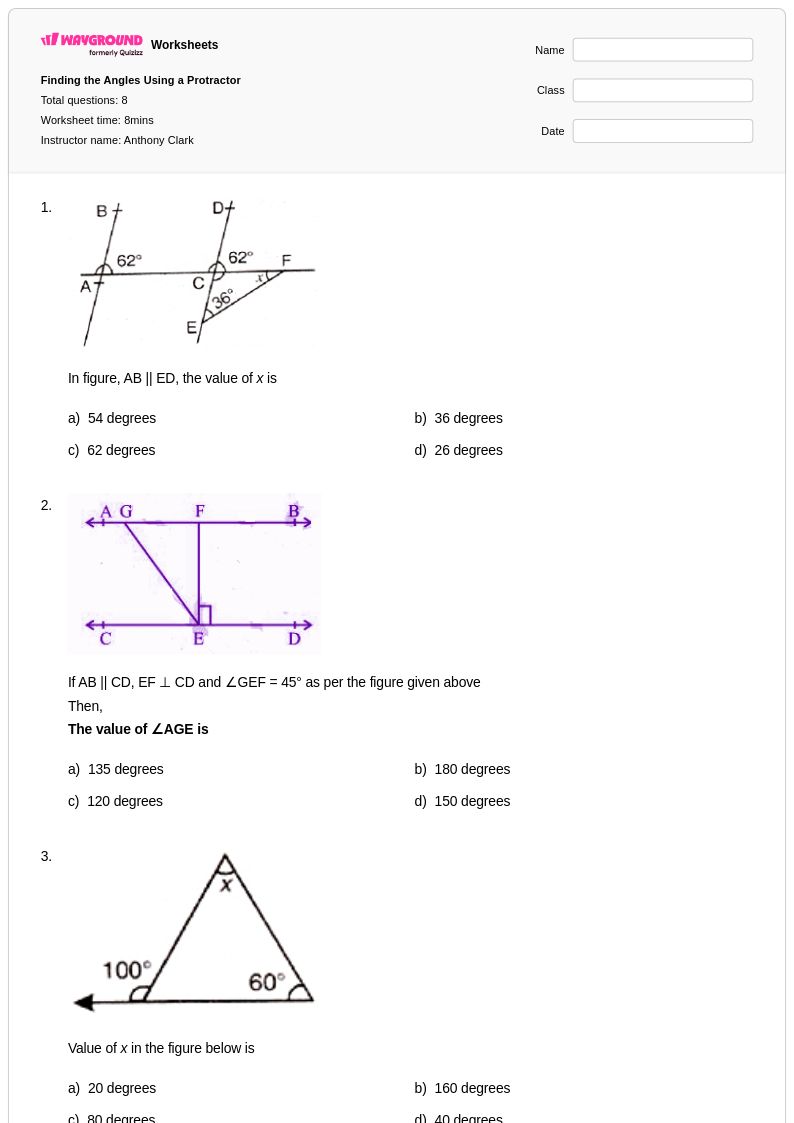
8 Q
9th - Uni
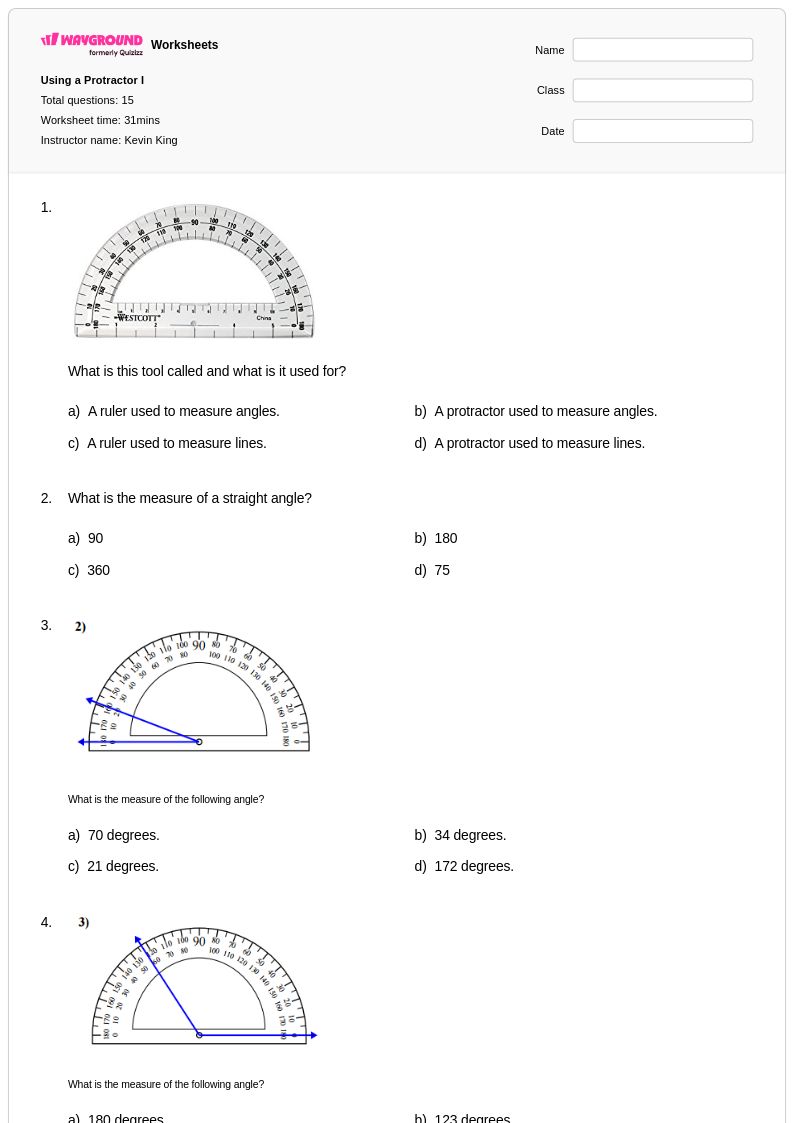
15 Q
4th
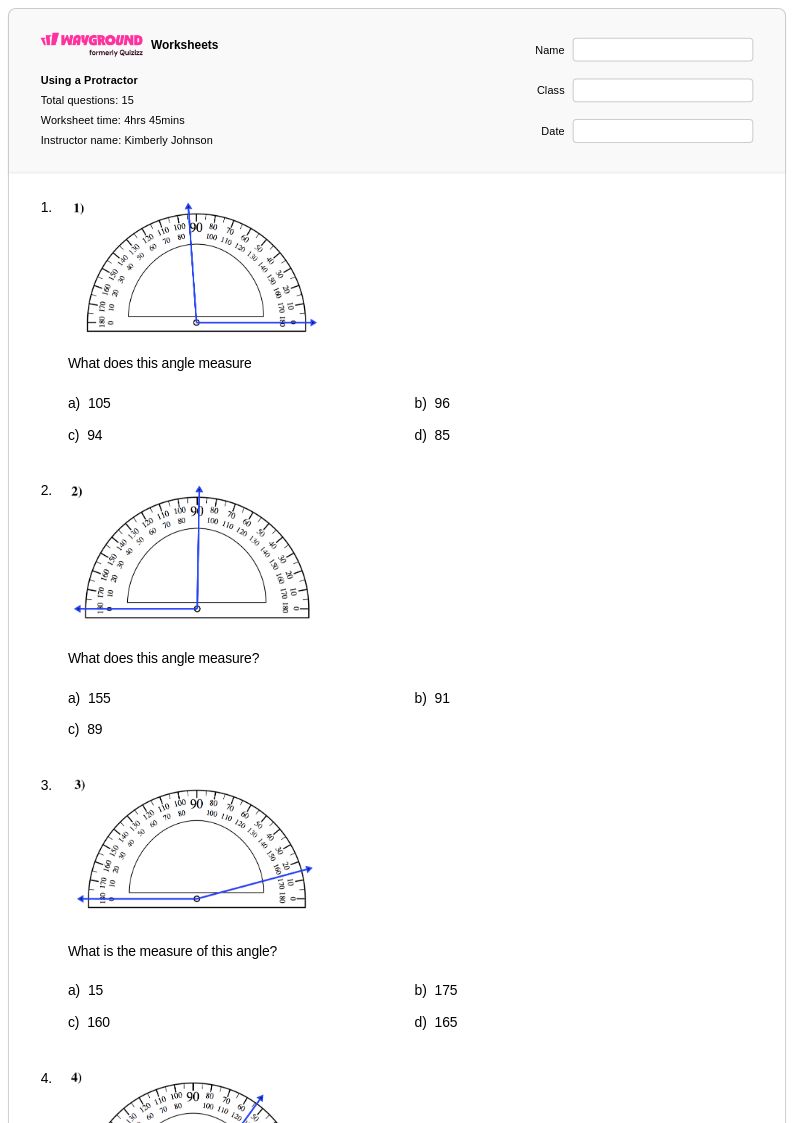
15 Q
4th
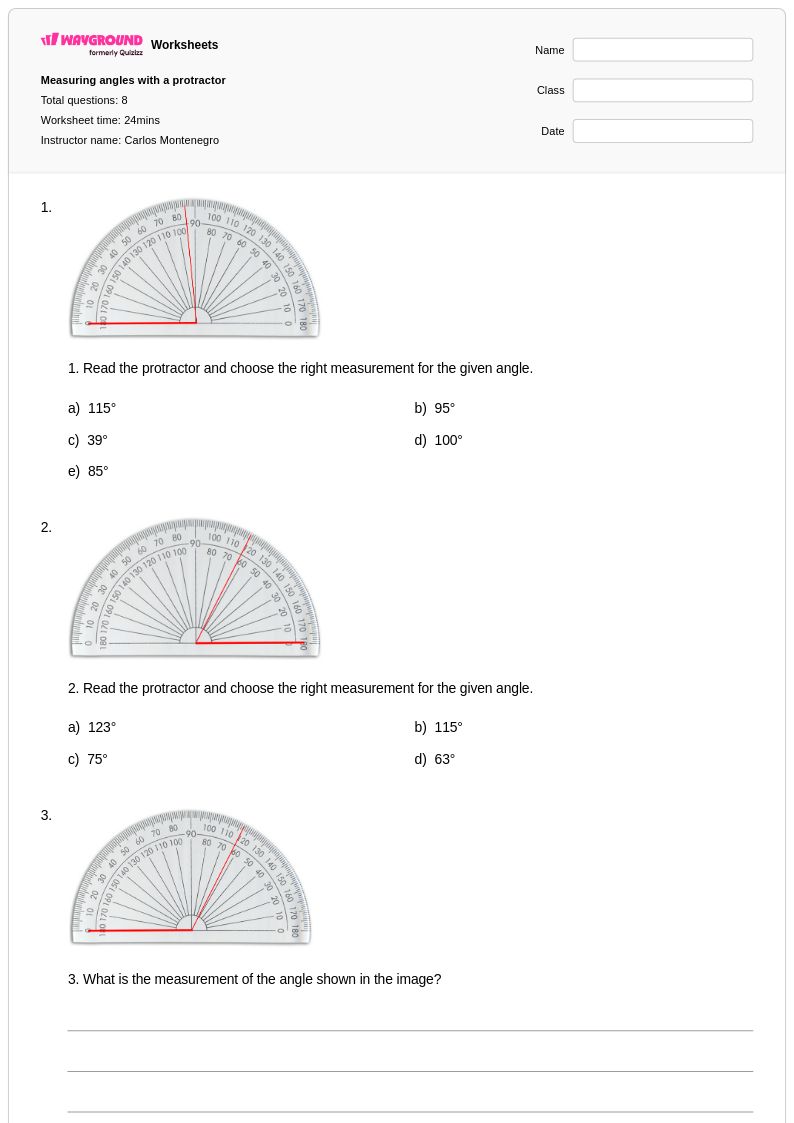
8 Q
4th
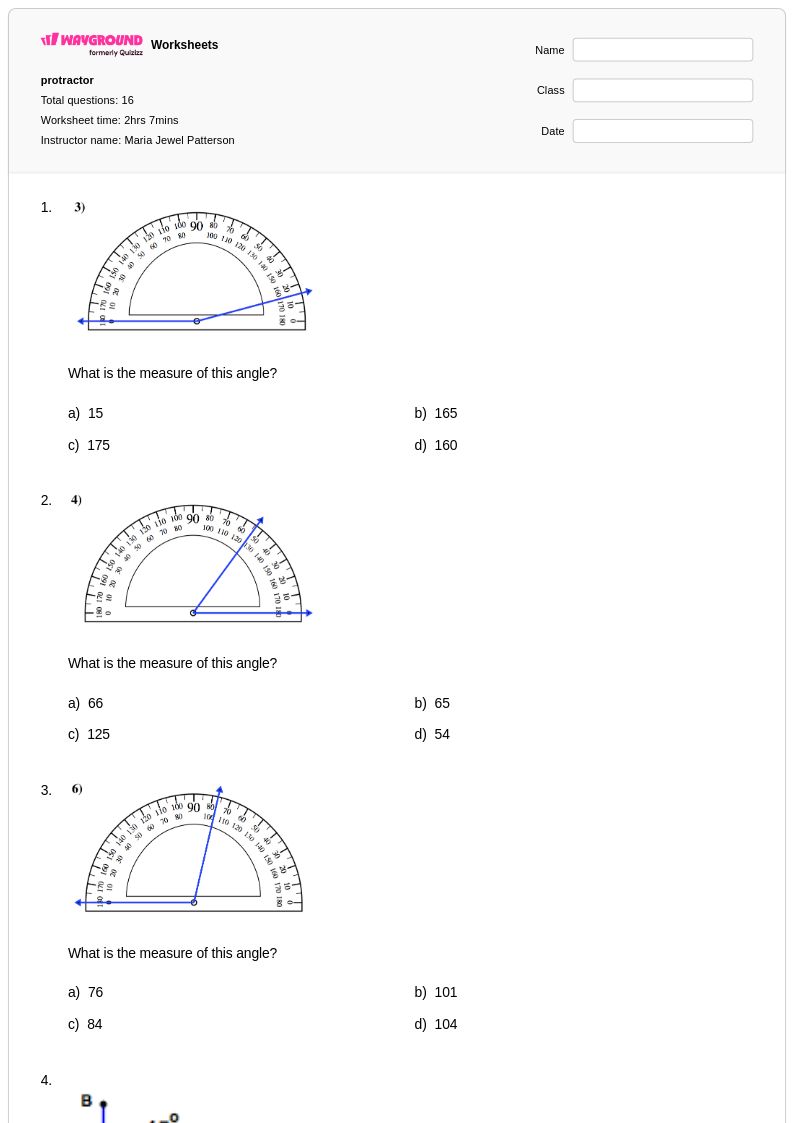
16 Q
4th
Explore Other Subject Worksheets for kindergarten
Explore printable Using a Protractor worksheets for Kindergarten
Using a protractor worksheets for kindergarten available through Wayground (formerly Quizizz) introduce young learners to the foundational concepts of angle measurement in an age-appropriate manner. These carefully designed practice problems help kindergarten students develop spatial awareness and begin understanding geometric relationships through hands-on activities that simulate protractor use. The worksheets focus on basic angle recognition, comparing different angle sizes, and identifying right angles, acute angles, and obtuse angles in simple, visual formats that make abstract concepts concrete for developing minds. Each printable resource includes a comprehensive answer key and is available as a free pdf download, allowing teachers to seamlessly integrate angle measurement activities into their geometry curriculum while building essential mathematical reasoning skills.
Wayground (formerly Quizizz) supports kindergarten teachers with an extensive collection of millions of teacher-created protractor worksheets that address varying skill levels and learning objectives within early geometry education. The platform's robust search and filtering capabilities enable educators to quickly locate standards-aligned materials that match their specific classroom needs, while differentiation tools allow for customization based on individual student abilities and learning styles. These versatile resources are available in both printable and digital formats, including high-quality pdf versions that facilitate flexible lesson planning and accommodate different teaching environments. Teachers can effectively use these protractor worksheets for initial skill introduction, targeted remediation for students who need additional support, and enrichment activities for advanced learners, creating a comprehensive approach to angle measurement instruction that builds confidence and mathematical understanding in kindergarten students.