
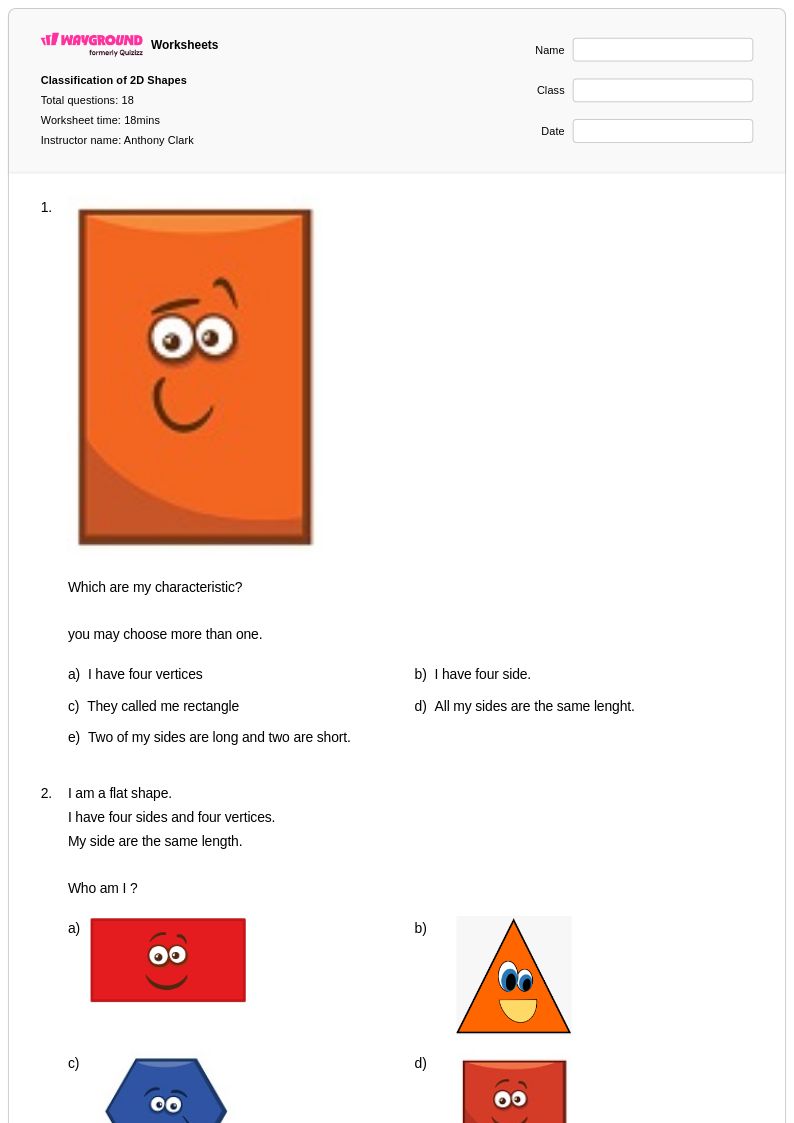
18 Q
1st - Uni
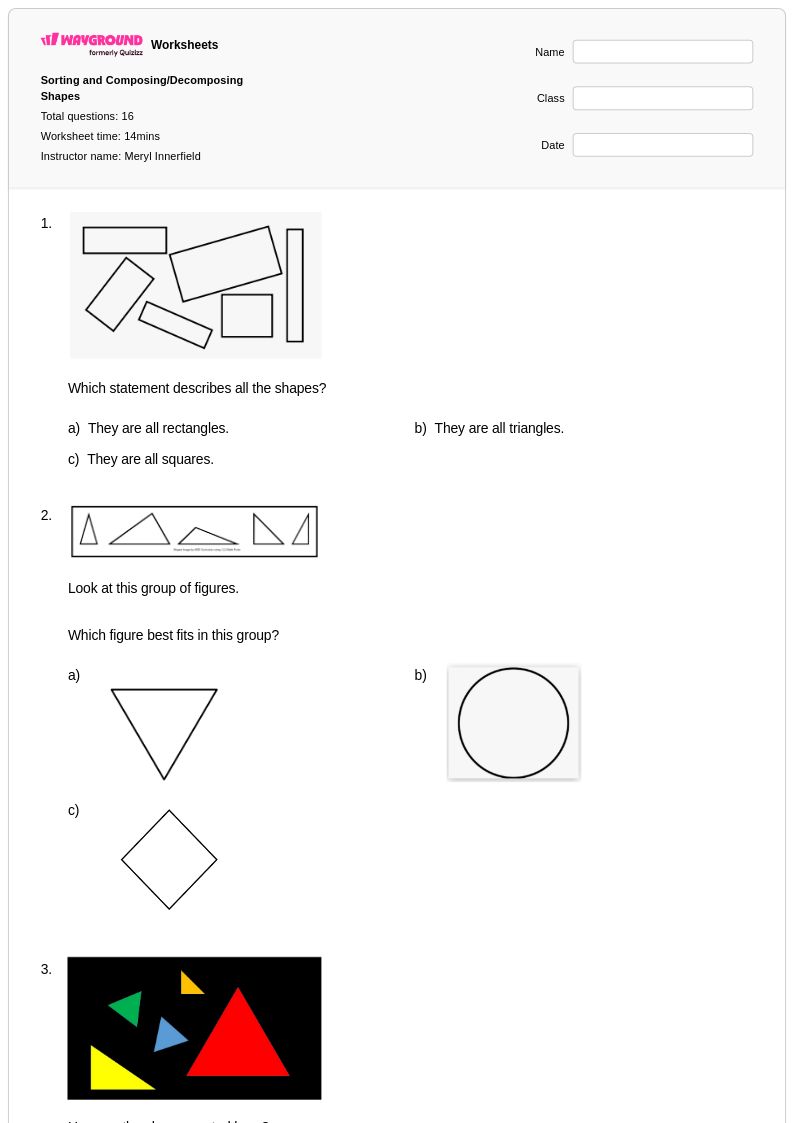
16 Q
1st
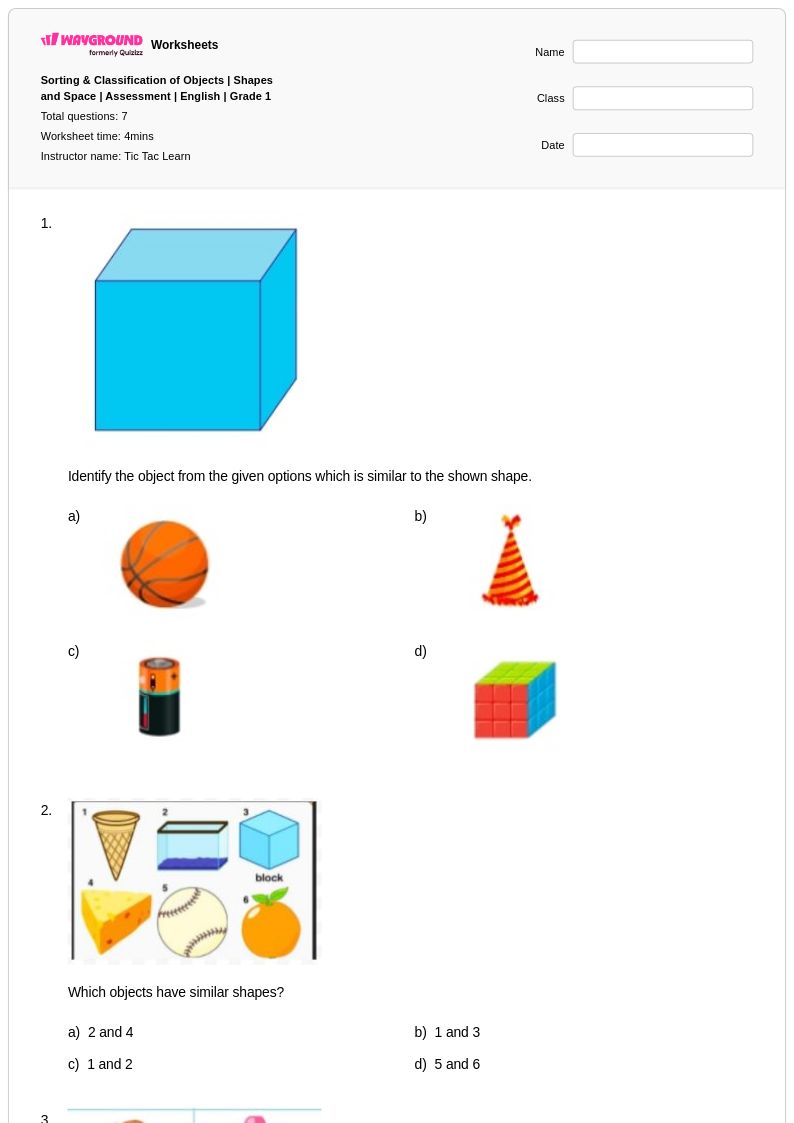
7 Q
1st
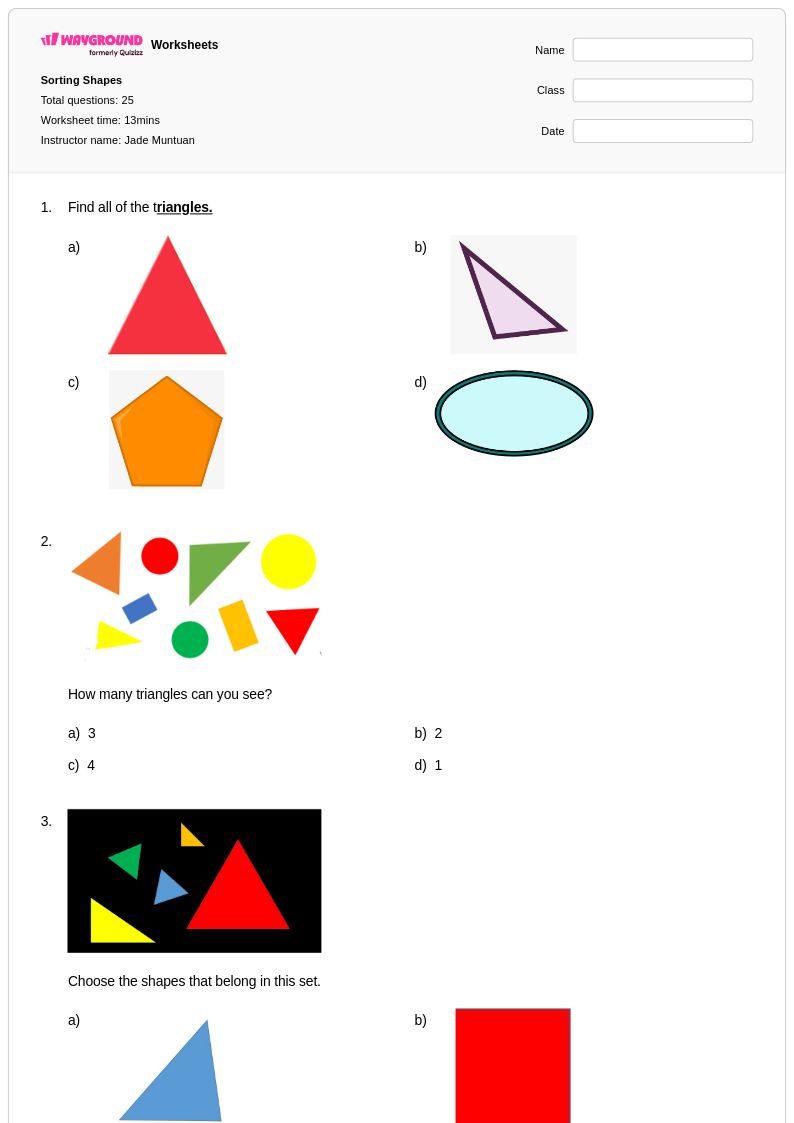
25 Q
1st
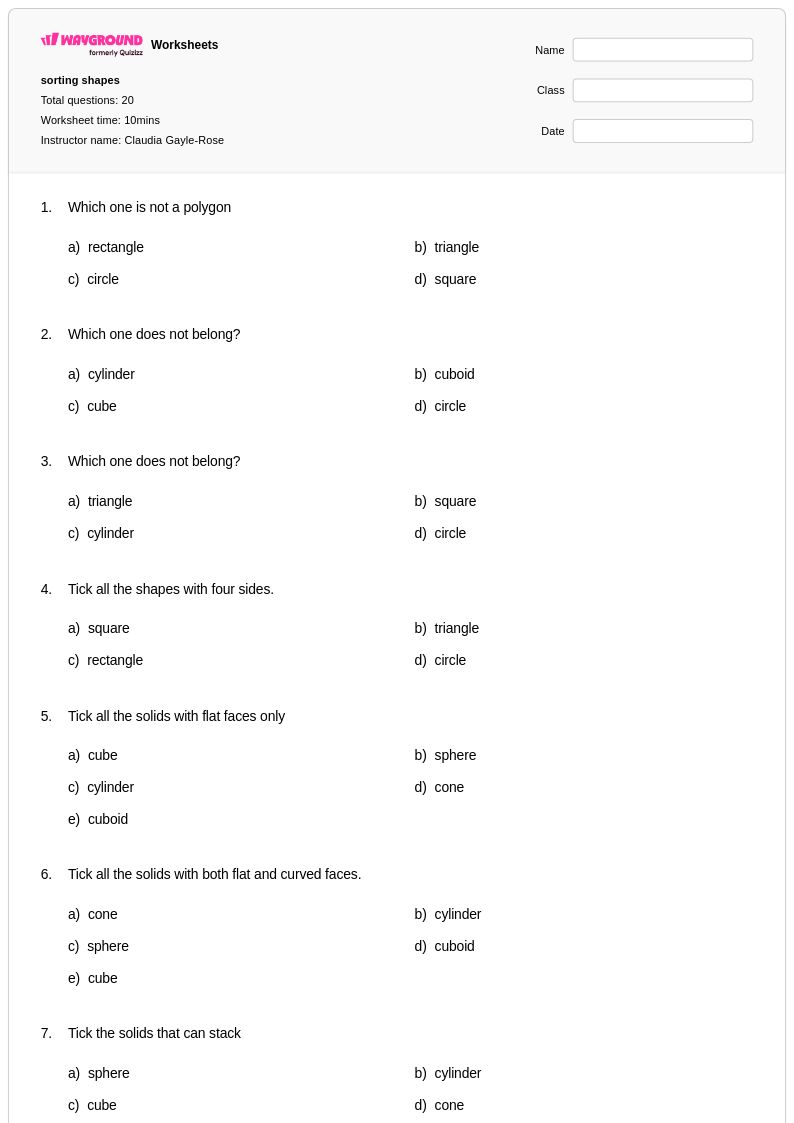
20 Q
1st - 2nd
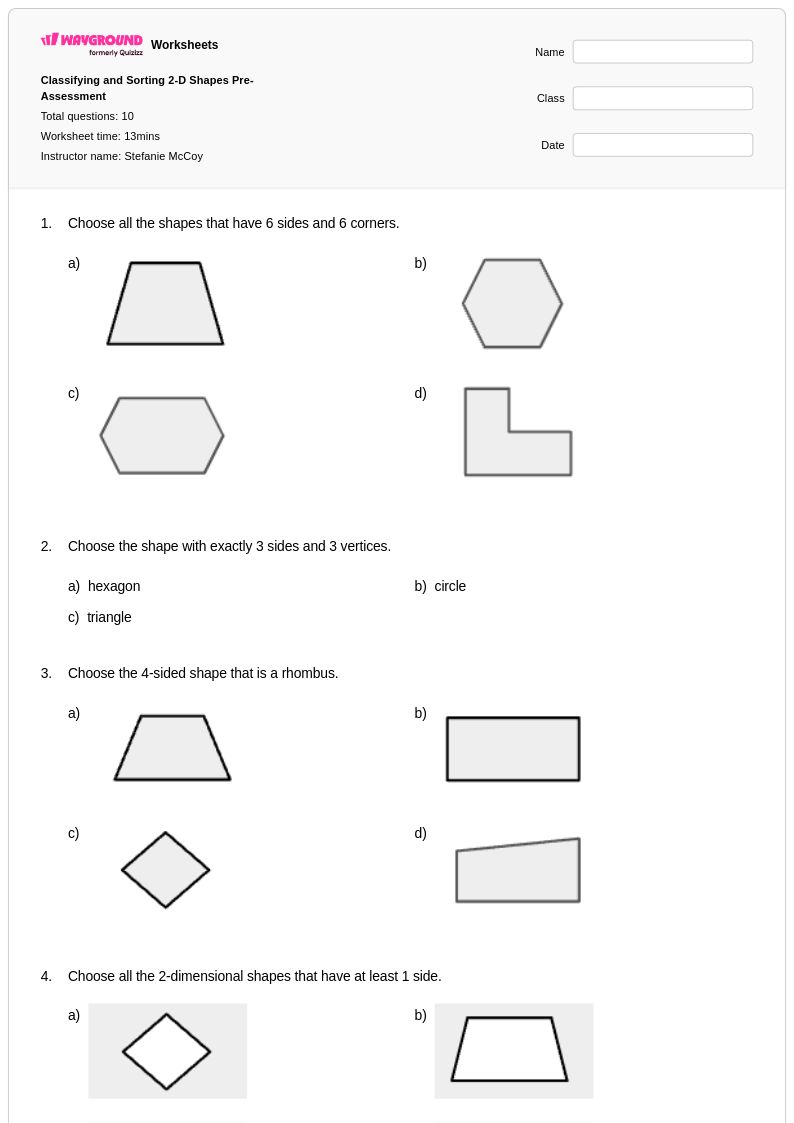
10 Q
1st
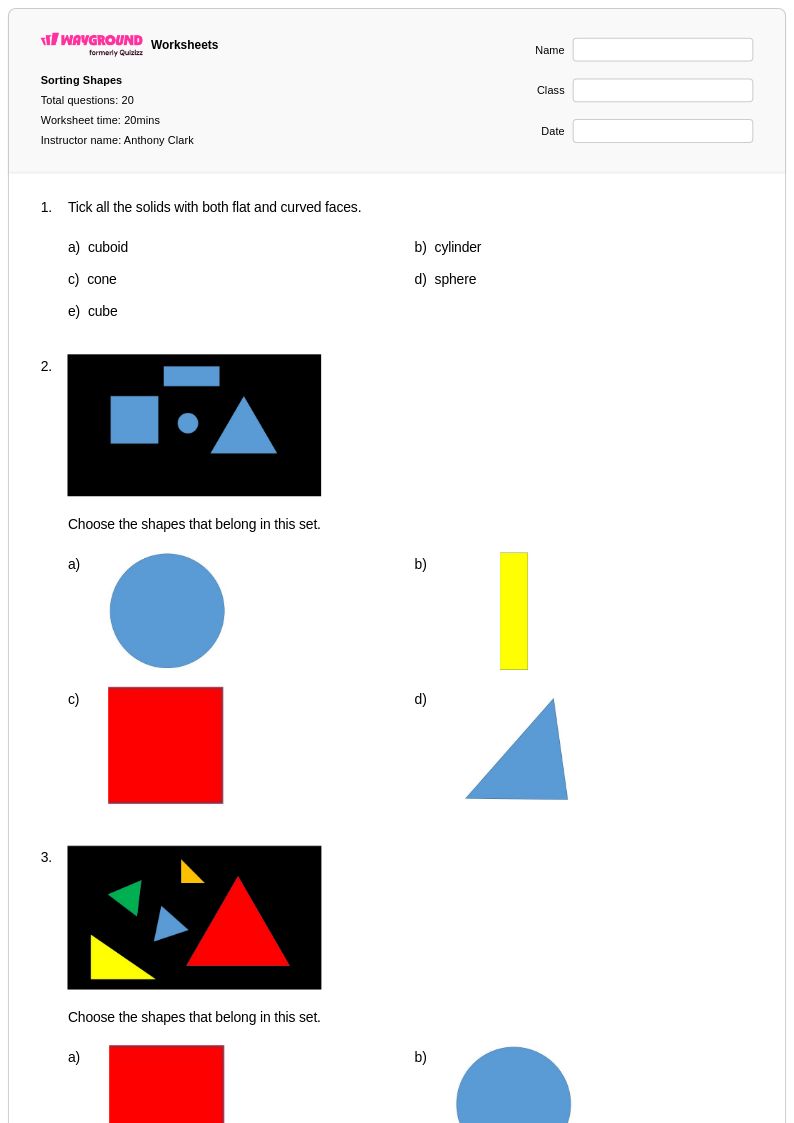
20 Q
1st - Uni
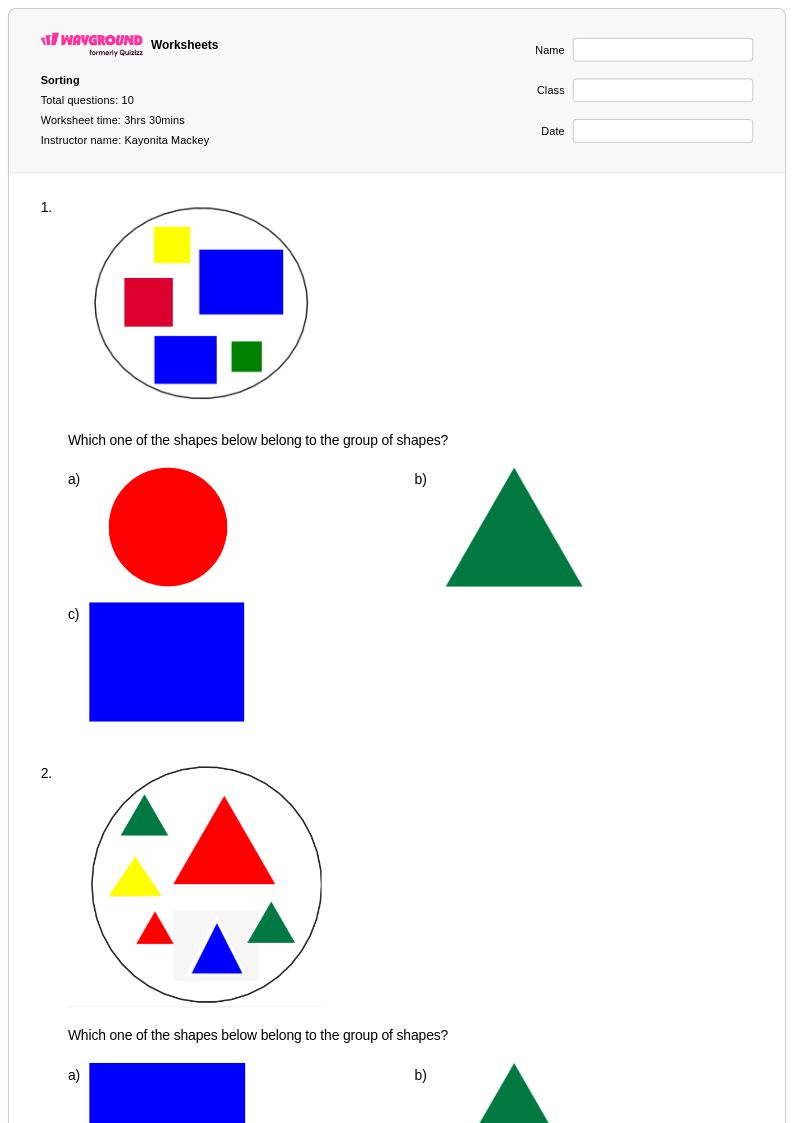
10 Q
KG - 1st
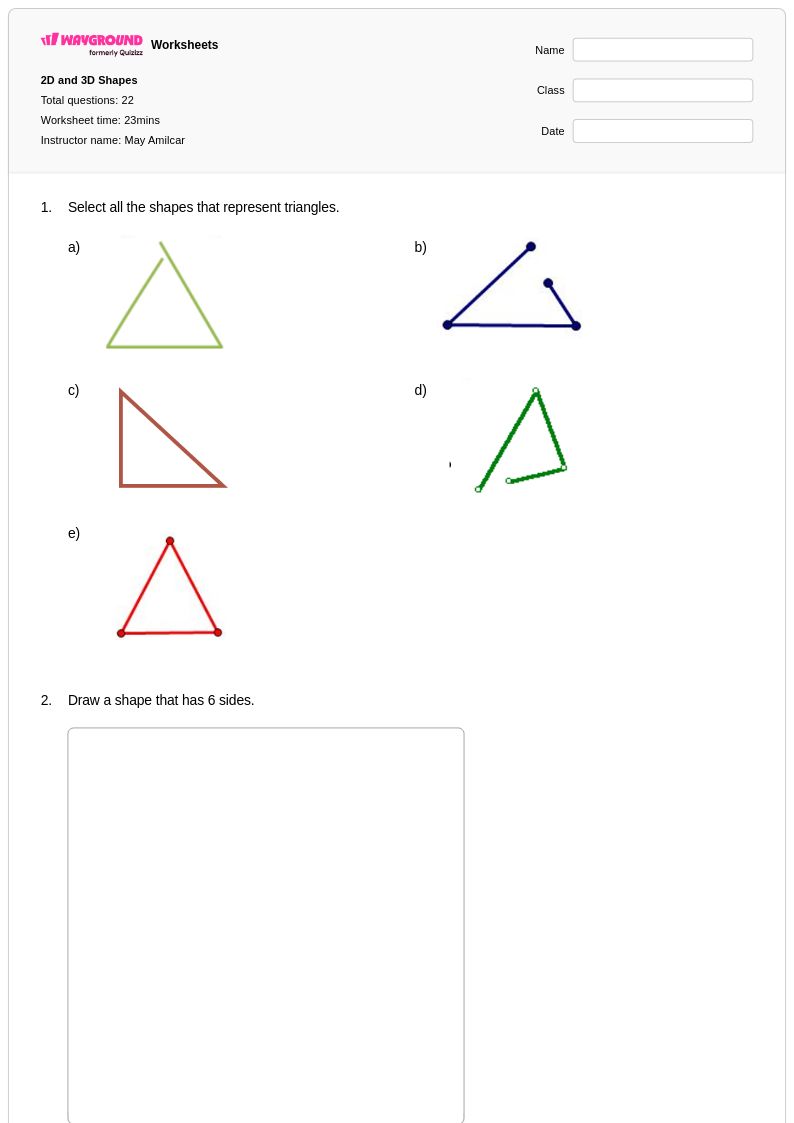
22 Q
1st
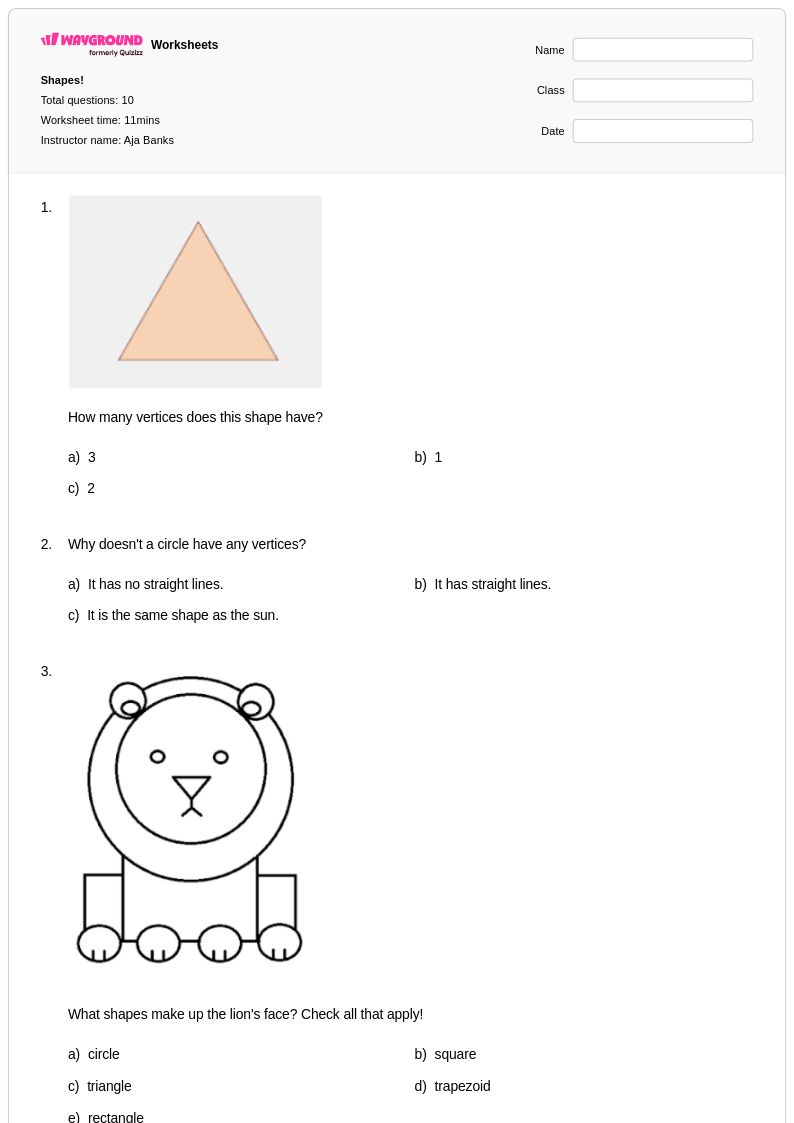
10 Q
1st - 2nd
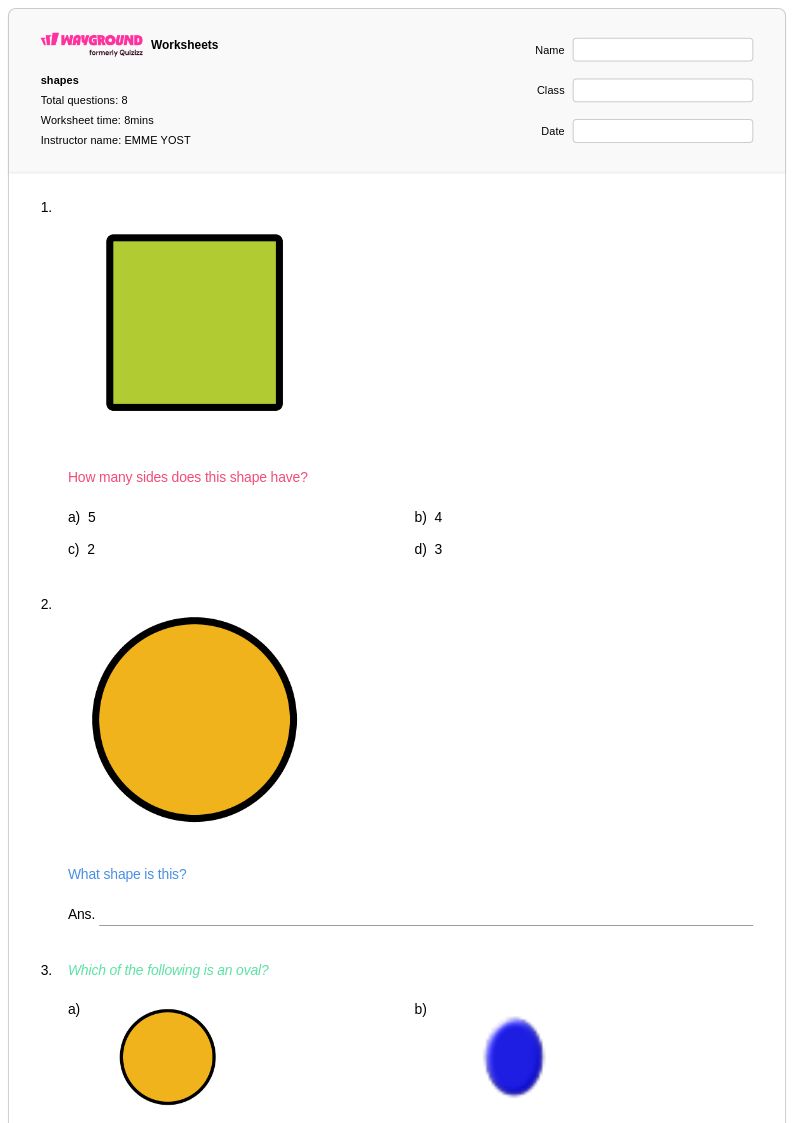
8 Q
KG - 1st
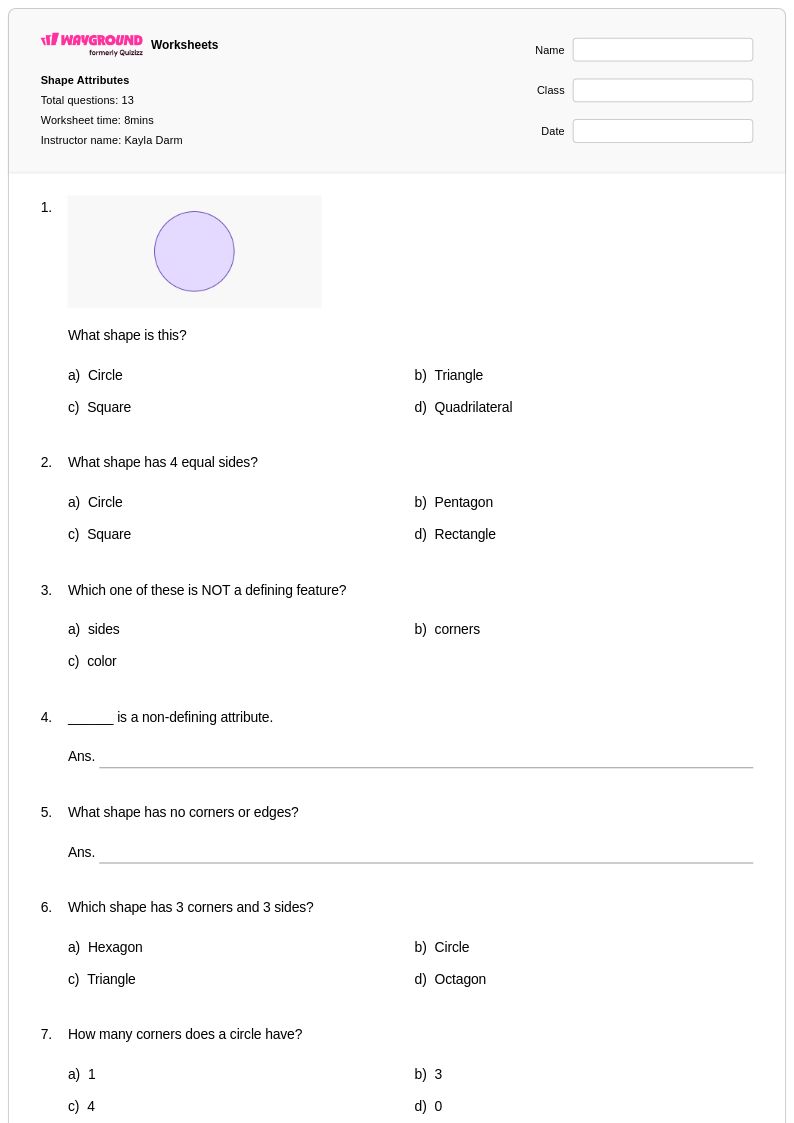
13 Q
1st
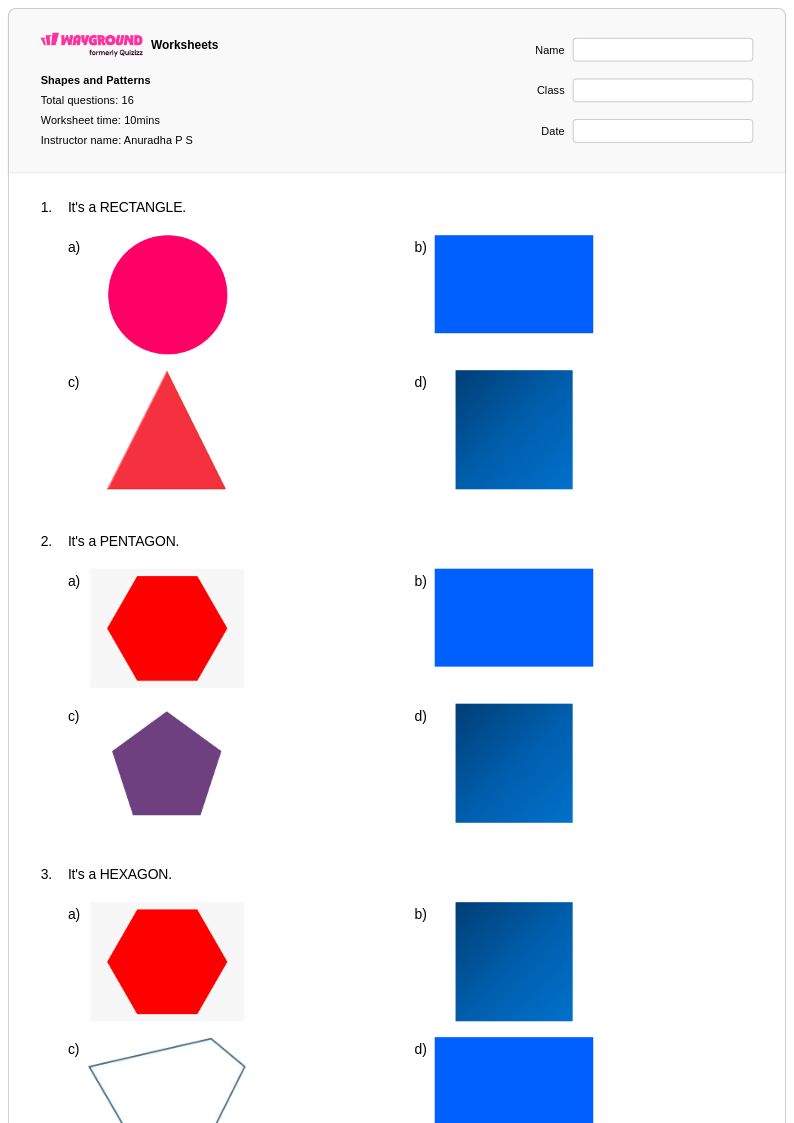
16 Q
1st
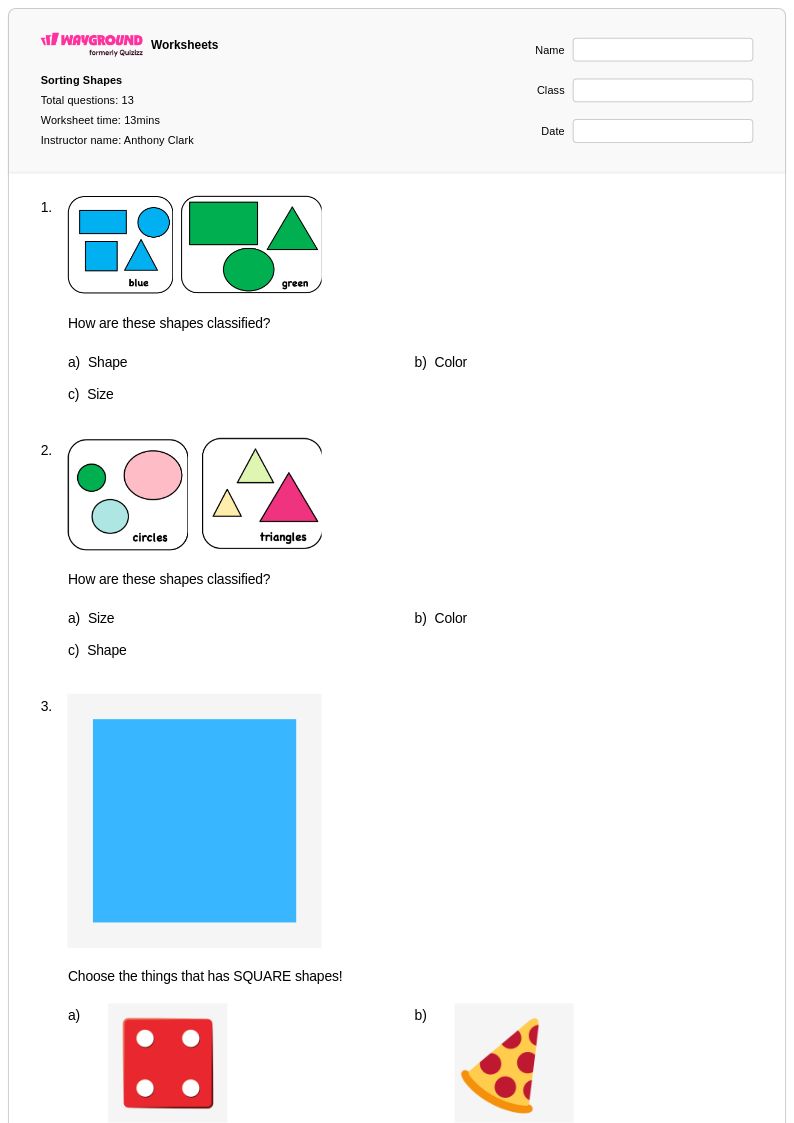
13 Q
1st - Uni
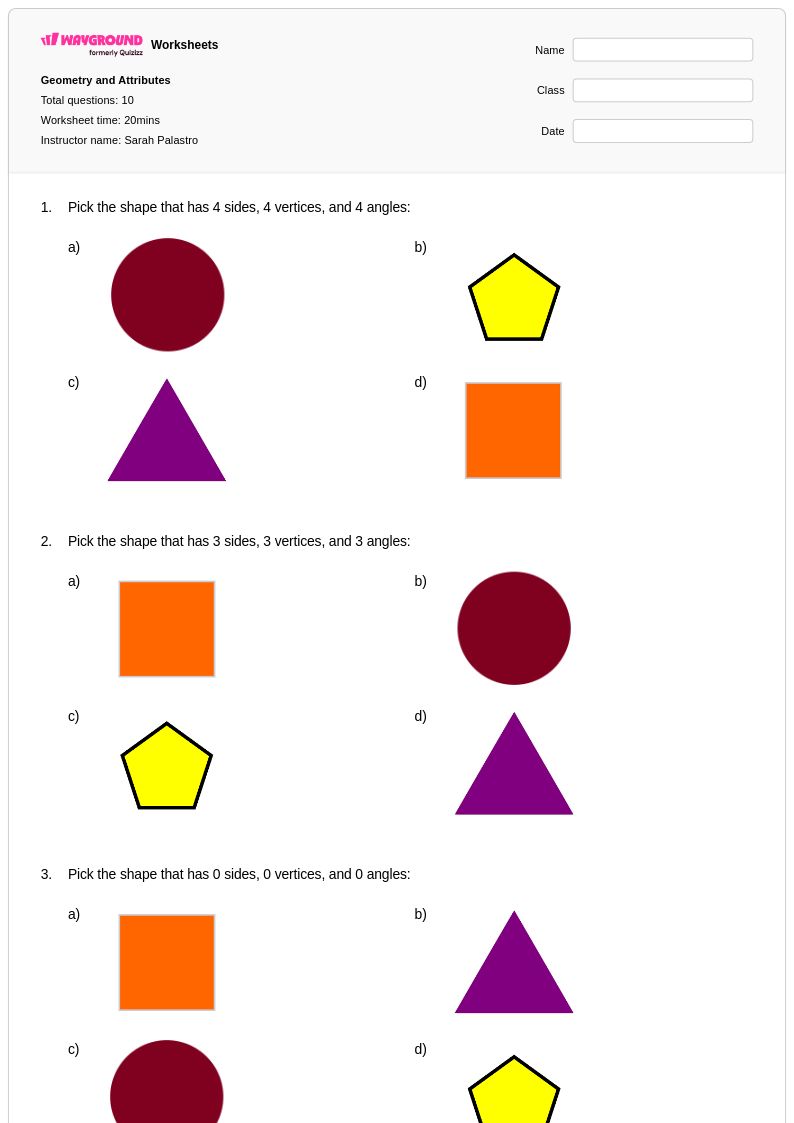
10 Q
KG - 1st
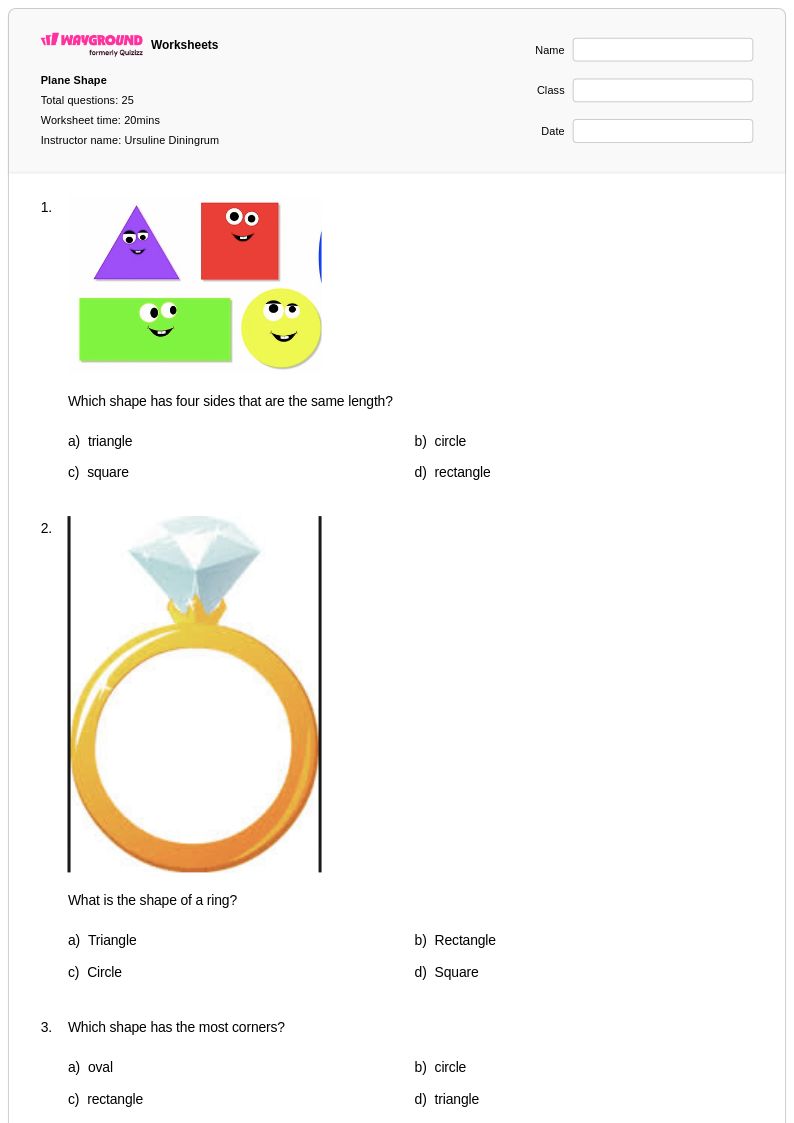
25 Q
1st
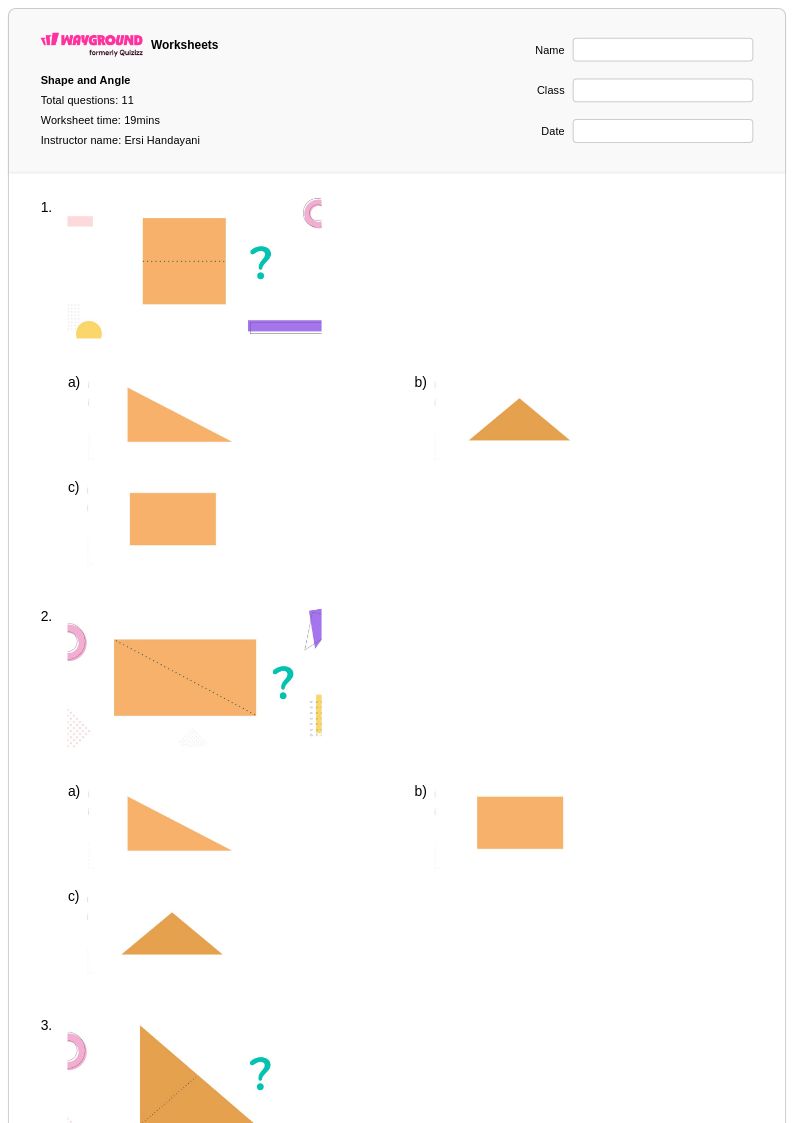
11 Q
1st
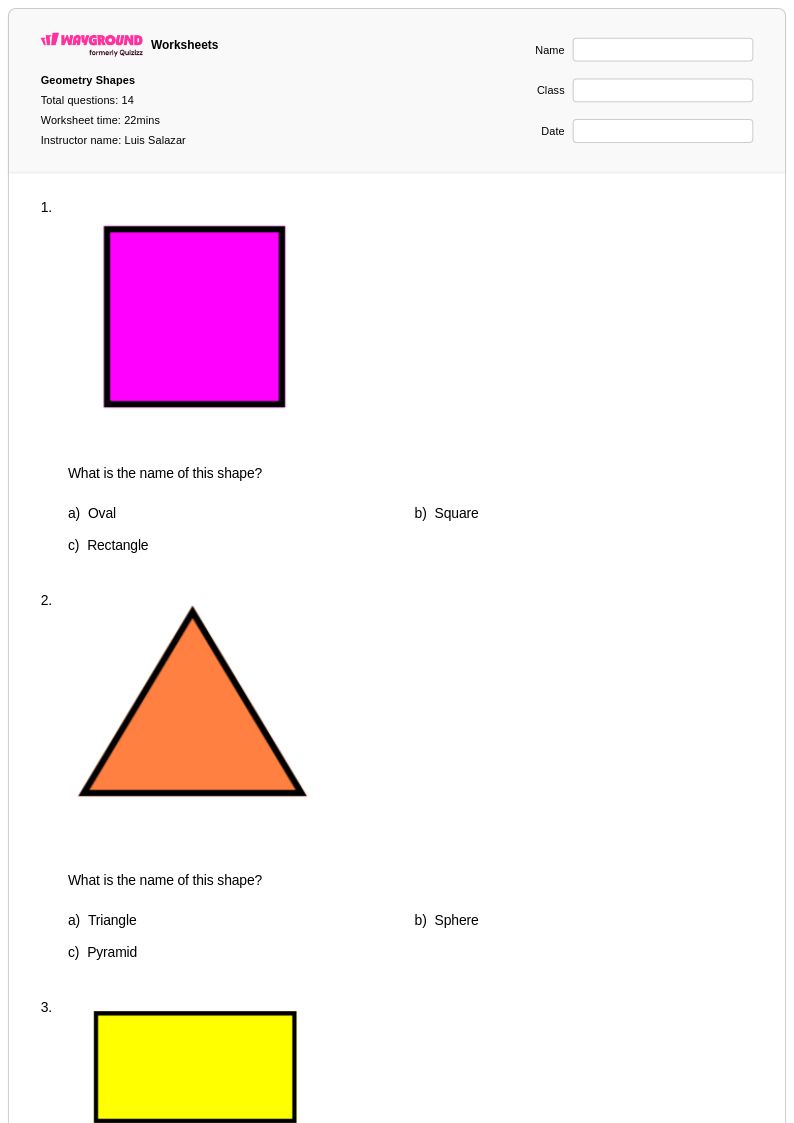
14 Q
1st - 5th
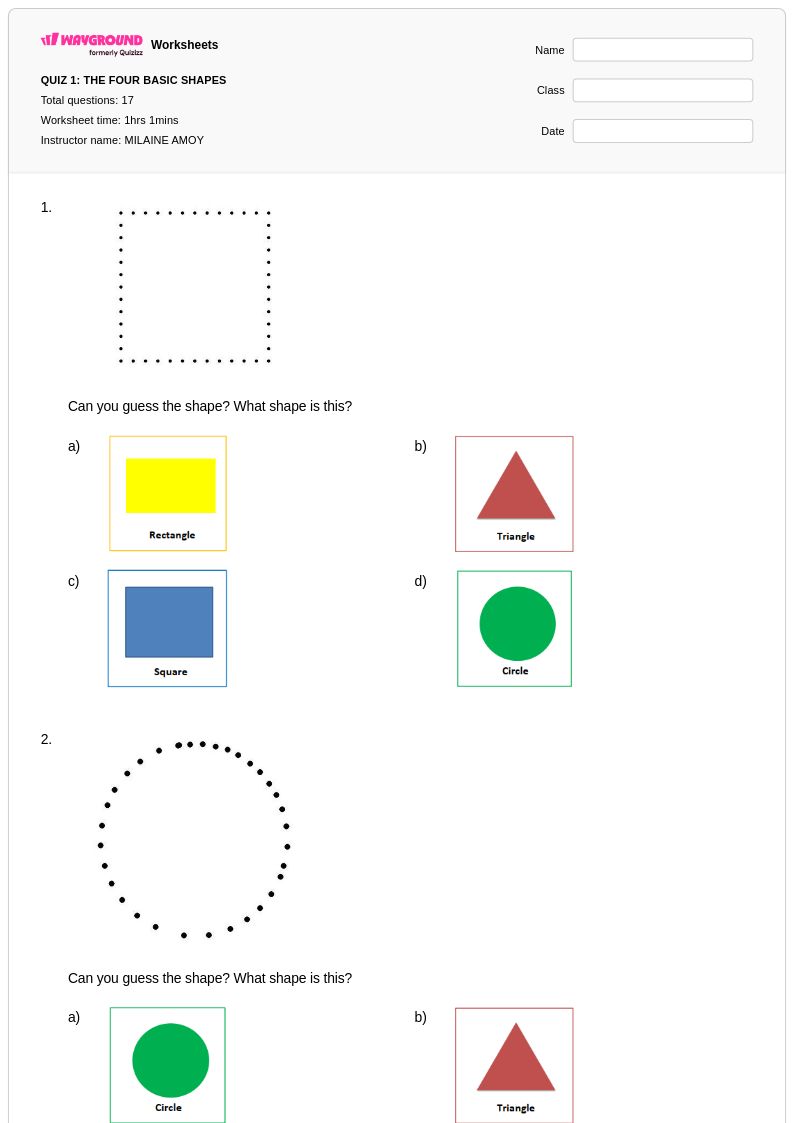
17 Q
KG - 1st
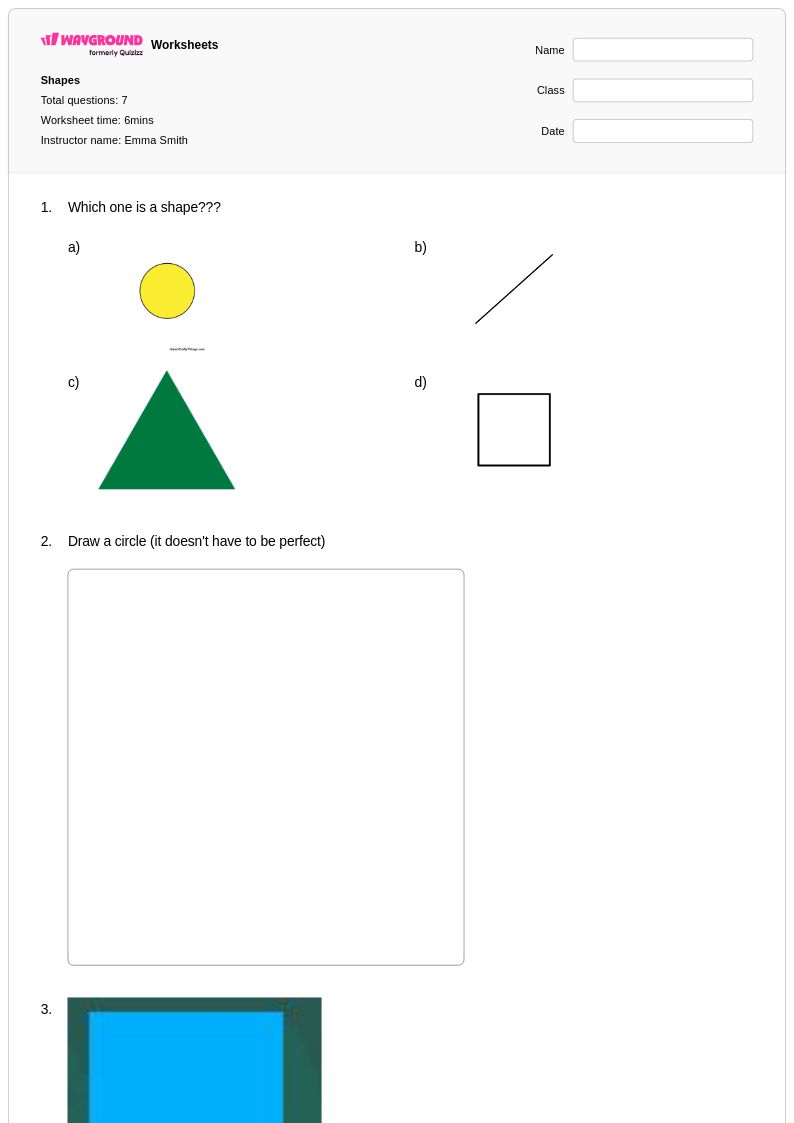
7 Q
1st
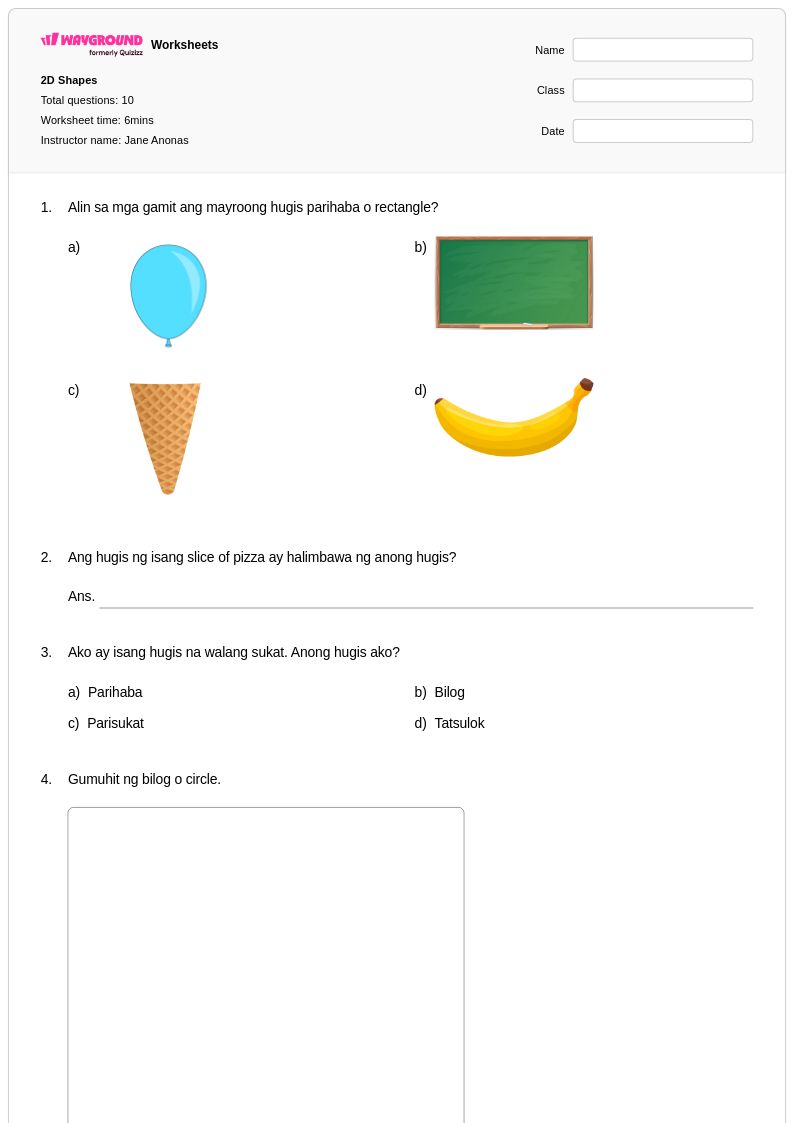
10 Q
1st
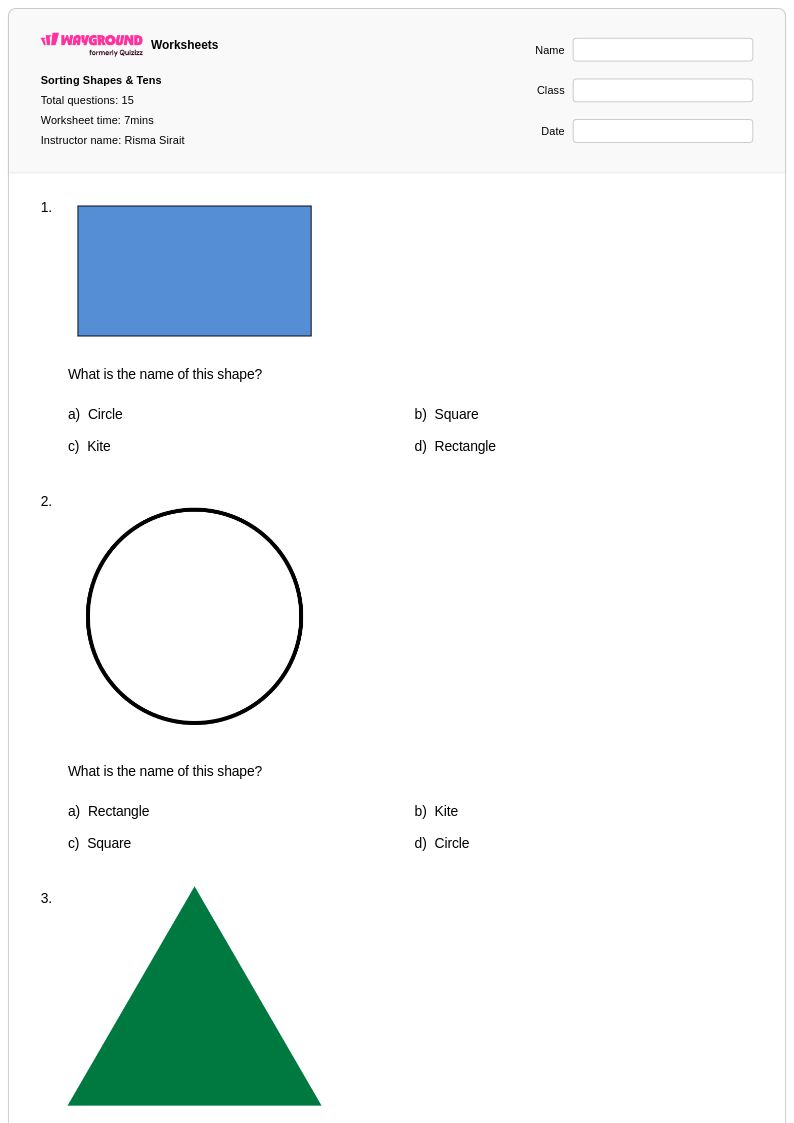
15 Q
KG - 1st
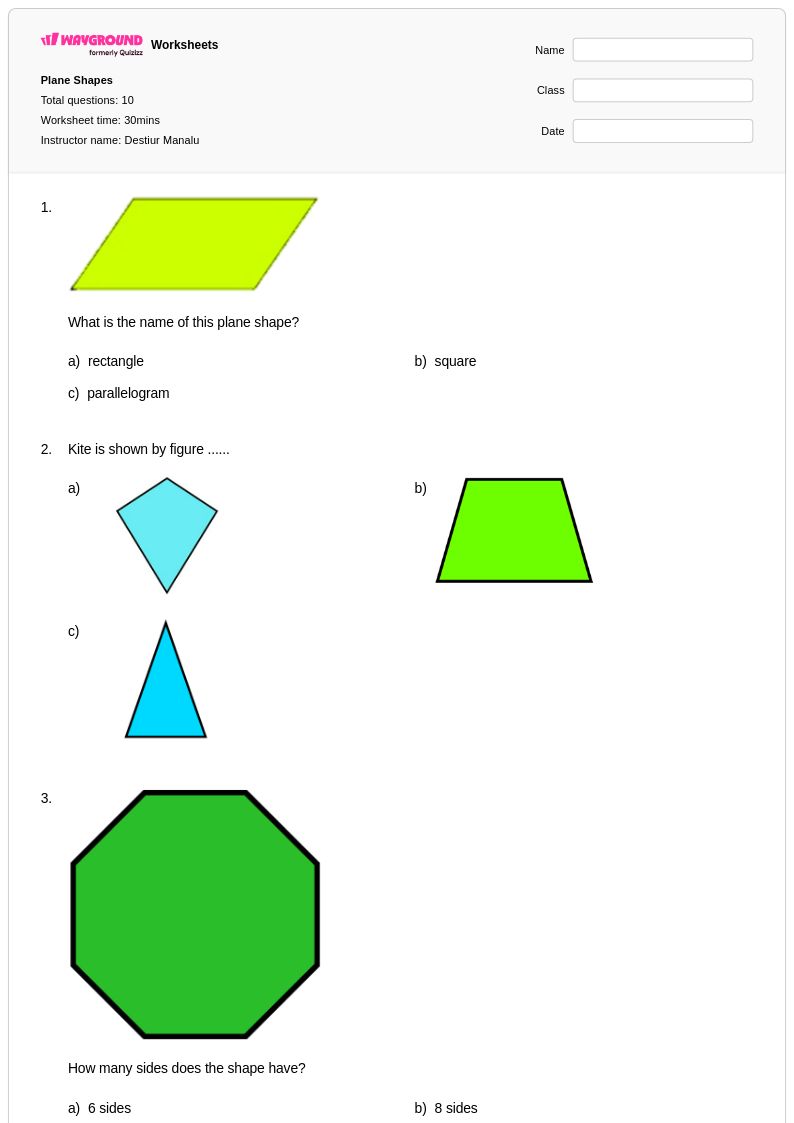
10 Q
1st
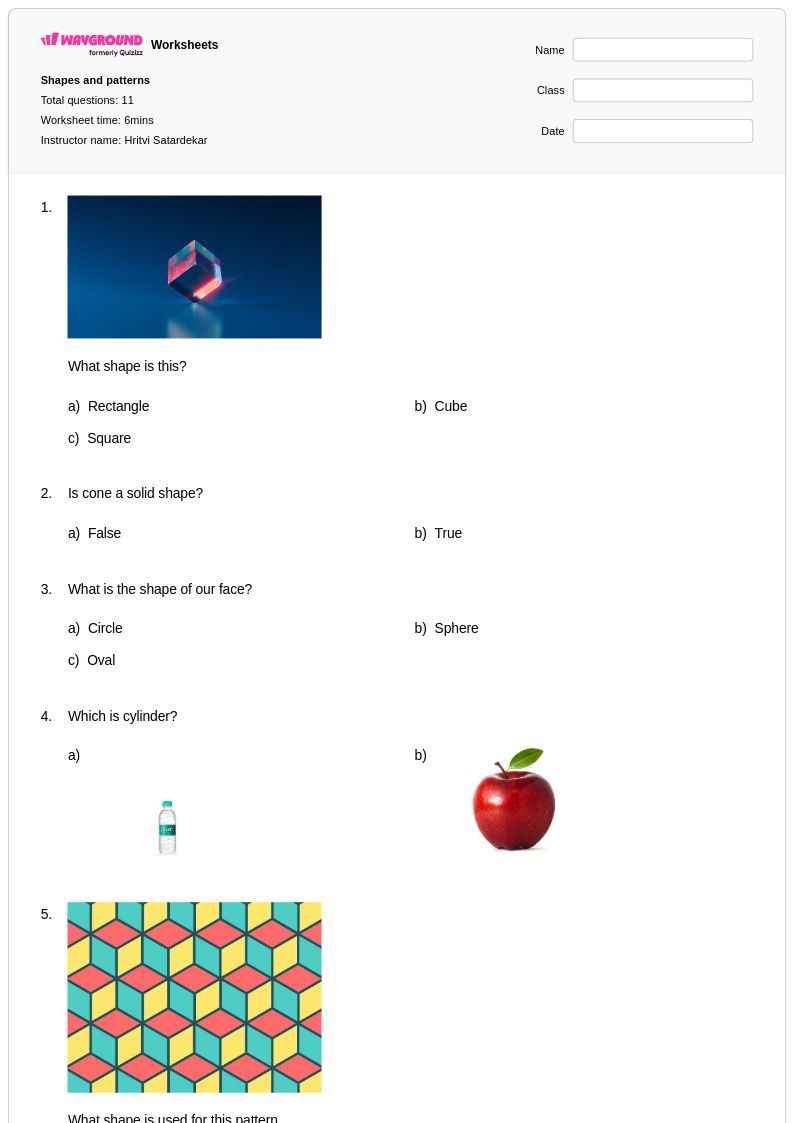
11 Q
1st
Explore Shape Sorting and Classification Worksheets by Grades
Explore Other Subject Worksheets for year 1
Explore printable Shape Sorting and Classification worksheets for Year 1
Shape sorting and classification worksheets for Year 1 students through Wayground (formerly Quizizz) provide foundational geometry experiences that develop critical visual discrimination and categorization skills. These carefully designed practice problems introduce young learners to identifying, comparing, and grouping basic geometric shapes including circles, squares, triangles, and rectangles based on their unique attributes such as number of sides, corners, and overall appearance. The comprehensive collection includes free printable resources and digital activities that strengthen pattern recognition, logical thinking, and early mathematical reasoning through engaging sorting exercises. Each worksheet comes with a detailed answer key to support accurate assessment and immediate feedback, while the pdf format ensures convenient classroom distribution and home practice opportunities.
Wayground (formerly Quizizz) empowers educators with millions of teacher-created shape sorting and classification resources that streamline lesson planning and differentiated instruction for Year 1 geometry concepts. The platform's robust search and filtering capabilities allow teachers to quickly locate materials aligned with specific learning standards and student ability levels, while built-in customization tools enable modifications to match individual classroom needs and pacing requirements. These versatile worksheet collections are available in both printable and digital formats, providing flexibility for traditional paper-based activities, interactive whiteboard presentations, and remote learning environments. Teachers can effectively utilize these resources for initial skill introduction, targeted remediation with struggling learners, enrichment opportunities for advanced students, and ongoing practice to reinforce shape recognition and classification mastery throughout the academic year.
FAQs
What do first graders learn about shape classification?
How can I teach first graders to sort shapes by their attributes?
What exercises help first graders practice shape sorting?
What's a common error for first graders when classifying shapes?
How can I use these Grade 1 shape sorting worksheets?
How does the first-grade curriculum build on kindergarten geometry?