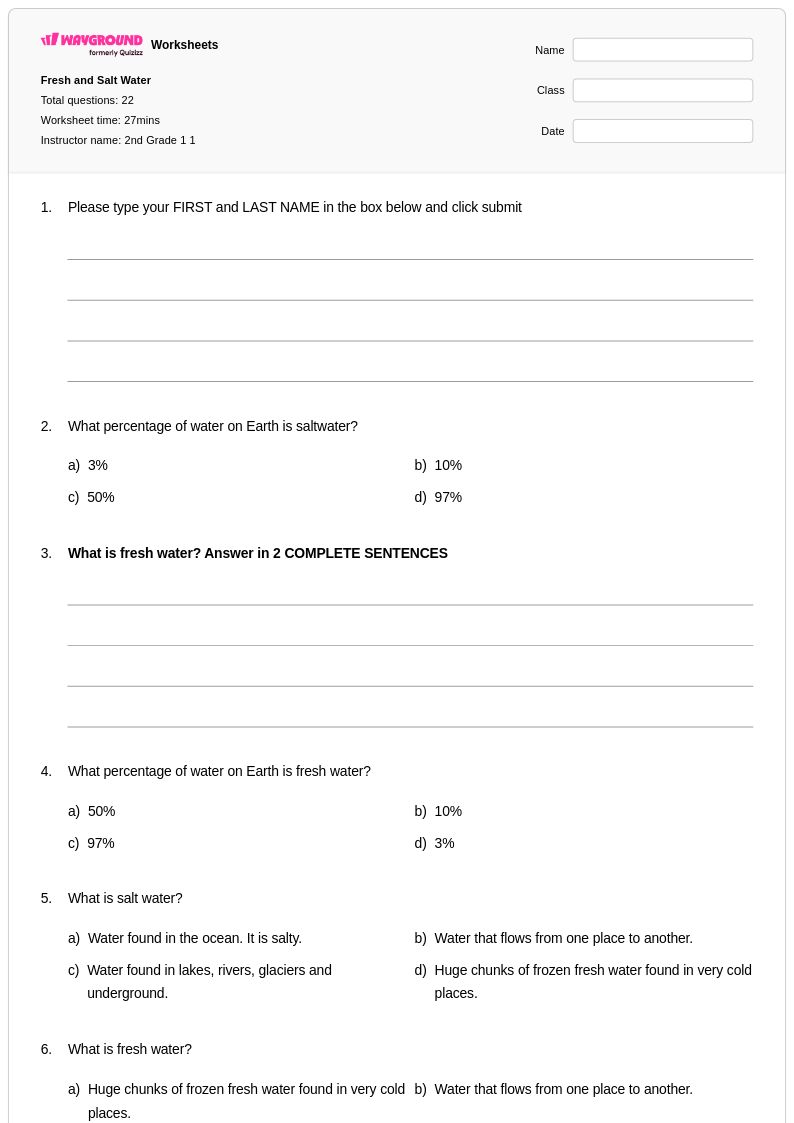
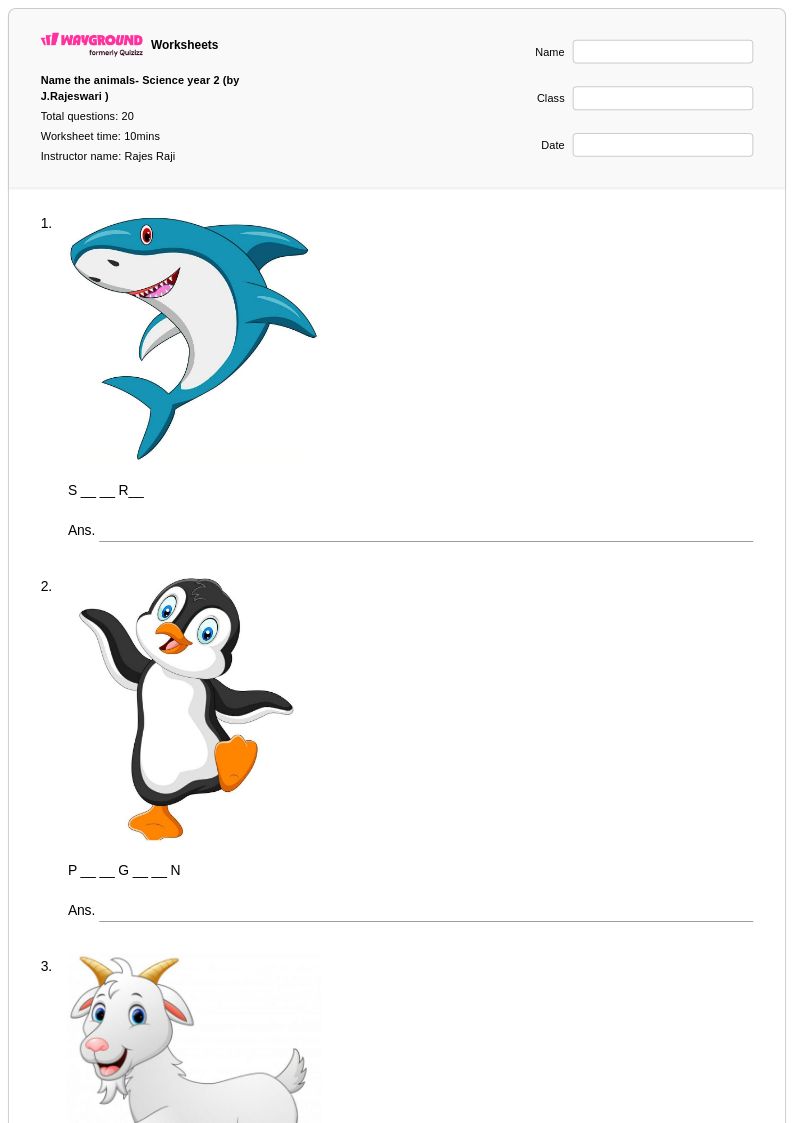
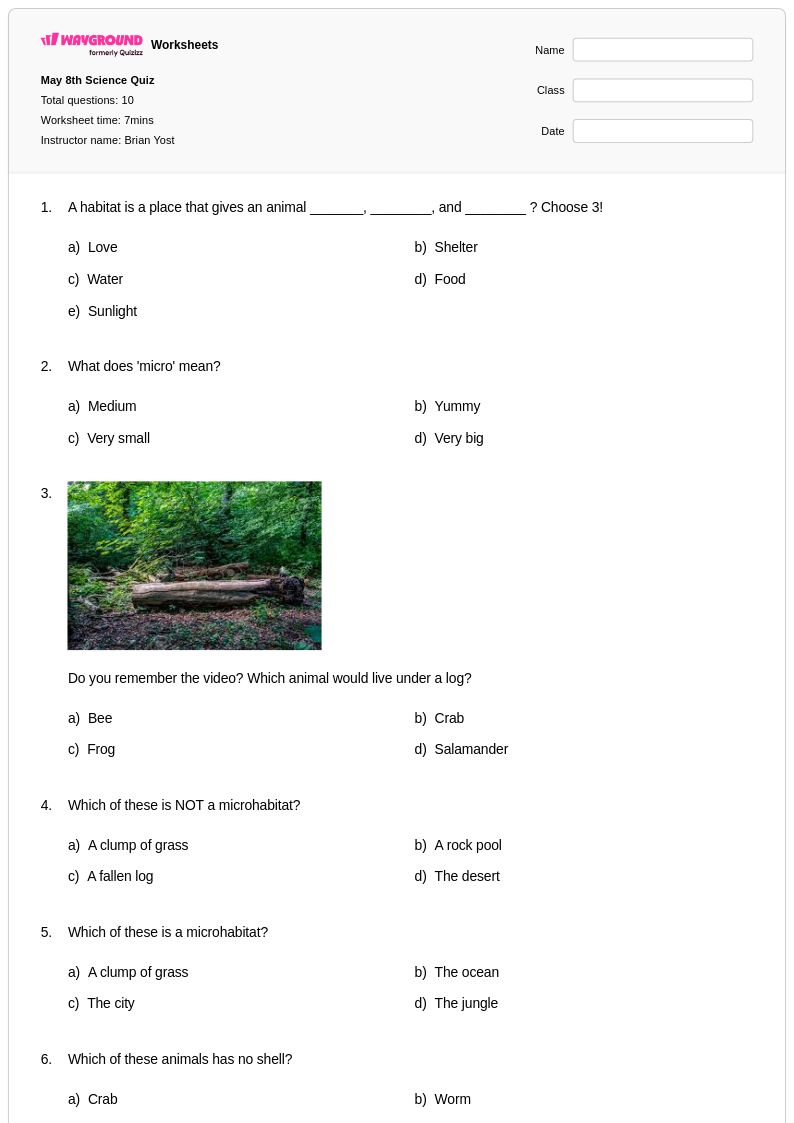
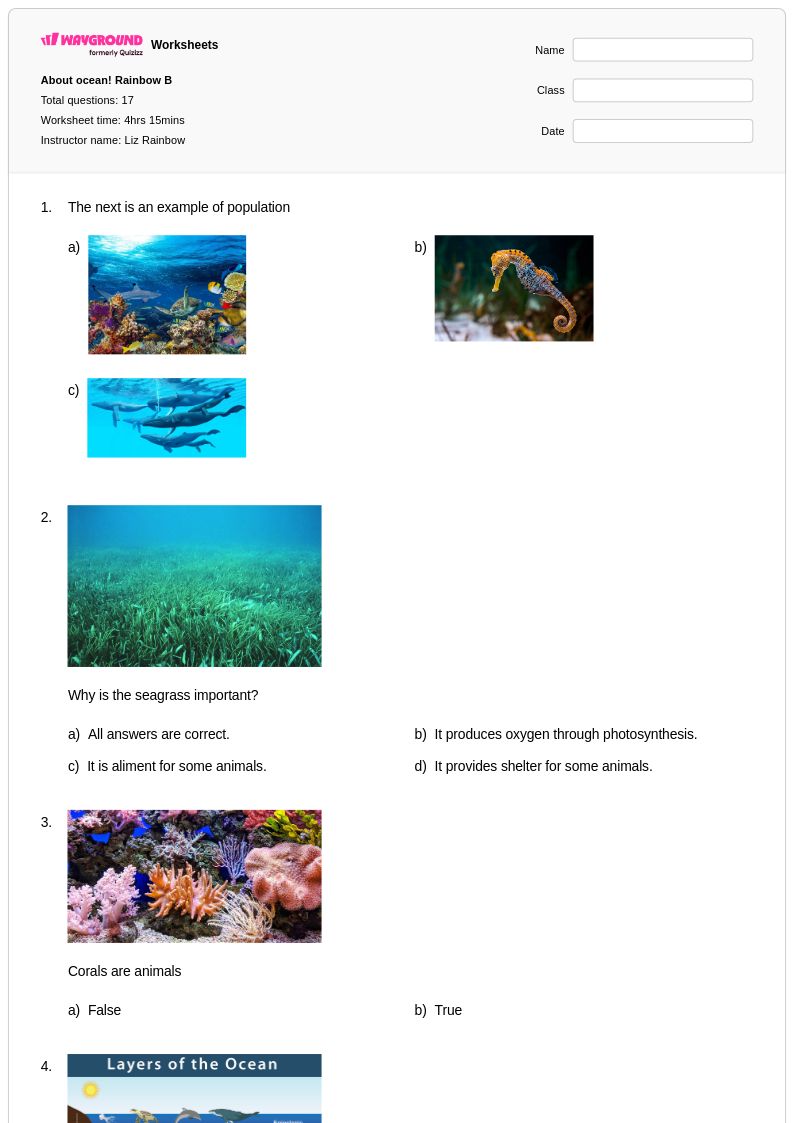
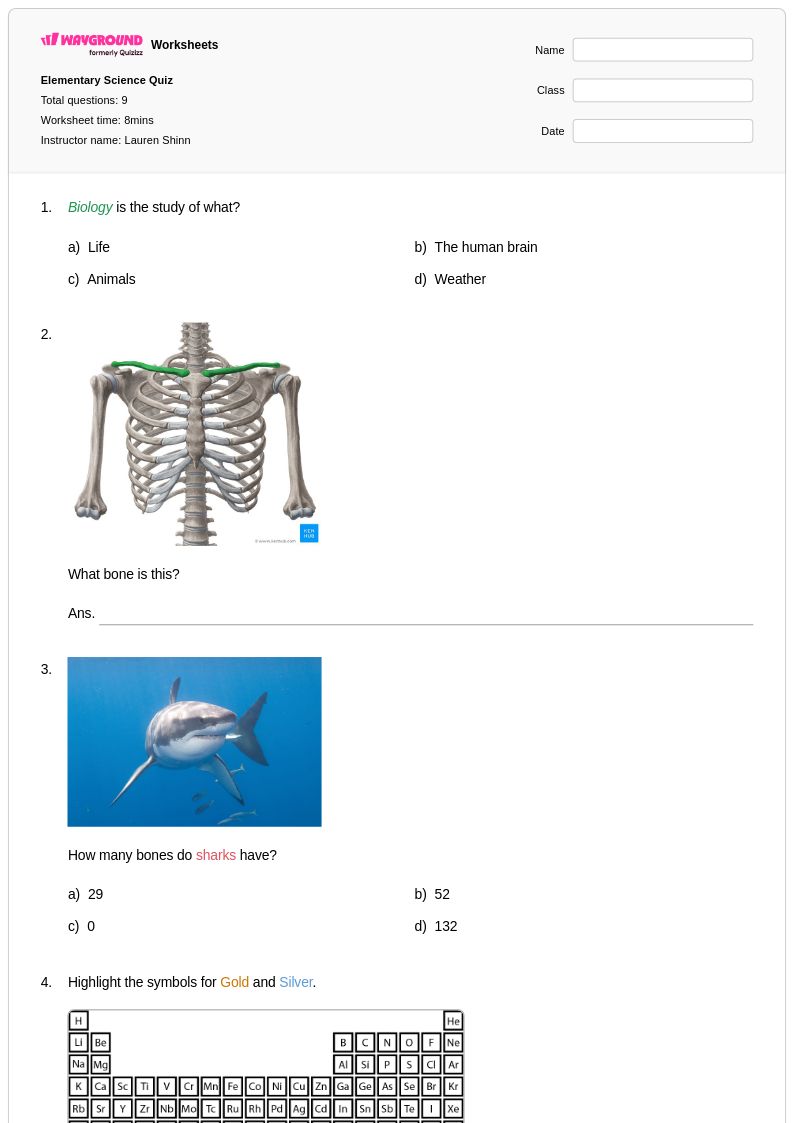
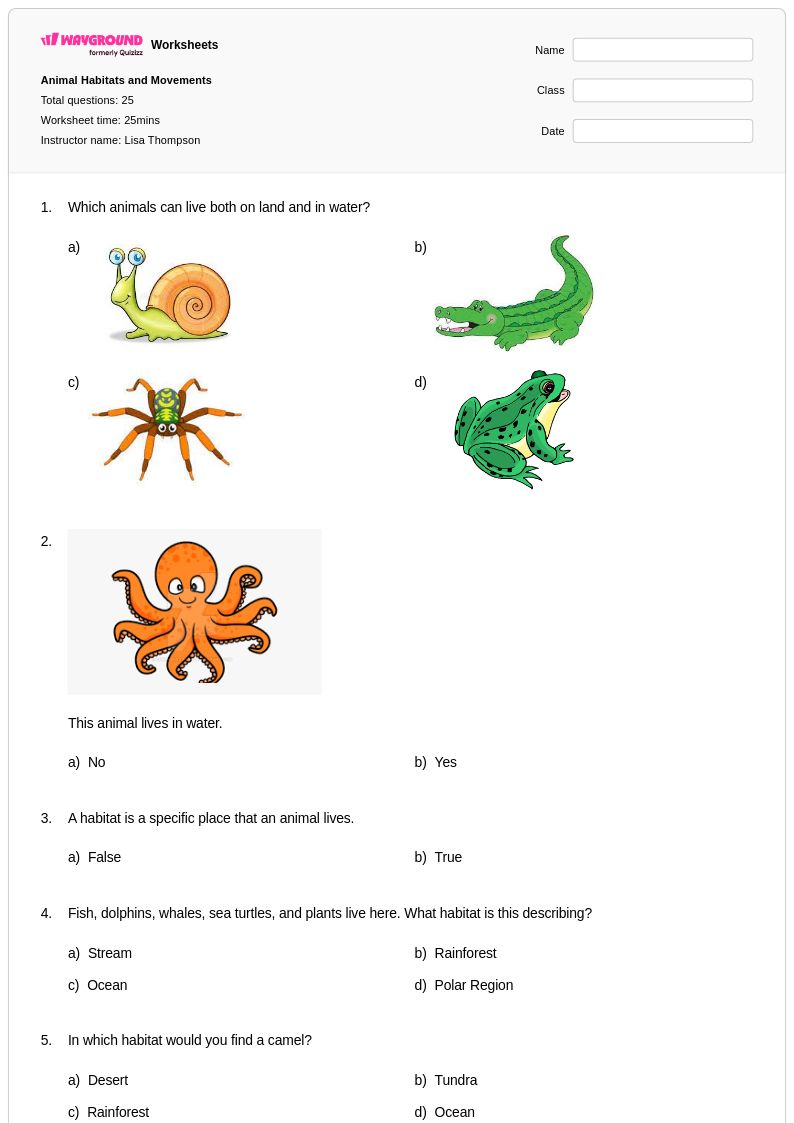
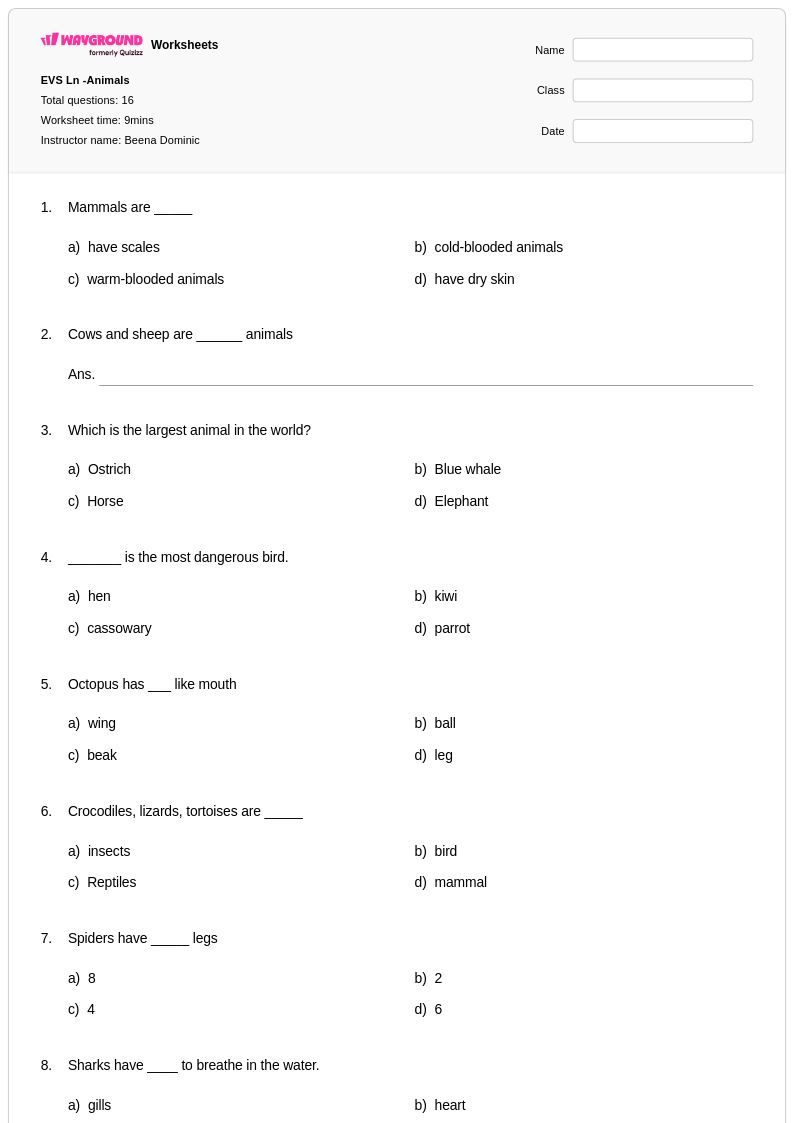
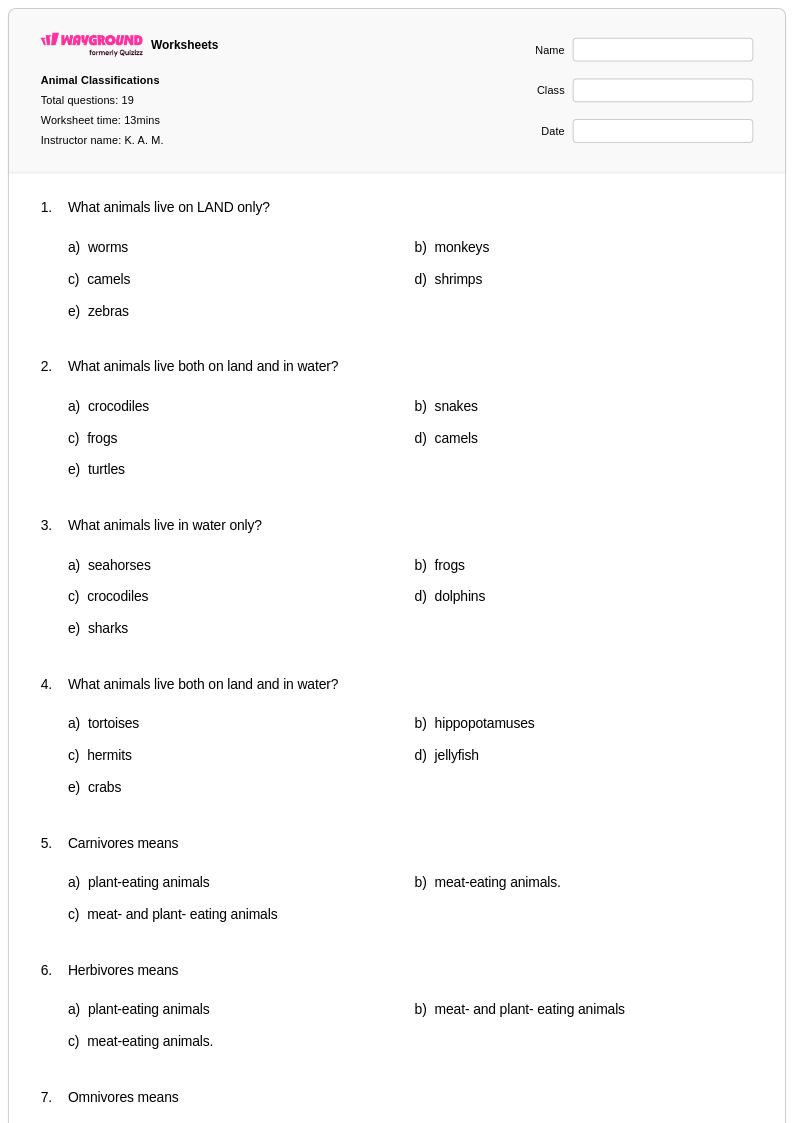
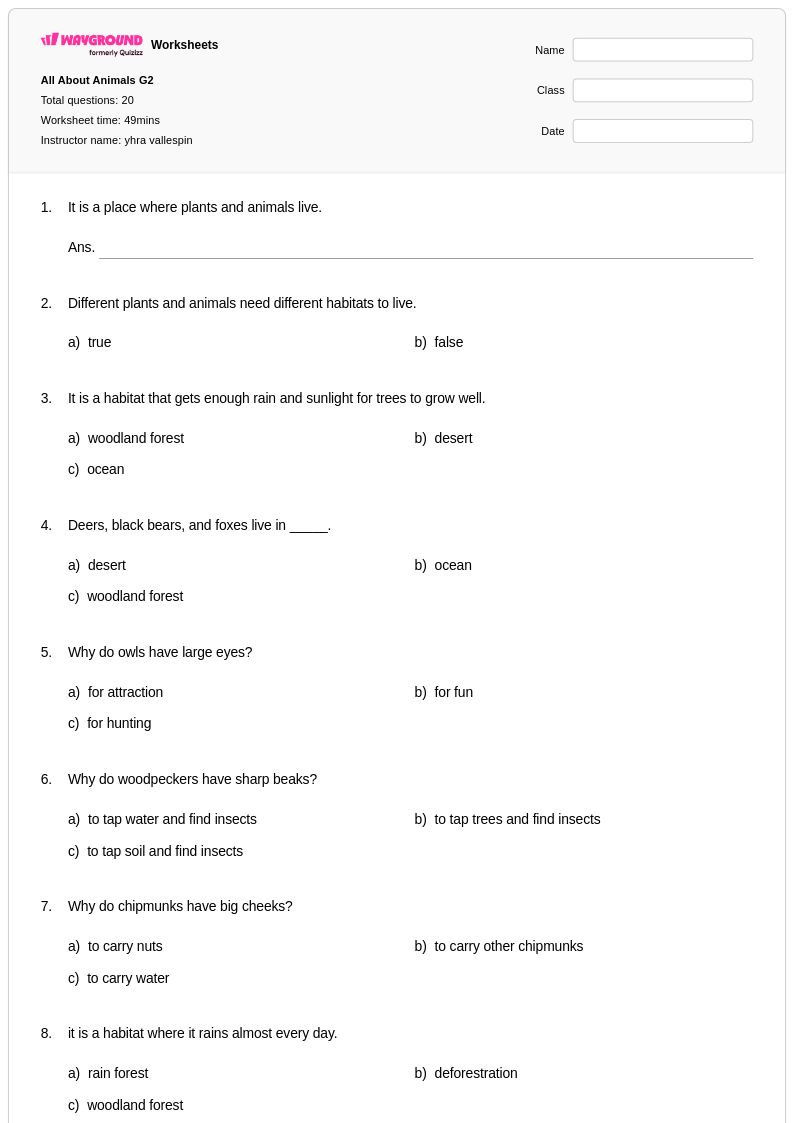
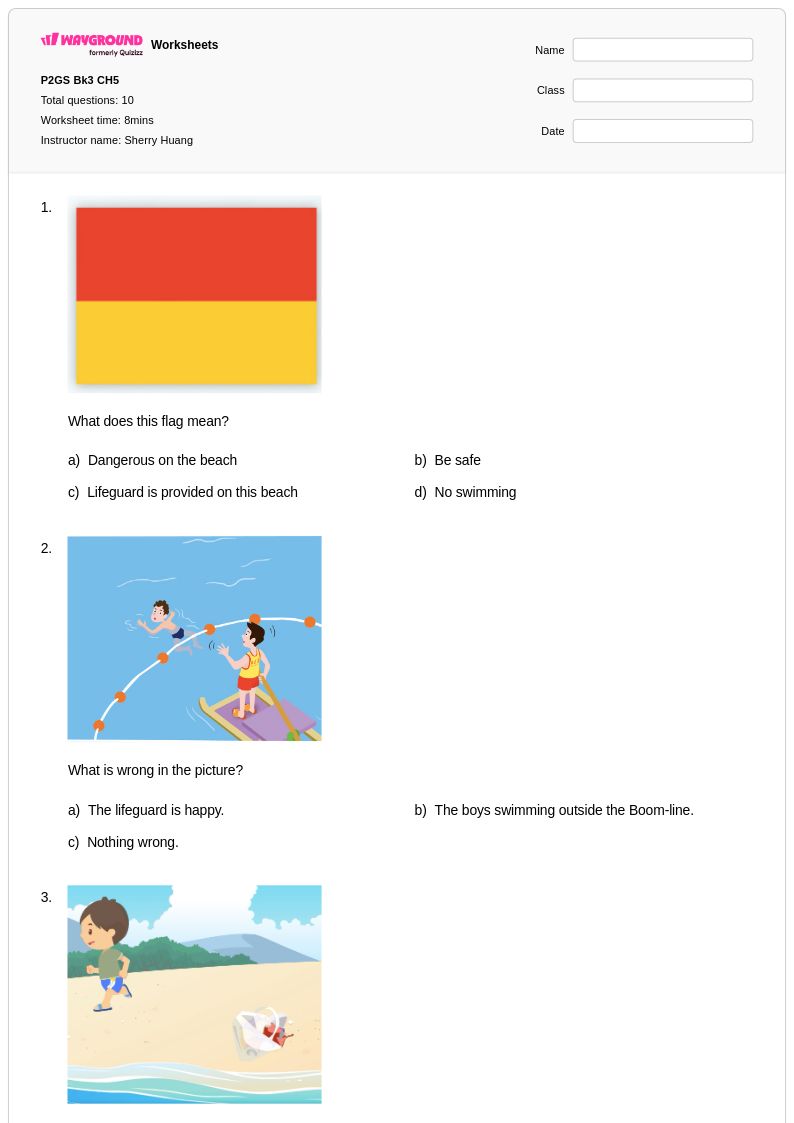
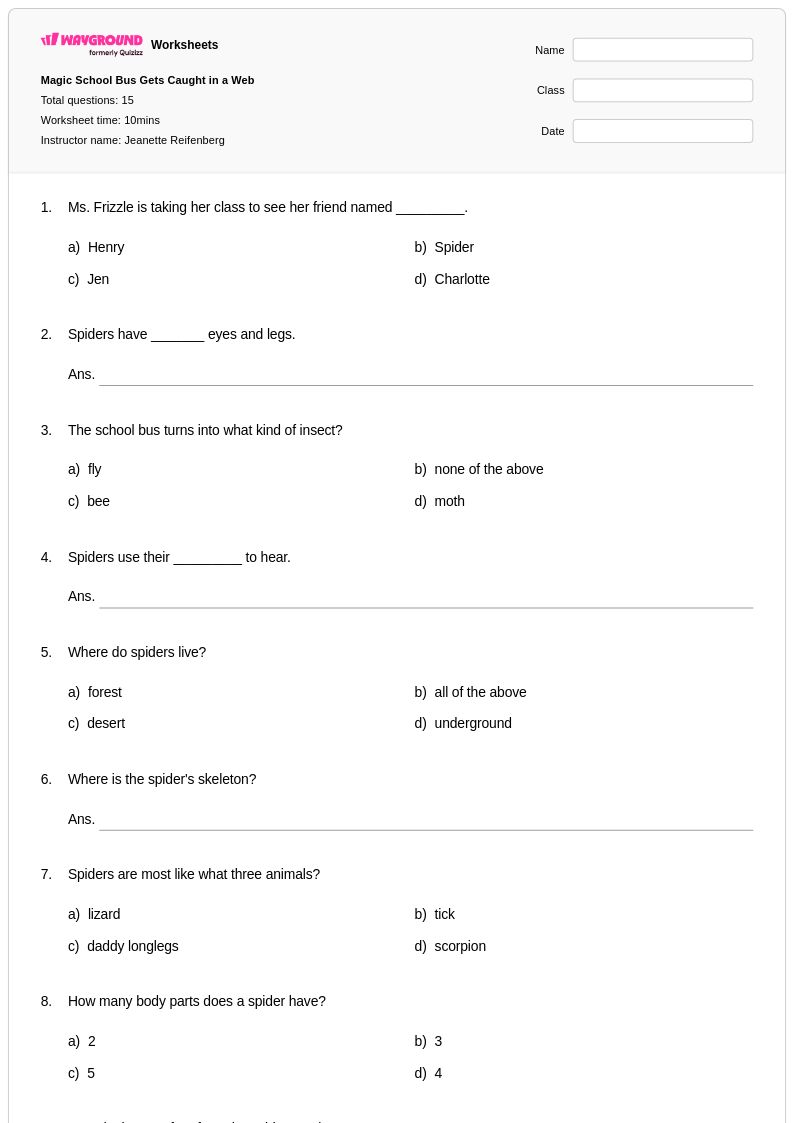
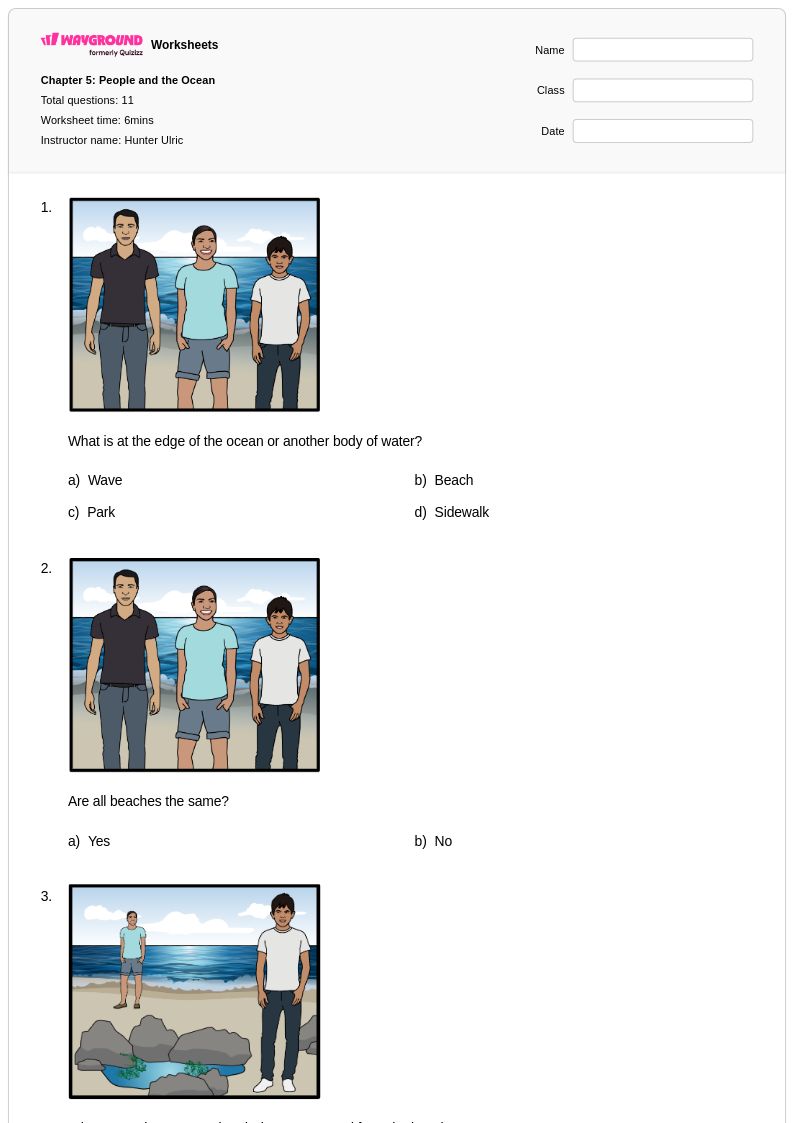
Explore Year 2 shark worksheets and free printables that help young students discover fascinating facts about these ocean predators through engaging practice problems and activities with answer keys.
Year 2 shark worksheets available through Wayground (formerly Quizizz) introduce young learners to the fascinating world of these marine predators through age-appropriate scientific content and engaging activities. These educational resources strengthen foundational biology concepts by helping students identify different shark species, understand basic shark anatomy, and explore how sharks live and survive in ocean environments. The printable worksheets feature colorful illustrations, simple classification exercises, and interactive practice problems that build vocabulary and reading comprehension skills while fostering scientific curiosity. Each free worksheet includes comprehensive answer keys that enable teachers to efficiently assess student understanding of shark characteristics, habitats, and behaviors, making these pdf resources invaluable for both classroom instruction and independent study.
Wayground (formerly Quizizz) empowers educators with access to millions of teacher-created shark worksheet collections that support diverse learning needs in Year 2 biology instruction. The platform's robust search and filtering capabilities allow teachers to quickly locate standards-aligned materials that match specific curriculum requirements and student ability levels. Advanced differentiation tools enable seamless customization of shark-themed content, allowing educators to modify complexity levels, adjust question formats, and create targeted interventions for both remediation and enrichment purposes. These flexible worksheet collections are available in both printable and digital formats, including downloadable pdf versions, giving teachers the versatility to implement shark biology lessons across various instructional settings while providing consistent opportunities for skill practice and formative assessment.
FAQs
How do I teach shark biology to elementary and middle school students?
Start with shark anatomy and body systems before moving into behavior, habitat, and ecological role as apex predators. Using labeled diagrams of shark anatomy alongside real-world examples of predator-prey relationships helps students build concrete understanding. Connecting shark biology to broader marine ecosystem concepts, such as how removing apex predators disrupts food webs, gives students meaningful context for why sharks matter beyond their reputation.
What topics should a sharks worksheet cover to support a marine biology unit?
A well-rounded sharks worksheet should address shark anatomy, sensory adaptations, feeding mechanisms, reproduction cycles, species classification, and conservation status. Including content on shark evolutionary history, which spans over 400 million years, reinforces students' understanding of adaptation over time. Worksheets that connect sharks to broader marine ecosystems, including predator-prey relationships and biodiversity, help students see sharks as ecologically essential rather than isolated study subjects.
What are common misconceptions students have about sharks?
The most widespread misconception is that sharks are mindless killing machines that actively hunt humans, when in reality most shark species pose little threat and human encounters are typically cases of mistaken identity. Students also frequently confuse all sharks as a single type when in fact there are over 500 species with dramatically different sizes, habitats, and behaviors. A third common error is underestimating how critical sharks are to ocean health, since their role as apex predators regulates prey populations and maintains ecosystem balance.
How can I use shark worksheets to differentiate instruction for students at different ability levels?
Shark worksheets can support differentiation by assigning more complex classification or ecosystem analysis tasks to advanced learners while using anatomy labeling and vocabulary-focused activities for students who need foundational support. On Wayground, teachers can apply student-level accommodations such as reduced answer choices to lower cognitive load for struggling learners, and enable Read Aloud so questions are read to students who need auditory support. These settings can be applied to individual students without notifying the rest of the class, making differentiation seamless within a single assignment.
How do I use Wayground's shark worksheets in my classroom?
Wayground's shark worksheets are available as printable PDFs for traditional classroom use and in digital formats for technology-integrated environments, giving teachers flexibility in how they assign and collect student work. Teachers can also host the worksheets as a live or self-paced quiz directly on Wayground, which allows real-time progress monitoring and instant feedback for students. Answer keys are included with every worksheet, reducing grading time and supporting efficient formative assessment.
How do sharks fit into a food web, and how do I teach this concept?
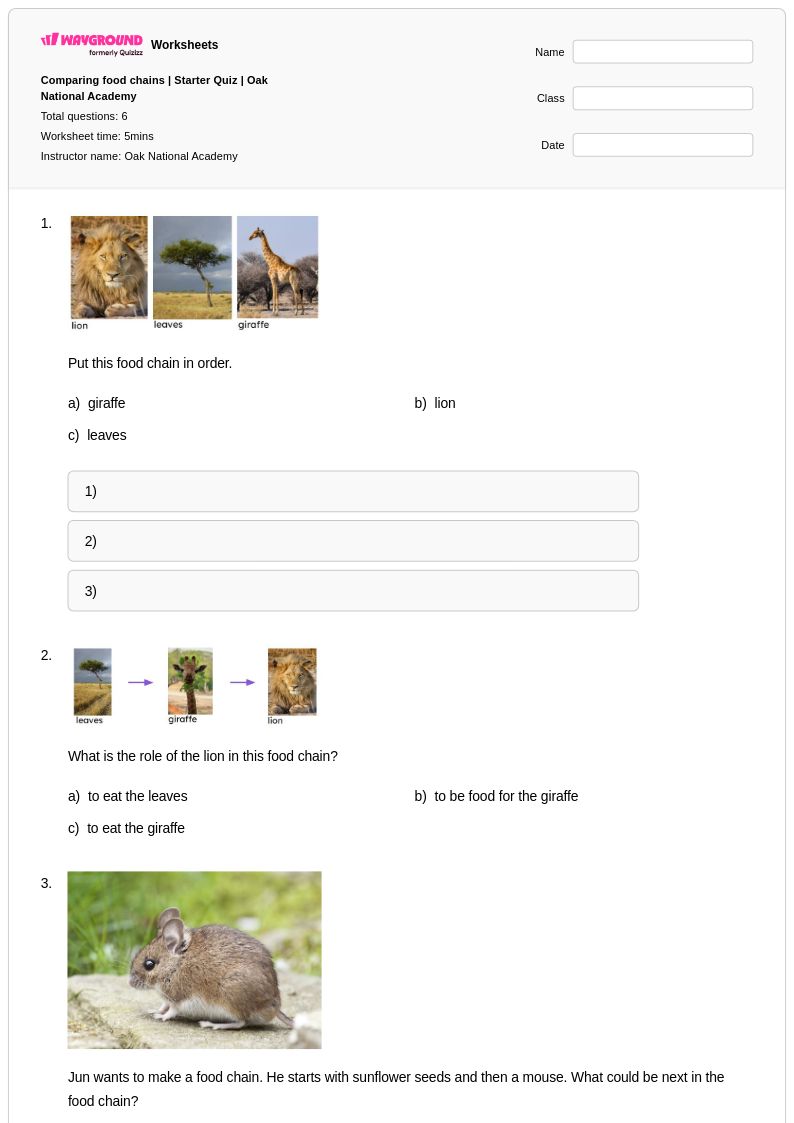
Sharks occupy the apex of most marine food webs, meaning they regulate the populations of species below them and prevent any single prey species from dominating the ecosystem. Teaching this concept works best through food web diagrams that show energy flow from producers through consumers up to apex predators like sharks. Having students trace what happens when sharks are removed from a food web, such as the overpopulation of rays that then devastates shellfish populations, makes the concept of trophic cascades concrete and memorable.