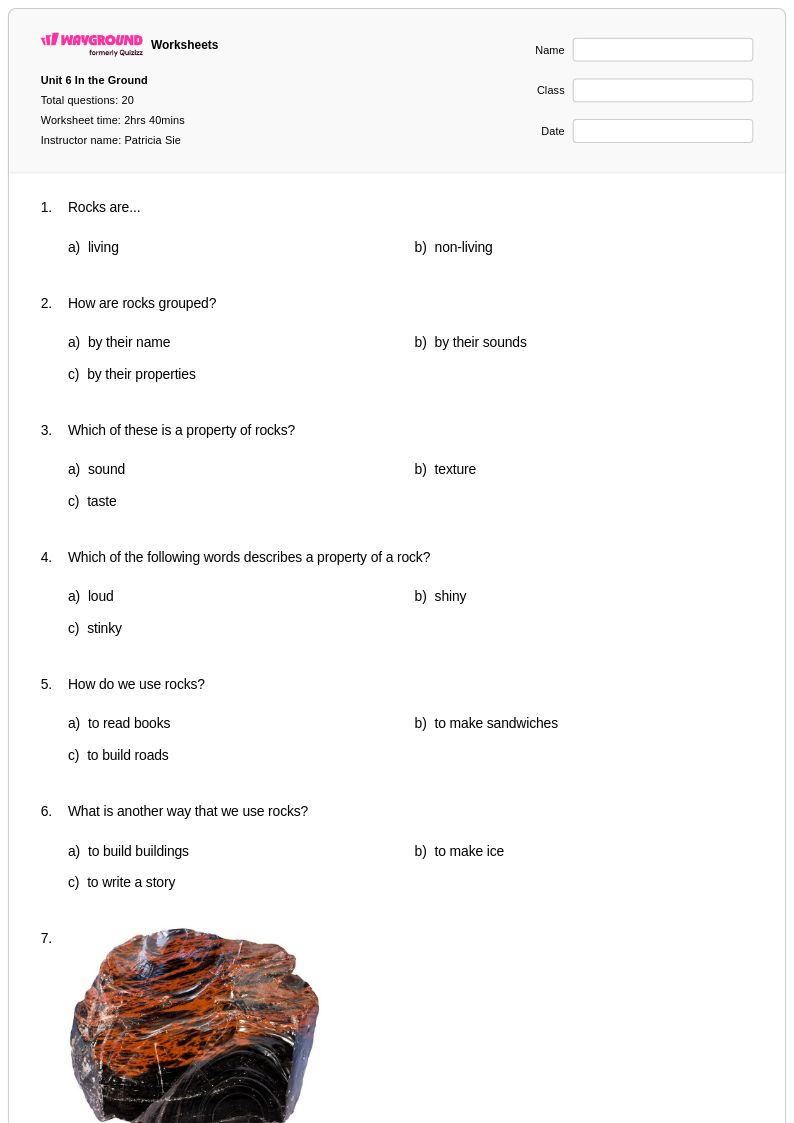
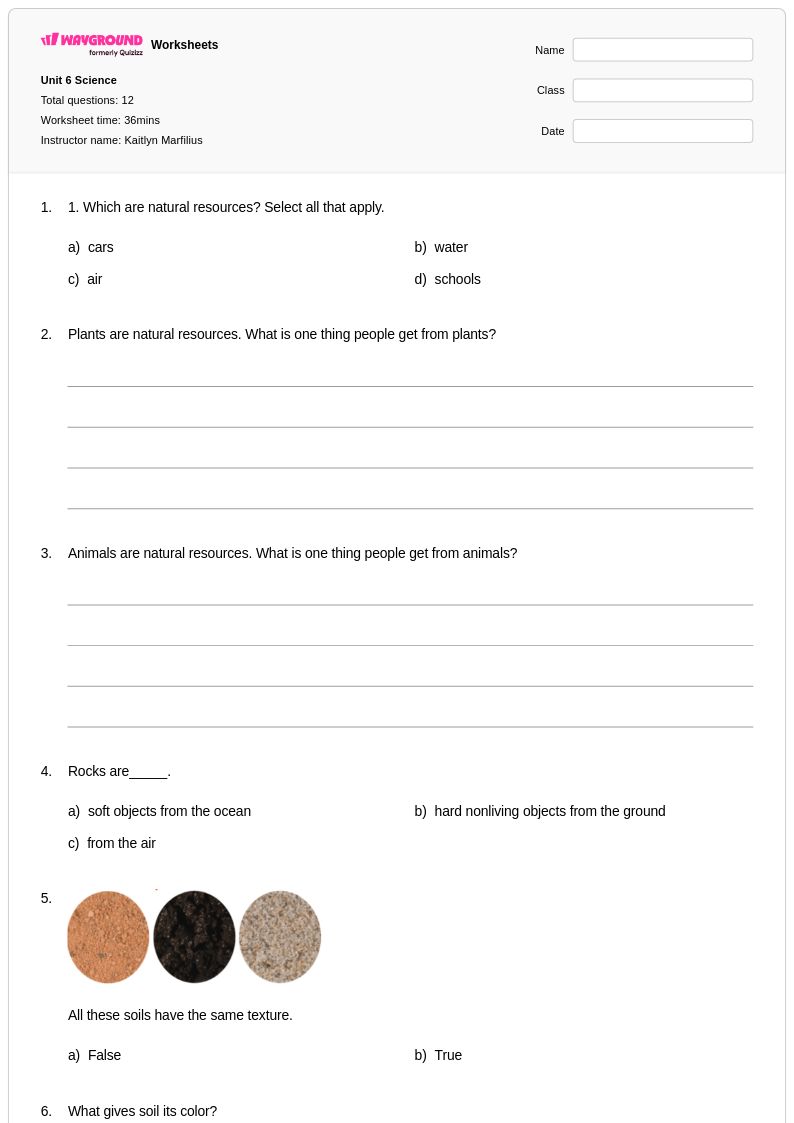
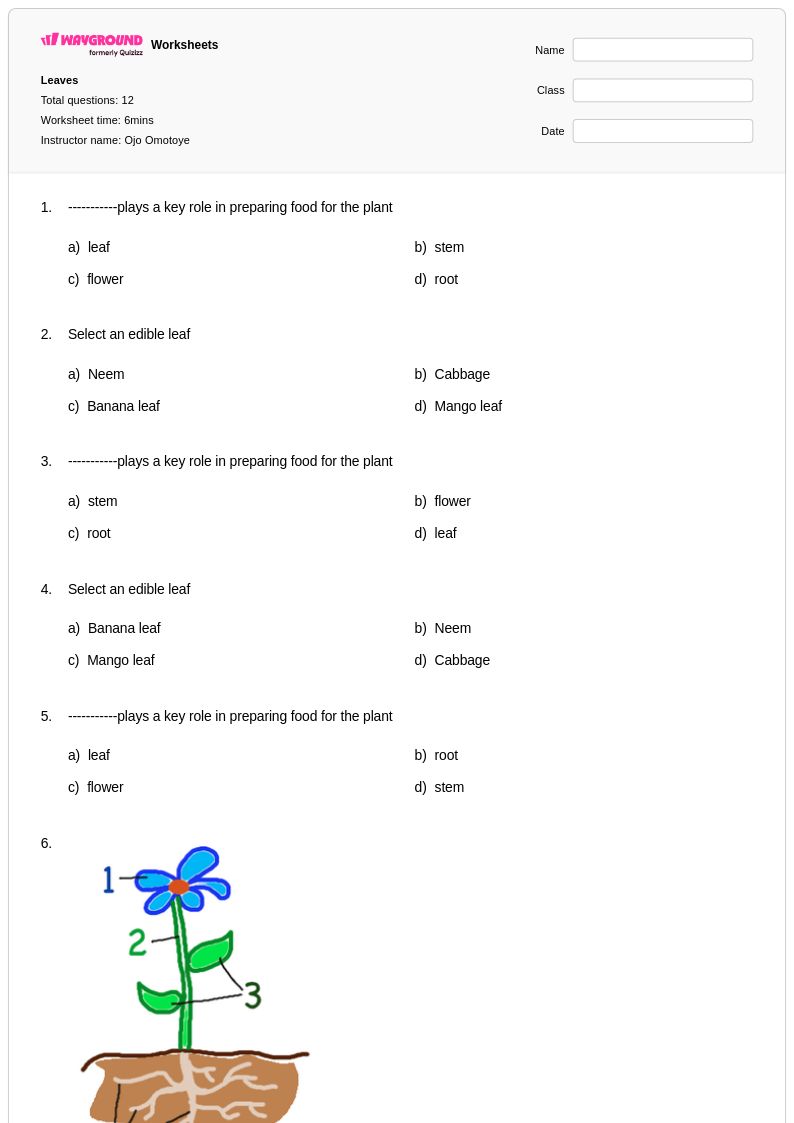
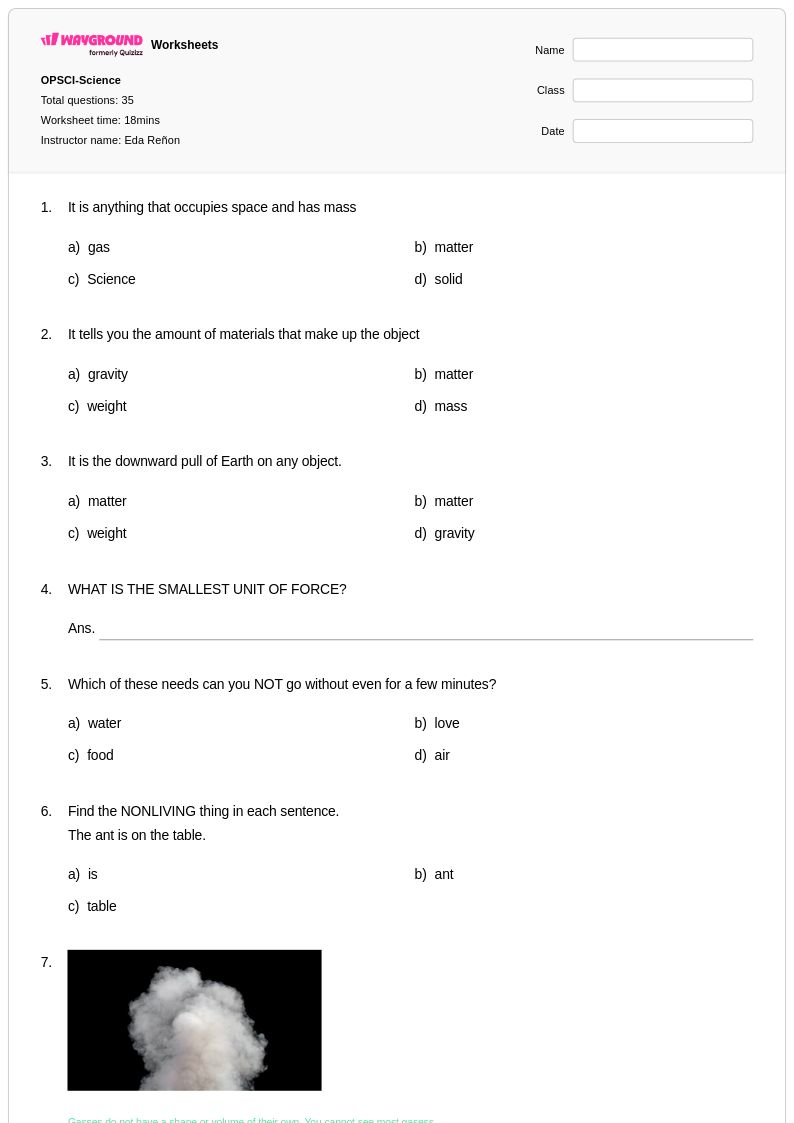
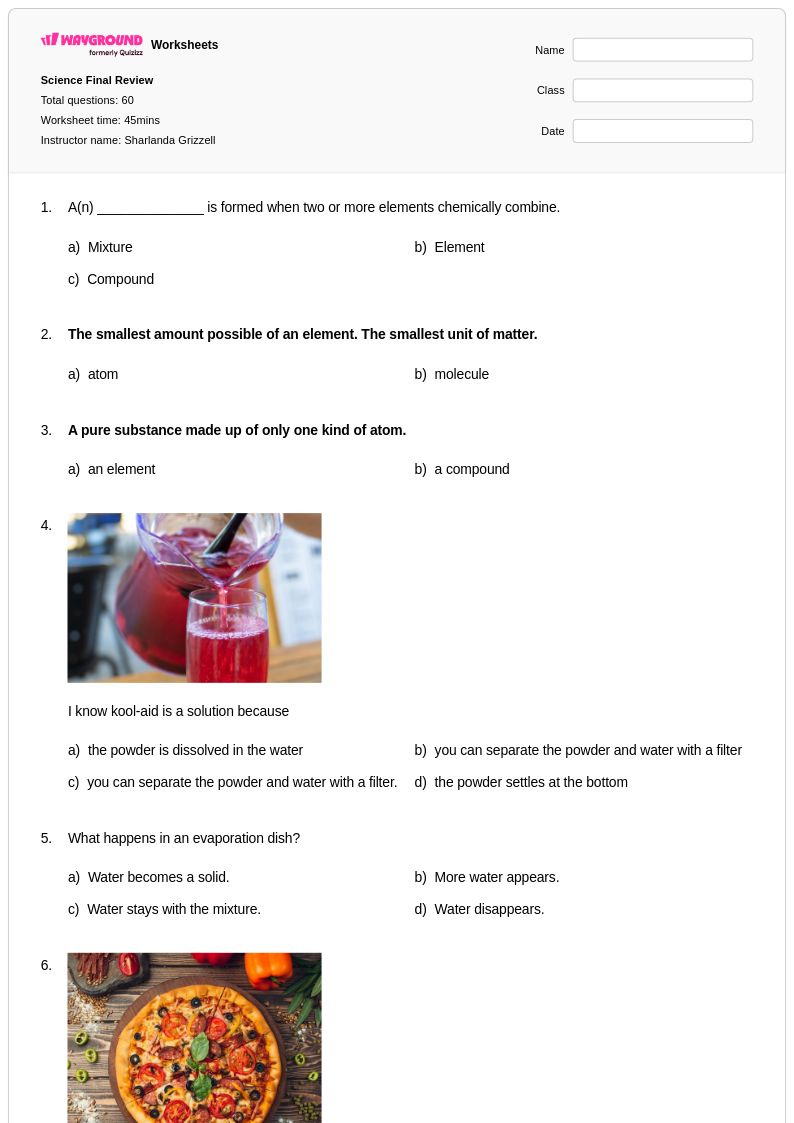
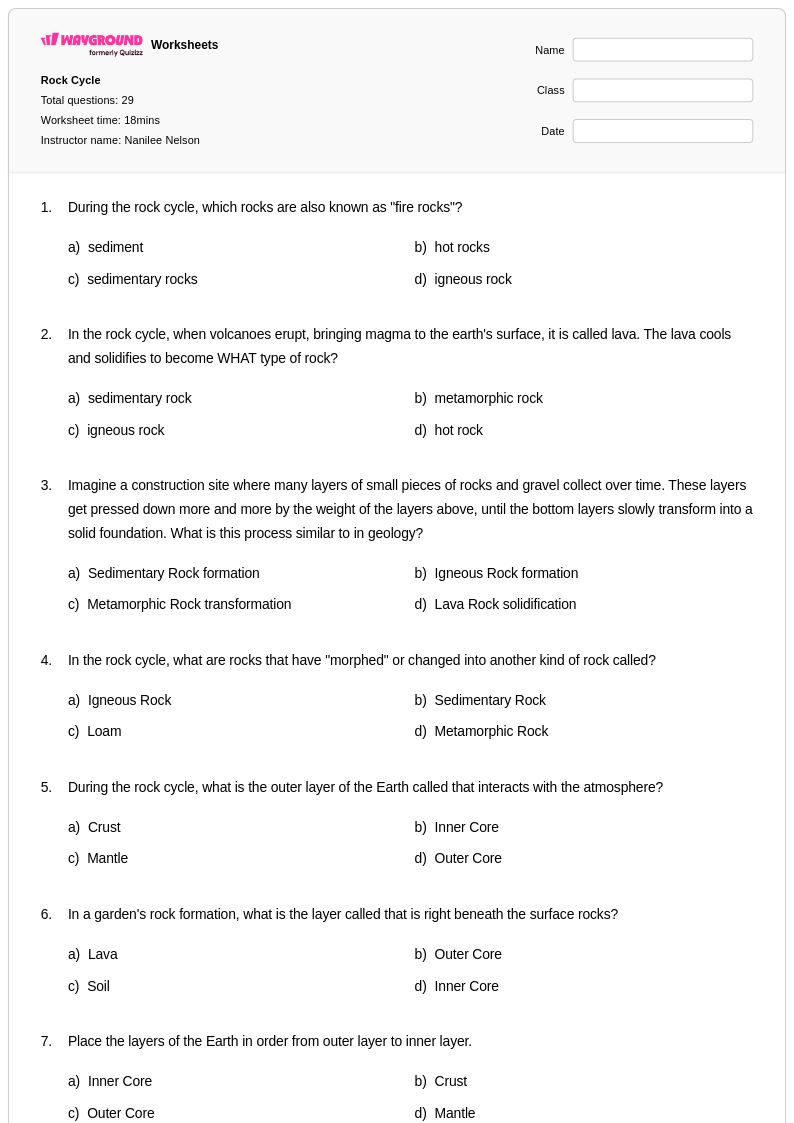
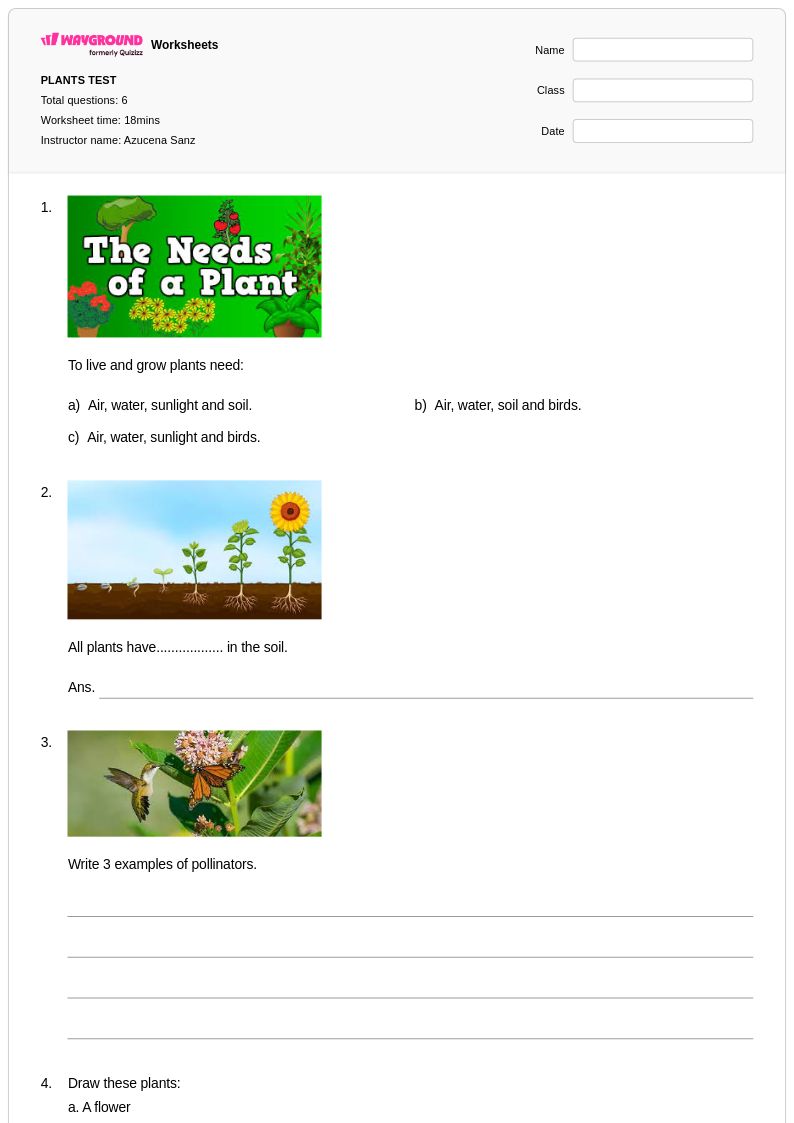
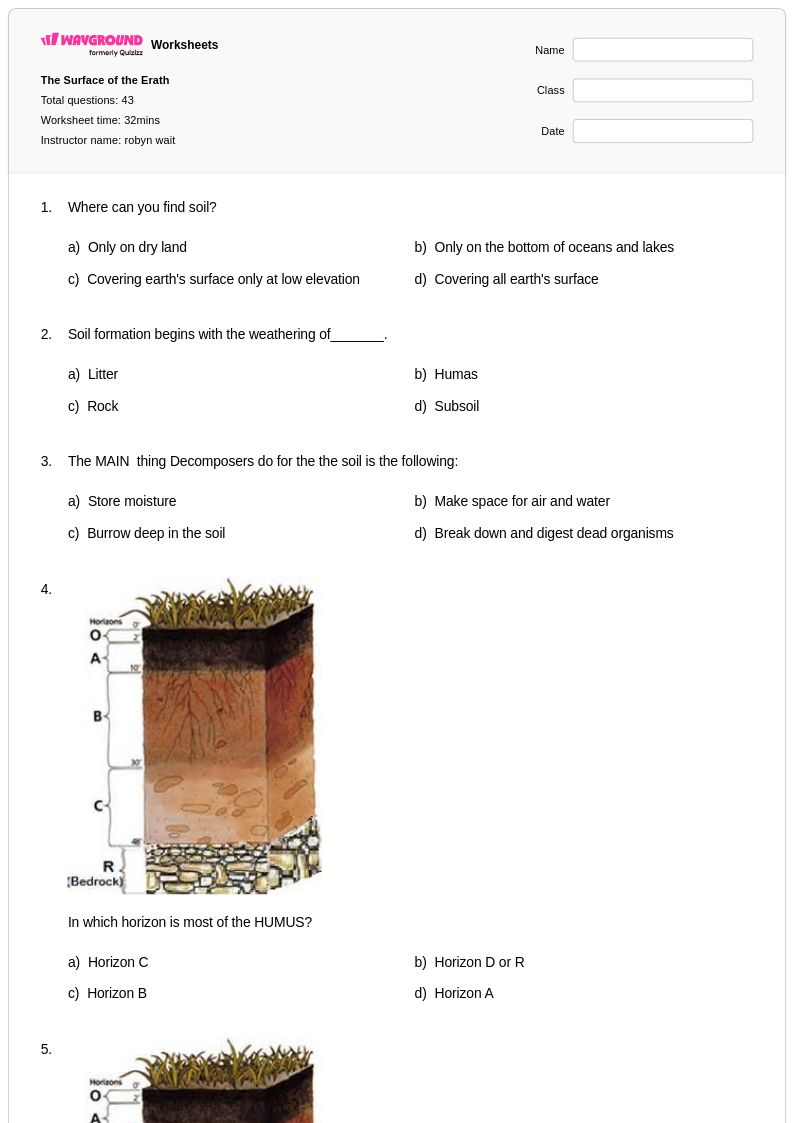
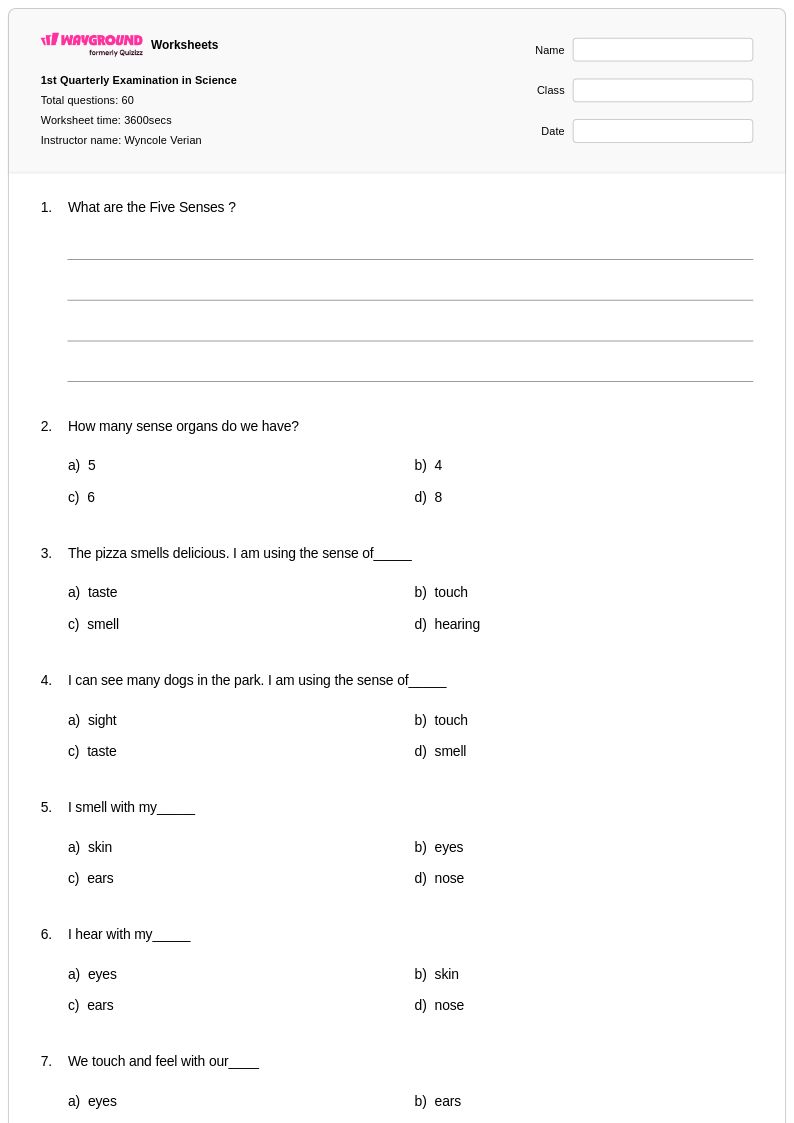
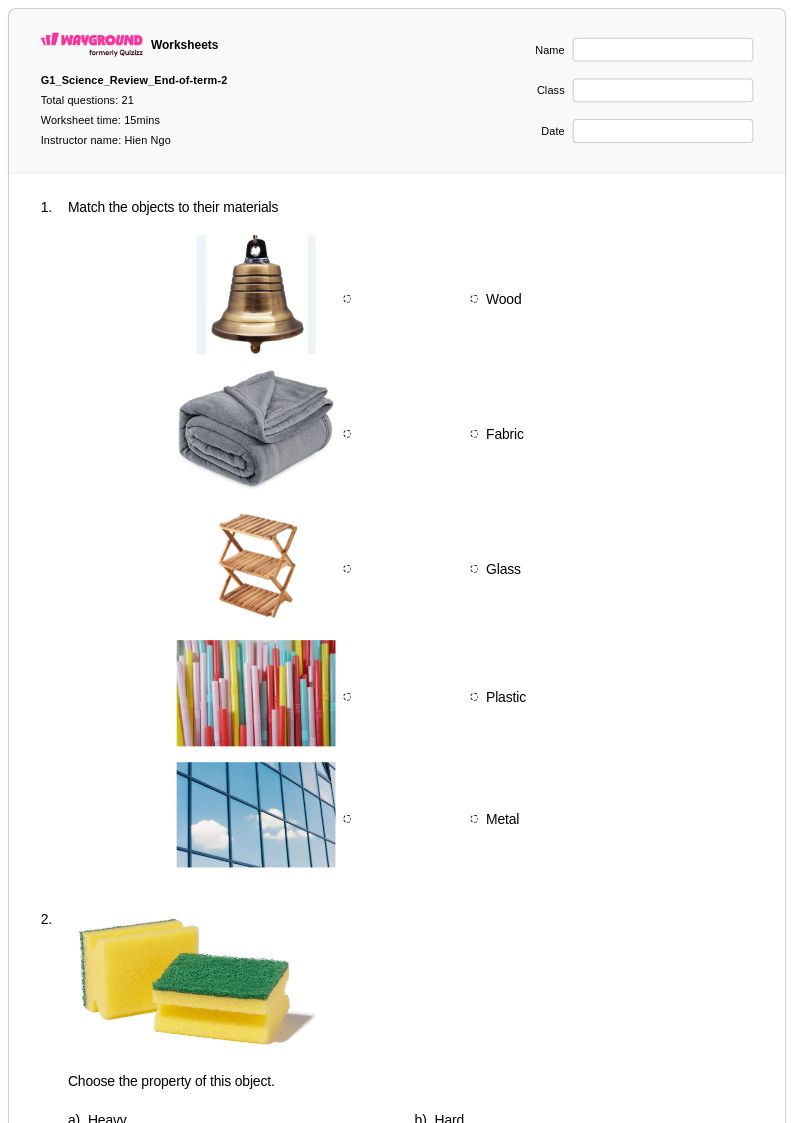
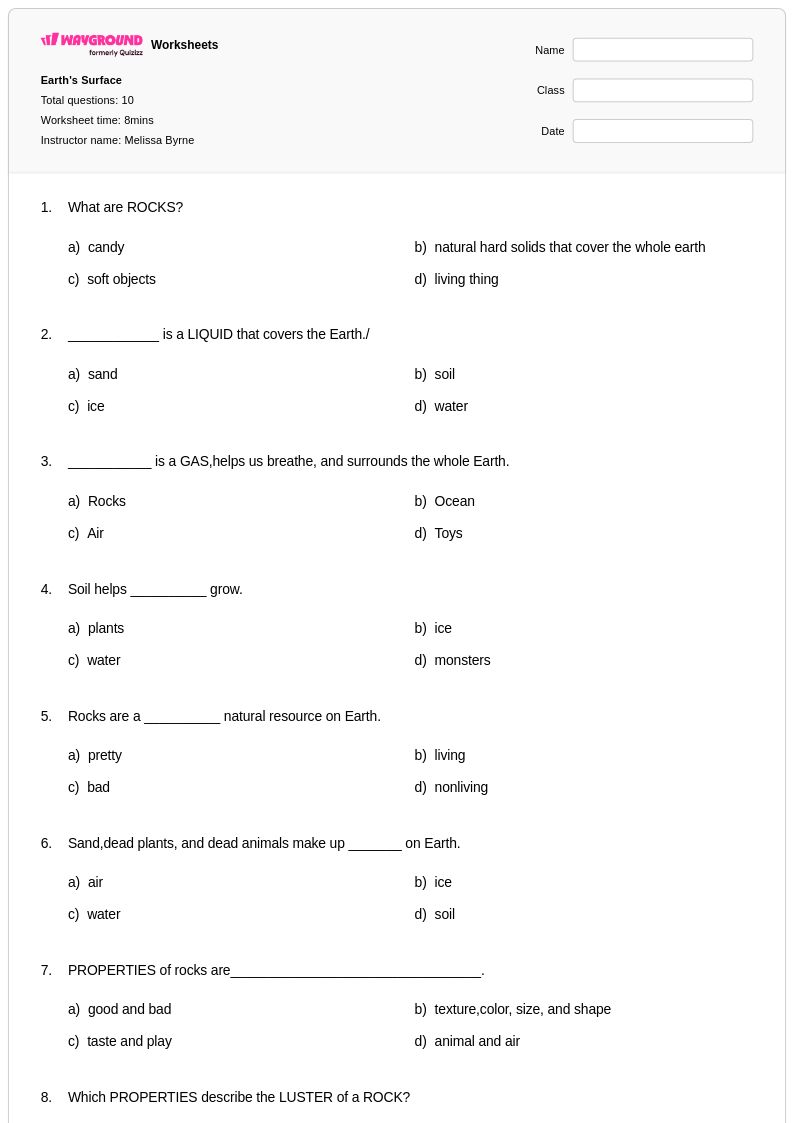
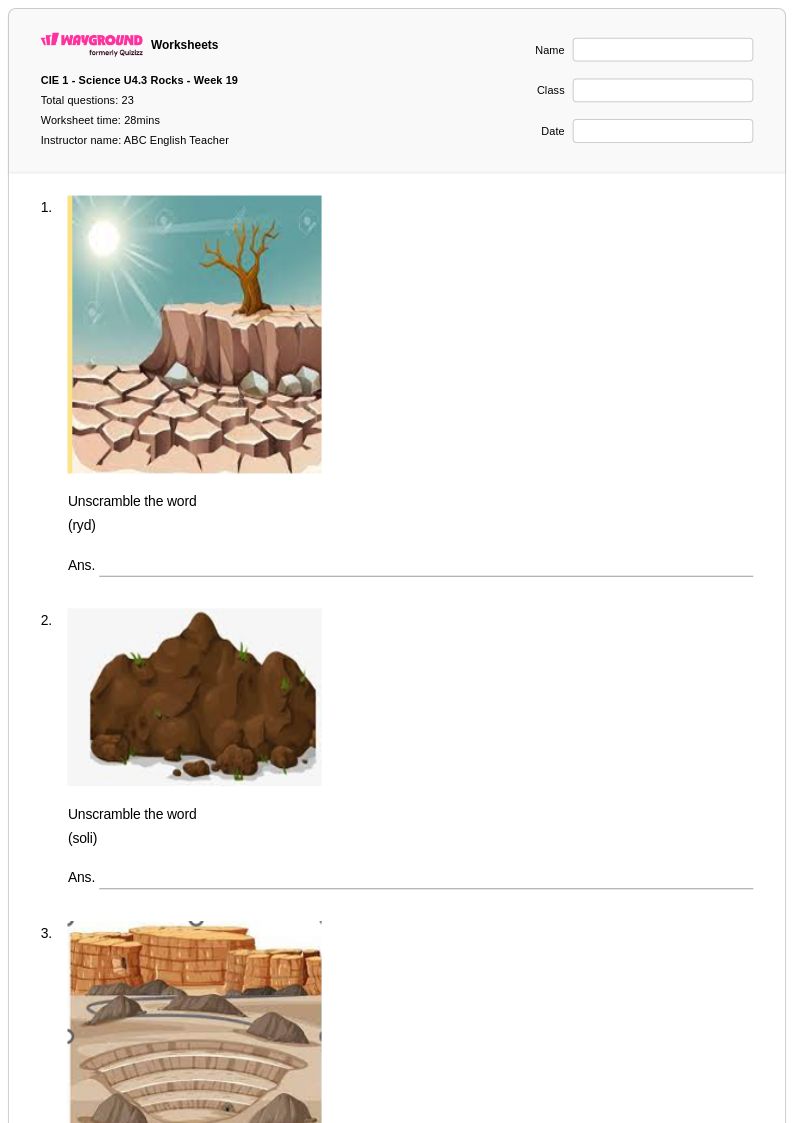
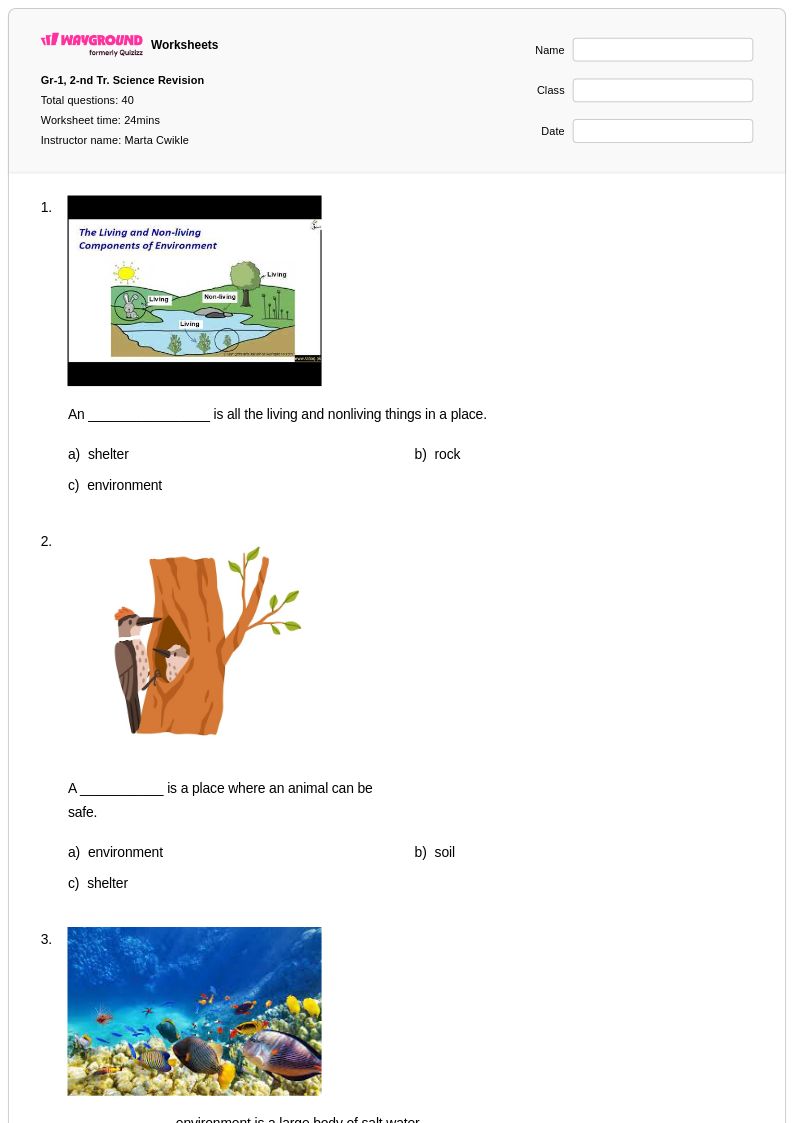
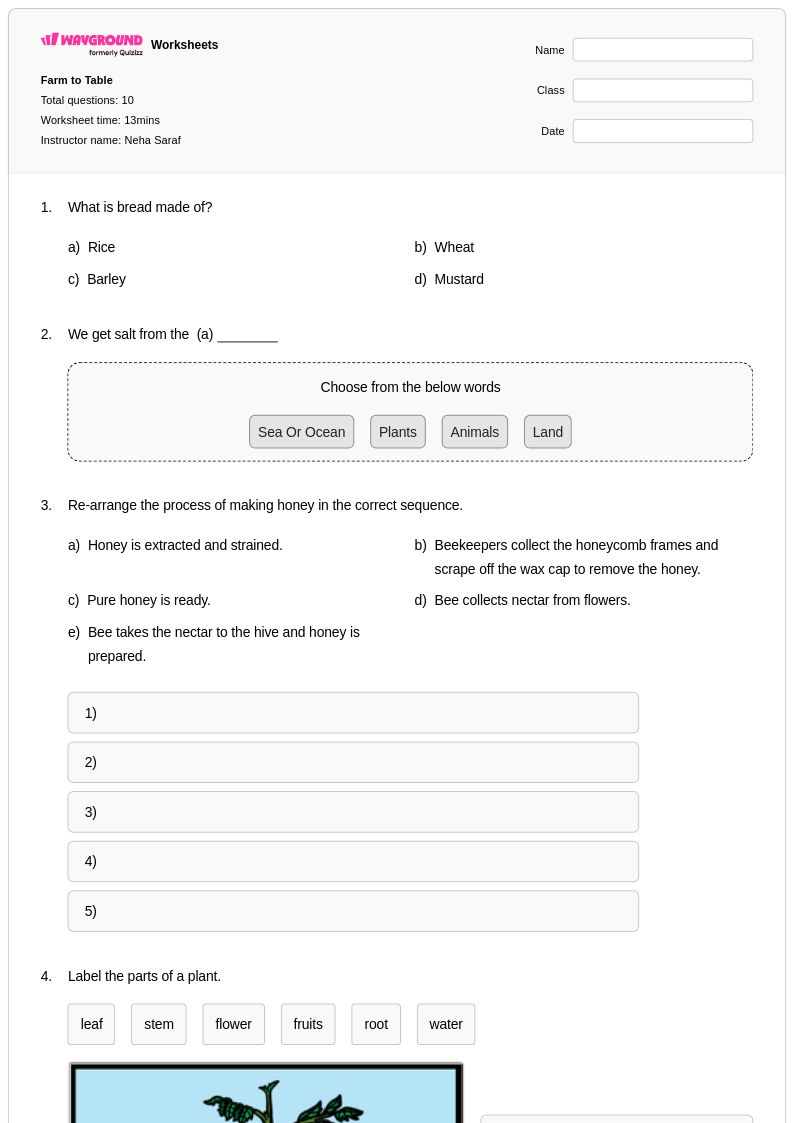
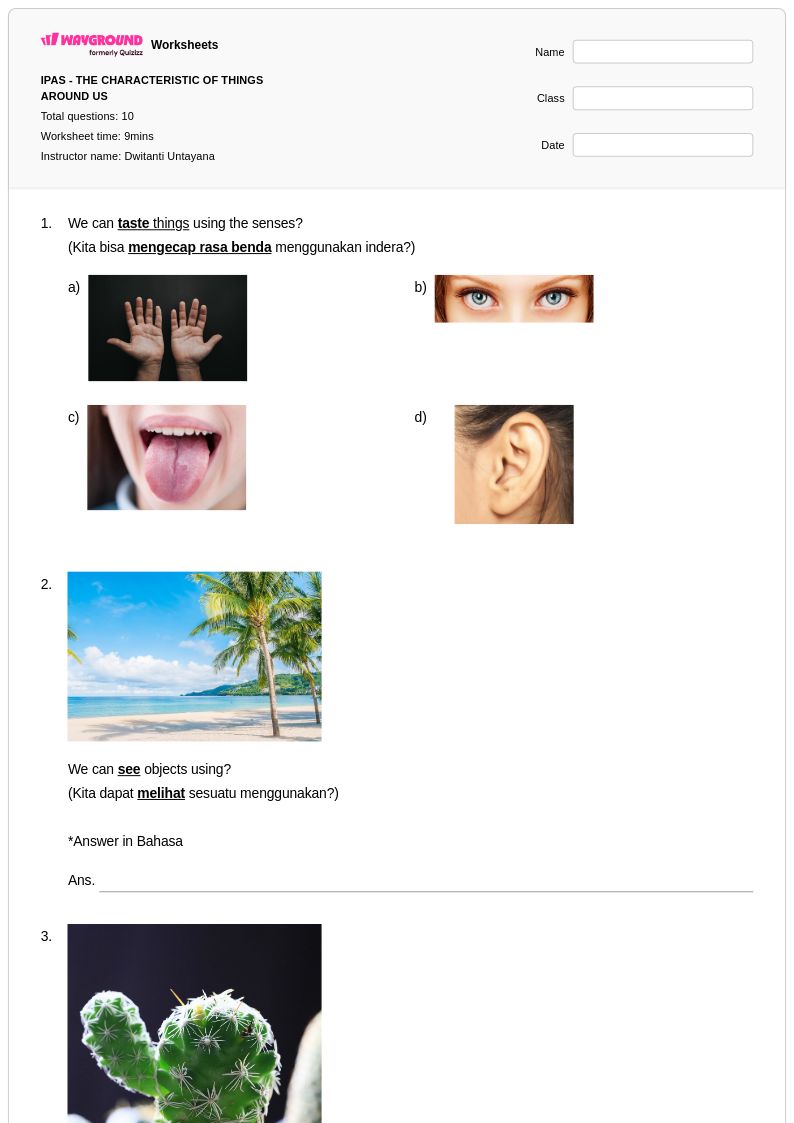
Explore free Year 1 soil texture worksheets and printables from Wayground that help young scientists learn about different types of soil through hands-on practice problems and activities with complete answer keys.
Explore printable Soil Texture worksheets for Year 1
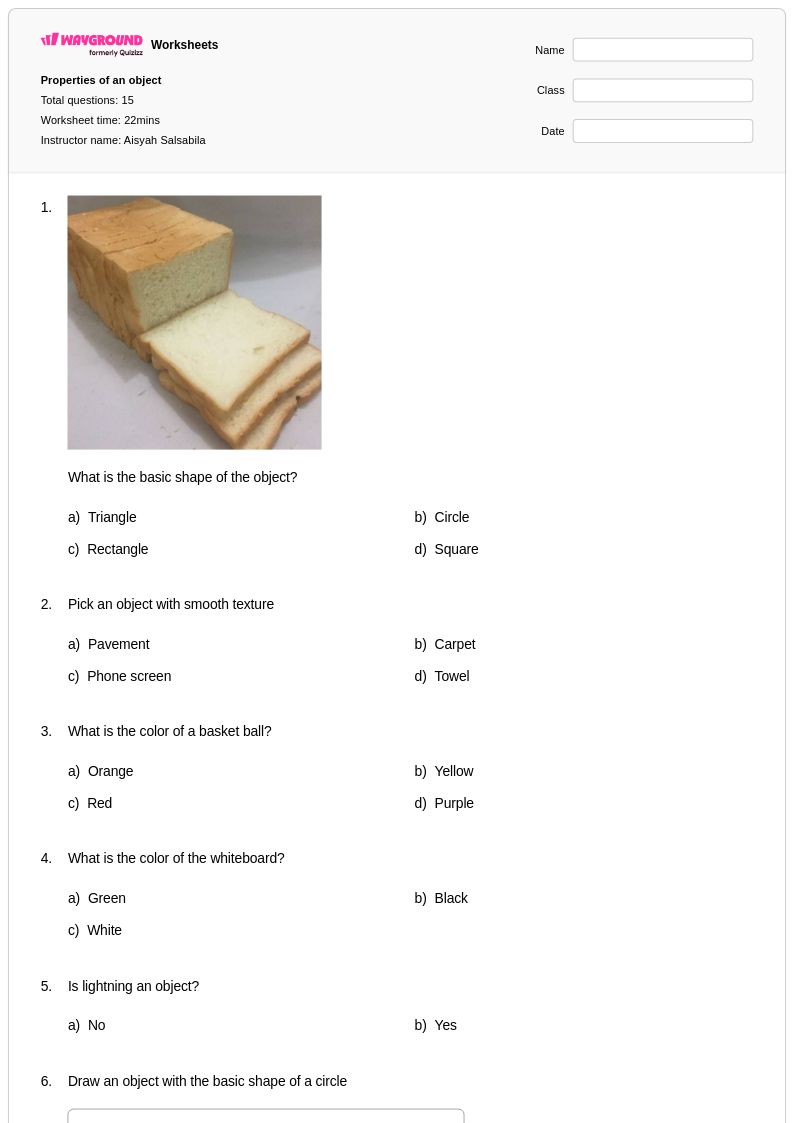
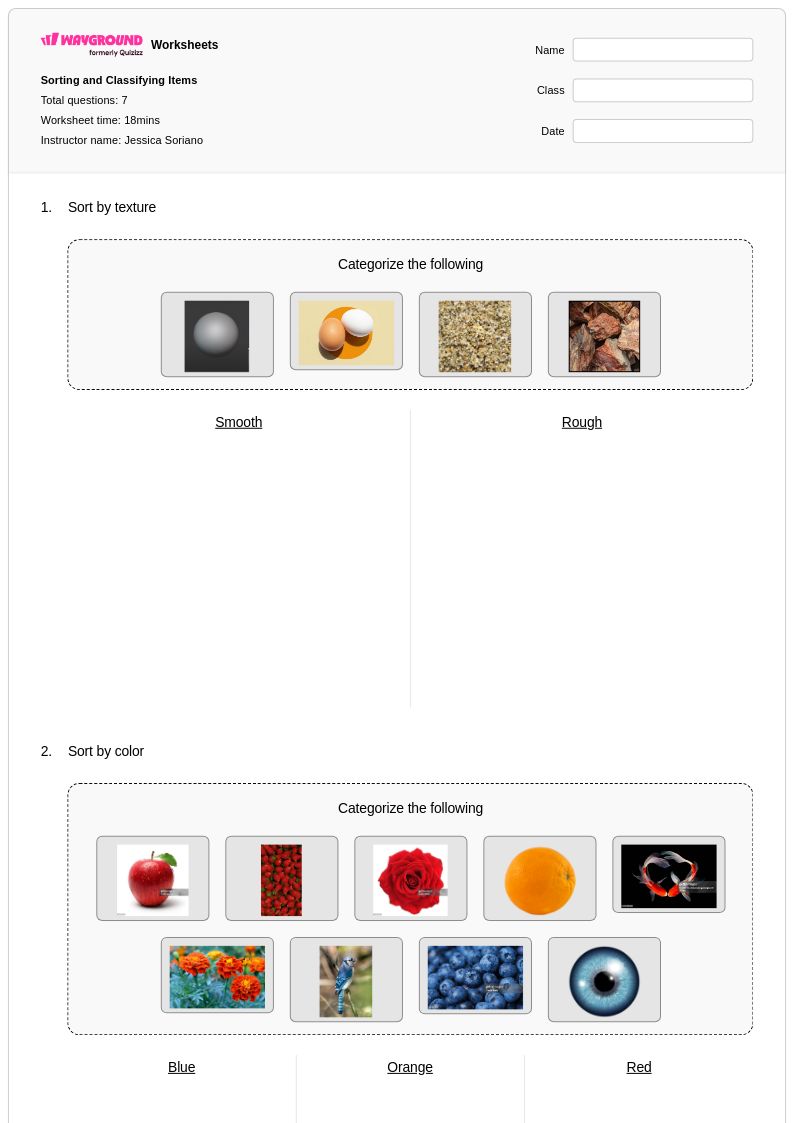
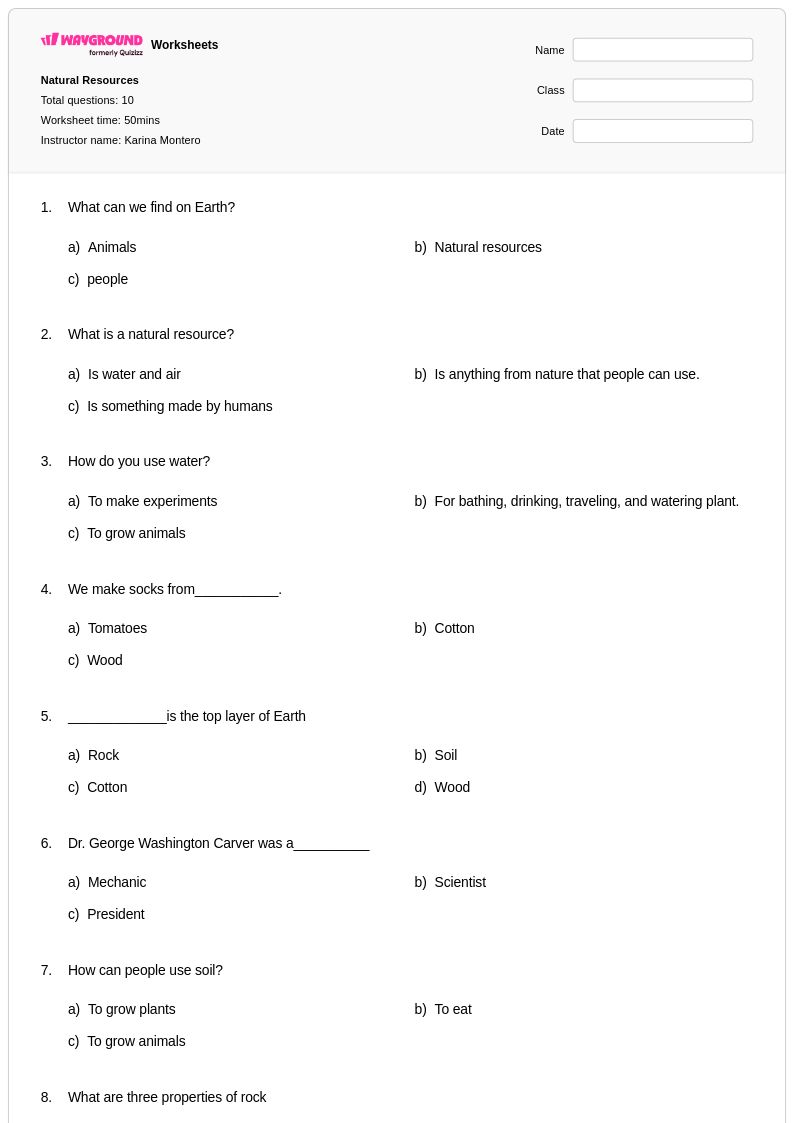
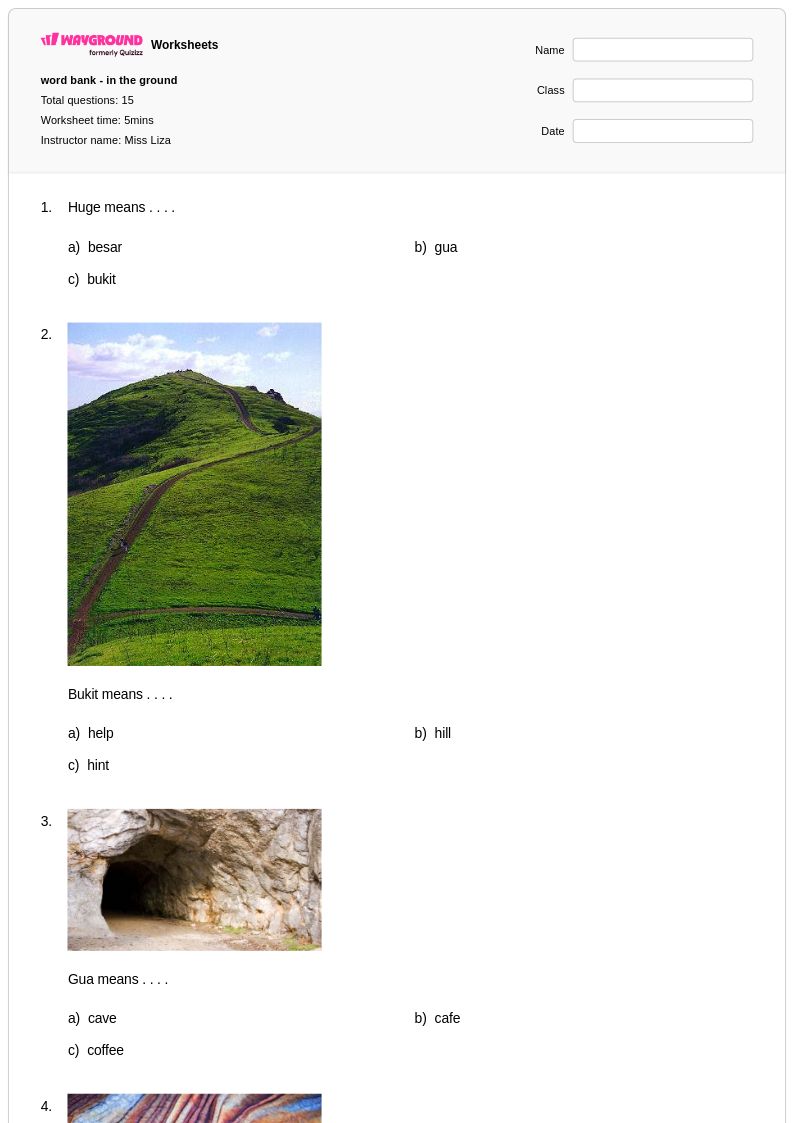
Year 1 soil texture worksheets available through Wayground (formerly Quizizz) introduce young learners to the fundamental concept that soil is composed of different materials with varying characteristics. These educational resources strengthen essential observation and classification skills by guiding students through hands-on activities that explore sandy, clay, and loamy soil types. Each worksheet collection includes comprehensive materials such as answer keys for efficient grading, downloadable pdf formats for classroom flexibility, and free printables that make quality science education accessible to all educators. The practice problems are specifically designed to help first-grade students develop scientific vocabulary while learning to distinguish between different soil textures through visual analysis, tactile exploration, and simple sorting activities.
Wayground (formerly Quizizz) empowers teachers with millions of educator-created resources that transform soil texture instruction into engaging, standards-aligned learning experiences. The platform's robust search and filtering capabilities allow teachers to quickly locate age-appropriate materials that match their specific curriculum requirements and student needs. Advanced differentiation tools enable educators to customize worksheets for varying ability levels within their Year 1 classrooms, while the availability of both printable and digital formats, including ready-to-use pdf downloads, provides maximum instructional flexibility. These comprehensive features streamline lesson planning while offering targeted resources for remediation, enrichment, and systematic skill practice, ensuring that every student develops a solid foundation in understanding the diverse textures and properties of soil in their environment.
FAQs
How do I teach soil texture to students?
Teaching soil texture effectively starts with helping students understand that soil is classified by the relative proportions of sand, silt, and clay particles it contains. Introduce the soil texture triangle early as a visual tool, then pair it with hands-on activities like the jar settling test or ribbon method so students can connect physical observation to classification. Grounding abstract particle size concepts in real-world applications such as water retention, drainage, and crop suitability significantly improves student retention.
What exercises help students practice reading a soil texture triangle?
The most effective practice exercises require students to plot sand, silt, and clay percentages on a soil texture triangle and identify the resulting textural class. Worksheets that present a variety of soil composition scenarios, including borderline cases near class boundaries, build the interpretive fluency students need. Pairing triangle-reading problems with questions about the practical implications of each texture class, such as drainage rate or agricultural suitability, reinforces why accurate classification matters.
What mistakes do students commonly make when classifying soil texture?
The most common error is misreading the directional axes on the soil texture triangle, particularly confusing which direction to track each percentage. Students also frequently forget that the three particle percentages must sum to 100%, leading to plotting errors before classification even begins. Another persistent misconception is conflating soil texture with soil structure; texture refers specifically to particle size distribution, not how those particles are arranged.
How does soil texture affect water retention and plant growth?
Soil texture directly determines how much water a soil holds and how quickly it drains because smaller particles like clay have a much greater surface area than sand, allowing clay-rich soils to retain water longer. Sandy soils drain rapidly and hold fewer nutrients, while clay-heavy soils can become waterlogged and restrict root growth. Loam soils, which balance sand, silt, and clay, are generally considered ideal for plant growth because they retain moisture while still allowing adequate drainage and aeration.
How can I use Wayground's soil texture worksheets in my classroom?
Wayground's soil texture worksheets are available as printable PDFs for hands-on classroom use and in digital formats for technology-integrated or remote learning environments, and they can also be hosted as a quiz directly on Wayground. Each worksheet includes a complete answer key, making them practical for independent practice, lab preparation, or formative assessment without additional teacher prep. Wayground also supports student-level accommodations such as extended time, read aloud, and reduced answer choices, so the same worksheet set can serve a full range of learners simultaneously.
How do I differentiate soil texture instruction for students who are struggling?
For students struggling with particle size concepts, focus first on concrete comparisons, such as comparing sand grains to silt and clay using visual or tactile materials, before introducing the texture triangle. Reducing the complexity of initial practice problems by providing partially completed triangles or pre-labeled axes can lower the entry barrier. On Wayground, teachers can apply accommodations like reduced answer choices or read aloud to individual students, allowing struggling learners to engage with the same materials as their peers with targeted support.