Free Printable Stock Market Worksheets for Year 11
Enhance Year 11 students' understanding of stock market fundamentals with Wayground's comprehensive collection of free worksheets, featuring engaging practice problems, printable PDFs, and complete answer keys for effective economics learning.
Explore printable Stock Market worksheets for Year 11
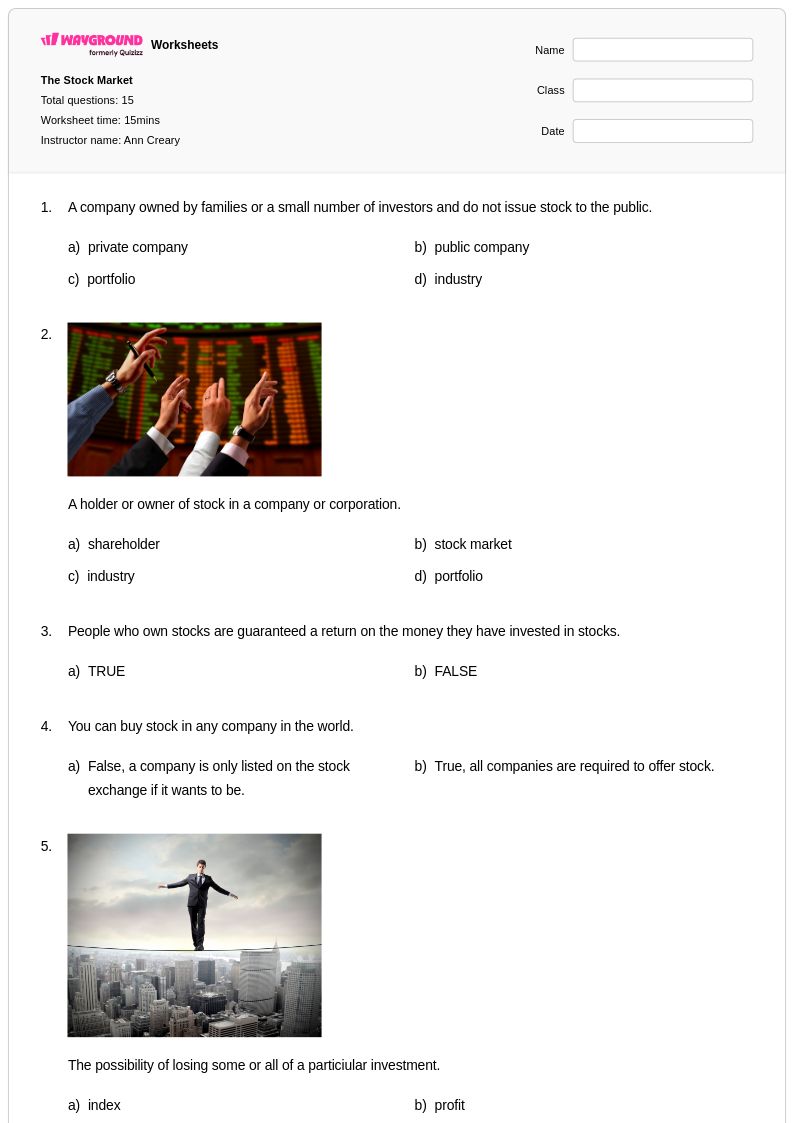
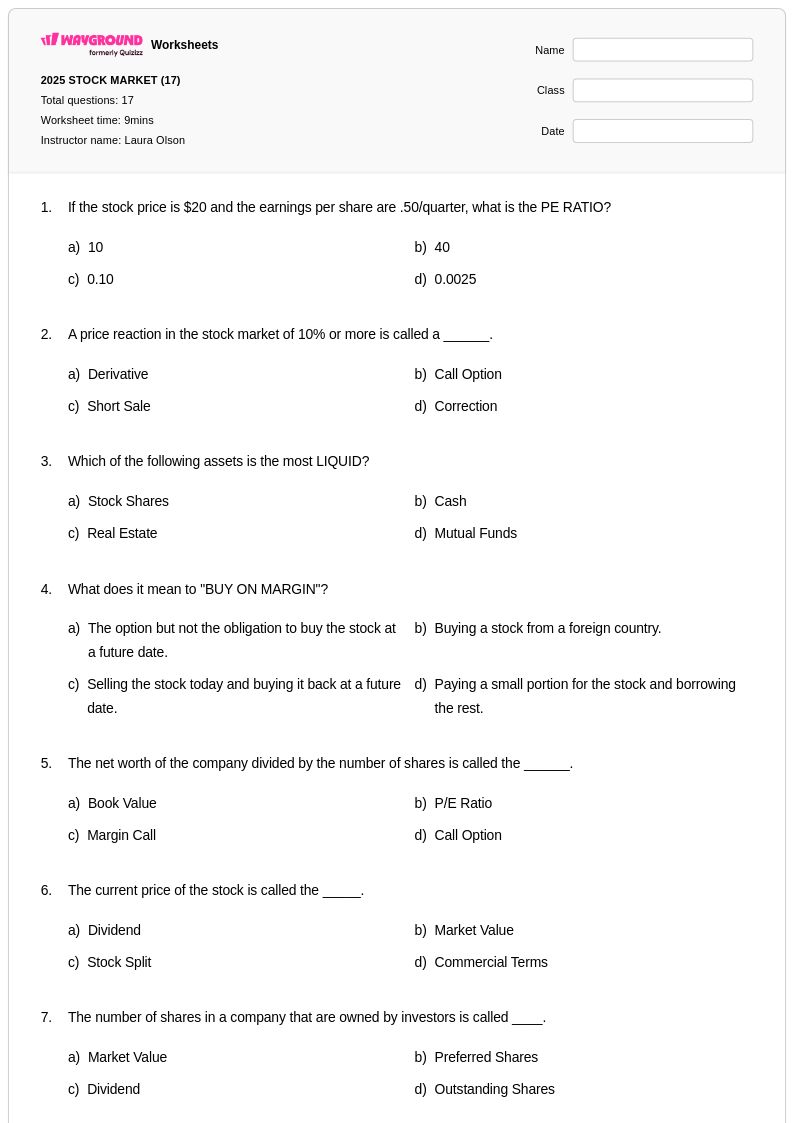
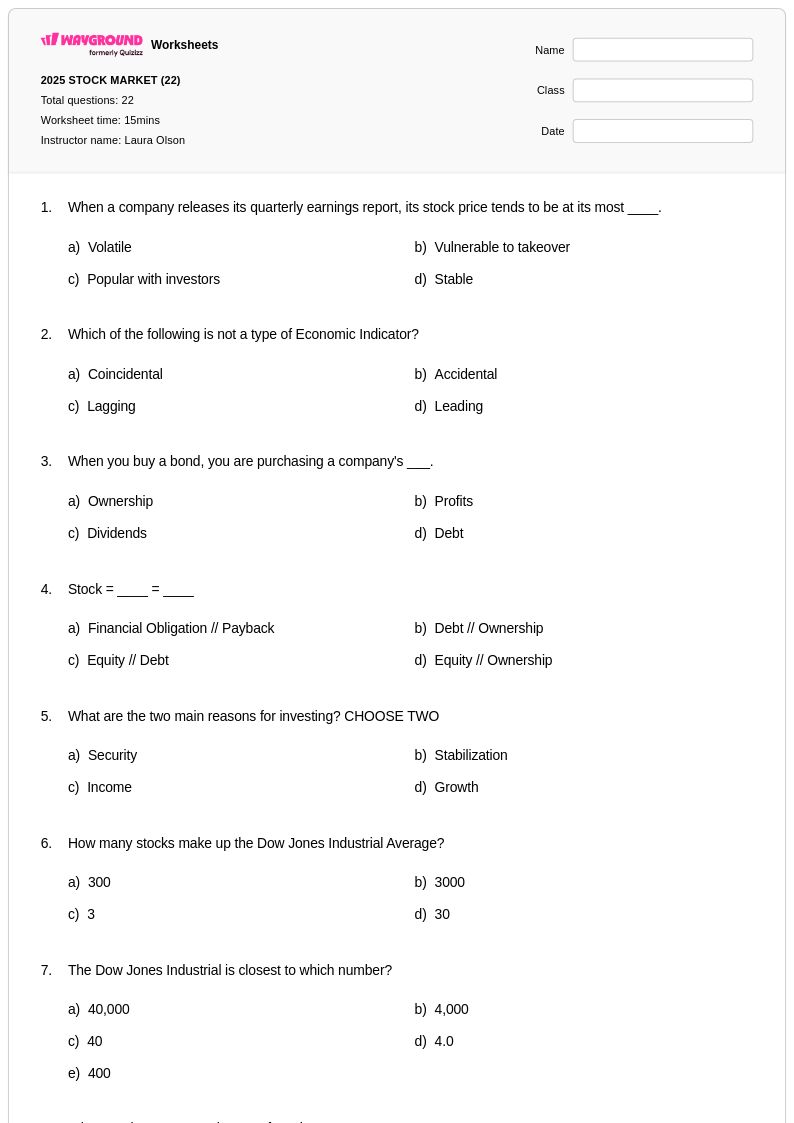
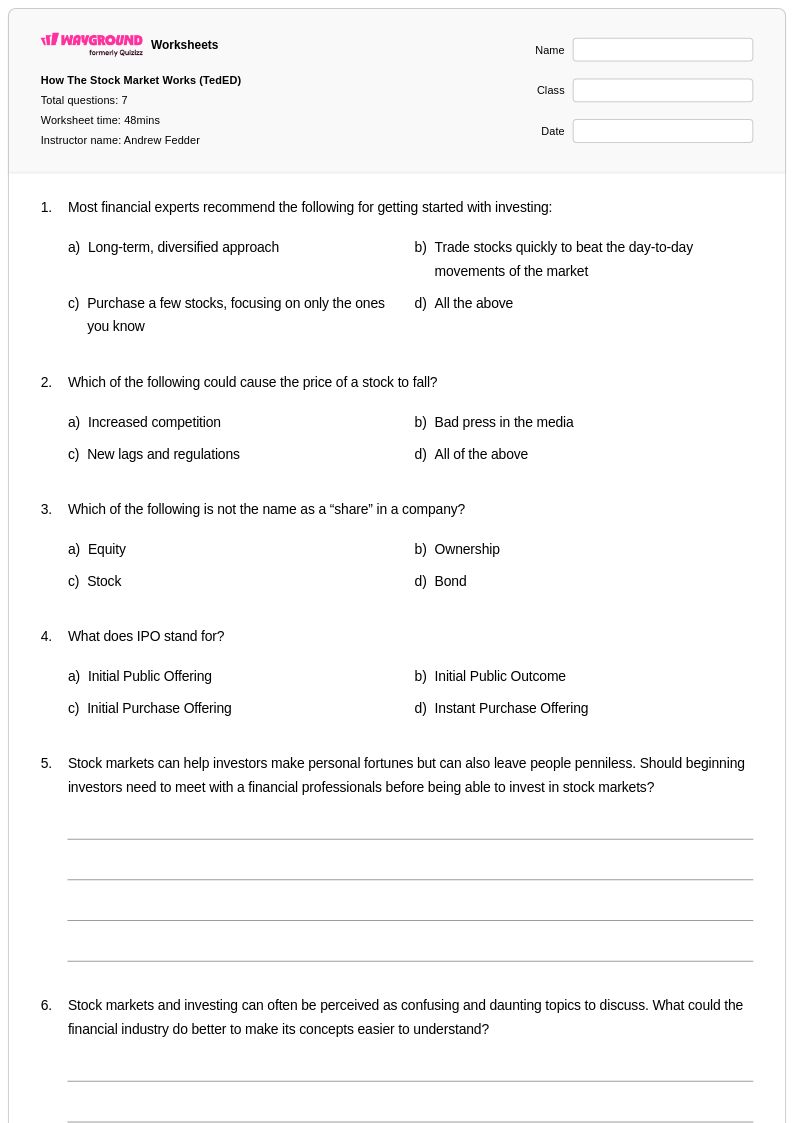
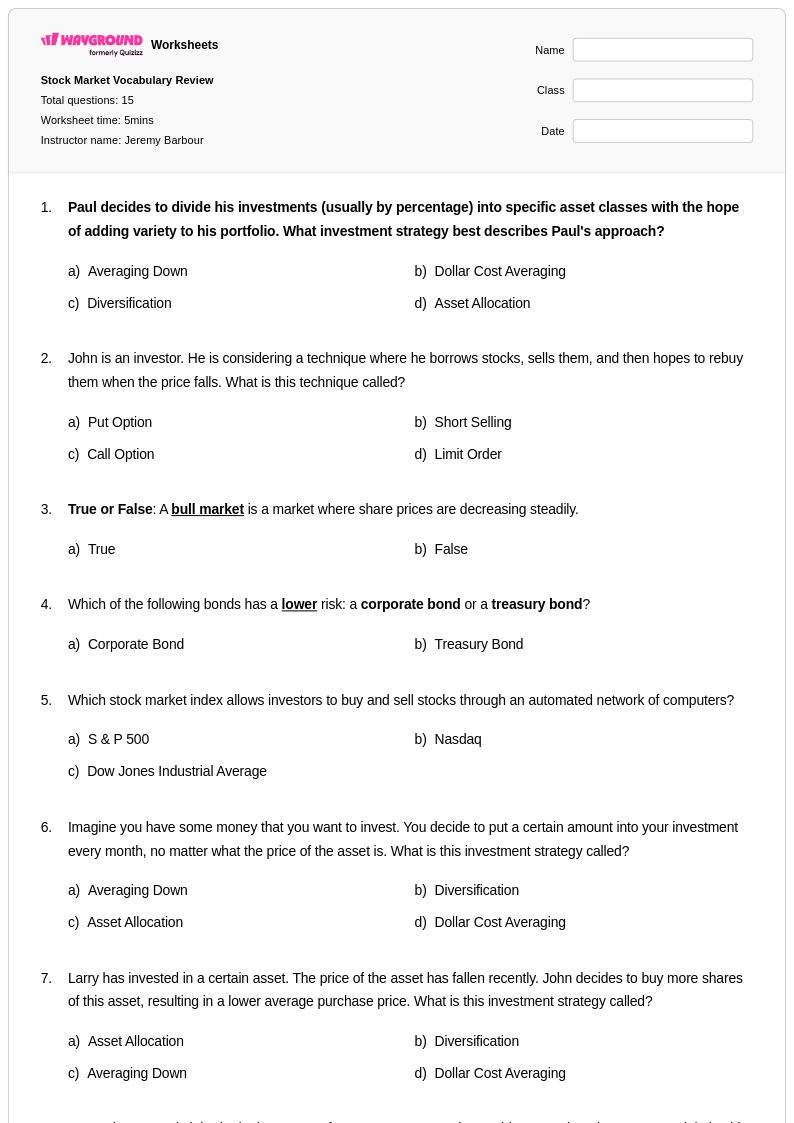
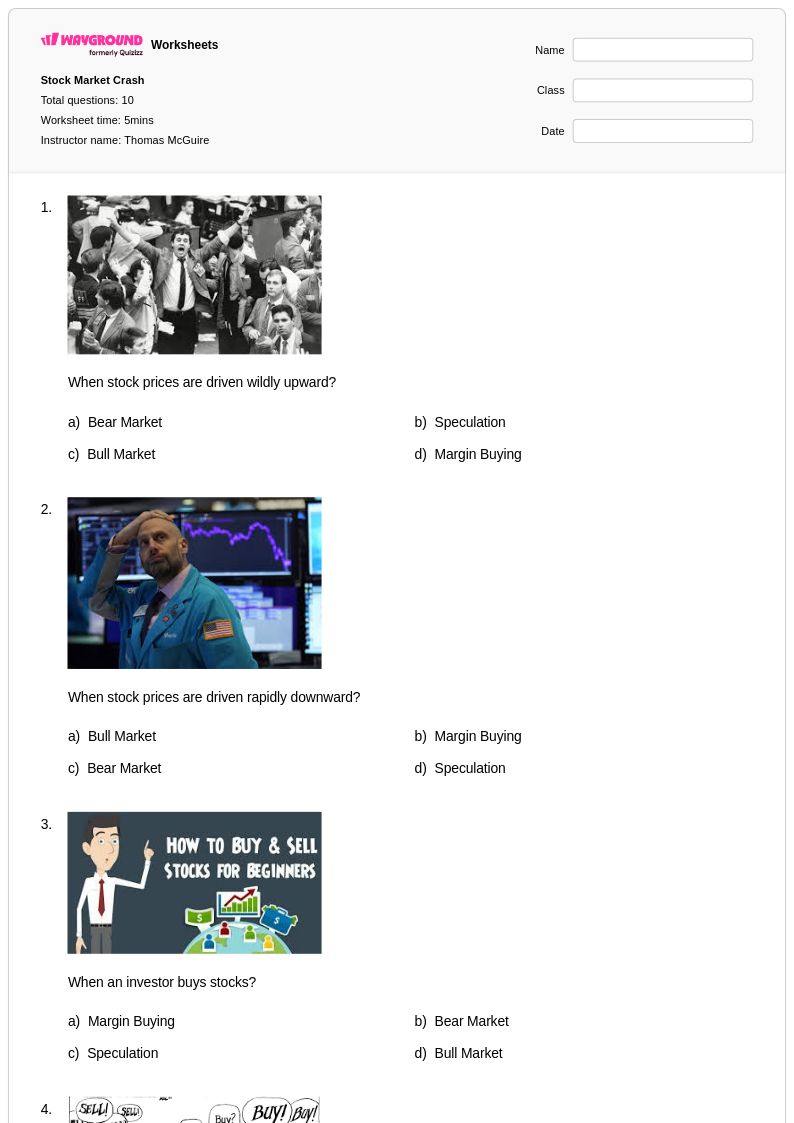
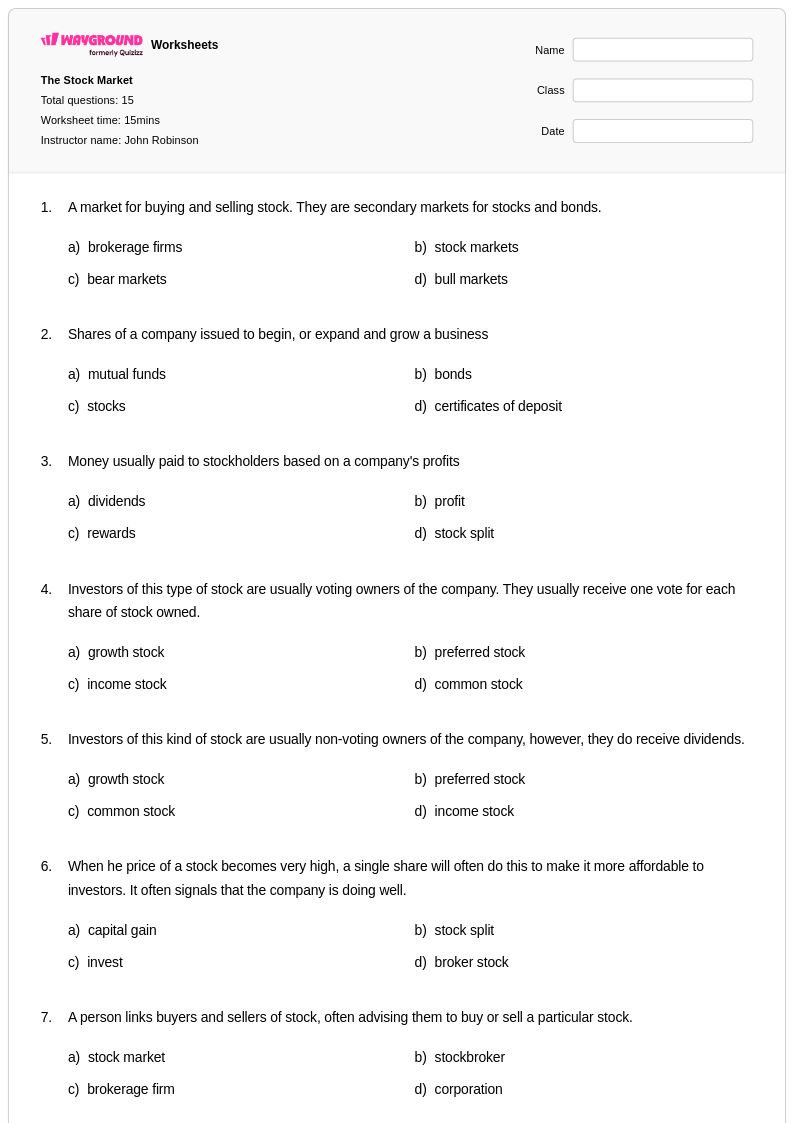
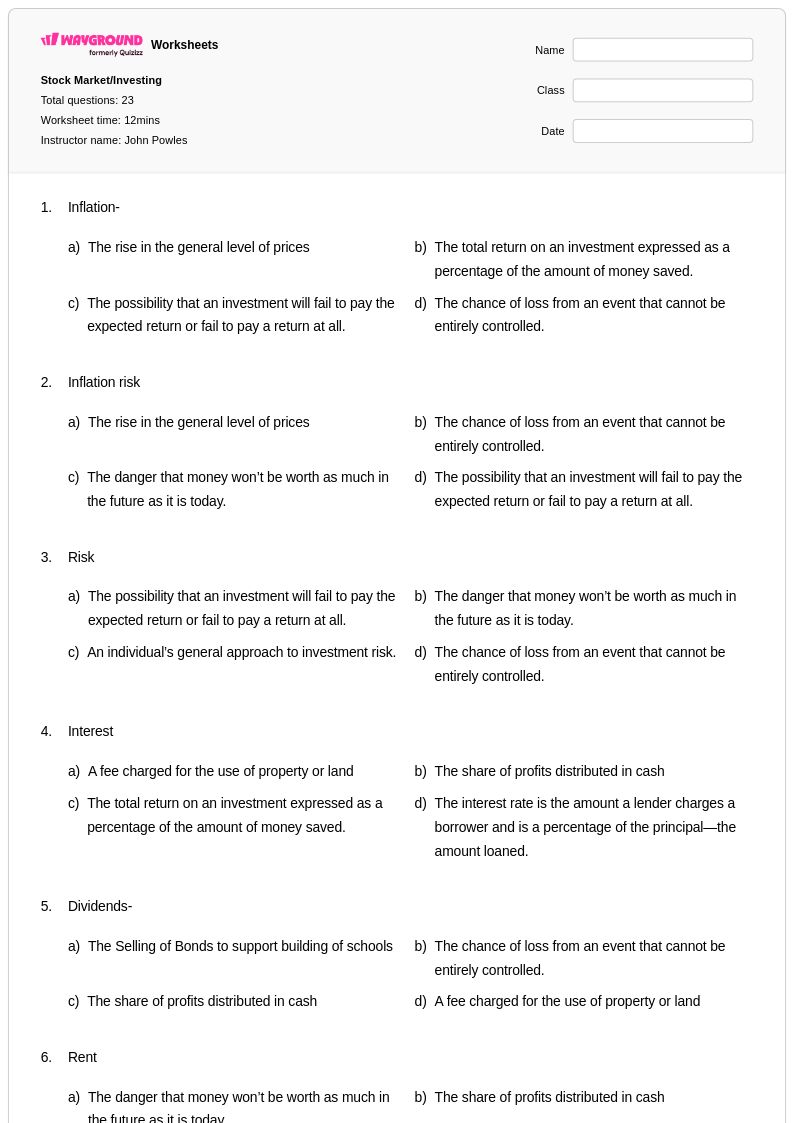
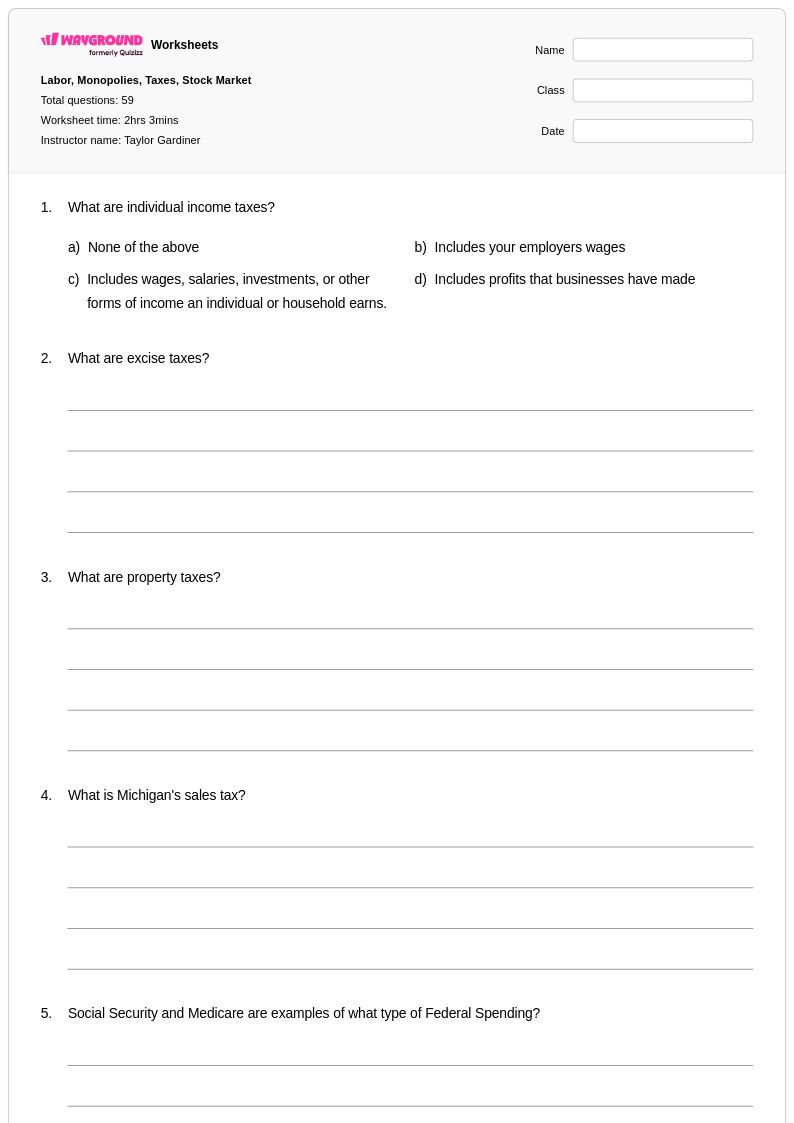
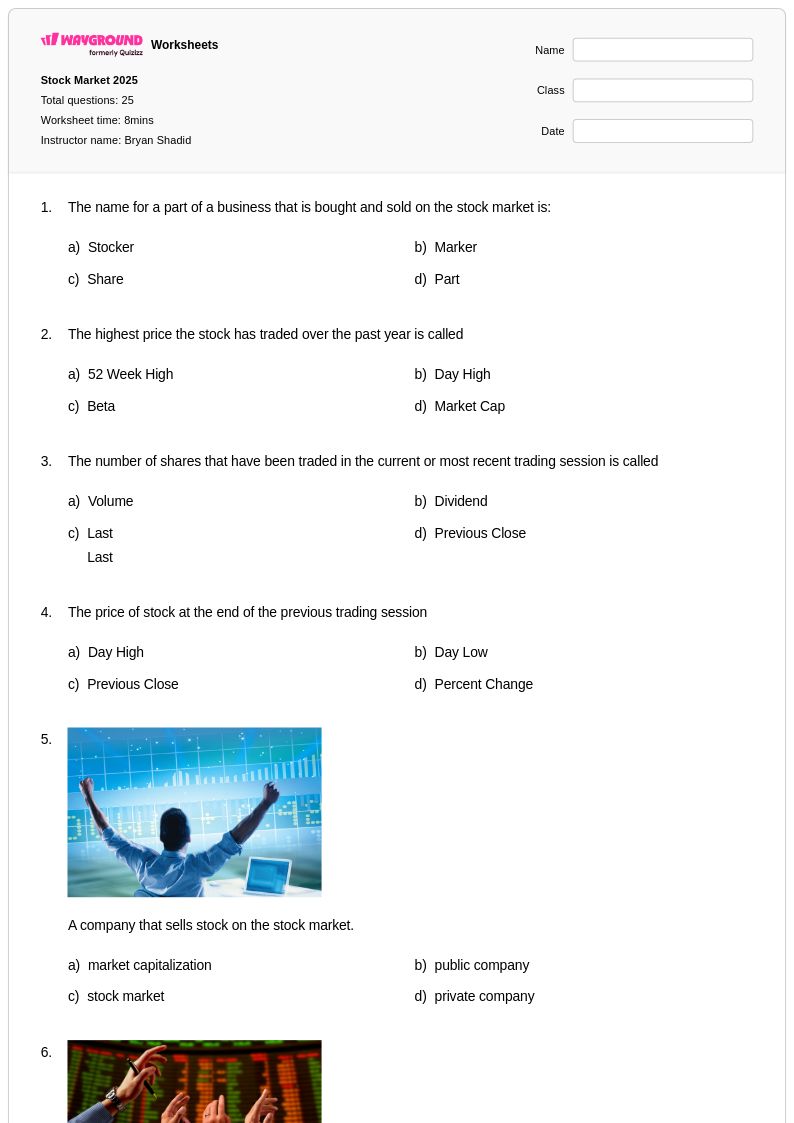
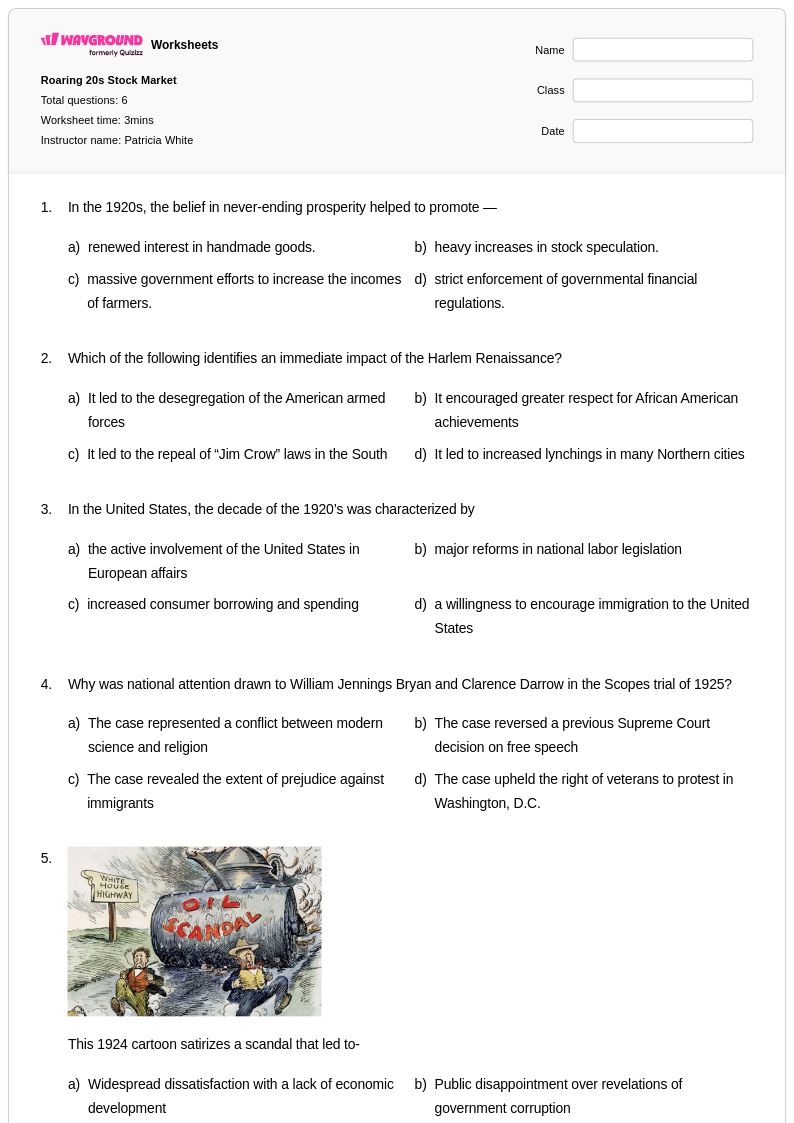
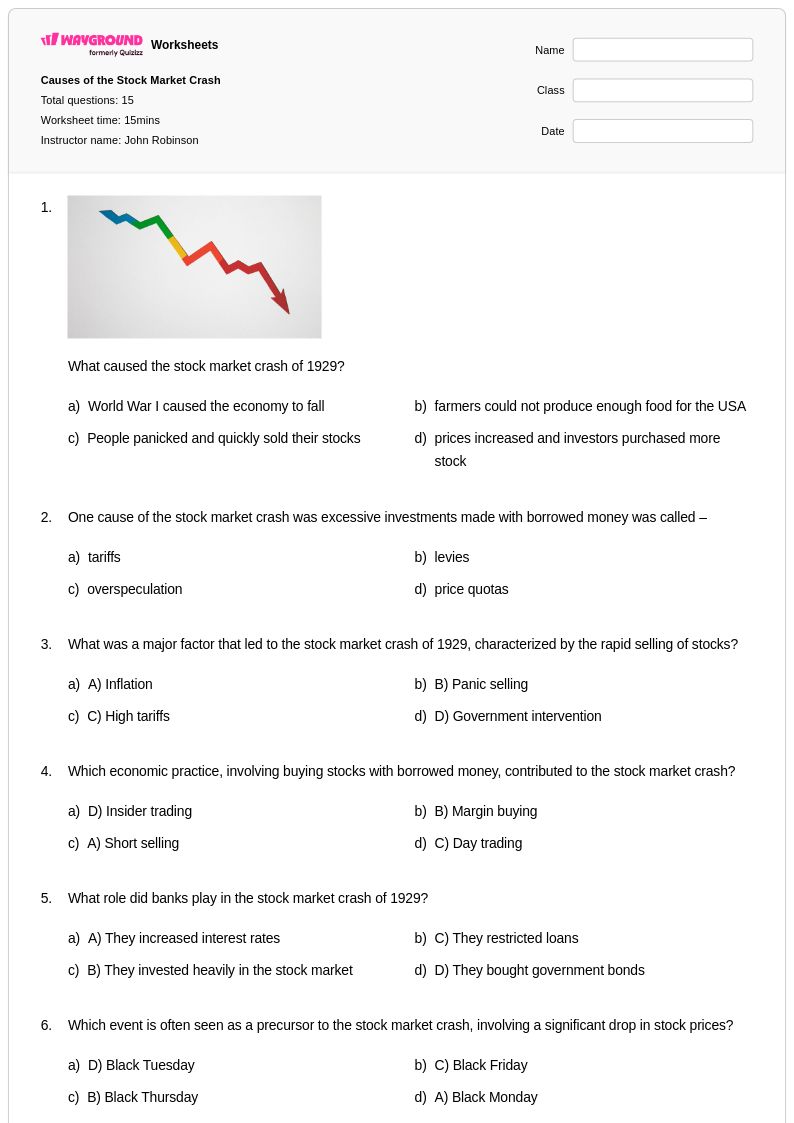
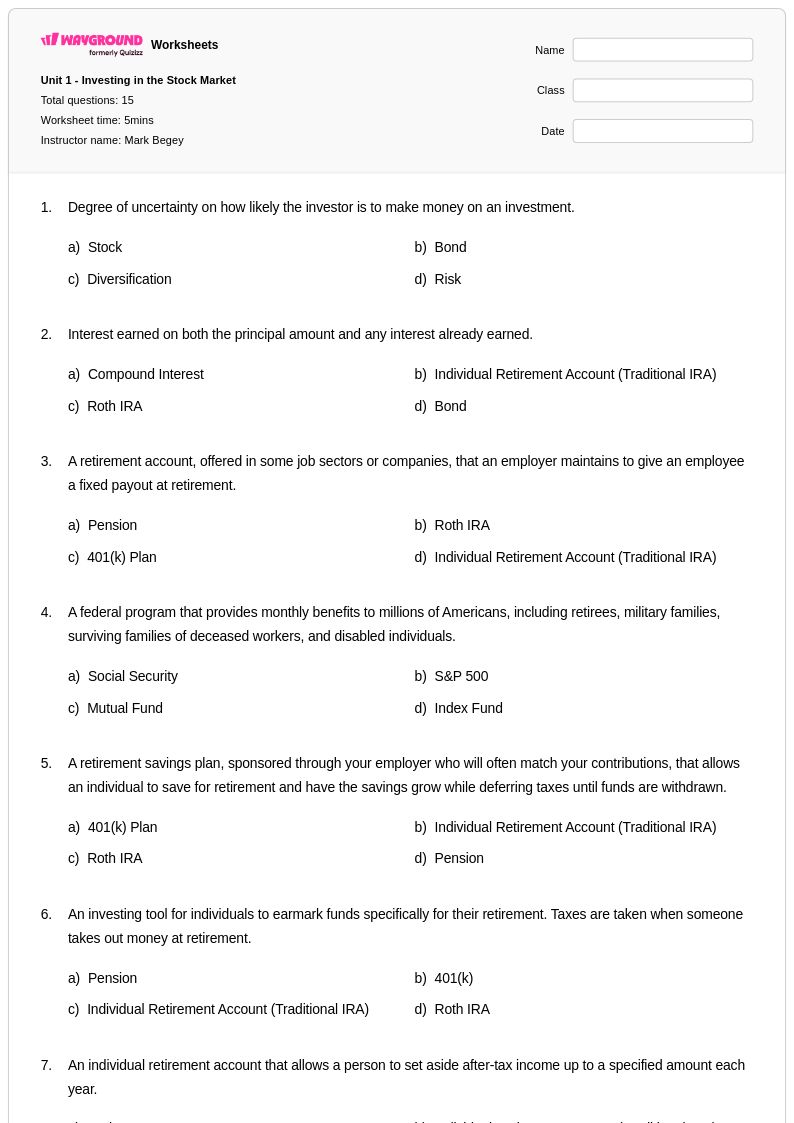
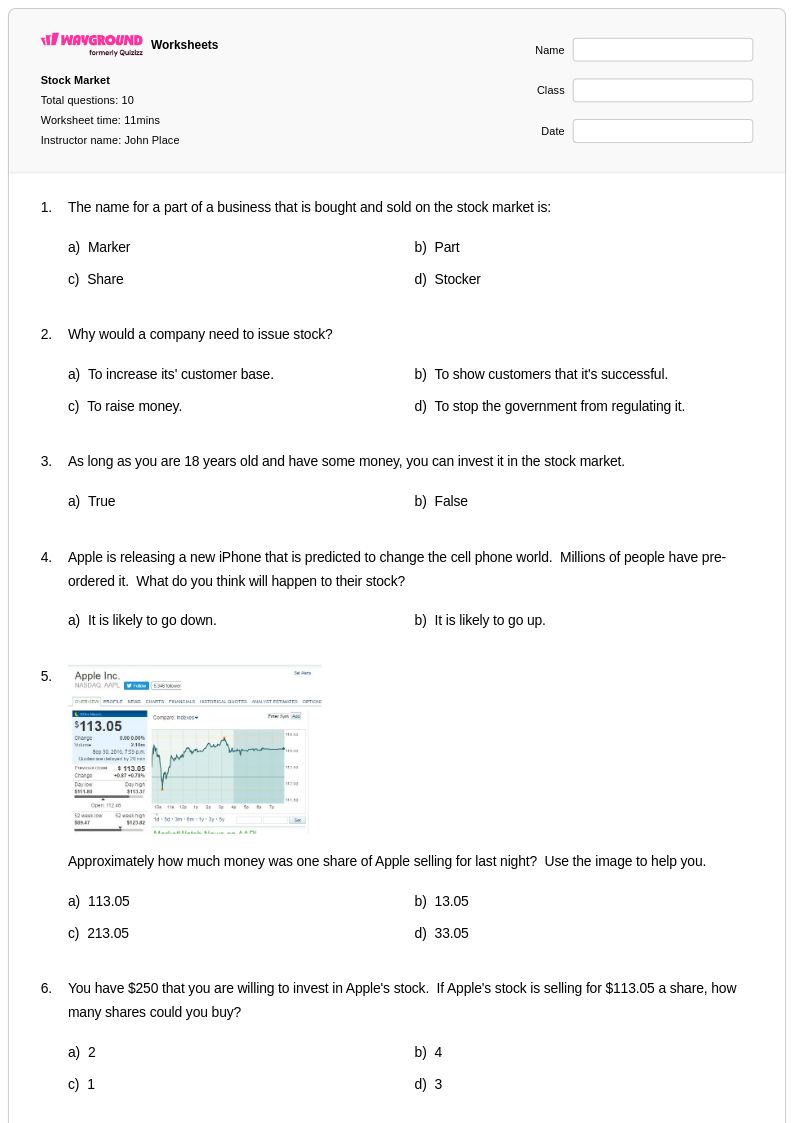
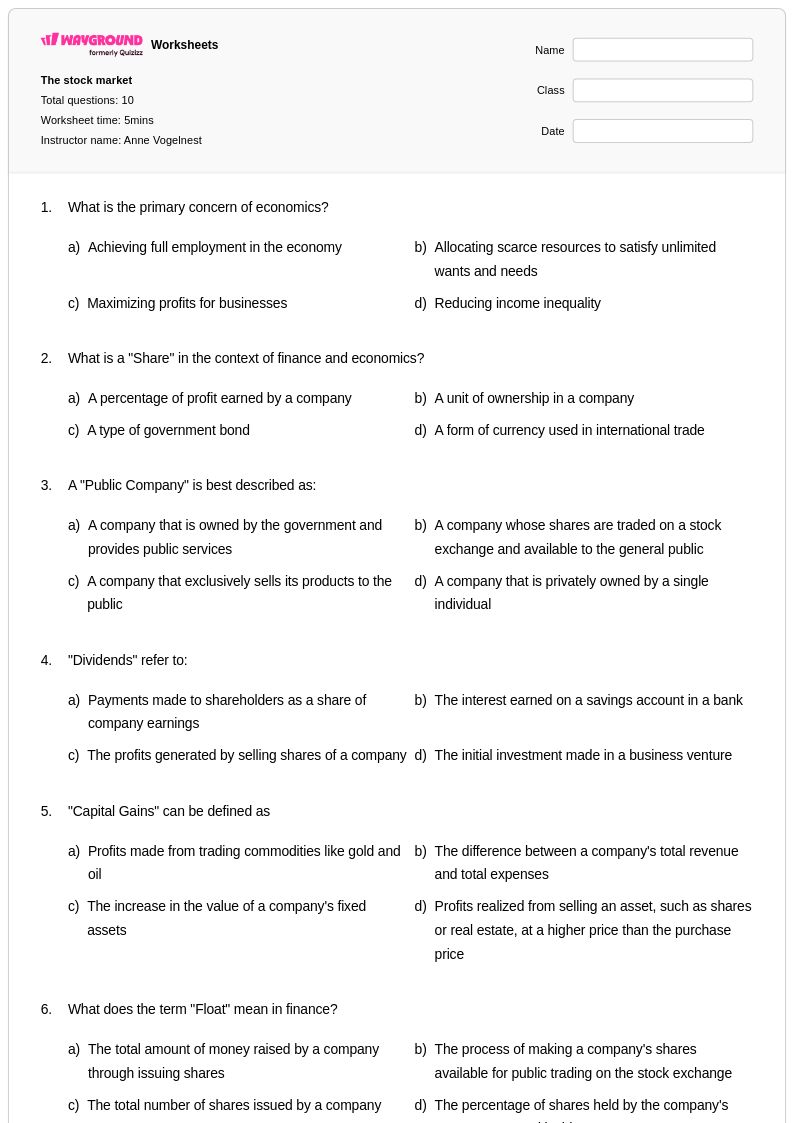
Stock market worksheets for Year 11 students available through Wayground (formerly Quizizz) provide comprehensive coverage of investment principles, market mechanics, and financial analysis essential for understanding modern economics. These educational resources strengthen critical thinking skills as students explore concepts such as stock valuation, market volatility, portfolio diversification, and the relationship between risk and return. The worksheets feature practice problems that guide students through real-world scenarios involving stock purchases, dividend calculations, and market trend analysis, while accompanying answer keys enable both independent study and classroom assessment. Available as free printables and digital resources, these materials help students develop financial literacy skills necessary for making informed investment decisions and understanding the role of capital markets in the broader economy.
Wayground's extensive collection of teacher-created stock market resources offers educators millions of customizable materials specifically designed to meet Year 11 academic standards and learning objectives. The platform's robust search and filtering capabilities allow teachers to quickly locate worksheets that align with specific curriculum requirements, whether focusing on fundamental analysis, technical indicators, or market psychology concepts. These differentiation tools enable instructors to modify content complexity and provide targeted remediation for struggling students or enrichment opportunities for advanced learners exploring investment strategies. Available in both printable pdf format and interactive digital versions, these resources support flexible lesson planning and can be seamlessly integrated into classroom instruction, homework assignments, or assessment preparation to reinforce essential stock market concepts and analytical skills.
FAQs
How do I teach stock market concepts to students who have no investing experience?
Start with the foundational idea that a stock represents partial ownership in a company, and use relatable examples like familiar consumer brands to make the concept concrete. From there, build toward concepts like supply and demand in pricing, market indices as performance benchmarks, and the relationship between company earnings and share value. Simulated trading activities and stock chart interpretation exercises are especially effective for grounding abstract financial ideas in observable data.
What exercises help students practice reading and interpreting stock charts?
Effective practice exercises ask students to identify price trends over time, calculate percentage changes in stock value, and compare the performance of multiple stocks across a defined period. Worksheets that present real or simulated financial data and ask students to draw conclusions about market volatility or investor behavior build the analytical thinking that financial literacy requires. Pairing chart-reading tasks with guided questions about what caused specific price movements deepens comprehension beyond surface-level data reading.
What mistakes do students commonly make when learning about the stock market?
One of the most common misconceptions is that a higher stock price always means a better investment, when in reality valuation depends on factors like earnings per share and price-to-earnings ratios. Students also frequently confuse the stock market with gambling, so it is important to emphasize diversification and long-term investment strategy as tools for managing risk. Another common error is conflating a company's stock price performance with its overall financial health, which can be addressed through exercises that analyze multiple financial indicators together.
How do stock market worksheets connect to broader economics curriculum?
Stock market concepts sit at the intersection of microeconomics and macroeconomics, making them ideal for reinforcing principles like supply and demand, opportunity cost, risk versus reward, and the flow of capital in a market economy. Worksheets that analyze how Federal Reserve decisions, inflation data, or corporate earnings reports affect stock prices help students see financial markets as a reflection of broader economic forces. This cross-curricular grounding makes stock market units particularly valuable in personal finance, economics, and social studies courses.
How can I use these stock market worksheets in my classroom?
Stock market worksheets on Wayground are available as printable PDFs for traditional classroom use and in digital formats for technology-integrated learning environments, including the option to host them as a quiz directly on Wayground. Teachers can use them as standalone practice assignments, formative assessments, or components of a larger personal finance or economics unit. All worksheets include comprehensive answer keys, so grading and review can be completed efficiently without additional preparation.
How do I differentiate stock market instruction for students at different skill levels?
For students new to investing concepts, start with worksheets focused on what stocks represent and how exchanges function before introducing more complex topics like portfolio diversification or market indices. Advanced learners can be challenged with exercises that analyze IPOs, dividend yields, or the economic factors driving market volatility. On Wayground, teachers can also apply individual accommodations such as read aloud support or reduced answer choices for students who need additional scaffolding, without affecting the experience of other students in the class.