Free Printable Personal Financial Literacy Worksheets for Year 11
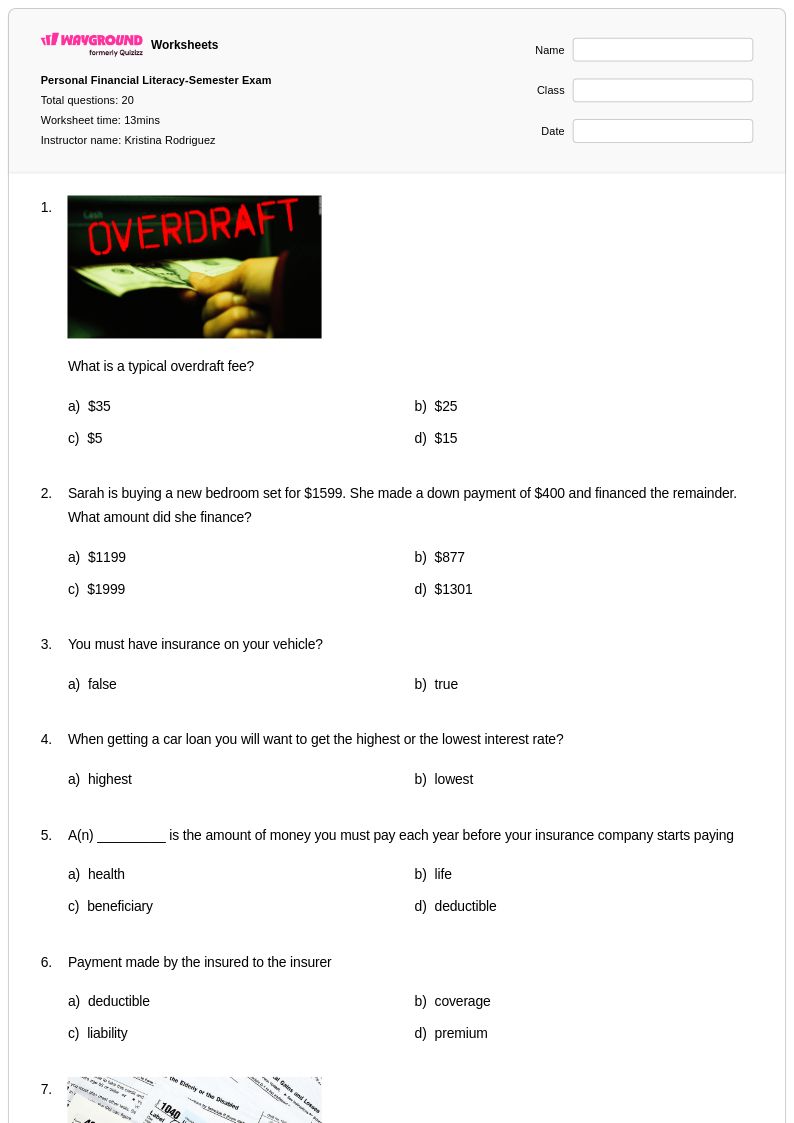
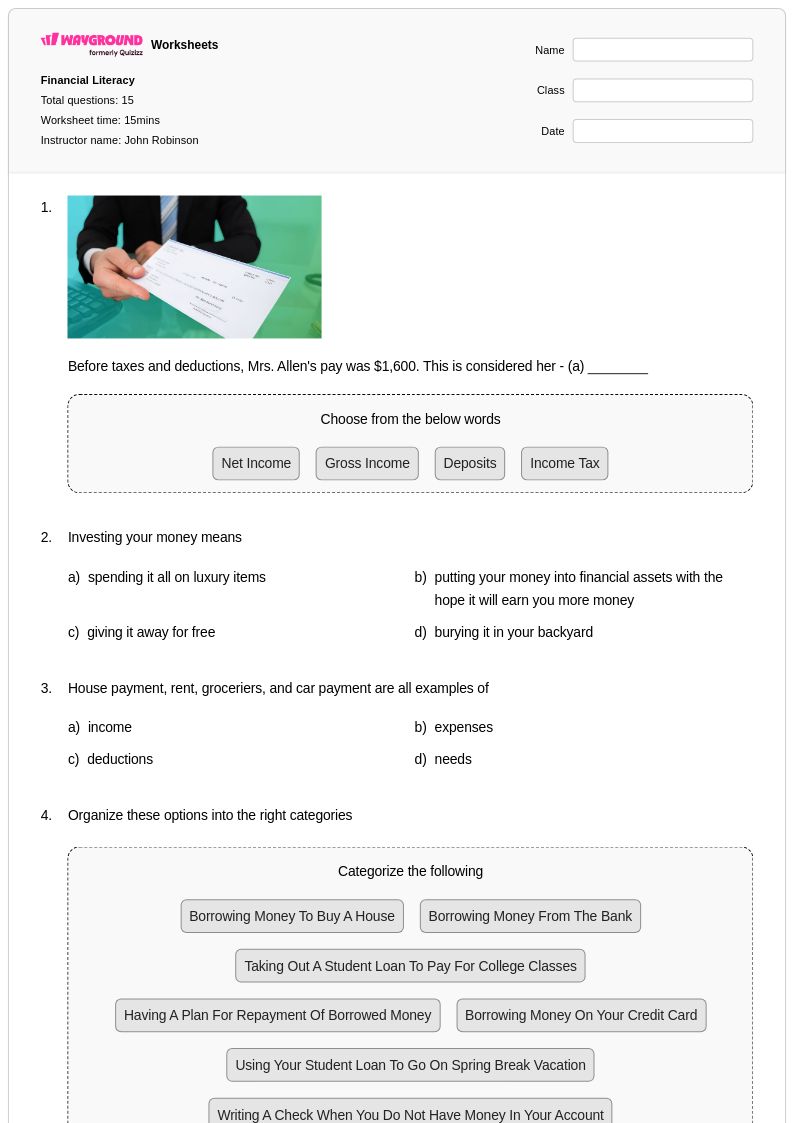
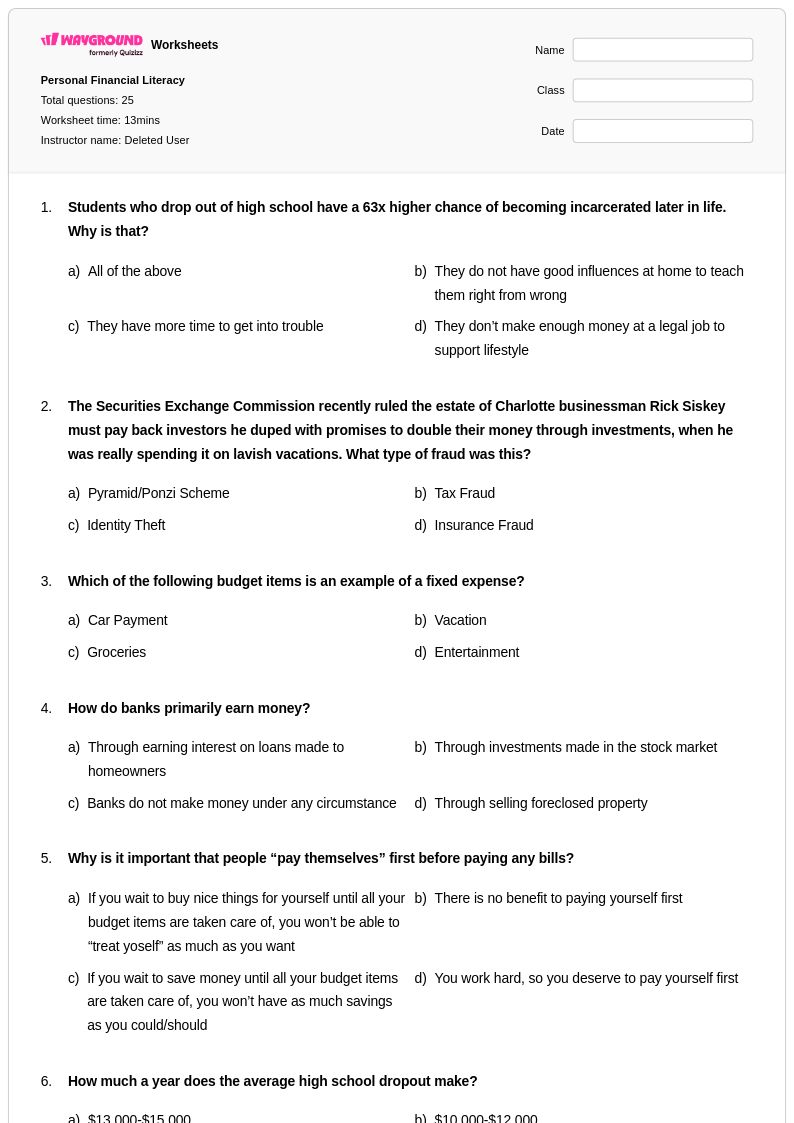
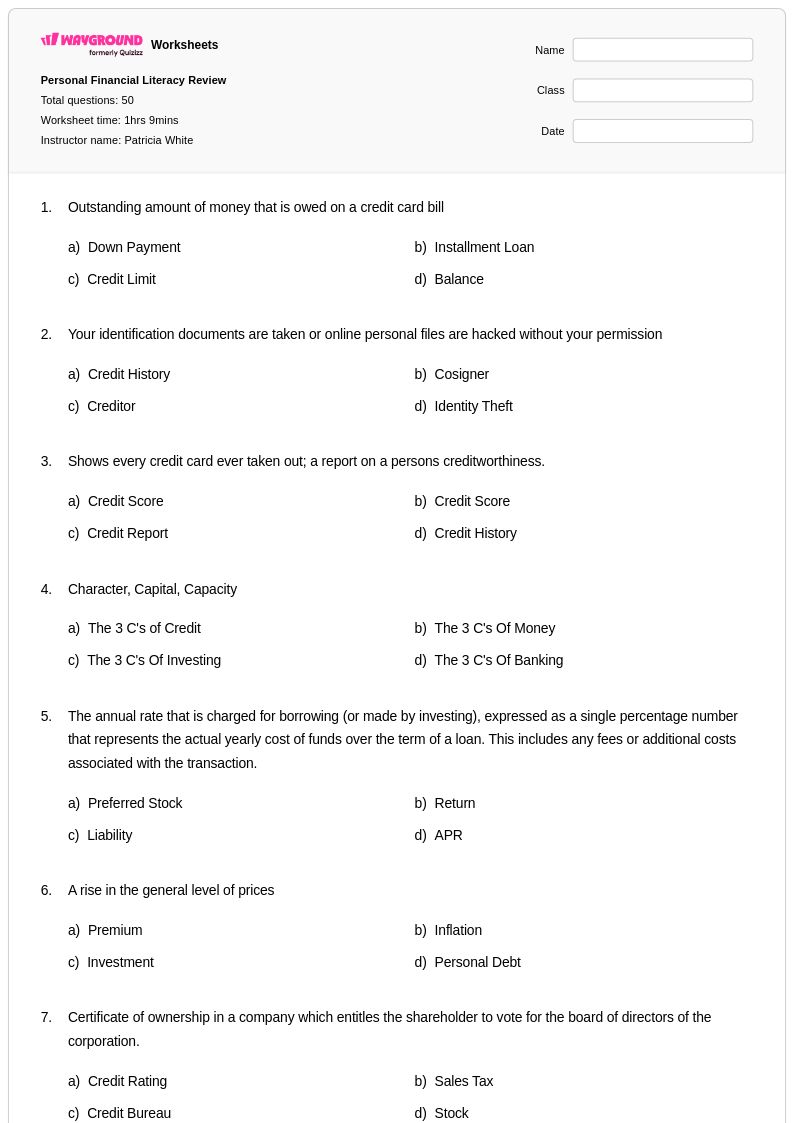
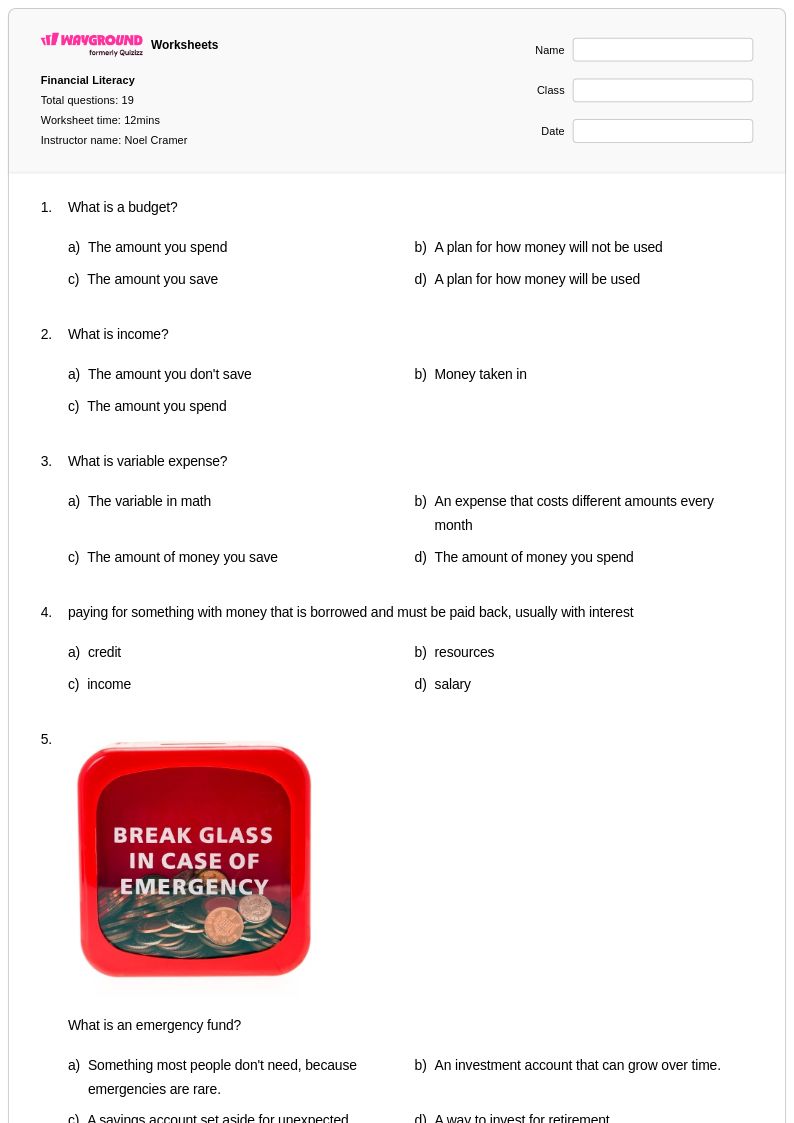
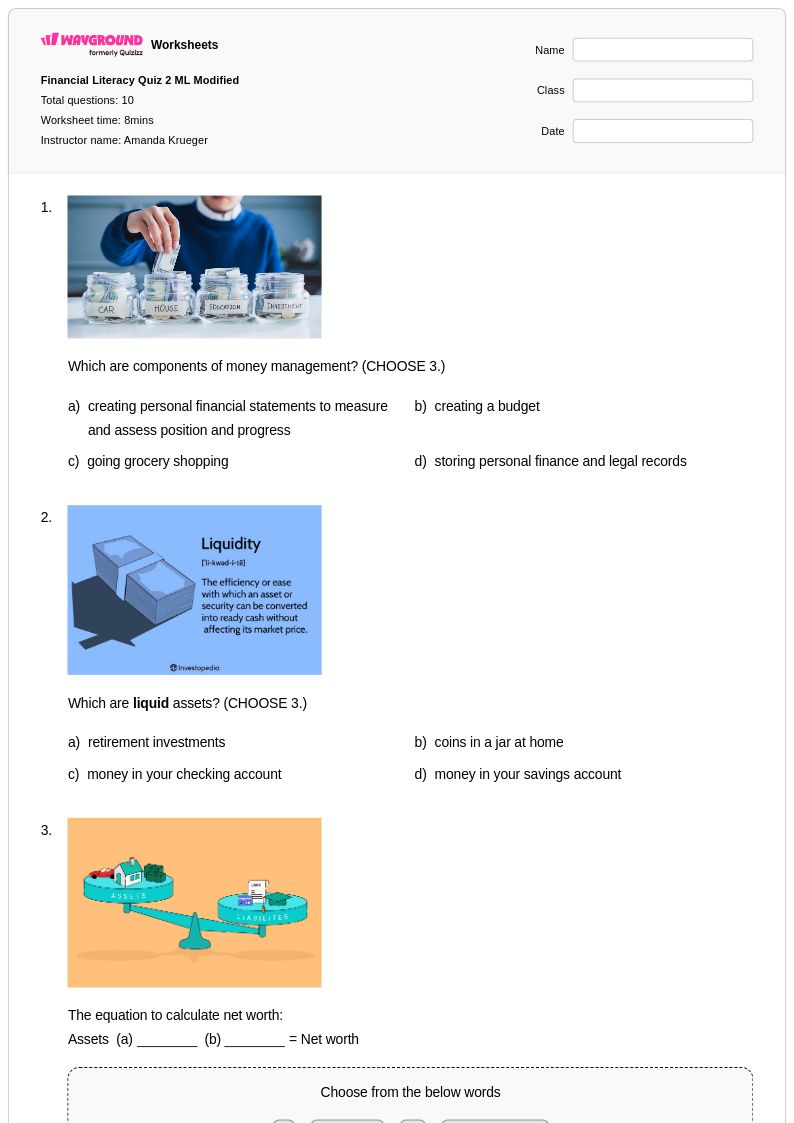
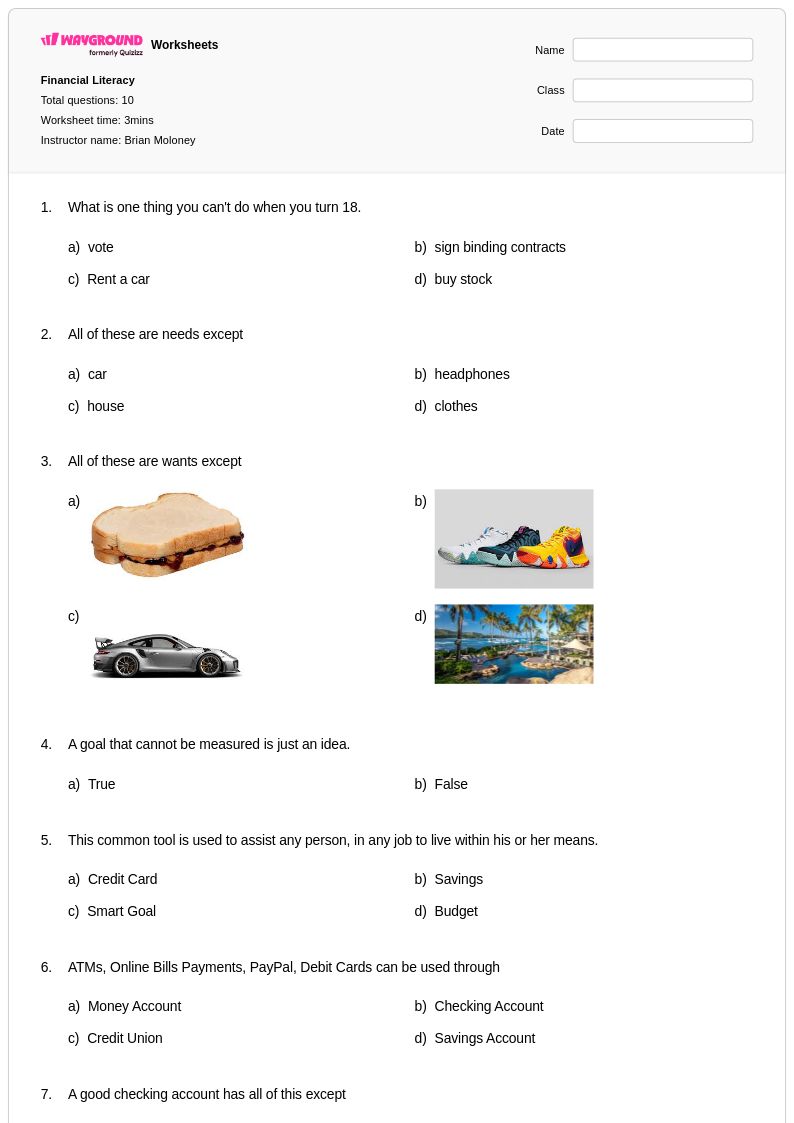
Year 11 Personal Financial Literacy worksheets from Wayground offer comprehensive printables and practice problems that help students master budgeting, saving, investing, and credit management skills with included answer keys.
Explore printable Personal Financial Literacy worksheets for Year 11
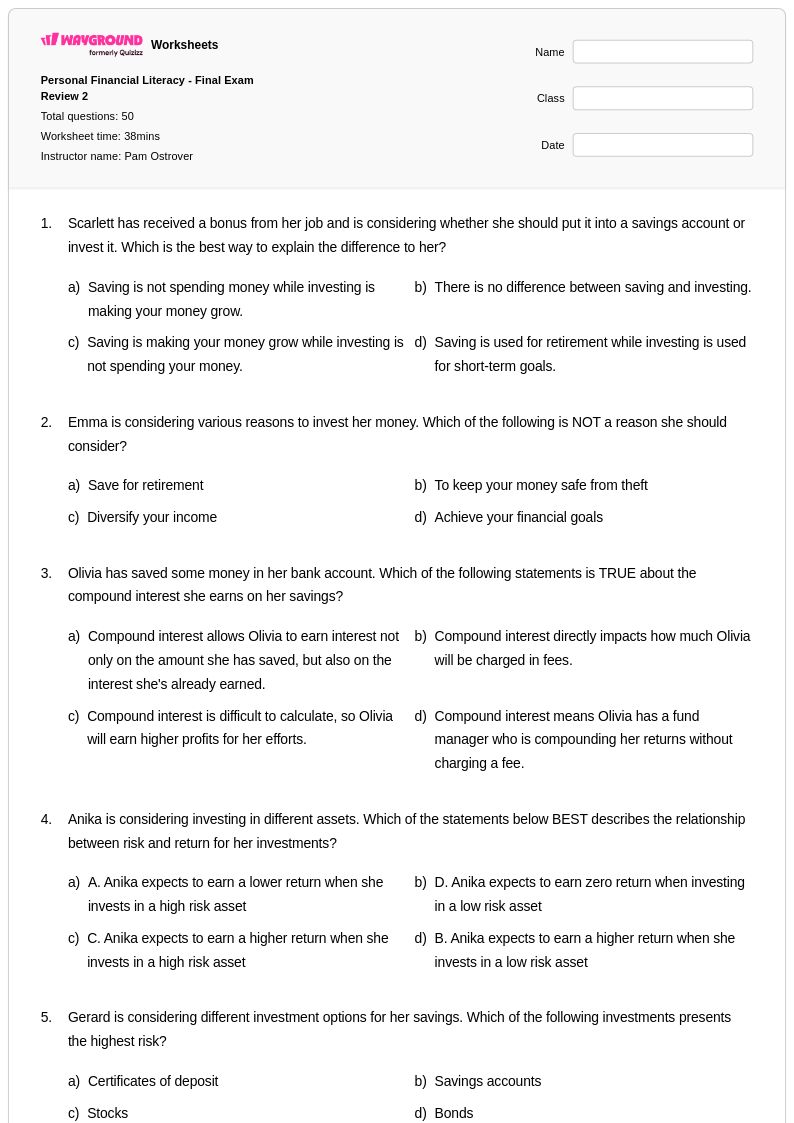
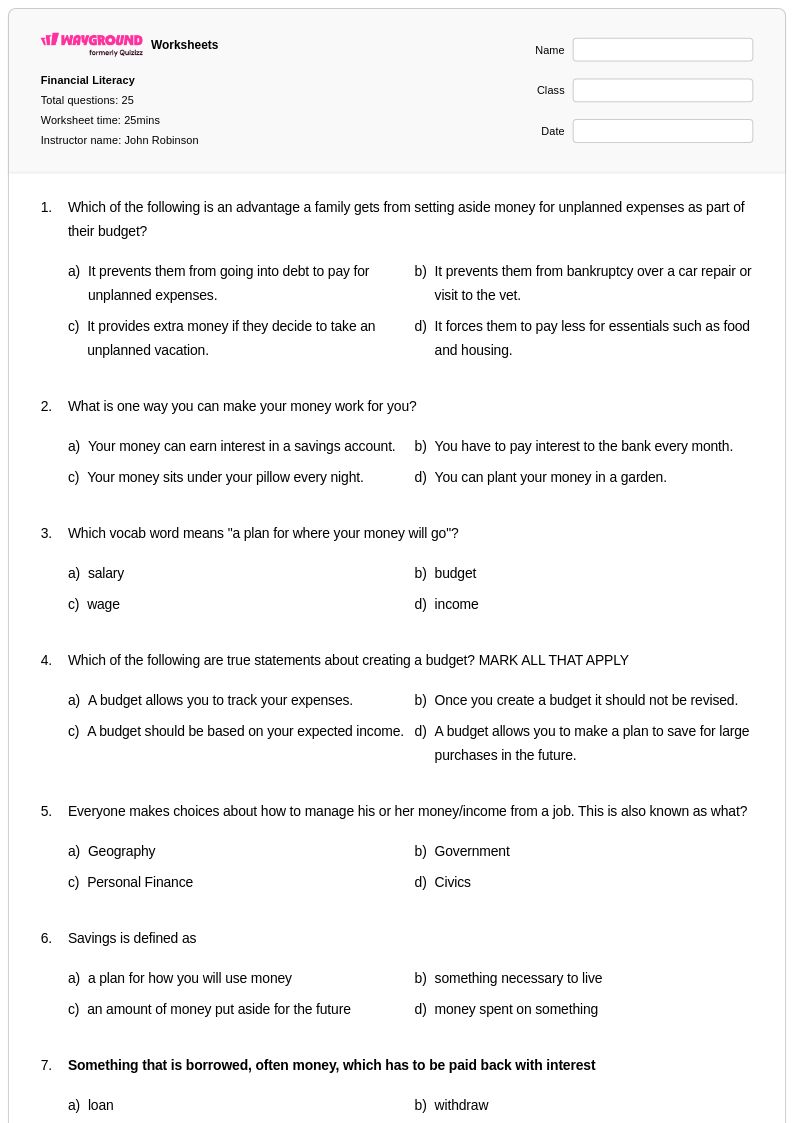
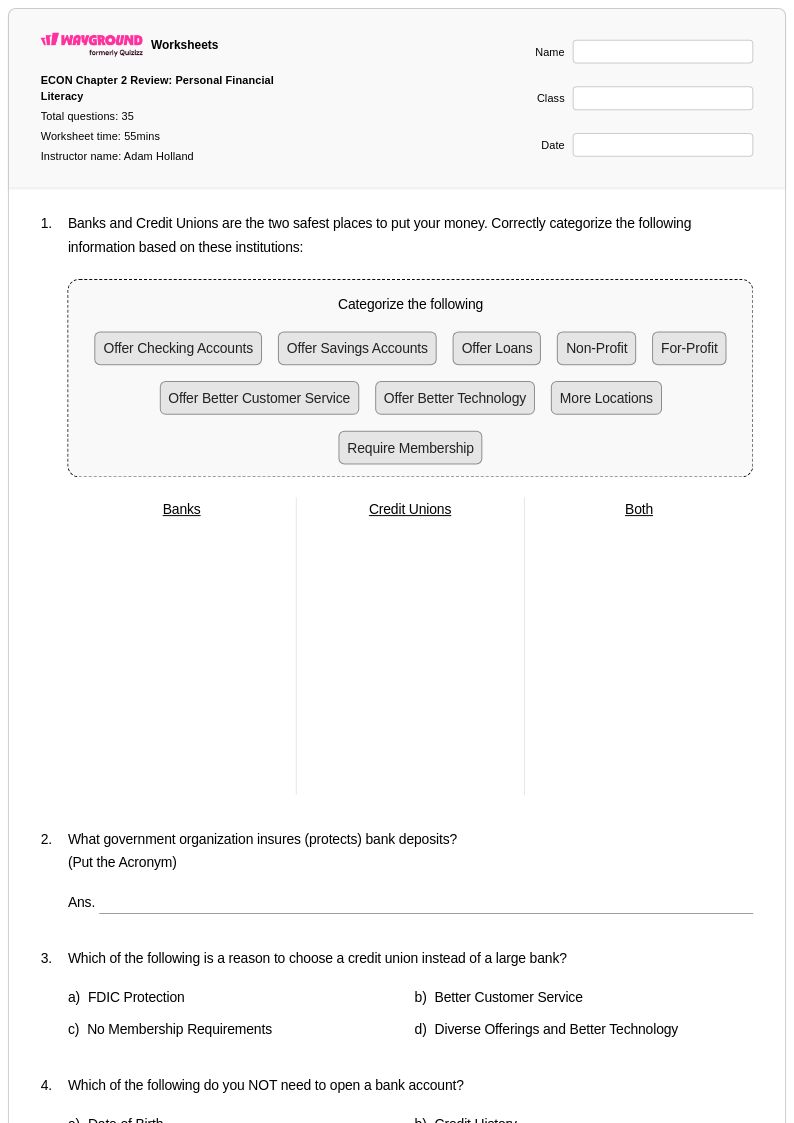
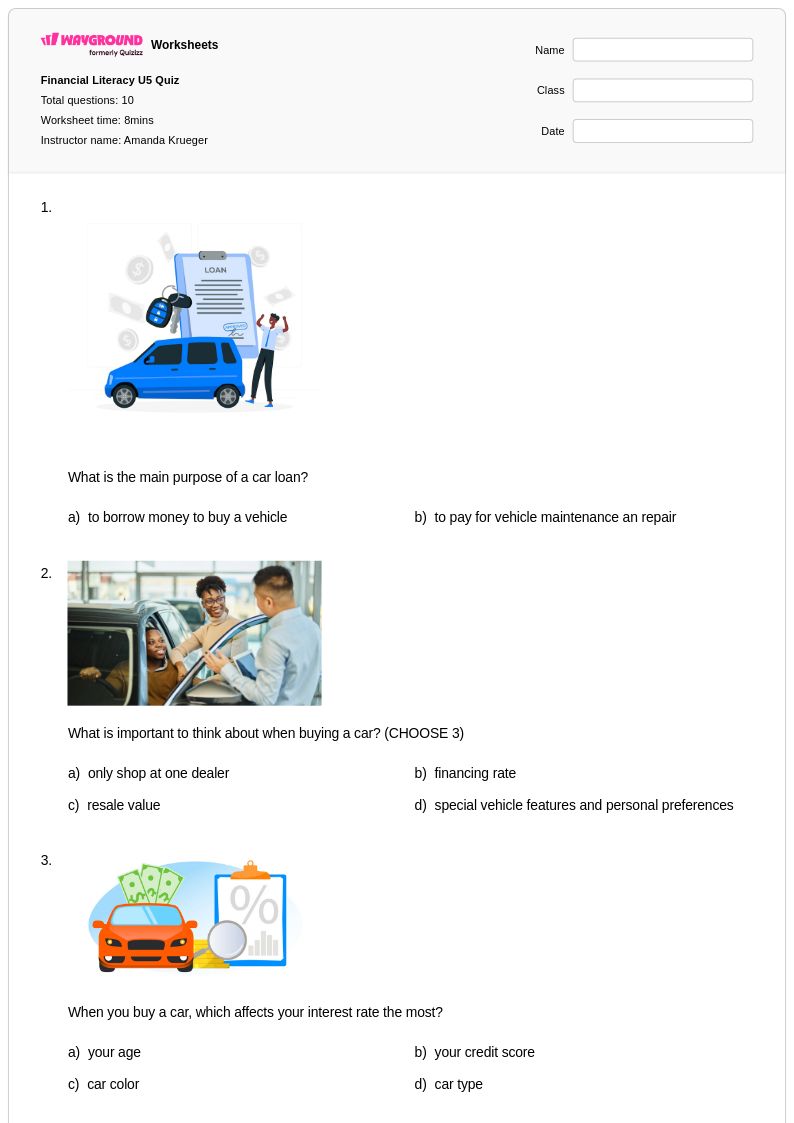
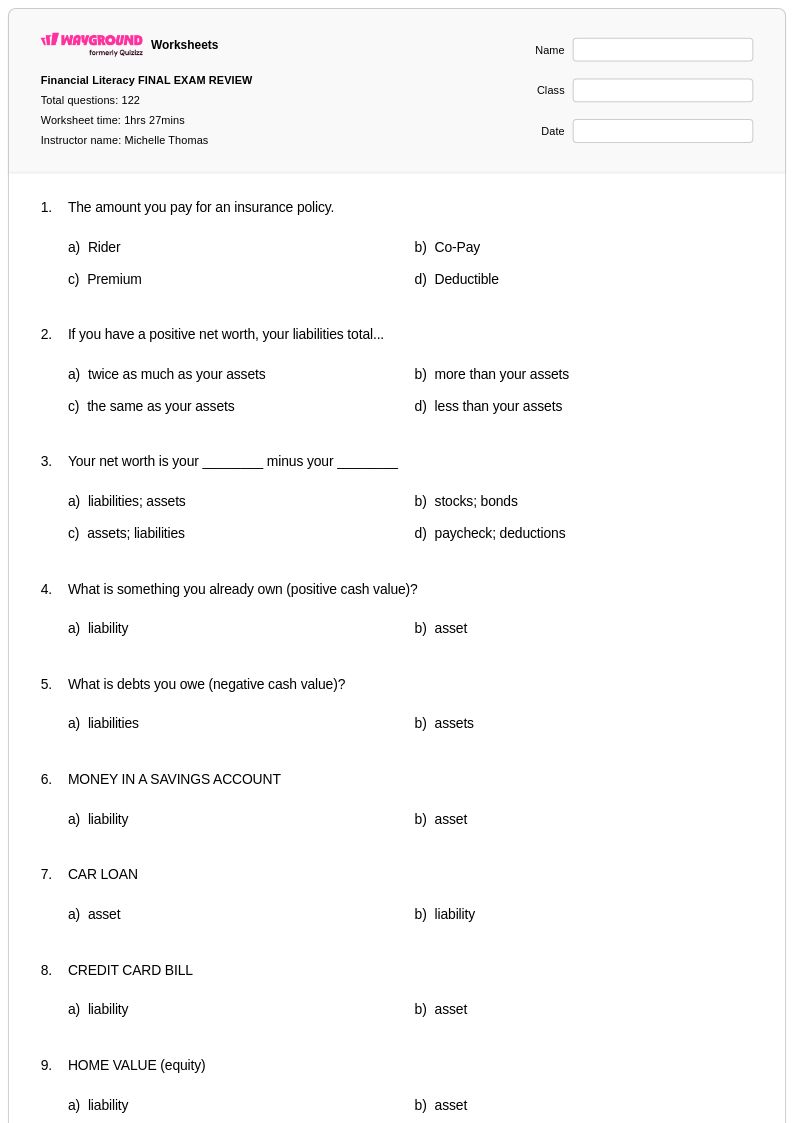
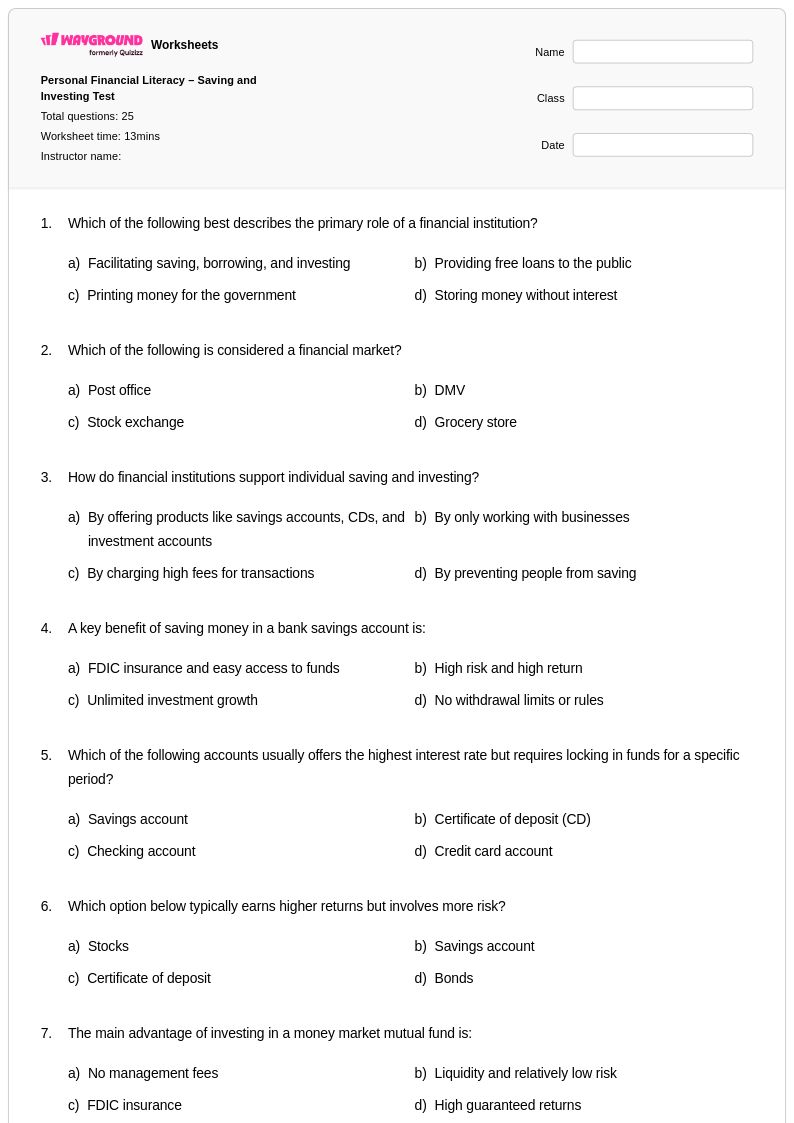
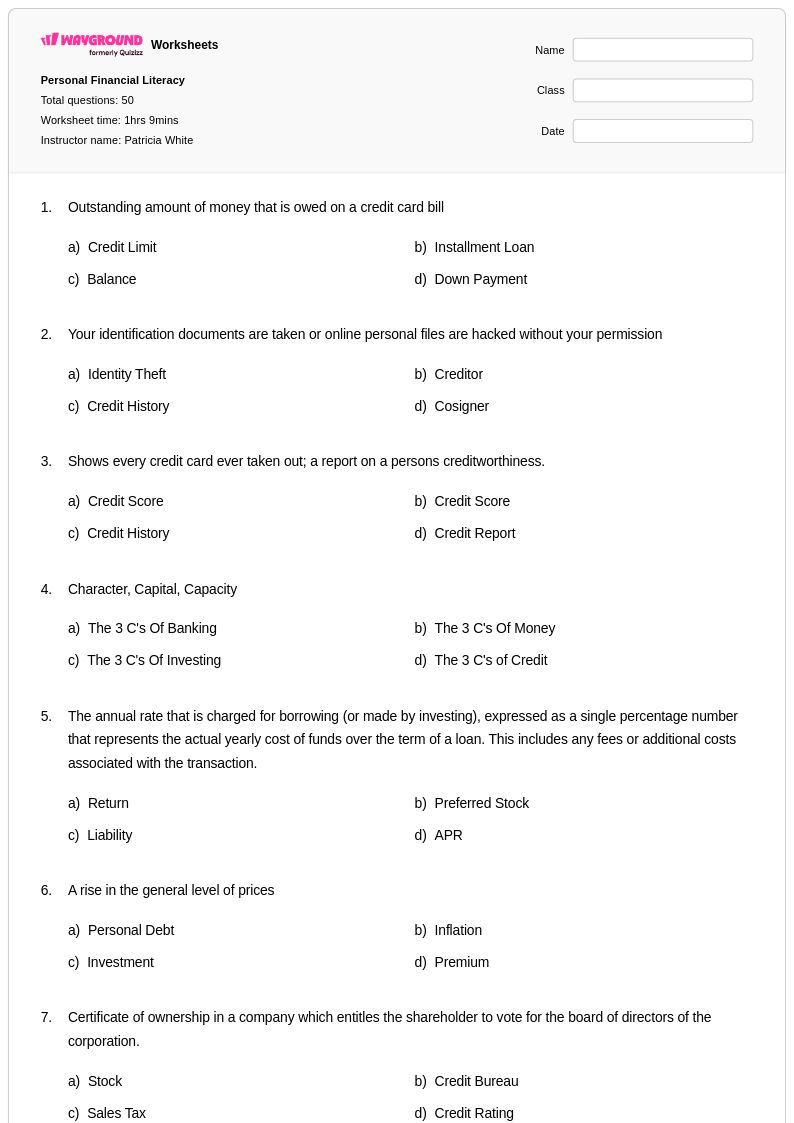
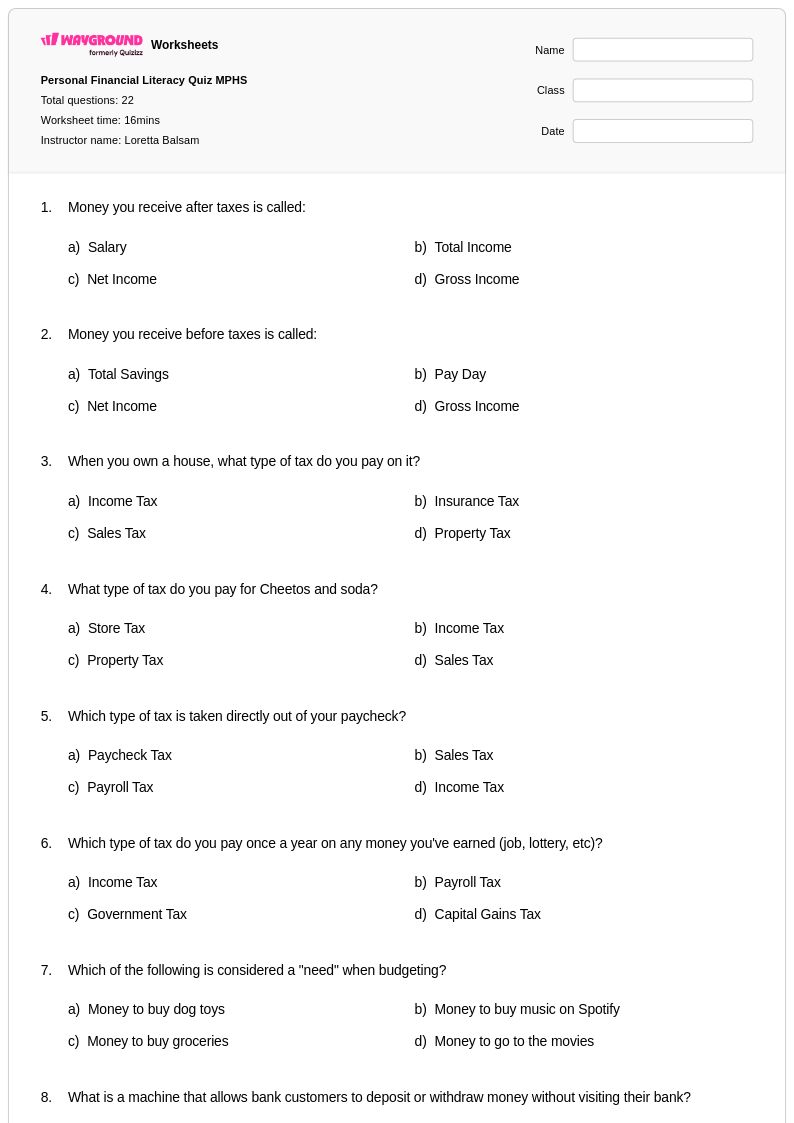
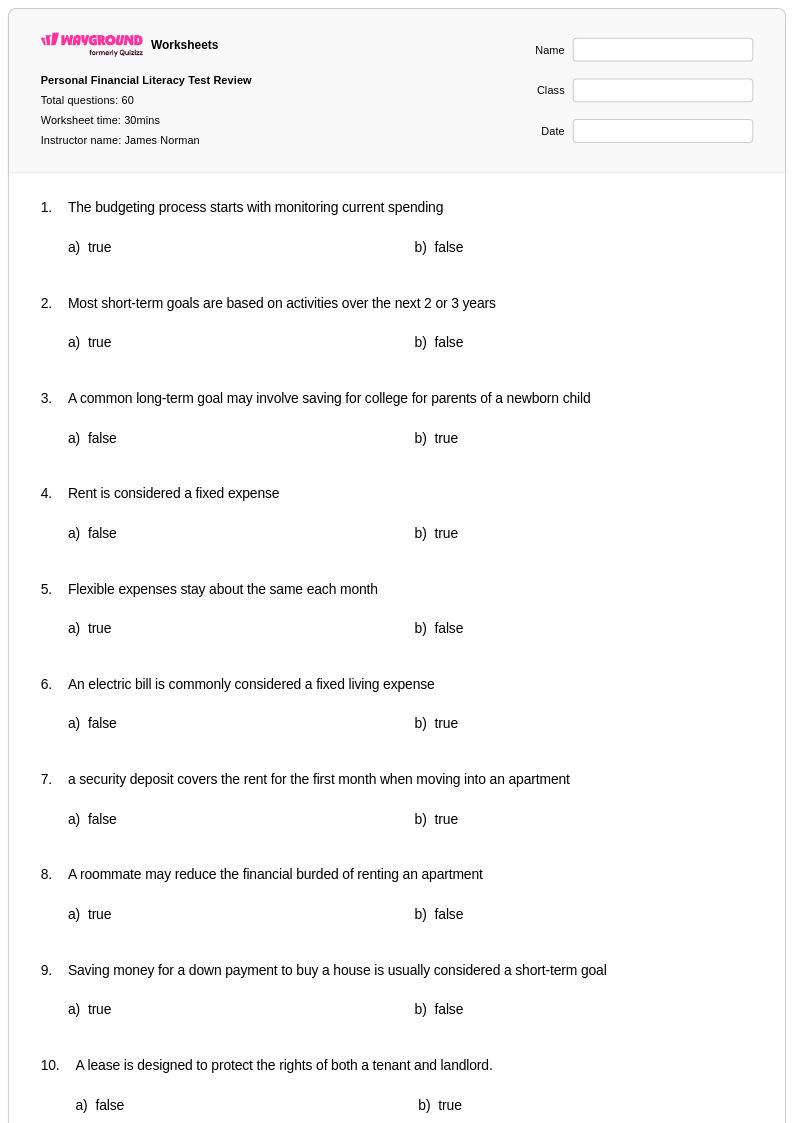
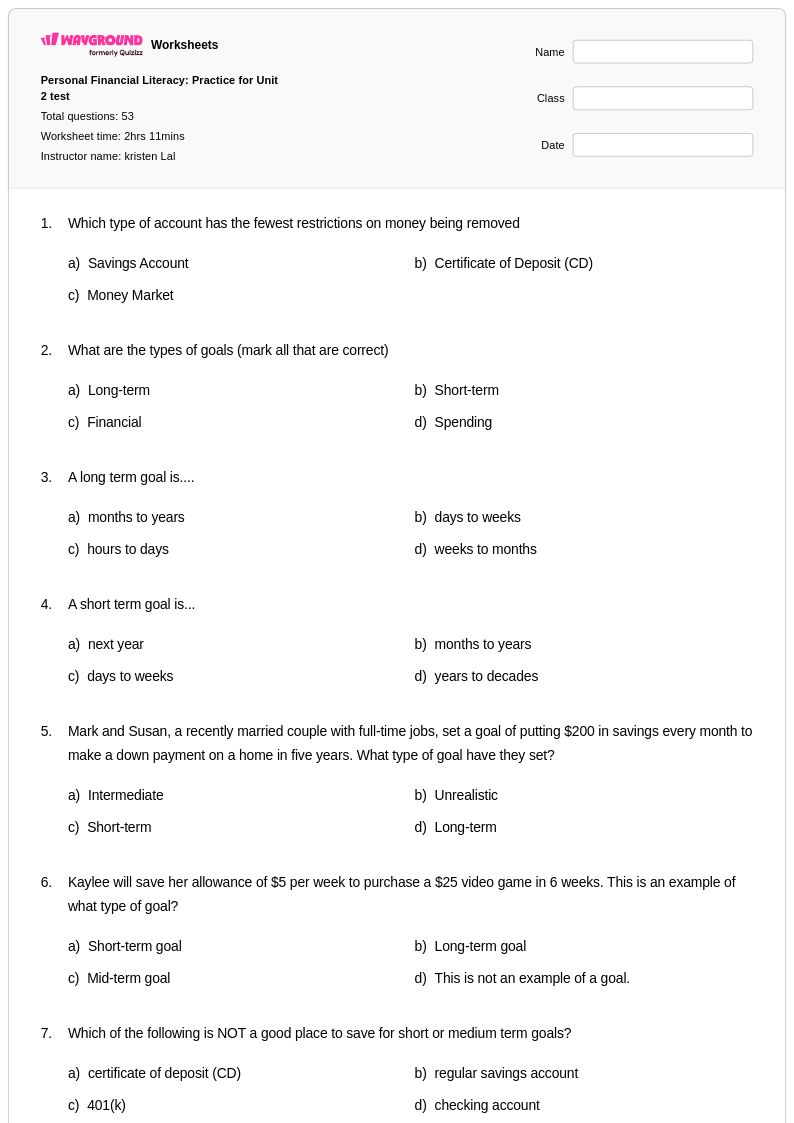
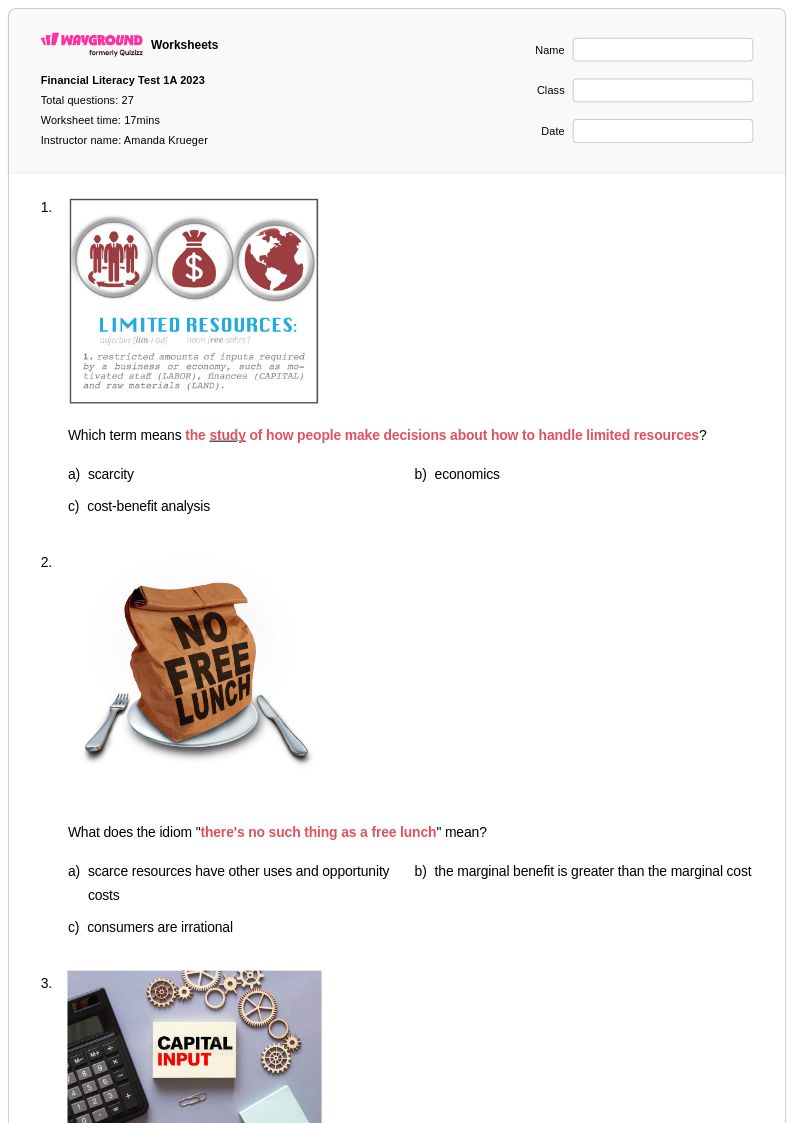
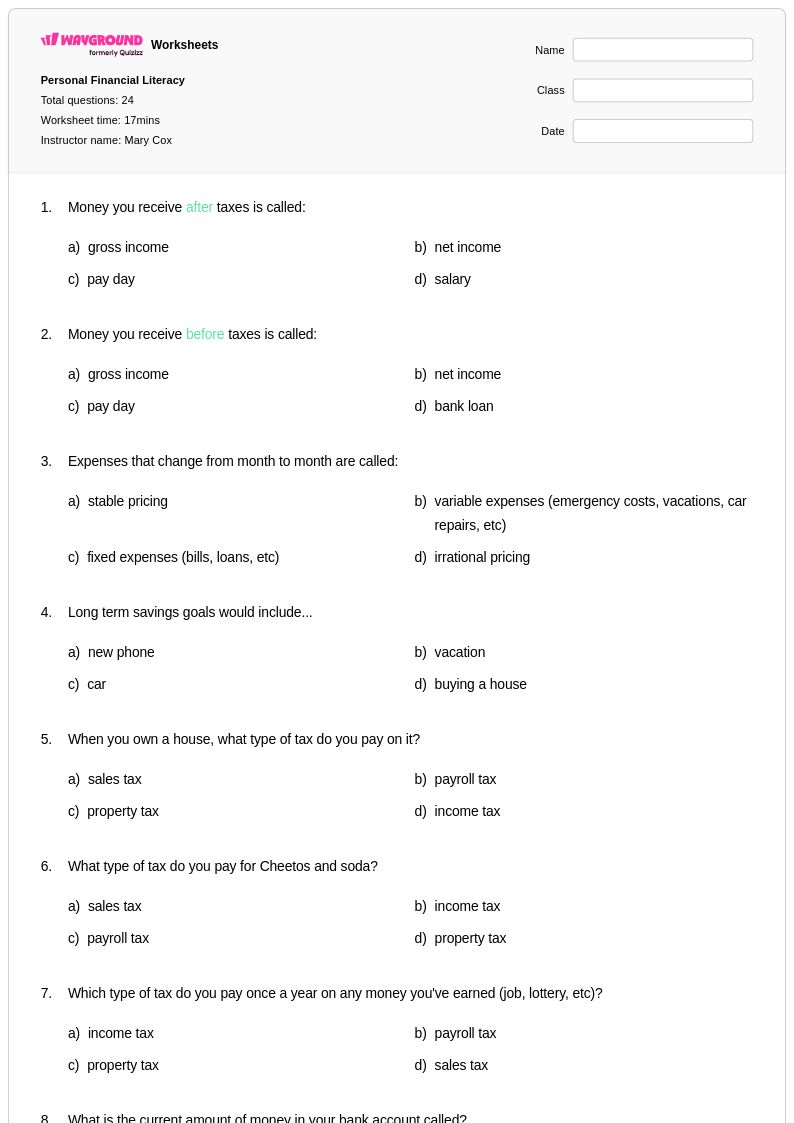
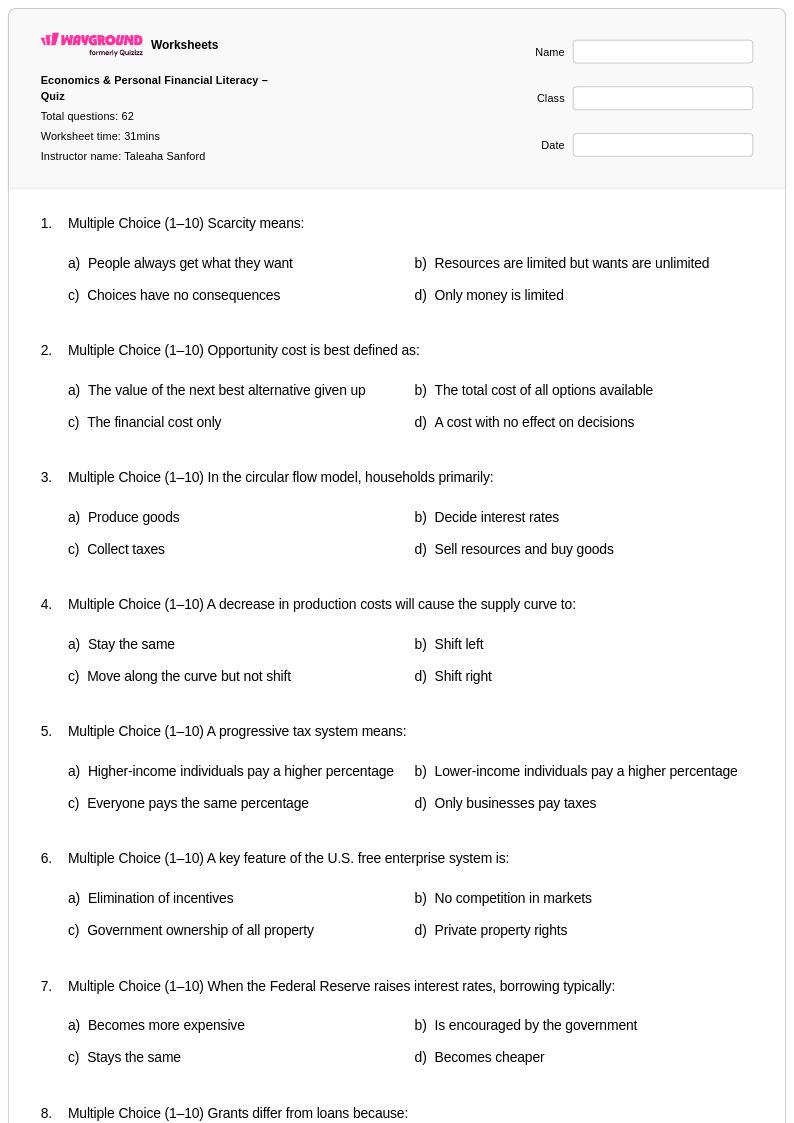
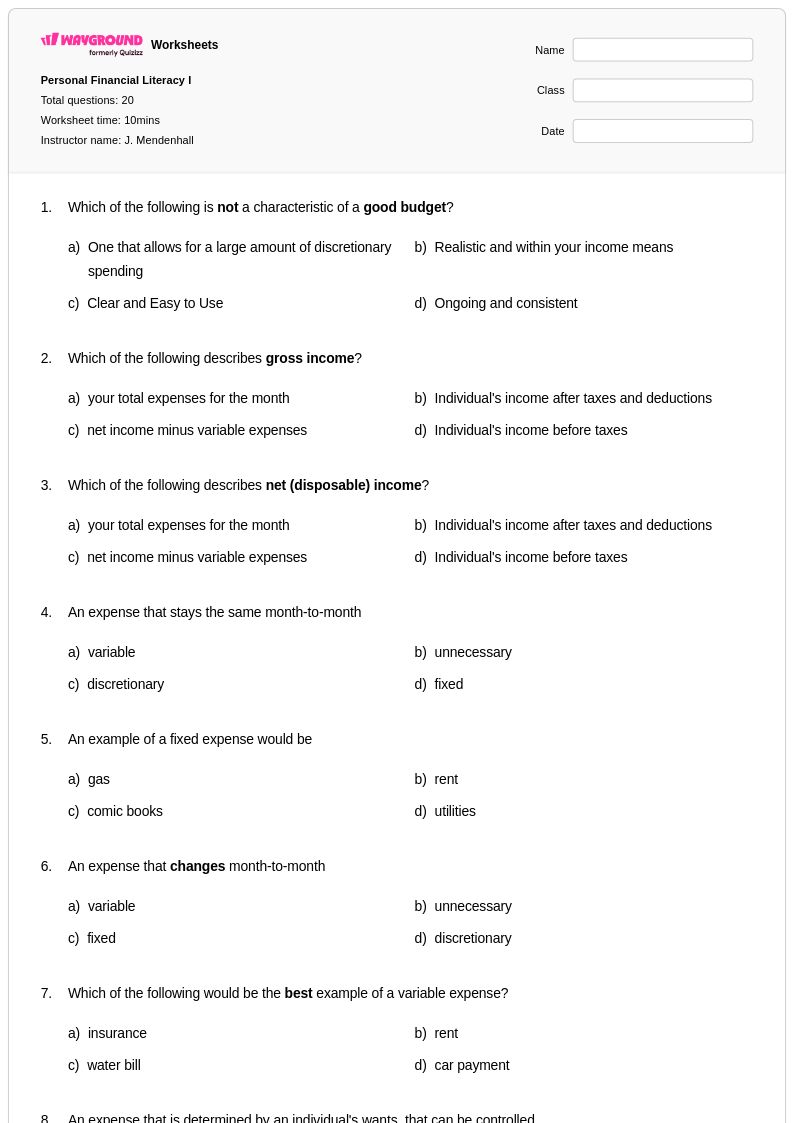
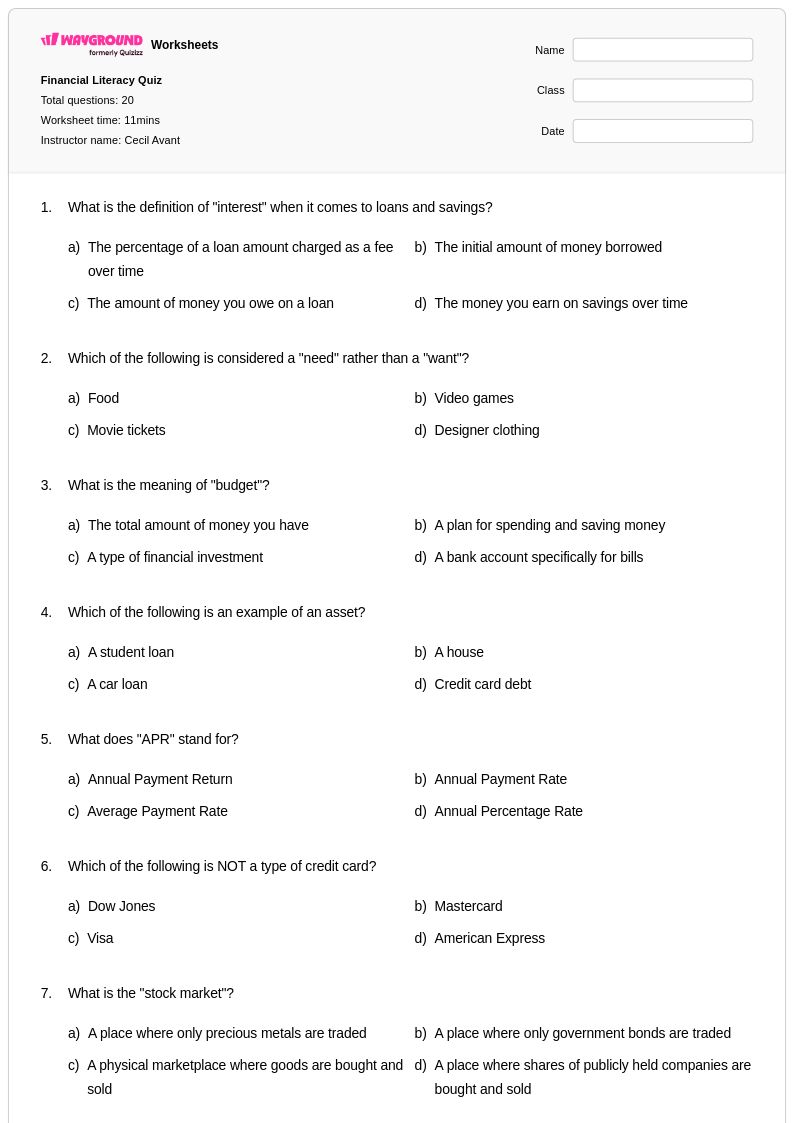
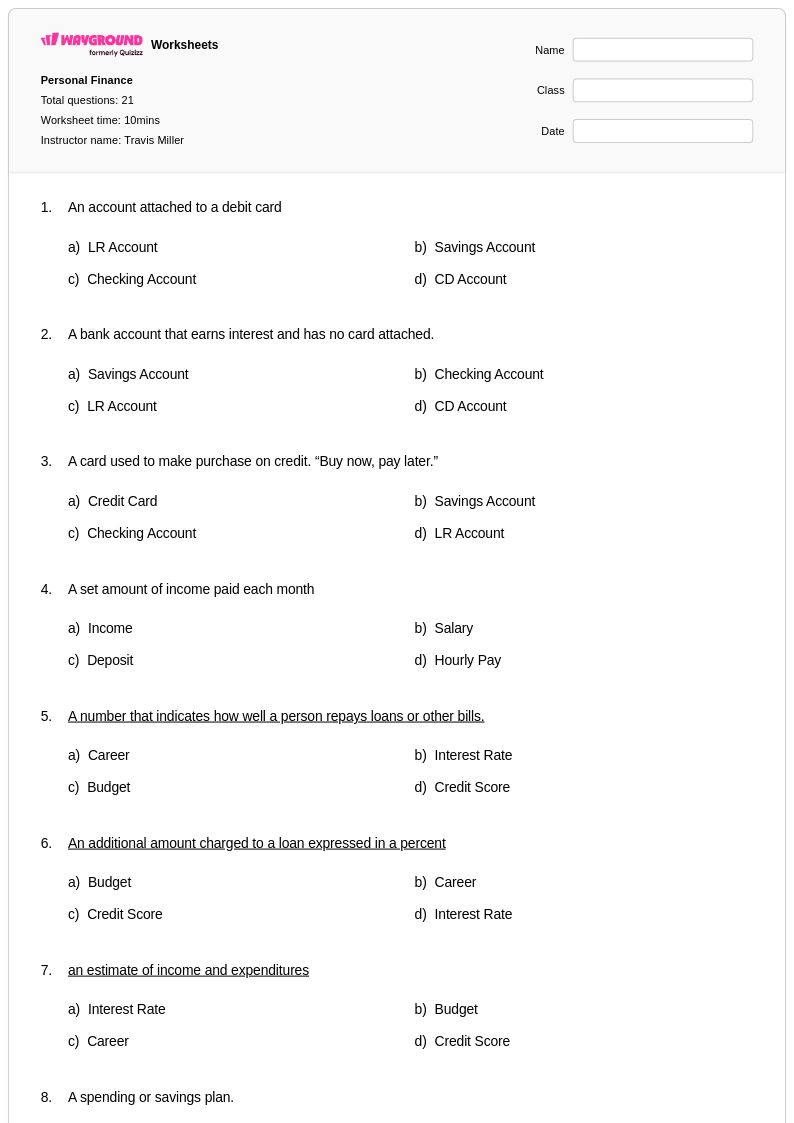
Personal Financial Literacy worksheets available through Wayground (formerly Quizizz) provide Year 11 students with comprehensive practice in essential money management skills that prepare them for adult financial independence. These expertly crafted resources strengthen critical competencies including budgeting, understanding credit and debt, analyzing investment options, calculating compound interest, and evaluating insurance needs. Students engage with real-world scenarios through practice problems that simulate authentic financial decisions, from comparing loan terms to creating retirement savings plans. Each worksheet collection includes detailed answer keys that support both independent learning and guided instruction, with free printables available in convenient pdf format for immediate classroom implementation.
Wayground (formerly Quizizz) empowers educators with millions of teacher-created Personal Financial Literacy resources that streamline lesson planning and enhance student outcomes in Year 11 economics instruction. The platform's robust search and filtering capabilities allow teachers to quickly locate materials aligned with state and national standards, while differentiation tools enable customization for diverse learning needs and ability levels. These flexible resources are available in both printable and digital formats, including downloadable pdf versions that support hybrid learning environments. Teachers utilize these comprehensive worksheet collections for targeted skill practice, remediation of challenging concepts like compound interest calculations, and enrichment activities that extend learning beyond basic financial literacy requirements, ensuring students develop the sophisticated understanding necessary for successful financial decision-making throughout their lives.
FAQs
How do I teach personal financial literacy to students?
Effective financial literacy instruction connects abstract money concepts to real-world decisions students will actually face. Start with foundational skills like budgeting and saving, then build toward more complex topics such as compound interest, credit management, and investment basics. Using scenario-based practice problems that mirror real financial situations helps students apply concepts rather than simply memorize them, which is why worksheet exercises built around creating personal budgets or evaluating loan terms tend to be especially effective.
What exercises help students practice personal financial literacy skills?
Strong practice exercises for financial literacy include calculating compound interest, comparing loan terms, building sample budgets on a fixed income, and analyzing the long-term cost of credit card debt. Students also benefit from consumer decision-making scenarios where they must weigh trade-offs between spending, saving, and investing. These types of problems develop the critical thinking skills students need for sound financial decisions throughout their lives.
What mistakes do students commonly make when learning personal financial literacy concepts?
One of the most common misconceptions is confusing gross income with net income when building a budget, which leads to unrealistic spending plans. Students also frequently underestimate the long-term cost of carrying credit card debt and overestimate how quickly savings grow without compound interest. When analyzing loan terms, many students focus only on monthly payment amounts rather than total repayment cost, missing the full financial picture.
How can I differentiate personal financial literacy instruction for students at different skill levels?
Differentiation in financial literacy works well when you tier problems by complexity: basic budgeting and simple interest for students who need foundational support, and compound interest calculations, investment analysis, or insurance evaluation for advanced learners. On Wayground, teachers can also apply individual student accommodations such as read aloud support, extended time, or reduced answer choices, which is particularly useful for students who struggle with multi-step word problems common in financial math.
How do I use Wayground's personal financial literacy worksheets in my classroom?
Wayground's personal financial literacy worksheets are available as printable PDFs for traditional classroom and homework use, as well as in digital formats for technology-integrated learning environments. Teachers can also host worksheets as an interactive quiz directly on Wayground, making them suitable for formative assessment or independent practice. All worksheets include complete answer keys, so teachers can use them efficiently without additional prep time.
At what grade level should students start learning personal financial literacy?
Personal financial literacy concepts can be introduced as early as elementary school with basic money recognition and simple saving habits, but the depth of instruction typically increases significantly in middle and high school. Topics like budgeting, credit, compound interest, and investment fundamentals are most commonly addressed in middle school social studies or math courses and in dedicated high school economics or personal finance classes. Wayground's collection spans all educational levels, allowing teachers to select materials matched to their students' readiness.