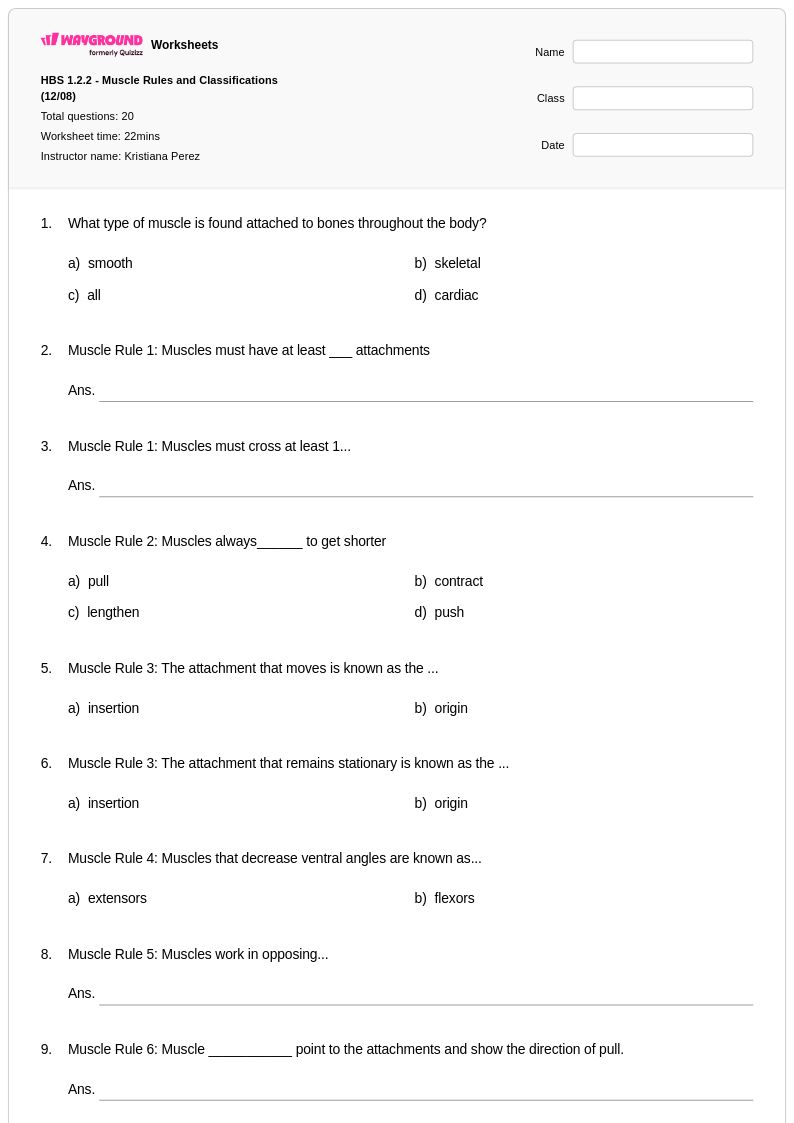
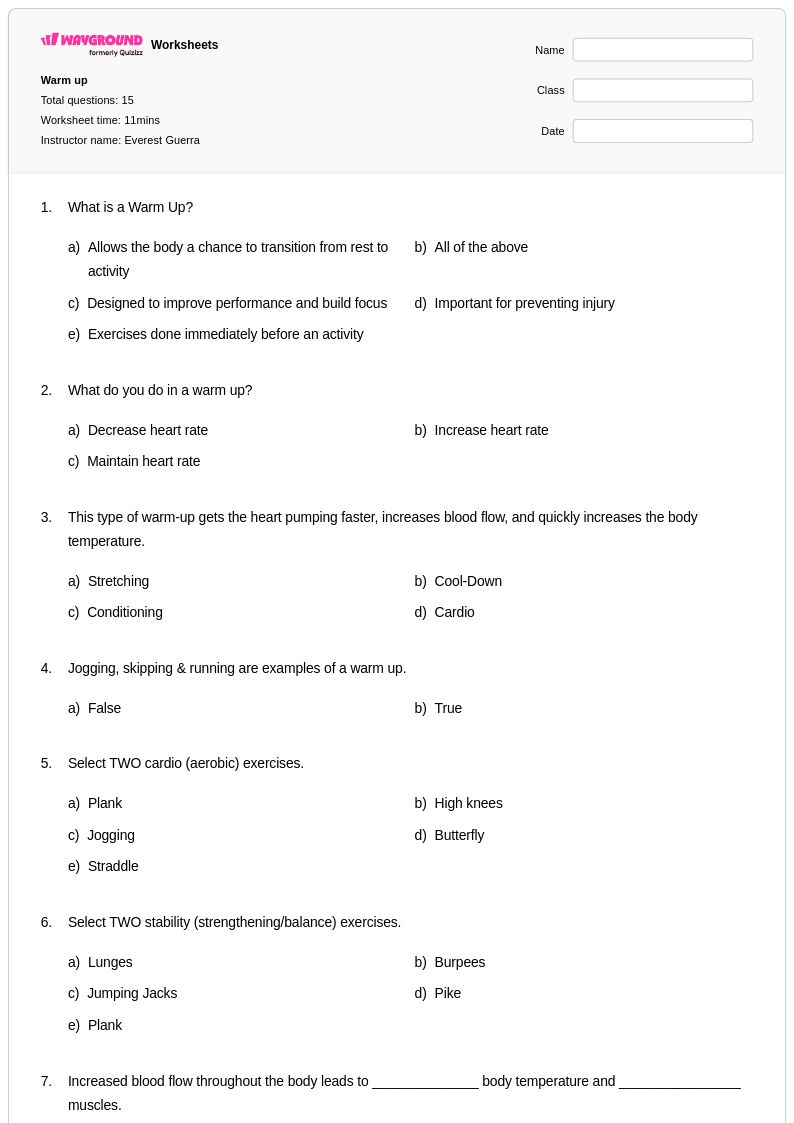
Year 12 stretching worksheets and printables from Wayground help students master proper flexibility techniques, muscle preparation methods, and injury prevention strategies through comprehensive practice problems and detailed answer keys.
Explore printable Stretching worksheets for Year 12
Stretching worksheets for Year 12 physical education provide comprehensive resources that help students master proper flexibility techniques and understand the science behind effective stretching routines. These educational materials guide advanced high school students through detailed analysis of static, dynamic, and PNF stretching methods while emphasizing injury prevention and performance enhancement. The worksheets include practice problems that require students to design personalized stretching programs, identify muscle groups targeted by specific stretches, and evaluate the physiological benefits of regular flexibility training. Available as free printables with complete answer keys, these resources enable students to demonstrate mastery of biomechanical principles and develop evidence-based stretching protocols suitable for various athletic activities and fitness goals.
Wayground, formerly Quizizz, empowers physical education teachers with millions of teacher-created stretching worksheets specifically designed for Year 12 students, offering both printable pdf formats and interactive digital versions to accommodate diverse classroom needs. The platform's advanced search and filtering capabilities allow educators to quickly locate materials aligned with specific curriculum standards while accessing differentiation tools that support students across varying skill levels and learning preferences. Teachers can customize existing worksheets or create original assessments to address individual student needs, making these resources invaluable for lesson planning, targeted remediation of movement deficiencies, and enrichment activities for advanced learners. This extensive collection supports systematic skill practice in flexibility assessment, stretching technique analysis, and program design, ensuring students develop the critical thinking skills necessary for lifelong fitness and injury prevention.
FAQs
How do I teach students the difference between static and dynamic stretching?
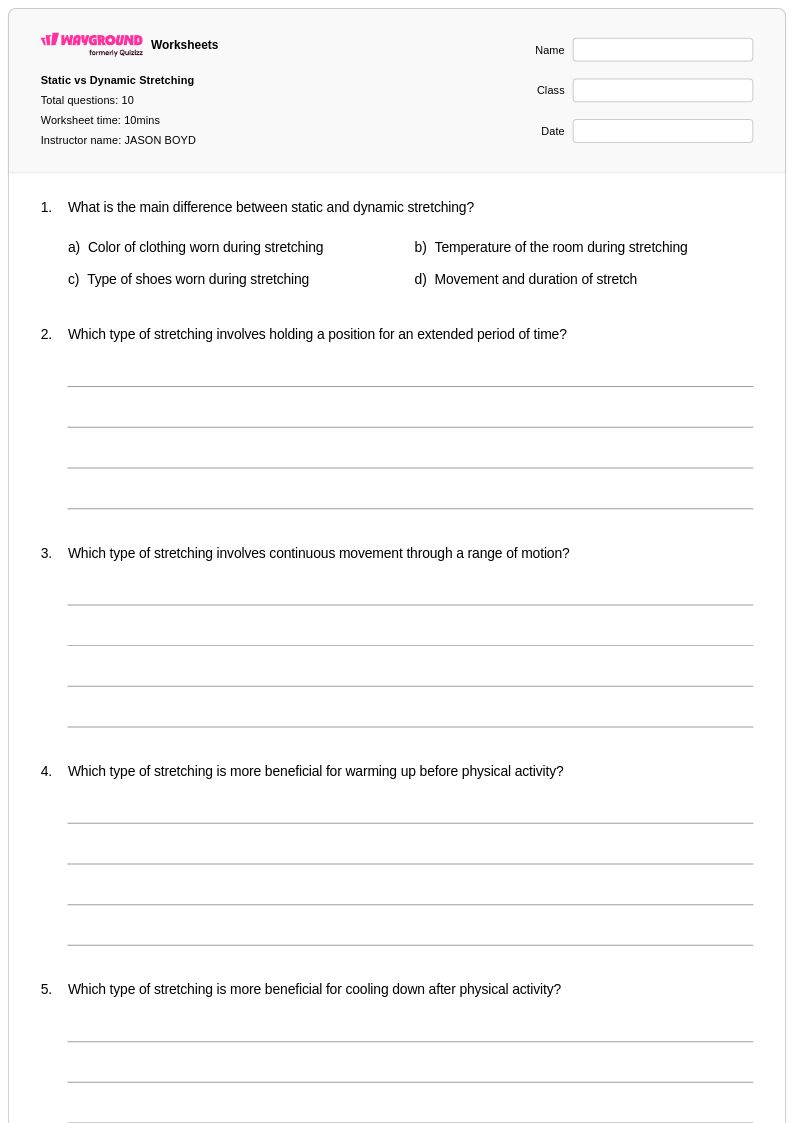
Static stretching involves holding a position for 15–60 seconds to lengthen a muscle, while dynamic stretching uses controlled movement through a full range of motion to warm up muscles before activity. Teach static stretching as a cool-down tool and dynamic stretching as a pre-activity warm-up, using examples students recognize from sport or daily movement. Reinforcing this distinction early prevents misuse, such as students performing static stretches on cold muscles, which increases injury risk.
What exercises help students practice identifying the correct stretch for a specific muscle group?
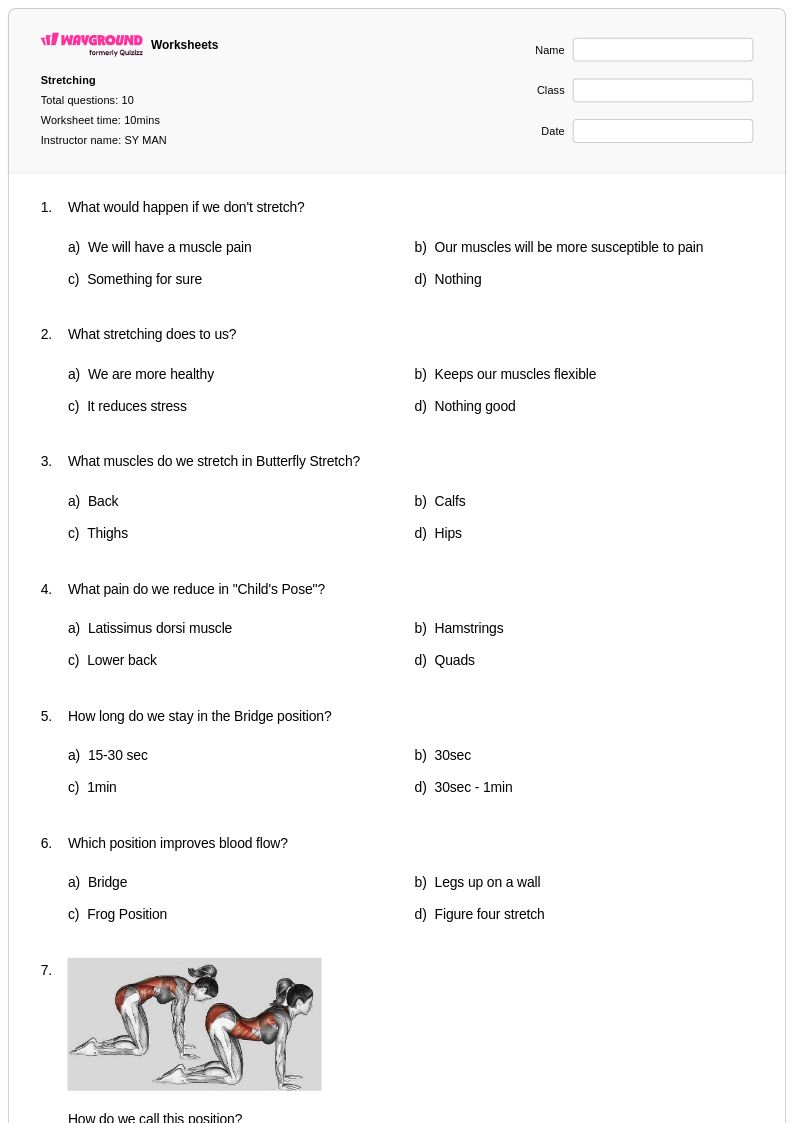
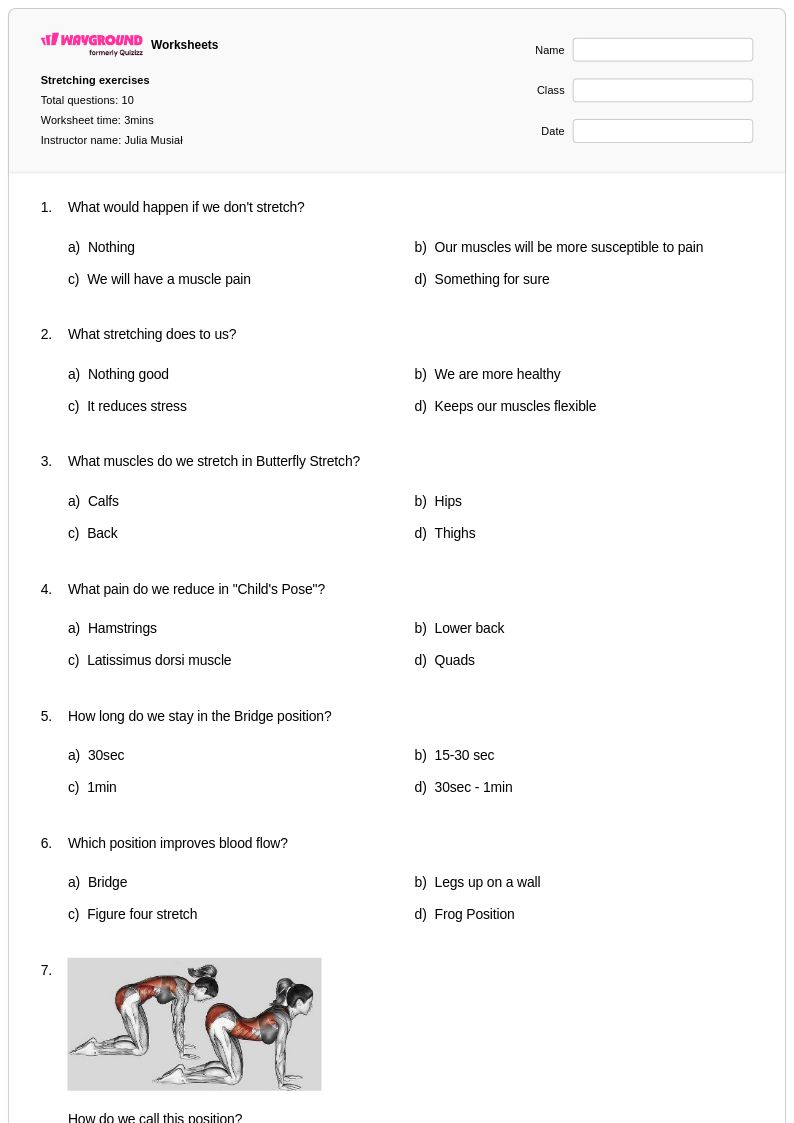
Matching and identification activities work well here — have students pair a named muscle group (e.g., hamstring, quadricep, hip flexor) with the correct stretch technique and identify the body position required. Practice problems that describe a sport or activity and ask students to select the most appropriate warm-up or cool-down stretch build applied understanding. These exercises reinforce both muscle anatomy and the functional purpose of each stretch, moving students beyond rote memorization.
What mistakes do students commonly make when learning proper stretching technique?
The most common errors include bouncing during a static stretch (ballistic stretching), holding their breath instead of breathing steadily, and overstretching to the point of pain rather than tension. Students also frequently confuse which stretches are safe before versus after exercise, and they often neglect bilateral balance by only stretching one side. Addressing these misconceptions directly in instruction and using labeled diagrams to reinforce proper form can significantly reduce improper technique.
How do I use stretching worksheets to support students with different fitness levels or learning needs?
Stretching worksheets can be differentiated by adjusting content complexity, from basic muscle identification for beginners to biomechanics-level questions for advanced learners. On Wayground, teachers can apply individual accommodations such as read aloud for students who need audio support, reduced answer choices to lower cognitive load, and extended time for students who need more processing time. These settings can be assigned per student without notifying the rest of the class, making differentiation seamless in a physical education context.
How can I use Wayground stretching worksheets in my PE class?
Wayground stretching worksheets are available as printable PDFs for traditional classroom or gym-side use and in digital formats for technology-integrated environments, including the option to host them as a live quiz on Wayground. Teachers can use them to introduce flexibility concepts, reinforce warm-up and cool-down routines, or assess students' understanding of muscle groups and safe stretching practices. The included answer keys make grading straightforward whether used for formative checks or summative assessments.
Why is flexibility training important to include in a PE curriculum?
Flexibility training improves range of motion, reduces injury risk, and supports muscular balance, making it a foundational component of physical fitness alongside strength and cardiovascular endurance. Teaching students proper stretching technique early builds habits that support safe participation in sport and physical activity throughout their lives. Including flexibility units in PE also gives students the physiological vocabulary to understand how their bodies respond to exercise, which strengthens overall health literacy.