Free Printable Subordinate Clauses Worksheets for Year 9
Enhance Year 9 students' understanding of subordinate clauses with Wayground's comprehensive collection of free worksheets, printables, and practice problems featuring detailed answer keys to master complex sentence structures.
Explore printable Subordinate Clauses worksheets for Year 9
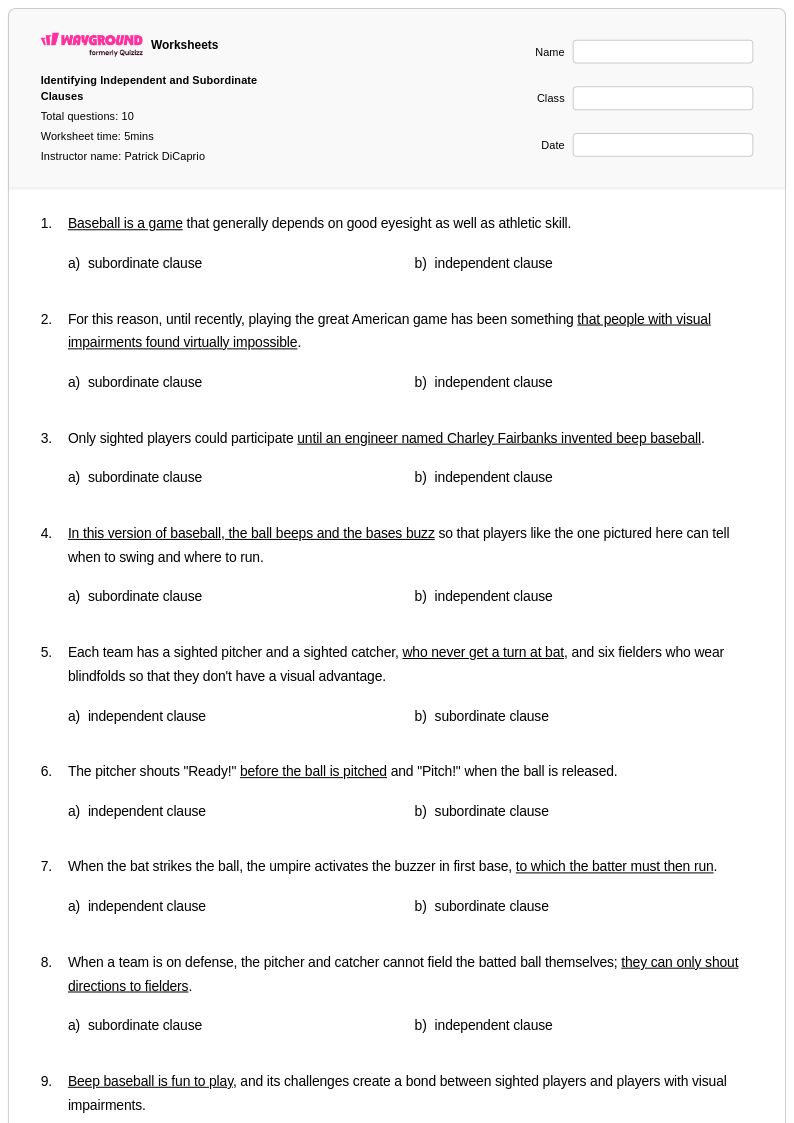
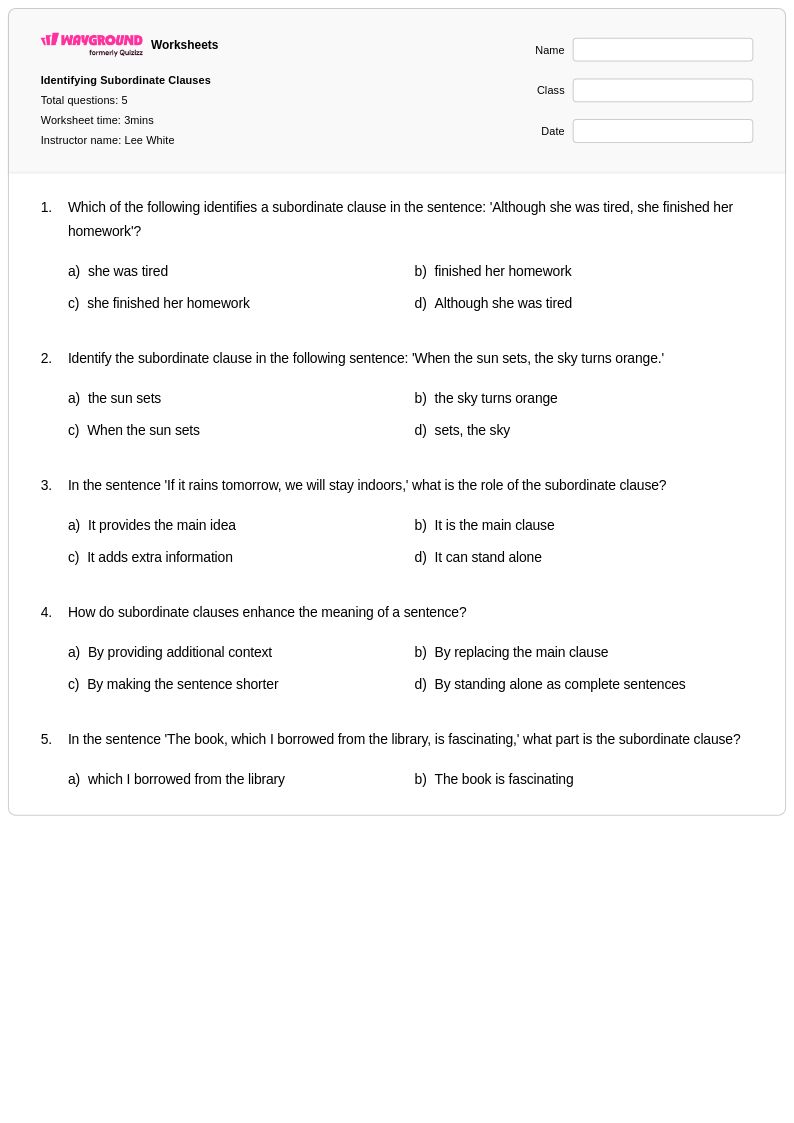
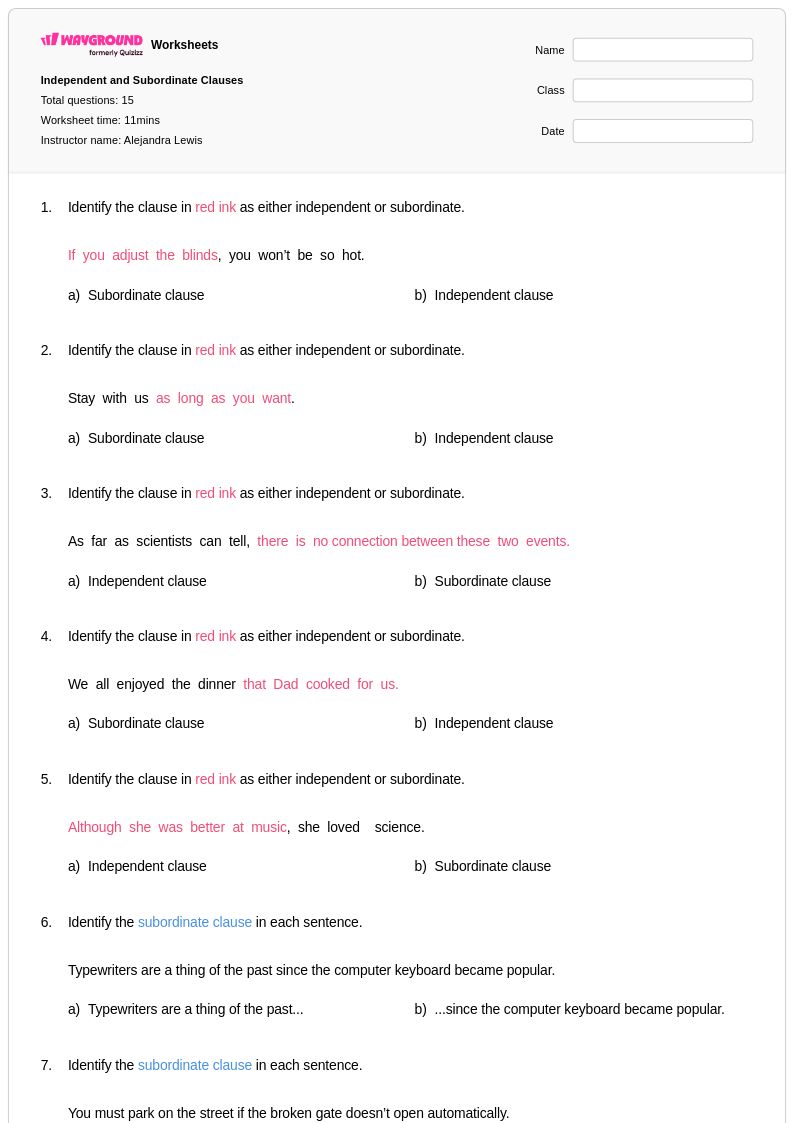
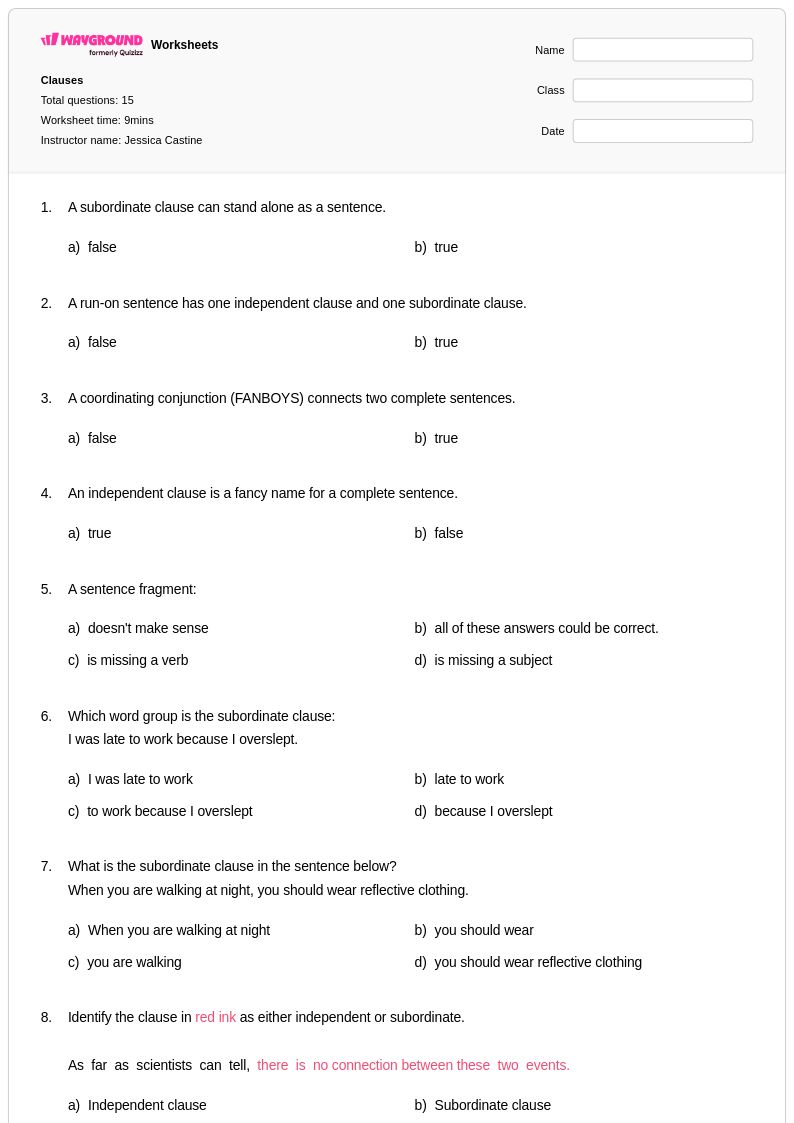
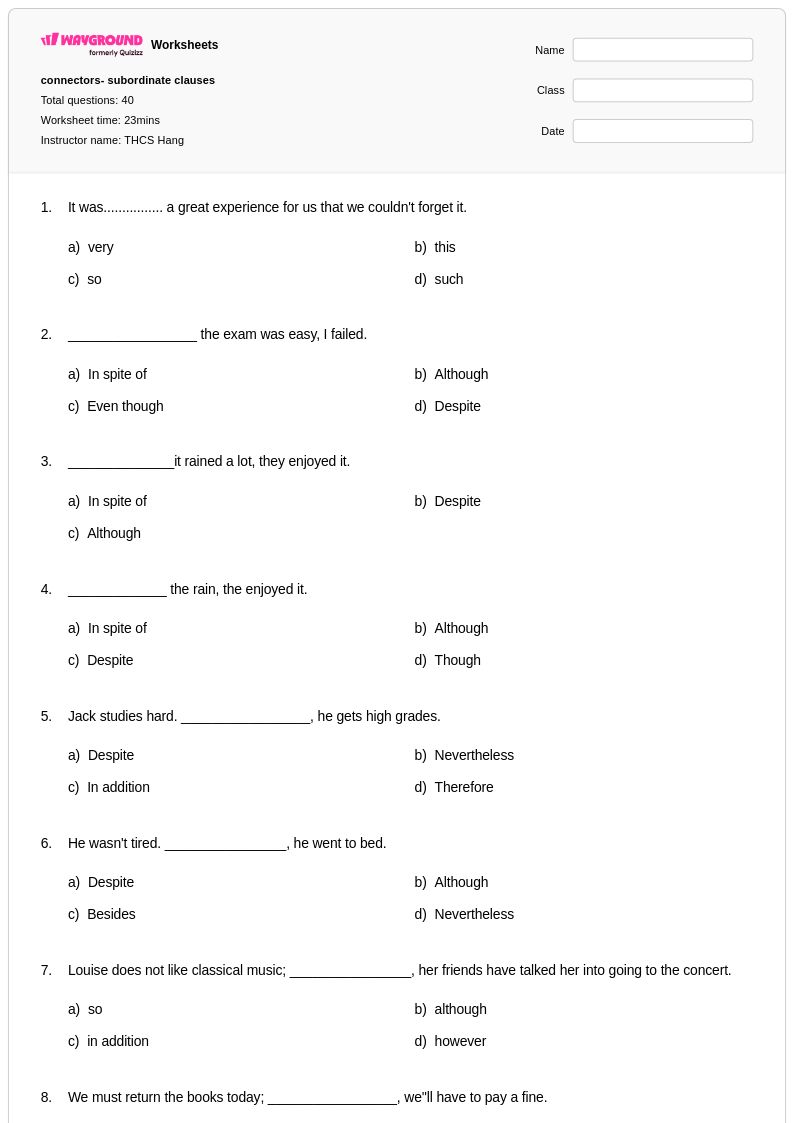
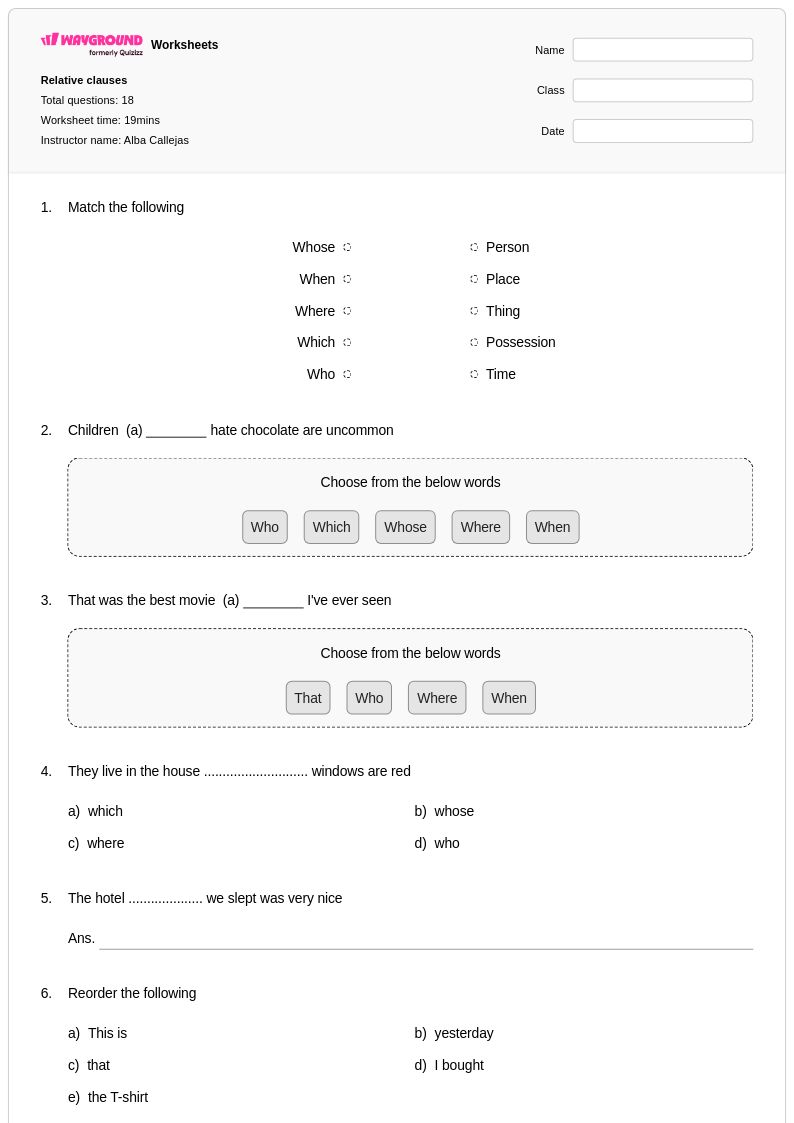
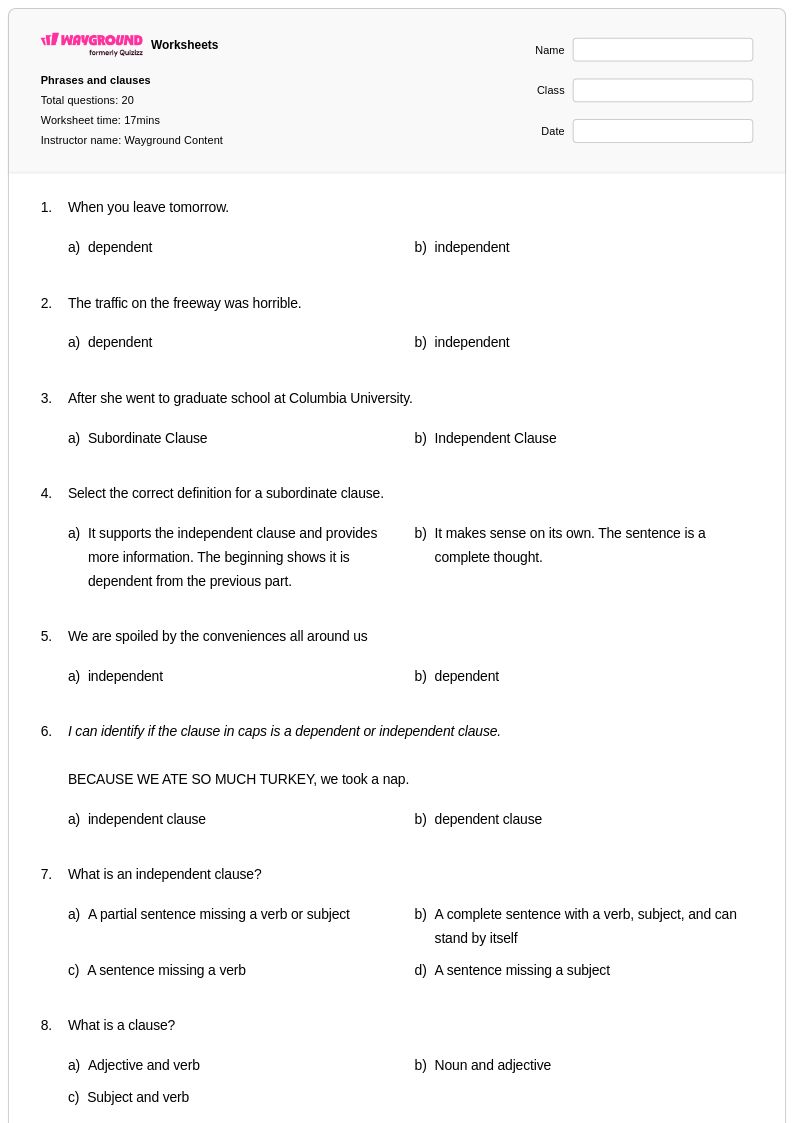
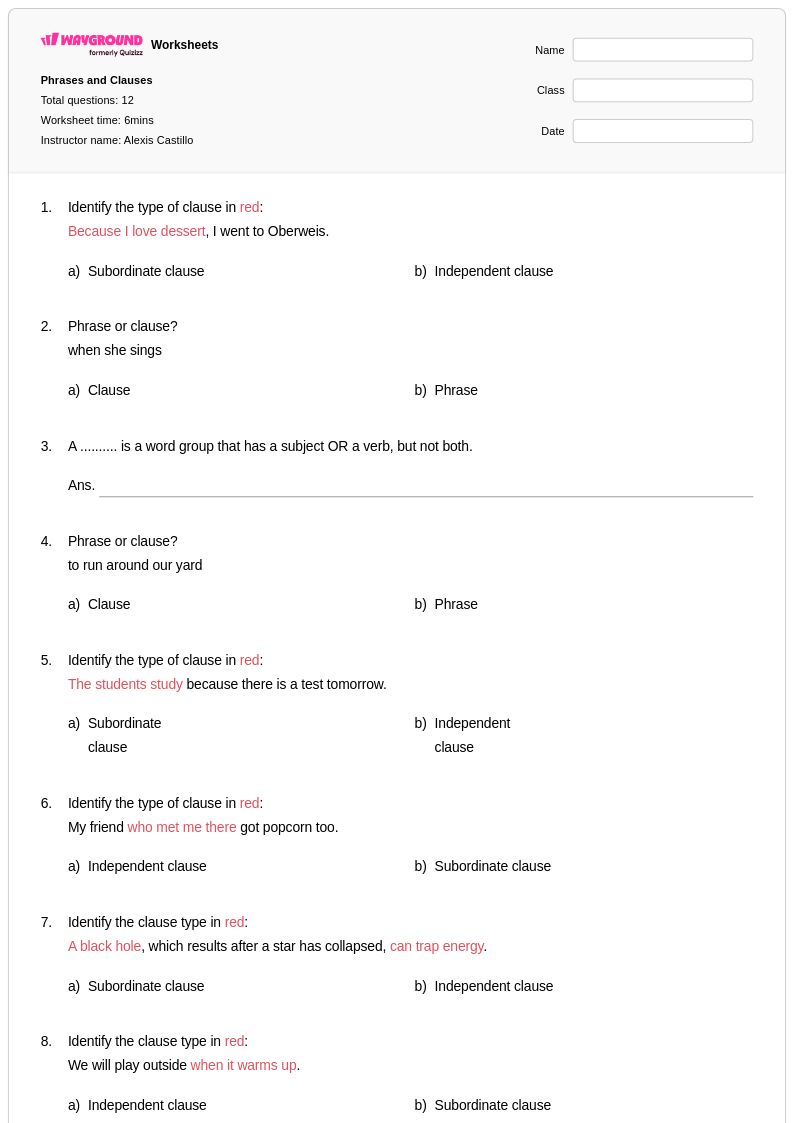
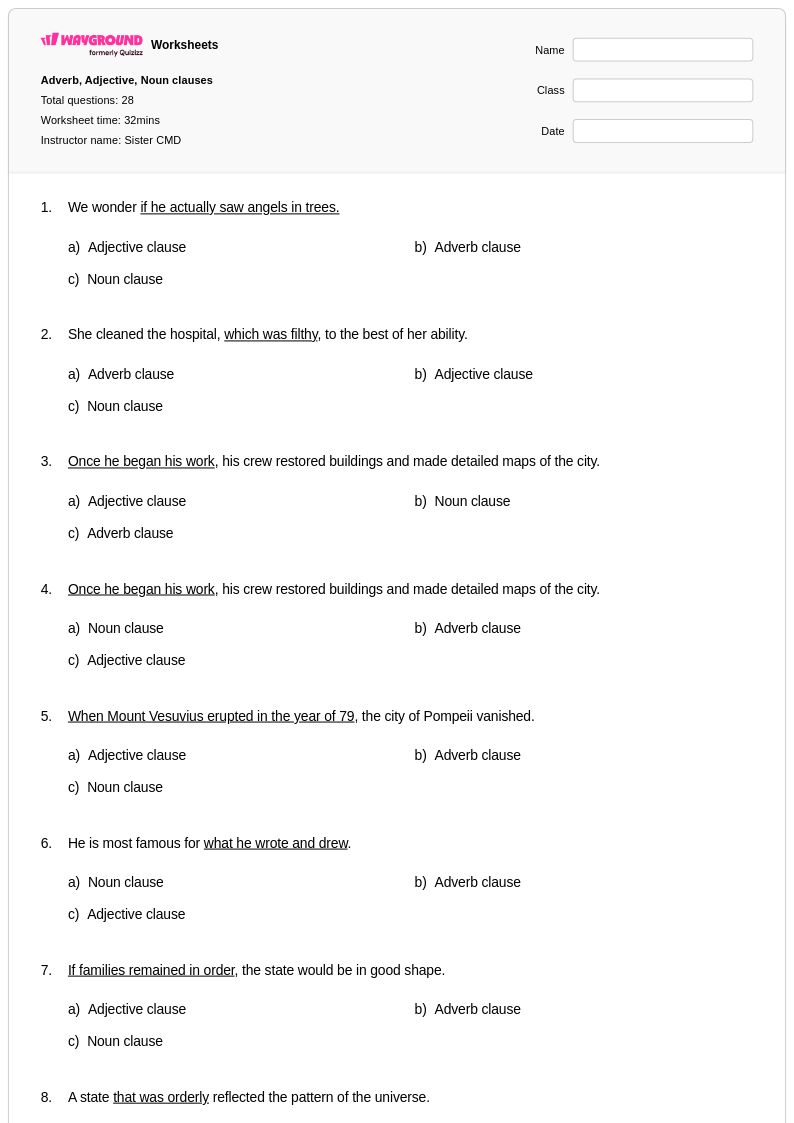
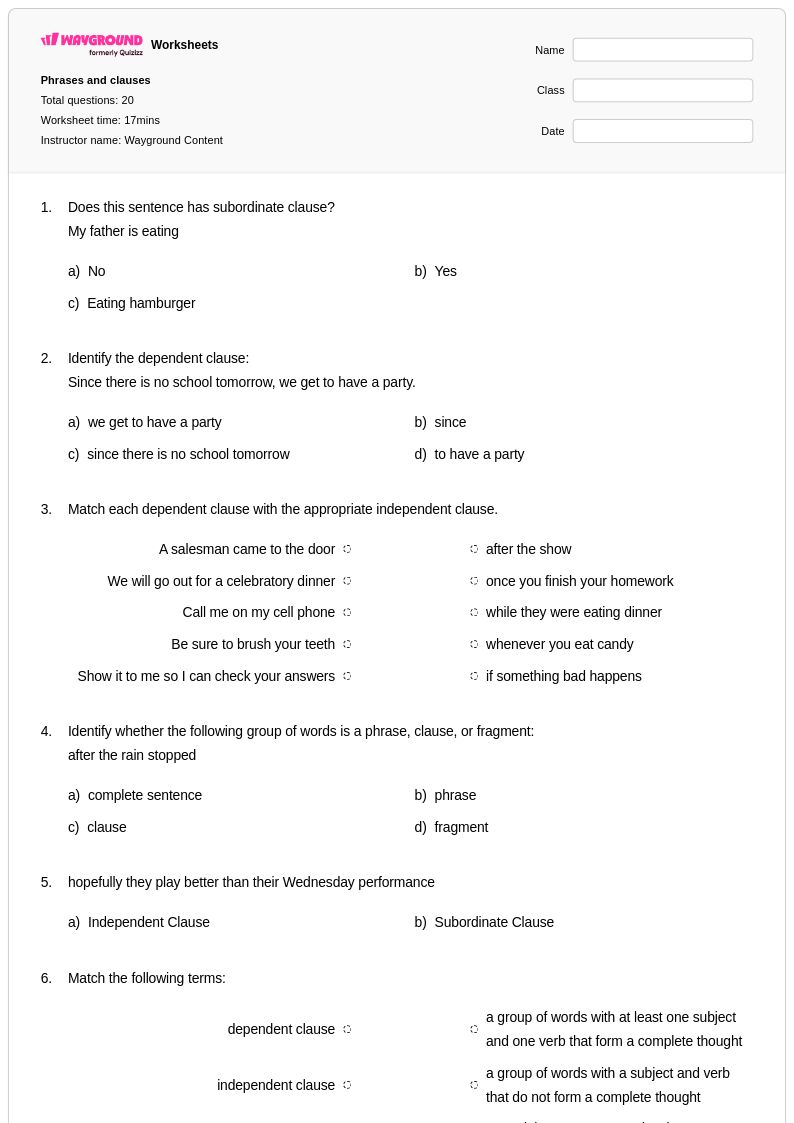
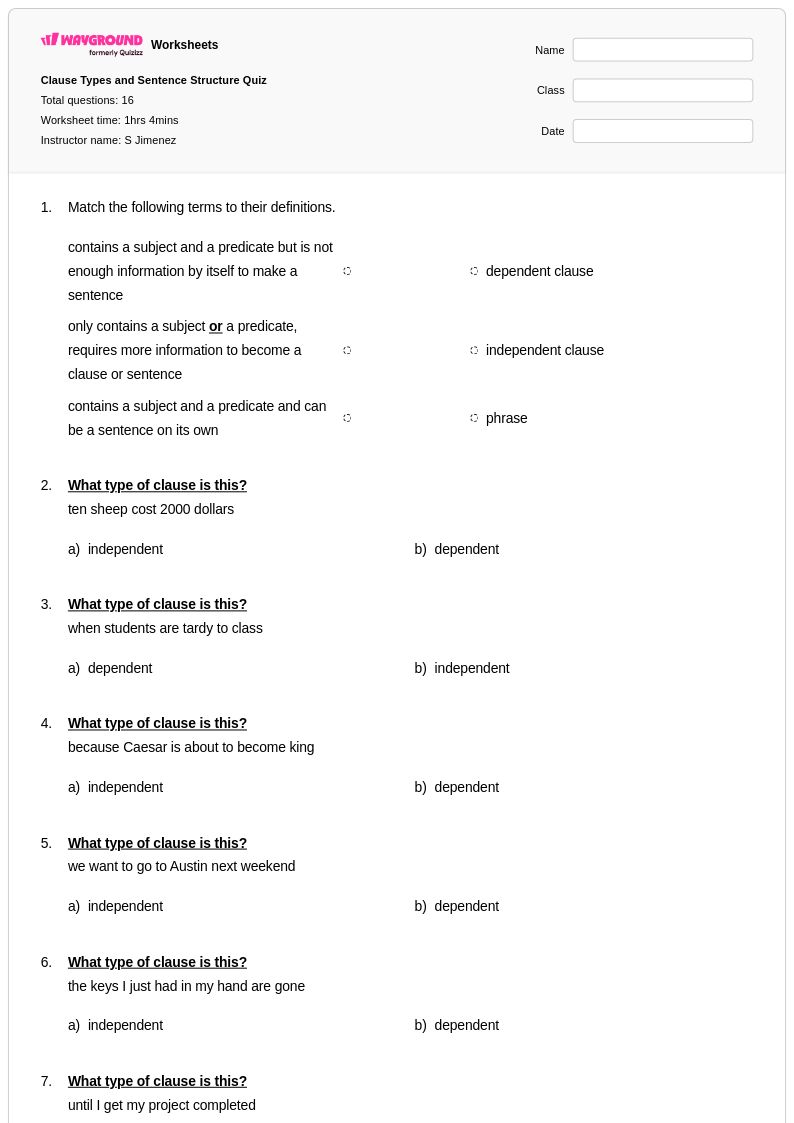
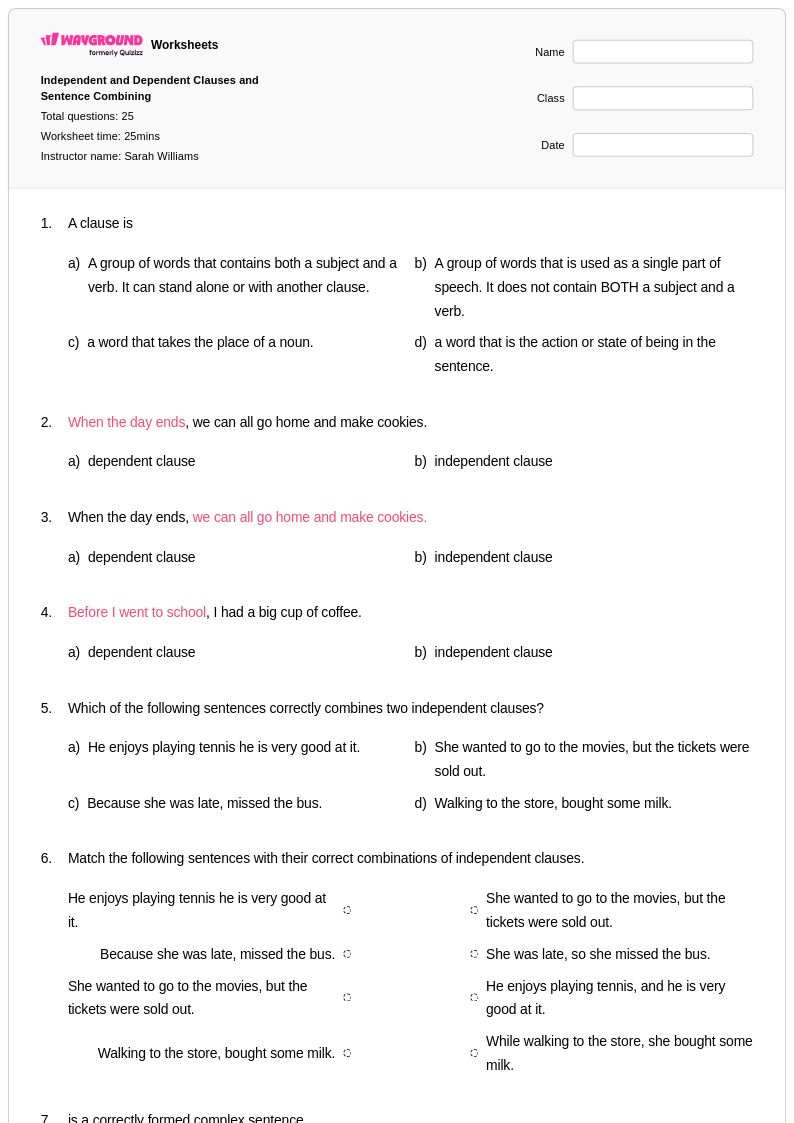
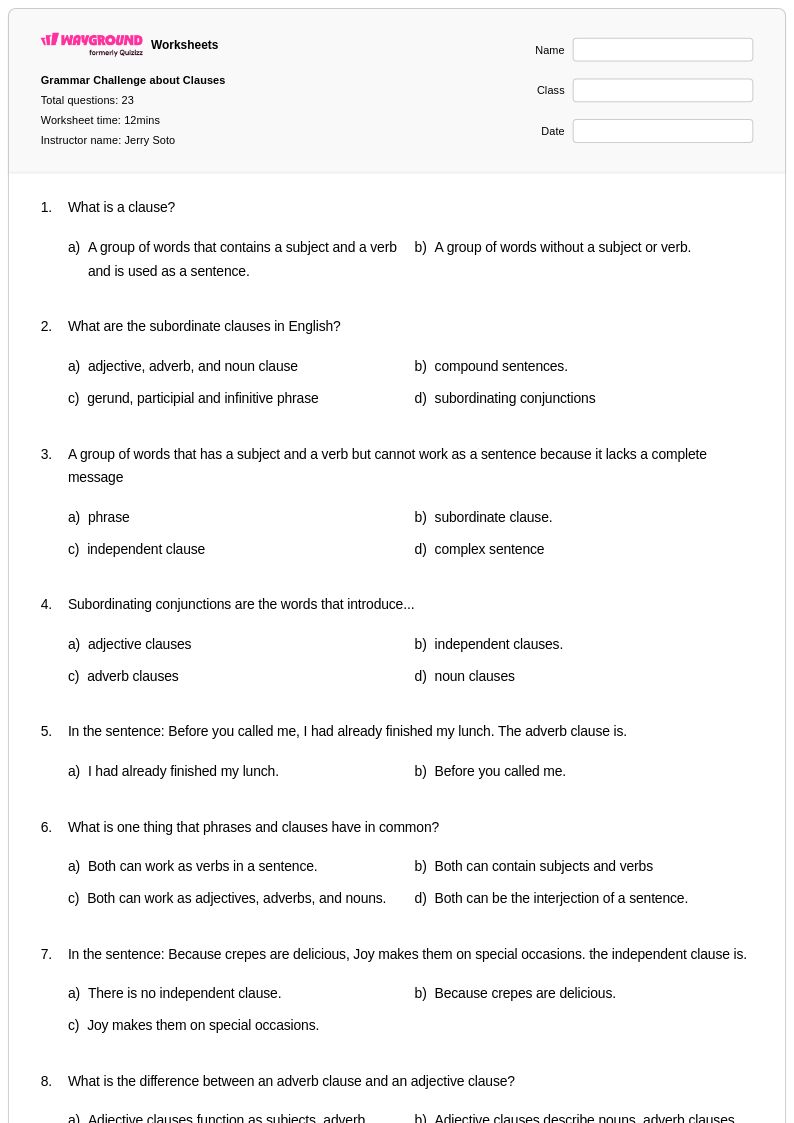
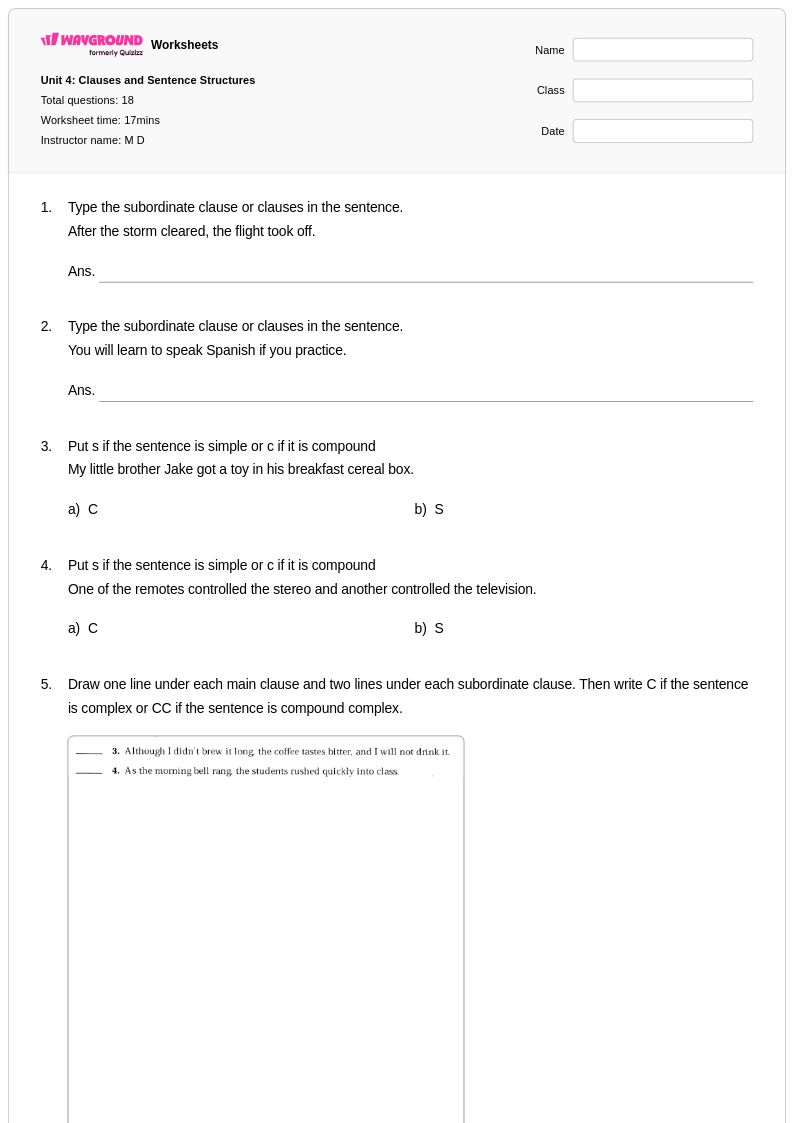
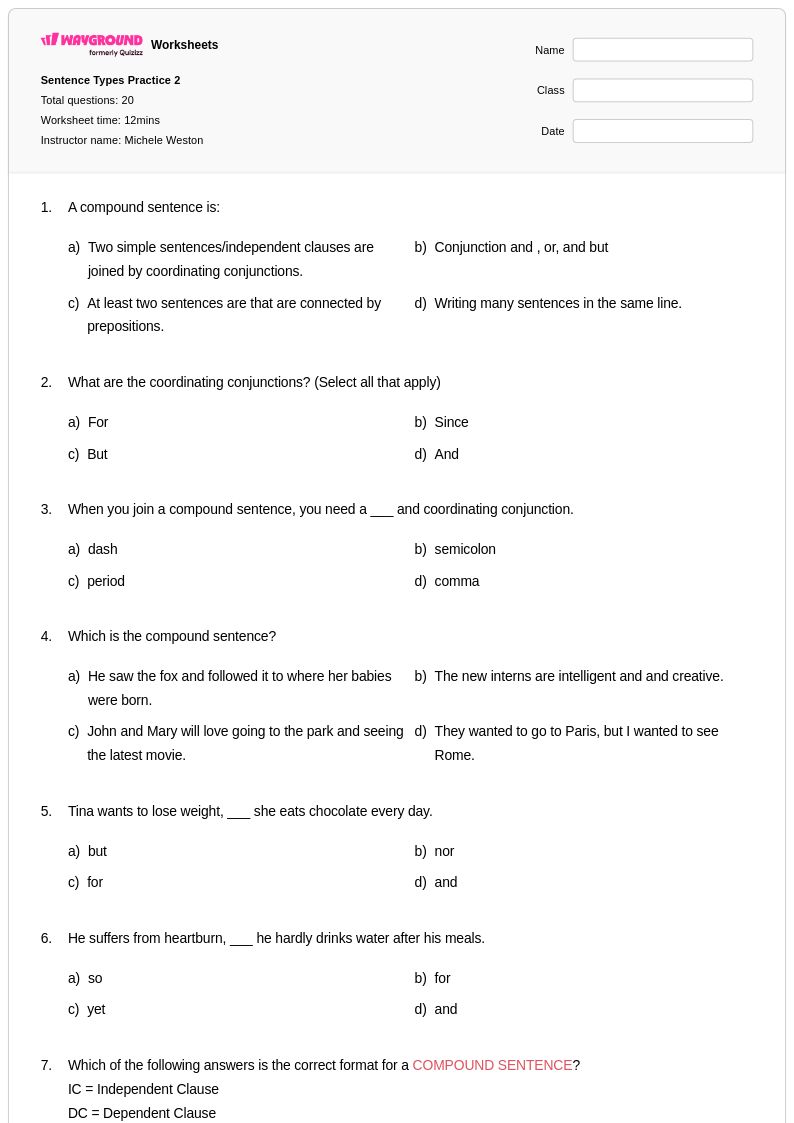
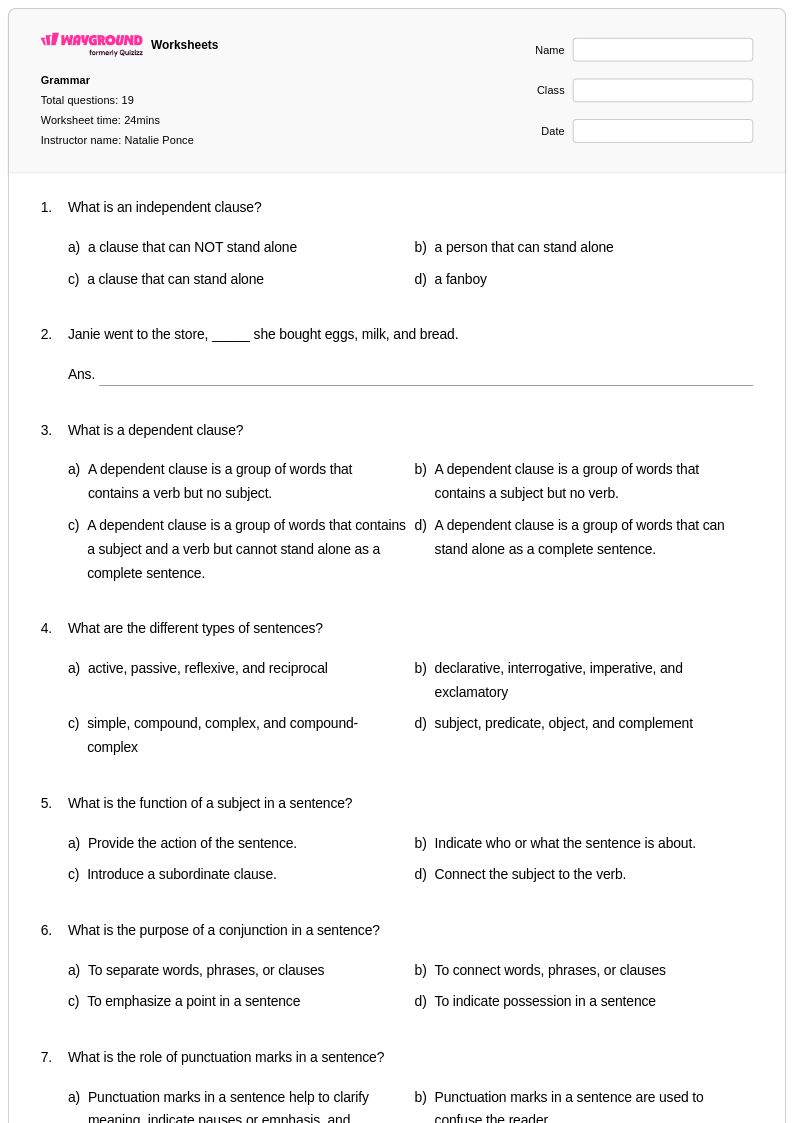
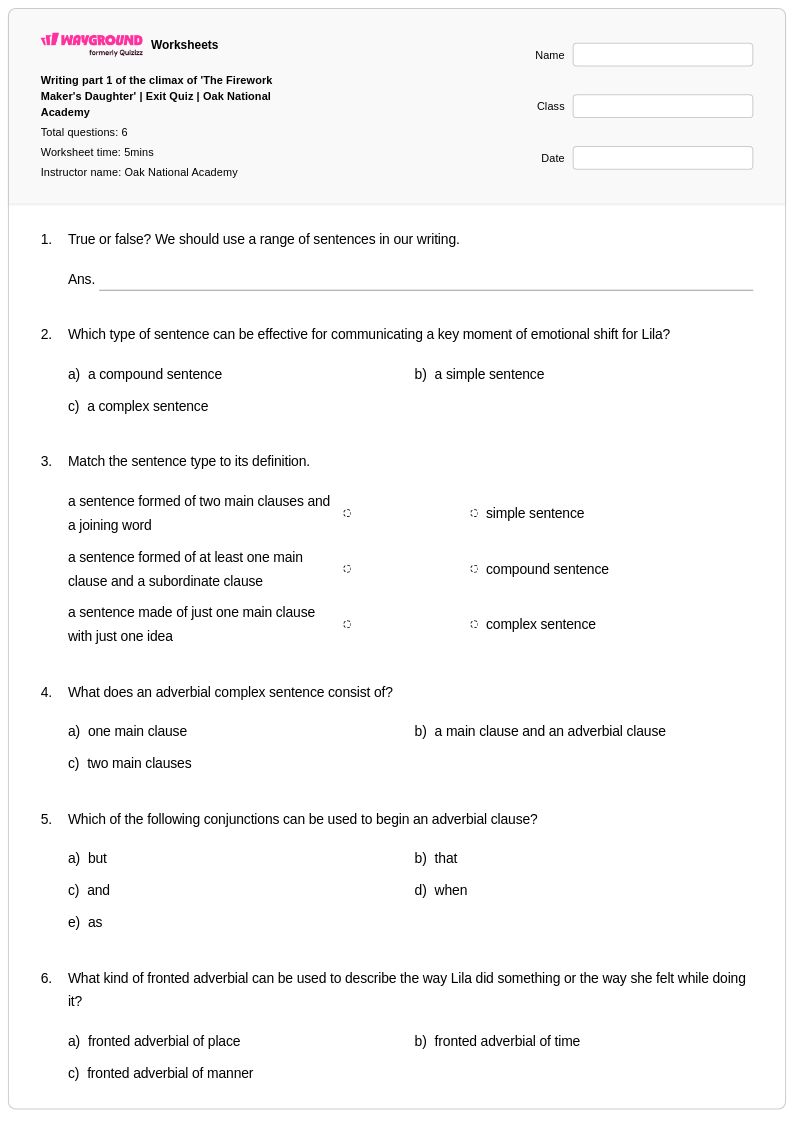
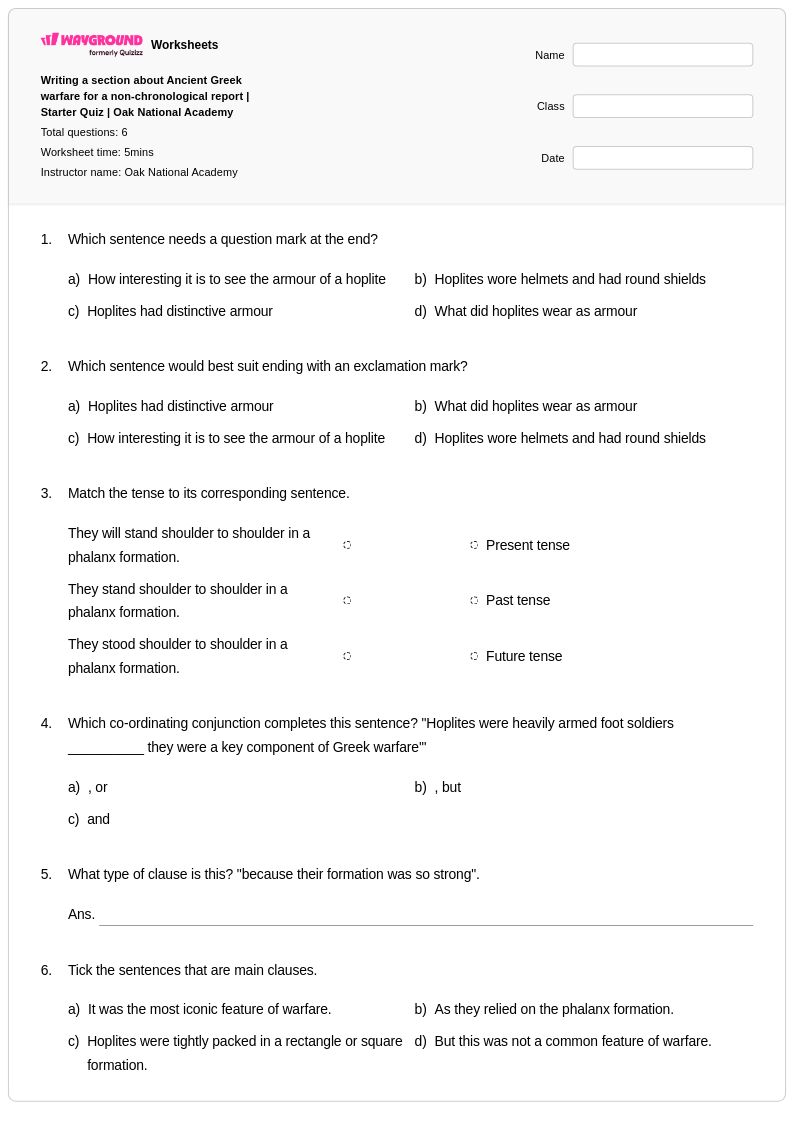
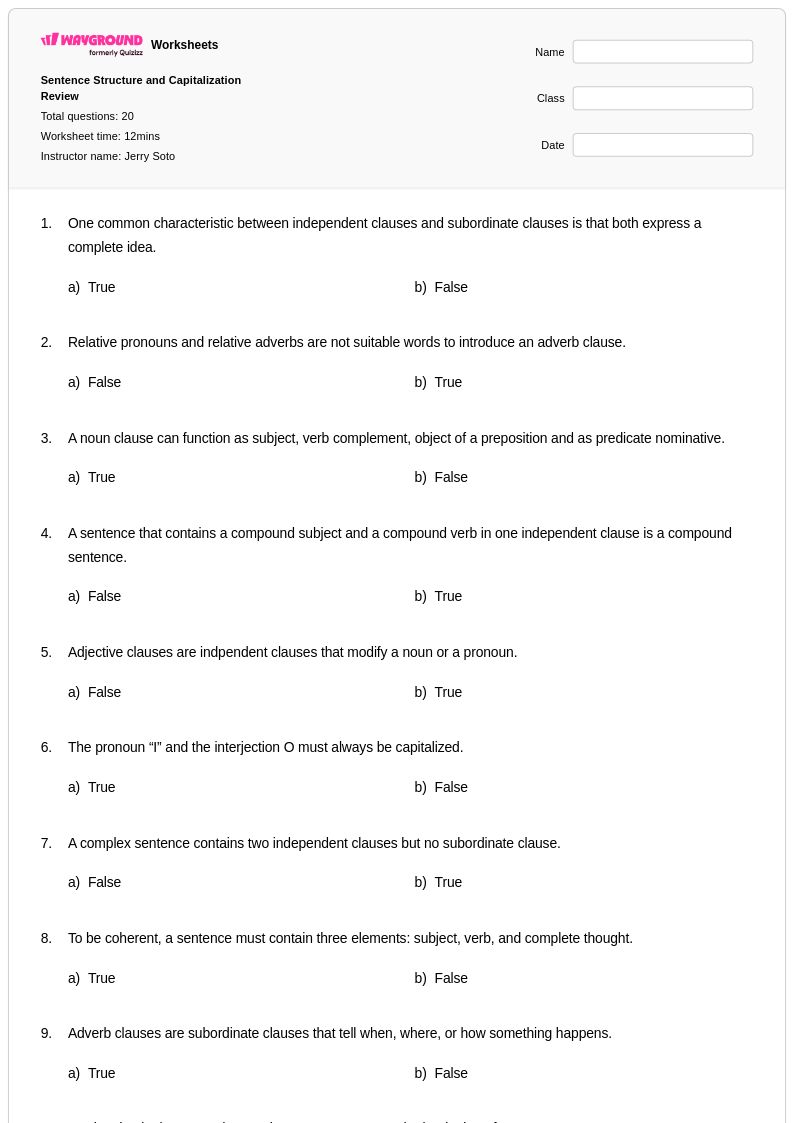
Subordinate clauses worksheets for Year 9 students available through Wayground (formerly Quizizz) provide comprehensive practice in identifying, constructing, and effectively using dependent clauses within complex sentence structures. These carefully designed resources strengthen students' understanding of how subordinate clauses function as sentence components that cannot stand alone but add essential detail, context, and sophistication to writing. Each worksheet collection includes varied practice problems that challenge ninth-grade learners to recognize different types of subordinate clauses—including adverbial, adjectival, and nominal clauses—while mastering their proper punctuation and placement within sentences. Teachers benefit from detailed answer keys that facilitate efficient grading and targeted feedback, with free printables available in convenient PDF format for both classroom instruction and independent study.
Wayground (formerly Quizizz) empowers educators with access to millions of teacher-created subordinate clause resources specifically curated for Year 9 English instruction. The platform's robust search and filtering capabilities enable teachers to quickly locate worksheets aligned with specific curriculum standards while offering differentiation tools that accommodate diverse learning needs within the classroom. These flexible collections support both printable and digital formats, allowing seamless integration into various instructional models whether for whole-class lessons, small group interventions, or individual skill practice. Teachers can customize existing worksheets or combine multiple resources to create targeted practice sets for remediation, enrichment, or assessment preparation, ensuring that students develop mastery of subordinate clauses as foundational elements of sophisticated academic writing.
FAQs
How do I teach subordinate clauses to students who struggle with sentence structure?
Start by ensuring students can reliably identify a complete independent clause before introducing subordination. Then introduce a small set of common subordinating conjunctions (because, although, when, if) and have students practice attaching dependent clauses to simple sentences they already understand. Showing the same idea expressed as two simple sentences versus one complex sentence helps students see the stylistic payoff of subordination, which motivates engagement with the grammar.
What exercises help students practice identifying subordinate clauses?
Clause-underlining tasks, sentence-combining exercises, and error-correction activities are among the most effective formats for practicing subordinate clause identification. Having students underline the subordinate clause and circle the subordinating conjunction in a range of sentences builds pattern recognition. Sentence-combining tasks, where students merge two simple sentences into one complex sentence, reinforce both identification and construction skills simultaneously.
What are the most common mistakes students make with subordinate clauses?
The most frequent error is treating a subordinate clause as a standalone sentence, producing a sentence fragment such as 'Because she was tired.' Students also commonly misplace the comma when the subordinate clause opens the sentence, omitting it after the dependent clause before the independent clause begins. A third recurring issue is confusing relative clauses (who, which, that) with other subordinate clause types, leading to incorrect punctuation around non-restrictive clauses.
How can I differentiate subordinate clause instruction for students at different skill levels?
For students who are still building foundational skills, focus exclusively on adverbial subordinate clauses using a short list of high-frequency subordinating conjunctions before introducing adjectival or noun clauses. Advanced learners can be challenged with sentence-combining tasks that require them to embed multiple subordinate clauses within a single sentence or to identify clause type and function. On Wayground, teachers can apply reduced answer choices for students who need additional support, lowering cognitive load while keeping practice meaningful, and the platform's filtering tools make it straightforward to assign skill-appropriate materials to different groups.
How do I use Wayground's subordinate clauses worksheets in my classroom?
Wayground's subordinate clauses worksheets are available as printable PDFs for traditional classroom use and in digital formats for technology-integrated environments, and they can also be hosted as a quiz directly on the Wayground platform. Every worksheet includes a complete answer key, making them suitable for guided practice, independent work, homework, or quick formative assessment. Teachers can use Wayground's search and filtering tools to select worksheets that match specific clause types, such as adverbial, adjectival, or noun clauses, and align them with current curriculum standards.
What is the difference between a subordinate clause and an independent clause?
An independent clause expresses a complete thought and can stand alone as a sentence, while a subordinate (or dependent) clause contains a subject and verb but cannot stand alone because it is introduced by a subordinating conjunction or relative pronoun. For example, 'She left early' is an independent clause, but 'because she was tired' is a subordinate clause that requires an independent clause to complete its meaning. Teaching students to test for this 'can it stand alone?' distinction is the most reliable entry point into subordinate clause instruction.