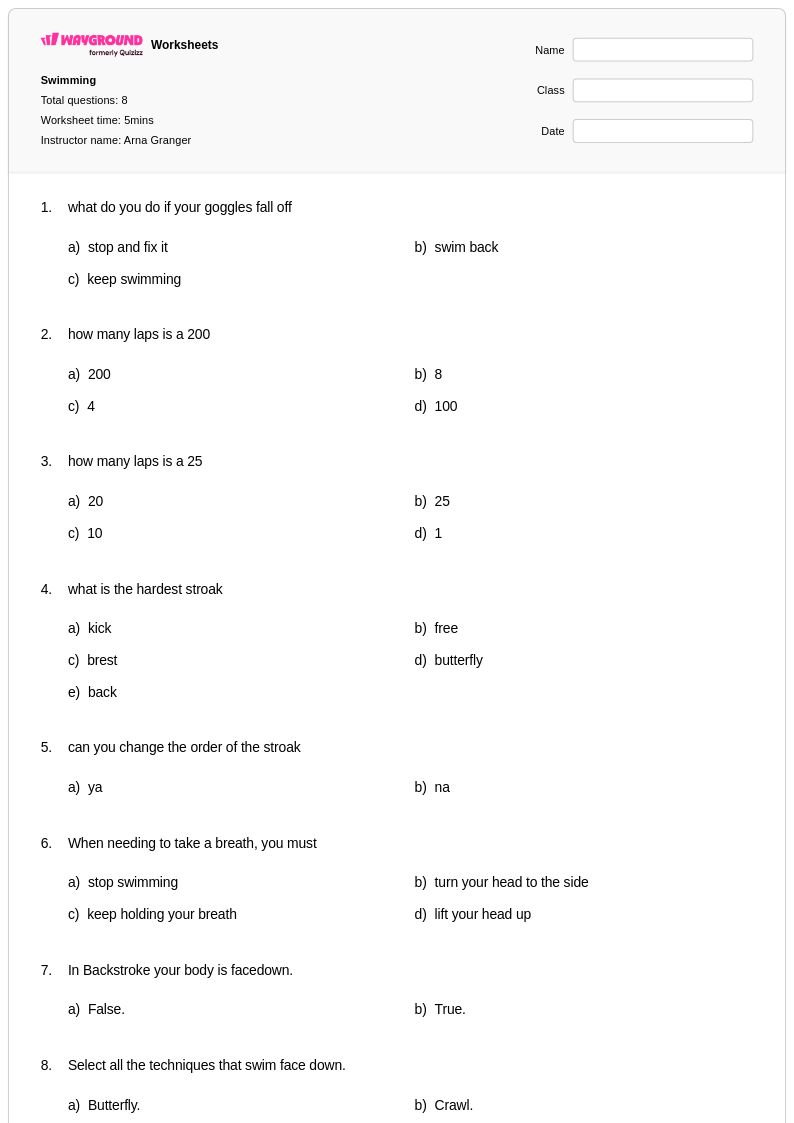
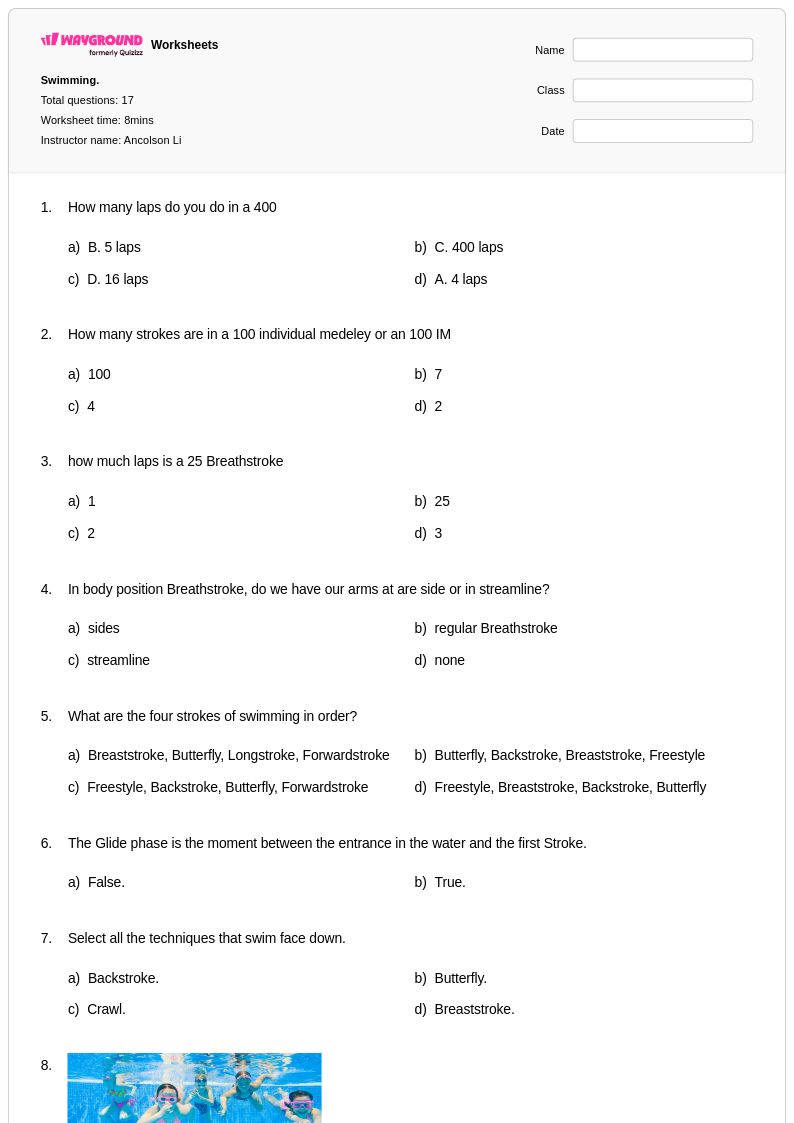
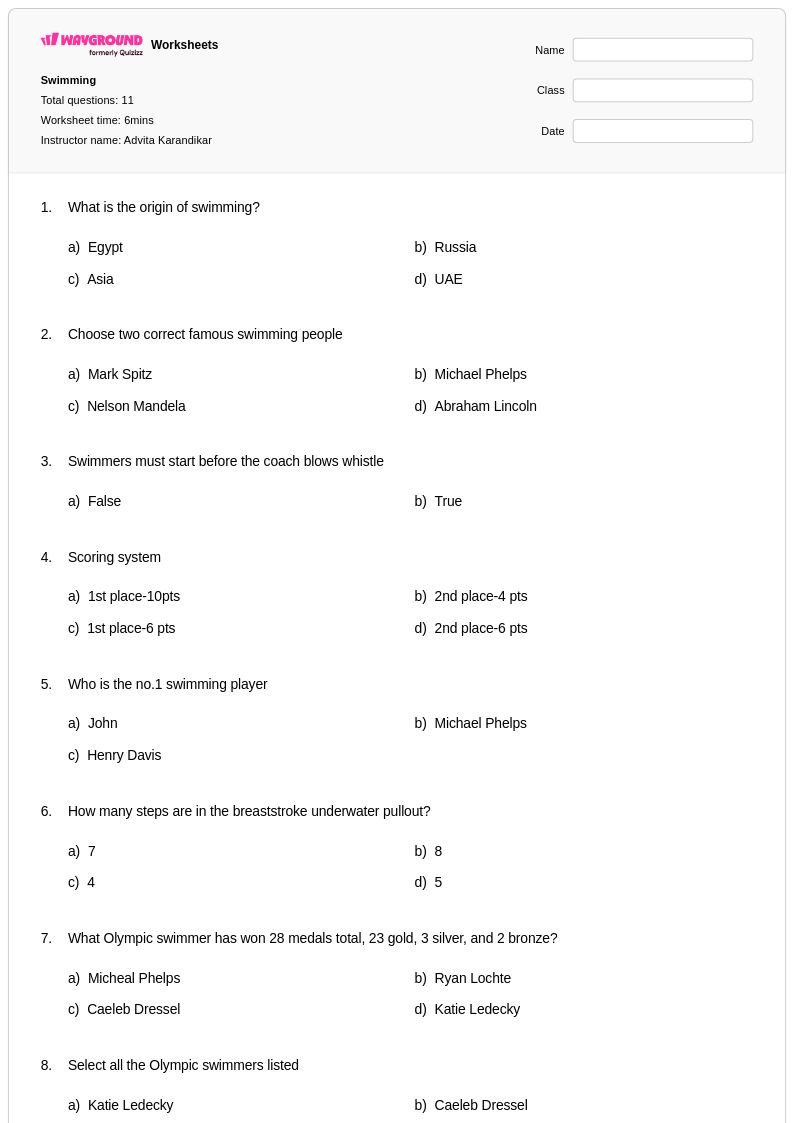
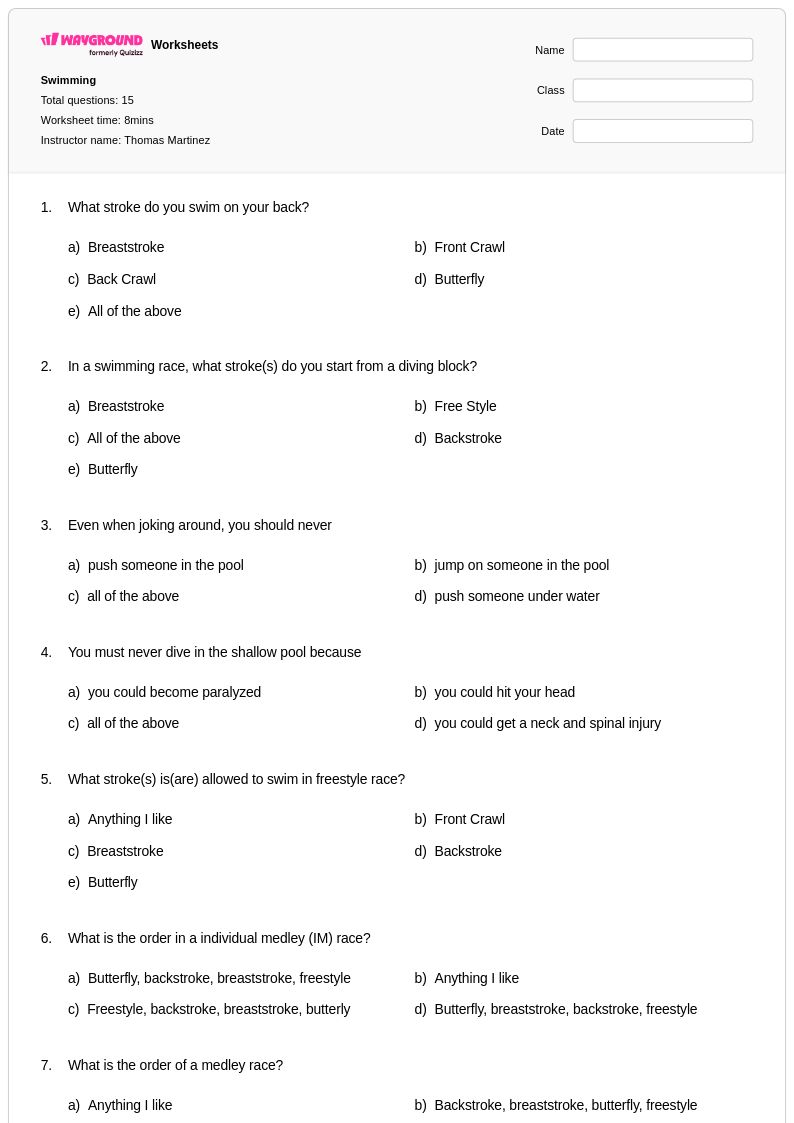
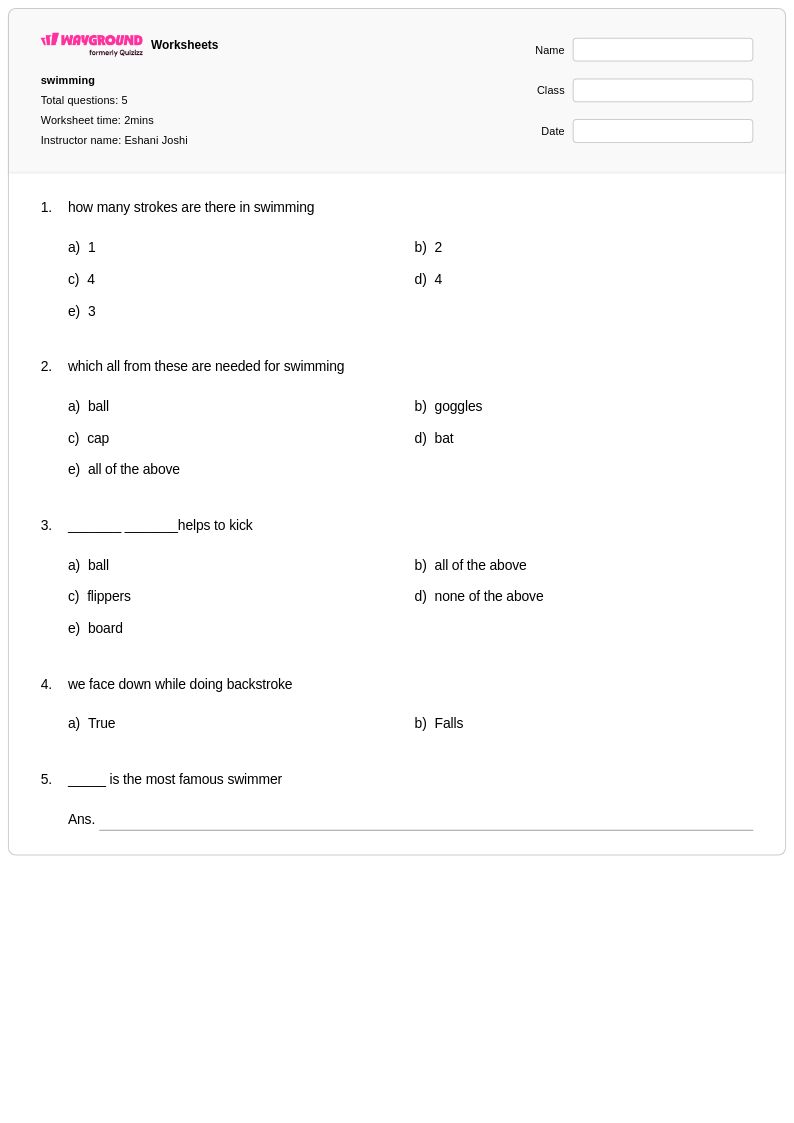
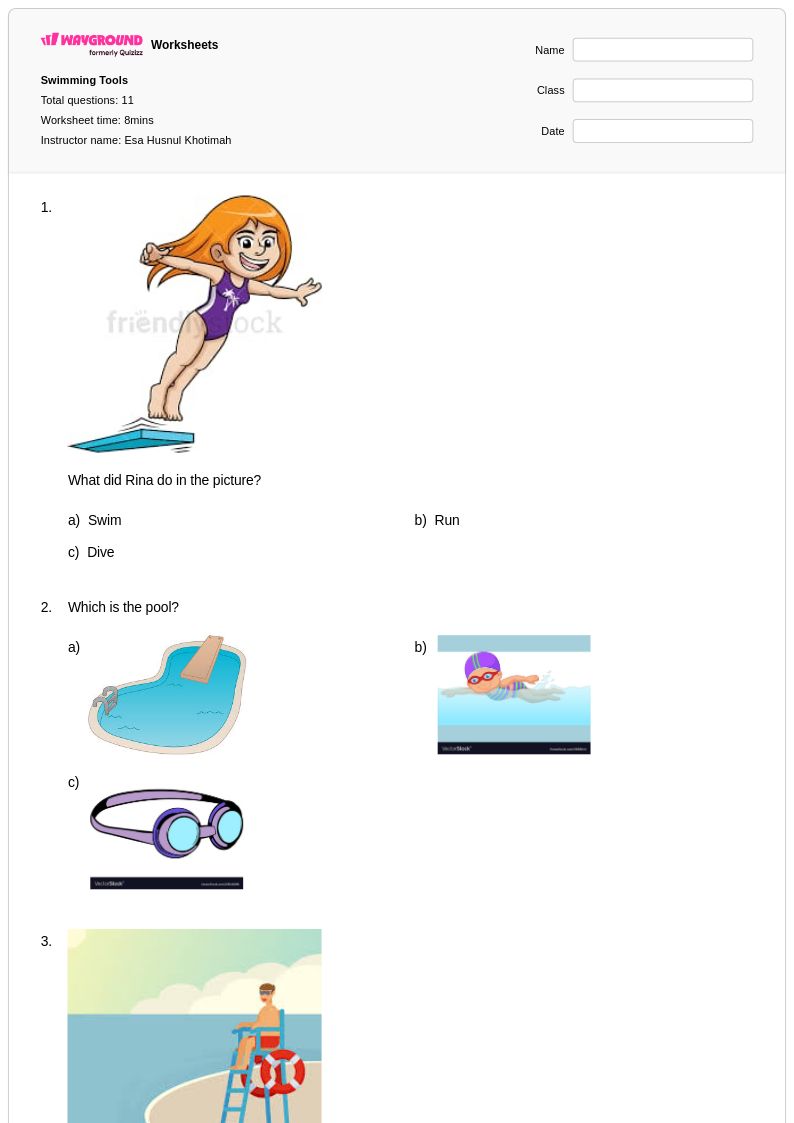
Discover Year 5 swimming worksheets and printables from Wayground that help students learn water safety, stroke techniques, and pool rules through engaging practice problems with complete answer keys.
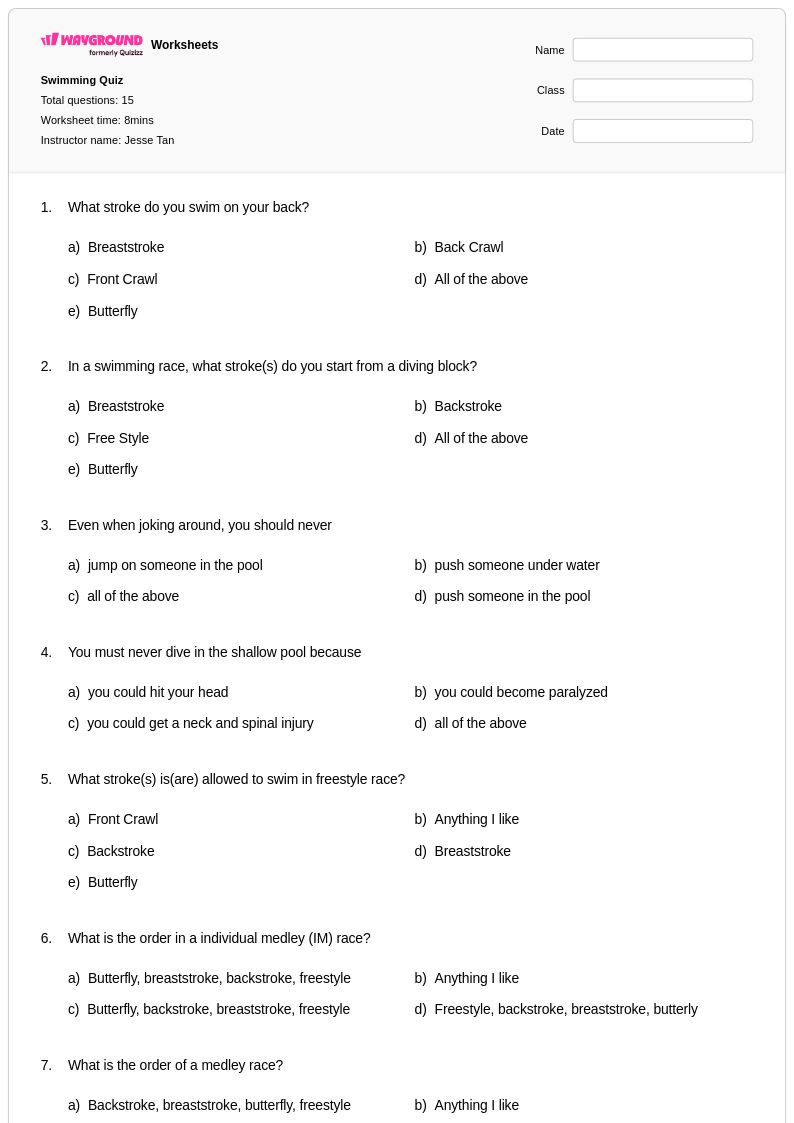
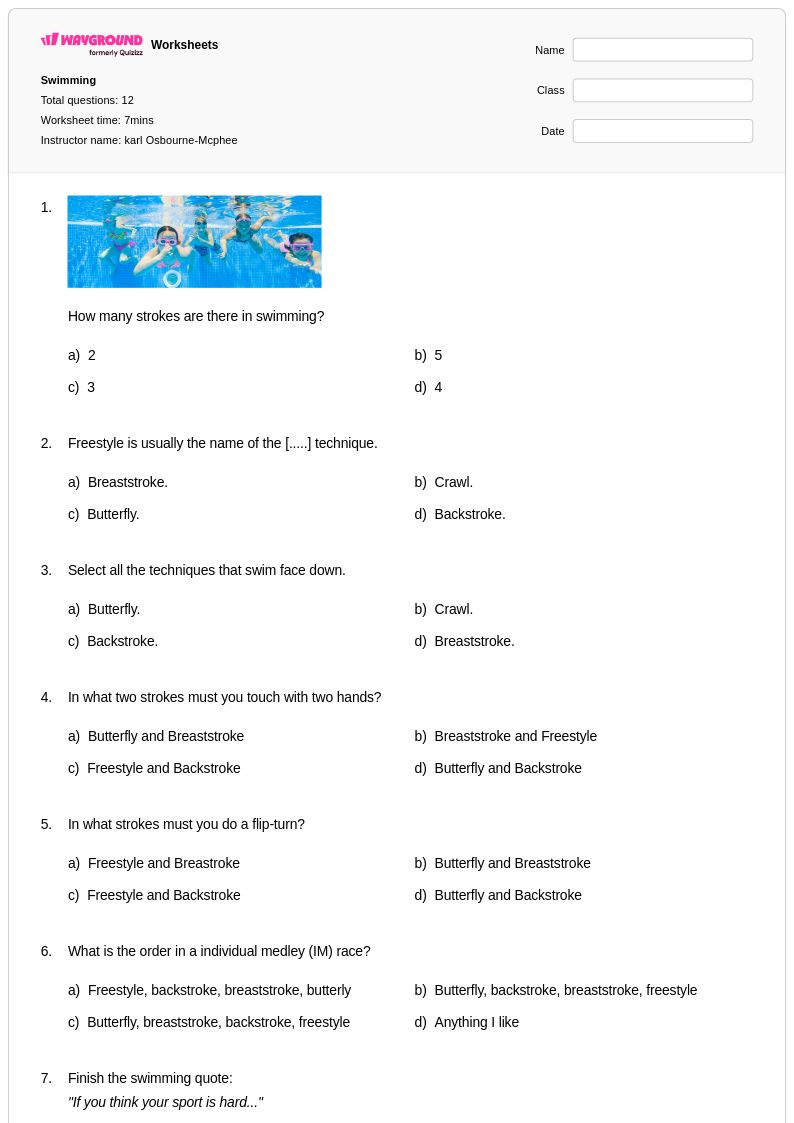
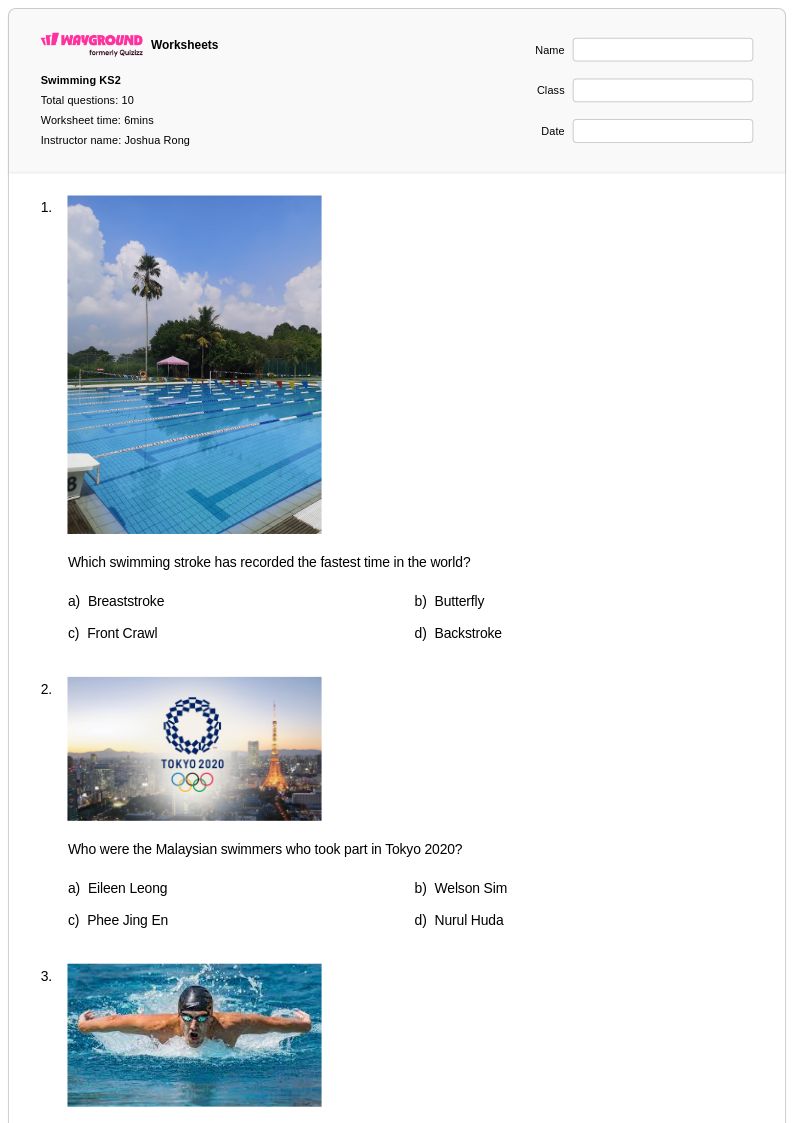
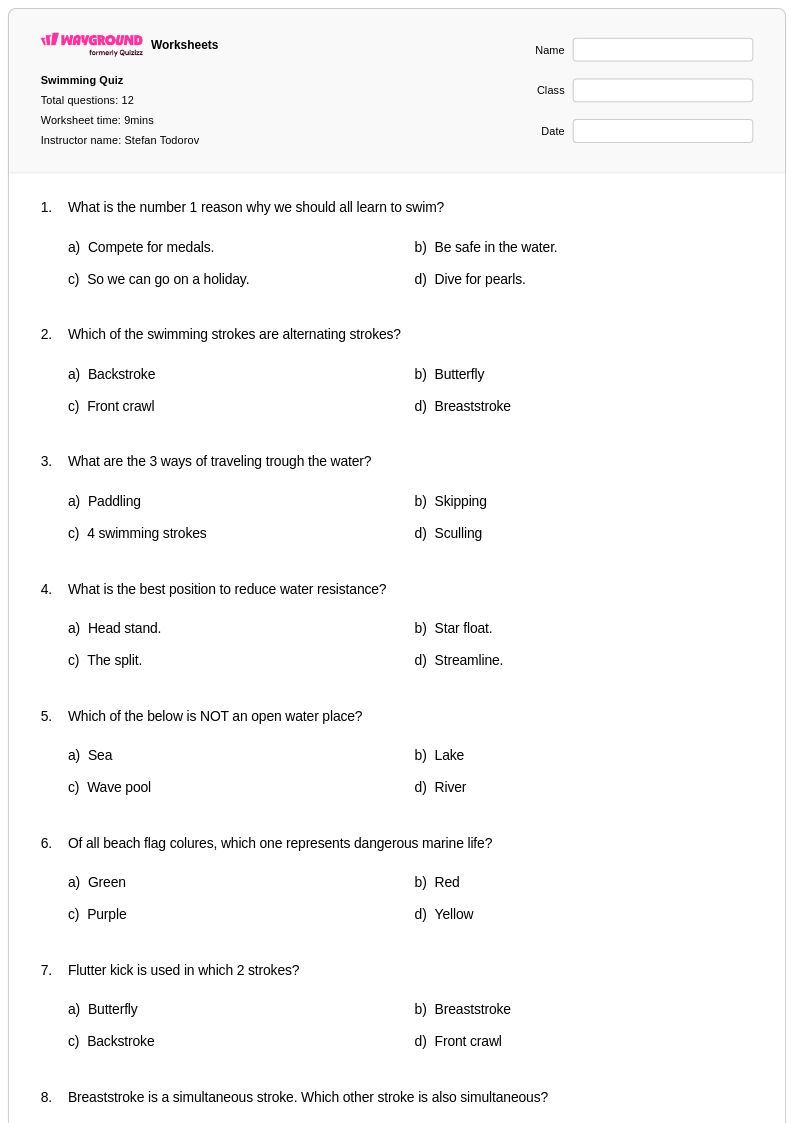
Swimming worksheets for Year 5 physical education provide comprehensive resources that help students develop essential water safety knowledge, stroke technique understanding, and aquatic fitness concepts. These educational materials cover fundamental swimming skills including proper breathing techniques, basic stroke mechanics for freestyle and backstroke, pool safety rules, and water rescue awareness. The worksheets strengthen students' theoretical understanding of swimming fundamentals through engaging practice problems that reinforce proper body positioning, kick patterns, and arm movements. Available as free printables with accompanying answer keys, these resources offer structured learning opportunities that complement hands-on pool instruction and help students master critical swimming concepts in pdf format for easy classroom distribution.
Wayground (formerly Quizizz) supports physical education teachers with an extensive collection of swimming-focused worksheets drawn from millions of teacher-created resources that address Year 5 learning objectives. The platform's robust search and filtering capabilities allow educators to quickly locate materials that align with specific swimming curricula and safety standards, while differentiation tools enable customization for varying skill levels and learning needs. Teachers can access these resources in both printable and digital formats, including downloadable pdfs, making them ideal for classroom instruction, homework assignments, and remediation activities. The flexible customization options help educators tailor content for enrichment opportunities, skill practice sessions, and assessment preparation, ensuring that students develop comprehensive swimming knowledge that supports their physical education goals and water safety awareness.
FAQs
How do I teach water safety and swimming fundamentals in a PE class?
Effective aquatic education combines direct instruction on safety protocols with structured skill practice on stroke mechanics and breathing technique. Start with water safety rules and emergency procedures before moving into stroke-specific instruction, using diagrams and labeled worksheets to reinforce terminology and body positioning. Connecting theory-based classroom work to poolside practice helps students internalize concepts like buoyancy, drag, and proper form before applying them in the water.
What exercises help students practice swimming strokes and water safety concepts?
Worksheet-based practice is especially useful for reinforcing stroke mechanics, breathing patterns, and safety rules that students must understand before or after time in the pool. Exercises that ask students to label stroke phases, sequence safety steps, or identify correct body alignment help build the cognitive foundation for physical skill development. Structured review of swimming terminology and aquatic fitness principles also supports students preparing for written assessments in physical education.
What are common mistakes students make when learning swimming concepts?
Students frequently confuse the mechanics of different strokes, particularly the arm and kick patterns for freestyle versus breaststroke, leading to errors on technique-based assessments. Breathing coordination is another common trouble spot, as many students struggle to understand the timing of inhale and exhale cycles relative to stroke phases. Misconceptions about water safety, such as underestimating currents or overestimating personal endurance, are also frequent and worth addressing explicitly through direct instruction and targeted practice.
How can I differentiate swimming worksheets for students with different learning needs?
On Wayground, teachers can apply student-level accommodations including Read Aloud for students who need questions and content read to them, reduced answer choices to lower cognitive load for struggling learners, and extended time for students who need additional processing time. These settings can be assigned to individual students while the rest of the class works with default settings, and they carry over across future sessions without requiring repeated setup. This makes it straightforward to support diverse learners during both theory-based swimming lessons and formal assessments.
How do I use Wayground's swimming worksheets in my PE class?
Wayground's swimming worksheets are available as printable PDFs, making them practical for classroom theory sessions, and in digital formats that work well for technology-integrated learning or remote instruction. Teachers can also host worksheets as a quiz directly on Wayground, allowing for instant feedback and easy tracking of student performance. Each worksheet includes a complete answer key, which supports both self-paced independent study and efficient teacher-led review.
Can swimming worksheets be used for both theory instruction and poolside learning?
Yes, swimming worksheets are well-suited to both settings because they address the conceptual knowledge that underpins physical skill development. Printable PDF versions are portable and practical for poolside reference or warm-up activities, while digital versions work for classroom pre-teaching of stroke technique, safety protocols, and aquatic fitness principles. Using worksheets in both contexts helps reinforce the connection between theoretical understanding and in-water performance.