Free Printable Team Building Worksheets for Year 7
Strengthen Year 7 students' collaborative skills with our free team building worksheets and printables that develop communication, trust, and cooperation through engaging physical education activities with complete answer keys.
Explore printable Team Building worksheets for Year 7
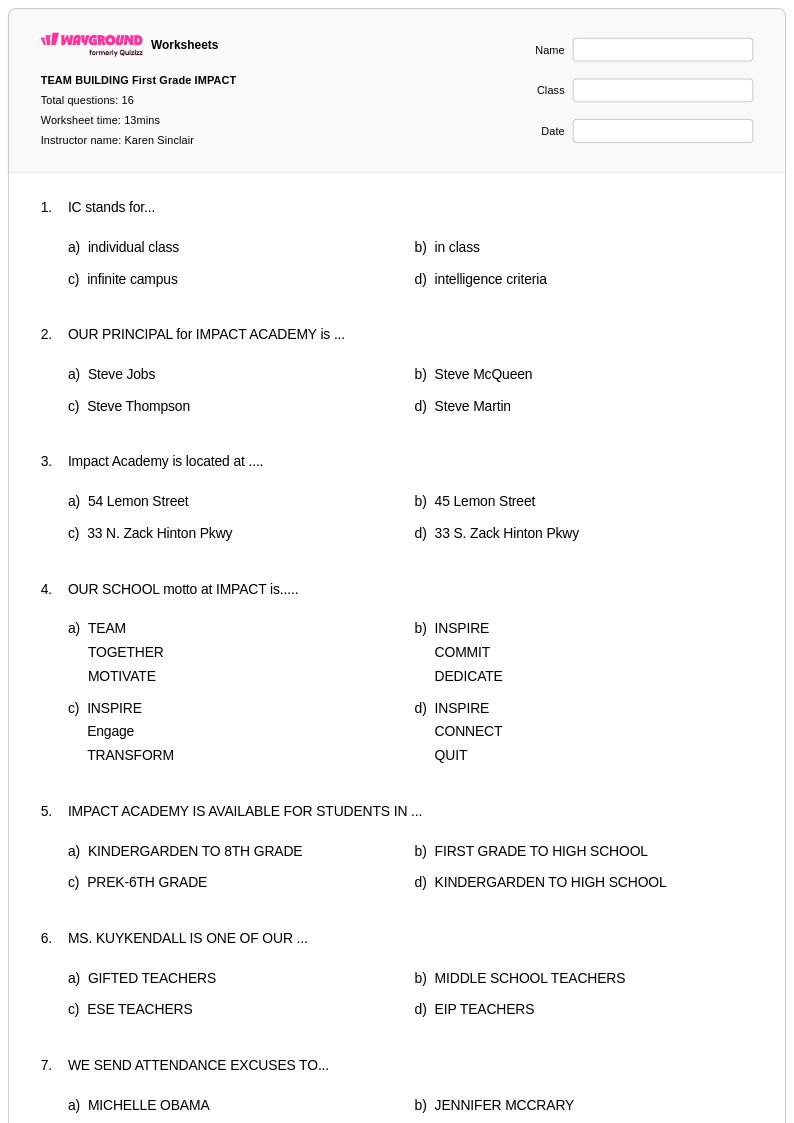
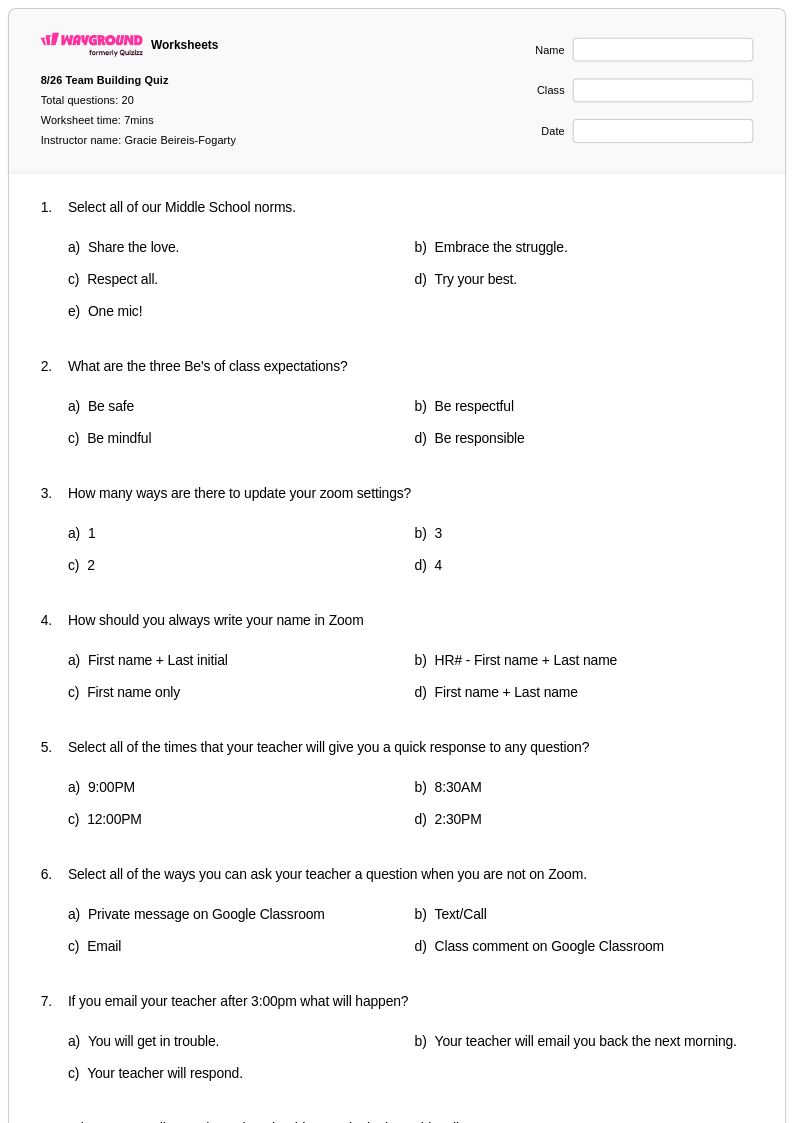
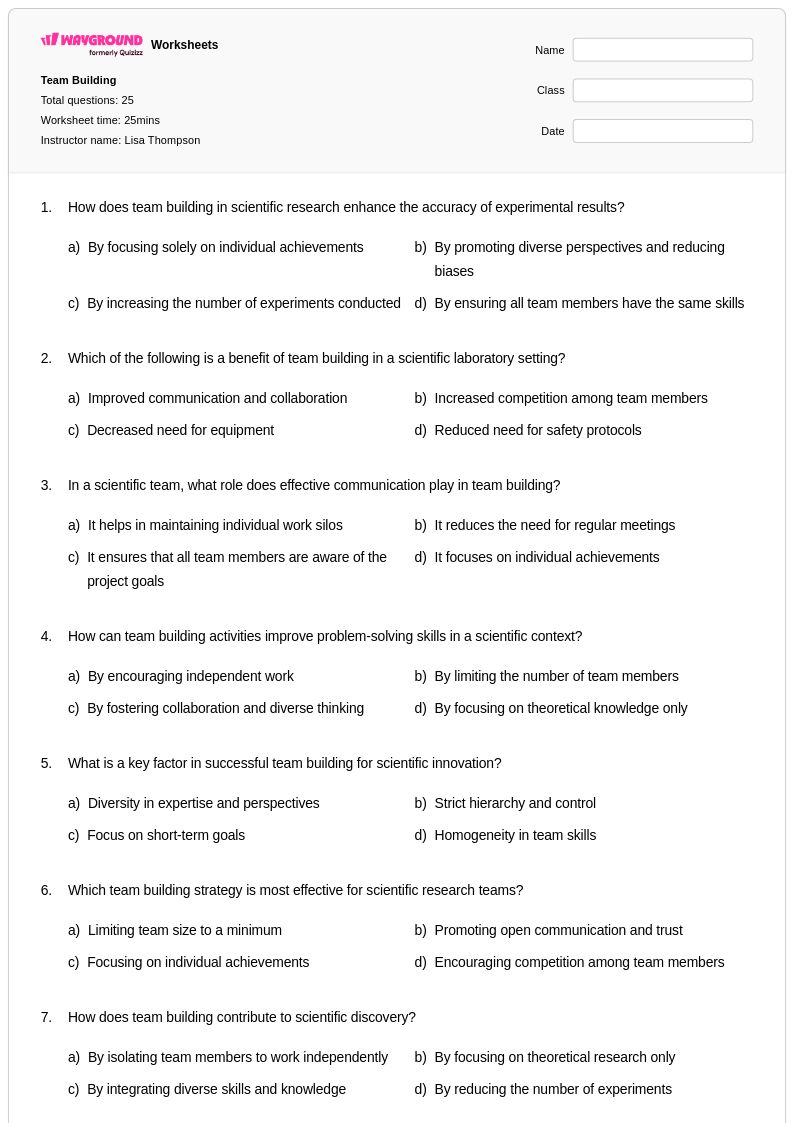
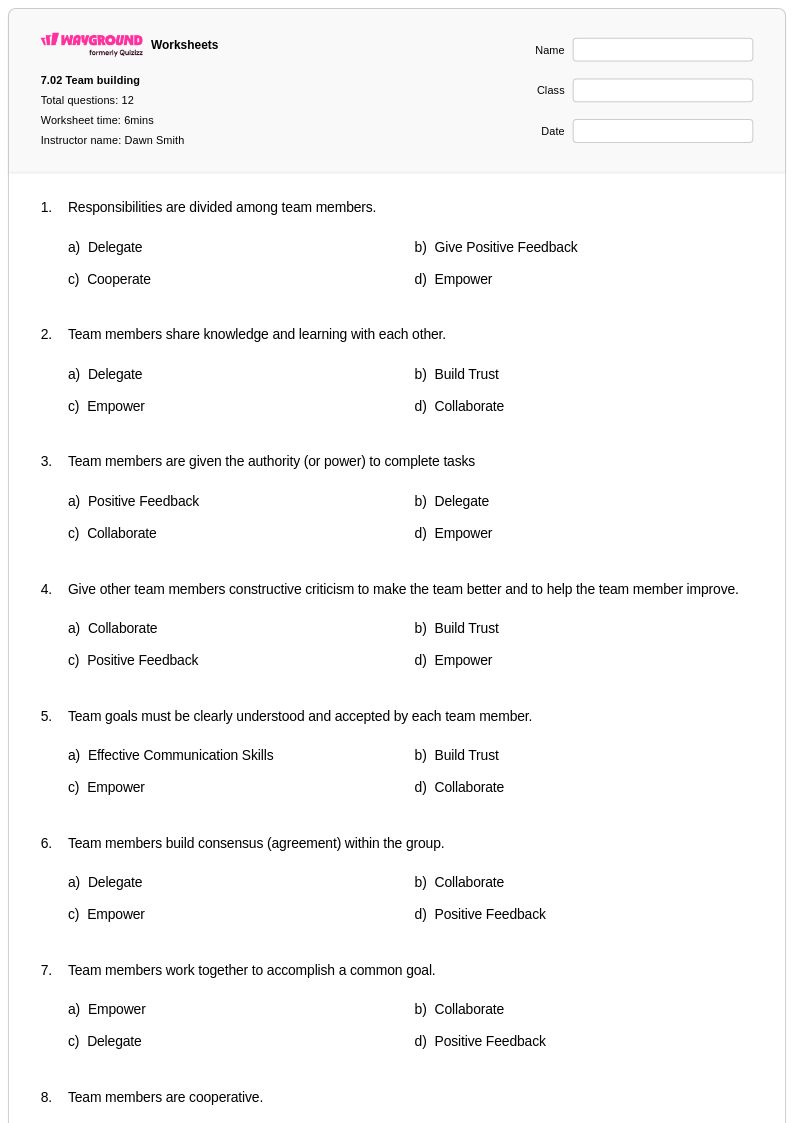
Team building worksheets for Year 7 Physical Education through Wayground (formerly Quizizz) provide essential resources for developing collaborative skills and positive group dynamics among middle school students. These comprehensive materials focus on strengthening communication, trust, problem-solving, and leadership abilities through structured activities and reflective exercises that translate directly to physical education environments. Students engage with practice problems that challenge them to analyze team scenarios, evaluate group effectiveness, and develop strategies for inclusive participation. The collection includes free printables with detailed answer keys that help educators assess student understanding of teamwork principles, conflict resolution techniques, and the importance of supporting diverse abilities within group settings. Each pdf worksheet incorporates age-appropriate scenarios that resonate with seventh-grade experiences while building foundational social-emotional competencies essential for successful physical activity participation.
Wayground (formerly Quizizz) supports Physical Education teachers with millions of teacher-created resources specifically designed for Year 7 team building instruction, featuring robust search and filtering capabilities that allow educators to quickly locate materials aligned with their curriculum standards and learning objectives. The platform's differentiation tools enable teachers to customize worksheets for varying skill levels and learning needs, ensuring that all students can meaningfully participate in team building exercises regardless of their social-emotional development stage. Available in both printable and digital formats including downloadable pdf options, these resources seamlessly integrate into lesson planning for skill practice, remediation of social challenges, and enrichment opportunities for advanced learners. Teachers can efficiently modify content to address specific classroom dynamics, incorporate school-wide initiatives, or target particular team building competencies, making it an invaluable tool for creating inclusive Physical Education environments that prioritize both physical and emotional growth.
FAQs
How do I teach team building skills in a physical education class?
Effective team building instruction in PE combines structured cooperative activities with explicit reflection. Start by assigning rotating leadership roles during group challenges so every student practices guiding and following. Debrief after each activity using guided questions that prompt students to identify what communication strategies worked, what caused friction, and how the group adapted. Pairing physical tasks with reflection exercises builds the social-emotional vocabulary students need to transfer these skills beyond the gym.
What exercises help students practice collaboration and communication in group settings?
Activities that require shared decision-making under mild pressure are the most effective for practicing collaboration. Problem-solving scenarios, trust-based physical challenges, and role-assigned group tasks force students to actively listen and negotiate rather than default to dominant voices. Structured reflection worksheets following each activity help students articulate what cooperative behaviors they demonstrated and where communication broke down, reinforcing the skill with metacognitive practice.
What mistakes do students commonly make when working in teams?
The most common errors are uneven participation, where one or two students drive all decisions while others disengage, and conflict avoidance, where students suppress disagreement rather than resolving it constructively. Students also frequently conflate loudness with leadership, misreading assertiveness as authority. Worksheets that assign specific roles and require every student to contribute a written or verbal response help surface these patterns and make them teachable.
How can I differentiate team building activities for students with different social skill levels?
Differentiation in team building means structuring tasks so students with emerging social skills have clearly defined, low-risk roles while more confident peer leaders take on facilitation responsibilities. Scenario-based worksheets can be scaffolded with sentence starters or reduced answer choices for students who need support processing group dynamics. On Wayground, teachers can apply individual accommodations such as read aloud, extended time, and reduced answer choices to specific students without signaling those adjustments to the rest of the class.
How do I use Wayground's team building worksheets in my classroom?
Wayground's team building worksheets are available as printable PDFs for hands-on, in-person activities and in digital formats for remote or technology-integrated learning environments, including the option to host them as a quiz directly on Wayground. Each worksheet includes a complete answer key, so teachers can facilitate reflection discussions or assess student responses without additional prep. The platform's filtering tools allow PE teachers to quickly locate materials matched to specific learning objectives or group sizes.
How do I address conflict resolution as part of team building instruction?
Conflict resolution should be treated as a discrete, teachable skill within team building rather than a side effect to manage. Use structured scenarios that present realistic group disagreements and ask students to identify the perspective of each role, propose a resolution, and explain the reasoning behind it. Repeated practice with these scenarios builds the habit of constructive problem-solving so students can apply it during live group activities without teacher intervention.