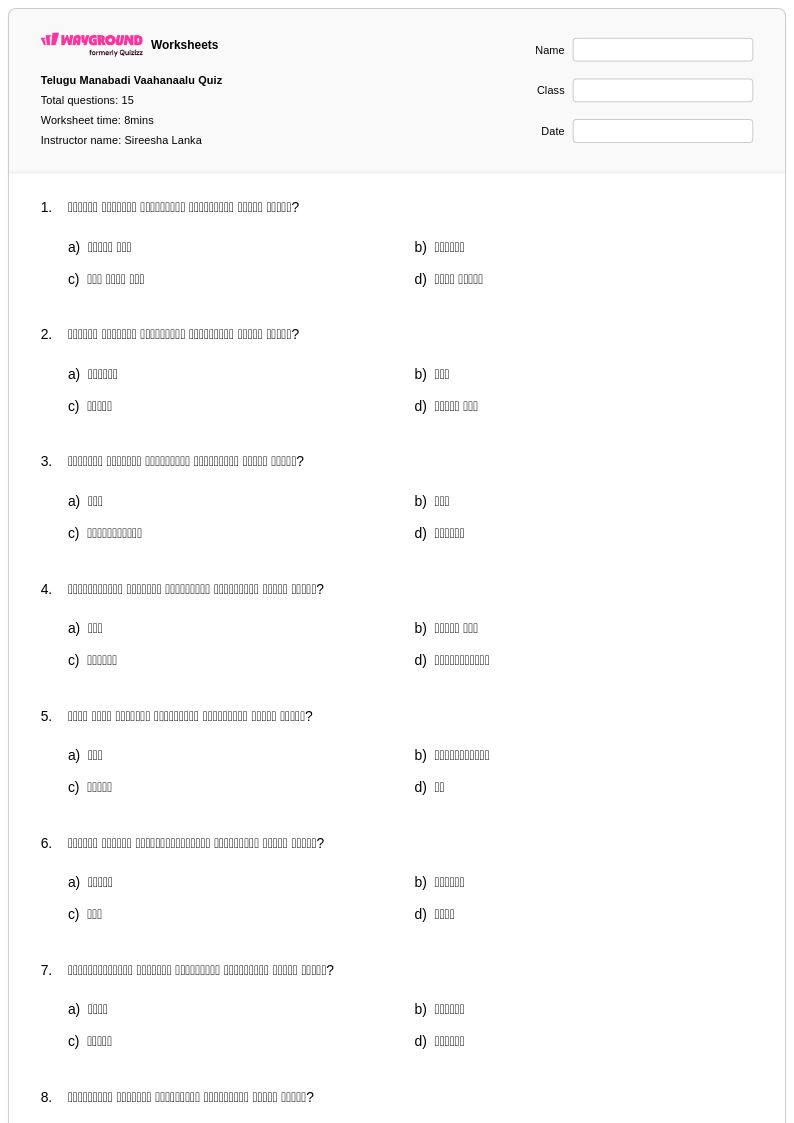
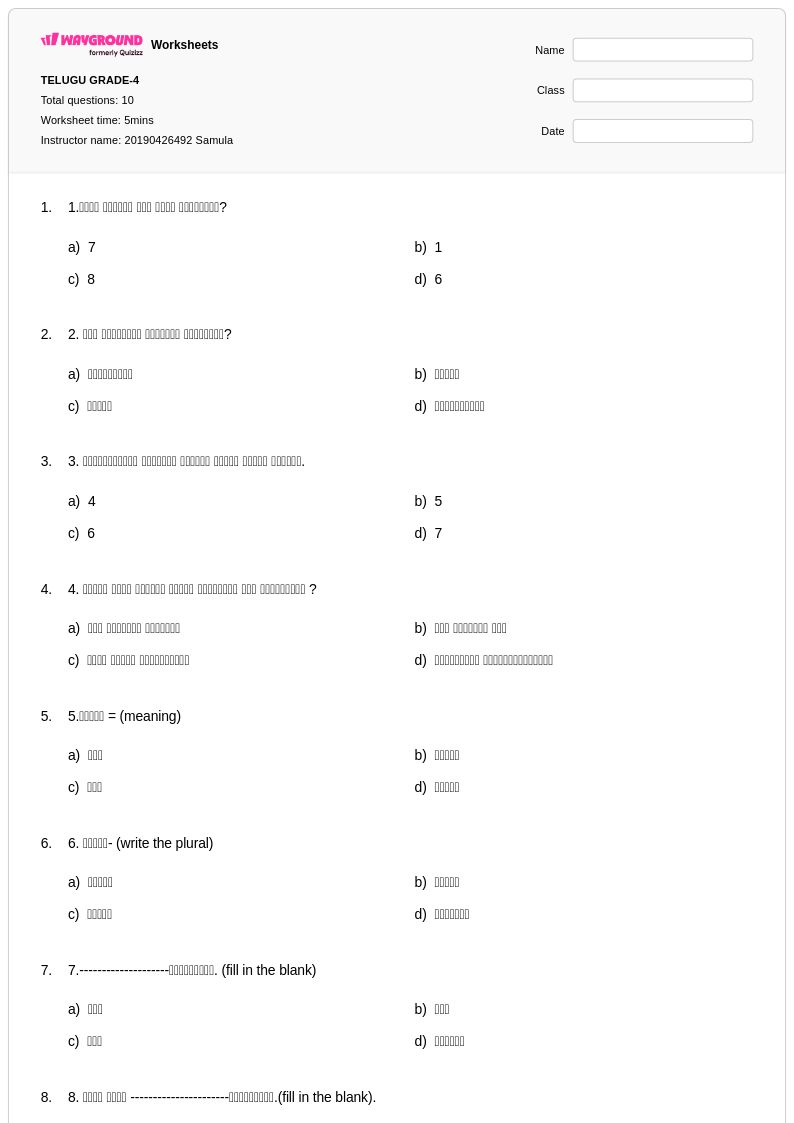
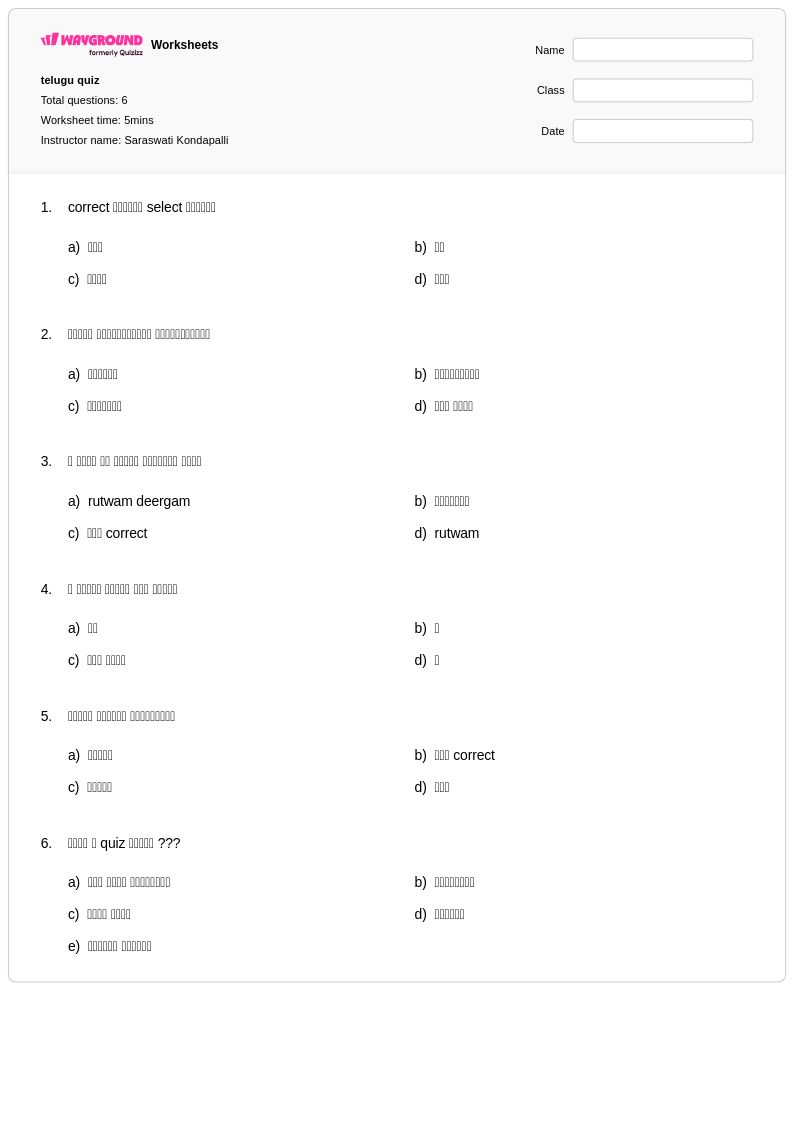
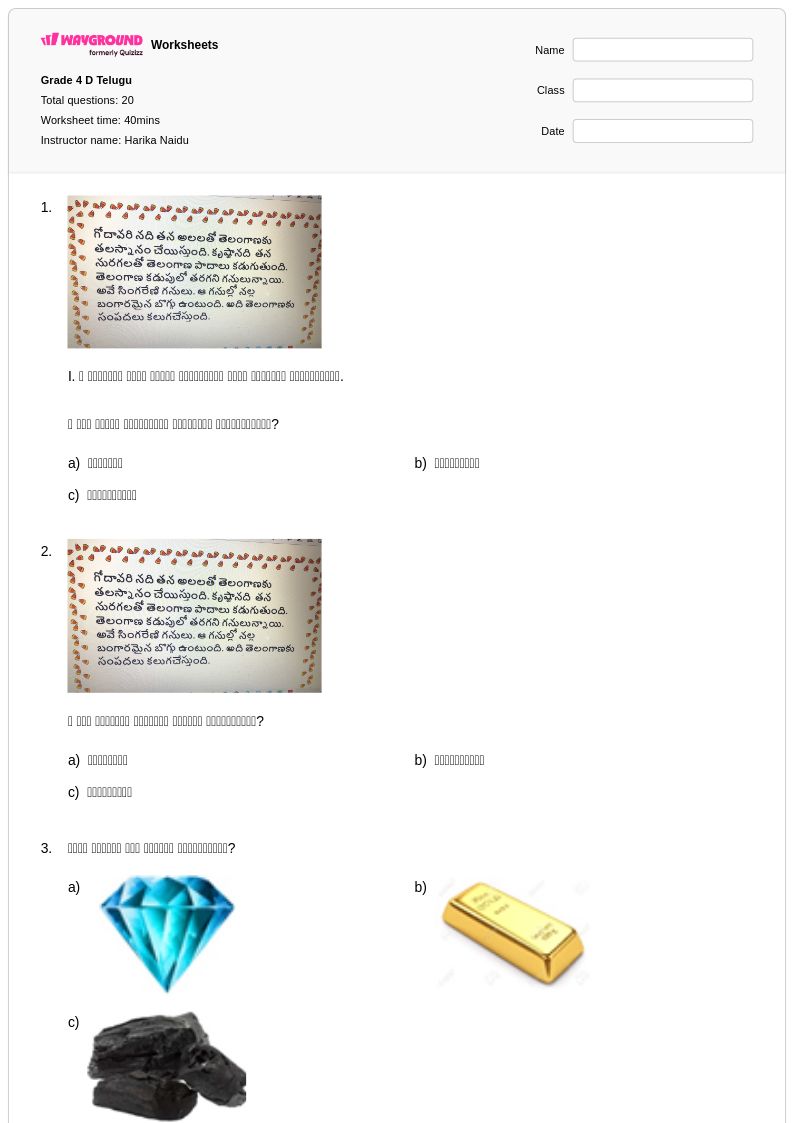
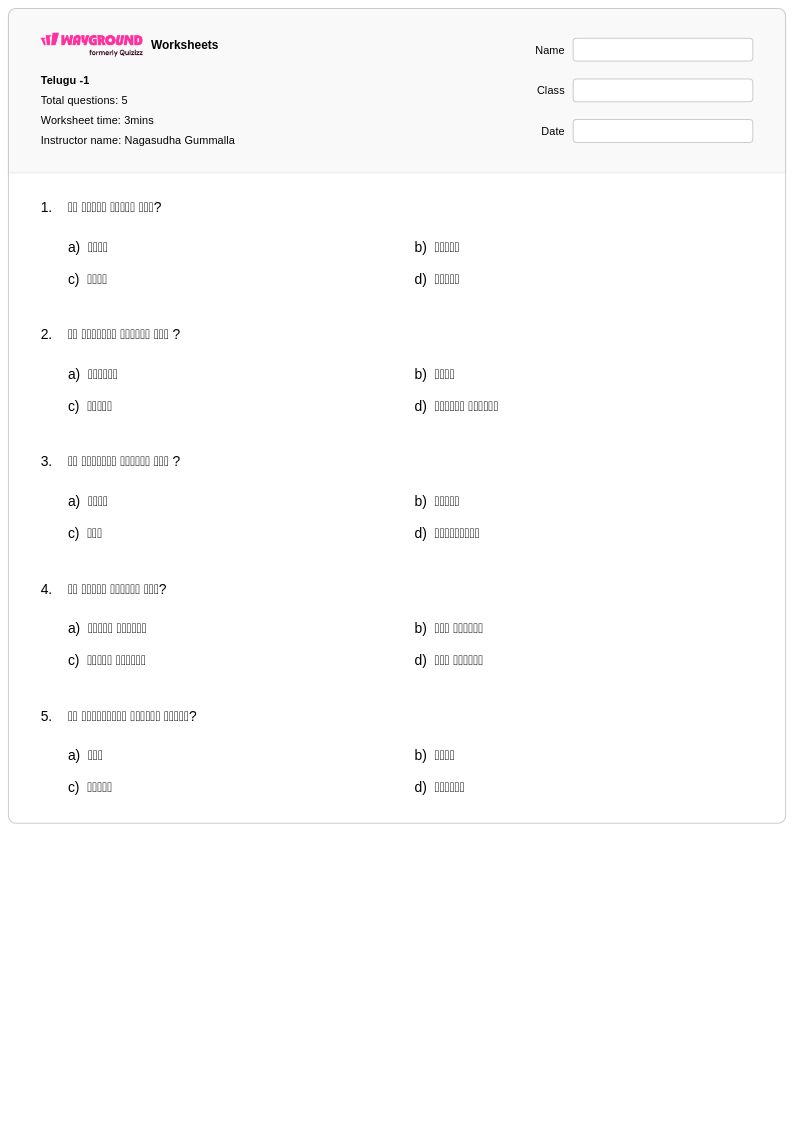
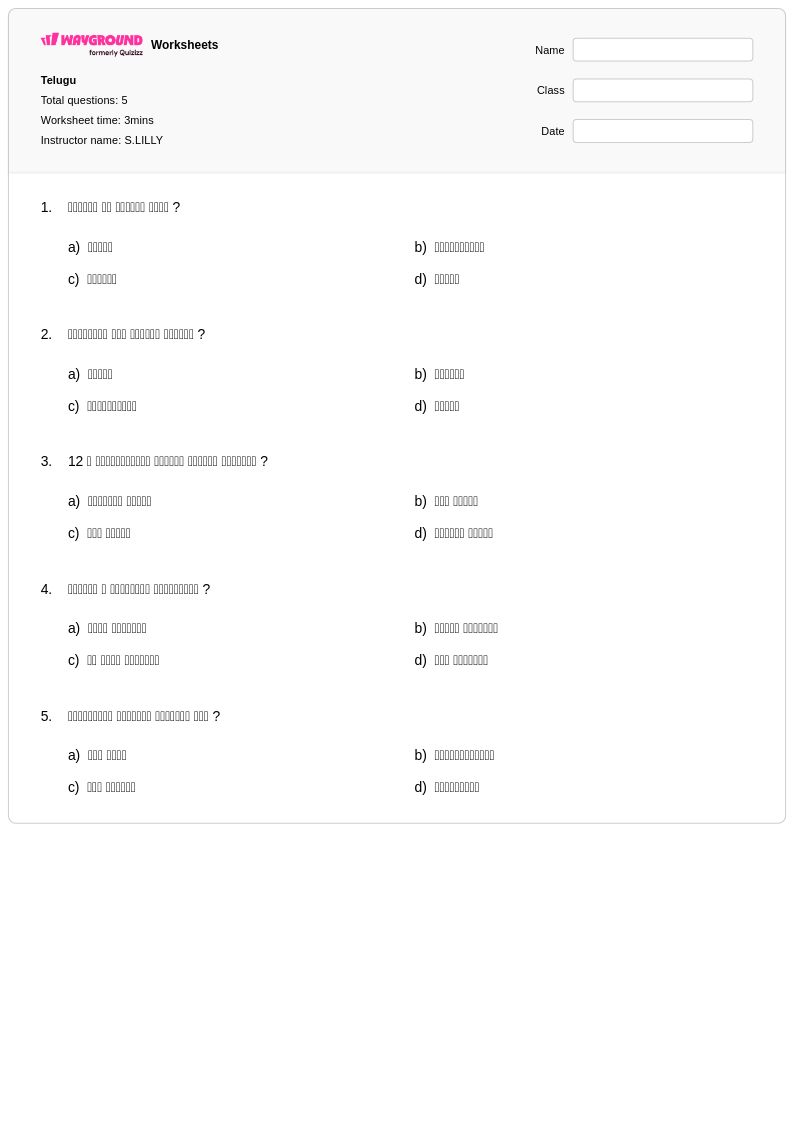
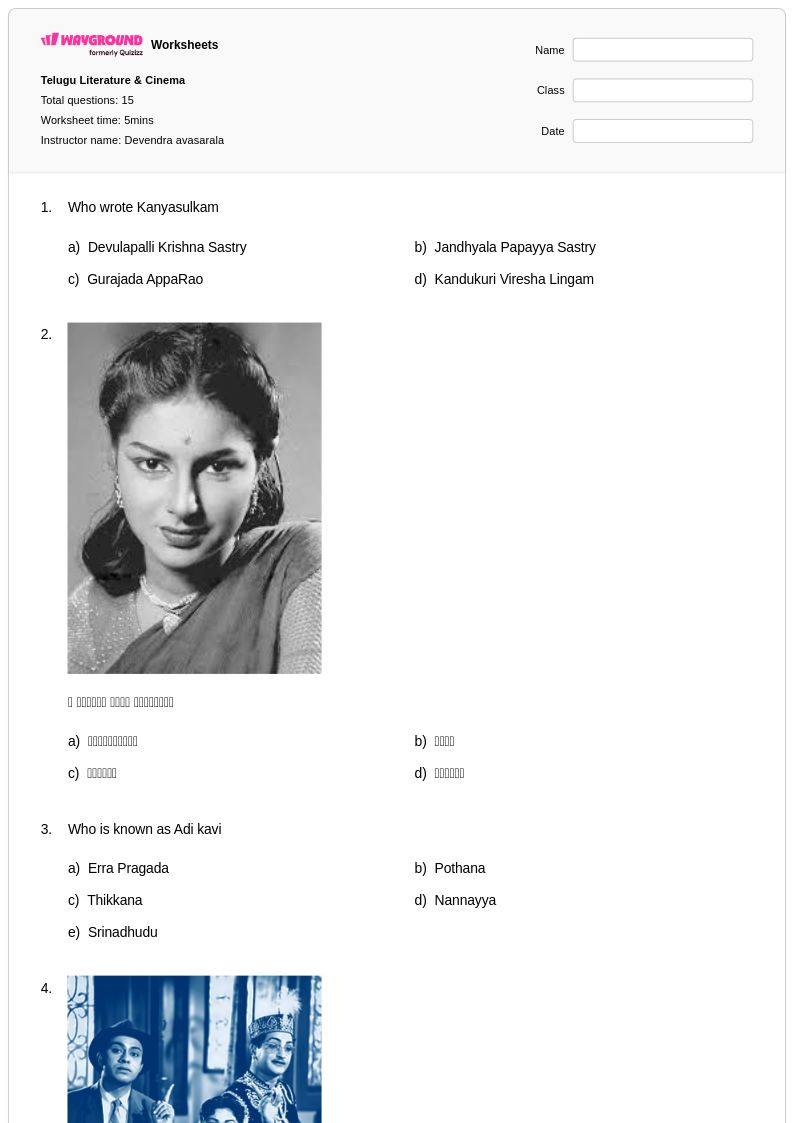
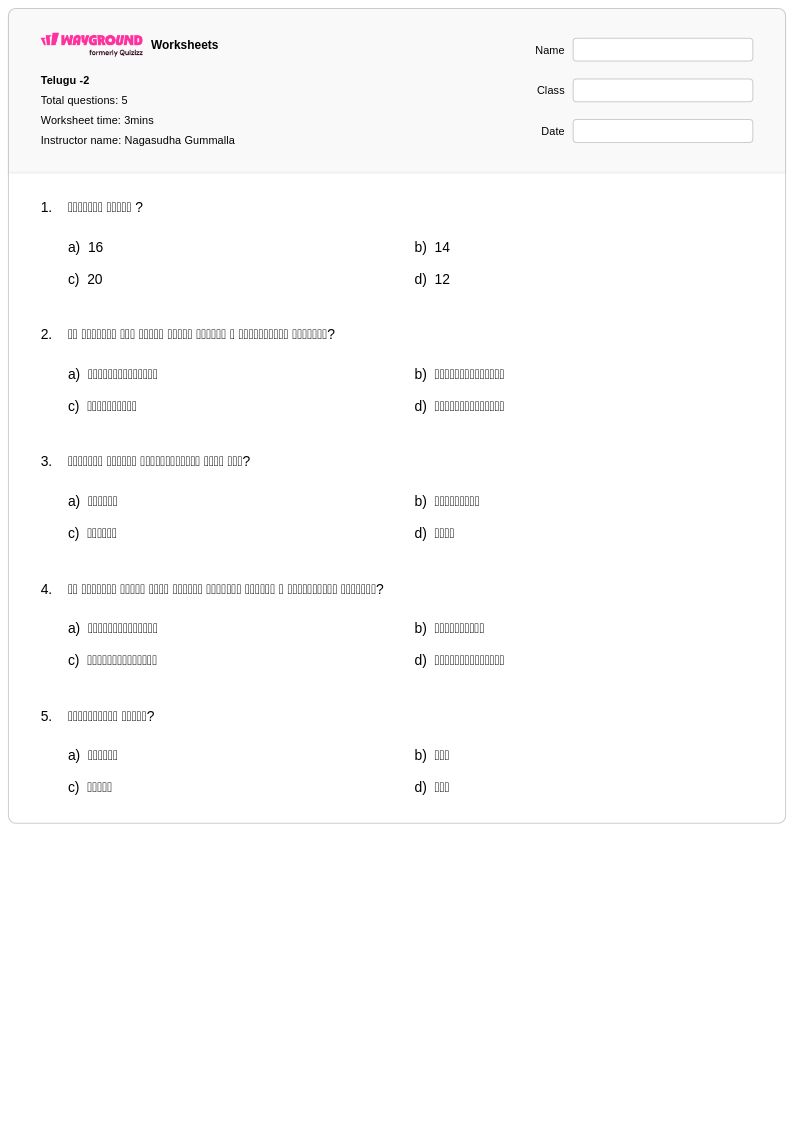
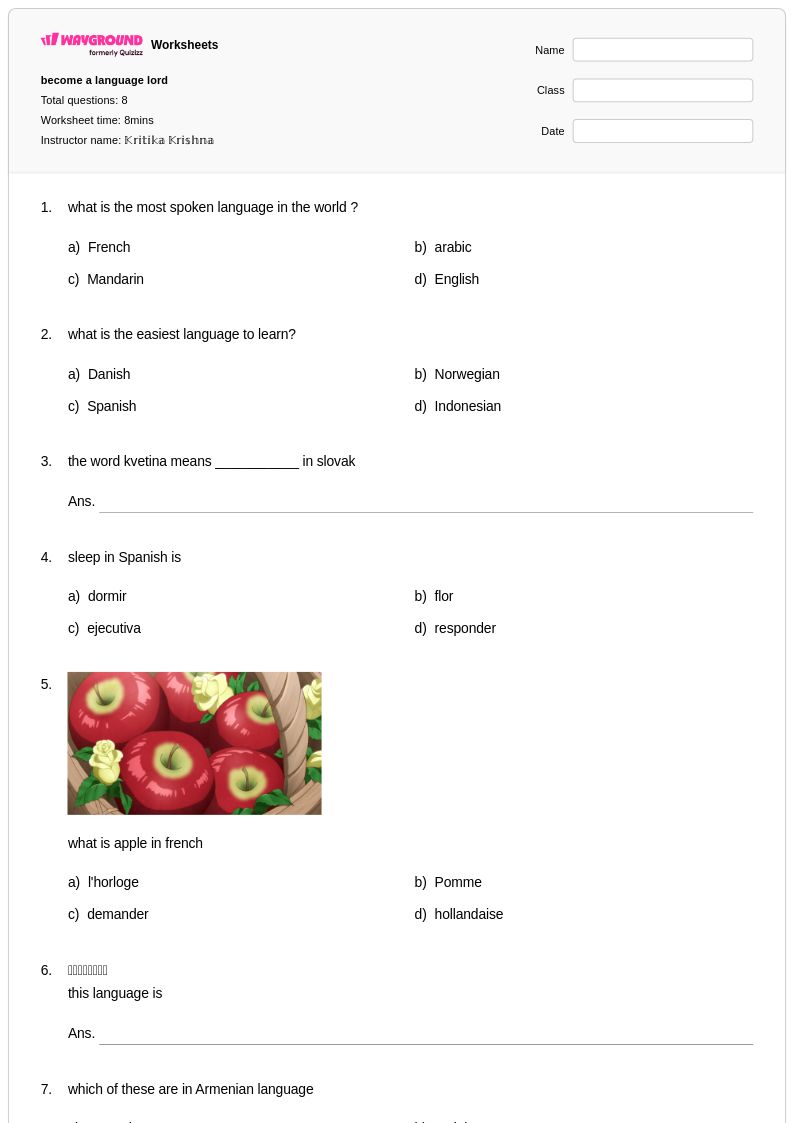
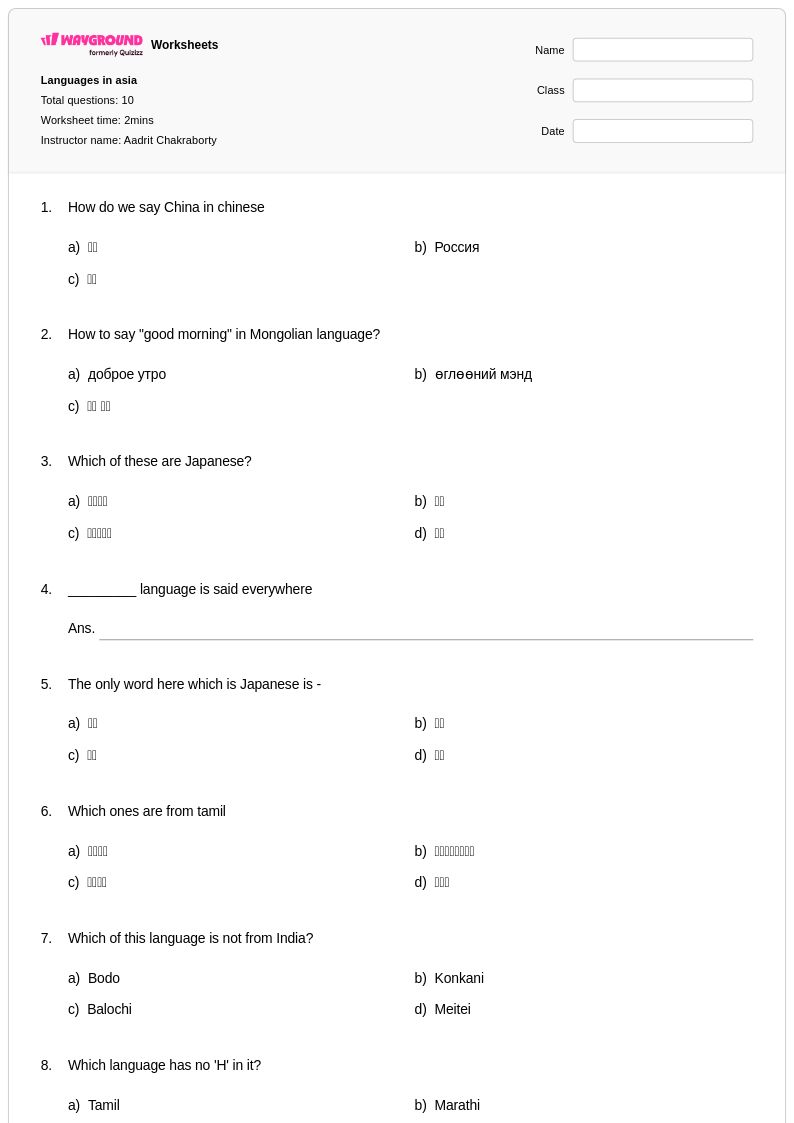
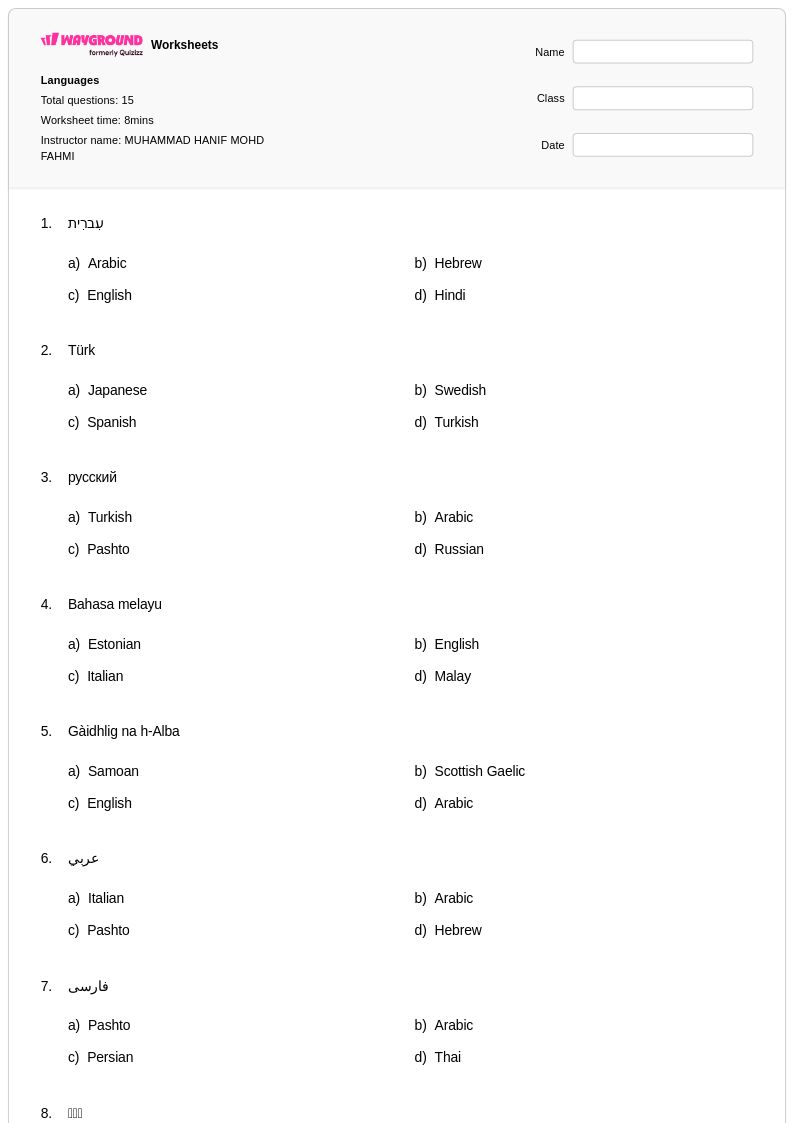
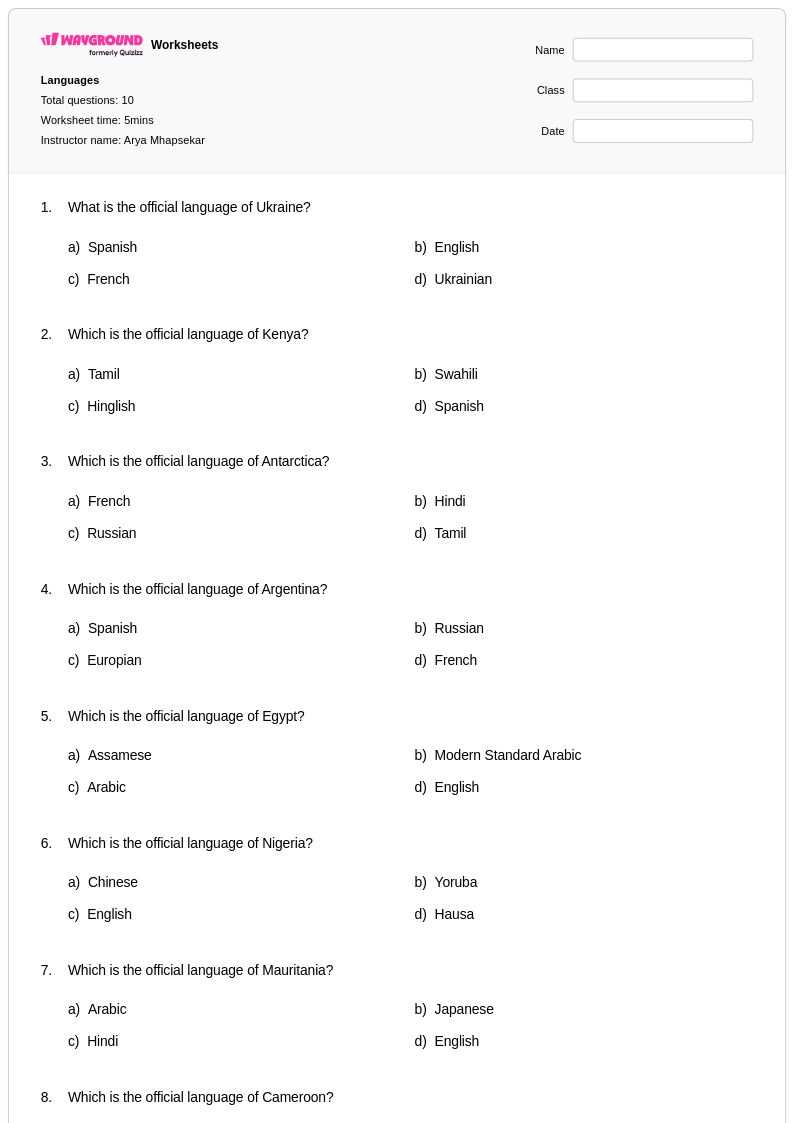
Discover free Year 4 Telugu worksheets and printables through Wayground that help students practice foundational language skills with engaging exercises, answer keys, and downloadable PDF resources for effective learning.
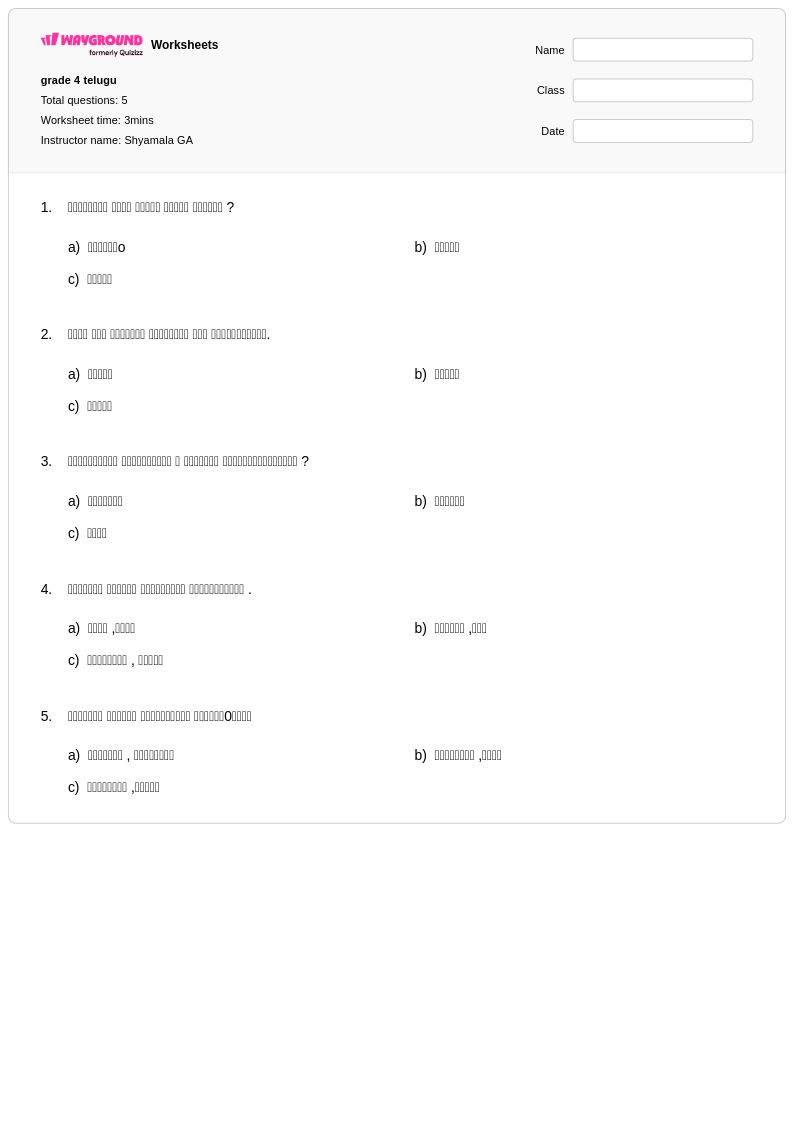
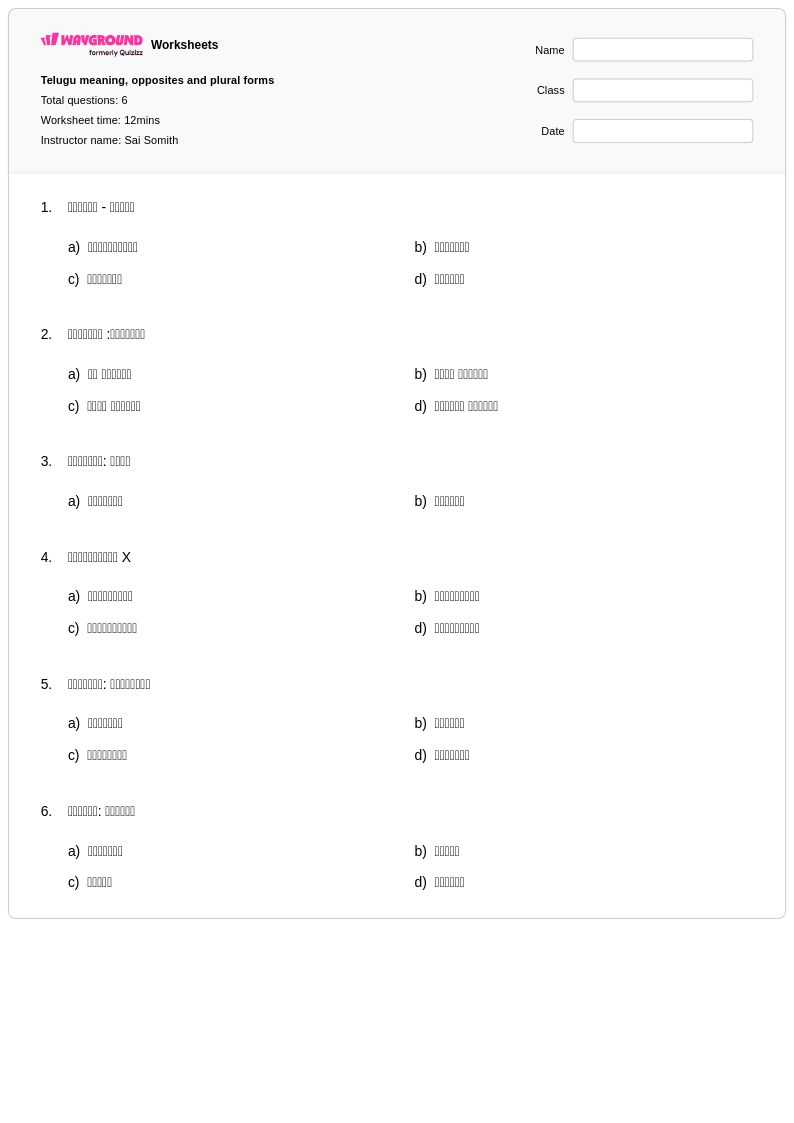
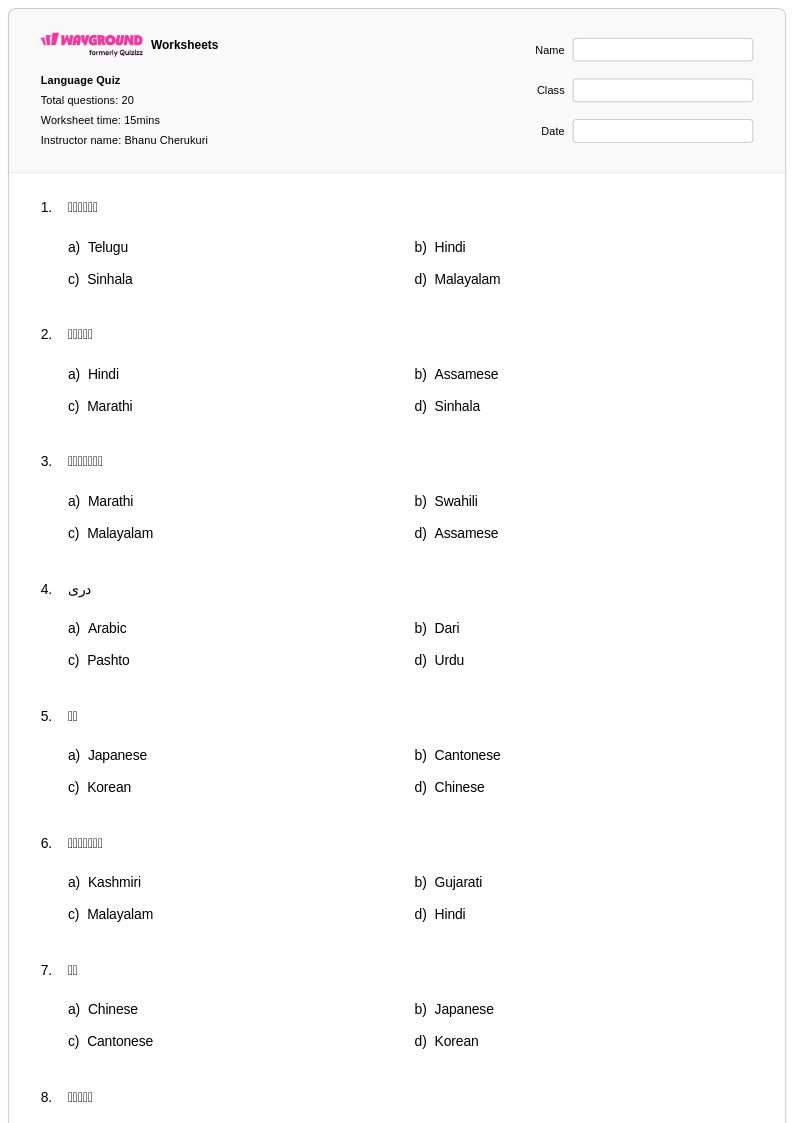
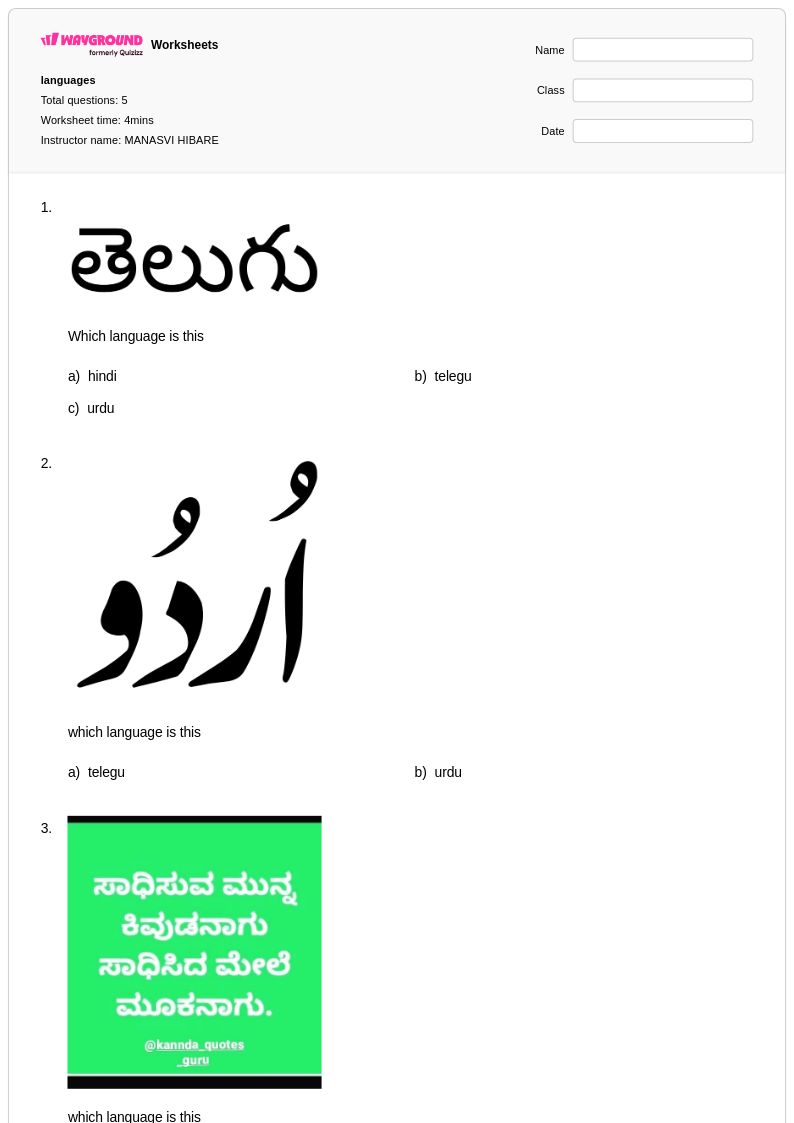
Telugu worksheets for Year 4 students available through Wayground (formerly Quizizz) provide comprehensive foundational practice in this Dravidian language spoken by millions worldwide. These carefully designed educational materials focus on essential Telugu language skills including script recognition, basic vocabulary acquisition, simple sentence formation, and fundamental grammar concepts appropriate for elementary learners. The worksheets strengthen students' ability to read and write Telugu characters, understand common words and phrases, and develop early conversational abilities through structured practice problems. Each resource includes detailed answer keys to support independent learning and assessment, with free printable options available in convenient pdf format to accommodate diverse classroom and home learning environments.
Wayground (formerly Quizizz) supports educators with an extensive collection of millions of teacher-created Telugu language resources, offering robust search and filtering capabilities that help instructors quickly locate grade-appropriate materials. The platform's differentiation tools enable teachers to customize worksheets based on individual student needs, while flexible formatting options provide both printable and digital versions including downloadable pdf files. These comprehensive features streamline lesson planning for world language instruction, facilitate targeted remediation for struggling learners, and offer enrichment opportunities for advanced students. Teachers can seamlessly integrate these Telugu practice materials into their curriculum to build consistent skill development, support diverse learning styles, and create engaging language learning experiences that foster cultural awareness alongside linguistic competency.
FAQs
How do I teach Telugu script to beginners?
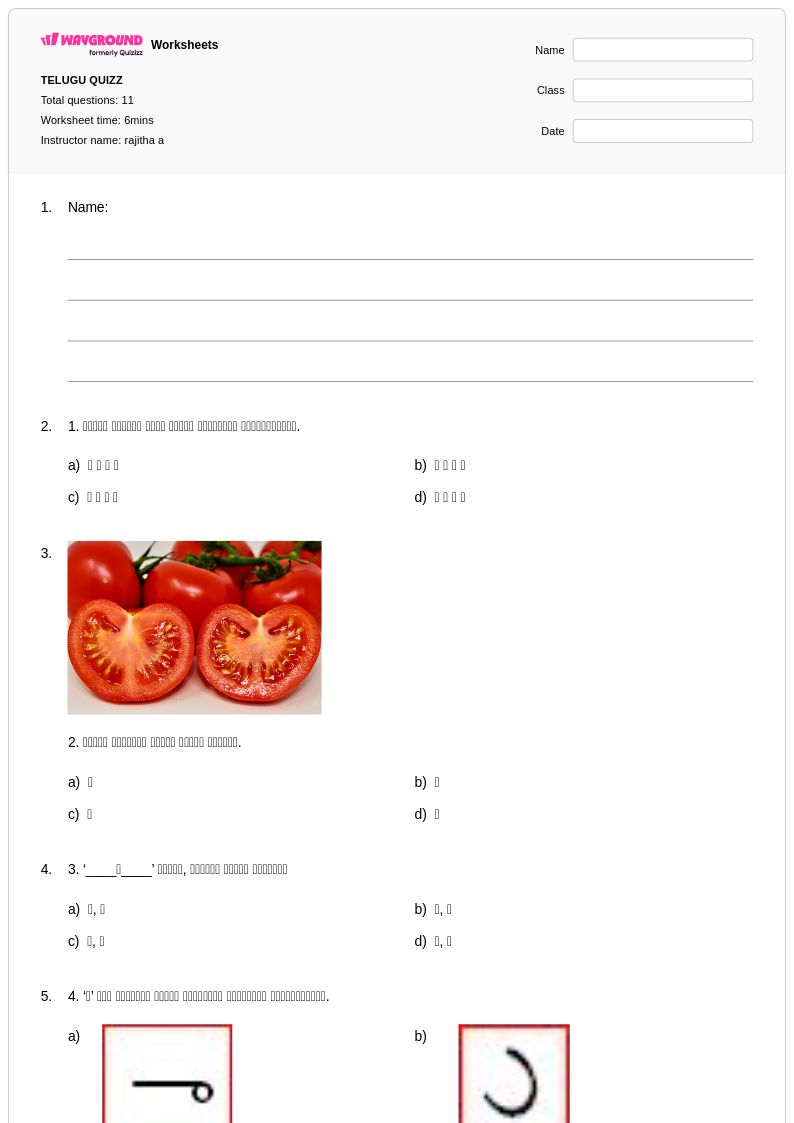
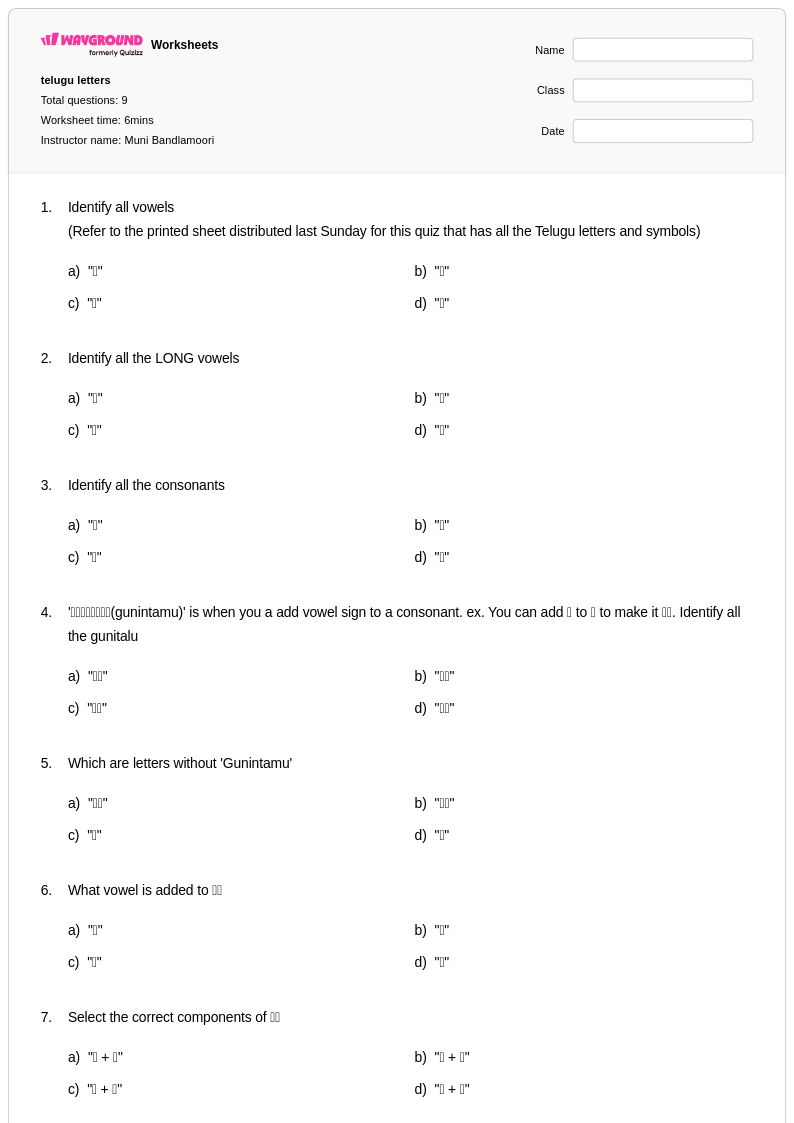
Teaching Telugu script effectively starts with introducing the vowels (acchulu) and consonants (hallulu) systematically, helping students recognize the circular and curved stroke patterns that define the script. Pairing letter recognition with phonetic drilling helps students connect written symbols to sounds before moving to syllable formation. Consistent tracing and writing practice with structured worksheets reinforces muscle memory and builds script fluency over time.
What exercises help students practice Telugu vocabulary?
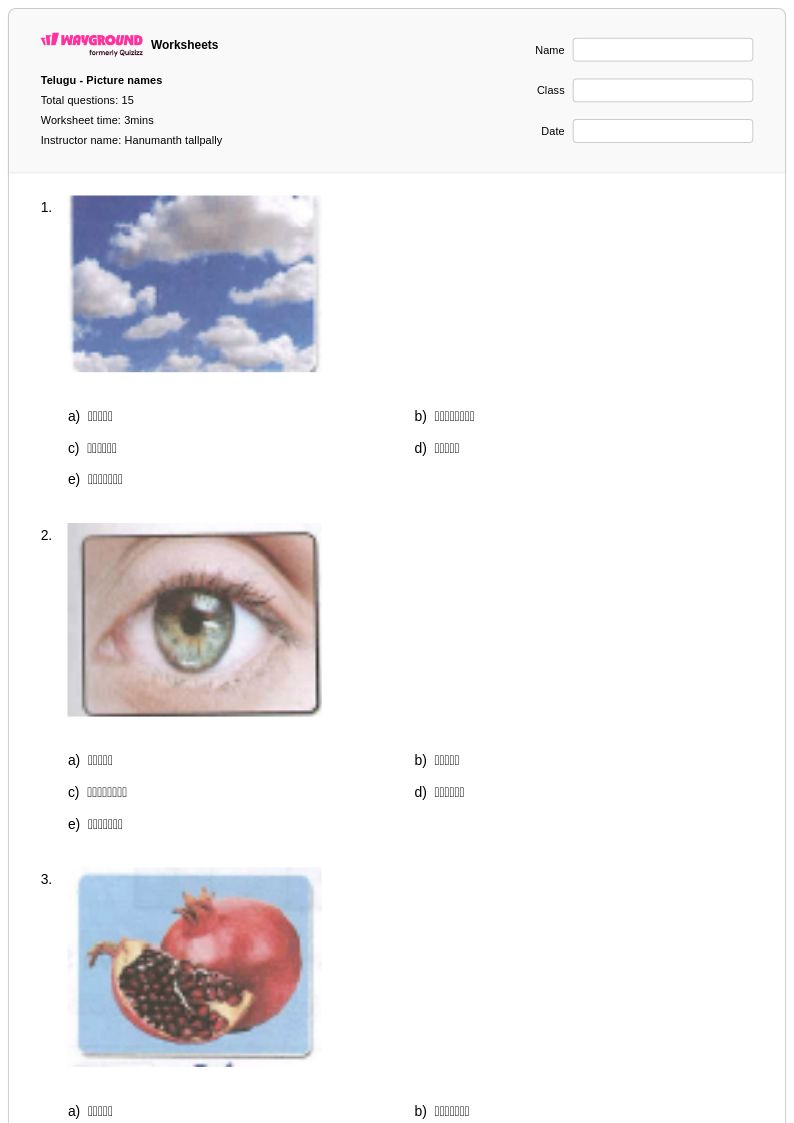
Effective Telugu vocabulary practice includes matching exercises that pair Telugu script with transliterations or images, fill-in-the-blank sentences using high-frequency words, and categorization tasks that group vocabulary by theme such as family, food, or daily actions. Repeated exposure through reading and writing the same words in varied contexts helps students internalize new terms. Worksheets that integrate vocabulary into short reading passages are especially useful for bridging word recognition with comprehension.
What common mistakes do students make when learning Telugu grammar?
A frequent error is applying English subject-verb-object word order to Telugu, which follows a subject-object-verb structure, leading to grammatically incorrect sentences. Students also struggle with noun-verb agreement based on gender and number, as Telugu grammatical gender does not always align with natural gender or English conventions. Misreading or miswriting visually similar letters in the Telugu script is another common challenge, particularly for beginners unfamiliar with the alphabet's curved forms.
How do I use Telugu worksheets from Wayground in my classroom?
Telugu worksheets on Wayground are available as printable PDFs for traditional classroom use and in digital formats for technology-integrated or remote learning environments. Teachers can also host worksheets as a quiz directly on Wayground, enabling interactive practice with instant feedback. Each worksheet includes a complete answer key, reducing grading time and allowing teachers to focus on targeted instruction.
How can I differentiate Telugu language instruction for students at different proficiency levels?
For students at lower proficiency levels, focus on script recognition, basic vocabulary, and simple phrase structures before introducing grammar rules. More advanced learners can be challenged with reading comprehension passages, sentence construction, and cultural context activities. On Wayground, teachers can apply accommodations such as Read Aloud support for students who need audio assistance with unfamiliar script, and reduced answer choices for learners who need reduced cognitive load during vocabulary or grammar practice.
How do I help students who are struggling with Telugu pronunciation?
Telugu has several sounds that do not exist in English, including retroflex consonants and aspirated stops, which can be difficult for English-speaking learners to distinguish and produce. Breaking down pronunciation through phonetic guides and audio modeling helps students isolate and practice these sounds in isolation before encountering them in full words. On Wayground, the Read Aloud accommodation can support students who benefit from hearing content read aloud as they work through pronunciation-focused exercises.