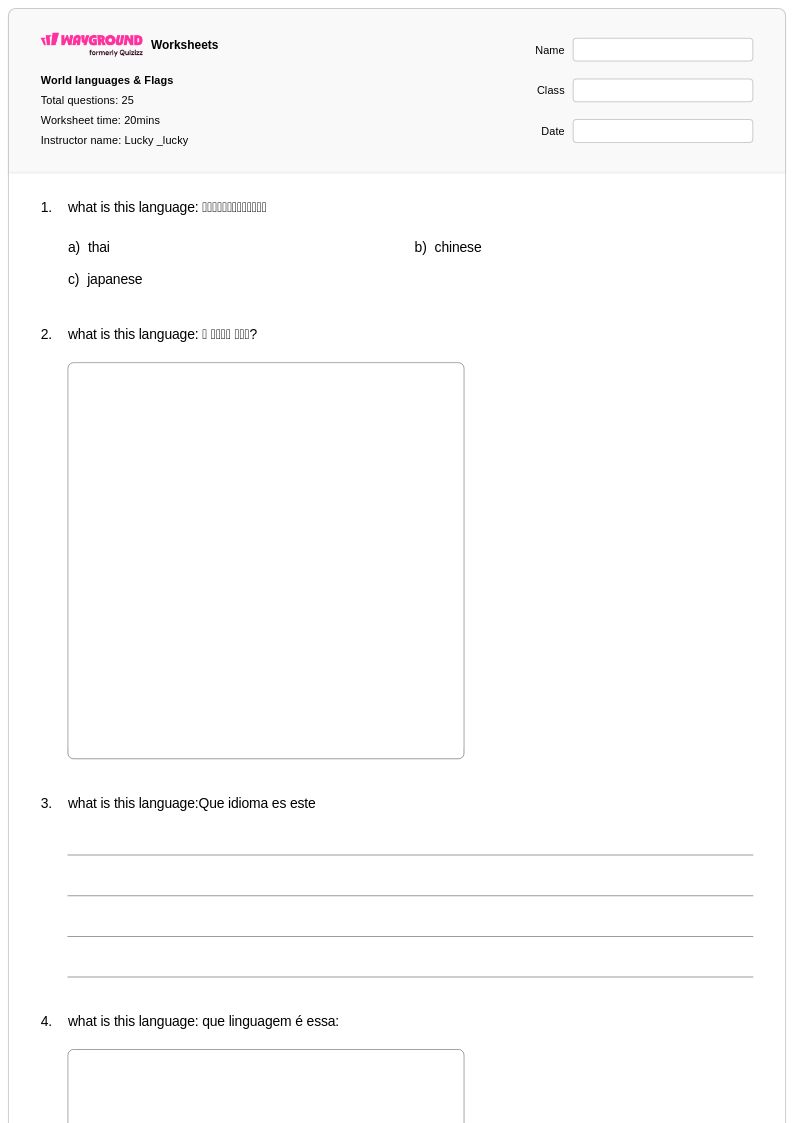
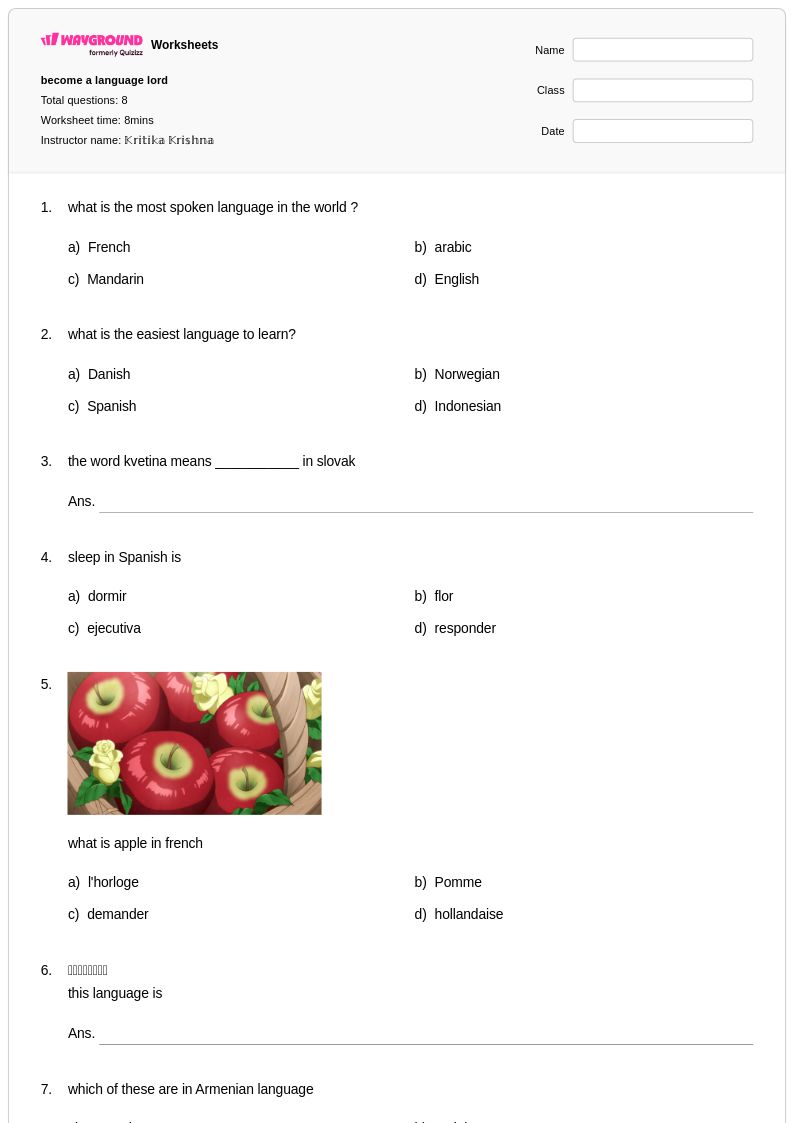
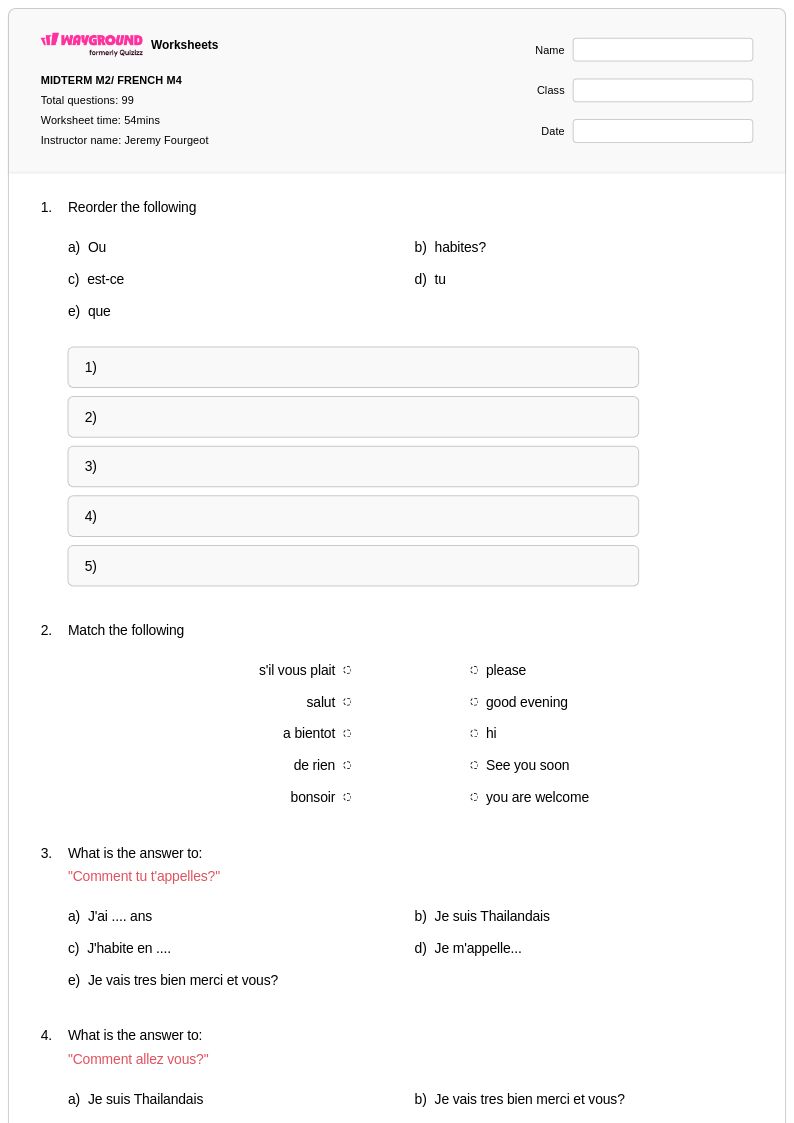
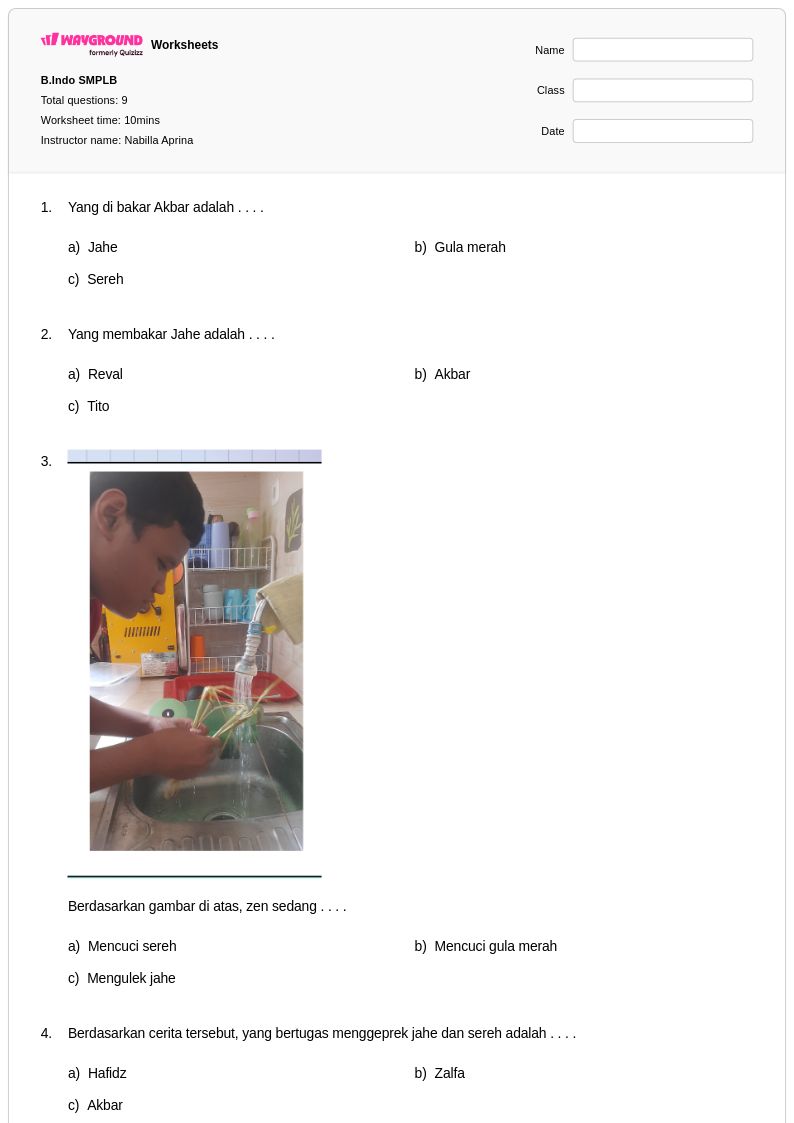
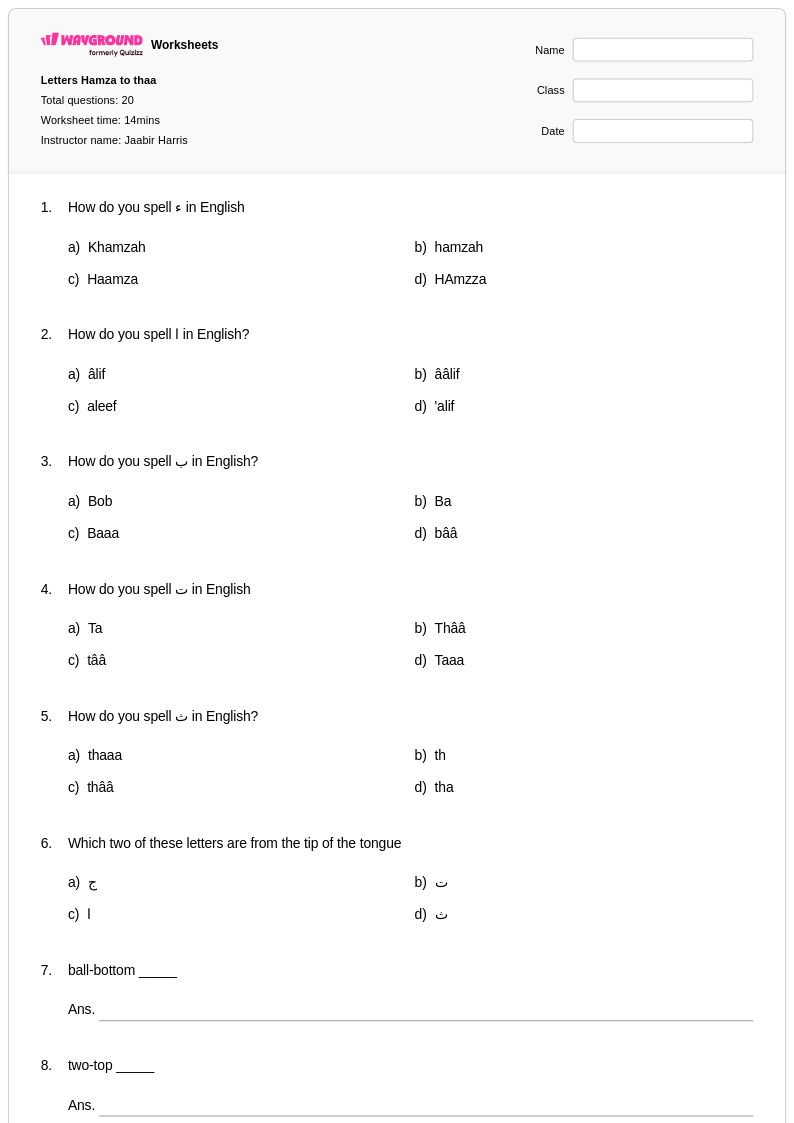
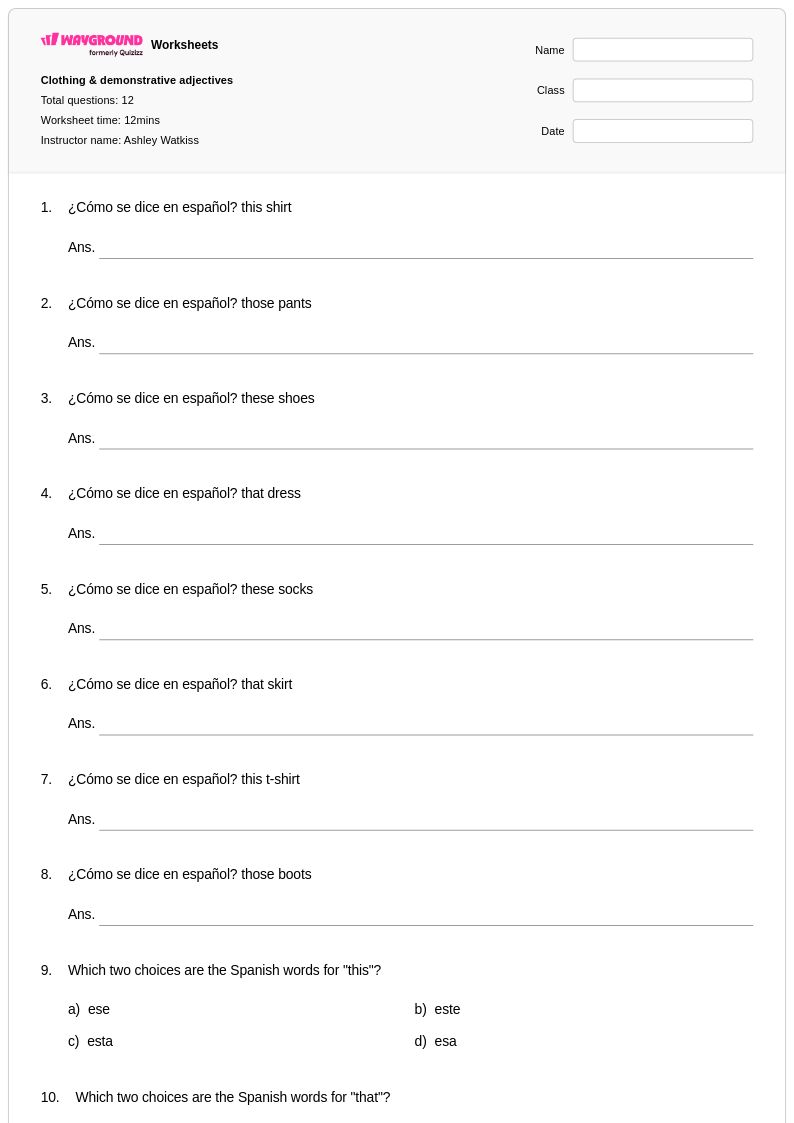
Enhance Year 11 Thai language skills with Wayground's comprehensive collection of free worksheets and printables, featuring practice problems with answer keys to develop vocabulary, grammar, and cultural understanding through engaging PDF activities.
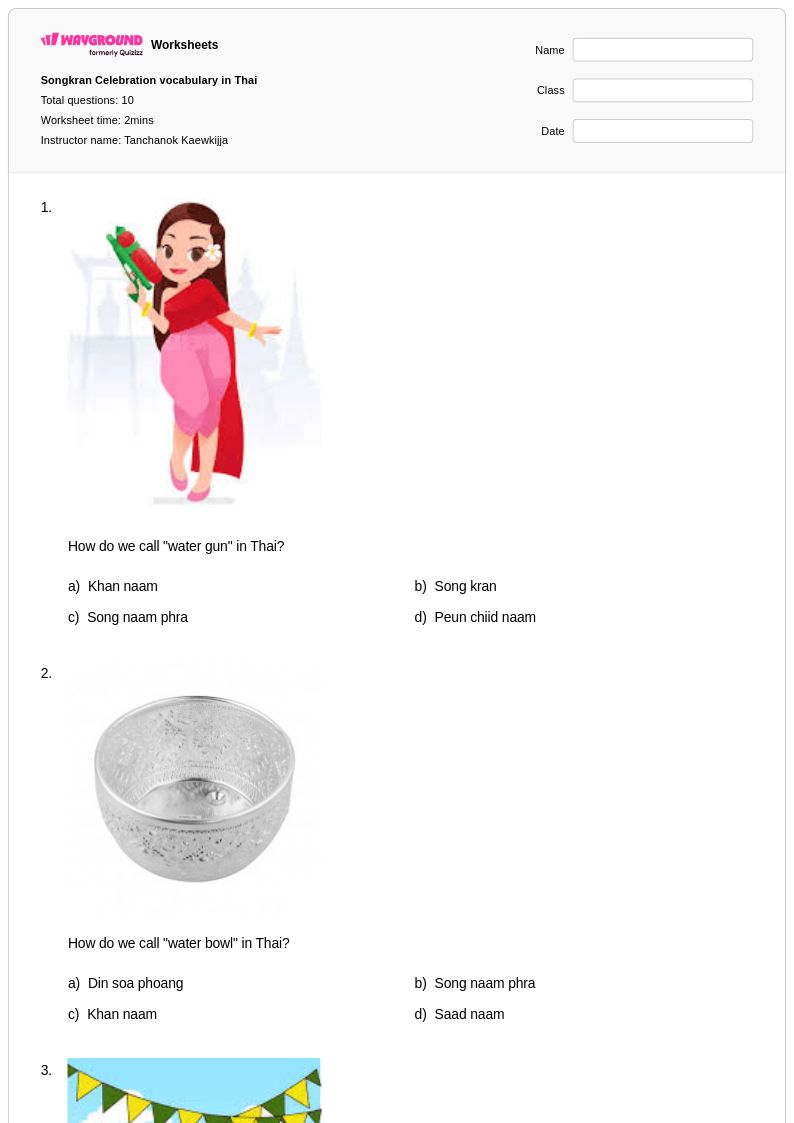
Thai language worksheets for Year 11 students available through Wayground (formerly Quizizz) provide comprehensive resources for advancing intermediate to advanced Thai proficiency. These carefully designed worksheets strengthen essential skills including complex grammar structures, advanced vocabulary acquisition, reading comprehension of authentic Thai texts, and written composition techniques. Students engage with practice problems that cover Thai script mastery, tonal pronunciation patterns, cultural context understanding, and sophisticated sentence construction. The collection includes materials with detailed answer keys that support independent learning, while free printables offer flexibility for both classroom instruction and homework assignments, ensuring students develop the linguistic competency expected at the Year 11 level.
Wayground (formerly Quizizz) empowers educators with millions of teacher-created Thai language resources that streamline lesson planning and enhance student outcomes. The platform's robust search and filtering capabilities allow teachers to quickly locate worksheets aligned with specific learning standards and curriculum objectives, while differentiation tools enable customization for diverse learner needs and proficiency levels. These flexible resources are available in both printable pdf formats and interactive digital versions, facilitating seamless integration into various teaching environments. Teachers utilize these comprehensive worksheet collections for targeted skill practice, remediation of challenging concepts, and enrichment activities that deepen cultural understanding, ultimately supporting students in achieving mastery of Thai language fundamentals required for advanced study.
FAQs
How do I teach Thai script to beginners?
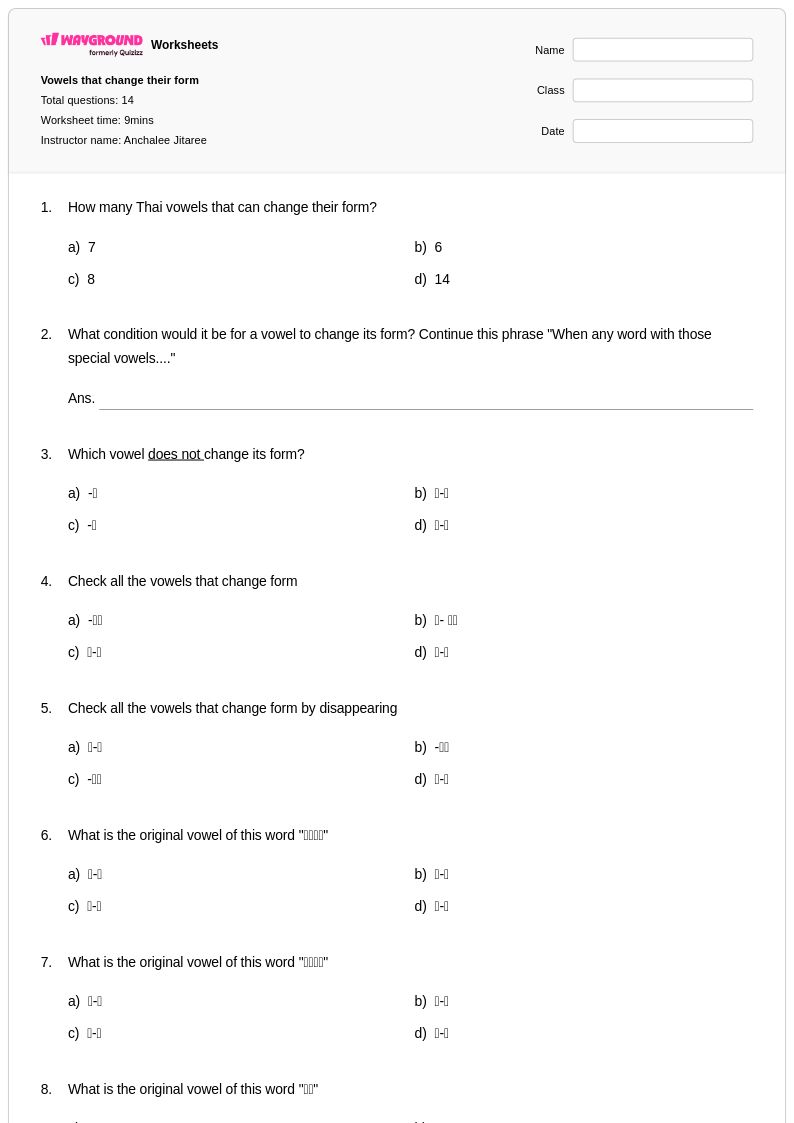
Teaching Thai script to beginners works best when introduced in stages: start with consonant classes (high, mid, and low), then vowel forms, and finally tone rules, since Thai tone is determined by the combination of consonant class, vowel length, and tone marks. Using structured recognition drills that isolate each character before combining them into syllables helps students build confidence without cognitive overload. Repeated exposure through reading and tracing exercises reinforces retention of the 44 consonants and 32 vowel forms.
What exercises help students practice Thai vocabulary?
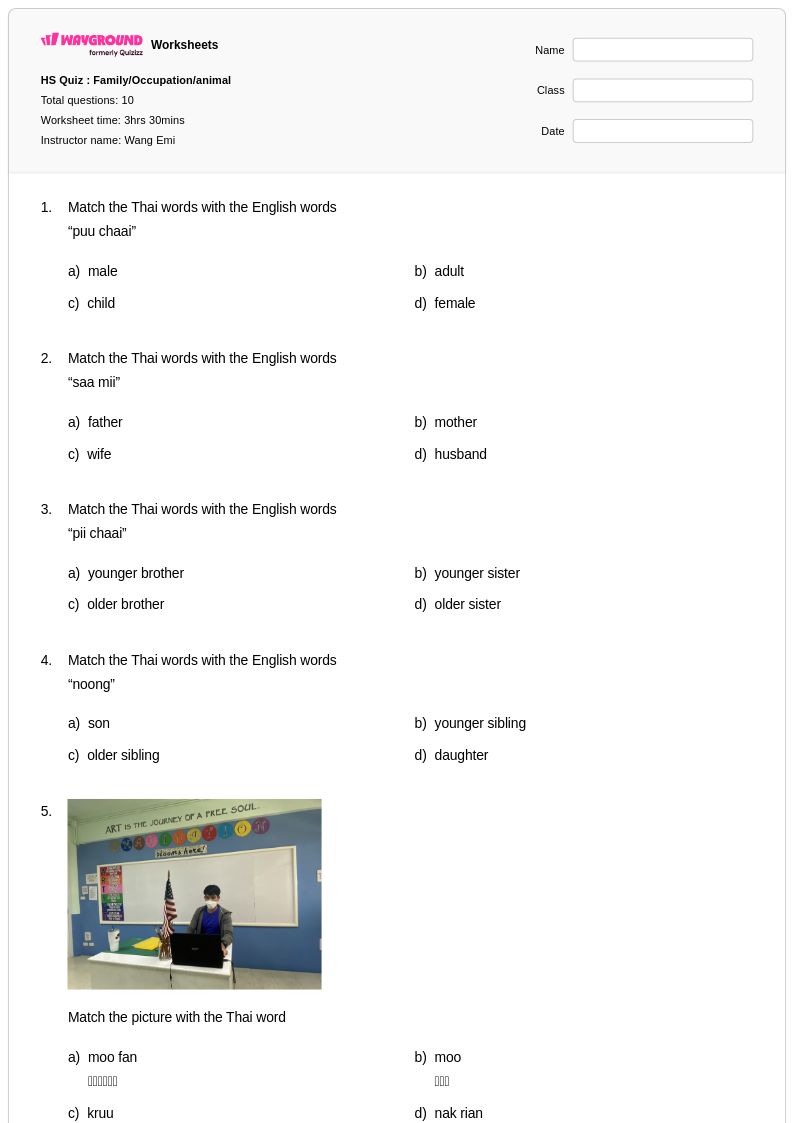
Effective vocabulary practice for Thai learners includes matching exercises pairing Thai script with transliteration and English meaning, fill-in-the-blank sentence completion using context clues, and categorized word lists organized by topic such as food, family, or daily routines. Because Thai is a tonal language, vocabulary practice should also reinforce the correct tone for each word to prevent meaning errors, since a single syllable can carry five distinct meanings depending on tone.
What grammar structures should I focus on when teaching Thai?
Thai grammar is analytic rather than inflectional, meaning verbs do not conjugate for tense and nouns do not change for number or gender. Key structures to teach include SVO sentence order, the use of aspect markers to indicate time (such as แล้ว for completed actions and จะ for future intent), classifier usage with nouns, and the role of politeness particles like ครับ and ค่ะ. Building these structures systematically through patterned sentence practice helps students internalize Thai's logic without defaulting to English grammar assumptions.
What mistakes do students commonly make when learning Thai tones?
The most common error is treating Thai tones as optional or ornamental rather than phonemic, which leads to miscommunication since the same syllable with a different tone is an entirely different word. Students frequently confuse the rising and falling tones, and often misapply tone rules when transitioning from live to dead syllables. Regular drilling with minimal pairs, where only the tone differs, helps students train their ear and build production accuracy.
How do I differentiate Thai language instruction for students at different proficiency levels?
For beginner learners, focus on script recognition, basic greetings, and high-frequency vocabulary before introducing tone rules in depth. Intermediate students benefit from structured grammar work on classifiers, aspect markers, and polite register, while advanced learners can engage with reading authentic texts and producing extended written responses. On Wayground, teachers can apply accommodations such as reduced answer choices or read-aloud support for individual students, making it possible to run differentiated practice within a single class session without disrupting other learners.
How do I use Wayground's Thai worksheets in my classroom?
Wayground's Thai language worksheets are available as printable PDFs for traditional classroom use and in digital formats for technology-integrated instruction, giving teachers flexibility based on their environment. Teachers can also host worksheets directly as a quiz on Wayground, enabling real-time student responses and automated scoring. Each worksheet includes a complete answer key, supporting both teacher-led review and independent or homework-based practice.